Employment NDA Use Cases In The United Kingdom
Use Case | Purpose | Typical Confidential Information | Confidentiality Risk Level | Drafting Considerations |
|---|---|---|---|---|
Recruitment | ||||
Interview disclosure of business plans | Protect non-public strategy shared with candidates during interviews. | Business plans, expansion proposals, budgets, product ideas and market analysis. | Medium | Limit the NDA to interview materials and allow disclosures required by law or protected disclosure rights. |
Technical interview or coding task | Protect proprietary systems or test materials used to assess candidates. | Source code snippets, system architecture, test datasets, algorithms and engineering standards. | Medium | State that assessment materials remain employer property and prohibit reuse or publication of test content. |
Recruitment, Senior Role | ||||
Confidential executive recruitment | Keep senior hiring plans and succession discussions confidential. | Board succession plans, salary bands, leadership gaps, restructuring proposals and candidate shortlists. | High | Include permitted disclosures to professional advisers and avoid restricting lawful employment rights discussions. |
Recruitment | ||||
Trial shift or work shadowing | Protect workplace information seen before employment begins. | Customer details, staff rotas, operational processes, pricing, supplier names and internal procedures. | Medium | Keep obligations proportionate to the short exposure and address personal data handling. |
Pre-employment sales assessment | Protect customer and prospect information used in role-play or assessment exercises. | Lead lists, account histories, sales scripts, pricing assumptions and competitor analysis. | Medium | Use anonymised data where possible and prohibit contacting disclosed prospects. |
During Employment | ||||
New starter onboarding | Set confidentiality duties when a new employee receives system access. | Employee handbooks, internal policies, customer records, training materials and system credentials. | Medium | Coordinate NDA terms with employment contract, IT policies and data protection training. |
Customer database access | Protect commercially valuable customer and contact information. | Client lists, contact details, buying history, account notes, renewal dates and preferences. | High | Cover personal data controls, CRM access, non-export rules and return or deletion on exit. |
Sales pricing and discount authority | Prevent disclosure of pricing structures and negotiation margins. | Price lists, discounts, rebate models, margin targets, tender rates and negotiation playbooks. | High | Define pricing information broadly but exclude information already lawfully public. |
Key account management | Protect strategic customer relationships and account intelligence. | Account plans, contract terms, renewal strategy, decision-maker maps and service issues. | High | Pair confidentiality clauses with suitable post-termination restrictions where appropriate and enforceable. |
During Employment, Project-Based | ||||
Product development work | Protect product concepts and development materials before launch. | Roadmaps, prototypes, designs, user research, launch plans and feature specifications. | High | Include ownership of work product, access controls and confidentiality after project completion. |
During Employment | ||||
Software engineering role | Protect source code, systems and development methods. | Source code, repositories, APIs, credentials, architecture diagrams, bug reports and deployment processes. | High | Address repository access, open-source use, device security and return or deletion of copies. |
During Employment, Project-Based | ||||
Research and development role | Protect inventions, processes and know-how with commercial value. | Formulas, experiments, test results, prototypes, lab notes, designs and technical know-how. | High | Define trade secrets carefully and include long-term protection for information that remains secret. |
During Employment | ||||
Manufacturing process access | Protect operational know-how and production efficiencies. | Production methods, process maps, quality controls, equipment settings and supplier specifications. | High | Identify confidential processes and restrict photos, downloads and unauthorised site disclosures. |
Finance team access | Protect financial records and commercially sensitive performance data. | Management accounts, forecasts, payroll data, cashflow, margins, tax planning and investor reports. | High | Include exceptions for statutory reporting, auditors, regulators and protected disclosures. |
HR and personnel file access | Protect employee records and sensitive workforce information. | Personnel files, absence records, disciplinary records, salaries, grievances and health information. | High | Align confidentiality duties with UK GDPR, Data Protection Act 2018 and internal HR access controls. |
Payroll processing role | Protect pay, benefits and bank information handled by payroll staff. | Salary data, bonuses, pension details, bank details, tax codes and benefits information. | High | Require secure handling, limited access and immediate reporting of suspected data incidents. |
During Employment, Senior Role | ||||
Legal or compliance role | Protect privileged, regulatory and compliance-sensitive information. | Legal advice, investigations, regulatory correspondence, risk registers and compliance reports. | High | Preserve whistleblowing, regulator cooperation and legally required disclosures. |
During Employment, Project-Based | ||||
Marketing campaign planning | Protect planned campaigns and launch activity before release. | Campaign calendars, media plans, creative concepts, audience data, launch dates and budgets. | Medium | Clarify treatment of agency materials, social media access and pre-launch embargoes. |
During Employment | ||||
Procurement and supplier negotiations | Protect supplier terms and negotiation strategy. | Supplier pricing, rebate terms, tenders, contract drafts, procurement strategy and cost models. | High | Include conflicts of interest, tender confidentiality and permitted internal disclosures. |
Access to internal policies and procedures | Protect operational details not intended for public release. | Security policies, escalation processes, incident plans, operating manuals and staff guidance. | Medium | Do not classify routine employment terms as confidential where employees must discuss rights or concerns. |
Cybersecurity and IT administration | Protect systems, credentials and security weaknesses. | Admin credentials, network diagrams, vulnerability reports, incident logs, access controls and recovery plans. | High | Include strict credential rules, incident reporting and exceptions for lawful security reporting. |
During Employment, Project-Based | ||||
AI or data science role | Protect models, datasets and analytics methods. | Training data, models, prompts, evaluation results, analytics pipelines and proprietary features. | High | Address dataset permissions, personal data, model outputs and use of third-party AI tools. |
During Employment | ||||
Healthcare or care service role | Protect patient, service user and care information. | Patient records, care plans, health data, safeguarding notes and service user details. | High | Align with data protection, safeguarding duties and professional confidentiality obligations. |
School or education staff access | Protect pupil, parent and school operational information. | Pupil records, safeguarding information, parent contact details, assessment data and staff records. | High | Include safeguarding exceptions and ensure the NDA does not restrict statutory reporting duties. |
During Employment, Senior Role | ||||
Financial services employee access | Protect client, transaction and regulated business information. | Client portfolios, trading information, risk models, regulatory reports and transaction pipelines. | High | Preserve regulatory reporting rights and align with FCA conduct expectations. |
During Employment, Project-Based | ||||
Professional services client work | Protect client matters and work product handled by employees. | Client files, advice, deliverables, fee arrangements, project notes and commercially sensitive instructions. | High | Recognise client confidentiality duties and permitted disclosures to regulators or professional bodies. |
Senior Role | ||||
Senior management strategy access | Protect strategic decisions and high-value commercial information. | Strategic plans, budgets, forecasts, board reports, acquisition targets and competitor strategy. | High | Include robust post-termination duties while preserving lawful disclosures and statutory rights. |
Board paper preparation | Protect board-level materials handled by employees or officers. | Board packs, minutes, resolutions, financial reports, risk papers and executive recommendations. | High | Define permitted recipients and require secure storage and return of board materials. |
Senior Role, Project-Based | ||||
Mergers and acquisitions planning | Protect transaction information before announcement or completion. | Target lists, valuation models, due diligence reports, deal terms, financing plans and integration strategy. | High | Use strict need-to-know access, insider lists where relevant and clear permitted adviser disclosures. |
Fundraising or investor relations | Protect financing plans and investor communications. | Pitch decks, valuation assumptions, forecasts, cap table information, term sheets and investor lists. | High | Permit authorised investor and adviser disclosures while controlling onward disclosure. |
Restructuring or redundancy planning | Protect sensitive workforce plans before formal consultation or announcement. | Redundancy proposals, selection pools, cost savings, consultation plans and organisational charts. | High | Do not restrict statutory consultation duties or employees seeking advice about employment rights. |
During Employment, Project-Based | ||||
Workplace investigation involvement | Protect investigation integrity and personal information. | Witness statements, complaint details, evidence, disciplinary notes and grievance materials. | Medium | Allow workers to seek advice, raise concerns and make protected disclosures. |
Post-Employment | ||||
Settlement agreement negotiations | Protect settlement terms and negotiations while preserving legal rights. | Settlement sums, negotiation correspondence, exit terms, references and internal dispute information. | Medium | State confidentiality does not prevent protected disclosures, legal advice, tax reporting or regulator cooperation. |
Garden leave period | Protect information while an employee remains employed but away from work. | Customer contacts, current deals, pricing, strategy updates and internal communications. | High | Coordinate NDA duties with garden leave clauses, access suspension and return of property. |
Employee resignation handover | Protect information during handover and transition to a replacement. | Client files, project status, passwords, process notes, supplier contacts and unresolved issues. | Medium | Require return of property, deletion of copies and confirmation that no files were retained. |
Exit interview and offboarding | Remind departing workers of continuing confidentiality duties. | Company property lists, retained documents, account access, client information and business plans. | Medium | Use a clear offboarding certificate and avoid overbroad restrictions on future employment. |
Move to a competitor | Reduce risk of misuse of confidential information in a competing role. | Customer lists, pricing, strategy, product plans, sales pipelines and technical know-how. | High | Separate confidentiality duties from restrictive covenants and keep any restraint no wider than necessary. |
Redundancy exit process | Protect business information during redundancy consultation and exit. | Consultation materials, role selection data, business rationale, customer handover notes and payroll data. | Medium | Do not prevent employees discussing redundancy rights or taking advice. |
Termination after misconduct allegations | Protect investigation details and confidential business information after dismissal. | Investigation evidence, witness details, disciplinary findings, customer files and system access records. | Medium | Preserve the right to appeal, bring claims, report crime or make protected disclosures. |
Project-Based | ||||
Employee secondment | Protect information shared between employer, host and secondee. | Host business plans, client information, project files, processes and staff information. | High | Define whose confidential information is protected and who may receive project information. |
Client site placement | Protect client confidential information accessed by an employee on assignment. | Client systems, documents, processes, staff data, customer data and project deliverables. | High | Align employee NDA with client contract confidentiality and data protection requirements. |
Project-Based, Senior Role | ||||
Joint venture project team | Protect shared commercial information in a collaborative project. | Project plans, partner data, technical documents, budgets, governance papers and commercial models. | High | Specify permitted project use, onward disclosure limits and information return at project end. |
Project-Based | ||||
Bid or tender team work | Protect bid strategy and tender submissions before award. | Tender responses, pricing, competitor analysis, win themes, subcontractor terms and scoring assumptions. | High | Control access to bid rooms and restrict external sharing with unauthorised subcontractors. |
Public sector contract delivery | Protect public authority and supplier information during contract delivery. | Service data, contract KPIs, security information, user records, pricing and operational reports. | High | Account for FOIA, transparency duties and contractual confidentiality limits. |
During Employment | ||||
Remote or hybrid working | Protect information accessed outside the controlled workplace. | Company files, customer records, video meeting content, printed documents and device data. | Medium | Include device security, secure storage, screen privacy and restrictions on household access. |
Bring your own device access | Protect work information stored or accessed on personal devices. | Emails, documents, chat messages, customer records, cached files and authentication tokens. | Medium | Set rules for encryption, remote wipe, backups, monitoring notice and deletion on exit. |
During Employment, Project-Based | ||||
Use of workplace messaging tools | Protect confidential information shared in chat and collaboration platforms. | Project discussions, files, customer details, credentials, decisions and internal announcements. | Medium | Clarify approved channels, retention rules, external guests and prohibition on unauthorised exports. |
During Employment, Post-Employment | ||||
Employee social media activity | Prevent disclosure of confidential workplace information online. | Unannounced launches, client names, internal photos, workplace disputes and commercial updates. | Medium | Avoid restricting lawful whistleblowing or discussion of employment rights coordinate with social media policy. |
Media or press contact by employees | Control unauthorised public disclosure of company information. | Internal disputes, financial results, product launches, incidents, customer issues and executive changes. | Medium | Include authorised spokesperson rules but preserve protected disclosure and regulator reporting rights. |
During Employment | ||||
Business intelligence and reporting | Protect non-public performance metrics and internal analysis. | Dashboards, KPIs, sales figures, churn data, conversion rates and operational metrics. | Medium | Define whether aggregated reports, raw data and exports are confidential. |
Senior Role, During Employment | ||||
Unpublished financial results access | Protect sensitive financial information before publication or reporting. | Revenue, profit, forecasts, board reports, audit findings and market-sensitive announcements. | High | Address insider information risks where securities laws or market abuse rules may apply. |
During Employment, Project-Based | ||||
Creation of intellectual property | Protect confidential work product and invention-related information. | Designs, inventions, drafts, specifications, concepts, creative works and patentable ideas. | High | Include IP ownership, disclosure of inventions and secrecy before patent filings. |
Laboratory or scientific testing | Protect experimental results and scientific know-how. | Test protocols, samples, results, formulas, lab notebooks, methods and regulatory submissions. | High | Specify ownership of notes and samples and preserve long-term trade secret protection. |
Creative agency employee work | Protect client campaigns and creative concepts before launch. | Creative briefs, concepts, storyboards, client strategy, budgets and launch materials. | Medium | Clarify permitted portfolio use after publication and client approval requirements. |
During Employment | ||||
Retail merchandising or buying role | Protect buying strategy and commercial supplier information. | Range plans, supplier prices, promotions, margins, sales forecasts and launch dates. | High | Include rules for supplier negotiations, product embargoes and conflicts of interest. |
Restaurant or food business role | Protect recipes, supplier terms and operating methods. | Recipes, menus in development, supplier prices, kitchen processes, event bookings and customer lists. | Medium | Focus on genuinely confidential recipes and processes rather than general skills or experience. |
Franchise employee access | Protect franchisor systems and brand operating methods. | Operating manuals, brand standards, recipes, supplier lists, marketing plans and pricing guidance. | Medium | Ensure the NDA protects both employer and franchisor confidential information where needed. |
Apprentice or trainee access | Set clear confidentiality rules for junior staff receiving broad training exposure. | Training materials, customer details, internal processes, pricing and workplace systems. | Low | Use plain language and proportionate obligations suitable for the role and training context. |
Recruitment, During Employment, Project-Based | ||||
Internship or work placement | Protect information accessed during a short placement or internship. | Project documents, staff information, customer data, research notes and internal presentations. | Medium | Keep terms clear, cover supervision, and avoid unnecessary access to sensitive systems. |
During Employment, Project-Based | ||||
Agency worker assignment | Protect information accessed by temporary agency workers. | Client records, operational data, staff rotas, internal processes and customer information. | Medium | Coordinate obligations between hirer, agency and worker without confusing employment status. |
During Employment | ||||
Casual or zero-hours worker access | Protect workplace information accessed during irregular work assignments. | Customer information, schedules, venue plans, event details, stock data and staff information. | Low | Use short, clear terms and avoid clauses suggesting obligations inconsistent with worker status. |
Project-Based | ||||
Volunteer access to organisational information | Protect confidential information accessed by volunteers supporting the organisation. | Beneficiary records, donor lists, safeguarding information, event plans and internal procedures. | Medium | Use volunteer-appropriate wording and avoid creating unintended employment obligations. |
During Employment | ||||
Charity employee donor access | Protect donor, beneficiary and fundraising information. | Donor lists, gift history, beneficiary records, fundraising plans and safeguarding information. | High | Include data protection, safeguarding and permitted disclosure to regulators or authorities. |
During Employment, Post-Employment | ||||
Role with potential whistleblowing issues | Protect confidential information without blocking protected disclosures. | Compliance issues, safety concerns, financial irregularities, internal investigations and risk reports. | High | Expressly state the NDA does not prevent protected disclosures under whistleblowing law. |
During Employment | ||||
Health and safety sensitive role | Protect operational safety information while allowing lawful safety reporting. | Incident reports, safety audits, risk assessments, training records and equipment issues. | Medium | Do not restrict reporting to regulators, emergency services or health and safety representatives. |
During Employment, Project-Based | ||||
Equality or harassment complaint handling | Protect privacy in complaint handling without silencing lawful claims. | Complaint details, witness statements, investigation notes, settlement discussions and HR records. | Medium | Do not prevent tribunal claims, legal advice, police reports, regulator contact or protected disclosures. |
During Employment | ||||
Personal data processing role | Protect personal data handled as part of the employee's duties. | Customer data, employee data, special category data, records, identifiers and communications. | High | Align duties with UK GDPR, Data Protection Act 2018, privacy notices and security policies. |
During Employment, Senior Role, Post-Employment | ||||
Access to trade secrets | Protect secret information that has commercial value because it is secret. | Formulas, algorithms, processes, methods, designs, commercial models and technical know-how. | High | Identify trade secrets and allow protection for as long as the information remains secret. |
During Employment, Project-Based | ||||
Access to passwords or credentials | Prevent misuse or disclosure of authentication information. | Passwords, API keys, MFA codes, service accounts, admin tokens and encryption keys. | High | Require secure storage, no sharing, prompt revocation and immediate incident reporting. |
During Employment | ||||
Facilities or premises access | Protect site security and operational information. | Access codes, floor plans, CCTV locations, visitor logs, security procedures and incident plans. | Medium | Include restrictions on photos, visitor information and sharing access details. |
Logistics or supply chain role | Protect routes, supplier data and fulfilment information. | Delivery routes, warehouse processes, stock levels, supplier terms, customer addresses and shipment data. | Medium | Address personal data in delivery records and operational security risks. |
Project-Based | ||||
Confidential event planning | Protect private event details and guest information. | Guest lists, VIP movements, security plans, supplier arrangements, budgets and schedules. | Medium | Include guest privacy, photo restrictions and permitted supplier disclosures. |
During Employment | ||||
Access to proprietary training materials | Protect training content and business methods taught to employees. | Training manuals, scripts, frameworks, assessment materials, templates and internal know-how. | Low | Distinguish employer materials from the employee's general skill and experience. |
Customer support role | Protect customer interactions and service information. | Support tickets, customer contact details, complaints, account history, internal scripts and escalation notes. | Medium | Include personal data handling, approved support channels and limits on downloading records. |
Call centre or contact centre role | Protect customer records and call handling information. | Call recordings, customer identifiers, scripts, complaints, account notes and payment information. | High | Address payment data, recording access, identity checks and personal data security. |
Payment processing access | Protect payment information and fraud controls. | Card data, bank details, refunds, fraud rules, payment logs and customer identifiers. | High | Include strict access controls, approved systems and incident reporting obligations. |
Insurance or claims handling role | Protect claimant, policyholder and claims strategy information. | Claim files, medical evidence, policy terms, reserve figures, fraud indicators and settlement strategy. | High | Address special category data, regulator cooperation and secure claims file handling. |
Property or estate agency role | Protect client, buyer and transaction information. | Client details, offers, valuations, viewing notes, landlord information and transaction strategy. | Medium | Cover customer personal data and clarify permitted sharing with solicitors, lenders and agents. |
Recruitment agency consultant role | Protect candidate and client databases from misuse. | Candidate CVs, client contacts, vacancies, fee terms, salary data and placement history. | High | Address database exports, personal data, LinkedIn use and post-exit return of records. |
Senior Role, Project-Based | ||||
Strategic partnership discussions | Protect sensitive information exchanged with potential partners. | Partner proposals, commercial models, integration plans, customer opportunities and draft agreements. | High | Ensure employee obligations match any company-to-company NDA and permitted disclosure rules. |
During Employment, Project-Based | ||||
Customer complaints investigation | Protect complaint details and investigation materials. | Complaint files, customer statements, root cause reports, compensation proposals and staff notes. | Medium | Allow disclosures required for legal claims, regulators, insurers and complaint resolution. |
Senior Role, Project-Based | ||||
Business continuity planning | Protect resilience plans and operational vulnerabilities. | Disaster recovery plans, critical suppliers, risk assessments, incident playbooks and fallback procedures. | High | Restrict disclosure of vulnerabilities while allowing emergency and regulator communications. |
When Is An Employment NDA Most Useful In The UK?
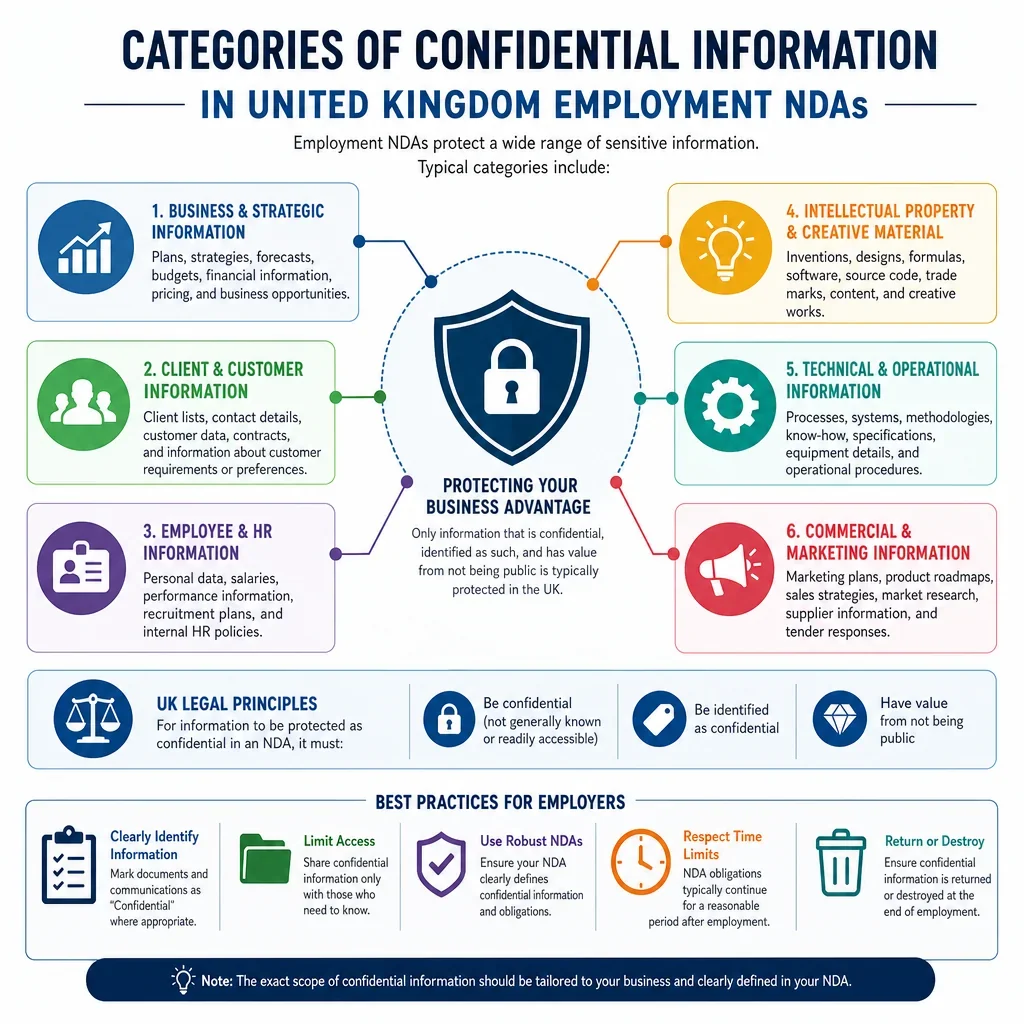
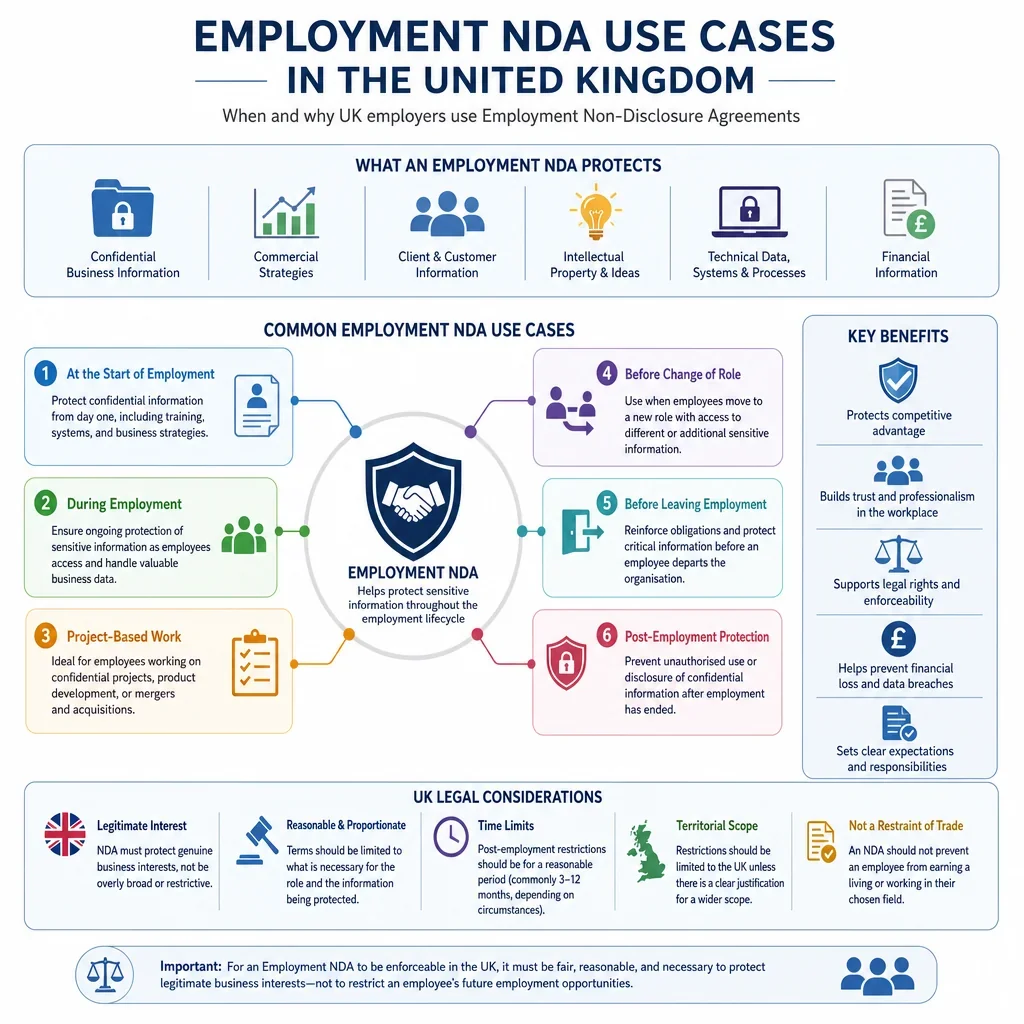
Employment NDAs are most useful where a worker will access information that is not already public and gives the employer a commercial advantage, such as customer lists, pricing models, source code, product roadmaps, acquisition plans or trade secrets. The highest-risk use cases are usually senior roles, sales and account management, research and development, technology, finance, corporate transactions and post-employment exits.
What Should A UK Employment NDA Avoid?
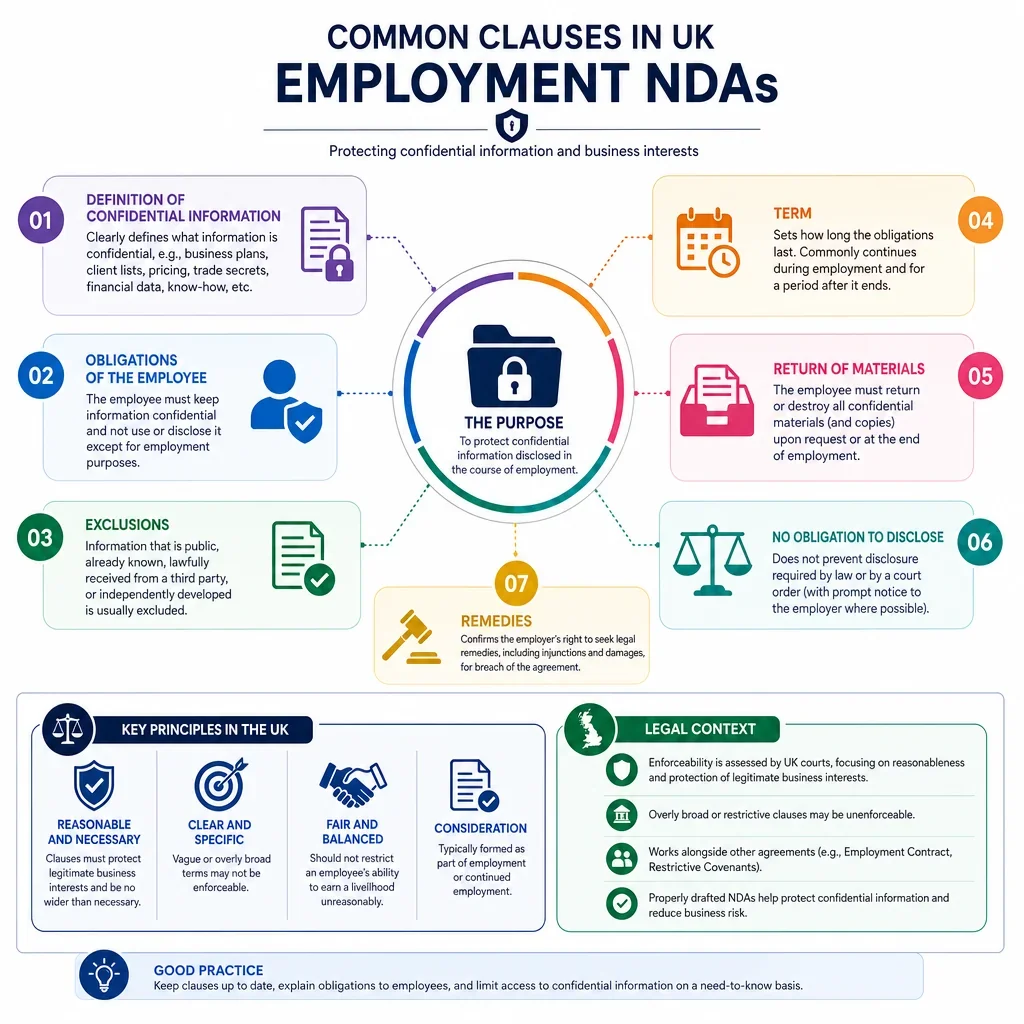
A UK employment NDA should not be drafted so broadly that it appears to prevent lawful whistleblowing, reporting crime, making protected disclosures, cooperating with regulators, or asserting employment rights. Drafting should preserve statutory rights under the Public Interest Disclosure Act 1998, the Employment Rights Act 1996 and whistleblowing guidance from GOV.UK.
How Should Employers Match NDA Terms To The Use Case?
- Recruitment: use narrow obligations covering interview packs, trial tasks, business plans and non-public hiring information, and avoid unnecessary access to live customer or technical data.
- During employment: link confidentiality duties to the employee's actual access, such as CRM data, pricing, product information, internal policies or operational processes.
- Senior roles: include clearer protection for strategy, board papers, investors, M&A, budgets and workforce plans, with carefully drafted post-termination obligations.
- Project-based work: define project materials, ownership of outputs, permitted collaboration tools and return or deletion obligations at project end.
- Post-employment: focus on return of property, deletion of copies, continuing trade secret protection and practical handover duties.
What UK Legal Issues Are Most Important?
Confidentiality clauses should be proportionate, specific and compatible with data protection law where personal data is involved. Where an NDA covers staff, candidates, customers or suppliers, the employer should consider UK GDPR and Data Protection Act 2018 obligations. Where the information is genuinely secret and commercially valuable, the Trade Secrets Regulations 2018 may also be relevant.
FAQs
You Might Also Be Interested In