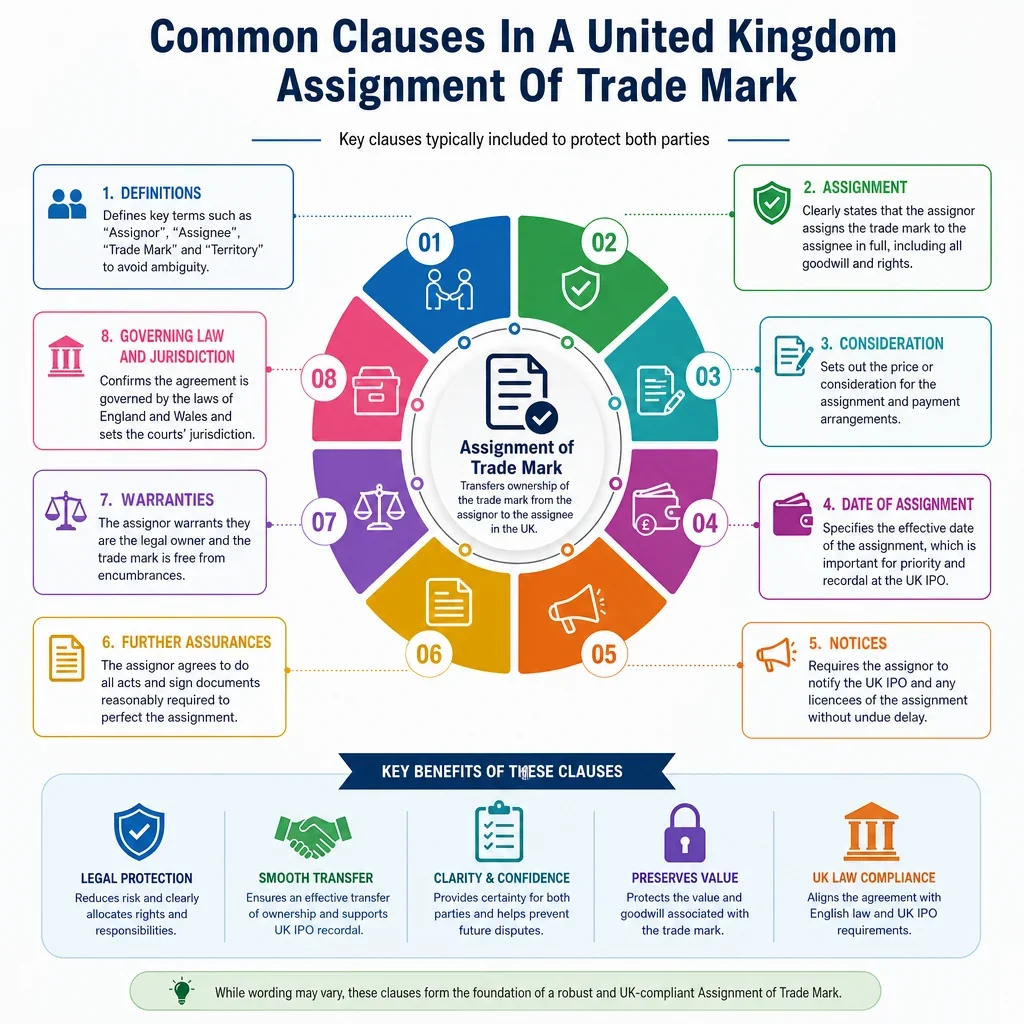
Common Clauses In A United Kingdom Assignment Of Trade Mark
Clause Name | Purpose | Clause Importance | When Used | Drafting Notes | Negotiability |
|---|---|---|---|---|---|
Parties and background | |||||
Parties | Identifies the assignor and assignee. | Core clause | Used in every trade mark assignment. | Use full legal names, company numbers and registered addresses where relevant. | Rarely negotiable |
Recitals Or Background | Sets out the commercial context for the transfer. | Common clause | Useful where the assignment forms part of a sale, reorganisation or settlement. | Avoid creating unintended warranties in the background section. | Sometimes negotiable |
Definitions | Defines key terms used throughout the assignment. | Common clause | Useful for multiple marks, territories, related rights or deferred completion. | Define "Trade Marks", "Goodwill", "Effective Date" and "Assigned Rights" precisely. | Depends on transaction |
Transfer provisions | |||||
Schedule Of Assigned Trade Marks | Lists the marks being transferred. | Core clause | Used whenever registered or pending marks are assigned. | Include mark, registration or application number, territory, classes and owner details. | Rarely negotiable |
Operative Assignment | Transfers ownership of the trade marks to the assignee. | Core clause | Used in every assignment of a UK registered trade mark. | State that the assignor assigns all right, title and interest in the marks. | Rarely negotiable |
Execution and formalities | |||||
Written Assignment And Signature | Ensures compliance with the statutory formality for assignment. | Core clause | Required for legal assignment of UK registered trade marks. | The assignment must be in writing and signed by or on behalf of the assignor. | Rarely negotiable |
Transfer provisions | |||||
Assignment With Goodwill | Transfers goodwill associated with the trade marks. | Core clause | Used where the buyer acquires the brand identity and customer recognition. | State whether the transfer is with goodwill, without goodwill, or limited to specified goodwill. | Sometimes negotiable |
Assignment Without Goodwill | Transfers the mark without transferring the related business goodwill. | Specialist clause | Used in limited restructurings or separated brand asset transfers. | Consider risk of confusion, validity issues and whether the register should note limitations. | Depends on transaction |
Effective Date | States when ownership transfers. | Core clause | Used in all assignments, especially where signing and completion differ. | Coordinate with payment, completion deliverables and recordal timing. | Sometimes negotiable |
Pending Applications | Transfers pending trade mark applications. | Common clause | Used where applications have been filed but not registered. | Identify application numbers and ensure assignment covers resulting registrations. | Rarely negotiable |
International And Overseas Marks | Covers non-UK registrations and international designations. | Specialist clause | Used where the portfolio includes overseas marks or Madrid Protocol registrations. | Check local law, recordal requirements and whether separate national documents are needed. | Depends on transaction |
EU Trade Marks | Addresses transfer of EU trade mark rights. | Specialist clause | Used where the transaction includes EU trade marks or comparable UK rights. | Distinguish UK rights, comparable UK rights and EUIPO-recorded rights. | Depends on transaction |
Unregistered Trade Marks | Transfers brand identifiers protected outside registration. | Common clause | Used where the brand includes logos, names or get-up not registered as marks. | Link the transfer to goodwill and passing off rights where appropriate. | Depends on transaction |
Domain Names | Transfers domain names associated with the brand. | Optional clause | Used where online brand assets are part of the deal. | Domain transfers require registrar or registry processes separate from the assignment deed. | Depends on transaction |
Social Media Accounts And Handles | Transfers control of brand-related social media assets. | Optional clause | Useful where brand value depends on social media presence. | Check platform terms and include access, credentials and administrator handover mechanics. | Depends on transaction |
Associated Copyright And Design Rights | Transfers rights in logos, packaging and artwork. | Optional clause | Useful where the trade mark includes artistic logos or product get-up. | Trade mark assignment alone may not transfer copyright in logo artwork. | Depends on transaction |
Excluded Rights | Clarifies which rights are not being assigned. | Common clause | Useful for partial portfolio sales or brand carve-outs. | Avoid conflict between the operative clause and exclusions schedule. | Usually negotiable |
Partial Assignment By Goods Or Services | Transfers rights only for specified goods or services. | Specialist clause | Used when parties split a mark by product or service category. | Define the retained and assigned specifications with precision to reduce confusion risk. | Usually negotiable |
Partial Assignment By Territory | Transfers rights only for specified territories. | Specialist clause | Used where a portfolio is divided between countries or regions. | Check whether territorial division is compatible with the relevant registration system. | Usually negotiable |
Payment provisions | |||||
Consideration | States the price or value given for the assignment. | Core clause | Used in sale assignments and nominal-value intra-group transfers. | Specify amount, currency, VAT treatment and whether consideration is inclusive or exclusive of tax. | Usually negotiable |
Payment Mechanics | Explains how and when payment is made. | Common clause | Useful where payment is not made simultaneously with signing. | Include bank details, due date, completion linkage and consequences of non-payment. | Usually negotiable |
Deferred Consideration | Allows part of the price to be paid later. | Optional clause | Used where payment is staged, conditional or linked to future events. | Specify triggers, due dates, interest, security and whether title transfers before full payment. | Usually negotiable |
Royalty Or Earn-Out | Links consideration to future sales or performance. | Optional clause | Used where value depends on post-assignment exploitation of the brand. | Define revenue, audit rights, reporting periods, deductions and anti-avoidance protections. | Usually negotiable |
VAT And Taxes | Allocates responsibility for VAT and other taxes. | Common clause | Used in most commercial assignments for value. | Confirm VAT status, invoicing requirements and whether the price is VAT-inclusive. | Usually negotiable |
Warranties and confirmations | |||||
Ownership Warranty | Confirms the assignor owns the assigned marks. | Core clause | Used in almost all arm's-length assignments. | Check register ownership and chain of title before giving the warranty. | Usually negotiable |
Capacity And Authority Warranty | Confirms the assignor has legal power to transfer the marks. | Core clause | Used where parties are companies, trustees, insolvency officeholders or group entities. | Check board approvals, constitutional limits, consents and authority of signatories. | Sometimes negotiable |
No Encumbrances Warranty | Confirms the marks are free from security interests and third-party rights. | Common clause | Important where the buyer needs clean title. | Check licences, charges, co-existence agreements, security interests and register entries. | Usually negotiable |
Validity Warranty | Confirms the registered marks are valid and subsisting. | Common clause | Used where the buyer relies on existing registrations. | Sellers often qualify this by awareness and disclose pending challenges or renewal issues. | Usually negotiable |
No Infringement Warranty | Confirms use of the marks has not infringed third-party rights. | Common clause | Useful where the buyer will continue the seller's brand use. | Often limited to the assignor's knowledge, territories and historical use. | Usually negotiable |
No Disputes Or Proceedings Warranty | Confirms there are no known disputes affecting the marks. | Common clause | Important where opposition, invalidity, revocation or infringement risk exists. | Disclose registry proceedings, threats, settlement agreements and correspondence. | Usually negotiable |
Renewals And Maintenance Warranty | Confirms required renewals and maintenance steps are up to date. | Common clause | Useful where renewal deadlines are close. | UK trade marks must be renewed every 10 years to remain registered. | Sometimes negotiable |
Licences And Consents Warranty | Discloses licences, consents and restrictions affecting the marks. | Common clause | Important if distributors, franchisees or group companies use the mark. | State whether licences continue, terminate or require consent to assignment. | Usually negotiable |
Use And Non-Use Confirmation | Identifies whether marks may be vulnerable for non-use. | Specialist clause | Useful where marks are old, dormant or unused in key classes. | UK registrations may be revoked for five years' non-use, subject to statutory rules. | Usually negotiable |
Disclosure Schedule | Qualifies warranties by listing known exceptions. | Common clause | Used in negotiated sales with warranties. | Ensure disclosures are specific enough to qualify the relevant warranties. | Usually negotiable |
Further assurance | |||||
UKIPO Recordal Cooperation | Requires cooperation to register the assignment at the UKIPO. | Core clause | Used for UK registered marks and applications. | Specify who files forms, pays fees and supplies signatures or evidence. | Sometimes negotiable |
Effect Of Non-Recordal | Highlights consequences if the assignment is not registered. | Specialist clause | Useful where the assignee may need to enforce the mark soon after completion. | Unregistered registrable transactions may affect priority and recovery of infringement costs or damages. | Rarely negotiable |
Further Assurance | Requires parties to sign additional documents needed to perfect the transfer. | Core clause | Useful for registry filings, foreign recordals and chain-of-title corrections. | Limit scope to reasonable acts and allocate expenses clearly. | Sometimes negotiable |
Delivery Of Documents And Records | Transfers certificates, prosecution files and brand records. | Common clause | Useful where the assignee needs complete portfolio records after completion. | Include digital files, renewal records, attorney correspondence and evidence of use. | Sometimes negotiable |
Prosecution And Registry Handover | Transfers control of ongoing registry matters. | Optional clause | Used where applications, oppositions or renewals are pending. | Identify deadlines, representatives, files and responsibility for existing costs. | Usually negotiable |
Transfer provisions | |||||
Existing Infringement Claims | Transfers or reserves rights to sue for past infringement. | Specialist clause | Useful where infringement occurred before completion. | State whether past claims, damages and settlement proceeds pass to the assignee. | Usually negotiable |
Liability and remedies | |||||
Indemnity For Breach | Provides compensation for specified losses from breach. | Common clause | Used where warranties, undisclosed disputes or title defects create material risk. | Define covered losses, procedures, exclusions and mitigation requirements. | Usually negotiable |
Limitation Of Liability | Caps or limits exposure for claims under the assignment. | Common clause | Used in negotiated commercial assignments with warranties or indemnities. | Consider caps, time limits, exclusions, fraud carve-outs and reasonableness if applicable. | Usually negotiable |
Specific Performance And Injunctive Relief | Supports court orders requiring cooperation or preventing misuse. | Optional clause | Useful where monetary damages may not protect brand ownership or control. | Do not assume equitable remedies are automatic courts retain discretion. | Sometimes negotiable |
Confidentiality | Keeps deal terms and disclosed brand information confidential. | Optional clause | Useful before public announcement or where commercial information is shared. | Include permitted disclosures for advisers, regulators, tax and registry filings. | Sometimes negotiable |
Public Announcements | Controls public statements about the assignment. | Optional clause | Useful where customer, investor or market messaging matters. | Allow announcements required by law, stock exchange rules or registry practice. | Sometimes negotiable |
Assignor Ceases Use | Stops the assignor using the assigned marks after completion. | Common clause | Important where the seller remains active in related markets. | Coordinate with transitional use, stock run-off and any retained business names. | Usually negotiable |
Transfer provisions | |||||
Transitional Use Licence | Allows temporary use of the mark after assignment. | Optional clause | Used for stock run-off, rebranding or business separation periods. | Define duration, territory, permitted goods, quality controls and termination rights. | Usually negotiable |
Quality Control During Transitional Use | Protects the reputation and distinctiveness of the assigned marks. | Optional clause | Used where the assignor may keep using the brand temporarily. | Include standards, inspection rights and approval processes for branded materials. | Usually negotiable |
Stock Run-Off | Allows sale of existing branded stock for a limited period. | Optional clause | Used where the assignor holds inventory bearing the assigned mark. | Set expiry date, stock quantities, channels, territories and quality conditions. | Usually negotiable |
Liability and remedies | |||||
Non-Challenge | Prevents the assignor from attacking the assigned marks. | Optional clause | Useful where the seller may remain in the sector or hold similar marks. | Check competition law and reasonableness, especially for broad or long restrictions. | Usually negotiable |
Non-Compete Or Brand Non-Use | Restricts competing use of confusingly similar branding. | Specialist clause | Used in business sales where goodwill protection is important. | Keep restrictions proportionate in duration, territory and scope. | Usually negotiable |
Execution and formalities | |||||
Notices | Sets how formal communications are served. | Common clause | Useful where obligations continue after completion. | Specify addresses, email use, deemed receipt and updates to contact details. | Sometimes negotiable |
Liability and remedies | |||||
Entire Agreement | Limits reliance on prior statements outside the document. | Common clause | Used in negotiated standalone assignments. | Preserve liability for fraud and align with disclosure letters or sale agreements. | Sometimes negotiable |
Execution and formalities | |||||
Variation | States how the assignment can be amended. | Common clause | Useful where post-signing corrections or updates may be needed. | Require written amendments signed by the parties. | Rarely negotiable |
Counterparts | Allows parties to sign separate copies of the same document. | Common clause | Useful where parties sign remotely or in different locations. | Ensure all counterpart copies together form one agreement. | Rarely negotiable |
Electronic Signature | Permits execution by electronic signature where legally valid. | Optional clause | Useful for remote signing and fast completion. | Check deed formalities, witness requirements and any registry evidence requirements. | Sometimes negotiable |
Execution As A Deed | Provides formal execution where deed status is desired or required. | Common clause | Used for nominal consideration, extra formality or wider limitation periods. | Company deed execution can be by two authorised signatories or a director with a witness. | Sometimes negotiable |
Individual Execution And Witnessing | Ensures valid signing by an individual assignor or assignee. | Core clause | Used where an individual signs, especially if the document is a deed. | A deed by an individual must be signed in the presence of a witness who attests the signature. | Rarely negotiable |
Company Execution | Ensures valid execution by a UK company. | Core clause | Used where a UK company is the assignor or assignee. | Use the correct statutory block for directors, secretary, witness or seal execution. | Rarely negotiable |
Authorised Signatories | Confirms signatories are authorised to bind the parties. | Common clause | Useful for subsidiaries, partnerships, LLPs and overseas entities. | Request board minutes, powers of attorney or signing authority evidence if risk is material. | Sometimes negotiable |
Further assurance | |||||
Power Of Attorney For Recordal | Authorises a party or adviser to complete filings on behalf of the assignor. | Specialist clause | Useful where the assignor may be unavailable after completion or foreign filings are needed. | Define scope tightly and check whether a separate notarised or legalised power is required. | Sometimes negotiable |
Governing law | |||||
Governing Law | States which law governs the assignment. | Core clause | Used in all assignments, especially where a party or mark is outside the UK. | For UK marks, English law is common but consider Scots or Northern Irish connections. | Sometimes negotiable |
Jurisdiction | Identifies which courts may hear disputes. | Common clause | Used where parties want certainty over dispute forum. | State whether jurisdiction is exclusive or non-exclusive. | Sometimes negotiable |
Dispute Resolution Procedure | Sets escalation, mediation or arbitration steps before litigation. | Optional clause | Useful in ongoing commercial relationships or complex brand transfers. | Avoid vague escalation steps that delay urgent injunctions or registry deadlines. | Usually negotiable |
Liability and remedies | |||||
Third Party Rights Exclusion | Controls whether non-parties can enforce the assignment. | Common clause | Used where group companies, licensees or affiliates may benefit from clauses. | Decide whether to exclude or expressly preserve rights under the 1999 Act. | Sometimes negotiable |
No Assignment Of Agreement | Restricts transfer of contractual rights under the assignment document itself. | Optional clause | Useful where ongoing obligations, earn-outs or indemnities exist. | Do not accidentally restrict the intended transfer of the trade marks. | Usually negotiable |
Payment provisions | |||||
Costs And Expenses | Allocates legal, filing and recordal costs. | Common clause | Used where UKIPO, foreign agent or adviser costs may arise. | State who pays UKIPO change-of-ownership fees and overseas recordal costs. | Usually negotiable |
Transfer provisions | |||||
Completion Deliverables | Lists items to be delivered at completion. | Common clause | Useful where signing, payment, handover and filings must be coordinated. | Include signed assignment, payment, registry forms, files, passwords and certificates. | Usually negotiable |
Conditions Precedent | Makes transfer conditional on specified events. | Optional clause | Used where consents, payment, settlement or group approvals are required first. | State longstop dates, waiver rights and consequences if conditions fail. | Usually negotiable |
Warranties and confirmations | |||||
Insolvency Seller Provisions | Adapts warranties and authority provisions for insolvency sales. | Specialist clause | Used where an administrator, liquidator or receiver sells trade mark assets. | Expect limited warranties and verify officeholder authority and asset ownership carefully. | Depends on transaction |
Transfer provisions | |||||
Intra-Group Transfer Provisions | Tailors the assignment for group restructurings. | Specialist clause | Used when moving trade marks between companies in the same group. | Consider tax, transfer pricing, existing licences and whether nominal consideration is adequate. | Depends on transaction |
Release Of Security Interests | Ensures charges or security over the marks are released. | Specialist clause | Used where trade marks secure lending or appear in company charge records. | Check Companies House charges and obtain lender releases or consents where needed. | Usually negotiable |
Liability and remedies | |||||
Data Protection For Brand Records | Manages personal data in transferred brand records or customer lists. | Specialist clause | Used where goodwill transfer includes customer, marketing or account data. | Assess UK GDPR roles, lawful basis, notices and data minimisation before transfer. | Depends on transaction |
What Clauses Matter Most In A UK Trade Mark Assignment?
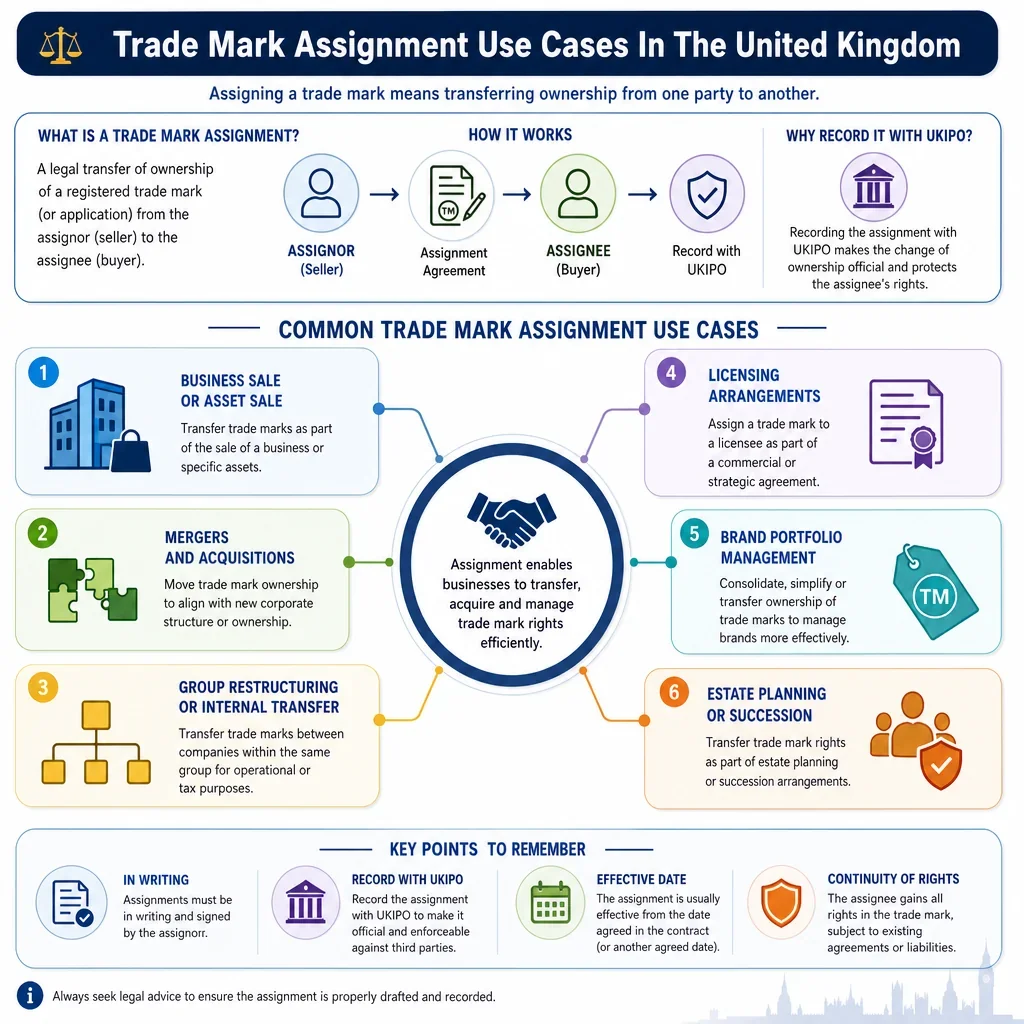
The operative transfer wording, identification of the marks, goodwill wording, consideration and execution clauses are usually the most important provisions. A UK trade mark assignment should clearly state which registered or unregistered marks are being transferred, whether goodwill is included, and the effective date of transfer.
Does A UK Trade Mark Assignment Need To Be In Writing?
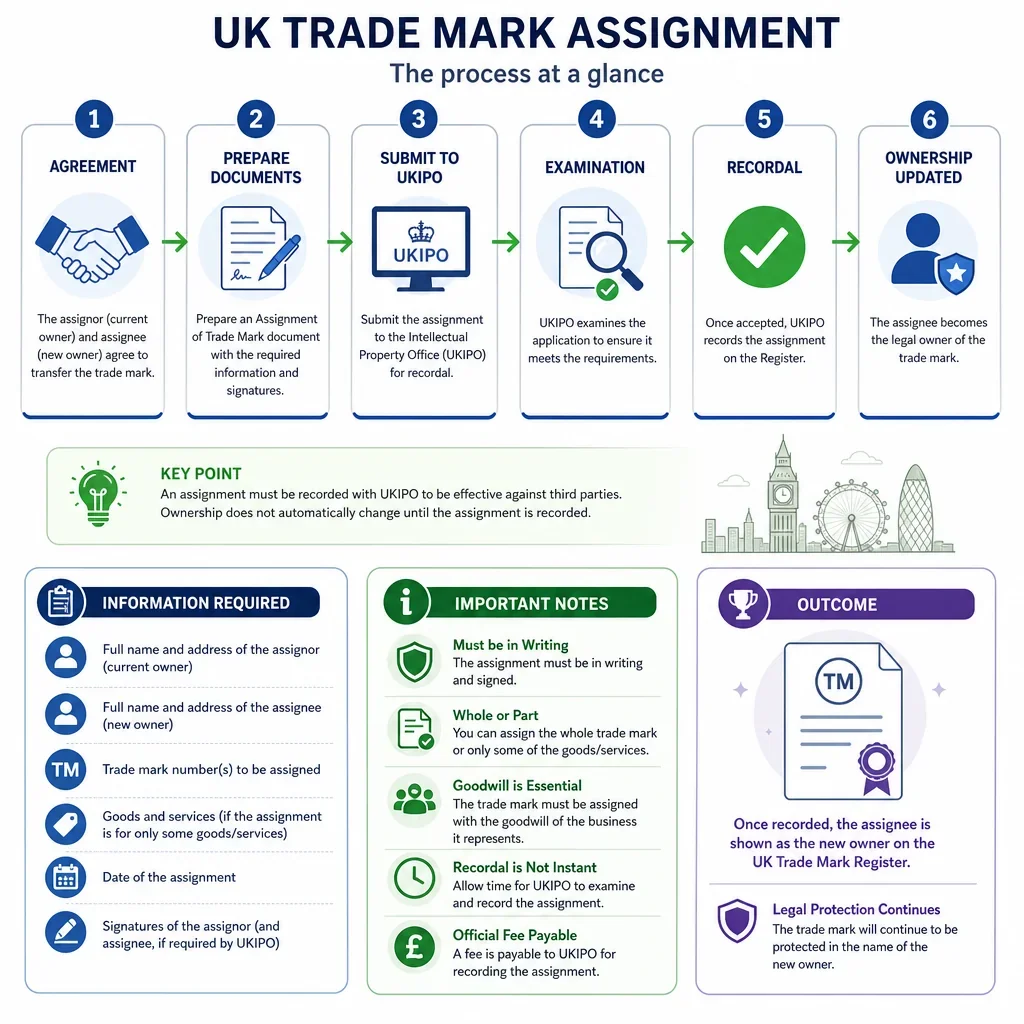
Yes. For UK registered trade marks, an assignment is not effective unless it is in writing and signed by or on behalf of the assignor. This makes the execution clause and signatory details central, not merely administrative.
Why Include Further Assurance And Recordal Clauses?
After signing, the buyer will usually need cooperation from the seller to record the assignment with the UK Intellectual Property Office. Recordal is important because an unregistered transaction may limit enforcement rights and can affect priority against later interests.
Which Clauses Are Most Negotiated?
- Warranties are often negotiated because the buyer wants assurance on ownership, validity, non-infringement and encumbrances, while the seller may want knowledge qualifiers and liability caps.
- Indemnities and limitations of liability are commonly negotiated because they allocate financial risk if the mark is challenged or if undisclosed licences, security interests or disputes exist.
- Tax, VAT and payment mechanics depend on the commercial structure, especially whether the assignment forms part of a wider business sale.
What Should A Buyer Check Before Signing?
A buyer should check the UK register, confirm the exact registration or application numbers, review any licences or security interests, and ensure the assignment covers related rights such as goodwill, domain names, social media handles or enforcement claims if those are commercially required.
FAQs
You Might Also Be Interested In