United Kingdom Assured Shorthold Tenancy Agreement Clause Library
Clause name | Purpose | Typical inclusion status | Plain English summary | Drafting considerations |
|---|---|---|---|---|
Legal compliance | ||||
Parties and Property | Identifies the landlord, tenant and rented property. | Core | States who is bound by the agreement and what premises are let. | Use full legal names, service addresses and a precise property description. |
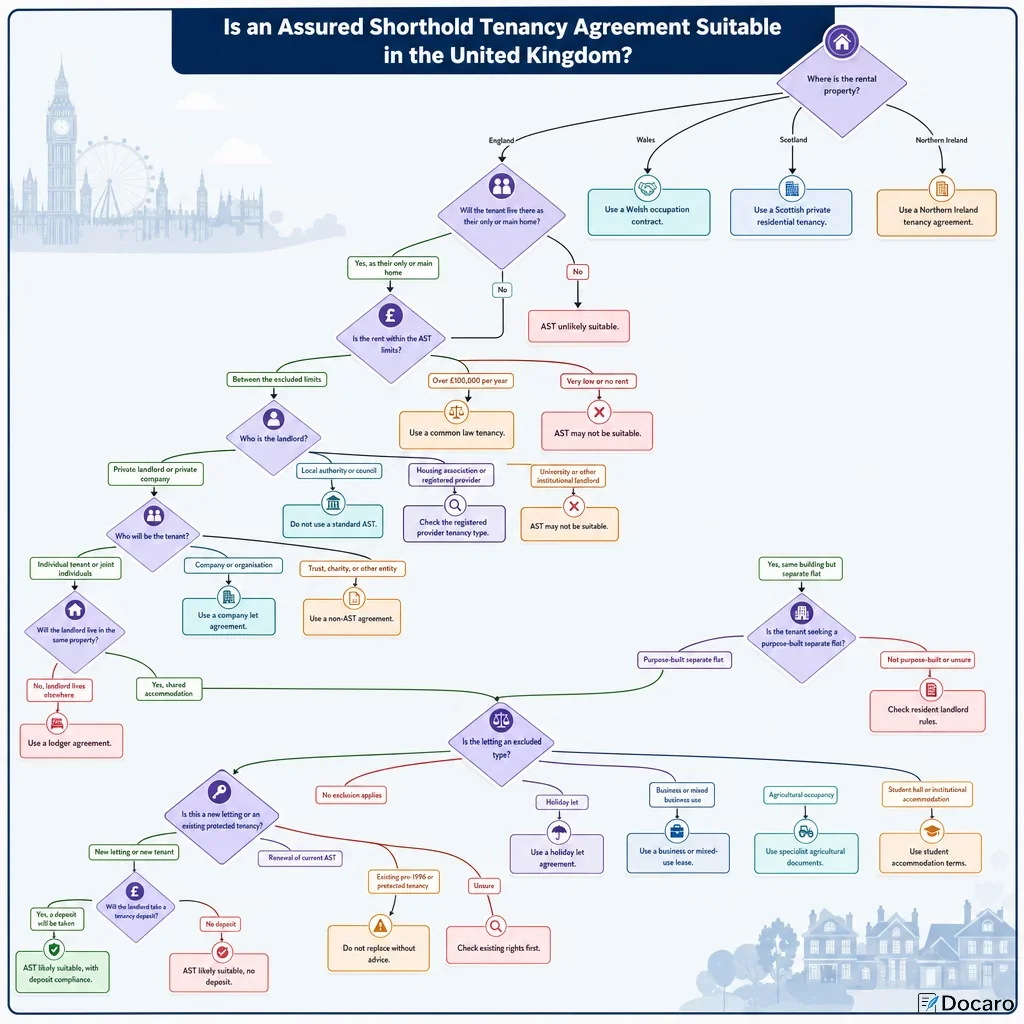
Assured Shorthold Tenancy Status | Confirms the intended legal nature of the tenancy. | Core | Says the tenancy is intended to be an assured shorthold tenancy where the statutory conditions are met. | Do not use if the letting cannot legally be an AST, such as some company lets or high-rent tenancies. |
Termination and notices | ||||
Fixed Term and Start Date | Sets when the tenancy starts and its initial duration. | Core | Gives the start date, end date and any fixed-term period. | Ensure dates align with rent periods, possession rules and any break clause. |
Periodic Tenancy Continuation | Explains what happens if the tenant remains after the fixed term. | Common | The tenancy may continue periodically after the fixed term unless ended lawfully. | State whether continuation is contractual or statutory and match rent periods. |
Rent and payment | ||||
Rent Amount | Records the rent payable by the tenant. | Core | States how much rent the tenant must pay. | Specify whether rent includes any bills, service charges or other sums. |
Rent Payment Date and Method | Sets when and how rent must be paid. | Core | Requires rent to be paid on stated dates by the agreed method. | Include bank details carefully and allow for changes by written notice. |
Rent Payable In Advance | Clarifies that rent is due before the period it covers. | Common | The tenant pays rent at the start of each rent period. | Make clear whether the first and last payments are apportioned. |
Interest on Late Rent | Allows limited interest to be charged on overdue rent. | Common | Interest may be charged only if rent is sufficiently overdue and within legal limits. | For England, align with permitted payment rules and avoid penalty rates. |
Rent Review | Sets how rent may be increased during the tenancy. | Optional | Explains when rent can change and how the new rent is calculated or agreed. | Use clear timing, formula and notice wording avoid unfair unilateral discretion. |
Deposit | ||||
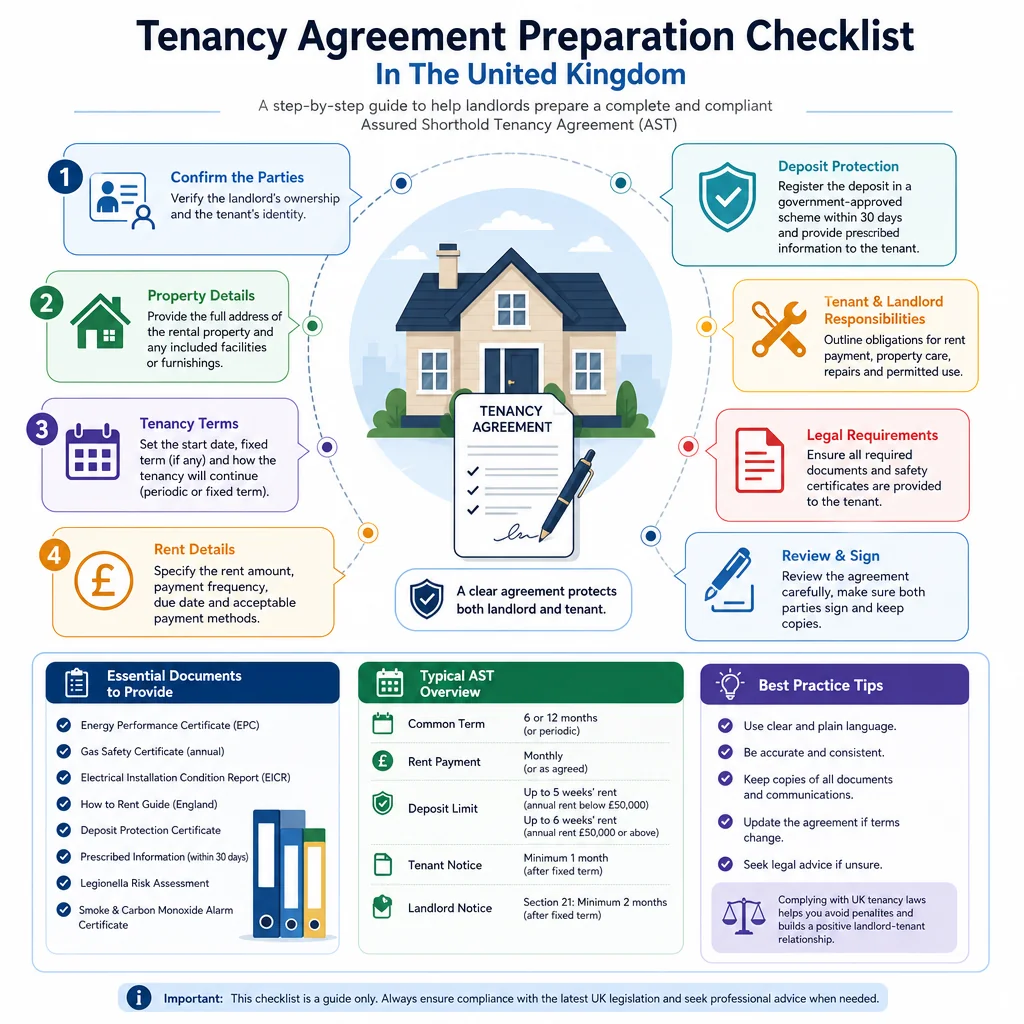
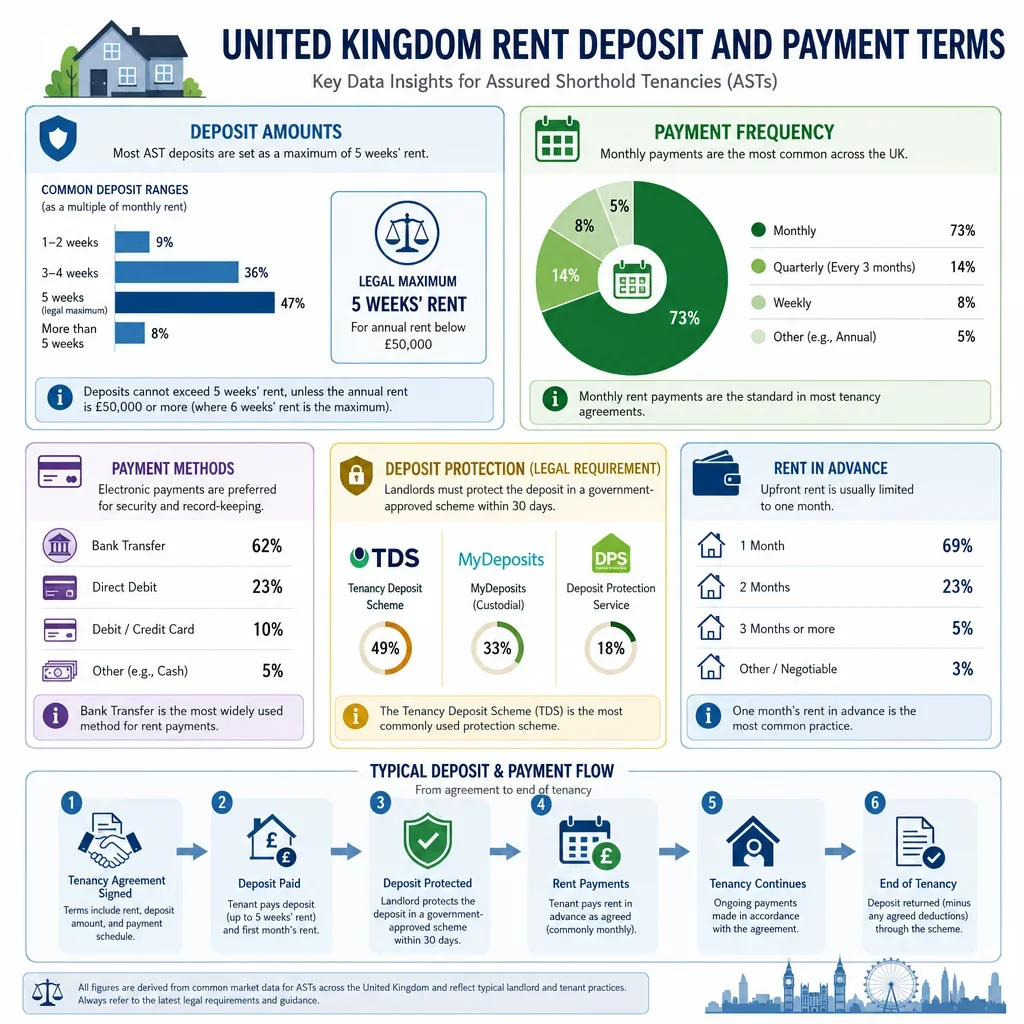
Tenancy Deposit Amount | Records the deposit and supports compliance with deposit caps. | Core | States the deposit paid by the tenant as security for tenancy obligations. | For England, check the statutory cap of five or six weeks depending on annual rent. |
Deposit Protection Scheme | Confirms the landlord's duty to protect the deposit. | Core | The deposit must be protected in an authorised scheme and prescribed information given. | Include scheme details or require prompt notice once protection is completed. |
Permitted Deposit Deductions | Explains when the landlord may claim from the deposit. | Core | Deductions may cover unpaid rent, damage, cleaning, missing items or other tenant breaches. | Tie deductions to actual loss and avoid betterment or vague charges. |
Deposit Return and Dispute Process | Sets how the deposit will be repaid or disputed. | Common | After the tenancy ends, undisputed sums are returned and disputes use the scheme process. | Match the selected scheme rules and avoid fixed deduction schedules. |
Holding Deposit Treatment | Explains how any pre-tenancy holding deposit is applied or retained. | Situational | A holding deposit may be offset against rent or deposit, or refunded or retained only as allowed. | For England, ensure amount and retention reasons comply with tenant fees legislation. |
Repairs and maintenance | ||||
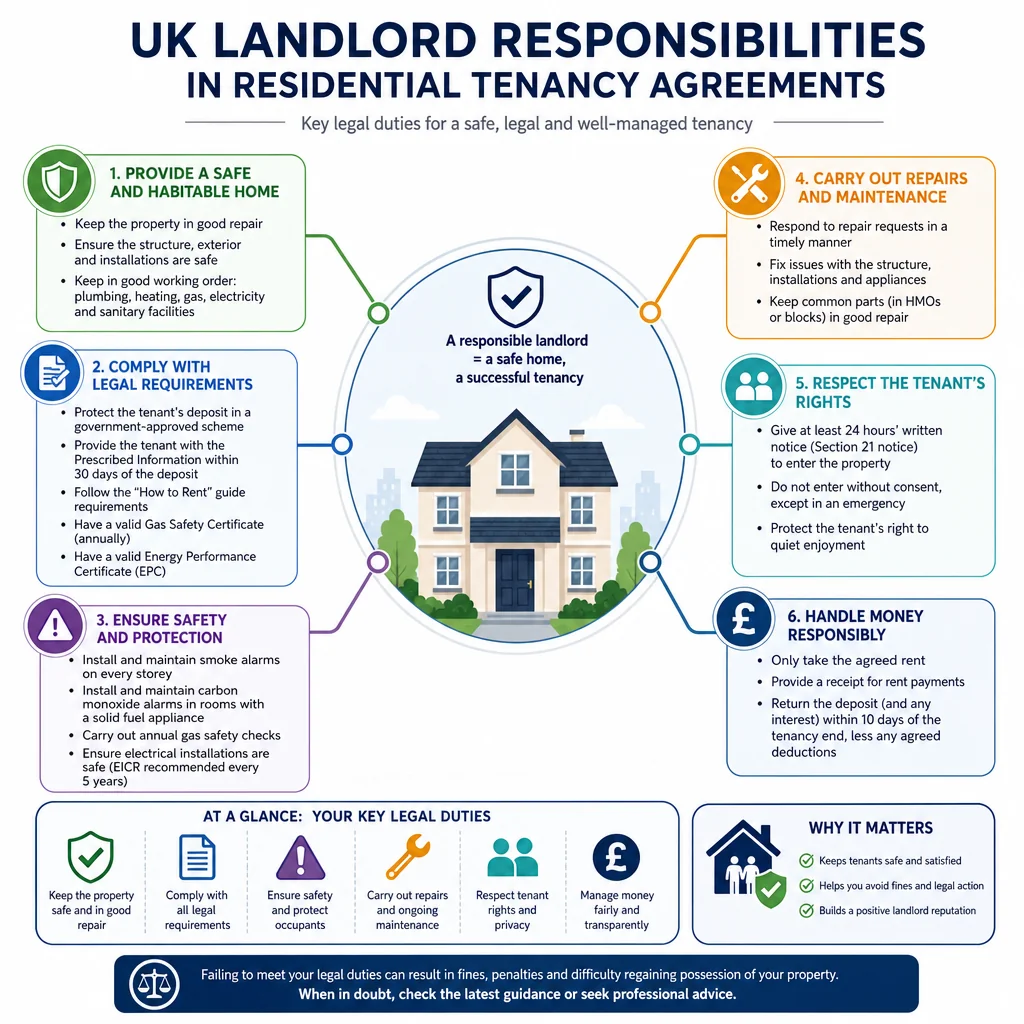
Landlord Repairing Obligations | Records the landlord's statutory and contractual repair duties. | Core | The landlord keeps the structure, exterior and key installations in repair. | Do not exclude or reduce statutory repair obligations. |
Landlord obligations | ||||
Fitness for Human Habitation | Reflects the landlord's duty to provide and maintain a habitable home. | Common | The property must be fit to live in at the start and during the tenancy. | Do not limit statutory rights include tenant duty to report defects promptly. |
Tenant obligations | ||||
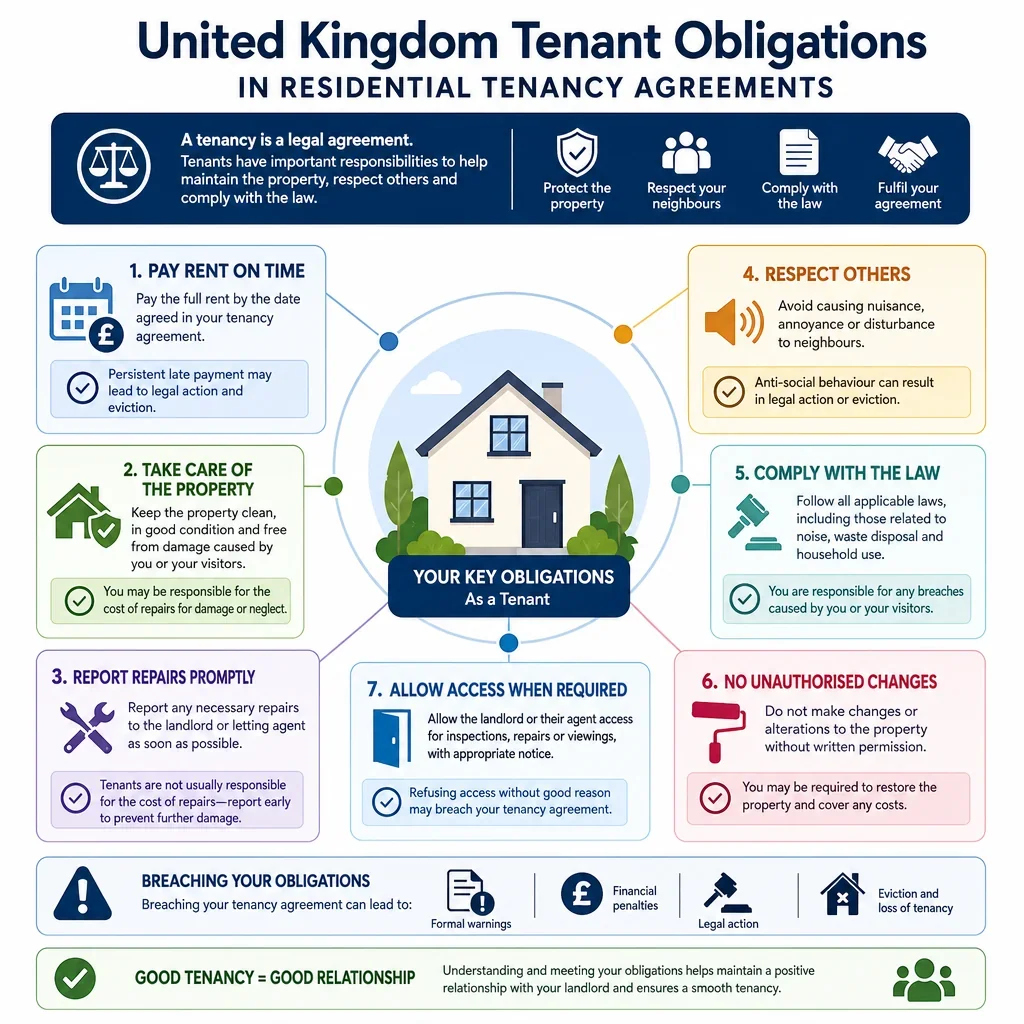
Tenant-Like Manner | Requires the tenant to take reasonable care of the property. | Core | The tenant must use the property sensibly and do minor day-to-day tasks. | Do not make the tenant responsible for landlord statutory repairs or fair wear and tear. |
Repairs and maintenance | ||||
Reporting Defects and Damage | Requires prompt notice of repair issues or damage. | Core | The tenant must tell the landlord about defects, leaks, hazards or damage promptly. | Specify contact method and emergency reporting arrangements. |
Tenant Damage Liability | Makes the tenant responsible for damage they cause. | Core | The tenant must pay for damage caused by them, their household or visitors. | Exclude fair wear and tear and require evidence of loss. |
Deposit | ||||
Fair Wear and Tear | Protects the tenant from paying for ordinary deterioration. | Common | The tenant is not liable for normal ageing or reasonable use of the property. | Avoid charging replacement cost where repair or apportionment is fair. |
Tenant obligations | ||||
Cleanliness and End of Tenancy Cleaning | Sets cleaning standards during and at the end of the tenancy. | Common | The tenant must keep the property reasonably clean and return it to the agreed standard. | In England, do not require paid professional cleaning unless the cost is lawfully recoverable for breach. |
Deposit | ||||
Inventory and Schedule of Condition | Creates evidence of contents and condition at check-in. | Common | An inventory records what is provided and the property's condition at the start. | Attach, date and sign the inventory include photos and meter readings where possible. |
Access and inspections | ||||
Landlord Access for Inspection and Repairs | Allows reasonable access for inspection and works. | Core | The landlord may enter at reasonable times after notice to inspect or repair. | Usually require at least 24 hours written notice except emergencies. |
Landlord obligations | ||||
Quiet Enjoyment | Protects the tenant's right to occupy without unlawful interference. | Core | The landlord must not disturb the tenant's lawful occupation of the property. | Balance with lawful access rights and emergency entry wording. |
Access and inspections | ||||
Emergency Entry | Allows urgent entry to protect people or property. | Common | The landlord or contractor may enter without usual notice in a genuine emergency. | Define emergencies narrowly, such as fire, flood, gas leak or structural danger. |
Viewings Before Tenancy End | Permits access for prospective tenants or buyers near the end of the tenancy. | Common | The tenant must allow reasonable viewings after proper notice during the final period. | Limit to reasonable hours, reasonable notice and a defined final period. |
Tenant obligations | ||||
Use as Private Residence | Restricts use to residential occupation. | Core | The tenant must use the property as a private home only. | Consider reasonable home working and insurance, planning or mortgage restrictions. |
Permitted Occupiers | Controls who may live at the property. | Common | Only named tenants and approved occupiers may live at the property. | Avoid discriminatory wording and consider HMO or overcrowding limits. |
No Subletting or Assignment | Prevents unauthorised transfer or sharing of the tenancy. | Core | The tenant must not sublet, assign or part with possession without consent. | Specify whether lodgers, short lets or licence arrangements are also prohibited. |
No Short-Term Letting | Prevents Airbnb-style or holiday letting use. | Common | The tenant must not let the property to guests or use it for holiday accommodation. | Cross-check with mortgage, lease, planning and insurance restrictions. |
Nuisance and Anti-Social Behaviour | Prohibits conduct that disturbs neighbours or breaches the law. | Core | The tenant must not cause nuisance, harassment, annoyance or anti-social behaviour. | Include responsibility for household members and visitors avoid vague overreach. |
No Illegal or Immoral Use | Prohibits criminal or unlawful use of the property. | Core | The tenant must not use the property for illegal activity or allow others to do so. | Coordinate with possession grounds and evidence requirements. |
Pets and alterations | ||||
Pets and Animals | Controls whether pets are allowed at the property. | Optional | Pets are allowed, prohibited or require consent, depending on the agreement. | Avoid blanket wording where inappropriate address damage, cleaning, nuisance and allergies. |
Alterations and Improvements | Controls physical changes to the property. | Core | The tenant must not alter, improve or add fixtures without permission. | Cover drilling, decorating, satellite dishes, smart devices and reinstatement obligations. |
Decoration and Wall Fixings | Sets rules for painting, wallpapering and fixing items to walls. | Common | The tenant needs permission before redecorating or making holes or fixings. | Allow reasonable picture hanging if desired and state reinstatement requirements. |
Tenant obligations | ||||
Smoking and Vaping | Regulates smoking or vaping at the property. | Optional | Smoking or vaping may be prohibited inside the property or in specified areas. | Consider communal areas, gardens, fire safety, odour and cleaning evidence. |
Repairs and maintenance | ||||
Garden Maintenance | Allocates routine garden care responsibilities. | Situational | The tenant must keep gardens tidy, mow lawns and avoid damaging plants if agreed. | Distinguish routine upkeep from specialist tree work or structural landscaping. |
Tenant obligations | ||||
Refuse, Recycling and Bins | Requires proper disposal of waste. | Common | The tenant must use bins properly and follow local collection rules. | Useful for flats, HMOs and properties with shared bin stores. |
Utilities and services | ||||
Utilities and Council Tax | Allocates responsibility for utilities and council tax. | Core | The tenant usually pays gas, electricity, water, council tax, broadband and similar charges. | State included bills clearly and account for HMOs, student lets or council tax exemptions. |
Meter Readings and Utility Accounts | Manages utility account setup and final bills. | Common | The tenant must provide opening and closing meter readings and notify suppliers. | Record readings in the inventory and require forwarding address for final bills. |
Changing Utility Suppliers | Controls or confirms the tenant's ability to switch suppliers. | Optional | The tenant may switch suppliers if they pay the bills, subject to agreed notice rules. | Avoid unlawfully restricting switching where the tenant is directly responsible for bills. |
Internet, Telephone and TV Services | Allocates responsibility for communications services and TV licensing. | Common | The tenant pays for their own broadband, phone, TV services and licence unless included. | Cover installation consent, cabling, satellite dishes and service cancellation. |
Landlord obligations | ||||
Insurance and Tenant Belongings | Clarifies property insurance and tenant contents responsibility. | Common | The landlord insures the building the tenant insures their own possessions. | Do not require tenant to insure landlord risks unless legally and commercially justified. |
Tenant obligations | ||||
Keys, Locks and Security Devices | Controls keys, lock changes and security devices. | Core | The tenant must look after keys and not change locks without consent except where justified. | Allow emergency security steps and require landlord copies where lawful and safe. |
Rent and payment | ||||
Lost Keys and Security Costs | Allows recovery of reasonable costs for lost keys or security devices. | Common | The tenant may have to pay reasonable replacement costs if they lose keys or fobs. | For England, charges must be evidenced, reasonable and within permitted payment rules. |
Legal compliance | ||||
Fire Safety and Smoke Alarms | Addresses smoke alarms, carbon monoxide alarms and tenant cooperation. | Core | Required alarms must be installed and checked, and the tenant must not tamper with them. | Reflect current alarm rules and allocate routine battery reporting or replacement clearly. |
Gas Safety Certificate | Confirms gas safety inspection and certificate duties. | Core | The landlord must arrange gas safety checks and provide the required record where gas exists. | Include tenant cooperation for access but do not shift the landlord's compliance duty. |
Electrical Safety Standards | Addresses electrical installation inspection and safety duties. | Core | The landlord must ensure the electrical installation is inspected and safe where rules apply. | Require tenant access cooperation and reporting of electrical hazards. |
Energy Performance Certificate | Confirms provision of an EPC where required. | Core | The tenant should receive a valid EPC for the property before or at letting where required. | Check exemptions and minimum energy efficiency rules before letting. |
Right to Rent Checks | Supports immigration status checks for adult occupiers in England. | Common | Adult occupiers may need to provide documents or share codes proving their right to rent. | Applies in England avoid discrimination and handle personal data lawfully. |
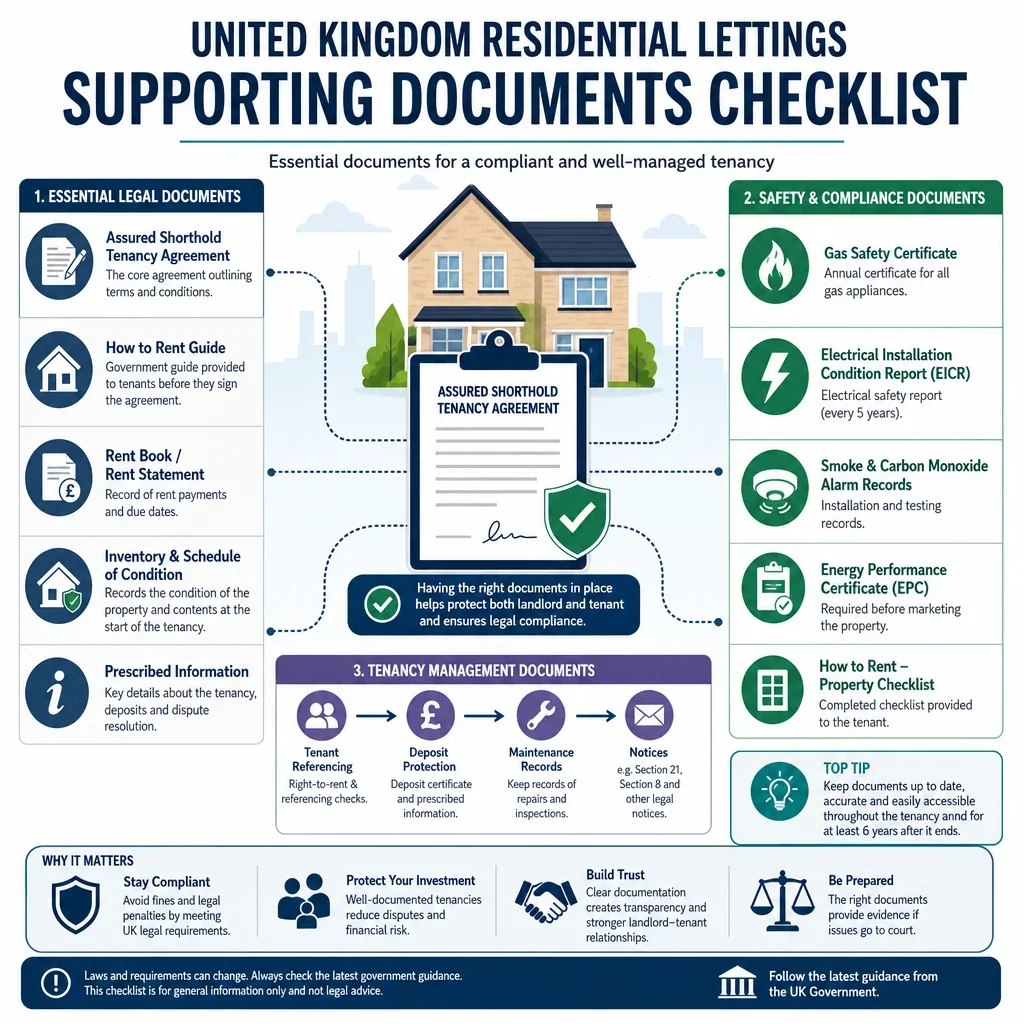
How to Rent Guide Acknowledgement | Records delivery of the current How to Rent guide in England. | Common | The tenant confirms receipt of the latest How to Rent guide where required. | Use the current version and keep evidence of service, especially for section 21 readiness. |
HMO and Selective Licensing Compliance | Addresses property licensing duties where the property is an HMO or in a licensing area. | Situational | The landlord must hold any required HMO, additional or selective licence. | Check local authority schemes and licence conditions before occupation. |
Rent and payment | ||||
Permitted Payments Only | Ensures tenant charges are limited to lawful permitted payments. | Core | The tenant only pays rent, deposit and other charges allowed by law. | For England, remove admin fees, check-out fees and other prohibited default charges. |
Legal compliance | ||||
Personal Data and Privacy | Explains use of tenant personal data for tenancy management. | Common | The landlord may process personal data for checks, management, repairs and legal compliance. | Provide a privacy notice and avoid using the AST as the only data protection notice. |
Termination and notices | ||||
Break Clause | Allows early termination during a fixed term if conditions are met. | Optional | Either one or both parties may end the tenancy early after giving the required notice. | State who can use it, earliest date, notice length and any conditions clearly. |
Tenant Notice to Quit or Vacate | Sets how the tenant may end the tenancy. | Core | The tenant must give the correct notice if they want to leave lawfully. | Match fixed-term, break-clause and periodic tenancy rules. |
Landlord Possession Notices | Refers to legal routes for landlord possession. | Core | The landlord must use the correct statutory notice and court process to regain possession. | Do not imply the landlord can evict without court order where one is required. |
Section 21 Compliance Preconditions | Records documents and compliance steps relevant to no-fault possession in England. | Situational | A section 21 notice may be invalid if required documents or deposit rules are not satisfied. | Keep evidence of deposit protection, prescribed information, EPC, gas record and How to Rent service. |
Abandonment and Uncollected Goods | Sets steps if the tenant appears to leave belongings behind. | Situational | The landlord may deal with abandoned goods only after proper notice and lawful process. | Avoid self-help eviction risk distinguish abandoned goods from continuing occupation. |
Service of Notices | Specifies how formal notices may be served. | Core | Notices must be sent to agreed addresses or by agreed methods. | Check statutory notice rules before relying on email-only service. |
Legal compliance | ||||
Landlord Address for Service | Provides an address in England or Wales for notices to the landlord. | Core | The tenant must be given a valid address for serving notices on the landlord. | Rent may be treated as not due until the required address is provided. |
Landlord Identity Disclosure | Supports tenant rights to know the landlord's name and address. | Common | The agreement or later notice should identify the landlord and relevant address. | Ensure agent details do not obscure the legal landlord's identity. |
Rent and payment | ||||
Joint and Several Liability | Makes each joint tenant responsible for all tenancy obligations. | Situational | Each joint tenant can be liable for the full rent and breaches by any joint tenant. | Use for joint tenancies and explain effect clearly to avoid misunderstanding. |
Guarantor Guarantee | Provides third-party security for tenant obligations. | Situational | A guarantor promises to pay rent or losses if the tenant does not. | Prefer a separate deed define duration, renewals, variations and liability cap if any. |
Legal compliance | ||||
Superior Landlord, Lease and Mortgage Conditions | Requires compliance with headlease or mortgage restrictions affecting the property. | Situational | The tenancy is subject to relevant superior lease, building and lender requirements. | Disclose tenant obligations actually relevant to them and obtain required consents before letting. |
Tenant obligations | ||||
Block Rules and Communal Areas | Applies building rules for flats and shared spaces. | Situational | The tenant must follow reasonable building rules for halls, lifts, parking and shared areas. | Attach current regulations and avoid incorporating unknown future rules without limits. |
Utilities and services | ||||
Parking Space Use | Defines any parking rights or restrictions. | Situational | The tenant may use only the stated parking space and must follow parking rules. | Clarify whether parking is included in the tenancy or licensed separately. |
Tenant obligations | ||||
Storage, Bicycles and Communal Items | Controls storage of items in permitted and communal areas. | Optional | The tenant must store bikes and belongings only in approved places. | Important for fire safety, flats and shared entrances. |
Guests and Overnight Visitors | Manages visitor use without creating unauthorised occupation. | Common | Guests are allowed for ordinary visits but must not move in or cause breaches. | Avoid unreasonable guest bans focus on duration, nuisance and overcrowding. |
Home Working and Business Use | Controls business use while allowing ordinary home working if appropriate. | Optional | The tenant may work from home if it does not change the residential character or cause issues. | Consider mortgage, lease, planning, insurance, nuisance and customer visits. |
Hazardous Materials and Overloading | Prevents dangerous storage or use of the property. | Common | The tenant must not store dangerous substances or overload floors, services or balconies. | Use practical examples without banning normal domestic items. |
Repairs and maintenance | ||||
Appliances and Fixtures | Allocates care and repair responsibility for supplied appliances and fixtures. | Common | The tenant must use supplied appliances properly and report faults. | State whether landlord repairs all supplied appliances or only those legally required. |
Ventilation, Condensation and Mould Reporting | Encourages proper ventilation and early reporting of damp or mould. | Common | The tenant should heat and ventilate reasonably and report damp, mould or leaks promptly. | Do not blame tenants automatically landlord must investigate structural or repair causes. |
Pest Infestation | Allocates responsibility for pest issues depending on cause. | Optional | The tenant must avoid causing infestations and report pests the landlord handles structural causes. | Avoid blanket tenant liability where infestation is due to disrepair or pre-existing conditions. |
Drains, Toilets and Blockages | Allocates responsibility for misuse-caused blockages. | Common | The tenant must not block drains or toilets and may pay for blockages caused by misuse. | Limit liability to tenant fault and exclude structural or ordinary wear issues. |
Frost Protection and Heating | Reduces risk of frozen pipes and winter damage. | Optional | The tenant should take reasonable steps to heat and ventilate the property in cold weather. | Avoid unrealistic heating duties where fuel poverty or system defects are relevant. |
Utilities and services | ||||
Council Tax Notification | Requires the tenant to deal with council tax registration where responsible. | Common | The tenant must tell the council when they move in or out if they pay council tax. | Account for landlord liability in some HMOs or special occupation arrangements. |
Rent and payment | ||||
Rent Arrears and Possession Grounds | Warns that serious arrears may support possession proceedings. | Common | If rent is unpaid, the landlord may claim arrears and may seek possession using statutory grounds. | Do not replace statutory notice and court requirements with automatic termination wording. |
Termination and notices | ||||
No Unlawful Eviction or Self-Help Re-Entry | Avoids suggesting the landlord can evict unlawfully. | Common | The landlord must follow lawful possession procedures and cannot simply change locks. | Avoid forfeiture-style wording unsuitable for protected residential occupation. |
End of Tenancy Handover | Sets tenant duties when leaving the property. | Core | The tenant must leave, return keys, remove belongings and give vacant possession. | Coordinate with cleaning, inventory, utilities and deposit return clauses. |
Forwarding Address | Helps handle final bills, deposit return and notices after departure. | Common | The tenant should provide a forwarding address before or when they leave. | Use data protection-compliant retention and sharing practices. |
Legal compliance | ||||
Furniture and Furnishings Safety | Addresses fire safety of supplied furniture and furnishings. | Situational | Any supplied furniture must meet applicable fire safety standards. | Relevant to furnished lets keep labels and evidence of compliance. |
Deposit | ||||
Furnished Let Contents | Lists landlord-owned furniture, appliances and contents included. | Situational | The tenant may use listed contents and must not remove or damage them. | Attach a detailed inventory with condition and replacement notes. |
Termination and notices | ||||
Post and Mail After Departure | Deals with post received before or after the tenant leaves. | Optional | The tenant should redirect mail and the landlord is not responsible for ongoing postal service. | Do not authorise opening mail unlawfully suggest Royal Mail redirection. |
Landlord obligations | ||||
Complaints and Managing Agent Contact | Gives contact details and process for tenancy issues. | Optional | The tenant is told who manages the property and how to raise concerns. | Include emergency contacts, repair reporting and agent authority limits. |
Legal compliance | ||||
Dispute Resolution | Encourages agreed handling of disputes before formal proceedings. | Optional | The parties may try to resolve disputes through discussion, scheme ADR or court if needed. | Do not restrict statutory rights to court or mandatory deposit scheme processes. |
Consumer Fairness and Severance | Helps preserve the agreement if a clause is unenforceable. | Common | If one clause is invalid, the rest may still apply, subject to consumer fairness rules. | Severance cannot save a fundamentally unfair or non-transparent term. |
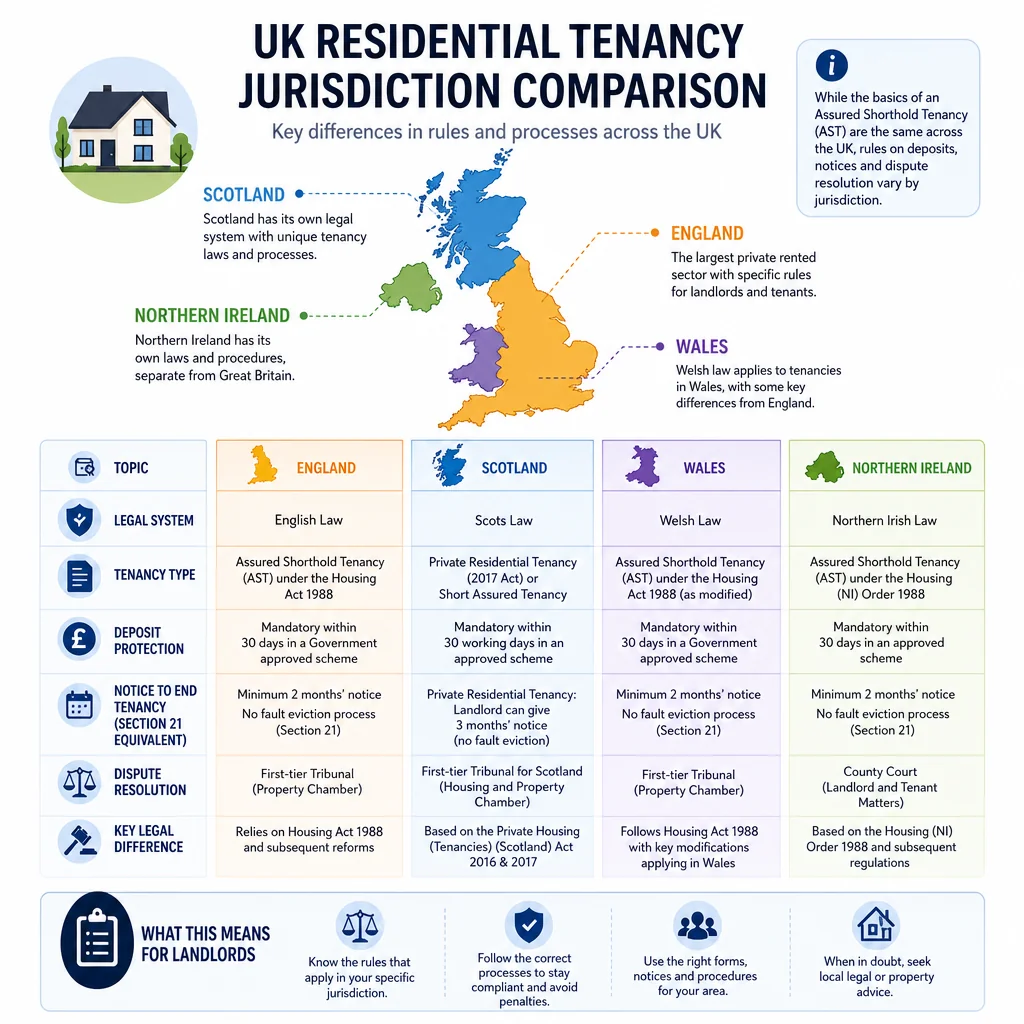
Governing Law and Jurisdiction | Identifies the legal system governing the agreement. | Core | The agreement is governed by the relevant law of the property jurisdiction. | Use England and Wales wording for ASTs in England or Wales do not use for Scottish PRTs. |
Entire Agreement | Confirms the written agreement is the main record of terms. | Common | The parties rely on the written agreement and attached documents rather than informal promises. | Do not exclude liability for fraud or mandatory consumer rights. |
What clauses are essential in a UK Assured Shorthold Tenancy Agreement?
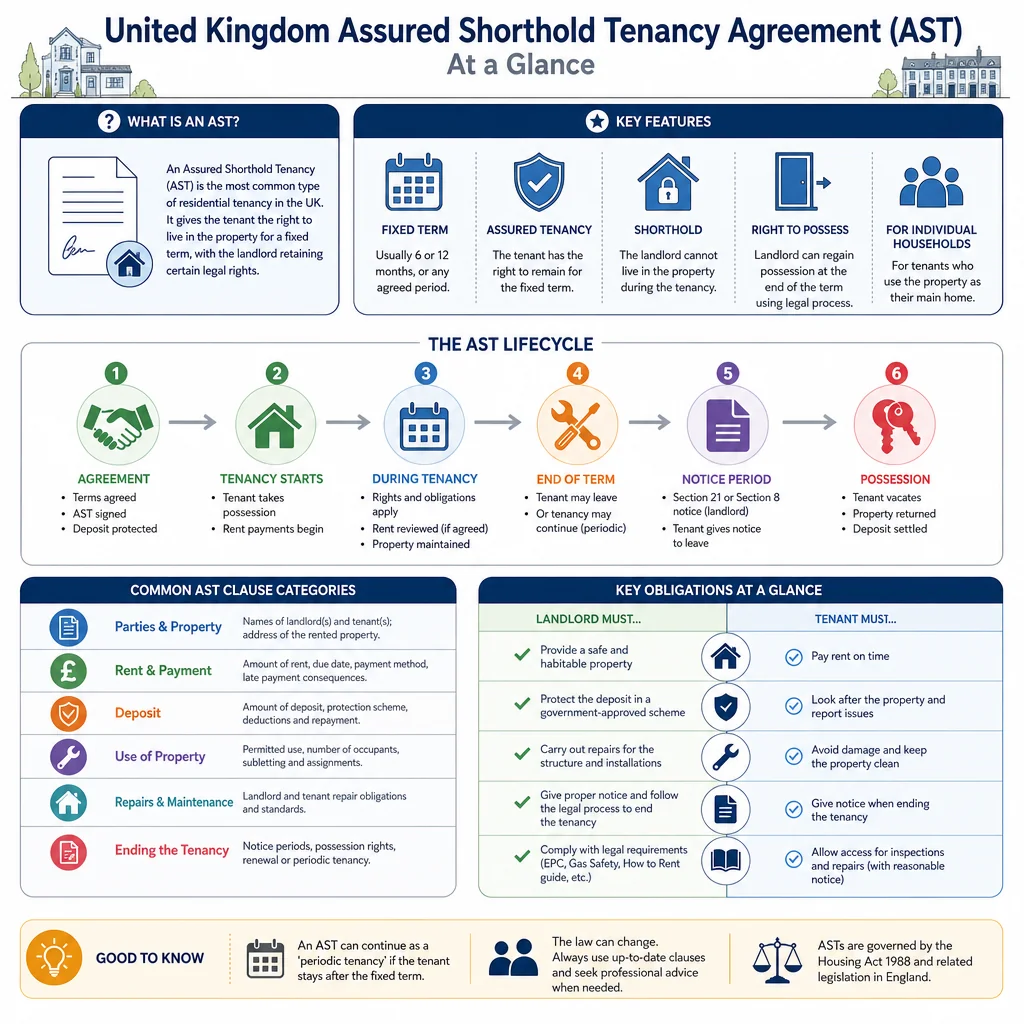
Core AST clauses normally cover the parties, property, term, rent, deposit, repairing duties, tenant obligations, access, notices and legal compliance. These clauses help show the tenancy terms clearly and reduce disputes about payment, occupation, repairs and ending the tenancy.
Which AST clauses need special care because of UK law?
- Deposit clauses should reflect tenancy deposit protection rules and prescribed information duties. A faulty deposit clause can affect a landlord's ability to use the section 21 possession route.
- Repair clauses should not try to transfer statutory landlord repairing duties to the tenant. Landlord obligations under section 11 of the Landlord and Tenant Act 1985 are central for most residential lettings.
- Access clauses should balance inspection and repair access with the tenant's right to quiet enjoyment. Usually the agreement should require reasonable notice except in emergencies.
- Termination clauses should distinguish contractual break rights from statutory notice processes, including section 8 and section 21 Housing Act 1988 routes where applicable.
- Fees and default charges should be checked against the Tenant Fees Act 2019, because many tenant payments are prohibited unless specifically permitted.
How should landlords use optional clauses in an AST?
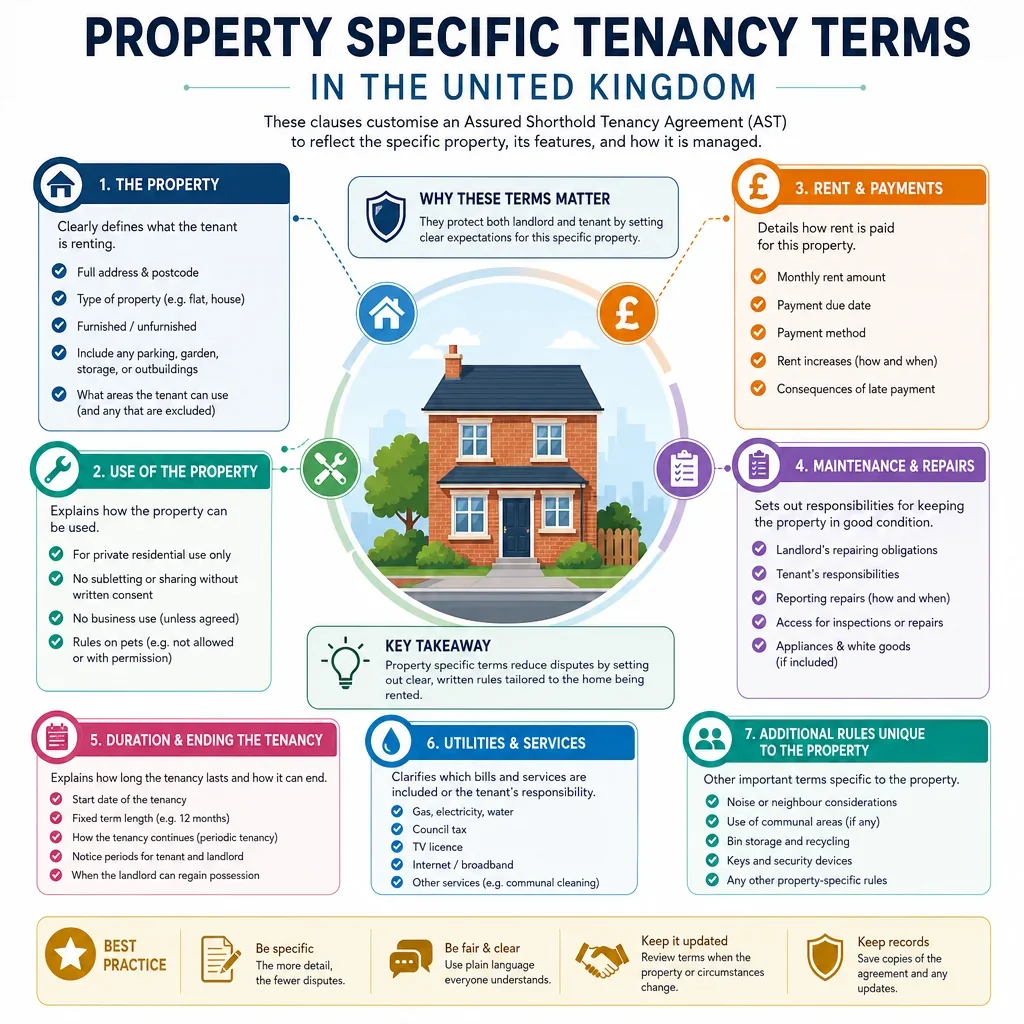
Optional clauses such as pets, smoking, gardens, guarantors, sharers, parking, business use and alterations should be tailored to the property. Overly broad restrictions may be challenged as unfair, while vague clauses often fail to manage the practical risk they were meant to address.
Why should an AST clause library be reviewed before use?
An AST template should be adapted to the property, rent structure, deposit position, occupancy type and any licensing requirements. Clauses should be legally compliant, internally consistent and written in plain English so both landlord and tenant understand their rights and obligations.
FAQs
You Might Also Be Interested In