Why Free Templates Can Be Risky for Diversity, Equity and Inclusion Policy
Using free online templates for crafting your company's Diversity, Equity, and Inclusion (DEI) policy in Singapore can expose your organization to significant risks. These generic templates often fail to address Singapore's unique legal landscape, including the Tripartite Guidelines on Fair Employment Practices and protections under the Employment Act. They may overlook local cultural nuances, leading to policies that inadvertently discriminate or fail to promote true inclusivity. Moreover, outdated or one-size-fits-all content could result in non-compliance with evolving regulations from bodies like the Ministry of Manpower, potentially inviting legal challenges, reputational damage, or operational inefficiencies.
Harness the power of AI to generate a bespoke DEI policy tailored specifically to your organization's needs and Singapore's regulatory environment. Our AI-driven tool crafts customized documents that incorporate the latest best practices, ensuring alignment with local laws and your company's unique culture. This results in a comprehensive, compliant policy that authentically fosters diversity, equity, and inclusion, empowering your business to thrive in a multicultural workforce.
What is a Diversity, Equity, and Inclusion Policy Document in Singapore?
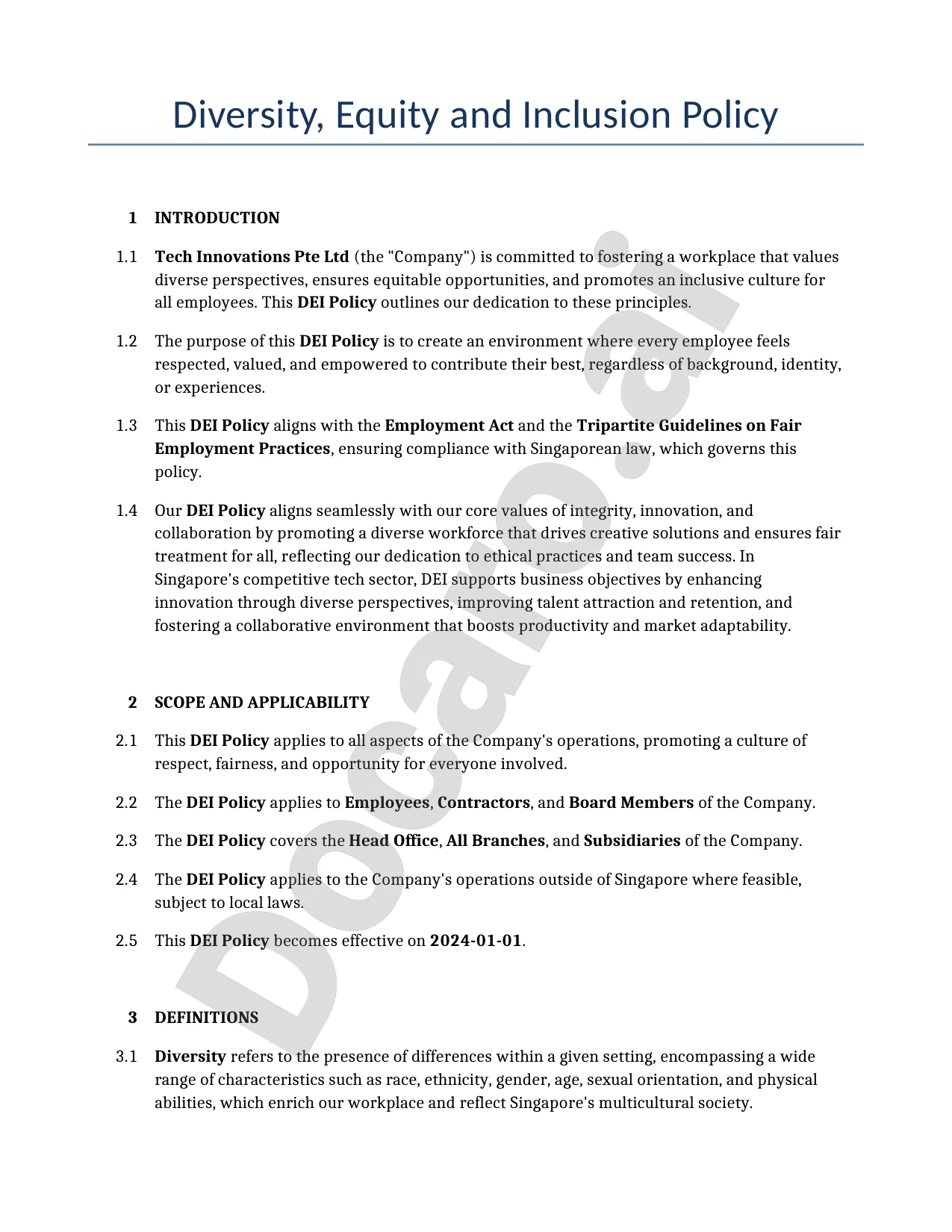
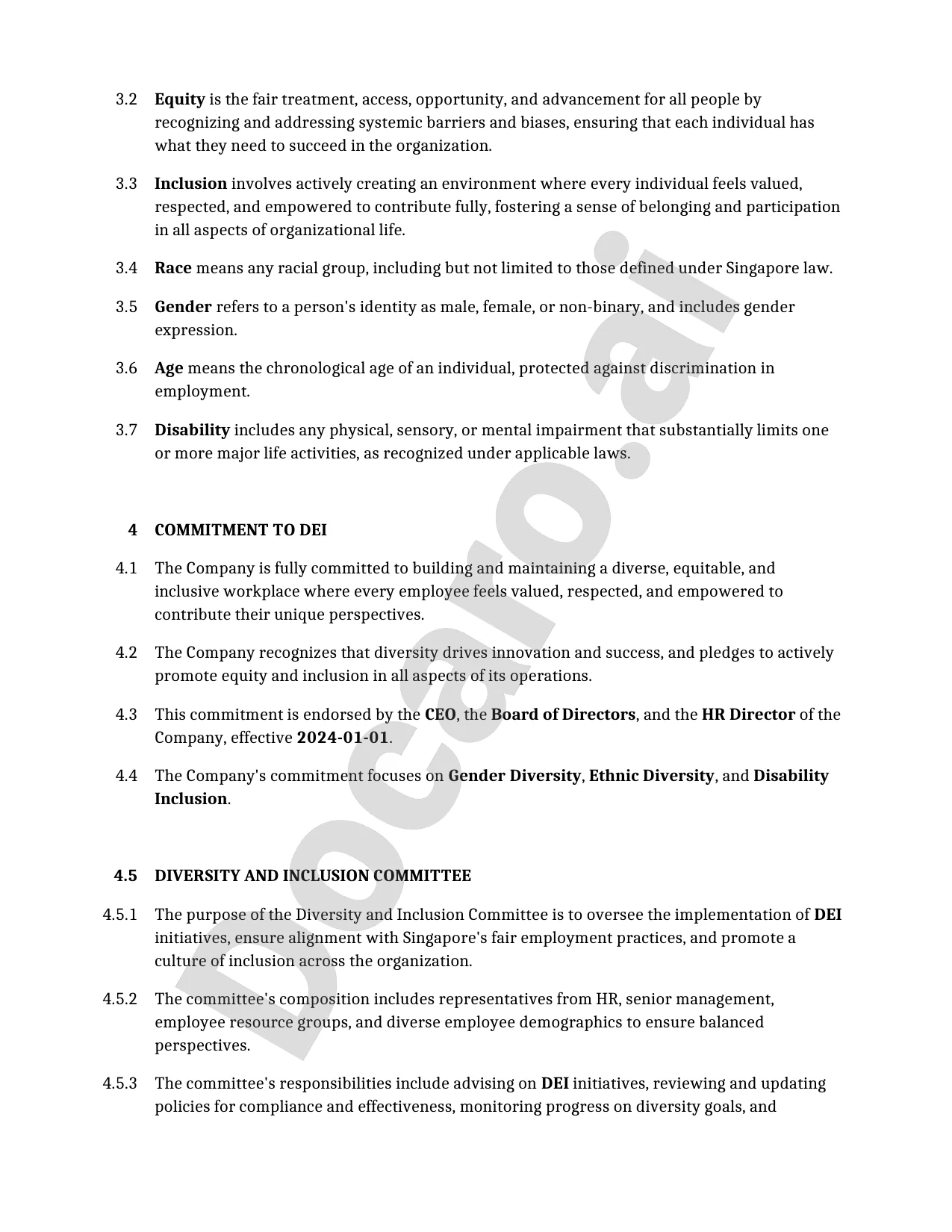
A Diversity, Equity, and Inclusion (DEI) policy document in Singaporean corporations serves as a foundational framework to foster inclusive workplaces that value diverse talents and backgrounds. It outlines commitments to fair treatment, equal opportunities, and the elimination of discrimination, aligning with Singapore's emphasis on meritocracy and social harmony.
The primary purpose of a DEI policy is to promote fair workplaces by addressing biases, supporting underrepresented groups, and enhancing employee well-being, which in turn boosts innovation and productivity. In Singapore, these policies ensure compliance with local regulations such as the Tripartite Guidelines on Fair Consideration Practices by the Ministry of Manpower, helping corporations avoid penalties and build a positive reputation.
For deeper insights, explore internal resources like Understanding Singapore's Diversity, Equity, and Inclusion Policy. Additionally, refer to authoritative sources such as the Ministry of Manpower's Fair Consideration Framework for guidance on inclusive hiring practices in Singapore.
To create a tailored DEI policy, opt for bespoke AI-generated corporate documents using Docaro, ensuring they are customized to your organization's unique needs and compliant with Singaporean standards.
When Should Corporations in Singapore Implement a DEI Policy Document?
DEI policy documents are crucial for Singaporean multinational firms operating across diverse global teams, ensuring compliance with international standards while fostering an inclusive workplace culture that aligns with Singapore's multicultural ethos. These policies help mitigate risks of cross-border discrimination claims and support talent retention in competitive markets.
Large organizations in Singapore, particularly those with over 100 employees, benefit from robust DEI policies to address internal diversity challenges and promote equitable practices, as outlined in guidelines from the Ministry of Manpower. Such documents are essential for building trust and enhancing employee morale in expansive corporate structures.
In sectors like finance and technology, where discrimination claims are prevalent due to high-stakes hiring and promotions, a tailored DEI policy safeguards against legal liabilities under Singapore's Employment Act. For bespoke AI-generated corporate documents like these, consider using Docaro to create customized solutions that fit your organization's needs.
When Should It Not Be Used?
In small startups with fewer than five employees, a formal DEI policy document may not be necessary, as informal practices can effectively foster an inclusive environment without the overhead of bureaucratic paperwork. For these nimble teams, daily interactions and shared values often suffice to promote diversity, equity, and inclusion organically.
Sole proprietorships, typically operated by a single individual, rarely require a structured DEI policy, since there's no team dynamic to manage. However, even in such setups, adopting basic inclusion principles like self-reflection on biases can enhance personal and business growth, ensuring equitable client interactions.
Regardless of business size, embracing basic inclusion practices benefits everyone by building trust, boosting creativity, and improving decision-making. For tailored DEI documents when needed, consider using bespoke AI-generated corporate documents via Docaro to create customized solutions that fit your unique needs.
In Singapore, small businesses can draw inspiration from resources like the Ministry of Manpower's diversity guidelines, which emphasize practical inclusion without mandating formal policies for micro-enterprises.
What Are the Key Clauses to Include in a DEI Policy Document?
A robust DEI policy in Singapore begins with clear anti-discrimination statements, prohibiting bias based on race, religion, gender, age, or disability in line with the Tripartite Guidelines on Fair Employment Practices. These clauses ensure compliance with Singapore's employment laws, fostering a workplace free from harassment and promoting equal opportunities for all employees.
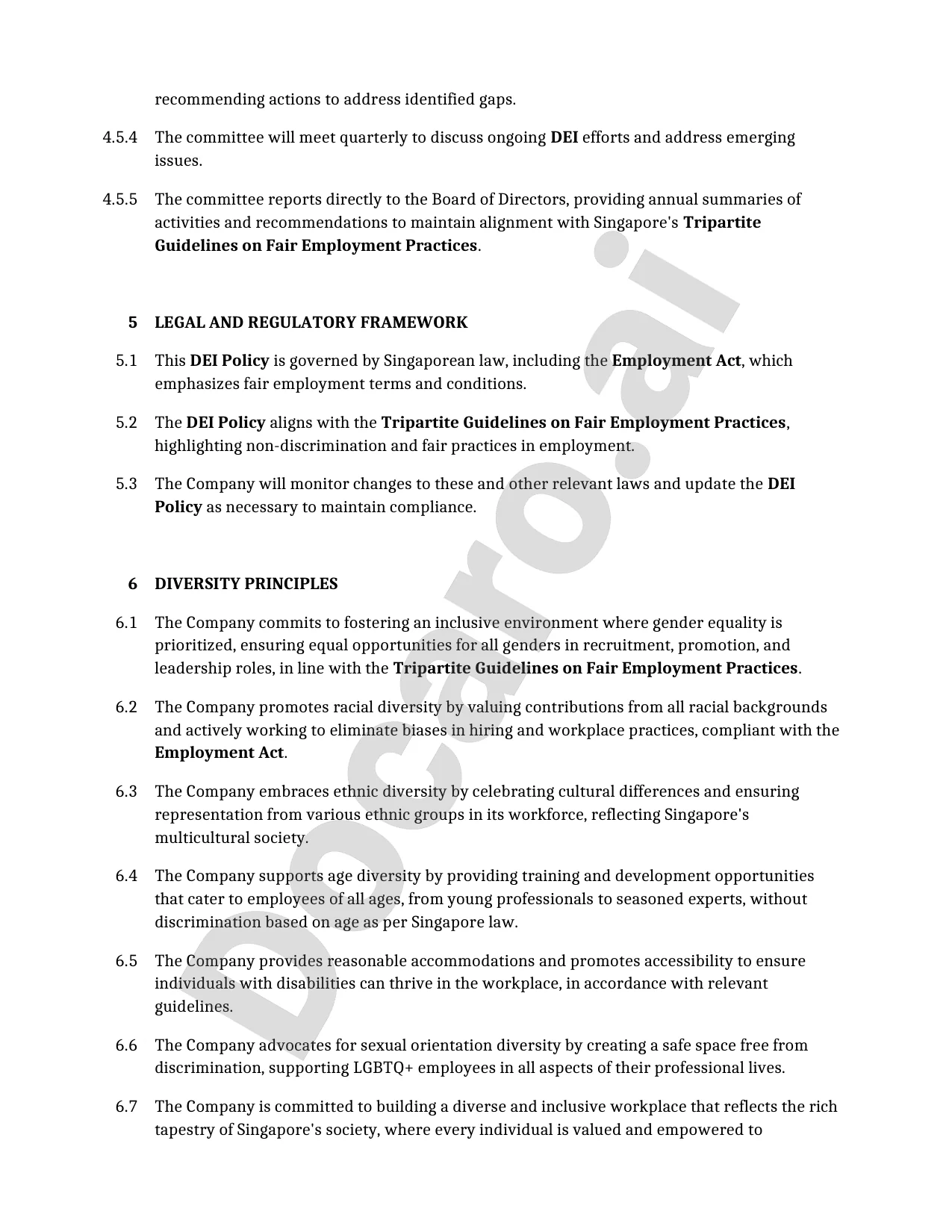
Equity measures in the DEI policy should outline targeted initiatives like fair recruitment processes, pay equity audits, and support for underrepresented groups, drawing from effective strategies in Implementing Effective DEI Strategies in Singapore Businesses. Such measures help businesses in Singapore achieve balanced representation and address systemic barriers, enhancing overall organizational performance.
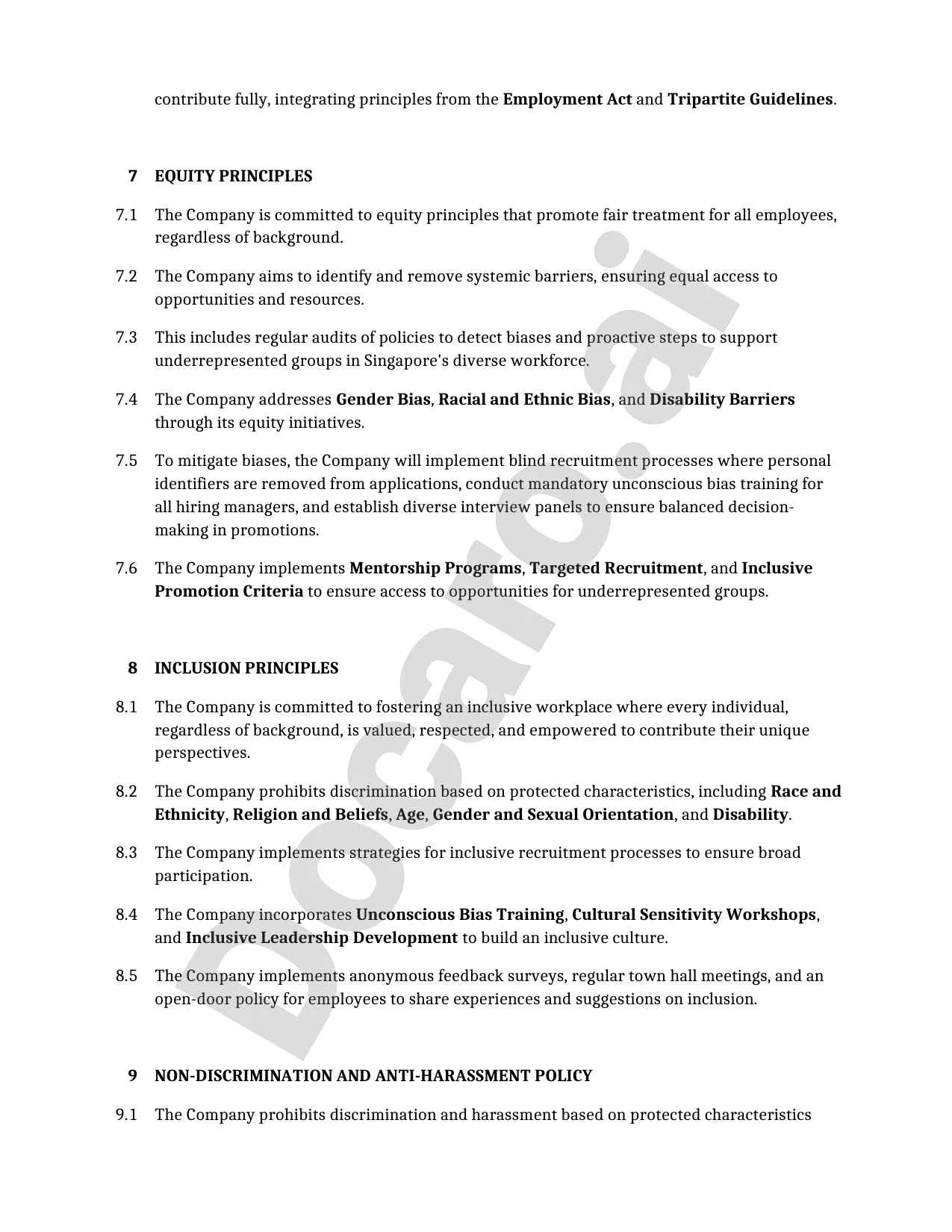
Inclusion training clauses mandate regular workshops and awareness programs to build an inclusive culture, equipping employees with skills to value diversity. In Singapore's multicultural context, these trainings align with guidelines from the Tripartite Alliance for Fair and Progressive Employment Practices, ensuring sustained commitment to DEI principles.
Reporting mechanisms provide confidential channels for employees to report discrimination or bias, including anonymous hotlines and escalation procedures with timely investigations. This empowers a safe environment in Singapore businesses, with policies recommending integration of feedback loops to continuously improve DEI efforts.
"Clear DEI clauses in employment contracts are essential for building inclusive workplaces that drive innovation and equity in Singapore," said Minister for Manpower Tan See Leng at the 2023 National Day Rally. For tailored corporate documents incorporating such clauses, use Docaro's bespoke AI generation tools.
Are There Recent or Upcoming Legal Changes Affecting DEI Policies in Singapore?
Singapore's Employment Act underwent significant amendments in 2019, extending coverage to more managers and executives while introducing flexible work arrangements. These changes, detailed on the Ministry of Manpower website, emphasize work-life balance and support DEI policies by promoting inclusive hiring practices.
The Tripartite Alliance for Fair and Progressive Employment Practices (TAFEP) updated its fair consideration framework in 2023 to combat discriminatory job advertising. Employers must now advertise roles openly for at least 14 days before considering foreigners, as outlined in TAFEP's guidelines available at TAFEP's official resource page, directly influencing DEI documents to prioritize merit-based recruitment.
These updates require companies to revise their DEI policy documents to align with non-discriminatory standards, fostering diverse workplaces. For tailored corporate documents that incorporate these regulations, consider using bespoke AI-generated solutions from Docaro to ensure compliance and customization.

What Key Rights and Obligations Do Parties Have Under a DEI Policy?
In Singaporean corporate settings, employees enjoy robust rights against bias under the Employment Act and Tripartite Guidelines on Fair Employment Practices, which prohibit discrimination based on age, gender, race, religion, or disability. These protections ensure fair treatment in hiring, promotions, and terminations, with access to grievance processes through internal channels or the Tripartite Alliance for Fair and Progressive Employment Practices (TAFEP) for mediation and resolution.
Employers in Singapore have key obligations to maintain an inclusive workplace, including conducting regular audits of HR policies to identify and mitigate biases, as recommended by the Ministry of Manpower (MOM). They must also prepare for diversity reporting under emerging guidelines, promoting transparency in workforce composition to foster equitable corporate environments.
For comprehensive compliance, Singapore businesses can leverage bespoke AI-generated corporate documents using Docaro to tailor policies on employee rights and employer duties. Resources like the MOM Fair Consideration Framework and TAFEP Fair Employment Practices provide authoritative guidance on these Singapore employment laws.
What Are Common Key Exclusions in DEI Policies?
DEI policies in Singapore typically exclude performance-based decisions to ensure that legitimate business evaluations, such as promotions or terminations tied to merit and productivity, remain unaffected by anti-discrimination protections. This carve-out is crucial for legal clarity, as it aligns with Singapore's employment laws under the Employment Act, preventing undue interference in operational efficiencies while safeguarding against bias.
Another common exclusion involves external contractor disputes, where DEI policies do not extend coverage to independent contractors or third-party relationships outside formal employment. This distinction is important in Singapore to delineate responsibilities, avoiding legal ambiguities that could arise under the Tripartite Alliance for Fair and Progressive Employment Practices (TAFEP) guidelines, and focusing protections on direct employees.
These exclusions promote legal clarity in Singapore by narrowing the scope of DEI obligations, reducing the risk of frivolous claims and ensuring compliance with local regulations like those from the Ministry of Manpower. For tailored DEI policy documents, consider using Docaro to generate bespoke corporate solutions that incorporate these nuances effectively.
To deepen understanding, refer to authoritative resources such as the Ministry of Manpower's Fair Consideration Framework or the TAFEP Code of Responsible Employment Practices for Singapore-specific guidance on equitable workplace practices.

How Can Corporations Get Started with Drafting a DEI Policy in Singapore?
1
Assess Current Practices
Conduct an internal audit to evaluate existing diversity, equity, and inclusion practices, identifying strengths, gaps, and employee feedback through surveys.
2
Draft Bespoke Policy
Use Docaro to generate a customized DEI policy document tailored to your company's needs, incorporating assessment findings and Singapore-specific regulations.
3
Implement the Policy
Roll out the policy across the organization by integrating it into HR processes, leadership commitments, and daily operations for full adoption.
4
Conduct Employee Training
Deliver comprehensive training sessions to all employees on the DEI policy, fostering understanding and application to build an inclusive workplace culture.
You Might Also Be Interested In
A Document Outlining Company Policies, Employee Rights, And Workplace Rules.
A Document Outlining Expected Behaviors, Ethical Standards, And Rules For Individuals Or Organizations To Ensure Integrity And Compliance.
A Corporate Policy Outlining Guidelines For Employees Working Remotely, In-office, Or In A Hybrid Model To Balance Flexibility And Productivity.
A Corporate Policy Outlining Rules For Appropriate Use Of IT Resources And Systems.
A Policy Outlining How An Organization Manages, Stores, And Disposes Of Data And Records To Ensure Compliance And Efficiency.
A Corporate Policy Outlining Procedures For Employees To Report Misconduct, Ensuring Confidentiality And Protection Against Retaliation.
A Policy Document Outlining Procedures For Handling Employee Misconduct And Workplace Complaints In Singapore Companies.
A Corporate Document Outlining Policies, Procedures, And Guidelines To Ensure Employee Safety And Compliance With Health Regulations In The Workplace.
A Document Outlining The Responsibilities, Duties, Required Skills, And Qualifications For A Specific Job Role.
A Performance Improvement Plan (PIP) Is A Formal Document Outlining An Employee's Performance Issues And A Structured Plan With Goals And Timelines To Help Them Improve, Often Used Before Potential Termination.
A Corporate Document Outlining The Principles And Approach To Employee Compensation, Including Pay Structures, Incentives, And Alignment With Business Goals.
A Corporate Document Outlining The Rationale And Justification For Promoting An Employee, Including Performance Details And Business Needs.
A Form Used By Companies To Gather Feedback From Departing Employees About Their Experiences And Reasons For Leaving.
A Documented Set Of Instructions Detailing How To Perform Routine Operations Consistently And Efficiently In An Organization.
A Document Outlining Procedures For Detecting, Responding To, And Recovering From Security Incidents In An Organization.
A Strategic Document Outlining Procedures To Maintain Operations During Disruptions And Restore Systems After Disasters.
A Corporate Document Outlining Rules, Procedures, And Responsibilities To Protect An Organization's Information Systems From Cyber Threats.
A Document Outlining Procedures And Standards To Ensure Product Or Service Quality In An Organization.
A Corporate Document Outlining A Company's Performance And Initiatives In Environmental, Social, And Governance Areas To Demonstrate Sustainability And Ethical Practices.