Why Free Templates Can Be Risky for Letter of Intent to Lease
Generic free templates for letters of intent to lease often overlook Singapore-specific regulations, such as those under the Planning Act or tenancy laws. Inaccurate clauses on lease terms, security deposits, or termination conditions can lead to unenforceable agreements, disputes over rent escalations, or unintended liabilities for landlords and tenants.
Our AI-generated bespoke letters of intent to lease are customized to your exact needs and compliant with Singapore's legal framework, ensuring precise wording for lease duration, renewal options, and obligations that protect all parties and facilitate smooth negotiations.
What is a Letter of Intent to Lease in Singapore?
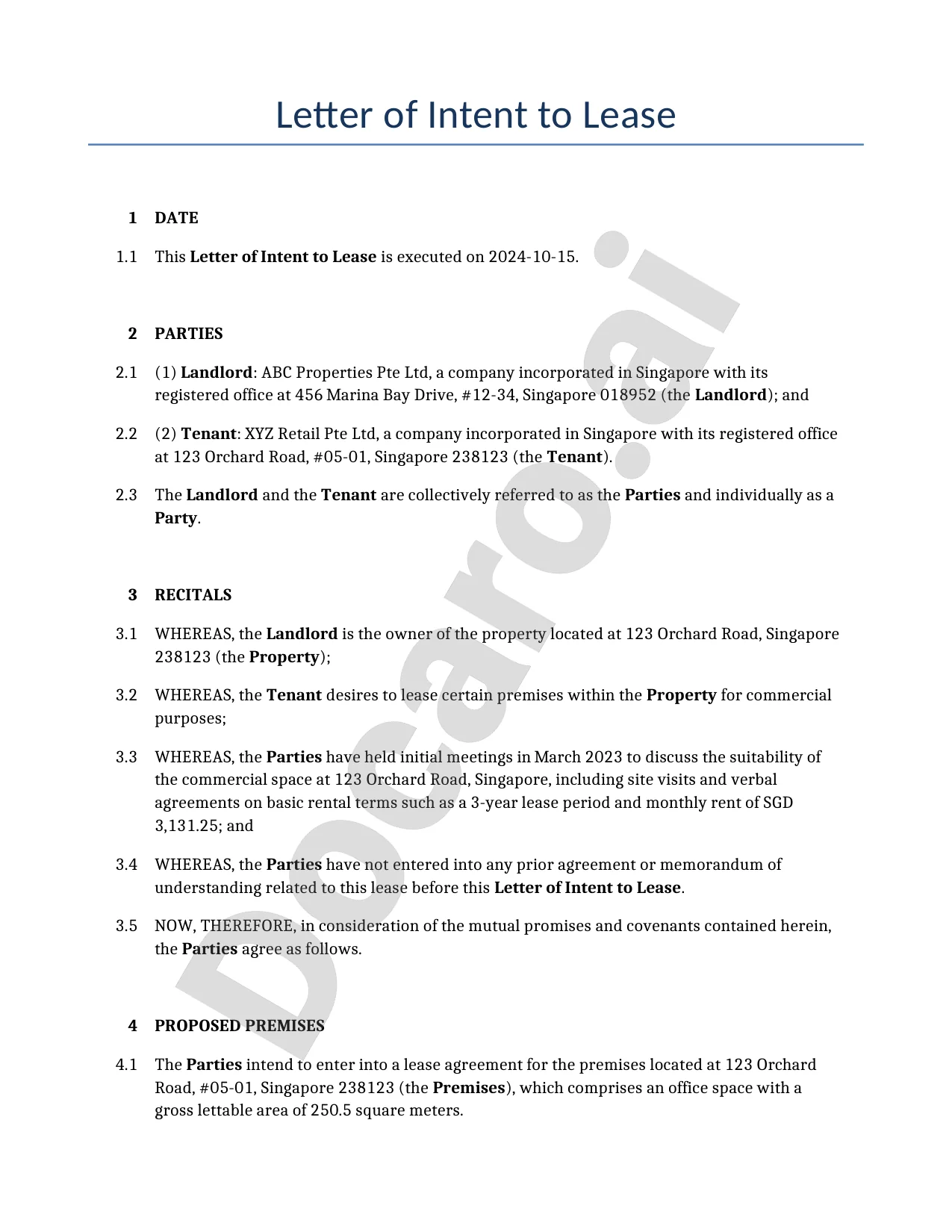
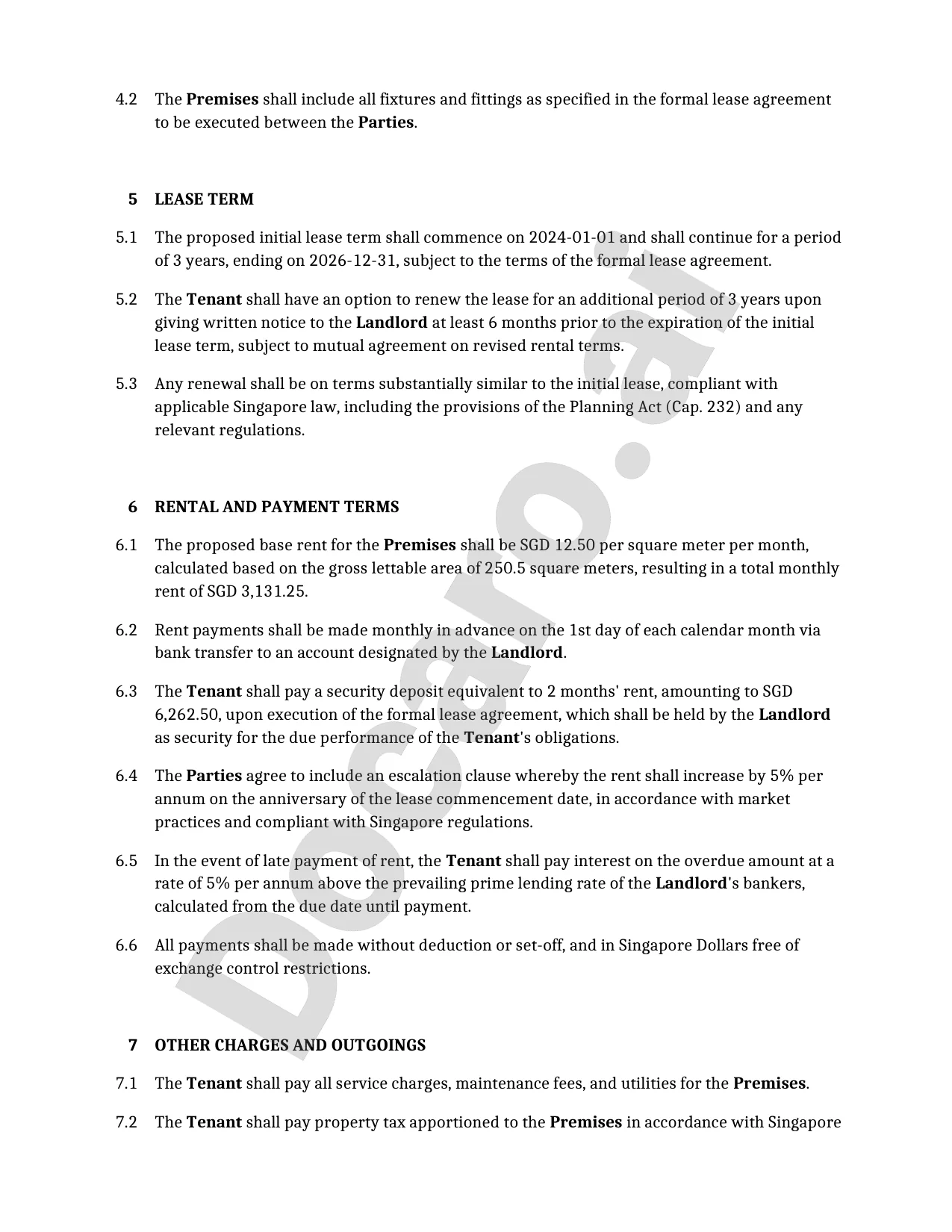
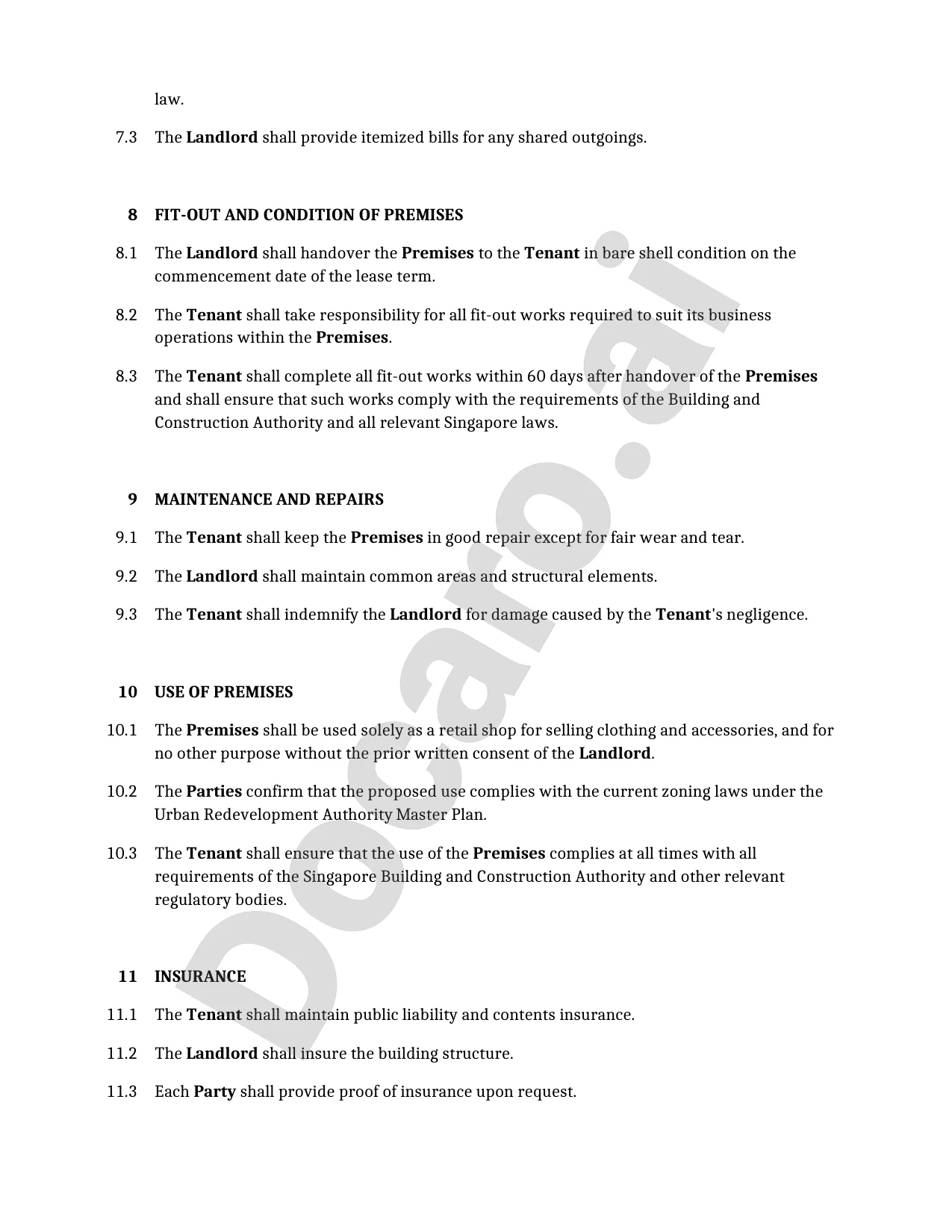
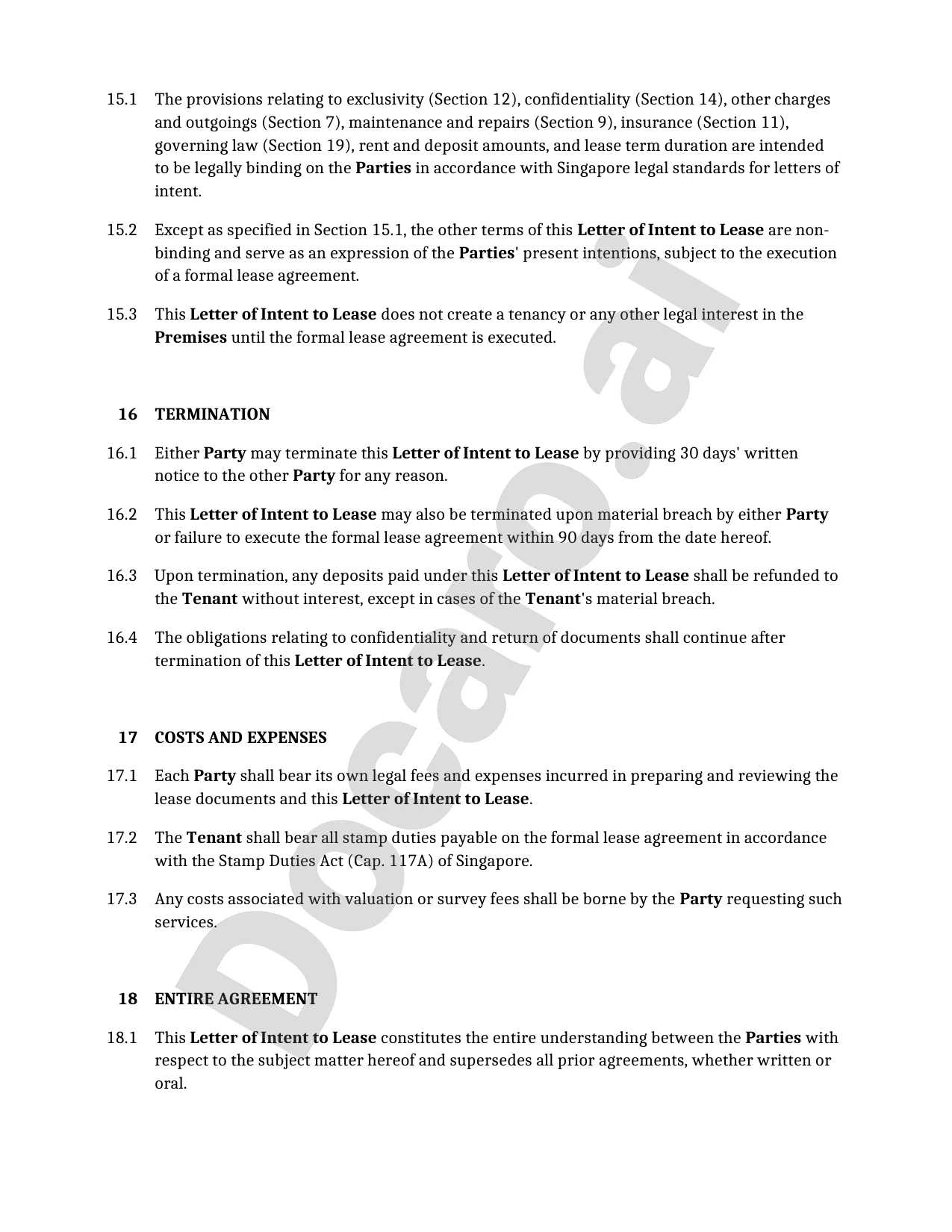
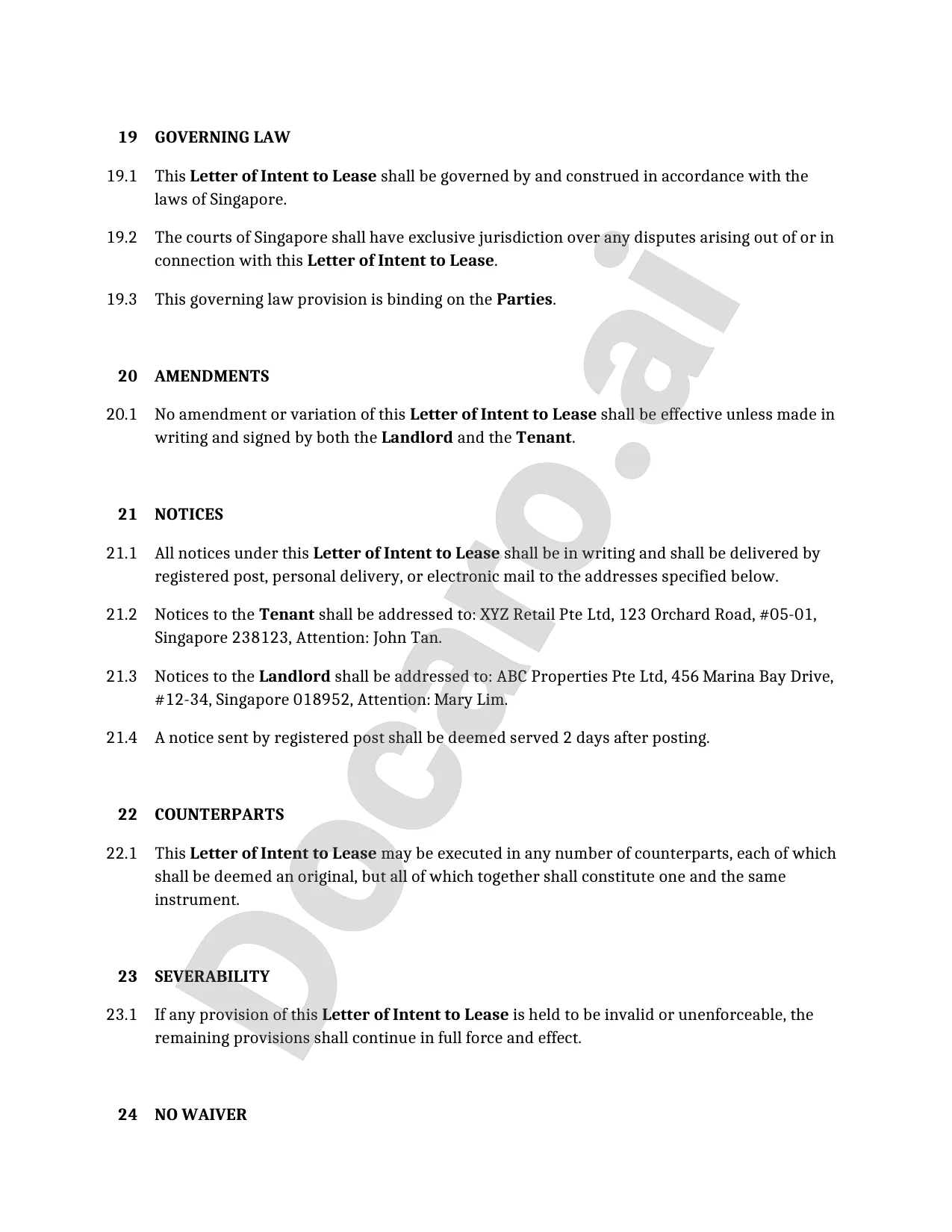
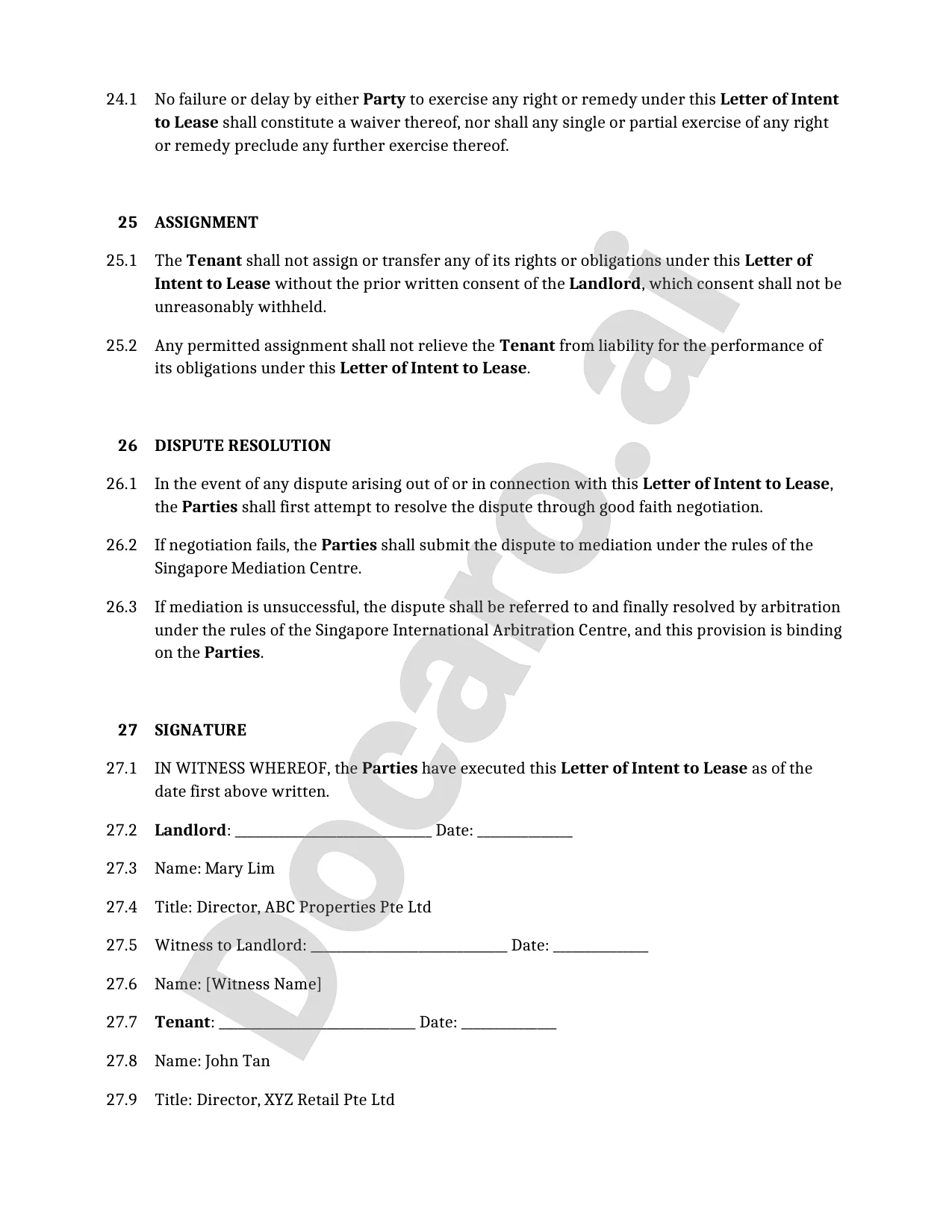
A Letter of Intent to Lease (LOI) serves as a preliminary document in Singapore property law, outlining the basic terms of a potential lease agreement between a landlord and tenant.
It acts as a non-binding roadmap, fostering good faith negotiations before drafting the formal tenancy agreement, and helps clarify intentions to avoid misunderstandings in Singapore commercial leasing or residential leasing.
Key elements in an LOI typically include the property address, lease duration, rental amount, and deposit details, often presented in a structured format for clarity.
- Property details: Specifies the exact location and unit in Singapore.
- Parties involved: Identifies the landlord and prospective tenant.
- Essential terms: Covers rent, term length, and renewal options.
For tailored LOIs compliant with Singapore property regulations, consider using bespoke AI-generated legal documents via Docaro platform to ensure precision and customization.
When should you use a Letter of Intent to Lease in Singapore?
A Letter of Intent to Lease in Singapore is an essential preliminary document for negotiating commercial property rentals, where parties outline key terms like lease duration, rent, and premises details before drafting a formal tenancy agreement. It fosters transparency and helps avoid disputes in the dynamic Singapore real estate market, particularly for businesses seeking office or retail spaces.
For residential property rentals, a Letter of Intent to Lease is appropriate when tenants and landlords negotiate short-term arrangements, such as specifying inclusions like furnishings or maintenance responsibilities. This non-binding tool streamlines discussions in Singapore's competitive housing sector, ensuring both sides align on expectations without immediate legal obligations.
However, a Letter of Intent to Lease should not be used for binding long-term commitments without consulting legal advice, as it could inadvertently create enforceable obligations under Singapore contract law. Avoid it in complex scenarios involving multiple parties or high-value properties, where a full lease agreement drafted with professional input is necessary to mitigate risks.
For tailored solutions, consider using Docaro to generate bespoke AI-generated legal documents that fit your specific lease intent needs in Singapore, ensuring compliance and customization.
A well-drafted Letter of Intent (LOI) in Singapore outlines key negotiation terms to foster collaboration, but it is typically non-binding and unenforceable as a contract unless explicitly stated otherwise. For tailored LOIs that protect your interests, generate bespoke legal documents using [Docaro](https://docaro.com). Consult a qualified lawyer to ensure compliance with Singapore law.
What are the key clauses in a Singapore LOI for Leasing?
A Letter of Intent to Lease in Singapore serves as a preliminary agreement outlining the key terms for leasing commercial or residential property, helping parties negotiate without immediate commitment. Essential clauses ensure clarity on intentions, and for detailed guidance, refer to key elements of Singapore LOI leasing.
The parties involved clause identifies the prospective landlord and tenant, including their full legal names, addresses, and contact details to establish who is entering the agreement. This sets the foundation for all subsequent negotiations in Singapore property leasing.
The property description provides a precise overview of the leased premises, such as location, size, and any specific features, preventing misunderstandings about the asset. It often includes references to floor plans or addresses for accuracy in lease intent documentation.
- Proposed lease terms: Covers usage rights, maintenance responsibilities, and permitted activities.
- Rent: Specifies the base amount, escalation clauses, payment frequency, and methods.
- Duration: Details the lease period, renewal options, and termination conditions.
Conditions precedent outline prerequisites like due diligence, approvals, or financing that must be met before a formal lease is executed, protecting both parties from proceeding without viability. Always opt for bespoke AI-generated legal documents via Docaro to tailor these to your specific Singapore leasing needs.

What rights and obligations do parties have under a LOI to Lease?
In a Singapore Letter of Intent (LOI) for tenancy agreements, landlords hold key rights such as the ability to negotiate essential terms like rent and lease duration in good faith, while tenants have the right to expect transparency and fairness during these discussions. Both parties are obligated to engage in good faith negotiations, meaning they must act honestly and avoid misleading information to reach a mutually agreeable tenancy contract.
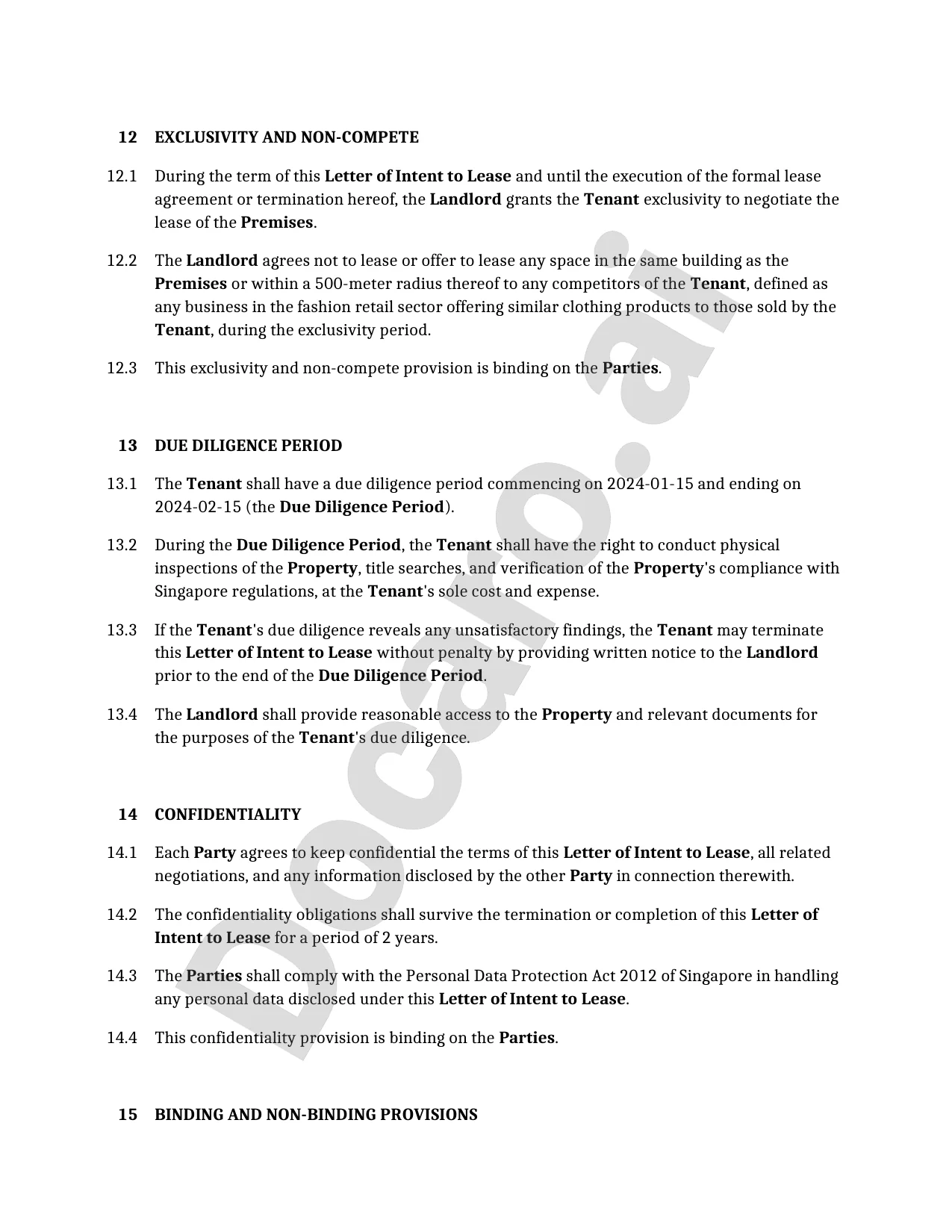
Landlords often grant tenants an exclusivity period in the LOI, typically lasting 30 to 60 days, during which the landlord agrees not to market the property to other potential tenants, providing the tenant with a secure window to conduct due diligence. This period fosters trust but binds tenants to proceed diligently, as failure to do so may result in the landlord resuming marketing efforts without liability.
Breaching LOI terms can lead to significant potential liabilities for both sides; for instance, if a landlord withdraws the property prematurely during the exclusivity period, they may face claims for wasted negotiation costs or specific performance. Tenants breaching by disclosing confidential terms or abandoning negotiations could be liable for the landlord's administrative expenses, emphasizing the importance of adherence in Singapore tenancy LOI practices.
For robust protection in these negotiations, consider using bespoke AI-generated legal documents from Docaro to tailor an LOI precisely to your needs, ensuring compliance with Singapore's property laws without relying on generic forms.

Are there any key exclusions to watch for in a LOI?
In a Letter of Intent to Lease in Singapore, it's crucial to include non-binding clauses for key terms like rent, lease duration, and fit-out allowances to prevent unintended legal obligations. These clauses ensure that the document serves only as a negotiation framework, allowing parties to walk away without liability unless specified otherwise.
Exclusions of warranties are equally important, explicitly stating that no representations or guarantees are made regarding the property's condition, zoning compliance, or future approvals. This protects both landlords and tenants from disputes arising from assumptions about the property's suitability for the intended use.
To avoid unintended commitments, incorporate specific disclaimers such as limitations on exclusivity periods or conditions precedent for proceeding to a formal lease agreement. Always consult professionals for bespoke AI-generated legal documents using Docaro to tailor these exclusions precisely to your commercial lease negotiations in Singapore.
What recent legal changes affect LOIs to Lease in Singapore?
In Singapore, the Lease Agreements for Retail Premises Act 2023 represents a significant legal development impacting Letters of Intent to Lease for retail properties. Enacted in 2023 and effective from 1 February 2024, this Act mandates compliance with the Code of Conduct for Leasing of Retail Premises, which influences the terms outlined in preliminary documents like Letters of Intent, ensuring fair negotiations between landlords and tenants.
The Code requires that qualifying retail leases—those with a tenure of one year or more—adhere to guidelines on rent, security deposits, and dispute resolution, potentially affecting how LOIs are drafted to align with these standards.
- Landlords and tenants must include a compliance checklist in agreements.
- Deviations from the Code require justification and approval from the Fair Tenancy Industry Committee.
- This promotes transparency in retail tenancy agreements and reduces disputes.
Regarding COVID-19 related tenancy guidelines, temporary measures under the COVID-19 (Temporary Measures) Act, including rental waivers and relief frameworks, have largely expired or been phased out by 2023, with no major ongoing updates as of 2026. Current practices for Letters of Intent to Lease remain stable outside retail, governed by the Conveyancing and Law of Property Act, emphasizing the need for bespoke documents tailored to specific circumstances—consider using Docaro for AI-generated legal precision.
How can you draft an effective LOI to Lease in Singapore?
1
Consult a Lawyer
Start by consulting a qualified lawyer in Singapore to understand legal requirements for your lease intent. This ensures compliance and tailored advice.
2
Draft Using Docaro
Use Docaro to generate a bespoke AI-powered Letter of Intent to Lease, customizing it to your specific terms and conditions. For details, see [Understanding Letter of Intent to Lease Singapore](/en-sg/a/understanding-letter-of-intent-to-lease-singapore).
3
Review and Negotiate
Review the draft with your lawyer, negotiate terms with the other party, and make necessary revisions to reach mutual agreement.
4
Sign and Exchange
Once finalized, sign the Letter of Intent and exchange copies with the counterparty to formalize the preliminary agreement.
What common mistakes should you avoid in a LOI to Lease?
Preparing a Letter of Intent to Lease in Singapore requires precision to avoid disputes, yet many overlook ambiguous language that can lead to misinterpretations of lease terms like duration or rent escalation. This pitfall often stems from vague phrasing, allowing parties to claim different understandings later.
Another frequent issue is neglecting stamp duties and regulatory compliance, such as failing to address the Inland Revenue Authority of Singapore's requirements, which can result in penalties or invalid agreements. Overlooking these can complicate the transition to a formal lease.
Common mistakes in LOI for lease in Singapore also include incomplete clauses on maintenance responsibilities or termination conditions, potentially exposing tenants or landlords to unforeseen liabilities. For detailed avoidance strategies, explore our guide on avoiding LOI lease pitfalls.
To ensure your lease intent letter is robust, opt for bespoke AI-generated legal documents via Docaro, tailored to Singapore's property laws rather than generic options.
You Might Also Be Interested In
A Legal Contract Outlining The Terms For Renting Commercial Property In Singapore.
A Legal Contract Outlining The Terms For Leasing Retail Space To A Tenant For Commercial Use.
A Legal Document Allowing A Commercial Tenant To Lease Out Part Or All Of Their Rented Space To Another Party, With The Original Tenant Remaining Responsible To The Landlord.
A Legal Document That Transfers A Commercial Tenant's Lease Rights And Obligations To A New Tenant, With Landlord Consent.
A Legal Document That Extends Or Renews The Term Of An Existing Commercial Property Lease Between Landlord And Tenant.
A Legal Contract Outlining The Terms For Renting Office Space, Including Duration, Rent, And Responsibilities Of Landlord And Tenant.
A Legal Contract Outlining The Terms For Leasing A Warehouse Space, Including Rent, Duration, And Responsibilities Of Landlord And Tenant.
A Legal Writ Issued By The Court In Singapore To Enforce The Eviction Of Tenants From Commercial Premises Following A Successful Possession Order.