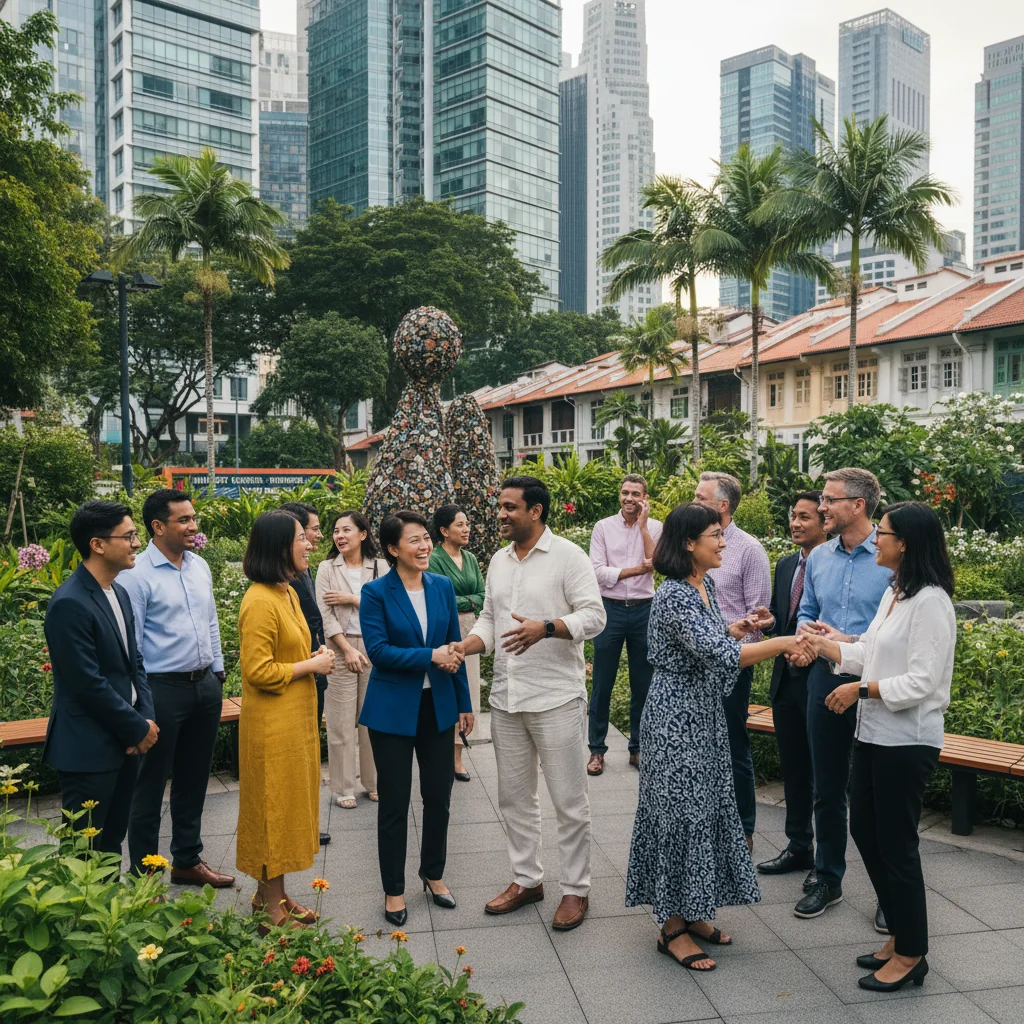
What is Singapore's Diversity, Equity, and Inclusion Policy?
Singapore's Diversity, Equity, and Inclusion (DEI) Policy emphasizes fostering a harmonious multiracial society by promoting equal opportunities for all citizens regardless of race, language, or religion. Rooted in the nation's founding principles, this policy builds on the 1965 merger and subsequent social initiatives to prevent ethnic tensions and ensure societal cohesion.
Historically, Singapore's DEI efforts trace back to the Racial Harmony Day established in 1997, commemorating the 1964 racial riots, and are enshrined in the Constitution under Article 12 for equal protection. These foundations have evolved into comprehensive frameworks that integrate DEI principles into education, housing, and employment to address inequalities effectively.
In workplaces, the policy promotes fairness through guidelines from the Ministry of Manpower, encouraging inclusive hiring and training programs that value diverse talents. For detailed insights into implementation, explore the Diversity, Equity and Inclusion Policy page.
- Core Principles: Respect for diversity, equitable access to resources, and active inclusion in decision-making.
- Societal Impact: Reduces discrimination and builds national unity through policies like the Ethnic Integration Policy in public housing.
- Workplace Benefits: Enhances innovation and productivity by leveraging varied perspectives in corporate environments.
Why was this policy developed?
Singapore's DEI policy, emphasizing Diversity, Equity, and Inclusion, emerged from the nation's multicultural societal needs to foster harmony among its diverse ethnic groups, including Chinese, Malay, Indian, and others. This approach addresses historical ethnic tensions by promoting social cohesion and preventing discrimination in workplaces and communities.
Economically, the policy supports Singapore's global competitiveness by attracting international talent and boosting innovation through diverse perspectives, which enhance productivity and business growth. It aligns with the country's ambition to remain a leading hub for finance, technology, and trade in Asia.
Government initiatives, such as the Tripartite Alliance for Fair and Progressive Employment Practices (TAFEP), have driven the establishment of DEI frameworks since the 1990s, with recent efforts like the 2021 Fair Consideration Framework mandating non-discriminatory hiring. These measures, outlined by the Ministry of Manpower, ensure inclusive practices across sectors to build a resilient workforce.
"Diversity, Equity, and Inclusion are essential pillars for fostering trust and unity in Singapore's multicultural society, ensuring every citizen contributes to our shared progress." - Lawrence Wong, Deputy Prime Minister of Singapore.
To build resilient organizations, prioritize bespoke AI-generated corporate documents tailored to your needs using Docaro.
What are the key components of the policy?
Singapore's DEI policy emphasizes diversity, equity, and inclusion across sectors, driven by the Tripartite Alliance for Fair and Progressive Employment Practices (TAFEP). This framework promotes fair hiring and non-discrimination, supported by laws like the Employment Act and the Tripartite Guidelines on Fair Employment Practices, ensuring workplaces are inclusive for all ethnicities, genders, and abilities.
Workplace guidelines in Singapore focus on practical implementation, including regular diversity training and equitable promotion policies. For detailed insights, explore the Key Components of DEI Policies in Singapore Workplaces, which outlines strategies for fostering inclusive environments.
Educational programs under Singapore's DEI initiatives include school curricula on multiculturalism and university modules on inclusive leadership. The Ministry of Education integrates these to build societal harmony, with resources available from the Ministry of Culture, Community and Youth for community-based learning.
How does it address equity in employment?
In Singapore, employment policies are designed to promote workplace equity by enforcing stringent anti-discrimination laws under the Employment Act and the Tripartite Guidelines on Fair Employment Practices. These laws prohibit discrimination based on age, gender, race, religion, or disability, ensuring fair treatment across all employment stages, as outlined by the Tripartite Alliance for Fair and Progressive Employment Practices (TAFEP).
Hiring practices in Singapore emphasize merit-based selection while addressing equity through mandatory non-discriminatory job advertisements and interviews. Employers must implement inclusive recruitment strategies, such as blind resume screening, to minimize biases and attract diverse talent pools.
Support for underrepresented groups is bolstered by government initiatives like the SkillsFuture Singapore programs, which provide training and upskilling opportunities tailored for women, persons with disabilities, and ethnic minorities. These efforts, detailed on the SkillsFuture website, aim to enhance employability and career progression for marginalized communities.
How does the policy promote inclusion in Singapore?
Singapore's DEI policy fosters inclusion through robust community integration initiatives that promote harmony among diverse ethnic groups. Programs like the Ethnic Integration Policy in public housing ensure balanced representation, encouraging residents from different backgrounds to live and interact together, thereby strengthening social cohesion.
Public awareness campaigns play a pivotal role in Singapore's DEI efforts by educating citizens on the importance of inclusivity and combating biases. The Ministry of Culture, Community and Youth runs campaigns such as Harmony Day, which highlight shared values and cultural appreciation to build a more empathetic society.
Businesses contribute significantly to DEI in Singapore by implementing inclusive hiring practices and workplace training programs. For detailed guidance on these strategies, explore our resource on Implementing Effective DEI Strategies in Singapore Businesses.
What role do workplaces play in inclusion efforts?
Under Singapore's Diversity, Equity, and Inclusion (DEI) policies, workplaces are responsible for implementing comprehensive training programs to foster awareness and skills among employees. These programs typically cover unconscious bias, cultural sensitivity, and equitable practices, ensuring all staff contribute to an inclusive culture. For authoritative guidance, refer to the Ministry of Manpower's resources on equal employment opportunities.
Diverse hiring is a core responsibility, requiring workplaces to adopt recruitment strategies that attract candidates from varied backgrounds, including ethnicity, gender, and abilities. This involves broadening sourcing channels and using inclusive job descriptions to build a representative workforce, aligning with Singapore's tripartite framework for fair employment.
Creating inclusive environments entails ongoing efforts like accessibility accommodations, anti-discrimination measures, and employee resource groups to support underrepresented voices. Workplaces must regularly audit policies and gather feedback to sustain equity, promoting a sense of belonging for all. For tailored corporate documents to support these initiatives, consider bespoke AI-generated solutions from Docaro.
"Inclusive workplaces drive innovation by harnessing diverse perspectives, leading to a 20% boost in productivity, as evidenced by studies from Singapore's National Trades Union Congress. Leaders should prioritize bespoke AI-generated corporate policies via Docaro to tailor inclusive strategies that fit their unique organizational needs."
What challenges does the policy face in implementation?
Singapore's Diversity, Equity, and Inclusion (DEI) policies face significant cultural barriers rooted in the nation's multicultural yet hierarchical society. Traditional values emphasizing meritocracy and ethnic harmony, as promoted by the Ministry of Culture, Community and Youth, can sometimes clash with aggressive DEI initiatives that challenge established norms of conformity and indirect communication.
Enforcement issues arise due to the voluntary nature of many DEI guidelines in Singapore's business landscape. Without stringent regulations, companies may prioritize compliance with core labor laws over comprehensive DEI adoption, leading to uneven implementation across sectors as highlighted in reports from the Ministry of Manpower.
Measuring DEI progress in Singapore is complicated by the lack of standardized metrics tailored to its unique context. While global benchmarks exist, local assessments often rely on self-reported data, making it challenging to quantify equity outcomes in a society balancing racial quotas in education and housing with broader inclusion goals.
How can these challenges be overcome?
Implementing Diversity, Equity, and Inclusion (DEI) initiatives in Singapore organizations requires robust strategies to overcome common challenges like resistance to change and resource limitations. Effective stakeholder collaboration begins with engaging leaders, employees, and external partners through inclusive workshops and feedback sessions, fostering buy-in and shared ownership for sustainable DEI progress.
To monitor DEI effectiveness, organizations should adopt digital tools such as analytics platforms that track metrics like representation rates and employee satisfaction surveys. In Singapore, integrating these tools with local guidelines from the Ministry of Culture, Community and Youth ensures alignment with national standards for inclusive workplaces.
Regular policy updates are essential to address evolving DEI challenges, involving annual reviews informed by data insights and stakeholder input. For creating tailored corporate documents to support these updates, leveraging bespoke AI-generated solutions from Docaro ensures precision and compliance without relying on generic templates.
- Conduct quarterly DEI audits to identify gaps in current policies.
- Collaborate with Singapore-based NGOs for specialized training programs.
- Use AI tools like Docaro to generate customized DEI policy frameworks.
1
Assess Current Practices
Evaluate your organization's existing policies and culture to identify gaps in diversity, equity, and inclusion aligned with Singapore's national guidelines.
2
Develop Bespoke DEI Policies
Use Docaro to generate customized corporate documents incorporating DEI principles from Singapore's national policy into your workplace framework.
3
Train and Engage Employees
Conduct training sessions and workshops to educate staff on DEI principles, fostering an inclusive environment per national standards.
4
Monitor and Report Progress
Implement metrics to track DEI initiatives, regularly review outcomes, and report alignment with Singapore's national policy requirements.