Why Free Templates Can Be Risky for Line of Credit Agreements
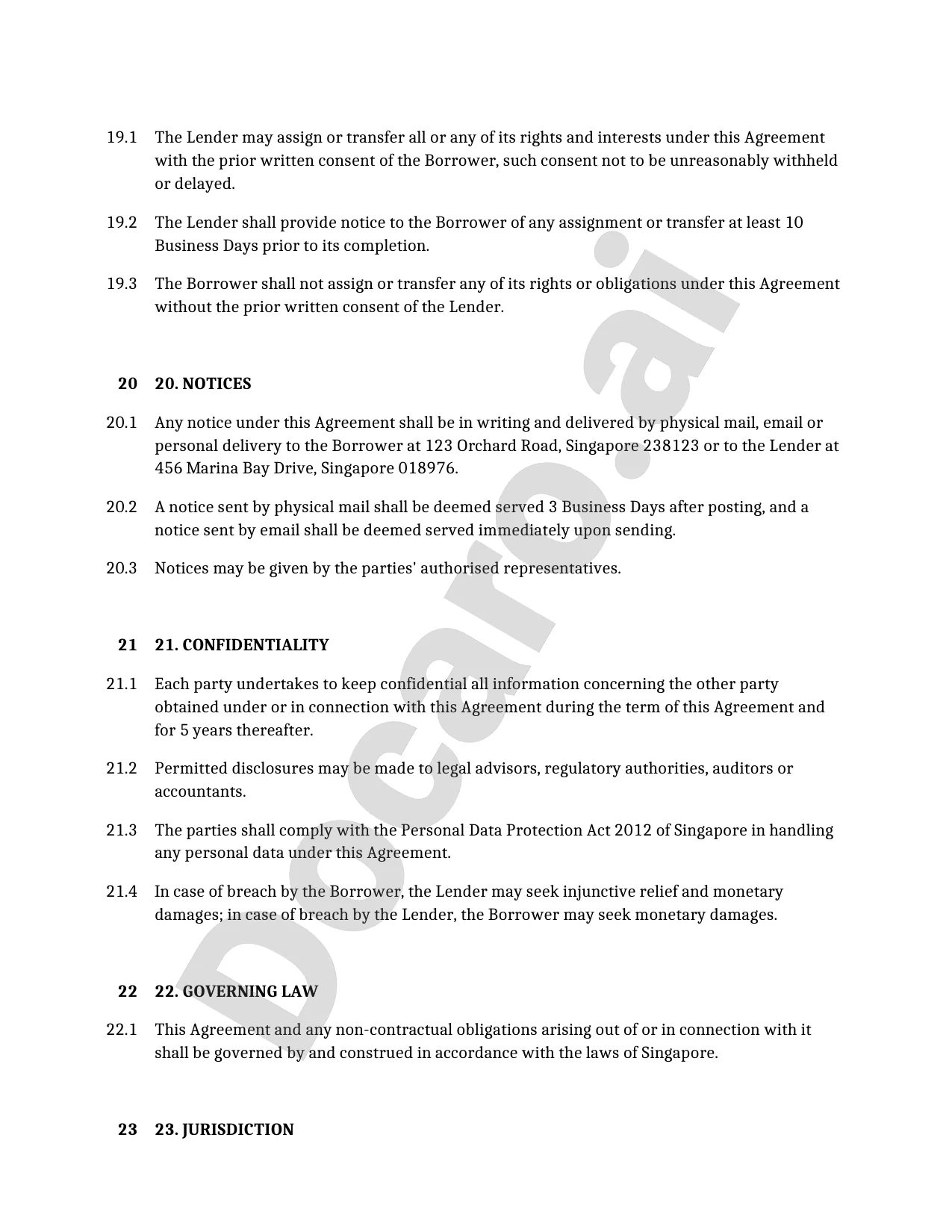
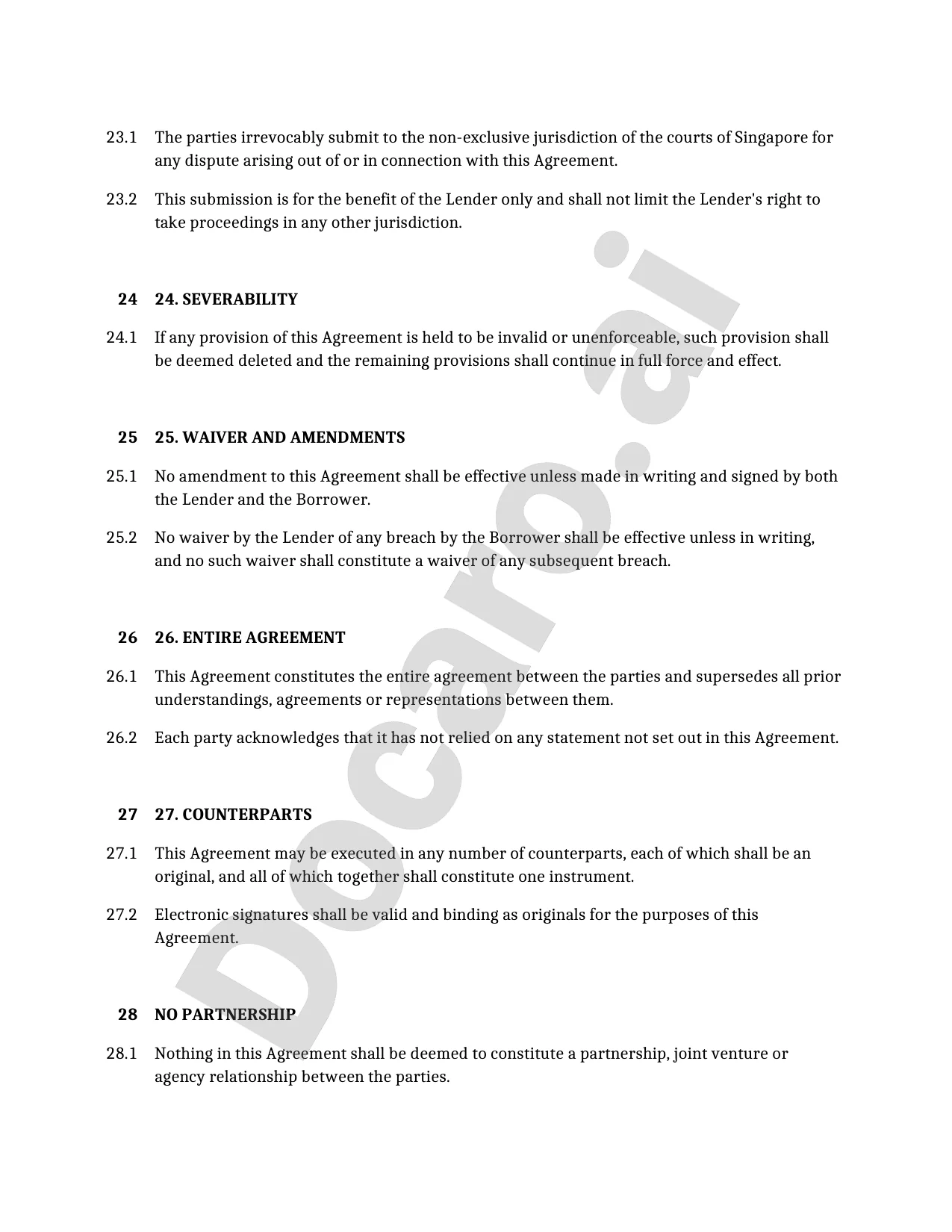
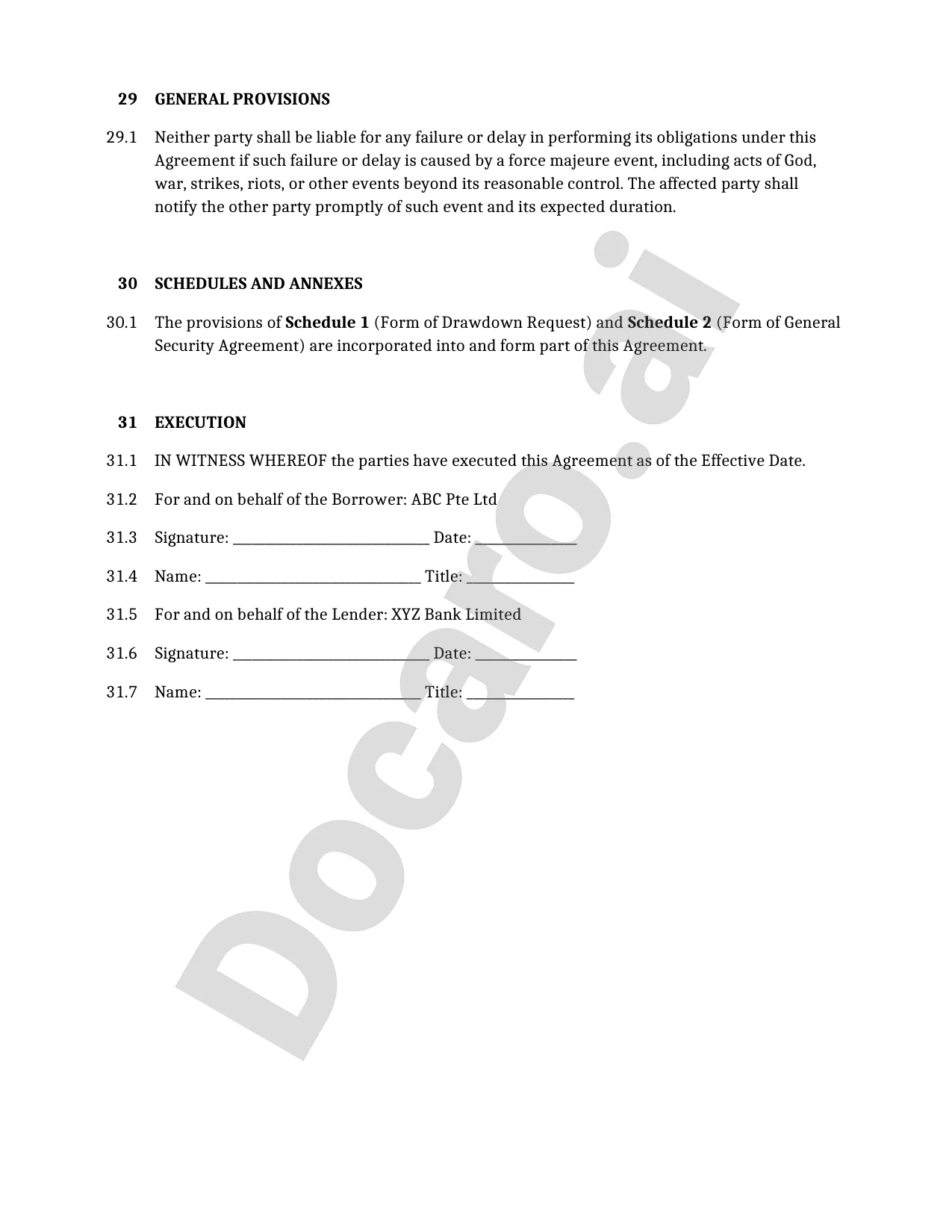
Generic free templates for line of credit agreements often overlook Singapore-specific regulations, such as those under the Banking Act or consumer protection laws. Inaccurate terms can lead to unenforceable clauses, disputes over interest rates, or non-compliance with disclosure requirements, potentially resulting in financial losses or legal challenges.
AI-generated bespoke line of credit agreements are customized to your exact needs, incorporating Singapore's legal standards and precise details like loan amounts, repayment schedules, and security interests. This ensures a robust, enforceable document tailored for your situation, minimizing risks and providing clarity for all parties.
What is a Line of Credit Agreement in Singapore?
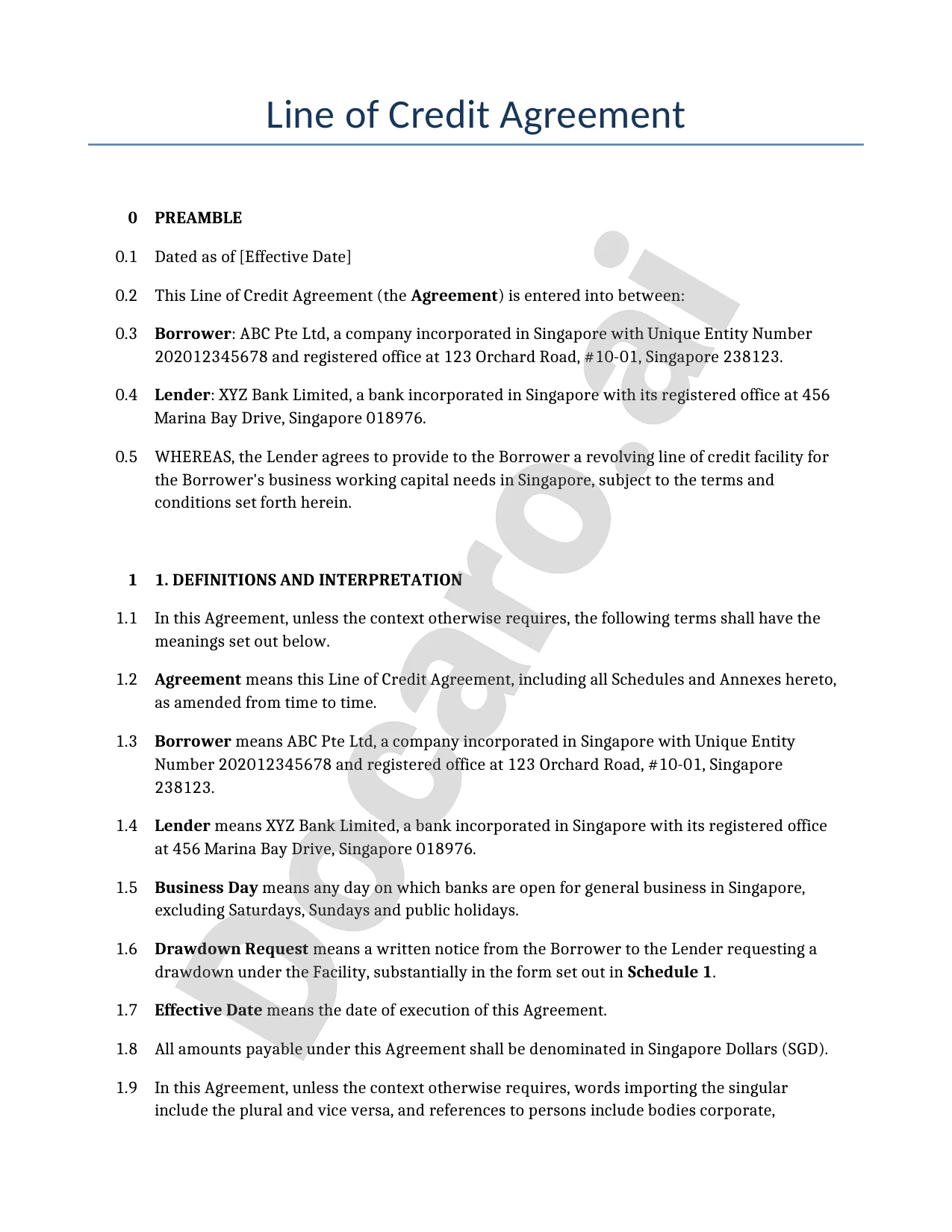
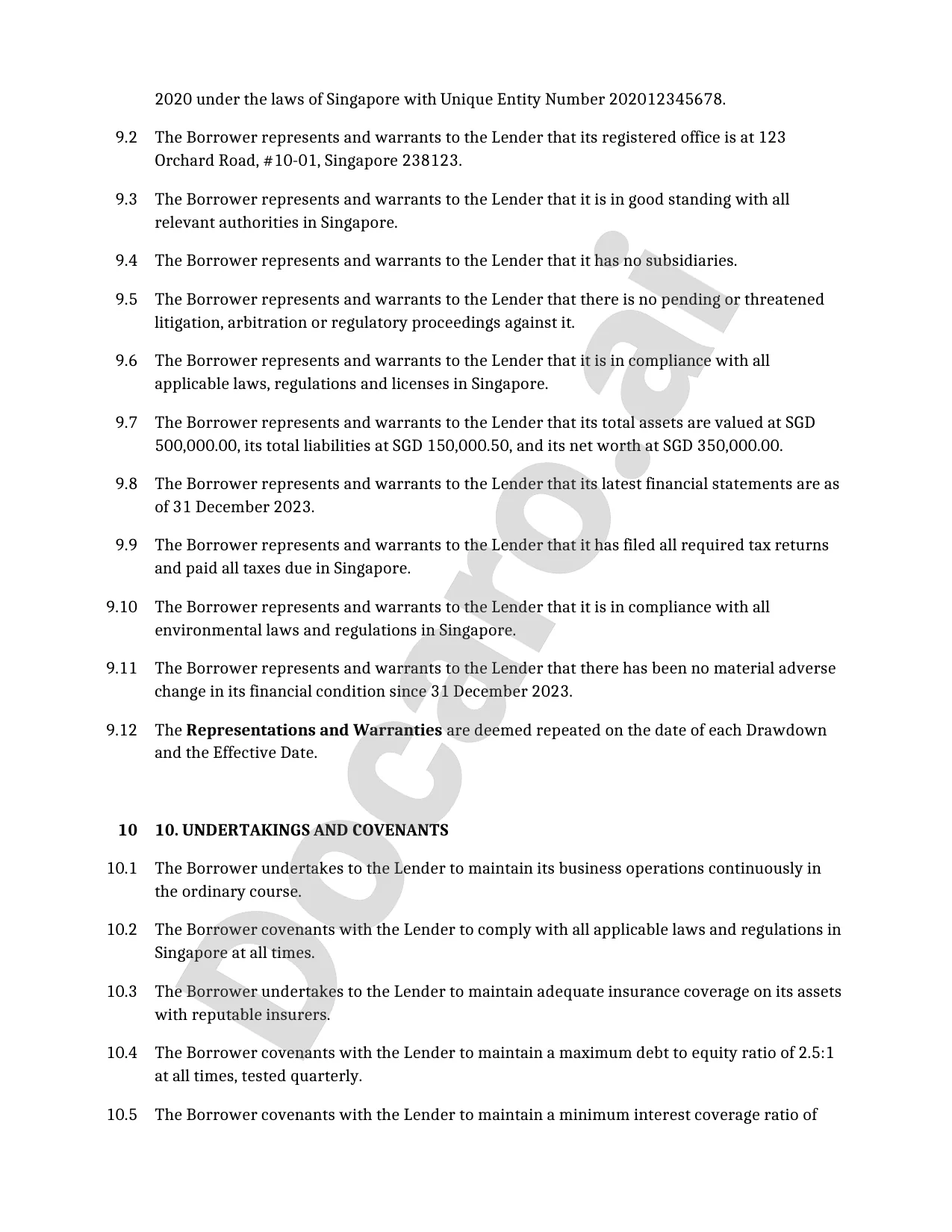
A Line of Credit Agreement under Singapore law is a formal contract between a lender, often a bank, and a borrower that establishes a flexible borrowing limit, allowing the borrower to draw funds as needed up to a specified amount. This agreement is governed by the Banking Act and common law principles in Singapore, ensuring transparency and enforceability in financial dealings.
The primary purpose of a Line of Credit Agreement is to provide borrowers with ongoing access to capital for short-term needs, such as managing cash flow or funding business operations, without the need to apply for new loans each time. It offers cost efficiency by charging interest only on the amount drawn, making it a popular tool for businesses and individuals in Singapore's dynamic economy.
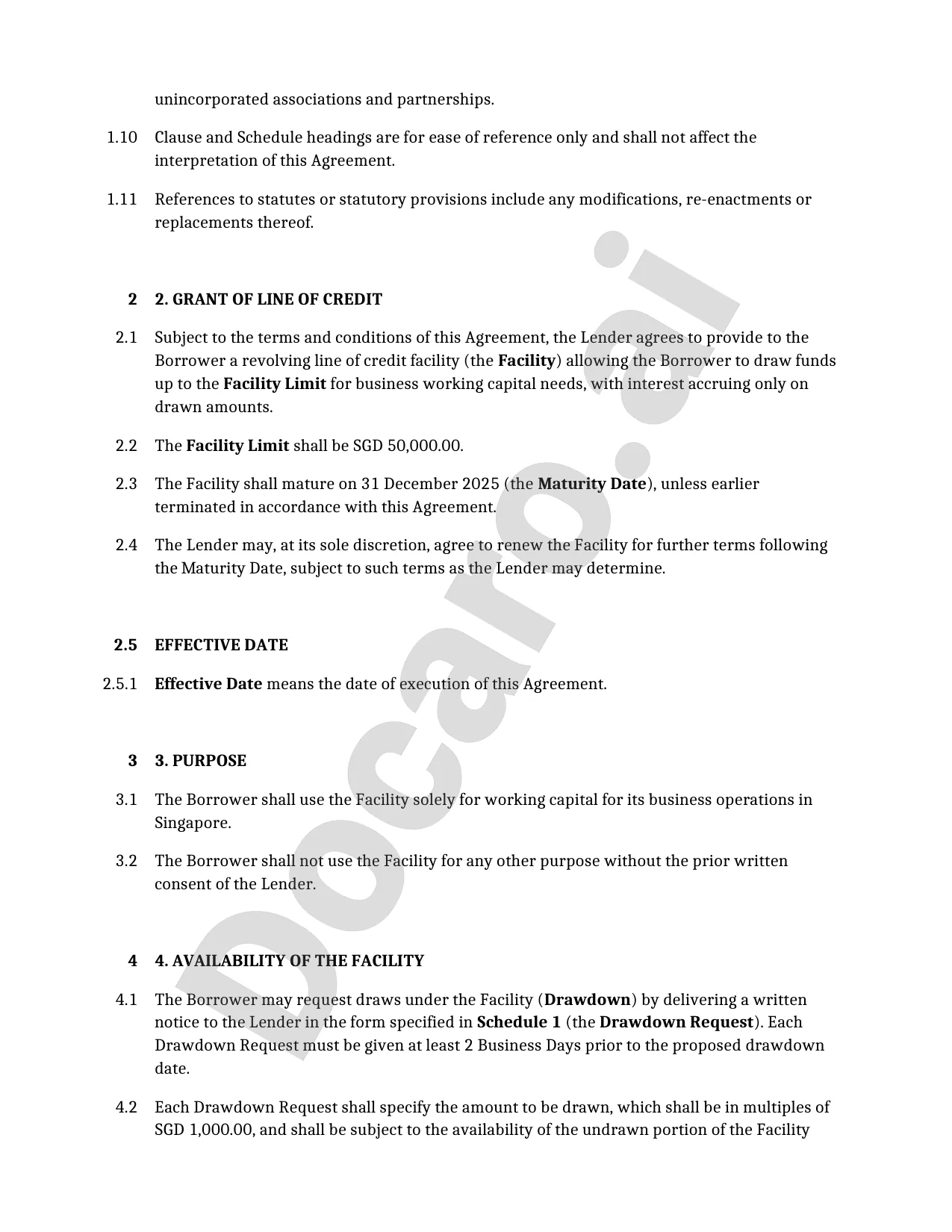
The basic structure typically includes key sections like the credit limit, interest rates, repayment terms, and conditions for default, often customized to the parties involved.
- Credit Limit: Defines the maximum amount available.
- Drawdown Procedures: Outlines how funds can be accessed.
- Security and Covenants: May require collateral or compliance with financial ratios.
- Termination Clauses: Specifies when the agreement ends.
For tailored Line of Credit Agreements compliant with Singapore law, consider using Docaro's AI-generated documents to create bespoke legal solutions suited to your specific circumstances.
Line of credit agreements offer Singaporean businesses unparalleled flexibility, enabling scalable funding to manage cash flow and seize opportunities without rigid repayment schedules. For tailored documents that fit your specific needs, generate bespoke line of credit agreements using Docaro.
When should you use a Line of Credit Agreement in Singapore?
A Line of Credit Agreement in Singapore is ideal for businesses facing short-term financing needs, such as covering seasonal inventory purchases or bridging cash flow gaps during unexpected expenses. This flexible arrangement allows borrowers to draw funds as required up to an approved limit, paying interest only on the utilized amount, which makes it more efficient than traditional loans for temporary requirements.
For ongoing business operations, a Line of Credit Agreement provides ongoing liquidity to support day-to-day activities like payroll, supplier payments, or expansion projects without the need for repeated loan applications. Lenders benefit from this setup by earning consistent interest revenue while maintaining a secured relationship with creditworthy borrowers in Singapore's competitive financial market.
Small enterprises in Singapore often use these agreements for working capital management, enabling quick access to funds during economic fluctuations. To ensure compliance with local regulations, borrowers should opt for bespoke AI-generated legal documents via Docaro's Line of Credit services, tailored to specific needs rather than generic options.
When should you avoid using one?
A Line of Credit Agreement may not be suitable for long-term investments in Singapore, where borrowers need predictable funding over extended periods. Unlike fixed loans, lines of credit offer revolving access that can lead to variable interest costs, potentially disrupting financial planning under regulations from the Monetary Authority of Singapore (MAS).
When fixed repayment terms are preferred, a Line of Credit Agreement often falls short due to its flexible drawdown and repayment structure. Singapore's consumer credit laws emphasize clarity in obligations, making structured loans a better fit for those seeking defined schedules to avoid ongoing debt management challenges.
Businesses facing volatile cash flows might find lines of credit appealing, but they become unsuitable if regulatory compliance requires stable financing for audits or tax purposes. For tailored solutions compliant with Singapore regulations, consider bespoke AI-generated legal documents via Docaro platform to ensure precision without generic templates.

What are the key clauses in a Line of Credit Agreement?
A Singapore Line of Credit Agreement is a flexible financing tool that allows borrowers to draw funds up to a predefined limit, commonly used by businesses for working capital needs. Essential clauses outline the credit limits, specifying the maximum amount available, often with provisions for periodic reviews or adjustments based on the borrower's financial health.
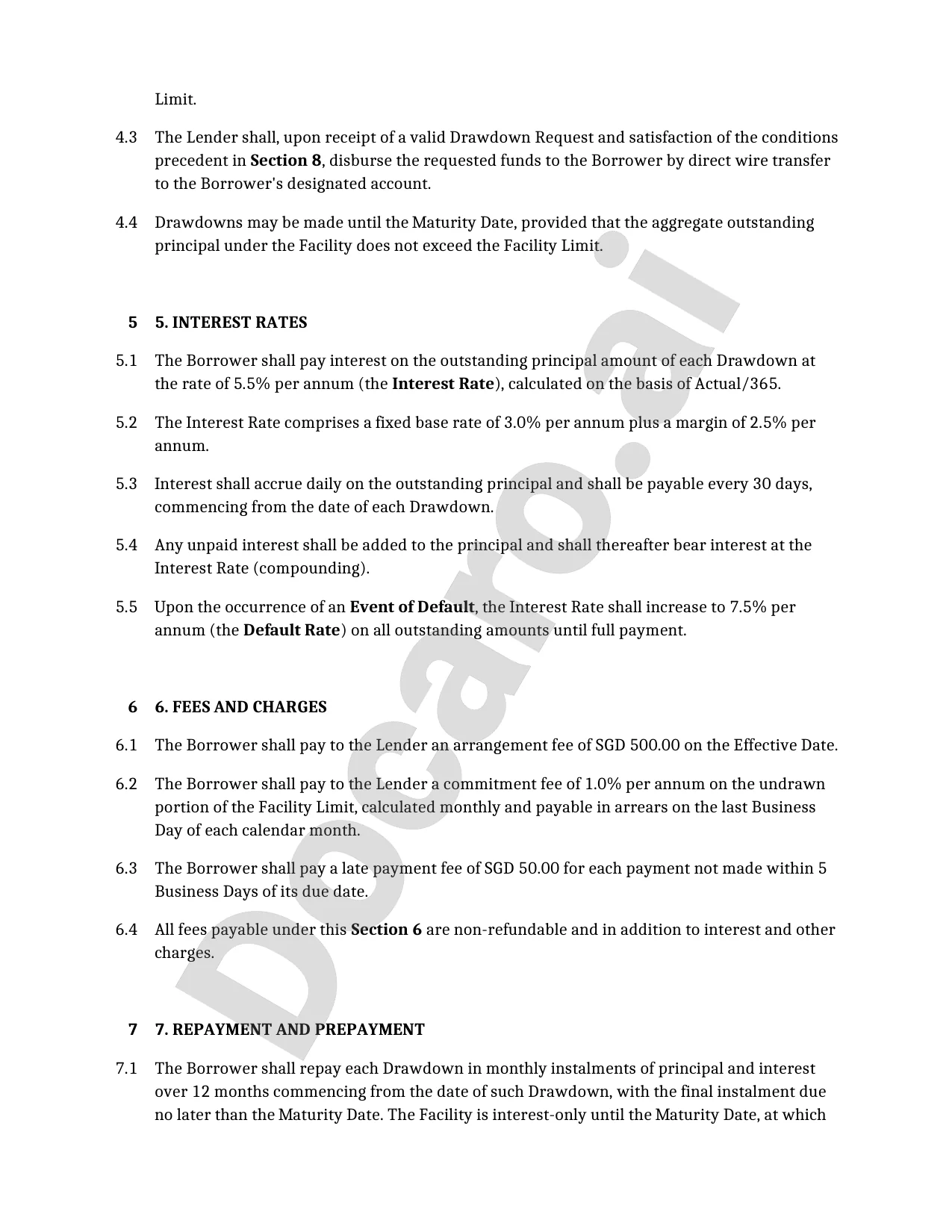
Interest rates in these agreements are typically variable, tied to benchmarks like the Singapore Swap Offer Rate (SOR) or prime rate, plus a margin determined by the lender's risk assessment. Repayment terms require interest payments on drawn amounts, with principal repayments either on demand or scheduled, ensuring liquidity while minimizing costs for undrawn portions.
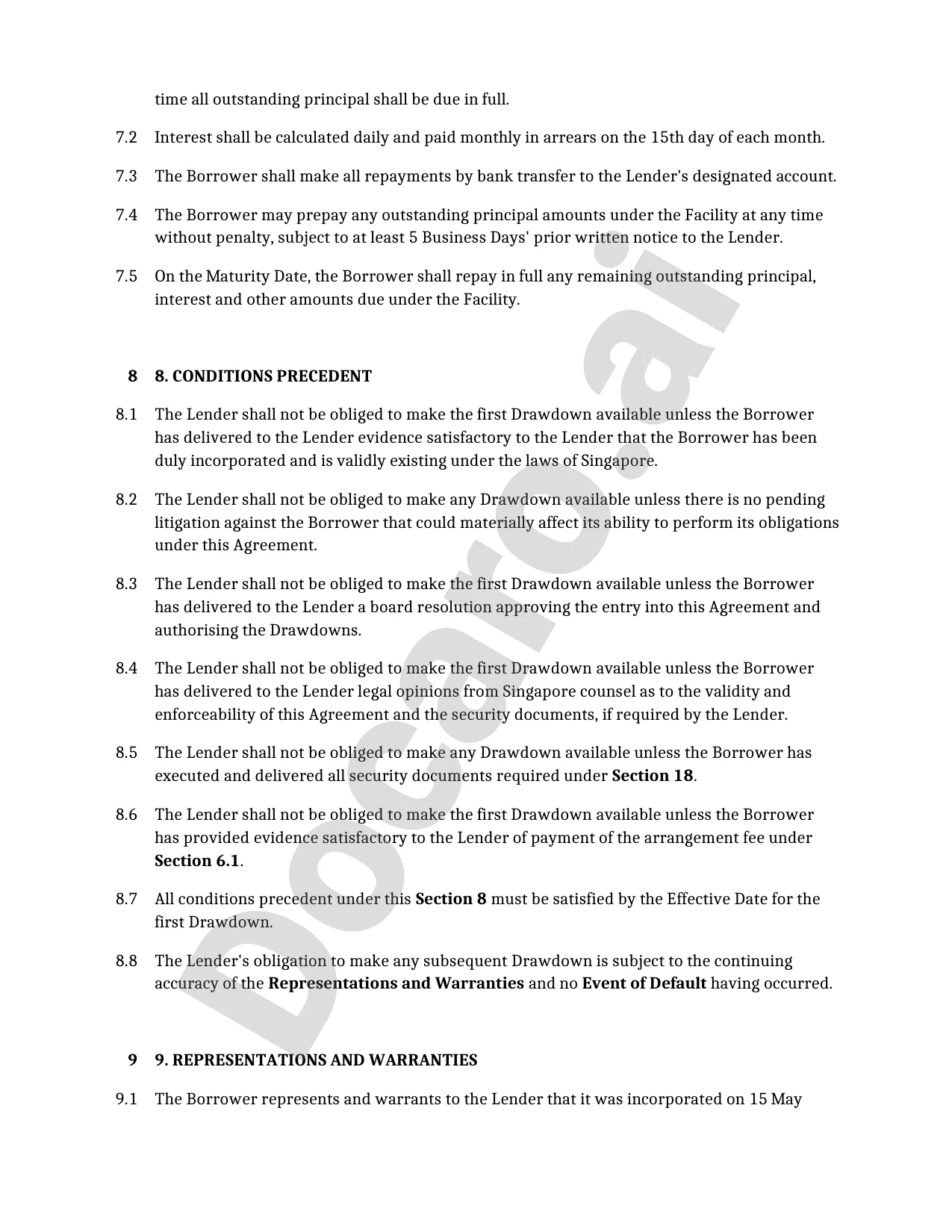
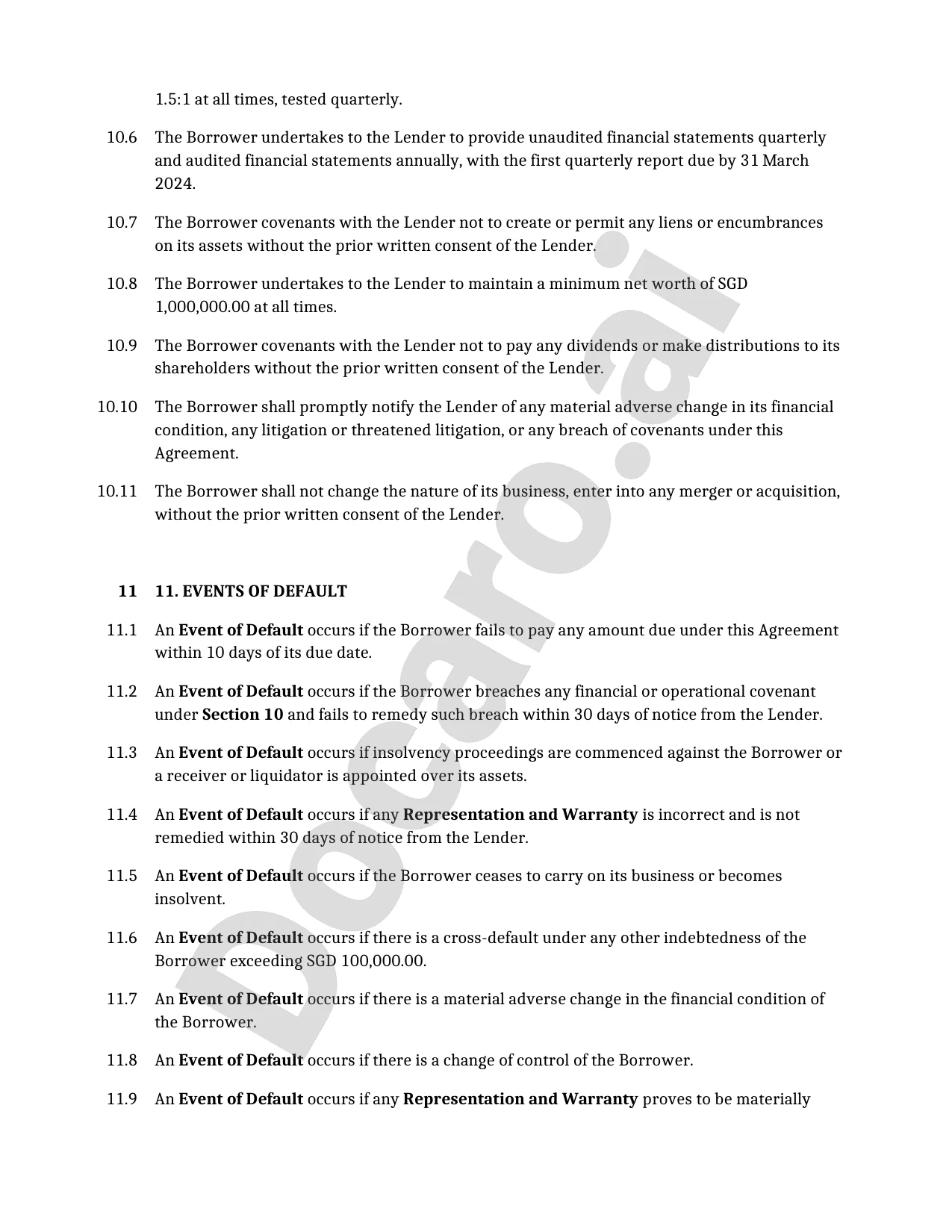
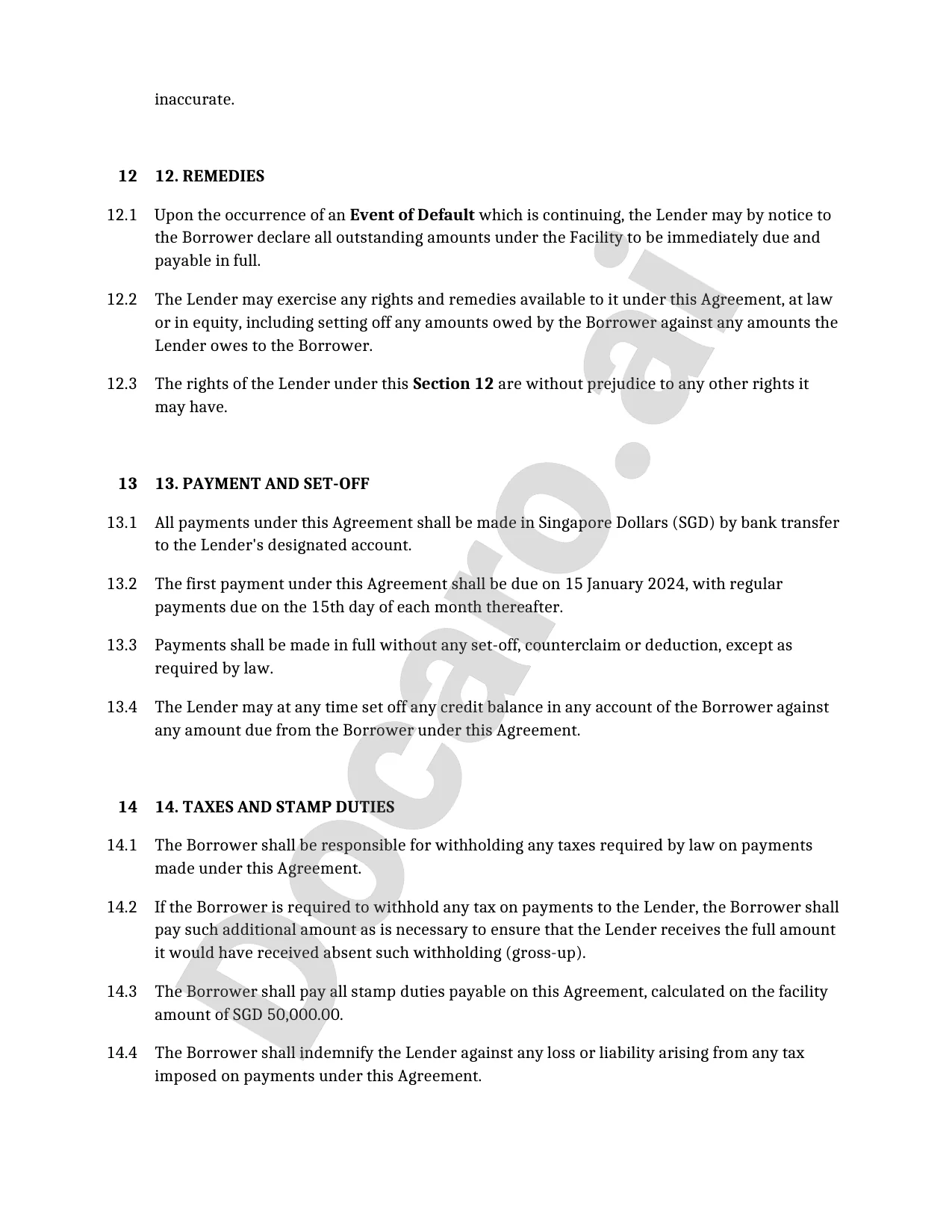
Default provisions are critical, detailing events such as missed payments, insolvency, or covenant breaches that trigger acceleration of the full outstanding balance. For comprehensive insights into these key terms and conditions in a Singapore Line of Credit Agreement, lenders often include security requirements and covenants to protect interests.
To ensure compliance with Singapore's regulatory framework under the Monetary Authority of Singapore (MAS), parties should opt for bespoke AI-generated legal documents using Docaro, tailored to specific transaction needs rather than generic forms.
1
Read the Overview
Scan the entire Line of Credit Agreement to grasp its structure, parties involved, and overall purpose before diving into details.
2
Examine Key Clauses
Focus on interest rates, repayment terms, default conditions, and collateral requirements; note any ambiguities or unfavorable provisions.
3
Seek Clarification
Consult a legal expert or use Docaro to generate a bespoke explanation of unclear clauses for better comprehension.
4
Confirm Readiness
Verify understanding of all key clauses and ensure the agreement aligns with your financial needs before signing.
What are the key rights and obligations of the parties involved?
In a Singapore Line of Credit Agreement, the lender holds primary rights such as approving and limiting drawdown requests from the borrower, charging interest on outstanding amounts, and requiring periodic financial reporting to monitor creditworthiness. Borrowers, in turn, have the obligation to adhere to drawdown limits, provide accurate reporting requirements like balance sheets and cash flow statements, and make timely repayments to avoid default.
Enforcement mechanisms empower the lender to declare events of default for breaches like missed payments or covenant violations, allowing actions such as accelerating the full loan amount or seizing collateral. For a deeper dive into these dynamics, explore our guide on Understanding Line of Credit Agreements in Singapore.
To ensure compliance with Singapore's regulatory framework under the Monetary Authority of Singapore, both parties must customize agreements; consider using Docaro for bespoke AI-generated legal documents tailored to specific needs.
Are there any key exclusions to watch out for?
In Line of Credit Agreements under Singapore law, important exclusions such as limitations on usage are common to protect lenders by restricting how borrowers can apply the funds. These provisions ensure the credit line supports intended purposes like working capital, preventing misuse for high-risk activities, which safeguards financial stability and complies with regulatory frameworks from the Monetary Authority of Singapore.
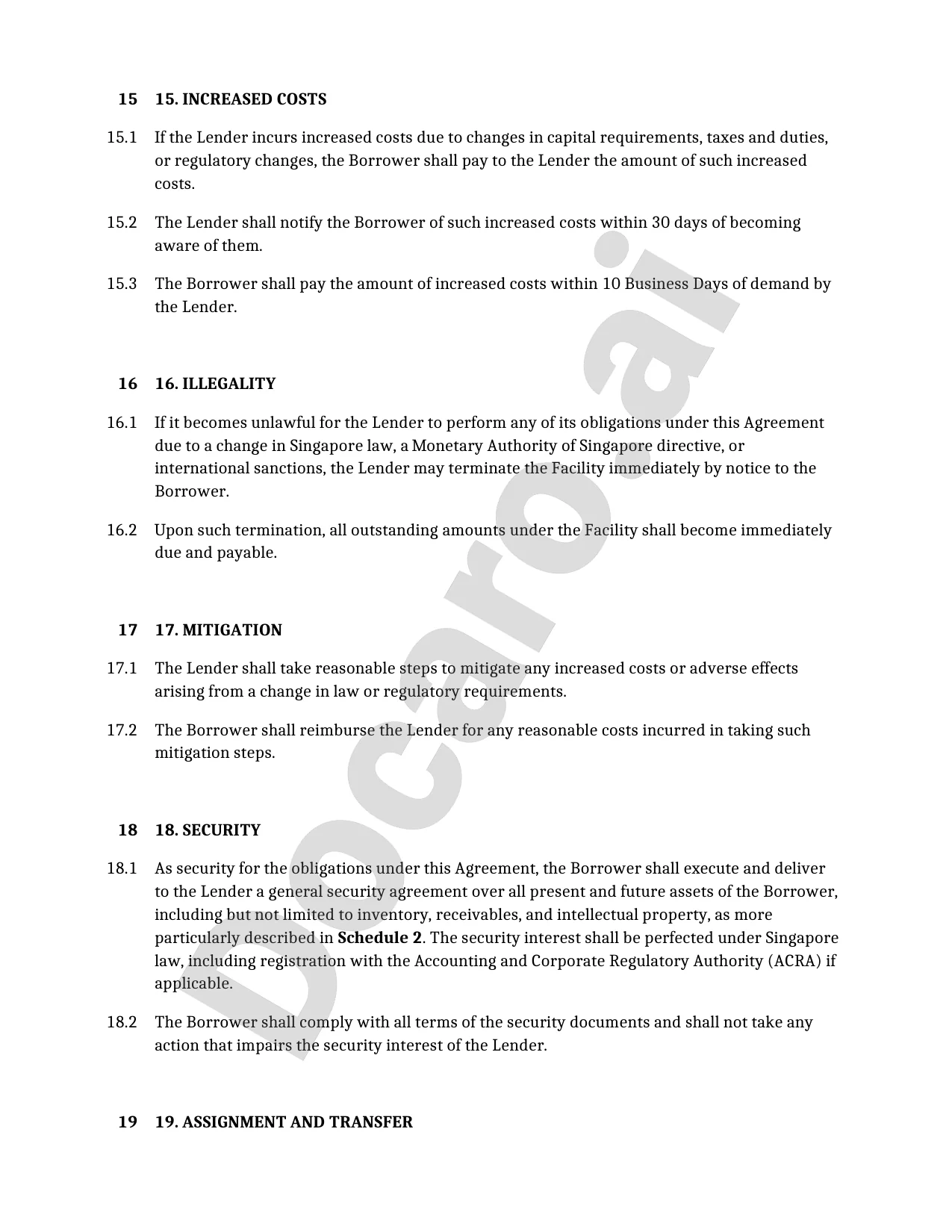
Non-recourse provisions limit lender recovery to the collateral or specific assets, excluding personal liability for the borrower beyond those terms. This matters as it reduces borrower risk, encouraging participation in financing while allowing lenders to mitigate losses in default scenarios under Singapore's secured lending rules.
Exclusions from liability often shield parties from indirect damages like consequential losses or force majeure events, as outlined in standard contract principles. They are crucial for clarity, minimizing disputes and ensuring enforceability in Singapore courts, where precise drafting prevents unintended obligations.
For robust protection, businesses should opt for bespoke AI-generated legal documents using Docaro's platform, tailored to specific needs rather than generic forms. This approach enhances compliance with Singapore's evolving financial regulations and supports customized risk management in credit arrangements.
What recent or upcoming legal changes affect Line of Credit Agreements in Singapore?
Singapore's regulatory landscape for Line of Credit Agreements is evolving to strengthen consumer protections and financial stability. Recent amendments to the Banking Act in 2023 have introduced stricter guidelines on credit extensions, requiring banks to assess borrowers' repayment capacity more rigorously before approving lines of credit.
The Monetary Authority of Singapore (MAS) has anticipated further updates in 2024 to consumer protection rules under the Financial Advisers Act, aiming to enhance transparency in credit agreement disclosures. These changes mandate clearer terms on interest rates and fees, reducing risks of over-indebtedness for consumers.
Financial institutions must now integrate digital tools for real-time monitoring of credit usage, as per upcoming MAS circulars. For compliant Line of Credit Agreements, businesses are encouraged to use bespoke AI-generated legal documents via Docaro platform to ensure tailored adherence to these regulations.
How can you negotiate a Line of Credit Agreement effectively?
Preparing for Line of Credit Agreement negotiations in Singapore requires thorough research on your financial needs and the lender's terms. Gather documents like financial statements and credit history to strengthen your position before entering discussions.
During negotiations, focus on key clauses such as interest rates, repayment schedules, and covenants to ensure favorable conditions. How to Negotiate Your Line of Credit Agreement in Singapore provides detailed strategies for effective bargaining.
Seek legal advice from qualified professionals to review the agreement and protect your interests. For customized solutions, consider bespoke AI-generated legal documents through Docaro to tailor the Line of Credit Agreement precisely to your situation.
- Consult a Singapore-licensed lawyer early in the process.
- Avoid generic templates; opt for personalized documents via Docaro for compliance with local regulations.
1
Assess Your Needs
Evaluate your business's financial requirements and credit history to determine the appropriate line of credit amount and terms needed.
2
Research Financial Institutions
Compare banks and lenders in Singapore offering lines of credit, focusing on interest rates, fees, and eligibility criteria.
3
Prepare Documentation
Gather financial statements, business plans, and identification documents required for the application process.
4
Generate Agreement with Docaro
Use Docaro to create a bespoke AI-generated Line of Credit Agreement tailored to your specific terms and conditions.
You Might Also Be Interested In
A Legal Contract Outlining The Terms Of A Loan Between A Lender And Borrower, Including Repayment And Interest Details.
A Written Promise By One Party To Pay A Specified Sum Of Money To Another Party At A Predetermined Future Date Or On Demand.
A Legal Contract Where A Debtor Grants A Creditor A Security Interest In Collateral To Secure A Debt Or Obligation.
A Legal Document Where An Individual Agrees To Be Personally Liable For Another's Debt Or Obligation If The Primary Party Defaults.
A Legal Document That Creates A Security Interest Over Property To Secure A Loan Repayment.
A Legal Contract Where A Debtor And Creditor Agree To Settle An Outstanding Debt For A Reduced Amount Or Revised Terms.