Docaro

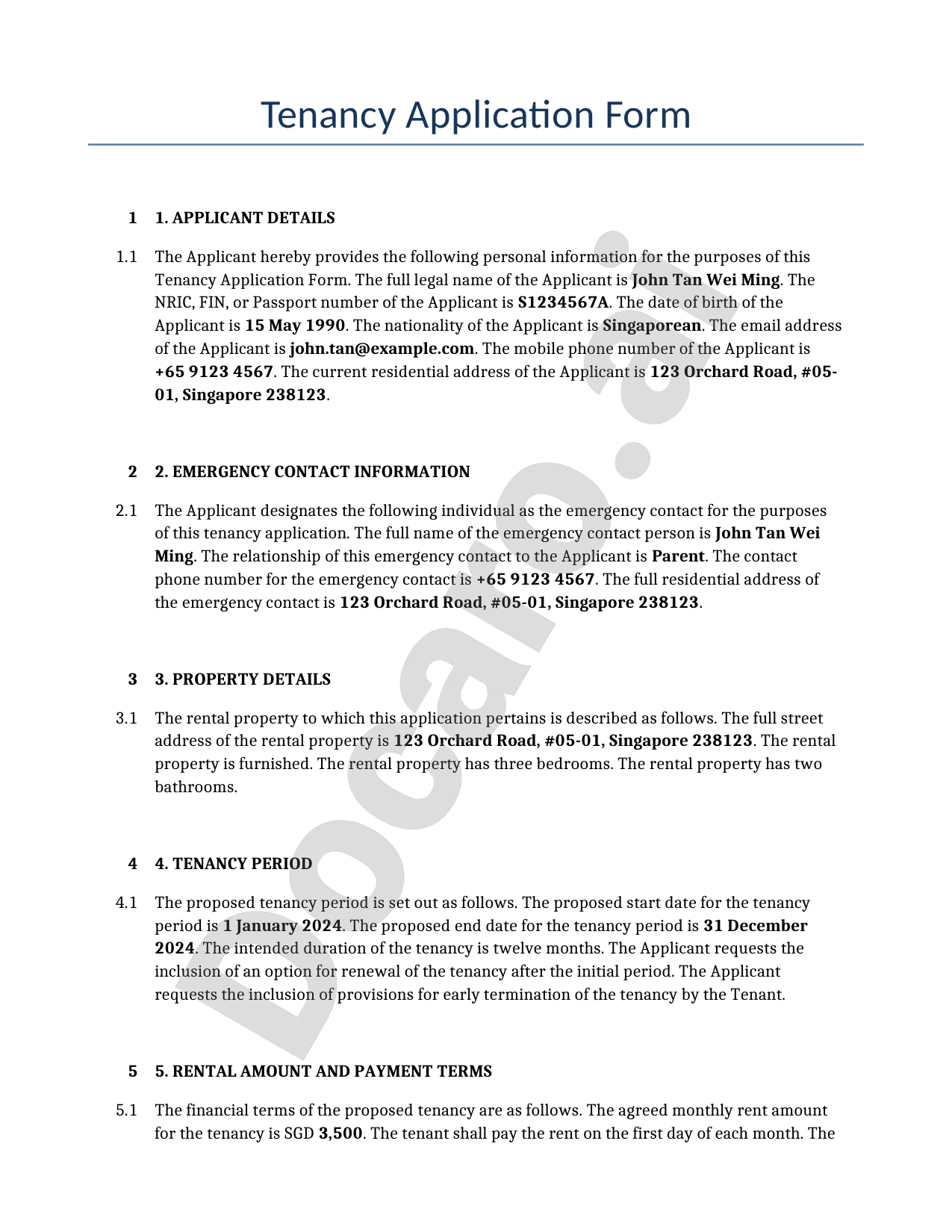
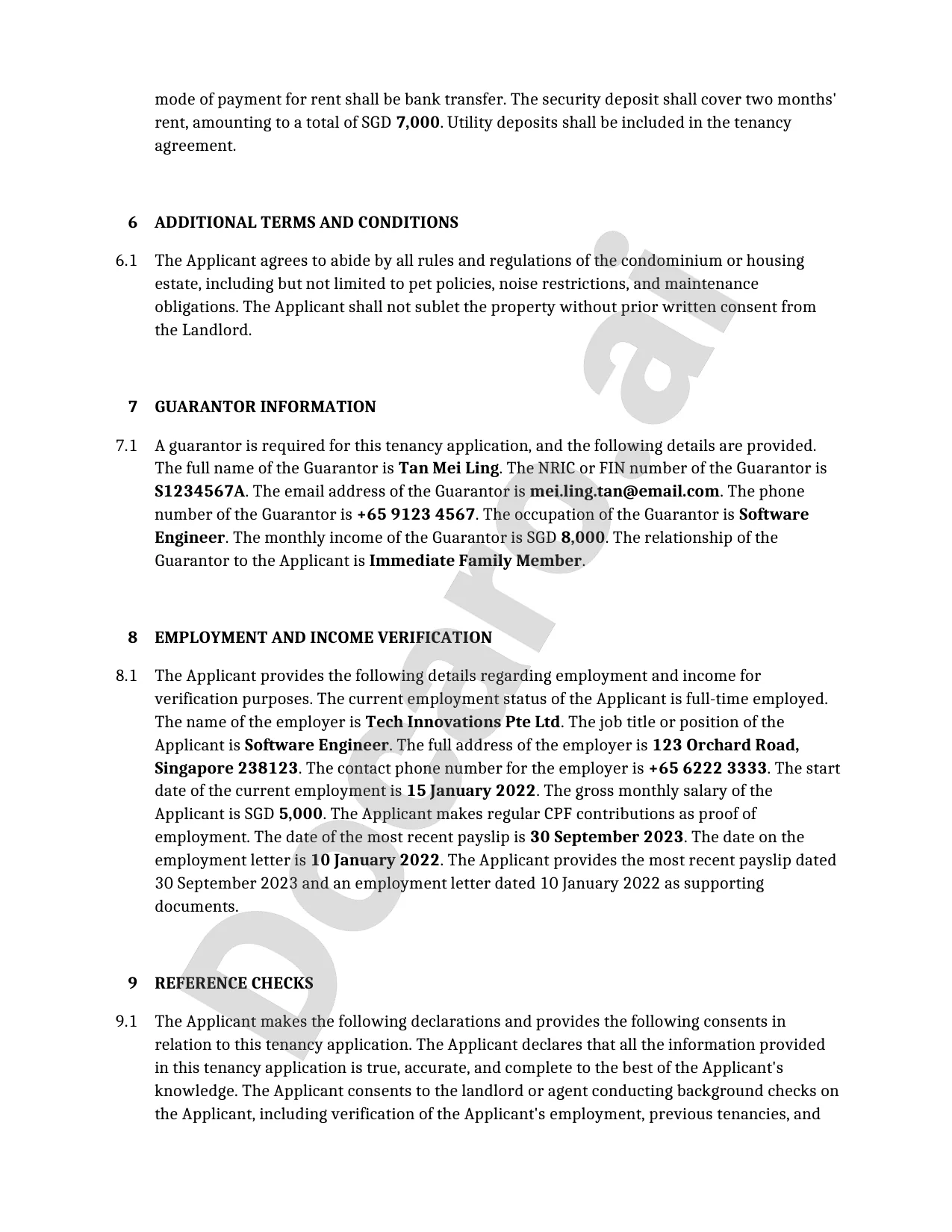
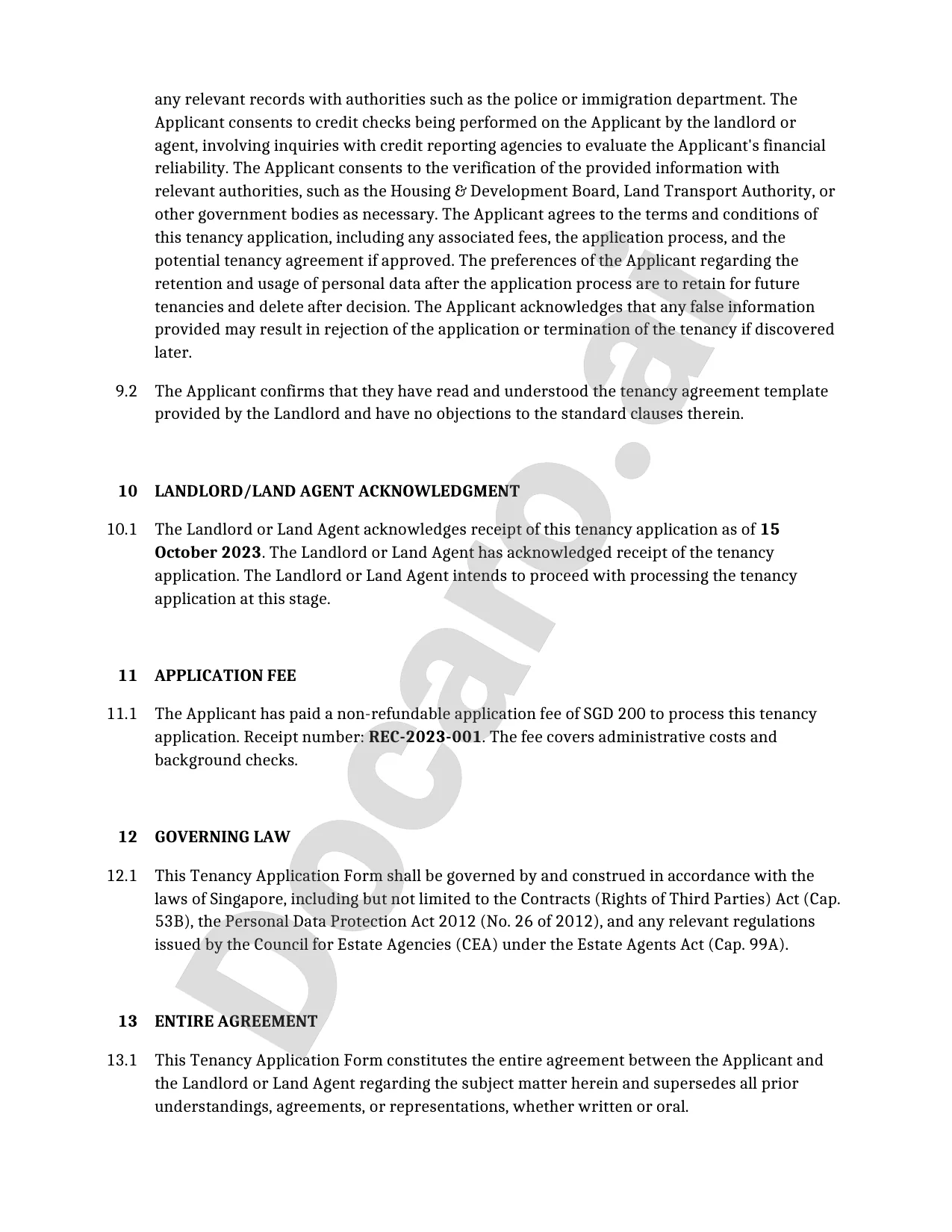
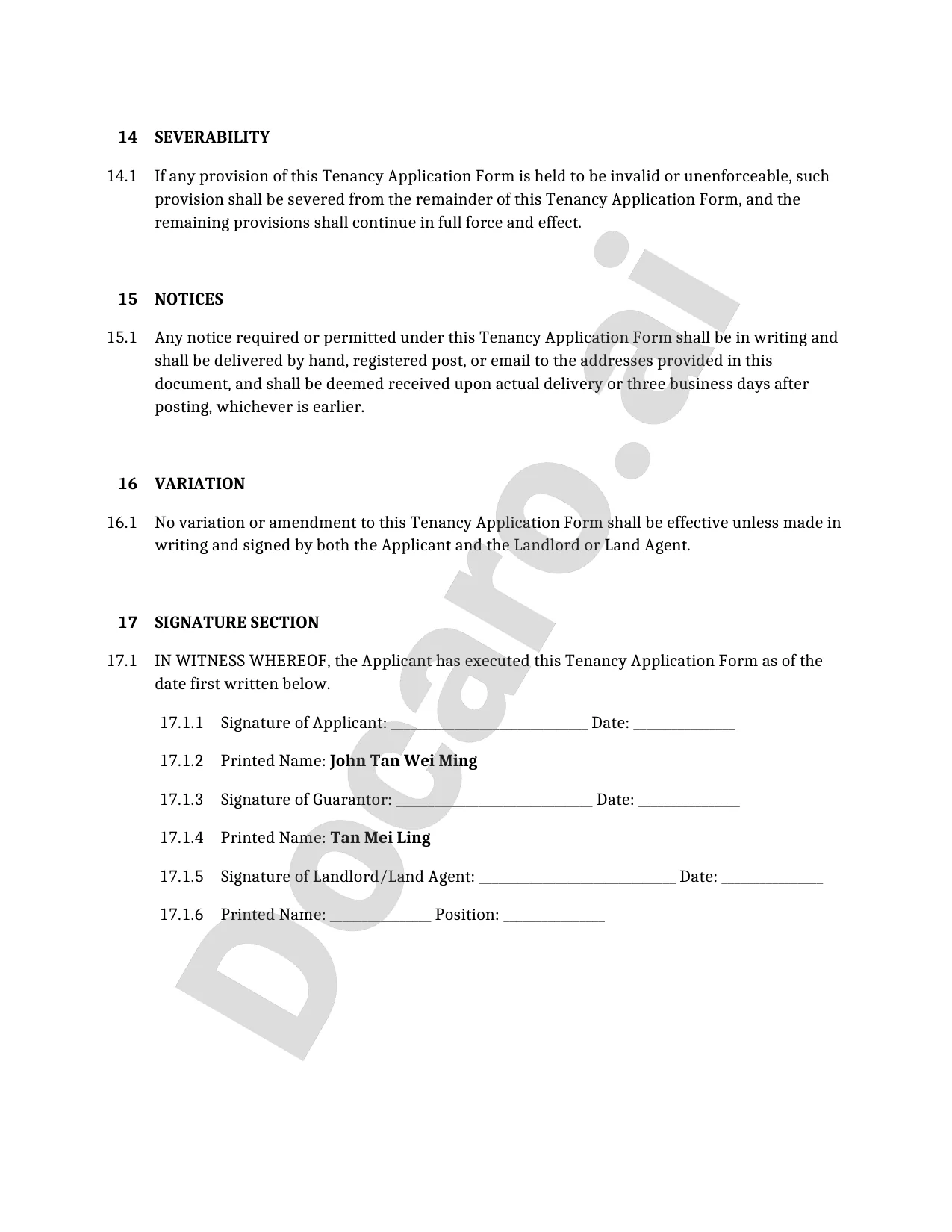
AI Generated Tenancy Application Form for use in Singapore
PDF & Word - 2026 Updated

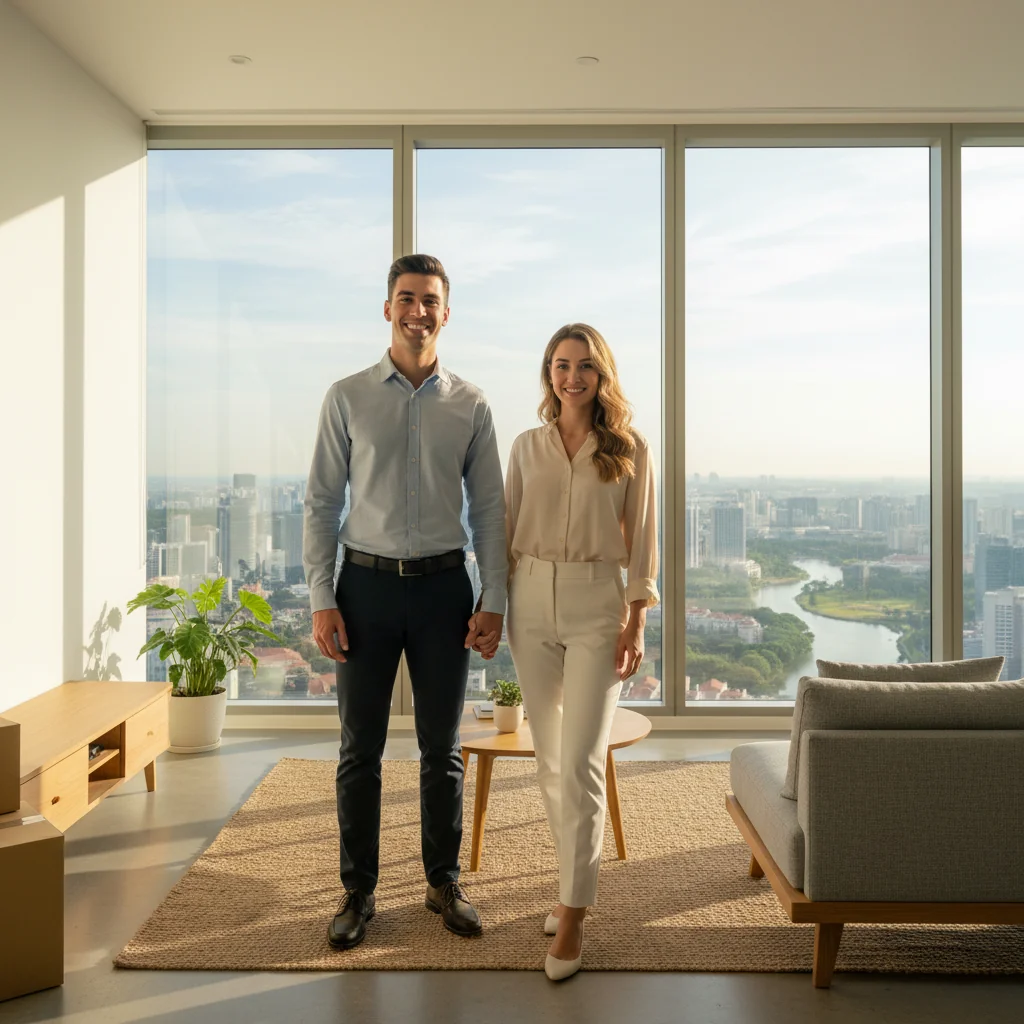
A photorealistic image of a young adult couple in modern Singapore apartment, shaking hands with a real estate agent while holding keys to their new home, symbolizing successful tenancy application and moving in, bright natural light, urban Singapore skyline in background, no children present.
Generate a professional tenancy application form for residential rentals in Singapore using our AI-powered tool, ensuring compliance with local tenancy laws and simplifying the rental process for landlords and tenants.
Free instant document creation.
Legally compliant agreements.
No signup required.
Generate your document for free.
Download PDF, Word and email for $9.99 USD.

When do you need a Tenancy Application Form in Singapore?

  • Applying for a Rental Property
    Use this form when a potential tenant wants to apply to rent a residential property, providing their details to the landlord for review.
  • Screening Potential Tenants
    Landlords need this form to check applicants' background, income, and references to ensure they are reliable renters.
  • Starting the Rental Process
    It marks the first formal step in securing a tenancy agreement, helping both parties decide if the rental will work out.
  • Protecting Both Parties
    A well-drafted form reduces misunderstandings by clearly outlining the applicant's information and commitments upfront.
  • Avoiding Rental Disputes
    Having accurate details from the start helps prevent issues like payment delays or property damage later on.

Singaporean Legal Rules for a Tenancy Application Form

  • Key Document
    The tenancy application form is used by potential tenants to apply for renting a residential property in Singapore.
  • Required Information
    Applicants must provide personal details, employment info, income proof, and references to show they can afford the rent.
  • No Binding Contract
    Submitting the form is just an application and does not legally bind either the tenant or landlord until a tenancy agreement is signed.
  • Fair Housing Practices
    Landlords cannot discriminate based on race, religion, or other protected traits when reviewing applications.
  • Privacy Protection
    Personal information in the application must be handled securely and used only for rental purposes under Singapore's data laws.
  • Income Verification
    Landlords often check the applicant's financial stability to ensure they can pay rent on time.
  • Legal Framework
    Tenancy applications fall under Singapore's general contract and property laws, with no specific statute just for applications.
Important

Using the wrong structure for a residential tenancy agreement in Singapore can lead to unenforceable terms or unintended legal liabilities for both landlord and tenant.

What a Proper Tenancy Application Form Should Include

  • Tenant's Personal Details
    Include the applicant's full name, date of birth, nationality, contact information, and occupation to verify identity.
  • Intended Rental Property
    Specify the address of the property, lease start date, and rental period to confirm the application matches the available unit.
  • Employment and Income Information
    Provide details on the applicant's job, employer, salary, and proof of income to show ability to pay rent.
  • References from Previous Landlords
    List contact details of past landlords to check rental history and reliability as a tenant.
  • Declaration and Consent
    Require the applicant to confirm the information is true and agree to background checks for transparency.

Why Free Templates Can Be Risky for Tenancy Application Forms

Free tenancy application templates often fail to comply with Singapore's specific tenancy laws, such as those under the Control of Rent Act or common lease regulations. Generic forms may omit essential clauses on security deposits, notice periods, or dispute resolution, leading to unenforceable agreements, disputes over rental terms, or invalid applications that delay the tenancy process.

Our AI-generated bespoke tenancy application documents are tailored precisely to Singapore's legal requirements, incorporating customized clauses for your unique situation. This ensures full compliance, clarity in terms, and a smooth, enforceable application process without the pitfalls of one-size-fits-all templates.

Generate Your Bespoke Tenancy Application Form in 4 Easy Steps

1
Answer a Few Questions
Our AI guides you through the info required.
2
Generate Your Document
Docaro builds a bespoke document tailored specifically on your requirements.
3
Review & Edit
Review your document and submit any further requested changes.
4
Download & Sign
Download your ready to sign document as a PDF, Word, Txt or HTML.

Why Use Our AI Tenancy Application Form Generator?

Fast Generation
Quickly generate a comprehensive Tenancy Application Form, eliminating the hassle and time associated with traditional document drafting.
Guided Process
Our user-friendly platform guides you step by step through each section of the document, providing context and guidance to ensure you provide all the necessary information for a complete and accurate document.
Safer Than Legal Templates
We never use legal templates. All documents are generated from first principles clause by clause, ensuring that your document is bespoke and tailored specifically to the information you provide. This results in a much safer and more accurate document than any legal template could provide.
Professionally Formatted
Your Tenancy Application Form will be formatted to professional standards, including headings, clause numbers and structured layout. No further editing is required. Download your document in PDF or Word.
Compliance with Singaporean Law
Rest assured that all generated documents meet the latest legal standards and regulations of Singapore, enhancing trust and reliability.
Cost-Effective
Save money by generating legally sound tenancy agreements without the need for expensive legal services or consultations.
Get Started for Free - No Sign Up Required
No payment or sign up is required to start generating your Tenancy Application Form. Simply answer a few questions and a preview of your final document will be generated.
Looking to Generate a Tenancy Application Form in a Different Country?
Choose country:

Compliance Legislation

Your AI Generated Tenancy Application Form will be checked for compliance against the following legislation and regulations:
Exempts certain residential properties from rent control provisions under the repealed Control of Rent Act, applicable to rental applications for non-exempt properties.
Governs eligibility for HDB rental and purchase schemes, including application processes and requirements for renting HDB flats.
Principal legislation regulating HDB housing, including tenancy agreements, rental applications, and tenant rights for public housing in Singapore.
Official guidelines from the Council for Estate Agencies (CEA) on standard terms for private residential tenancy agreements, relevant to rental applications.
Generate Your Bespoke Tenancy Application Form Now

What is a Tenancy Application Form in Singapore?

A tenancy application form in Singapore's rental market is a crucial document used by prospective tenants to formally express interest in renting a property. It collects essential personal and financial details, such as employment history, income proof, and references, enabling landlords or agents to assess the applicant's suitability.

The primary purpose of this form is to streamline the screening process, helping property owners mitigate risks like non-payment or property damage. Tenants use it to apply for rentals, while landlords and real estate agents rely on it to evaluate applications efficiently within Singapore's competitive housing market.

In the overall tenancy process, the application form comes after initial property viewings and precedes the signing of a tenancy agreement. Once approved, it leads to negotiations on terms, security deposits, and the execution of a legally binding lease, ensuring a smooth transition into occupancy.

The Council for Estate Agencies (CEA) regulates real estate practices in Singapore, mandating that agents handle tenancy applications ethically under the Estate Agents Act. The basic legal framework is governed by the Tenancy Agreement under common law principles, with resources available on the CEA website for guidance on compliant processes.

When should you use a Tenancy Application Form in Singapore?

A tenancy application form is essential when applying for HDB rentals in Singapore, as it helps Housing and Development Board (HDB) officials verify tenant eligibility, income, and background through required documents like NRIC and proof of employment. For private rentals, this form streamlines the process by collecting details on references and financial stability, ensuring landlords can assess suitability before approving a lease.

However, a tenancy application form should not be used in direct leases without agents, where parties negotiate terms verbally or via simple agreements, or in informal arrangements like short-term stays with friends, as these scenarios often bypass formal vetting to maintain flexibility.

Bypassing a tenancy application form carries risks such as unverified tenant history, leading to potential defaults on rent or property damage without recourse. In Singapore, this can result in legal disputes, financial losses, or eviction challenges; for guidance, refer to the HDB tenancy matters page or the CEA code of conduct for private rentals.

  • Use bespoke AI-generated legal documents via Docaro for customized tenancy agreements to mitigate these risks.
  • Always consult professionals for complex arrangements to ensure compliance with Singapore's rental laws.
"Properly documenting tenancy agreements through bespoke AI-generated legal documents using Docaro is essential to prevent disputes and ensure compliance with Singapore's tenancy laws," states tenancy expert Dr. Lim Wei, Senior Lecturer in Property Law at the National University of Singapore. For tailored solutions, visit [Docaro tenancy generator](https://docaro.com).
Person signing tenancy application form

What are the key clauses in a Tenancy Application Form?

A tenancy application form in Singapore typically begins with applicant details, requiring personal information such as full name, NRIC or passport number, contact details, employment status, and income proof. This clause is crucial as it verifies the applicant's identity and financial capability, helping landlords assess reliability and comply with Singapore's tenancy laws under the Council for Estate Agencies guidelines.

The rental terms section outlines proposed rent amount, lease duration, security deposit, and any special conditions like pet policies or furnishing requirements. It is important for establishing clear expectations, preventing disputes, and ensuring alignment with the Housing & Development Board regulations for private or public housing tenancies in Singapore.

References and background checks are included to provide details of previous landlords, employers, or personal referees, often with consent for verification. This helps landlords mitigate risks by confirming the applicant's rental history and character, which is essential in Singapore's competitive property rental market to avoid defaults or damages.

Finally, the declarations and signatures section requires the applicant to affirm the accuracy of provided information and agree to credit or background checks, often with a penalty clause for false statements. This is vital for legal enforceability, protecting both parties under Singapore's Contracts Act, and for bespoke AI-generated legal documents using Docaro to customize tenancy agreements precisely.

What rights and obligations do parties have?

In Singapore, tenancy agreements are governed by the Residential Tenancy Agreement under the Council for Estate Agencies (CEA) guidelines, though there is no standalone Residential Tenancy Act. Tenants hold key rights such as the right to quiet enjoyment of the property, protection against unlawful eviction, and the ability to request repairs for essential services like water and electricity. Obligations for tenants include paying rent on time, maintaining the property in good condition, and complying with the terms outlined in the tenancy application form.

Landlords' primary rights involve receiving agreed-upon rent and recovering possession of the property at the end of the lease term, as per the tenancy application form. They must ensure the property is habitable and safe, fulfilling obligations to handle major repairs and respect tenants' privacy, in line with Singapore's tenancy laws. For authoritative details, refer to the CEA Guidelines for Rental Transactions.

Real estate agents acting in tenancy applications have obligations to act with professional diligence, disclose material facts, and avoid conflicts of interest under the Estate Agents Act. Their rights include earning commissions as stipulated in the form, but they must facilitate fair dealings between tenants and landlords. To ensure compliance, parties should use bespoke AI-generated legal documents via platforms like Docaro for customized tenancy agreements.

Reviewing tenancy legal documents

Are there any key exclusions in these forms?

Tenancy application forms in Singapore often include common exclusions that limit what they cover, such as not addressing full lease terms like rent escalation clauses or early termination penalties. These forms primarily focus on initial eligibility and basic agreements, requiring a separate tenancy agreement for comprehensive details, as outlined by the Council for Estate Agencies (CEA).

Exclusions related to pets are frequent, where applications may prohibit them outright or require landlord approval, excluding any automatic rights for tenants. For renovations, forms typically exclude permissions for structural changes, mandating written consent from the owner to avoid disputes.

Subletting is another key exclusion, with most applications not permitting it without explicit landlord and HDB or authority approval if applicable. Additional documents like proof of income, employment passes for foreigners, or NRIC copies are needed when the application involves these restricted areas, ensuring compliance with Singapore tenancy laws.

Submitting tenancy form online

What recent legal changes affect Tenancy Application Forms in Singapore?

Singapore's rental laws remain largely stable in 2024, with no major recent changes to tenancy application forms or CEA regulations impacting digital submissions. The Residential Tenancy Act 2024, set to take effect on July 1, 2025, will introduce standardized tenancy agreements and dispute resolution mechanisms, but it does not yet alter current application processes for prospective tenants.

Current practices under the Council for Estate Agencies (CEA) continue to require agents to use approved forms for rental transactions, emphasizing transparency in rental applications. Landlords and tenants should adhere to existing guidelines on document submissions, which can be handled digitally via platforms like email or property portals, without new mandatory requirements.

For the latest updates on Singapore rental laws, consult official sources such as the CEA website or the Ministry of Law. When preparing tenancy documents, opt for bespoke AI-generated legal documents using Docaro to ensure they are tailored to your specific needs.

How can you get started with a Tenancy Application Form?

1
Research Rental Options
Search for suitable properties on platforms like PropertyGuru. Consult a licensed property agent to understand market rates and requirements in Singapore.
2
Gather Required Documents
Collect proof of income, employment letter, passport copies, and NRIC. Ensure all documents are recent and translated if necessary.
3
Prepare Application Form
Download the tenancy application form from HDB or CEA websites. Use Docaro to generate a bespoke tenancy agreement tailored to your needs.
4
Submit and Follow Up
Submit the completed form with documents to the landlord or agent. Track the application status and respond promptly to any queries.

What common pitfalls should you watch out for?

Handling tenancy application forms in Singapore often leads to mistakes like incomplete personal details or mismatched income proofs, which can delay approvals from landlords or agents. To avoid these, carefully review each section before submission, and refer to our guide on How to Fill Out a Tenancy Application Form in Singapore for step-by-step instructions.

A common error is submitting outdated or irrelevant documents, such as expired NRICs or foreign income statements not aligned with Singapore's rental norms. Ensure all paperwork is current and relevant by checking the list in What Documents Are Needed for Tenancy Application in Singapore, and consult official guidelines from the Council for Estate Agencies (CEA) for compliance.

Overlooking common pitfalls like inconsistent employment history can raise red flags with potential landlords. Dive deeper into these issues and prevention tips in our article on Common Mistakes to Avoid in Your Singapore Rental Application.

Tenancy Application Form FAQs

A residential tenancy rental application, also known as a Tenancy Application Form, is a legal document used by prospective tenants to apply for renting a residential property in Singapore. It includes details like personal information, employment history, income proof, and references to help landlords assess the applicant's suitability.

Document Generation FAQs

Docaro is an AI-powered legal document generator that helps you create fully formatted, legally sound contracts and agreements in minutes. Just answer a few guided questions and download your document instantly.
You Might Also Be Interested In
A Legal Contract Between A Landlord And Tenant Outlining The Terms For Renting A Residential Property In Singapore.
A Legal Contract Outlining The Terms For Renting A Specific Room Within A Shared Property, Including Rent, Duration, And Tenant Responsibilities.
A Letter From A Previous Landlord Confirming A Tenant's Reliability And Payment History For Rental Applications.
A Legal Document Outlining The Rights And Obligations Of Property Owners Regarding A Shared Wall Between Adjacent Properties.
A Document Used To Record The Condition Of A Rental Property At The Start And End Of A Tenancy To Assess Damages And Responsibilities.
A Legal Contract Outlining Terms For Sharing A Residential Property Among Co-tenants In Singapore.
A Formal Notice Served By A Landlord Or Tenant To Terminate A Tenancy Agreement At The End Of The Lease Term.
A Legal Document Recording The State Of A Rental Property At The Start And End Of A Tenancy To Protect Both Landlord And Tenant From Disputes Over Damages.
A Document Acknowledging Receipt Of A Security Deposit, Typically Used In Rental Agreements To Protect Against Damages Or Unpaid Rent.
A Formal Written Notification From A Landlord To A Tenant Announcing An Upcoming Increase In Rent Amount, Typically Specifying The New Rate And Effective Date.
A Formal Notice Served By A Landlord To Terminate A Tenancy And Require The Tenant To Vacate The Premises.
A Legal Document That Extends The Term Of An Existing Residential Tenancy Between Landlord And Tenant Under Singapore Law.
A Legal Contract Outlining The Terms Under Which A Lodger Rents A Room In The Landlord's Home, Including Rent, Duration, And Responsibilities.

Related Articles

A photorealistic image of a young adult professional couple in a modern Singapore apartment, excitedly discussing and preparing for their new tenancy, with a subtle view of the city skyline in the background, symbolizing the start of independent living in Singapore.
Learn how to fill out a tenancy application form in Singapore with our comprehensive guide. Get tips on required documents, common mistakes, and what landlords look for to secure your rental.
A photorealistic image of a young adult professional couple in a modern Singapore apartment, looking relieved and happy after successfully renting, with city skyline view from the window, symbolizing the positive outcome of a well-prepared rental application.
Discover the top common mistakes to avoid in your Singapore rental application process. Learn expert tips to secure your dream rental property hassle-free.
A photorealistic image of a young adult professional couple standing in a modern, spacious apartment in Singapore, looking at a city skyline view from a balcony, symbolizing the excitement of starting a new tenancy. The scene captures the joy of home rental without showing any documents or children.
Discover the key documents required for a successful tenancy application in Singapore. From NRIC to income proof, learn what you need to rent a property hassle-free.