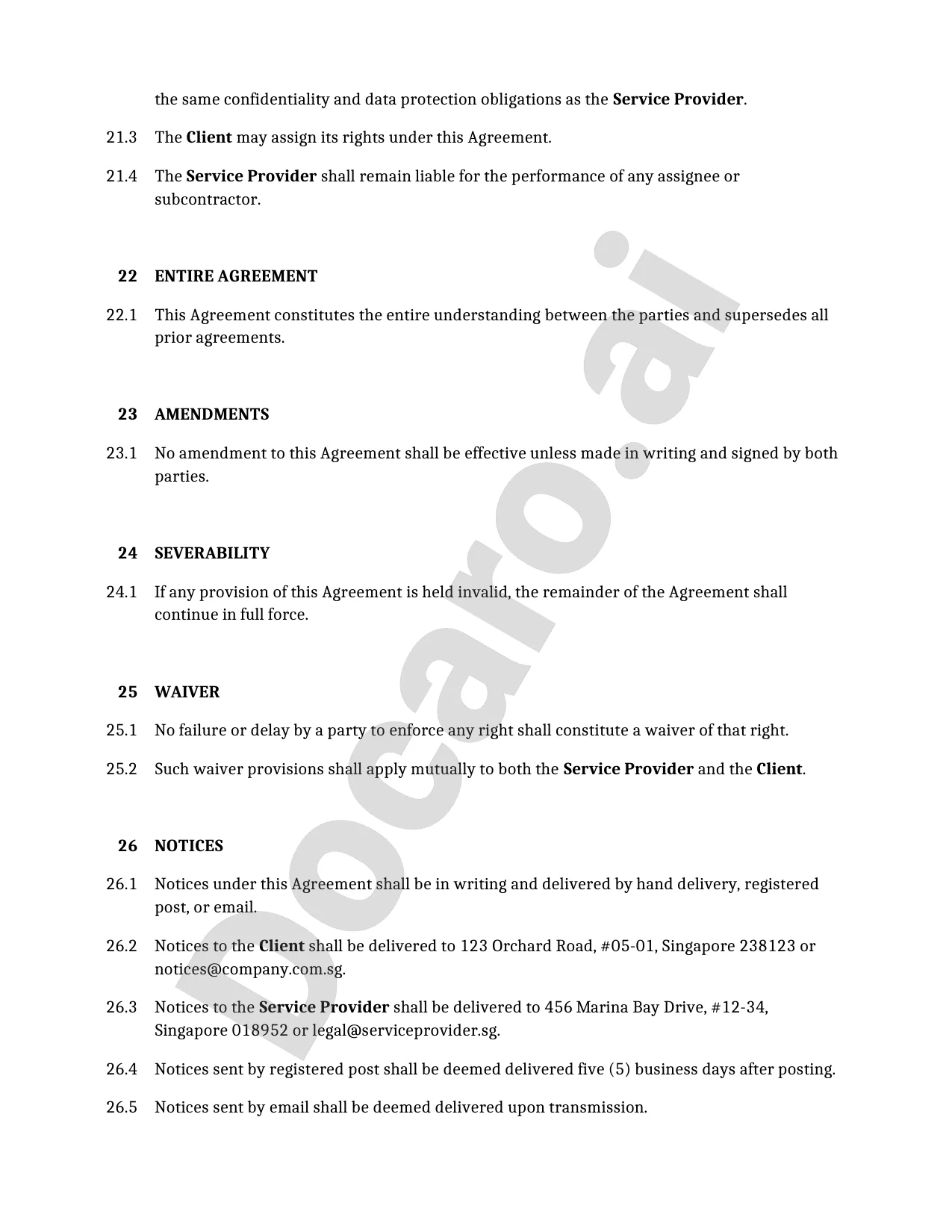
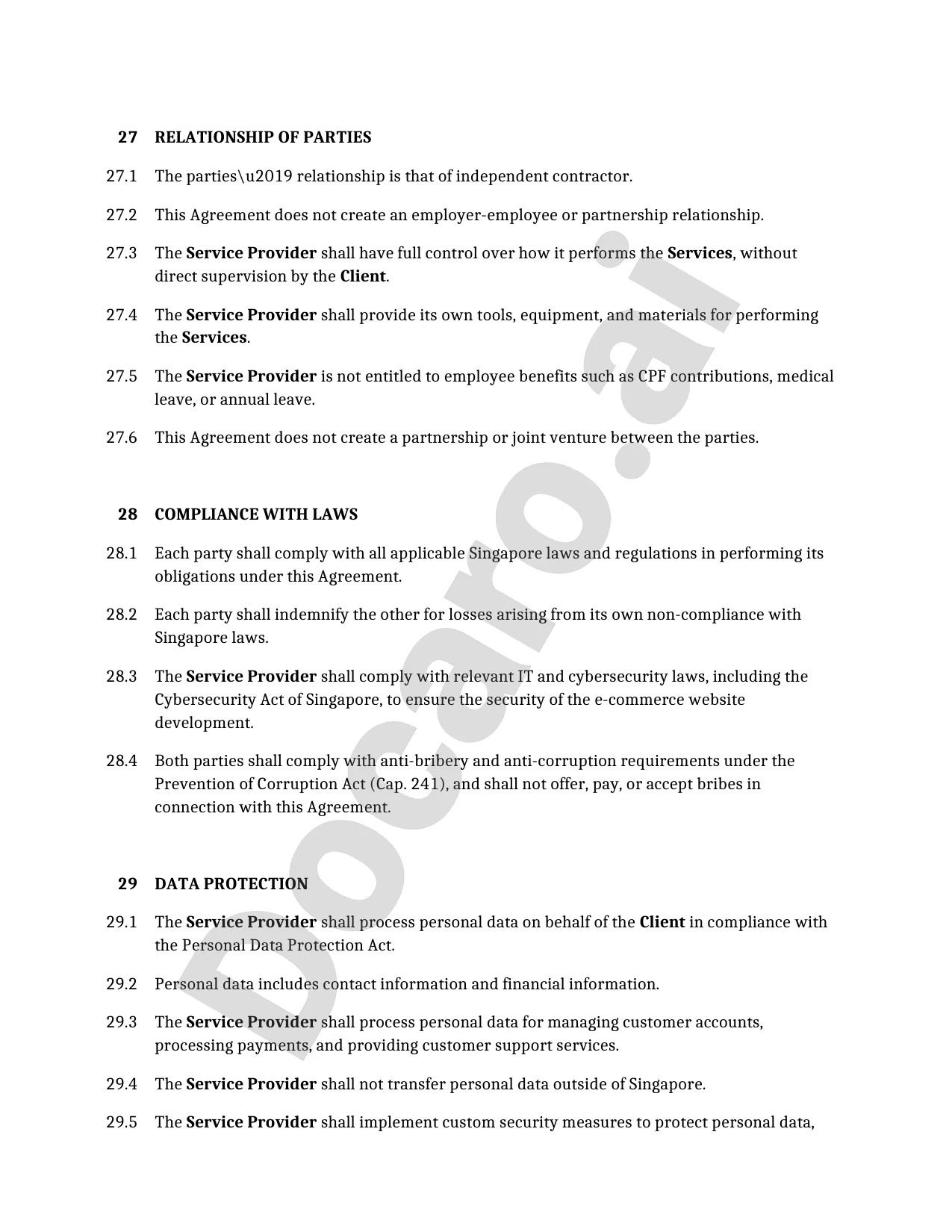
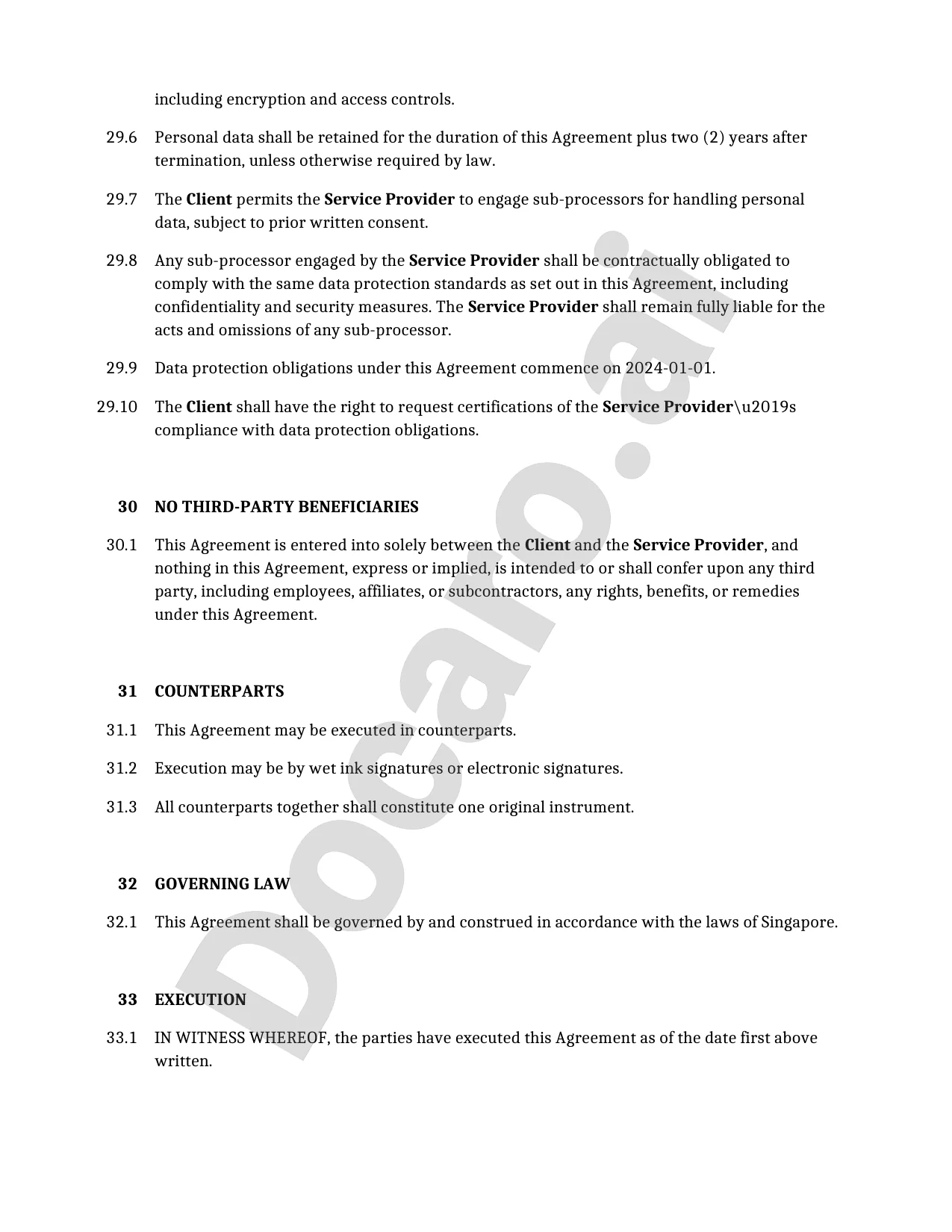
What is a Service Agreement in Singapore?
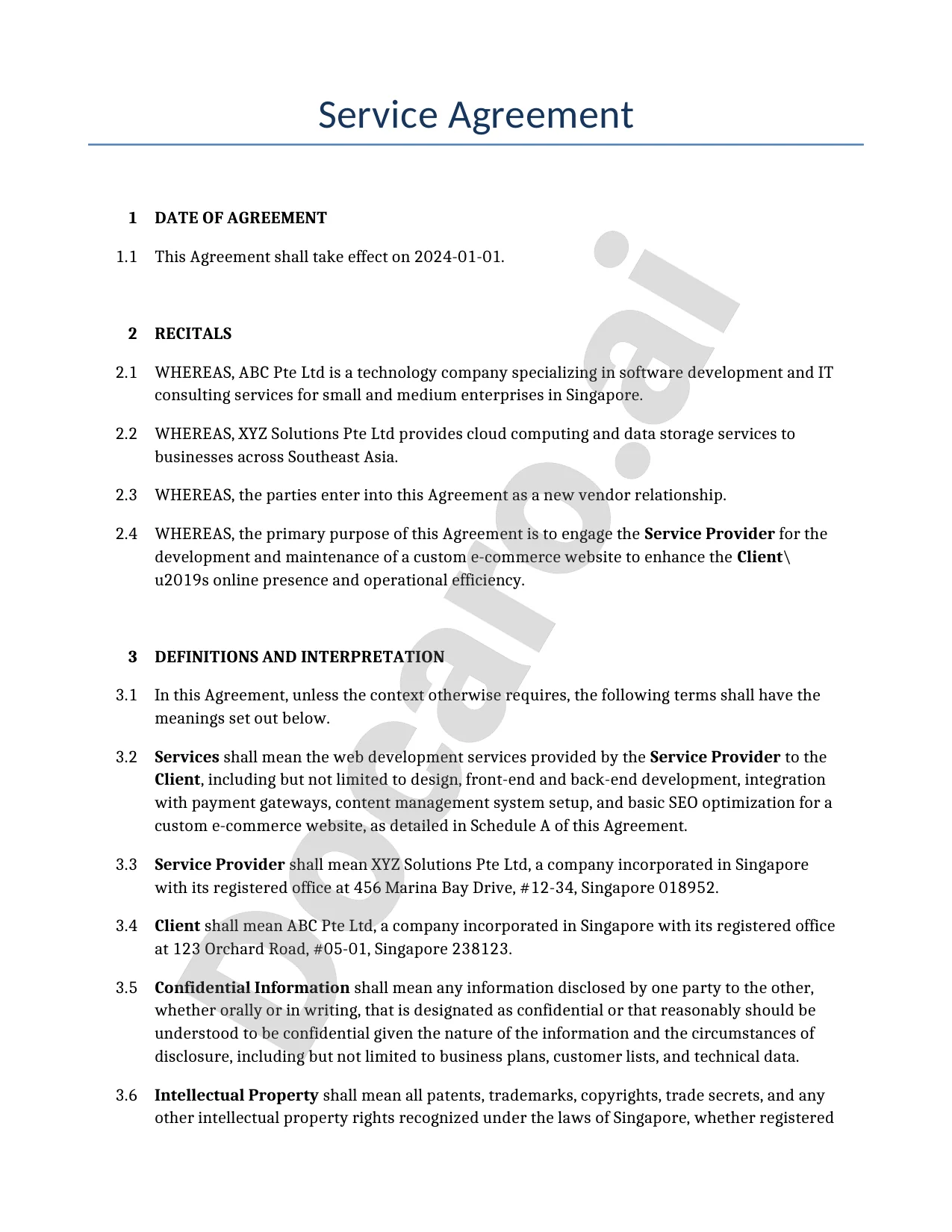
A service agreement under Singapore law is a legally binding contract between a service provider and a client, outlining the terms for delivering specific services such as consulting, IT support, or maintenance. Its primary purpose is to clearly define expectations, responsibilities, and protections for both parties, reducing the risk of disputes and ensuring compliance with Singapore's Contract Law under the common law system.
The basic structure of a service agreement in Singapore typically includes sections on the parties involved, a detailed description of services, payment terms, duration, and termination clauses. It must adhere to principles like offer, acceptance, and consideration as per the Evidence Act and general contract rules, while incorporating any relevant industry-specific regulations from bodies like the ACRA.
For deeper insights into key elements and clauses in Singapore service agreements, explore our guide at Understanding Service Agreements: Key Elements & Clauses.
To ensure your service agreement is tailored to your unique needs under Singapore law, consider using bespoke AI-generated legal documents via Docaro, rather than relying on generic templates.
When should you use a Service Agreement in Singapore?
A service agreement is essential in Singapore for professional services like accounting or legal advice, where it clearly outlines scope, fees, and deliverables to prevent disputes. For consulting contracts, it protects intellectual property and ensures confidentiality, as required under Singapore's business laws.
In maintenance contracts, such as for IT systems or property upkeep, a service agreement specifies response times, warranties, and termination clauses, helping businesses comply with the Contracts (Rights of Third Parties) Act. These agreements are vital for long-term engagements to mitigate risks in Singapore's competitive market.
Service agreements should not be used for simple verbal agreements in low-value, one-off transactions like casual freelance gigs, where informal understandings suffice under basic contract principles. They are also unsuitable in regulated sectors requiring specific licenses, such as financial advisory under the Monetary Authority of Singapore, where specialized approvals override standard agreements.
For tailored protection, opt for bespoke AI-generated legal documents using Docaro to customize service agreements precisely for Singapore's legal framework, ensuring enforceability without generic templates.
"In Singapore, disputes over services often arise from misunderstandings in verbal agreements. As a legal expert, I strongly recommend using bespoke AI-generated legal documents via Docaro to create tailored written service agreements that clearly outline terms, responsibilities, and expectations, thereby minimizing risks and ensuring enforceability." – Dr. Lim Wei Shen, Senior Partner, Straits Law Firm
What are the key clauses to include in a Service Agreement?
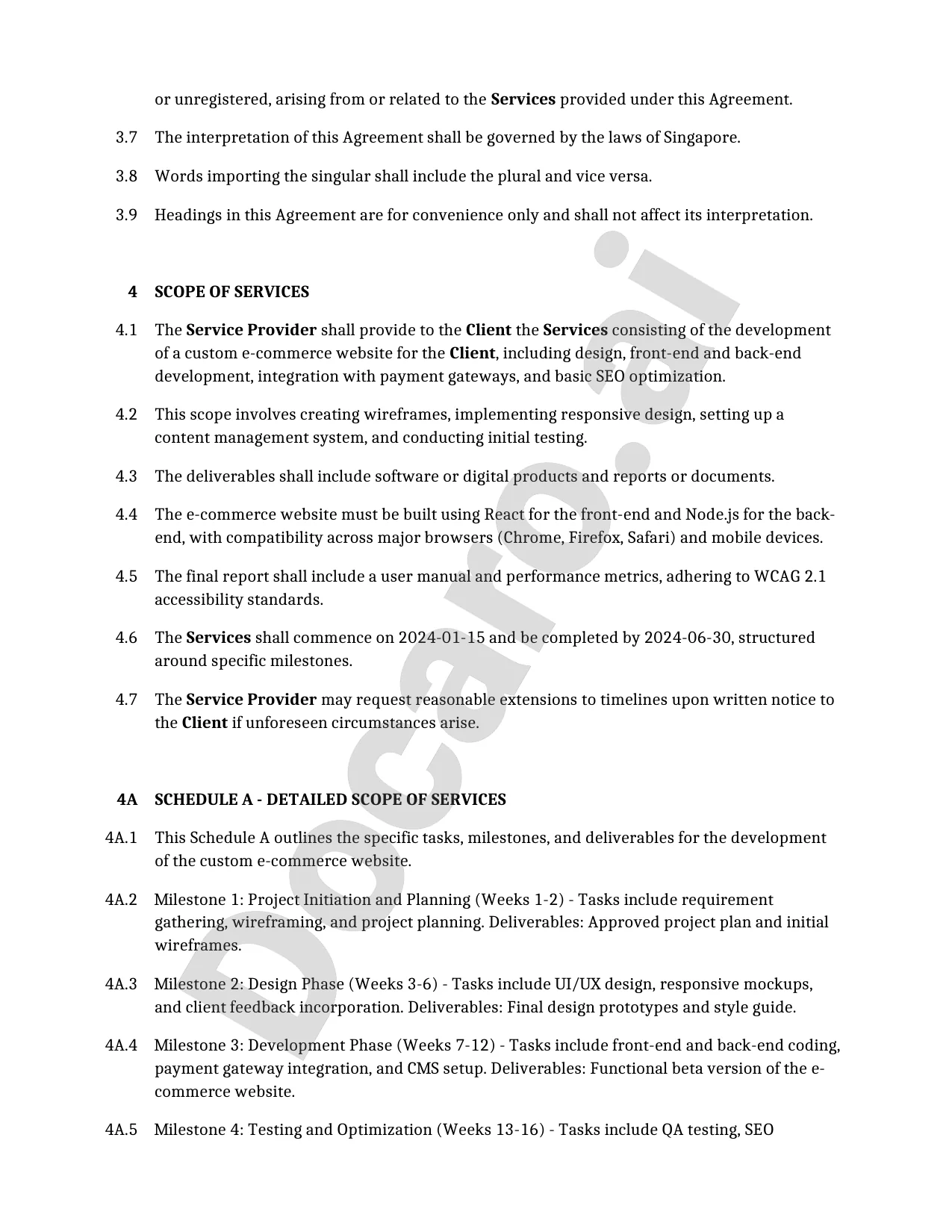
A Singapore service agreement is a vital legal document that outlines the terms between a service provider and client, ensuring clarity and protection under Singapore law. Essential clauses include the scope of services, which details the specific duties and deliverables to avoid misunderstandings. For more in-depth examples of these clauses, refer to our guide on key elements in Singapore service agreements.
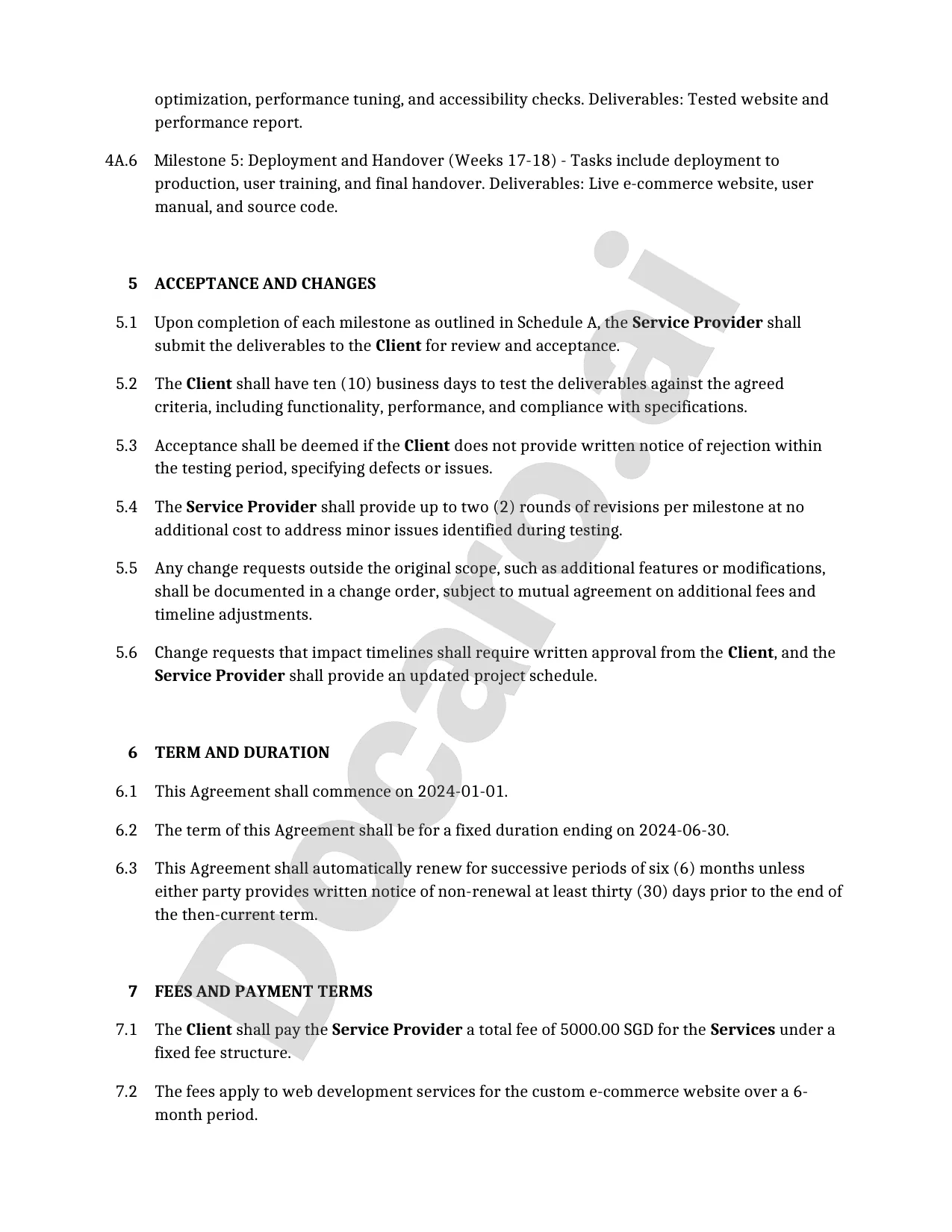
Payment terms form another critical component, specifying amounts, schedules, and methods of payment, often incorporating late fees to encourage timely settlements. These terms must comply with Singapore's regulatory standards, such as those outlined by the Accounting and Corporate Regulatory Authority (ACRA), to ensure enforceability.
The duration clause defines the agreement's start and end dates, whether fixed-term or ongoing, and may include renewal options. Termination provisions detail conditions for ending the contract, such as notice periods or breach events, providing a clear exit strategy for both parties.
To create robust Singapore service agreements, consider using bespoke AI-generated legal documents via Docaro for tailored solutions that meet specific needs without relying on generic templates. This approach ensures compliance with local laws and minimizes risks in business dealings.

What rights and obligations do parties have under a Service Agreement?
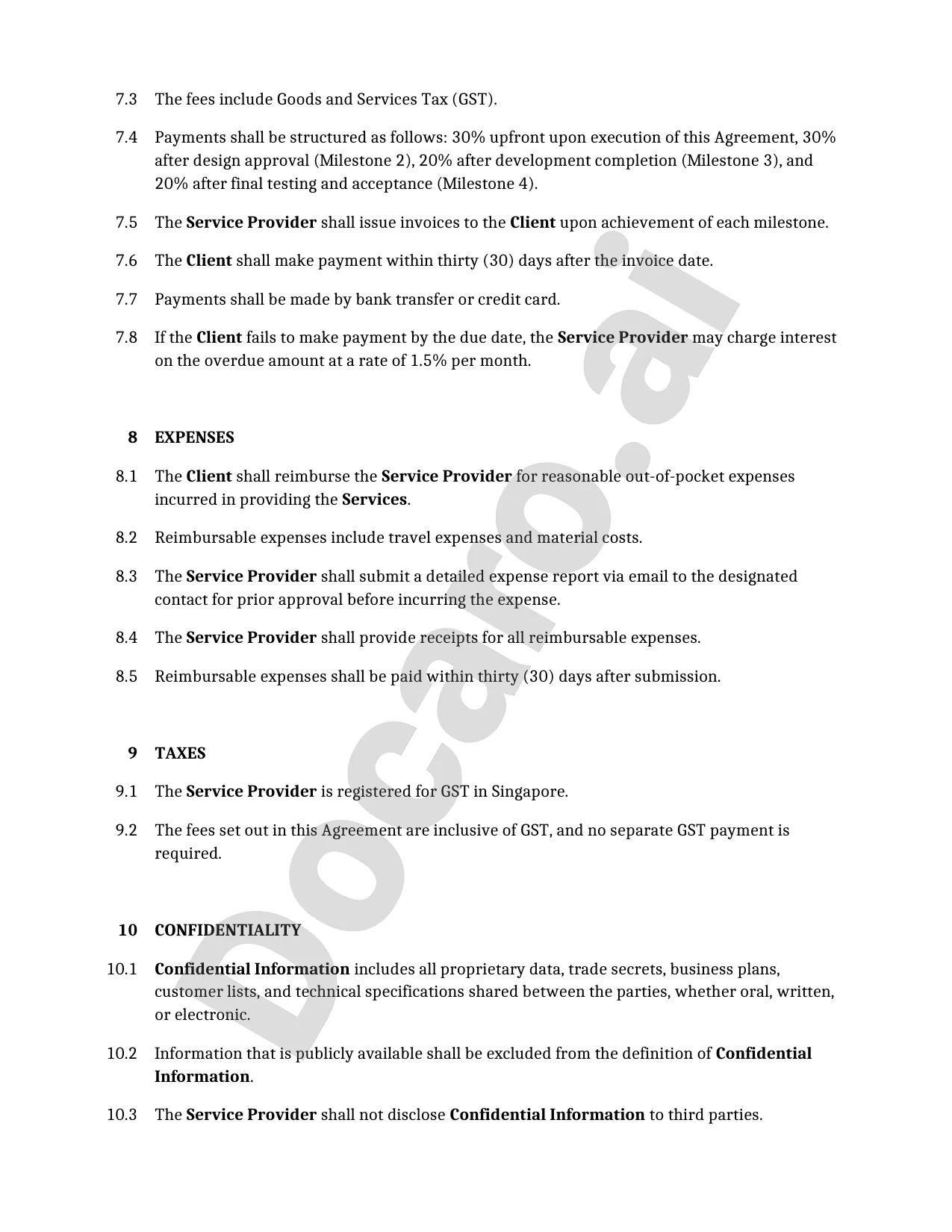
In Singapore service agreements, service providers hold key obligations such as delivering services with reasonable skill and care, adhering to agreed timelines, and maintaining the confidentiality of client information under clauses aligned with the Personal Data Protection Act. Clients, in turn, must provide necessary information and payments promptly, while both parties are bound by confidentiality obligations to protect sensitive data, with breaches potentially leading to legal remedies as outlined by the Personal Data Protection Act.
Warranties in these agreements typically require service providers to warrant that their services will meet specified standards and not infringe third-party rights, while clients warrant the accuracy of provided data. For optimal protection, parties should opt for bespoke AI-generated legal documents using Docaro to tailor these warranties precisely to their needs, ensuring compliance with Singapore contract law.
Regarding liability, service agreements often limit providers' liability to direct damages up to the contract value, excluding indirect losses unless grossly negligent, as per common practices under Singapore's Unfair Contract Terms Act. Clients may seek indemnification for breaches, but clear clauses help mitigate disputes, with authoritative guidance available from the Accounting and Corporate Regulatory Authority.

What key exclusions should be considered in a Service Agreement?
In Singapore service agreements, limitations on liability are crucial exclusions that cap the maximum damages a party can claim, often restricting recovery to the contract value or a specified sum. This protects service providers from excessive financial exposure, ensuring business viability while aligning with Singapore's Unfair Contract Terms Act, which scrutinizes such clauses for fairness.
Exclusions for indirect damages, such as consequential or lost profits losses, are standard to prevent unpredictable claims that could derail operations. These provisions clearly delineate recoverable direct costs, promoting transparency and reducing litigation risks in Singapore's commercial landscape.
Force majeure events excuse performance delays or non-performance due to uncontrollable circumstances like natural disasters or pandemics, but must be explicitly defined to avoid disputes. Under Singapore law, such clauses require proof of inevitability, as outlined by the Singapore Legal Advice resources, emphasizing the need for tailored drafting.
For robust Singapore service agreements, opt for bespoke AI-generated legal documents via Docaro to customize exclusions precisely to your needs, ensuring compliance and protection without relying on generic templates.
Are there recent or upcoming legal changes affecting Service Agreements in Singapore?
In Singapore, the Personal Data Protection Act (PDPA) continues to evolve with ongoing consultations for amendments to strengthen data protection in service agreements. Recent guidelines from the Personal Data Protection Commission emphasize mandatory breach notifications and enhanced consent requirements, impacting how businesses draft data handling clauses in contracts.
Upcoming developments include proposed updates to the Contracts Act, focusing on digital contracts and electronic signatures to modernize service agreements amid rising e-commerce. These changes aim to clarify enforceability of online terms, ensuring compliance with Singapore's digital economy framework as outlined by the Ministry of Law.
For robust protection, businesses should consider bespoke AI-generated legal documents using Docaro to tailor service agreements to these evolving regulations. This approach ensures precision and adaptability without relying on generic templates.
How can you draft a legally binding Service Agreement in Singapore?
1
Outline Key Terms
Identify the parties, services, payment, duration, and termination clauses for your service agreement. Use Docaro to generate a bespoke draft.
2
Consult a Lawyer
Engage a Singapore-qualified lawyer to review and customize the AI-generated draft for legal accuracy and enforceability.
3
Review for Compliance
Check the agreement against Singapore laws on contracts, data protection, and consumer rights to ensure full compliance.
4
Finalize and Sign
Incorporate feedback, obtain signatures, and store securely. Learn more in our [guide to drafting service agreements](/en-sg/a/how-to-draft-legally-binding-service-agreement-singapore).
What common mistakes should you avoid in Service Agreements?
When drafting Singapore service agreements, a common pitfall is using vague terms that fail to clearly define the scope of services, leading to misunderstandings between parties. This ambiguity can result in disputes over expectations and deliverables, potentially escalating to costly legal battles.
Another frequent issue is ignoring dispute resolution mechanisms in the agreement, leaving parties without a structured way to handle conflicts. Without clauses specifying mediation, arbitration, or applicable Singapore law, resolutions may default to inefficient court proceedings.
To avoid these pitfalls in Singapore contracts, ensure terms are precise and include robust dispute resolution provisions tailored to your needs. For more details on common mistakes to avoid in Singapore service agreements, see our guide at essential tips for service agreements.
Opt for bespoke AI-generated legal documents using Docaro to create customized Singapore service agreements that mitigate risks effectively. This approach ensures compliance with Singapore regulations, as outlined by the Singapore Statutes Online from the Attorney-General's Chambers.
You Might Also Be Interested In
A Contract Outlining The Terms For Consultancy Services Provided By An Independent Contractor.
A Contract Outlining The Rights, Obligations, And Governance Rules Among Shareholders Of A Company.
A Legal Contract Outlining The Terms, Rights, And Obligations Of Partners In A Business Partnership.
A Shareholders' Agreement Is A Contract Among Shareholders Of A Private Limited Company Outlining Ownership, Management, And Operational Rules.
A Constitution Is The Foundational Document For A Company In Singapore, Outlining Its Structure, Objectives, And Internal Rules.
A Constitution Is The Foundational Document Governing A Company's Internal Management, Operations, And Member Rights In Singapore.
A Legal Contract Outlining The Terms For Buying And Selling Shares In A Company.
A Formal Decision Or Action Approved By The Board Of Directors Of A Company, Documented In Writing.
A Founders' Agreement Is A Legal Contract Outlining The Rights, Obligations, And Roles Of Company Founders, Including Equity Distribution, Decision-making, And Dispute Resolution.
A Legal Contract Outlining The Terms For The Sale And Purchase Of Specific Assets Between Parties.
A Legal Contract Outlining The Terms For The Sale And Transfer Of A Business Entity, Including Assets, Liabilities, And Obligations.
A Legal Document That Alters The Terms Of An Existing Deed Or Agreement, Commonly Used In Property Or Inheritance Matters.
A Legal Contract Outlining The Terms For The Sale And Transfer Of Property Ownership From Seller To Buyer.
A Formal Receipt Is A Legal Document Issued By A Seller To A Buyer, Confirming Payment For Goods Or Services And Serving As Proof Of Transaction.
A Tax Invoice Is A Formal Document Issued By GST-registered Businesses In Singapore To Charge Customers For Goods Or Services, Including GST Details For Tax Compliance.
A Legal Document Used To Transfer Ownership Of Shares In A Company From One Party To Another, Typically Required For Registration With The Company.
A Document Outlining Measures To Protect Individuals, Especially Vulnerable Groups Like Children, From Harm And Abuse In Organizational Settings.
A Non-binding Document Outlining Preliminary Terms And Intentions For A Potential Business Deal Or Agreement.