What is a Shareholders' Agreement in Singapore?
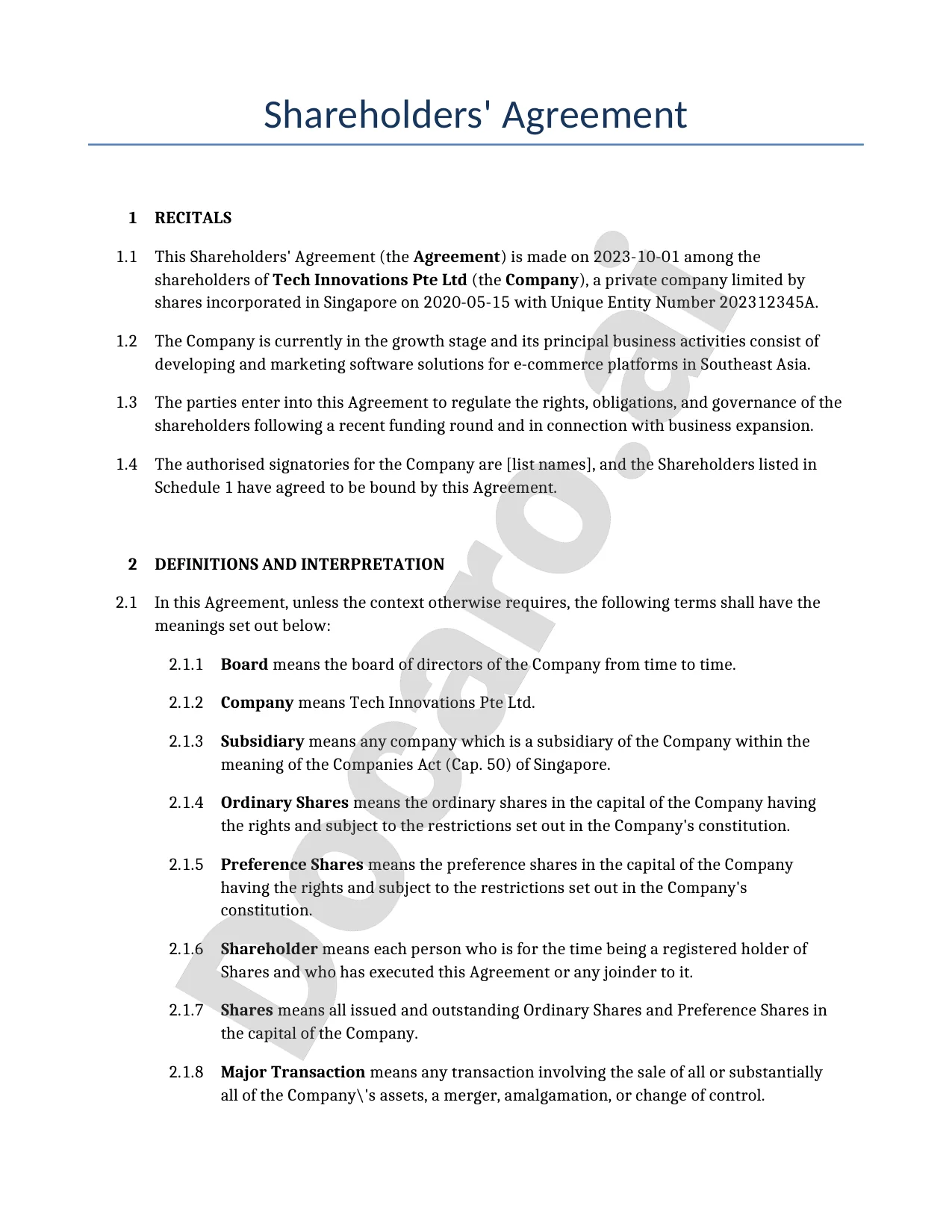
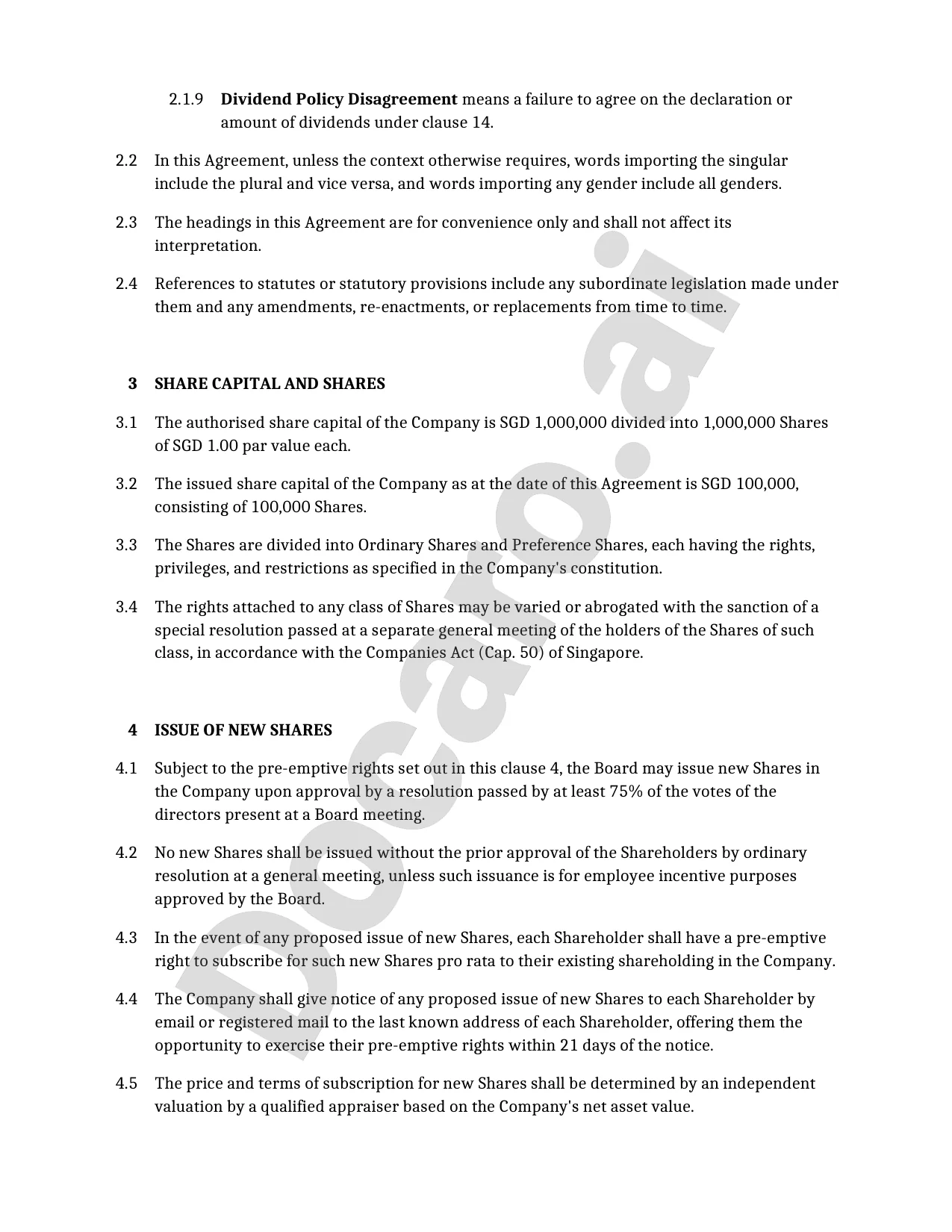
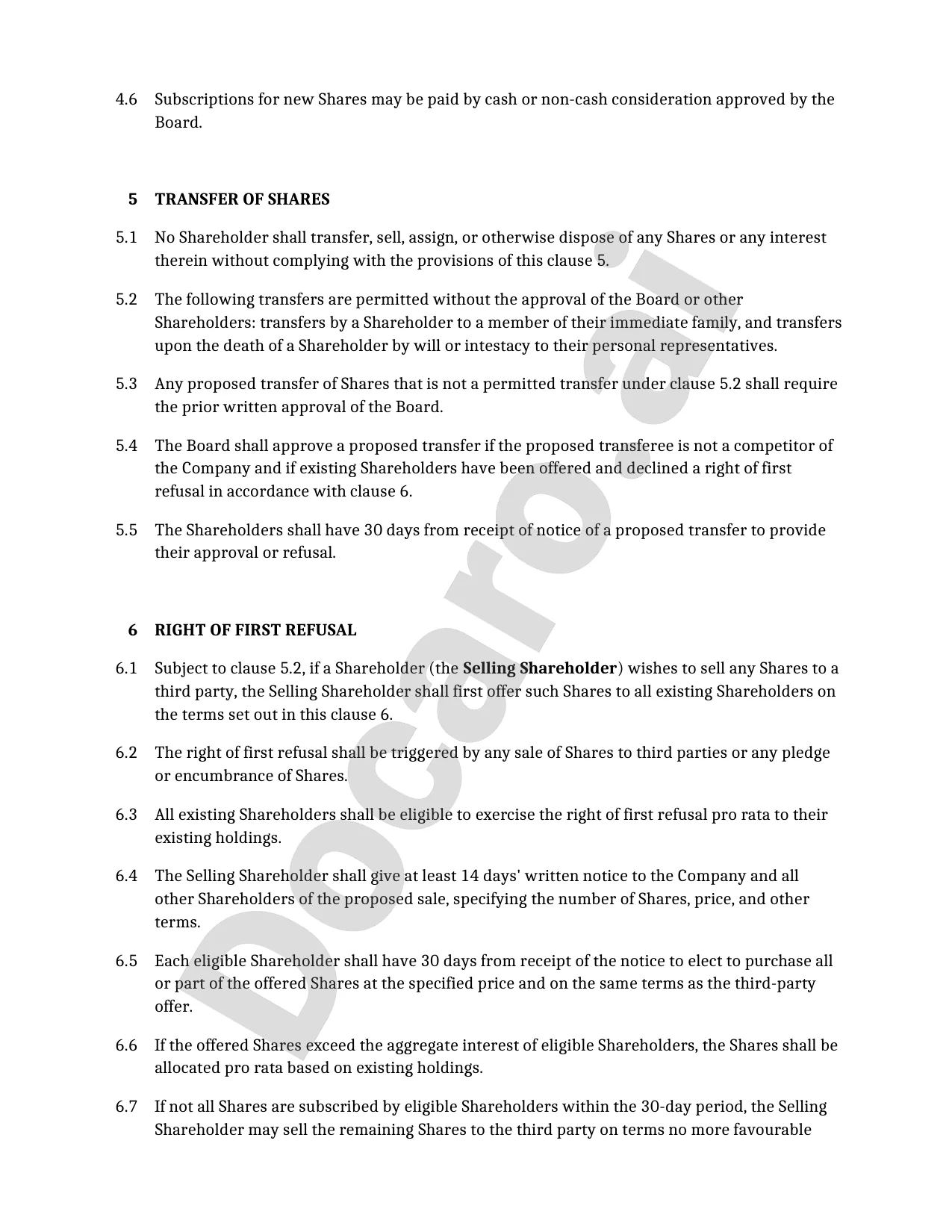
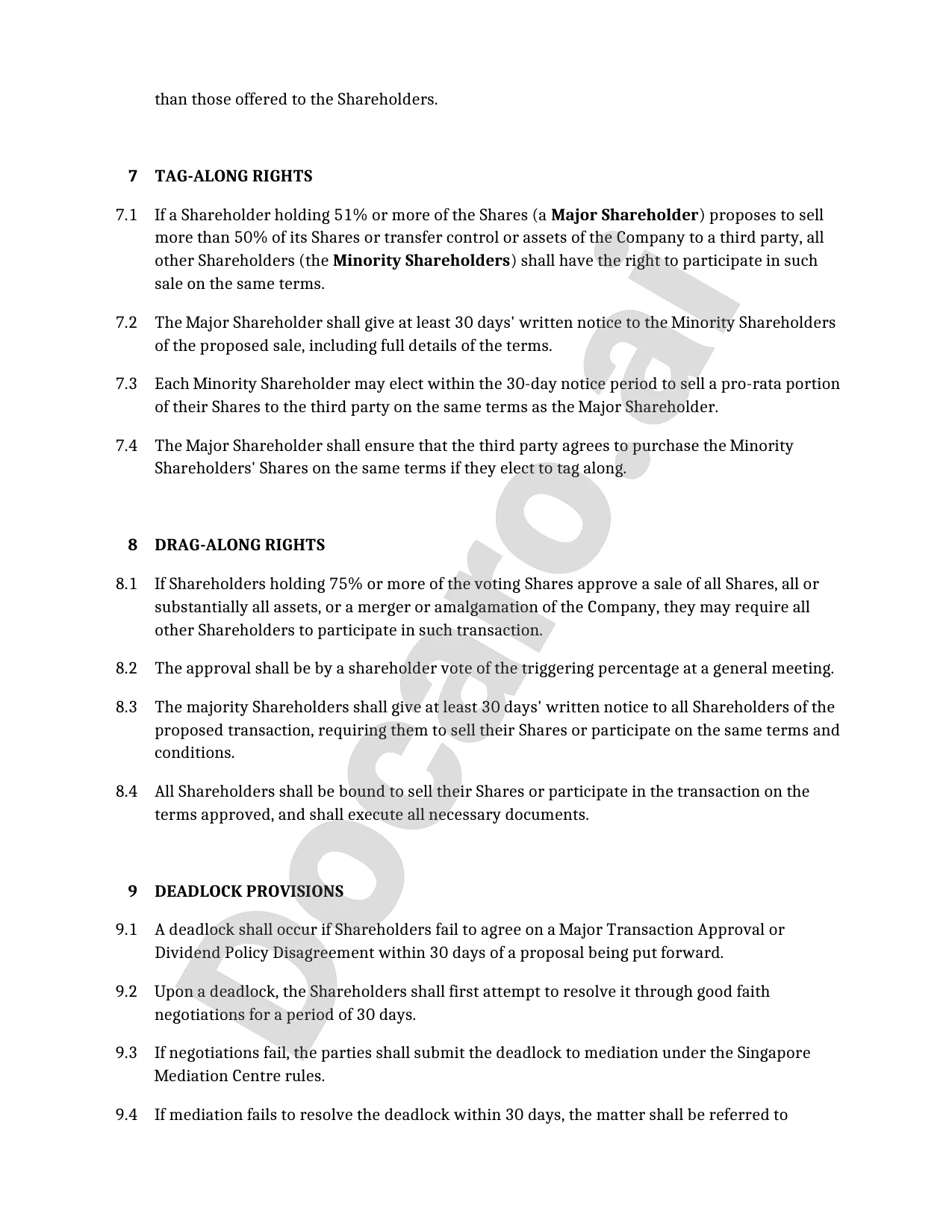
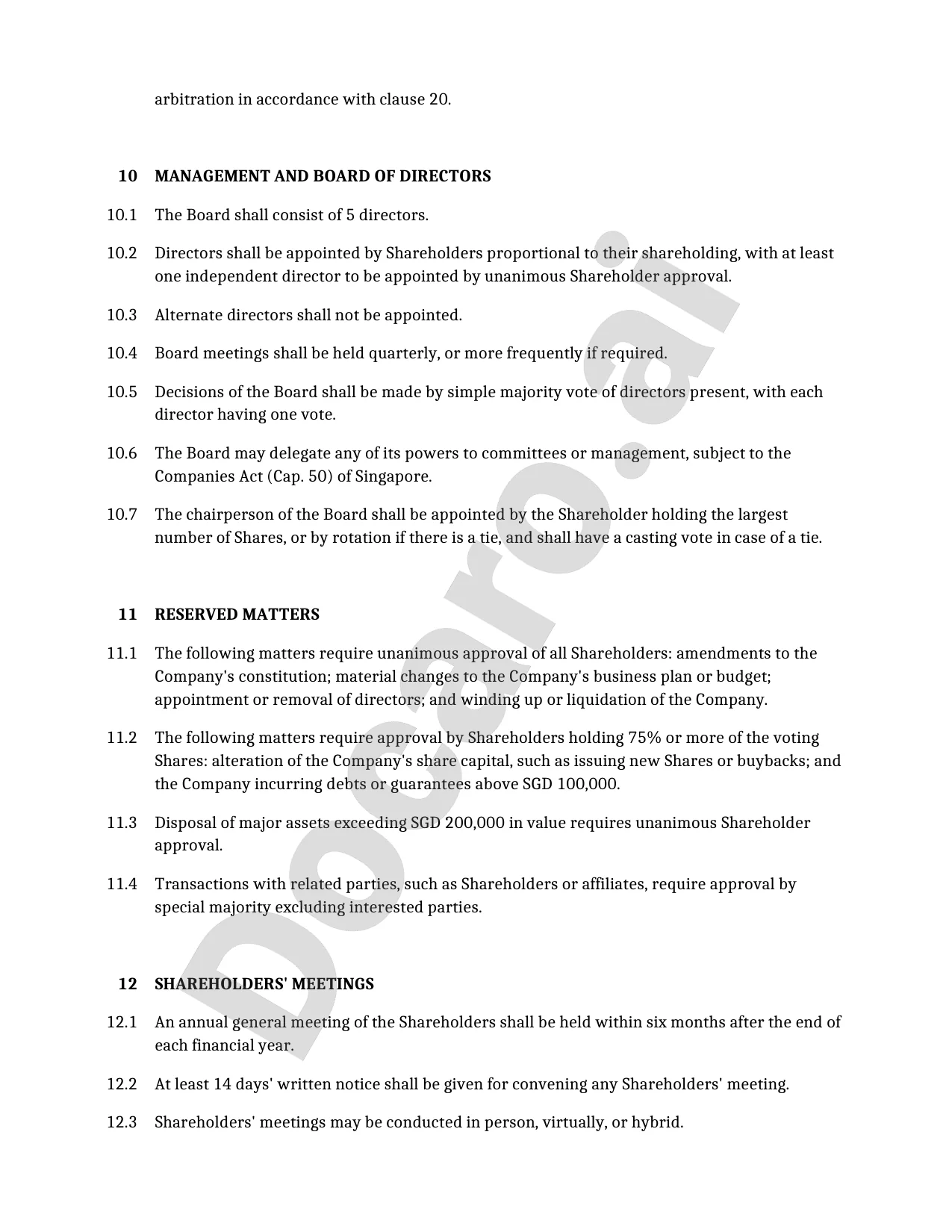
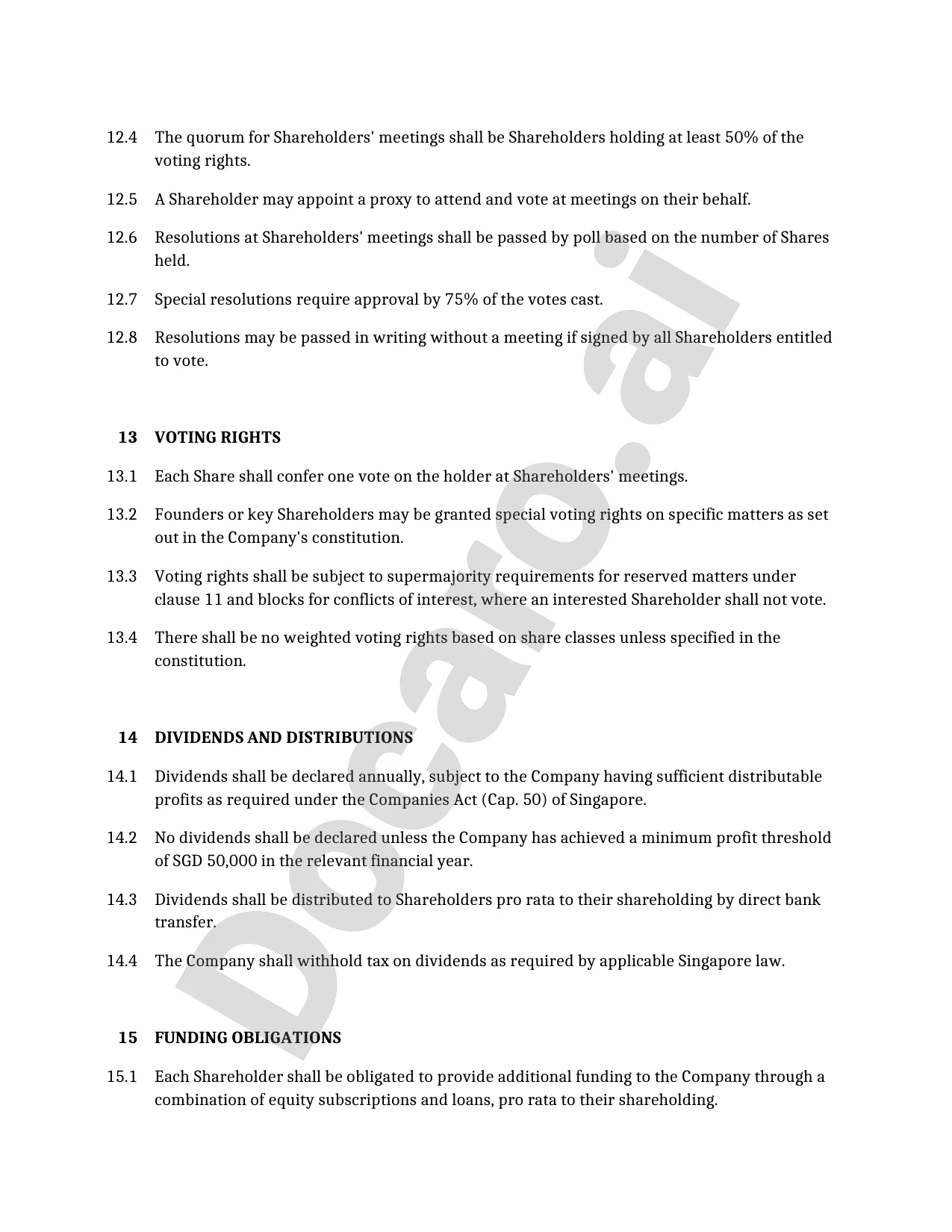
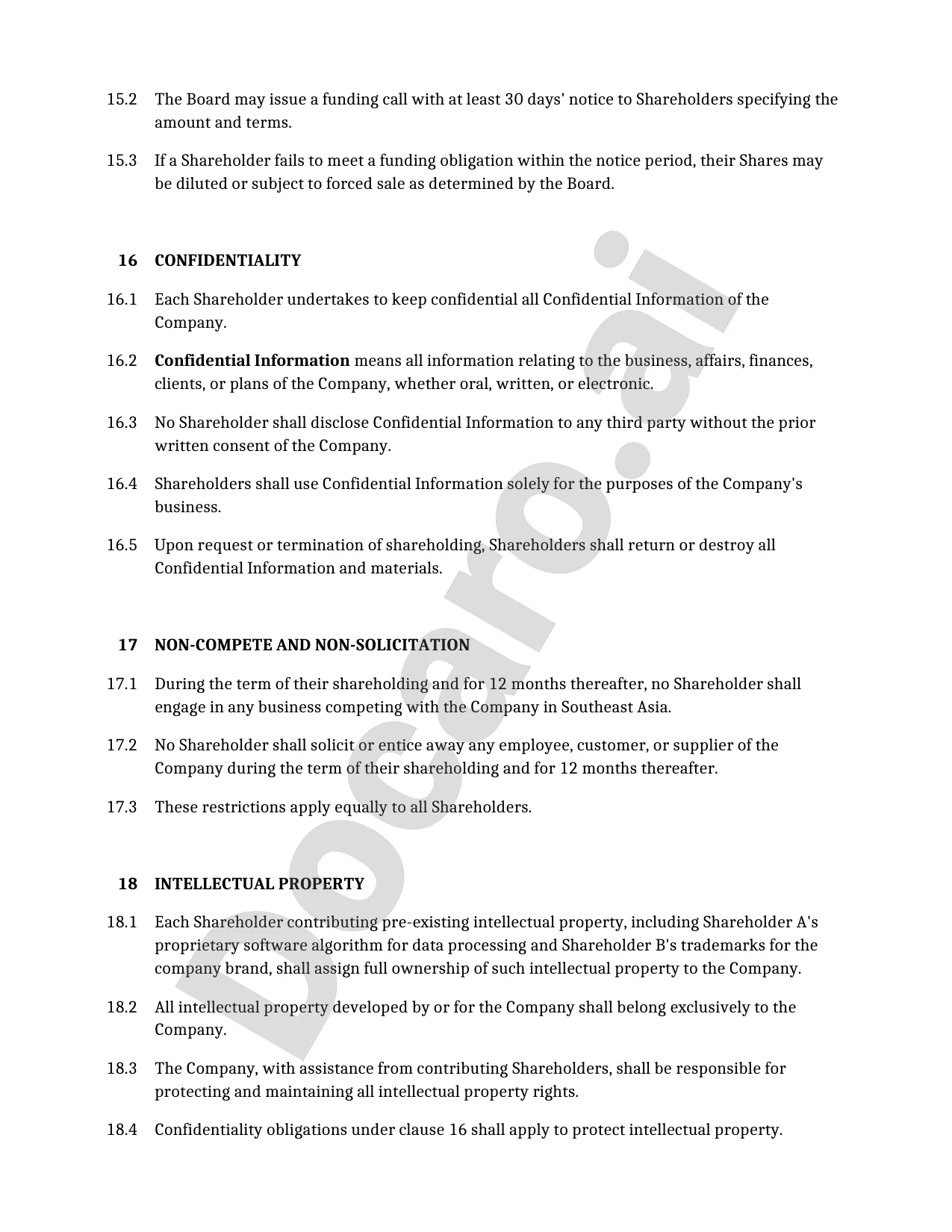
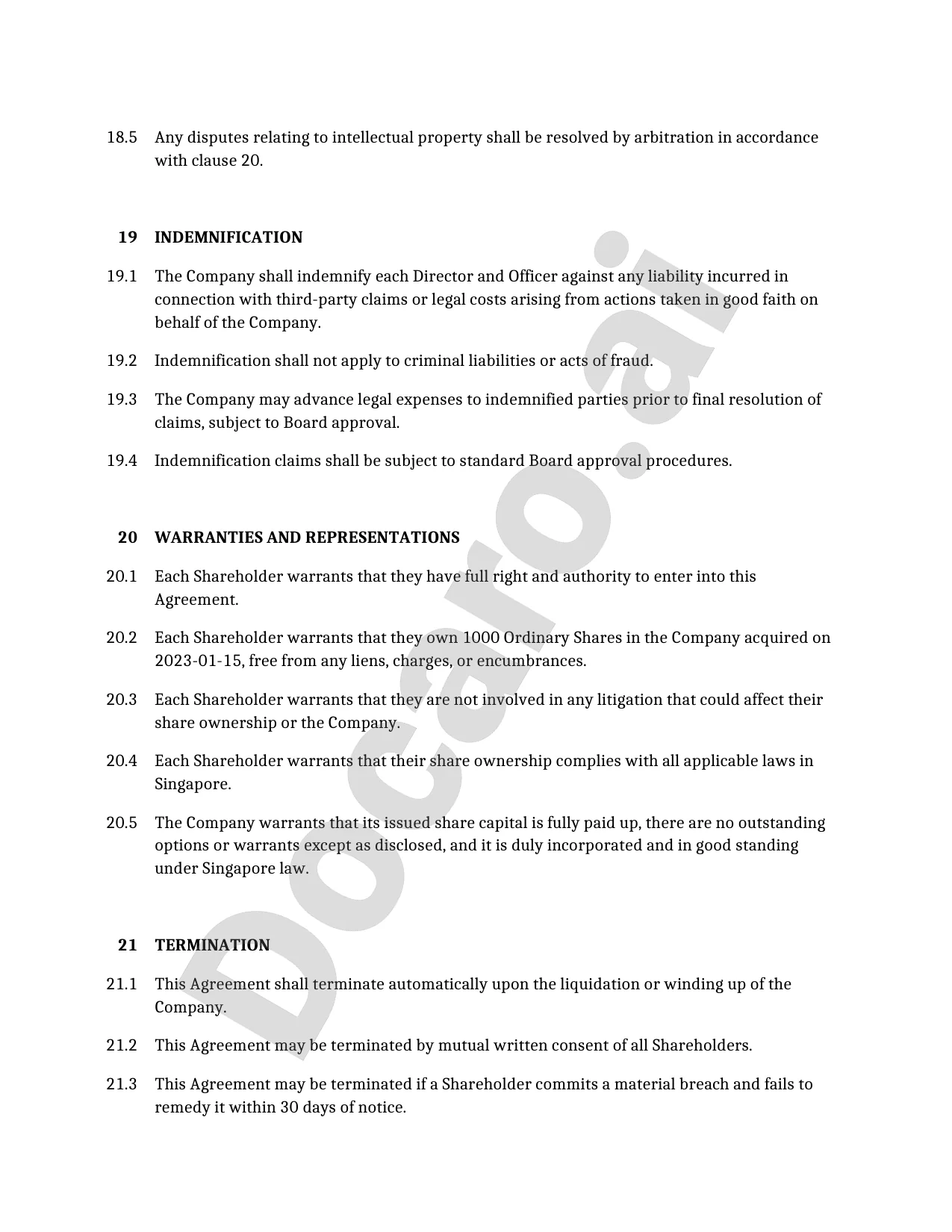
A Shareholders' Agreement is a private contract among the shareholders of a company that outlines their rights, obligations, and the rules governing their interactions and decision-making processes. In the context of a Singapore company, it serves as a vital tool for regulating relationships between shareholders by addressing issues like share transfers, dispute resolution, and management control, thereby promoting stability and preventing conflicts.
Unlike the company's constitution, which is a public document registered with the Accounting and Corporate Regulatory Authority (ACRA) and sets out the company's internal governance structure, a Shareholders' Agreement remains confidential and can include more detailed, customized provisions tailored to the shareholders' specific needs. This distinction allows shareholders in Singapore to layer additional protections beyond the statutory framework without altering the public constitution.
In Singapore's corporate law framework, shaped by the Companies Act since 1967 and influenced by common law principles, Shareholders' Agreements have gained prominence as businesses grow more complex, especially with the rise of startups and foreign investments. For historical context, the framework evolved from British colonial laws, emphasizing shareholder protections while balancing company operations.
For related guidance, explore Singapore Company Constitution or Shareholder Rights in Singapore. When drafting such agreements, consider bespoke AI-generated legal documents using Docaro for precise, tailored solutions.
A Shareholders' Agreement is essential for minority shareholders in Singapore, as it provides tailored protections against majority decisions, ensuring fair governance and exit rights. For customized protection, use Docaro to generate bespoke AI-powered legal documents that address your specific needs.
When Should You Use a Shareholders' Agreement in Singapore?
In startups with multiple founders in Singapore, a Shareholders' Agreement is essential to outline equity distribution, decision-making processes, and exit strategies, preventing conflicts that could derail early growth. This is particularly vital in dynamic environments where founders may have differing visions for the company's direction.
For family businesses, such agreements safeguard generational transitions by defining roles, dividend policies, and succession plans, ensuring smooth operations amid personal relationships. They help maintain harmony by addressing potential disputes over control or inheritance in Singapore's closely held enterprises.
Companies with foreign investors in Singapore require these agreements to navigate cross-border regulations, including repatriation of funds and intellectual property rights, fostering trust and compliance. This setup is crucial for attracting international capital while aligning with local laws like the Companies Act.
The benefits include robust dispute resolution mechanisms, such as mediation or arbitration clauses tailored to Singapore's legal framework, which minimize costly litigation. Additionally, they enhance governance by establishing clear board structures and voting rights, promoting transparency and long-term stability.
- Opt for bespoke AI-generated legal documents via Docaro to customize your Shareholders' Agreement precisely for your business needs in Singapore.
When Should You Not Use One?
In single-shareholder companies, a Shareholders' Agreement is often unnecessary because there are no other shareholders to negotiate rights, obligations, or dispute resolution with, making the company's constitution sufficient for governance.
For simple corporate structures with minimal shareholders and straightforward operations, drafting a Shareholders' Agreement can represent overkill, as the default provisions in the company's constitution or basic incorporation documents already cover essential aspects like share transfers and decision-making.
When all shareholders are family members or close associates who trust each other implicitly, a formal agreement might not be advisable, avoiding unnecessary complexity in what is essentially a harmonious setup; instead, rely on the constitution to maintain simplicity.
Opt for bespoke AI-generated legal documents via Docaro to tailor any needed agreements precisely, ensuring they fit your specific situation without generic templates.

What Are the Key Rights and Obligations in a Shareholders' Agreement?
In Singapore, shareholders hold fundamental rights that protect their interests in a company, governed primarily by the Companies Act. These include voting rights to influence key decisions like board elections and major transactions, dividend entitlements to receive a share of profits as declared by the company, and information access to inspect financial records and attend general meetings.
Shareholders may also face certain obligations outlined in shareholders' agreements, such as adhering to non-compete clauses that restrict competing business activities to safeguard company interests. Additionally, they might have funding commitments requiring contributions to capital calls, ensuring the company's financial stability under Singapore corporate law.
For detailed guidance on incorporating these elements, explore key clauses in shareholders' agreements. Opt for bespoke AI-generated legal documents via Docaro to tailor agreements precisely to your needs in Singapore.
1
Research Shareholder Rights in Singapore
Familiarize yourself with the Companies Act provisions on shareholder rights and obligations to build a strong foundation before negotiations.
2
Consult Legal Expert for Bespoke Advice
Engage a lawyer to review the agreement and generate bespoke legal documents using Docaro for tailored shareholder protections.
3
Negotiate Key Clauses Actively
Discuss voting rights, dividend policies, and exit strategies during negotiations to ensure your interests are clearly represented.
4
Review and Sign the Agreement
Thoroughly examine the final bespoke document from Docaro, seek clarifications, and sign only when fully satisfied with terms.
What Key Clauses Should Be Included?
In Singapore businesses, a shareholders' agreement is vital for governing ownership and operations, particularly through essential clauses like share transfer restrictions. These restrictions prevent unauthorized transfers by requiring board approval or rights of first refusal, ensuring stability and protecting minority shareholders in line with Singapore's Companies Act.
Drag-along rights allow majority shareholders to compel minorities to join in selling the company, facilitating smooth exits, while tag-along rights enable minorities to participate in such sales to avoid being left behind. Customizing these for Singapore firms often involves aligning with local tax implications and dispute resolution under the Singapore International Arbitration Centre.
Board composition clauses define director appointments, voting powers, and meeting protocols, tailored to Singapore's corporate governance standards to balance control among shareholders. For precise drafting, explore the Singapore shareholders' agreement guide and opt for bespoke AI-generated documents via Docaro to meet unique business needs.
What Are Common Exclusions or Limitations?
Shareholders' Agreements in Singapore play a crucial role in governing relationships among company owners, but certain key exclusions must be observed to ensure enforceability. Matters like the issuance of shares, dividends, and winding up are typically governed solely by the Companies Act, and attempting to override these statutory provisions in the agreement could render them void. For Shareholders' Agreement exclusions, focus on non-statutory areas such as decision-making processes and dispute resolution to maintain validity.
Limitations on liability form another critical exclusion in Shareholders' Agreements, where clauses attempting to absolve directors or shareholders from statutory duties under the Companies Act are often unenforceable. Singapore law prohibits broad waivers of liability for negligence or breach of fiduciary duties, so such provisions risk being struck down by courts. To avoid unenforceability, tailor agreements to complement rather than contradict legal obligations, emphasizing bespoke drafting for compliance.
When drafting Shareholders' Agreements, steer clear of including clauses on reserved statutory matters or invalid liability limits, as these can invalidate the entire document. Instead, advocate for bespoke AI-generated legal documents using Docaro, which ensures customized, compliant terms tailored to Singapore's regulatory framework. This approach enhances precision and reduces risks associated with generic templates.
Are There Recent Legal Changes Affecting Shareholders' Agreements in Singapore?
Singapore's corporate law remains stable with no major amendments to the Companies Act enacted in the past year, ensuring continuity for businesses and investors. The framework continues to prioritize shareholder protections through established governance standards, fostering a reliable environment for corporate operations.
Ongoing consultations by the Accounting and Corporate Regulatory Authority (ACRA) focus on enhancing digital compliance and sustainability reporting, potentially influencing future updates to corporate regulations. These discussions aim to modernize the legal landscape without disrupting current practices.
For tailored legal needs in Singapore's corporate sector, consider bespoke AI-generated documents via Docaro platform, which adapts to specific requirements unlike generic templates.
"As Singapore's regulatory landscape for corporate governance continues to evolve, particularly with updates to the Companies Act and enhanced disclosure requirements under the SGX Listing Rules, shareholders' agreements must be periodically reviewed and amended to ensure compliance and protect stakeholder interests," states Dr. Lim Wei Shen, a leading corporate lawyer at a prominent Singapore firm. "I recommend engaging bespoke AI-generated legal documents through Docaro to tailor these agreements precisely to your company's unique needs, incorporating the latest regulatory changes while maintaining flexibility for future adaptations."
What Are Common Pitfalls and How to Avoid Them?
Drafting shareholders agreements in Singapore often leads to mistakes like vague dispute resolution clauses, which fail to specify clear mechanisms such as arbitration or mediation, resulting in prolonged conflicts. Another common error is ignoring tax implications, such as overlooking stamp duty on share transfers or capital gains considerations, potentially exposing shareholders to unexpected liabilities.
To avoid these pitfalls, ensure dispute resolution clauses outline specific steps like negotiation followed by binding arbitration under Singapore's International Arbitration Act, providing a structured path to resolution. For tax issues, incorporate provisions requiring professional tax advice and compliance with Inland Revenue Authority of Singapore (IRAS) rules to safeguard all parties.
Explore detailed insights on common pitfalls in shareholders agreements to avoid in Singapore for comprehensive guidance.
Opt for bespoke AI-generated legal documents using Docaro to tailor shareholders agreements precisely to your business needs, ensuring they address Singapore-specific regulations without generic flaws.
1
Engage Docaro for Bespoke Draft
Use Docaro to generate a customized Shareholders' Agreement tailored to your Singapore company's specific needs and structure.
2
Conduct Thorough Review
Examine the agreement for key clauses on share rights, governance, dispute resolution, and compliance with Singapore's Companies Act.
3
Consult Legal Expert
Have a qualified Singapore lawyer review the Docaro-generated document to identify and correct potential legal pitfalls.
4
Finalize and Execute
Incorporate feedback, obtain all shareholders' approvals, and sign the agreement with witnesses to ensure enforceability.
You Might Also Be Interested In
A Contract Outlining The Terms For Consultancy Services Provided By An Independent Contractor.
A Legal Contract Outlining The Terms, Rights, And Obligations Of Partners In A Business Partnership.
A Shareholders' Agreement Is A Contract Among Shareholders Of A Private Limited Company Outlining Ownership, Management, And Operational Rules.
A Constitution Is The Foundational Document For A Company In Singapore, Outlining Its Structure, Objectives, And Internal Rules.
A Constitution Is The Foundational Document Governing A Company's Internal Management, Operations, And Member Rights In Singapore.
A Legal Contract Outlining The Terms For Buying And Selling Shares In A Company.
A Formal Decision Or Action Approved By The Board Of Directors Of A Company, Documented In Writing.
A Founders' Agreement Is A Legal Contract Outlining The Rights, Obligations, And Roles Of Company Founders, Including Equity Distribution, Decision-making, And Dispute Resolution.
A Legal Contract Outlining The Terms For The Sale And Purchase Of Specific Assets Between Parties.
A Legal Contract Outlining The Terms For The Sale And Transfer Of A Business Entity, Including Assets, Liabilities, And Obligations.
A Legal Document That Alters The Terms Of An Existing Deed Or Agreement, Commonly Used In Property Or Inheritance Matters.
A Legal Contract Outlining The Terms For The Sale And Transfer Of Property Ownership From Seller To Buyer.
A Formal Receipt Is A Legal Document Issued By A Seller To A Buyer, Confirming Payment For Goods Or Services And Serving As Proof Of Transaction.
A Tax Invoice Is A Formal Document Issued By GST-registered Businesses In Singapore To Charge Customers For Goods Or Services, Including GST Details For Tax Compliance.
A Legal Contract Outlining The Terms Under Which One Party Provides Services To Another.
A Legal Document Used To Transfer Ownership Of Shares In A Company From One Party To Another, Typically Required For Registration With The Company.
A Document Outlining Measures To Protect Individuals, Especially Vulnerable Groups Like Children, From Harm And Abuse In Organizational Settings.
A Non-binding Document Outlining Preliminary Terms And Intentions For A Potential Business Deal Or Agreement.