What is a tenancy agreement in Singapore?
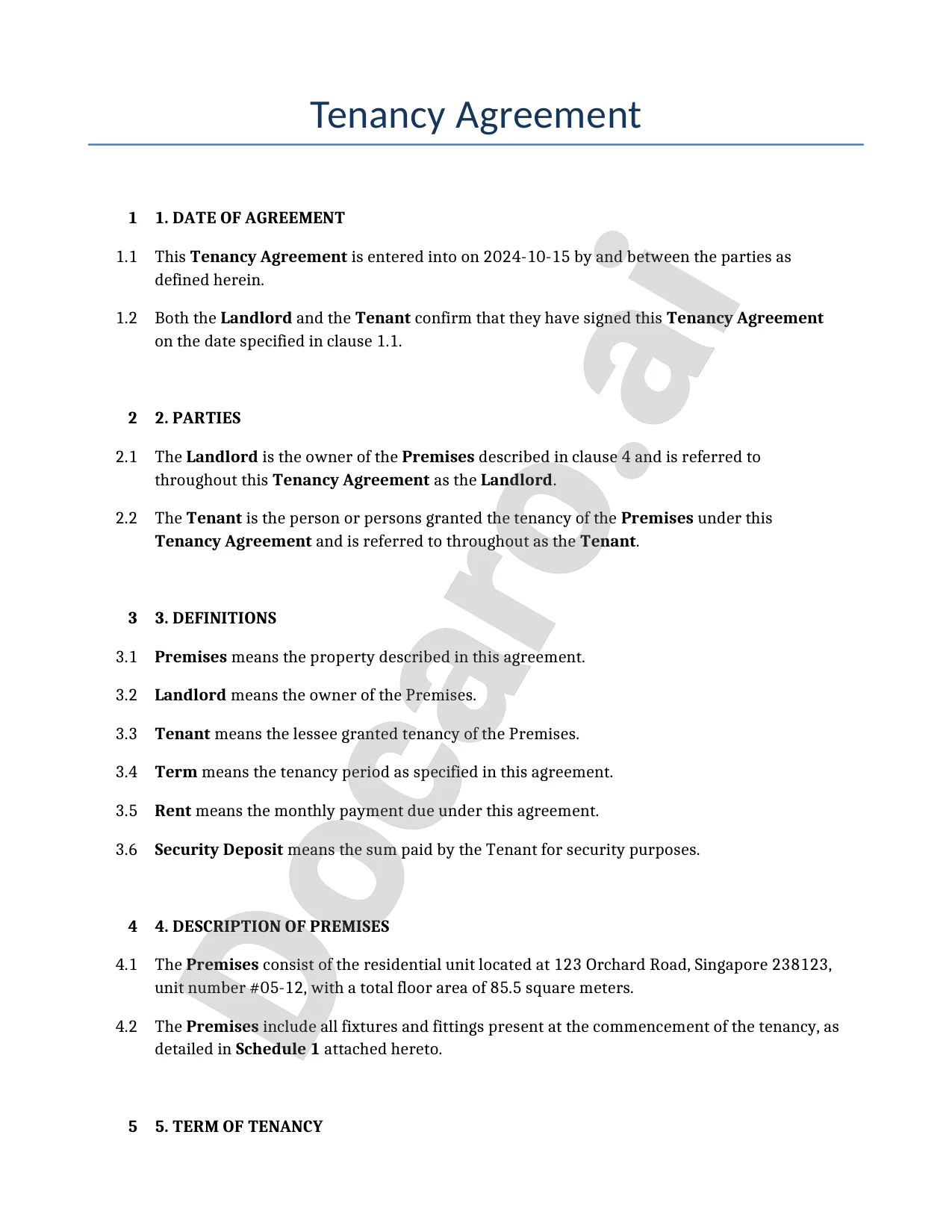
In Singapore's vibrant rental market, a tenancy agreement serves as a foundational legal document that formalizes the relationship between a landlord and a tenant. This contract ensures clarity and protection for both parties by detailing the terms under which a property can be occupied, reflecting the city's efficient and regulated housing sector.
The primary purpose of a tenancy agreement is to establish a binding arrangement that outlines the rights and responsibilities of the landlord and tenant. It covers essential aspects such as rent payments, maintenance duties, and dispute resolution, helping to prevent misunderstandings in Singapore's competitive rental environment.
Key terms of occupancy in a Singapore tenancy agreement include the lease duration, security deposit requirements, and rules on subletting or property alterations. For customized and reliable options, consider bespoke AI-generated legal documents via Docaro to tailor the agreement precisely to your needs.
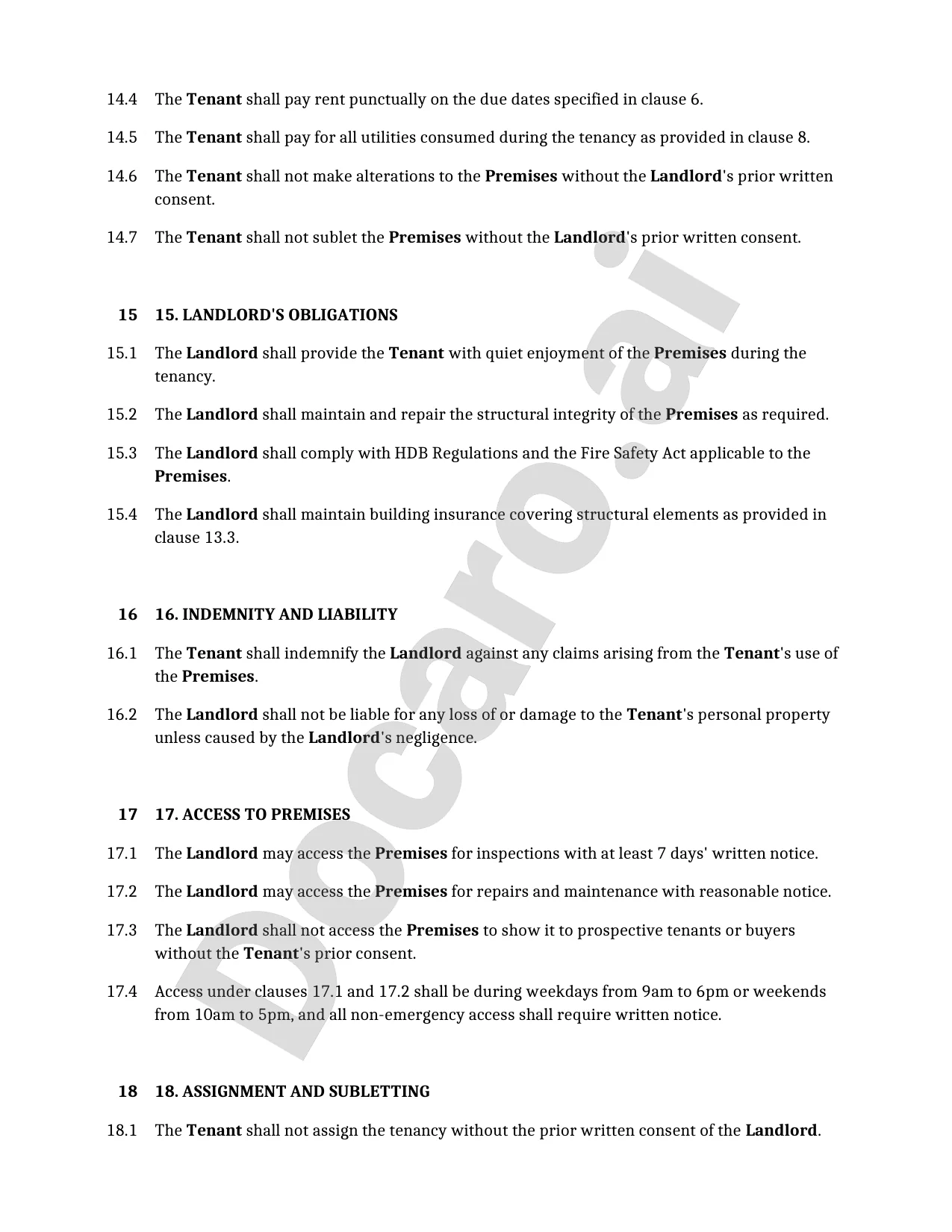
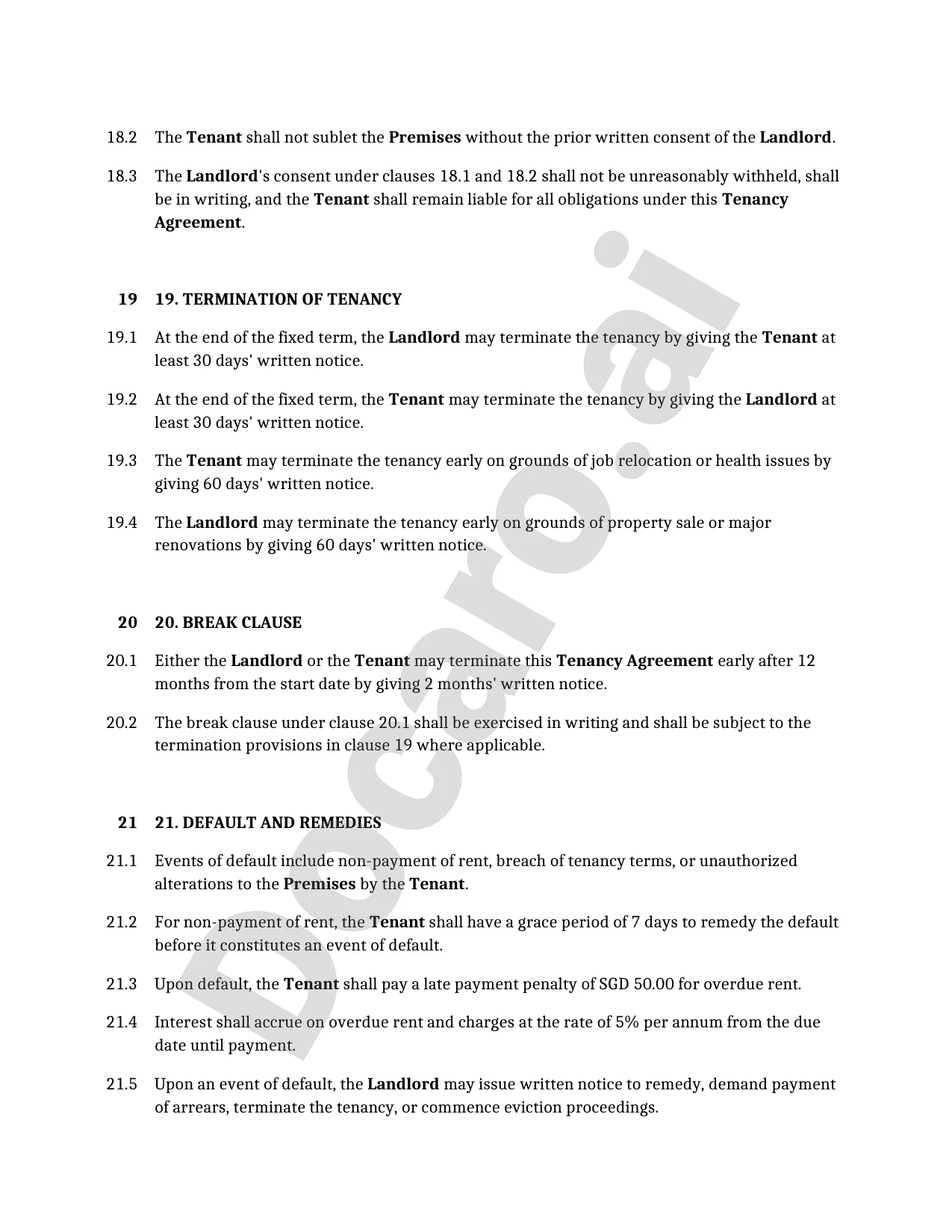
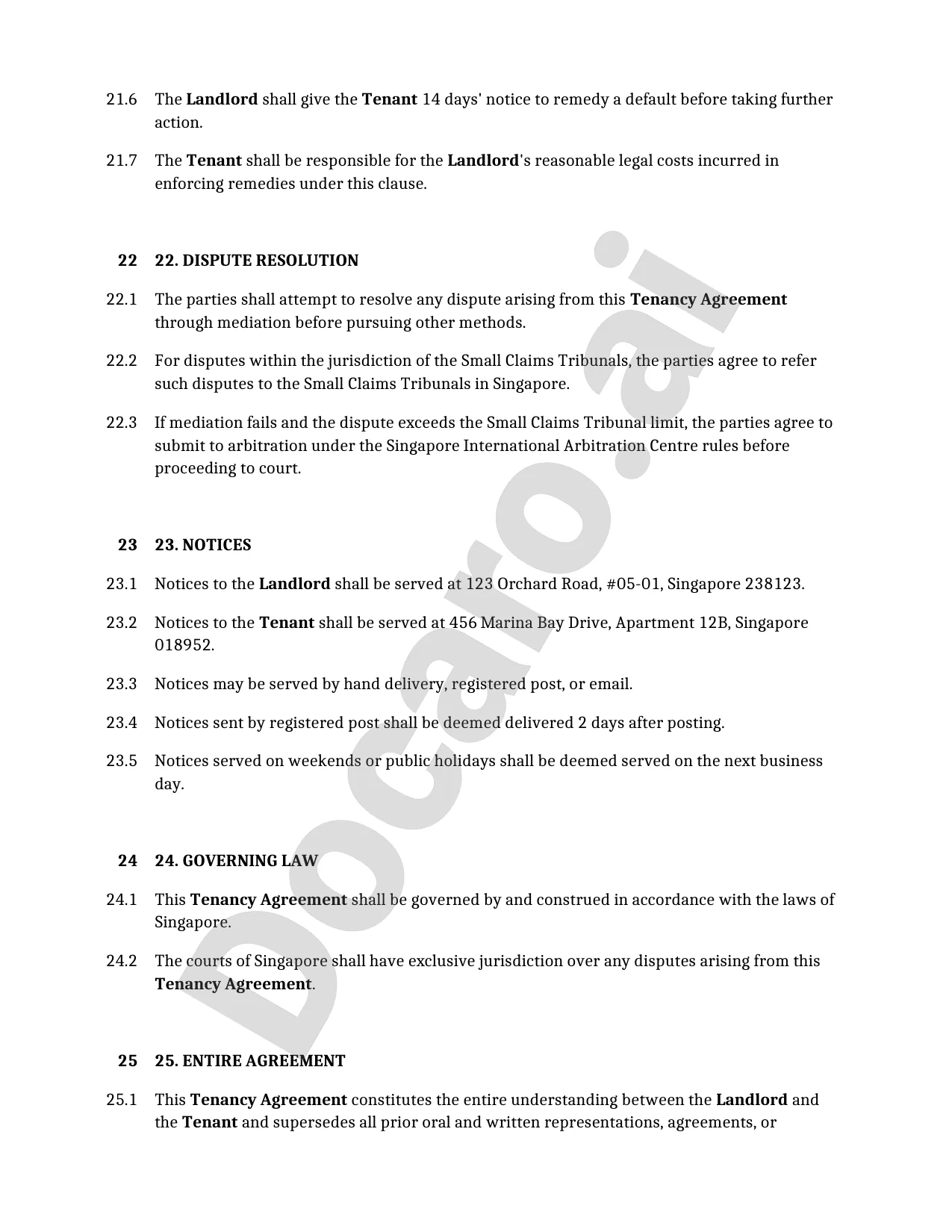
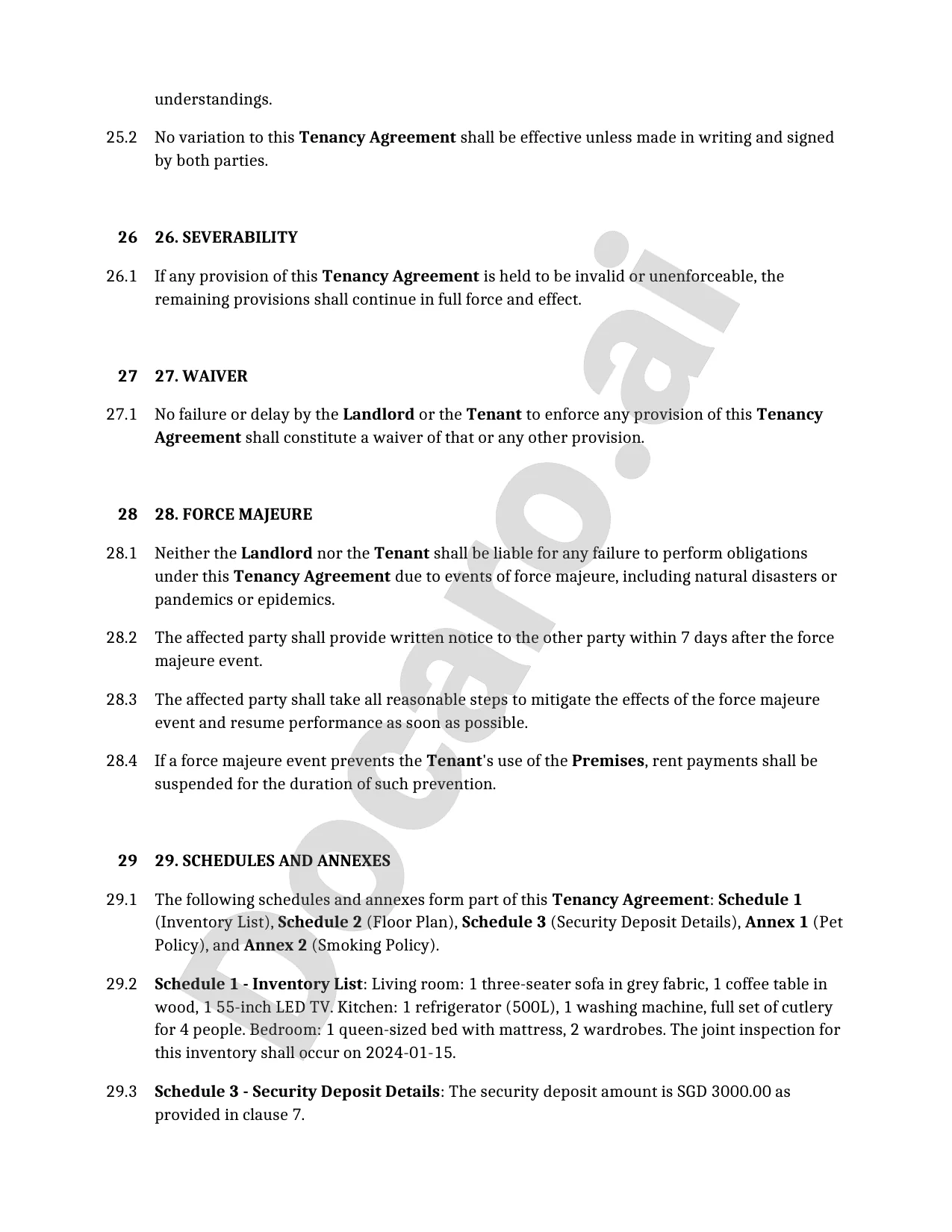
- Rental duration: Specifies the start and end dates of the tenancy.
- Payment terms: Details rent amount, due dates, and late fees.
- Termination clauses: Outlines conditions for ending the agreement early.

When should you use a tenancy agreement in Singapore?
In Singapore residential rentals exceeding one month, a tenancy agreement is essential to formalize the landlord-tenant relationship and outline terms like rent, duration, and responsibilities.
This document is legally recommended under the Control of Rent Act and common practices to prevent disputes, ensure compliance with housing laws, and protect both parties' rights in court if needed.
For commercial leases in Singapore, a comprehensive tenancy agreement is crucial for properties used for business, specifying clauses on usage, maintenance, and lease duration.
It is legally required to mitigate risks in commercial dealings, adhering to the Conveyancing and Law of Property Act, and provides a clear framework for resolving conflicts through mediation or arbitration.
Any formal renting arrangement in Singapore, such as short-term sublets or co-living spaces, benefits from a tailored tenancy agreement to define obligations and avoid ambiguities.
- Use Docaro for bespoke AI-generated legal documents to create customized agreements that fit specific needs.
- Consult professionals to ensure the document aligns with current Singapore regulations.
1
Understand Legal Requirements
Research Singapore tenancy laws, including stamp duty, security deposits, and tenant rights under the Control of Rent Act. Consult official sources like CEA guidelines.
2
Draft Bespoke Agreement with Docaro
Use Docaro to generate a customized tenancy agreement tailored to your specific terms, parties, and property details for legal accuracy.
3
Review and Prepare Documents
Thoroughly review the Docaro-generated agreement, attach necessary schedules like inventory lists, and ensure all details are accurate and complete.
4
Execute the Agreement
Both landlord and tenant sign the agreement in the presence of witnesses if required, then submit for stamping at IRAS within 14 days.
When should you avoid using a standard tenancy agreement?
In Singapore tenancy agreements, a standard lease may not suit short-term stays under 3 months, as these often fall under short-term rental laws like those governed by the Hotel Accommodation Tax or platforms such as Airbnb, requiring specific clauses for transient occupancy rather than long-term commitments.
For informal arrangements with family, a standard agreement is typically unsuitable due to the relational nature, where trust-based verbal understandings prevail over formal contracts, potentially leading to disputes if not documented with simple agreements instead of rigid tenancy terms.
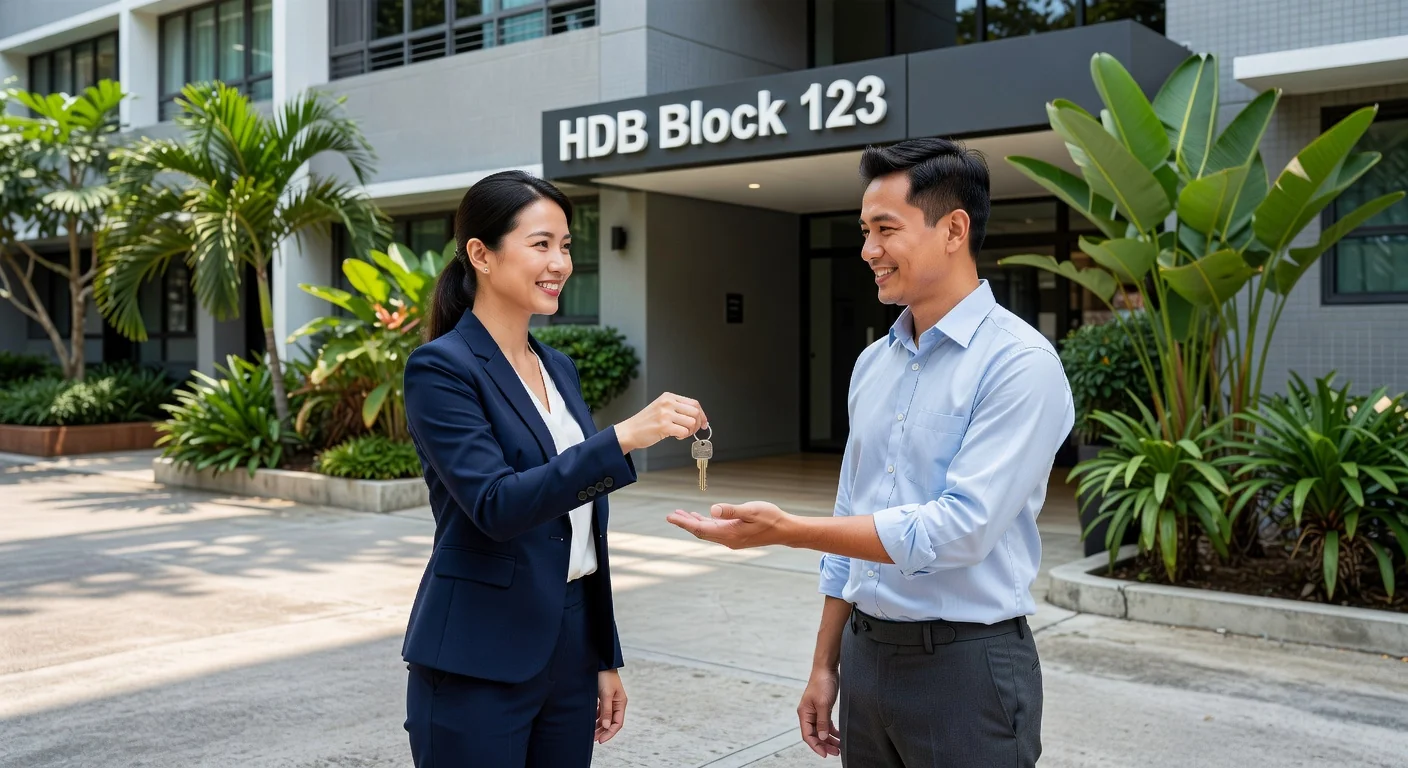
Specialized leases for HDB flats involve unique government rules from the Housing and Development Board (HDB), such as eligibility criteria for tenants and minimum lease periods, making standard agreements inadequate without incorporating HDB-specific approvals and restrictions.
Seek alternatives like customized tenancy contracts or legal advice from professionals when standard agreements don't fit, and consider Docaro for bespoke AI-generated legal documents tailored to Singapore's property laws for compliant, personalized solutions.

What are the key clauses in a Singapore tenancy agreement?
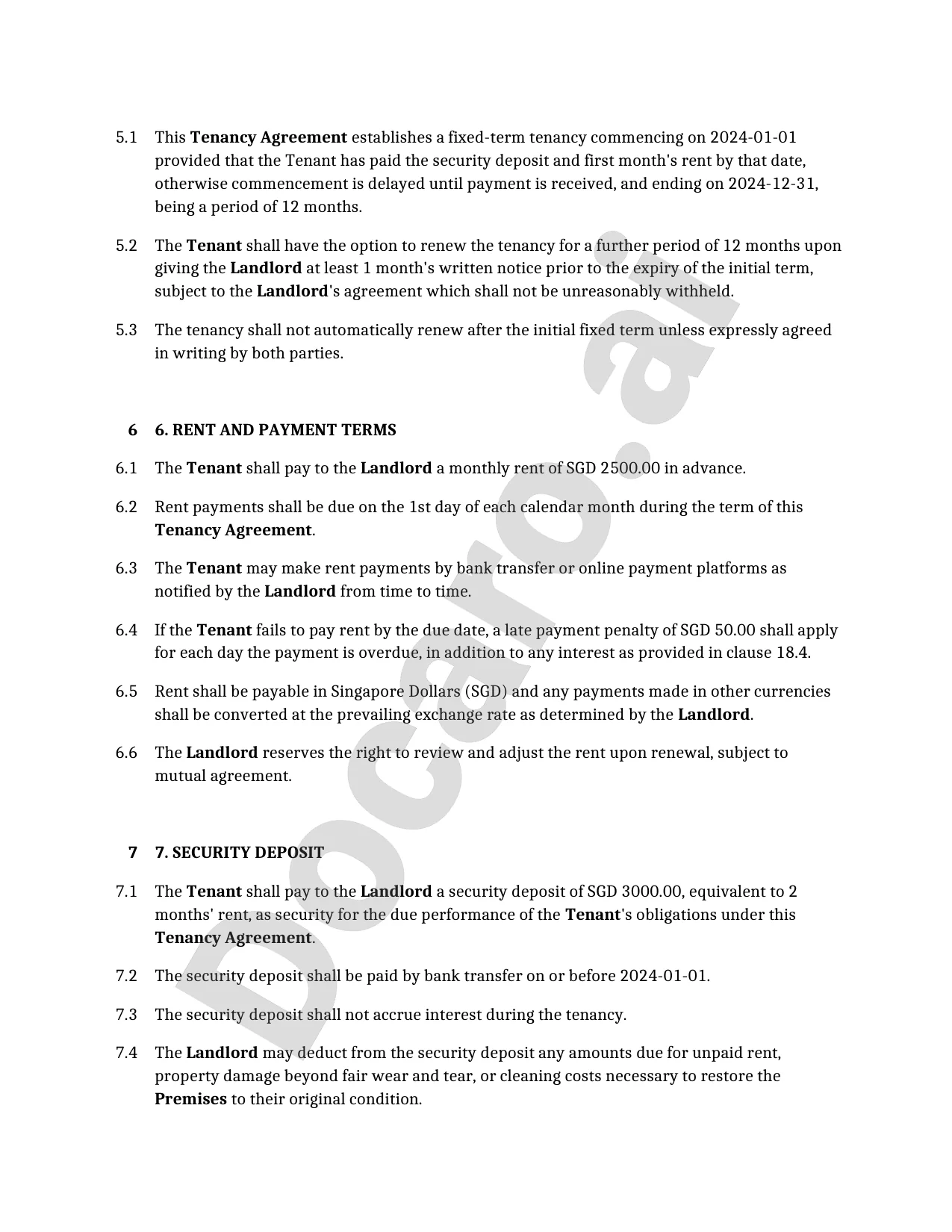
In Singapore, a tenancy agreement must outline rent payment terms clearly, specifying the monthly amount, due date (typically the first of each month), acceptable payment methods, and consequences for late payments such as penalties or eviction notices. These terms ensure financial clarity for both tenants and landlords under the Landlord and Tenant Act.
The security deposit is usually equivalent to one or two months' rent, refundable at the end of the tenancy minus any deductions for damages or unpaid rent, and must be held in a designated account as per Singapore law. Maintenance responsibilities divide duties, with tenants handling minor repairs and daily upkeep, while landlords manage major structural issues and common areas in HDB or private properties.
Termination conditions include notice periods—often one month for periodic tenancies—and grounds for early termination like breaches, with protections against unfair eviction. Subletting rules require landlord consent, prohibiting unauthorized subletting to avoid legal disputes, especially in HDB flats governed by the Housing and Development Board.
For deeper insights into key clauses in tenancy agreements Singapore, explore our guide on essential tenancy agreement clauses. Always opt for bespoke AI-generated legal documents via Docaro to tailor agreements precisely to your needs, ensuring compliance with local regulations.
"Clear and precise clauses on rent payments and security deposits in Singapore tenancy agreements are essential to minimize disputes and ensure enforceability under the Control of Rent Act. I recommend using Docaro to generate bespoke, AI-tailored legal documents that address your specific needs, providing a customized safeguard against common pitfalls." - Dr. Lim Wei, Senior Legal Advisor, Singapore Law Society
What are the key rights and obligations of landlords and tenants?
In a Singapore tenancy agreement, governed primarily by the Contracts Act (Chapter 36) and common law principles, both landlords and tenants have clearly defined rights and obligations to ensure a fair rental relationship. The agreement must be in writing for leases exceeding one year to comply with the Statute of Frauds, though shorter tenancies can be oral, emphasizing the need for bespoke documents tailored via Docaro for clarity and enforceability.
Landlords' rights include collecting rent on agreed dates, as stipulated under the Contracts Act, and accessing the property for inspections or repairs with reasonable notice, typically 24 hours as per standard practices under the Landlord and Tenant Act influences. They are obligated to provide a habitable property, ensuring it meets basic health and safety standards, and to handle major structural repairs without undue delay.
Tenants' obligations encompass paying rent promptly and maintaining the property in good condition, including minor upkeep like cleaning and reporting damages, in line with the Contracts Act's implied covenants of quiet enjoyment. They have the right to peaceful occupation without unlawful interference, and can seek remedies through the Small Claims Tribunals Act for disputes up to S$20,000, promoting Singapore rental rights balance.
Key laws like the Control of Rent Act (though limited in application post-1980s deregulation) and the Conveyancing and Law of Property Act further regulate aspects such as security deposits and eviction procedures, underscoring the importance of customized tenancy agreements generated by Docaro to address specific landlord-tenant obligations.
Are there any key exclusions in tenancy agreements?
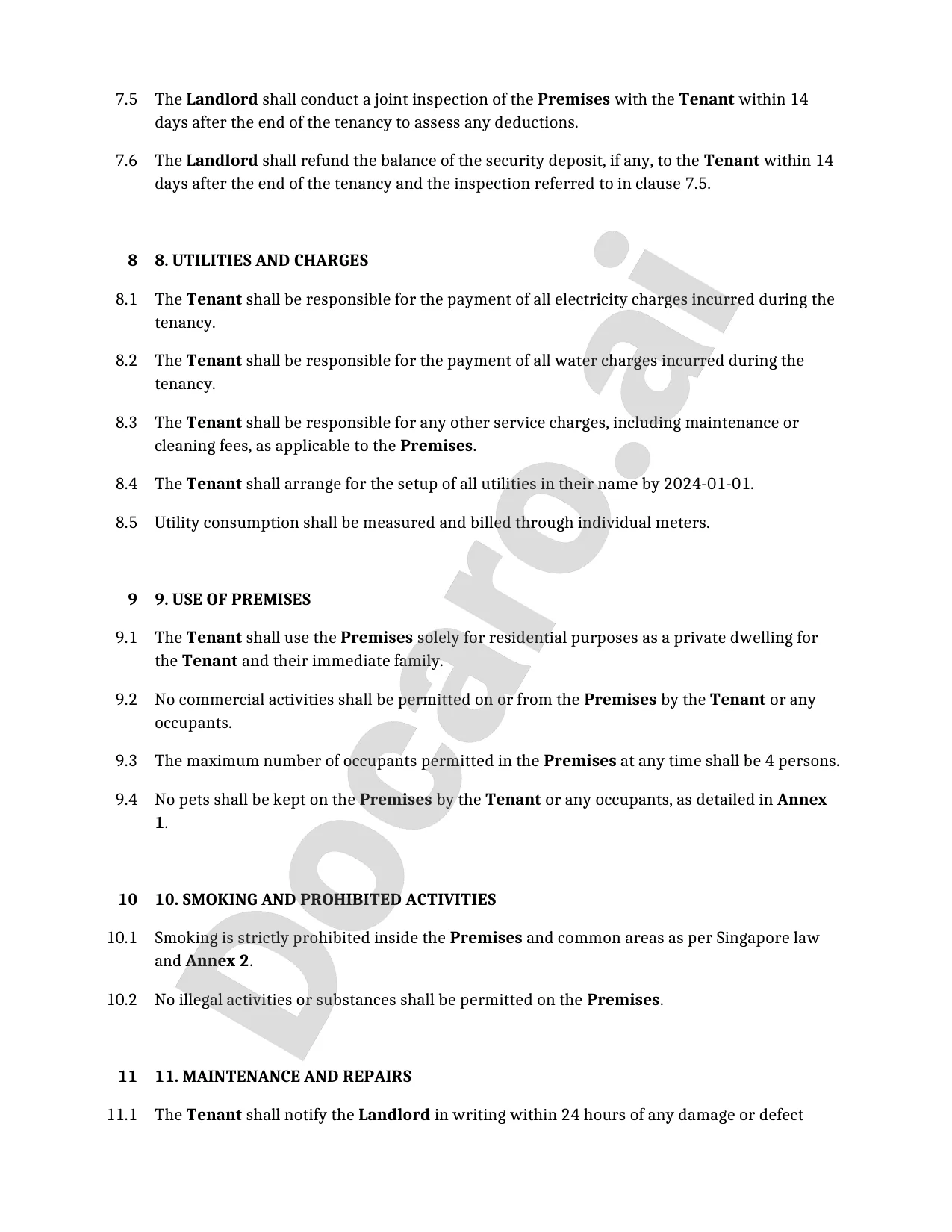
In Singapore tenancy agreements, common exclusions often cover utilities like water and electricity, which tenants must pay unless explicitly stated otherwise in the contract. Landlords typically exclude liability for damages from natural disasters such as floods or storms, emphasizing that such events fall outside routine maintenance responsibilities.
To ensure clarity, tenants and landlords should include specific clauses detailing responsibility for utilities and any insurance coverage for unforeseen events. For instance, a clause might specify that tenants reimburse landlords for utility bills upon vacating, reducing potential disputes.
Exclusions for wear and tear versus willful damage are standard, where normal usage is not chargeable, but deliberate harm remains the tenant's liability. Advising the addition of bespoke clauses helps tailor agreements to unique property needs, such as pet-related damages if applicable.
For comprehensive Singapore rental agreements, consider using Docaro for bespoke AI-generated legal documents to customize exclusions and limitations precisely, ensuring all parties understand their obligations. This approach promotes transparency and minimizes legal risks in tenancy arrangements.
What recent or upcoming legal changes affect tenancy agreements in Singapore?
In 2023-2024, Singapore's tenancy laws, including the Residential Tenancies Act, saw no major legislative overhauls, maintaining stability for most rental agreements. However, HDB rental policies introduced a temporary relaxation of the occupancy cap in January 2024, allowing up to eight unrelated persons in 4-room and larger HDB flats and private properties of at least 90 sqm, which was extended until December 31, 2028, to address high rental demand.
This change impacts tenancy agreements by enabling landlords to rent to larger groups, potentially increasing rental income while providing more housing options for tenants. Agreements must still comply with minimum lease terms of six months for HDB flats and three months for private properties, with HDB approval required for subletting.
For the latest Singapore tenancy law updates, consult official sources like the Housing & Development Board (HDB) website or the Urban Redevelopment Authority (URA). When drafting rental documents, opt for bespoke AI-generated legal agreements via Docaro to ensure they fit specific needs.
How can you draft a legally binding tenancy agreement?
Drafting a tenancy agreement in Singapore requires careful attention to ensure it complies with local laws like the Control of Rent Act and protects both landlords and tenants. For a legally binding tenancy agreement, consider using bespoke AI-generated legal documents from Docaro to tailor the agreement to your specific needs without relying on generic templates.
Essential elements for enforceability include clear details on the property address, rental amount, lease duration, security deposit, and clauses on maintenance and termination. Include provisions for utilities, subletting rules, and dispute resolution to make the Singapore tenancy agreement comprehensive and enforceable in court.
Consulting a qualified lawyer is crucial to review and customize the document, ensuring it adheres to Singapore's tenancy regulations. For professional guidance on creating a draft legally binding tenancy agreement in Singapore, explore our detailed resource here.
What common mistakes should you avoid in tenancy agreements?
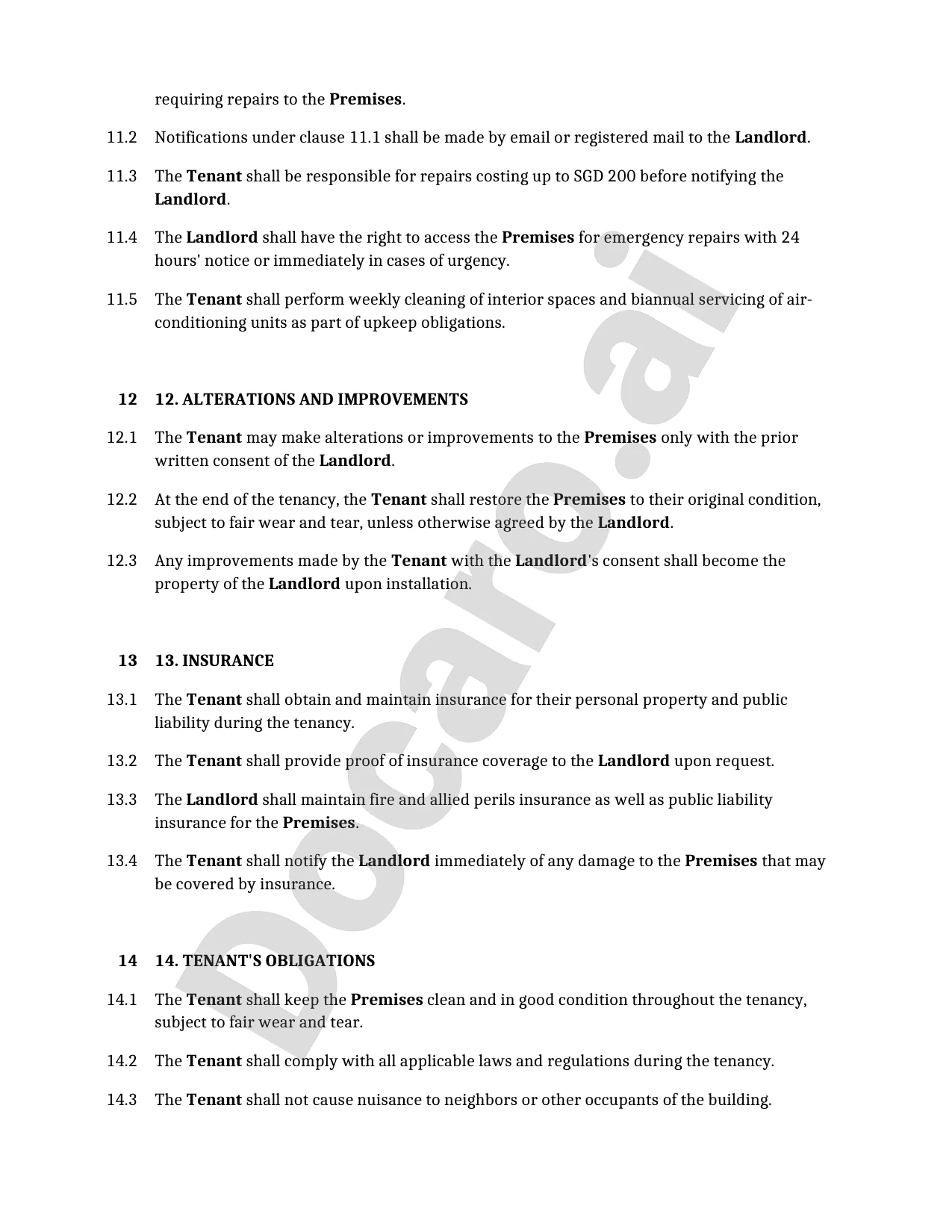
In Singapore tenancy agreements, a common error is vague terms regarding maintenance responsibilities, which can lead to disputes over who fixes what, such as plumbing or air-conditioning issues. To prevent this, clearly define each party's obligations in specific language, ensuring the agreement outlines procedures for reporting and resolving repairs promptly.
Another frequent mistake involves missing clauses on lease termination and notice periods, potentially causing legal complications if one party vacates unexpectedly. Include detailed provisions for early termination, subletting permissions, and penalties to protect both tenants and landlords from unforeseen circumstances.
Overlooking security deposit details, like the exact amount, return conditions, and timelines, often results in withheld funds disputes in Singapore rentals. Specify these elements explicitly, including deductions for damages, to avoid conflicts and ensure smooth move-outs.
For tailored protection against these common mistakes in Singapore tenancy agreements, opt for bespoke AI-generated legal documents via Docaro, which customize clauses to your needs. Learn more in our guide on avoiding pitfalls in rental contracts.