Docaro

AI Generated Singaporean Patent Licence Agreement
PDF & Word - 2026 Updated
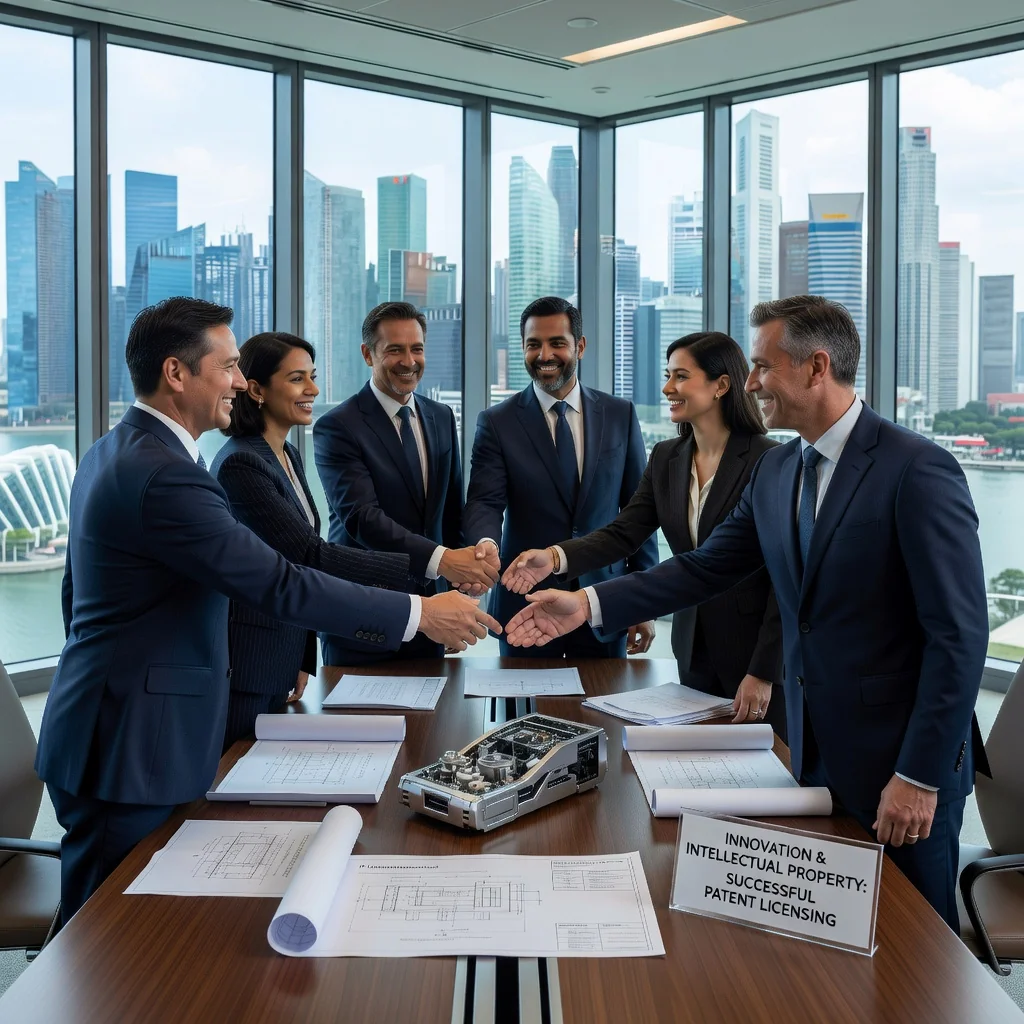
A professional scene in a modern Singapore office representing innovation and intellectual property protection through patent licensing, featuring a diverse group of adult business professionals shaking hands over a blueprint or prototype model on a conference table, with the Singapore skyline visible through large windows in the background, symbolizing collaboration and agreement in a business context.
Generate a customized AI-powered Patent Licence Agreement tailored for Singaporean intellectual property laws, ensuring compliance and protection for inventors and licensors.
Free instant document creation.
Compliant with Singapore law.
No sign up or monthly subscription.

Docaro Pricing

Basic
Free
Document Generation
No Sign Up
No Subscription
Download Watermarked PDF
Premium
$4.99 USD
Document Generation
No Sign Up
No Subscription
Download Clean PDF
Download Microsoft Word
Download HTML
Download Text
Email Document
Generate your document for free. Only pay if you like the result and need an un-watermarked version.

When do you need a Patent Licence Agreement in Singapore?

  • Licensing your invention
    You need this agreement when you want to let someone else use your patented idea in exchange for payment, allowing you to earn money without giving up full ownership.
  • Partnering with a business
    This document is essential when teaming up with a company to develop or sell products based on your patent, as it clearly outlines each party's roles and benefits.
  • Granting limited use rights
    Use it to permit a specific individual or group to use your patent for a set time or purpose, preventing misuse and protecting your interests.
  • Avoiding ownership disputes
    A well-drafted agreement is crucial to spell out terms like royalties and usage limits, reducing the risk of misunderstandings or legal fights later on.
  • Ensuring legal protection
    Having a clear, proper document helps safeguard your rights under Singapore law, making it easier to enforce the deal if issues arise.

Singaporean Legal Rules for a Patent Licence Agreement

  • Governing Law
    Patent license agreements in Singapore must follow the Patents Act and are governed by Singapore law.
  • Licensor Rights
    The licensor, who owns the patent, grants permission to the licensee to use the invention without transferring ownership.
  • Types of Licenses
    Licenses can be exclusive, giving one party sole rights, or non-exclusive, allowing multiple parties to use the patent.
  • Territorial Scope
    The agreement should specify if the license applies only in Singapore or extends to other countries.
  • Payment Terms
    Common payments include upfront fees, royalties based on sales, or a mix of both.
  • Duration and Termination
    The agreement must define how long the license lasts and under what conditions it can end.
  • Infringement Protection
    The licensor often agrees to help protect the patent against unauthorized use by third parties.
  • Confidentiality
    Both parties must keep sensitive information about the patent and agreement private.
  • Dispute Resolution
    Agreements typically include steps for resolving disagreements, such as mediation or court in Singapore.
  • Registration Requirement
    Certain licenses may need to be recorded with the Intellectual Property Office of Singapore to be fully effective.
Important

Using the wrong structure for a patent license agreement can inadvertently limit or expand intellectual property rights and obligations.

What a Proper Patent Licence Agreement Should Include

  • Parties Involved
    Clearly identify the patent owner (licensor) and the user (licensee) with their full names and contact details.
  • Granted Rights
    Specify what rights the licensee gets, such as making, using, or selling products based on the patent.
  • Payment Terms
    Outline how the licensee will pay, including upfront fees, royalties, or milestones.
  • Duration and End
    State how long the agreement lasts and under what conditions it can end.
  • Territory Limits
    Define the geographic areas where the licensee can use the patent, such as only in Singapore.
  • Keeping Secrets
    Require both parties to protect confidential information shared during the agreement.
  • Quality Standards
    Set rules for the licensee to maintain product quality to protect the patent's reputation.
  • Handling Disputes
    Describe how disagreements will be resolved, often through negotiation or Singapore courts.
  • Legal Compliance
    Ensure the agreement follows Singapore's patent laws and other relevant regulations.

Why Free Templates Can Be Risky for Patent Licence Agreements

Free patent licence agreement templates are often generic and not tailored to Singapore's specific IP laws and regulations. Using the wrong wording can lead to unenforceable clauses, disputes over royalty terms, or unintended transfer of patent rights, potentially exposing you to legal challenges or financial losses.

AI-generated bespoke patent licence agreements are customized to your unique needs, incorporating Singapore-specific legal requirements for precise royalty structures, exclusivity clauses, and infringement protections, ensuring a robust and enforceable document that safeguards your interests.

Generate Your Bespoke Patent Licence Agreement in 4 Easy Steps

1
Answer a Few Questions
Our AI guides you through the info required.
2
Generate Your Document
Docaro builds a bespoke document tailored specifically on your requirements.
3
Review & Edit
Review your document and submit any further requested changes.
4
Download & Sign
Download your ready to sign document as a PDF, Microsoft Word, Txt or HTML.

Why Use Our AI Patent Licence Agreement Generator?

Fast Generation
Quickly generate a comprehensive Patent Licence Agreement, eliminating the hassle and time associated with traditional document drafting.
Guided Process
Our user-friendly platform guides you step by step through each section of the document, providing context and guidance to ensure you provide all the necessary information for a complete and accurate Patent Licence Agreement.
Safer Than Legal Templates
We never use legal templates. All documents are generated from first principles clause by clause, ensuring that your document is bespoke and tailored specifically to the information you provide. This results in a much safer and more accurate document than any legal template could provide.
Professionally Formatted
Your Patent Licence Agreement will be formatted to professional standards, including headings, clause numbers and structured layout. No further editing is required. Download your document in PDF, Microsoft Word, TXT or HTML.
Compliance with Singaporean Law
Rest assured that all generated documents meet the latest legal standards and regulations of Singapore, enhancing trust and reliability.
Cost-Effective
Save money by generating legally sound Patent Licence Agreement without the need for expensive legal services or consultations.
Get Started for Free - No Sign Up or Monthly Subscription Required
No payment or sign up is required to start generating your Patent Licence Agreement. Generate and download a watermarked version of your document for free. Pay only if you want to remove the watermark and gain full access to your document. No monthly subscriptions or hidden fees. Pay once and use your document forever.
Need to Generate a Patent Licence Agreement in a Different Country?
Choose country:

Free Example Patent Licence Agreement Template

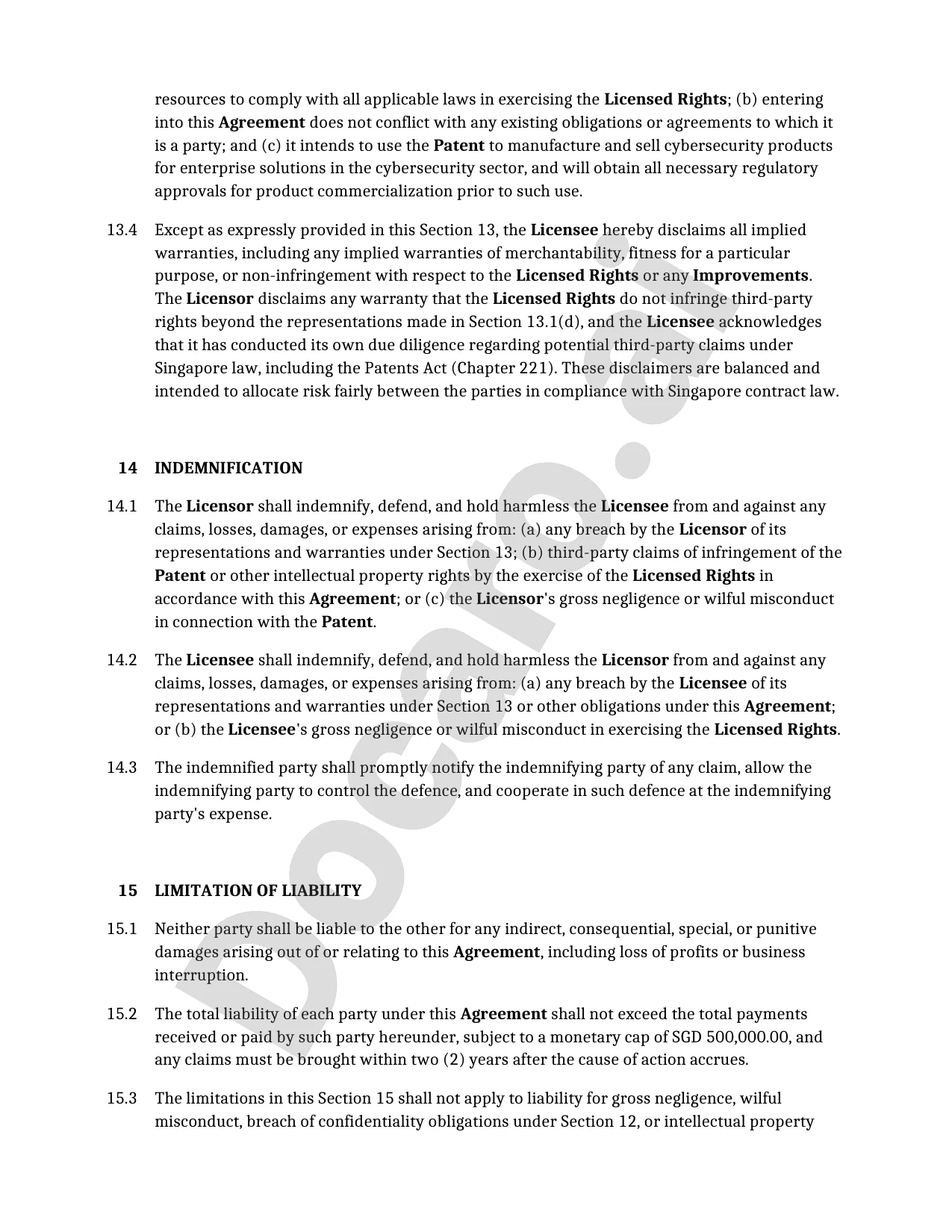
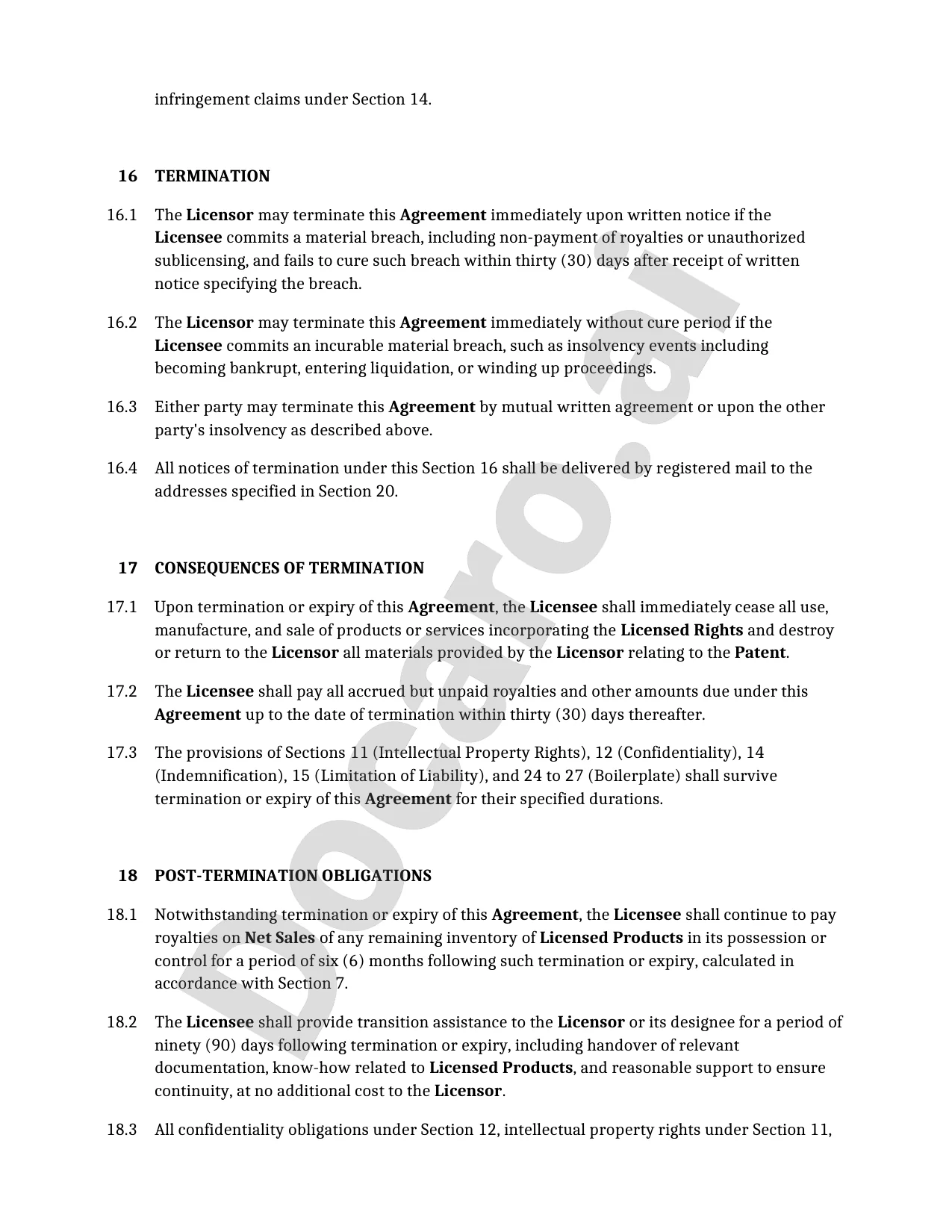
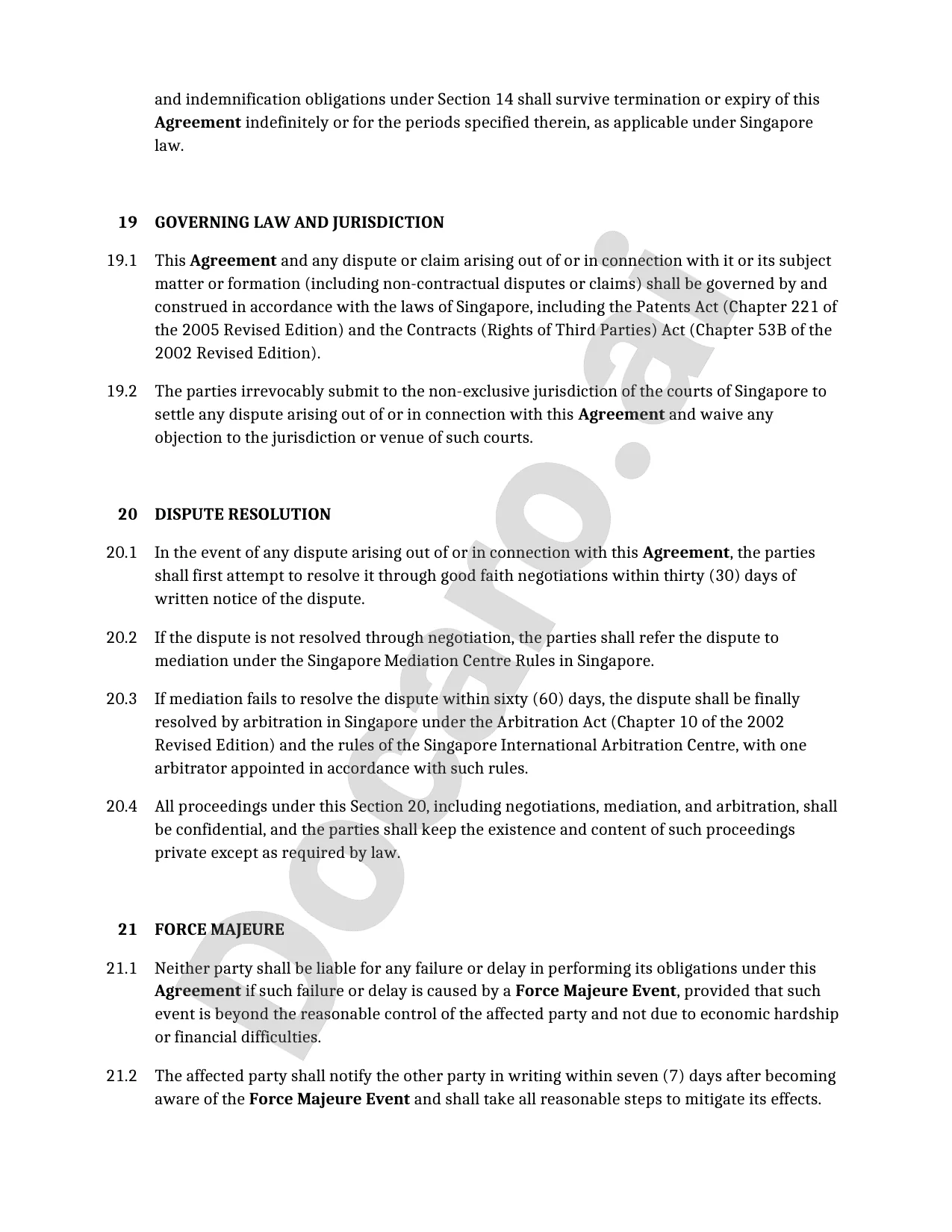
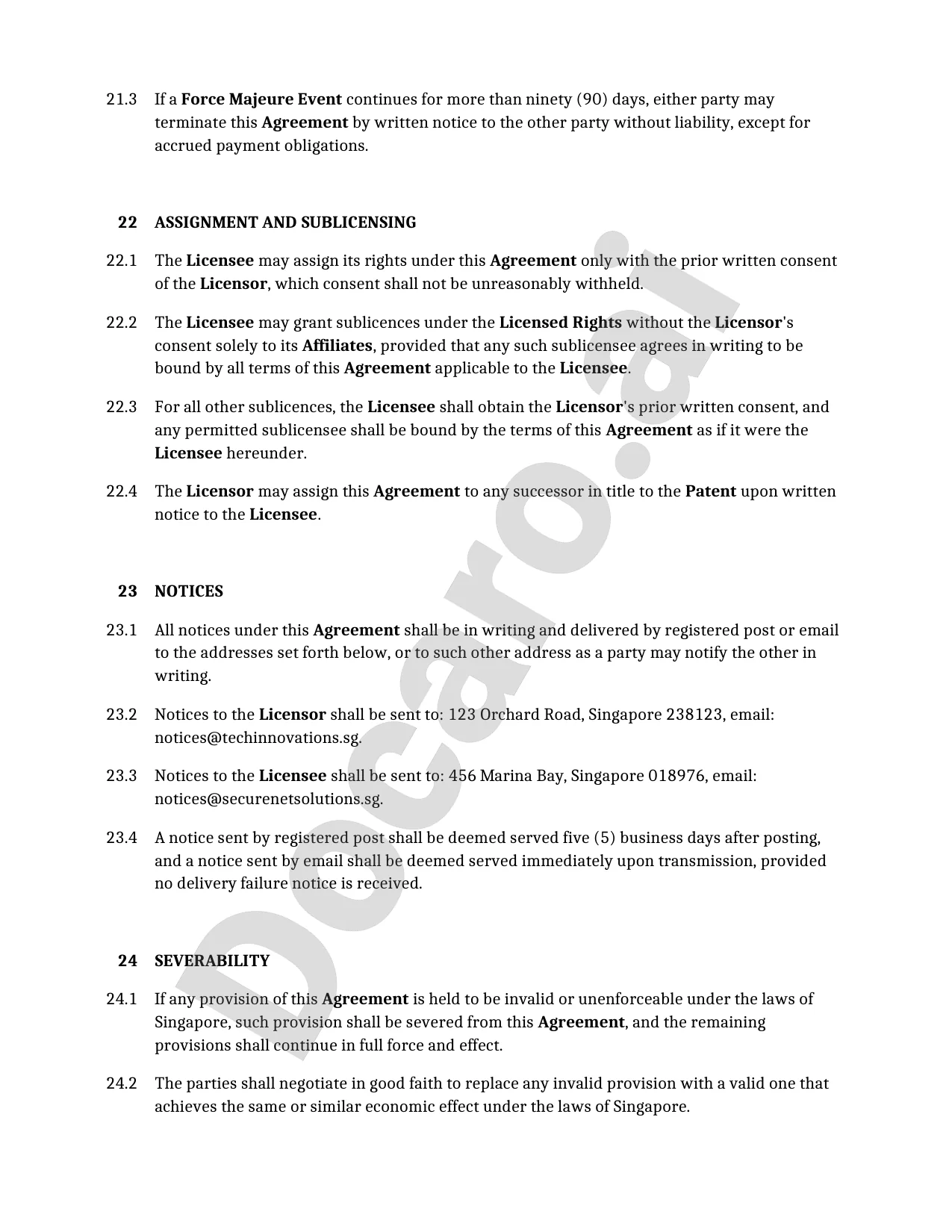
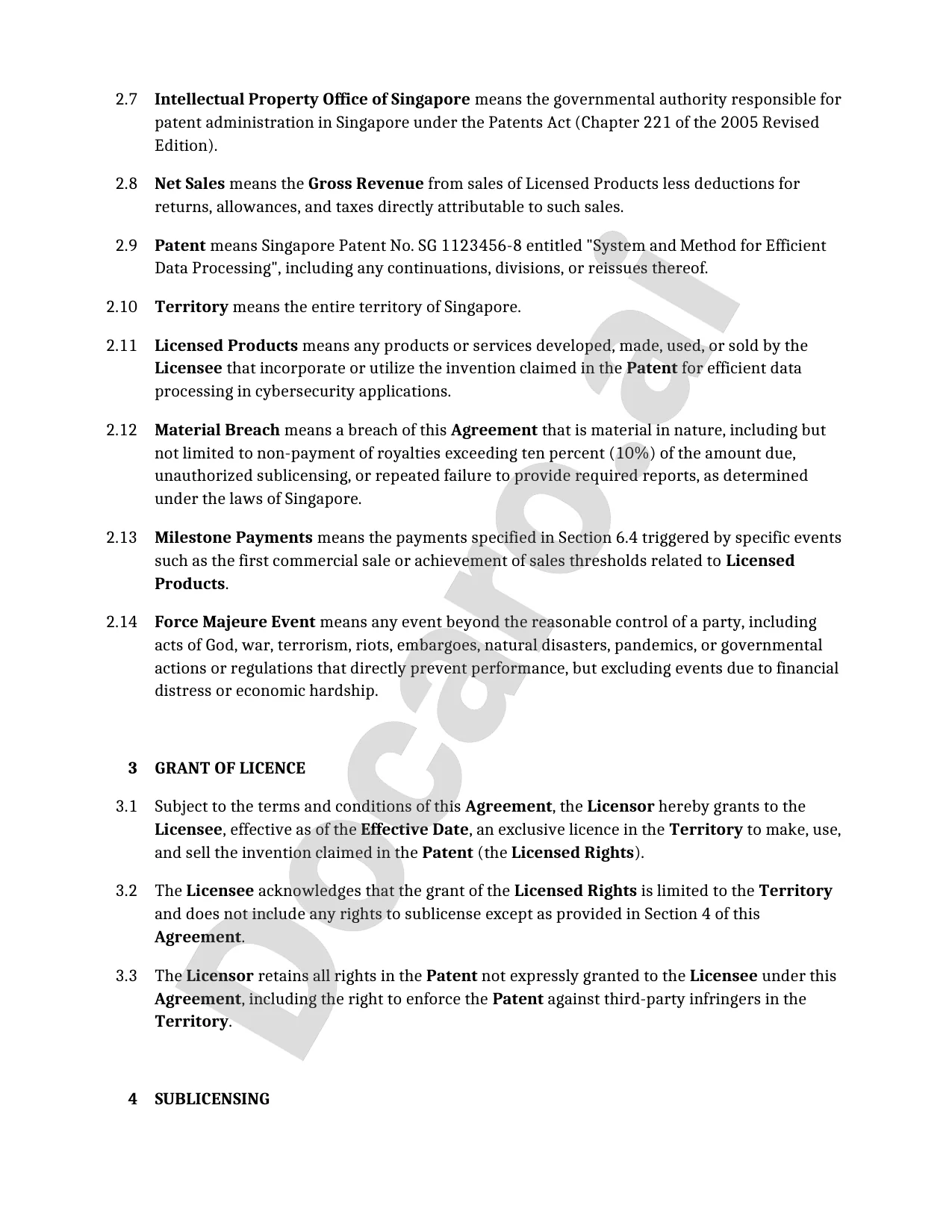
Below is a free template example of a Patent Licence Agreement for use in Singapore generated by our AI model.

The clauses in your actual Patent Licence Agreement will vary from this example as they will be entirely bespoke to your requirements as set out in the questionnaire you complete.
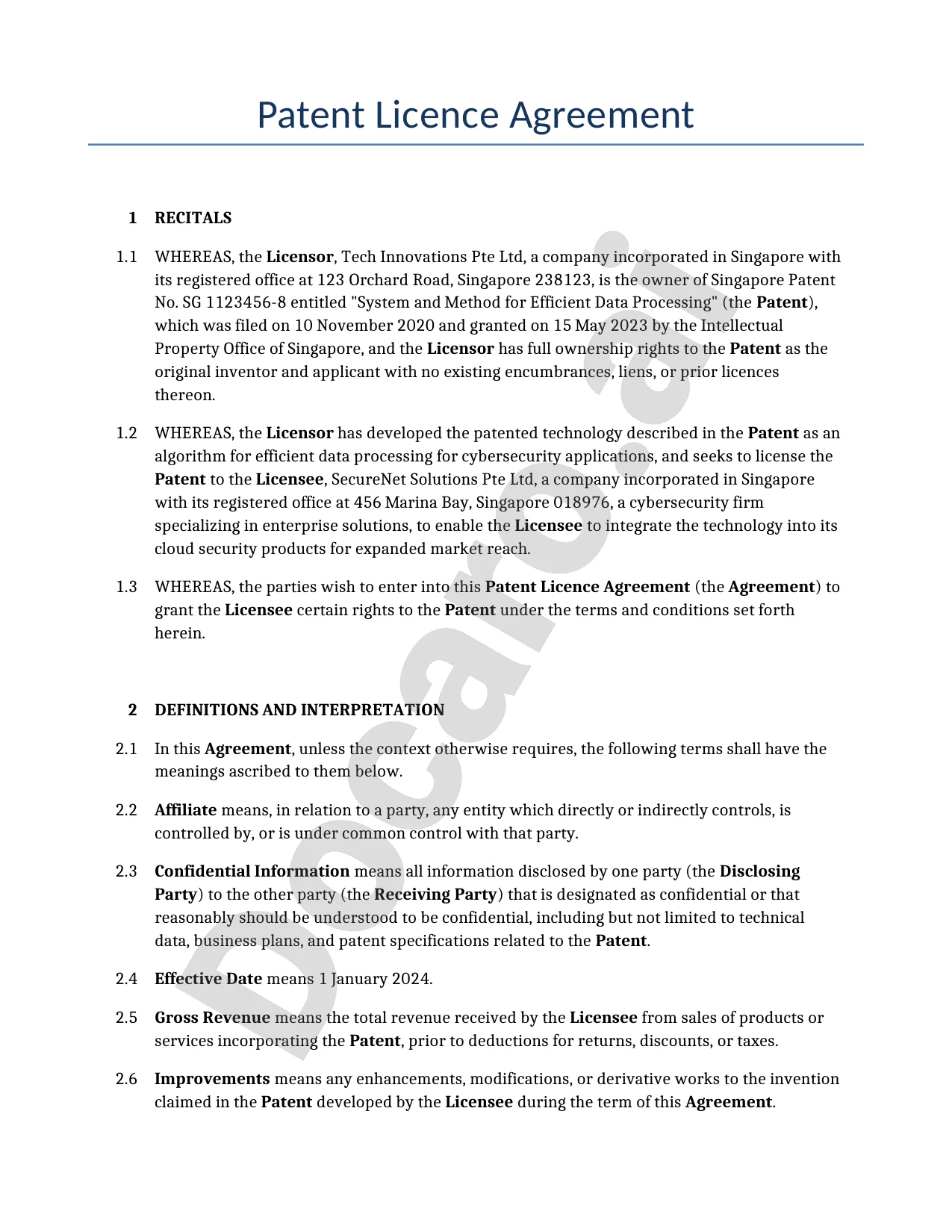
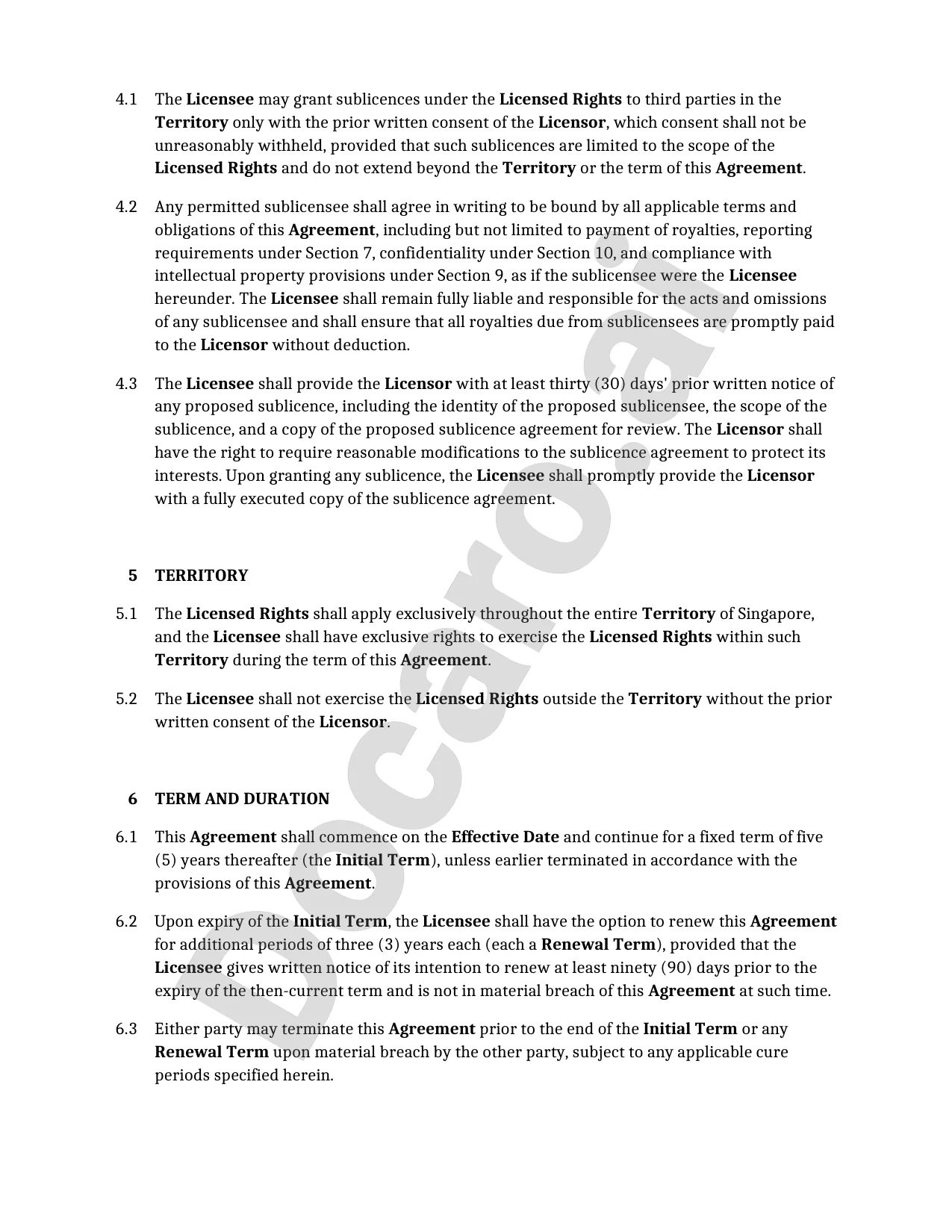
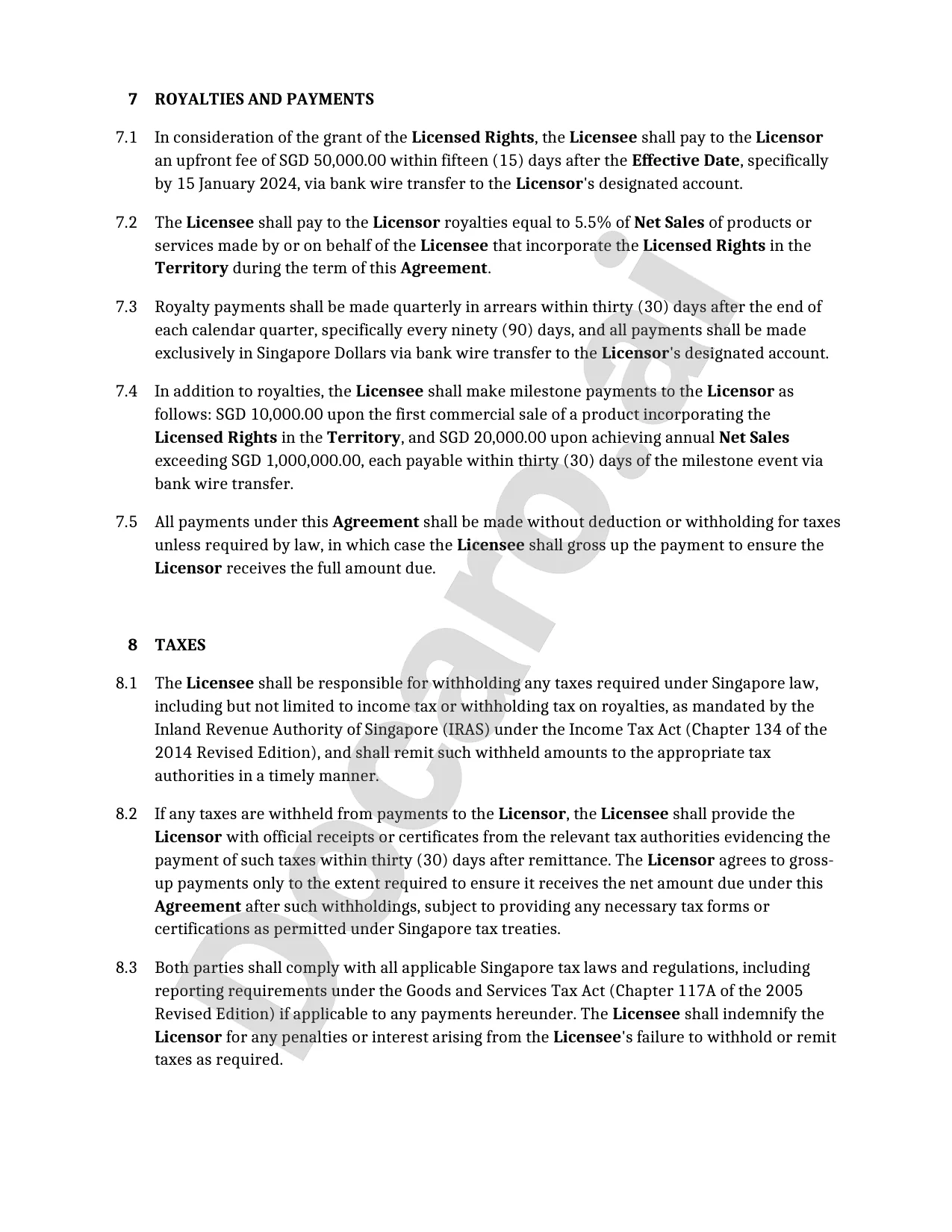
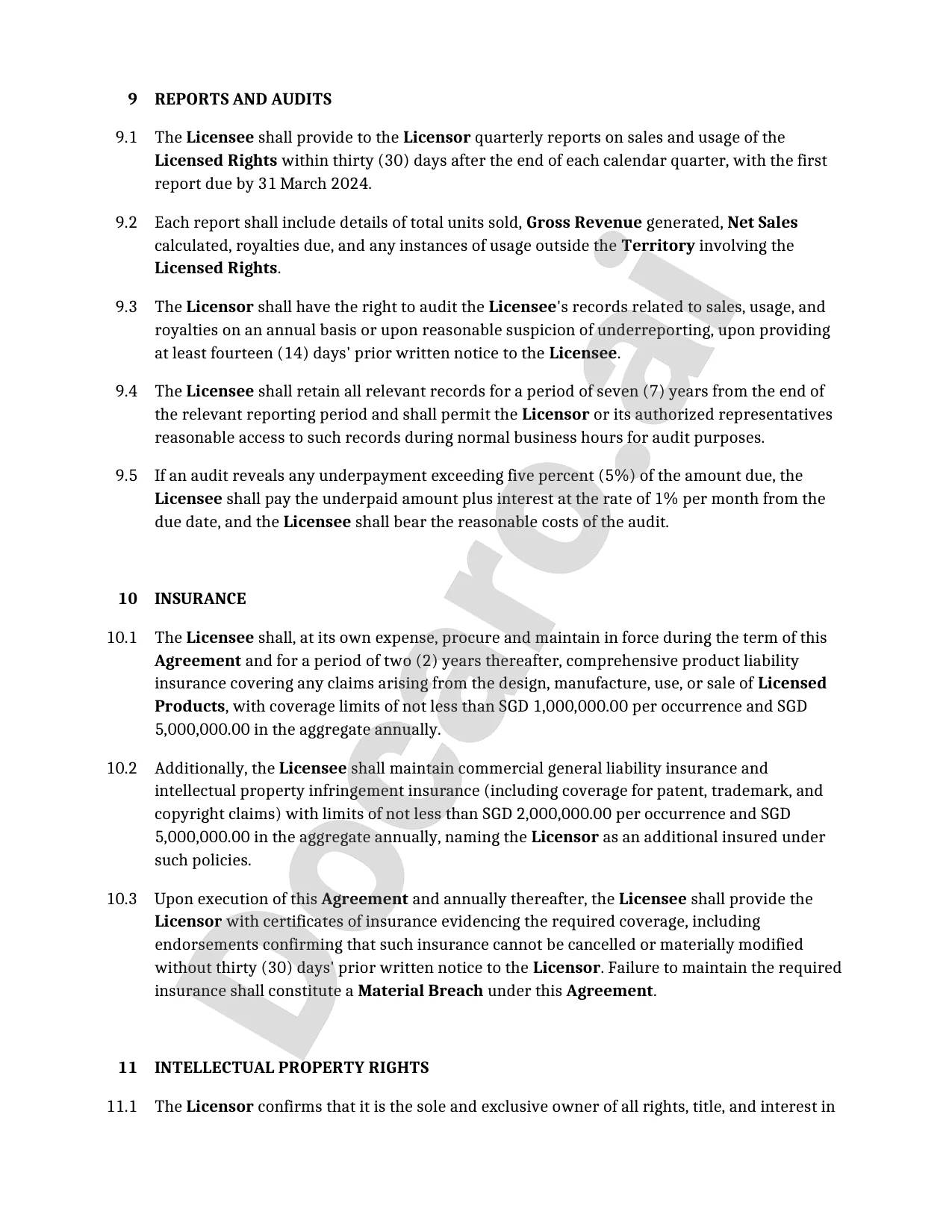
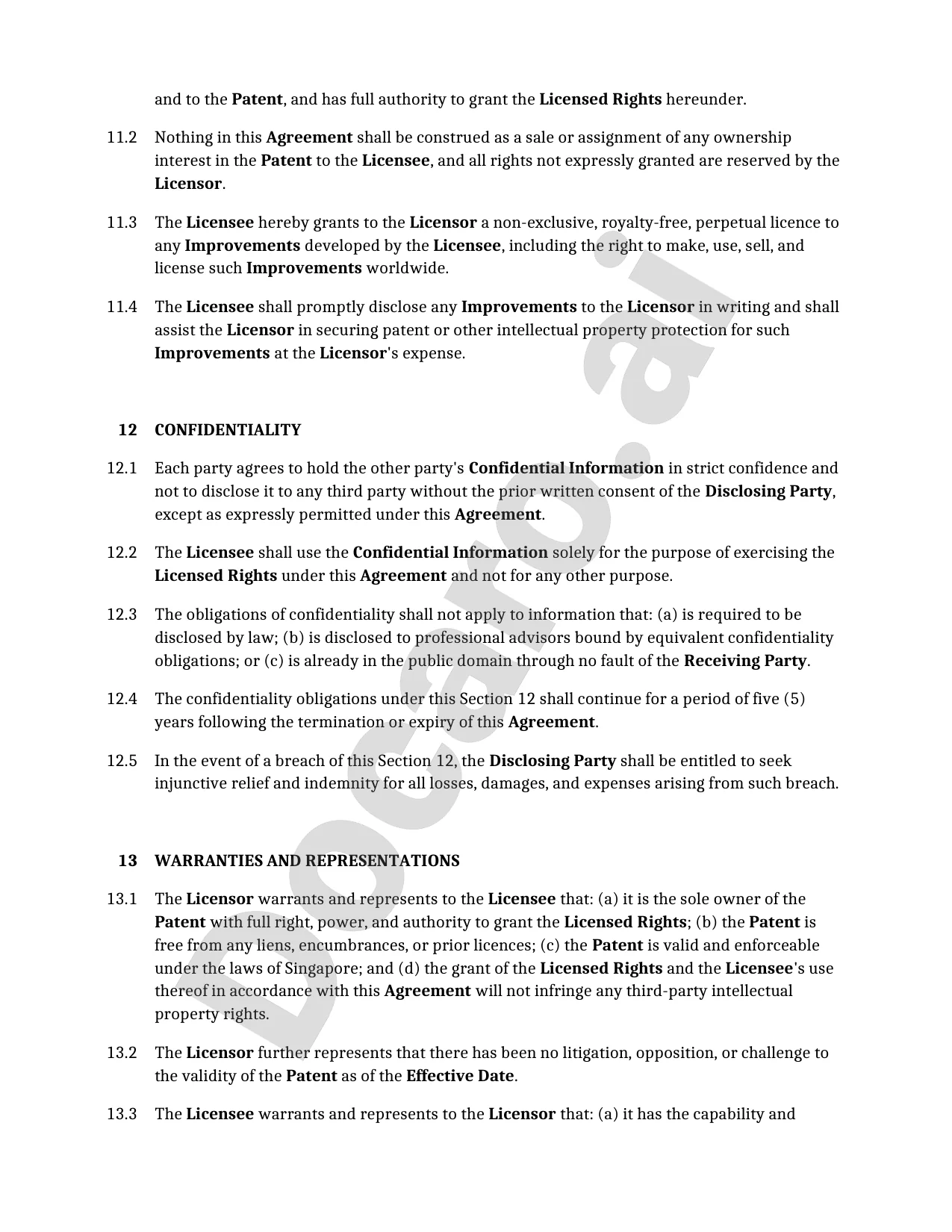
Page 1

Singapore Compliance Legislation

Your AI Generated Patent Licence Agreement will be checked for compliance against the following legislation and regulations:

What is a Patent Licence Agreement in Singapore?

A Patent Licence Agreement is a legal contract that enables a patent owner, known as the licensor, to grant specific rights to another party, the licensee, for the use of a patented invention. Under Singapore law, this agreement is essential for facilitating innovation and technology transfer while protecting intellectual property rights.

The primary purpose of a Patent Licence Agreement is to allow the licensor to monetize their patent without transferring ownership, by permitting the licensee to manufacture, use, or sell the invention under defined terms. This arrangement benefits both parties: the licensor earns royalties or fees, and the licensee gains access to protected technology to develop products or services.

In Singapore, Patent Licence Agreements are governed by the Patents Act (Chapter 221), which outlines requirements for validity, registration, and enforcement to ensure the agreement aligns with national intellectual property standards. For tailored and compliant documents, consider using Docaro AI-generated legal documents to create bespoke agreements suited to your needs.

  • Key rights granted: Exclusive or non-exclusive use of the patent for a specified period and territory.
  • Common clauses: Royalty payments, confidentiality, and termination conditions.
  • Relevance: Supports Singapore's innovation ecosystem by encouraging licensing over litigation.

Why are Patent Licence Agreements important in Singapore's IP landscape?

Patent Licence Agreements play a crucial role in Singapore's intellectual property ecosystem by enabling inventors and companies to monetize their innovations without relinquishing full ownership. These agreements allow patent holders to grant rights to third parties for specific uses, fostering a collaborative environment that drives economic growth in a global hub like Singapore.

In facilitating technology transfer, Patent Licence Agreements bridge the gap between research institutions and industry players, ensuring that cutting-edge inventions from universities and labs reach practical applications. This mechanism is vital in Singapore, where initiatives like the Research, Innovation and Enterprise 2025 plan emphasize seamless knowledge exchange to bolster the nation's position as an innovation leader.

By promoting innovation and commercialization, these agreements encourage startups and multinational corporations to license technologies, accelerating product development and market entry. In Singapore's vibrant ecosystem, supported by agencies like the Intellectual Property Office of Singapore (IPOS), such licensing reduces barriers to entry, spurring entrepreneurship and job creation across sectors like biotech and fintech.

For a deeper dive into the nuances of these agreements, explore our guide on Understanding Patent Licence Agreements in Singapore. When drafting these vital documents, opt for bespoke AI-generated legal solutions using Docaro to ensure they are tailored precisely to your needs and compliant with local regulations.

When should you use a Patent Licence Agreement in Singapore?

A Patent Licence Agreement is particularly appropriate when a company seeks to utilize patented technology for manufacturing or research purposes without the need to purchase the patent outright. This arrangement allows the licensee to access innovative inventions legally, fostering collaboration between patent holders and users in industries like pharmaceuticals, electronics, and biotechnology.

Key benefits include significant cost savings, as licensing avoids the high expenses associated with patent acquisition, development, and maintenance. Additionally, it provides access to the licensor's expertise and ongoing support, enabling faster product development and market entry while sharing risks.

For tailored legal needs, consider using Docaro to generate bespoke AI-generated legal documents that fit specific licensing scenarios. This approach ensures customized terms for patent licensing, protecting all parties involved.

When should you avoid using a Patent Licence Agreement?

A Patent Licence Agreement may not be suitable when full ownership transfer is required, such as in mergers or acquisitions where the licensee needs complete control over the intellectual property. In these cases, a patent assignment is preferable to ensure unencumbered rights without ongoing royalties or restrictions.

If the patent is expiring soon, licensing it could limit long-term value, as the protection ends and competitors gain free access. Businesses might opt for alternatives like accelerating commercialization or exploring extensions through related filings to maximize remaining exclusivity.

In situations involving high-risk infringement disputes, a licence agreement could expose the licensee to litigation liabilities from the patent holder or third parties. Here, conducting thorough due diligence or resolving disputes via settlement before any agreement is essential to mitigate legal risks.

For joint development agreements, they serve as viable alternatives to licensing by enabling collaborative innovation where multiple parties share ownership and risks. These agreements foster shared IP rights, ideal for R&D projects, and can include provisions for future licensing or assignment tailored to project outcomes.

What are the key clauses to include in a Singapore Patent Licence Agreement?

A Patent Licence Agreement under Singapore law is a critical contract that allows a licensee to use patented technology while protecting the licensor's rights. Essential clauses ensure clarity on usage, payments, and agreement longevity, tailored to Singapore's Intellectual Property Office regulations.

The scope of licence clause defines the rights granted, such as exclusive or non-exclusive use, specific fields of application, and territorial limits within or beyond Singapore. It prevents disputes by specifying what the licensee can and cannot do with the patent.

  • Royalties: Outlines payment structures, including rates, calculation methods, and audit rights to verify compliance.
  • Duration: Specifies the agreement's term, renewal options, and conditions for extension under Singapore contract law.
  • Termination: Details events triggering end, like breach or insolvency, and post-termination obligations such as royalty payments.

For comprehensive guidance on these key clauses in a Singapore Patent Licence Agreement, explore essential clauses overview. Opt for bespoke AI-generated legal documents via Docaro to customize agreements precisely to your needs.

"Clear definitions in licensed patents are essential to prevent disputes in Singapore's IP framework; I recommend using Docaro to generate bespoke, tailored legal documents that ensure precision and compliance." - Dr. Lim Wei, Senior IP Counsel, Singapore.

What key exclusions should be considered?

Patent licence agreements often include important exclusions to safeguard the licensor's rights, such as limitations on sublicensing. These restrictions prevent the licensee from granting further licences without prior approval, ensuring the licensor maintains control over the patent's distribution and avoids unauthorized proliferation that could dilute its value.

Geographic restrictions are another key exclusion in patent licensing, limiting the territory where the licensee can use or sell the patented invention. This protects the licensor's interests by allowing them to pursue separate deals in other regions, maximizing revenue and preventing market overlap that might undermine exclusive arrangements.

Exclusions for improvements to the patent typically reserve rights to any enhancements made by the licensee, preventing them from claiming ownership over derivative inventions. By retaining control over these innovations, the licensor secures ongoing intellectual property value and potential future licensing opportunities.

For robust protection in patent licence agreements, consider bespoke AI-generated legal documents using Docaro, tailored to specific needs rather than generic templates.

Singapore skyline with legal documents

What are the key rights and obligations of the parties?

In a Singapore Patent Licence Agreement, the licensor holds key rights including the entitlement to royalties based on the licensee's sales or usage of the patented invention, ensuring financial compensation for granting the license. Additionally, the licensor maintains quality control rights to inspect the licensee's products or processes to uphold the patent's reputation and standards under Singapore's intellectual property laws.

The licensee, in turn, bears obligations such as maintaining confidentiality of any proprietary information shared by the licensor, preventing unauthorized disclosure that could compromise the patent's value. The licensee must also report usage regularly, providing detailed accounts of production, sales, or implementation to enable accurate royalty calculations and compliance monitoring.

To ensure these rights and obligations are tailored precisely to your needs, consider using bespoke AI-generated legal documents from Docaro for a customized Singapore patent licence that aligns with local regulations.

How do these rights impact enforcement in Singapore?

Singapore's Patents Act enforces rights and obligations through a structured framework that grants patent holders exclusive rights to exploit their inventions for up to 20 years, while imposing duties like full disclosure in patent applications. Obligations include maintaining the patent through renewal fees and ensuring the invention is worked in Singapore to prevent compulsory licensing if unmet.

Breach of patent rights, such as infringement, triggers enforcement via civil actions in the High Court of Singapore, where patentees can seek remedies including injunctions to stop unauthorized use and damages to compensate for losses. Courts may also award accounts of profits from the infringer or order delivery up and destruction of infringing goods.

For obligations like non-disclosure or failure to renew, penalties include fines or patent revocation by the Intellectual Property Office of Singapore (IPOS), ensuring compliance with the Act's provisions on patent validity and public interest.

Patent holders facing disputes should consult legal experts for bespoke AI-generated legal documents using Docaro to tailor strategies for enforcement under the Patents Act.

Professional signing patent license agreement

Are there recent or upcoming legal changes affecting Patent Licence Agreements in Singapore?

Singapore's Patents Act has seen targeted amendments in recent years, primarily through the Patents (Amendment) Rules 2024 and 2025, focusing on procedural efficiencies and extensions for patent examinations. These updates, effective from August 2024 and September 2025 respectively, introduce a pilot program allowing up to 18 months' extension for search and examination requests without fees, enhancing flexibility for applicants.

In the pharmaceutical sector, the Health Products (Therapeutic Products) (Amendment) Regulations 2024, effective August 1, 2024, refine the patent linkage system by clarifying which patents—such as product, formulation, and specific process claims—must be declared during therapeutic product registration with the Health Sciences Authority. This aims to reduce disputes and align Singapore's framework more closely with international standards, minimizing the burden on generic drug applicants.

Singapore's participation in the CPTPP reinforces its IP laws by upholding robust protections for patents and trade secrets, though no major overhauls to the Patents Act stem directly from the treaty since its 2018 ratification. The stability of the current IP framework supports consistent enforcement, with influences from CPTPP promoting harmonization in areas like data exclusivity without introducing new restrictions on compulsory licensing.

These amendments may impact licence agreements by requiring updated clauses on patent declarations and linkage compliance, particularly in pharma licensing, to mitigate infringement risks during product approvals. Businesses are advised to use bespoke AI-generated legal documents via Docaro for tailored Singapore IP licence agreements that incorporate these changes, ensuring compliance and protection.

Gavel and scales on Singapore legal papers

How can you negotiate a Patent Licence Agreement effectively in Singapore?

1
Conduct Due Diligence
Examine the patent's validity, ownership, and infringement risks in Singapore. Learn more in our guide on [negotiating a patent licence agreement in Singapore](/en-sg/a/negotiate-patent-licence-agreement-singapore).
2
Draft Key Terms
Outline bespoke terms like royalties, duration, and exclusivity using Docaro's AI-generated legal documents for a tailored agreement.
3
Review with Legal Counsel
Consult Singapore-qualified lawyers to scrutinize the draft for compliance and optimize negotiation leverage.
4
Finalize and Execute
Resolve any issues, sign the agreement, and register it if required to activate the licence.

What common pitfalls should you watch for during negotiation?

In Singapore patent licence agreements, a common negotiation pitfall is ambiguous royalty structures, where vague terms on payment calculations or rates can lead to disputes over revenue sharing. To avoid this, clearly define royalty bases, audit rights, and adjustment mechanisms upfront, ensuring alignment with Singapore intellectual property laws for enforceable outcomes.

Overlooking indemnity clauses in these agreements often exposes parties to unforeseen liabilities from patent infringements or third-party claims under Singapore's regulatory framework. Negotiators should insist on mutual indemnification provisions that specify scope, limitations, and insurance requirements to protect against such risks.

Another frequent issue is inadequate territory and exclusivity definitions, which may result in overlapping rights or unintended global exposures in Singapore's competitive market. Mitigate this by explicitly delineating geographic scopes and exclusivity terms, while incorporating dispute resolution clauses tailored to Singapore arbitration practices.

For robust patent licence negotiations in Singapore, consider leveraging bespoke AI-generated legal documents from Docaro to customize agreements precisely to your needs, avoiding generic pitfalls. This approach ensures comprehensive coverage of key clauses like termination and governing law, fostering smoother collaborations.

Patent Licence Agreement FAQs

A Patent License Agreement in Singapore is a legal contract where the patent owner (licensor) grants permission to another party (licensee) to use, manufacture, or sell a patented invention under specific terms. It is governed by Singapore's Patents Act and helps protect intellectual property rights while enabling commercial exploitation.

Document Generation FAQs

Docaro is an AI-powered legal and corporate document generator that helps you create fully formatted, legally sound contracts and agreements in minutes. Just answer a few guided questions and download your document instantly.
You Might Also Be Interested In
A Legal Document Transferring Ownership Of A Registered Trademark From One Party To Another In Singapore.
A Legal Document Granting Permission To Use Copyrighted Material Under Specified Terms.
A Legal Document That Transfers Ownership Of Intellectual Property Rights From One Party To Another.
A Legal Document Granting Permission To Use An Individual's Likeness In Media.
A Legal Contract Granting Permission To Use Photographs Under Specified Terms And Conditions.
A Legal Contract Outlining The Terms For Using Software, Including Rights, Restrictions, And Obligations.

Related Articles

A professional business meeting in a modern Singapore office, with adults shaking hands over a deal, symbolizing partnership and agreement in patent licensing, with subtle Singapore skyline in the background, no children present.
Explore the essentials of patent licence agreements in Singapore. Learn about legal requirements, drafting tips, enforcement, and how to protect your intellectual property rights effectively.
A professional scene in a modern Singapore office, featuring a diverse group of adult business professionals shaking hands over a high-tech innovation project, symbolizing a patent licensing agreement. The background includes subtle elements of Singapore's skyline through large windows, emphasizing innovation and collaboration without focusing on any legal documents.
Discover the key clauses to include in a Singapore patent licence agreement. Learn about royalty structures, infringement rights, and more to protect your IP effectively.
A photorealistic image depicting a professional business meeting in a modern Singapore office, where two adults in business attire are shaking hands across a conference table, symbolizing a successful patent license agreement negotiation, with a subtle view of the Singapore skyline in the background through large windows, conveying innovation and collaboration in intellectual property.
Learn how to negotiate a patent licence agreement in Singapore with our comprehensive guide. Discover key steps, legal tips, and strategies for successful IP licensing.