What is an Independent Contractor Agreement in Singapore?
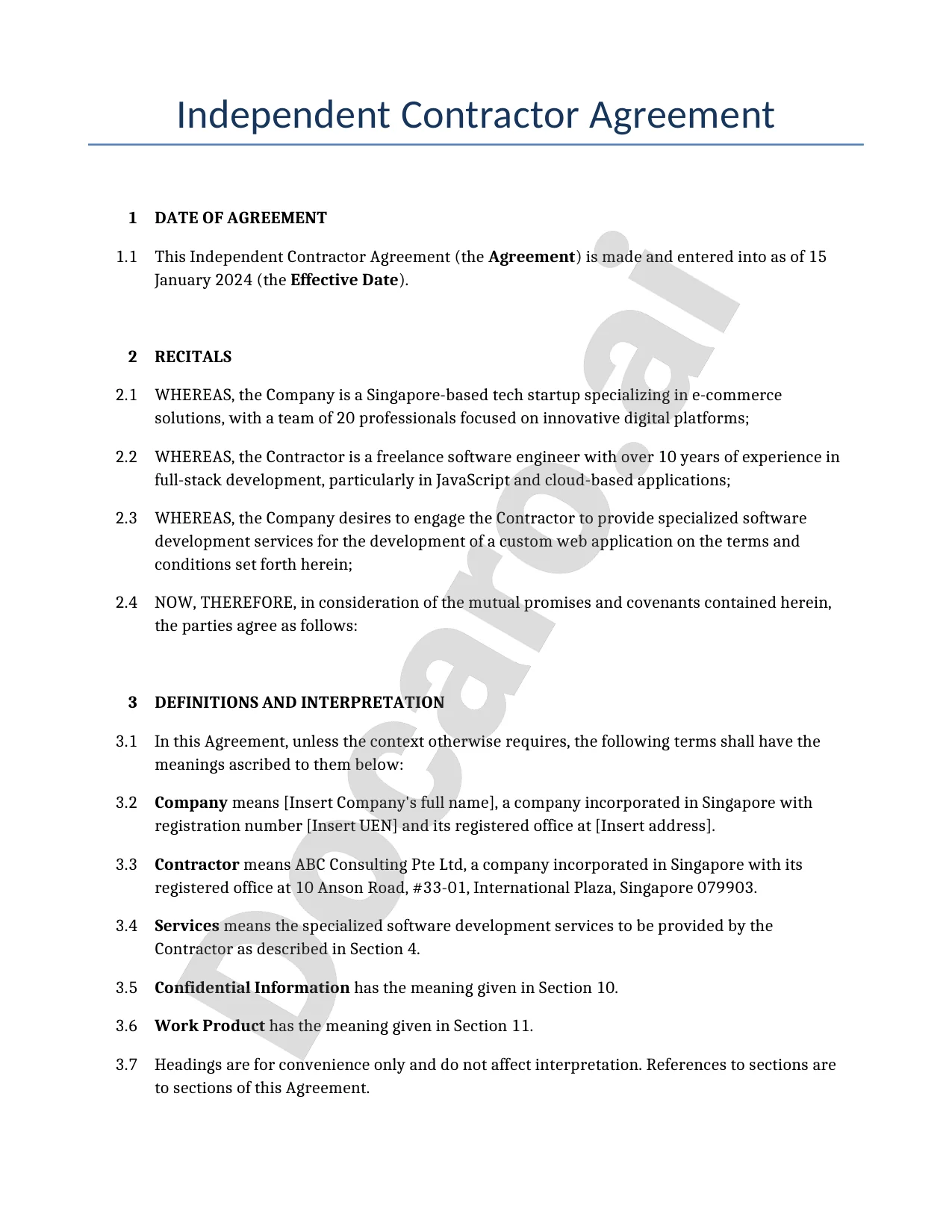
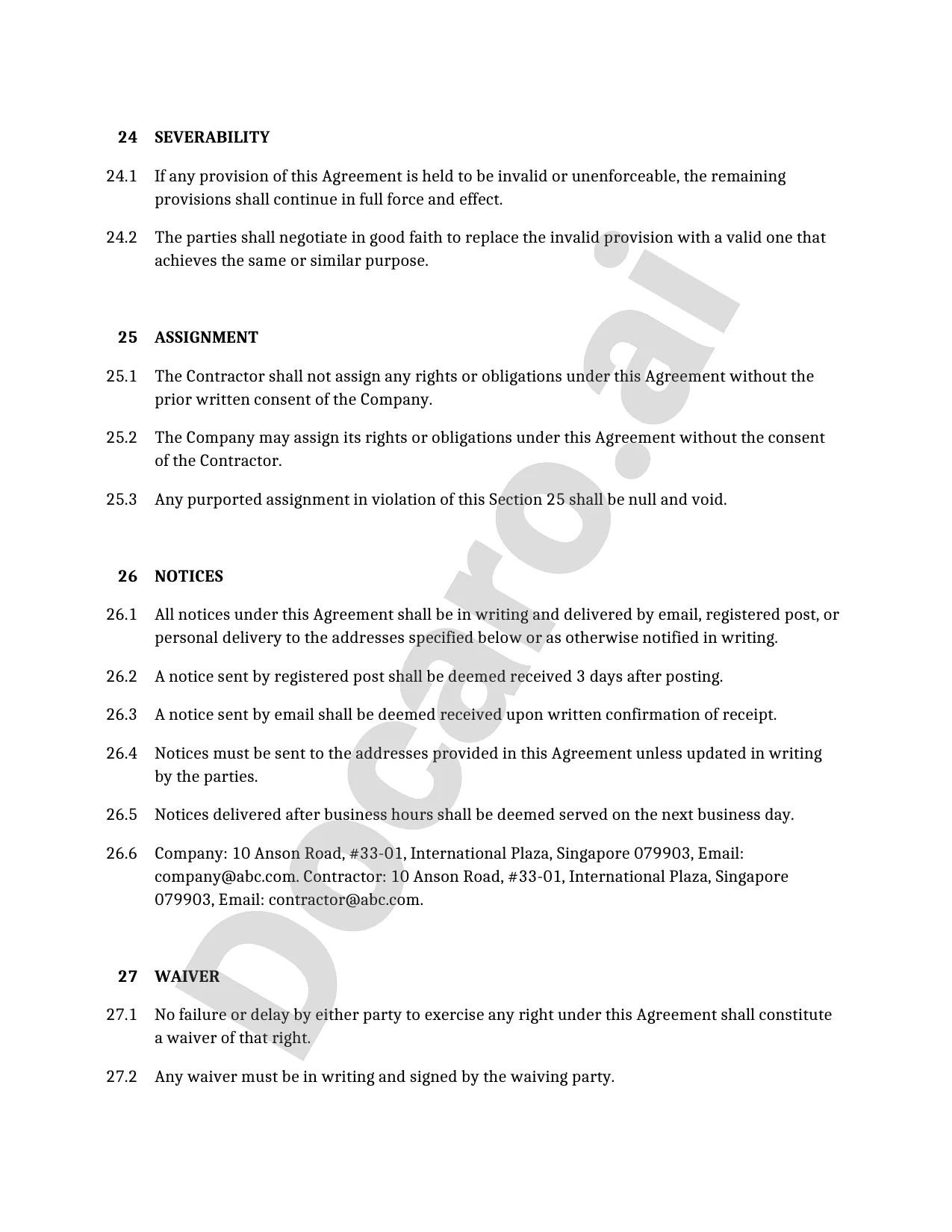
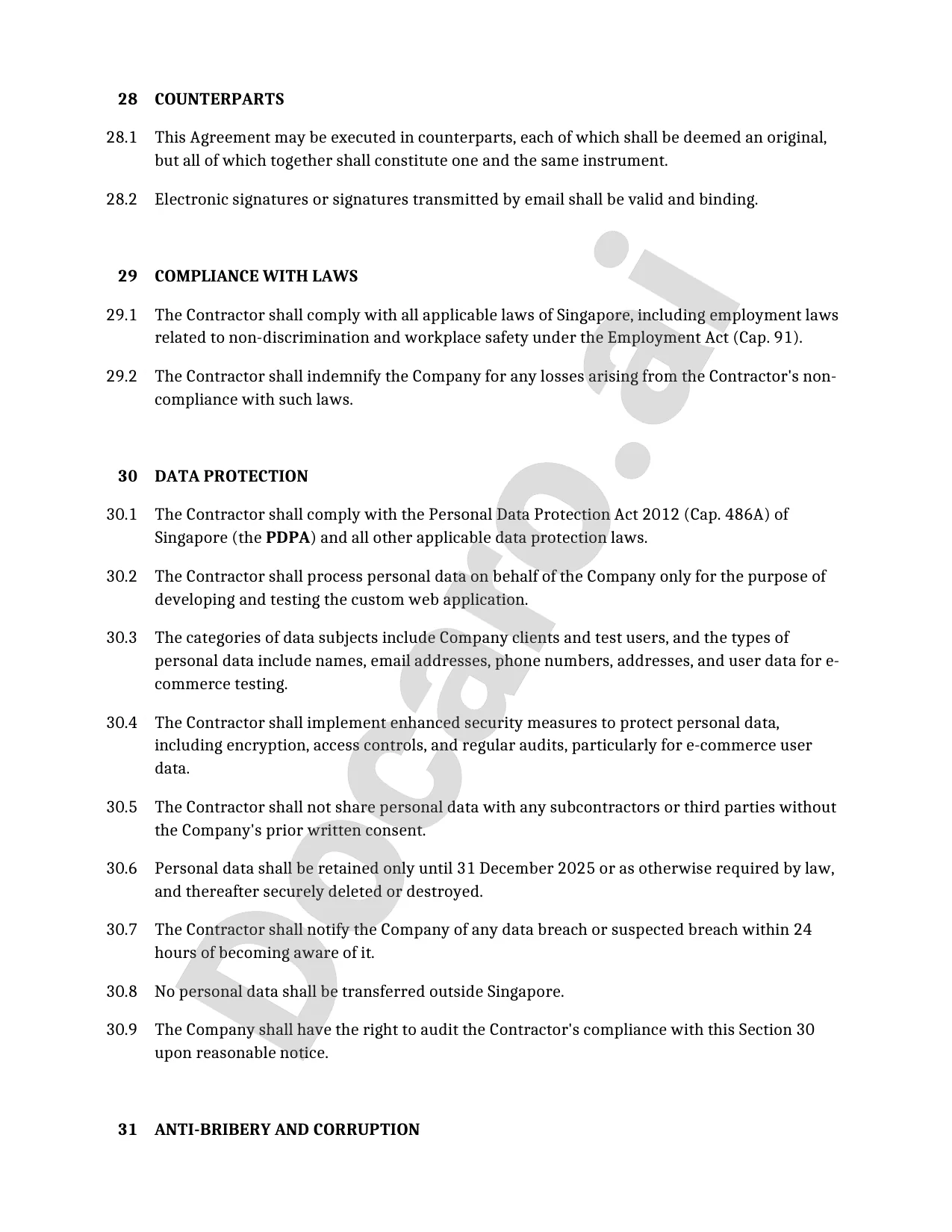
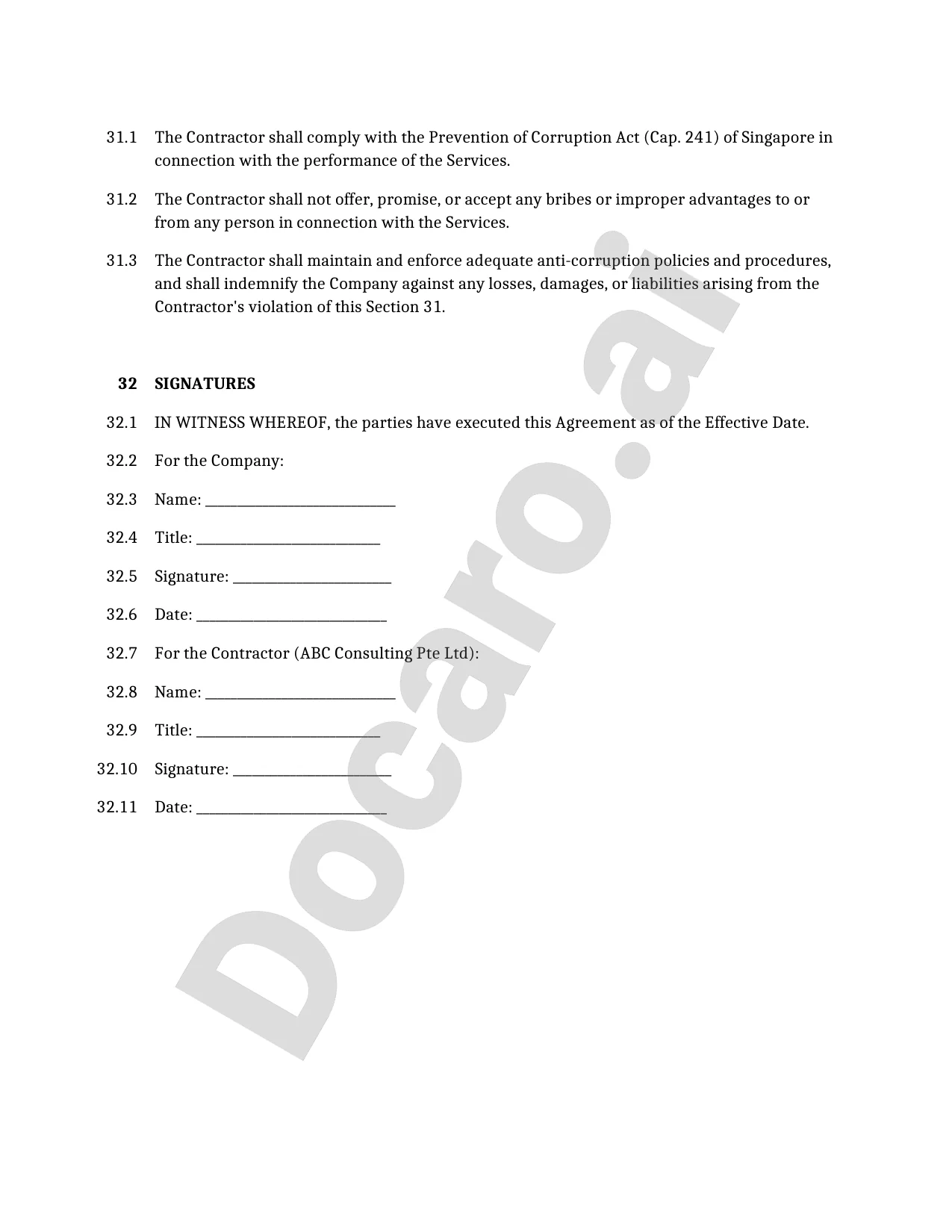
An Independent Contractor Agreement is a legal document that outlines the terms between a client and a freelancer or contractor providing services on a non-employee basis. Under Singapore law, it defines the scope of work, payment terms, duration, and responsibilities, ensuring clarity for both parties involved in contractor agreements in Singapore.
The primary purpose of an Independent Contractor Agreement is to establish a clear business relationship, protecting the interests of businesses and contractors by specifying deliverables, confidentiality, and dispute resolution mechanisms. This agreement helps prevent misunderstandings and legal disputes by setting explicit expectations from the outset.
In contrast to an employment contract under Singapore law, an Independent Contractor Agreement does not create an employer-employee relationship, meaning contractors are not entitled to benefits like paid leave, CPF contributions, or employee protections under the Employment Act. Businesses classify workers as independent contractors to maintain flexibility, while contractors enjoy greater autonomy in how they perform their tasks.
- Importance for businesses: It allows companies to engage specialized skills without long-term commitments, reducing overhead costs and enhancing operational agility in Singapore's dynamic market.
- Importance for freelancers: It provides a structured framework for securing payments and rights, empowering independent professionals to build sustainable careers.
For tailored Independent Contractor Agreements in Singapore, consider using Docaro's AI-generated legal documents to create bespoke solutions that fit your specific needs.
When should you use an Independent Contractor Agreement in Singapore?
An Independent Contractor Agreement is ideal for short-term projects, where businesses need temporary expertise without long-term commitments. This arrangement allows companies to engage skilled professionals for specific tasks, such as developing a software prototype or conducting market research, ensuring focused results without ongoing employment obligations.
For specialized skills, an Independent Contractor Agreement provides access to niche talents like graphic design or legal consulting on a project basis. It enables organizations to tap into high-level expertise that may not be available in-house, fostering innovation and efficiency for unique business needs.
Flexible work arrangements benefit from this agreement, supporting remote or part-time collaborations that adapt to fluctuating workloads. Businesses can scale their workforce dynamically, hiring contractors for peak seasons or overflow tasks while maintaining operational agility.
- Cost savings on benefits: Companies avoid expenses like health insurance, paid leave, and payroll taxes associated with full-time employees.
- Flexibility: Contractors offer scalable support, allowing quick adjustments to project scopes without the rigidity of traditional hiring.
To ensure tailored protection, opt for bespoke AI-generated legal documents via Docaro, customizing agreements to specific project details and compliance requirements.
When should you avoid using an Independent Contractor Agreement?
This independent contractor agreement should not be used in situations where the working relationship closely resembles employment under Singapore's Employment Act. For instance, avoid it if the arrangement involves ongoing work assignments over an extended period, as this could lead to misclassification risks and potential reclassification claims by authorities or the worker.
Key indicators that signal an employment-like dynamic include the principal exerting control over working hours, dictating specific methods of task completion, or providing necessary tools and equipment. Such elements undermine the autonomy expected in a true contractor setup, increasing the likelihood of legal challenges under the Act, which covers basic entitlements like paid leave and overtime.
To mitigate legal pitfalls, assess whether the role demands fixed schedules or integrates the worker into the business's core operations, as these factors often trigger reclassification. Instead of relying on generic templates, opt for bespoke AI-generated legal documents via Docaro to tailor agreements precisely to your circumstances and comply with Singaporean law.
- Steer clear of agreements with indefinite duration or performance-based metrics that mimic salary structures.
- Consult professionals to evaluate control levels and ensure the contract emphasizes independence.
What are the key rights and obligations of the parties in an Independent Contractor Agreement?
In Singapore contract law, the hiring party holds primary obligations to provide clear project specifications and make timely payments as per agreed terms, typically outlined in a bespoke independent contractor agreement. The contractor, in turn, must deliver services with due diligence and skill, adhering to the scope of work while maintaining independence in work methods, meaning they control how tasks are performed without direct supervision from the hiring party.
Payment terms under Singapore's principles, governed by the Contracts Act, require the hiring party to compensate the contractor fairly, often on milestones or completion, with disputes resolved via implied good faith. Confidentiality clauses bind both parties to protect sensitive information, enforceable as equitable duties, while non-compete clauses must be reasonable in scope, duration, and geography to avoid being void as restraints of trade under common law precedents like Man Financial (S) Pte Ltd v Wong Bark Chuan David.
To ensure compliance with these Singapore contract law principles, parties should opt for bespoke AI-generated legal documents using Docaro, tailored to specific needs rather than generic templates.
"The hallmark of an independent contractor relationship is the clear delineation of autonomy in performing services, as emphasized in the Restatement (Second) of Agency § 220, to avoid misclassification disputes and ensure compliance with labor laws."
To protect your interests, consult a qualified legal professional and consider using Docaro for bespoke AI-generated legal documents tailored to your specific needs.
What key clauses should be included in an Independent Contractor Agreement in Singapore?
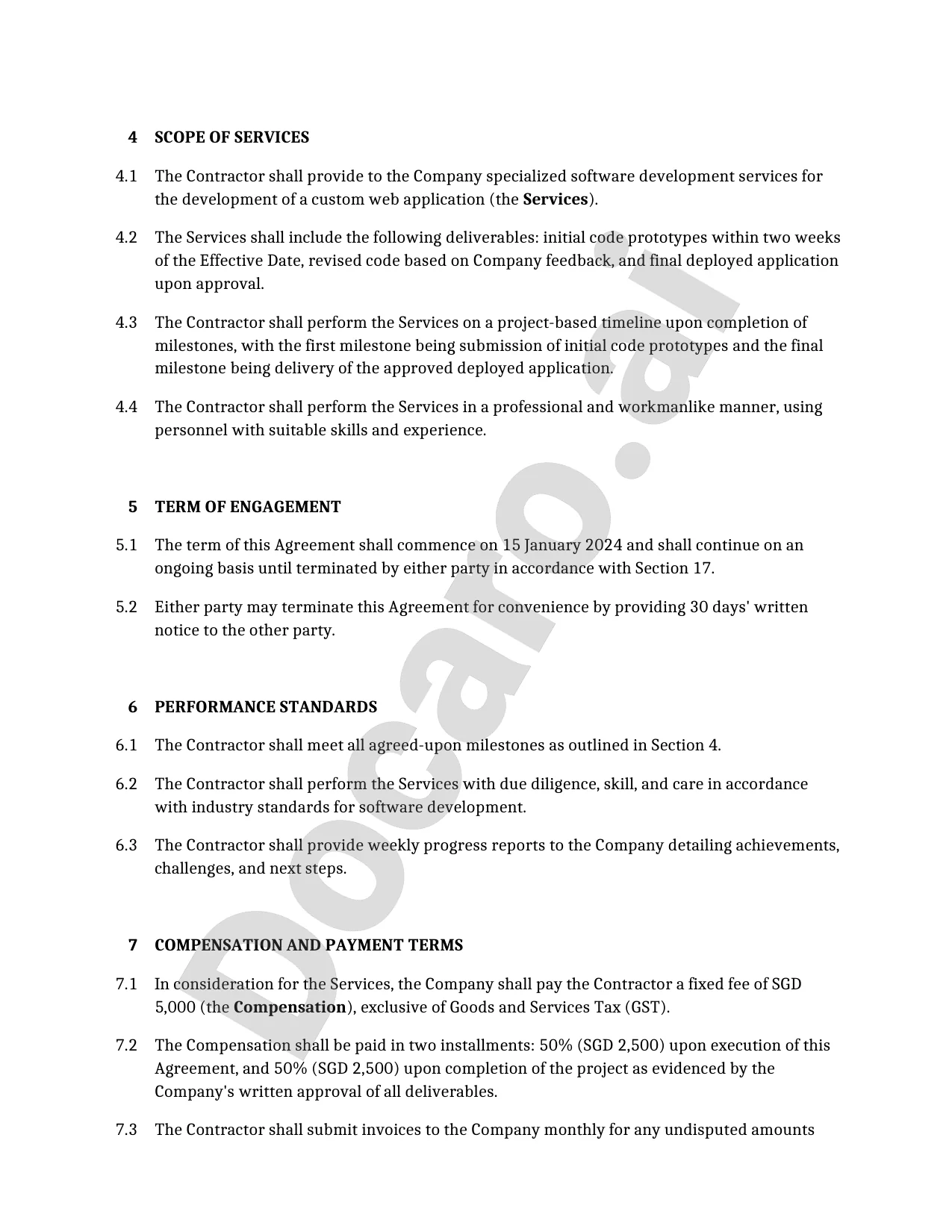
In an independent contractor agreement in Singapore, the scope of work clause clearly defines the services to be provided, ensuring both parties understand expectations and deliverables to avoid disputes.
The payment terms outline compensation details, including rates, schedules, and invoicing procedures, which are crucial for financial clarity in contractor relationships.
Duration and termination clauses specify the agreement's timeframe and conditions for ending it, such as notice periods or breach scenarios, protecting both the contractor and hiring party.
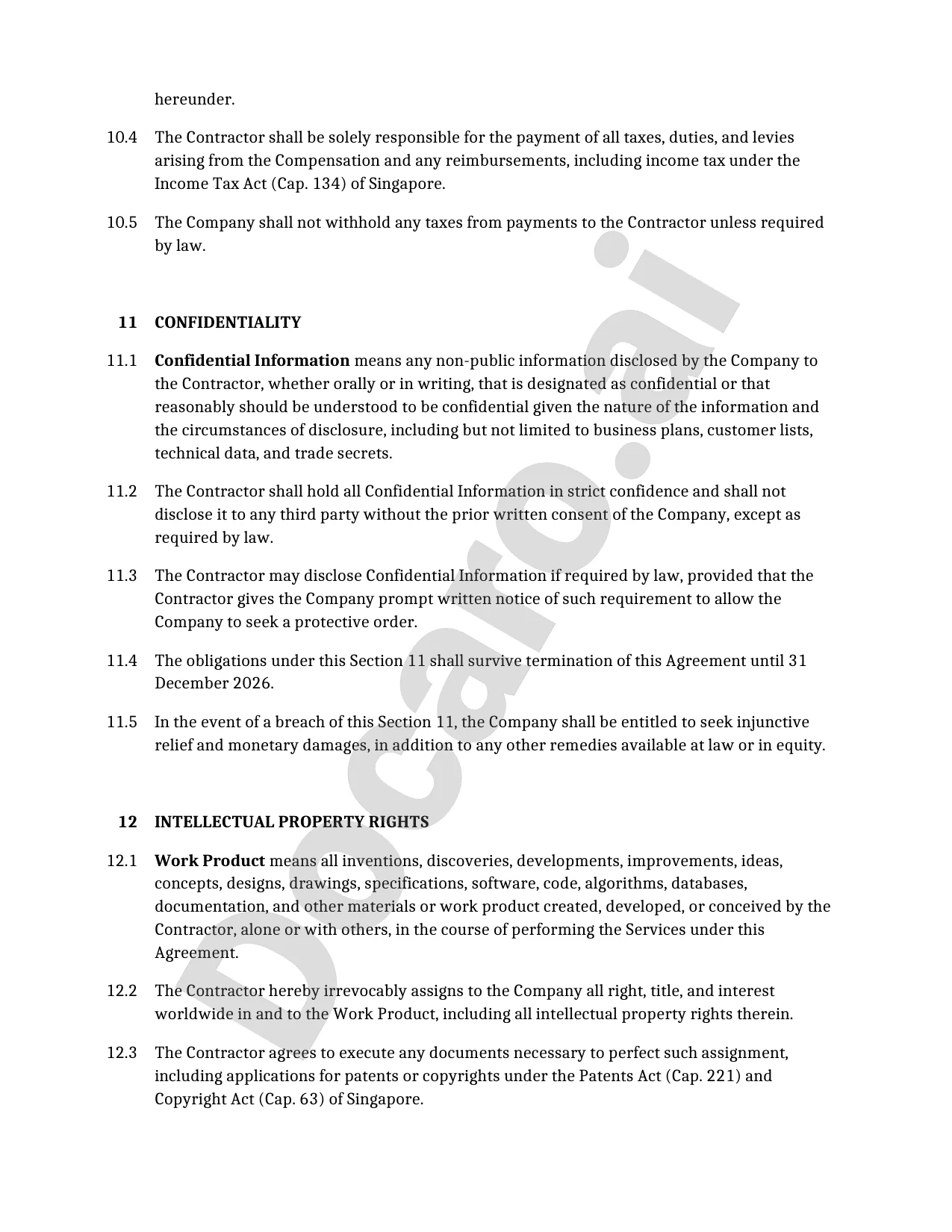
Key elements like intellectual property rights and dispute resolution address ownership of created work and methods for resolving conflicts, often through mediation or arbitration under Singapore law. For in-depth guidance on these key clauses in independent contractor agreements, explore essential clauses overview. Opt for bespoke AI-generated legal documents via Docaro to tailor agreements precisely to your needs.
Are there any key exclusions to consider?
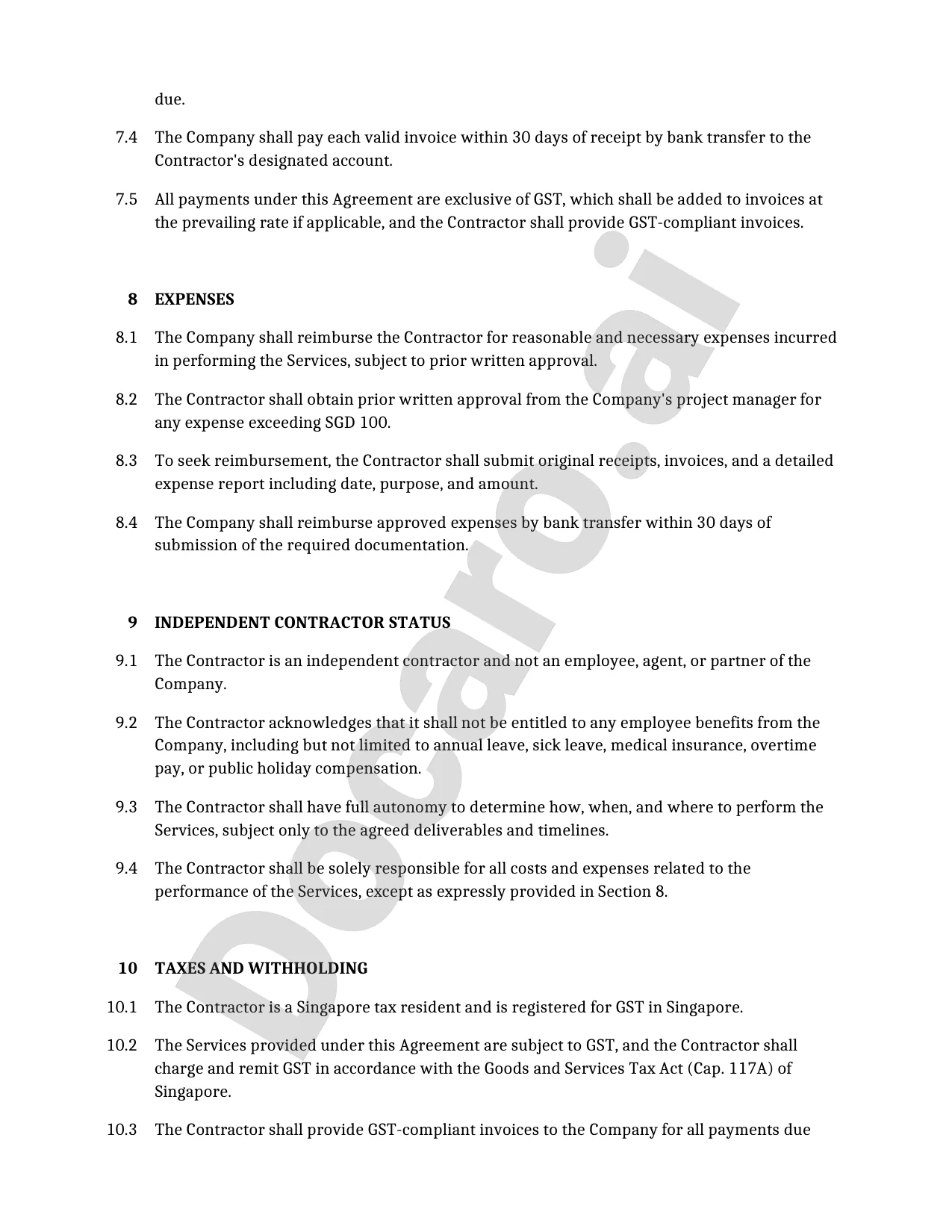
In independent contractor agreements, it is essential to clearly outline exclusions from employee benefits to avoid any misunderstanding of the working relationship. For instance, contractors are not entitled to employer contributions to schemes like CPF, nor do they receive paid leave, sick days, or other statutory employee perks, ensuring the arrangement remains strictly service-based rather than employment-oriented.
To prevent implications of employment status, contracts must explicitly state that the individual operates as an independent contractor, with no agency or partnership formed, and all work is performed at their own discretion without direct supervision. This distinction safeguards both parties from unintended legal liabilities, such as claims for wrongful dismissal or benefits entitlements.
Tax withholding differs significantly between employees and contractors; employers must deduct and remit income tax and social contributions for staff, whereas contractors handle their own tax obligations independently. Including a clause requiring contractors to manage their taxes reinforces this separation and complies with relevant regulations.
For robust protection, opt for bespoke AI-generated legal documents via Docaro platform, tailored to your specific needs rather than relying on generic forms.

How do recent or upcoming legal changes affect Independent Contractor Agreements in Singapore?
In 2023, Singapore's Employment Act saw no major updates specifically targeting contractor classification, maintaining the distinction between contracts of service (employees) and contracts for service (independent contractors) based on factors like control, payment structure, and financial liability. Similarly, the Inland Revenue Authority of Singapore (IRAS) guidelines on distinguishing employees from self-employed persons remained stable, emphasizing criteria such as regular wages versus negotiated fees and responsibility for business expenses.
The current framework provides stability for gig economy regulations in Singapore, with independent contractors excluded from Employment Act protections like paid leave and overtime, while self-employed individuals handle their own tax filings with IRAS. This stability supports flexible work arrangements without imposing new obligations on platforms or contractors as of 2023.
Looking ahead, significant changes are underway with the Platform Workers Act 2024, effective from January 1, 2025, which introduces a third category for gig workers in ride-hailing and delivery services, separate from employees and self-employed. Key provisions include mandatory CPF contributions phased in over five years, work injury compensation insurance, and fair trading practices to enhance protections without reclassifying workers.

What are the tax implications for Independent Contractors in Singapore?
As an independent contractor in Singapore, understanding key tax considerations is essential for compliance and financial planning. Singapore's tax system emphasizes self-assessment, where contractors must handle their own income tax filing without employer withholding.
The GST registration threshold applies if your annual taxable supplies exceed S$1 million; below this, registration is optional but can allow input tax credits. For income tax filing, contractors report earnings via the Inland Revenue Authority of Singapore (IRAS) portal by April 15 annually, with progressive rates from 0% to 22% based on chargeable income.
Unlike employees, independent contractors have no CPF obligations, meaning no mandatory contributions to the Central Provident Fund for retirement, healthcare, or housing. For in-depth tax advice on independent contractors in Singapore, explore our detailed guide here.
How can you draft a compliant Independent Contractor Agreement under Singapore law?
1
Assess Relationship Type
Evaluate the parties' relationship and objectives to ensure the agreement aligns with specific needs using Docaro's AI tools.
2
Outline Key Terms
Define essential terms like duration, obligations, and payments tailored to your scenario via Docaro's bespoke generation.
3
Include Mandatory Clauses
Incorporate required provisions such as confidentiality, termination, and dispute resolution customized by Docaro's AI.
4
Review with Legal Professional
Have the Docaro-generated document reviewed by a lawyer to confirm compliance and accuracy.
When drafting contracts in Singapore, prioritize clarity and specificity to ensure enforceability under the Singapore Contracts Act, which governs essential elements like offer, acceptance, and consideration. Always incorporate common law principles such as good faith and certainty of terms to mitigate disputes.
For independent contractor agreements, focus on defining scope of work, payment terms, and confidentiality clauses to comply with Singapore's legal framework, avoiding misclassification as employees. Refer to our guide on drafting compliant independent contractor agreements under Singapore law for detailed tips.
- Use bespoke AI-generated legal documents via Docaro to tailor agreements precisely to your needs, ensuring full compliance without relying on generic templates.
- Include dispute resolution mechanisms, such as arbitration, aligned with Singapore's pro-arbitration stance under common law.
- Regularly review contracts for updates to legislation, maintaining robust contract drafting best practices.
You Might Also Be Interested In
A Legally Binding Agreement Outlining The Terms And Conditions Of Employment Between An Employer And Employee.
A Legal Contract Between An Employer And Employee That Prohibits The Disclosure Of Confidential Information To Protect Business Secrets.
A Contractual Provision Restricting An Individual From Engaging In Competitive Activities Against Their Former Employer For A Specified Period And Area.
A Formal Document From An Employer Extending A Job Offer With Key Employment Terms.
A Document Outlining Company Policies, Employee Rights, And Workplace Rules.
A Formal Notice From An Employer To An Employee Stating The End Of Their Employment Contract.
A Contract Outlining Terms Of An Internship, Including Duties, Duration, Compensation, And Confidentiality.
A Legal Contract Outlining Terms For Employees Working Remotely, Including Schedules, Responsibilities, And Support Provisions.
A Legal Contract That Requires Employees To Keep Confidential Information Private And Not Disclose It To Unauthorized Parties.
A Legal Document Outlining The Terms Of Engagement Between A Freelancer And Client For Specific Services.
A Flexible Employment Agreement Where Workers Are Not Guaranteed Minimum Hours And Are Called Upon As Needed By The Employer.
A Formal Document Notifying An Employer Of An Employee's Intent To Resign From Their Position, Typically Including The Last Working Day.
A Written Endorsement By A Person Of Authority Attesting To Another's Skills, Character, Or Qualifications For Employment, Education, Or Legal Purposes.