Why Free Templates Can Be Risky for Notice to Quit
Free Notice to Quit templates are often generic and not tailored to Singapore's tenancy laws, which vary by lease type and jurisdiction. Using incorrect wording or outdated formats can fail to meet statutory requirements, leading to invalid notices, prolonged disputes, or unintended extensions of tenancy rights that complicate eviction processes.
Our AI-generated bespoke Notice to Quit is customized to your specific situation, incorporating Singapore's legal standards for residential tenancies. It ensures precise, compliant language that clearly communicates termination terms, minimizes risks of challenges, and streamlines the eviction process for faster resolution.
What is a Notice to Quit in Singapore?
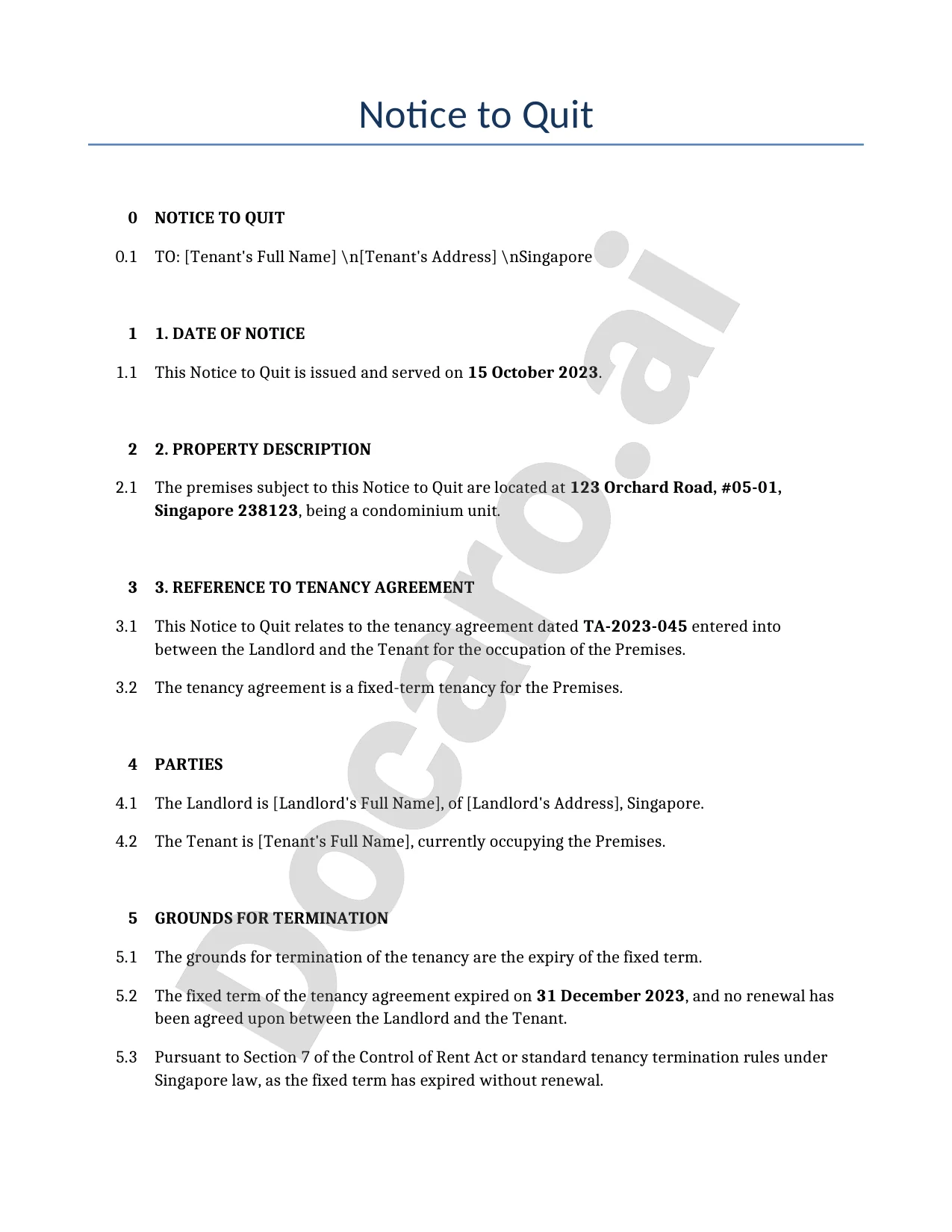
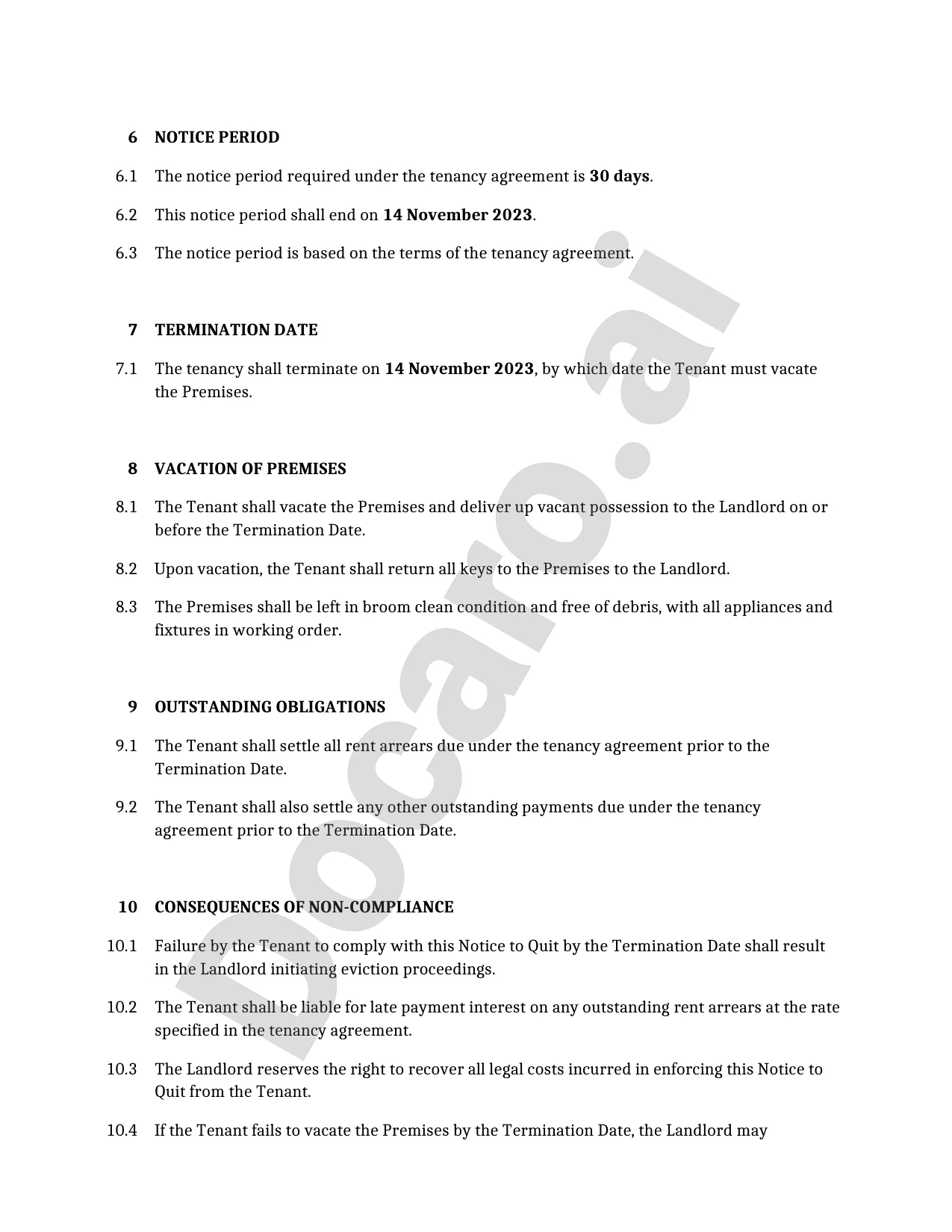
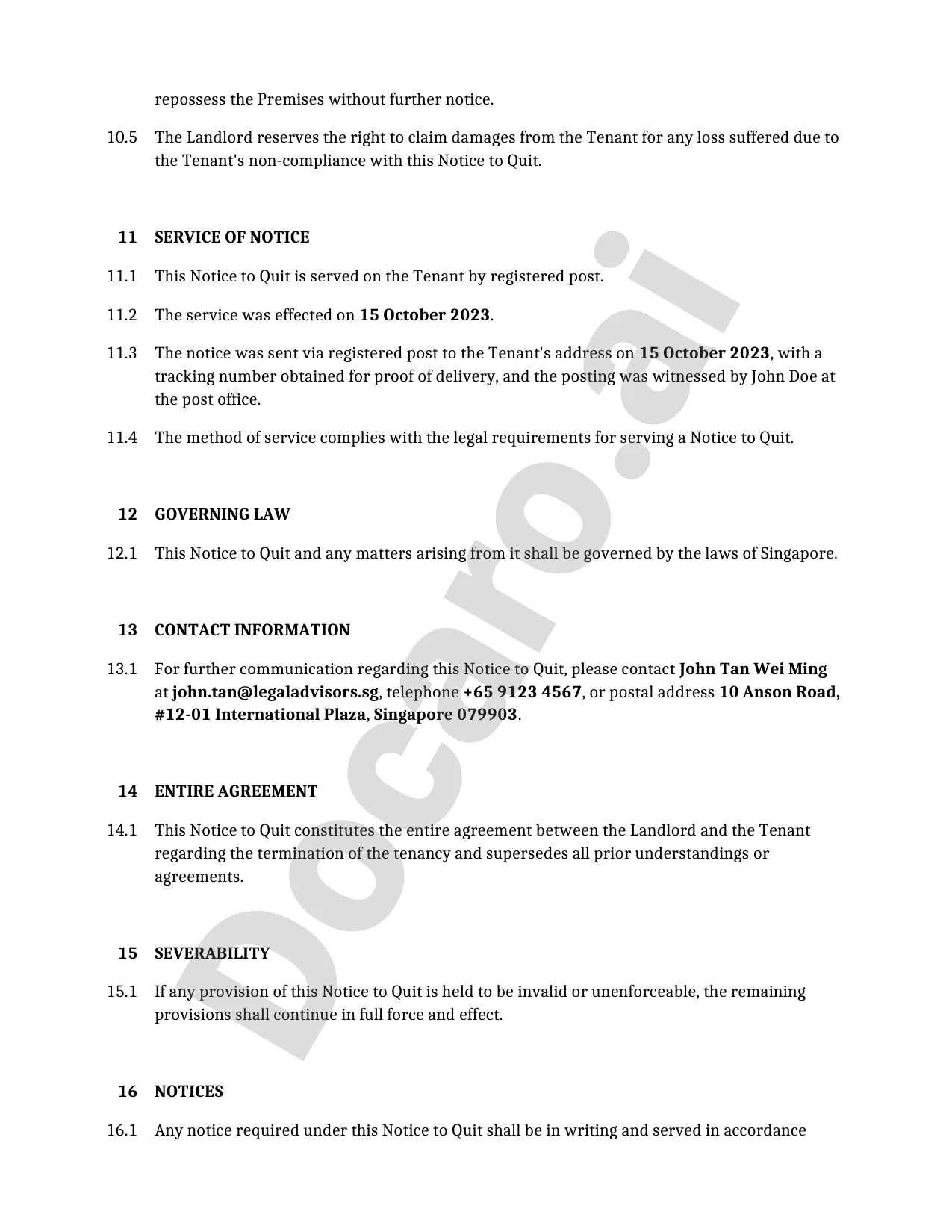
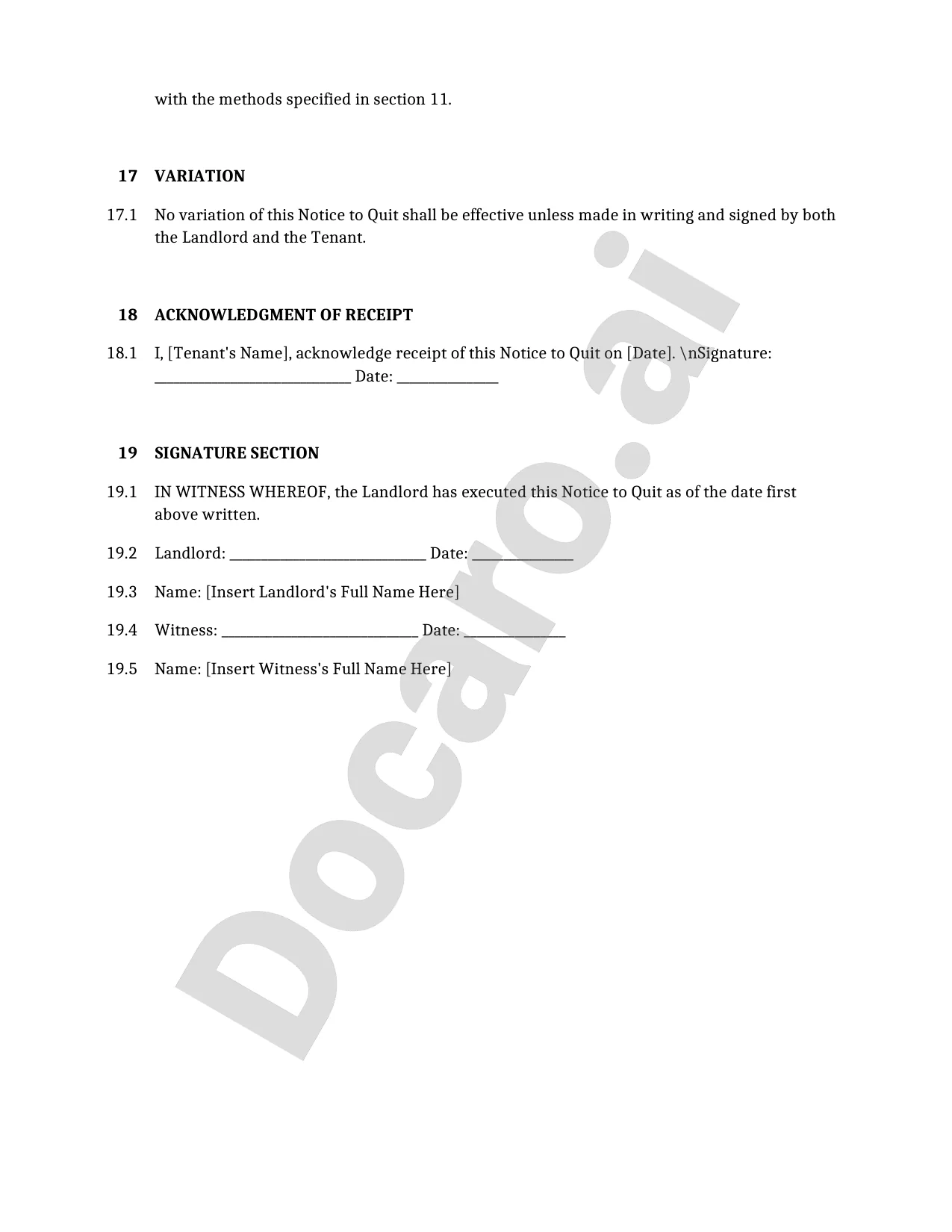
In Singaporean tenancy law, a Notice to Quit serves as a formal written notification from either the landlord or tenant to terminate a lease agreement at the end of the tenancy period. This document specifies the exact date by which the tenant must vacate the property, ensuring a clear and legally binding end to the rental arrangement.
The primary purpose of a Notice to Quit is to provide advance warning for lease termination, preventing disputes and allowing time for arrangements like finding new accommodation or re-letting the property. It is particularly relevant in standard tenancy agreements governed by common law principles in Singapore, where the notice period typically aligns with the rental term, such as one month for monthly tenancies.
Under legislation like the Control of Rent Act, which applies to certain older or controlled properties, specific rules may dictate the notice requirements for eviction or termination. For most modern residential leases, however, the notice follows the terms outlined in the individual tenancy agreement, emphasizing the need for compliance to avoid legal challenges.
- Always consult a legal professional or use bespoke AI-generated documents from Docaro platform for tailored Notice to Quit in Singapore tenancy law.
- Ensure the notice is served correctly via registered post or in person to validate its legal effect.
When should you use a Notice to Quit?
A Notice to Quit is a formal document used by landlords to terminate a tenancy agreement, essential in scenarios like the end of lease term where the rental period expires and the tenant must vacate. Tenants may also issue one for breach of contract by the landlord, such as failure to maintain the property, ensuring clear communication of intent to end the tenancy.
It should not be used in cases of protected tenancies under acts like the Rent Act 1977 in the UK, where eviction requires court proceedings due to long-term occupancy rights. Similarly, avoid it for assured shorthold tenancies without proper grounds, as this could lead to legal invalidation.
For reliable eviction processes, generate bespoke legal documents using Docaro AI tailored to your specific situation, rather than generic forms.
In Singapore, under Section 11 of the Control of Rent Act, proper notice periods—typically one month for periodic tenancies—are essential to prevent unlawful evictions and resultant disputes, as affirmed by legal expert Professor Kevin Tan: "Adhering strictly to statutory notice requirements safeguards both landlords and tenants from costly litigation over premature terminations."
To ensure compliance, generate bespoke tenancy agreements tailored to your specific circumstances using Docaro's AI-powered legal document creation tools.
What are the key requirements for a valid Notice to Quit?
A Notice to Quit in Singapore is a formal document required under the Control of Rent Act or tenancy agreements to terminate a lease, ensuring both landlords and tenants follow legal eviction processes. For essential requirements, the notice must clearly state the termination date, reasons for quitting, and comply with the tenancy type's notice period, such as 14 days for periodic tenancies or one to three months for fixed-term leases depending on the agreement length.
- Fixed-term tenancy (less than one year): At least half the rental period, minimum one month.
- Fixed-term tenancy (one to three years): One month's notice.
- Fixed-term tenancy (over three years): Three months' notice.
- Monthly or periodic tenancy: One month's notice, unless specified otherwise.
The format of the Notice to Quit should be in writing, including tenant and landlord details, property address, and a clear termination statement, while delivery methods include personal service, registered post, or email if agreed in the tenancy. For a comprehensive guide on the process, explore Understanding the Notice to Quit in Singapore.
To ensure compliance and avoid disputes, generate bespoke legal documents using Docaro's AI tools tailored to your specific tenancy situation in Singapore.
1
Review Tenancy Agreement
Examine the tenancy agreement for termination clauses, notice period, and grounds for eviction to ensure compliance with Singapore law.
2
Generate Notice to Quit
Use Docaro to create a bespoke AI-generated Notice to Quit tailored to your specific tenancy details and legal requirements.
3
Serve the Notice
Deliver the notice via registered post or hand-delivery to the tenant, obtaining proof of service as per Singapore regulations.
4
Confirm Receipt
Verify tenant's receipt through acknowledgment or postal tracking, and retain records for potential court proceedings.
What key clauses should be included in a Notice to Quit?
A Notice to Quit in Singapore must clearly state the termination date of the tenancy, specifying the exact date by which the tenant must vacate the property to ensure compliance with the Control of Rent Act or lease terms. This date should provide the required notice period, typically one month for periodic tenancies, and be phrased unambiguously to avoid disputes.
If applicable, the notice should include reasons for termination, such as breach of lease conditions or non-payment of rent, though under Singapore law, landlords are not always required to provide reasons for fixed-term leases ending naturally. Detailing reasons helps maintain transparency and supports legal enforceability if the matter escalates to the Small Claims Tribunals.
Essential instructions for vacating the property must outline steps like returning keys, cleaning the premises, and settling any outstanding utilities or damages, all while adhering to Singapore's tenancy laws. For precise, customized documents, consider using Docaro AI legal generation to create bespoke notices tailored to your situation.
- Ensure the notice is served via registered post or hand-delivery for proof of receipt.
- Include landlord and tenant contact details for clear communication.
- Advise seeking legal advice if the tenancy involves protected tenancies under the Tenancy Agreement Act.
What are the rights and obligations of landlords and tenants?
In Singapore, issuing a Notice to Quit allows landlords to terminate a tenancy agreement, obligating tenants to vacate the premises by the specified date, typically one month for month-to-month tenancies under the Control of Rent Act. Tenants must comply to avoid eviction proceedings, while landlords are required to provide valid reasons for termination if the tenancy is fixed-term, ensuring fair notice periods to protect tenant rights.
Key tenant rights include the right to quiet enjoyment, meaning landlords must not interfere with the tenant's peaceful occupation during the notice period, free from unauthorized entry or harassment. For obligations, tenants should leave the property in good condition, addressing any damages beyond normal wear and tear, and landlords have a duty to return the security deposit promptly after inspection, deducting only for legitimate repairs or unpaid rent.
Understanding these rights and obligations is crucial for both parties in tenancy termination. For deeper insights into the legal implications of a Notice to Quit for tenants and landlords in Singapore, explore tailored guidance. When handling such matters, opt for bespoke AI-generated legal documents via Docaro to ensure they fit your specific situation.
Are there any key exclusions or exceptions?
In Singapore tenancy laws, a Notice to Quit may not apply in government-subsidized housing such as HDB flats under the Housing and Development Board scheme. Tenants in these properties are protected by specific regulations that require alternative dispute resolution through the Tribunal for the Maintenance and Strata Management or HDB's internal processes before eviction proceedings can commence.
Short-term licenses, often for stays under six months, exclude the application of formal tenancy agreements and thus a Notice to Quit under the Control of Rent Act or common law. These arrangements are treated as revocable permissions rather than leases, allowing landlords to terminate occupancy with shorter notice periods without invoking eviction notices.
Key exceptions include protected tenancies for elderly or low-income tenants in pre-1989 rentals, where eviction restrictions under the Landlord and Tenant Act apply. For precise guidance on Singapore rental laws, consult professionals or generate bespoke legal documents using Docaro AI to ensure compliance.
What recent legal changes affect Notice to Quit documents?
Singapore's residential tenancy laws, including Notice to Quit procedures, are governed by common law principles under the Conveyancing and Law of Property Act rather than a dedicated Residential Tenancies Act.
As of March 2026, there are no recent or upcoming amendments specifically targeting Notice to Quit procedures for residential tenancies. Standard notice periods, typically one month for monthly tenancies, remain unchanged and are primarily dictated by the tenancy agreement terms.
Landlords and tenants should ensure their agreements clearly outline termination rights to avoid disputes. For customized legal documents tailored to specific needs, consider using bespoke AI-generated options from Docaro to maintain compliance with current Singapore rental laws.
How can you avoid common pitfalls with Notice to Quit?
In Singapore, a common error in handling a Notice to Quit is applying incorrect notice periods, such as assuming a uniform 14-day period for all tenancies when periodic tenancies require one month's notice unless specified otherwise in the agreement.
Improper service methods also frequently occur, like delivering the notice via email without prior consent or failing to use registered post, which can render the notice invalid and lead to legal disputes.
To prevent these tenancy termination errors, always verify the exact notice period in the tenancy agreement and opt for bespoke AI-generated legal documents using Docaro for accurate customization. For detailed guidance, explore Common Mistakes to Avoid When Serving a Notice to Quit in Singapore.
- Double-check service requirements under the Control of Rent Act to ensure compliance.
- Consult professionals for complex cases to avoid eviction challenges.
1
Understand the Notice
Review the Notice to Quit carefully to grasp its terms, deadlines, and legal basis under Singapore law. Consult a professional if unclear.
2
Seek Legal Advice
Engage a qualified lawyer specializing in Singapore tenancy law to assess your rights and obligations promptly.
3
Document Everything
Keep records of all communications, payments, and property condition to support your position during disputes.
4
Generate Bespoke Documents
Use Docaro to create customized AI-generated legal responses or agreements tailored to your specific Notice to Quit situation.
You Might Also Be Interested In
A Legal Contract Between A Landlord And Tenant Outlining The Terms For Renting A Residential Property In Singapore.
A Legal Contract Outlining The Terms For Renting A Specific Room Within A Shared Property, Including Rent, Duration, And Tenant Responsibilities.
A Legal Contract Outlining The Terms Under Which A Lodger Rents A Room In The Landlord's Home, Including Rent, Duration, And Responsibilities.
A Legal Document That Extends The Term Of An Existing Residential Tenancy Between Landlord And Tenant Under Singapore Law.
A Formal Written Notification From A Landlord To A Tenant Announcing An Upcoming Increase In Rent Amount, Typically Specifying The New Rate And Effective Date.
A Document Acknowledging Receipt Of A Security Deposit, Typically Used In Rental Agreements To Protect Against Damages Or Unpaid Rent.
A Legal Document Recording The State Of A Rental Property At The Start And End Of A Tenancy To Protect Both Landlord And Tenant From Disputes Over Damages.
A Formal Notice Served By A Landlord Or Tenant To Terminate A Tenancy Agreement At The End Of The Lease Term.
A Legal Contract Outlining Terms For Sharing A Residential Property Among Co-tenants In Singapore.
A Document Used To Record The Condition Of A Rental Property At The Start And End Of A Tenancy To Assess Damages And Responsibilities.
A Form Submitted By Prospective Tenants To Apply For Renting A Residential Property, Including Personal And Financial Details For Landlord Review.
A Legal Document Outlining The Rights And Obligations Of Property Owners Regarding A Shared Wall Between Adjacent Properties.
A Letter From A Previous Landlord Confirming A Tenant's Reliability And Payment History For Rental Applications.
A Corporate Document Outlining Internal Policies, Procedures, And Guidelines For Employees.