Docaro

AI Generated Employee Handbook for use in Singapore
PDF & Word - 2026 Updated

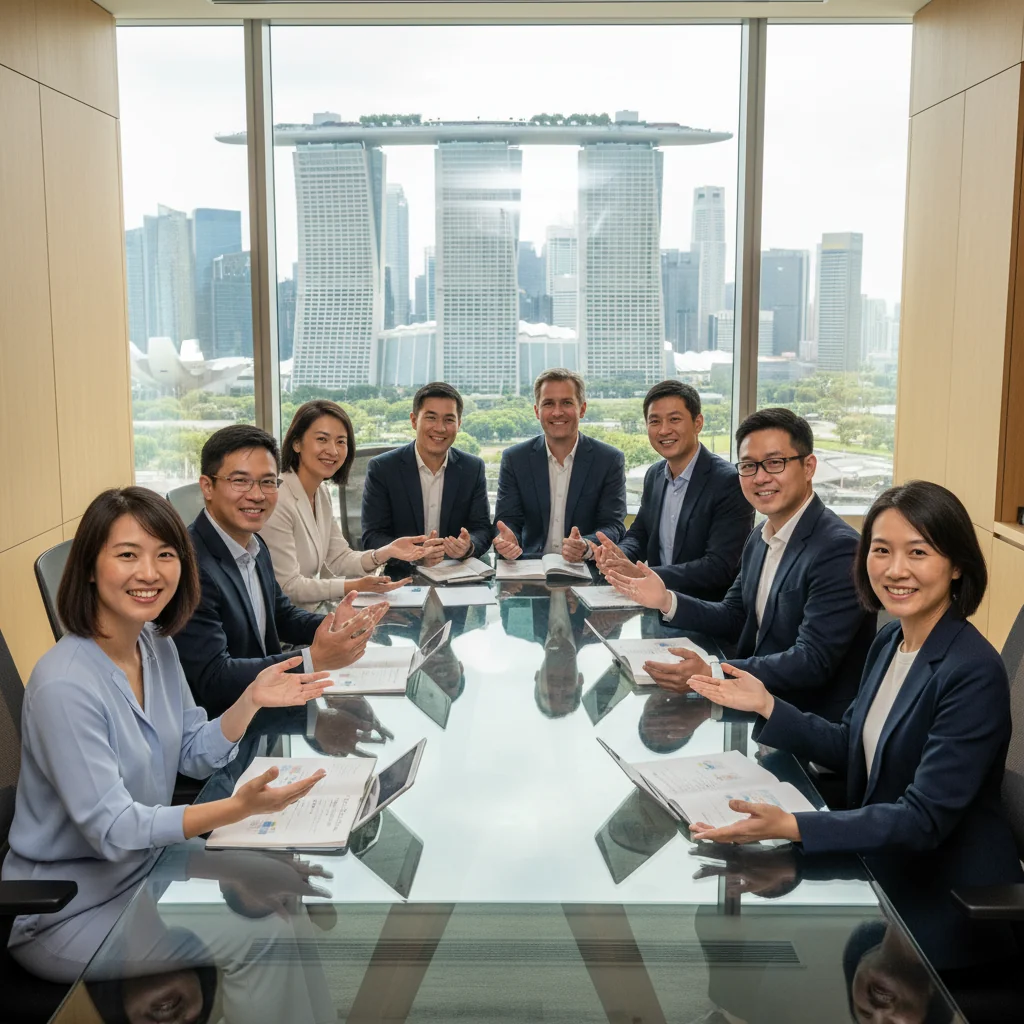
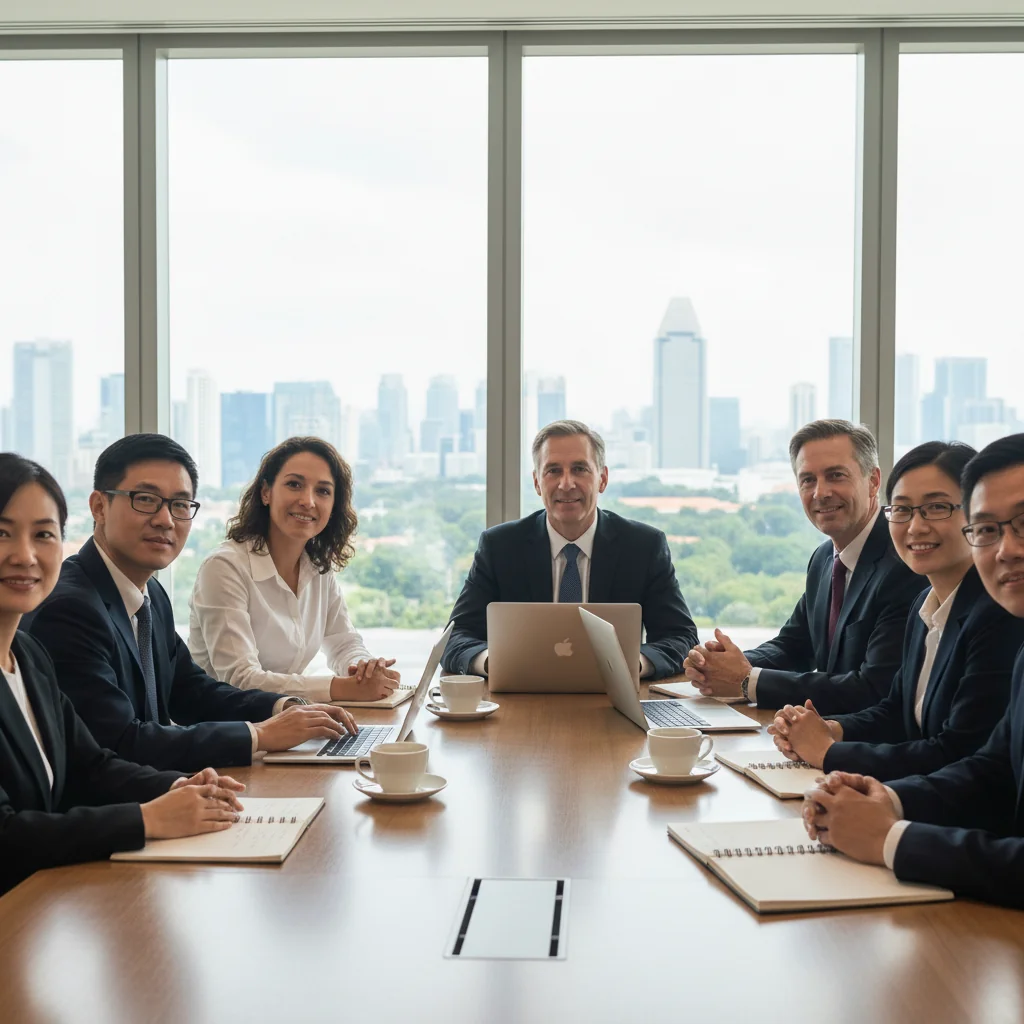
A photorealistic image depicting a professional office environment in Singapore, showing diverse adult employees collaborating in a modern workspace, symbolizing the supportive policies outlined in an employee handbook. The scene includes adults only, no children, with elements like a city skyline view to evoke a Singaporean corporate setting.
Generate a customized AI employee handbook for Singapore businesses, ensuring compliance with local employment laws and tailored house rules for your workforce.
Free instant document creation.
Compliant with Singapore law.
No sign up or monthly subscription.

Docaro Pricing

Basic
Free
Document Generation
No Sign Up
No Subscription
Download Watermarked PDF
Premium
$4.99 USD
Document Generation
No Sign Up
No Subscription
Download Clean PDF
Download Microsoft Word
Download HTML
Download Text
Email Document
Generate your document for free. Only pay if you like the result and need an un-watermarked version.

When Do You Need an Employee Handbook in Singapore?

  • Starting a New Business
    An employee handbook helps set clear expectations from day one, making it easier to onboard your first hires smoothly.
  • Expanding Your Team
    As your workforce grows, a handbook ensures everyone follows the same guidelines, reducing confusion and conflicts.
  • Updating Company Policies
    It's essential to revise your handbook when introducing new rules or responding to changes in your business environment.
  • Meeting Legal Requirements
    Singapore law requires certain employment information to be provided, and a well-drafted handbook covers these basics to keep you compliant.
  • Building a Positive Workplace
    A clear handbook promotes fairness and transparency, helping to create a supportive and productive work culture for all employees.
  • Protecting Your Business
    Having documented rules minimizes misunderstandings and potential disputes, safeguarding your company from unnecessary issues.

Singaporean Legal Rules for an Employee Handbook

  • Employment Act Coverage
    The handbook must follow the Employment Act for employees earning up to SGD 2,600 monthly, covering basics like work hours and leave.
  • Work Hours and Overtime
    Standard workweek is 44 hours, with overtime pay required for extra hours worked beyond that.
  • Annual Leave Entitlement
    Employees get at least 7 days of paid annual leave after 3 months of service, increasing with years worked.
  • Sick Leave Rules
    Paid sick leave starts at 14 days after 6 months, provided a medical certificate is shown.
  • Maternity and Paternity Leave
    Female employees receive 16 weeks of paid maternity leave, while fathers get 2 weeks of paternity leave.
  • Non-Discrimination Policy
    The handbook should promote equal treatment, avoiding bias based on race, gender, age, or religion as per the Tripartite Guidelines.
  • Termination Procedures
    Notice periods range from 1 day to 4 weeks depending on service length, or payment in lieu can be made.
  • Confidentiality and Data Protection
    Include rules on keeping company information private and complying with Singapore's Personal Data Protection Act.
  • Safety and Health Standards
    The handbook must outline workplace safety measures to meet the Workplace Safety and Health Act.
  • Grievance Handling
    Provide a clear process for employees to raise complaints, ensuring fair resolution.
Important

Using the wrong structure for house rules can inadvertently create binding legal obligations or fail to protect the landlord's rights under Singaporean tenancy laws.

What a Proper Employee Handbook Should Include

  • Company Policies
    Outline your business's core values, mission, and expectations for employee behavior to set the tone for workplace culture.
  • Work Hours and Attendance
    Specify standard working hours, break times, and procedures for reporting absences or lateness to ensure smooth operations.
  • Leave Entitlements
    Detail types of leave available, such as annual, sick, and parental leave, along with application processes and eligibility rules.
  • Compensation and Benefits
    Explain salary payment schedules, overtime pay, bonuses, and available benefits like health insurance or retirement plans.
  • Performance and Discipline
    Describe how performance is evaluated and the steps for addressing misconduct, including warnings and termination processes.
  • Health and Safety
    Cover workplace safety measures, emergency procedures, and responsibilities for maintaining a secure environment.
  • Anti-Harassment Rules
    Prohibit discrimination, bullying, or harassment and outline reporting mechanisms to foster a respectful workplace.
  • Confidentiality and Data Protection
    Instruct employees on handling sensitive information and complying with privacy laws to protect company and personal data.
  • Termination Procedures
    Clarify notice periods, final pay, and exit processes to manage employee departures fairly and clearly.
  • Grievance Handling
    Provide steps for employees to raise complaints and how they will be resolved to promote open communication.

Why Free Templates Can Be Risky for Employee Handbooks

Using free online templates for employee handbooks in Singapore can lead to significant issues. These generic documents often fail to comply with local employment laws, such as those under the Employment Act, potentially exposing your business to legal disputes, fines, or invalid clauses. They may overlook Singapore-specific requirements like mandatory leave entitlements, termination procedures, or workplace safety regulations, resulting in non-compliant policies that don't protect your company or employees effectively.

Our AI-powered generator creates bespoke employee handbooks tailored specifically to Singapore's legal framework and your business needs. By inputting key details about your company, it produces a customized document that ensures full compliance, incorporates relevant local laws, and addresses your unique operational requirements—delivering a professional, ready-to-use handbook that safeguards your interests without the hassle of starting from scratch.

Generate Your Bespoke Employee Handbook in 4 Easy Steps

1
Answer a Few Questions
Our AI guides you through the info required.
2
Generate Your Document
Docaro builds a bespoke document tailored specifically on your requirements.
3
Review & Edit
Review your document and submit any further requested changes.
4
Download & Sign
Download your ready to sign document as a PDF, Microsoft Word, Txt or HTML.

Why Use Our AI Employee Handbook Generator?

Fast Generation
Quickly generate a comprehensive Employee Handbook, eliminating the hassle and time associated with traditional document drafting.
Guided Process
Our user-friendly platform guides you step by step through each section of the document, providing context and guidance to ensure you provide all the necessary information for a complete and accurate Employee Handbook.
Safer Than Legal Templates
We never use legal templates. All documents are generated from first principles clause by clause, ensuring that your document is bespoke and tailored specifically to the information you provide. This results in a much safer and more accurate document than any legal template could provide.
Professionally Formatted
Your Employee Handbook will be formatted to professional standards, including headings, clause numbers and structured layout. No further editing is required. Download your document in PDF, Microsoft Word, TXT or HTML.
Compliance with Singaporean Law
Rest assured that all generated documents meet the latest legal standards and regulations of Singapore, enhancing trust and reliability.
Cost-Effective
Save money by generating legally sound Employee Handbook without the need for expensive legal services or consultations.
Get Started for Free - No Sign Up or Monthly Subscription Required
No payment or sign up is required to start generating your Employee Handbook. Generate and download a watermarked version of your document for free. Pay only if you want to remove the watermark and gain full access to your document. No monthly subscriptions or hidden fees. Pay once and use your document forever.
Need to Generate a Employee Handbook in a Different Country?
Choose country:

Free Example Employee Handbook Template

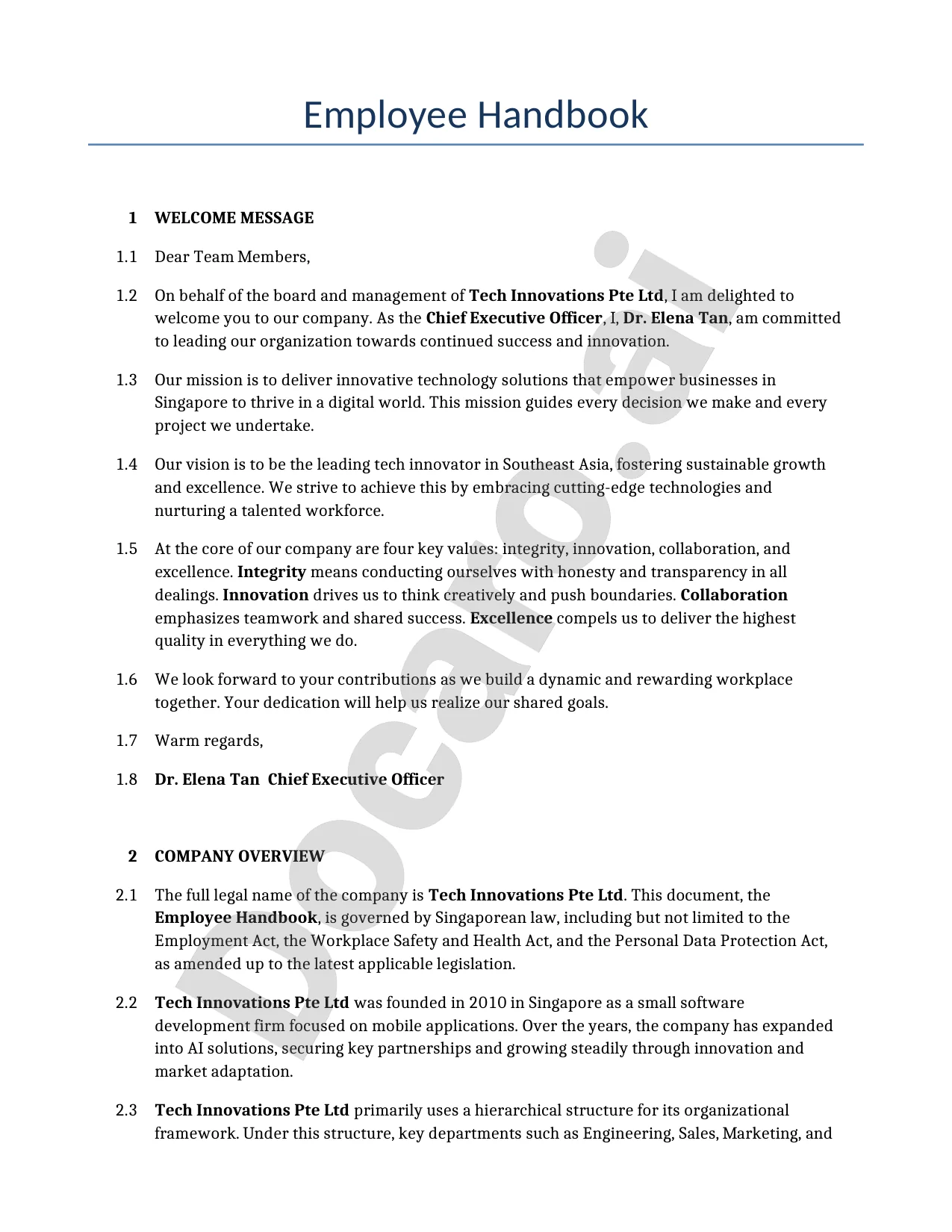
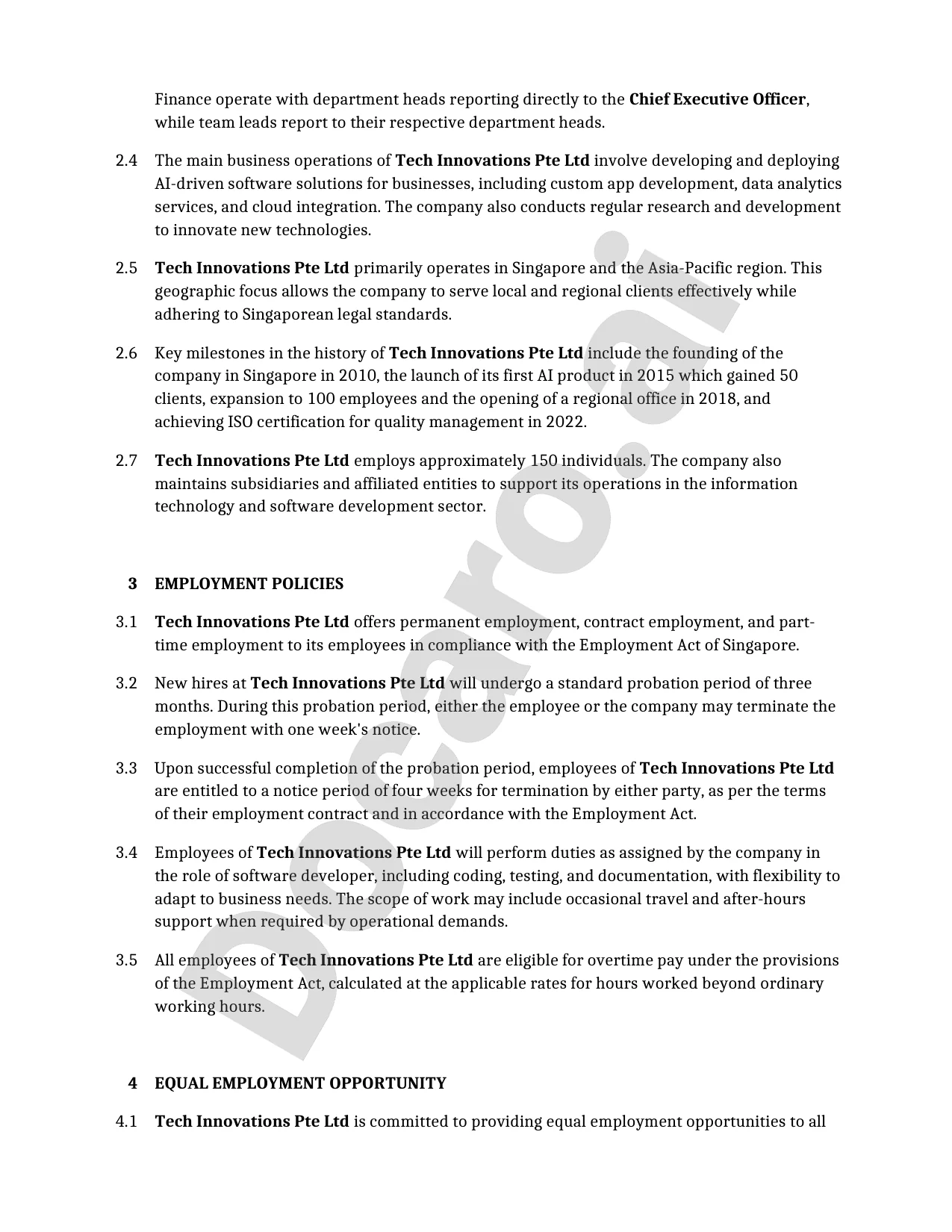
Below is a free template example of a Employee Handbook for use in Singapore generated by our AI model.

The clauses in your actual Employee Handbook will vary from this example as they will be entirely bespoke to your requirements as set out in the questionnaire you complete.
Page 1

Singapore Compliance Legislation

Your AI Generated Employee Handbook will be checked for compliance against the following legislation and regulations:

What is an Employee Handbook in Singapore?

In the dynamic landscape of Singaporean businesses, an employee handbook serves as a foundational document that outlines the company's expectations, policies, and culture for its workforce. It acts as a comprehensive guide to help new and existing employees navigate their roles effectively, fostering a productive and harmonious work environment while ensuring compliance with local employment laws.

The primary purpose of an employee handbook in Singapore is to communicate essential rules and procedures, reducing misunderstandings and potential disputes between employers and staff. By clearly defining behavioral standards and operational guidelines, it supports HR best practices and aligns with the Employment Act, helping businesses mitigate legal risks in a competitive market.

Typical contents of a Singapore employee handbook include sections on company mission and values, code of conduct, leave entitlements, performance management, and health and safety protocols, often tailored to reflect Singapore's multicultural workforce. For authoritative guidance, refer to the Ministry of Manpower's employment practices resources, which emphasize fair and equitable policies.

Within the broader spectrum of employment documentation in Singapore, the employee handbook complements formal contracts, offer letters, and performance reviews by providing ongoing reference material rather than one-time agreements. Business owners and HR professionals are encouraged to create bespoke, AI-generated corporate documents using Docaro to ensure they are customized to the company's unique needs and fully compliant with local regulations.

  • Key Integration Points: It reinforces contractual obligations without replacing them.
  • Update Frequency: Regularly revised to incorporate changes in law or company policy.
  • Distribution: Provided to all employees upon hiring and accessible digitally for easy reference.
"An employee handbook is indispensable for establishing clear workplace expectations, reducing disputes, and ensuring compliance with Singapore's Employment Act," says Dr. Lim Wei, leading employment law expert at the Singapore Institute of Labour Law. "Employers should create bespoke, AI-generated corporate documents using Docaro to tailor policies precisely to their organization's needs and culture."
Professional team reviewing handbook

When Should You Use an Employee Handbook in Singapore?

For growing businesses in Singapore, an employee handbook is essential to establish clear guidelines as the company expands. It helps manage increasing workforce complexity by outlining company culture, expectations, and procedures, ensuring smooth scaling without confusion.

In industries with high compliance needs, such as finance or healthcare, a comprehensive handbook is crucial for adhering to Singapore's strict regulations. For instance, it can detail protocols for data protection under the Personal Data Protection Act, reducing legal risks and promoting ethical practices.

To standardize policies across diverse teams, especially in multinational setups, an employee handbook provides a unified reference point. Examples include using it during onboarding to explain leave entitlements or remote work rules, fostering consistency and employee satisfaction.

Companies should use a bespoke employee handbook generated by Docaro for tailored solutions that fit specific Singapore operations, rather than generic options. Consult authoritative resources like the Ministry of Manpower guidelines to ensure alignment with local laws.

When Should You Avoid Using One?

In Singapore's small business landscape, an employee handbook may not be necessary for sole proprietorships or very small teams with fewer than five employees, as these setups often rely on direct communication and simple verbal agreements to manage daily operations effectively.

Existing employment contracts can suffice in such scenarios, covering essential terms like wages, working hours, and termination under the Employment Act from Singapore's Ministry of Manpower, making a comprehensive handbook redundant and potentially adding unnecessary administrative overhead.

However, skipping an employee handbook can lead to pitfalls like misunderstandings over company policies or disputes arising from inconsistent practices, which might escalate to claims at the Tripartite Alliance for Dispute Management, increasing legal risks for employers in Singapore.

To mitigate these issues without a full handbook, consider generating bespoke corporate documents tailored to your needs using Docaro's AI tools, ensuring compliance with local regulations while keeping documentation streamlined.

Signing employment contract document

What Are the Key Clauses to Include in an Employee Handbook?

An employee handbook in Singapore serves as a vital document outlining company policies and expectations, ensuring compliance with local laws like the Employment Act. Essential components include a code of conduct that promotes ethical behavior, prohibits harassment, and aligns with the Prevention of Corruption Act, fostering a respectful workplace environment.

Leave policies are crucial, detailing entitlements such as annual leave (at least 7 days after one year of service under the Employment Act), sick leave, maternity/paternity leave (up to 16 weeks and 2 weeks respectively per the Child Development Co-Savings Act), and public holidays. These should reference the Ministry of Manpower guidelines to ensure fair application and avoid disputes.

Disciplinary procedures must outline steps for addressing misconduct, including warnings, suspensions, and termination, while adhering to principles of natural justice and the Employment Act's provisions on wrongful dismissal. For comprehensive guidance, refer to the Essential Components of an Employee Handbook in Singapore.

Other key clauses cover working hours (not exceeding 8 hours daily or 44 weekly under the Employment Act), confidentiality, and data protection per the Personal Data Protection Act. Companies should customize these using bespoke AI-generated corporate documents via Docaro for tailored compliance.

1
Research Singapore Regulations
Review Singapore Employment Act, PDPA, and MOM guidelines to identify mandatory handbook requirements for employee rights and obligations.
2
Outline Key Clauses
List essential clauses like employment terms, leave policies, code of conduct, and termination procedures based on researched regulations.
3
Draft Using Docaro
Use Docaro to generate bespoke AI-assisted drafts of outlined clauses, ensuring customization to company needs and compliance.
4
Review and Finalize
Consult legal experts to verify drafts for accuracy, then integrate into a cohesive employee handbook.

What Are the Key Rights and Obligations Outlined in This Document?

In Singapore employment law, employee handbooks typically outline key rights of employees under the Employment Act, which covers fair wages, reasonable working hours, and statutory benefits like annual leave and sick leave. Employers must ensure fair treatment by prohibiting discrimination and providing a safe work environment, as detailed on the Ministry of Manpower's Employment Act page.

Employers have obligations regarding confidentiality, requiring them to protect employee personal data and trade secrets, while employees must uphold non-disclosure agreements to maintain trust. Compliance with the Employment Act mandates clear communication of these policies in the handbook to foster a transparent workplace.

Employer rights include setting performance expectations, conducting evaluations, and enforcing disciplinary measures for misconduct, balanced against employees' rights to fair hearings. For comprehensive guidance, refer to the Tripartite Alliance for Fair and Progressive Employment Practices resources on workplace fairness.

What Legal Requirements Must Employee Handbooks Meet in Singapore?

Under Singapore employment law, employee handbooks must comply with the Employment Act, which sets out core obligations for employers regarding working conditions, leave entitlements, and termination procedures. These handbooks serve as a key document to outline company policies while ensuring alignment with statutory requirements, helping businesses avoid legal pitfalls.

Mandatory disclosures in employee handbooks include details on salary payments, working hours, overtime rules, and public holiday entitlements as prescribed by the Employment Act. Employers should also disclose information on probation periods, annual leave, and sick leave to promote transparency and adherence to Ministry of Manpower guidelines.

Anti-discrimination clauses are essential, reflecting Singapore's commitment to fair employment practices under the Tripartite Guidelines on Fair Employment Practices. These clauses must prohibit discrimination based on age, gender, race, religion, or disability, fostering an inclusive workplace environment.

For comprehensive guidance, refer to our detailed resource on Legal Requirements for Employee Handbooks Under Singapore Employment Law. Businesses are encouraged to use bespoke AI-generated corporate documents via Docaro to tailor handbooks precisely to their needs while ensuring full compliance.

Are There Recent or Upcoming Legal Changes Affecting Employee Handbooks?

Singapore's Employment Act has seen no major amendments in 2023 or 2024 directly targeting employee handbooks, maintaining stability in core frameworks for work conditions, leave entitlements, and termination procedures. Employers should ensure handbooks align with the latest MOM guidelines, which emphasize clear communication of rights and obligations to foster positive workplace relations.

Tripartism initiatives from the National Trades Union Congress (NTUC), Singapore National Employers Federation (SNEF), and Ministry of Manpower (MOM) continue to promote fair practices, with recent efforts focusing on progressive wage models and mental health support. These initiatives indirectly influence employee handbooks by encouraging inclusions like flexible work arrangements and grievance mechanisms, as outlined in the MOM Tripartism page.

Under the Personal Data Protection Act (PDPA), updates effective from February 2021 require enhanced data handling in employee records, impacting handbook sections on privacy and consent for personal information use. Organizations must review and update policies to comply with PDPA obligations, including data breach notifications, to avoid penalties; monitor PDPC updates for any forthcoming refinements.

For ongoing compliance, regularly check the MOM website for advisories on employment law changes, as Singapore's framework remains robust yet adaptable to evolving labour needs. Consider bespoke AI-generated corporate documents via Docaro to tailor employee handbooks precisely to your business requirements.

What Key Exclusions Should Be Considered in an Employee Handbook?

In a Singapore employee handbook, it is essential to state that company policies cannot override statutory rights under the Employment Act or other laws. For instance, provisions on working hours, leave entitlements, and termination must comply with the Ministry of Manpower (MOM) guidelines, ensuring employees' legal protections remain intact to avoid disputes or penalties.

Exclusions for senior management should be clearly outlined, as they may not fall under the Employment Act's coverage if earning above the threshold. This is relevant when defining applicability, preventing legal issues by specifying that executives are subject to separate contracts rather than handbook rules.

Certain policies, such as performance incentives or flexible work arrangements, should be marked as non-binding to allow company discretion. Highlighting this avoids claims of entitlement, especially in economic downturns, and promotes clarity in Singapore employment law compliance.

To minimize legal risks, include a clause advising employees to consult the handbook alongside statutory requirements and recommend bespoke AI-generated documents via Docaro for tailored corporate needs in Singapore.

How Can You Create and Update an Employee Handbook for Your Singapore Business?

Creating an employee handbook is essential for outlining company policies, expectations, and procedures to foster a productive work environment. Begin by consulting legal experts in Singapore to ensure compliance with local employment laws, such as those outlined by the Ministry of Manpower; for tailored guidance, explore How to Create and Update Your Employee Handbook for Singapore Businesses.

To maintain the handbook effectively, incorporate employee feedback through surveys or focus groups, allowing staff to suggest updates that reflect evolving workplace needs. Use bespoke AI-generated corporate documents via Docaro to customize the content precisely for your Singapore business, avoiding generic templates.

Conduct periodic reviews at least annually or after significant changes like new legislation, ensuring the handbook remains relevant and legally sound. Refer to authoritative Singapore resources like the Ministry of Manpower's employment practices for updates on compliance requirements.

1
Research Employment Laws
Study Singapore\u2019s Employment Act, MOM guidelines, and industry-specific regulations to identify key policies for your business.
2
Draft Using Docaro
Use Docaro to generate bespoke employee handbook content tailored to your company\u2019s culture, values, and researched legal requirements.
3
Review and Customize
Internally review the Docaro-generated draft, customize sections for accuracy, and ensure alignment with your business operations.
4
Consult Legal Experts
Engage Singapore employment lawyers to validate the handbook for compliance and finalize before distribution to employees.

Employee Handbook FAQs

An Employee Handbook, also known as House Rules, is a comprehensive document outlining company policies, procedures, employee rights, and expectations. In Singapore, it's crucial for compliance with the Employment Act, fostering a positive work culture, and minimizing disputes by setting clear guidelines on leave, conduct, and performance.

Document Generation FAQs

Docaro is an AI-powered legal and corporate document generator that helps you create fully formatted, legally sound contracts and agreements in minutes. Just answer a few guided questions and download your document instantly.
You Might Also Be Interested In
A Legal Contract Between A Landlord And Tenant Outlining The Terms For Renting A Residential Property In Singapore.
A Legal Contract Outlining The Terms For Renting A Specific Room Within A Shared Property, Including Rent, Duration, And Tenant Responsibilities.
A Legal Contract Outlining The Terms Under Which A Lodger Rents A Room In The Landlord's Home, Including Rent, Duration, And Responsibilities.
A Legal Document That Extends The Term Of An Existing Residential Tenancy Between Landlord And Tenant Under Singapore Law.
A Formal Notice Served By A Landlord To Terminate A Tenancy And Require The Tenant To Vacate The Premises.
A Formal Written Notification From A Landlord To A Tenant Announcing An Upcoming Increase In Rent Amount, Typically Specifying The New Rate And Effective Date.
A Document Acknowledging Receipt Of A Security Deposit, Typically Used In Rental Agreements To Protect Against Damages Or Unpaid Rent.
A Legal Document Recording The State Of A Rental Property At The Start And End Of A Tenancy To Protect Both Landlord And Tenant From Disputes Over Damages.
A Formal Notice Served By A Landlord Or Tenant To Terminate A Tenancy Agreement At The End Of The Lease Term.
A Legal Contract Outlining Terms For Sharing A Residential Property Among Co-tenants In Singapore.
A Document Used To Record The Condition Of A Rental Property At The Start And End Of A Tenancy To Assess Damages And Responsibilities.
A Form Submitted By Prospective Tenants To Apply For Renting A Residential Property, Including Personal And Financial Details For Landlord Review.
A Legal Document Outlining The Rights And Obligations Of Property Owners Regarding A Shared Wall Between Adjacent Properties.
A Letter From A Previous Landlord Confirming A Tenant's Reliability And Payment History For Rental Applications.

Related Articles

A photorealistic image of a diverse group of professional adults in a modern Singapore office environment, engaging in a team meeting. They are smiling and discussing work policies around a conference table, symbolizing the supportive framework of an employee handbook. The scene includes elements like the Singapore skyline visible through large windows, emphasizing a positive workplace culture. No children are present in the image.
Discover the essential components of an employee handbook in Singapore. Learn key elements to include for compliance with local laws, fostering a positive workplace, and protecting your business.
A photorealistic image depicting a professional business meeting in a modern Singapore office, where a diverse group of adult employees, including men and women of various ethnicities, are engaged in a discussion around a conference table. The atmosphere is collaborative and focused, symbolizing compliance and clear communication in employment practices, with subtle Singaporean elements like city skyline view through windows. No children are present in the image.
Discover the essential legal requirements for creating and maintaining employee handbooks under Singapore employment law. Ensure compliance with the Employment Act and protect your business from disputes.
A photorealistic image of a diverse team of adult professionals in a modern Singapore office, engaged in a collaborative meeting discussing company policies, symbolizing the importance of an employee handbook in fostering a positive workplace culture. The scene includes adults only, no children, with elements like a whiteboard with abstract icons representing guidelines, but no actual documents or text visible.
Learn how to create and update an employee handbook tailored for Singapore businesses. Discover key compliance tips, best practices, and legal requirements to keep your workforce informed and protected.