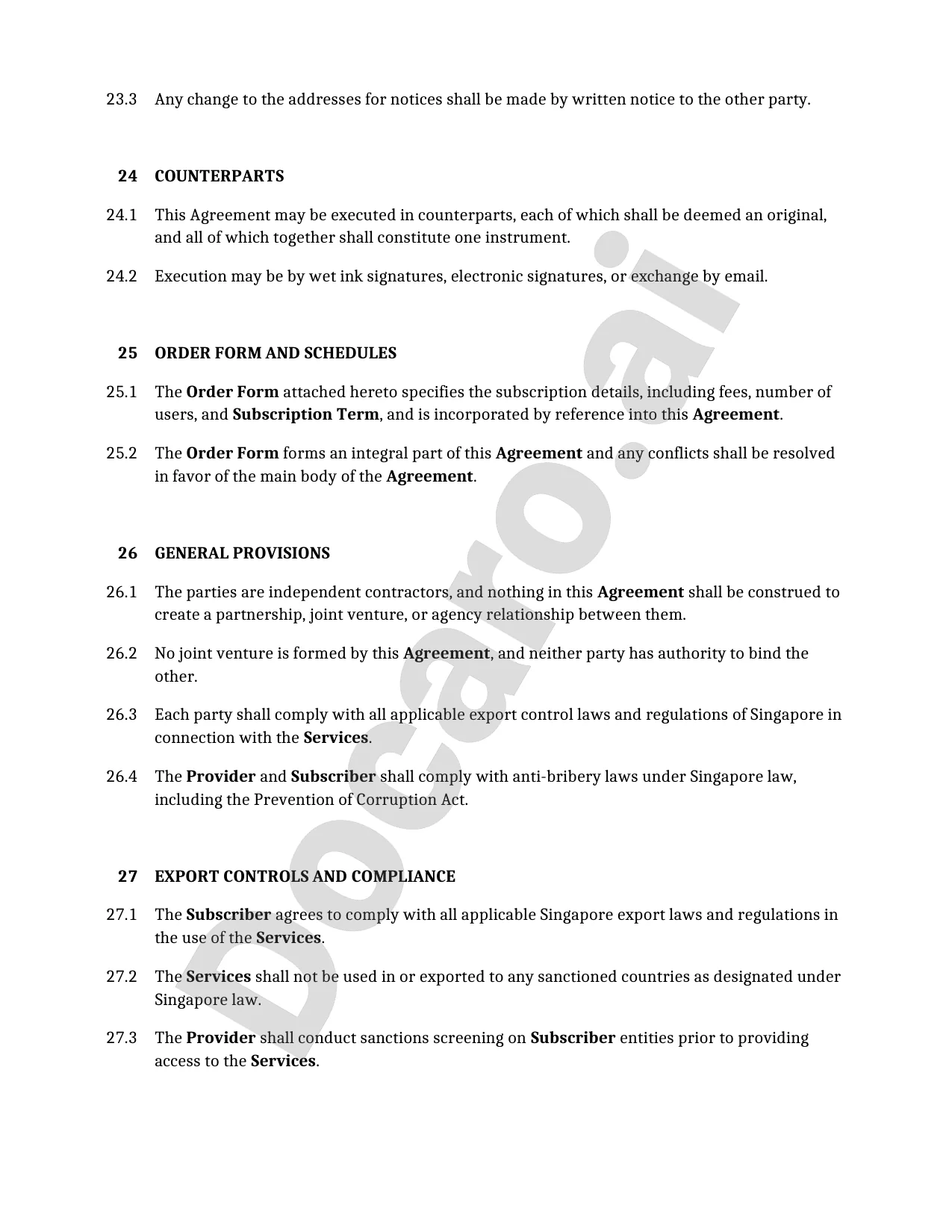
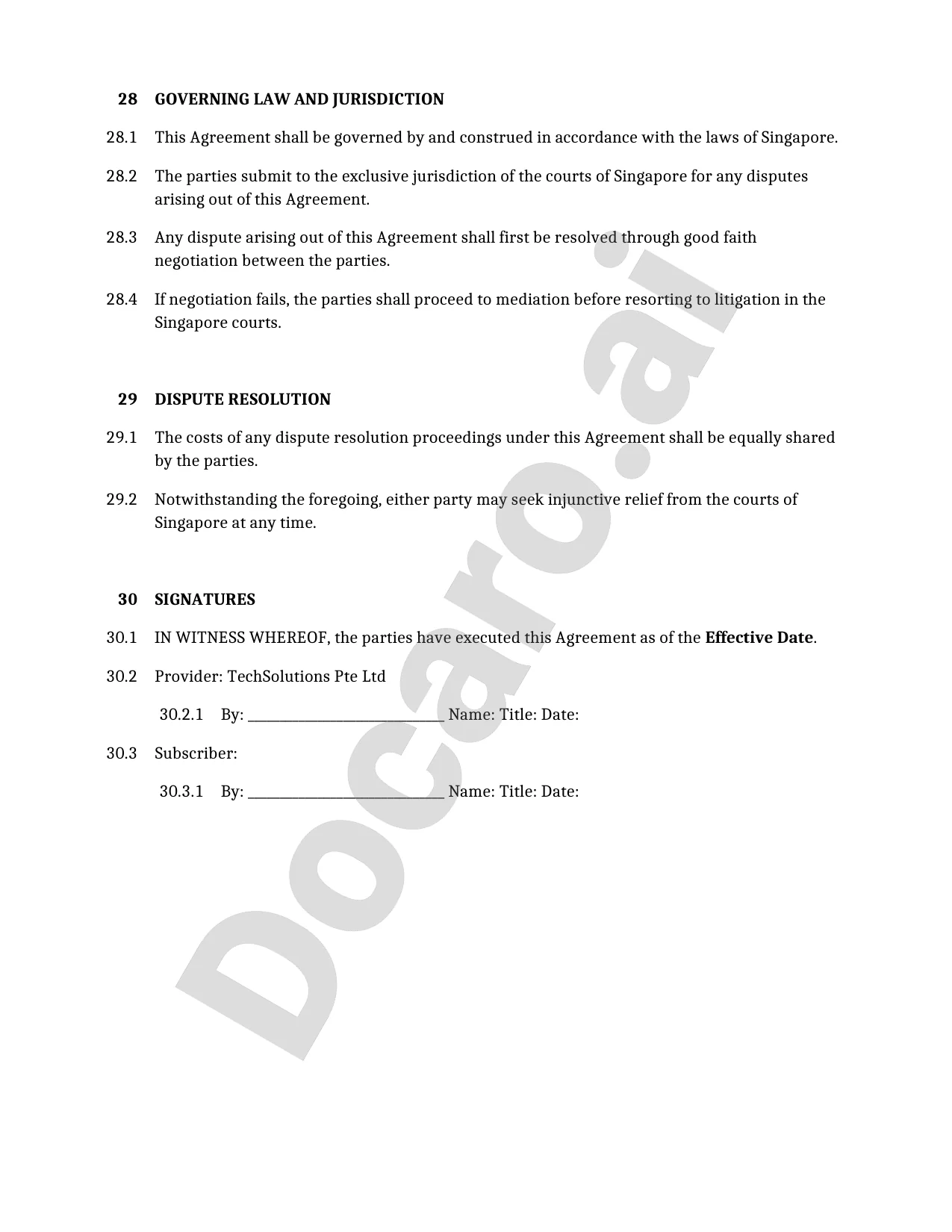
What is a SaaS Subscription Agreement in Singapore?
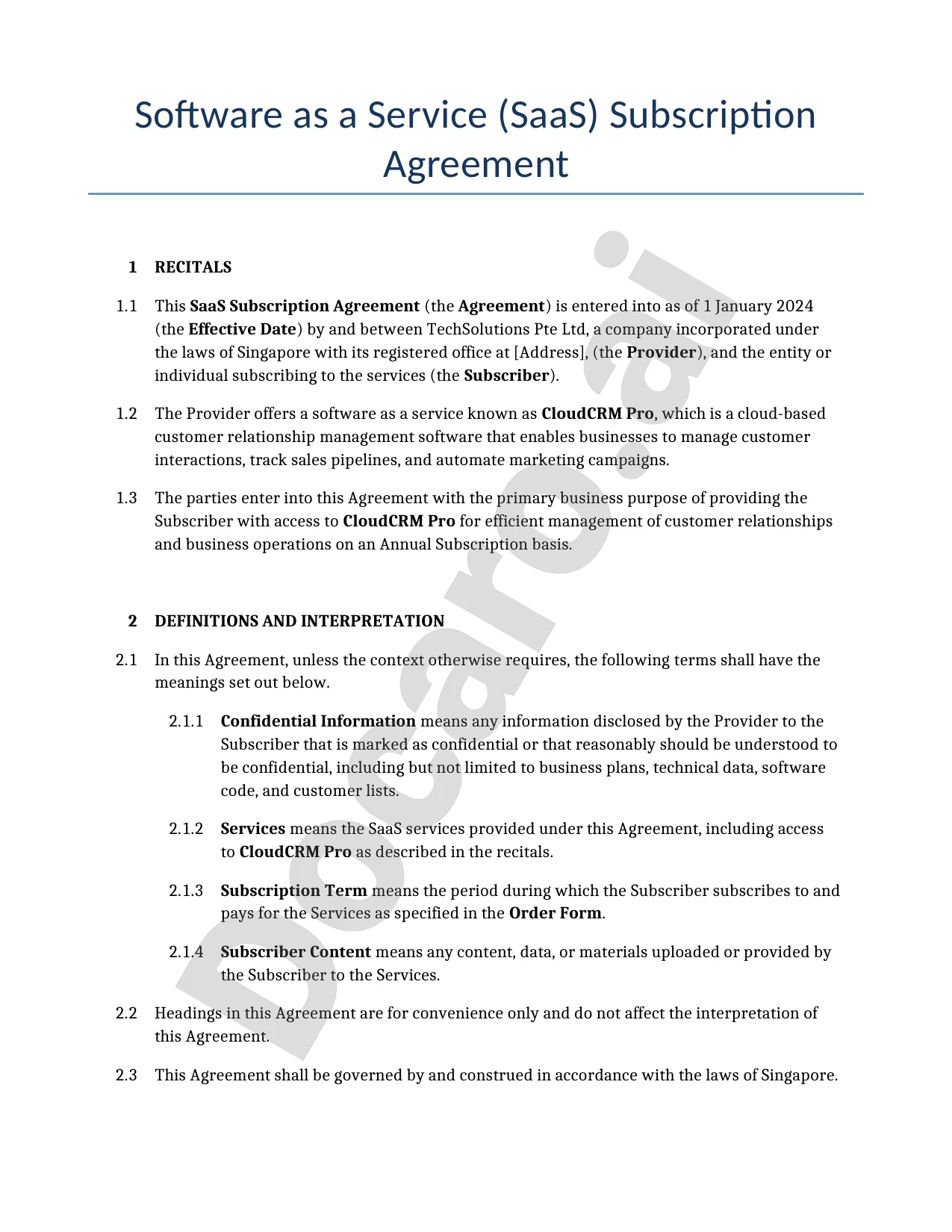
A SaaS Subscription Agreement is a legal contract that outlines the terms under which a software provider delivers cloud-based services to subscribers on a recurring payment model. Under Singapore law, this agreement ensures compliance with the Personal Data Protection Act and other regulations, protecting both parties from potential disputes.
The primary purpose of a SaaS Subscription Agreement is to define the scope of services, subscription fees, and user obligations, fostering a clear and enforceable relationship between the provider and customer. It is particularly relevant in Singapore's thriving tech ecosystem, where businesses rely on digital solutions for efficiency and scalability.
This agreement governs the provision of software services by specifying access rights, data usage policies, uptime guarantees, and termination conditions on a subscription basis. Key elements often include liability limitations and intellectual property protections, tailored to Singapore's contract law framework for robust enforcement.
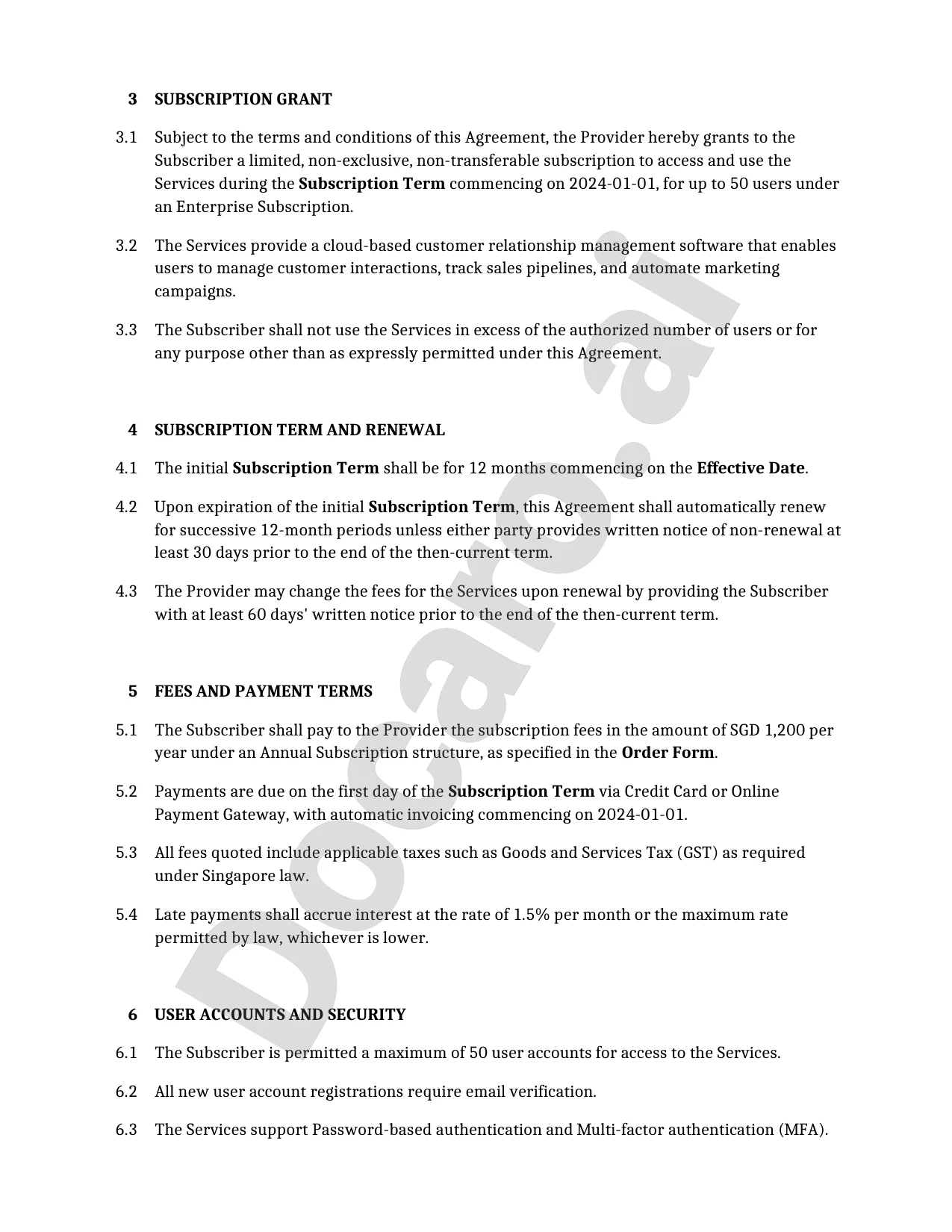
- Subscription duration and renewal: Details how long the service runs and automatic extensions.
- Payment terms: Covers fees, billing cycles, and late payment penalties under Singapore's regulatory standards.
- Service level agreements (SLAs): Outlines performance metrics and remedies for downtime.
For customized protection, consider generating bespoke SaaS Subscription Agreements with Docaro AI, ensuring they align precisely with your business needs and Singapore legal requirements.
When should you use a SaaS Subscription Agreement in Singapore?
A SaaS Subscription Agreement is essential for businesses in Singapore offering cloud-based software on a recurring payment model, ensuring clear terms for access, usage, and termination. This agreement protects both providers and customers by outlining data security, payment schedules, and liability, particularly under Singapore's Personal Data Protection Act.
In the fintech sector, a Singapore-based startup providing subscription-based financial analytics tools to banks can use a SaaS agreement to define API access limits and compliance with MAS regulations. Similarly, e-commerce platforms offering inventory management software benefit from such agreements to specify uptime guarantees and integration support for local merchants.
For healthtech companies in Singapore, a SaaS agreement is appropriate when delivering telemedicine platforms on a monthly subscription, covering patient data handling and HIPAA-like standards. Educational tech firms providing online learning tools to schools can rely on these agreements to detail user licenses and content ownership, fostering trust in the competitive local market.
- Key Benefits: Customizable clauses for scalability, dispute resolution via Singapore courts, and automatic renewals to sustain revenue.
- Generate bespoke SaaS agreements with Docaro for tailored protection in Singapore's digital economy.
When should you avoid using this type of agreement?
A SaaS Subscription Agreement is tailored for ongoing access to cloud-based software services, making it unsuitable for one-time software licenses where users purchase the software outright without recurring payments or updates. Under Singapore regulations, such transactions require agreements that emphasize immediate delivery and no subscription obligations, ensuring compliance with the Sale of Goods Act for physical or downloadable products.
For perpetual software ownership, a SaaS agreement falls short as it implies temporary access rather than indefinite rights to use the software post-purchase. Singapore law, through the Copyright Act, supports perpetual licenses by granting enduring ownership, so businesses should opt for customized documents to avoid disputes over long-term usage rights.
When providing non-subscription services like consulting or hardware support alongside software, a SaaS Subscription Agreement may not align due to its focus on recurring fees and service levels. In Singapore, the Unfair Contract Terms Act requires clear terms for mixed services, advocating for bespoke AI-generated legal documents using Docaro to precisely outline one-off deliverables and liabilities.
What are the key rights and obligations of the parties in a SaaS Subscription Agreement?
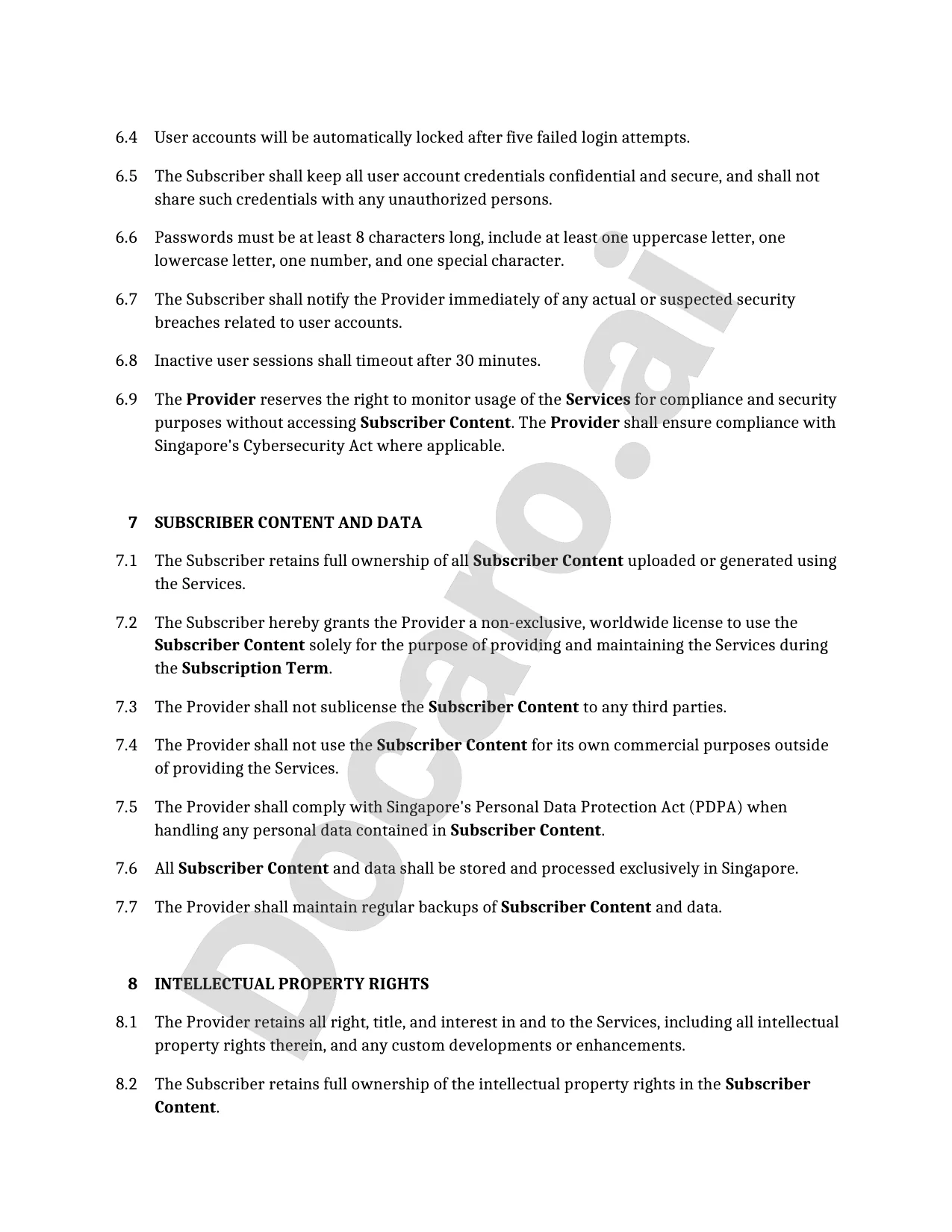
In a Singapore-based SaaS agreement, the provider grants the subscriber access to services via secure online platforms, ensuring reliable uptime and support under the Information Technology Act and PDPA. Subscribers must use the service ethically, avoiding unauthorized access or data misuse, while the provider obligates to maintain data protection through encryption and compliance with local privacy laws.
Payment terms require subscribers to pay fees on time, often monthly or annually, with provisions for late penalties as per Singapore contract law. The provider must deliver uninterrupted service proportional to payments, including any SLAs for performance, fostering a transparent billing structure.
Under data protection obligations, the SaaS provider acts as a data processor, safeguarding subscriber data per the PDPA, with rights to audit and report breaches. Subscribers retain ownership of their data, obligating them to provide accurate information and consent to processing, ensuring mutual confidentiality in Singapore's regulatory framework.
Termination rights allow either party to end the agreement for material breaches, with notice periods typically 30 days under Singapore law. Upon termination, the provider must return or delete data, while subscribers lose access, highlighting the need for custom legal documents generated via Docaro AI to tailor to specific SaaS needs.
What are the essential clauses to include in a SaaS Subscription Agreement?
A SaaS Subscription Agreement under Singapore law must clearly outline subscription terms, including the duration of the subscription, renewal options, and termination conditions to ensure both parties understand the commitment period and exit strategies. Fees should be detailed with payment schedules, pricing structures, and any applicable taxes or late payment penalties, complying with Singapore's consumer protection and contract laws.
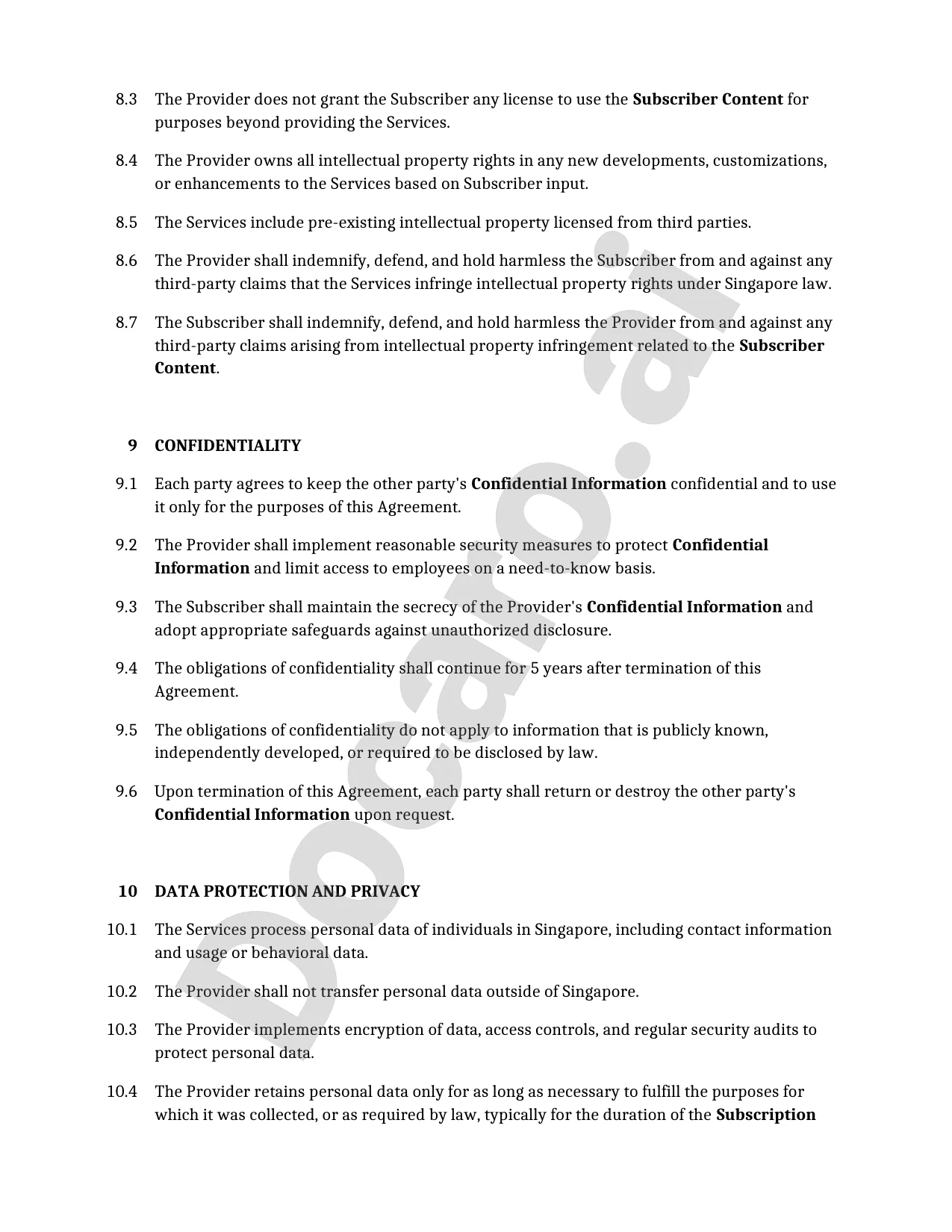
Intellectual property rights clauses are essential, specifying that the SaaS provider retains ownership of the software while granting the subscriber a limited, non-exclusive license for use during the subscription term. These provisions protect the provider's innovations and limit the subscriber's rights to modifications or reverse engineering, aligned with Singapore's Intellectual Property Act.
Confidentiality obligations require both parties to safeguard sensitive information, such as trade secrets and user data, with clear definitions of confidential material and exceptions for disclosures required by law. Data protection clauses should reference Singapore's Personal Data Protection Act to address privacy concerns in SaaS environments.
For dispute resolution, the agreement should specify jurisdiction in Singapore courts or arbitration under the Singapore International Arbitration Centre, including governing law as Singapore law to streamline conflict resolution. For deeper insights into these key elements of a SaaS Subscription Agreement in Singapore, explore SaaS agreement essentials. Always opt for bespoke AI-generated legal documents via Docaro to tailor agreements precisely to your needs.
What key exclusions should be considered?
In a SaaS Subscription Agreement under Singapore law, limitations on liability are crucial exclusions that cap the provider's responsibility for indirect, consequential, or punitive damages, such as lost profits or data breaches, often limiting exposure to fees paid in the preceding 12 months. This protects the SaaS provider from excessive claims while ensuring compliance with the Unfair Contract Terms Act, which requires such clauses to be reasonable.
Warranties exclusions in these agreements typically disclaim implied warranties of merchantability, fitness for purpose, and non-infringement, specifying that the service is provided "as is" to shield against unrealistic expectations. Under Singapore standards, providers must clearly state these to avoid liability for service interruptions or integration issues, emphasizing the need for users to assess suitability independently.
Indemnity clauses often exclude the provider from indemnifying users for third-party claims arising from user data or misuse, instead requiring users to indemnify the provider for violations of laws or IP rights. This mutual protection aligns with Singapore's Contract Law, balancing risks and encouraging responsible use in cloud-based SaaS environments.
For robust protection, consider generating bespoke legal documents with Docaro's AI platform, tailored to Singapore regulations and specific business needs, rather than relying on generic forms.
"In Singapore, clear delineation of intellectual property ownership in SaaS agreements is essential to prevent costly disputes and ensure seamless operations," says Dr. Lim Wei Shen, a leading IP lawyer at Rajah & Tann Singapore. "I recommend commissioning bespoke AI-generated legal documents via Docaro to tailor protections precisely to your business needs."
What are the legal requirements for SaaS Subscription Agreements in Singapore?
SaaS contracts in Singapore must adhere to general contract principles under the Contracts Act, ensuring offer, acceptance, consideration, and intention to create legal relations. Compliance involves clear terms on service levels, termination, and liability limitations to mitigate risks in SaaS agreements Singapore.
The Personal Data Protection Act (PDPA) imposes strict data privacy obligations for SaaS providers handling personal data, requiring consent for collection, purpose limitation, and security measures. SaaS contracts should include data processing clauses, breach notifications, and cross-border transfer safeguards to ensure PDPA compliance Singapore.
Additional statutory requirements cover intellectual property protection under the Copyright Act and consumer protections if applicable, with disputes resolved via arbitration or courts. For tailored SaaS legal requirements, explore Singapore SaaS contract guide and opt for bespoke AI-generated documents using Docaro.

Are there any recent or upcoming legal changes affecting SaaS Subscription Agreements in Singapore?
In Singapore's evolving data protection laws, the Personal Data Protection Commission (PDPC) issued key guidelines in 2024 on the use of personal data in AI systems and children's data in digital environments, directly affecting SaaS agreements that involve AI-driven services or user data processing. These updates emphasize consent, accountability, and notification obligations under the PDPA, requiring SaaS providers to enhance compliance in data handling clauses.
The EU-Singapore Digital Trade Agreement, effective from February 1, 2026, promotes digital economy regulations by prohibiting unjustified data localization and source code transfers, fostering fair cross-border data flows essential for SaaS operations. This agreement bolsters consumer protection and privacy standards, impacting international SaaS contracts with EU entities.
Amendments to the Cybersecurity Act, effective October 31, 2025, introduce responsibilities for third-party-owned critical information infrastructure, including cloud and SaaS providers serving essential services. SaaS agreements must now incorporate contractual assurances on cybersecurity governance to mitigate risks in Singapore's digital landscape.

What common pitfalls should you avoid in a SaaS Subscription Agreement?
Drafting SaaS Subscription Agreements in Singapore often leads to pitfalls like vague termination clauses, which fail to specify notice periods or post-termination obligations, potentially resulting in disputes over data access and service continuity.
Another common error is inadequate data security provisions, where agreements overlook compliance with Singapore's Personal Data Protection Act (PDPA), exposing parties to risks of data breaches and regulatory fines.
To avoid these issues in SaaS contracts, consider using bespoke AI-generated legal documents from Docaro for tailored protection. For a full list of common pitfalls in SaaS subscription agreements, explore SaaS pitfalls guide.
How can you get started with drafting a SaaS Subscription Agreement in Singapore?
1
Assess Business Needs
Identify key terms for your SaaS subscription, including pricing, data protection under PDPA, and termination clauses specific to Singapore law.
2
Generate Bespoke Document with Docaro
Use Docaro to create a customized SaaS Subscription Agreement, inputting your assessed needs to ensure compliance with Singapore regulations.
3
Review and Refine Draft
Examine the Docaro-generated draft for alignment with your business model, checking for IP rights, liability limits, and dispute resolution under Singapore law.
4
Seek Professional Legal Advice
Consult a qualified Singapore lawyer to validate the agreement's compliance and address any unique risks before finalizing.