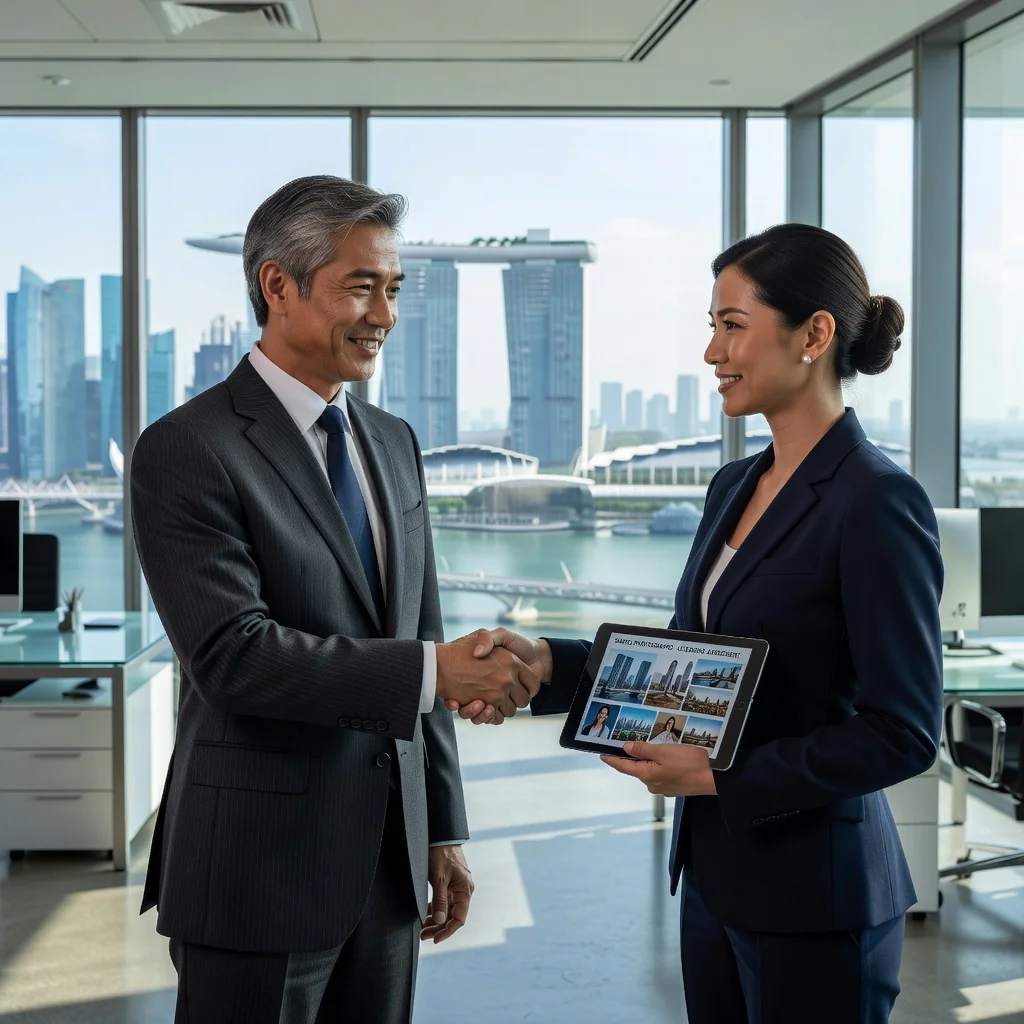
What is a Photo Licensing Agreement in Singapore?
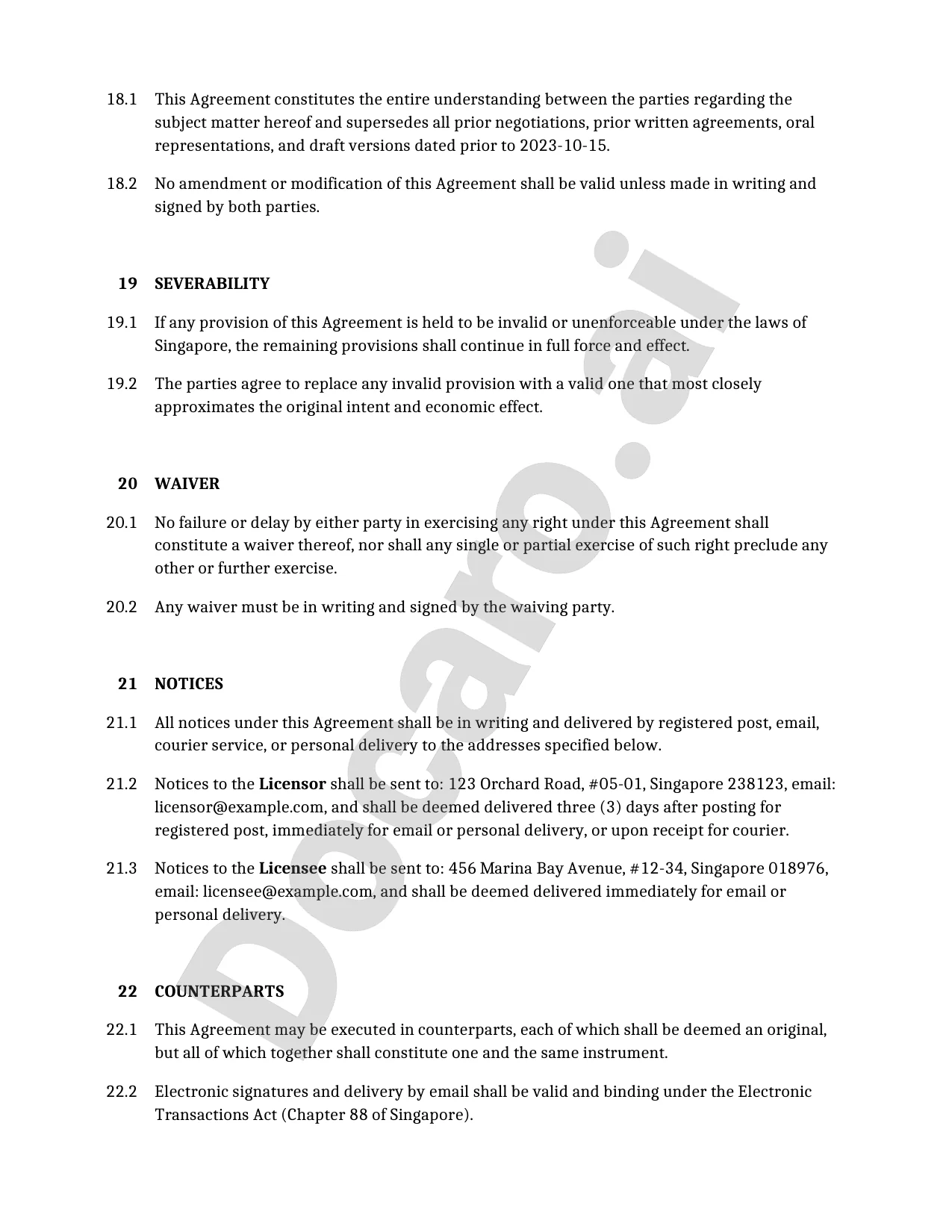
A photo licensing agreement is a legal contract that permits the licensee to use a photographer's images under specified terms, defining the scope of usage such as duration, territory, and media types. Under Singapore law, these agreements are governed by the Copyright Act, which recognizes photographs as protected intellectual property, ensuring that rights are clearly delineated to prevent unauthorized exploitation.
The primary purpose of a photo licensing agreement is to enable commercial or personal use of photographs while compensating the creator, fostering a balanced relationship between creators and users in Singapore's creative industry. It is particularly relevant for businesses, advertisers, and media outlets operating in Singapore, where compliance with intellectual property regulations avoids costly disputes and infringement claims.
Through a photo licensing agreement, the photographer grants limited rights to use photographs, such as reproduction or distribution, without transferring ownership of the copyright. This mechanism protects the photographer's intellectual property by retaining moral rights and control over future uses, allowing enforcement under Singapore's robust legal framework if terms are breached.
Why are Photo Licensing Agreements Important in Singapore?
In Singapore's photo licensing agreements are essential legal tools that define the terms under which photographers and clients can use images, preventing misunderstandings over permissions and royalties.
These agreements ensure compliance with copyright laws under the Copyright Act, protecting creators' rights while allowing lawful distribution and reproduction of photographs in various media.
- For commercial uses, they specify licensing scopes like advertising or product packaging, limiting liability and enabling revenue generation through clear fee structures.
- For personal uses, such as social media sharing, they outline restrictions to avoid unauthorized commercial exploitation, fostering trust between parties.
To create tailored photo licensing agreements in Singapore, opt for bespoke AI-generated legal documents via Docaro, ensuring precision and adherence to local regulations without generic templates.
"A well-drafted photo licensing agreement is the cornerstone of protecting creative works in Singapore's dynamic media landscape," states legal expert Dr. Elena Tan, emphasizing the need for tailored safeguards in an era of rapid digital dissemination. For robust protection, I recommend commissioning bespoke AI-generated legal documents through Docaro to ensure they precisely fit your specific requirements and comply with Singaporean law.
When Should You Use a Photo Licensing Agreement in Singapore?
A photo licensing agreement is crucial in commercial advertising scenarios, where businesses use images to promote products or services across various media. Without a proper agreement, unauthorized use can lead to costly legal disputes over image rights and royalties.
In publishing, whether for books, magazines, or digital content, a licensing agreement ensures that photographers or rights holders are compensated fairly for their work. This protects publishers from infringement claims while allowing controlled distribution of copyrighted images.
For website use of images, especially on e-commerce sites or blogs, a licensing agreement specifies terms like duration, exclusivity, and permitted modifications to avoid violations. Learn more about navigating these in Singapore by reading Understanding Photo Licensing Agreements in Singapore.
- Always opt for bespoke AI-generated legal documents via Docaro to tailor agreements to your specific needs in photo licensing.
- This approach ensures comprehensive protection beyond generic options for image usage rights.
When Should You Avoid Using a Photo Licensing Agreement?
Photo licensing agreements are not always necessary for personal non-commercial use, where individuals capture or share images solely for private enjoyment without any intent to profit or distribute commercially. In such cases, copyright laws often permit fair use without formal permissions, keeping things simple and cost-free for hobbyists.
For public domain images, no licensing agreement is required since these works are free from copyright restrictions, allowing anyone to use, modify, or distribute them without legal hurdles. This includes historical photos or those explicitly released into the public domain, promoting open access to cultural heritage.
When parties prefer full copyright transfer over licensing, a licensing agreement becomes inappropriate as it only grants usage rights rather than complete ownership. Opt for bespoke AI-generated legal documents via Docaro to create tailored transfer agreements that suit specific needs and avoid licensing limitations.
What Are the Key Clauses in a Photo Licensing Agreement?
1
Review Agreement Objectives
Analyze the parties' needs and goals to identify essential clauses like scope of license, payment terms, and duration for the photo licensing agreement.
2
Draft Key Clauses with Docaro
Use Docaro to generate bespoke clauses defining the license scope, outlining payment terms including amounts and schedules, and specifying the agreement duration.
3
Ensure Clause Consistency
Cross-check drafted clauses for alignment with overall agreement objectives, ensuring clarity and mutual protections without relying on pre-made templates.
4
Finalize and Customize
Refine the AI-generated clauses in Docaro for specificity to the photo licensing context, then integrate into the full bespoke document.
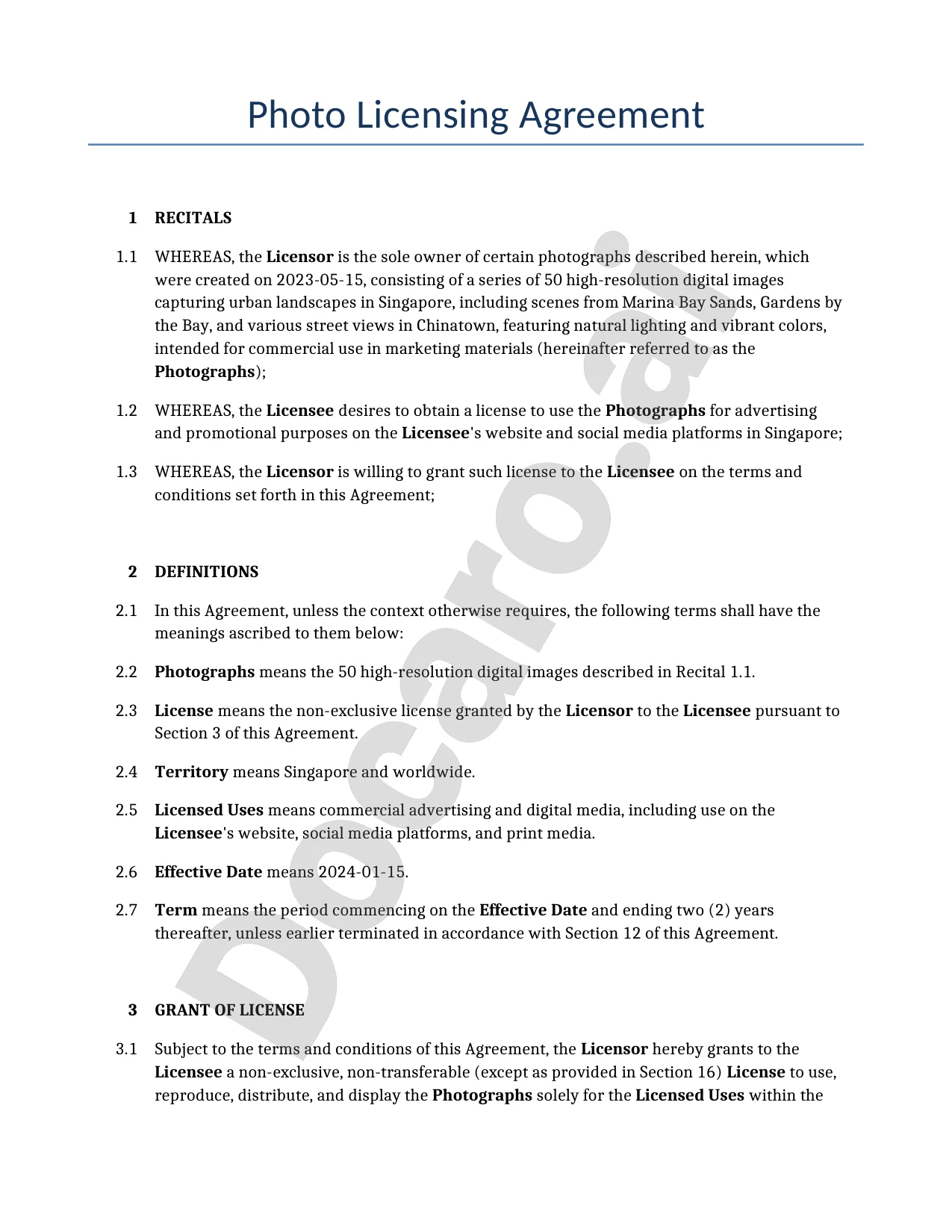
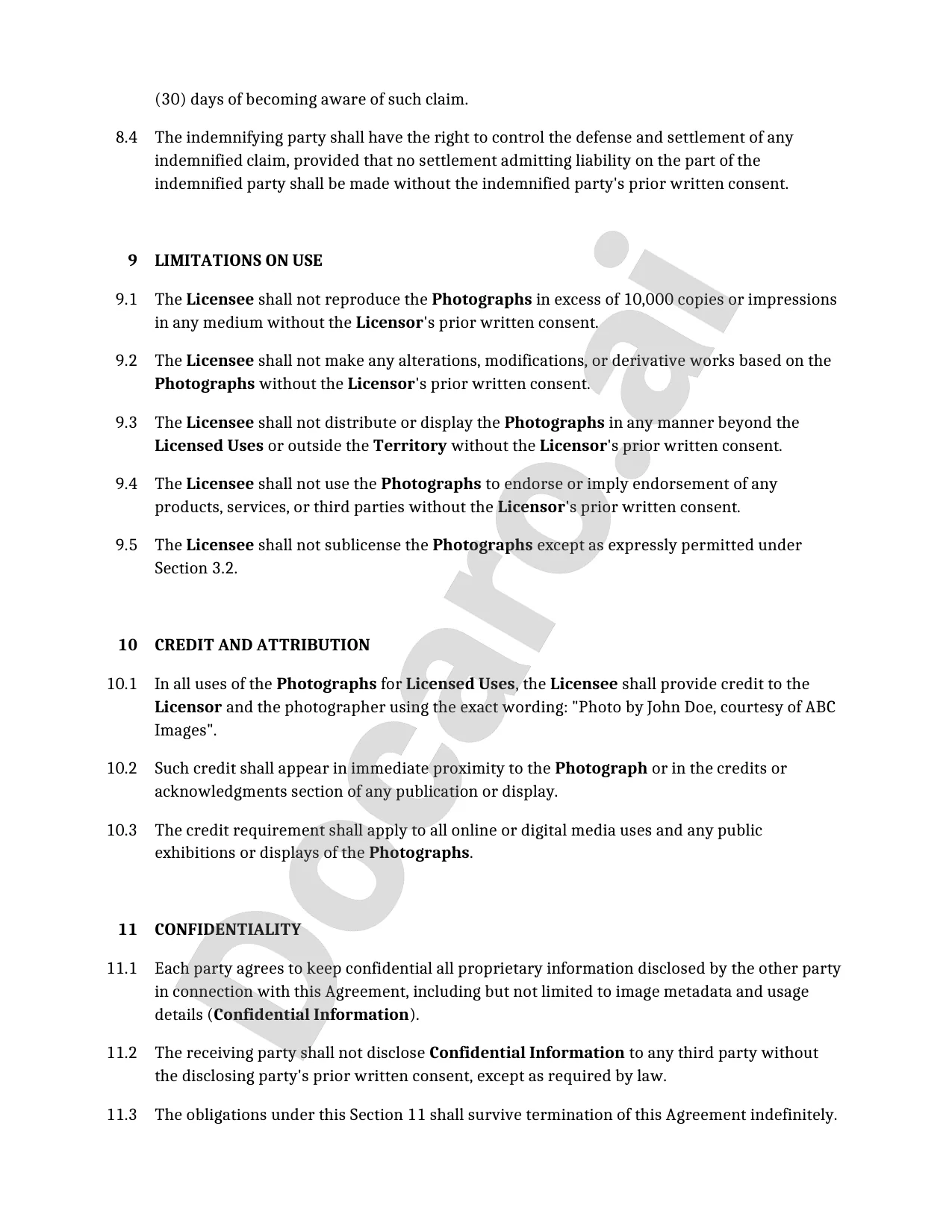
A Singapore photo licensing agreement should clearly outline the grant of license, specifying the rights transferred from the photographer to the licensee, such as usage for commercial or editorial purposes. This clause defines the scope, including whether it's a one-time use or ongoing, ensuring compliance with Singapore's intellectual property laws.
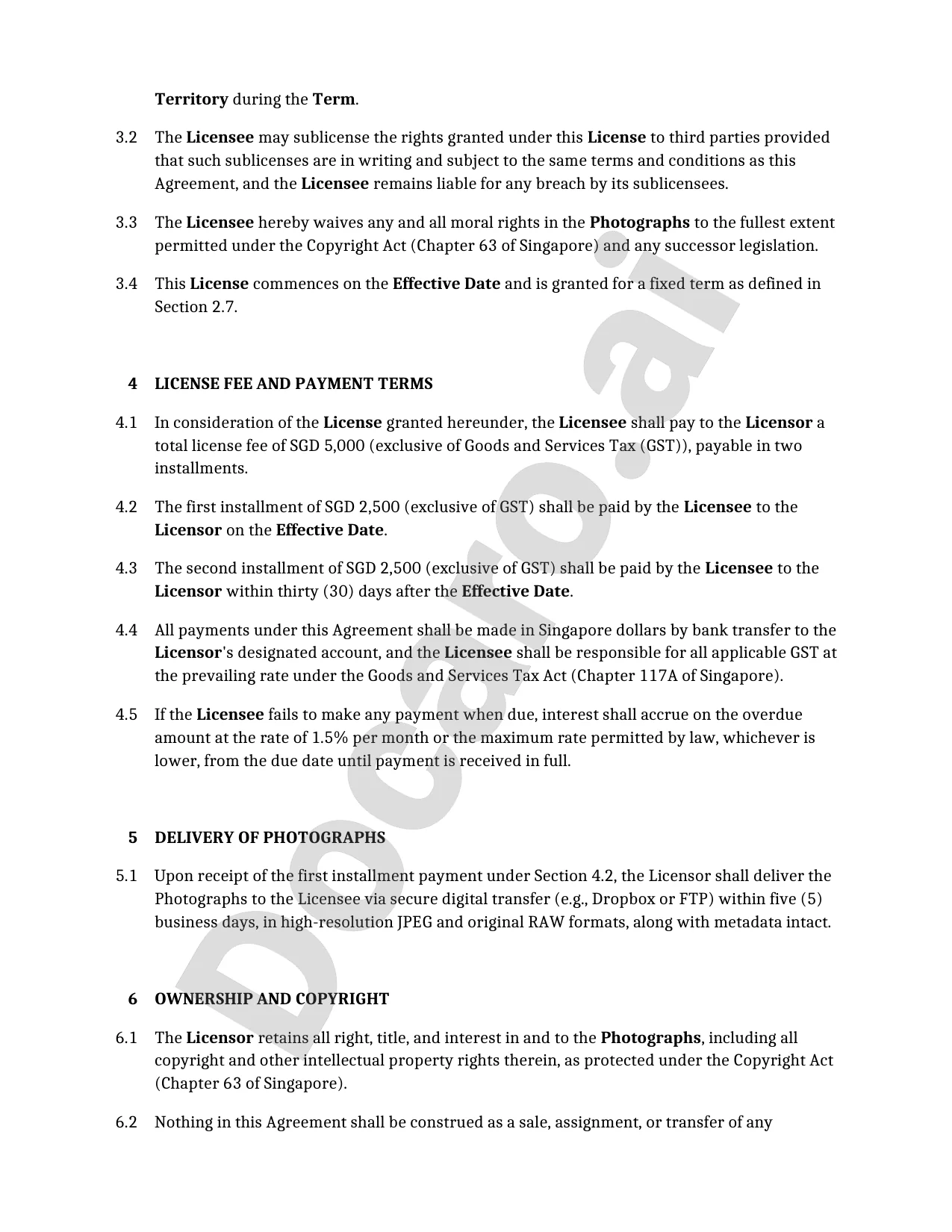
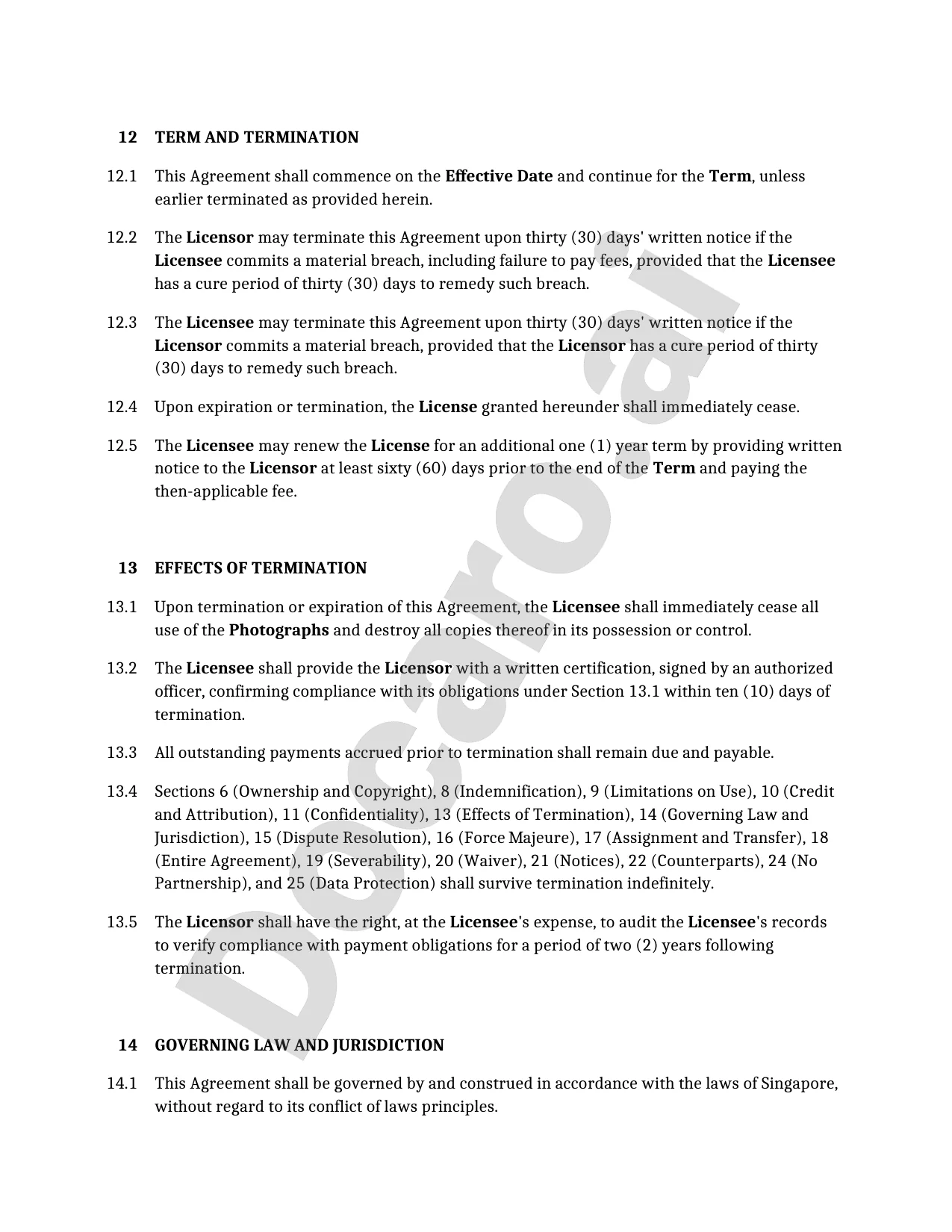
Royalties form a critical component, detailing payment structures like flat fees, percentage-based royalties, or advances, tailored to the photo's value and intended use in Singapore. Include provisions for auditing and late payment penalties to protect both parties' financial interests.
The territory clause limits the geographic scope, such as worldwide or restricted to Singapore and Southeast Asia, preventing unauthorized global distribution. Exclusivity specifies if the license is exclusive, granting sole rights to the licensee, or non-exclusive, allowing multiple uses by others.
For comprehensive guidance on these and other elements, explore our detailed resource on Key Clauses to Include in a Singapore Photo License Agreement. Always opt for bespoke AI-generated legal documents via Docaro to ensure they fit your specific needs under Singapore regulations.
What Key Exclusions Should Be Considered?
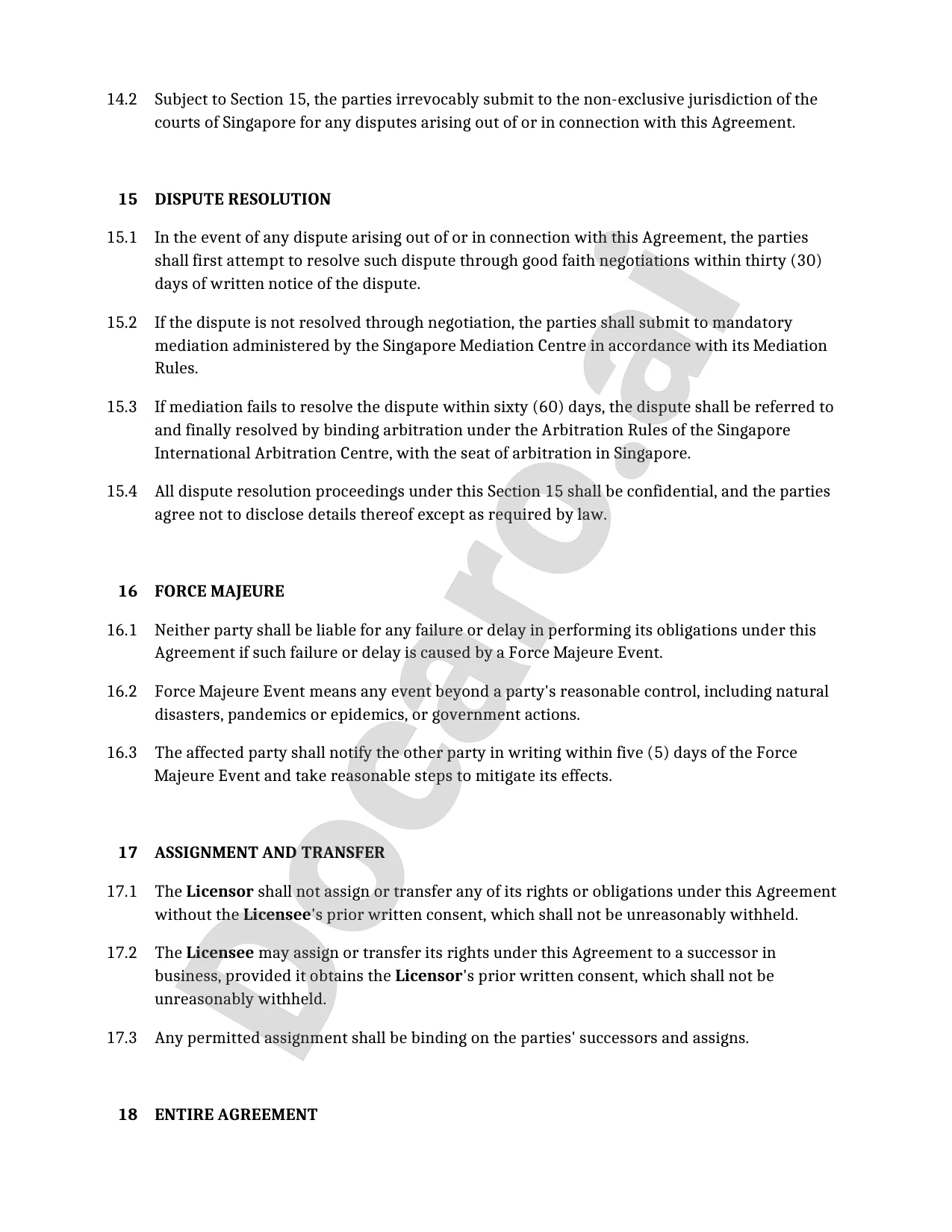
In photo licensing agreements under Singapore law, a key exclusion often involves moral rights, which protect the photographer's right to be identified as the author and to object to derogatory treatment of the work. These rights, enshrined in the Copyright Act, remain with the creator even after licensing, ensuring that the licensee cannot alter the image in ways that harm the artist's reputation without consent.
Another important exclusion pertains to derivative works, where the agreement may restrict the creation of new images based on the original photo, such as edits or adaptations. Under Singapore's copyright framework, this prevents unauthorized exploitation, allowing the licensor to control how the work evolves and maintain its commercial value.
Exclusions for uses in sensitive contexts, like political endorsements or adult content, are crucial to limit liability and reputational risks. Singapore law emphasizes these to align with public policy, prohibiting uses that could mislead consumers or violate decency standards, thereby safeguarding both parties from legal disputes.
For robust protection in photo licensing agreements, consider bespoke AI-generated legal documents via Docaro platform, tailored to Singapore's specific requirements rather than generic options.
What Are the Key Rights and Obligations of the Parties?
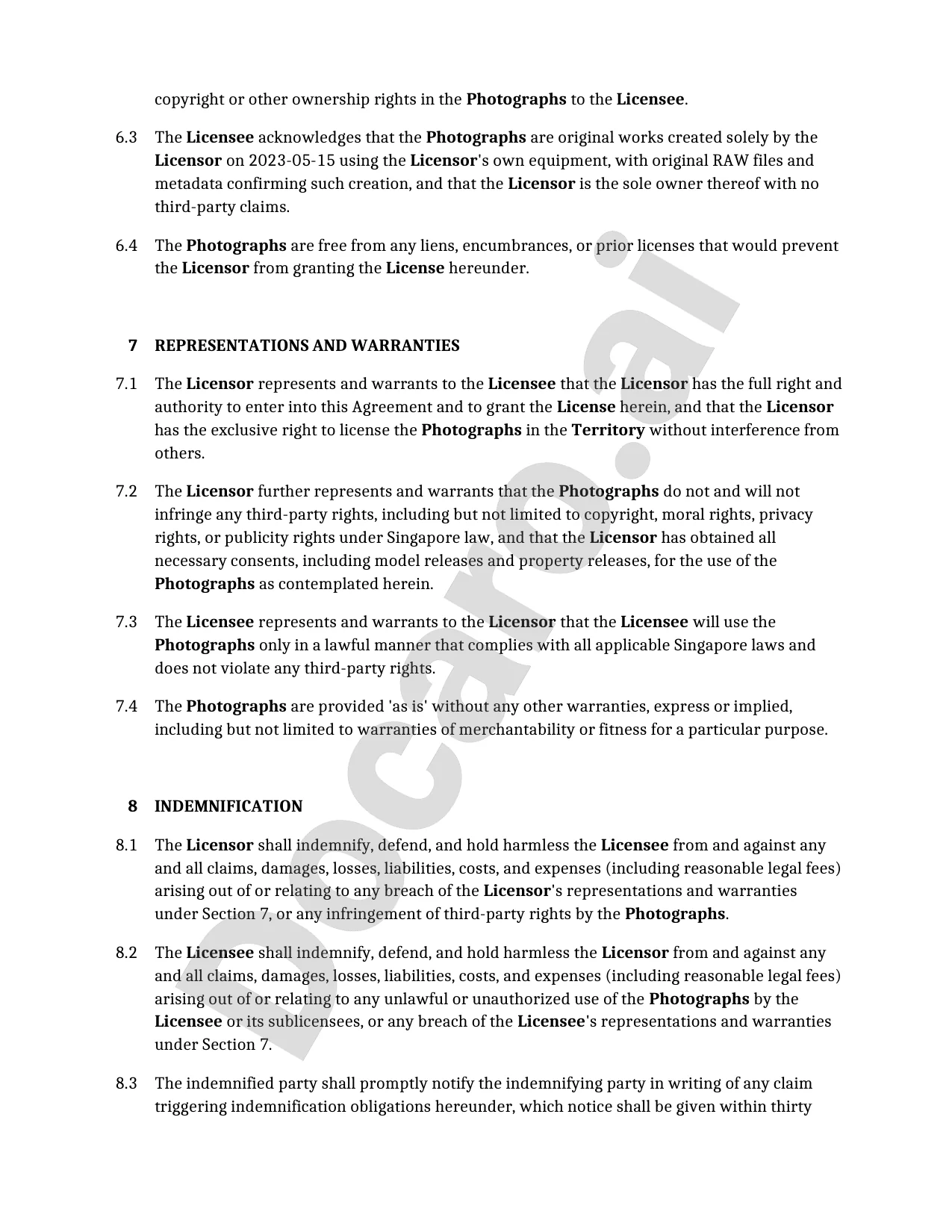
In a photo licensing agreement under Singapore law, the licensor, typically the photographer, grants the licensee, or user, specific rights to use the image while retaining ownership of the copyright. The licensor's primary obligation is to ensure the photo is original and free from third-party claims, while the licensee must adhere to defined usage limits such as duration, territory, and media type to avoid overstepping the license scope.
Attribution requirements often form a key part of these agreements, where the licensee is obligated to credit the photographer as specified, such as in captions or footers, unless waived. For infringement responsibilities, the licensor typically indemnifies the licensee against claims from prior uses, but the licensee bears liability for any unauthorized extensions of use that lead to disputes.
To navigate these legal rights and obligations in photo licensing under Singapore law, consult a professional for tailored advice. Explore detailed insights in our guide on Legal Rights and Obligations in Photo Licensing Under Singapore Law, and consider using Docaro for bespoke AI-generated legal documents to create customized agreements.
How Do Recent Legal Changes Affect Photo Licensing Agreements?
How Do You Draft and Enforce a Photo Licensing Agreement in Singapore?
You Might Also Be Interested In
A Legal Document Transferring Ownership Of A Registered Trademark From One Party To Another In Singapore.
A Legal Document Granting Permission To Use Copyrighted Material Under Specified Terms.
A Legal Contract Granting Permission To Use A Patented Invention Under Specified Terms.
A Legal Document That Transfers Ownership Of Intellectual Property Rights From One Party To Another.
A Legal Document Granting Permission To Use An Individual's Likeness In Media.
A Legal Contract Outlining The Terms For Using Software, Including Rights, Restrictions, And Obligations.