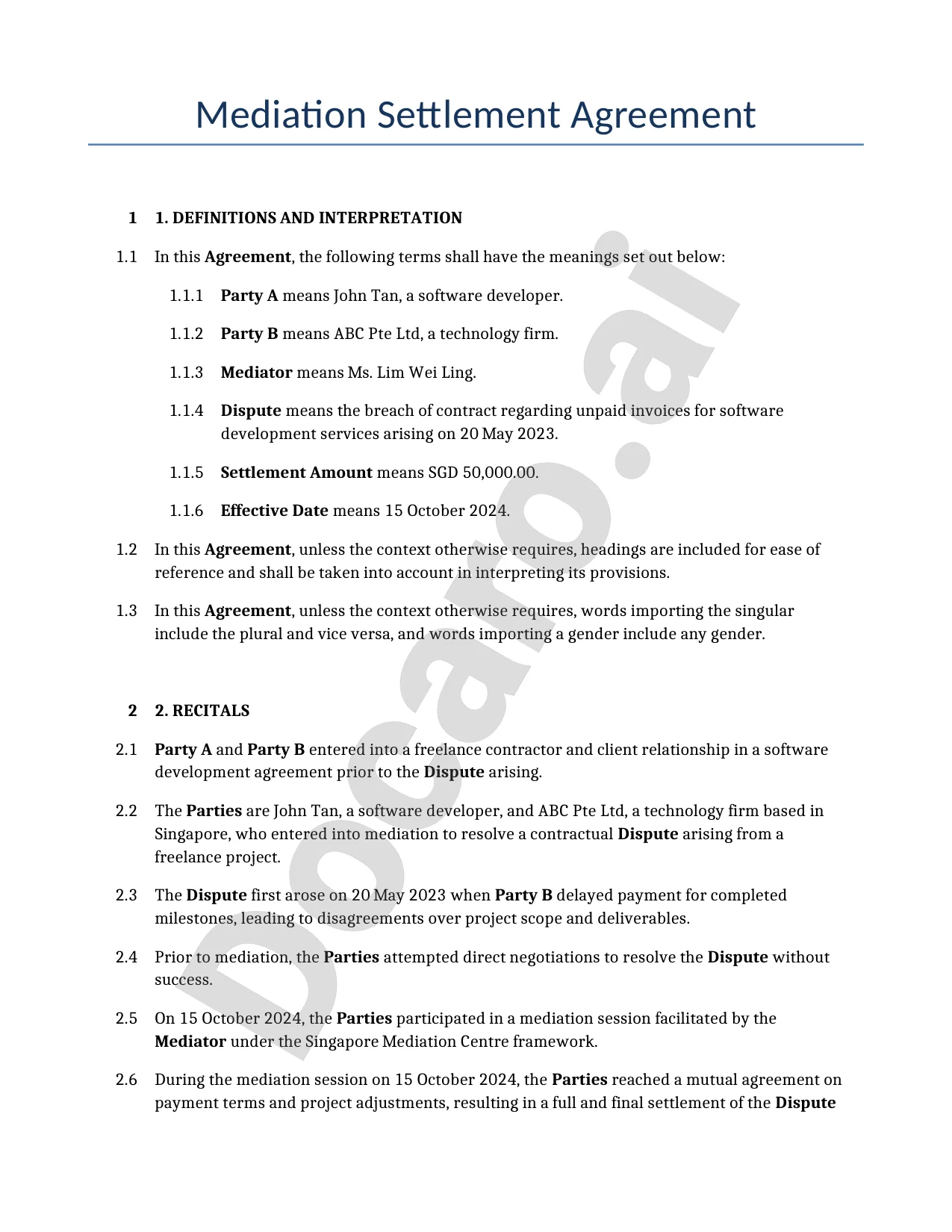
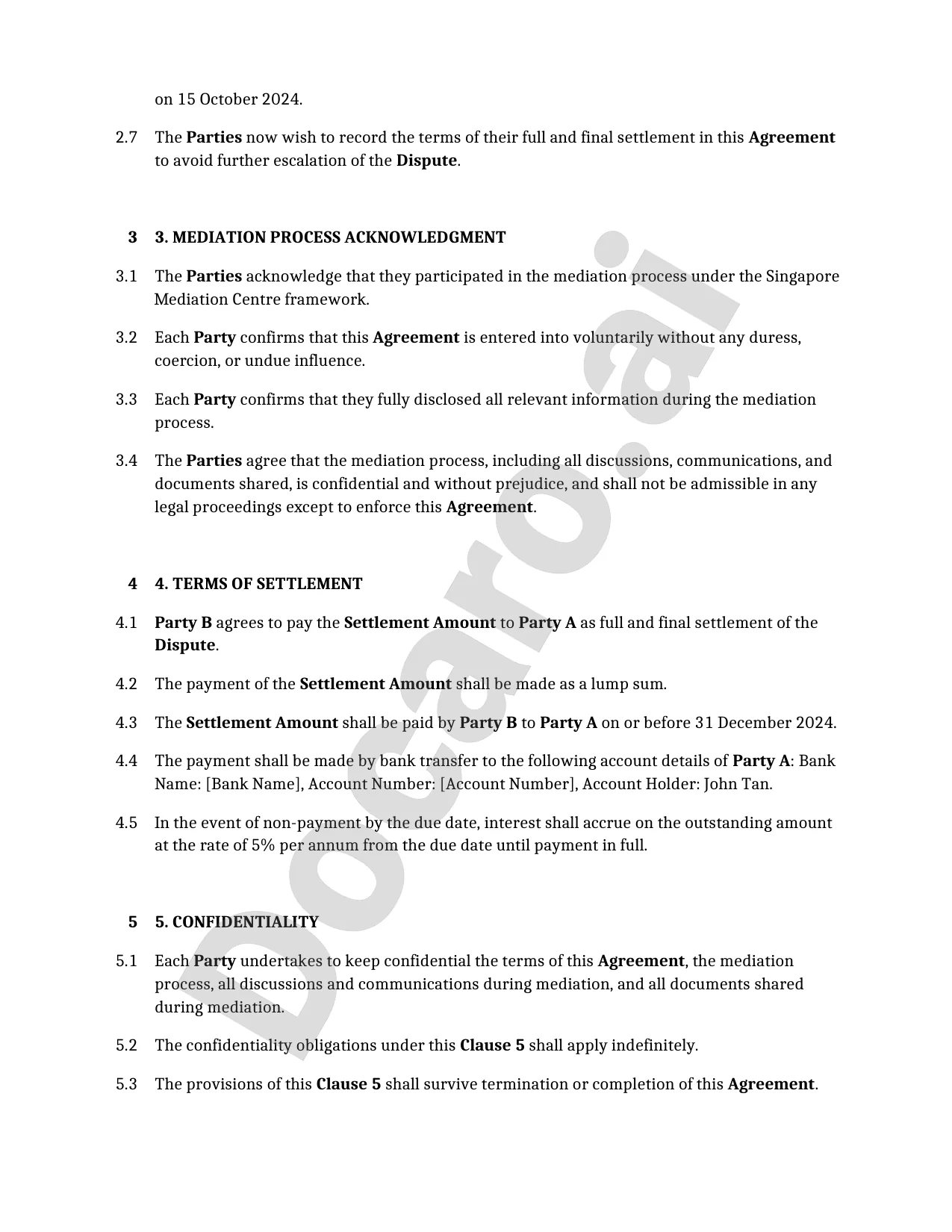
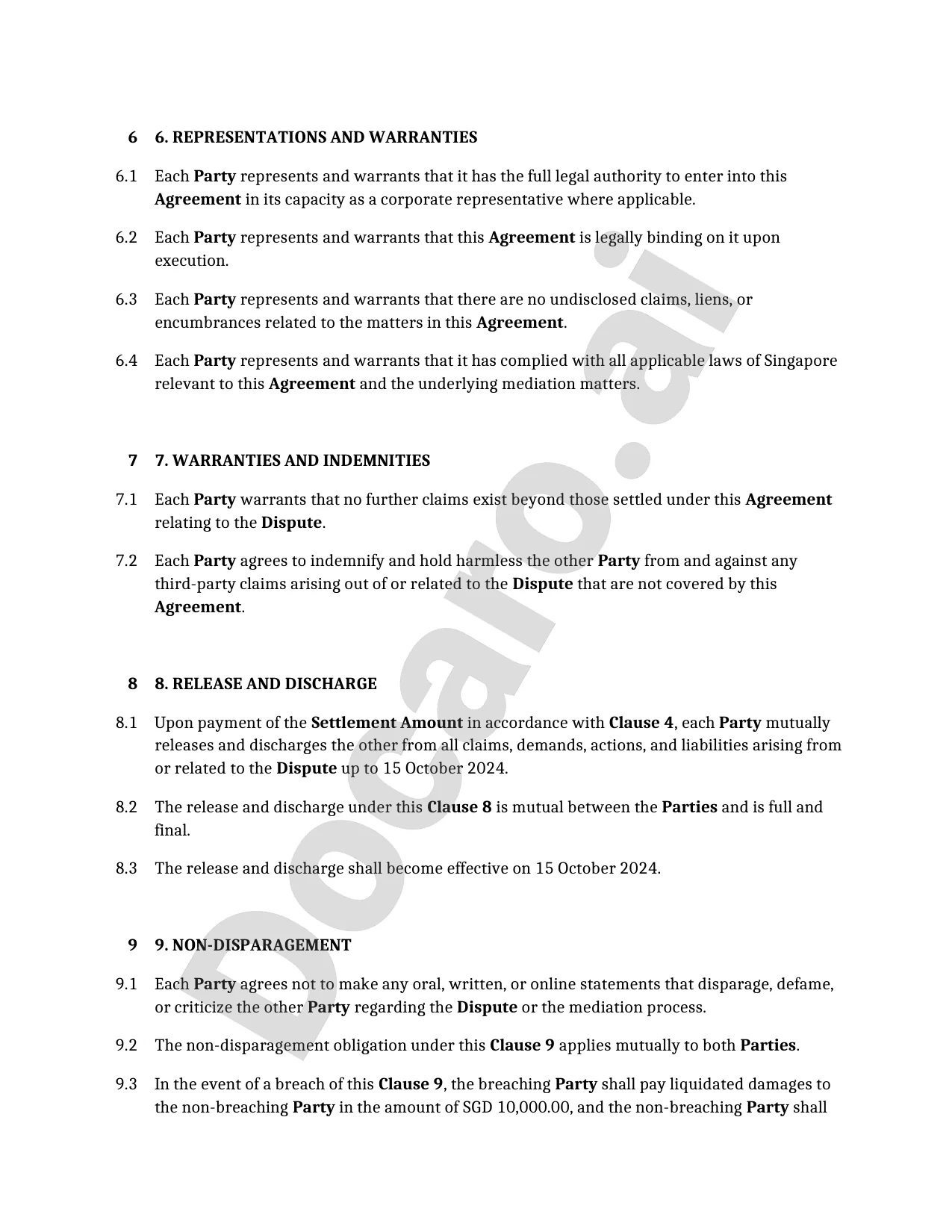
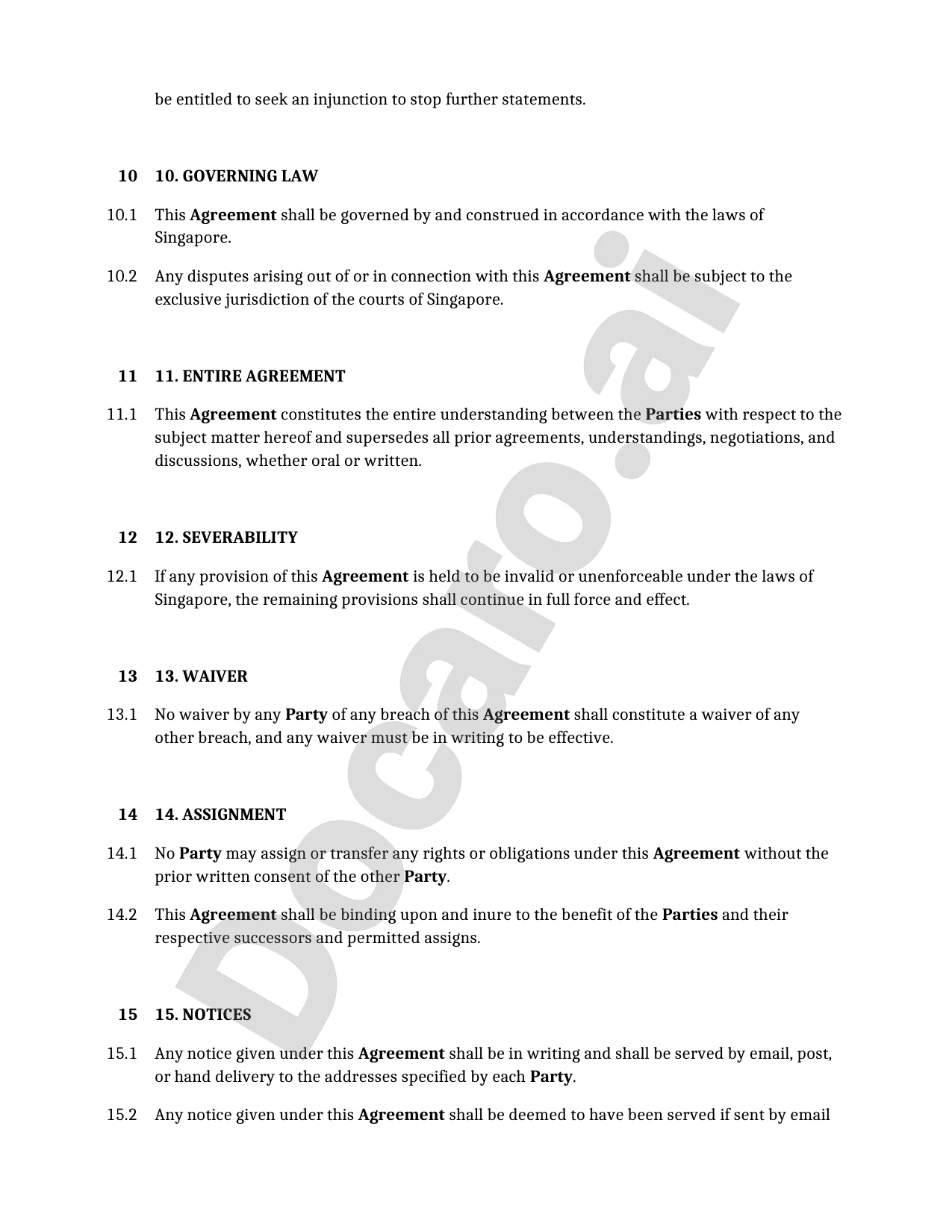
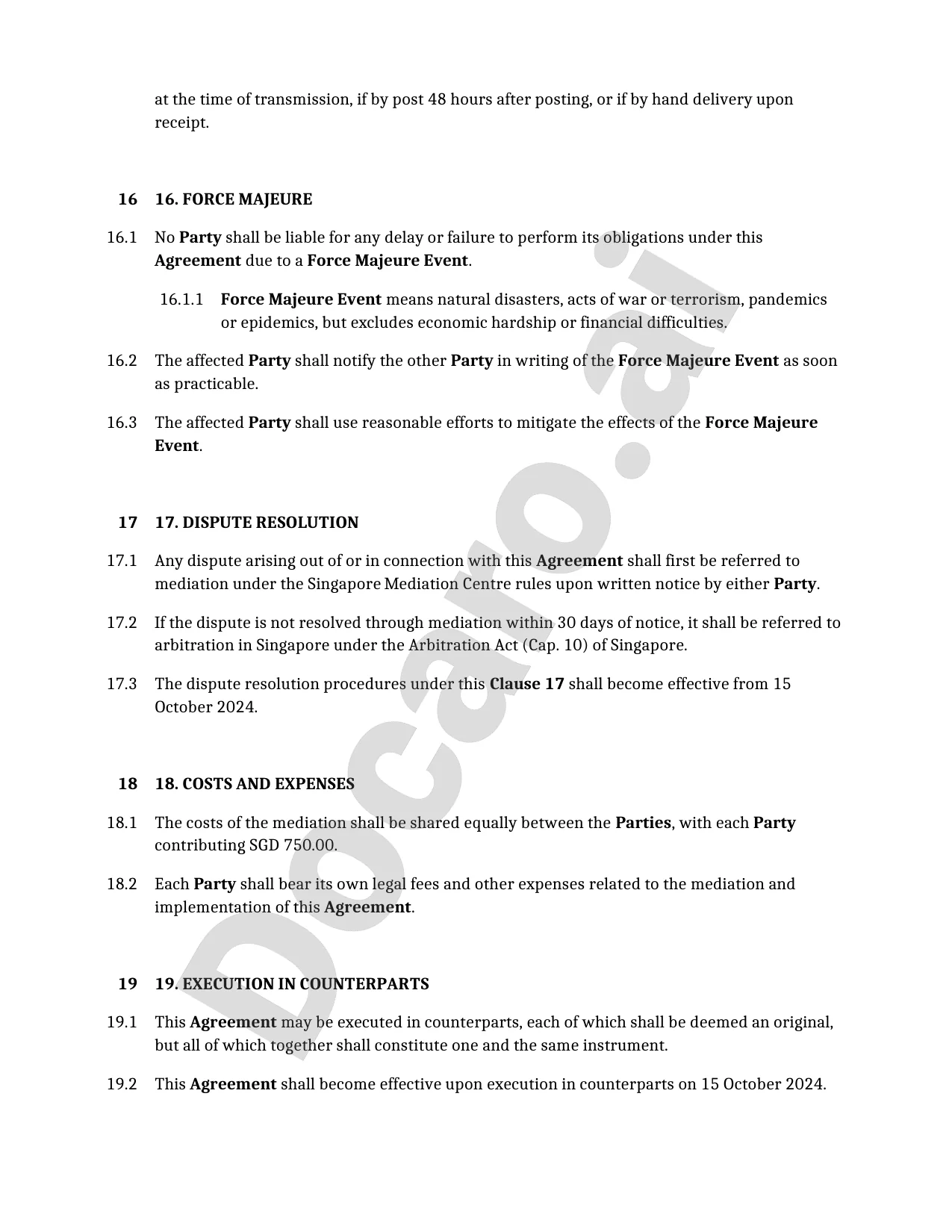
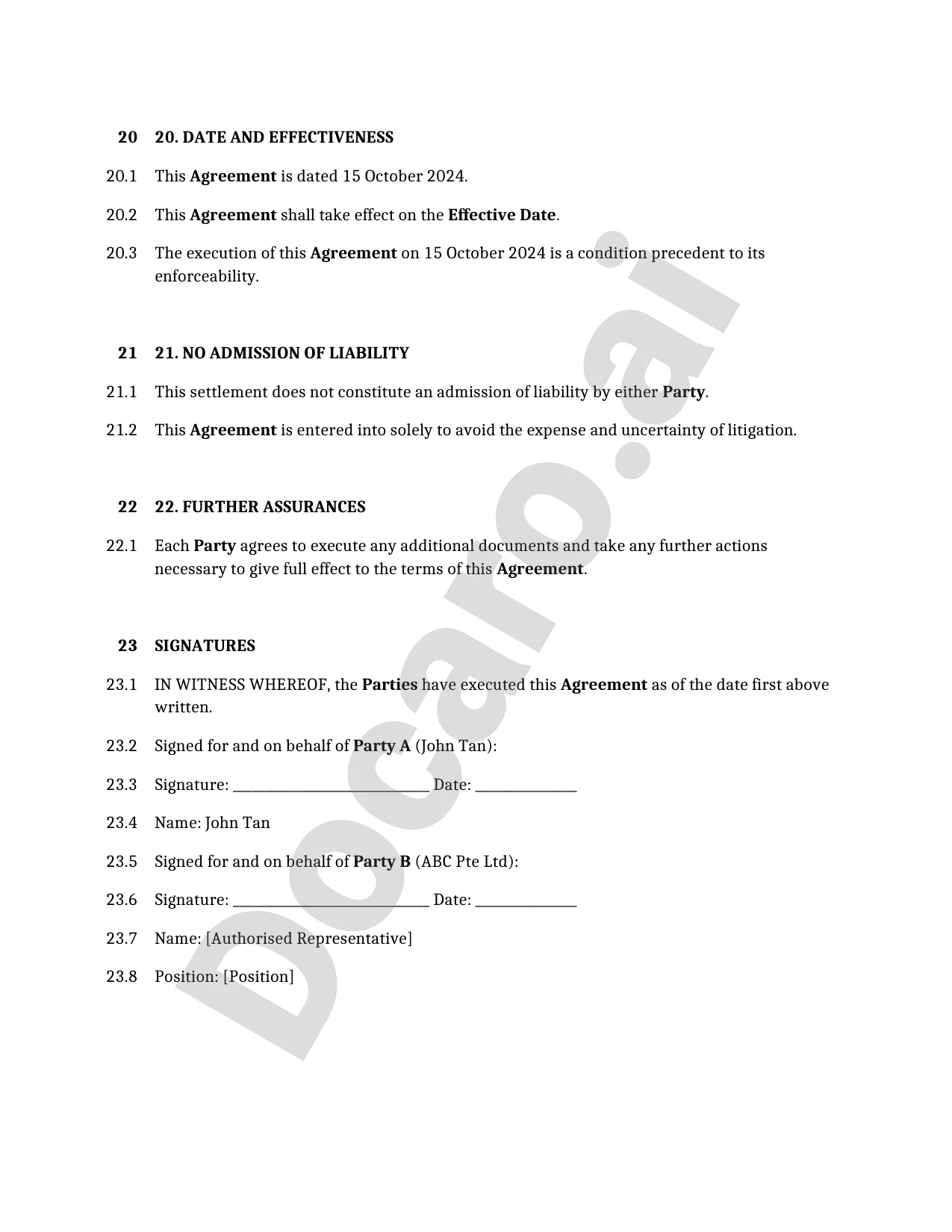
What is a Mediation Settlement Agreement in Singapore?
A Mediation Settlement Agreement in Singapore law represents a formal written pact reached between disputing parties during mediation proceedings. This document captures the mutually agreed terms to resolve conflicts outside of court, promoting a collaborative approach under the framework of the Mediation Act.
The primary purpose of a Mediation Settlement Agreement is to facilitate amicable dispute resolution, allowing parties to avoid lengthy litigation while preserving relationships and minimizing costs. In Singapore, mediation encourages voluntary participation, ensuring outcomes are tailored to the specific needs of the involved parties.
Under the Mediation Act 2017, these agreements hold significant enforceability, binding parties as a contract and potentially executable as a court judgment upon registration. This legal backing underscores mediation's role as an effective alternative to traditional adversarial processes in Singapore's justice system.
- Opt for bespoke AI-generated legal documents via Docaro platform to ensure customized agreements aligned with Singapore's Mediation Act.
- Consult qualified legal professionals for personalized advice on mediation settlements.
When should you use a Mediation Settlement Agreement in Singapore?
In Singapore commercial disputes, a Mediation Settlement Agreement is highly appropriate for resolving conflicts between businesses over contracts, partnerships, or intellectual property issues, allowing parties to reach a confidential and mutually agreeable resolution without prolonged court battles.
For family matters in Singapore, such agreements prove effective in handling divorce settlements, child custody arrangements, or inheritance disputes, fostering amicable outcomes that prioritize family harmony and minimize emotional strain.
In employment conflicts, Mediation Settlement Agreements suit cases involving wrongful termination, workplace harassment, or salary disagreements in Singapore, enabling employers and employees to negotiate fair terms swiftly through the Singapore Mediation Centre.
Explore the benefits and challenges of using these agreements, and consider bespoke AI-generated legal documents via Docaro for tailored solutions in mediation processes.
When should you avoid using one?
Mediation Settlement Agreements in Singapore are valuable tools for resolving civil disputes amicably, but they are unsuitable in cases involving criminal elements. For instance, if a dispute includes allegations of fraud, theft, or violence, mediation cannot replace criminal prosecution, as these matters require intervention by law enforcement and the courts to uphold public justice.
Agreements that violate public policy should never be pursued through mediation in Singapore. This includes settlements that encourage illegal activities, discriminate against protected groups, or undermine societal norms, as such pacts are unenforceable under Singaporean law and could lead to legal repercussions for all parties involved.
When immediate court intervention is essential, such as in urgent matters like domestic violence, child custody emergencies, or injunctions against irreparable harm, mediation is inappropriate. Singapore's legal framework prioritizes swift judicial action in these scenarios to protect vulnerable parties and prevent escalation.
For tailored legal solutions in Singapore, consider using Docaro to generate bespoke AI-powered legal documents that fit your specific needs, ensuring compliance and effectiveness without relying on generic templates.
What are the key clauses in a Mediation Settlement Agreement?
A Mediation Settlement Agreement in Singapore serves as a binding contract that resolves disputes amicably, outlining the core terms agreed upon by the parties during mediation. Essential clauses include the terms of settlement, which specify the actions each party must take, such as fulfilling obligations or releasing claims, ensuring clarity and enforceability under Singapore law.
Payment obligations form a critical part of the agreement, detailing any monetary settlements, timelines for payments, and consequences for defaults to prevent future conflicts. For comprehensive insights into these key elements, parties should consider bespoke AI-generated legal documents via Docaro for tailored precision.
Confidentiality clauses protect sensitive information discussed in mediation, prohibiting disclosure to third parties and reinforcing the private nature of the process in Singapore. These provisions maintain trust and align with the Mediation Act's emphasis on privacy.
Dispute resolution mechanisms address potential breaches by stipulating steps like further mediation or arbitration before litigation, promoting efficient resolution. Using bullet points for clarity:
- Initial notice of breach to the other party.
- Return to mediation if amicable settlement fails.
- Arbitration or court recourse as a last resort.
"Clear and precise clauses in mediation agreements are essential for enforceability under Singapore law, as ambiguity can lead to disputes and non-binding outcomes," states Professor Lim Wei Jern, a leading expert in alternative dispute resolution at the National University of Singapore. For tailored legal documents that incorporate such precision, consider using Docaro's bespoke AI generation services to create agreements suited to your specific needs.
What are the key rights and obligations of the parties?
In a Mediation Settlement Agreement in Singapore, parties hold primary rights centered on confidentiality and mutual respect. The right to confidentiality ensures that all discussions and documents from mediation remain private, protected under the Mediation Act, preventing disclosure in court unless explicitly agreed otherwise.
Obligations in such agreements require parties to fully comply with the agreed terms, making the settlement legally binding and enforceable like a contract. Failure to adhere can lead to court enforcement or remedies for breach, emphasizing the need for clear, tailored drafting.
For creating robust mediation settlement agreements, consider bespoke AI-generated legal documents via Docaro platform, ensuring customization to specific needs under Singapore law.
- Key Rights: Confidentiality, fair process, and voluntary participation.
- Key Obligations: Compliance with terms, good faith implementation, and non-disclosure of mediation details.

Are there any key exclusions to be aware of?
In Mediation Settlement Agreements in Singapore, certain exclusions are essential to ensure enforceability under the Mediation Act. Parties cannot waive non-waivable statutory rights, such as protections under employment law or consumer rights, which remain intact despite the agreement.
Exclusions for third-party claims are common, as the settlement typically binds only the direct parties involved in the mediation. This means unrelated third parties can still pursue their claims independently, requiring careful drafting to specify the scope.
To address these exclusions effectively, parties should seek bespoke AI-generated legal documents using Docaro for tailored agreements that comply with Singapore's legal framework. This approach ensures precision in handling non-waivable rights and third-party considerations.
What recent or upcoming legal changes affect these agreements?
The Mediation Act 2017 in Singapore received key amendments in 2020 to align with the Singapore Convention on Mediation Act, enhancing the enforceability of international Mediation Settlement Agreements. These changes allow such agreements to be recorded as court orders, providing cross-border certainty for mediation users.
Under the updated framework, parties can apply to the High Court to enforce mediated settlements, with procedural mechanisms ensuring they are treated similarly to arbitral awards. This promotes efficient dispute resolution without overlapping enforcement under both the Mediation Act and the Singapore Convention.
Recent developments, including the 2025 SIAC Arbitration Rules, integrate mediation more deeply into arbitration processes, allowing mediated settlements to convert into enforceable consent awards. For bespoke legal documents supporting these agreements, consider using Docaro AI-generated solutions tailored to your needs.
How can you draft an enforceable Mediation Settlement Agreement?
1
Consult Legal Experts
Engage qualified lawyers in Singapore to understand mediation rules and tailor agreement to your specific dispute needs.
2
Use Docaro for Drafting
Leverage Docaro to generate a bespoke AI-powered Mediation Settlement Agreement, ensuring it reflects unique case details accurately.
3
Incorporate Key Clauses
Include essential elements like parties, terms, confidentiality, and enforcement provisions to make the agreement binding under Singapore law.
4
Review and Finalize
Have the draft reviewed by legal counsel, sign it, and file if required for enforceability. Refer to the [detailed drafting guide](/en-sg/a/draft-enforceable-mediation-settlement-agreement-singapore) for more insights.
How is a Mediation Settlement Agreement enforced in Singapore?
Enforcing a Mediation Settlement Agreement in Singapore courts begins with registration under the Mediation Act 2017. Once parties reach an agreement through mediation, they can apply to the Singapore Mediation Centre or directly to the courts for registration, which converts the agreement into a court order with the same enforceability as a judgment.
Registration requires submitting the agreement along with a joint application to the High Court or relevant Family Justice Courts, depending on the dispute type. Upon approval, the registered agreement gains legal enforceability, allowing parties to seek court intervention if breached.
For remedies for breach, the non-breaching party can file an application to enforce the agreement as if it were a court judgment, potentially leading to contempt proceedings or execution orders. In cases of non-compliance, courts may impose penalties, including fines or imprisonment, ensuring compliance with the mediation terms.
- Key steps: Draft and sign the agreement, register promptly, and apply for enforcement if needed.
- Consult professionals for bespoke AI-generated legal documents using Docaro to tailor enforcement strategies to your specific case.
You Might Also Be Interested In
A Legally Binding Contract Where Parties Resolve A Dispute Without Court Proceedings, Outlining Terms Of Compromise.
A Contract Where Parties Agree To Resolve Disputes Through Arbitration Rather Than Litigation.
A Formal Legal Notice Requiring The Recipient To Stop An Alleged Illegal Activity And Refrain From Future Violations.
A Formal Letter Sent To Demand Payment, Compliance, Or Resolution Of A Dispute Before Pursuing Legal Action.
A Legal Document Where One Party Agrees To Waive Claims Against Another For Potential Damages Or Injuries.
A Legal Document Where Parties Mutually Agree To Release Each Other From Claims, Obligations, Or Liabilities.
A Formal Notice Sent To A Debtor Demanding Payment Or Resolution Of A Dispute Before Initiating Legal Proceedings.
A Written Statement Confirmed By Oath Or Affirmation, Used As Evidence In Court.