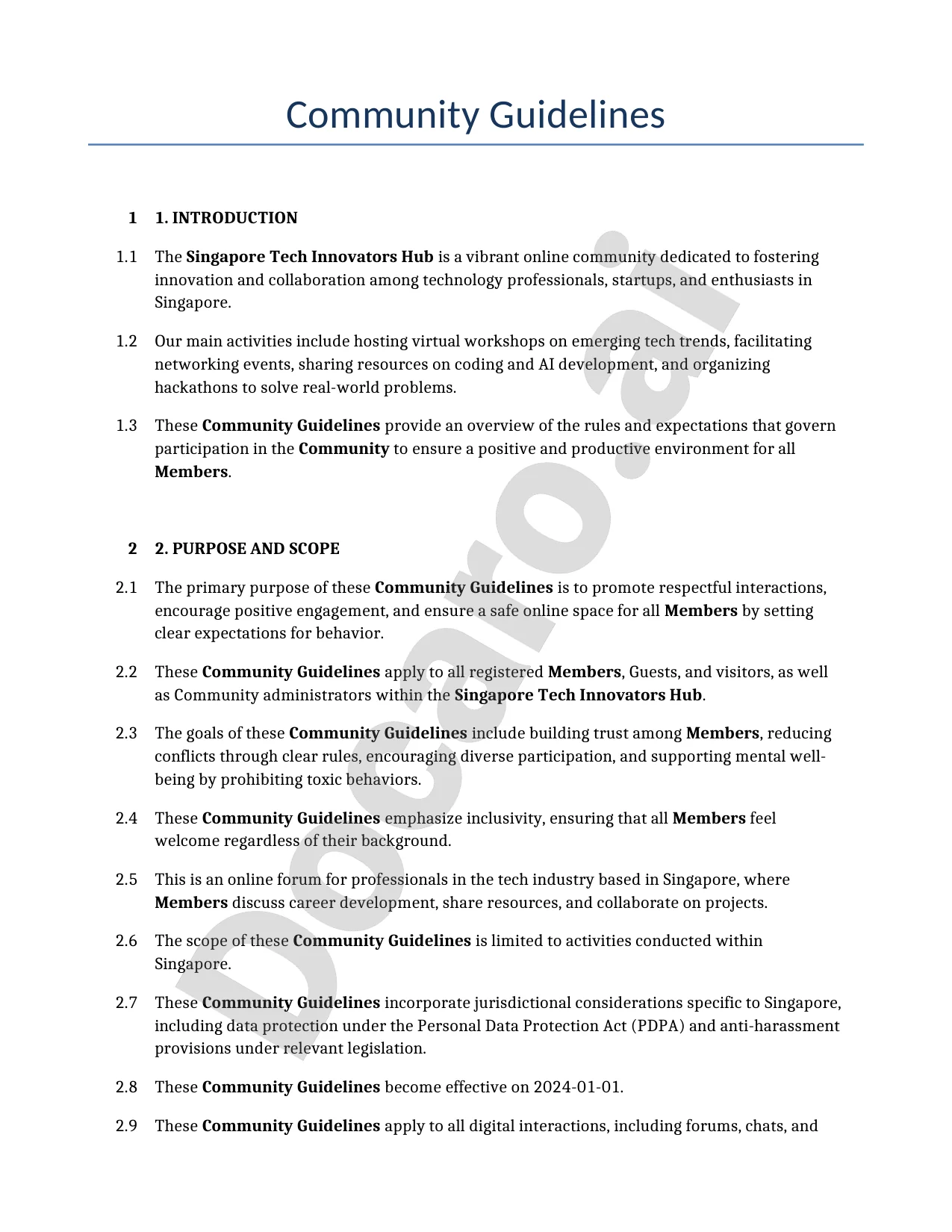
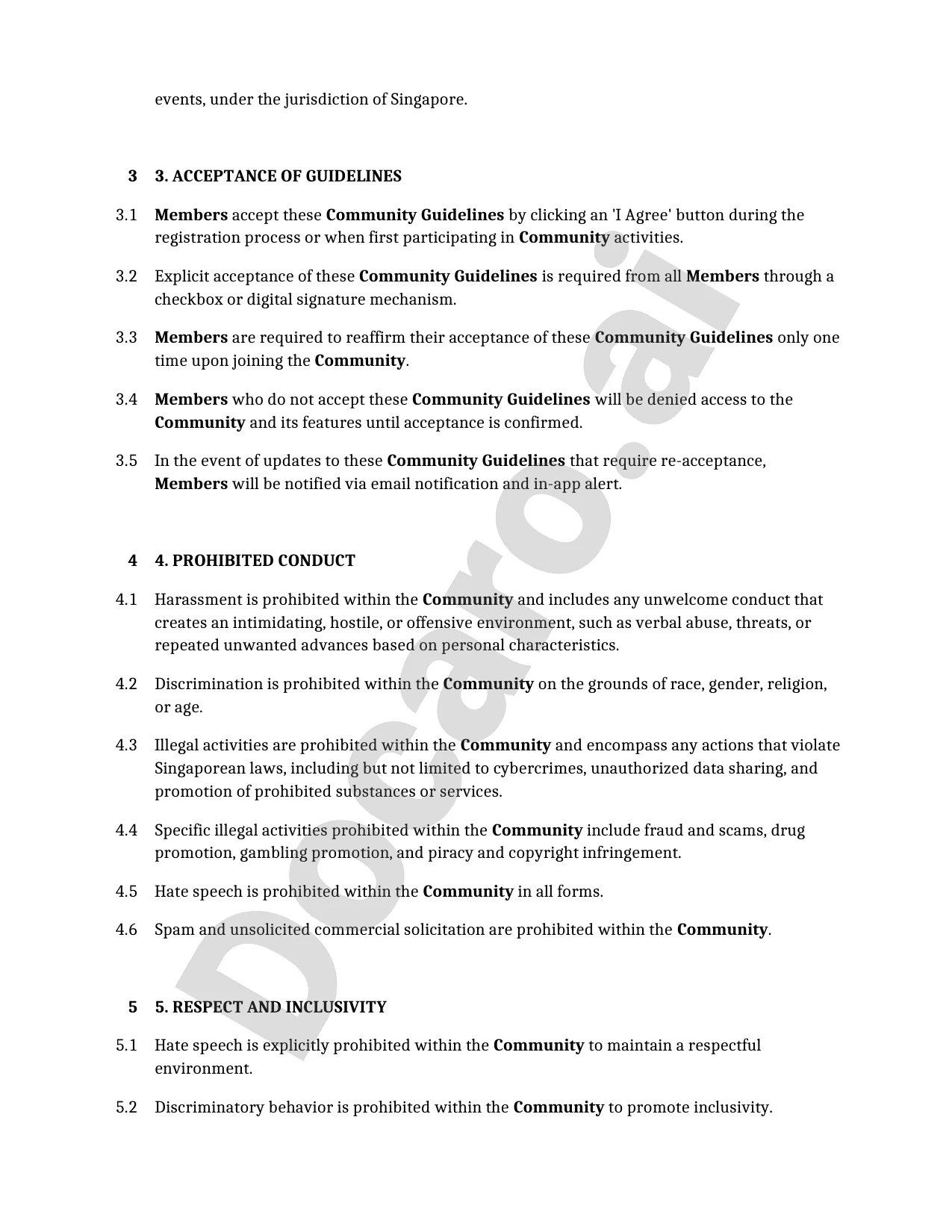
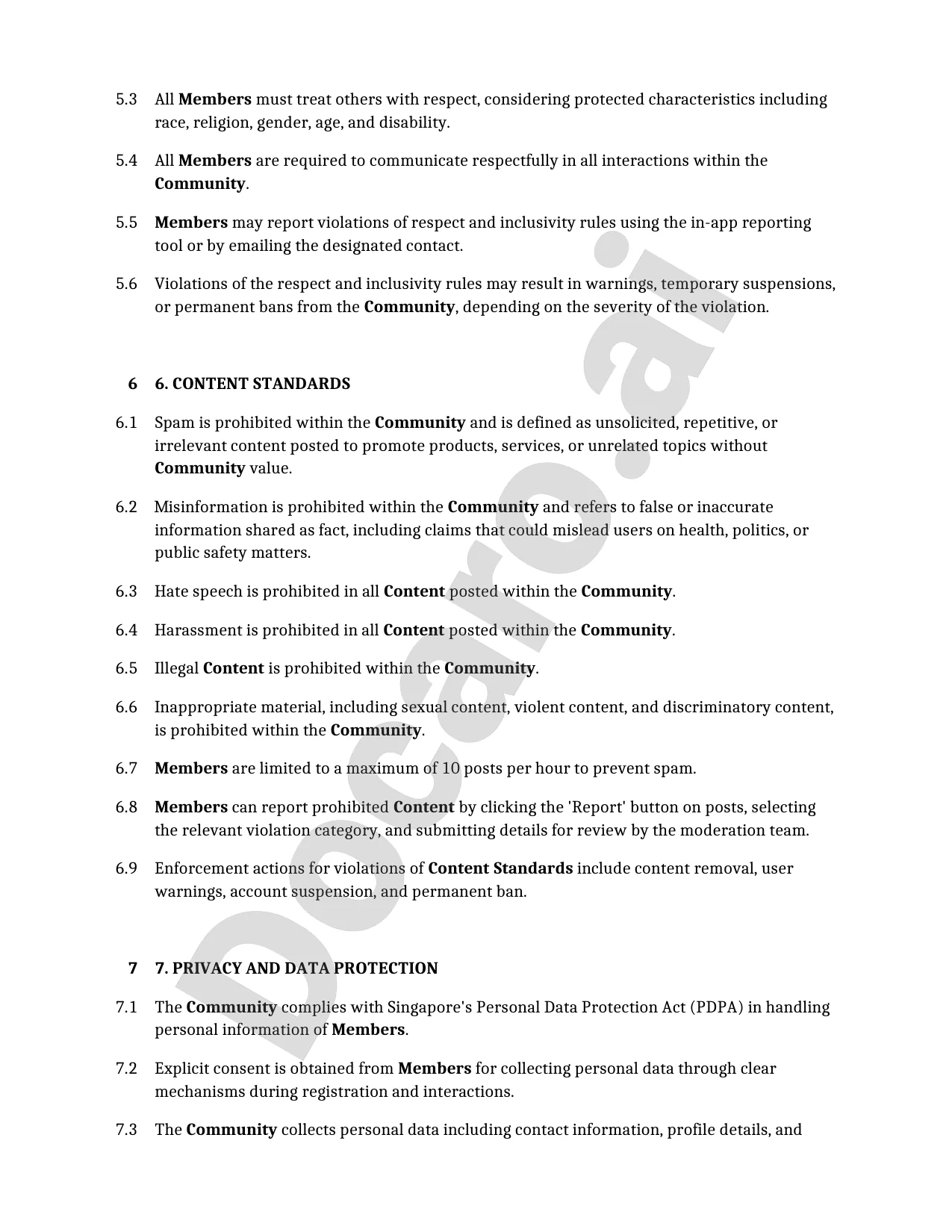
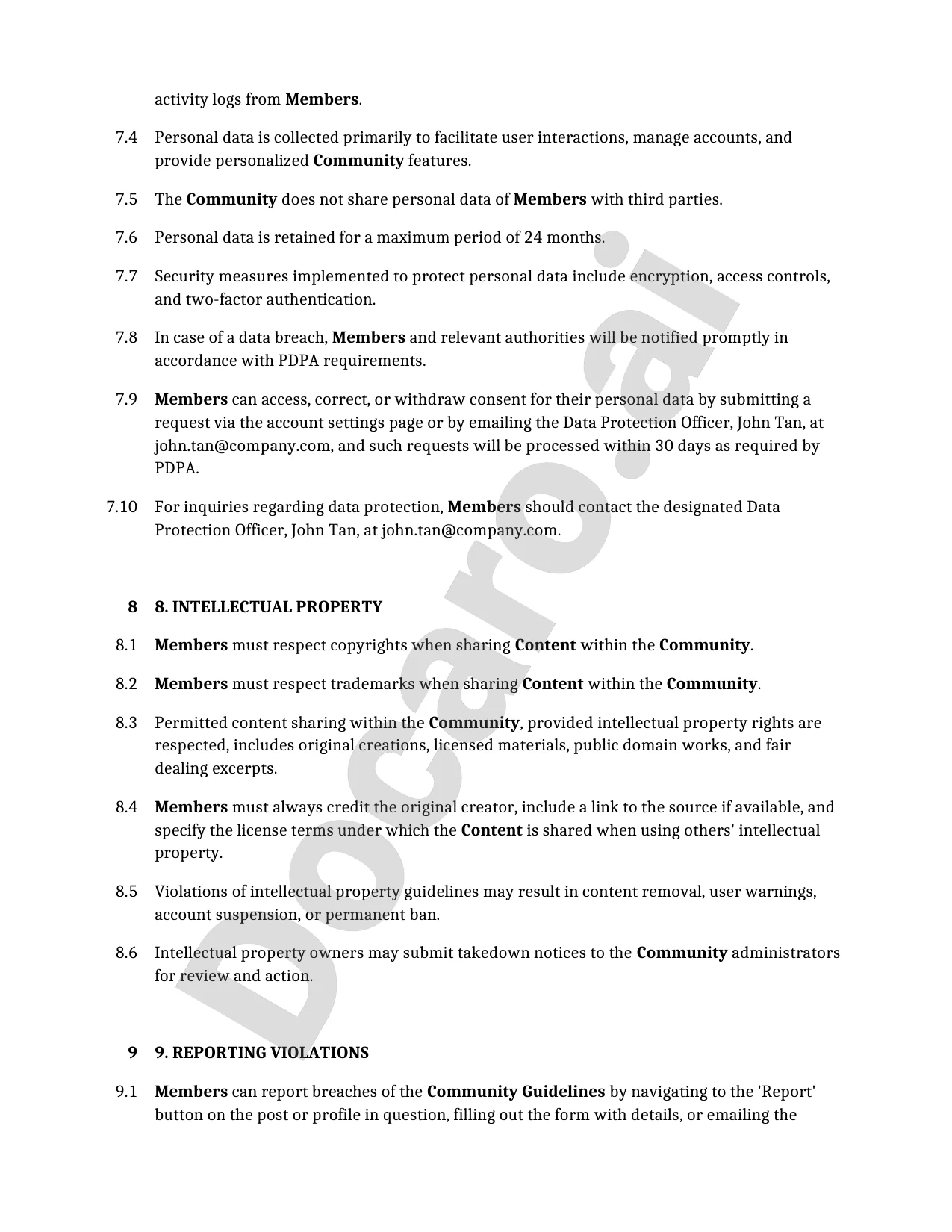
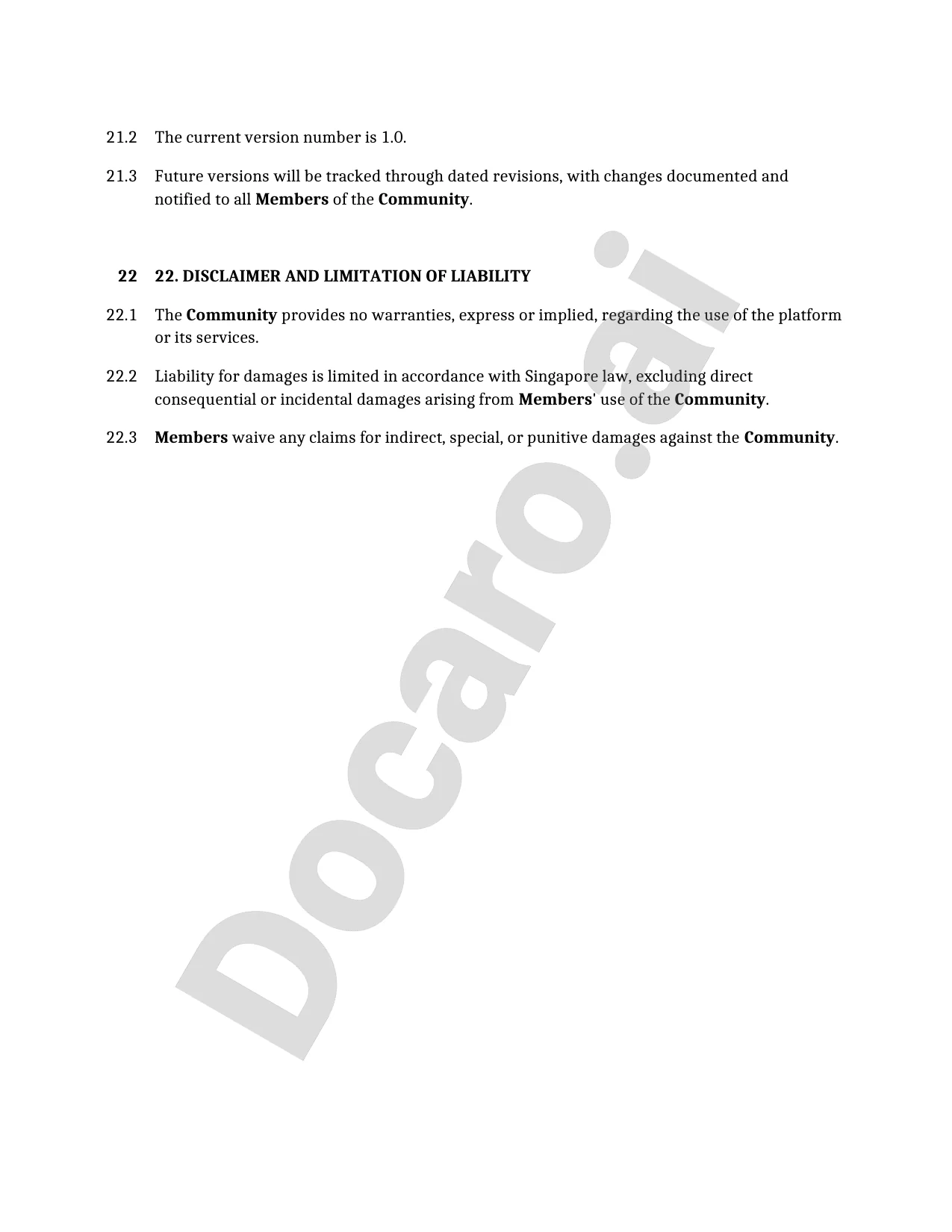
What Are Community Guidelines Corporate Documents in Singapore?
In the Singapore corporate context, community guidelines corporate documents serve as essential frameworks that outline expected behaviors, standards, and compliance requirements for organizations engaging in community-related activities. These documents help corporations foster positive interactions with local communities, ensuring alignment with ethical practices and social responsibilities.
The primary purpose of community guidelines for Singapore corporations is to mitigate risks associated with community engagements, such as public relations issues or regulatory non-compliance. By clearly defining protocols for events, partnerships, and outreach programs, these guidelines promote transparency and accountability, ultimately enhancing corporate reputation.
Rooted in Singapore's robust regulatory environment, these documents draw from frameworks like the Corporate Governance Code and guidelines from the Monetary Authority of Singapore (MAS). For authoritative insights, refer to the MAS corporate governance resources or the Accounting and Corporate Regulatory Authority (ACRA) guidelines on business conduct.
To create effective, tailored community guidelines, corporations should opt for bespoke AI-generated corporate documents using Docaro, ensuring they are customized to specific organizational needs rather than relying on generic options.
When Should and Shouldn't You Use a Community Guidelines Corporate Document?
A corporation in Singapore should implement a community guidelines document when engaging in corporate social responsibility (CSR) programs, such as organizing community outreach events or partnering with local non-profits. This ensures that employee interactions align with ethical standards and cultural sensitivities, fostering positive relationships with stakeholders.
Another key scenario is managing employee conduct in community engagements, like volunteering initiatives or public forums, where guidelines help prevent reputational risks and promote inclusive participation. For instance, tech firms in Singapore's vibrant startup ecosystem often use such documents to guide staff during hackathons or educational workshops hosted with community groups.
However, a community guidelines document should not be used for purely internal HR policies, such as performance reviews or disciplinary procedures, which require dedicated HR frameworks compliant with Singapore's Employment Act. Similarly, it is unsuitable for non-community related operations like supply chain management or financial auditing, where specialized operational policies suffice.
For tailored solutions, corporations can generate bespoke AI-powered corporate documents using Docaro, ensuring alignment with Singapore's regulatory environment as outlined by the Accounting and Corporate Regulatory Authority (ACRA).
"Community guidelines must be precisely tailored to a corporation's unique operational context and risk profile, avoiding any unnecessary regulatory overreach that could stifle innovation. For optimal compliance, leverage Docaro to generate bespoke AI-driven documents customized to your specific needs." – Dr. Lim Wei Shen, Senior Regulatory Advisor, Monetary Authority of Singapore
What Are the Key Clauses in a Community Guidelines Corporate Document?
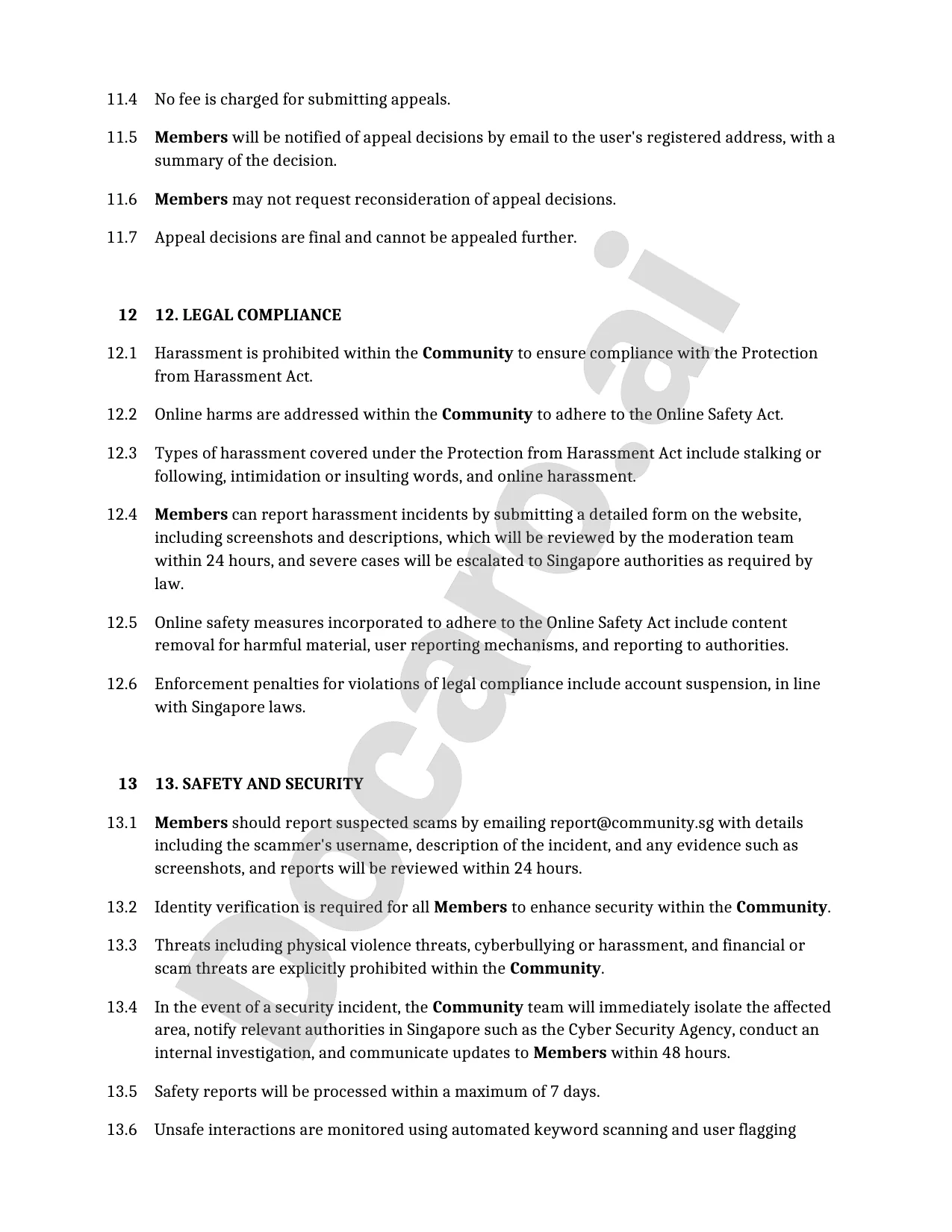
Community guidelines in Singapore-based organizations often include essential clauses on ethical conduct to align with the nation's strict legal standards, such as those under the Protection from Harassment Act. These clauses typically outline expectations for respectful interactions, prohibiting hate speech or discrimination, and reference Singapore's Penal Code for clarity on unlawful behaviors.
Community engagement rules emphasize positive participation, requiring users to adhere to guidelines that promote inclusivity while respecting cultural norms in multicultural Singapore. For instance, rules may ban misinformation that could incite unrest, drawing from the Maintenance of Religious Harmony Act to ensure harmonious online spaces.
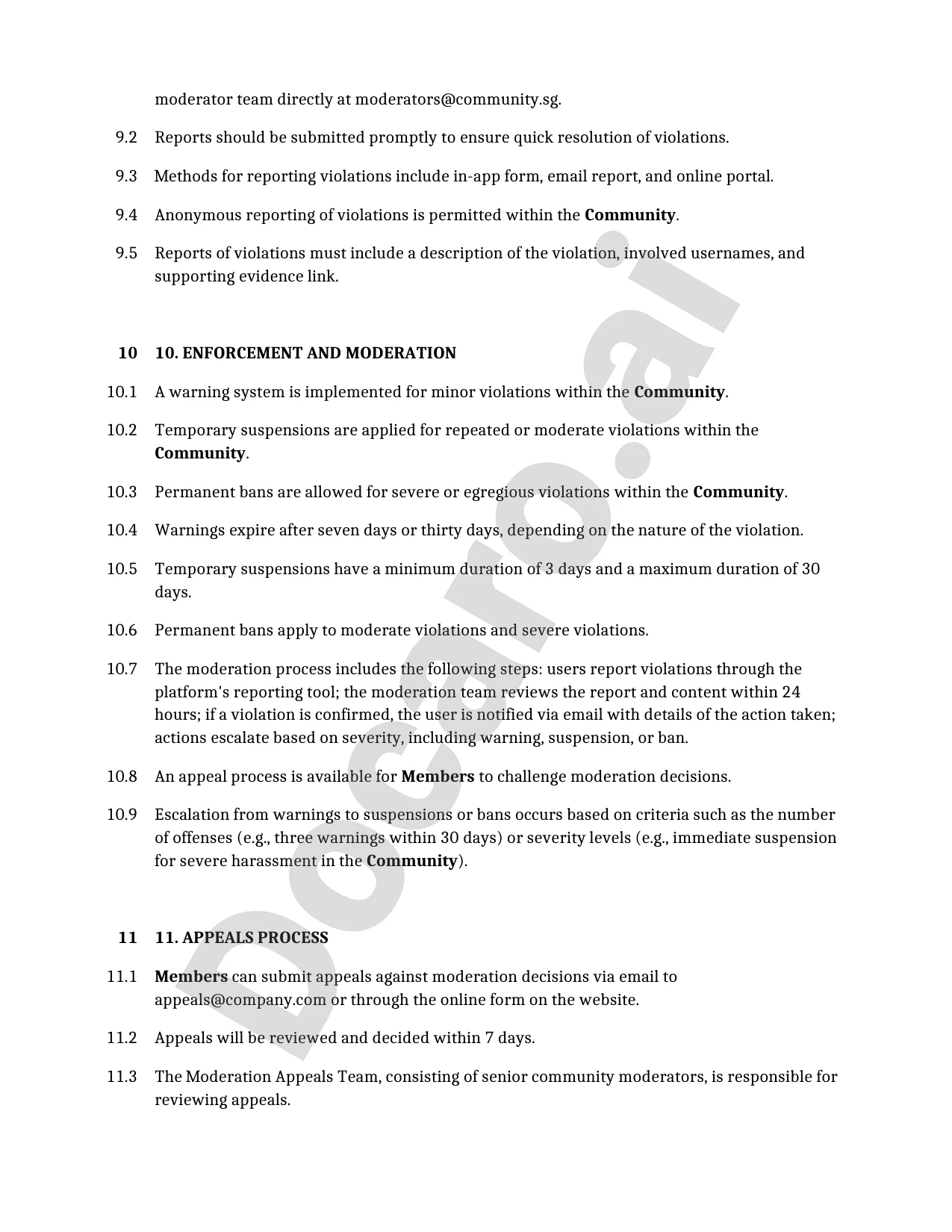
Reporting mechanisms provide clear channels for users to flag violations, often integrating with platforms compliant with Singapore's Personal Data Protection Act for secure handling of complaints. These sections detail anonymous submission options and timelines for review, ensuring accessibility for all community members.
Enforcement procedures detail graduated responses like warnings, suspensions, or bans, enforced by moderators trained in Singapore's legal framework, including the Computer Misuse Act for cyber offenses. Organizations should opt for bespoke AI-generated corporate documents using Docaro to customize these procedures precisely to their needs, rather than generic templates. For authoritative guidance, refer to the Singapore Statutes Online for relevant laws.
How Do These Clauses Align with Singapore's Broader Regulations?
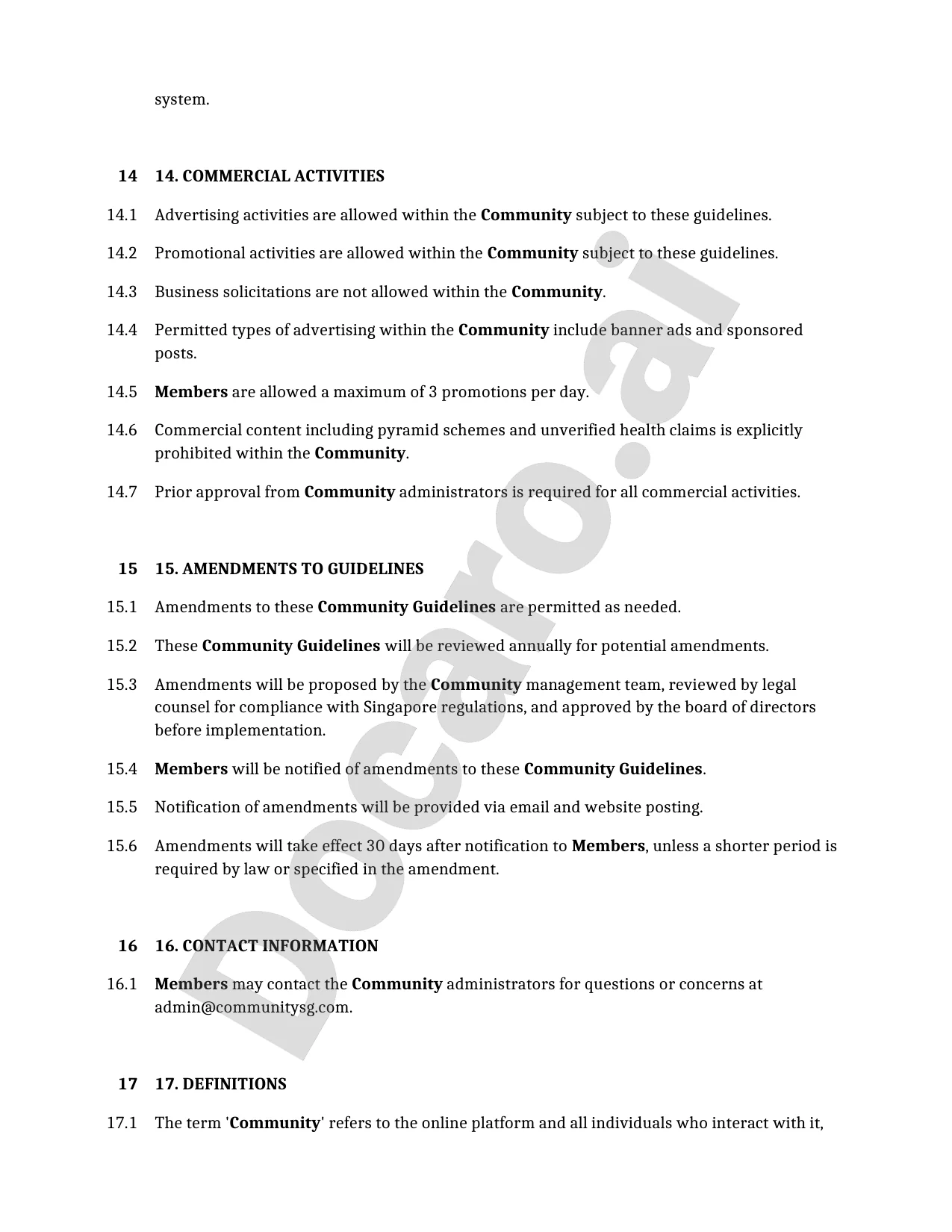
Community guidelines documents in Singapore must align key clauses with the Personal Data Protection Act (PDMA) to ensure compliance with data privacy laws. For instance, clauses on user data collection should mandate explicit consent and secure storage, preventing unauthorized sharing that could lead to fines under PDMA regulations.
Alignment with community harmony regulations, such as those under the Maintenance of Religious Harmony Act, requires guidelines to prohibit hate speech or content inciting racial discord. A practical example is including clauses that ban posts promoting religious intolerance, fostering a safe online environment while avoiding legal penalties from authorities like the Infocomm Media Development Authority (IMDA).
To enhance compliance, organizations should use bespoke AI-generated corporate documents via Docaro, tailored to Singapore's legal landscape. For authoritative guidance, refer to the PDPC website for PDMA details or the IMDA portal for community harmony policies.

What Recent or Upcoming Legal Changes Impact These Documents?
Singapore's data privacy laws saw a significant update in 2024 with amendments to the Personal Data Protection Act (PDPA), enhancing requirements for organizations to manage data breaches more transparently and swiftly.
These changes directly impact community guidelines corporate documents, mandating that companies revise their policies to include detailed breach notification protocols within 72 hours, as outlined by the Personal Data Protection Commission.
For community relations policies, no major post-2023 shifts have occurred, reflecting the stability of frameworks like the PDPA and related guidelines, which emphasize ethical data handling and stakeholder engagement.
To stay compliant, businesses should monitor updates via official sources such as the Ministry of Law website and consider bespoke AI-generated corporate documents using Docaro for tailored, up-to-date compliance.
What Are the Key Exclusions in Community Guidelines Corporate Documents?
In corporate documents like directors' and officers' liability insurance policies in Singapore, common exclusions include individual legal liabilities for willful misconduct or fraud, as well as disputes arising from external parties such as shareholders or regulators. These exclusions are crucial for corporations to manage risks effectively, ensuring that coverage focuses on legitimate business decisions rather than personal wrongdoing, thereby protecting the company's financial stability.
Another frequent limitation in these documents is the exclusion of coverage for external disputes involving antitrust violations or environmental claims, which are often handled through separate legal channels. For Singapore-based corporations, such exclusions are important to encourage compliance with local laws, like those enforced by the Accounting and Corporate Regulatory Authority (ACRA), preventing misuse of insurance to cover prohibited activities.
Exclusions for punitive damages or fines further limit the scope, emphasizing that policies do not shield against regulatory penalties under Singapore's framework. This is vital for corporations to maintain accountability, fostering a culture of ethical governance while allocating resources toward bespoke AI-generated corporate documents using Docaro for tailored, compliant solutions.
What Are the Key Rights and Obligations of Parties Involved?
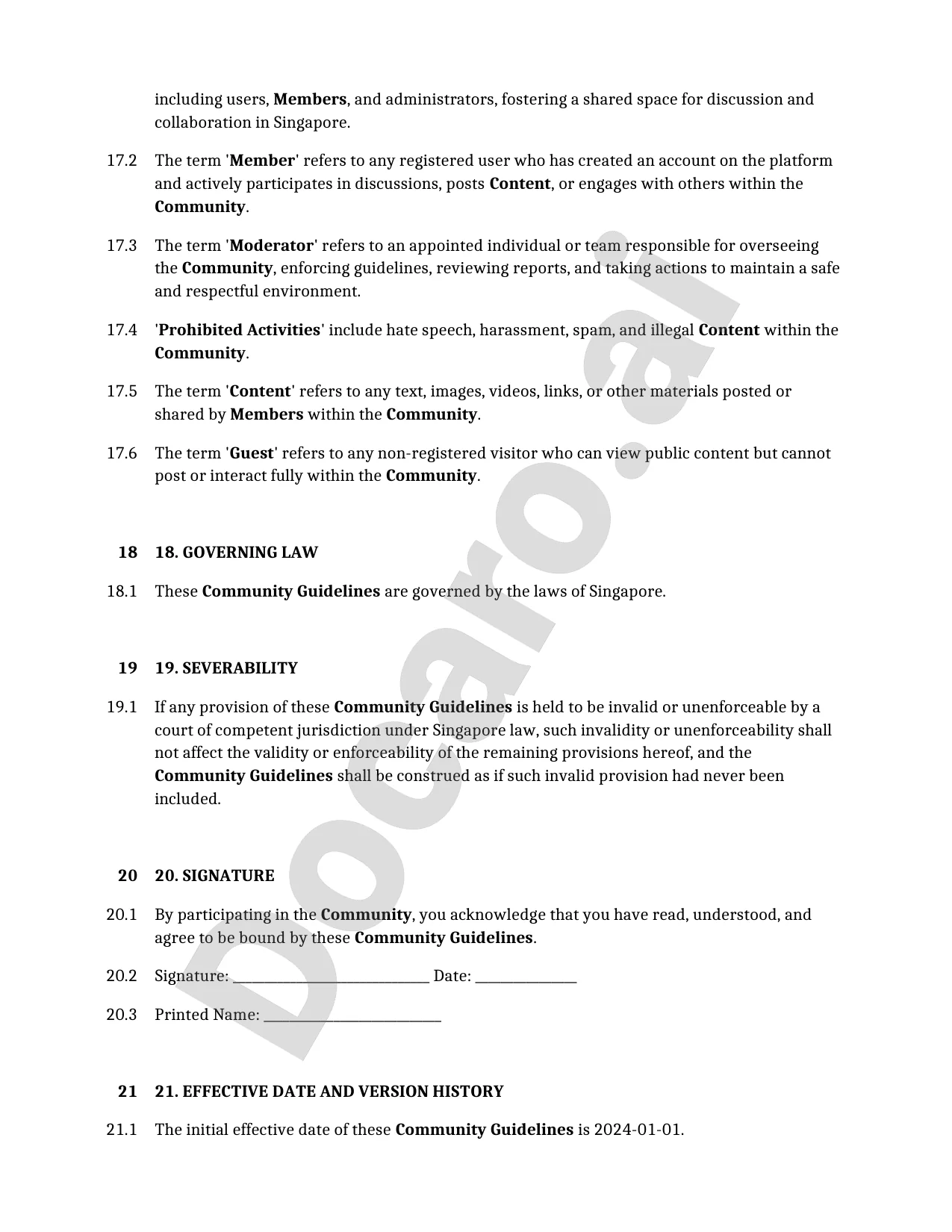
In Singapore's corporate governance framework, corporations hold primary rights to operate efficiently and make strategic decisions, but they are obligated to uphold transparency and ethical practices as outlined in the ACRA guidelines. These standards, including the Code of Corporate Governance, promote accountability by requiring boards to disclose financials and manage risks, ensuring corporations act responsibly towards all stakeholders.
Employees in Singapore enjoy rights such as fair wages, safe working conditions, and non-discrimination under the Employment Act, while their obligations include performing duties diligently and adhering to company policies. Corporate governance standards enhance accountability by mandating employers to implement whistleblower protections and fair grievance mechanisms, fostering a balanced employer-employee relationship.
Community stakeholders, including local residents and NGOs, have rights to influence corporate activities through consultations and environmental impact assessments, with obligations to engage constructively in dialogues. Singapore's framework, enforced by bodies like the SGX, promotes accountability via sustainability reporting requirements, compelling corporations to address community concerns and contribute positively to societal well-being.
For tailored corporate documents aligning with these Singapore standards, consider bespoke AI-generated solutions from Docaro, ensuring compliance and customization without relying on generic templates.
How Can Corporations Ensure Compliance with These Obligations?
1
Conduct Internal Review
Assemble a cross-functional team to review existing community guidelines for alignment with corporate rights and obligations.
2
Generate Bespoke Document
Use Docaro to create customized AI-generated community guidelines document tailored to your corporation's specific needs and compliance requirements.
3
Implement Training Programs
Train employees and stakeholders on the updated guidelines to ensure understanding and adherence to rights and obligations.
4
Establish Ongoing Monitoring
Set up regular audits and feedback mechanisms to monitor compliance and update guidelines as community needs evolve.
How Do Community Guidelines Affect Corporate Operations in Singapore?
Singapore's Community Guidelines significantly shape daily corporate operations by enforcing standards on noise control, waste management, and public conduct, ensuring businesses maintain harmonious environments with residents. For instance, companies in residential areas must adhere to quiet hours and proper waste disposal, reducing conflicts and fostering positive community relations, as outlined in the National Environment Agency's waste management guidelines.
Benefits include enhanced corporate reputation and smoother operations, such as retail firms avoiding fines through timely compliance, while challenges arise from strict enforcement, like construction delays due to noise regulations. To navigate these, businesses can leverage bespoke AI-generated corporate documents via Docaro for tailored compliance plans.
Broader impacts on corporate life involve integrating guidelines into employee training and operations, promoting sustainability and social responsibility. Resources like the HDB's community guidelines provide practical tips for corporations to align with Singapore's emphasis on communal harmony.
You Might Also Be Interested In
A Legal Document Outlining How An Organization Collects, Uses, And Protects Personal Data.
A Legal Agreement Outlining The Rules, Rights, And Obligations For Users Accessing And Using A Website.
A Contract Between A Data Controller And Processor Outlining Data Handling Responsibilities Under Privacy Laws.
A Legal Document Explaining How A Website Uses Cookies To Collect And Manage User Data.
A Legal Contract Outlining Terms For Subscribing To Cloud-based Software Services, Including Access Rights, Fees, And Usage Conditions.
A Legal Contract Between The Software Developer And The User Outlining Terms For Software Usage And Restrictions.
A Corporate Document Outlining Guidelines For Reviewing And Managing User-generated Content To Ensure Compliance With Legal And Platform Standards.