Why Free Templates Can Be Risky for Freelance Agreements
Free freelance contract templates are often generic and outdated, failing to account for Singapore's specific employment laws, tax obligations, or intellectual property regulations. Using mismatched wording can lead to unenforceable terms, disputes over payment or scope, or unintended liabilities for both parties.
Our AI-generated bespoke freelance agreements are tailored to your unique needs, incorporating current Singapore legal standards for clear, enforceable clauses on deliverables, payment schedules, confidentiality, and termination, ensuring comprehensive protection customized to your project.
What is a Freelance Agreement in Singapore?
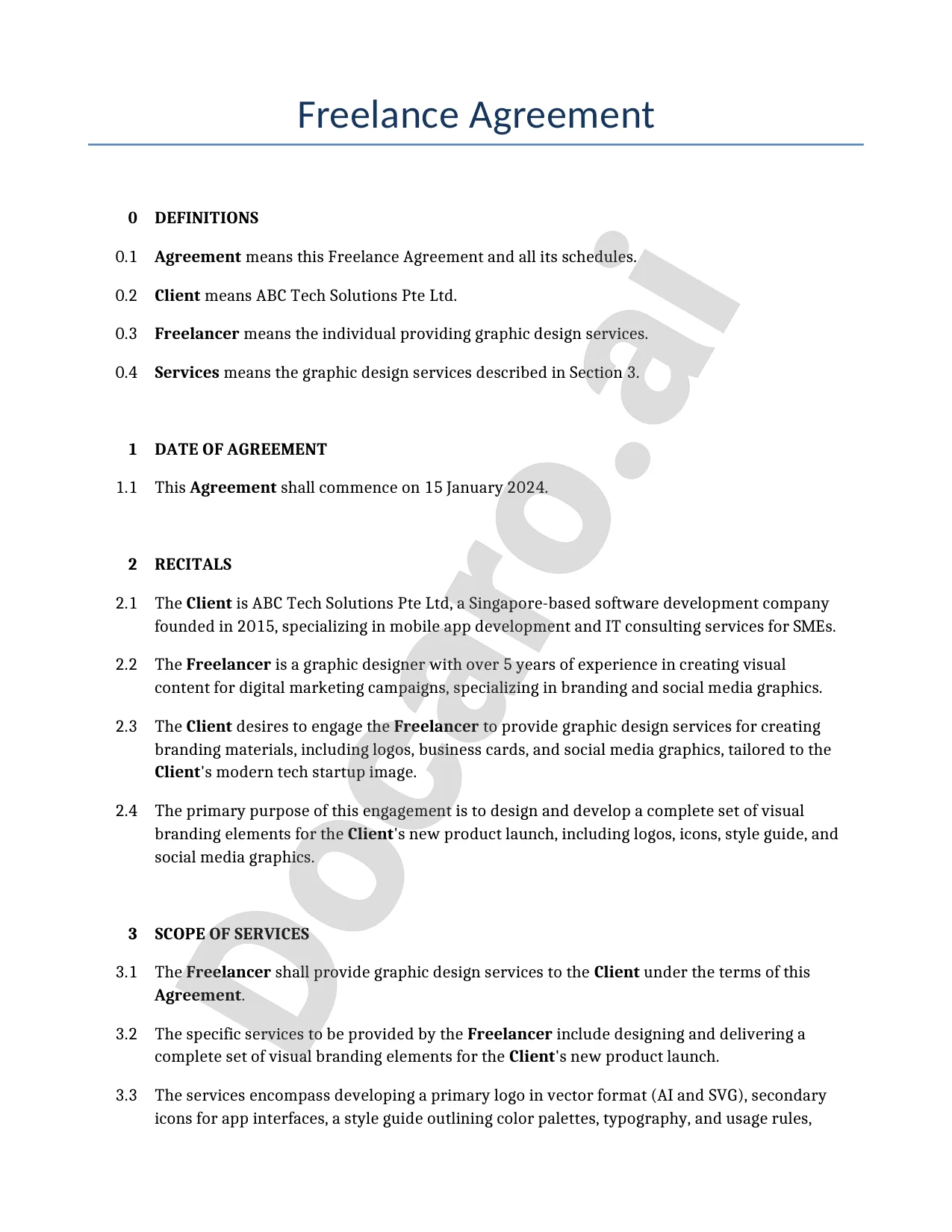
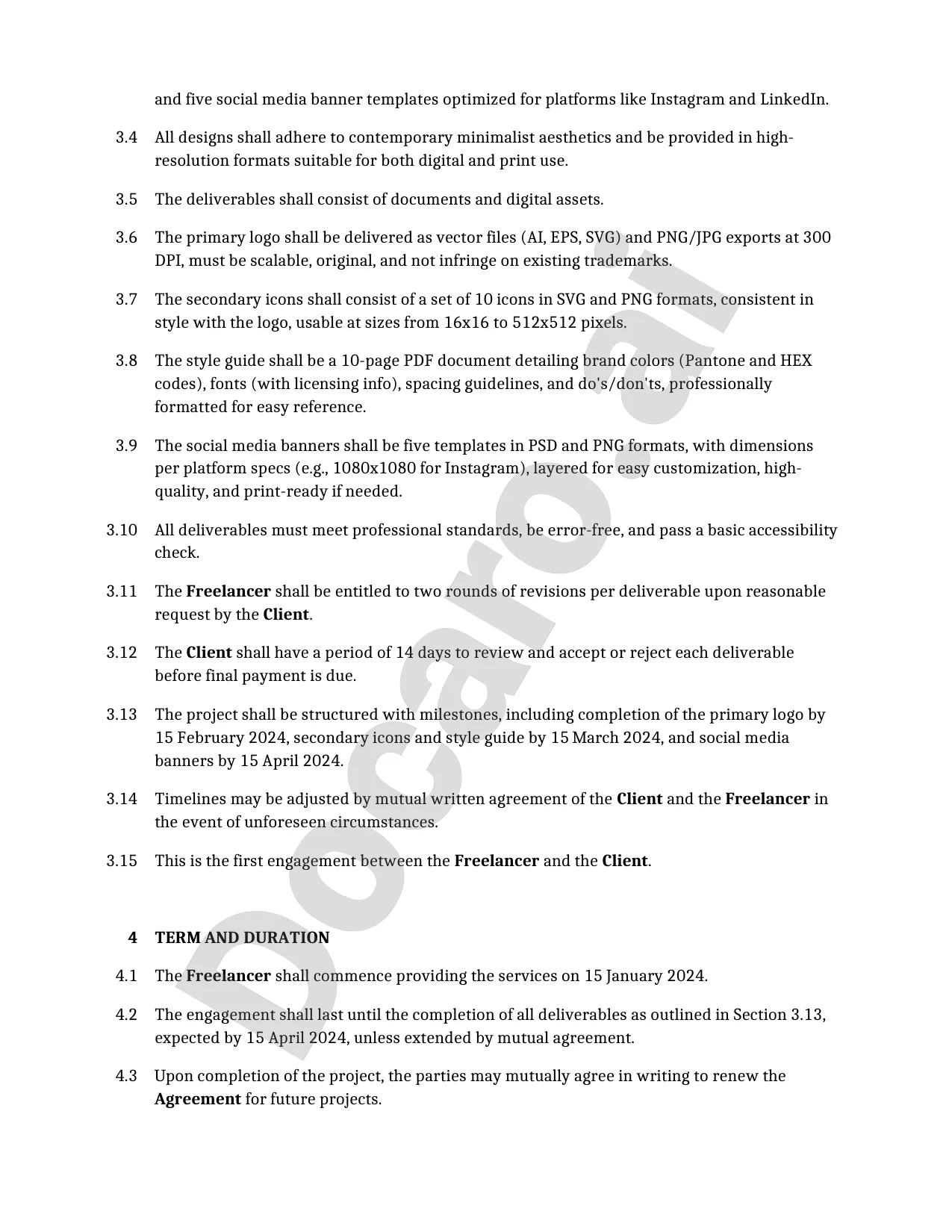
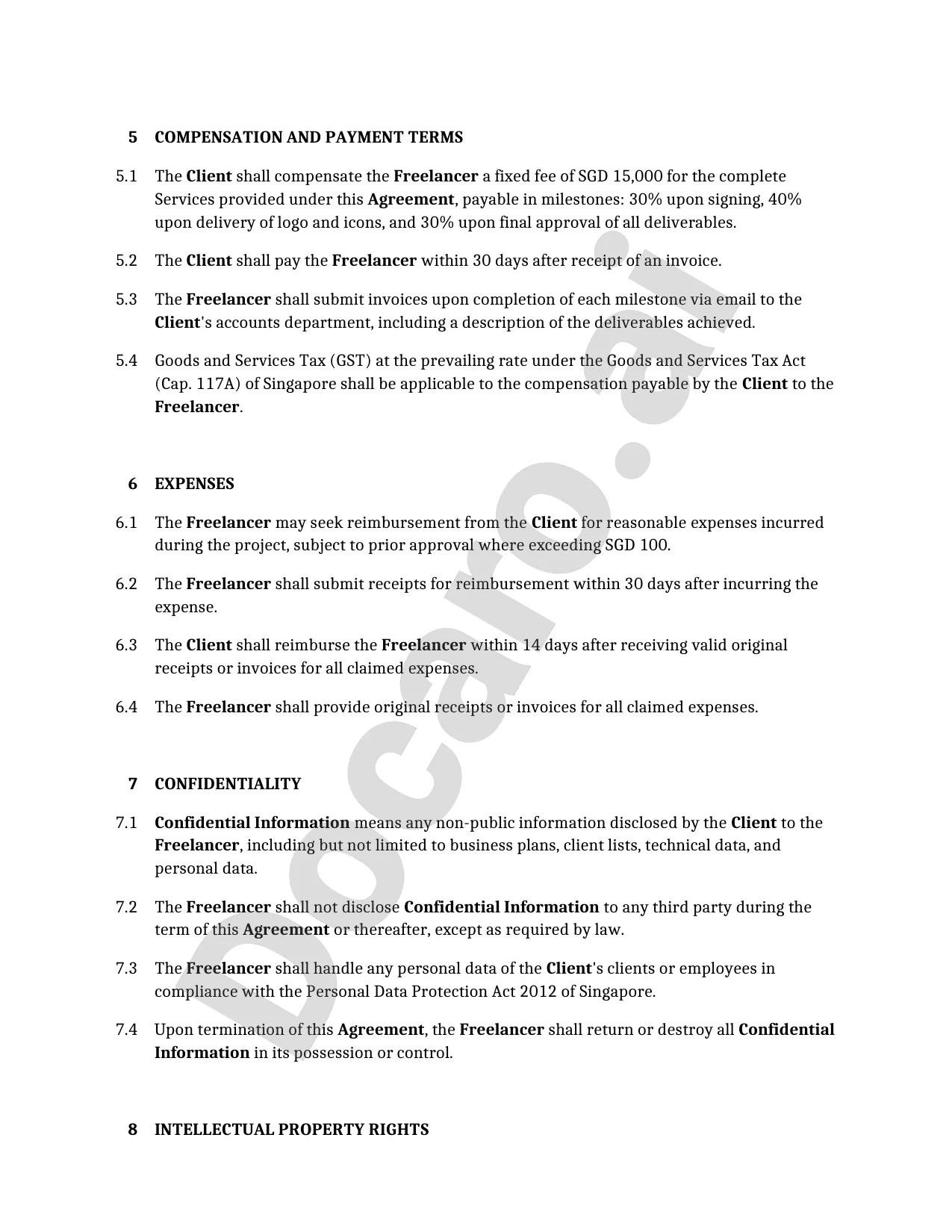
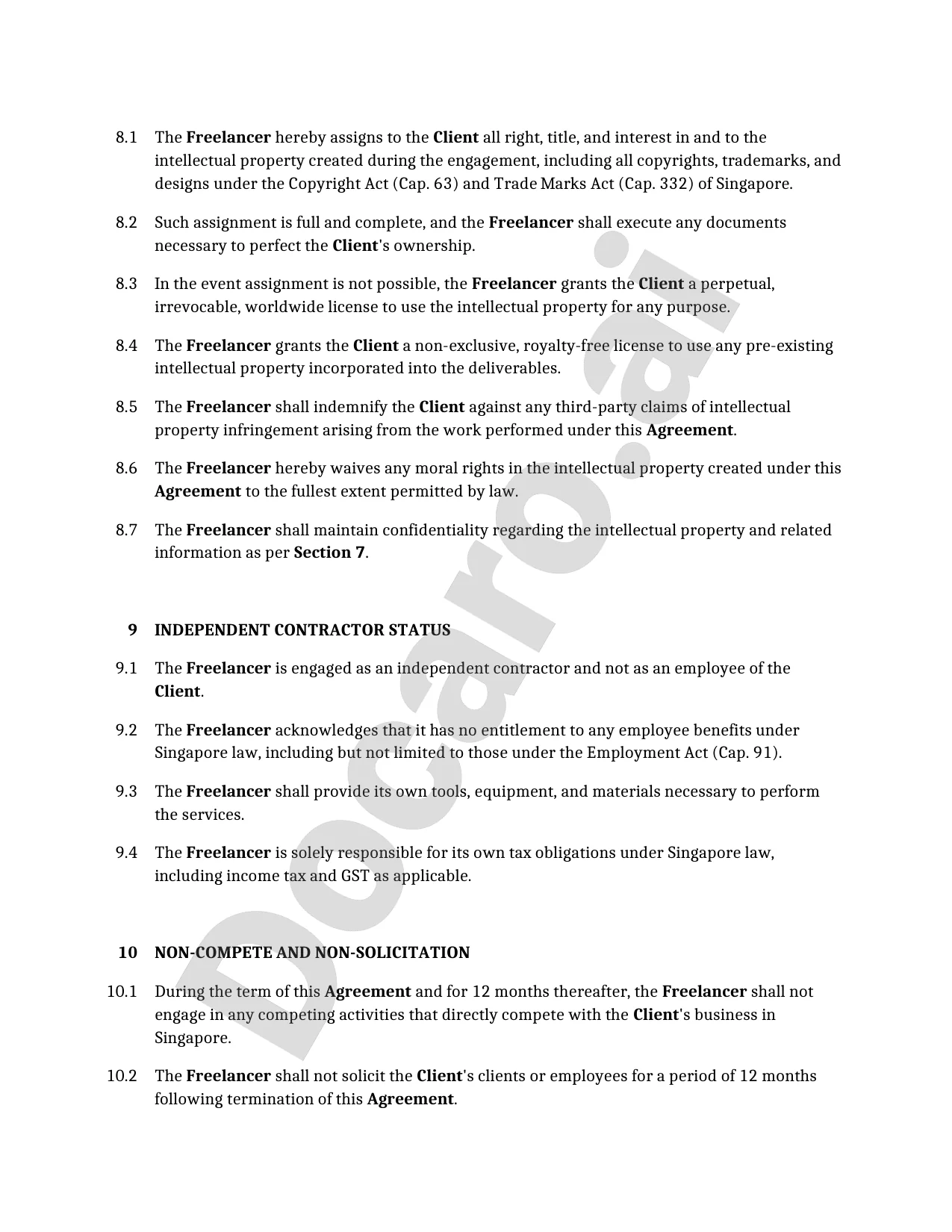
A freelance agreement is a legally binding contract between a freelancer and a client in Singapore, outlining the terms for providing specific services. It serves to protect both parties by clearly defining expectations, payment, and deliverables under Singapore's legal framework, which emphasizes fair practices and dispute resolution.
The primary purpose of a freelance agreement is to minimize misunderstandings and ensure compliance with local laws, such as those governed by the Contracts Act. For guidance on legal requirements for freelance agreements in Singapore, review essential obligations and protections.
To create a tailored document, consider using Docaro for bespoke AI-generated legal documents that fit your unique needs. Explore resources on drafting a freelance agreement template to understand structure and key clauses.
When Should You Use a Freelance Agreement in Singapore?
A freelance agreement is essential for short-term projects, where businesses engage professionals for specific tasks like graphic design or content creation without long-term commitments. This document ensures both parties understand the project's scope, timeline, and deliverables, preventing misunderstandings in fast-paced collaborations.
When hiring independent contractors, a freelance agreement outlines payment terms, intellectual property rights, and confidentiality, which is crucial for protecting business interests. Under Singapore law, such agreements help classify workers correctly, avoiding misclassification penalties and ensuring compliance with the Employment Act.
For remote workers across borders, a freelance agreement provides clarity on expectations, including communication protocols and performance metrics, fostering trust in distributed teams. It offers legal protection by specifying dispute resolution and termination clauses, safeguarding rights in line with Singapore's contract laws.
The benefits of using bespoke AI-generated legal documents via Docaro include tailored protection and efficiency, far superior to generic options. Key advantages encompass:
- Clear expectations that reduce conflicts and boost productivity.
- Legal safeguards under Singapore regulations, minimizing risks for freelancers and clients.
- Customized terms for unique project needs, enhancing overall agreement reliability.
When Should You Avoid Using One?
A freelance agreement may not be suitable for full-time employees covered under the Employment Act, as it fails to provide statutory protections like minimum wage, paid leave, and overtime pay that are mandatory for traditional employment relationships.
For informal one-off gigs with low risk, such as a quick neighborhood task or casual favor, a formal freelance agreement is often unnecessary and could complicate simple arrangements without adding value.
Misclassification risks arise when businesses incorrectly label workers as freelancers to evade labor laws, potentially leading to penalties, back pay obligations, and lawsuits for denying employee benefits.
To avoid these issues, opt for bespoke AI-generated legal documents via Docaro, tailored precisely to your specific needs rather than generic options.
What Are the Key Rights and Obligations of Parties in a Freelance Agreement?
In Singapore's Contract Law, governed by principles from the common law and statutes like the Contracts (Rights of Third Parties) Act, freelancer agreements outline essential rights and obligations for both parties to ensure fair dealings. Freelancers hold the right to timely payment for services rendered, while clients are obligated to provide clear project specifications and feedback to facilitate smooth delivery.
Payment terms under Singapore Contract Law must be explicitly stated to avoid disputes, typically including milestones, due dates, and penalties for delays, with freelancers entitled to invoice upon completion of agreed deliverables. Delivery of services requires freelancers to meet quality standards and deadlines, while clients must accept or reject work reasonably, fostering trust in freelance contracts.
Confidentiality clauses protect sensitive information shared during the project, binding both parties to non-disclosure under Singapore's laws, including the Personal Data Protection Act for data handling. Intellectual property rights often vest with the client upon full payment, but freelancers retain rights to their pre-existing work unless specified otherwise in the bespoke agreement.
For robust protection, parties should use bespoke AI-generated legal documents via Docaro platform to tailor clauses to specific needs, ensuring compliance with Singapore's Contract Law and minimizing risks in freelancer-client relationships.
"Clear definition of obligations in freelance contracts is crucial to prevent disputes under Singapore's Employment Act and common law principles," states legal expert Dr. Lim Wei Shen. "I recommend using Docaro's bespoke AI-generated legal documents to tailor agreements precisely to your specific freelance needs, ensuring enforceability and protection in Singapore's dynamic market."
What Key Clauses Must Be Included in a Freelance Agreement?
The scope of work clause in a freelance agreement in Singapore clearly defines the services the freelancer will provide, including deliverables, timelines, and any exclusions to prevent misunderstandings. This ensures both parties align on expectations from the outset.
The payment schedule outlines when and how payments will be made, such as milestone-based or upon completion, often including details on currency, taxes, and late payment penalties under Singapore's legal framework. It protects freelancers by specifying invoicing procedures and dispute timelines for non-payment.
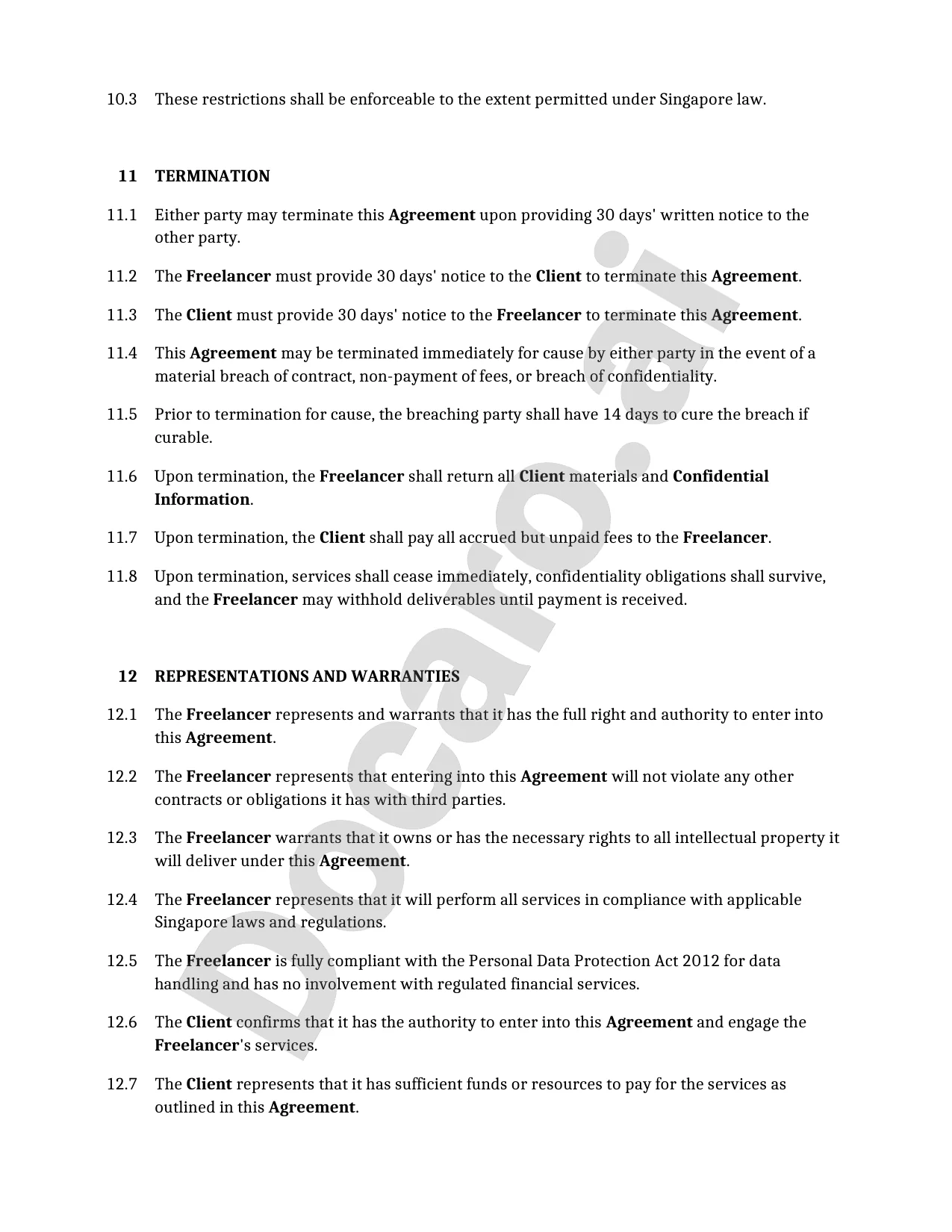
Termination conditions specify how either party can end the agreement, including notice periods, grounds for immediate termination like breach of contract, and post-termination obligations such as final payments or return of materials. In Singapore, these clauses must comply with employment and contract laws to avoid unfair dismissal claims.
For comprehensive details on these and other key clauses in a freelance agreement in Singapore, explore our guide Key Clauses Guide. Always opt for bespoke AI-generated legal documents via Docaro to tailor agreements precisely to your needs, ensuring compliance and protection.
1
Review Core Clauses
Examine payment, scope of work, and termination clauses in the freelance agreement template for alignment with Singapore law and project specifics.
2
Customize Using Docaro
Use Docaro to generate bespoke clauses tailored to your project's unique needs, ensuring compliance with Singapore regulations.
3
Verify Legal Compliance
Check customized clauses against Singapore's Employment Act and data protection laws to avoid liabilities.
4
Finalize and Sign
Incorporate all changes, review the full document, and obtain digital signatures for execution.
What Key Exclusions Should Be in a Freelance Agreement?
In Singapore, contract exclusions such as limitations on warranties play a crucial role in defining the scope of obligations between parties. These clauses ensure that only explicitly promised guarantees apply, protecting sellers from unforeseen claims while allowing buyers to assess risks under the Sale of Goods Act.
Liability exclusions for third-party claims are common in agreements to shield parties from indirect disputes, aligning with Singapore's Contracts (Rights of Third Parties) Act. By clearly delineating responsibilities, these provisions foster trust and reduce litigation risks for both sides.
Non-compete clauses may not always apply, especially if deemed overly restrictive under Singapore's competition laws enforced by the Competition and Consumer Commission of Singapore (CCCS). Courts evaluate their reasonableness in time, geography, and scope to balance business protection with fair trade, safeguarding innovation and market access for all involved.
For robust protection under Singapore regulations, opt for bespoke AI-generated legal documents via Docaro's platform, tailored to your specific needs rather than generic options.
Are There Recent or Upcoming Legal Changes Affecting Freelance Agreements in Singapore?
Singapore's gig economy regulations saw a major update with the introduction of the Platform Workers Act, effective from 1 January 2025. This legislation provides essential protections for platform workers, including ride-hailing and delivery freelancers, by mandating shared CPF contributions, work injury compensation, and representation rights, while preserving their independent contractor status.
Regarding the Personal Data Protection Act (PDPA), no significant changes impacting freelancers have occurred since the last amendments in 2021. Freelancers handling personal data must still comply with existing consent, notification, and security obligations under the stable PDPA framework.
Broader employment and contract laws for freelancers remain largely unchanged, with ongoing guidelines expected in 2025 on non-compete clauses in contracts. For stability, freelancers should regularly check official sources like the Ministry of Manpower for any emerging updates.
To ensure compliance, review legal requirements for freelance contracts and consider using Docaro for bespoke AI-generated legal documents tailored to your needs.
You Might Also Be Interested In
A Legally Binding Agreement Outlining The Terms And Conditions Of Employment Between An Employer And Employee.
A Legal Contract Outlining The Terms Of Service Between A Client And An Independent Contractor In Singapore.
A Legal Contract Between An Employer And Employee That Prohibits The Disclosure Of Confidential Information To Protect Business Secrets.
A Contractual Provision Restricting An Individual From Engaging In Competitive Activities Against Their Former Employer For A Specified Period And Area.
A Formal Document From An Employer Extending A Job Offer With Key Employment Terms.
A Document Outlining Company Policies, Employee Rights, And Workplace Rules.
A Formal Notice From An Employer To An Employee Stating The End Of Their Employment Contract.
A Contract Outlining Terms Of An Internship, Including Duties, Duration, Compensation, And Confidentiality.
A Legal Contract Outlining Terms For Employees Working Remotely, Including Schedules, Responsibilities, And Support Provisions.
A Legal Contract That Requires Employees To Keep Confidential Information Private And Not Disclose It To Unauthorized Parties.
A Flexible Employment Agreement Where Workers Are Not Guaranteed Minimum Hours And Are Called Upon As Needed By The Employer.
A Formal Document Notifying An Employer Of An Employee's Intent To Resign From Their Position, Typically Including The Last Working Day.
A Written Endorsement By A Person Of Authority Attesting To Another's Skills, Character, Or Qualifications For Employment, Education, Or Legal Purposes.