Docaro

AI Generated Incident Response Plan for use in Singapore
PDF & Word - 2026 Updated

A photorealistic image depicting a professional team of adults in a modern corporate office in Singapore, gathered around a conference table during an incident response simulation. They are focused and collaborative, with laptops and digital screens showing security alerts, symbolizing preparedness and quick response to corporate incidents. The scene includes elements like the Singapore skyline in the background through large windows, emphasizing a high-tech, secure business environment. No children are present.
Discover how our AI-powered tool generates a comprehensive incident response plan tailored for businesses in Singapore, ensuring compliance with local cybersecurity regulations and minimizing downtime from cyber incidents.
Free instant document creation.
Compliant with Singapore law.
No sign up or monthly subscription.

Docaro Pricing

Basic
Free
Document Generation
No Sign Up
No Subscription
Download Watermarked PDF
Premium
$4.99 USD
Document Generation
No Sign Up
No Subscription
Download Clean PDF
Download Microsoft Word
Download HTML
Download Text
Email Document
Generate your document for free. Only pay if you like the result and need an un-watermarked version.

When Do You Need an Incident Response Plan in Singapore?

  • After a Data Breach
    If your company experiences unauthorized access to sensitive information, an incident response plan helps you quickly contain the damage and notify those affected.
  • During Cyber Attacks
    When hackers target your systems, a solid plan guides your team to detect, respond, and recover without causing major disruptions to your business.
  • In Case of System Failures
    For unexpected IT breakdowns that could halt operations, the plan outlines steps to get things back on track fast and minimize financial losses.
  • To Meet Legal Requirements
    Singapore's laws on data protection require businesses to handle incidents properly, and a well-drafted plan ensures you comply and avoid heavy fines.
  • For Business Continuity
    Having a clear plan protects your company's reputation and keeps operations running smoothly even during crises, building trust with customers and partners.

Singaporean Legal Rules for an Incident Response Plan

  • PDPA Compliance
    Your plan must address data breaches under the Personal Data Protection Act to protect personal information and notify authorities if needed.
  • Cybersecurity Act Requirements
    For critical sectors, the plan should follow the Cybersecurity Act to report incidents and mitigate risks to essential services.
  • Sector-Specific Rules
    Certain industries like finance or healthcare have additional obligations under laws such as the Monetary Authority of Singapore guidelines.
  • Documentation and Reporting
    Keep records of incidents and responses as required by relevant laws to ensure accountability and quick action.
  • Employee Training
    Include steps to train staff on the plan to meet legal duties for preventing and handling incidents effectively.
Important

Using an inappropriate structure for an incident response plan may fail to comply with Singapore's regulatory requirements for corporate risk management.

What a Proper Incident Response Plan Should Include

  • Purpose and Scope
    Clearly state the plan's goals and the types of incidents it covers, such as cyber attacks or data breaches.
  • Roles and Responsibilities
    Define who does what during an incident, including team members and their contact details.
  • Detection and Reporting
    Outline how to spot an incident and the steps to report it quickly to the right people.
  • Response Procedures
    Detail the step-by-step actions to contain, investigate, and resolve the incident effectively.
  • Communication Plan
    Specify how to inform internal teams, customers, and authorities like the PDPC if needed.
  • Recovery and Restoration
    Describe methods to restore normal operations and minimize downtime after an incident.
  • Testing and Review
    Include plans for regular drills and updates to keep the response strategy current.

Why Free Templates Can Be Risky for Incident Response Plan

Free templates for incident response plans often come with generic content that fails to address the unique needs of your Singapore-based business. These one-size-fits-all documents overlook local regulatory requirements, industry-specific risks, and your company's operational details, potentially leaving you exposed to compliance issues, ineffective crisis management, and legal vulnerabilities during an actual incident.

An AI-generated bespoke incident response plan is tailored specifically to your business, incorporating Singapore's legal and regulatory framework, your organization's structure, and precise risk factors. This customized approach ensures comprehensive coverage, clear procedures, and practical strategies that enhance preparedness and minimize disruptions, delivering a professional document ready for immediate use.

Generate Your Bespoke Incident Response Plan in 4 Easy Steps

1
Answer a Few Questions
Our AI guides you through the info required.
2
Generate Your Document
Docaro builds a bespoke document tailored specifically on your requirements.
3
Review & Edit
Review your document and submit any further requested changes.
4
Download & Sign
Download your ready to sign document as a PDF, Microsoft Word, Txt or HTML.

Why Use Our AI Incident Response Plan Generator?

Fast Generation
Quickly generate a comprehensive Incident Response Plan, eliminating the hassle and time associated with traditional document drafting.
Guided Process
Our user-friendly platform guides you step by step through each section of the document, providing context and guidance to ensure you provide all the necessary information for a complete and accurate Incident Response Plan.
Safer Than Legal Templates
We never use legal templates. All documents are generated from first principles clause by clause, ensuring that your document is bespoke and tailored specifically to the information you provide. This results in a much safer and more accurate document than any legal template could provide.
Professionally Formatted
Your Incident Response Plan will be formatted to professional standards, including headings, clause numbers and structured layout. No further editing is required. Download your document in PDF, Microsoft Word, TXT or HTML.
Compliance with Singaporean Law
Rest assured that all generated documents meet the latest legal standards and regulations of Singapore, enhancing trust and reliability.
Cost-Effective
Save money by generating legally sound Incident Response Plan without the need for expensive legal services or consultations.
Get Started for Free - No Sign Up or Monthly Subscription Required
No payment or sign up is required to start generating your Incident Response Plan. Generate and download a watermarked version of your document for free. Pay only if you want to remove the watermark and gain full access to your document. No monthly subscriptions or hidden fees. Pay once and use your document forever.
Need to Generate a Incident Response Plan in a Different Country?
Choose country:

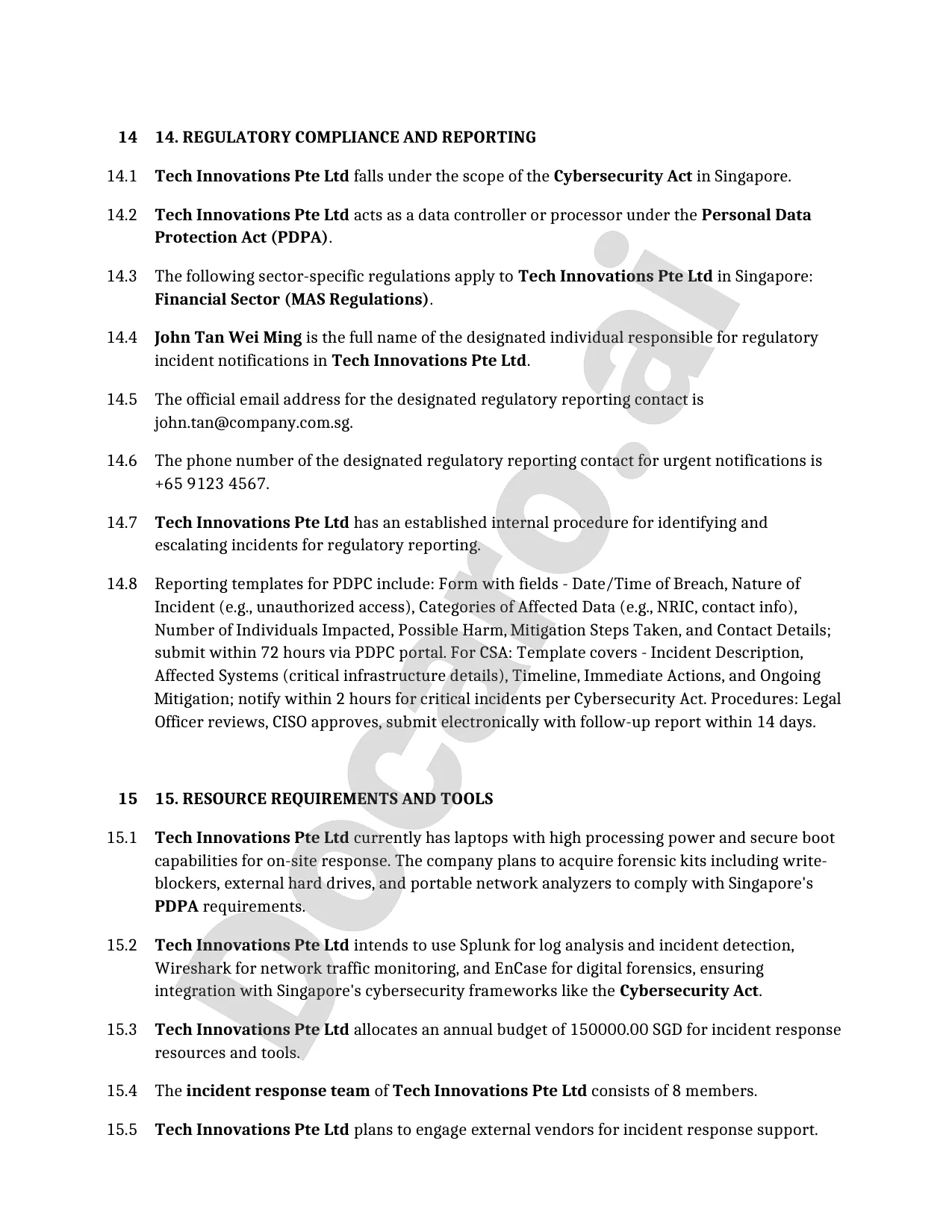
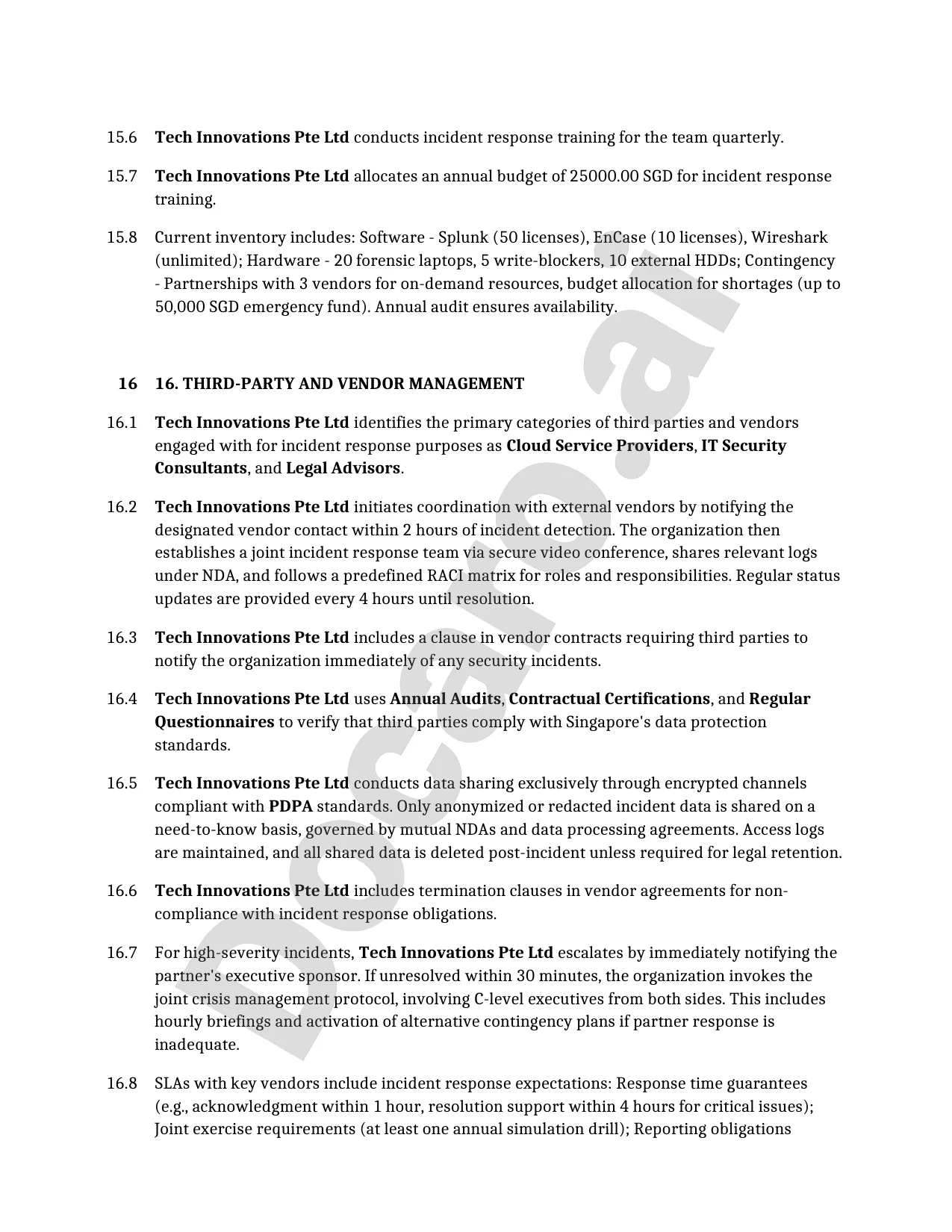
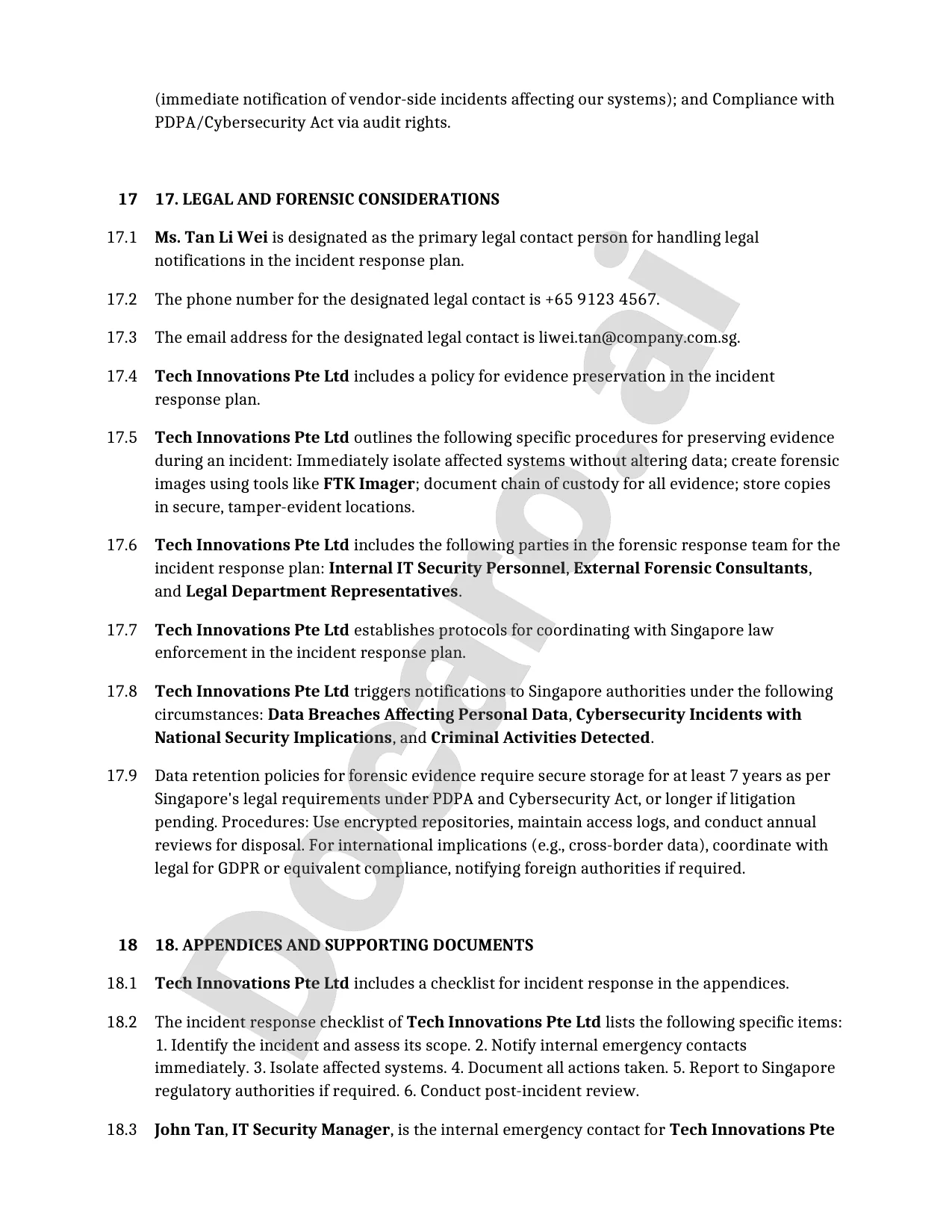
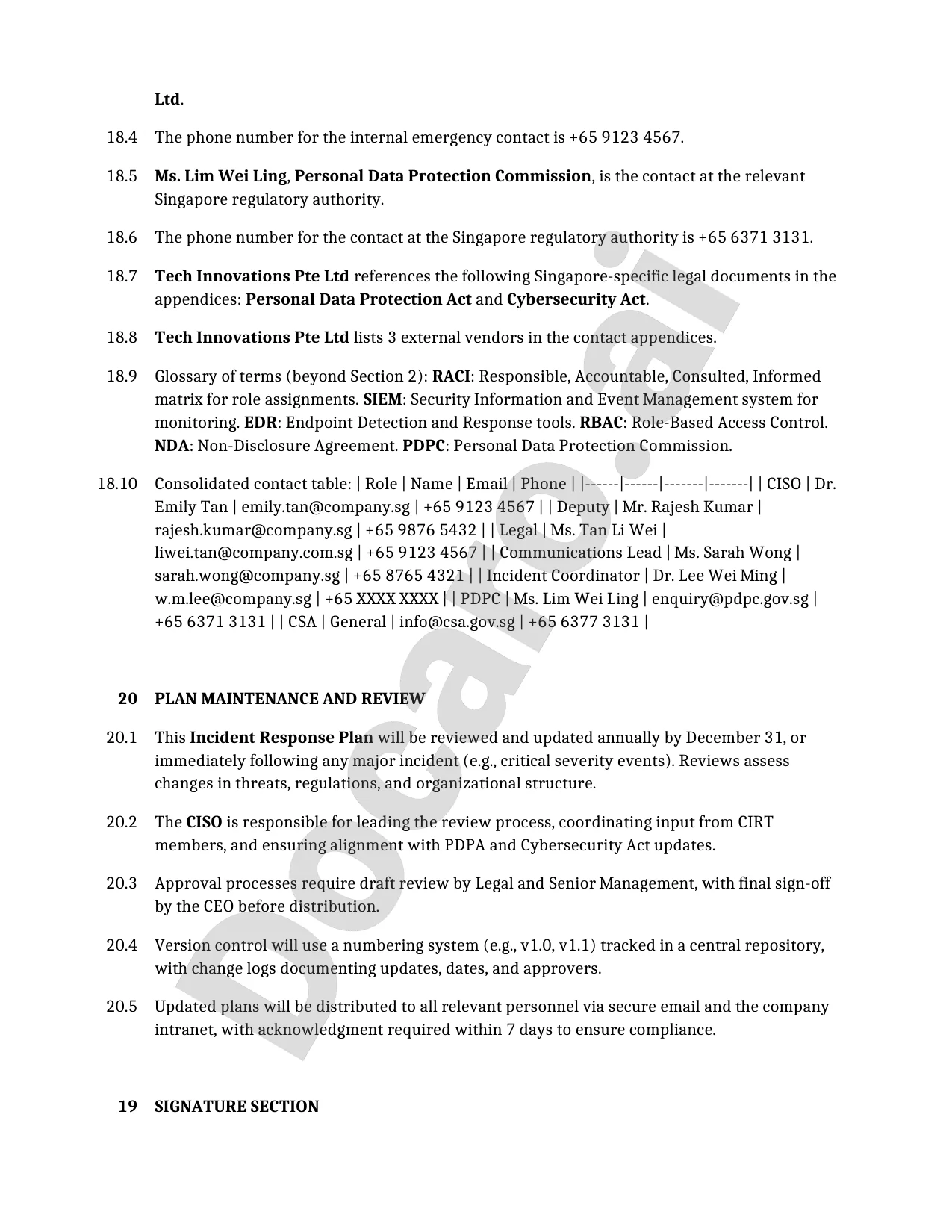
Free Example Incident Response Plan Template

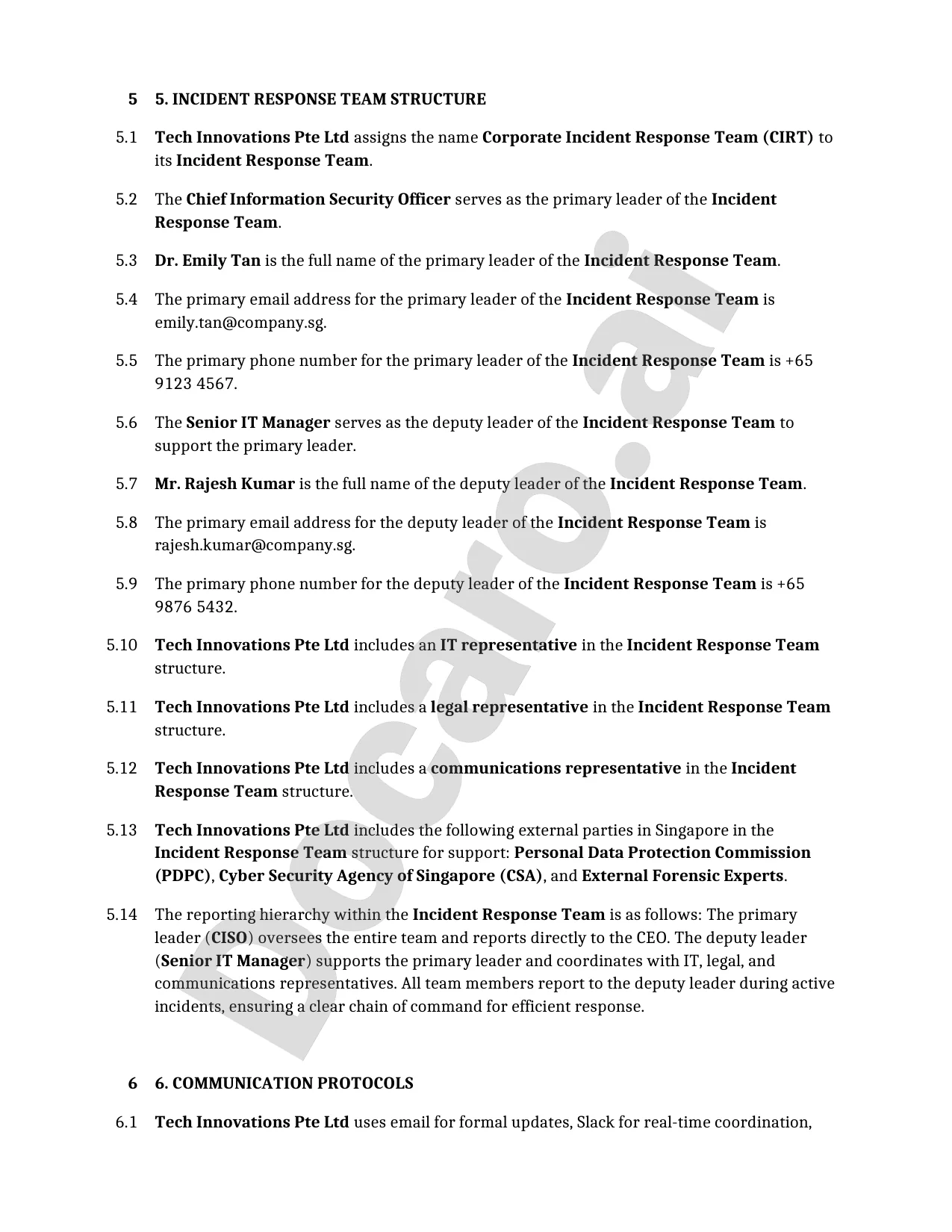
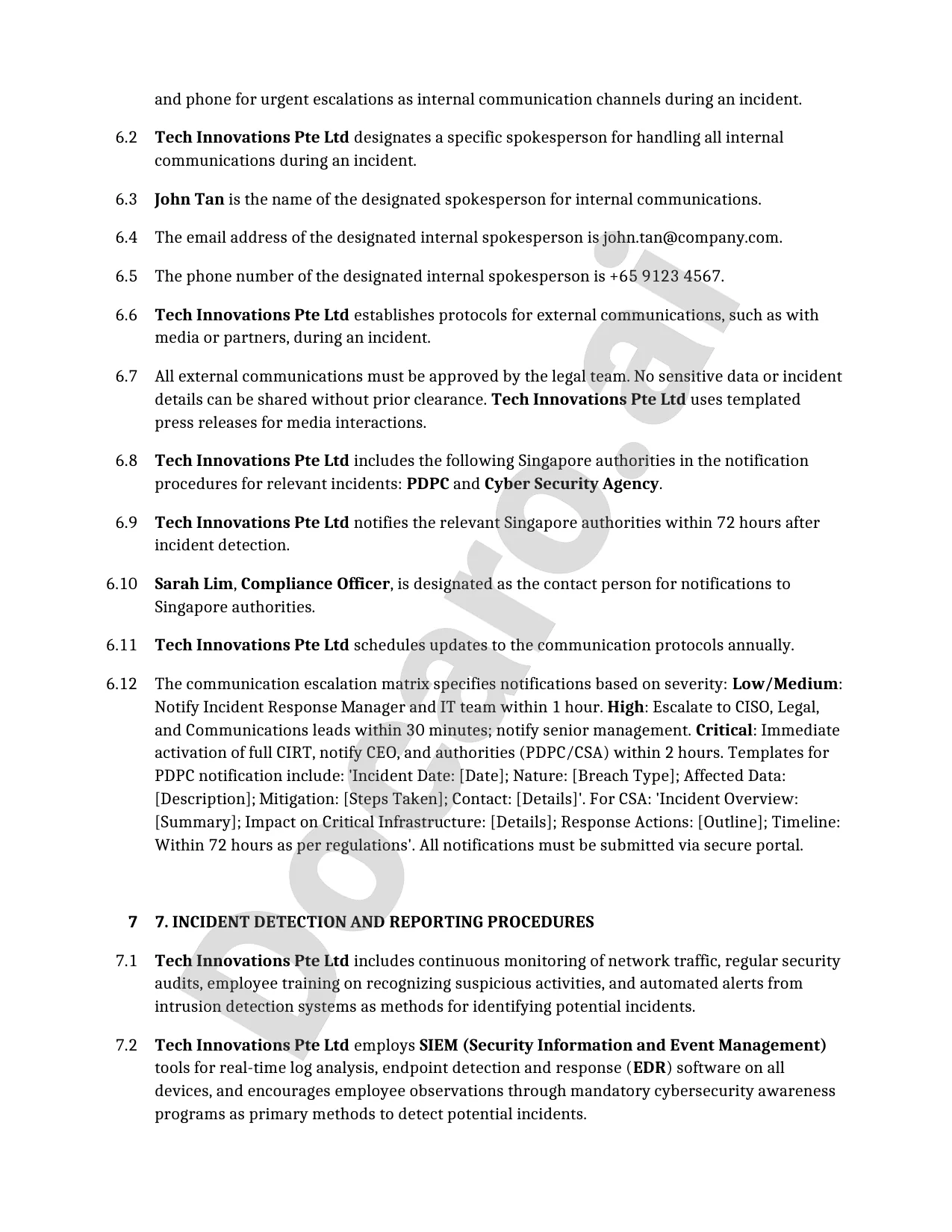
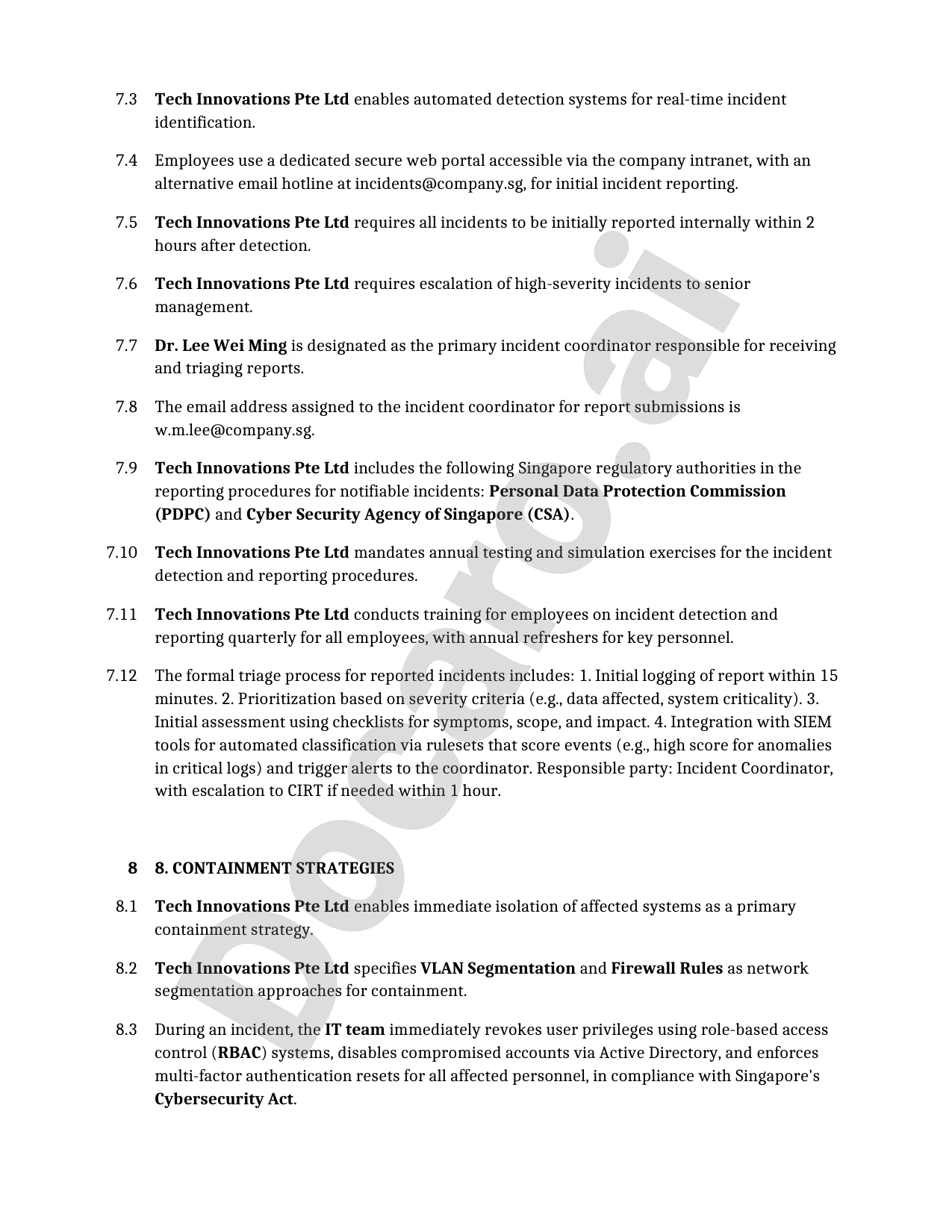
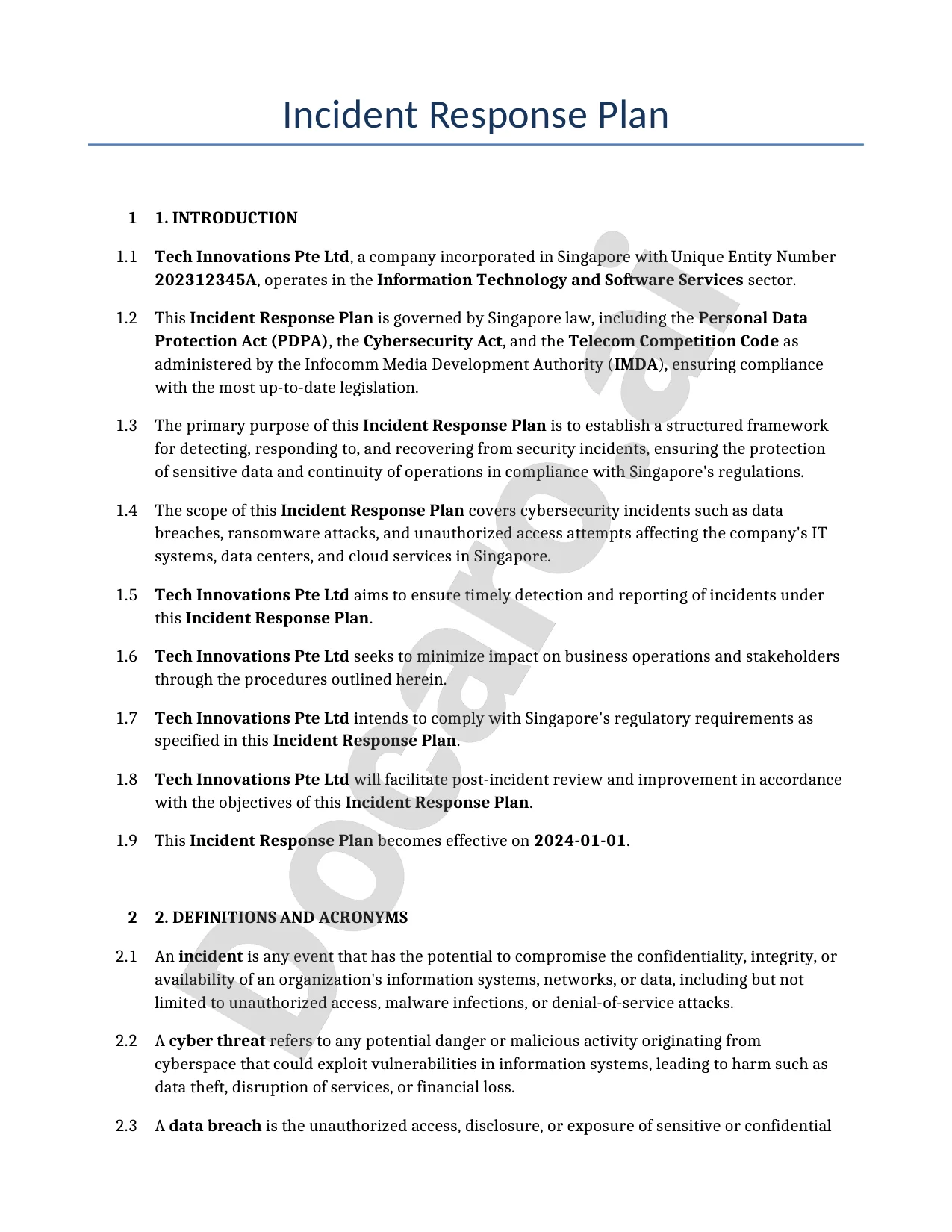
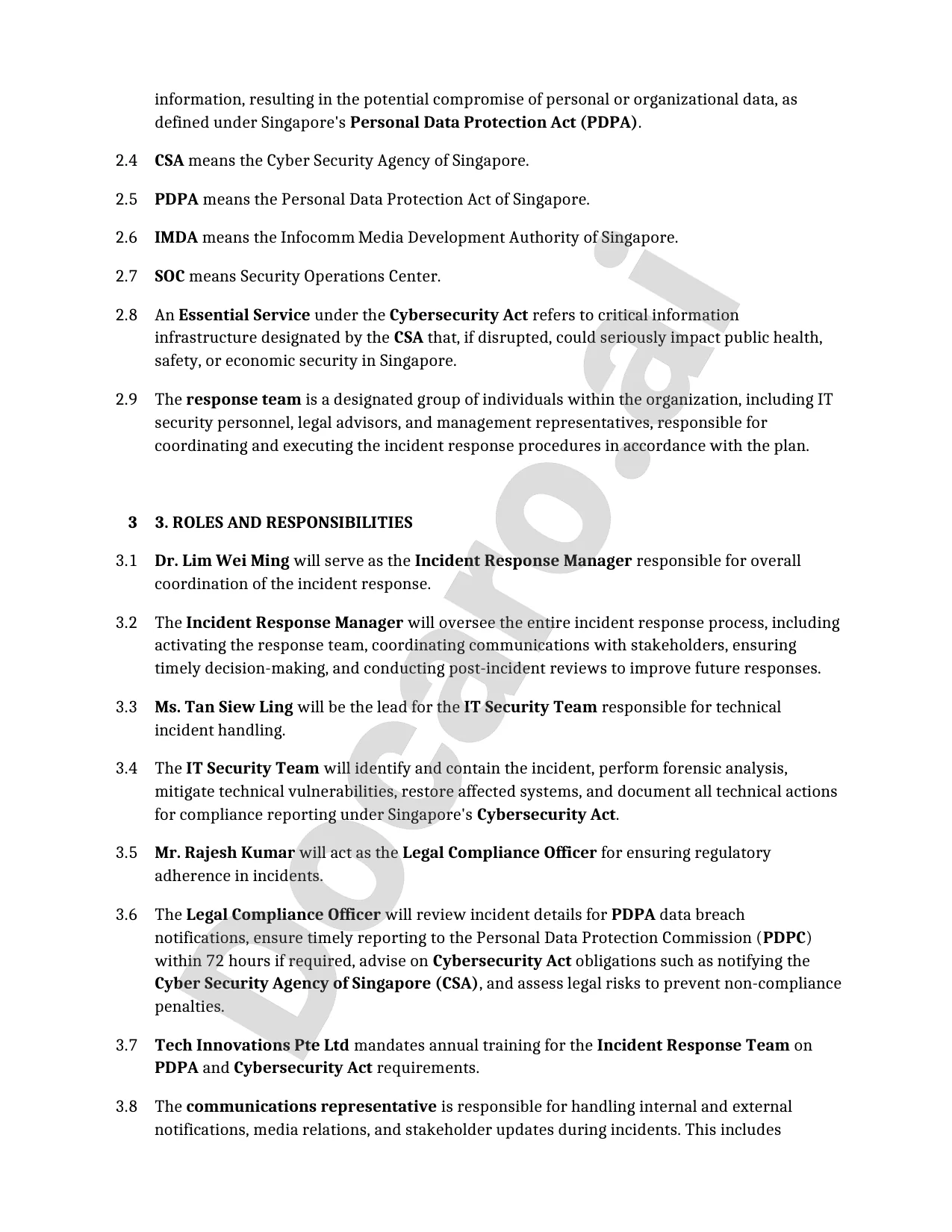
Below is a free template example of a Incident Response Plan for use in Singapore generated by our AI model.

The clauses in your actual Incident Response Plan will vary from this example as they will be entirely bespoke to your requirements as set out in the questionnaire you complete.
Page 1

Singapore Compliance Legislation

Your AI Generated Incident Response Plan will be checked for compliance against the following legislation and regulations:
Issued by the Info-communications Media Development Authority (IMDA), requires licensed telecommunications providers to have business continuity and incident management plans for service disruptions.

What is an Incident Response Plan in the Singapore corporate context?

An Incident Response Plan (IRP) is a critical corporate document in Singapore that outlines structured procedures for detecting, responding to, and recovering from security incidents, data breaches, or operational disruptions. It serves as a blueprint for organizations to minimize damage, ensure business continuity, and comply with local regulations, particularly in a digital economy where cyber threats are prevalent.

The primary purpose of an IRP in handling security incidents involves rapid identification, containment, eradication, and post-incident analysis to restore normal operations swiftly. For data breaches, it mandates timely notification to affected parties and authorities, aligning with Singapore's Personal Data Protection Act (PDPA), which requires organizations to report data breaches that pose risks to individuals' data within specified timelines.

In the context of operational disruptions, an IRP helps Singapore-based companies mitigate risks from ransomware, system failures, or supply chain attacks by defining roles, communication protocols, and recovery strategies. Organizations are encouraged to develop bespoke AI-generated IRPs using tools like Docaro to tailor the plan precisely to their unique operational needs and regulatory environment.

  • Key PDPA Compliance Elements: Mandatory breach notifications to the Personal Data Protection Commission (PDPC) and data subjects.
  • Best Practices: Regular IRP testing through simulations to ensure effectiveness.
  • Resources: Refer to the PDPC Guide on Data Protection Practices for ICT Systems for implementation guidance.
"An effective Incident Response Plan (IRP) is essential for corporate resilience, enabling swift detection, containment, and recovery from cyber threats," states David Koh, Chief Executive of the Cyber Security Agency of Singapore (CSA). Develop your bespoke IRP using Docaro's AI-generated corporate documents for tailored protection.
Corporate team reviewing incident plan

When should Singapore corporations use an Incident Response Plan document?

In Singapore businesses operating in high-risk industries like finance, healthcare, or telecommunications, an Incident Response Plan (IRP) is essential for managing cybersecurity incidents and protecting sensitive data. These sectors face stringent regulations under the Personal Data Protection Act (PDPA), requiring swift detection, containment, and reporting of breaches to minimize legal penalties and reputational damage, as outlined by the Personal Data Protection Commission.

For companies handling large volumes of customer information or facing elevated cyber threats, such as e-commerce platforms or cloud service providers in Singapore, an IRP ensures coordinated response efforts, including employee training and forensic analysis, to restore operations quickly and comply with cybersecurity guidelines from the Cyber Security Agency of Singapore.

However, an IRP may not be necessary for very small operations with minimal digital assets, like a local sole proprietorship running offline services without online data storage. Similarly, non-regulated sectors with low breach risks, such as traditional retail shops without customer databases, can often rely on basic security measures instead of a full IRP.

Businesses in Singapore should consider bespoke AI-generated corporate documents using Docaro for tailored IRPs that fit specific needs, ensuring compliance and efficiency without generic templates.

Singapore skyline with security icons

What are the key clauses to include in an Incident Response Plan for Singapore?

An Incident Response Plan (IRP) under Singapore law is crucial for organizations to manage cybersecurity threats effectively, ensuring compliance with regulations like the Cybersecurity Act 2018. Essential clauses begin with incident identification, which outlines criteria for detecting and classifying incidents such as data breaches or system failures, enabling swift recognition to minimize damage.

Next, response procedures detail step-by-step actions, including containment, eradication, and evidence preservation, tailored to the incident's severity. These procedures must align with Singapore's legal requirements for reporting to authorities like the Cyber Security Agency of Singapore (CSA); for more details, refer to Essential Components of an Incident Response Plan in Singapore.

Communication protocols specify internal and external notifications, including timelines for informing stakeholders, employees, and regulators as mandated by the Personal Data Protection Act (PDPA). This ensures coordinated efforts and legal adherence, with resources available at the Personal Data Protection Commission website.

Finally, recovery steps focus on restoring operations, conducting post-incident reviews, and updating the IRP to enhance future resilience. Organizations should develop bespoke AI-generated corporate documents using Docaro for customized IRPs that meet specific needs under Singapore law.

How do key exclusions apply in these plans?

In an Insurance Risk Policy (IRP) under Singapore contract law, exclusions for third-party actions are crucial to delineate the insurer's liability boundaries. These typically limit coverage to incidents directly caused by the policyholder, excluding damages arising from third-party negligence or intentional acts, ensuring compliance with principles of privity of contract as outlined in the Contracts Act.

Non-cyber incident exclusions in IRPs prevent claims for traditional risks like physical theft or natural disasters, focusing solely on cyber-related perils such as data breaches or ransomware. This aligns with Singapore's emphasis on precise risk definition in insurance contracts, reducing ambiguity and promoting fair risk allocation.

To maintain enforceability, IRPs must clearly articulate these exclusions in plain language, avoiding vague terms that could be challenged under the Unfair Contract Terms Act. For tailored IRP documents incorporating such exclusions, consider bespoke AI-generated corporate solutions from Docaro's platform, which ensure alignment with Singapore-specific legal standards.

Policyholders should review exclusions against authoritative guidelines from the Monetary Authority of Singapore (MAS) to verify compliance and mitigate disputes.

Professional signing compliance document

What rights and obligations do parties have under an Incident Response Plan in Singapore?

In an Incident Response Plan (IRP) under Singapore's Personal Data Protection Act (PDPA), the company holds primary obligations to detect, respond to, and mitigate data breaches swiftly. This includes notifying the Personal Data Protection Commission (PDPC) within 72 hours of determining a breach's notifiability, as outlined in the PDPA guidelines, and informing affected individuals if there's a risk of harm. For robust compliance, companies should develop bespoke AI-generated corporate documents using Docaro to tailor IRPs to their specific operations.

Employees in an IRP are obligated to report potential incidents promptly to designated personnel, fostering a culture of vigilance and cooperation during data protection events. Their rights include training on PDPA protocols and protection from retaliation for good-faith reporting, ensuring they can access necessary resources without undue burden. This reporting duty aligns with PDPA's emphasis on organizational accountability for personal data handling.

Third parties, such as vendors or partners, must adhere to contractual IRP terms, including immediate breach notifications to the company and cooperation in investigations. Under PDPA, they share obligations to secure data in their custody, with rights to request clarification on shared responsibilities. For detailed PDPA advisory, refer to the official PDPC website.

During incidents, data subjects retain rights to access personal data under PDPA Section 20, allowing requests for information involved in the breach, subject to exemptions for ongoing investigations. Companies must balance this access with incident containment, providing transparent updates while safeguarding sensitive details. Employees and third parties may also access relevant data for response purposes, promoting effective resolution.

Are there recent or upcoming legal changes affecting Incident Response Plans in Singapore?

Singapore's Cybersecurity Act continues to evolve, with recent consultations focusing on expanding critical information infrastructure protections for sectors like energy and water. These updates aim to strengthen national cyber resilience against rising threats, as outlined in the Cyber Security Agency of Singapore guidelines.

Amendments to the Personal Data Protection Act (PDPA) have enhanced breach notification requirements, mandating organizations to report data breaches to the Personal Data Protection Commission within 72 hours if they pose significant risk. This change, effective from early 2024, impacts Incident Response Plans (IRPs) by requiring faster detection and response protocols to comply with tightened timelines.

Upcoming developments include proposed guidelines on AI governance under the PDPA, emphasizing data security in automated systems. Businesses should review their IRPs to integrate these, consulting authoritative sources like the Personal Data Protection Commission for detailed compliance advice.

For tailored corporate documents supporting updated IRPs, consider bespoke AI-generated solutions via Docaro to ensure alignment with Singapore's evolving regulations.

How can Singapore businesses develop and implement an effective Incident Response Plan?

1
Conduct IRP Assessment
Evaluate your corporation's current risks, vulnerabilities, and response capabilities to identify gaps. Learn more in our guide on [developing an effective incident response plan for Singapore businesses](/en-sg/a/develop-effective-incident-response-plan-singapore-businesses).
2
Draft Bespoke IRP
Use Docaro to generate a customized incident response plan tailored to your Singapore corporation's specific needs and regulations.
3
Test the Plan
Simulate incidents through tabletop exercises or drills to validate the IRP's effectiveness and make necessary adjustments.
4
Train Staff
Conduct targeted training sessions for employees to ensure everyone understands their roles in executing the incident response plan.

What are the legal requirements and best practices for Incident Response Plans in Singapore?

In Singapore, mandatory legal requirements for Incident Response Plans (IRPs) are primarily governed by the Personal Data Protection Act (PDPA), which mandates organizations to implement reasonable security arrangements to protect personal data, including prompt detection and response to data breaches. For detailed insights into these legal requirements and best practices for IRPs in Singapore, refer to our comprehensive guide on Legal Requirements and Best Practices for Incident Response Plans in Singapore.

Recommended best practices for compliance include conducting regular risk assessments, training employees on incident handling, and testing IRPs through simulations to ensure effectiveness. Organizations should prioritize bespoke AI-generated corporate documents using Docaro to tailor IRPs to their specific needs, enhancing cybersecurity resilience.

To bolster incident response effectiveness, integrate cross-functional teams and establish clear communication protocols with authorities like the Personal Data Protection Commission (PDPC). For official guidance, consult the PDPC's resources at PDPC Singapore, which outline obligations for data breach notifications within 72 hours.

Incident Response Plan FAQs

An incident response plan (IRP) is a structured document outlining procedures for detecting, responding to, and recovering from security incidents like data breaches or cyberattacks. In Singapore, it's crucial due to regulations like the Cybersecurity Act and PDPA, helping businesses minimize downtime, protect sensitive data, and ensure compliance to avoid hefty fines.

Document Generation FAQs

Docaro is an AI-powered legal and corporate document generator that helps you create fully formatted, legally sound contracts and agreements in minutes. Just answer a few guided questions and download your document instantly.
You Might Also Be Interested In
A Document Outlining Company Policies, Employee Rights, And Workplace Rules.
A Document Outlining Expected Behaviors, Ethical Standards, And Rules For Individuals Or Organizations To Ensure Integrity And Compliance.
A Corporate Policy Outlining Commitments To Fostering Diverse Workplaces, Ensuring Equitable Opportunities, And Promoting Inclusive Practices.
A Corporate Policy Outlining Guidelines For Employees Working Remotely, In-office, Or In A Hybrid Model To Balance Flexibility And Productivity.
A Corporate Policy Outlining Rules For Appropriate Use Of IT Resources And Systems.
A Policy Outlining How An Organization Manages, Stores, And Disposes Of Data And Records To Ensure Compliance And Efficiency.
A Corporate Policy Outlining Procedures For Employees To Report Misconduct, Ensuring Confidentiality And Protection Against Retaliation.
A Policy Document Outlining Procedures For Handling Employee Misconduct And Workplace Complaints In Singapore Companies.
A Corporate Document Outlining Policies, Procedures, And Guidelines To Ensure Employee Safety And Compliance With Health Regulations In The Workplace.
A Document Outlining The Responsibilities, Duties, Required Skills, And Qualifications For A Specific Job Role.
A Performance Improvement Plan (PIP) Is A Formal Document Outlining An Employee's Performance Issues And A Structured Plan With Goals And Timelines To Help Them Improve, Often Used Before Potential Termination.
A Corporate Document Outlining The Principles And Approach To Employee Compensation, Including Pay Structures, Incentives, And Alignment With Business Goals.
A Corporate Document Outlining The Rationale And Justification For Promoting An Employee, Including Performance Details And Business Needs.
A Form Used By Companies To Gather Feedback From Departing Employees About Their Experiences And Reasons For Leaving.
A Documented Set Of Instructions Detailing How To Perform Routine Operations Consistently And Efficiently In An Organization.
A Strategic Document Outlining Procedures To Maintain Operations During Disruptions And Restore Systems After Disasters.
A Corporate Document Outlining Rules, Procedures, And Responsibilities To Protect An Organization's Information Systems From Cyber Threats.
A Document Outlining Procedures And Standards To Ensure Product Or Service Quality In An Organization.
A Corporate Document Outlining A Company's Performance And Initiatives In Environmental, Social, And Governance Areas To Demonstrate Sustainability And Ethical Practices.

Related Articles

A photorealistic scene of a professional team in a modern Singapore office, gathered around a conference table during an incident response meeting, reviewing digital screens with cybersecurity alerts, with Singapore skyline visible through large windows, conveying preparedness and urgency in handling cyber incidents.
Discover the essential components of an effective incident response plan in Singapore. Learn key strategies for cybersecurity, compliance with PDPA, and best practices to safeguard your organization.
A photorealistic image of a diverse team of adult professionals in a modern Singapore office, gathered around a conference table during a simulated cybersecurity incident response exercise. They are focused and collaborative, with computer screens showing alert notifications in the background, overlooking the Singapore skyline through large windows. No children are present.
Learn how to create a robust incident response plan tailored for Singapore businesses. Protect your operations from cyber threats, data breaches, and disruptions with expert strategies and compliance tips.
A photorealistic image depicting a professional incident response scenario in a modern Singapore office, showing a diverse team of adults in business attire calmly coordinating during a simulated cyber incident, with elements like computer screens displaying security alerts, a map of Singapore in the background, and a sense of preparedness and control, no children present.
Discover the key legal requirements and best practices for developing effective incident response plans in Singapore. Ensure compliance with PDPA, Cybersecurity Act, and more to protect your organization.