Why Free Templates Can Be Risky for Exit Interview Forms
Free templates for exit interview forms often lack customization to your company's specific needs and Singapore's regulatory requirements, potentially leading to incomplete questions that miss key insights on employee turnover. They may include generic language that doesn't align with local employment laws or your organizational culture, risking non-compliance or ineffective data collection. Moreover, these templates are static and not tailored to emerging HR trends, making them outdated quickly.
Our AI-generated bespoke exit interview questionnaires are customized precisely to your company's policies, industry, and Singapore's legal framework, ensuring comprehensive and relevant questions that capture valuable feedback. The AI tailors the content dynamically to your inputs, providing a professional, up-to-date document that enhances HR decision-making and employee relations far beyond generic options.
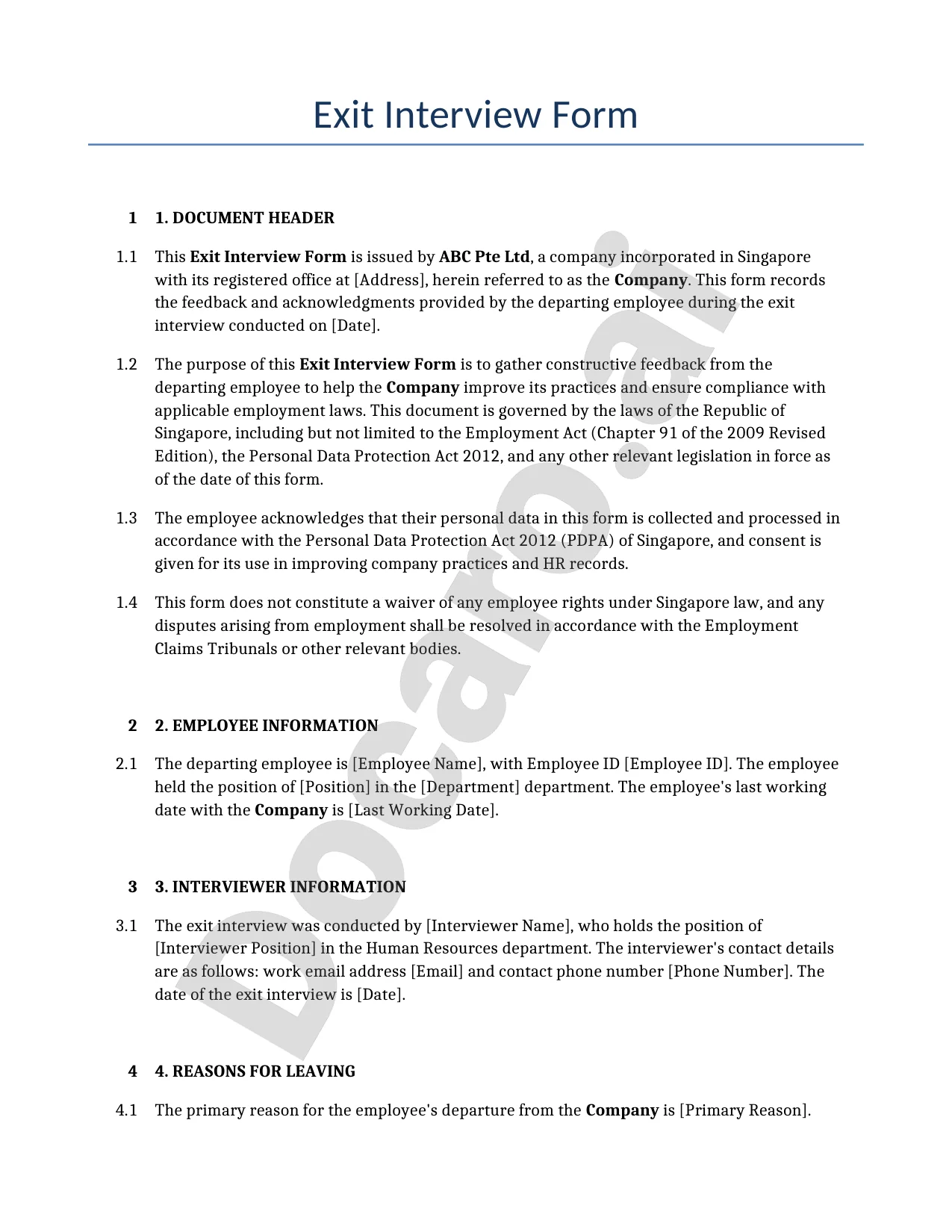
What is an Exit Interview Form in Singapore?
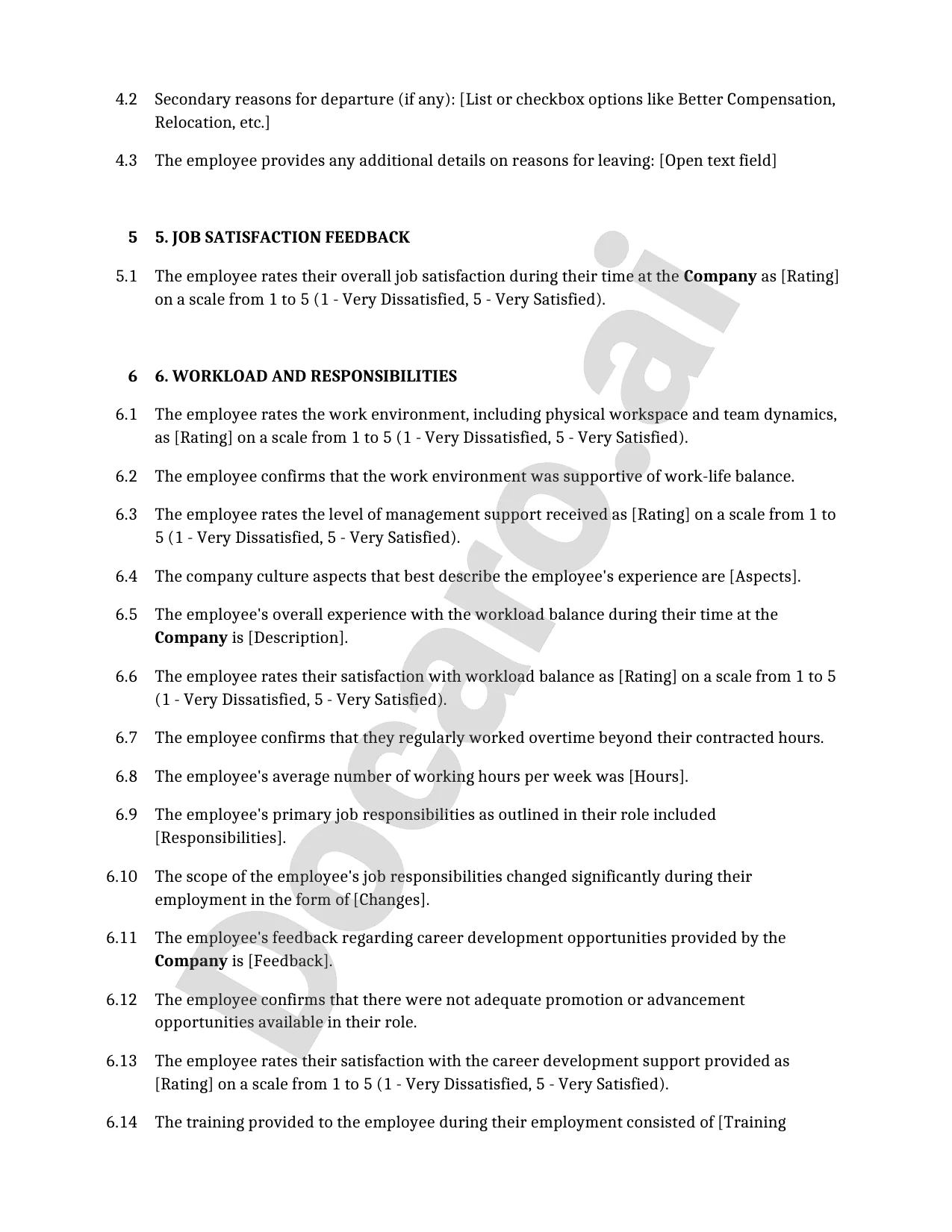
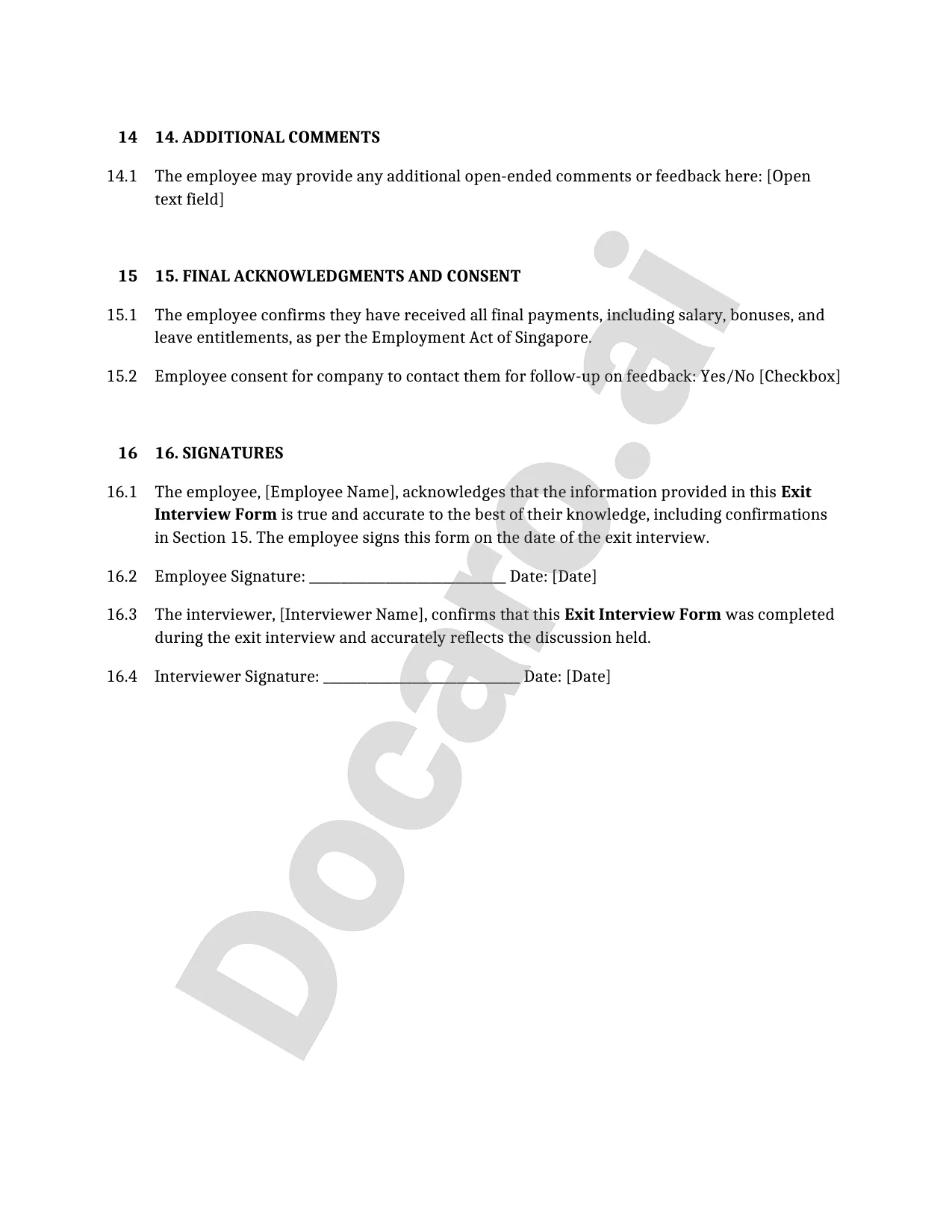
In Singaporean corporate practices, an exit interview form serves as a structured document used during the offboarding process to collect insights from employees who are leaving the organization. This tool is typically administered by HR departments to ensure a systematic approach to gathering feedback, aligning with Singapore's emphasis on professional development and workplace harmony as outlined by the Ministry of Manpower.
The primary purpose of the exit interview form is to identify reasons for departure, such as job satisfaction, management issues, or career growth opportunities, allowing companies to pinpoint areas for improvement. By compiling this data, organizations can refine their organizational processes, enhance employee retention strategies, and foster a positive work environment in line with Singapore's progressive labor laws.
To maximize effectiveness, the form often includes targeted questions on company culture and policies, with responses analyzed for trends. For authoritative guidance on best practices, refer to resources from the Ministry of Manpower in Singapore.
Rather than relying on generic templates, companies should opt for bespoke AI-generated corporate documents using platforms like Docaro to create customized exit interview forms tailored to their specific needs and compliant with local regulations.
When should you use an exit interview form in Singapore?
In Singapore companies, an exit interview form is essential during voluntary resignations to gather honest feedback from departing employees on their experiences, helping HR identify strengths and areas for improvement in workplace culture. This tool proves particularly valuable for spotting retention issues, such as inadequate career development or work-life balance concerns, allowing organizations to refine policies and boost employee satisfaction.
For instance, when an employee resigns amicably to pursue new opportunities, the form can reveal patterns like insufficient training programs, enabling proactive changes that enhance long-term talent retention in line with Singapore's competitive job market.
Conversely, an exit interview form should not be used in involuntary terminations, such as dismissals for performance or misconduct, as the process may yield biased or unreliable responses due to resentment. Similarly, if the employee is unwilling to participate, forcing the form could escalate tensions and violate privacy norms under Singapore's employment guidelines; in such cases, consult the Ministry of Manpower termination guidelines for alternative documentation.
To create customized exit interview forms tailored to your company's needs, consider using bespoke AI-generated corporate documents via Docaro, ensuring compliance with local regulations without relying on generic templates.
What are the key rights and obligations involved in exit interviews in Singapore?
In Singapore, exit interviews are not explicitly mandated by the Employment Act, but they form part of good employment practices to gather feedback from departing employees. Employers have the obligation to ensure these interviews are conducted voluntarily, respecting the employee's right to participate or decline without any coercion or impact on final payments or references.
Key rights for employees include providing honest feedback in a safe environment, with employers obligated to maintain confidentiality of all information shared during the interview. This protects sensitive disclosures and aligns with broader employment laws under the Employment Act, which emphasize fair treatment during termination or resignation processes.
For authoritative guidance, refer to the Ministry of Manpower's resources on termination or the Employment Act on the Singapore Statutes Online, ensuring compliance with Singapore-specific regulations on employee rights and employer obligations.
What key clauses should be included in an exit interview form for Singapore?
An exit interview form in Singapore should begin with essential clauses capturing employee feedback on reasons for leaving. This section typically includes open-ended questions about job satisfaction, work environment, and specific factors like career growth or compensation that prompted the departure, helping employers identify patterns in turnover. For compliance with Singapore's employment laws, reference guidelines from the Ministry of Manpower to ensure the form aligns with fair termination practices.
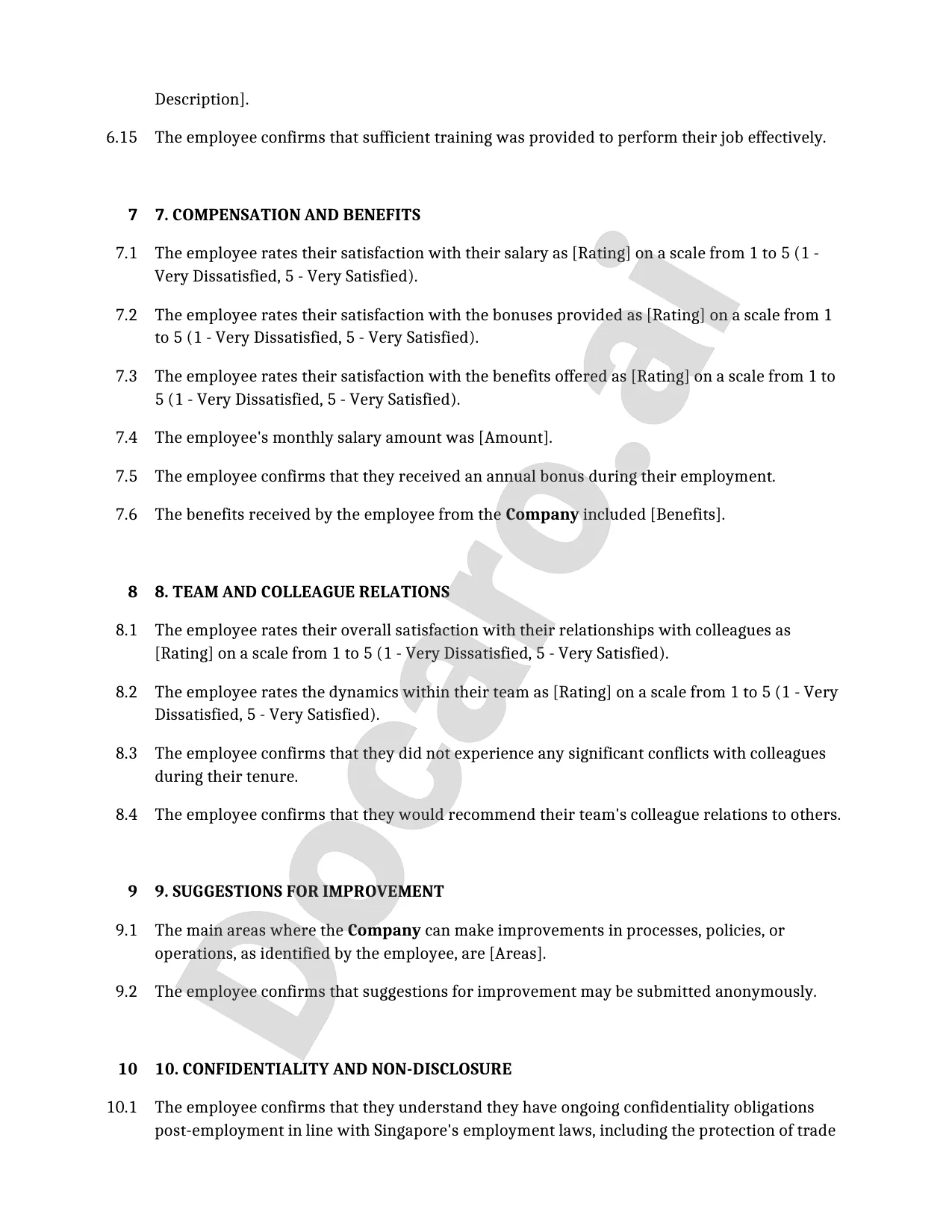
Next, incorporate a section for suggestions for improvement to gather actionable insights from departing employees. This clause can feature prompts on company policies, management support, and operational enhancements, fostering a culture of continuous improvement in Singapore workplaces. Use bullet points within the form for clarity, such as:
- Recommendations for better work-life balance.
- Ideas for training and development programs.
- Feedback on team collaboration tools.
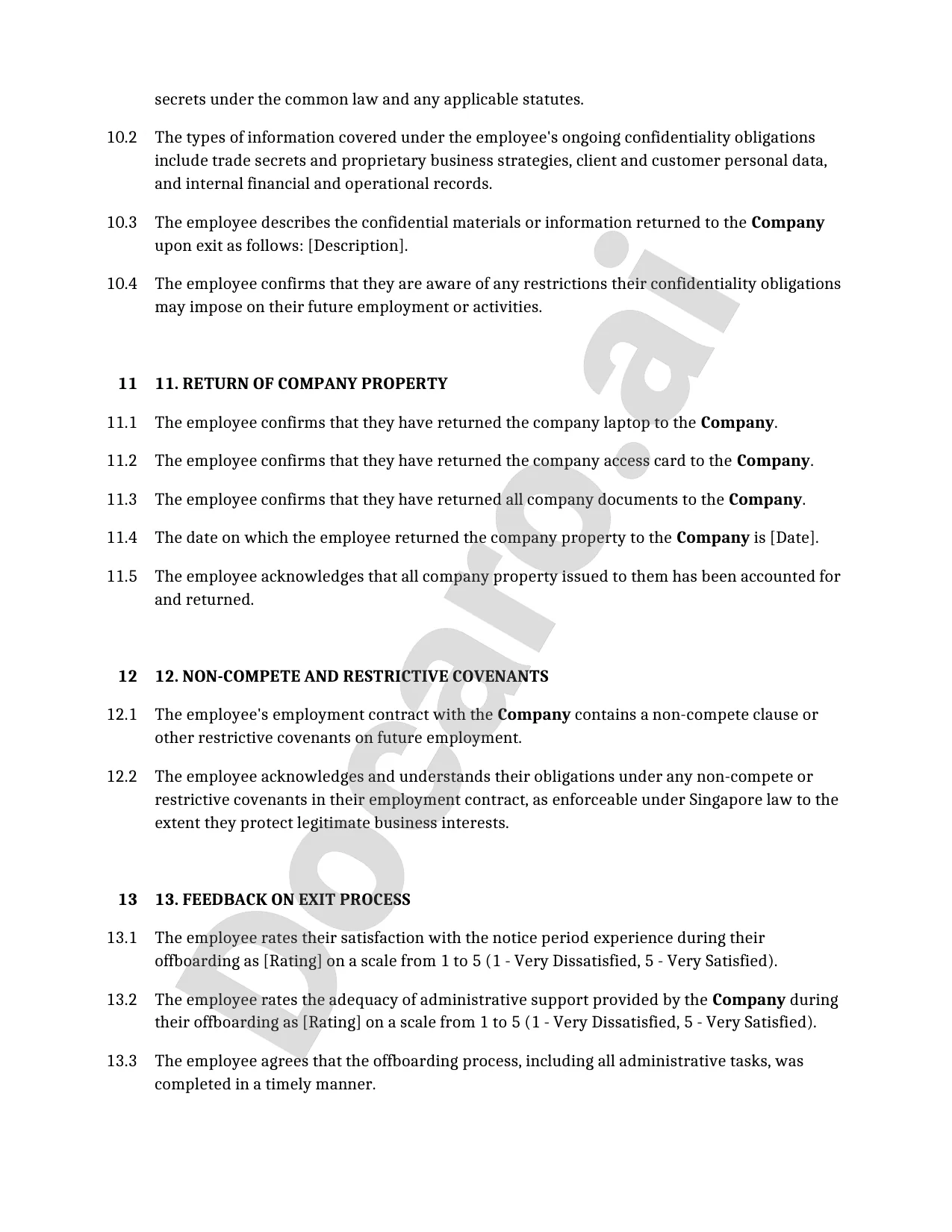
Finally, include a confidentiality agreement clause to protect sensitive information shared during the exit process. This ensures that feedback remains private and is used only for internal HR purposes, in line with Singapore's Personal Data Protection Act. Advocate for bespoke AI-generated corporate documents using Docaro to customize this form precisely for your organization's needs, avoiding generic templates.
Are there any key exclusions in exit interview forms?
Exit interview forms in Singapore are essential tools for gathering employee feedback during resignation, but they often include key exclusions to avoid unintended legal entanglements. These forms typically do not cover legal disputes or compensation claims, as addressing such matters could imply company liability or influence ongoing proceedings under Singapore's Employment Act.
To prevent legal issues, organizations should avoid soliciting details on wage disputes, unfair dismissal, or harassment allegations in these forms. Instead, direct employees to formal channels like the Ministry of Manpower (Ministry of Manpower Singapore) for any such concerns, ensuring the process remains focused on constructive feedback.
Companies must refrain from using exit interviews to obtain waivers or settlements without legal oversight, as this could violate Singapore labour laws. For compliant exit interview templates, consider bespoke AI-generated corporate documents via Docaro to tailor exclusions precisely to your needs.
How have recent legal changes affected exit interview forms in Singapore?
Singapore's employment landscape has seen no major legal changes specifically targeting exit interview forms in recent years, maintaining the focus on standard practices under existing labour laws. Employers continue to conduct these interviews to gather feedback on employee experiences, with confidentiality guided by the Personal Data Protection Act (PDPA) of 2012, which mandates secure handling of personal data collected during such processes.
The PDPA, enforced by the Personal Data Protection Commission (PDPC), requires organizations to obtain consent for data collection and ensure it is used only for legitimate purposes like improving workplace policies. Recent PDPC guidelines emphasize transparency in data usage, but no amendments directly alter exit interview confidentiality requirements as of 2023.
For the latest updates, refer to the official PDPC website or the Ministry of Manpower resources on employment practices. Employers are advised to customize AI-generated corporate documents using tools like Docaro to ensure compliance with PDPA in exit interview forms.
How can you create and implement an effective exit interview form in Singapore?
1
Draft the Exit Interview Form
Use Docaro to generate a bespoke exit interview form tailored to Singapore's employment laws, including questions on reasons for leaving, job satisfaction, and suggestions for improvement.
2
Review and Customize the Form
Consult with legal experts to ensure compliance with PDPA and employment regulations, then refine the AI-generated form for clarity and relevance to your organization's needs.
3
Implement the Form in Exit Processes
Integrate the form into your HR workflow, train interviewers on its use, and conduct exit interviews consistently with departing employees to gather comprehensive feedback.
4
Analyze and Act on Feedback
Compile responses from the form, identify trends using data analysis tools, and develop action plans to address key issues for improving employee retention.
For more on key questions to include
As companies in Singapore navigate employee turnover, conducting effective exit interviews becomes crucial for gathering actionable insights and improving workplace retention.
The true value of these interviews lies in the specific questions asked, which uncover root causes of dissatisfaction and highlight areas for organizational growth.
For tailored guidance on crafting these questions, explore our resource on Key Questions for Effective Exit Interview Forms in Singapore, designed to align with local employment practices.
To ensure compliance with Singapore's labour laws, consider consulting authoritative sources like the Ministry of Manpower guidelines on exit interviews.
How do exit interview forms contribute to employee retention in Singapore?
Exit interview forms are essential tools for Singapore companies aiming to boost employee retention by uncovering the root causes of turnover. By systematically collecting feedback from departing employees, these forms help identify recurring issues such as workload pressures or lack of career growth opportunities prevalent in Singapore's competitive job market.
Analyzing patterns from exit interviews allows HR teams to spot trends, like high turnover among millennials due to work-life balance concerns, enabling targeted interventions. For comprehensive strategies, refer to The Ultimate Guide to Exit Interviews in Singapore for best practices tailored to local regulations.
Implementing changes based on these insights, such as enhancing flexible working arrangements or professional development programs, can significantly reduce voluntary attrition rates. Learn actionable steps in How to Implement Exit Interviews for Better Employee Retention in Singapore, and consult the Ministry of Manpower guidelines for compliant processes.
"Exit interviews are a critical tool for Singaporean organizations to uncover actionable insights on employee retention and culture, directly fueling sustainable growth by informing targeted improvements in talent management strategies."
As an HR expert, I recommend leveraging bespoke AI-generated corporate documents via Docaro to create customized exit interview templates tailored to your company's needs, ensuring compliance with local regulations and relevance to your workforce.
You Might Also Be Interested In
A Document Outlining Company Policies, Employee Rights, And Workplace Rules.
A Document Outlining Expected Behaviors, Ethical Standards, And Rules For Individuals Or Organizations To Ensure Integrity And Compliance.
A Corporate Policy Outlining Commitments To Fostering Diverse Workplaces, Ensuring Equitable Opportunities, And Promoting Inclusive Practices.
A Corporate Policy Outlining Guidelines For Employees Working Remotely, In-office, Or In A Hybrid Model To Balance Flexibility And Productivity.
A Corporate Policy Outlining Rules For Appropriate Use Of IT Resources And Systems.
A Policy Outlining How An Organization Manages, Stores, And Disposes Of Data And Records To Ensure Compliance And Efficiency.
A Corporate Policy Outlining Procedures For Employees To Report Misconduct, Ensuring Confidentiality And Protection Against Retaliation.
A Policy Document Outlining Procedures For Handling Employee Misconduct And Workplace Complaints In Singapore Companies.
A Corporate Document Outlining Policies, Procedures, And Guidelines To Ensure Employee Safety And Compliance With Health Regulations In The Workplace.
A Document Outlining The Responsibilities, Duties, Required Skills, And Qualifications For A Specific Job Role.
A Performance Improvement Plan (PIP) Is A Formal Document Outlining An Employee's Performance Issues And A Structured Plan With Goals And Timelines To Help Them Improve, Often Used Before Potential Termination.
A Corporate Document Outlining The Principles And Approach To Employee Compensation, Including Pay Structures, Incentives, And Alignment With Business Goals.
A Corporate Document Outlining The Rationale And Justification For Promoting An Employee, Including Performance Details And Business Needs.
A Documented Set Of Instructions Detailing How To Perform Routine Operations Consistently And Efficiently In An Organization.
A Document Outlining Procedures For Detecting, Responding To, And Recovering From Security Incidents In An Organization.
A Strategic Document Outlining Procedures To Maintain Operations During Disruptions And Restore Systems After Disasters.
A Corporate Document Outlining Rules, Procedures, And Responsibilities To Protect An Organization's Information Systems From Cyber Threats.
A Document Outlining Procedures And Standards To Ensure Product Or Service Quality In An Organization.
A Corporate Document Outlining A Company's Performance And Initiatives In Environmental, Social, And Governance Areas To Demonstrate Sustainability And Ethical Practices.