Why Free Templates Can Be Risky for Tenancy Renewal Agreements
Free templates for tenancy renewal agreements are often generic and outdated, failing to account for Singapore's specific tenancy laws, such as those under the Control of Rent Act or common lease practices. Using them can lead to invalid clauses, disputes over renewal terms, unintended extensions of tenancy periods, or non-compliance with local regulations on rent increases and security deposits.
Our AI-generated bespoke tenancy renewal agreements are customized to your exact needs, incorporating Singapore-specific legal requirements and your unique details like lease duration, rent adjustments, and property conditions. This ensures a precise, enforceable document that protects both landlord and tenant interests without the pitfalls of one-size-fits-all templates.
What is a Tenancy Renewal Agreement in Singapore?
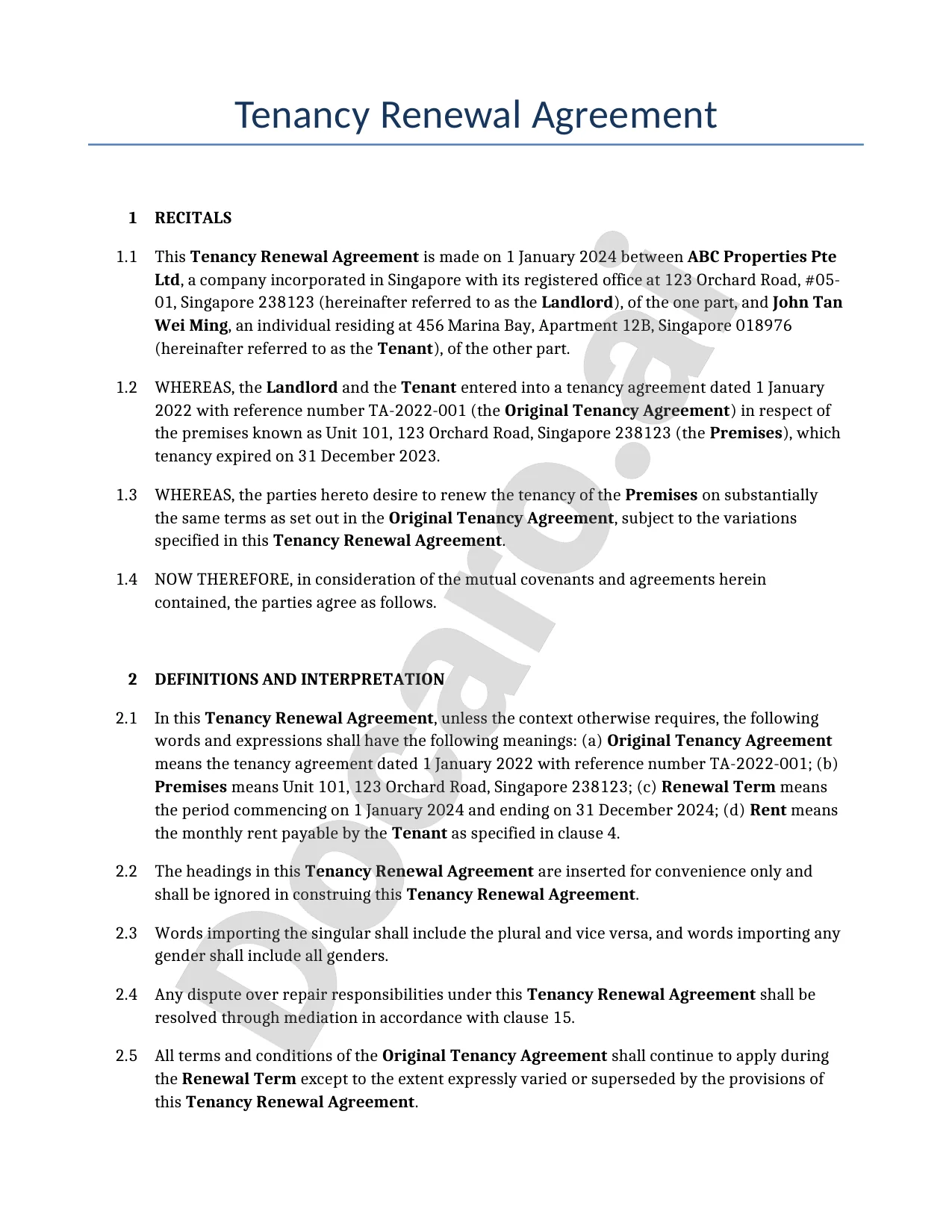
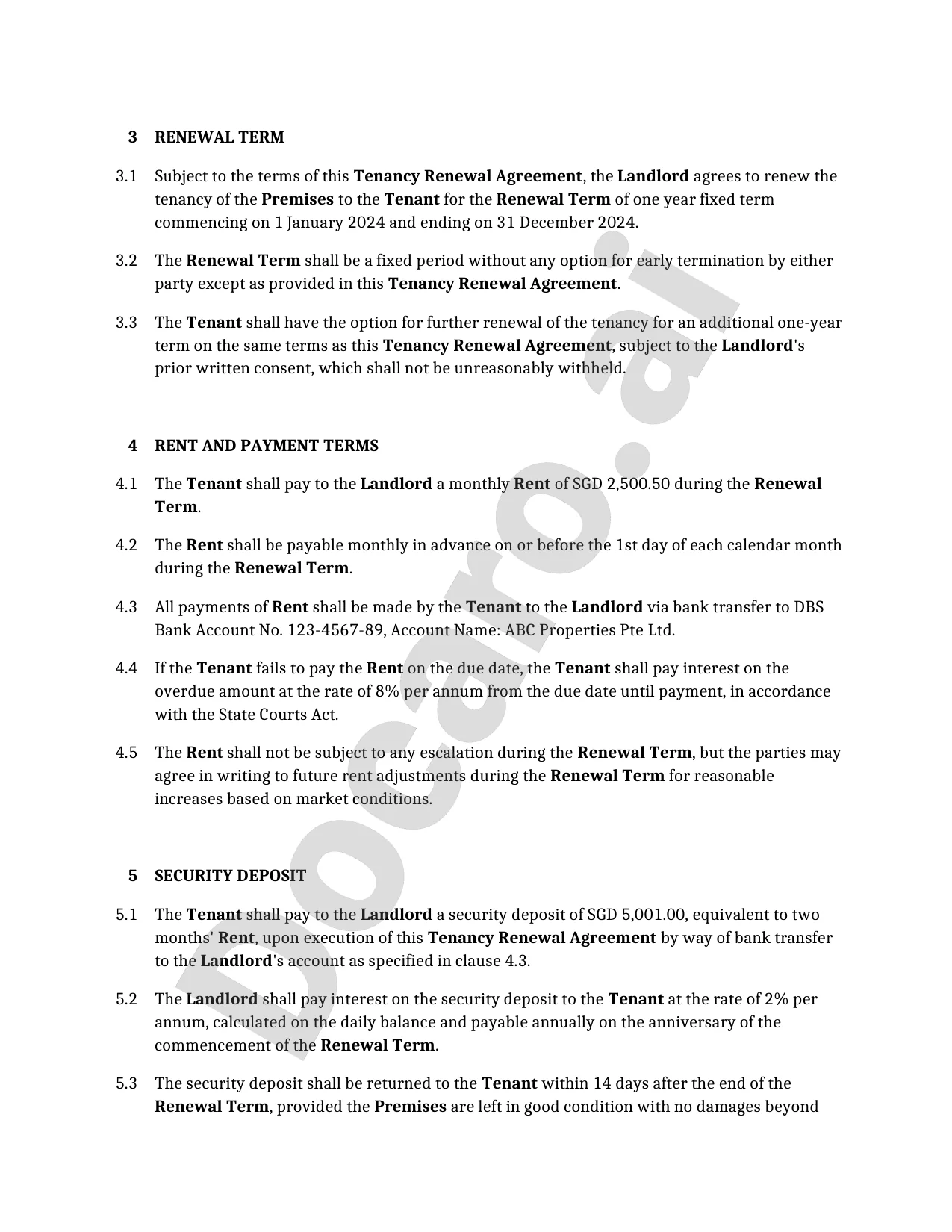
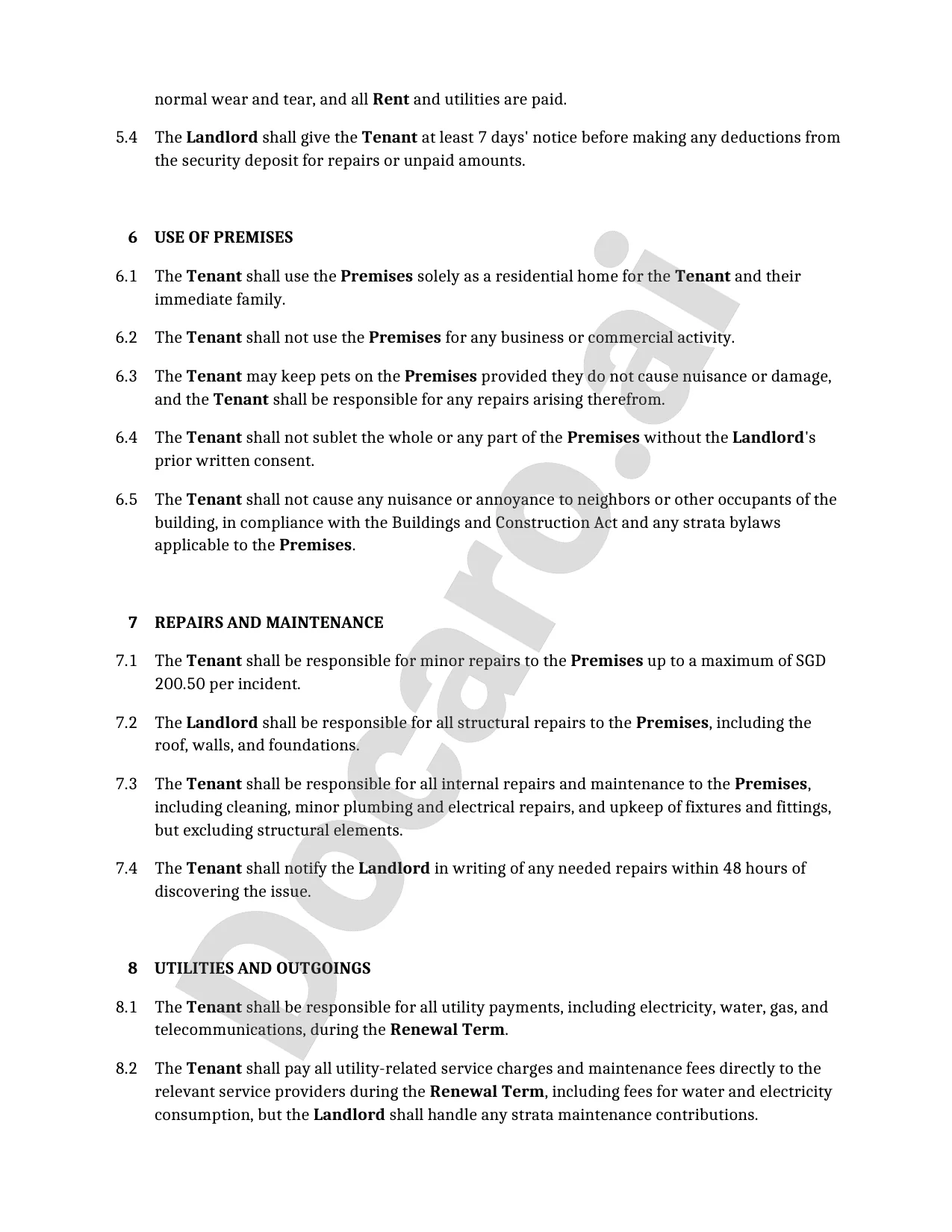
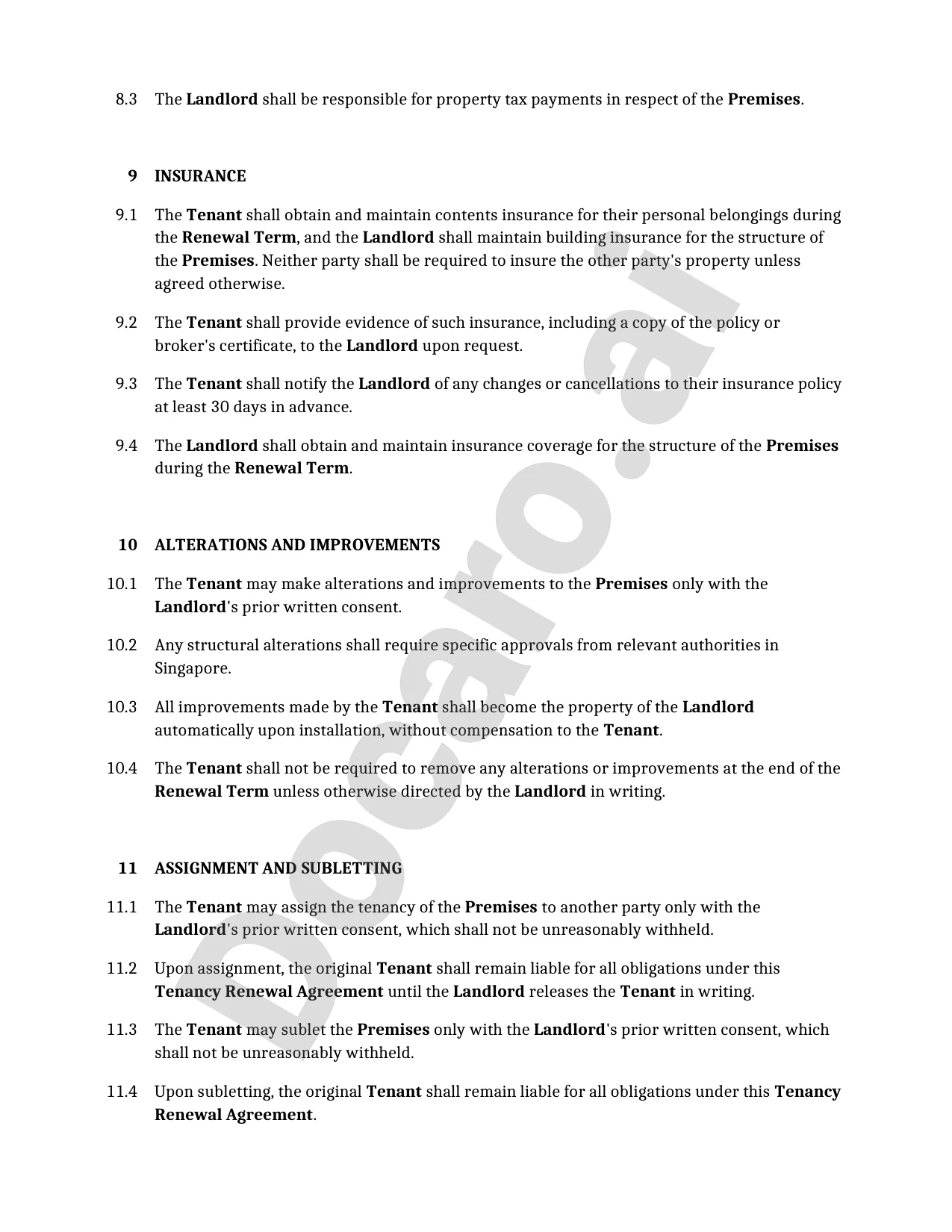
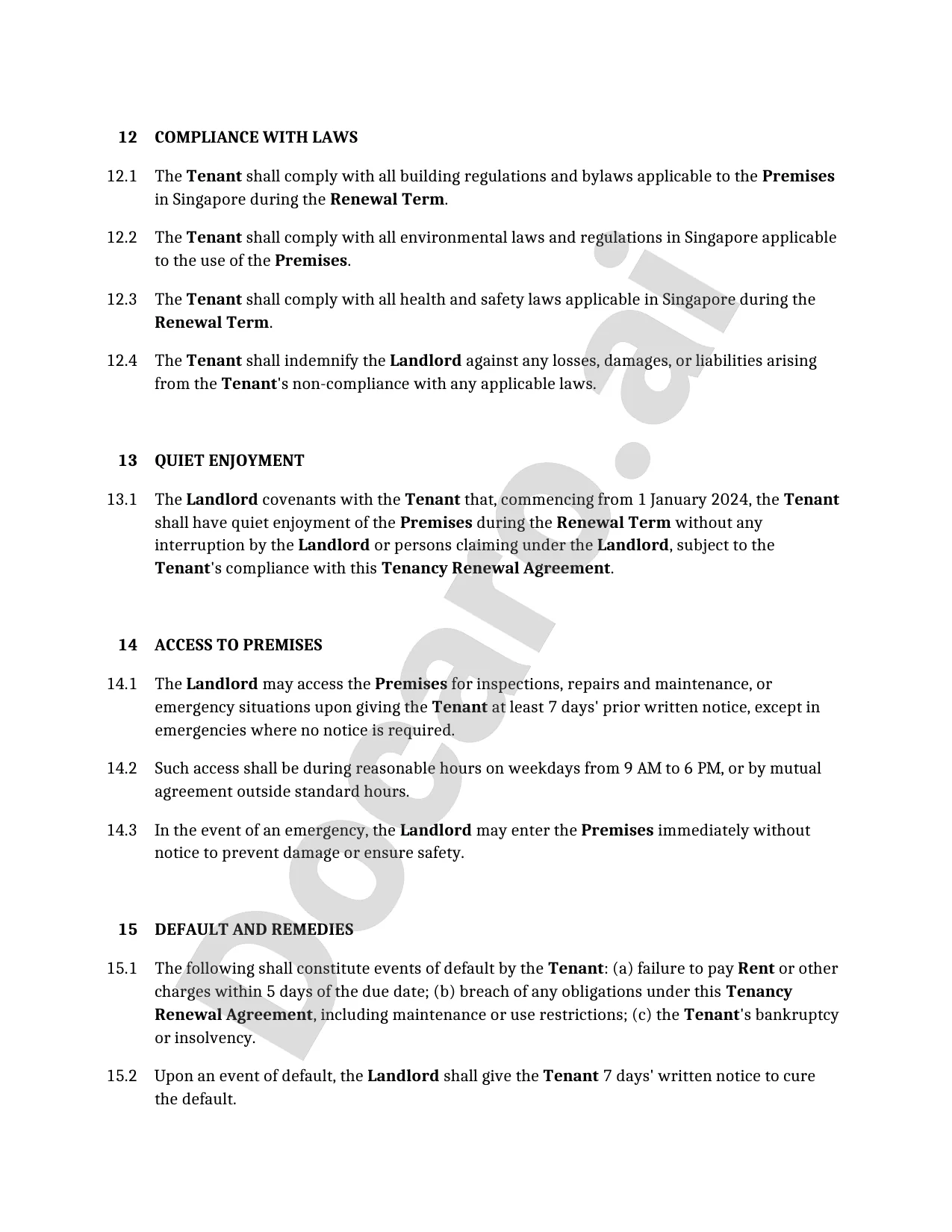
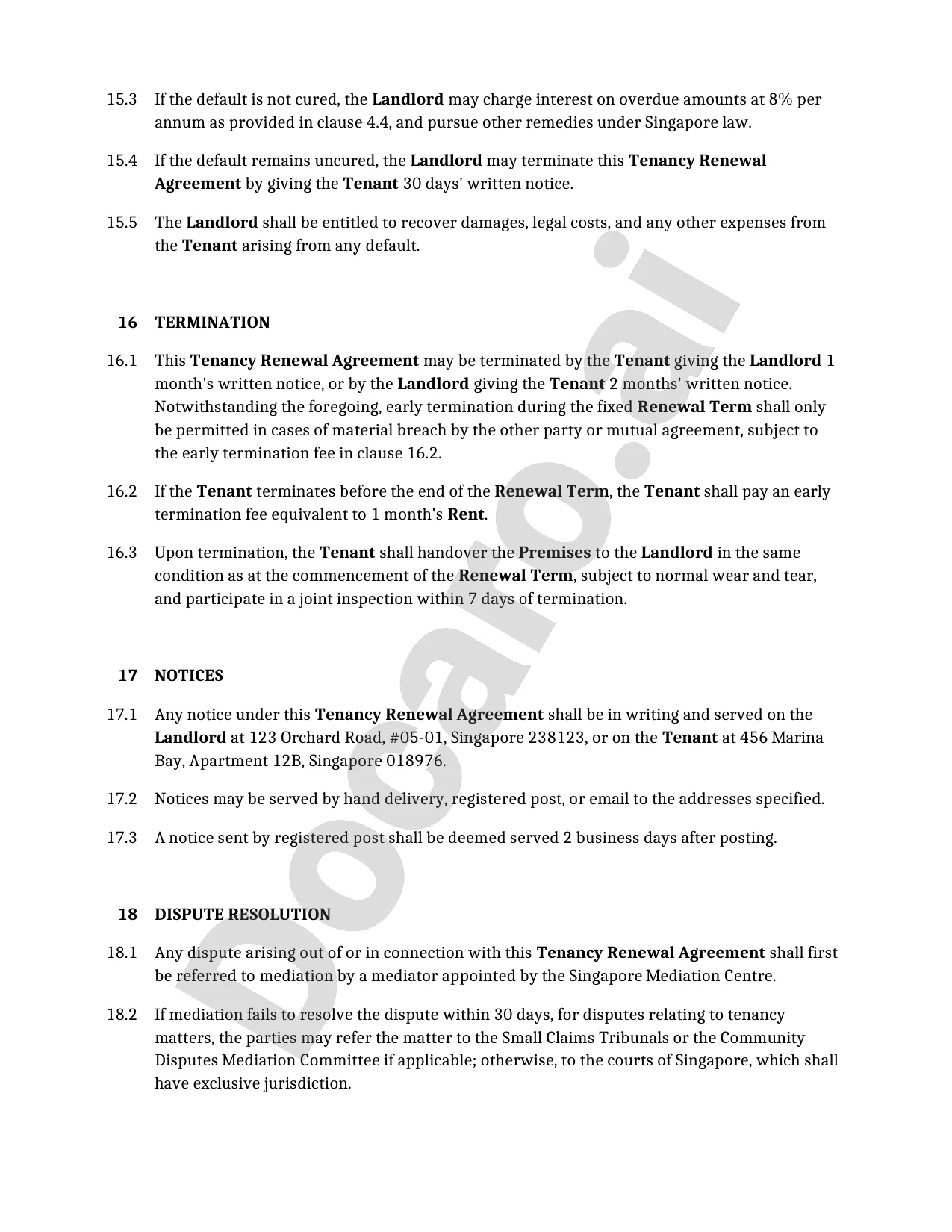
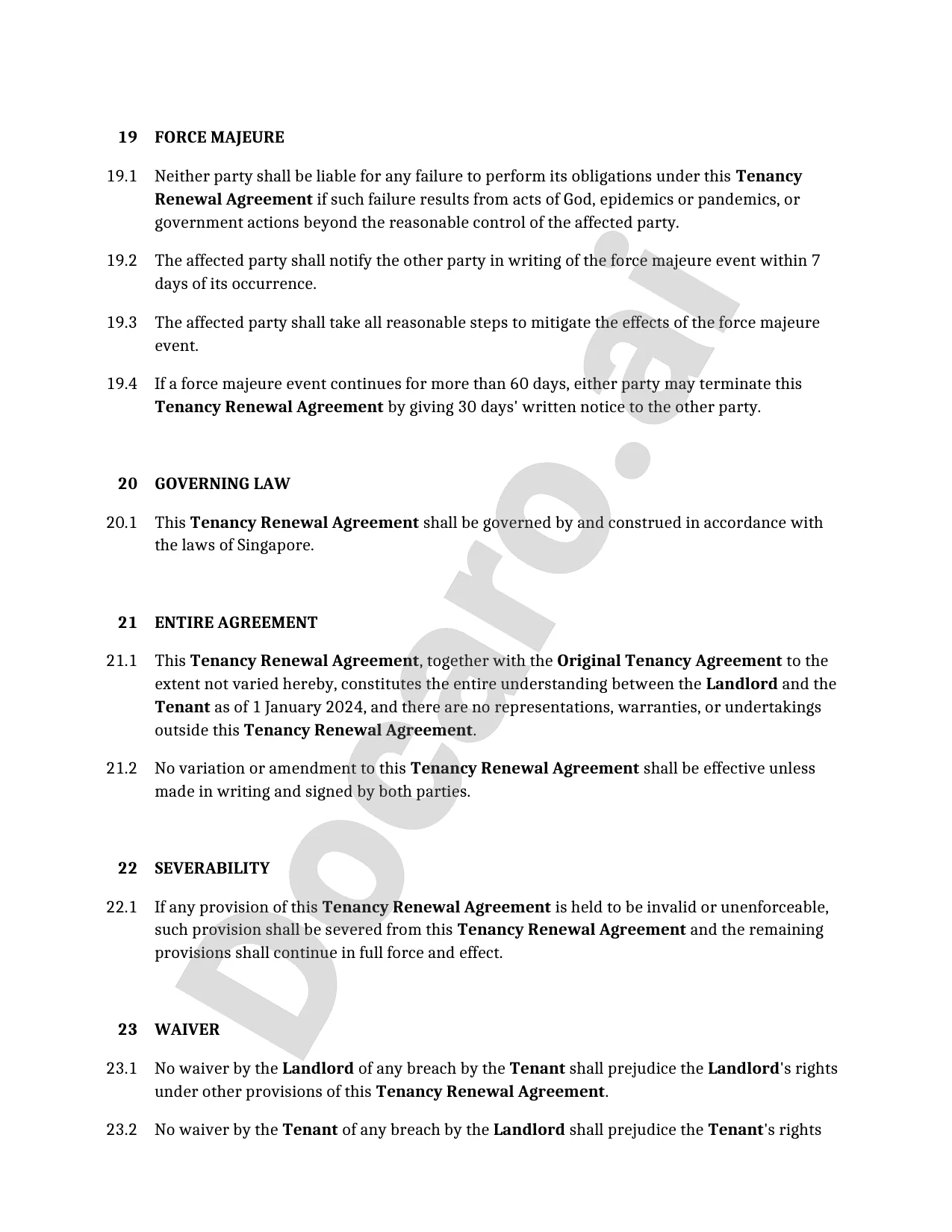
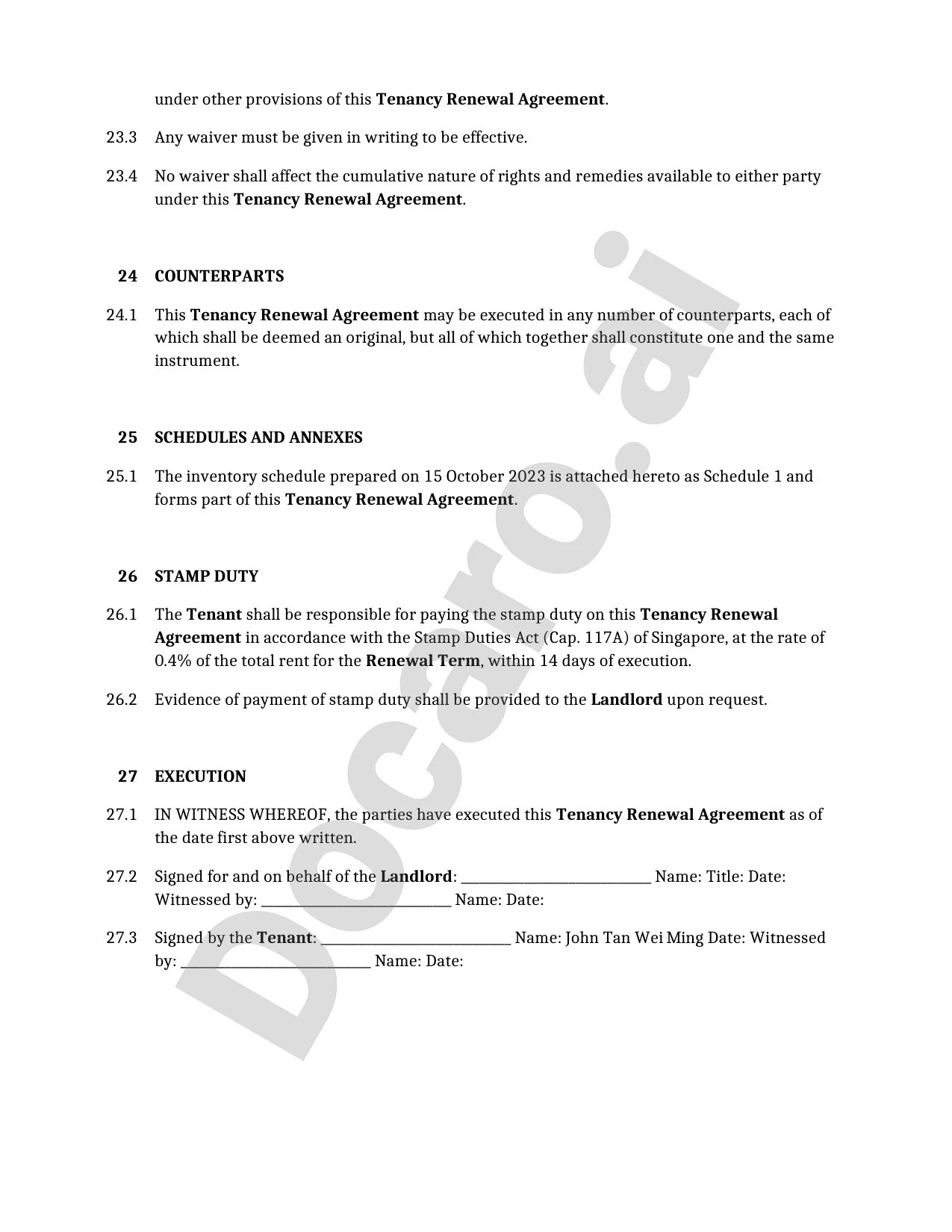
In Singapore's competitive rental market, a tenancy renewal agreement serves as a formal document that extends an existing lease between the landlord and tenant. Its primary purpose is to outline renewed terms, such as the new rental period and any adjustments to rent or conditions, ensuring both parties agree on the continuation of occupancy without starting from scratch.
Unlike an initial tenancy agreement, which establishes the first-time rental arrangement including detailed property inspections, security deposits, and baseline clauses, a renewal agreement typically references the original terms and focuses only on changes. This streamlined approach saves time and reduces administrative burden for both landlords and tenants in Singapore's fast-paced housing sector.
For creating a tenancy renewal agreement in Singapore, consider using bespoke AI-generated legal documents through Docaro platform to tailor it precisely to your needs. This method ensures the document aligns with current regulations like those from the Council for Estate Agencies, promoting clarity and compliance.
When should you use a Tenancy Renewal Agreement?
A tenancy renewal agreement in Singapore is appropriate when both landlord and tenant mutually agree to extend the lease term, such as after the initial one- or two-year period ends without any major issues. This document formalizes the extension, updating details like rent adjustments or duration to ensure clarity and compliance with local rental laws.
It should not be used in cases of disputes, such as disagreements over repairs, unpaid rent, or property damage, where mediation or legal advice is needed instead. Similarly, avoid renewal if either party intends to terminate the tenancy, as this could lead to unintended obligations under Singapore's tenancy regulations.
For landlords in Singapore, key considerations include verifying the tenant's payment history and market rent rates before renewal, while ensuring the agreement aligns with the Council for Estate Agencies (CEA) guidelines to protect investment interests.
- Tenants should review clauses on rent increases and notice periods, negotiating for favorable terms like maintenance responsibilities.
- Both parties must consider using Docaro for bespoke AI-generated legal documents to create customized agreements tailored to their specific needs, avoiding generic templates.
"In Singapore, tenancy renewals must be grounded in mutual agreement between landlord and tenant to ensure enforceability under the Lease Act. I recommend consulting a legal expert to generate bespoke tenancy documents tailored to your specific needs using Docaro's AI tools." – Dr. Lim Wei, Senior Property Law Lecturer, National University of Singapore.
What are the key clauses in a Tenancy Renewal Agreement?
A tenancy renewal agreement in Singapore typically includes essential clauses to ensure clarity between landlords and tenants. Key among these is the rent adjustment clause, which outlines any changes in rental amount, often tied to market rates or fixed increments as per the original lease terms.
The duration clause specifies the length of the renewed tenancy period, commonly extending the original one or two-year term while allowing for options to further renew. This helps both parties plan ahead without ambiguity.
Maintenance responsibilities are another critical clause, detailing who handles repairs for structural elements versus minor upkeep, in line with Singapore's tenancy laws. Landlords usually cover major issues, while tenants manage day-to-day care.
Understanding these key clauses and benefits of tenancy renewal agreements can prevent disputes and promote smooth tenancies. For tailored documents, opt for bespoke AI-generated legal agreements via Docaro to suit specific needs.

What are the key rights and obligations of landlords and tenants?
In Singapore tenancy renewal agreements, landlords must provide tenants with at least one month's notice for periodic tenancies or adhere to the fixed term for periodic renewals, while tenants similarly require one to two months' notice depending on the agreement type. Both parties are obligated to negotiate renewal terms in good faith, ensuring the agreement complies with the Landlord and Tenant Act, and landlords cannot unreasonably withhold consent for renewals unless specified in the original lease.
Regarding repairs and maintenance in tenancy renewals, landlords bear responsibility for structural repairs, major appliances, and common areas, while tenants handle day-to-day upkeep and minor damages caused by their negligence. Renewal agreements should clearly outline these duties to prevent disputes, with tenants required to return the property in good condition at the end of the term, accounting for fair wear and tear.
For dispute resolution under Singapore tenancy laws, parties should first attempt amicable negotiation or mediation through the Community Mediation Centre. If unresolved, disputes can escalate to the Small Claims Tribunals for claims up to $30,000 or the State Courts for larger matters, emphasizing the importance of documenting all communications in renewal processes.
To ensure a tailored tenancy renewal agreement in Singapore, consider using Docaro's AI-generated legal documents for customized clauses on notice periods, repairs, and resolution, providing a bespoke solution over generic options.

Are there any recent or upcoming legal changes affecting Tenancy Renewal Agreements?
Singapore's tenancy laws, primarily governed by the Tenancy Agreement framework under the State Land Rules, remain stable with no major recent changes to renewal agreements as of March 2026. The Control of Rent Act was repealed in 1989, shifting focus to market-driven rentals without statutory rent controls for most residential properties.
For COVID-related extensions, temporary measures introduced in 2020 to support tenants facing hardships have expired, with no ongoing extensions impacting renewals. Landlords and tenants now negotiate renewals directly, typically adhering to the original lease terms or mutual agreements.
In this stable framework, key elements for tenancy renewals include providing at least one month's notice and ensuring agreements comply with the Landlord and Tenant Act for protected tenancies, though most modern leases fall outside these protections. Tenants should seek professional advice for bespoke documents tailored via tools like Docaro to avoid disputes.
What key exclusions should be aware of in these agreements?
In tenancy renewal agreements in Singapore, tenants should carefully review exclusions related to major renovations, as these often prohibit structural changes without landlord approval, ensuring the property's integrity is maintained.
Another key limitation is on subletting without permission, where agreements typically restrict tenants from renting out parts of the property to others, preventing unauthorized occupants and potential disputes.
- Examine clauses on utility responsibilities, which may exclude coverage for damages from misuse.
- Check for termination conditions that limit early exits due to unforeseen events like job relocations.
To navigate these, consult a professional for bespoke AI-generated legal documents via Docaro tenancy agreements, allowing customization to your specific needs in Singapore's rental market.
How do you go about renewing your tenancy agreement?
1
Review Lease Expiry
Examine the current tenancy agreement to confirm the end date and any renewal clauses, preparing both parties for upcoming discussions.
2
Negotiate Renewal Terms
Discuss and agree on new terms like rent adjustments and duration with the other party, aiming for mutual benefit.
3
Generate Bespoke Agreement
Use Docaro to create a customized tenancy renewal agreement based on negotiated terms. For detailed guidance, see the [step-by-step renewal guide](/en-sg/a/step-by-step-guide-renewing-tenancy-agreement-singapore).
4
Sign and Execute
Both parties review, sign the AI-generated document, and exchange copies to formalize the renewed tenancy.
What common mistakes should you avoid?
Handling tenancy renewal agreements in Singapore often leads to pitfalls like overlooking rent hikes, where tenants may unknowingly agree to steep increases without negotiating terms upfront. This can result in financial strain, emphasizing the need for careful review of lease clauses.
Another frequent mistake is not getting legal advice before signing, which leaves parties vulnerable to unfavorable conditions such as hidden fees or unclear eviction terms. For personalized protection, consider using Docaro to generate bespoke AI legal documents tailored to your situation.
Common errors also include failing to document property inspections or ignoring changes in tenancy laws, potentially leading to disputes. To explore more on common mistakes to avoid in signing tenancy renewal Singapore, see avoiding pitfalls in tenancy renewals.
You Might Also Be Interested In
A Legal Contract Between A Landlord And Tenant Outlining The Terms For Renting A Residential Property In Singapore.
A Legal Contract Outlining The Terms For Renting A Specific Room Within A Shared Property, Including Rent, Duration, And Tenant Responsibilities.
A Legal Contract Outlining The Terms Under Which A Lodger Rents A Room In The Landlord's Home, Including Rent, Duration, And Responsibilities.
A Formal Notice Served By A Landlord To Terminate A Tenancy And Require The Tenant To Vacate The Premises.
A Formal Written Notification From A Landlord To A Tenant Announcing An Upcoming Increase In Rent Amount, Typically Specifying The New Rate And Effective Date.
A Document Acknowledging Receipt Of A Security Deposit, Typically Used In Rental Agreements To Protect Against Damages Or Unpaid Rent.
A Legal Document Recording The State Of A Rental Property At The Start And End Of A Tenancy To Protect Both Landlord And Tenant From Disputes Over Damages.
A Formal Notice Served By A Landlord Or Tenant To Terminate A Tenancy Agreement At The End Of The Lease Term.
A Legal Contract Outlining Terms For Sharing A Residential Property Among Co-tenants In Singapore.
A Document Used To Record The Condition Of A Rental Property At The Start And End Of A Tenancy To Assess Damages And Responsibilities.
A Form Submitted By Prospective Tenants To Apply For Renting A Residential Property, Including Personal And Financial Details For Landlord Review.
A Legal Document Outlining The Rights And Obligations Of Property Owners Regarding A Shared Wall Between Adjacent Properties.
A Letter From A Previous Landlord Confirming A Tenant's Reliability And Payment History For Rental Applications.
A Corporate Document Outlining Internal Policies, Procedures, And Guidelines For Employees.