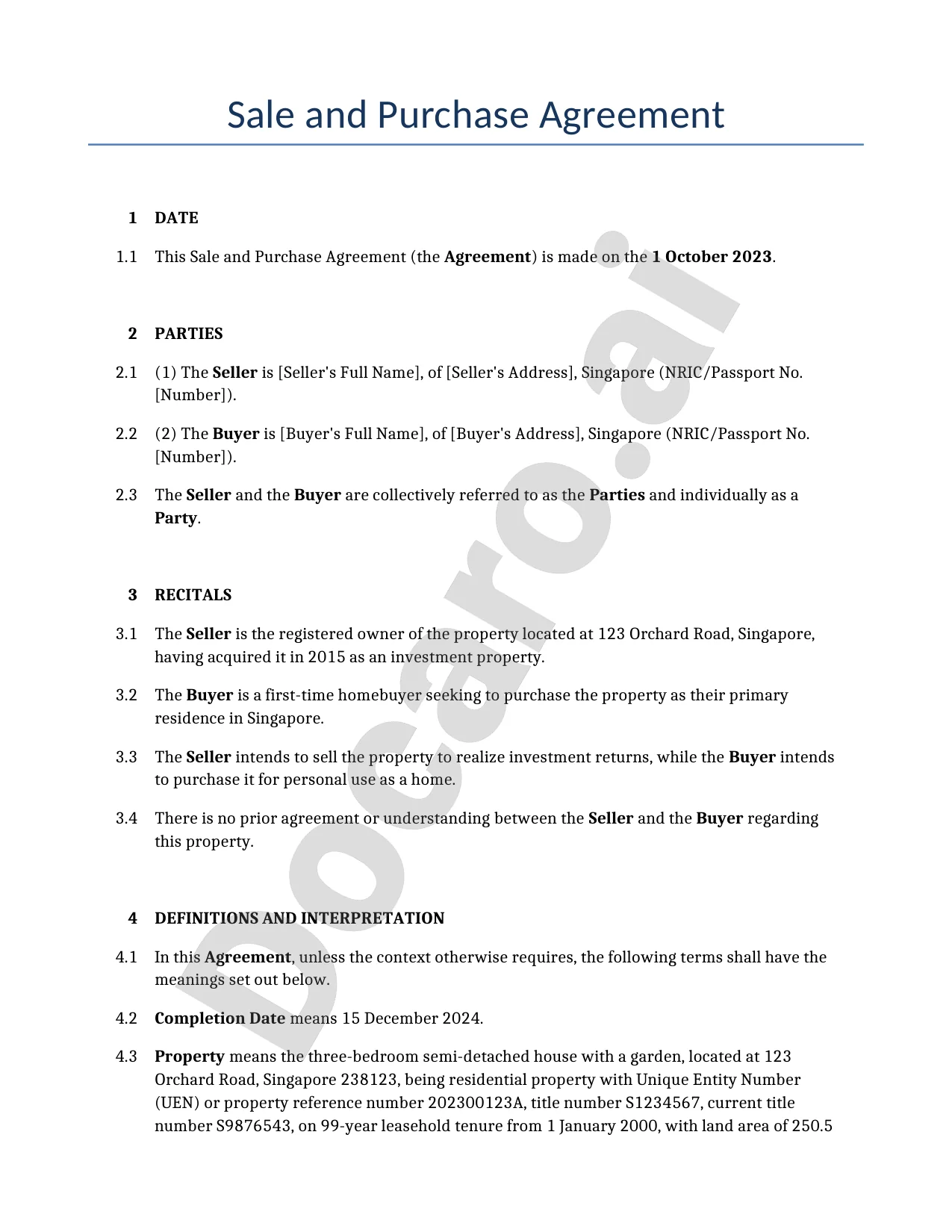
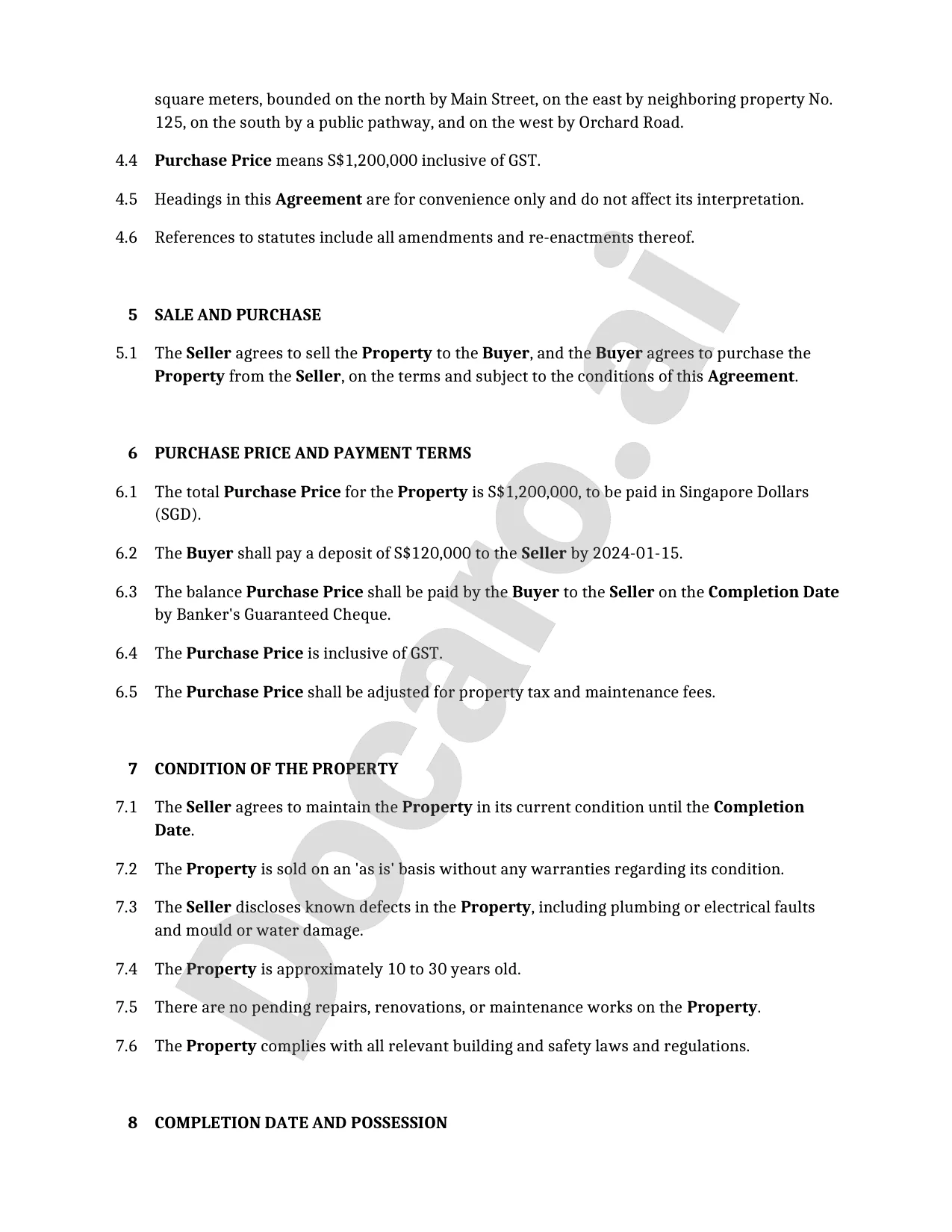
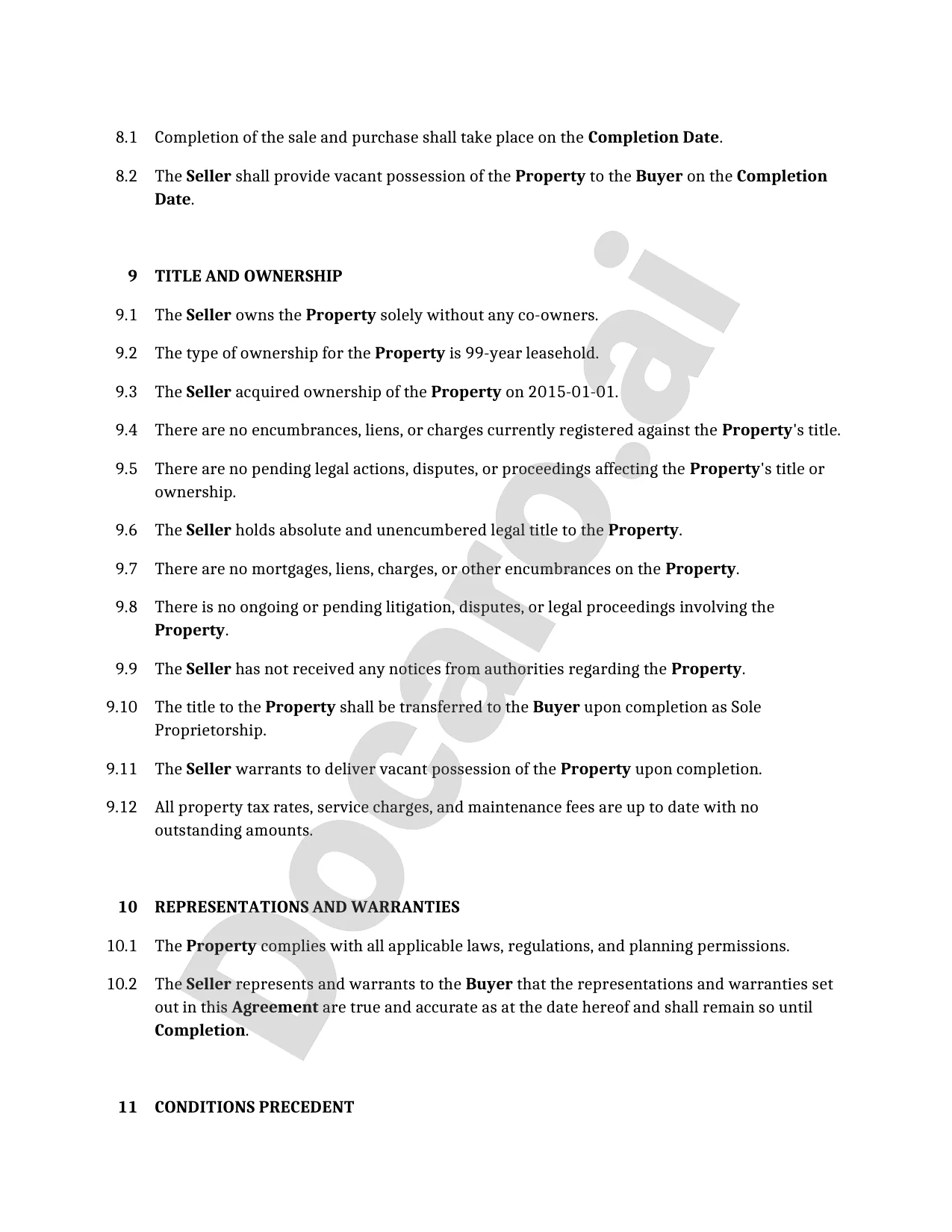
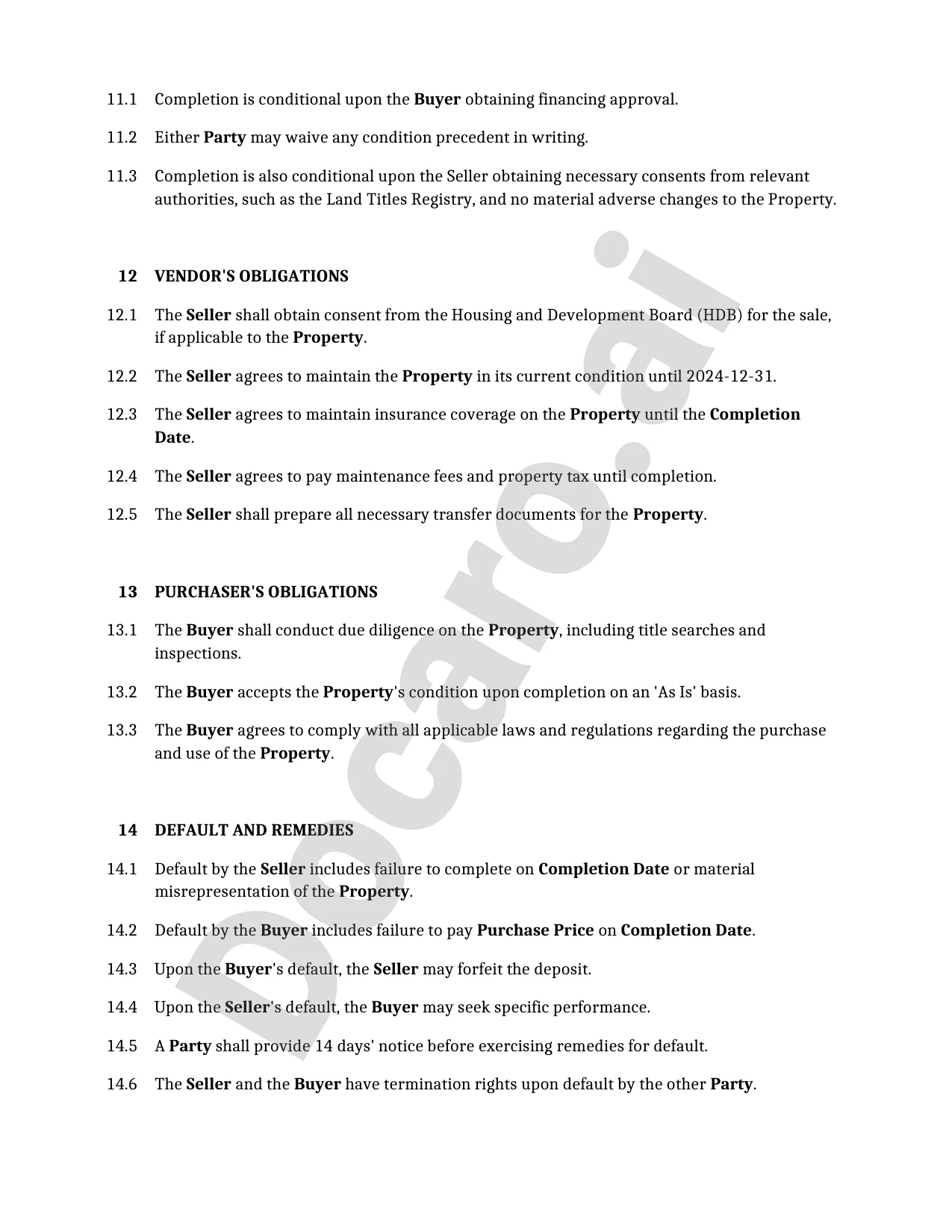
What is a Sale and Purchase Agreement in Singapore?
A Sale and Purchase Agreement (SPA) in Singapore law is a legally binding contract between a buyer and seller for the transfer of property ownership, governed primarily by the Land Titles Act and common law principles. Its core purpose in property transactions is to outline the terms of the sale, ensuring clarity on price, timelines, and conditions to minimize disputes during the conveyance process.
In real estate sales, SPAs are commonly used for residential, commercial, and industrial properties, often incorporating essential key elements such as deposit payments, completion dates, and warranties. For instance, in HDB resale transactions, the SPA must comply with Housing and Development Board guidelines, while private property sales may include clauses on title searches and encumbrances to protect both parties.
- Deposit clause: Typically 1-5% of the purchase price paid upon signing.
- Conditions precedent: Such as loan approval or due diligence on the property.
- Completion obligations: Detailing handover of keys and vacant possession.
Unlike tenancy agreements, which grant temporary usage rights under the Control of Rent Act for rental periods, an SPA effects permanent ownership transfer and does not involve ongoing rent payments. Tenancy agreements focus on lease terms like duration and maintenance, whereas SPAs emphasize one-time conveyance and post-sale liabilities, making them unsuitable for short-term arrangements.
For tailored SPAs in Singapore property deals, consider bespoke AI-generated legal documents via Docaro to ensure compliance with local regulations and specific transaction needs.
When should you use a Sale and Purchase Agreement in Singapore?
A Sale and Purchase Agreement (SPA) is essential for buying or selling residential properties in Singapore, ensuring clear terms on price, completion dates, and conditions like renovations or HDB eligibility. For commercial properties, an SPA outlines leaseback options and zoning compliance, while for industrial properties, it addresses environmental regulations and land use restrictions under Singapore's property laws.
Under Singapore's property laws, including the Land Titles Act, an SPA is a legally binding contract that must be stamped by the Inland Revenue Authority of Singapore (IRAS) within 14 days of execution to be admissible in court. The Sale of Goods Act does not directly apply to real property transactions, as these fall under conveyancing laws enforced by the Law Society of Singapore, requiring professional legal advice for compliance.
An SPA should not be used for short-term leases under six months, which typically require only tenancy agreements, or informal sales like private vehicle transfers that might use simpler bills of sale. For options to purchase or preliminary agreements, a formal SPA is still recommended to avoid disputes.
Neglecting an SPA risks unenforceable contracts, financial losses from disputes over deposits, or penalties for non-compliance with IRAS stamping duties, potentially leading to void transactions and litigation costs. To mitigate these, opt for bespoke AI-generated legal documents via Docaro, tailored to Singapore's regulations.
"In Singapore property transactions, the Sale and Purchase Agreement (SPA) is indispensable for safeguarding both buyer and seller by clearly delineating rights, obligations, and remedies against potential disputes. I recommend engaging Docaro to generate bespoke AI-assisted legal documents tailored to your specific deal, ensuring robust protection without relying on off-the-shelf templates." – Dr. Lim Wei Ming, Senior Partner, Rajah & Tann Singapore LLP
What are the key clauses in a Sale and Purchase Agreement?
A Sale and Purchase Agreement (SPA) under Singapore law is a critical document for property transactions, outlining the rights and obligations of buyers and sellers. Essential clauses ensure clarity and protect both parties from disputes. For deeper insights into these key elements of SPA in Singapore, refer to key elements of Sale and Purchase Agreement in Singapore.
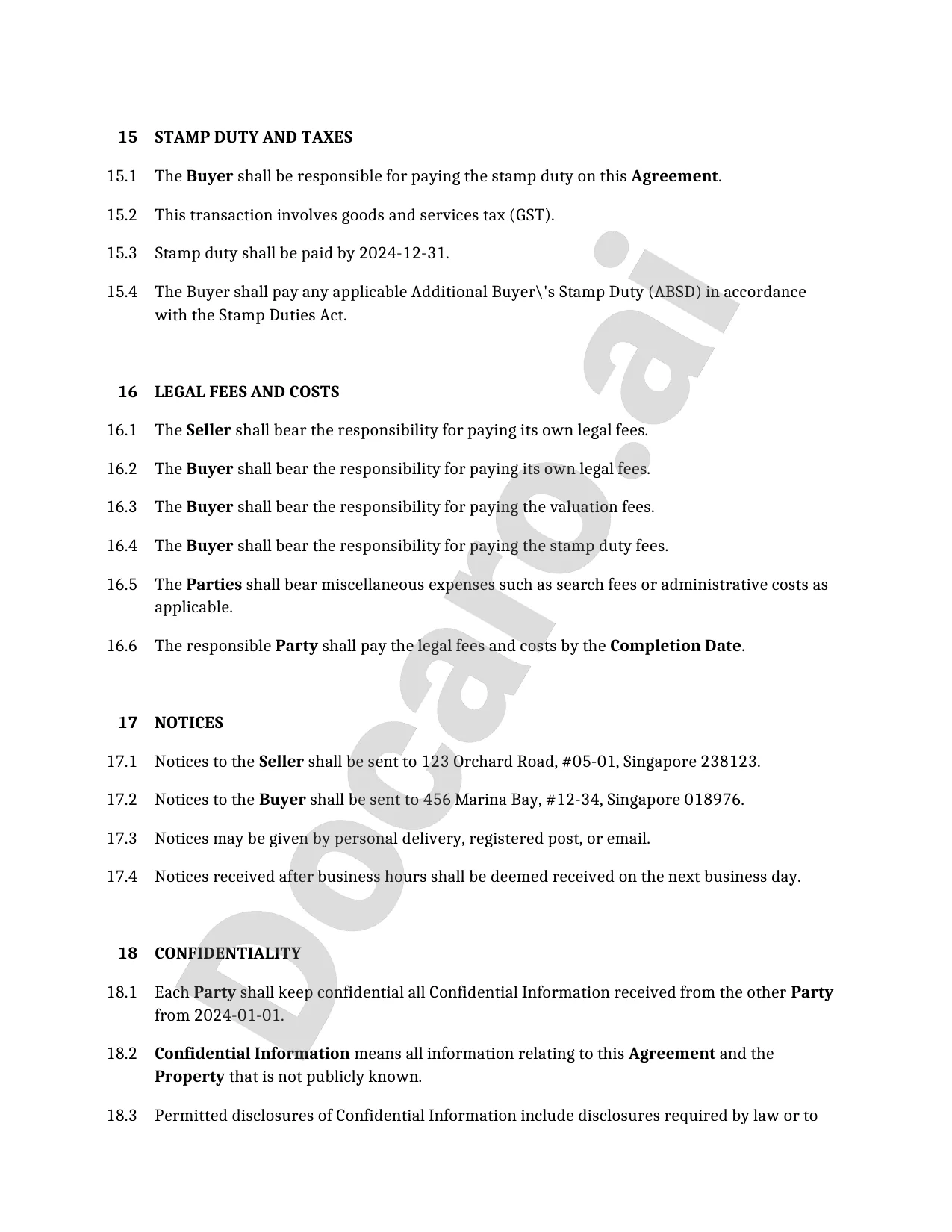
The price clause specifies the total purchase price, including any inclusions like fixtures or exclusions such as appliances, and often ties into market valuations for residential or commercial properties. Payment terms detail the schedule, such as deposits (typically 1-5% upon signing), progress payments linked to construction milestones, and the balance due on completion, helping manage cash flow in Singapore's property market.
Completion date sets the deadline for transferring ownership, usually 8-12 weeks for resale properties, with provisions for extensions due to delays like financing approvals. Conditions precedent are prerequisites that must be met before closing, such as obtaining HDB approval for public housing or securing a mortgage, as guided by Singapore's regulatory framework.
Representations and warranties include statements about the property's title, condition, and absence of encumbrances, allowing buyers to seek remedies if breached. For authoritative guidance, consult the Inland Revenue Authority of Singapore on stamp duty or the Singapore Land Authority for land title matters. Opt for bespoke AI-generated legal documents via Docaro to tailor SPAs precisely to your needs under Singapore law.
1
Identify Purchase Price Clause
Locate and review the purchase price clause in the SPA to understand payment terms and adjustments.
2
Check Completion Timelines
Examine timelines for completion, including closing dates and any conditions precedent.
3
Verify Warranties
Assess seller warranties for accuracy, covering representations on assets, liabilities, and compliance.
4
Consult Lawyer
Engage a qualified lawyer to interpret clauses and ensure the SPA aligns with your interests.
What rights and obligations do parties have in a Sale and Purchase Agreement?
In a Sale and Purchase Agreement (SPA) under Singapore law, the seller's primary obligations include conducting thorough due diligence to ensure clear title, transferring ownership via a valid deed of assignment or conveyance as per the Conveyancing and Law of Property Act (Cap. 61), and accepting a deposit typically 1-5% of the purchase price as a sign of good faith. The buyer, in turn, must perform their own due diligence on the property's legal status, pay the deposit promptly, and complete the purchase within the stipulated timeline, with title transfer implying the seller's warranty of good title free from encumbrances unless disclosed.
Under the Conveyancing and Law of Property Act, title transfer requires registration at the Land Titles Registry, ensuring indefeasible title for the buyer once completed, while deposits serve as security; if the buyer defaults, the seller may forfeit it, but excessive penalties could be challenged as liquidated damages. For remedies for breach, the aggrieved party can seek specific performance, damages, or rescission; sellers breaching by failing to deliver clear title risk buyer termination and deposit refund plus costs, emphasizing the Act's role in upholding contractual integrity in property transactions.
To safeguard interests in Singapore property deals, parties should opt for bespoke AI-generated legal documents using Docaro, tailored to specific needs rather than generic forms. For authoritative guidance, refer to the Conveyancing and Law of Property Act on the Singapore Statutes Online or the Land Authority of Singapore resources for due diligence best practices.
Are there any key exclusions or limitations in Sale and Purchase Agreements?
In Singapore property sales, Share Purchase Agreements (SPAs) often include common exclusions to mitigate risks for both buyers and sellers. These exclusions, such as liability caps, limit the financial exposure of parties to a predefined amount, protecting sellers from excessive claims while ensuring buyers have recourse up to a reasonable threshold.
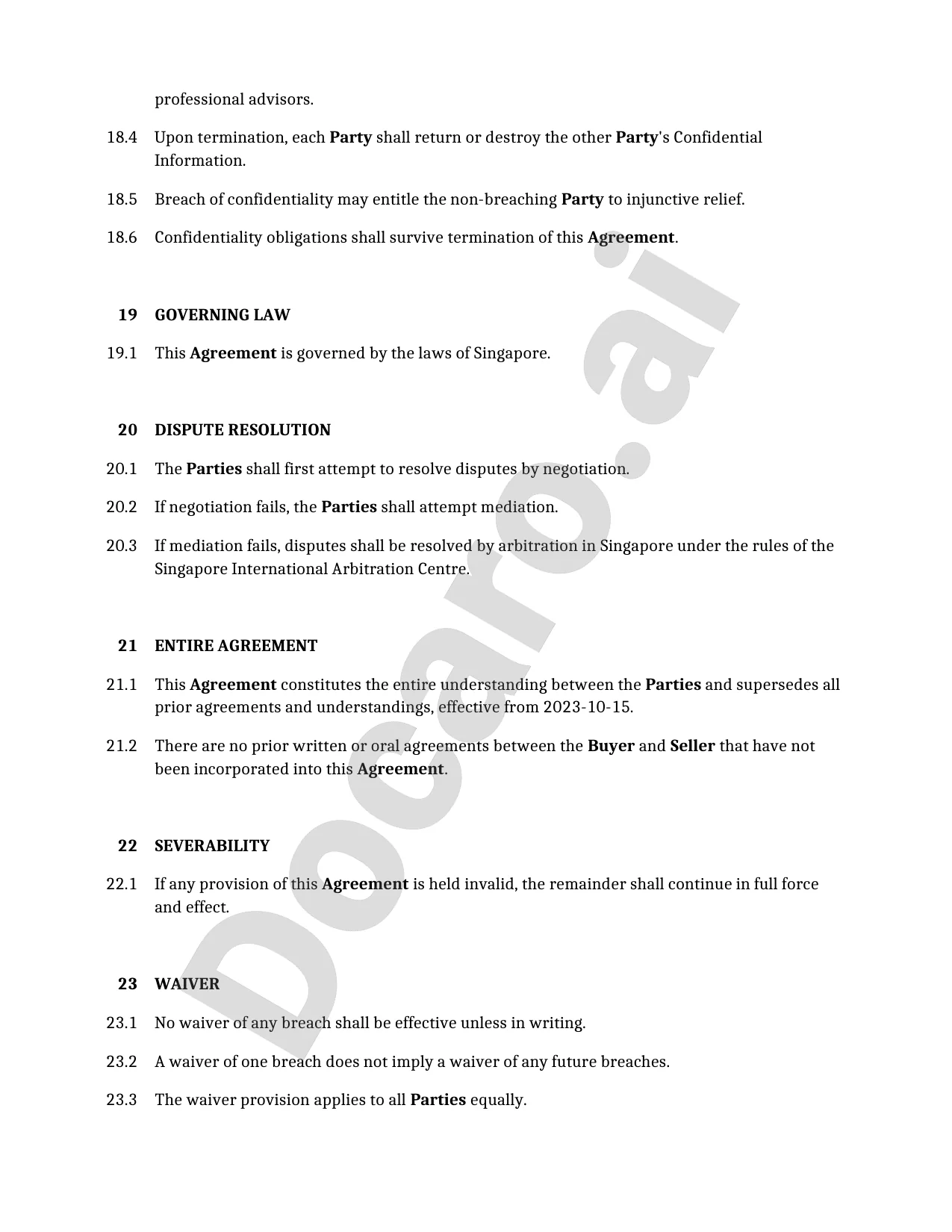
Force majeure clauses are another key exclusion in SPAs, excusing parties from obligations due to unforeseen events like natural disasters or pandemics. In the context of Singapore real estate transactions, they become relevant during volatile periods, such as economic disruptions, safeguarding parties from penalties if completion is delayed by uncontrollable circumstances.
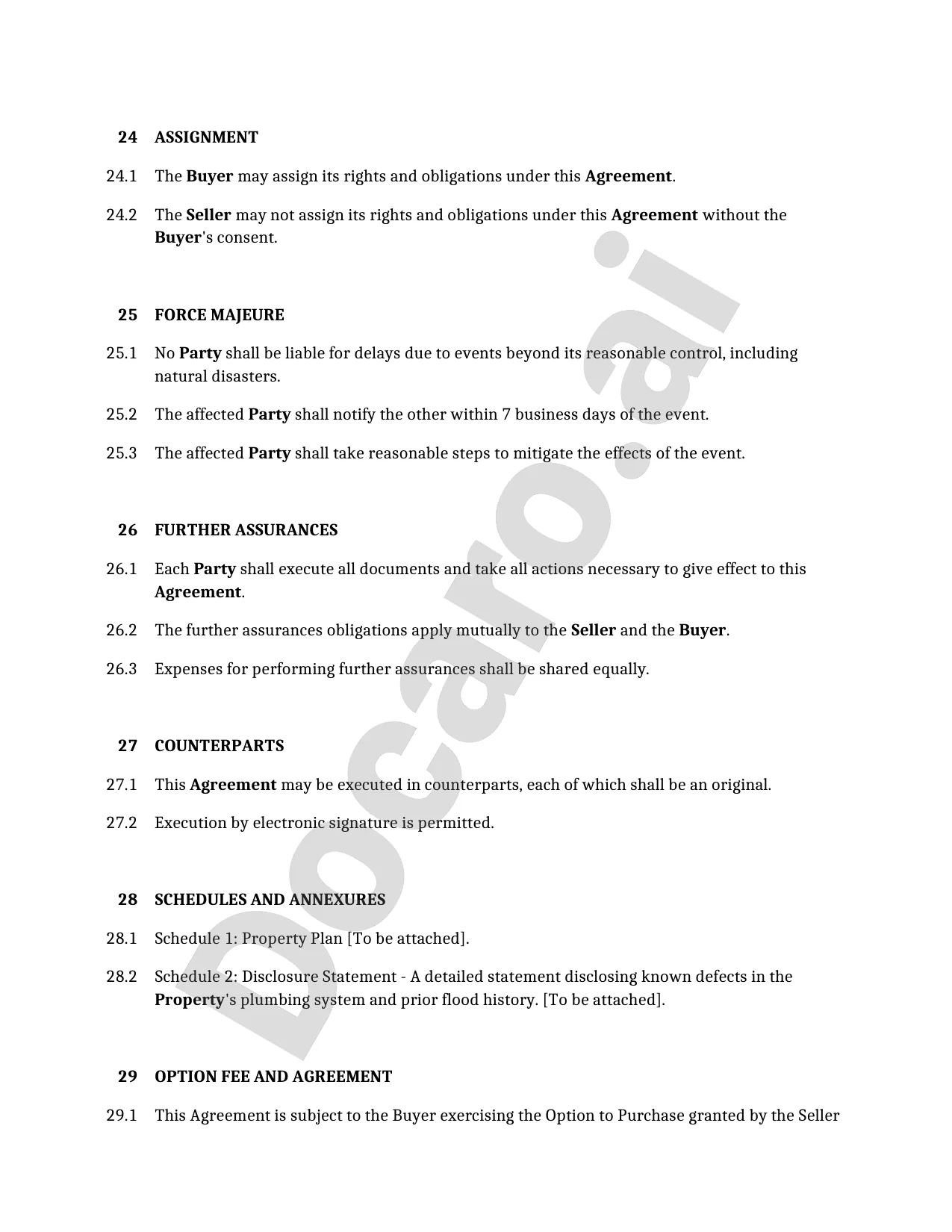
Exclusions for pre-existing defects are crucial in property SPAs, where buyers waive claims for issues known or discoverable before signing. This protects sellers from liability over historical problems in Singapore property deals, encouraging thorough due diligence by buyers, as outlined in guidelines from the Council for Estate Agencies (CEA).
To ensure these exclusions are tailored effectively, parties should opt for bespoke AI-generated legal documents using Docaro rather than generic templates, providing customized protection aligned with specific Singapore property sale needs.
What recent or upcoming legal changes affect Sale and Purchase Agreements in Singapore?
Singapore's Residential Property Act has seen no major amendments since 2023, maintaining its focus on regulating foreign ownership and residential transactions. This stability ensures clear guidelines for buyers and sellers, with the Statutes Online portal providing the latest official text.
Regarding GST implications on Sale and Purchase Agreements (SPAs), the zero-rating of new residential properties under the Goods and Services Tax Act remains unchanged post-2023, exempting qualifying transactions from GST. Developers and buyers should consult the IRAS guidelines for precise application to SPAs.
Upcoming changes include digital signing requirements for property documents, driven by the Electronic Transactions Act enhancements expected in 2024 to facilitate e-conveyancing. For compliant digital legal documents, consider bespoke AI-generated options using Docaro to streamline processes without relying on generic templates.
How can you avoid common pitfalls in Sale and Purchase Agreements?
In Singapore, avoiding errors in Sale and Purchase Agreements (SPAs) starts with thorough due diligence to prevent incomplete assessments of property conditions or legal encumbrances. Ensure all terms are precise and unambiguous to avoid disputes, such as clearly defining payment schedules and completion dates.
Common pitfalls include overlooking regulatory compliance under Singapore's property laws, like those enforced by the Urban Redevelopment Authority (URA). For more detailed insights on mistakes in Singapore SPAs, explore our guide at common SPA errors.
To safeguard your interests, opt for bespoke AI-generated legal documents via Docaro, tailored specifically to Singapore's legal framework rather than generic templates. Consult authoritative sources like the URA website for property guidelines or the Singapore Land Authority for land-related regulations to enhance your agreement's robustness.
- Conduct title searches early to verify ownership.
- Include clauses for contingencies like financing approvals.
- Engage professionals for contract reviews to catch vague language.
1
Engage a Lawyer
Consult a qualified lawyer to draft a bespoke SPA using Docaro for customized AI-generated legal documents tailored to your needs.
2
Conduct Property Searches
Perform thorough title searches and due diligence on the property to verify ownership, liens, and any encumbrances before proceeding.
3
Sign with Witnesses
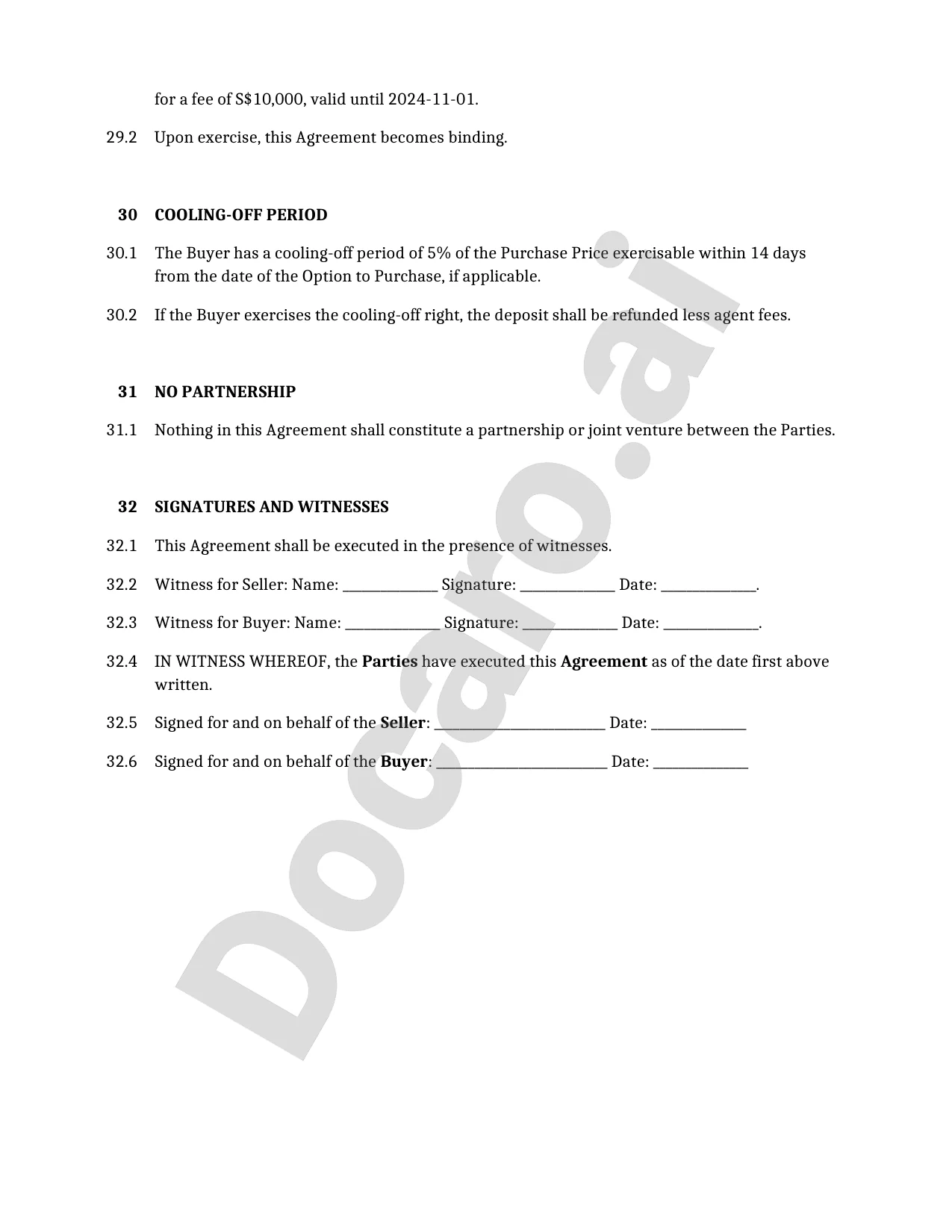
Execute the SPA in the presence of at least two witnesses, ensuring all parties sign the bespoke document for validity.
4
Register the Agreement
File the signed SPA with the relevant land registry office to officially record the transaction and protect your interests.
How do you draft an effective Sale and Purchase Agreement?
Drafting a Sale and Purchase Agreement (SPA) in Singapore requires careful attention to the unique aspects of the transaction, ensuring the document is fully customized to the parties' specific needs and compliant with local laws. Customization involves tailoring clauses on property details, payment terms, and contingencies to reflect the agreement's intent, avoiding generic templates in favor of bespoke AI-generated legal documents using Docaro for precision and efficiency.
Legal review is a critical step in the SPA drafting process, where qualified Singapore lawyers examine the document to identify risks, ensure enforceability under the Conveyancing and Law of Property Act, and mitigate potential disputes. This review often includes verifying compliance with regulations from the Estate Agents Authority and incorporating necessary protections like cooling-off periods for residential properties.
For a detailed step-by-step guide to drafting an SPA in Singapore, refer to our comprehensive resource at Guide to Drafting Sale and Purchase Agreement Singapore, which outlines best practices for customization and review.
You Might Also Be Interested In
A Contract Outlining The Terms For Consultancy Services Provided By An Independent Contractor.
A Contract Outlining The Rights, Obligations, And Governance Rules Among Shareholders Of A Company.
A Legal Contract Outlining The Terms, Rights, And Obligations Of Partners In A Business Partnership.
A Shareholders' Agreement Is A Contract Among Shareholders Of A Private Limited Company Outlining Ownership, Management, And Operational Rules.
A Constitution Is The Foundational Document For A Company In Singapore, Outlining Its Structure, Objectives, And Internal Rules.
A Constitution Is The Foundational Document Governing A Company's Internal Management, Operations, And Member Rights In Singapore.
A Legal Contract Outlining The Terms For Buying And Selling Shares In A Company.
A Formal Decision Or Action Approved By The Board Of Directors Of A Company, Documented In Writing.
A Founders' Agreement Is A Legal Contract Outlining The Rights, Obligations, And Roles Of Company Founders, Including Equity Distribution, Decision-making, And Dispute Resolution.
A Legal Contract Outlining The Terms For The Sale And Purchase Of Specific Assets Between Parties.
A Legal Contract Outlining The Terms For The Sale And Transfer Of A Business Entity, Including Assets, Liabilities, And Obligations.
A Legal Document That Alters The Terms Of An Existing Deed Or Agreement, Commonly Used In Property Or Inheritance Matters.
A Formal Receipt Is A Legal Document Issued By A Seller To A Buyer, Confirming Payment For Goods Or Services And Serving As Proof Of Transaction.
A Tax Invoice Is A Formal Document Issued By GST-registered Businesses In Singapore To Charge Customers For Goods Or Services, Including GST Details For Tax Compliance.
A Legal Contract Outlining The Terms Under Which One Party Provides Services To Another.
A Legal Document Used To Transfer Ownership Of Shares In A Company From One Party To Another, Typically Required For Registration With The Company.
A Document Outlining Measures To Protect Individuals, Especially Vulnerable Groups Like Children, From Harm And Abuse In Organizational Settings.
A Non-binding Document Outlining Preliminary Terms And Intentions For A Potential Business Deal Or Agreement.