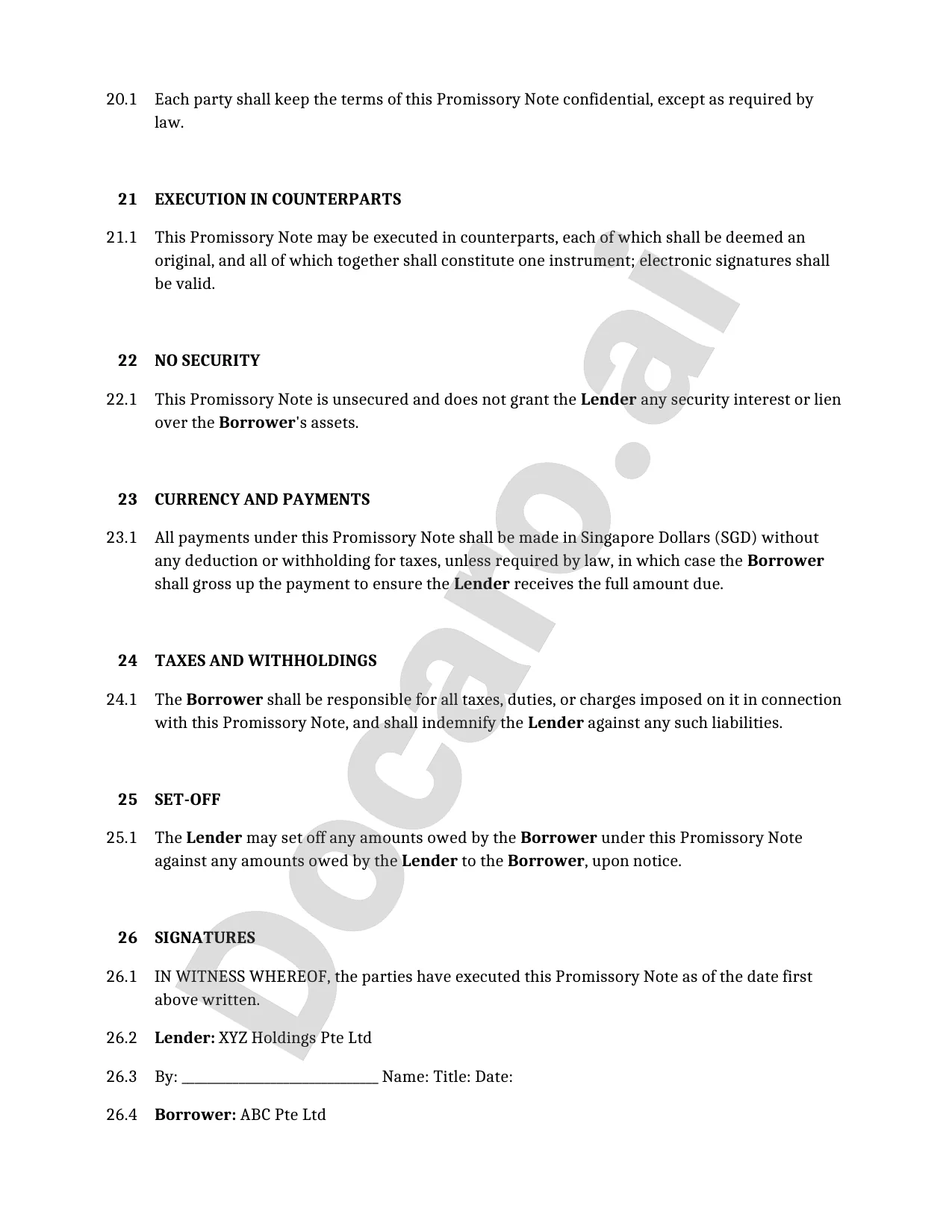
What is a Promissory Note in Singapore?
A promissory note is a written financial instrument in which one party, known as the maker, unconditionally promises to pay a specified sum of money to another party, the payee, either on demand or at a fixed future date. Under Singapore law, promissory notes are governed by the Bills of Exchange Act, which defines them as negotiable instruments that must include key elements like the promise to pay, the amount, and the parties involved to be legally enforceable.
The basic purpose of a promissory note Singapore serves is to formalize a debt obligation, providing a clear record of the borrower's commitment to repay the loan, often used in personal loans, business transactions, or short-term financing. It functions as a legal document for promising to pay a debt by establishing enforceable terms, including interest rates if applicable, repayment schedules, and consequences for default, thereby protecting both lender and borrower.
To create a reliable promissory note, consider using bespoke AI-generated legal documents through Docaro platform, ensuring customization to Singapore's legal requirements for maximum enforceability. This approach avoids generic templates and tailors the note to specific transaction details, enhancing its validity as a debt promise instrument.
Under Singapore law, promissory notes are enforceable as negotiable instruments per the Bills of Exchange Act (Cap. 23, 2004 Rev Ed), which states in Section 89(1): "A bill of exchange or promissory note is enforceable by the holder against the drawer or maker." For robust protection in transactions, opt for bespoke AI-generated legal documents via [Docaro promissory note tool](https://docaro.ai/promissory-note-singapore) to ensure they are precisely tailored to your specific circumstances.
When Should You Use a Promissory Note in Singapore?
A promissory note is an ideal tool for documenting personal loans between friends or family members, where one party lends money with an agreement to repay over time. It creates a clear record of the debt by specifying the principal amount, interest rate, repayment schedule, and consequences of default, reducing misunderstandings and providing legal evidence if disputes arise.
In business financing, promissory notes facilitate short-term loans or vendor financing, allowing companies to borrow funds without complex bank procedures. This written instrument ensures transparency in terms like due dates and penalties, serving as a binding contract that protects both lender and borrower in professional transactions.
For simple IOUs between parties, such as informal agreements in real estate deals or contractor payments, a promissory note formalizes the obligation beyond a verbal promise. By outlining the debt's terms explicitly, it minimizes risks of non-payment and offers a verifiable document for enforcement through legal channels if needed.
To generate a tailored promissory note, consider using Docaro's AI legal document service for customized agreements that fit your specific situation, ensuring compliance and clarity without relying on generic forms.
When Should You Avoid Using a Promissory Note?
Promissory notes are simple IOUs ideal for straightforward, unsecured loans between trusted parties, but they fall short in complex transactions that demand detailed terms like performance milestones or dispute resolution clauses. For such scenarios, opt for bespoke AI-generated legal documents via Docaro to ensure comprehensive protection tailored to your needs.
In secured loans involving collateral such as real estate or vehicles, a promissory note alone cannot adequately outline liens, default procedures, or asset seizure rights, necessitating a full security agreement. Using Docaro for custom AI-crafted contracts helps integrate these elements securely and precisely.
When multiple parties are involved, like in joint ventures or syndicated financing, a basic promissory note lacks the structure for delineating liabilities, contributions, and governance among participants. Rely on Docaro's AI tools to generate specialized agreements that clarify roles and mitigate risks effectively.

What Are the Key Clauses in a Promissory Note?
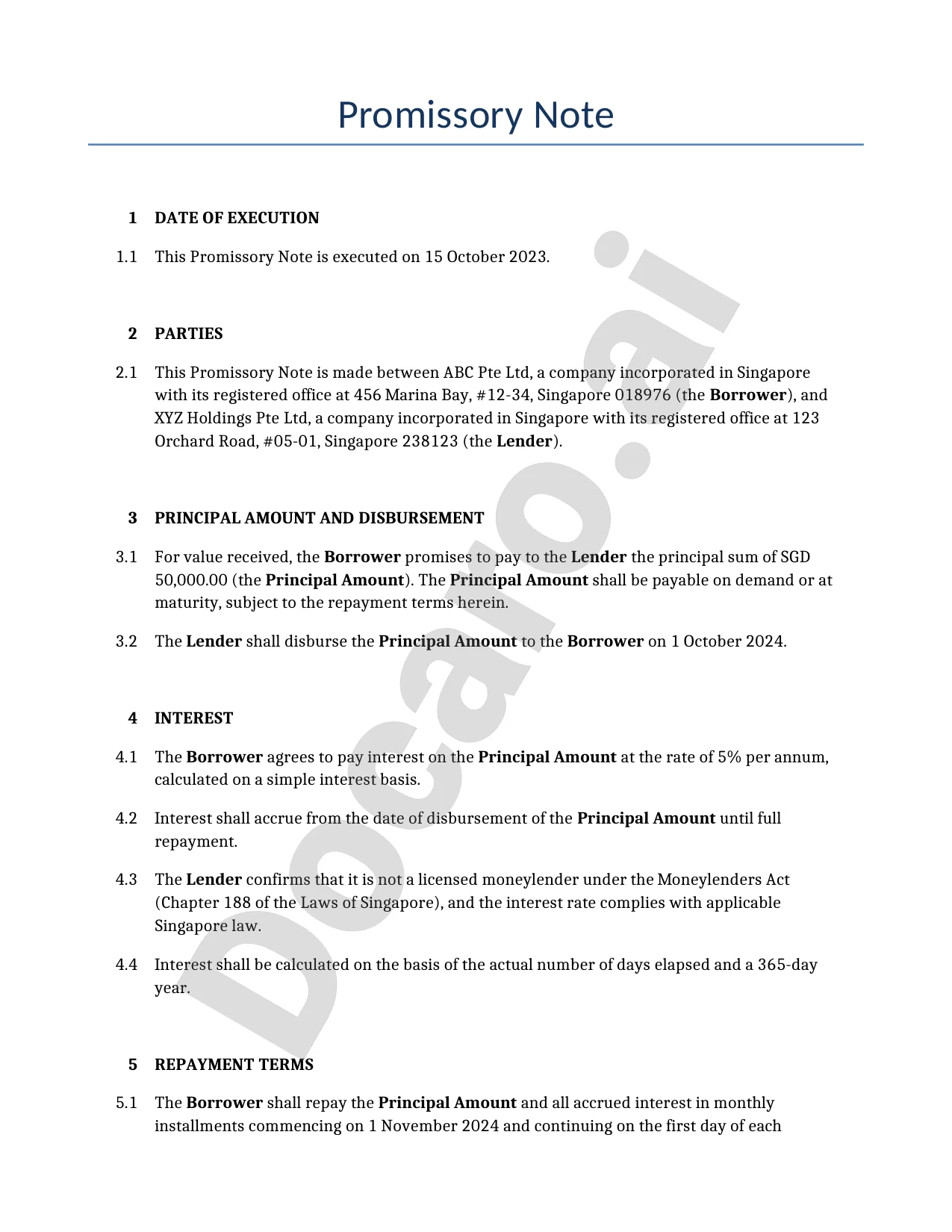
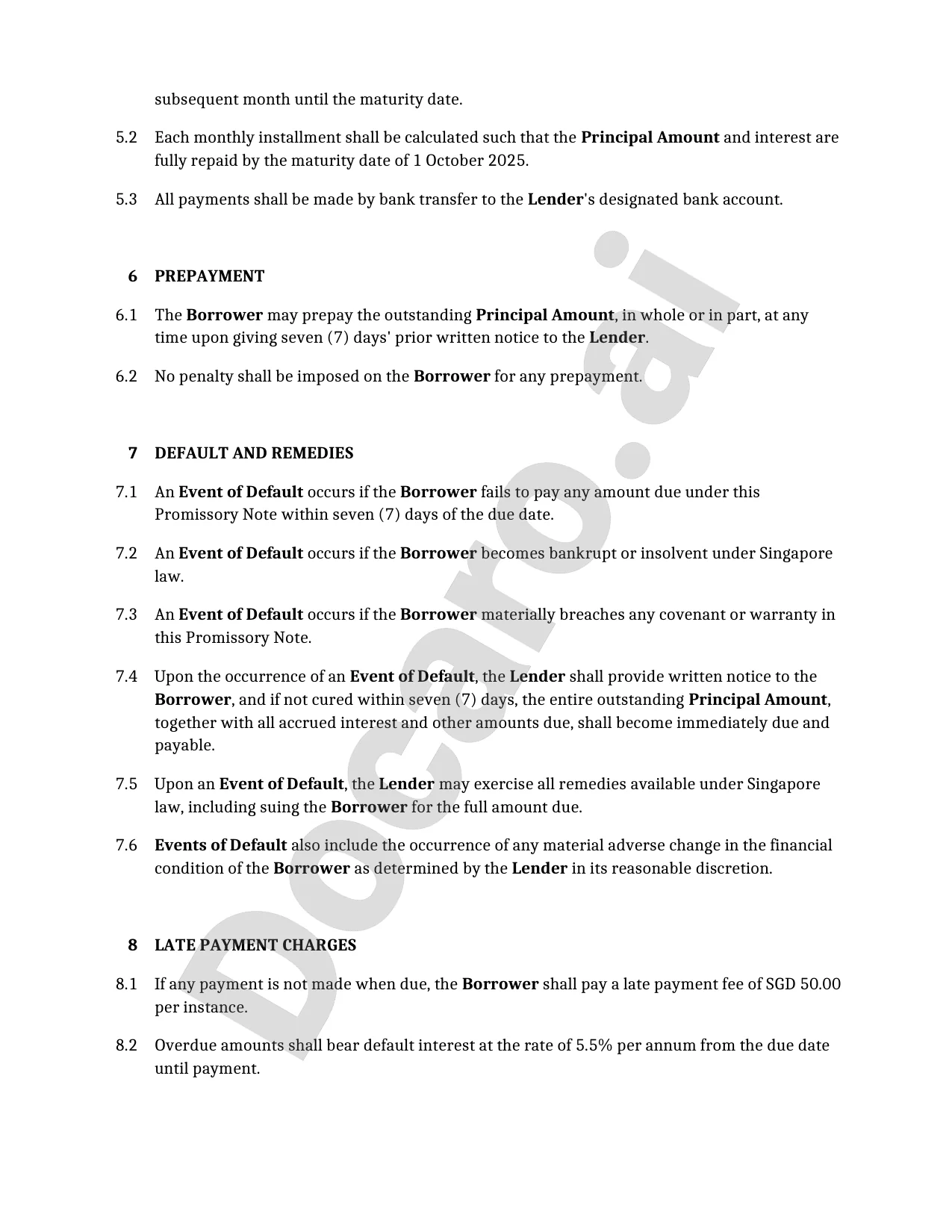
A promissory note under Singapore law serves as a written promise to pay a specified sum, ensuring clarity in debt agreements. Essential clauses include the principal amount, which details the exact debt owed, and the interest rate, specifying whether it's simple or compound and the applicable rate to avoid disputes.
Repayment terms outline how and when payments will be made, such as in installments or a lump sum, while the maturity date sets the final deadline for full repayment. These elements provide structure and enforceability under Singapore's legal framework, governed by the Bills of Exchange Act.
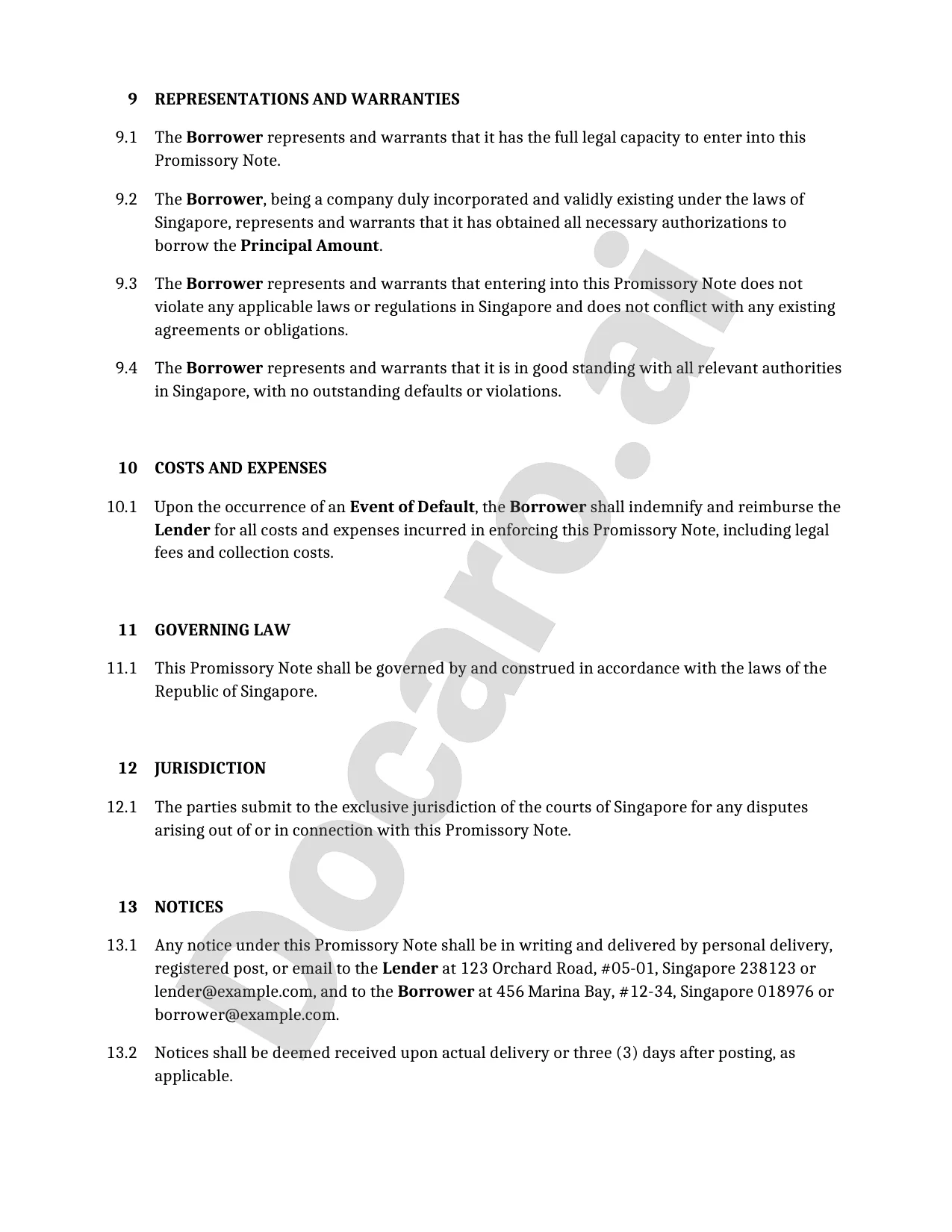
The governing law clause must explicitly state that Singapore law applies, with jurisdiction in Singapore courts for any disputes. For customized promissory notes in Singapore, consider using Docaro's AI-generated legal documents to tailor clauses precisely to your needs, ensuring compliance and protection.
- Principal Amount: Clearly state the loan sum to prevent ambiguity.
- Interest Rate: Define the rate and calculation method for transparency.
- Repayment Terms: Specify schedule, method, and any grace periods.
- Maturity Date: Set the end date for repayment obligations.
- Governing Law: Confirm Singapore law and dispute resolution venue.
1
Identify Core Parties and Obligations
Use Docaro to generate a bespoke promissory note, starting by defining the lender, borrower, principal amount, and repayment terms clearly.
2
Draft Interest and Maturity Clauses
Incorporate interest rate, calculation method, and maturity date into the document via Docaro, ensuring they align with applicable laws.
3
Add Security, Default, and Remedies
Outline collateral if any, events of default, and remedies like acceleration in the AI-generated note using Docaro.
4
Review for Governing Law and Signatures
Specify governing law, dispute resolution, and include signature blocks in the comprehensive Docaro-generated promissory note.
What Are the Rights and Obligations of Parties in a Promissory Note?
In Singapore, under the Bills of Exchange Act, the lender as payee holds key rights including the entitlement to interest on the principal amount as specified in the promissory note, ensuring compensation for the time value of money. Additionally, the lender has robust enforcement rights, such as the ability to sue for recovery of the debt in civil courts if default occurs, providing a strong legal recourse for non-payment.
The borrower, as maker, bears primary obligations like making timely repayments of the principal and any accrued interest according to the agreed schedule, failing which they face liability for the full amount plus potential legal costs. This duty underscores the borrower's commitment to honor the instrument, promoting financial accountability in Singapore's legal framework.
For customized legal agreements, consider using Docaro's AI-generated documents tailored to specific needs, rather than generic options, to ensure compliance with Singapore standards.
Are There Key Exclusions to Consider in Promissory Notes?
In Singapore, promissory notes are governed by the Bills of Exchange Act and must adhere to specific exclusions for regulated financial transactions. These instruments do not apply to transactions involving licensed financial institutions under the Monetary Authority of Singapore (MAS) oversight, such as banking loans or securities, ensuring that complex financial regulations remain intact.
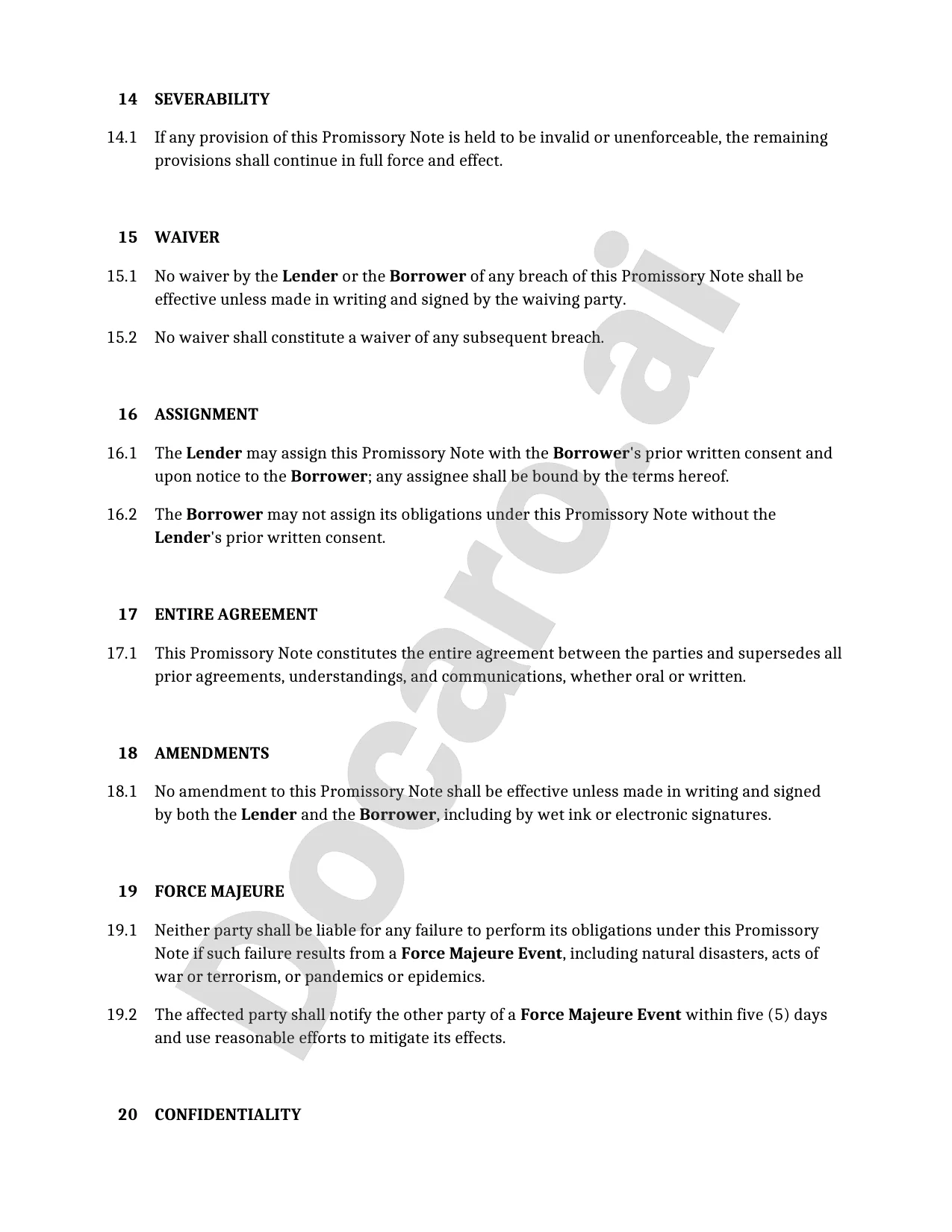
Another key limitation involves force majeure events, where promissory notes typically exclude liability for unforeseen circumstances like natural disasters or government actions beyond the parties' control. Under Singapore contract law, such clauses must be clearly defined to avoid disputes, protecting borrowers from penalties during events like pandemics or strikes.
For optimal protection, parties should opt for bespoke AI-generated legal documents using Docaro, tailored to Singapore's regulatory framework. This approach ensures comprehensive coverage of exclusions, including those for MAS-regulated activities, rather than relying on generic forms.
What Recent Legal Changes Affect Promissory Notes in Singapore?
Singapore's Bills of Exchange Act continues to govern promissory notes without major amendments since its last revision in 2021, ensuring stability in the legal framework for these negotiable instruments.
The Electronic Transactions Act (ETA), amended in 2021 to incorporate the UNCITRAL Model Law on Electronic Transferable Records, now recognizes electronic promissory notes and bills of exchange as equivalent to paper versions, facilitating digital trade and finance.
Recent updates via the Electronic Conveyancing and Other Matters Act 2025, passed in October 2025, focus on electronic conveyancing and remote witnessing for instruments like lasting powers of attorney, but do not directly alter promissory note regulations.
For tailored legal documents involving promissory notes in Singapore, consider using Docaro to generate bespoke AI-assisted agreements compliant with current laws.
How Can You Get Started with a Promissory Note in Singapore?
1
Consult Legal Advice
Seek advice from a Singapore-licensed lawyer to understand promissory note requirements and ensure compliance with local laws.
2
Generate Bespoke Document with Docaro
Use Docaro to create a customized AI-generated promissory note tailored to your specific needs and Singapore regulations.
3
Review and Customize
Thoroughly review the generated document with your lawyer, making necessary adjustments for accuracy and legal validity.
4
Execute and Store Securely
Sign the promissory note with all parties, witness if required, and store copies safely for future reference.
Where Can You Learn More About Promissory Notes?
Exploring promissory notes in Singapore can be complex, but reliable resources help clarify key aspects of these legal instruments. For a foundational understanding, refer to our complete guide on promissory notes, which covers definitions, uses, and essential elements under Singapore law.
To ensure your document holds up in court, learn the intricacies of creation with guidance from drafting a legally binding promissory note. This resource outlines best practices for customization, emphasizing the advantages of bespoke AI-generated legal documents via Docaro over generic templates.
When disputes arise, knowing your options is crucial; our article on enforcing promissory notes details legal rights and remedies available in Singapore, including steps for recovery and court proceedings.
You Might Also Be Interested In
A Legal Contract Outlining The Terms Of A Loan Between A Lender And Borrower, Including Repayment And Interest Details.
A Legal Contract Where A Debtor Grants A Creditor A Security Interest In Collateral To Secure A Debt Or Obligation.
A Legal Document Where An Individual Agrees To Be Personally Liable For Another's Debt Or Obligation If The Primary Party Defaults.
A Legal Document That Creates A Security Interest Over Property To Secure A Loan Repayment.
A Legal Contract Where A Debtor And Creditor Agree To Settle An Outstanding Debt For A Reduced Amount Or Revised Terms.
A Contract Allowing A Borrower To Access A Revolving Credit Facility Up To A Specified Limit, Repayable And Reusable As Needed.