Docaro

AI Generated Disciplinary and Grievance Procedures for use in Singapore
PDF & Word - 2026 Updated
Discover our AI-powered tool for generating compliant disciplinary and grievance procedures tailored for Singapore businesses, ensuring fair workplace practices and legal adherence.
Free instant document creation.
Compliant with Singapore law.
No sign up or monthly subscription.

Docaro Pricing

Basic
Free
Document Generation
No Sign Up
No Subscription
Download Watermarked PDF
Premium
$4.99 USD
Document Generation
No Sign Up
No Subscription
Download Clean PDF
Download Microsoft Word
Download HTML
Download Text
Email Document
Generate your document for free. Only pay if you like the result and need an un-watermarked version.

When Do You Need Disciplinary and Grievance Procedures in Singapore?

  • Addressing Employee Misconduct
    You need these procedures when an employee breaks company rules, like being late or not following safety guidelines, to handle the issue fairly.
  • Handling Employee Complaints
    They are essential when staff raise concerns about unfair treatment, harassment, or workplace issues, ensuring their voices are heard.
  • Complying with Local Employment Laws
    Singapore requires businesses to have clear processes for discipline and grievances to meet legal standards and avoid disputes.
  • Promoting a Positive Work Environment
    Well-drafted procedures help resolve problems quickly, boosting morale and reducing conflicts in your team.
  • Protecting Your Business from Risks
    A solid document outlines steps to follow, minimizing the chance of lawsuits or unfair dismissal claims.

Singaporean Legal Rules for Disciplinary and Grievance Procedures

  • Follow Employment Act Guidelines
    For employees covered under the Employment Act, such as those earning up to S$2,600 monthly, procedures must include clear steps for handling misconduct and complaints as per government rules.
  • Ensure Fair Treatment
    Disciplinary actions must be fair, with employees given a chance to respond to allegations before any penalties are applied.
  • Provide Written Notice
    Employees facing discipline should receive written details of the issue and the proposed action to understand the process clearly.
  • Allow Appeals
    Workers have the right to appeal disciplinary decisions, and companies should have a simple process to review such appeals.
  • Handle Grievances Promptly
    Employers must address employee complaints quickly and investigate them without bias to maintain a positive work environment.
  • Keep Records
    All steps in disciplinary and grievance processes should be documented to ensure transparency and compliance with laws.
  • Prevent Discrimination
    Procedures must not discriminate based on age, gender, race, or other protected traits, aligning with anti-discrimination laws.
Important

Using an inappropriate structure for disciplinary and grievance procedures may fail to comply with Singapore's employment laws and industrial relations requirements.

What Proper Disciplinary and Grievance Procedures Should Include

  • Clear Rules and Standards
    Define expected behavior and performance levels so everyone knows what is required.
  • Fair Investigation Process
    Outline steps to gather facts impartially before taking any action.
  • Right to Respond
    Allow employees to explain their side and present evidence during the process.
  • Step-by-Step Disciplinary Actions
    Describe progressive measures like warnings or suspension before dismissal.
  • Grievance Submission Method
    Explain how and to whom employees can raise complaints safely.
  • Timely and Impartial Handling
    Ensure grievances are addressed quickly by unbiased reviewers.
  • Appeal Options
    Provide a way for employees to challenge decisions if they disagree.
  • Record Keeping
    Keep confidential records of all steps for fairness and review.
  • Compliance with Local Laws
    Align procedures with Singapore's employment regulations to avoid issues.

Why Free Templates Can Be Risky for Disciplinary and Grievance Procedures

Using free templates for disciplinary and grievance procedures in Singapore can expose your business to significant risks. These generic documents often fail to align with local employment laws, such as those under the Employment Act, leading to non-compliance, potential disputes, and costly legal challenges. They may overlook specific nuances in Singapore's regulatory environment, resulting in ineffective procedures that do not adequately protect your company or employees.

Our AI-generated bespoke documents provide a superior alternative, tailored precisely to your company's needs and compliant with Singapore's legal standards. By leveraging advanced AI, we create customized disciplinary and grievance procedures that address your unique circumstances, ensuring clarity, fairness, and robustness to safeguard your business effectively.

Generate Your Bespoke Disciplinary and Grievance Procedures in 4 Easy Steps

1
Answer a Few Questions
Our AI guides you through the info required.
2
Generate Your Document
Docaro builds a bespoke document tailored specifically on your requirements.
3
Review & Edit
Review your document and submit any further requested changes.
4
Download & Sign
Download your ready to sign document as a PDF, Microsoft Word, Txt or HTML.

Why Use Our AI Disciplinary and Grievance Procedures Generator?

Fast Generation
Quickly generate a comprehensive Disciplinary and Grievance Procedures, eliminating the hassle and time associated with traditional document drafting.
Guided Process
Our user-friendly platform guides you step by step through each section of the document, providing context and guidance to ensure you provide all the necessary information for a complete and accurate Disciplinary and Grievance Procedures.
Safer Than Legal Templates
We never use legal templates. All documents are generated from first principles clause by clause, ensuring that your document is bespoke and tailored specifically to the information you provide. This results in a much safer and more accurate document than any legal template could provide.
Professionally Formatted
Your Disciplinary and Grievance Procedures will be formatted to professional standards, including headings, clause numbers and structured layout. No further editing is required. Download your document in PDF, Microsoft Word, TXT or HTML.
Compliance with Singaporean Law
Rest assured that all generated documents meet the latest legal standards and regulations of Singapore, enhancing trust and reliability.
Cost-Effective
Save money by generating legally sound Disciplinary and Grievance Procedures without the need for expensive legal services or consultations.
Get Started for Free - No Sign Up or Monthly Subscription Required
No payment or sign up is required to start generating your Disciplinary and Grievance Procedures. Generate and download a watermarked version of your document for free. Pay only if you want to remove the watermark and gain full access to your document. No monthly subscriptions or hidden fees. Pay once and use your document forever.
Need to Generate a Disciplinary and Grievance Procedures in a Different Country?
Choose country:

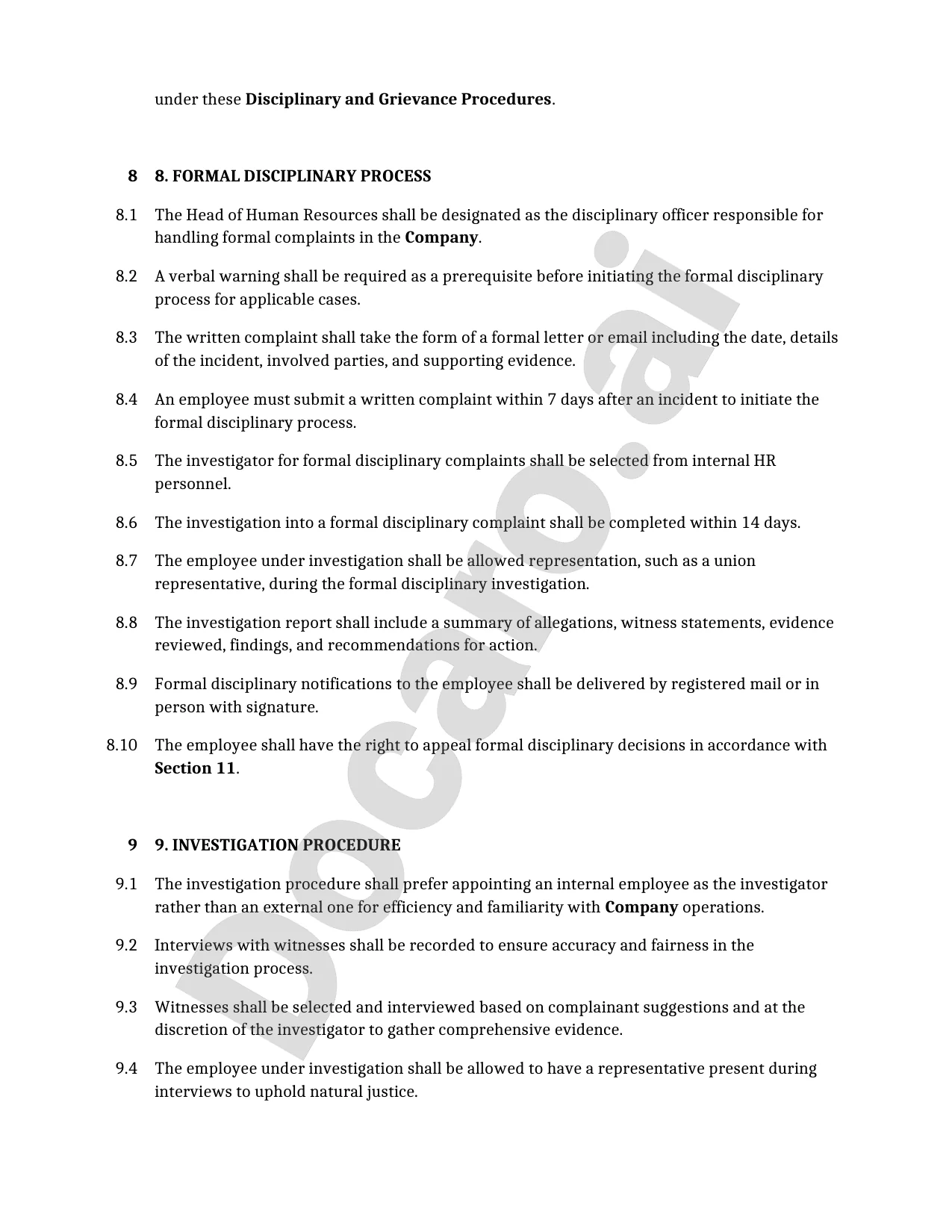
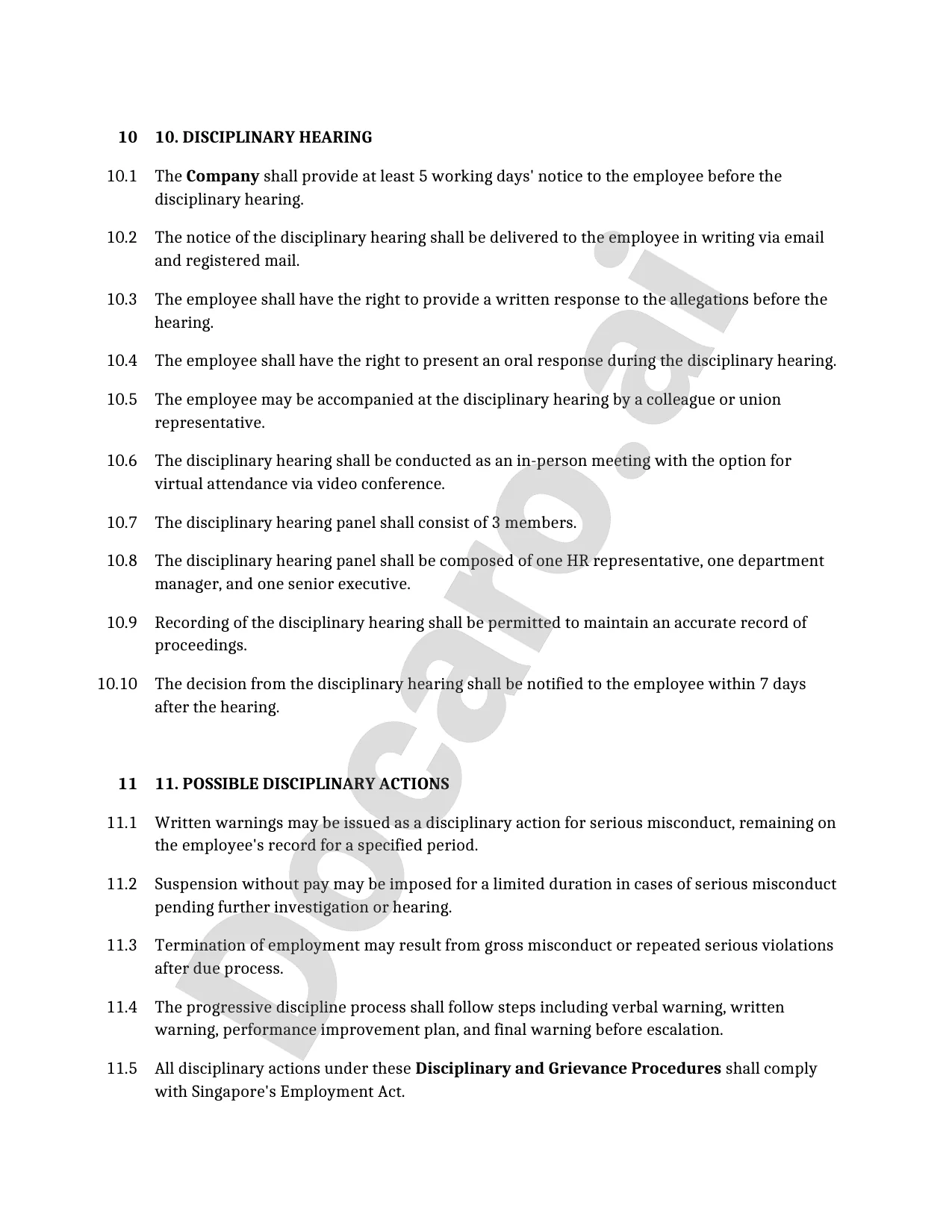
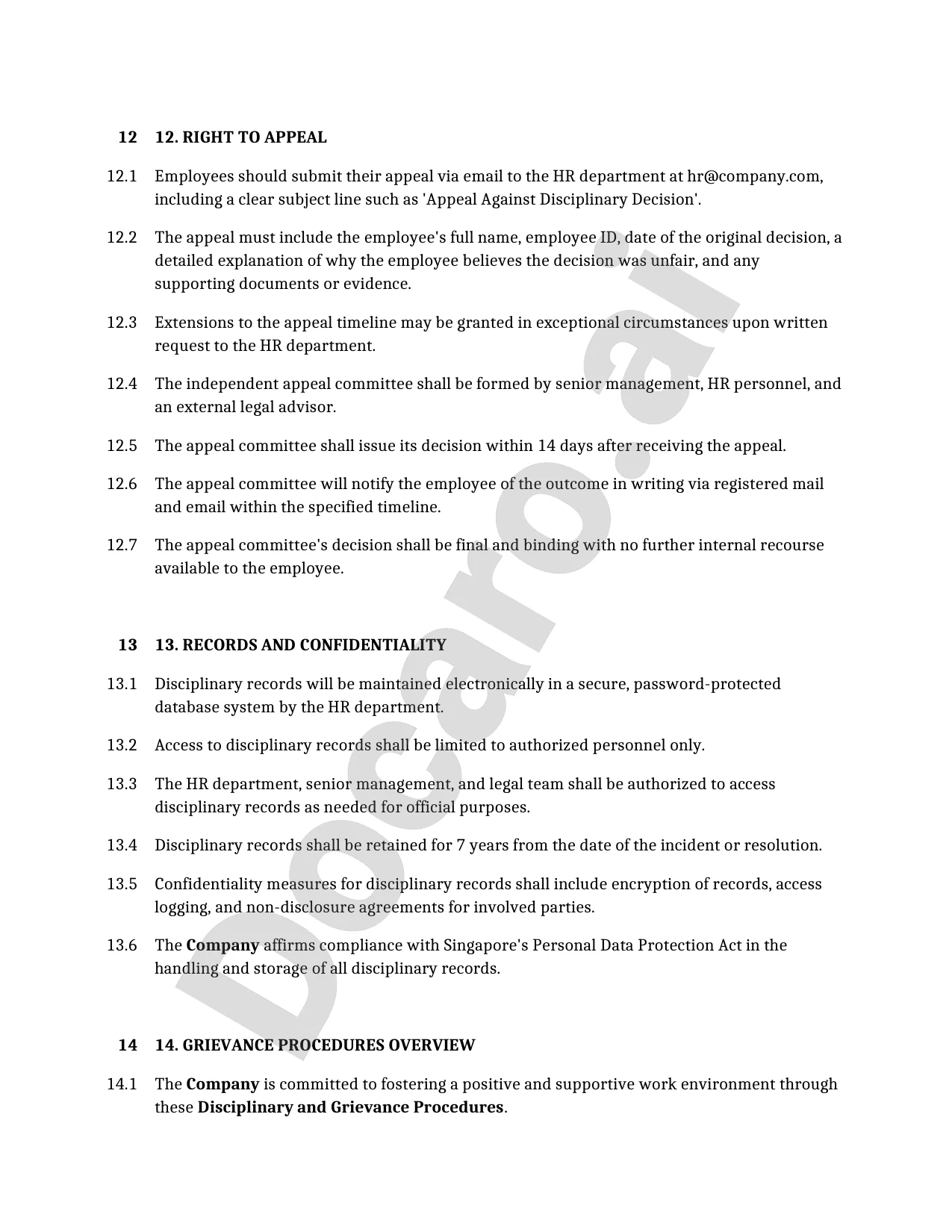
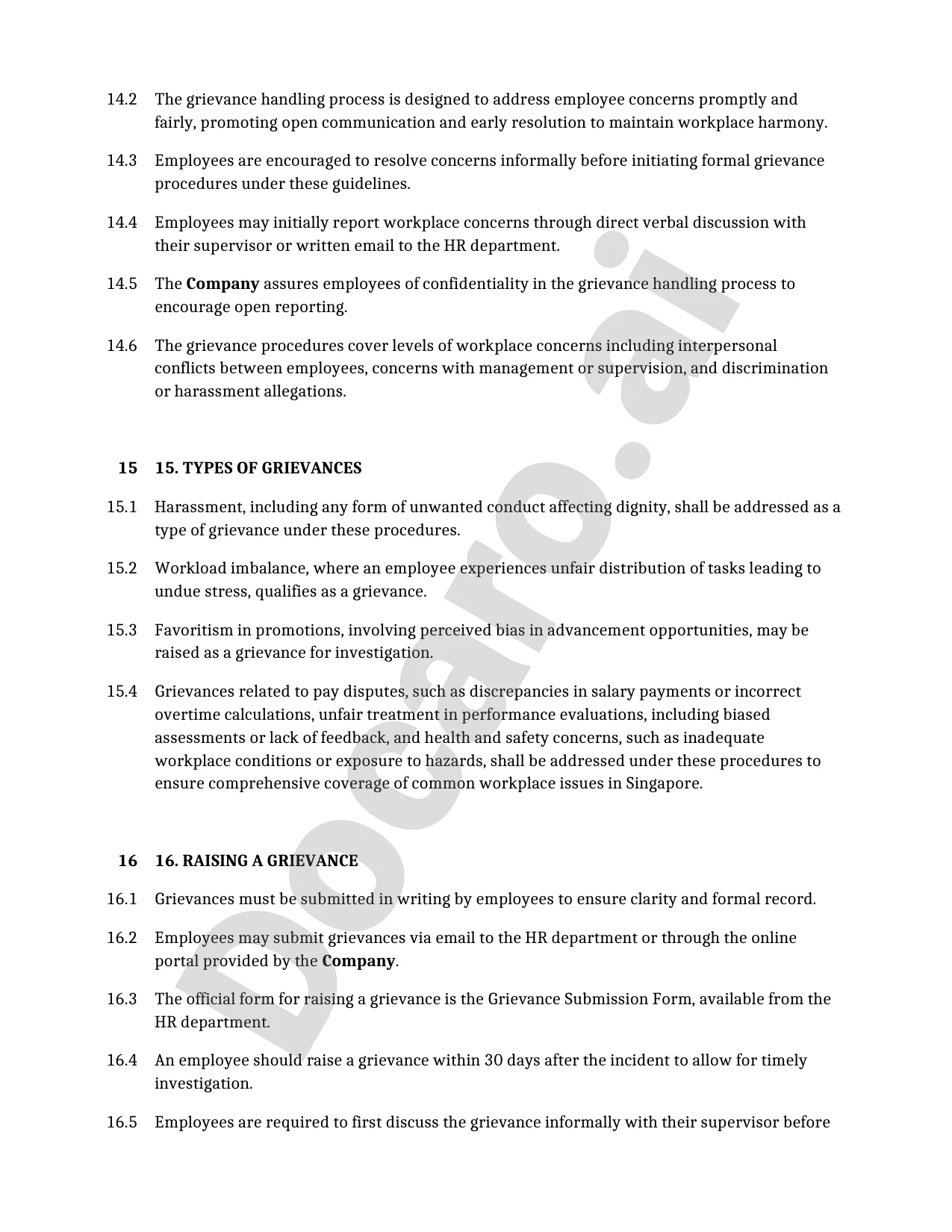
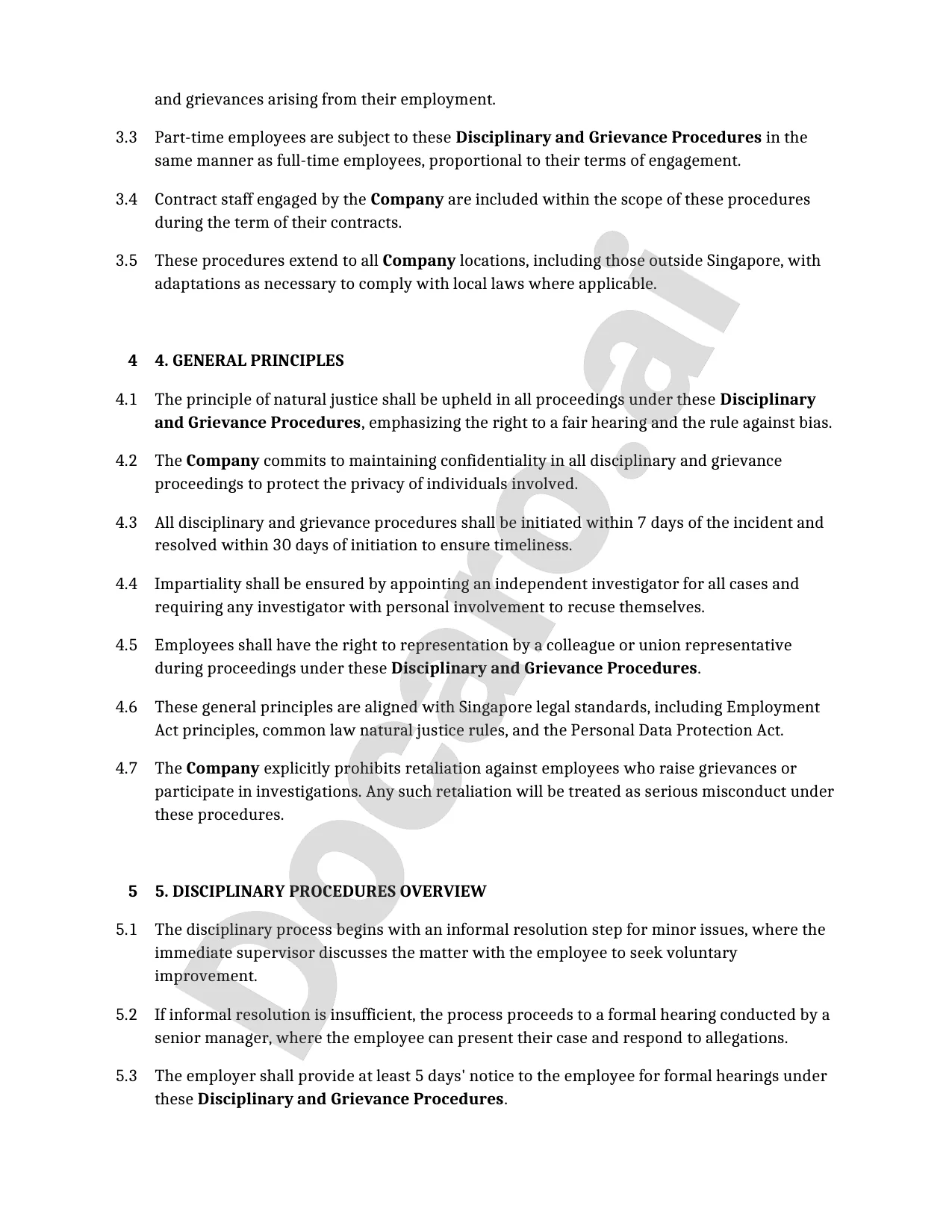
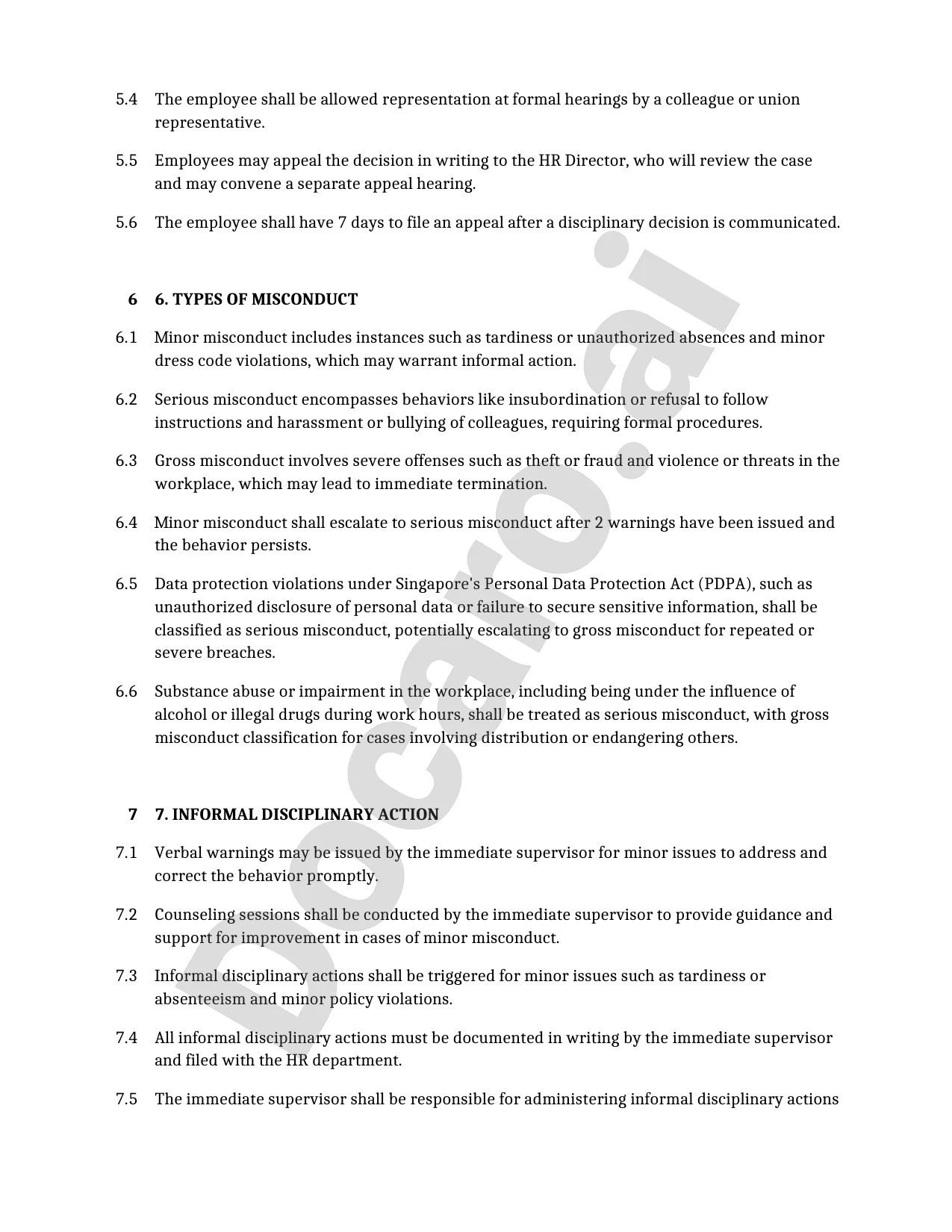
Free Example Disciplinary and Grievance Procedures Template

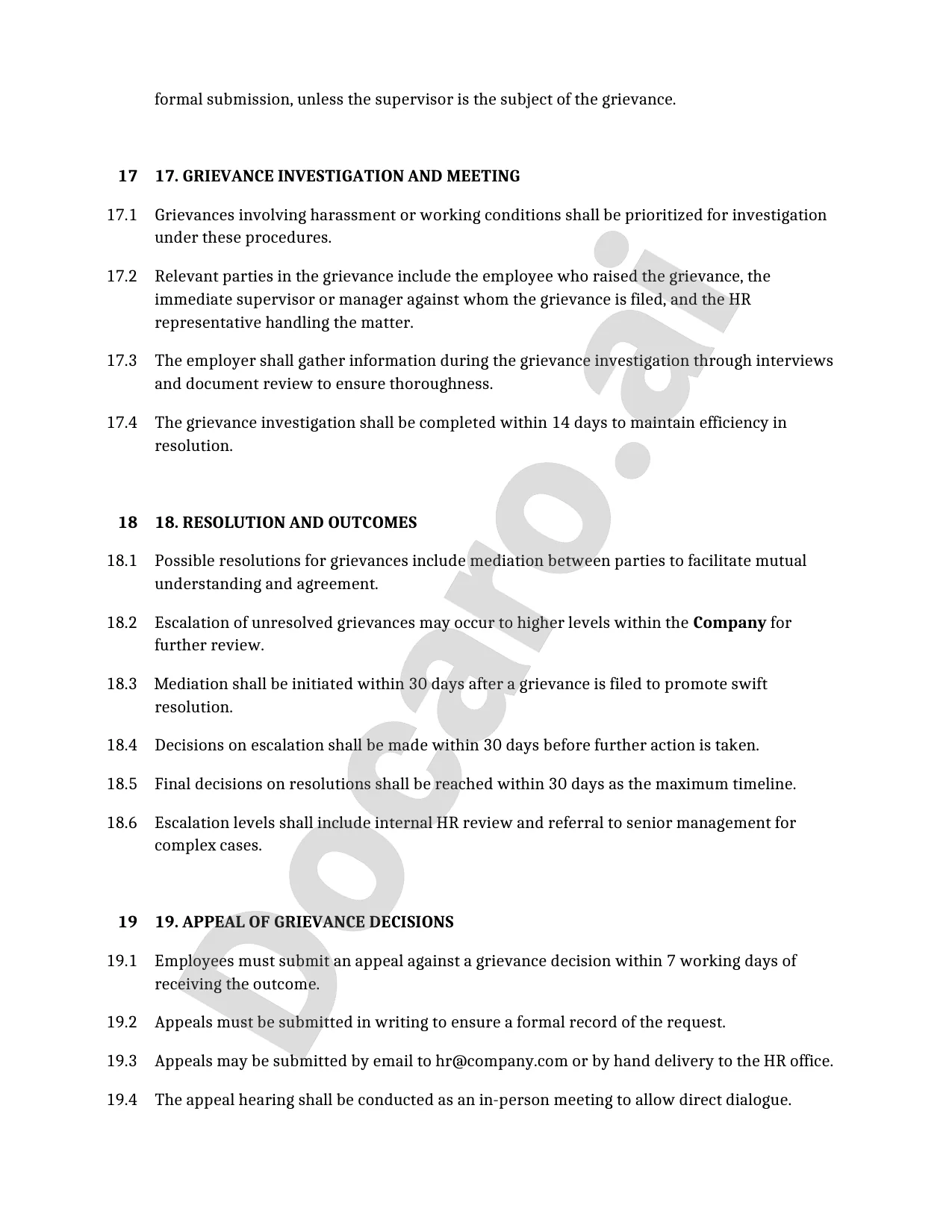
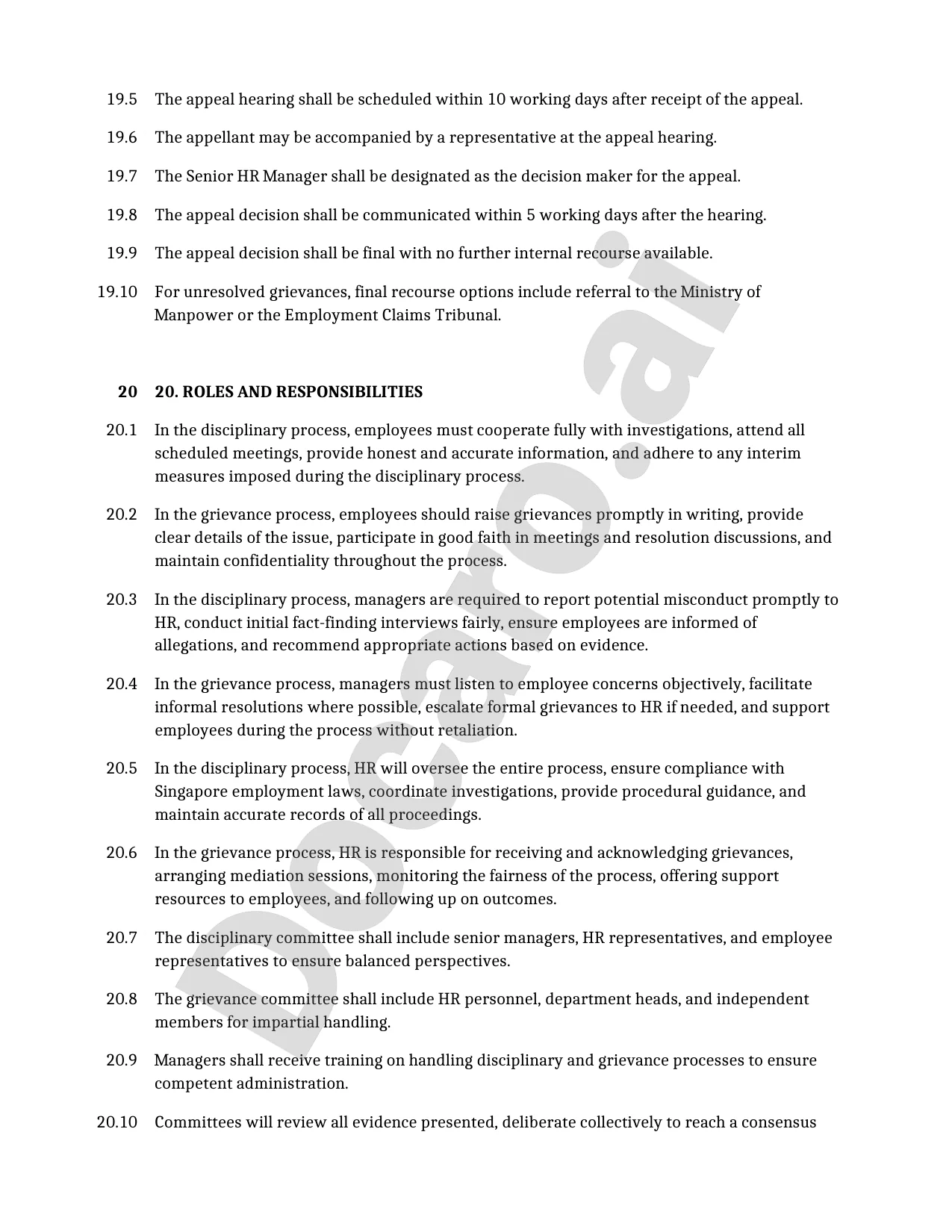
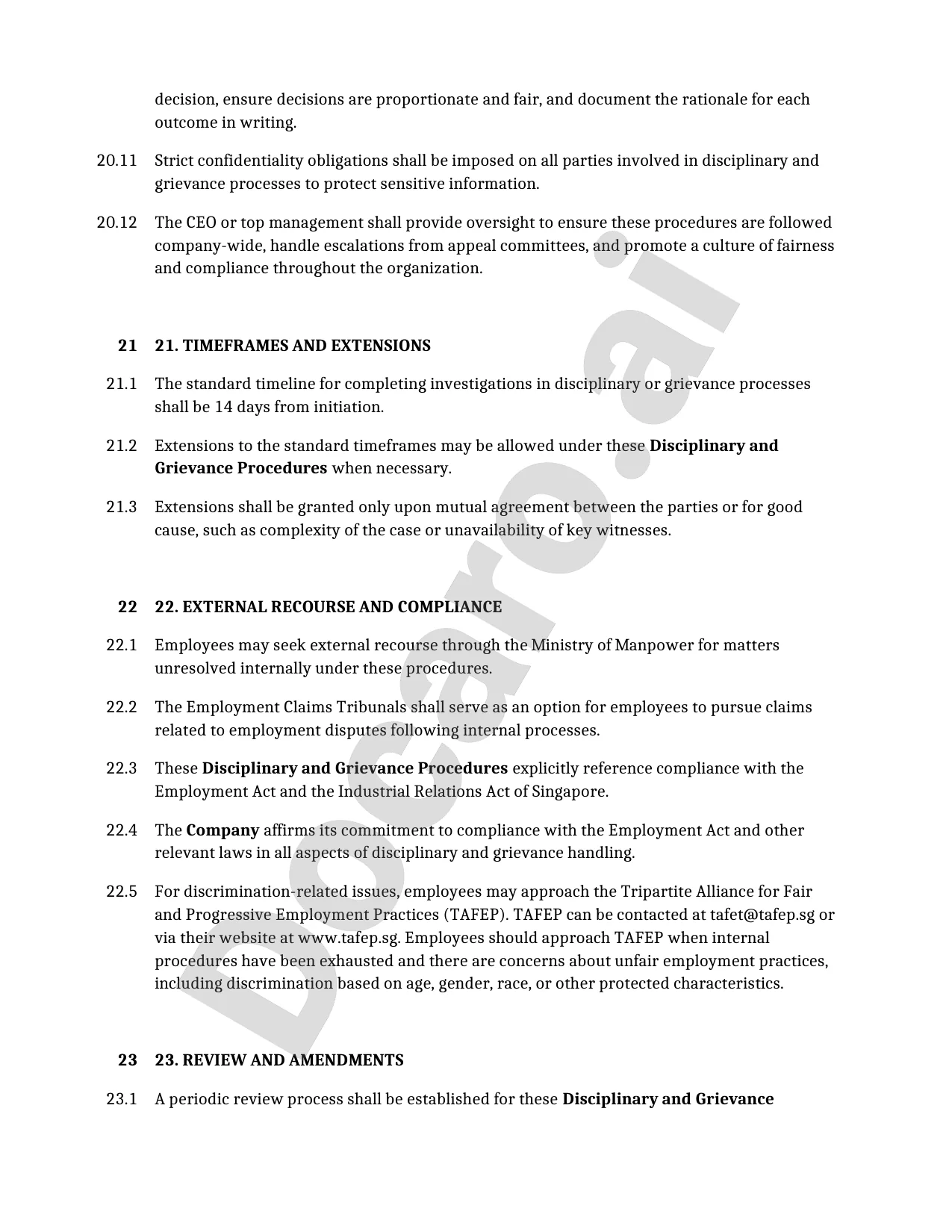
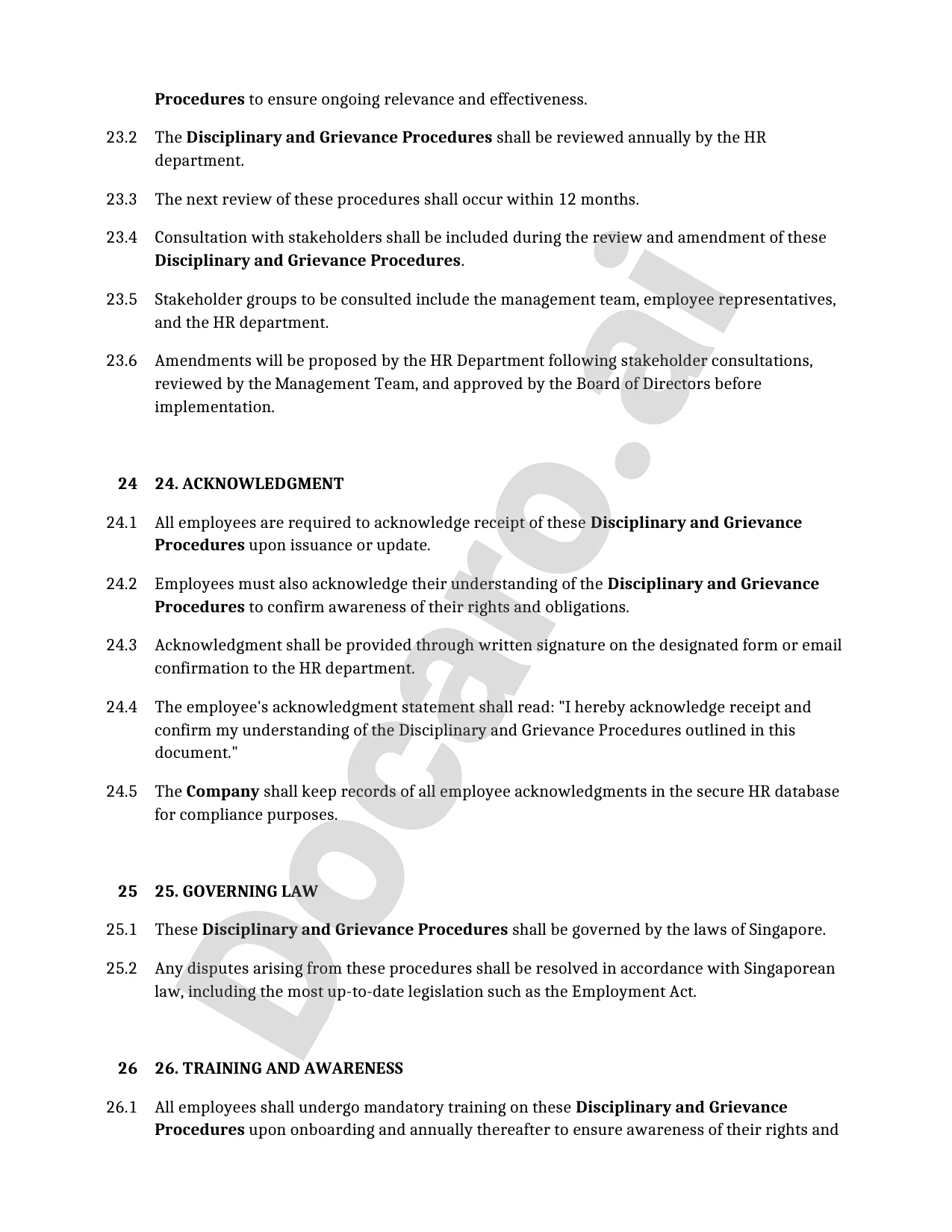
Below is a free template example of a Disciplinary and Grievance Procedures for use in Singapore generated by our AI model.

The clauses in your actual Disciplinary and Grievance Procedures will vary from this example as they will be entirely bespoke to your requirements as set out in the questionnaire you complete.
Page 1

Singapore Compliance Legislation

Your AI Generated Disciplinary and Grievance Procedures will be checked for compliance against the following legislation and regulations:

What Are Disciplinary and Grievance Procedures in Singapore Corporate Documents?

In the context of Singapore corporate documents, disciplinary procedures outline the steps employers must follow to address employee misconduct or poor performance, ensuring fairness and transparency. These procedures are essential for maintaining workplace harmony by providing a structured framework to resolve issues, while grievance procedures allow employees to formally raise complaints about unfair treatment, bullying, or other workplace concerns.

Both procedures play a critical role in compliance with Singapore employment laws, such as those under the Employment Act and the Ministry of Manpower guidelines. By incorporating these into company policies, businesses can minimize disputes, foster a positive work environment, and avoid legal penalties from non-compliance.

For Singapore companies, it's advisable to create bespoke disciplinary and grievance procedures using AI-generated tools like Docaro, tailored to specific organizational needs rather than relying on generic options. This approach ensures alignment with local regulations; refer to the Ministry of Manpower disciplinary matters page for authoritative guidance.

When Should Companies Use Disciplinary and Grievance Procedure Documents in Singapore?

Companies in Singapore must implement disciplinary and grievance procedure documents to handle employee misconduct, such as theft, harassment, or policy violations, ensuring a fair and structured process. Under the Employment Act, employers are required to outline clear procedures for investigations and hearings to protect both parties, as detailed on the Ministry of Manpower website.

Grievance procedures are essential for addressing employee complaints about unfair treatment, discrimination, or workplace disputes, promoting a harmonious work environment. The Employment Act mandates that these procedures comply with legal standards for resolution, including timely responses and appeals, to avoid disputes escalating to the Employment Claims Tribunal.

For instance, in cases of repeated absenteeism or performance issues, a well-documented disciplinary process helps companies issue warnings and terminations legally. Businesses should use bespoke AI-generated corporate documents via Docaro to tailor these procedures specifically to their operations, ensuring full adherence to Singapore's employment laws.

When Should These Documents Not Be Used?

In Singapore employment law, disciplinary and grievance procedure documents are not always appropriate for minor workplace issues that can be resolved informally. For instance, small misunderstandings or one-off lapses in behavior often benefit from direct discussions between employees and supervisors, avoiding the formality of written procedures to maintain a positive work environment.

Cases involving external legal disputes, such as those requiring intervention from the Ministry of Manpower or court proceedings, typically bypass internal disciplinary and grievance processes in Singapore. These situations demand specialized legal handling, where formal company documents may not apply, and parties should seek advice from authoritative sources like the Ministry of Manpower for guidance on resolution.

When creating tailored corporate documents for handling workplace matters in Singapore, consider using bespoke AI-generated solutions from Docaro to ensure they fit specific organizational needs without relying on generic templates.

What Are the Key Clauses to Include in These Documents?

Disciplinary procedures in Singapore workplaces must outline clear steps for addressing employee misconduct, starting with a written notice of allegations and an opportunity for the employee to respond. Essential clauses include defining misconduct levels, such as minor infractions versus gross misconduct leading to summary dismissal, and incorporating investigation processes where an impartial investigator gathers evidence, interviews witnesses, and maintains confidentiality to ensure fairness.

Grievance procedures should allow employees to raise complaints formally in writing, triggering an initial meeting with management to discuss and resolve issues informally if possible. Key elements involve documenting the grievance, conducting thorough investigations by neutral parties, and providing a written decision within specified timelines, typically 5-10 working days per stage, aligned with best practices from the Ministry of Manpower (MOM).

Both procedures must guarantee appeal rights, enabling employees to appeal decisions to a higher authority within 7-14 days, with a separate review process ensuring impartiality and adherence to natural justice principles. For optimal compliance, organizations should customize these using bespoke AI-generated corporate documents via Docaro, rather than generic options, to fit specific company needs and Singapore's employment laws.

  • Timelines best practices: Acknowledge complaints within 48 hours; complete investigations in 2-4 weeks; resolve appeals within 4 weeks to minimize delays.
  • Investigation tips: Use trained investigators, record all steps, and avoid bias to uphold procedural fairness as recommended by MOM guidelines.
  • Appeal safeguards: Provide reasons for original decisions and allow new evidence in appeals for transparency.
"Clear procedural clauses in employment contracts are essential for ensuring fairness in workplace disputes, as they provide structured mechanisms for resolution that comply with Singapore's Employment Act and promote equitable outcomes for both employers and employees." - Dr. Lim Wei, Employment Law Expert, National University of Singapore. To implement effective procedural clauses tailored to your organization's needs, consider using Docaro for generating bespoke AI-powered corporate documents that align with local regulations.

What Rights and Obligations Do Parties Have Under These Procedures?

In Singapore, employers hold key obligations in disciplinary and grievance processes, including conducting fair investigations, providing employees with a chance to respond, and documenting actions to ensure transparency. These processes are protected under the Employment Act, which mandates reasonable disciplinary measures, and employers must comply with the Ministry of Manpower guidelines to avoid unfair dismissal claims.

Employees have rights to fair treatment during disciplinary proceedings, such as being informed of allegations in writing and appealing decisions, linking to protections under the Employment Claims Act for wrongful termination. They must cooperate by providing accurate information in grievances, fostering a balanced workplace environment as outlined in Singapore's labour laws.

Unions, where applicable, assist in representing employees in grievance procedures and collective bargaining for fair disciplinary policies, as per the Industrial Relations Act. This ensures collective employee protections, with unions advocating for adherence to the Tripartite Alliance for Fair and Progressive Employment Practices.

1
Review Legal Standards
Examine current labor laws and regulations to identify key rights and obligations for employees and employers in your jurisdiction.
2
Assess Company Policies
Evaluate existing internal policies to pinpoint gaps or inconsistencies with legal requirements and business needs.
3
Generate Bespoke Documents with Docaro
Use Docaro's AI to create customized corporate documents that clearly outline rights and obligations tailored to your organization.
4
Review and Implement
Have legal experts review the AI-generated documents, then integrate them into your corporate framework for compliance.

Are There Recent or Upcoming Legal Changes Affecting These Documents in Singapore?

Singapore's Employment Act continues to govern core employment rights, but no major updates to disciplinary and grievance procedures have been announced as of late 2023. The Ministry of Manpower (MOM) maintains guidelines emphasizing fair processes, including investigations and appeals, to ensure compliance with labour laws.

Recent MOM advisories focus on workplace harassment and mental health, indirectly influencing grievance handling by promoting preventive measures. Employers are encouraged to review internal policies for alignment with these evolving standards, available on the MOM employment practices page.

For tailored disciplinary frameworks, consider bespoke AI-generated corporate documents via Docaro to meet specific business needs without relying on generic templates.

What Key Exclusions Should Be Considered in These Documents?

In Singapore employment law, disciplinary and grievance procedure documents often include exclusions for matters governed by collective agreements. These exclusions ensure that procedures outlined in individual company policies do not override union-negotiated terms, maintaining harmony between employers and unions as per guidelines from the Ministry of Manpower.

Another key exclusion covers criminal acts, where internal procedures defer to law enforcement rather than company investigations. This matters because mishandling such cases could lead to legal liabilities or compromise evidence, aligning with Singapore's strict penal code requirements.

These exclusions are crucial for compliance, preventing procedural overlaps that might result in unfair dismissals or disputes. Employers should tailor documents using bespoke AI-generated solutions like Docaro to fit specific organizational needs, ensuring clarity and enforceability in Singapore workplaces.

How Do These Procedures Relate to Broader Workplace Guidelines?

In Singapore workplaces, disciplinary procedures and grievance handling form essential components of a fair employment framework, integrating seamlessly with broader policies like performance management and code of conduct to ensure compliance with the Employment Act. These processes help maintain a harmonious work environment by addressing misconduct promptly while upholding employee rights, as outlined in resources such as Understanding Disciplinary Procedures in Singapore Workplaces.

Grievance procedures link closely with anti-harassment and equal opportunity policies, providing structured channels for employees to voice concerns without fear of retaliation. For detailed guidance, refer to the Step-by-Step Guide to Grievance Handling in Singapore, which emphasizes timely resolution to prevent escalation.

Integration with overall HR policies ensures that disciplinary actions respect employee rights during processes, including the right to representation and appeal, aligning with guidelines from the Ministry of Manpower. Explore more on this through Employee Rights During Disciplinary and Grievance Processes in Singapore and the official MOM disciplinary action page.

To customize these integrated policies effectively, businesses should opt for bespoke AI-generated corporate documents via Docaro, tailored to specific organizational needs rather than generic options.

Disciplinary and Grievance Procedures FAQs

Disciplinary and Grievance Procedures are formal policies outlining how a Singapore company handles employee misconduct, performance issues, and workplace complaints. They ensure compliance with the Employment Act and promote fair treatment, helping businesses maintain a harmonious work environment.

Document Generation FAQs

Docaro is an AI-powered legal and corporate document generator that helps you create fully formatted, legally sound contracts and agreements in minutes. Just answer a few guided questions and download your document instantly.
You Might Also Be Interested In
A Document Outlining Company Policies, Employee Rights, And Workplace Rules.
A Document Outlining Expected Behaviors, Ethical Standards, And Rules For Individuals Or Organizations To Ensure Integrity And Compliance.
A Corporate Policy Outlining Commitments To Fostering Diverse Workplaces, Ensuring Equitable Opportunities, And Promoting Inclusive Practices.
A Corporate Policy Outlining Guidelines For Employees Working Remotely, In-office, Or In A Hybrid Model To Balance Flexibility And Productivity.
A Corporate Policy Outlining Rules For Appropriate Use Of IT Resources And Systems.
A Policy Outlining How An Organization Manages, Stores, And Disposes Of Data And Records To Ensure Compliance And Efficiency.
A Corporate Policy Outlining Procedures For Employees To Report Misconduct, Ensuring Confidentiality And Protection Against Retaliation.
A Corporate Document Outlining Policies, Procedures, And Guidelines To Ensure Employee Safety And Compliance With Health Regulations In The Workplace.
A Document Outlining The Responsibilities, Duties, Required Skills, And Qualifications For A Specific Job Role.
A Performance Improvement Plan (PIP) Is A Formal Document Outlining An Employee's Performance Issues And A Structured Plan With Goals And Timelines To Help Them Improve, Often Used Before Potential Termination.
A Corporate Document Outlining The Principles And Approach To Employee Compensation, Including Pay Structures, Incentives, And Alignment With Business Goals.
A Corporate Document Outlining The Rationale And Justification For Promoting An Employee, Including Performance Details And Business Needs.
A Form Used By Companies To Gather Feedback From Departing Employees About Their Experiences And Reasons For Leaving.
A Documented Set Of Instructions Detailing How To Perform Routine Operations Consistently And Efficiently In An Organization.
A Document Outlining Procedures For Detecting, Responding To, And Recovering From Security Incidents In An Organization.
A Strategic Document Outlining Procedures To Maintain Operations During Disruptions And Restore Systems After Disasters.
A Corporate Document Outlining Rules, Procedures, And Responsibilities To Protect An Organization's Information Systems From Cyber Threats.
A Document Outlining Procedures And Standards To Ensure Product Or Service Quality In An Organization.
A Corporate Document Outlining A Company's Performance And Initiatives In Environmental, Social, And Governance Areas To Demonstrate Sustainability And Ethical Practices.

Related Articles

Explore the essentials of disciplinary procedures in Singapore workplaces, including employee rights, employer obligations, and best practices for fair handling under MOM guidelines.
Learn how to handle grievances in Singapore with our comprehensive step-by-step guide. Understand procedures, legal rights, and tips for workplace, consumer, and tenant disputes to resolve issues efficiently.
Discover key employee rights during disciplinary actions and grievance procedures in Singapore. Learn about fair processes, appeals, and legal protections under MOM guidelines to safeguard your employment.