Why Free Templates Can Be Risky for Whistleblowing Policy
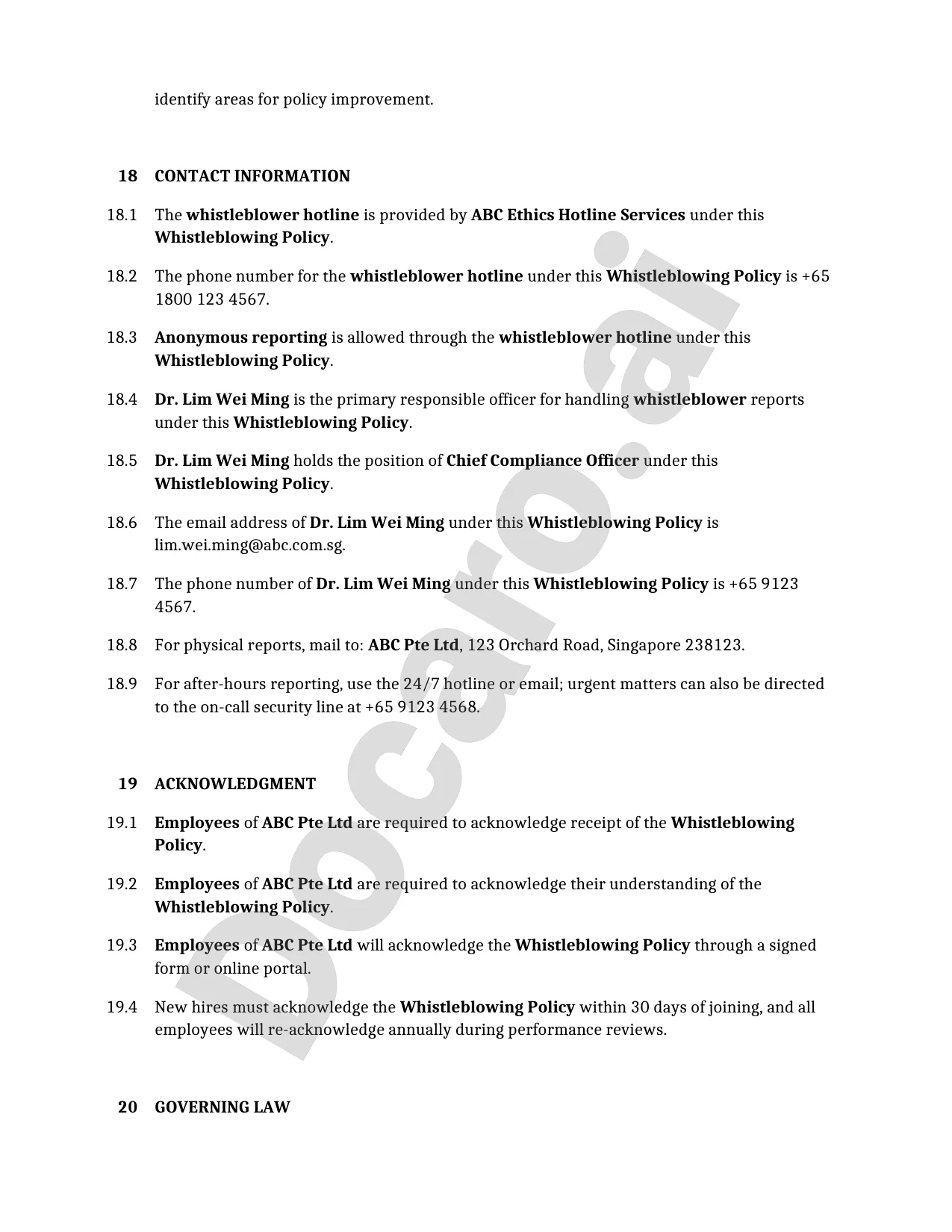
Free whistleblowing policy templates often fail to address the unique needs of your organization in Singapore. These generic documents may overlook local regulatory requirements under the Whistleblower Protection Act and PDPA, leading to non-compliance risks, inadequate protection for whistleblowers, and potential legal vulnerabilities during investigations or disputes.
Our AI-generated bespoke whistleblowing procedure documents are tailored specifically to your company's structure, industry, and Singapore-specific legal obligations. This ensures a comprehensive, compliant policy that enhances whistleblower confidence, streamlines reporting processes, and safeguards your organization against regulatory penalties.
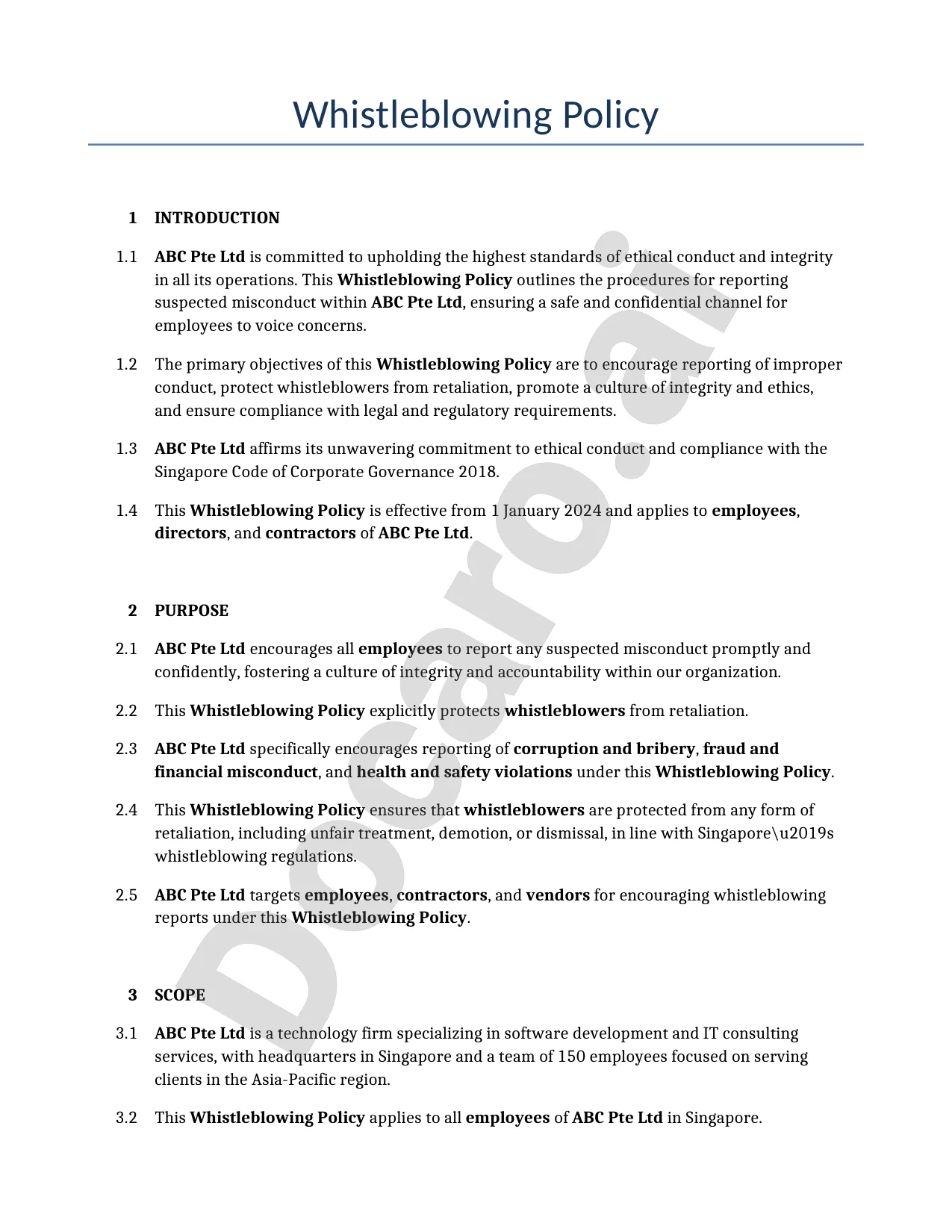
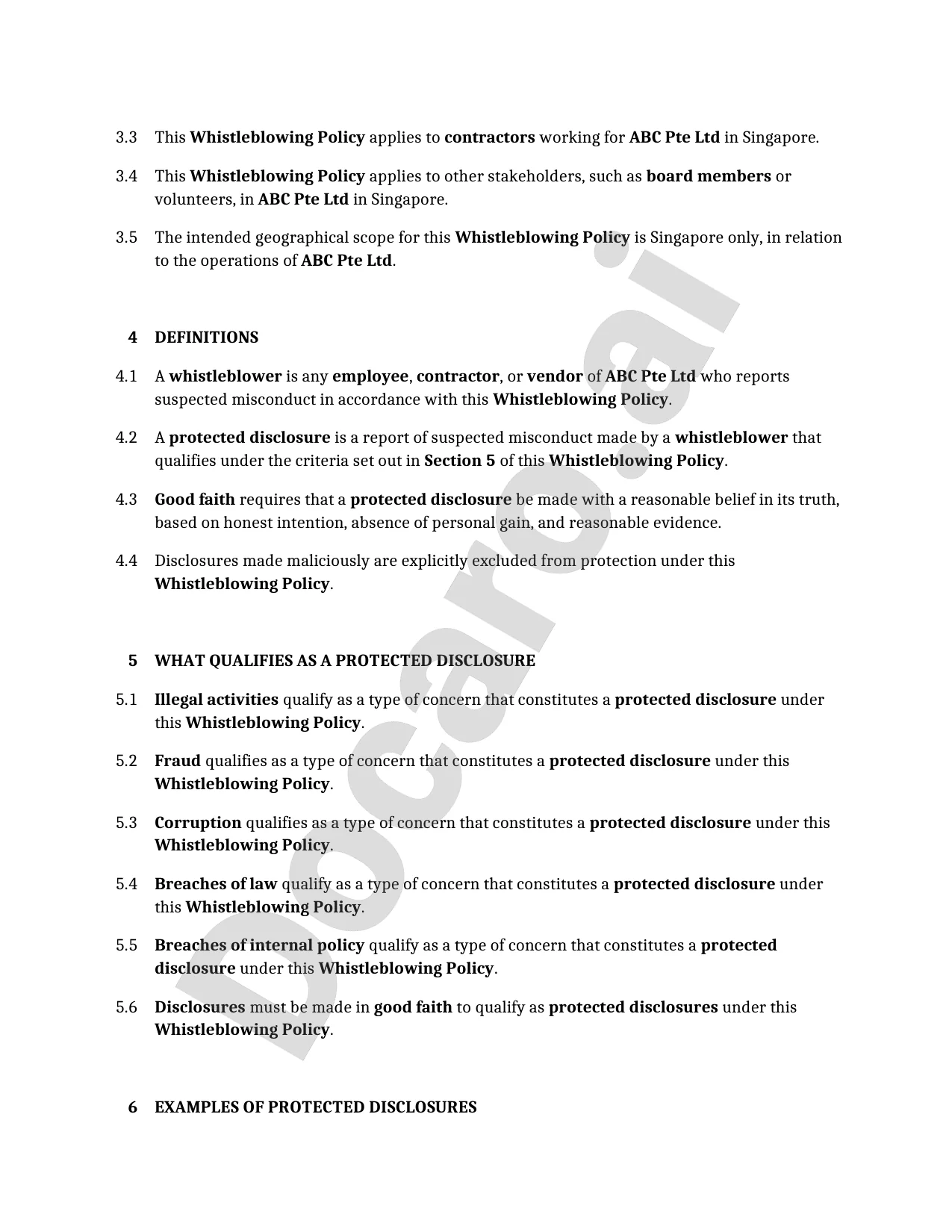
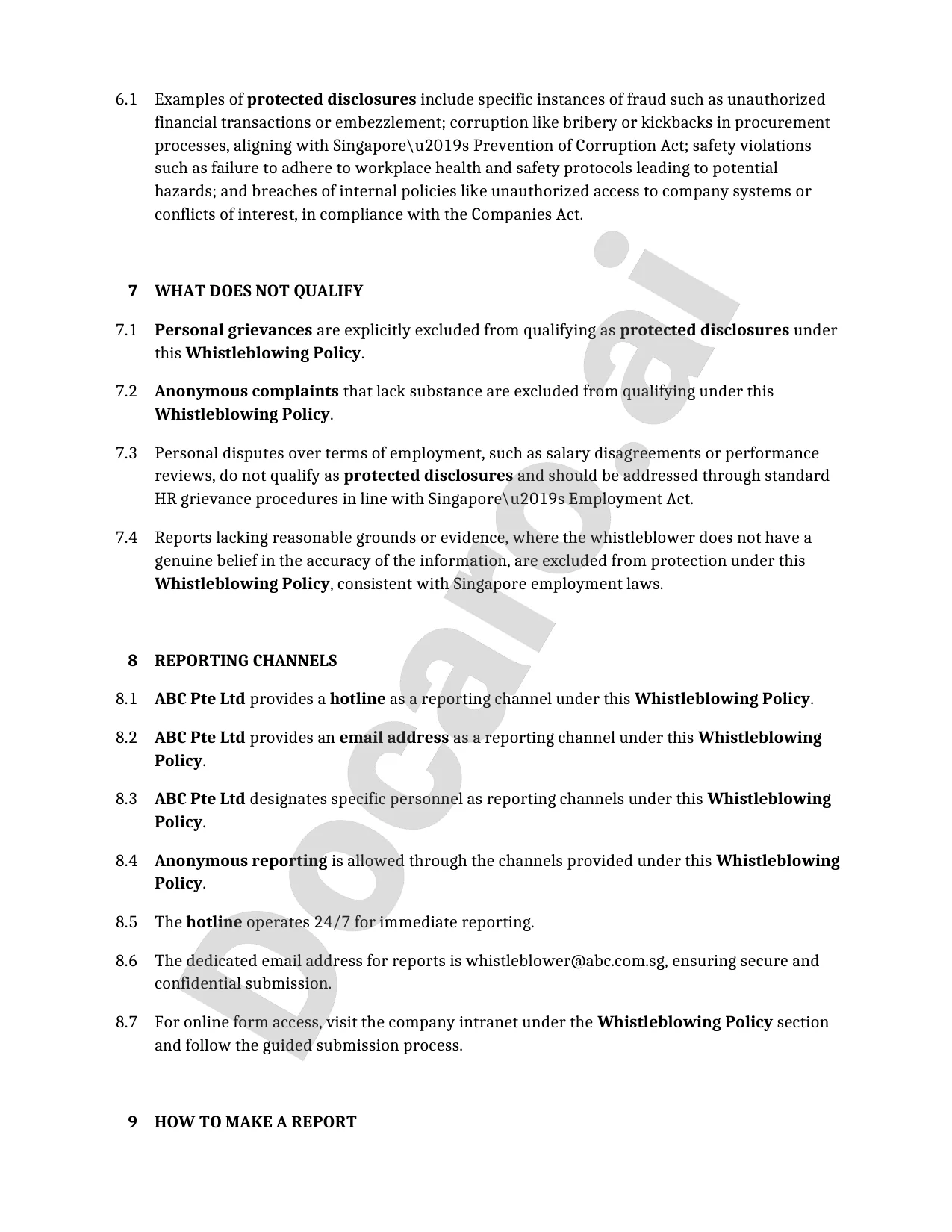
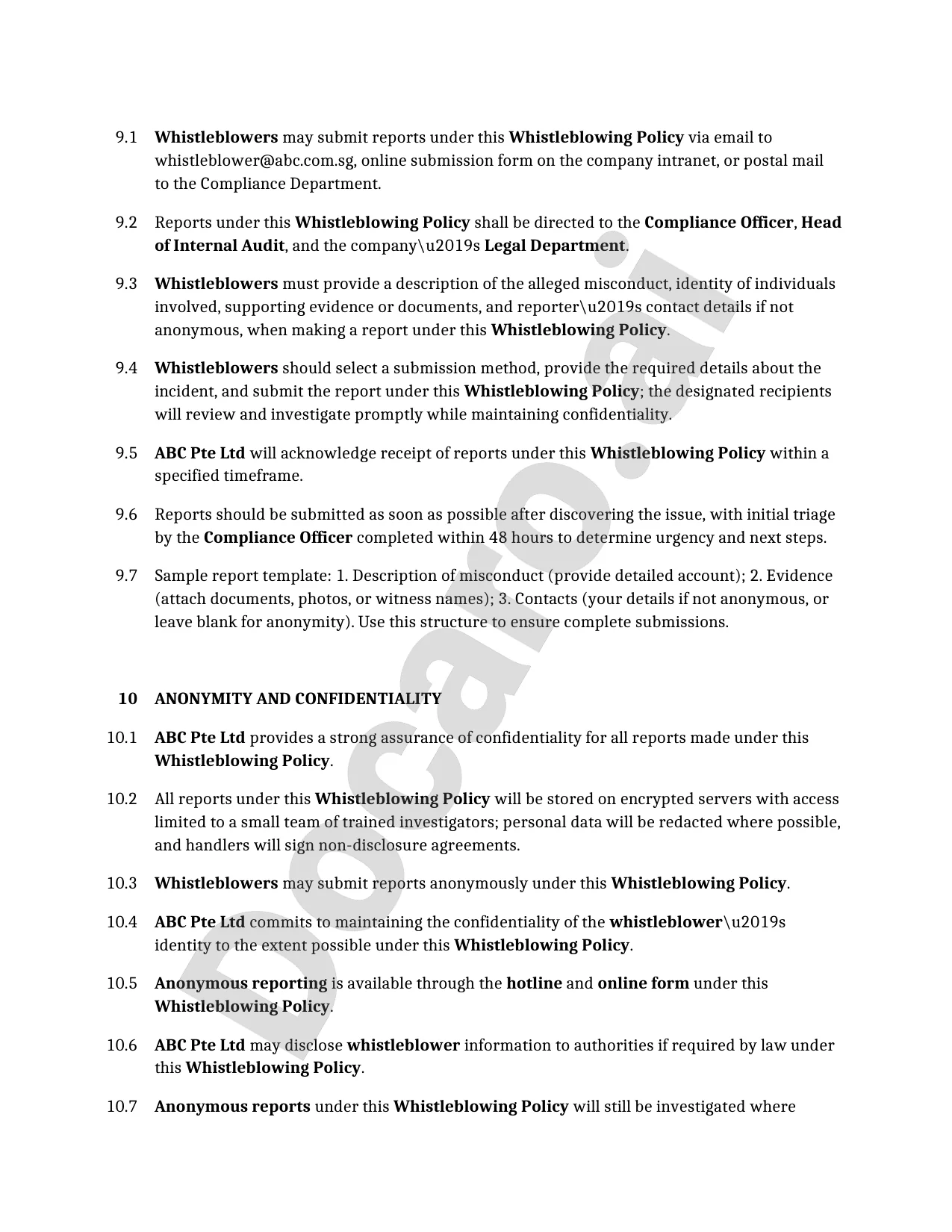
What is a Whistleblowing Policy in Singapore Corporate Documents?
A whistleblowing policy in Singapore is a formal corporate document that outlines procedures for employees to report suspected illegal, unethical, or irregular activities within an organization without fear of retaliation. It serves as a key component of good governance, aligning with Singapore's emphasis on transparency and accountability in business practices.
The primary purpose of a whistleblowing policy is to encourage the early detection and prevention of misconduct, fostering a culture of integrity and compliance. By providing clear channels for reporting, such as anonymous hotlines or designated officers, it helps organizations address issues promptly and protect whistleblowers under Singapore's legal framework.
For organizations in Singapore, implementing a robust whistleblowing policy is crucial for mitigating risks like financial losses, reputational damage, and regulatory penalties. It not only complies with guidelines from the Accounting and Corporate Regulatory Authority (ACRA) but also enhances stakeholder trust and operational resilience.
To create an effective policy, organizations should opt for bespoke AI-generated corporate documents using Docaro, ensuring customization to specific needs rather than generic options. This approach guarantees relevance and adherence to Singapore's evolving corporate standards.
"Effective whistleblowing policies are essential for fostering transparency and ethical conduct in Singaporean corporations, enabling early detection of misconduct and protecting whistleblowers under the Prevention of Corruption Act," says Dr. Lim Wei, Senior Partner at Rajah & Tann Singapore. To implement robust policies, readers should opt for bespoke AI-generated corporate documents tailored to their needs via Docaro.
When Should a Company Implement a Whistleblowing Policy in Singapore?
Whistleblowing policies are essential for Singapore companies in regulated industries like finance and healthcare, where compliance with the Monetary Authority of Singapore (MAS) guidelines under the MAS Guidelines on Individual Accountability and Conduct mandates mechanisms for reporting misconduct without fear of retaliation. These policies enable early detection of issues such as fraud or non-compliance, safeguarding the company's reputation and avoiding hefty fines from regulatory bodies.
In corporate governance, Singapore-listed companies must adhere to the Code of Corporate Governance, which recommends robust whistleblowing frameworks to promote ethical conduct and transparency. Such policies are crucial during mergers, audits, or when handling sensitive data, ensuring employees can report irregularities to audit committees or external authorities promptly.
Whistleblowing should be used when employees witness illegal activities, ethical breaches, or safety violations that could harm stakeholders, as outlined in Singapore's framework under the Prevention of Corruption Act. Companies are advised to implement bespoke AI-generated corporate documents using Docaro to tailor these policies to their specific operations, enhancing effectiveness over generic templates.
When Should It Not Be Used?
In small businesses with fewer than 10 employees, a formal whistleblowing policy may not be necessary, as direct communication between owners and staff often suffices to address concerns without structured procedures. This approach avoids unnecessary bureaucracy in environments where trust and personal relationships handle issues effectively.
For non-corporate entities like sole proprietorships, family-run operations, or voluntary associations in Singapore, implementing such a policy could be inappropriate due to the absence of complex hierarchies or regulatory mandates. These setups typically prioritize informal resolutions over codified reporting mechanisms, aligning with their simpler operational needs.
Misapplying a whistleblowing policy in unsuitable contexts can lead to pitfalls such as employee confusion, perceived overreach by management, or compliance burdens that strain limited resources. For instance, in small Singaporean firms, enforcing rigid policies might foster distrust rather than transparency, potentially violating guidelines from the Ministry of Manpower.
To mitigate these risks, businesses should assess their size and structure before adopting policies; for tailored solutions, consider bespoke AI-generated corporate documents using Docaro to ensure relevance without generic templates.

What Are the Key Clauses in a Whistleblowing Policy Document?
A whistleblowing policy in Singapore corporations is essential for fostering ethical practices and compliance with laws like the Prevention of Corruption Act. It typically outlines clear reporting mechanisms to encourage employees to report misconduct without fear, such as anonymous hotlines or designated channels, ensuring accessibility and protection under Singapore's regulatory framework.
Confidentiality provisions form a cornerstone of these policies, safeguarding the identity of whistleblowers and involved parties to prevent retaliation. Corporations must detail measures like secure data handling and limited disclosure, aligning with guidelines from the Accounting and Corporate Regulatory Authority (ACRA) to build trust in the reporting process.
Investigation procedures in whistleblowing policies specify timely, impartial reviews of reports, often involving internal committees or external experts. These steps include evidence gathering, fair hearings, and resolution timelines, promoting accountability while adhering to Singapore's employment and corporate governance standards.
For robust implementation, Singapore corporations should opt for bespoke AI-generated corporate documents using tools like Docaro, tailored to their specific needs rather than generic options. This approach ensures the policy effectively supports a culture of integrity and legal compliance.

What Rights and Obligations Do Parties Have Under This Policy?
In Singapore, whistleblower protection is primarily governed by the Prevention of Corruption Act (PCA), which safeguards individuals who report corruption or suspected corrupt practices in good faith. Key rights include protection from retaliation such as dismissal, demotion, or harassment, ensuring whistleblowers are not disadvantaged for disclosing information to authorities like the Corrupt Practices Investigation Bureau (CPIB).
Under whistleblowing policies, companies in Singapore must establish internal mechanisms to handle disclosures confidentially and fairly, as recommended by the Accounting and Corporate Regulatory Authority (ACRA). Employees and management have obligations to report genuine concerns without fear, while companies are required to investigate reports promptly and protect the whistleblower's anonymity where possible.
Management's role includes fostering a culture of integrity by training staff on whistleblowing procedures and ensuring no reprisals occur, aligning with guidelines from the Singapore Exchange (SGX) for listed entities. For robust compliance, businesses should adopt bespoke AI-generated corporate documents using Docaro to tailor whistleblowing frameworks to their specific needs.
Are There Any Key Exclusions in Whistleblowing Policies?
In Singapore whistleblowing policies, a key exclusion often involves limitations on anonymous reports, where organizations may require reporters to provide contact details to facilitate investigations and protect against malicious claims. This matters because it ensures accountability and thorough follow-up, reducing the risk of unfounded allegations while encouraging genuine disclosures under the Prevention of Corruption Act.
Exclusions for certain types of misconduct, such as personal grievances or disputes unrelated to public interest, are common to focus whistleblowing on serious issues like corruption or regulatory breaches. These limitations are crucial as they prevent abuse of the system, aligning with guidelines from the Corrupt Practices Investigation Bureau (CPIB) to maintain the integrity of protected disclosures.
Understanding these exclusions helps organizations craft effective policies that comply with Singapore law, promoting a culture of transparency without exposing the company to unnecessary risks. For tailored corporate documents, consider using Docaro's AI-generated solutions to create bespoke whistleblowing frameworks suited to specific business needs.
What Recent or Upcoming Legal Changes Affect Whistleblowing Policies in Singapore?
Singapore's Whistleblower Protection Act 2019 remains the cornerstone for safeguarding corporate whistleblowers, but recent amendments to related legislation like the Companies Act in 2023 have strengthened corporate governance requirements. These changes mandate enhanced internal reporting mechanisms in listed companies, ensuring whistleblowing policies align with international standards to combat financial misconduct.
Upcoming revisions to the Corruption, Drug Trafficking and Other Serious Crimes (Confiscation of Benefits) Act, expected in 2024, will expand protections for whistleblowers reporting economic crimes in corporate settings. This aims to encourage timely disclosures, reducing risks of corporate liability and fostering a culture of transparency.
The implications for corporate whistleblowing policies are significant, as businesses must now integrate robust, AI-generated bespoke documents using tools like Docaro to comply with evolving laws. Non-compliance could lead to penalties, while effective policies enhance trust and mitigate reputational damage; for official details, refer to the Singapore Statutes Online or ACRA guidelines.
How Can Companies Get Started with Implementing a Whistleblowing Policy?
1
Conduct Internal Assessment
Evaluate current risks, company culture, and legal requirements in Singapore to identify whistleblowing needs.
2
Design Bespoke Policy with Docaro
Use Docaro to generate a customized whistleblowing policy tailored to your company\u2019s specific operations and compliance obligations.
3
Develop Reporting Mechanisms
Establish secure, anonymous channels for reporting, including hotlines and online portals, integrated into the policy.
4
Rollout and Train Staff
Launch the policy company-wide with training sessions and awareness programs to ensure understanding and adoption.
Why Are Whistleblowing Policies Crucial for Corporate Governance in Singapore?
Whistleblowing policies in Singapore have significantly strengthened corporate governance by promoting transparency and accountability within organizations. These policies encourage employees to report misconduct without fear of retaliation, fostering a culture of ethical business practices as outlined in the Understanding Singapore's Whistleblowing Policy: Key Provisions and Protections.
The broader impact includes reduced corruption risks and enhanced investor confidence, as companies adhering to these frameworks demonstrate commitment to integrity. For detailed guidance on implementation, refer to The Impact of Whistleblowing Policies on Corporate Governance in Singapore, which explores how such policies align with Singapore's regulatory environment.
Effective reporting mechanisms under these policies empower whistleblowers to contribute to sustainable corporate practices. Learn more about procedural steps in the How to Report Whistleblowing Incidents Effectively in Singapore article.
You Might Also Be Interested In
A Document Outlining Company Policies, Employee Rights, And Workplace Rules.
A Document Outlining Expected Behaviors, Ethical Standards, And Rules For Individuals Or Organizations To Ensure Integrity And Compliance.
A Corporate Policy Outlining Commitments To Fostering Diverse Workplaces, Ensuring Equitable Opportunities, And Promoting Inclusive Practices.
A Corporate Policy Outlining Guidelines For Employees Working Remotely, In-office, Or In A Hybrid Model To Balance Flexibility And Productivity.
A Corporate Policy Outlining Rules For Appropriate Use Of IT Resources And Systems.
A Policy Outlining How An Organization Manages, Stores, And Disposes Of Data And Records To Ensure Compliance And Efficiency.
A Policy Document Outlining Procedures For Handling Employee Misconduct And Workplace Complaints In Singapore Companies.
A Corporate Document Outlining Policies, Procedures, And Guidelines To Ensure Employee Safety And Compliance With Health Regulations In The Workplace.
A Document Outlining The Responsibilities, Duties, Required Skills, And Qualifications For A Specific Job Role.
A Performance Improvement Plan (PIP) Is A Formal Document Outlining An Employee's Performance Issues And A Structured Plan With Goals And Timelines To Help Them Improve, Often Used Before Potential Termination.
A Corporate Document Outlining The Principles And Approach To Employee Compensation, Including Pay Structures, Incentives, And Alignment With Business Goals.
A Corporate Document Outlining The Rationale And Justification For Promoting An Employee, Including Performance Details And Business Needs.
A Form Used By Companies To Gather Feedback From Departing Employees About Their Experiences And Reasons For Leaving.
A Documented Set Of Instructions Detailing How To Perform Routine Operations Consistently And Efficiently In An Organization.
A Document Outlining Procedures For Detecting, Responding To, And Recovering From Security Incidents In An Organization.
A Strategic Document Outlining Procedures To Maintain Operations During Disruptions And Restore Systems After Disasters.
A Corporate Document Outlining Rules, Procedures, And Responsibilities To Protect An Organization's Information Systems From Cyber Threats.
A Document Outlining Procedures And Standards To Ensure Product Or Service Quality In An Organization.
A Corporate Document Outlining A Company's Performance And Initiatives In Environmental, Social, And Governance Areas To Demonstrate Sustainability And Ethical Practices.