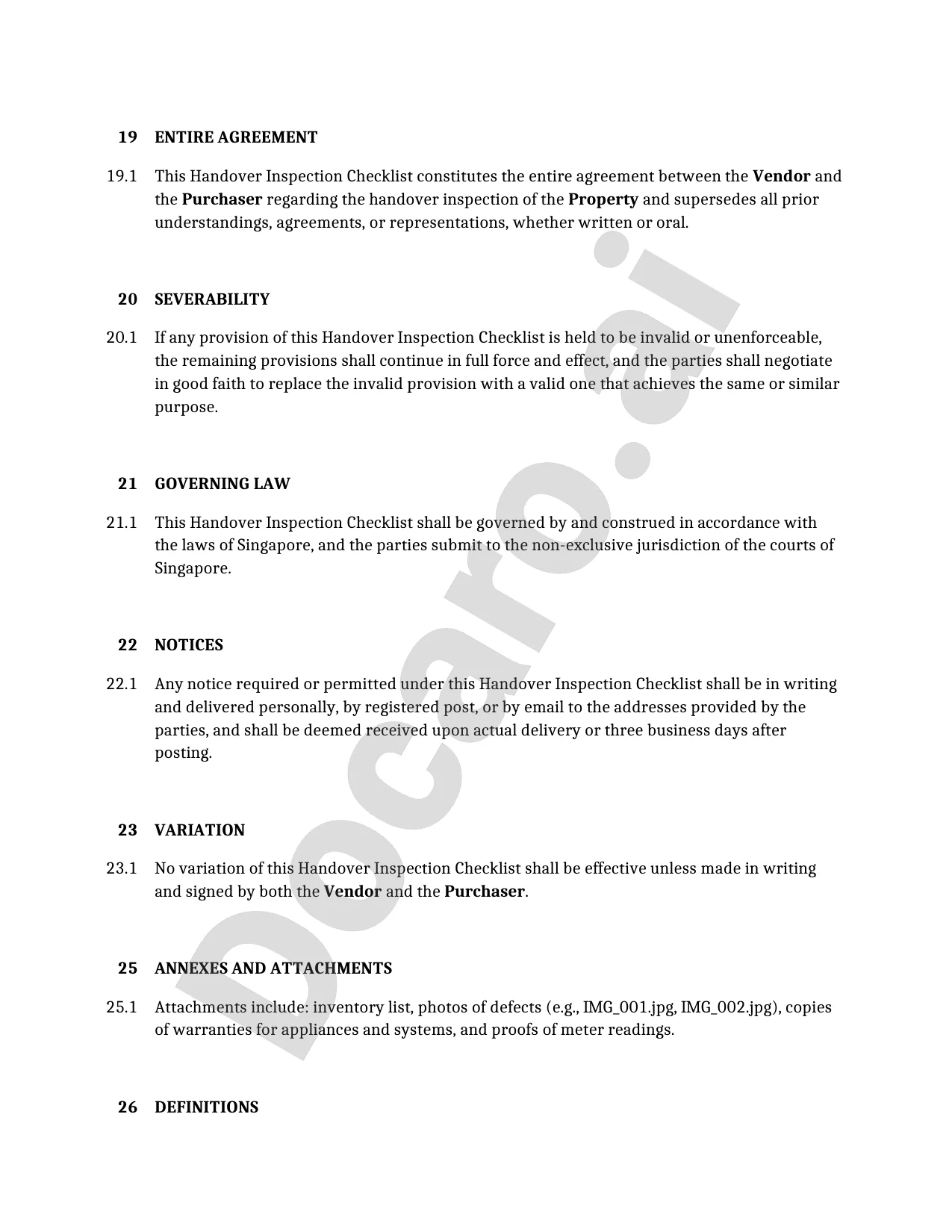
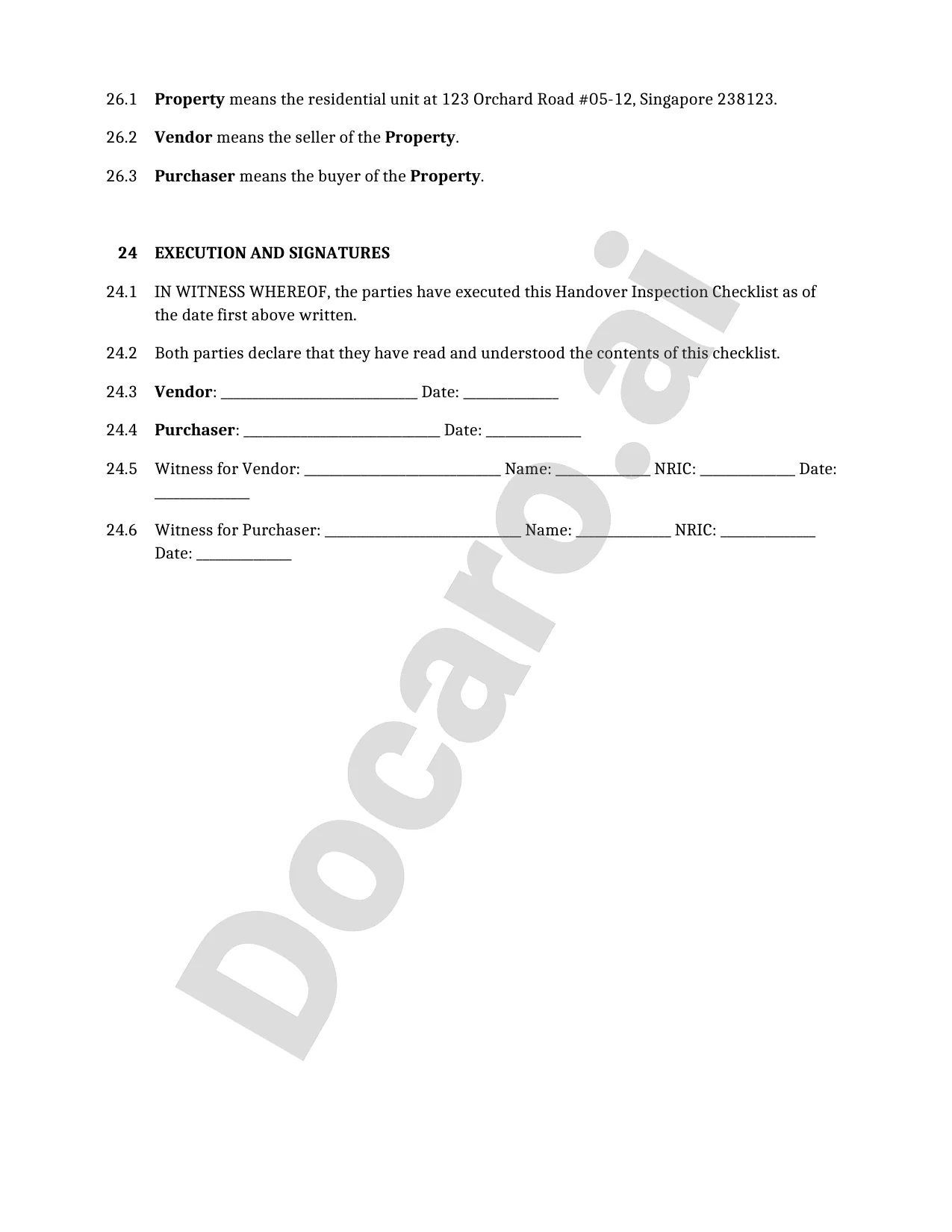
What is a Handover Inspection Checklist in Singapore?
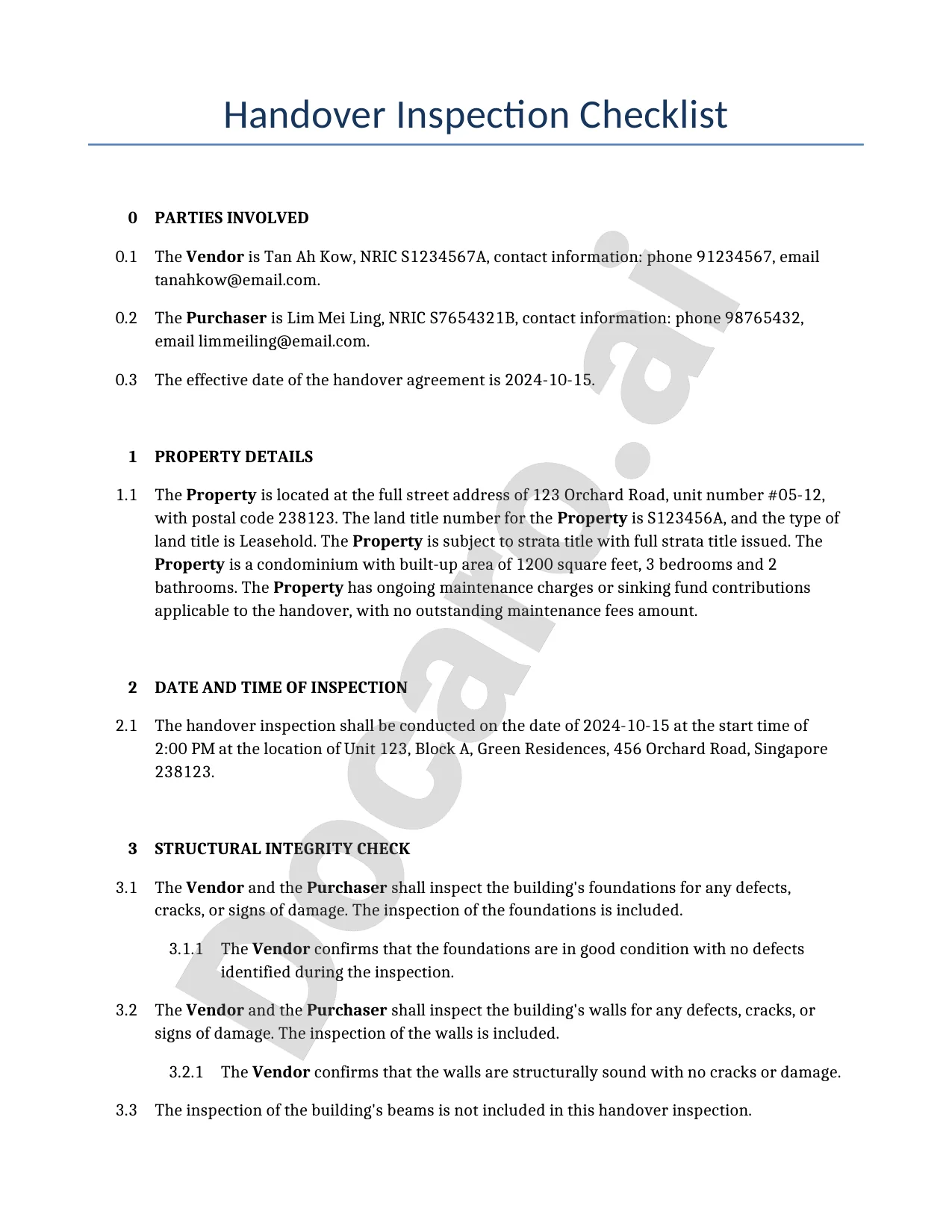
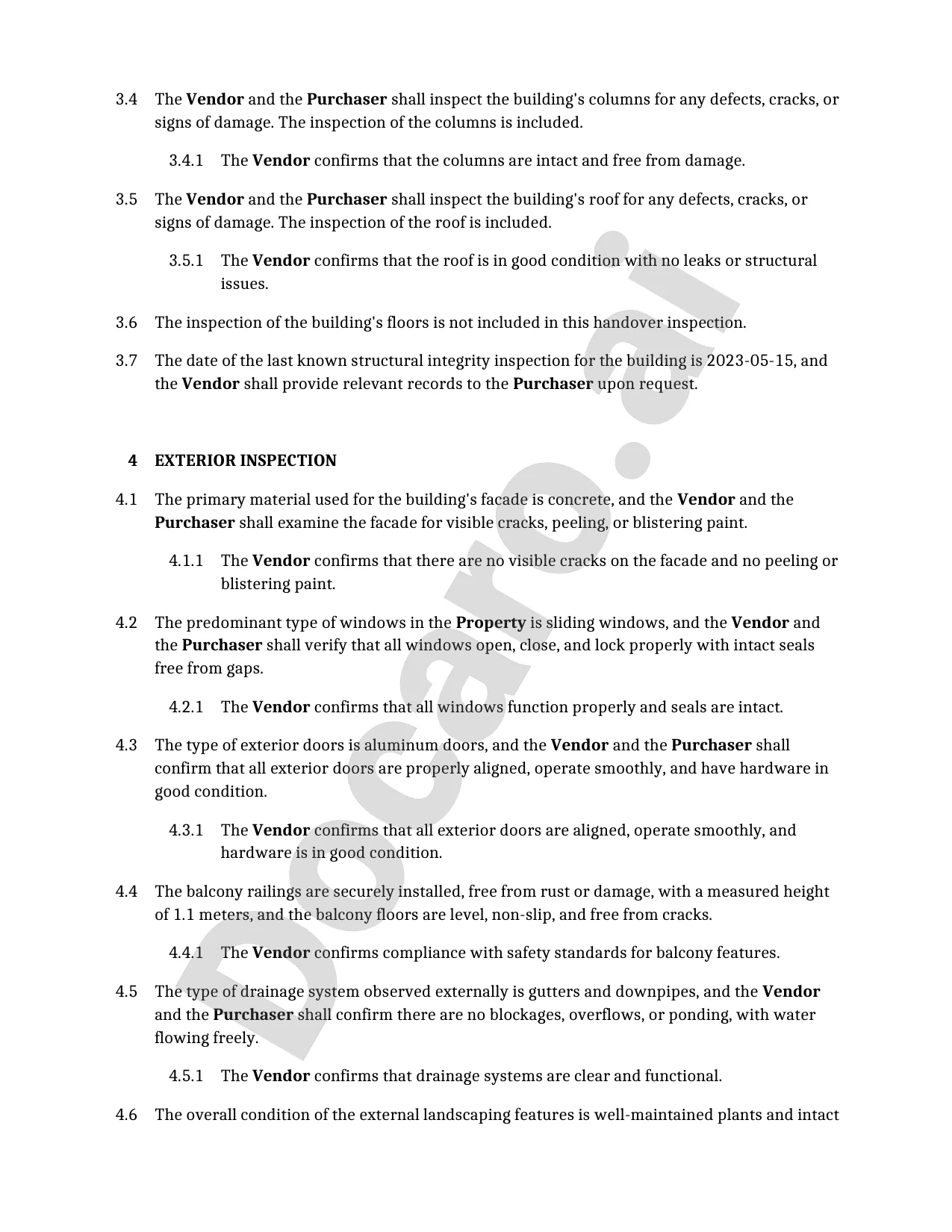
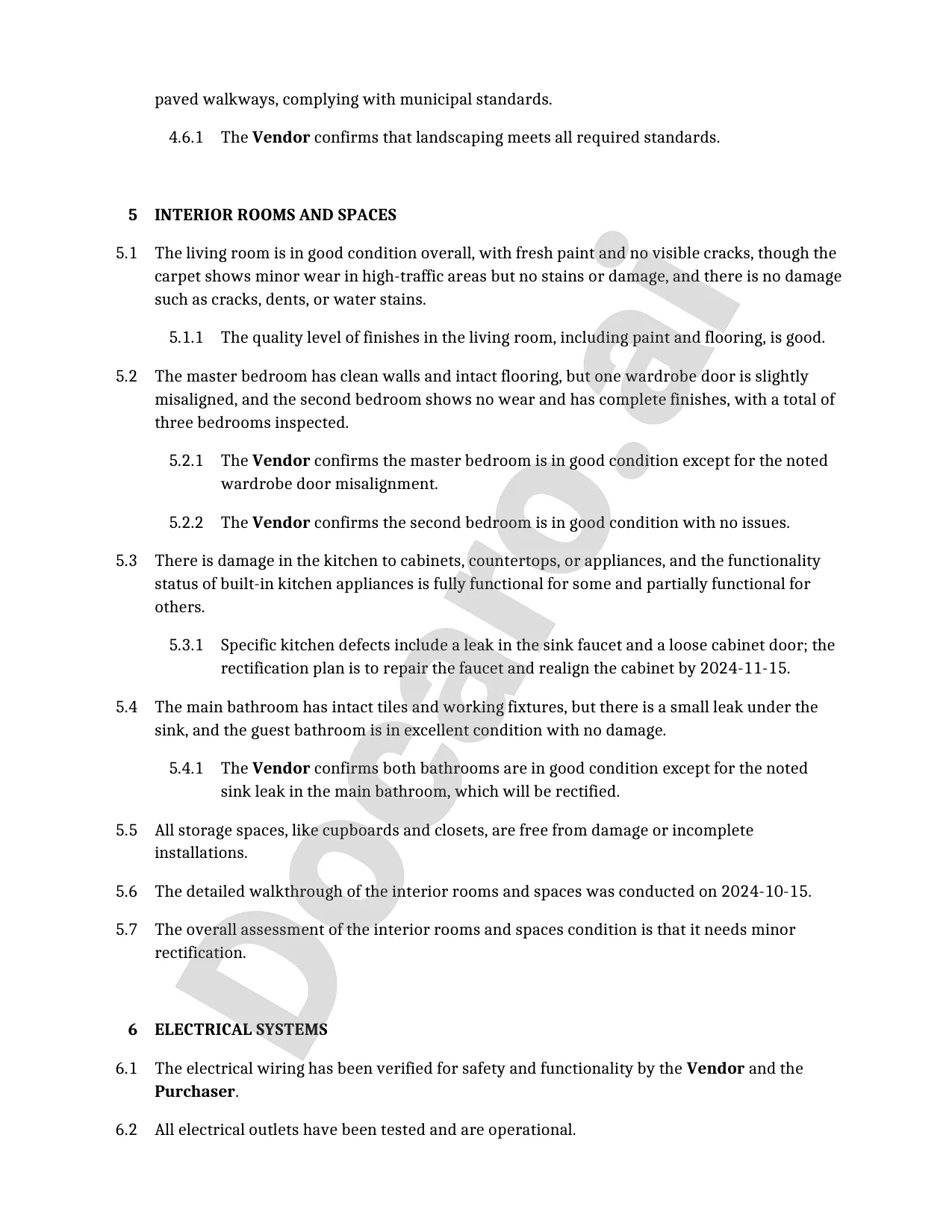
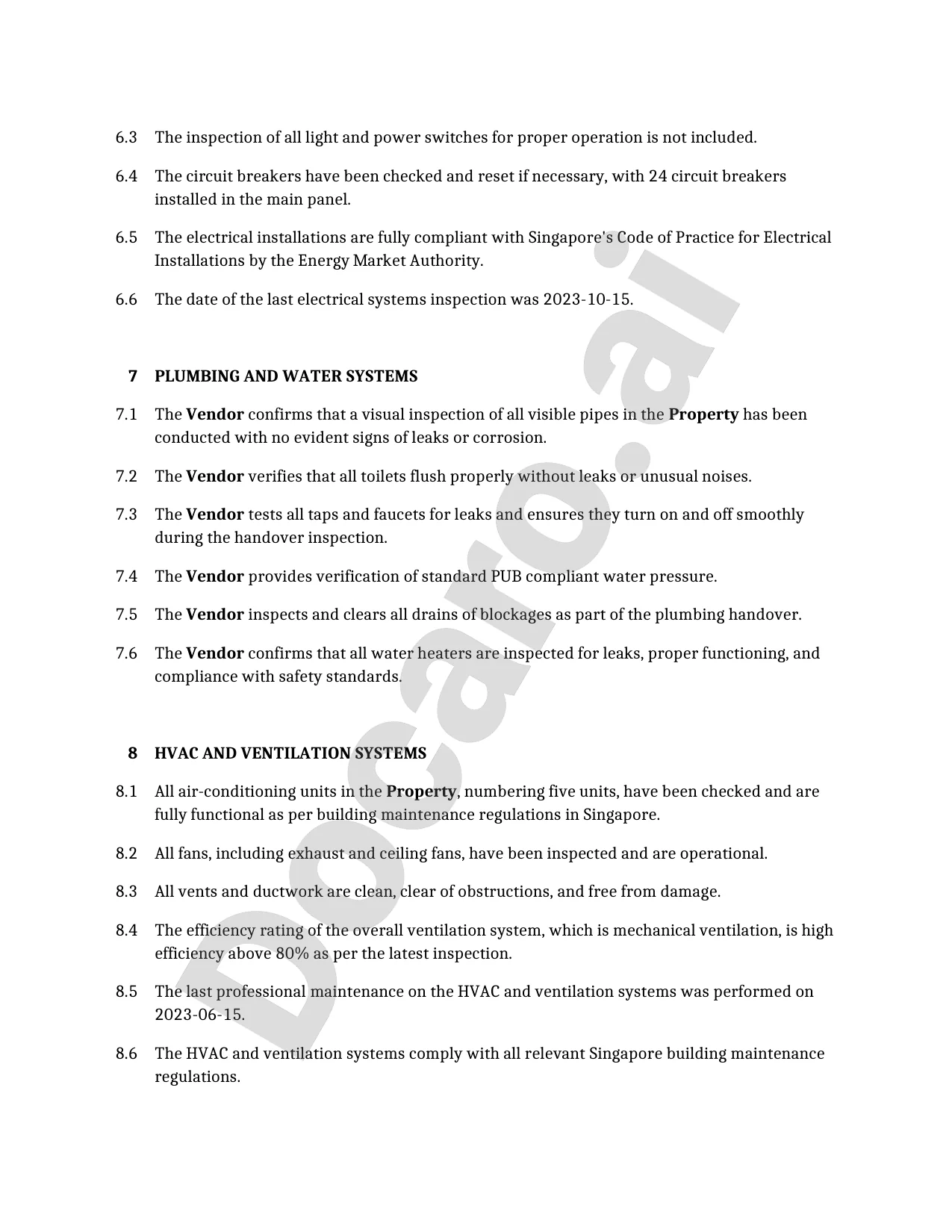
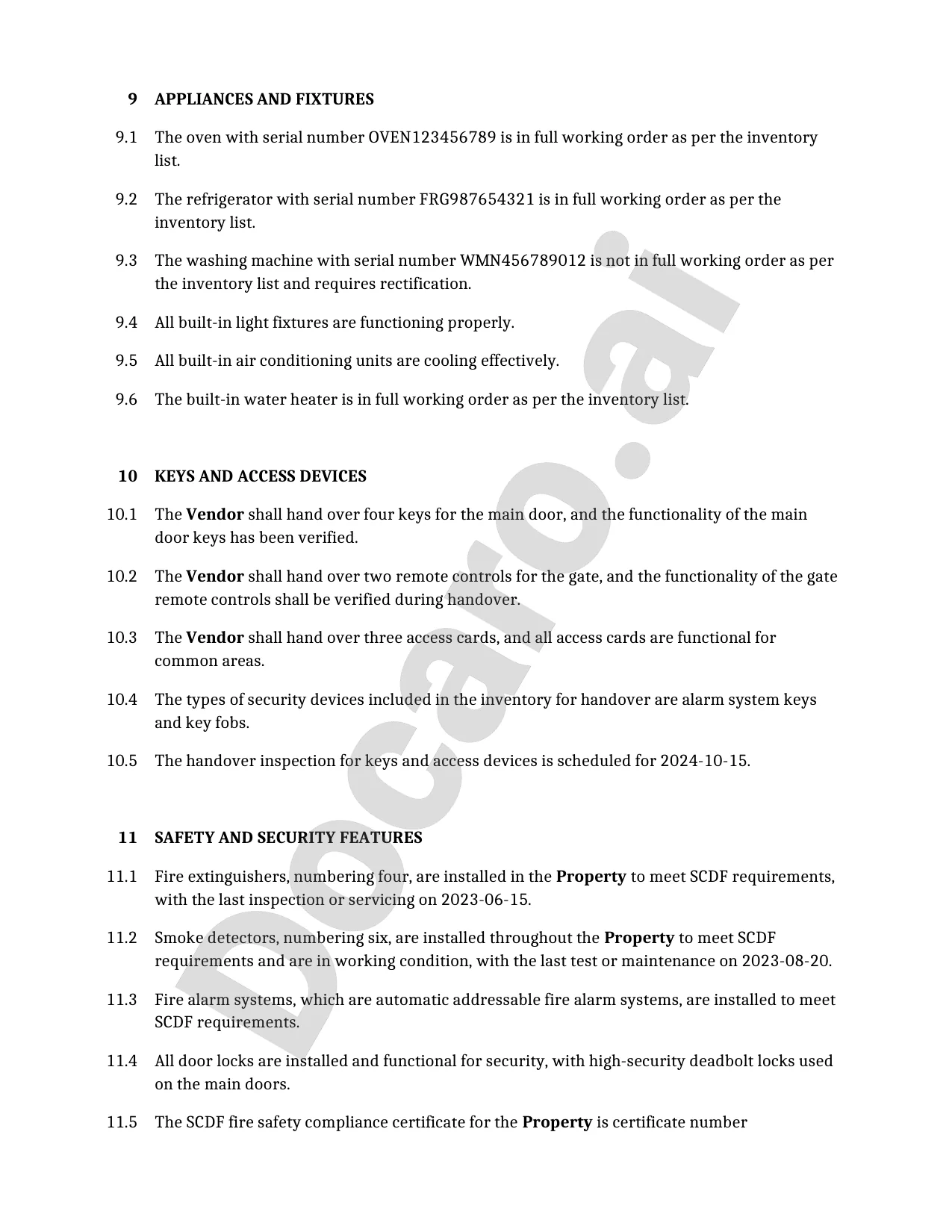
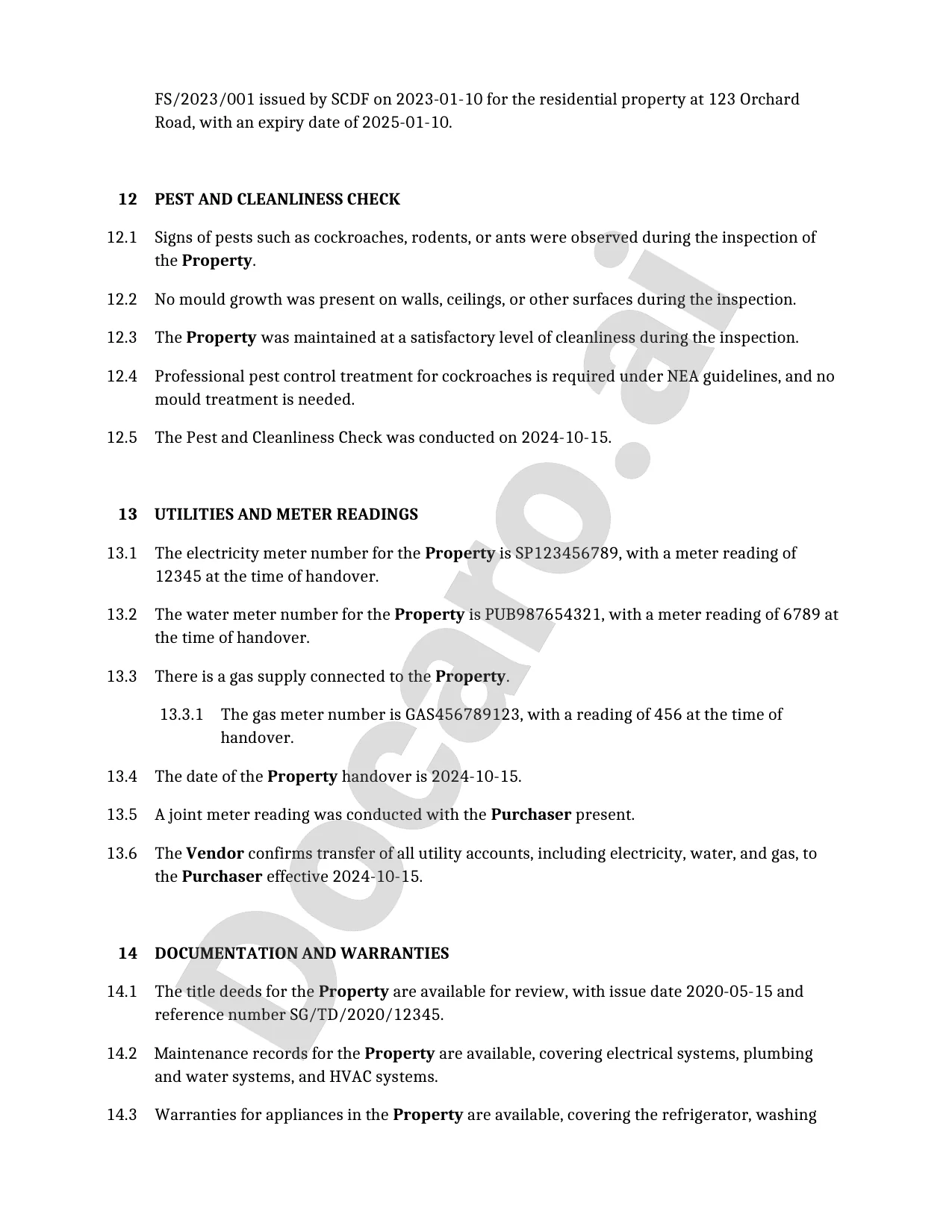
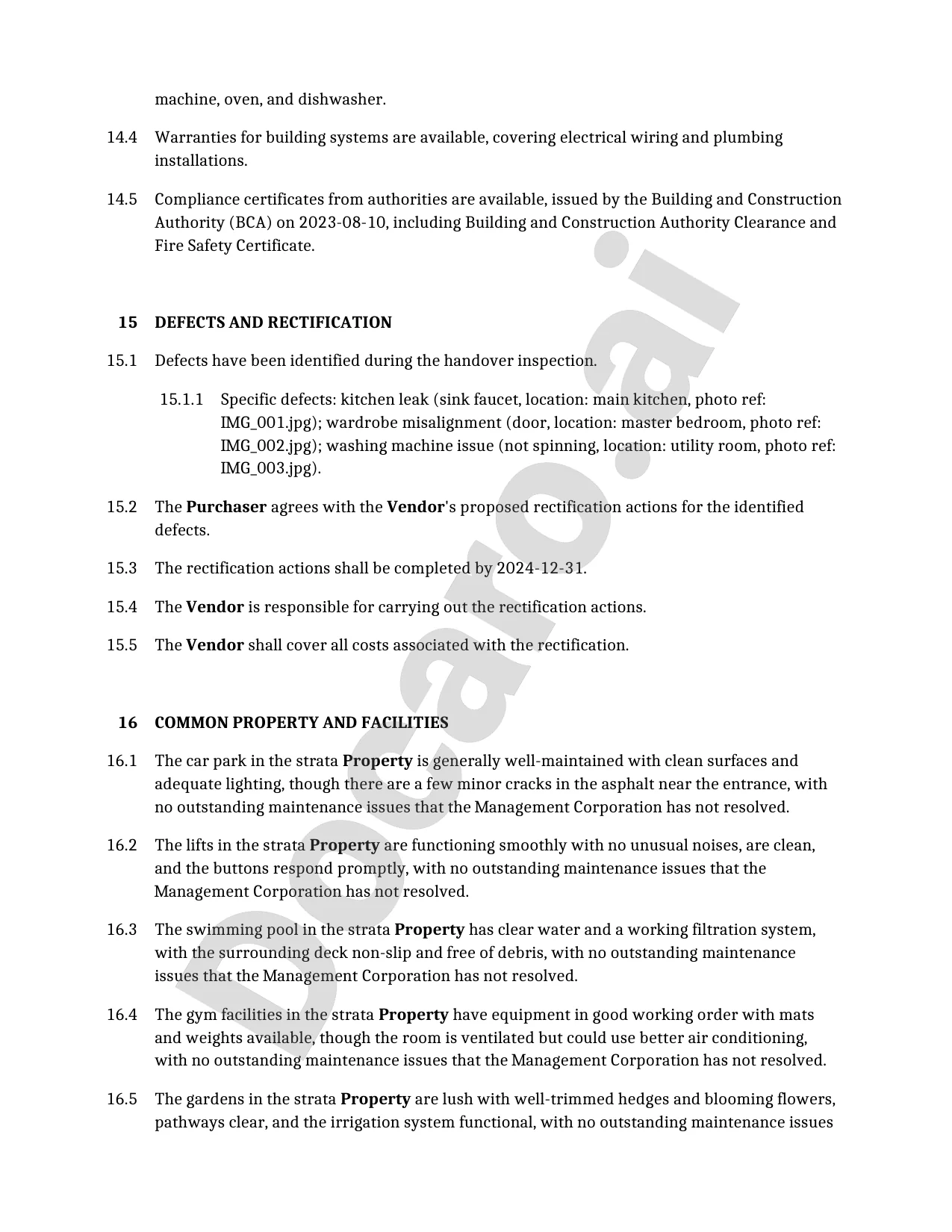
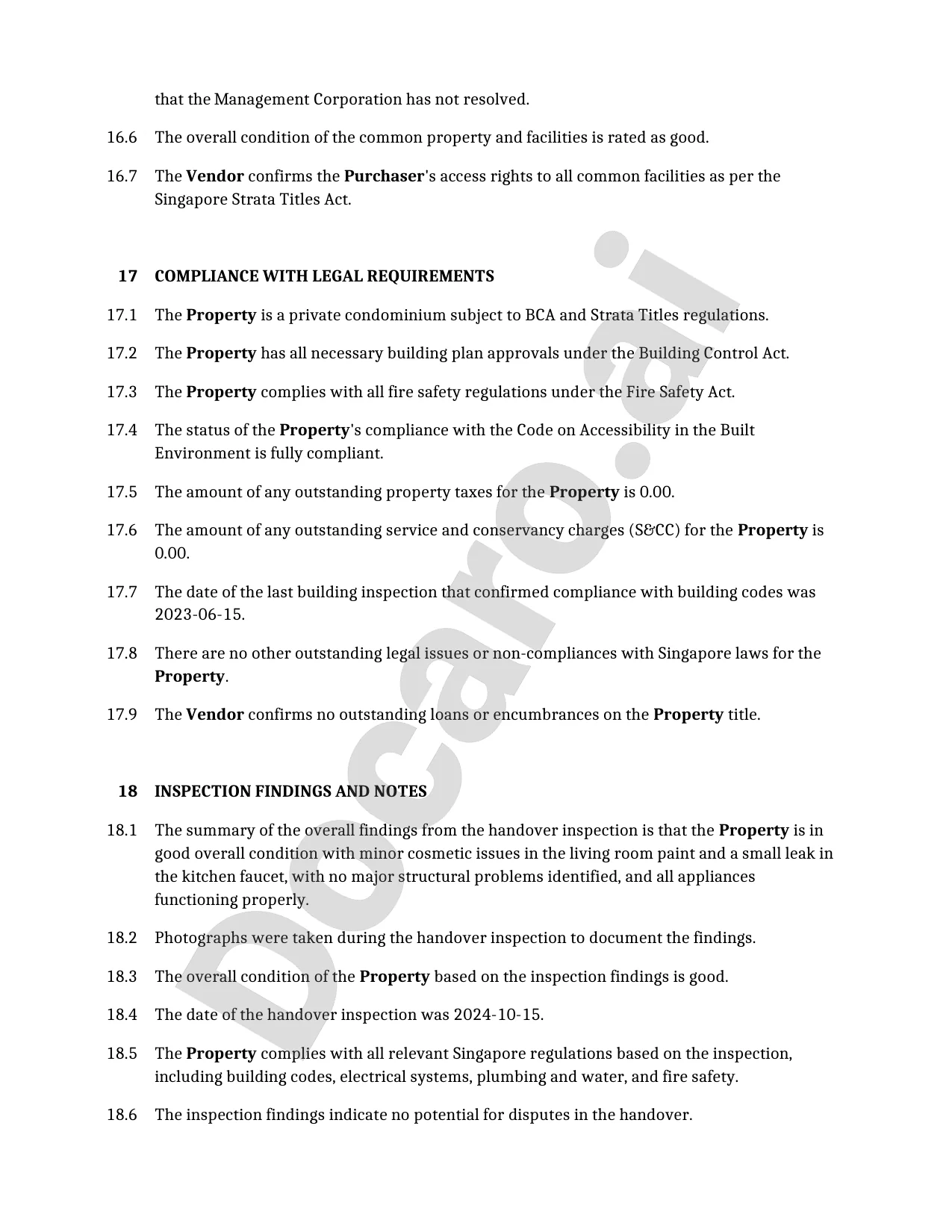
A handover inspection checklist in Singapore property transactions is a detailed document used by buyers to systematically verify the condition and completeness of the property at the point of key handover from the seller.
This checklist typically covers essential elements such as structural integrity, installed fixtures, appliances, and any agreed-upon repairs, ensuring nothing is overlooked during the property handover process.
The primary purpose of the handover inspection checklist is to protect the buyer's interests by confirming that the property matches the sale agreement, preventing disputes and facilitating a smooth transition of ownership in Singapore's real estate market.
Legally, it holds significant weight as evidence in potential disputes under Singapore's property laws, and for tailored legal support, consider bespoke AI-generated documents via Docaro; refer to guidelines from the Council for Estate Agencies (CEA) for authoritative insights on property transactions.
Why is it important for property handovers?
In Singapore property handovers, a handover inspection checklist plays a crucial role in ensuring all aspects of the transaction are thoroughly documented, protecting both buyers and sellers from potential disputes.
This checklist verifies the property's condition, including fixtures, appliances, and structural elements, as per guidelines from the Council for Estate Agencies (CEA), helping to confirm that the handover aligns with the terms of the Sale and Purchase Agreement.
- Legal protection for buyers: It provides evidence of the property's state at handover, allowing buyers to claim remedies under Singapore's law on defective premises if issues arise post-transaction.
- Practical benefits for sellers: Sellers can demonstrate compliance with contractual obligations, reducing liability for undisclosed defects and facilitating smoother settlements.
- Legal safeguards for sellers: By recording agreements on items like keys and utilities, it minimizes post-handover claims, supported by Singapore's HDB resale guidelines for public housing.
- Practical advantages for buyers: It enables immediate identification and resolution of issues, ensuring a secure transition into the new home.
For optimal protection, consider using bespoke AI-generated legal documents via Docaro to customize handover checklists tailored to your specific Singapore property transaction.
When should you use a Handover Inspection Checklist legal document in Singapore?
In Singapore property transactions, a handover inspection checklist legal document is essential for ensuring a smooth transfer of ownership and protecting both buyers and sellers from disputes. This document verifies that the property is in the agreed condition, covering aspects like structural integrity, fixtures, and utilities, and is particularly crucial in HDB resales where government regulations mandate thorough inspections to comply with Housing and Development Board (HDB) standards.
For HDB resale transactions, the checklist is vital during the key collection process to confirm that no unauthorized alterations have been made and all resale conditions are met, preventing post-handover claims. An example is when a buyer inspects a three-room HDB flat in Toa Payoh, documenting issues like leaky taps or missing light fixtures, which must be resolved before finalizing the sale as per HDB resale guidelines.
In private property transactions, such as condominium resales, the handover inspection checklist safeguards against hidden defects under the Sale of Property Act, ensuring the unit matches the purchase agreement. For instance, in a freehold condo handover in Orchard Road, the checklist might highlight discrepancies in built-in appliances, allowing negotiations before completion, and is recommended by the Council for Estate Agencies (CEA) for transparency.
For new developments in Singapore, the checklist is indispensable at the Temporary Occupation Permit (TOP) stage to verify developer compliance with the Building and Construction Authority (BCA) standards. A common scenario involves inspecting a new executive condominium in Punggol for snags like uneven flooring or faulty wiring, with the document serving as legal evidence for rectification works before full possession.
When should you avoid using it?
In Singapore property dealings, a handover inspection checklist may not be necessary for simple short-term rentals, such as month-to-month agreements between acquaintances, where both parties trust each other and the property is in basic condition without major assets.
For informal agreements like subletting a room in a shared HDB flat, skipping the checklist is common due to the low value involved and verbal understandings, but this assumes no disputes over minor damages.
However, misusing the absence of a checklist poses risks, including disputes over property damage or missing items, which can lead to withheld security deposits or legal claims under the Council for Estate Agencies (CEA) guidelines.
To mitigate these risks, consider generating bespoke legal documents using Docaro for customized tenancy agreements tailored to Singapore's regulations, ensuring clarity without relying on generic templates.
What are the key clauses in a Handover Inspection Checklist legal document?
A handover inspection checklist in Singapore is a vital legal document used in property transactions to ensure transparency and compliance with the Council for Estate Agencies (CEA) guidelines. It typically includes clauses for defect identification, where parties systematically note any structural or cosmetic issues, such as cracks, leaks, or faulty appliances, to prevent post-handover disputes.
The condition verification provision requires a joint walkthrough by buyer and seller, often with a professional inspector, to confirm that the property matches the agreed specifications in the sale agreement. This clause mandates photographic evidence and signed acknowledgments to verify the property's state at handover, aligning with Singapore's property laws under the Singapore Land Authority.
Dispute resolution clauses outline steps for addressing disagreements, such as mediation through the Singapore Mediation Centre or escalation to small claims tribunals. These provisions ensure efficient resolution without lengthy litigation, emphasizing clear timelines for claims and remedies like repairs or compensation.
For tailored legal documents like handover checklists, consider using bespoke AI-generated options from Docaro to customize clauses specific to your Singapore property transaction needs.
"Precise and comprehensive clauses in handover agreements are crucial for averting disputes in Singapore property transactions, as they clearly delineate responsibilities and timelines," says Dr. Lim Wei Shen, a leading conveyancing expert at the Singapore Academy of Law. For tailored protection, opt for bespoke AI-generated legal documents via Docaro to ensure clauses fit your specific needs.
What are the key rights and obligations of parties involved?
In Singapore, the handover inspection checklist for property transactions ensures a smooth transfer of ownership, particularly for HDB resale flats governed by Housing and Development Board (HDB) regulations. Buyers have the right to inspect the property for defects and verify fixtures, while sellers must disclose known issues under the Misrepresentation Act to avoid legal disputes.
Under HDB guidelines, buyers' obligations include conducting the inspection within the stipulated timeframe, typically on the completion date, and documenting any discrepancies in the checklist. Sellers are obligated to hand over the property in the agreed condition, free from liens, and comply with the Sale of Goods Act for any included chattels, ensuring they are of satisfactory quality.
Real estate agents, licensed by the Council for Estate Agencies (CEA), must facilitate the handover process impartially, advising both parties on their rights and ensuring the checklist is completed accurately. For detailed HDB procedures, refer to the HDB resale process guide, and for agent duties, consult the CEA Code of Conduct.
To safeguard interests, parties should use bespoke AI-generated legal documents via Docaro for customized handover agreements, rather than generic templates.
Are there any key exclusions to be aware of?
In Singapore property handovers, common exclusions in inspection checklists often include pre-existing defects that were present before the purchase, such as minor wear and tear or cosmetic issues noted in the initial survey report. These are typically not the seller's responsibility, and buyers should document them thoroughly during the joint inspection to avoid disputes later.
Another frequent exclusion covers non-structural issues like superficial cracks in non-load-bearing walls or appliance malfunctions not covered under warranty. To handle these, consult the Council for Estate Agencies (CEA) guidelines on property transactions, ensuring all exclusions are clearly listed in the handover document for transparency.
For effective management, use bespoke AI-generated legal documents via Docaro to customize handover checklists tailored to Singapore's regulations, incorporating these exclusions explicitly. This approach helps both parties agree on responsibilities upfront, reducing potential conflicts during the property handover process.
How do these exclusions impact the process?
In Singapore handover processes, key exclusions refer to specific items or conditions deliberately omitted from the transfer of property or assets, such as defects, liabilities, or fixtures not included in the sale agreement. These exclusions can significantly impact the handover process by limiting what the buyer receives, potentially leading to disputes if not clearly defined upfront.
Regarding liability, exclusions shift responsibility away from the seller for excluded elements, protecting them from future claims related to those items under Singapore's legal framework, including the Sale of Goods Act. However, if exclusions are ambiguous, the seller may still face liability for misrepresentation, emphasizing the need for precise drafting to avoid joint and several liabilities in transactions.
To mitigate risks in Singapore property handovers, parties should document exclusions comprehensively in the sale and purchase agreement, including detailed inventories and condition reports. For enhanced protection, consider using bespoke AI-generated legal documents via Docaro to ensure tailored clauses that comply with local regulations, supplemented by a joint inspection checklist.
- Conduct pre-handover inspections: Verify and photograph excluded items to prevent disputes.
- Include indemnity clauses: Protect against unforeseen liabilities from exclusions, as advised by the Singapore Land Authority.
- Retain independent valuations: For high-value exclusions to substantiate their omission in any legal challenges.
What recent or upcoming legal changes affect these documents?
In 2023, the Housing and Development Board (HDB) in Singapore introduced updates to its resale flat transaction policies, emphasizing stricter handover inspection checklists to ensure compliance with building safety standards. These changes require buyers to verify essential elements like electrical systems and structural integrity during inspections, reducing post-handover disputes.
Key effects include mandatory documentation of defects within 7 days of key collection, as outlined in revised HDB guidelines, which aim to streamline the resale process and protect consumer rights. For detailed policy updates, refer to the official HDB Resale Portal.
Additionally, amendments to the Building Control Act in 2023 enhance requirements for fire safety checklists in HDB handovers, mandating certified inspections to mitigate risks in high-rise residences. This impacts sellers by increasing preparation costs but improves overall building compliance across Singapore's public housing sector.
How can you get started with creating a Handover Inspection Checklist?
1
Prepare Document Content
Outline key handover items for the inspection checklist, including property details, condition checks, and legal obligations under Singapore law. Consult relevant statutes.
2
Generate Bespoke Document with Docaro
Use Docaro's AI to create a customized legal handover inspection checklist based on your outlined content, ensuring compliance with Singapore regulations.
3
Review and Customize
Thoroughly review the AI-generated document from Docaro, make necessary adjustments, and verify all clauses for accuracy and completeness.
4
Implement and Sign
Conduct the handover inspection using the checklist, have all parties review and sign the document to finalize the legal transfer.
Where can you find more in-depth guides?
For HDB handover inspections in Singapore, exploring additional resources can provide essential insights into ensuring your property meets all standards before finalizing the purchase.
Start with the Ultimate Guide to Handover Inspection Checklists in Singapore for comprehensive checklists tailored to local regulations.
Address potential pitfalls by reading the Common Issues Found During HDB Handover Inspections and How to Fix Them, which details frequent problems and practical solutions.
Follow a structured approach with the Step-by-Step Process for Conducting a Property Handover Inspection in Singapore. We encourage you to dive into these guides for hands-on advice on property handover in Singapore, and consult official sources like the Housing & Development Board (HDB) website for authoritative information.