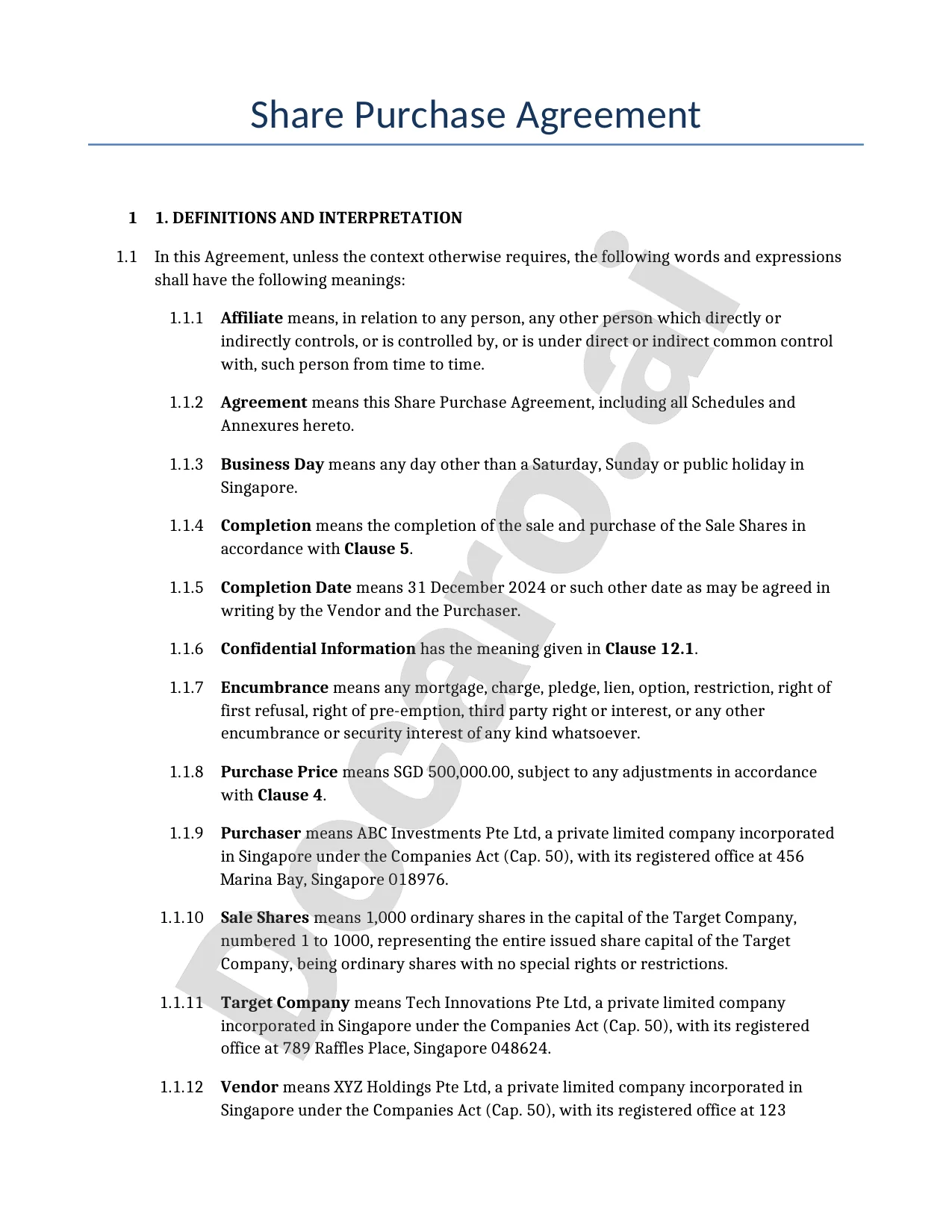
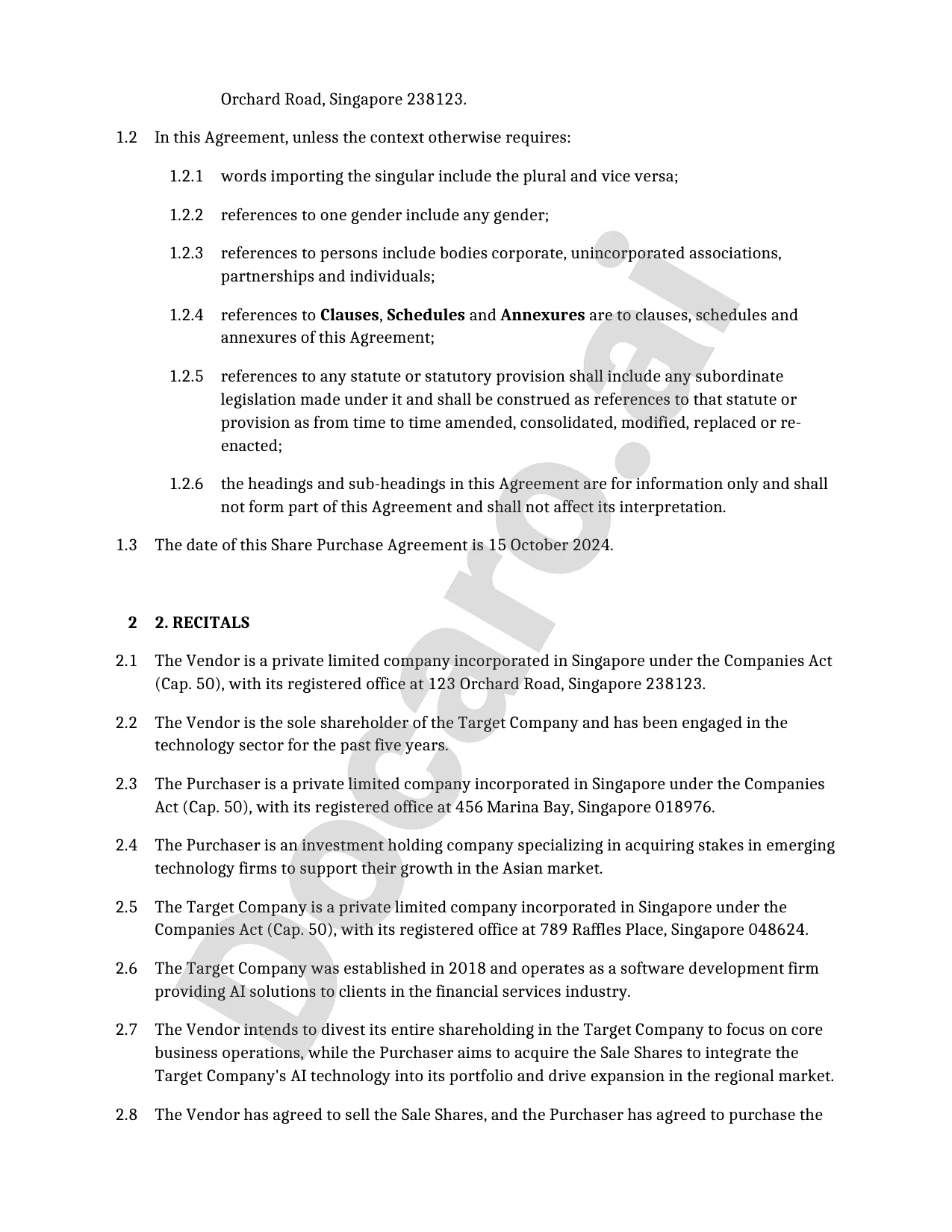
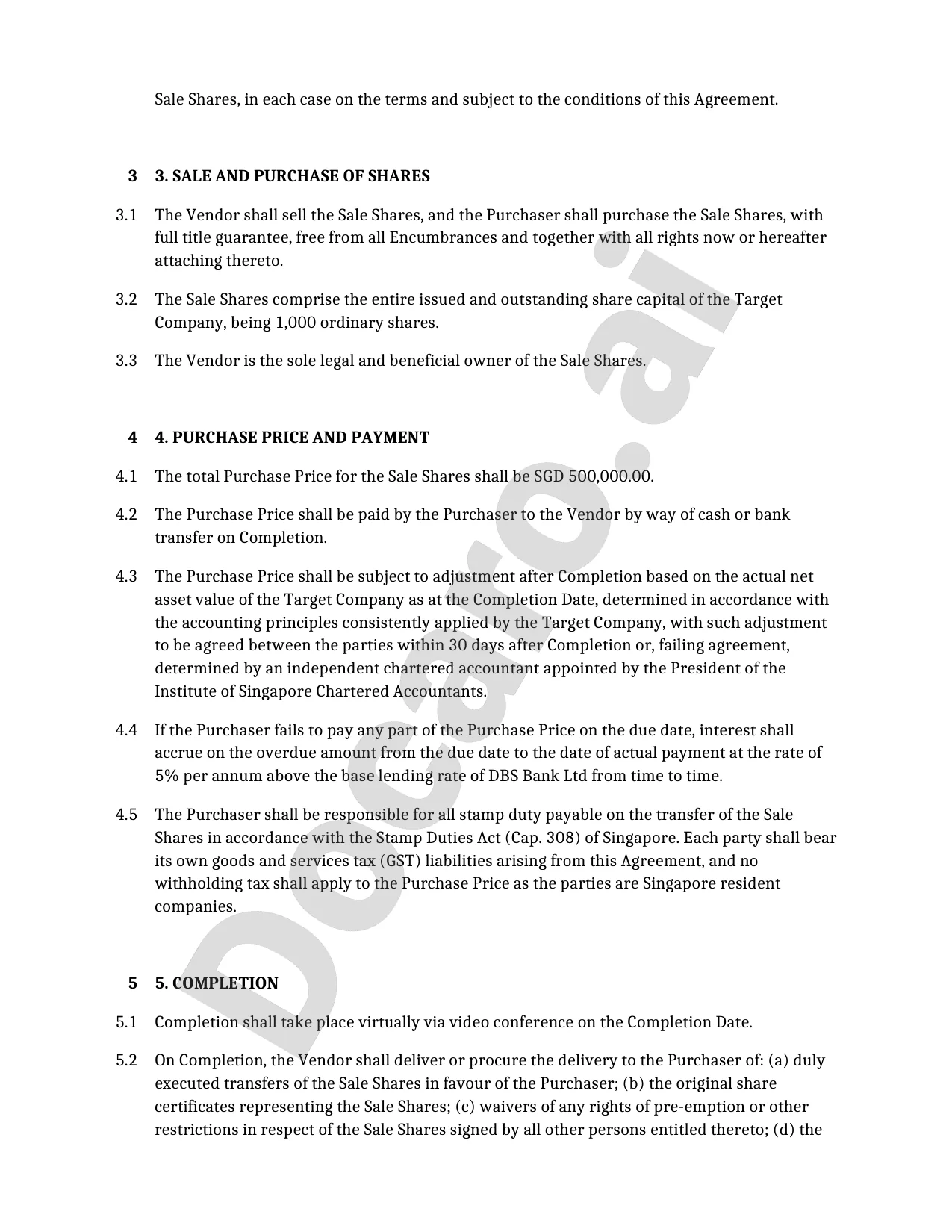
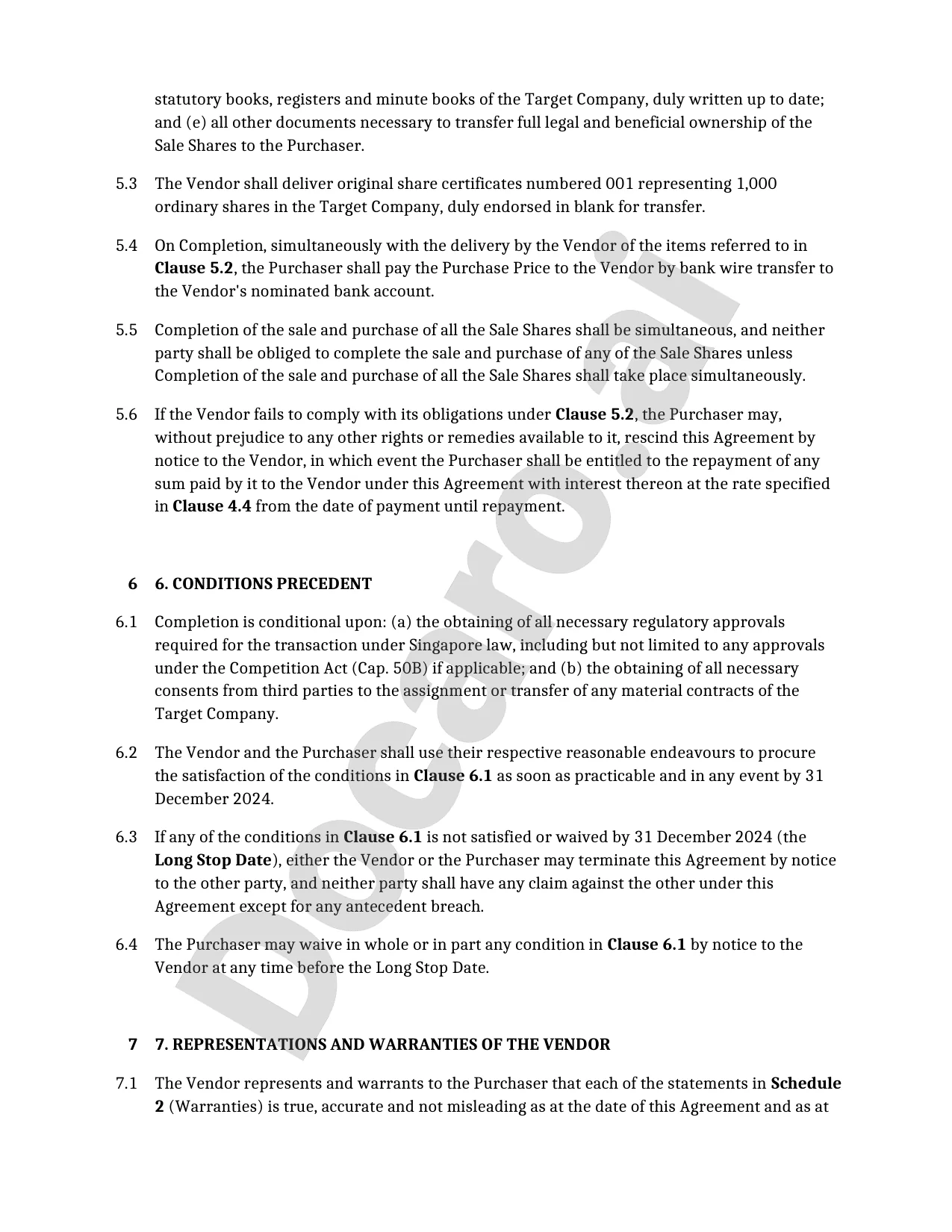
What is a Share Purchase Agreement in Singapore?
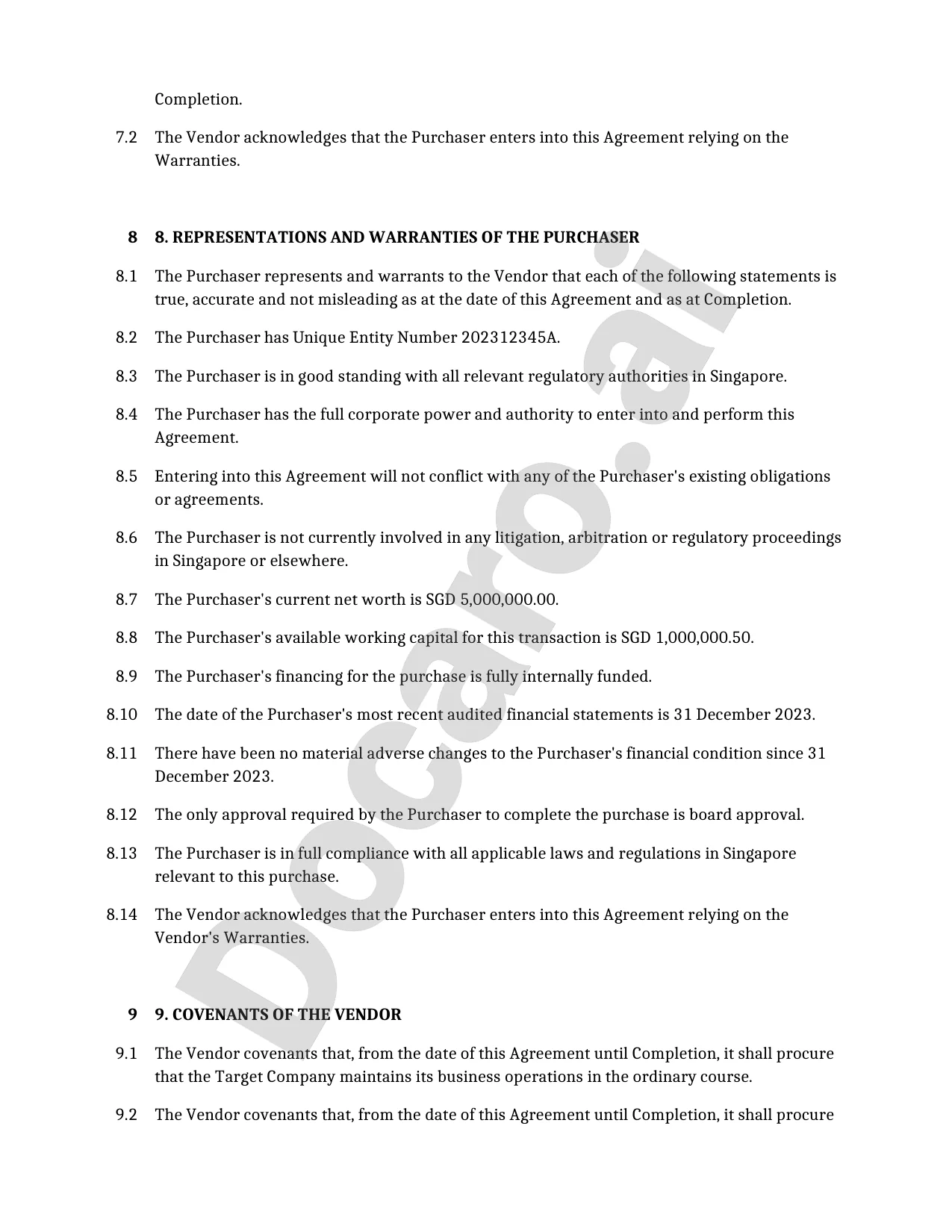
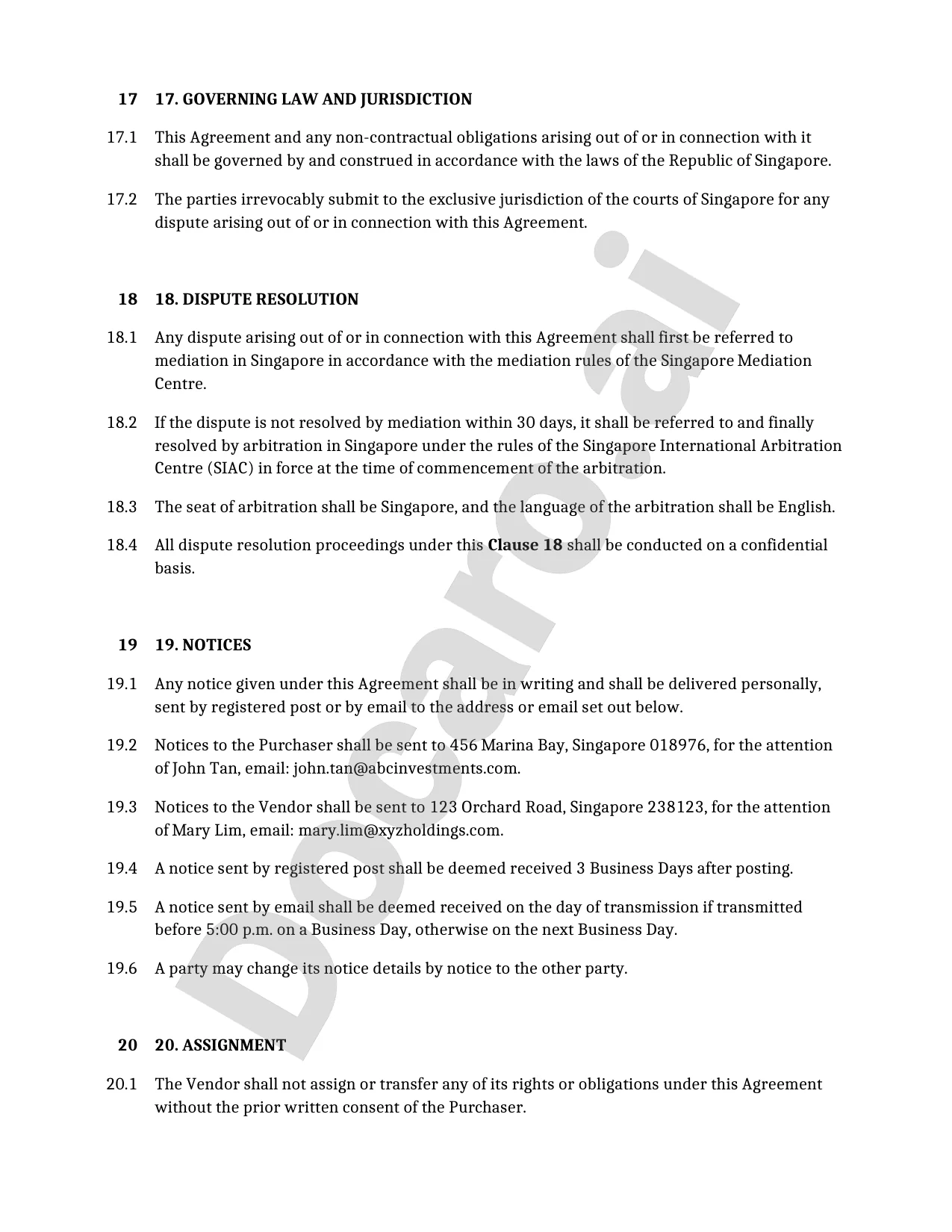
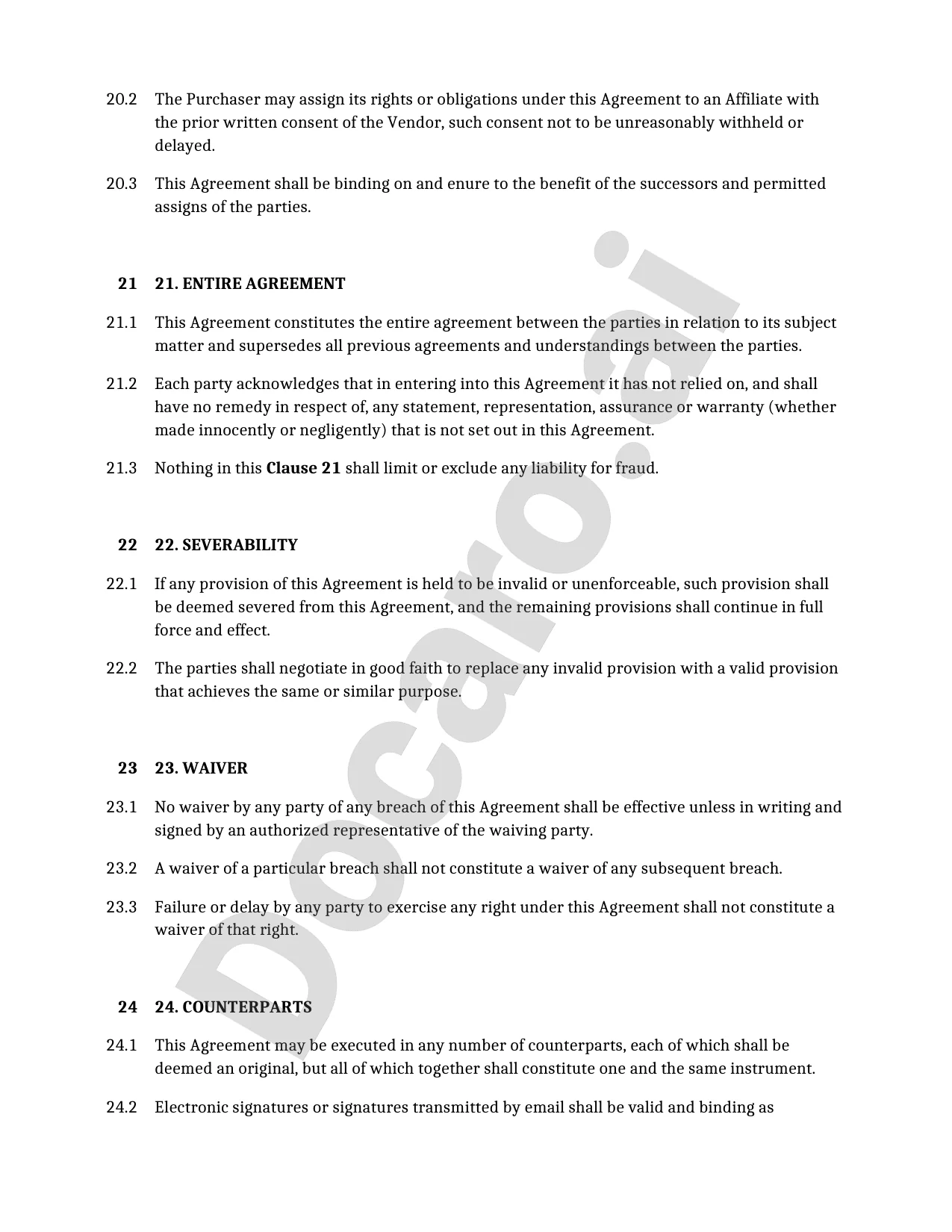
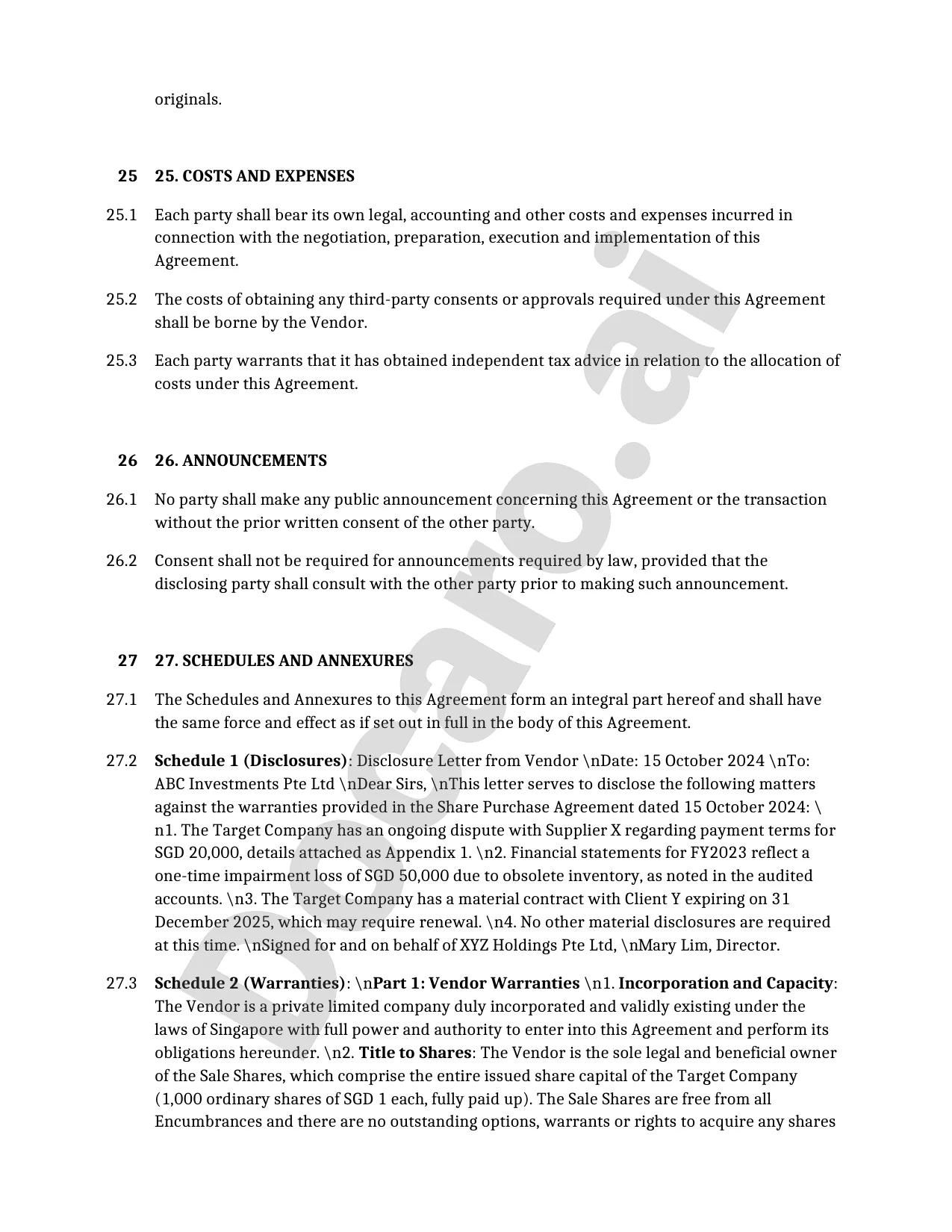
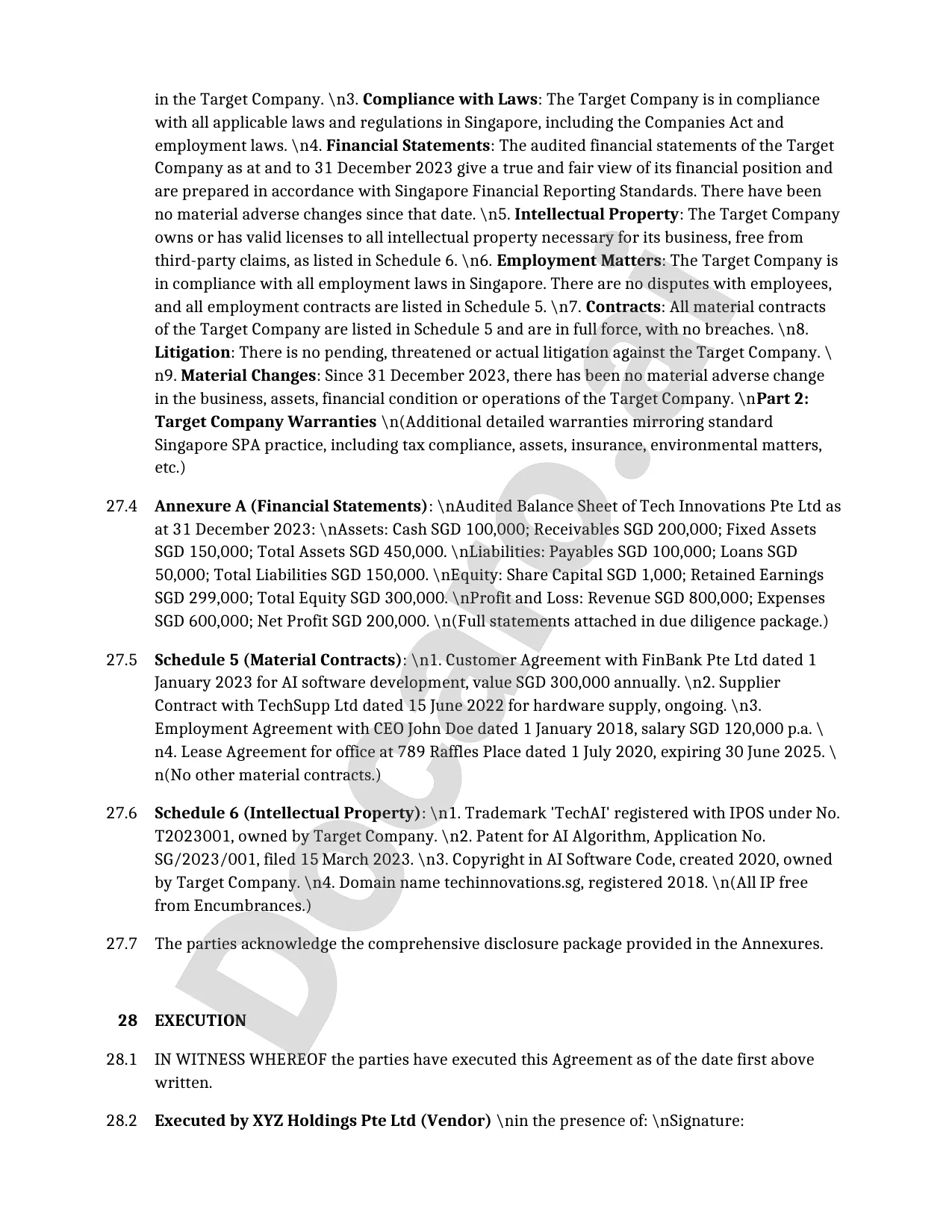
A Share Purchase Agreement (SPA) under Singapore law is a legally binding contract that outlines the terms for transferring ownership of shares in a company from a seller to a buyer. It serves as the primary document in corporate transactions, ensuring a smooth and compliant share transfer process while protecting the interests of all parties involved.
The main purpose of an SPA in facilitating share transfers is to detail the sale price, payment terms, warranties, and conditions precedent, all governed by Singapore's Companies Act. This agreement helps mitigate risks by including clauses on indemnities and post-completion obligations, making it essential for mergers, acquisitions, or private equity deals in Singapore's business landscape.
Key parties in an SPA typically include the share seller (often existing shareholders), the share buyer (an individual or entity acquiring control), and sometimes the target company itself for representations. In Singapore, these parties must adhere to regulatory requirements from the Accounting and Corporate Regulatory Authority (ACRA) to validly execute the share transfer and update company records.
An SPA differs significantly from an Asset Purchase Agreement (APA), where the buyer acquires specific assets and liabilities rather than the entire share capital of the company. While an SPA transfers ownership of the whole entity—including all assets, liabilities, and operations—in one go, an APA allows selective purchases, often requiring more complex approvals under Singapore law but avoiding inherited unknowns like hidden debts.
- Advantages of SPA: Simpler process, quicker closing, and transfer of full control without piecemeal asset negotiations.
- Distinctions from APA: SPAs handle entity-level transfers, whereas APAs focus on targeted assets, impacting tax implications and due diligence under Singapore's legal framework.
For tailored legal needs in Singapore, consider using Docaro to generate bespoke AI-generated legal documents like SPAs, ensuring they are customized to your specific transaction details rather than relying on generic options.
When should you use a Share Purchase Agreement in Singapore?
A Share Purchase Agreement is essential in Singapore for private company share sales, where an individual or entity acquires shares from existing owners in a closely held business. For instance, in Singapore's vibrant startup ecosystem, founders often use this agreement to sell equity to investors during funding rounds, ensuring clear terms on valuation, warranties, and transfer conditions compliant with the Companies Act.
In mergers and acquisitions involving equity transfers, a Share Purchase Agreement facilitates smooth ownership changes in Singapore's competitive corporate landscape. A common example is when a multinational firm acquires a local tech company, like those in the fintech sector, using the agreement to outline payment structures, due diligence outcomes, and post-closing obligations to mitigate risks under Singapore's regulatory framework.
Situations involving multiple shareholders in Singapore benefit from a Share Purchase Agreement to manage buyouts or partial sales without disrupting operations. For example, in family-owned enterprises prevalent in Singapore's SME sector, the agreement helps resolve disputes by specifying rights of first refusal and drag-along provisions, promoting fair equity distribution.
For all such scenarios, businesses in Singapore should opt for bespoke AI-generated legal documents via Docaro to tailor agreements precisely to unique needs, ensuring compliance and efficiency over generic options.
When should you avoid using a Share Purchase Agreement?
A Share Purchase Agreement (SPA) in Singapore is ideal for acquiring shares in a private company, but it may not suit scenarios where buyers prefer purchasing specific assets instead of the entire entity. In such asset acquisition cases, an Asset Purchase Agreement is more appropriate to avoid inheriting unwanted liabilities, offering greater flexibility in selecting assets like intellectual property or equipment while minimizing exposure to the seller's debts.
For public company takeovers regulated by the Singapore Exchange (SGX) and the Securities and Futures Act, an SPA is unsuitable due to mandatory disclosure requirements and approval processes. These transactions often require a formal scheme of arrangement or general offer under the SGX Listing Rules, ensuring minority shareholder protection and market fairness, with risks of non-compliance leading to regulatory penalties.
Intra-group transfers within the same corporate group might qualify for exemptions under Singapore's tax and regulatory frameworks, rendering a full SPA unnecessary and potentially triggering unintended tax implications. Alternatives include simple internal resolutions or group relief declarations, but consulting professionals is essential to leverage exemptions like those under the Companies Act, avoiding risks such as stamp duty or unintended share dilution.
Potential risks of using an ill-suited SPA include legal disputes over liabilities, tax inefficiencies, or regulatory breaches, emphasizing the need for bespoke legal documents tailored via Docaro's AI generation for Singapore-specific compliance. Always seek expert advice to identify the optimal structure, ensuring seamless transactions in corporate acquisitions.
What are the key clauses in a Singapore Share Purchase Agreement?
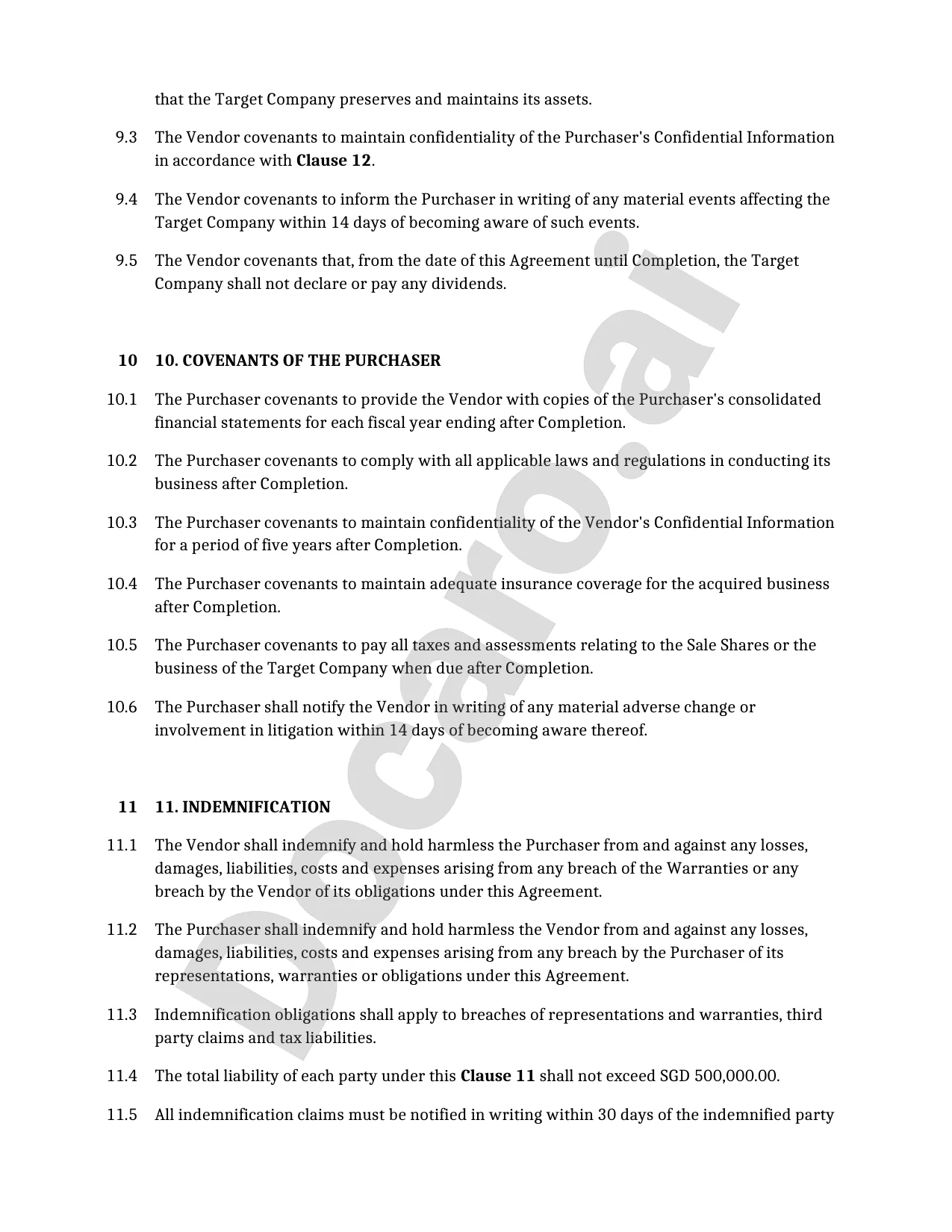
A Share Purchase Agreement (SPA) under Singapore law is a critical document for acquiring shares in a company, outlining the terms of the transaction to protect both buyer and seller. Essential clauses ensure clarity on obligations, risks, and completion, with key elements like purchase price and payment terms specifying the total consideration, adjustment mechanisms, and payment schedules, often including escrow arrangements for security.
Representations and warranties form the core of risk allocation, where the seller assures the buyer about the company's financial health, legal compliance, and operational status, backed by disclosure schedules. Conditions precedent must be satisfied before closing, such as regulatory approvals from the Monetary Authority of Singapore or satisfactory due diligence, ensuring the deal proceeds only if prerequisites are met. For deeper insights into representations and warranties in Singapore SPAs, explore detailed breakdowns.
Indemnities provide remedies for breaches of warranties or other liabilities, often capped by amount and time, while closing mechanisms detail the handover process, including delivery of share certificates and execution of ancillary documents. These clauses minimize disputes in Singapore's robust legal framework governed by the Companies Act. To generate a customized SPA, consider using Docaro for bespoke AI-generated legal documents tailored to your needs.
"In Singapore's competitive M&A landscape, robust representations and warranties in share purchase agreements are essential to shield buyers from undisclosed liabilities, ensuring comprehensive due diligence and risk mitigation," says Dr. Lim Wei Shen, a leading corporate lawyer at Rajah & Tann Singapore. For tailored protection, opt for bespoke AI-generated legal documents via Docaro to customize your SPA effectively.
What are the key rights and obligations of parties in a Share Purchase Agreement?
In a Singapore Sale and Purchase Agreement (SPA) under corporate law, buyers hold primary rights to conduct thorough due diligence, allowing them to review the target company's financials, operations, and legal status to identify risks before closing. Sellers, in turn, are obligated to provide accurate disclosures and cooperate fully during this process, ensuring transparency to avoid post-closing disputes as per common practices in the Companies Act.
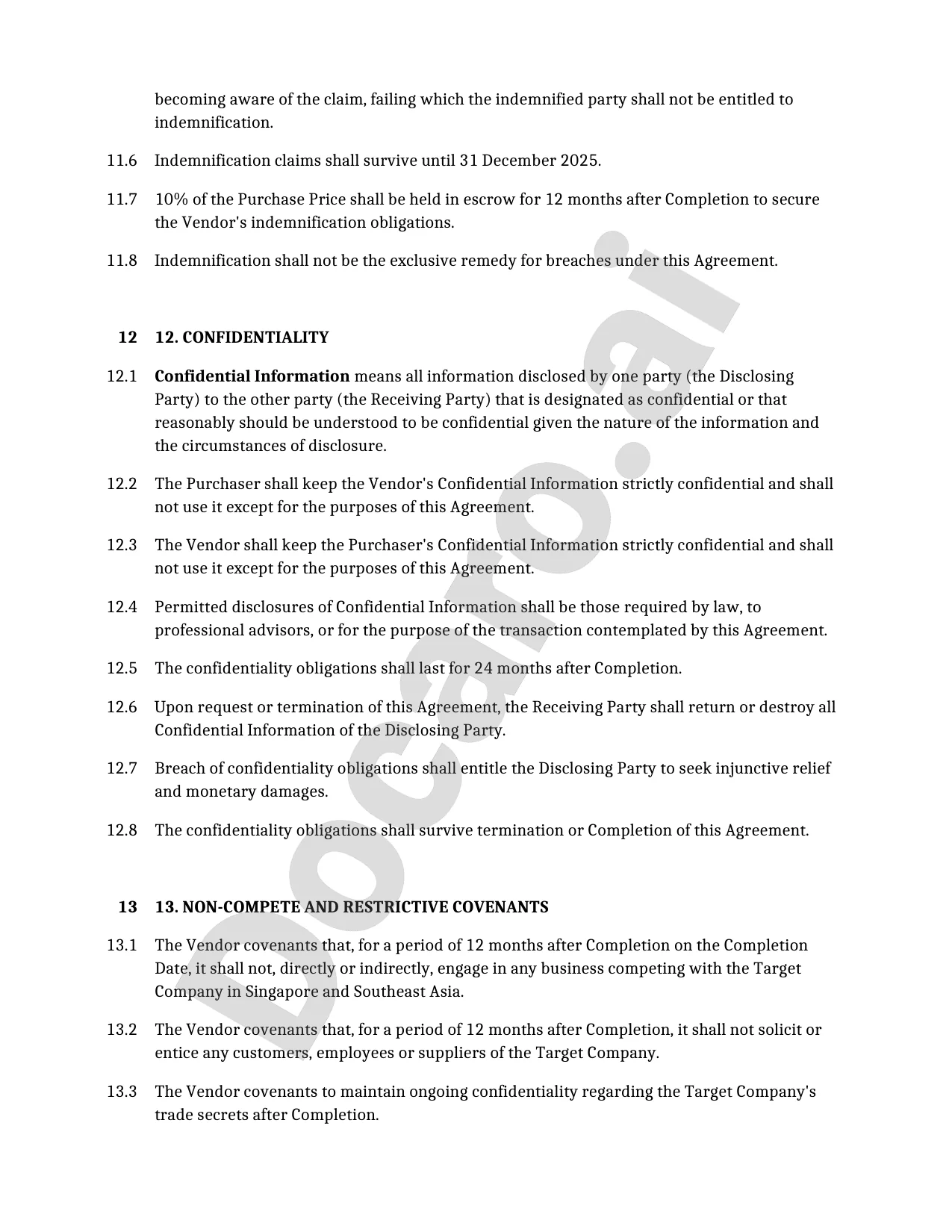
Confidentiality obligations are standard in Singapore SPAs, binding both parties to protect sensitive information shared during negotiations and due diligence, often extending beyond closing to safeguard trade secrets. These clauses align with Singapore's Personal Data Protection Act and contract law principles, with breaches potentially leading to injunctive relief or damages.
Non-compete covenants typically restrict sellers from engaging in competing businesses for a defined period and geographic scope post-closing, enforceable under Singapore law if reasonable in duration (often 1-3 years) and scope to protect the buyer's goodwill. Courts scrutinize these for public policy compliance, making them a key tool in mergers and acquisitions to preserve business value.
Post-closing adjustments in Singapore SPAs commonly involve mechanisms like earn-outs or working capital true-ups to reconcile estimated and actual figures, with obligations on both parties to provide timely financial data. This practice, rooted in equitable principles of corporate transactions, ensures fair pricing and minimizes litigation, often detailed in bespoke schedules for precision.
- For tailored Singapore SPA documents, consider using Docaro AI to generate customized agreements aligned with local law.

Are there any recent or upcoming legal changes affecting Share Purchase Agreements in Singapore?
Singapore's legal framework for Share Purchase Agreements remains stable under the Companies Act, with no major amendments announced as of March 2026. This stability supports efficient M&A transactions, emphasizing clear compliance with due diligence and shareholder approvals.
Recent enhancements in anti-money laundering regulations, driven by the Monetary Authority of Singapore, require stricter verification in share transfers to prevent illicit financing. Businesses must integrate these rules into Share Purchase Agreements to ensure robust KYC processes and reporting.
The Digital Economy Initiatives, including the Digital Economy Framework updated in 2025, promote electronic signatures and smart contracts in corporate deals. This facilitates faster execution of Share Purchase Agreements while maintaining legal validity under Singapore's e-commerce laws.
For optimal compliance, parties should seek bespoke AI-generated legal documents using Docaro to tailor Share Purchase Agreements to specific transaction needs, avoiding generic templates.
What key exclusions should be considered in a Share Purchase Agreement?
In a Singapore Sale and Purchase Agreement (SPA), important exclusions like carve-outs in warranties for known issues allow parties to exclude representations about pre-disclosed defects, preventing disputes over information already shared during due diligence.
This protects sellers from liability for matters the buyer is fully aware of, while buyers avoid overreaching claims, linking directly to the pitfall of incomplete disclosures that could derail transactions.
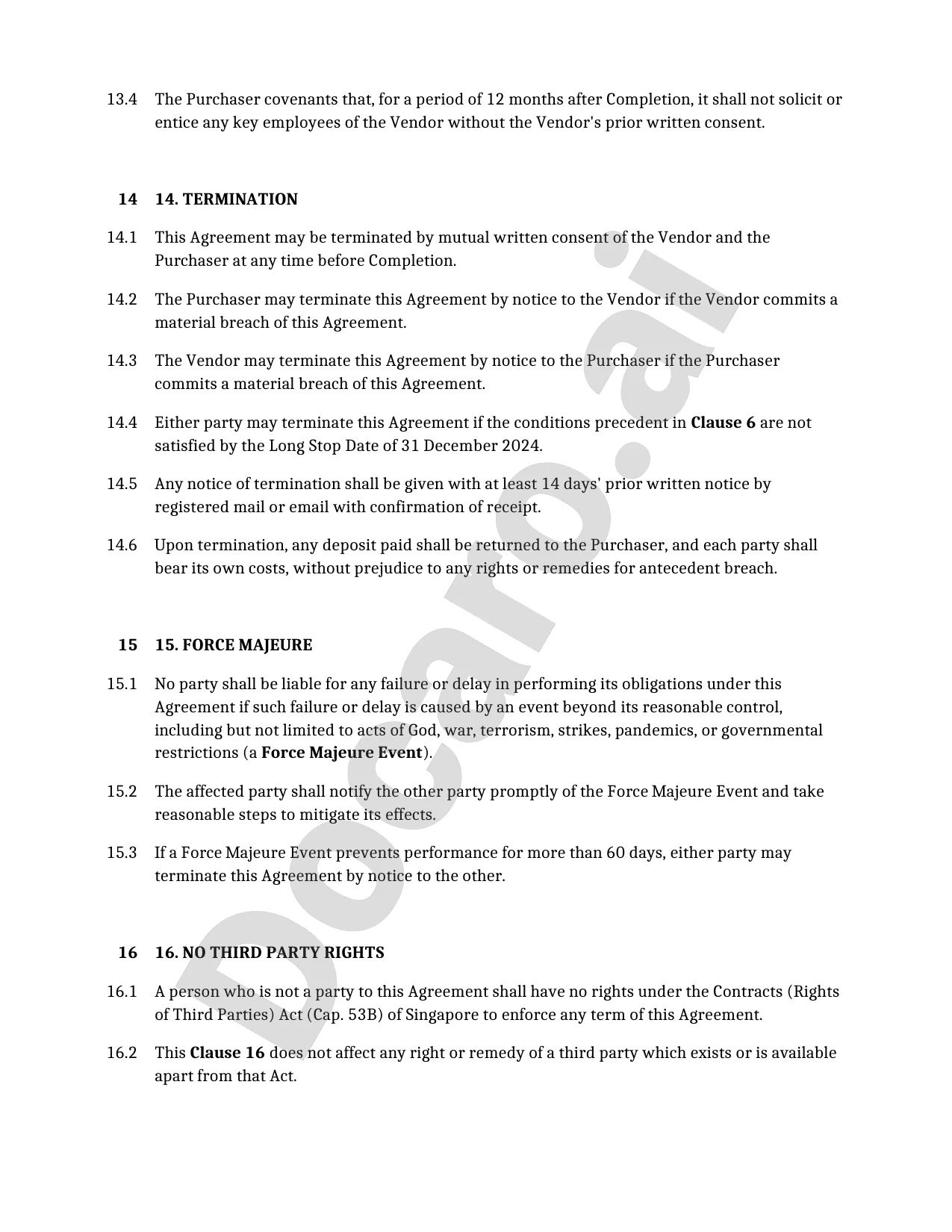
Limitations on indemnities in Singapore SPAs often exclude certain losses such as consequential damages or lost profits, capping exposure to foreseeable direct costs only.
Such exclusions safeguard both parties by promoting balanced risk allocation, avoiding the common trap of unlimited indemnity claims that could bankrupt one side in unforeseen disputes.
Exclusions from non-compete clauses typically permit activities unrelated to the sold business, like retaining personal investments in non-competitive sectors.
- These carve-outs protect sellers' future opportunities without undermining the deal's core protections.
- They prevent pitfalls like overly broad restrictions that lead to unenforceable clauses or post-sale litigation in Singapore courts.
For tailored Singapore SPA documents, consider using Docaro's AI-generated legal solutions to ensure precise, customized exclusions that fit your transaction's needs.
How can you get started with a Share Purchase Agreement in Singapore?
1
Consult a Lawyer
Engage a qualified Singapore lawyer specializing in corporate law to guide the Share Purchase Agreement process and ensure compliance with local regulations.
2
Conduct Preliminary Due Diligence
Identify key risks by reviewing the target company's financials, operations, and legal status to inform negotiation and valuation.
3
Review Company Documents
Examine essential documents like articles of association, shareholder agreements, and board minutes with your lawyer for any issues.
4
Draft Initial Terms Using Docaro
Use Docaro to generate bespoke initial terms for the agreement, tailored to the due diligence findings and legal advice.
You Might Also Be Interested In
A Contract Outlining The Terms For Consultancy Services Provided By An Independent Contractor.
A Contract Outlining The Rights, Obligations, And Governance Rules Among Shareholders Of A Company.
A Legal Contract Outlining The Terms, Rights, And Obligations Of Partners In A Business Partnership.
A Shareholders' Agreement Is A Contract Among Shareholders Of A Private Limited Company Outlining Ownership, Management, And Operational Rules.
A Constitution Is The Foundational Document For A Company In Singapore, Outlining Its Structure, Objectives, And Internal Rules.
A Constitution Is The Foundational Document Governing A Company's Internal Management, Operations, And Member Rights In Singapore.
A Formal Decision Or Action Approved By The Board Of Directors Of A Company, Documented In Writing.
A Founders' Agreement Is A Legal Contract Outlining The Rights, Obligations, And Roles Of Company Founders, Including Equity Distribution, Decision-making, And Dispute Resolution.
A Legal Contract Outlining The Terms For The Sale And Purchase Of Specific Assets Between Parties.
A Legal Contract Outlining The Terms For The Sale And Transfer Of A Business Entity, Including Assets, Liabilities, And Obligations.
A Legal Document That Alters The Terms Of An Existing Deed Or Agreement, Commonly Used In Property Or Inheritance Matters.
A Legal Contract Outlining The Terms For The Sale And Transfer Of Property Ownership From Seller To Buyer.
A Formal Receipt Is A Legal Document Issued By A Seller To A Buyer, Confirming Payment For Goods Or Services And Serving As Proof Of Transaction.
A Tax Invoice Is A Formal Document Issued By GST-registered Businesses In Singapore To Charge Customers For Goods Or Services, Including GST Details For Tax Compliance.
A Legal Contract Outlining The Terms Under Which One Party Provides Services To Another.
A Legal Document Used To Transfer Ownership Of Shares In A Company From One Party To Another, Typically Required For Registration With The Company.
A Document Outlining Measures To Protect Individuals, Especially Vulnerable Groups Like Children, From Harm And Abuse In Organizational Settings.
A Non-binding Document Outlining Preliminary Terms And Intentions For A Potential Business Deal Or Agreement.