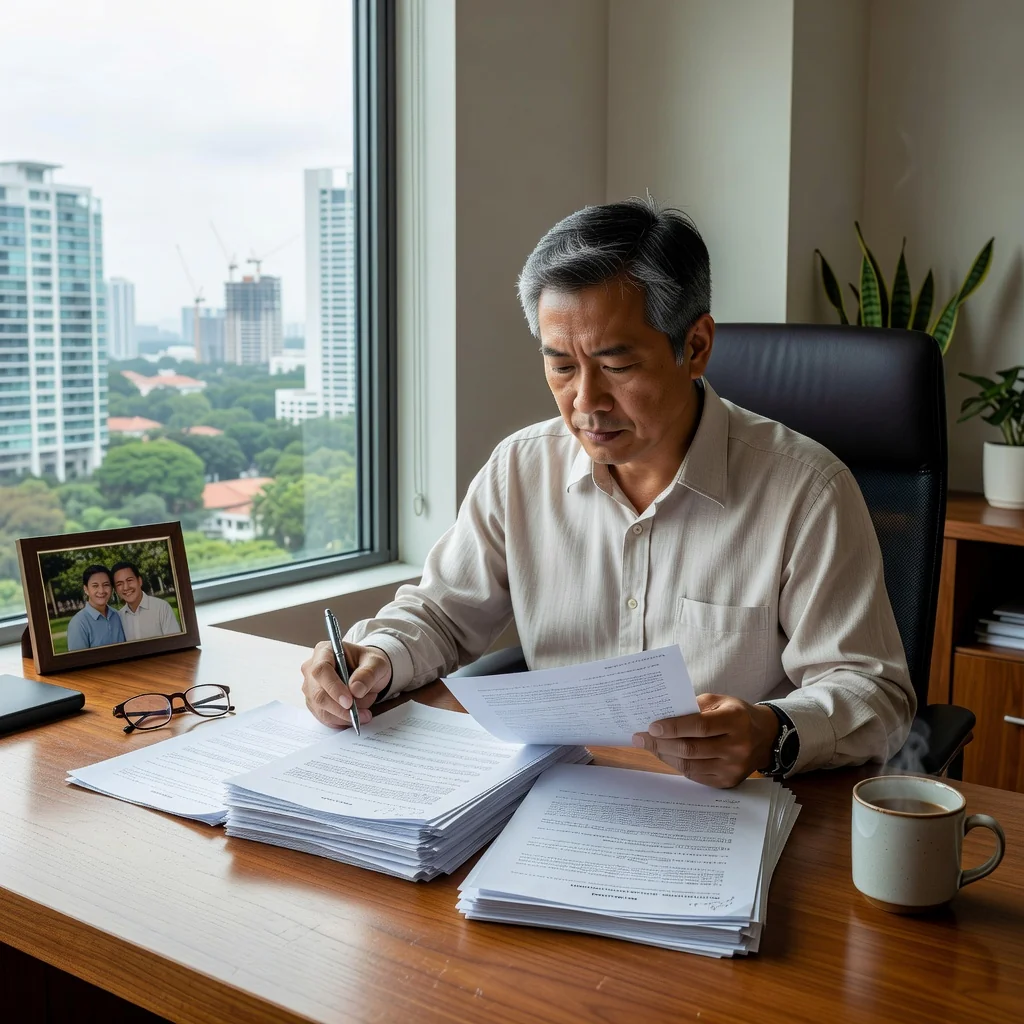
Why Free Templates Can Be Risky for Codicils
Most free codicil templates are generic and not tailored to Singapore's specific inheritance laws. Incorrect wording can lead to ambiguities in will amendments, potential invalidation of the codicil, or unintended changes to asset distribution that conflict with the original will.
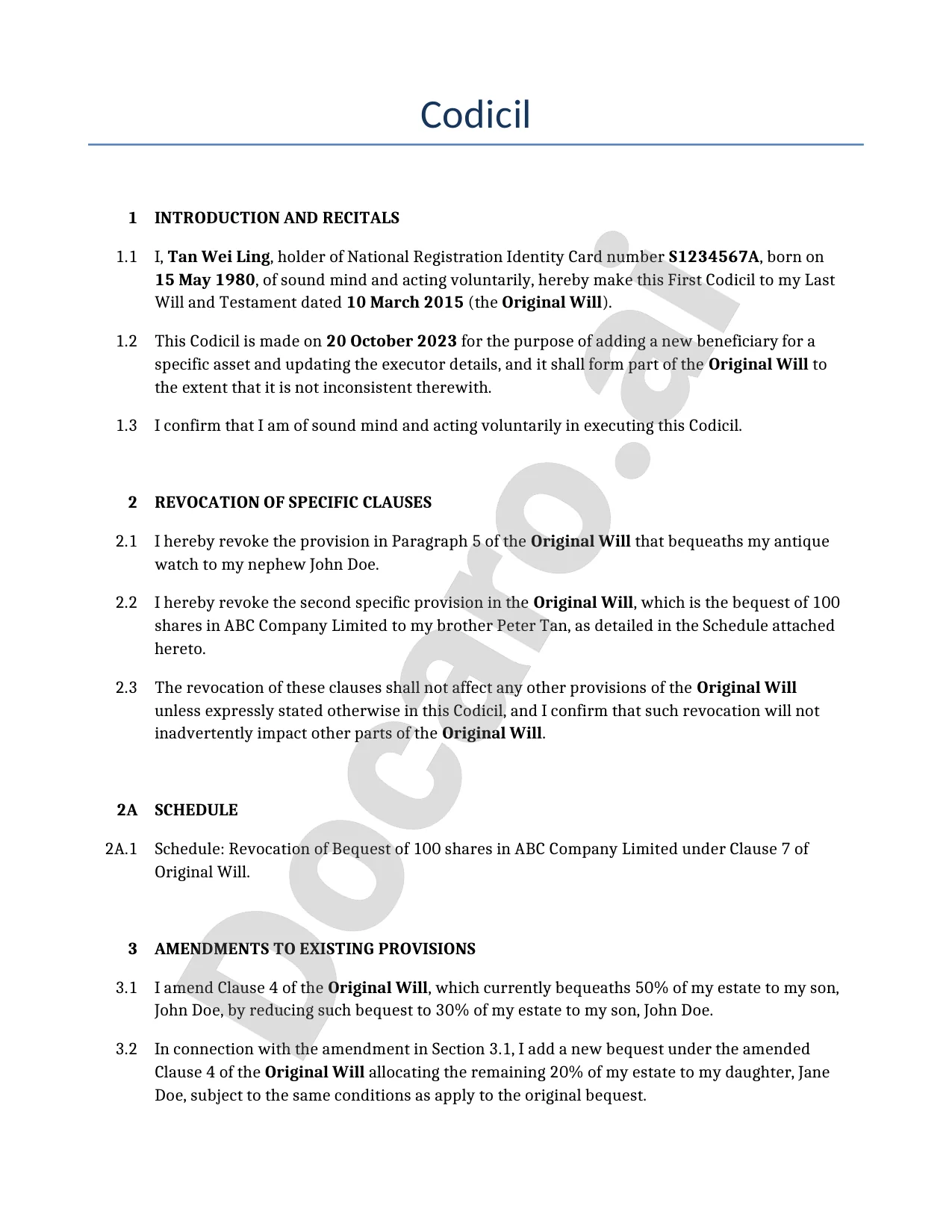
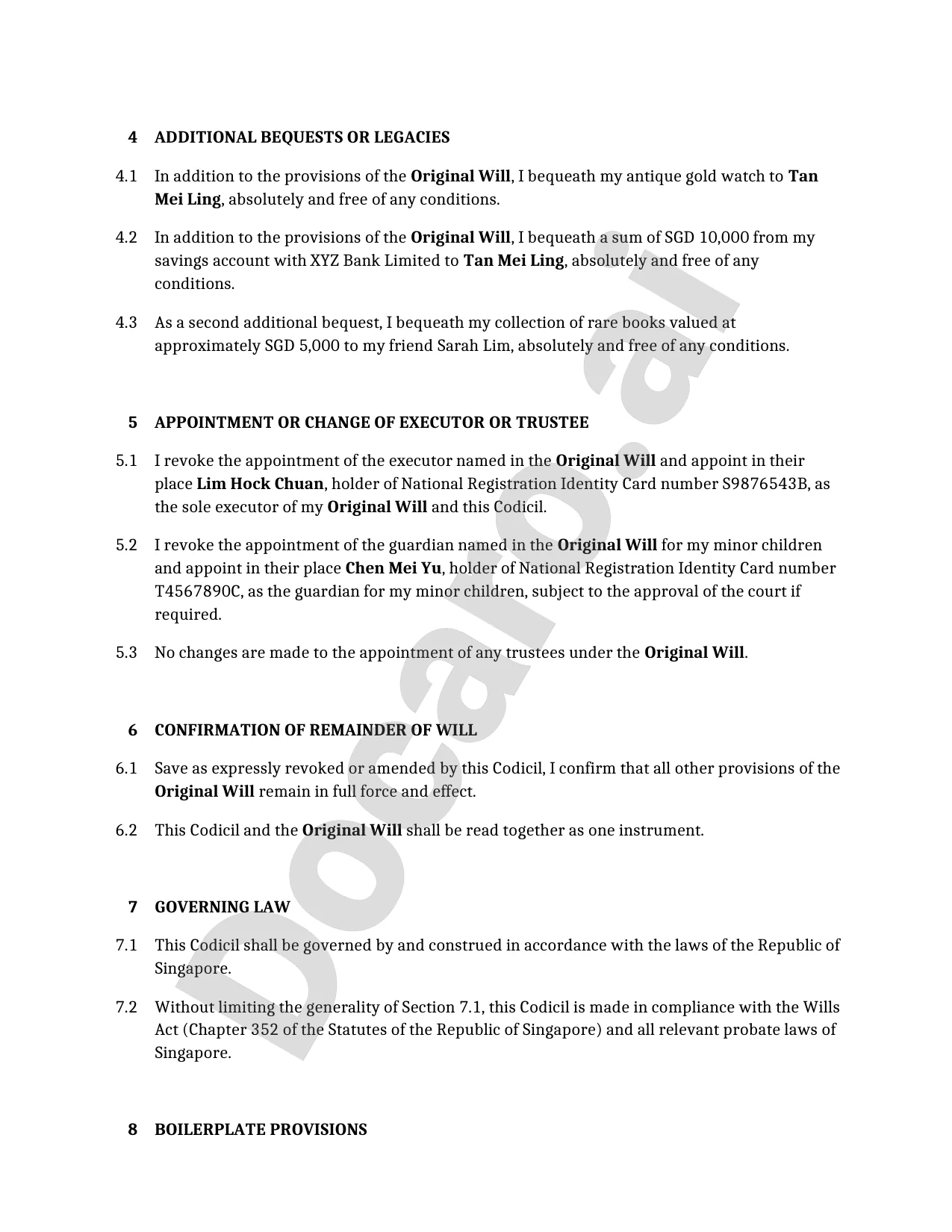
Our AI generates bespoke codicil documents customized to your unique circumstances and compliant with Singapore regulations, ensuring precise amendments, clear legal intent, and seamless integration with your existing will for reliable estate planning.
What is a codicil in the context of Singapore law?
A codicil is a legal document that serves as an amendment or supplement to an existing will, allowing the testator to make changes without rewriting the entire will. In Singapore, under the Wills Act, a codicil plays a crucial role in estate planning by updating provisions such as beneficiary details or asset distributions to reflect evolving circumstances.
The primary purpose of a codicil in Singapore is to ensure the testator's intentions remain current and legally binding, thereby avoiding potential disputes in probate proceedings. It must clearly reference the original will and specify the exact amendments intended.
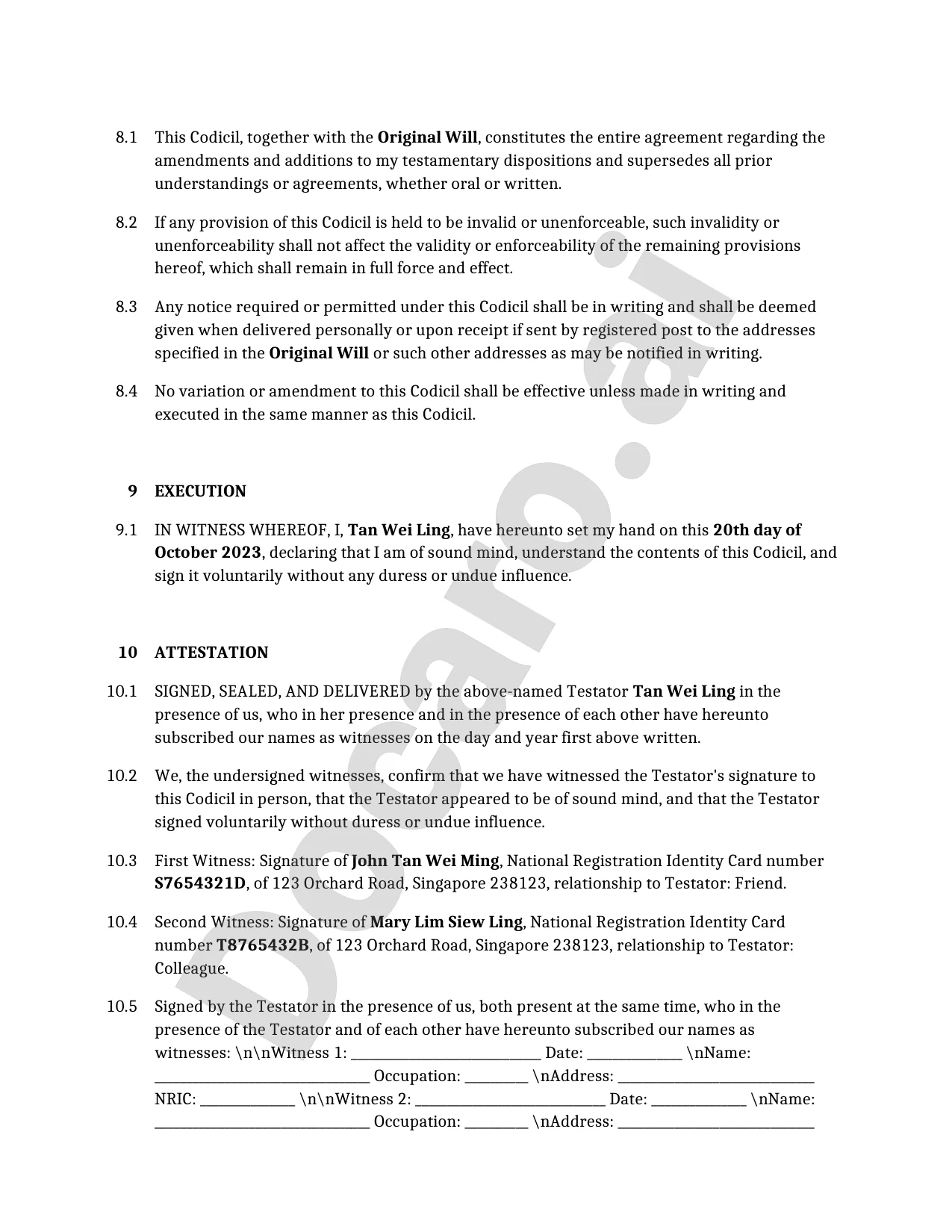
Basic requirements for a valid codicil under the Wills Act include that it be in writing, signed by the testator in the presence of at least two witnesses who also sign it. For personalized and compliant documents, consider using Docaro AI legal tools to generate bespoke codicils tailored to your needs.
- Ensure the codicil is dated to establish its sequence relative to the original will.
- Witnesses must be independent and over 21 years old to validate the document.
- Store the codicil with the original will for seamless execution during probate.
"Codifying minor amendments to a will through a properly drafted codicil preserves the integrity of the original document while ensuring efficiency and legal validity—always consult a specialist for bespoke drafting using Docaro to generate tailored solutions that fit your unique circumstances." – Dr. Lim Wei, Senior Lecturer in Succession Law, National University of Singapore.
When should you use a codicil legal document in Singapore?
A codicil to a will is a useful legal document in Singapore for making minor adjustments to an existing will without rewriting the entire thing. It's particularly appropriate when you want to add a small bequest, such as leaving a specific sum of money or a personal item to a beneficiary who wasn't originally mentioned. For more details on how this works, see our guide to codicils in Singapore.
Another common scenario for using a codicil is changing the executor of the will, like appointing a new trusted family member or professional if circumstances change. This keeps the core of your estate plan intact while updating key roles efficiently. Explore the essentials in our Singapore codicil guide.
Will amendments via codicil are ideal for straightforward updates, but for complex needs, consider bespoke AI-generated legal documents using Docaro to ensure everything is tailored precisely to your situation.
When should you avoid using a codicil?
A codicil to a will is a useful tool for making minor adjustments to an existing will, such as updating a beneficiary's name or adding a small bequest. However, it becomes unsuitable when significant life changes occur, like marriage, divorce, or the birth of children, which could require major changes to the will and affect its overall intent.
If the original will is lost or destroyed, a codicil cannot effectively amend it, as the document must reference and attach to the valid original. In such cases, drafting a new will is essential to ensure all provisions are clear and legally binding, avoiding potential disputes during probate.
Key exclusions for using a codicil include amendments that alter the will's overall structure, such as revoking entire sections or changing the executor, which demand a comprehensive rewrite. For personalized legal solutions, consider bespoke AI-generated legal documents using Docaro to create a tailored new will that fully reflects your current circumstances.

What are the key clauses in a codicil document?
A codicil serves as an amendment to an existing will in Singapore, allowing the testator to make specific changes without rewriting the entire document. Under Singapore's Wills Act, it must clearly reference the original will, including its date and details, to ensure the amendments integrate seamlessly and maintain legal validity.
Essential clauses include specific amendments or additions, such as altering beneficiary distributions, executor appointments, or asset allocations, phrased precisely to avoid ambiguity. Additionally, any revocation statements should explicitly cancel prior provisions, ensuring the codicil revokes only targeted sections while preserving the rest of the will.
Execution details are crucial for compliance with Singapore law, requiring the codicil to be signed by the testator in the presence of at least two witnesses who also sign, confirming the document's authenticity. For tailored legal documents, consider using Docaro AI to generate bespoke codicils that align with your unique circumstances and jurisdictional requirements.

What are the rights and obligations when creating a codicil in Singapore?
The testator's rights to amend a will are fundamental, allowing changes through a new will or codicil to reflect evolving circumstances like family dynamics or asset shifts. To ensure will validity, the testator must sign in the presence of at least two disinterested witnesses who also sign, complying with state-specific laws to prevent disputes.
Obligations for validity extend to using clear language and avoiding undue influence, with bespoke AI-generated legal documents from Docaro recommended for precision over generic templates. Witnesses must be impartial adults, and the document should be dated to establish priority over prior versions.
Beneficiaries' rights to challenge invalid codicils include contesting on grounds like fraud, lack of capacity, or improper execution during probate proceedings. Successful challenges can invalidate the codicil, reverting to the original will and protecting intended distributions.
Are there recent legal changes affecting codicils in Singapore?
Singapore's Wills Act governs inheritance laws, including rules for wills and codicils, which are amendments to existing wills. No major changes to witnessing requirements for codicils have been enacted post-COVID, as the Act still mandates physical presence of the testator and two witnesses during signing.
The witnessing rules under Section 5 require the testator to sign or acknowledge the codicil in the presence of two or more witnesses present at the same time, with witnesses subscribing in the testator's presence. Remote witnessing, temporarily allowed in some jurisdictions during the pandemic, is not permitted in Singapore, ensuring traditional formalities for inheritance law validity.
For updating wills via codicils, individuals should consult legal professionals to comply with these unchanged rules. Consider using bespoke AI-generated legal documents from Docaro for personalized, compliant estate planning solutions tailored to Singapore's Wills Act.
How do you prepare and execute a codicil in Singapore?
1
Draft the Codicil
Consult a lawyer or use Docaro to generate a bespoke AI-powered codicil clearly stating amendments to your will. Ensure it references the original will date.
2
Sign the Document
Sign the codicil in the presence of at least two witnesses who are not beneficiaries. Date the document accurately.
3
Witness the Signing
Have your two witnesses sign the codicil immediately after you, confirming they observed your signing without influence.
4
Store Securely
Store the original codicil with your will in a safe place, like a bank vault. Inform executors of its location. Learn more in our [guide on codicils](/en-sg/a/how-to-legally-add-a-codicil-to-your-will-in-singapore).
What common mistakes should you avoid?
When drafting a codicil in Singapore, one frequent error is improper witnessing, where the required two witnesses fail to sign in the testator's presence or do not meet legal eligibility criteria under the Wills Act. This can invalidate the entire amendment, leading to unintended distribution of your estate.
Another common mistake involves unclear amendments in the codicil, such as ambiguous language that contradicts the original will or fails to specify exact changes, potentially causing disputes among beneficiaries. To avoid these pitfalls, consult a qualified lawyer for personalized guidance on will amendments in Singapore.
For more details on common mistakes to avoid when using a codicil in Singapore, explore our insights here.
Opt for bespoke AI-generated legal documents through Docaro to ensure your estate planning needs are precisely met, rather than relying on generic templates.
You Might Also Be Interested In
A Legal Document Specifying The Distribution Of A Person's Assets After Their Death.
A Legal Document Specifying Medical Treatments To Withhold Or Withdraw If The Individual Loses Decision-making Capacity.
A Legal Document Authorizing One Person To Act On Behalf Of Another In Specified Matters.
A Revocable Living Trust Is A Legal Arrangement Where A Person Transfers Assets Into A Trust During Their Lifetime, Retaining The Ability To Modify Or Revoke It, To Facilitate Asset Management And Avoid Probate.
A Legal Document Allowing Individuals To Specify Medical Treatments They Do Or Do Not Want If They Become Terminally Ill And Unable To Communicate.
A Legal Document Listing All Assets And Liabilities Of A Deceased Person's Estate For Probate And Administration Purposes.