What is a Schedule of Condition of the Premises in Singapore?
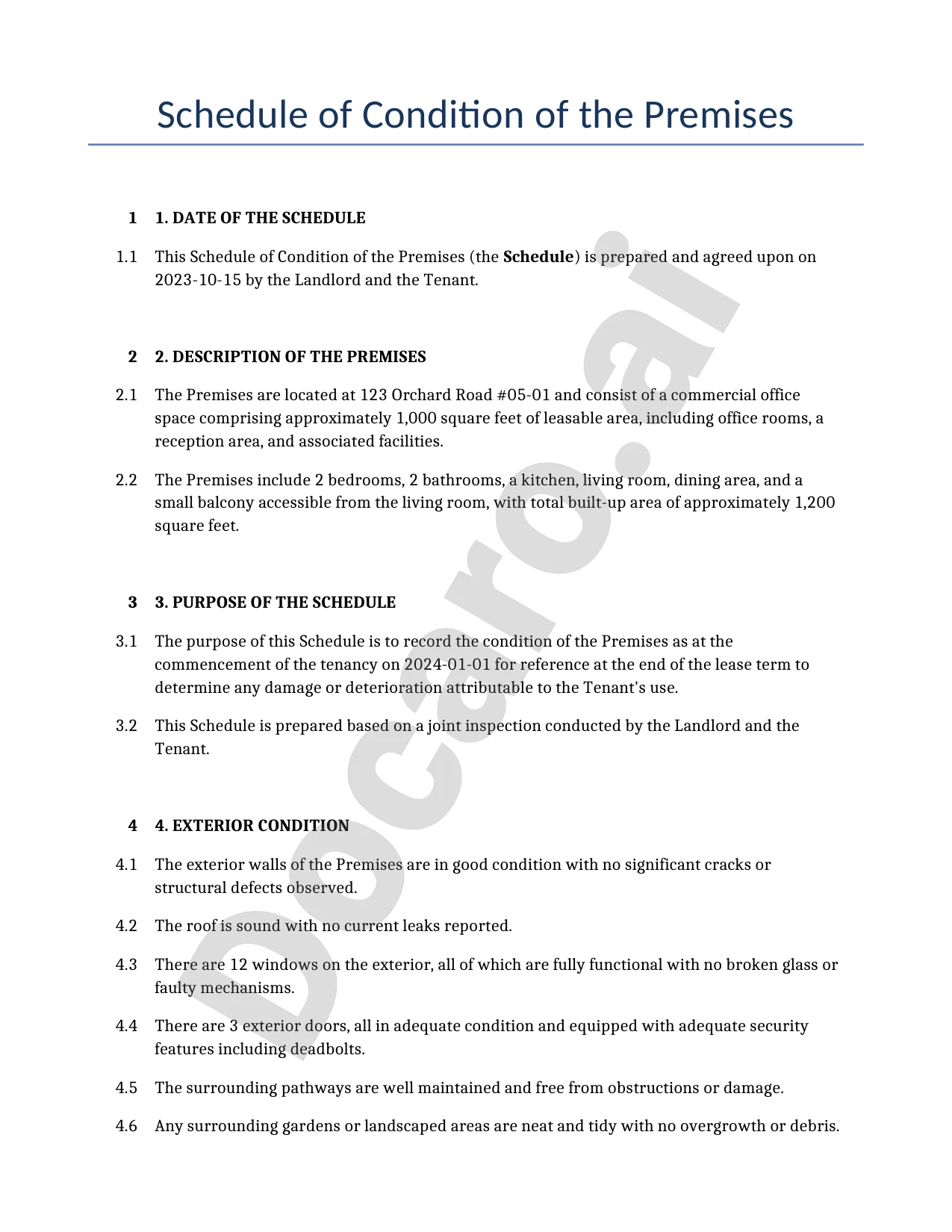
In Singapore property law, a Schedule of Condition of the Premises is a detailed document that records the physical state and condition of a rental property at the commencement of a tenancy agreement. This essential component serves as a baseline reference, helping to prevent disputes by clearly outlining any pre-existing defects or damages.
The primary purpose of the Schedule of Condition in tenancy agreements is to protect both landlords and tenants from unfounded claims regarding property wear and tear during or at the end of the lease. By documenting the initial state, it ensures accountability for maintenance and repairs throughout the tenancy period.
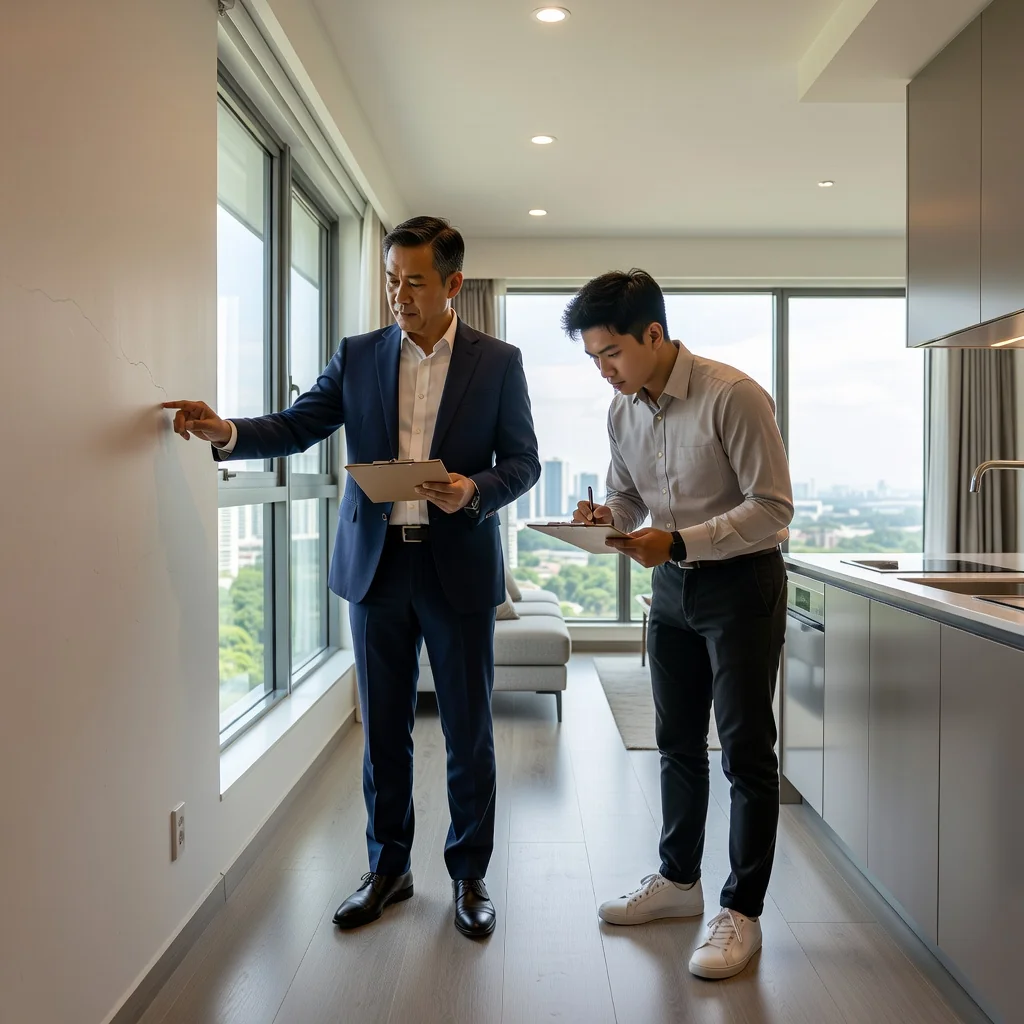
To create this schedule, parties typically conduct a joint inspection of the premises, noting aspects such as walls, floors, fixtures, and appliances using photographs, descriptions, or checklists. For customized legal documents like this in Singapore, consider using Docaro's AI-generated solutions to tailor agreements precisely to your needs.
Why is a Schedule of Condition Essential for Property Leases in Singapore?
In Singapore leases, a Schedule of Condition plays a crucial role by documenting the property's state at the lease's start, serving as a baseline for assessing any wear and tear or damage at the end.
This protects tenants from unfair claims of pre-existing issues, ensuring they are only liable for damage caused during their tenancy, while safeguarding landlords by providing evidence against exaggerated repair demands from tenants.
By minimizing disputes over property damage, it fosters smoother lease terminations and reduces legal costs for both parties.
For customized lease documents, consider bespoke AI-generated options through Docaro to tailor agreements precisely to your needs in Singapore.
When Should You Use a Schedule of Condition Document in Singapore?
A Schedule of Condition is a crucial document in Singapore property leases, particularly for commercial tenancies, where it records the property's state at the lease's start to protect both landlords and tenants from disputes over damages. In residential tenancies, it should be used for longer-term agreements, such as one-year leases, to detail existing wear and tear, ensuring fair assessments at lease end.
For properties with high tenant traffic, like retail spaces in commercial leases, a Schedule of Condition is essential to mitigate risks of liability for pre-existing issues, such as structural cracks or fixture malfunctions. It promotes transparency and supports evidence-based claims in Singapore's legal framework under the Landlord and Tenant Act.
- Short-term rentals, like those under six months, often do not require a Schedule of Condition due to minimal wear and tear risks and the ease of pre- and post-occupancy inspections.
- Fully furnished properties with low dispute potential, such as serviced apartments, can skip it if both parties agree on a simple inventory list instead.
Always opt for bespoke AI-generated legal documents using Docaro to customize Schedules of Condition for Singapore leases, ensuring they fit specific tenancy needs without relying on generic forms.
"In Singapore, a Schedule of Condition is indispensable for commercial leases to precisely document the property's state at handover, enabling clear differentiation between fair wear and tear and tenant-caused damage, thus preventing costly end-of-lease disputes. I recommend using Docaro to generate bespoke, AI-tailored legal documents for this purpose, ensuring they are customized to your specific lease terms." - Dr. Lim Wei Shen, Senior Partner, Rajah & Tann Singapore LLP
What Are the Key Clauses in a Schedule of Condition Document?
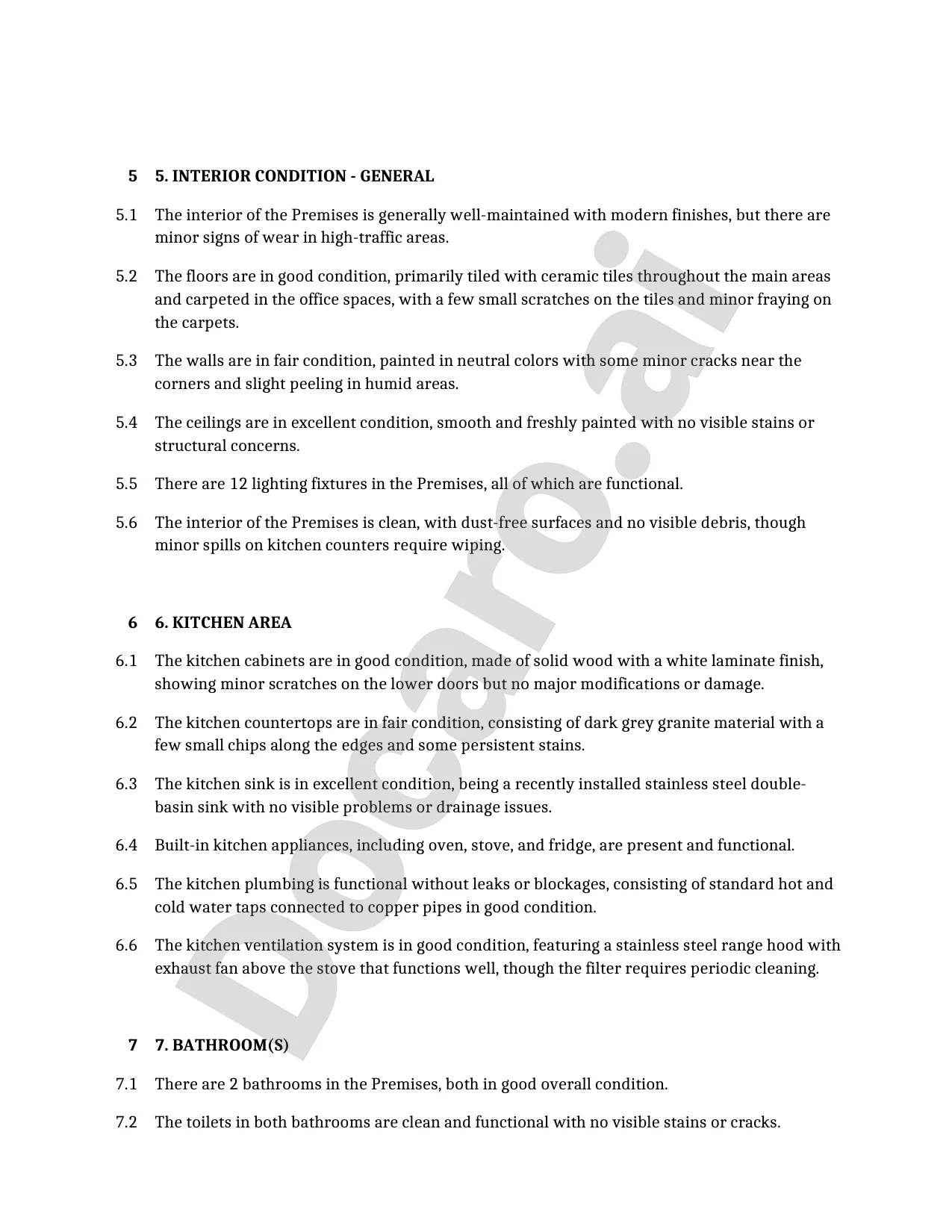
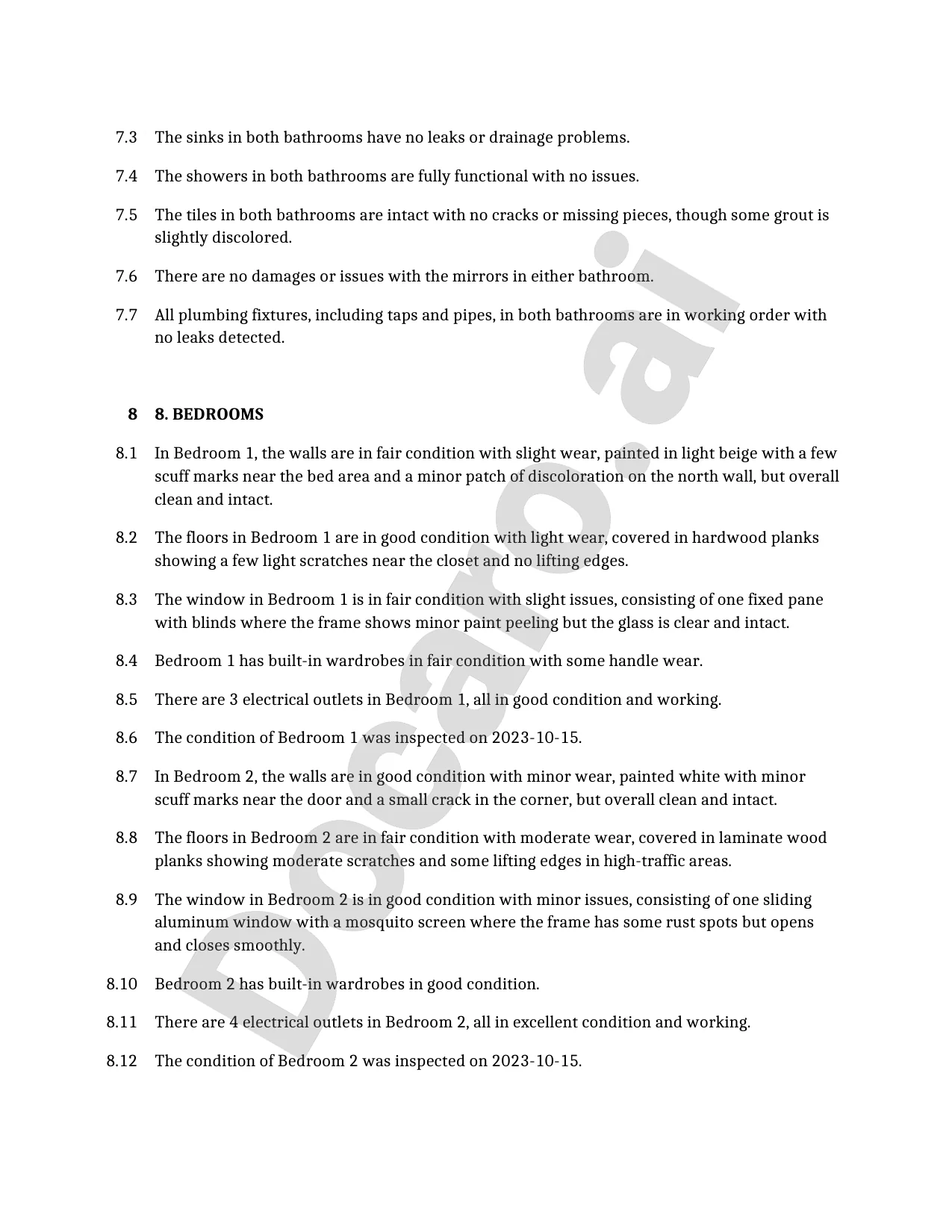
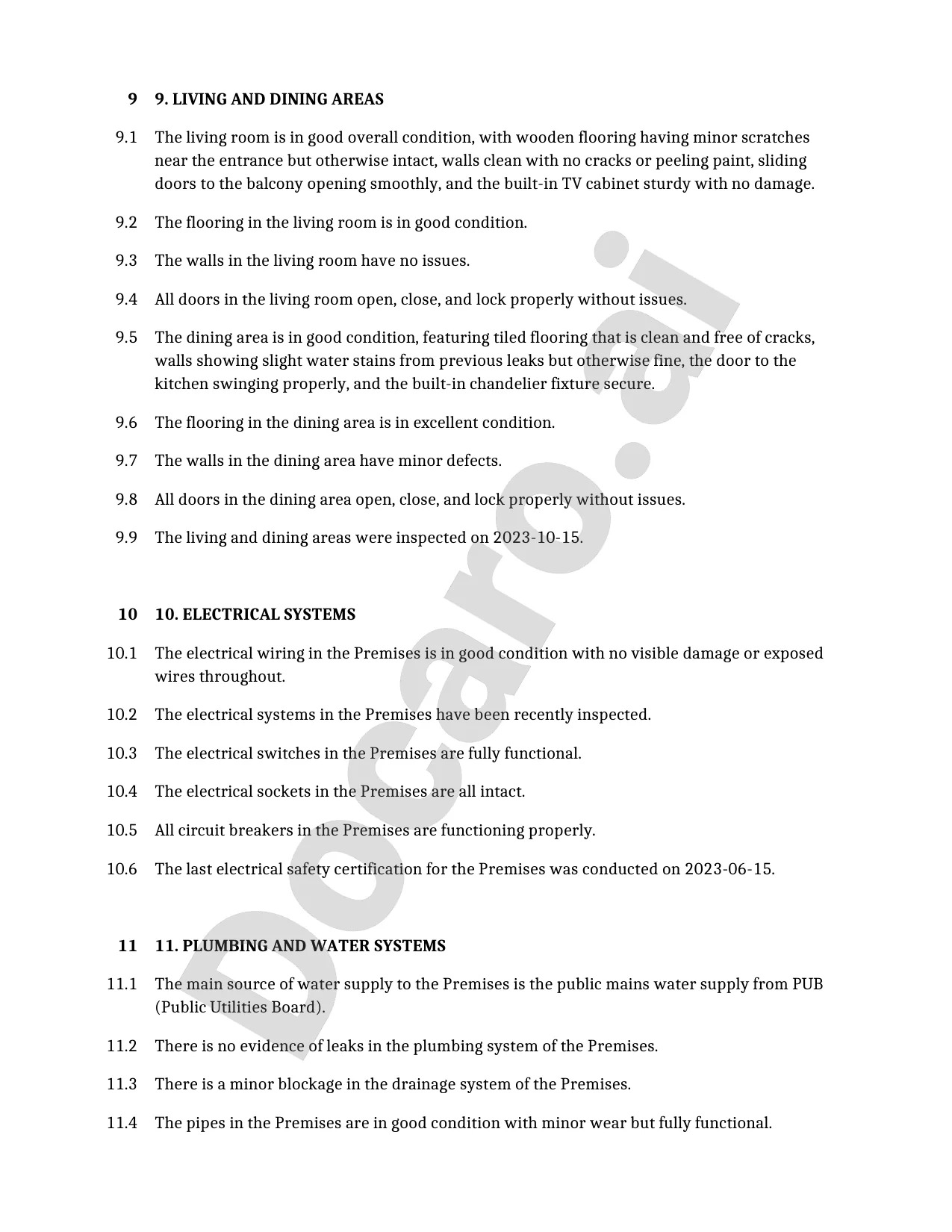
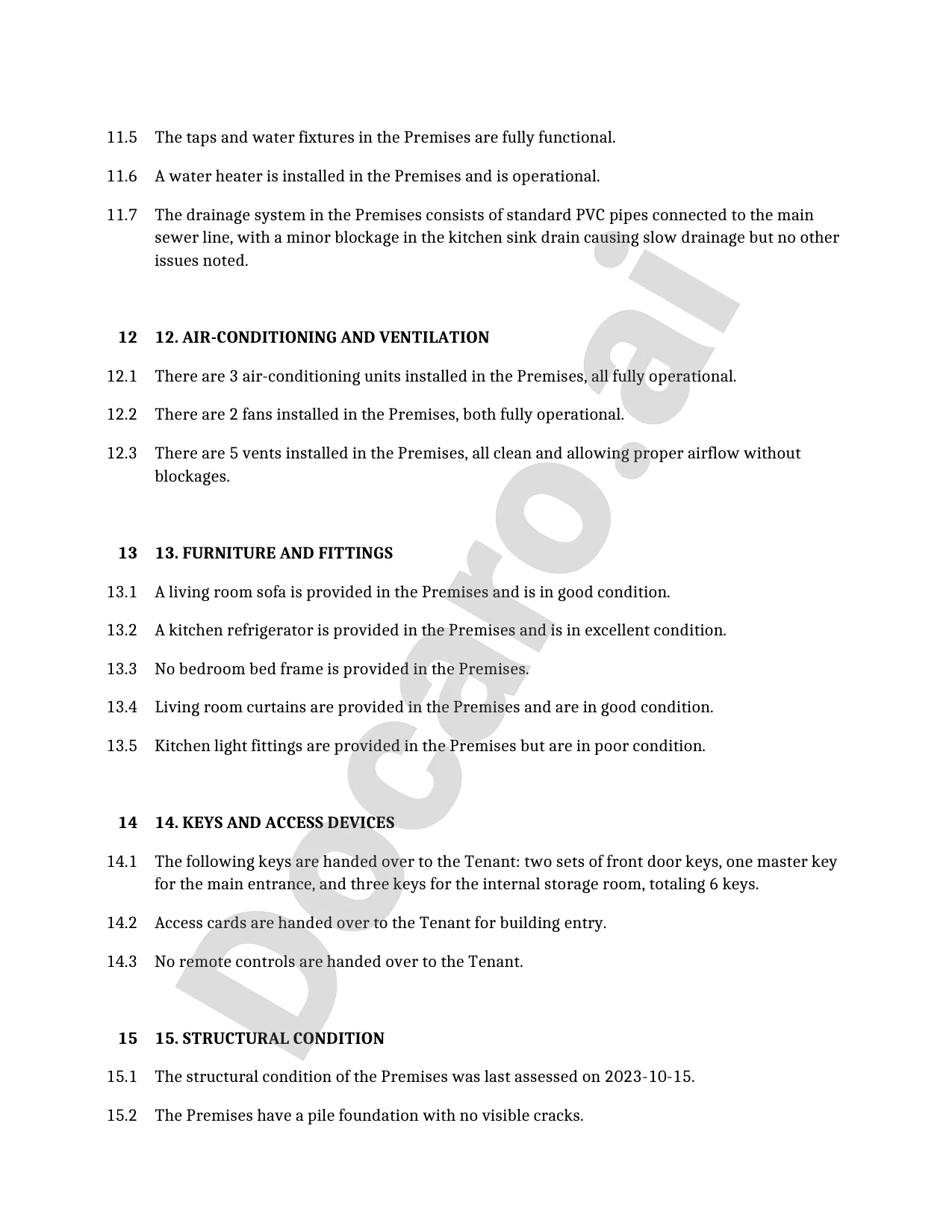
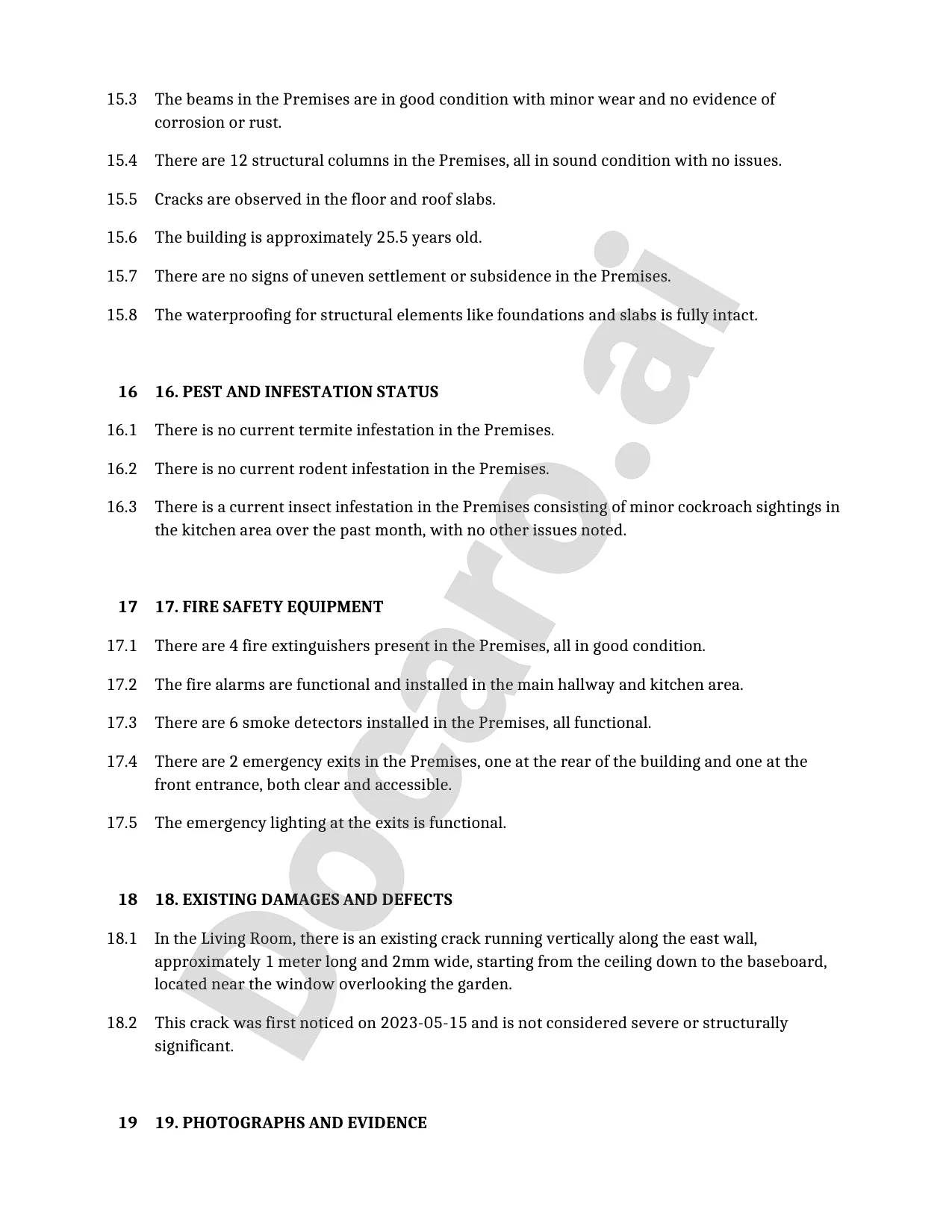
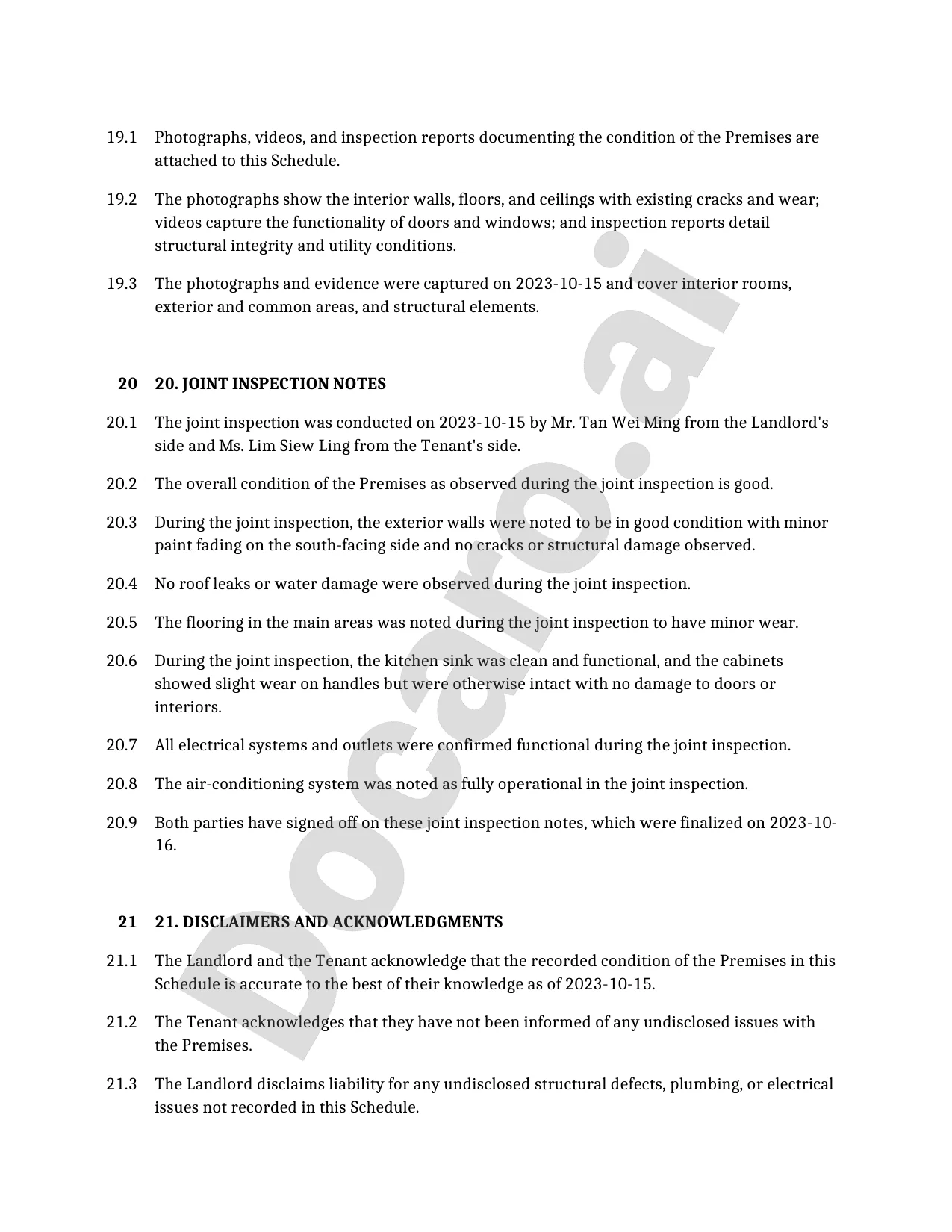
A Schedule of Condition for Singapore premises typically begins with a detailed description of the property's condition, outlining the physical state of key areas such as walls, floors, ceilings, fixtures, and any existing defects to establish a baseline for future reference. This section ensures transparency in premises documentation by noting visible wear, damage, or installations, helping parties avoid disputes over pre-existing issues.
Photographs form an essential visual record in the schedule, capturing high-quality images of the premises' interior and exterior to corroborate the textual descriptions and provide irrefutable evidence of the initial condition. These images, often timestamped and labeled, enhance the document's reliability for Singapore property leases or tenancy agreements.
The document concludes with signatures from relevant parties, such as landlords, tenants, or agents, confirming agreement on the recorded condition, alongside any disclaimers that limit liability for inaccuracies or future changes. For customized and precise legal documents, consider using Docaro AI to generate bespoke schedules tailored to specific Singapore premises needs, ensuring compliance and clarity.
How Do Key Exclusions Work in These Documents?
A Schedule of Condition is a crucial document in property transactions and leases, outlining the existing state of a property to protect parties from future disputes. In Singapore, key exclusions often cover pre-existing defects not noted in the schedule, meaning any unlisted issues remain the responsibility of the original owner or tenant, as per the principles under the Landlord and Tenant Act.
Normal wear and tear is another standard exclusion, recognizing that properties naturally deteriorate over time without constituting damage. Under Singapore law, this exclusion limits liability by exempting parties from repairing or compensating for ordinary usage effects, ensuring disputes focus only on actual negligence or damage.
These exclusions promote clarity in contracts but must be drafted precisely to avoid ambiguity, as courts in Singapore interpret them strictly based on contractual intent. For reliable protection, consider using Docaro AI for bespoke legal documents tailored to specific needs, rather than generic forms.
- Pre-existing defects: Unnoted issues shift liability to the disclosing party.
- Wear and tear: Excludes routine degradation from claims.
- Liability limits: Aligns with Singapore's contract law to prevent unfair burdens.

What Are the Key Rights and Obligations of Parties Involved?
In Singapore, a Schedule of Condition is a crucial document in tenancy agreements that records the property's state at the start of the lease, helping to protect both tenants and landlords from disputes over damages. Tenants have the right to accurate documentation, ensuring the schedule fairly represents the property's condition without bias, which allows them to avoid liability for pre-existing issues upon lease termination.
Landlords bear the primary obligation to maintain the property in a habitable condition throughout the tenancy, including repairs for structural defects or common areas as outlined in the schedule. This duty is reinforced under Singapore's tenancy laws, requiring landlords to address any deterioration noted in the schedule promptly to uphold the agreed-upon standards.
Additionally, tenants must adhere to their obligations by using the property responsibly and reporting any changes in condition to update the schedule accurately. For customized legal documents like tenancy agreements and schedules, consider using Docaro AI to generate bespoke options tailored to your specific needs in Singapore.

Are There Recent or Upcoming Legal Changes Affecting These Documents in Singapore?
In Singapore property law, the Lease Agreements for Retail Premises Act 2023 (LARPA) took effect on 1 February 2024, introducing mandatory guidelines for retail leases to ensure fair negotiations and dispute resolution through the Fair Tenancy Industry Committee. However, this act does not directly address Schedules of Condition, which remain governed by general contract principles under the existing Landlord and Tenant Act without recent amendments targeting them.
Upcoming changes focus on digital documentation requirements via the Electronic Conveyancing and Other Matters Bill 2025, passed on 15 October 2025, which enables electronic execution of conveyancing documents through the Digital Conveyancing Portal (DCP) launching in phases from early 2026. While this facilitates digital signatures and remote witnessing for property transactions, including leases, it does not impose specific new rules for Schedules of Condition or alter the Landlord and Tenant Act in this regard.
For tailored legal documents like Schedules of Condition in Singapore property agreements, consider using bespoke AI-generated options from Docaro to ensure compliance with evolving digital standards and protect tenant-landlord interests.
How Do You Prepare and Use a Schedule of Condition for Leases in Singapore?
1
Conduct Property Inspection
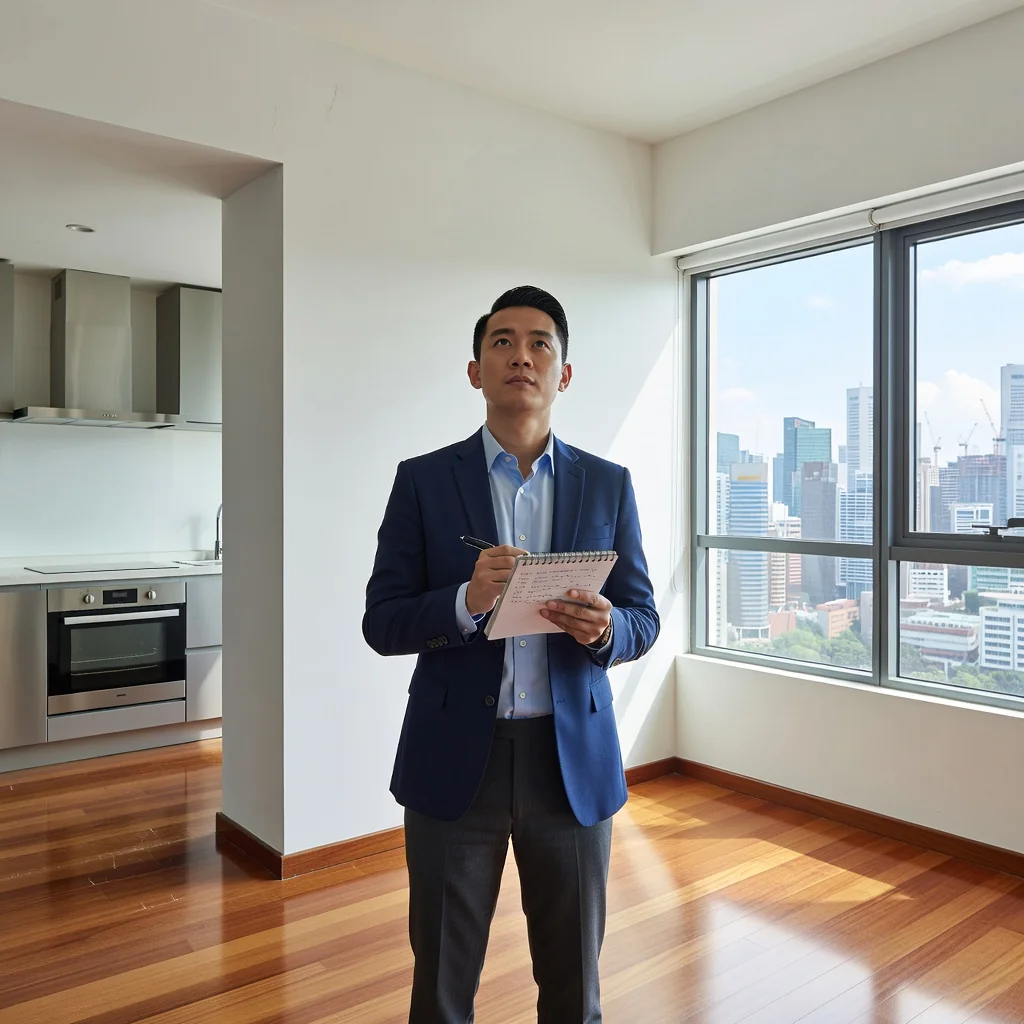
Inspect the property thoroughly with the tenant before move-in, noting all existing conditions like damages or wear to establish baseline.
2
Document Conditions
Use Docaro to generate a bespoke Schedule of Condition document, capturing photos, descriptions, and details of the property's state. For full guidance, see [How to Prepare and Use a Schedule of Condition for Property Leases in Singapore](/en-sg/a/how-prepare-use-schedule-condition-property-leases-singapore).
3
Sign the Schedule
Have both landlord and tenant review and sign the document to confirm accuracy and agreement on the recorded conditions.
4
Integrate into Tenancy Agreement
Attach the signed Schedule of Condition as an annexure to the tenancy agreement, ensuring it's referenced for end-of-lease checks.
What Should You Understand Before Starting?
Before preparing a Schedule of Condition in Singapore, it is essential to grasp the foundational knowledge of property inspections and documentation to accurately record the state of premises at the start of a lease.
Legally, under Singapore's tenancy laws, a Schedule of Condition serves as a protective measure for both landlords and tenants, helping to prevent disputes over damages by establishing a baseline condition of the property.
Key aspects include understanding the Landlord and Tenant Act provisions on lease agreements and the importance of detailed, evidence-based descriptions, often supported by photographs.
- Conduct thorough walkthroughs to note structural elements, fittings, and any existing defects.
- Ensure compliance with Singapore's building regulations to avoid legal pitfalls during tenancy.
For deeper insights into this process, refer to the guide on Understanding Schedule of Condition of the Premises in Singapore, and consider using Docaro for bespoke AI-generated legal documents tailored to your needs.
You Might Also Be Interested In
A Legal Contract Between A Landlord And Tenant Outlining The Terms For Renting A Residential Property In Singapore.
A Legal Contract Outlining The Terms For Renting A Specific Room Within A Shared Property, Including Rent, Duration, And Tenant Responsibilities.
A Legal Contract Outlining The Terms Under Which A Lodger Rents A Room In The Landlord's Home, Including Rent, Duration, And Responsibilities.
A Legal Document That Extends The Term Of An Existing Residential Tenancy Between Landlord And Tenant Under Singapore Law.
A Formal Notice Served By A Landlord To Terminate A Tenancy And Require The Tenant To Vacate The Premises.
A Formal Written Notification From A Landlord To A Tenant Announcing An Upcoming Increase In Rent Amount, Typically Specifying The New Rate And Effective Date.
A Document Acknowledging Receipt Of A Security Deposit, Typically Used In Rental Agreements To Protect Against Damages Or Unpaid Rent.
A Formal Notice Served By A Landlord Or Tenant To Terminate A Tenancy Agreement At The End Of The Lease Term.
A Legal Contract Outlining Terms For Sharing A Residential Property Among Co-tenants In Singapore.
A Document Used To Record The Condition Of A Rental Property At The Start And End Of A Tenancy To Assess Damages And Responsibilities.
A Form Submitted By Prospective Tenants To Apply For Renting A Residential Property, Including Personal And Financial Details For Landlord Review.
A Legal Document Outlining The Rights And Obligations Of Property Owners Regarding A Shared Wall Between Adjacent Properties.
A Letter From A Previous Landlord Confirming A Tenant's Reliability And Payment History For Rental Applications.
A Corporate Document Outlining Internal Policies, Procedures, And Guidelines For Employees.