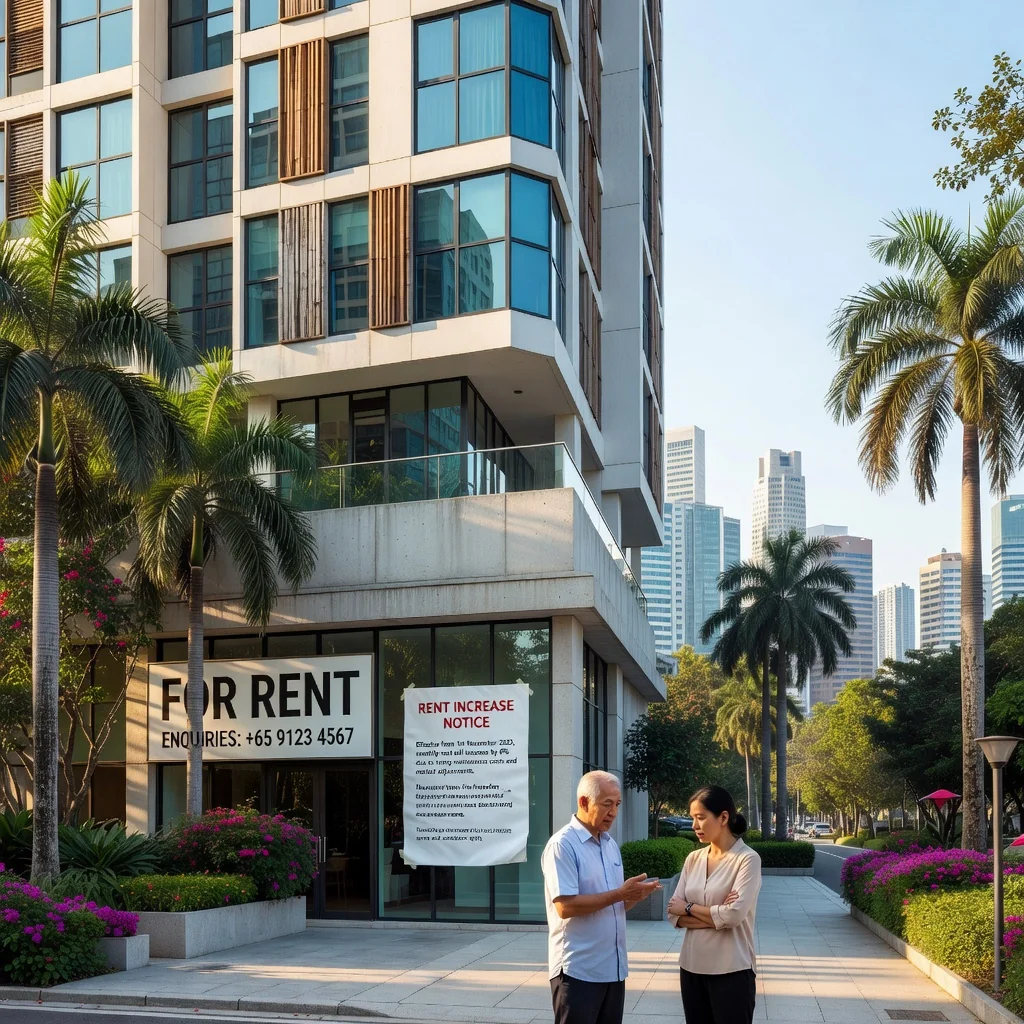
Why Free Templates Can Be Risky for Rent Increase Notice
Free rent increase notice templates often fail to comply with Singapore's tenancy laws, such as the requirements under the Control of Rent Act or standard lease terms. Using generic wording may not specify the correct notice period, calculation method for increases, or required details like property address and tenant information, potentially leading to invalid notices, disputes, or legal challenges from tenants.
Our AI-generated bespoke rent increase notice is customized to your specific situation, incorporating Singapore-specific legal requirements, accurate notice periods, precise increase calculations, and all necessary details for validity and enforceability, ensuring a professional and compliant document tailored to your tenancy agreement.
What is a Rent Increase Notice in Singapore?
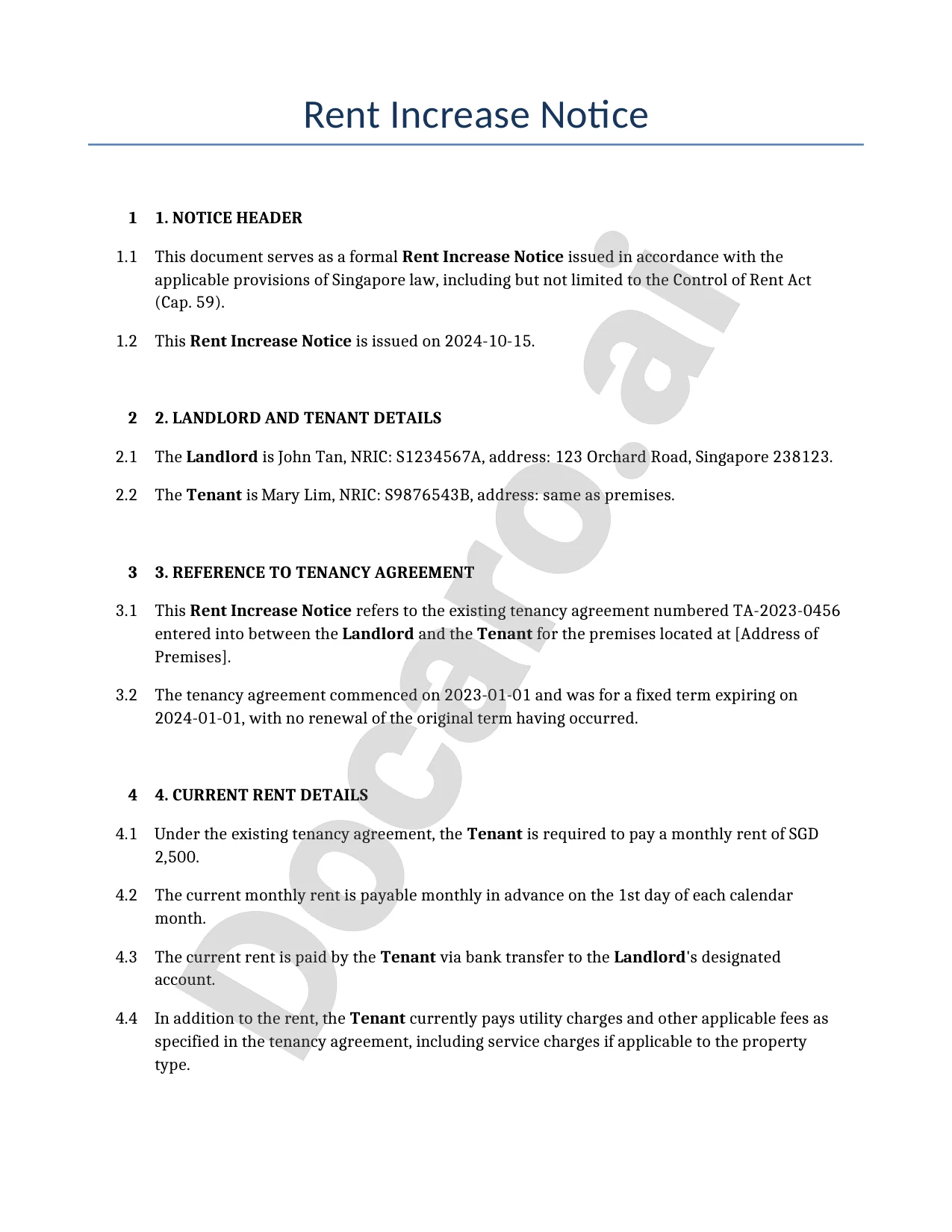
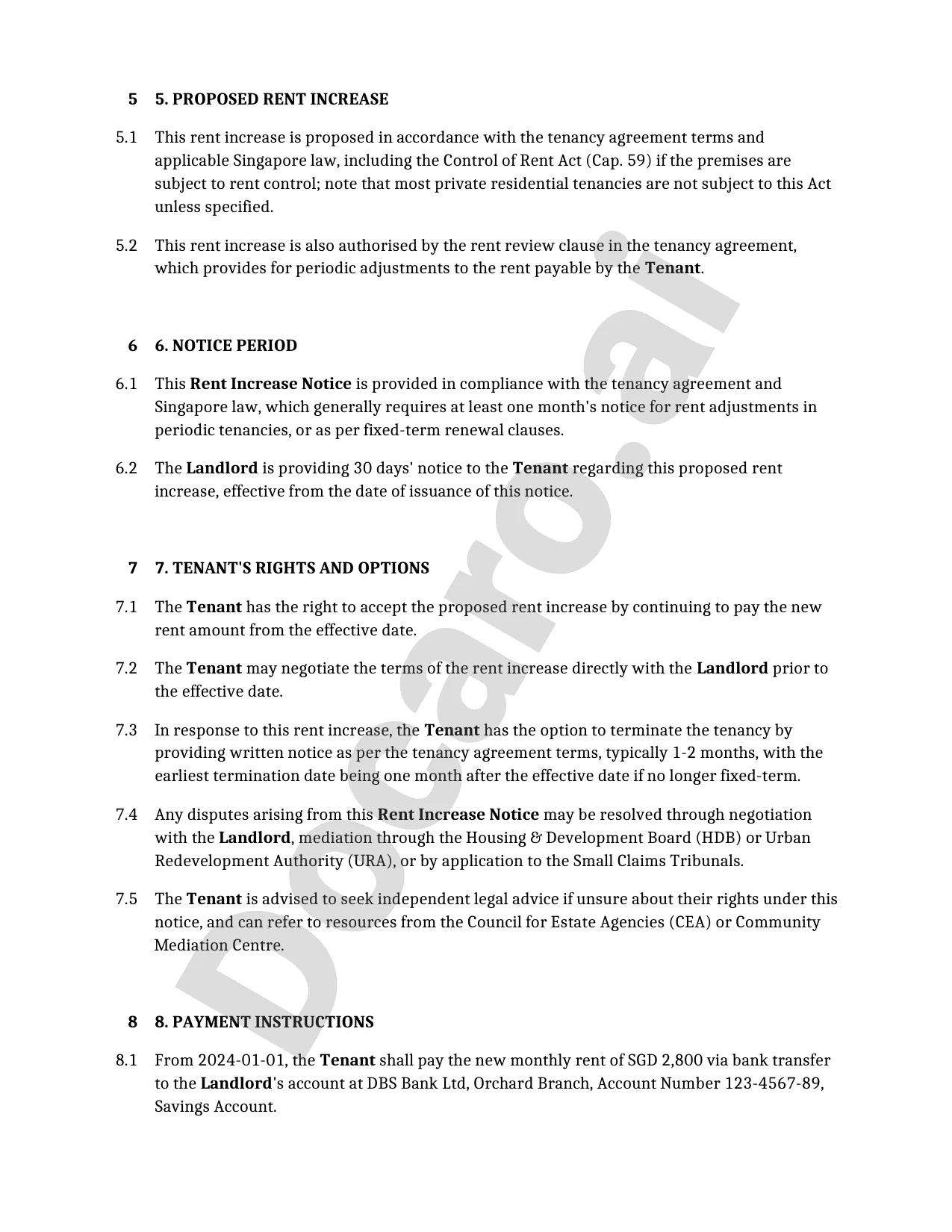
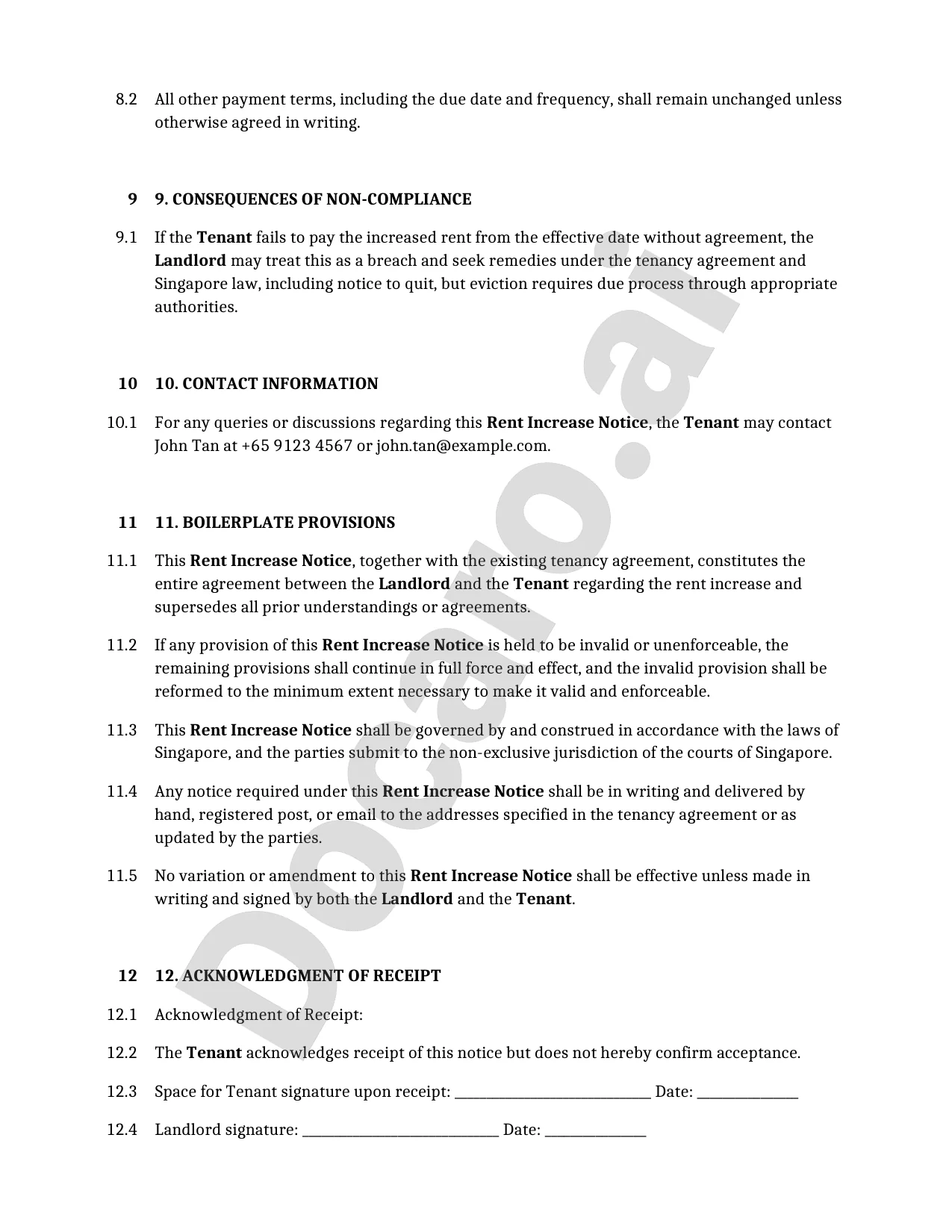
A rent increase notice in Singapore is a formal written communication from the landlord to the tenant, informing them of an upcoming adjustment in rental payments under the tenancy agreement. This notice ensures transparency and allows tenants sufficient time to prepare for the change.
Under Singapore's tenancy laws, primarily governed by the Control of Rent Act and common law principles, rent increases are typically allowed only after the initial lease term or upon mutual agreement, unless specified otherwise in the contract. The notice must be served at least one to two months in advance, depending on the lease terms, to comply with legal requirements and prevent disputes.
The primary purpose of the rent increase notice is to maintain a fair and predictable rental market, protecting both parties from abrupt financial shocks. Tenants can review the notice for legality and seek advice if needed, while landlords must justify increases based on market rates or lease clauses.
- Always consult a legal professional for specific tenancy advice in Singapore.
- For customized legal documents like rent increase notices, consider using Docaro AI generation to ensure they fit your unique situation.
Why is it important for landlords and tenants?
In Singapore, rent increase notices are crucial for landlords as they provide a formal mechanism to communicate upcoming changes in rental payments, ensuring tenants are not caught off guard by sudden financial adjustments.
For tenants, these notices offer essential protection by mandating advance warning periods, typically one to two months, allowing time to budget or negotiate, thereby promoting transparency in rental agreements.
Legally, under the Control of Rent Act and related guidelines from the Council for Estate Agencies, proper notices ensure compliance with the law, preventing disputes and potential penalties for non-adherence.
To maintain fairness and accuracy, landlords should opt for bespoke AI-generated legal documents using Docaro, tailored to specific tenancy details rather than generic forms, enhancing overall reliability in Singapore's rental market.
When should you use a Rent Increase Notice?
In Singapore, landlords must issue a rent increase notice to tenants when adjusting rental rates, ensuring compliance with the tenancy agreement and legal requirements. This is particularly essential after lease renewal, where market conditions may warrant higher rents to reflect current values.
Another key scenario involves market adjustments, such as rising property values or inflation, allowing landlords to propose increases during periodic reviews outlined in the lease. Proper notice helps maintain transparency and avoids disputes, fostering positive landlord-tenant relations.
For guidance on drafting this notice, refer to our step-by-step guide on writing a rent increase notice in Singapore. Consider using Docaro for bespoke AI-generated legal documents tailored to your specific situation.
When should you avoid using one?
In Singapore, a rent increase notice should not be issued during a fixed-term lease without an explicit clause permitting such adjustments. Landlords must honor the agreed rent until the lease expires, as unilateral increases violate tenancy agreements and could lead to disputes under the Control of Rent Act.
Protected tenancies under the Control of Rent Act also prohibit rent increase notices, safeguarding long-term tenants from excessive hikes. These tenancies, often in older properties, limit increases to controlled rates, ensuring stability for vulnerable renters.
Key exclusions include government-subsidized housing like HDB flats under public rental schemes, where rent adjustments follow strict guidelines from the Housing and Development Board. Similarly, executive condominiums and certain private developments with subsidies restrict increases to maintain affordability for eligible residents.
- Fixed-term leases without increase clauses prevent mid-term hikes.
- Protected tenancies cap adjustments under law.
- Subsidized HDB and government housing follows regulatory limits.
For reliable tenancy documents, consider bespoke AI-generated legal papers via Docaro platform to ensure compliance with Singapore's rental laws.
What are the key clauses in a Rent Increase Notice?
In Singapore, a valid rent increase notice must clearly state the new rent amount to ensure tenants understand the financial change. It should also specify the effective date of the increase, typically aligning with the tenancy agreement's terms or a minimum notice period of one month.
Additionally, the notice requires a reference to the tenancy agreement, such as the clause permitting rent adjustments, to provide legal context. For detailed guidance, refer to Legal Requirements for Rent Increase Notices Under Singapore Tenancy Laws.
To comply with Singapore tenancy laws, landlords should use bespoke AI-generated legal documents via Docaro for customized notices. This approach ensures all essential clauses are accurately included and tailored to specific situations.
"Clear and accurate clauses in rent increase notices are essential to prevent disputes and ensure enforceability. Landlords should use bespoke AI-generated legal documents via Docaro to tailor notices precisely to their agreements and local regulations." – Dr. Elena Vasquez, Property Law Professor
What are the rights and obligations of landlords and tenants?
In Singapore rent increase laws, landlords hold the right to raise rent at the end of a lease term or during periodic tenancies, provided they adhere to the tenancy agreement and issue proper notice. Tenants, in turn, are obligated to pay the increased rent once notified, but they can negotiate or seek clarification on the adjustment to ensure fairness.
The notice period for rent increases in Singapore is typically one calendar month for monthly tenancies, allowing tenants sufficient time to review and respond. Landlords must provide this notice in writing, detailing the new rent amount and effective date, to comply with the Control of Rent Act or standard lease terms.
Upon receiving a rent increase notice, tenants in Singapore have options such as accepting the change, negotiating a lower increment with the landlord, or terminating the tenancy by giving reciprocal notice without penalty. For disputes, tenants can approach the HDB or CEA for mediation, ensuring their rights under landlord-tenant obligations are protected.
- Key landlord obligation: Justify increases based on market rates without discrimination.
- Key tenant right: Refuse unreasonable hikes by ending the lease early if notice aligns.
- Recommendation: Use bespoke AI-generated legal documents via Docaro for customized tenancy agreements.
How can tenants respond to a notice?
In Singapore, tenants facing a rent increase notice have key rights under the tenancy agreement and the Control of Rent Act for protected tenancies. You can review the notice for proper delivery, timing, and justification, typically requiring at least one month's advance notice for periodic tenancies.
To respond effectively, consider negotiating directly with your landlord to discuss the increase or propose alternatives like a shorter-term lease. If negotiation fails, seek mediation through the Community Mediation Centre or the Tribunal for the Unfit Buildings or the Small Claims Tribunal for disputes under S$20,000.
Avoid common pitfalls in rent increase processes, such as inadequate notice or unfair hikes, by reading about them in this guide on common mistakes to avoid when issuing a rent increase notice in Singapore.
For personalized support, opt for bespoke AI-generated legal documents using Docaro to draft negotiation letters or mediation requests tailored to your situation, ensuring compliance with Singapore's tenancy laws.
Are there any recent or upcoming legal changes affecting Rent Increase Notices?
Singapore's tenancy laws remain stable with no recent or upcoming changes to rent increase notices under the Control of Rent Act, which primarily applies to pre-1989 tenancies and limits increases to specific cases like improvements or tax hikes.
The broader rental market operates without rent control legislation, allowing landlords to propose increases based on market rates during lease renewals, typically requiring at least one month's notice as per standard tenancy agreements.
COVID-19 related extensions, such as those under the Temporary Measures Act for rental relief, ended in 2021 with no further renewals impacting residential rent notices.
For reliable tenancy agreements, consider bespoke AI-generated legal documents using Docaro to ensure compliance with current Singapore rental laws.
1
Review Tenancy Agreement
Examine the tenancy agreement to confirm rent review clauses, increase permissions, and notice periods required under Singapore law.
2
Calculate New Rent Amount
Determine the appropriate rent increase based on market rates, agreement terms, and legal limits like the 8% cap for non-landed properties.
3
Generate Notice with Docaro
Use Docaro to create a bespoke, AI-generated rent increase notice tailored to your tenancy details and compliant with Singapore regulations.
4
Issue and Deliver Notice
Serve the notice to the tenant via registered mail or hand delivery, ensuring it specifies the new rent, effective date, and reason.
You Might Also Be Interested In
A Legal Contract Between A Landlord And Tenant Outlining The Terms For Renting A Residential Property In Singapore.
A Legal Contract Outlining The Terms For Renting A Specific Room Within A Shared Property, Including Rent, Duration, And Tenant Responsibilities.
A Legal Contract Outlining The Terms Under Which A Lodger Rents A Room In The Landlord's Home, Including Rent, Duration, And Responsibilities.
A Legal Document That Extends The Term Of An Existing Residential Tenancy Between Landlord And Tenant Under Singapore Law.
A Formal Notice Served By A Landlord To Terminate A Tenancy And Require The Tenant To Vacate The Premises.
A Document Acknowledging Receipt Of A Security Deposit, Typically Used In Rental Agreements To Protect Against Damages Or Unpaid Rent.
A Legal Document Recording The State Of A Rental Property At The Start And End Of A Tenancy To Protect Both Landlord And Tenant From Disputes Over Damages.
A Formal Notice Served By A Landlord Or Tenant To Terminate A Tenancy Agreement At The End Of The Lease Term.
A Legal Contract Outlining Terms For Sharing A Residential Property Among Co-tenants In Singapore.
A Document Used To Record The Condition Of A Rental Property At The Start And End Of A Tenancy To Assess Damages And Responsibilities.
A Form Submitted By Prospective Tenants To Apply For Renting A Residential Property, Including Personal And Financial Details For Landlord Review.
A Legal Document Outlining The Rights And Obligations Of Property Owners Regarding A Shared Wall Between Adjacent Properties.
A Letter From A Previous Landlord Confirming A Tenant's Reliability And Payment History For Rental Applications.
A Corporate Document Outlining Internal Policies, Procedures, And Guidelines For Employees.