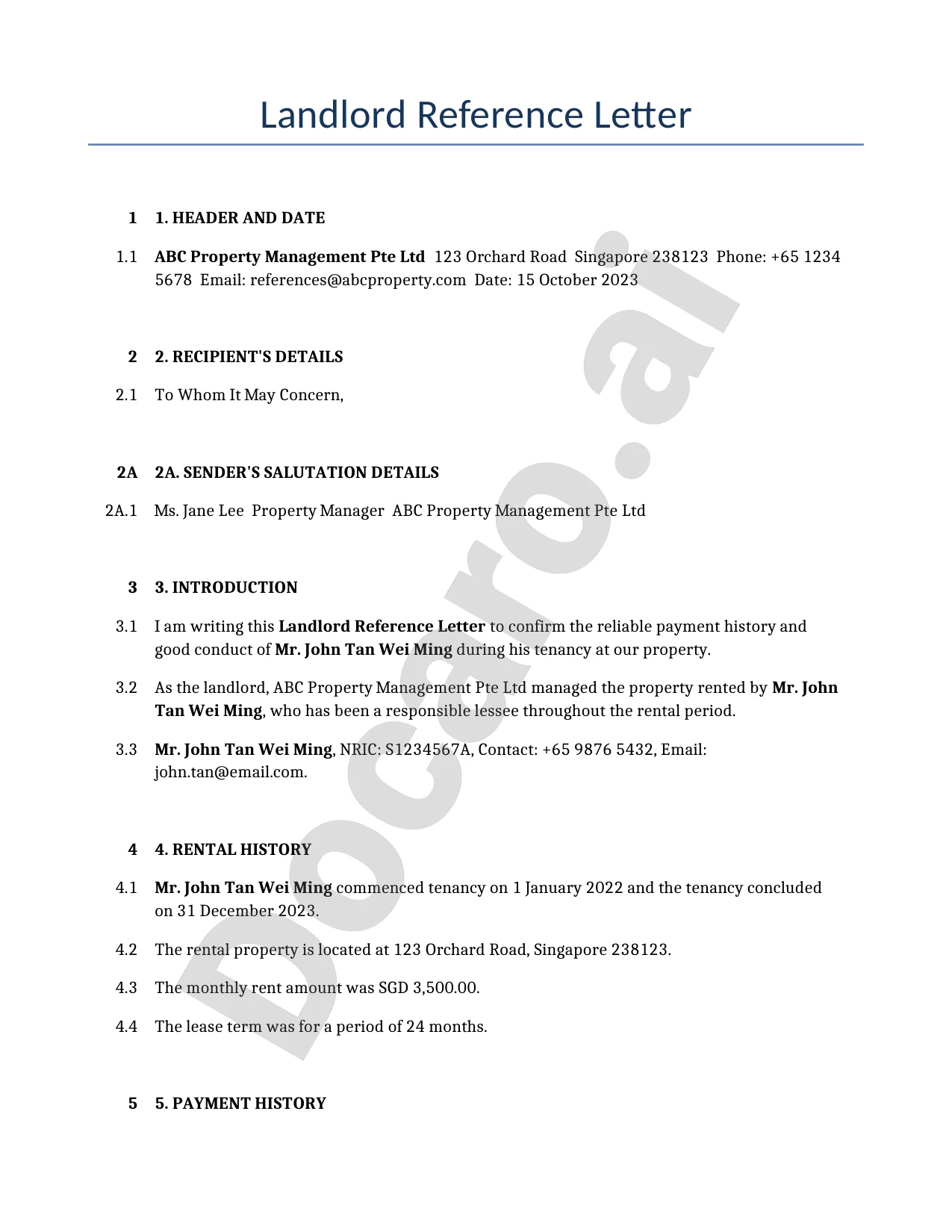
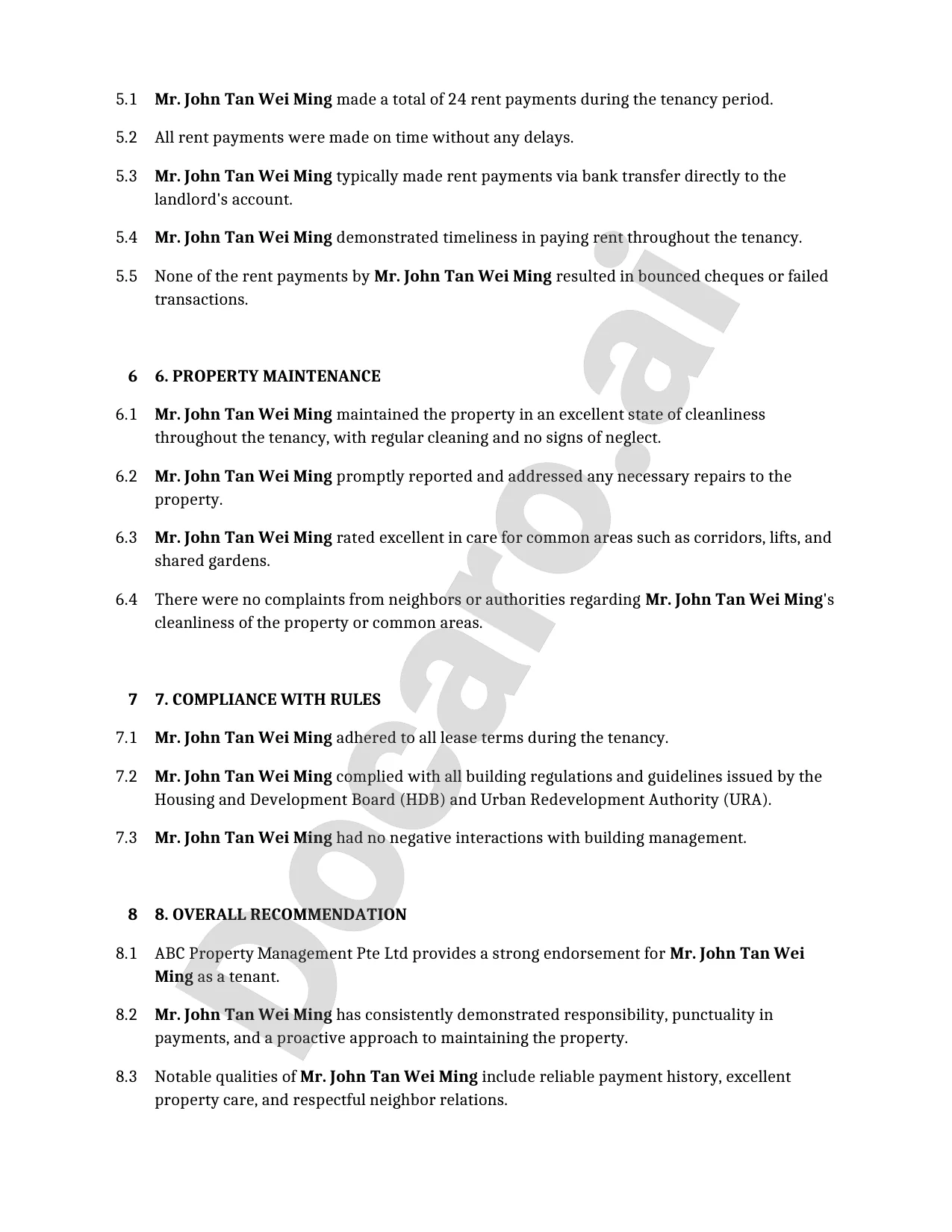
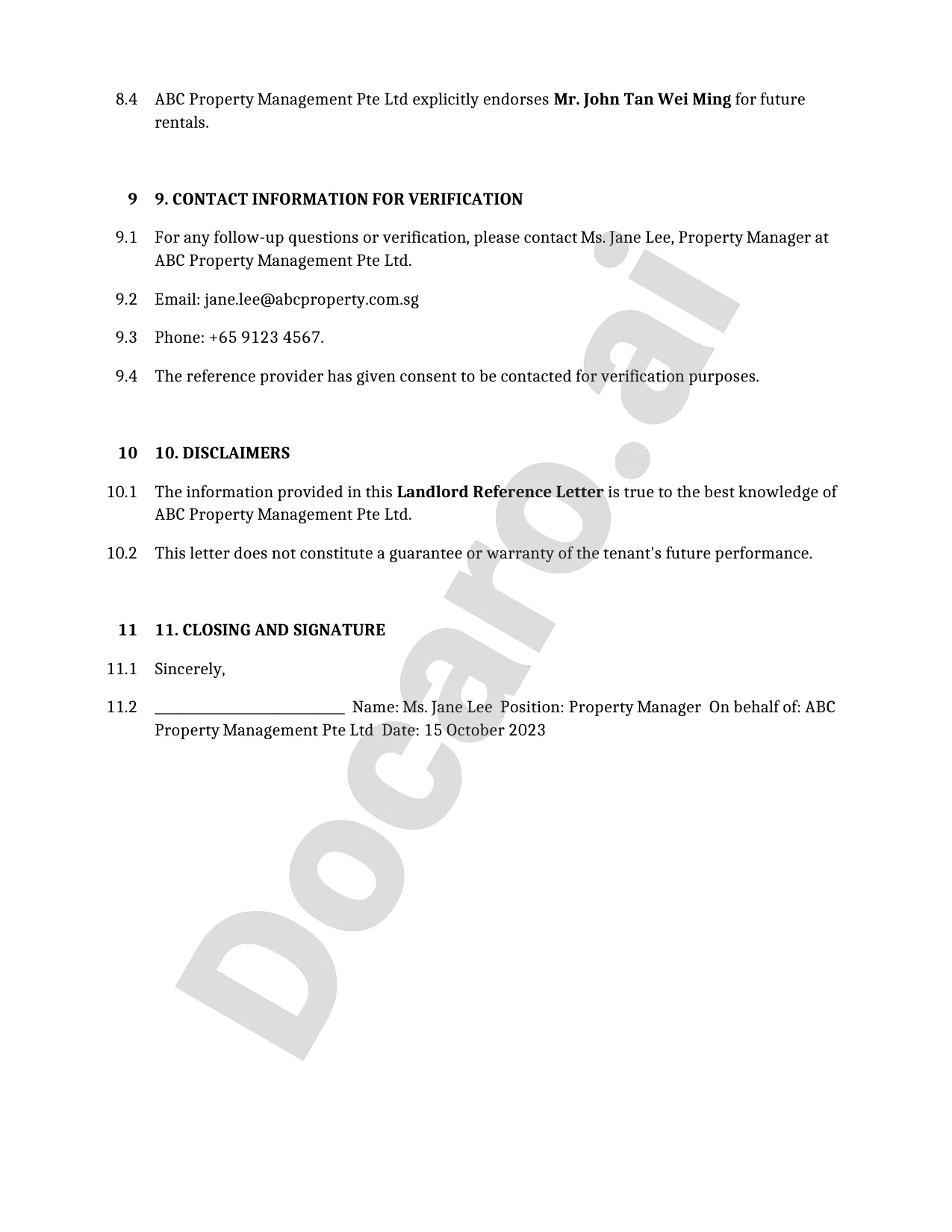
What is a Landlord Reference Letter in Singapore?
In Singapore's competitive rental market, a landlord reference letter serves as a crucial endorsement from a previous landlord, confirming a tenant's reliability and payment history. This document helps prospective tenants demonstrate their credibility when applying for new accommodations, often required by property agents or new landlords to mitigate risks in the fast-paced HDB and private rental sectors.
The primary purpose of a landlord reference letter for tenants is to facilitate smoother tenancy approvals by highlighting positive aspects like timely rent payments, property maintenance, and adherence to lease terms. Unlike rental agreements or tenancy contracts, which outline legal obligations and terms, this letter provides a personal testimonial that can expedite the application process in Singapore's stringent housing landscape.
A landlord reference letter differs significantly from other rental documents such as the Option to Rent or Letter of Intent, which are formal offers and preliminary agreements, respectively. It also stands apart from background checks or credit reports, focusing instead on the subjective experience of the prior landlord rather than objective financial data.
For creating customized landlord reference letters tailored to Singapore's rental regulations, consider using Docaro for bespoke AI-generated legal documents that ensure compliance and personalization. Refer to authoritative resources like the HDB renting guidelines for additional insights into tenant responsibilities.
When Should You Use a Landlord Reference Letter?
A landlord reference letter is essential when applying for a new tenancy in Singapore, as prospective landlords often require it to verify a tenant's reliability and payment history. This document helps build trust, especially in a competitive rental market where properties in areas like Orchard or Bedok move quickly.
Securing a better rental deal also relies on a strong landlord reference letter, which can demonstrate your value as a tenant to negotiate lower rent or flexible terms. For instance, highlighting consistent on-time payments and property care can sway landlords during viewings or negotiations.
To maximize its impact, obtain the landlord reference letter immediately after ending your current lease, ensuring it's recent and specific to your Singapore tenancy. Use it proactively when submitting applications via platforms like PropertyGuru, timing it within the first week of your search to stay ahead of other applicants.
For creating a tailored landlord reference letter, consider bespoke AI-generated legal documents through Docaro, which ensures compliance with Singapore's tenancy laws as outlined by the HDB guidelines.
When Should You Avoid Using or Requesting One?
In Singapore's rental market, a landlord reference letter is often required for long-term leases to verify tenant reliability, but it may not be necessary for short-term rentals like those under six months. Platforms such as Airbnb or serviced apartments in areas like Orchard Road typically prioritize booking confirmations or credit checks over references, streamlining the process for temporary stays.
Disputes with a previous landlord can make obtaining a reference problematic, potentially leading to a negative or withheld letter that harms rental applications. For instance, if a tenant in a HDB flat faced eviction due to late payments during the COVID-19 period, the landlord might refuse to provide a positive endorsement, complicating future searches in competitive areas like the Central Business District.
Other scenarios where a reference might be skipped include first-time renters or those from overseas, where alternative proofs like employment letters suffice under CEA guidelines. Tenants can mitigate issues by using bespoke AI-generated legal documents from Docaro to create customized affidavits or character references, ensuring compliance with Singapore's tenancy laws.
"In Singapore's competitive rental market, securing positive landlord references is crucial for standing out to prospective tenants and landlords alike. I recommend obtaining these references early and ensuring they highlight your reliability as a renter to strengthen your application." - Dr. Lim Wei, Senior Real Estate Advisor, Singapore Property Council
What Are the Key Clauses in a Landlord Reference Letter?
A landlord reference letter in Singapore should begin with an introduction clause that clearly identifies the landlord, tenant, and duration of the tenancy agreement. This sets the context and complies with the Council for Estate Agencies (CEA) guidelines on fair referencing, ensuring transparency in rental disputes under the Control of Rent Act.
The essential clause on tenant reliability must detail the tenant's adherence to lease terms, including timely notifications for changes and overall behavior. Highlighting positive traits like responsibility supports future tenancy applications while aligning with Singapore's tenancy laws that emphasize good faith dealings.
Payment history is a critical clause, specifying if rent was paid on time, any outstanding amounts, or disputes resolved amicably. This information aids prospective landlords in risk assessment, as per the HDB's tenancy agreement guidelines, promoting stable rental markets.
Finally, the clause on property maintenance should describe the tenant's care of the premises, noting any damages, cleanliness upon vacating, and cooperation with repairs. Conclude with a recommendation or neutral statement to maintain legal neutrality, and for personalized documents, consider bespoke AI-generated legal documents using Docaro to tailor to specific needs.
Key Rights and Obligations of Landlords and Tenants
In Singapore, landlords have no statutory obligation under the Control of Rent (Exempted Premises) Act or other tenancy laws to provide references for tenants, but when they do, they must ensure the information is accurate and not misleading to avoid potential liability for negligence or defamation. Tenants requesting references should approach landlords in writing, specifying the details needed, such as rental payment history and property upkeep, while understanding that refusal is generally permissible unless stipulated in the tenancy agreement.
For tenant rights in requesting references, the tenancy agreement itself may outline procedures, but broader protections under the Contracts Act imply that any provided reference must be given in good faith. Landlords should document all communications to mitigate disputes, and tenants can seek references from previous landlords to strengthen applications for new rentals, as advised by the Housing & Development Board (HDB) for public housing tenancies.
Obligations extend to privacy; both parties must comply with the Personal Data Protection Act (PDPA), requiring consent for sharing tenant information in references. To ensure compliance and customization, consider using bespoke AI-generated legal documents via Docaro for tenancy agreements that clearly address reference provisions.
Are There Any Key Exclusions to Watch For?
In Singapore, landlord reference letters for tenants are not legally mandated to include specific details, allowing landlords discretion in what to disclose. Landlords are not required to provide comprehensive information on a tenant's payment history or behavior, and they can choose to limit the letter to basic confirmations like tenancy duration and rent payments, as outlined in general tenancy guidelines from the Housing & Development Board (HDB).
Key exclusions often involve sensitive personal data, such as reasons for tenancy termination or disputes, which landlords may withhold to avoid potential privacy breaches under Singapore's Personal Data Protection Act. This limitation protects landlords from over-sharing but can leave prospective landlords with incomplete insights into a tenant's reliability.
Liabilities arise if a landlord reference letter contains false statements, potentially exposing the issuing landlord to defamation claims or civil suits for misrepresentation under Singapore contract law. To mitigate risks, landlords should ensure all statements are factual and verifiable, consulting resources like the Council for Estate Agencies (CEA) for best practices in rental references.
How Do Recent Legal Changes Affect Landlord Reference Letters in Singapore?
Singapore's rental laws remain stable with no major recent changes directly impacting landlord reference letters as of 2023. Current practices under the Tenancy Agreement guidelines from the Council for Estate Agencies (CEA) emphasize clear communication between landlords and tenants, without new mandates for reference provisions.
Regarding tenancy dispute resolutions, the existing framework via the Small Claims Tribunals continues to handle rental conflicts efficiently, with no upcoming amendments announced by the Ministry of Law. Landlords are advised to maintain accurate records for any potential disputes, ensuring compliance with standard lease terms.
Data protection rules under the Personal Data Protection Act (PDPA) apply to reference letters, requiring consent for sharing tenant information. For authoritative guidance, refer to the Personal Data Protection Commission website, which outlines obligations for handling personal data in rental contexts.
Tenants and landlords should consult professionals for tailored advice, such as using bespoke AI-generated legal documents from Docaro to customize tenancy agreements while adhering to PDPA and existing rental laws.
How Can You Get Started with Landlord Reference Letters?
1
Request the Reference Politely
Email or message your landlord politely, explaining your need for a rental reference for a new tenancy. Provide your full name, rental period, and contact details for quick response.
2
Prepare a Bespoke Request Template
Use Docaro to generate a customized AI-powered letter requesting the landlord reference, tailored to Singapore tenancy laws. Include specific details about your tenancy.
3
Follow Up if No Response
If no reply within 7 days, send a courteous follow-up email or call. Reiterate your request and offer to provide any needed information for the reference.
4
Collect and Verify the Letter
Once received, review the reference for accuracy. Thank the landlord and keep a copy. Use it promptly in your new rental application.
Related Resources
To deepen your understanding of landlord reference letters in Singapore, explore these tailored resources designed for tenants and landlords navigating the rental market.
For official insights, refer to the Council for Estate Agencies (CEA) guidelines on rental agreements in Singapore, ensuring compliance with local regulations.
You Might Also Be Interested In
A Legal Contract Between A Landlord And Tenant Outlining The Terms For Renting A Residential Property In Singapore.
A Legal Contract Outlining The Terms For Renting A Specific Room Within A Shared Property, Including Rent, Duration, And Tenant Responsibilities.
A Legal Contract Outlining The Terms Under Which A Lodger Rents A Room In The Landlord's Home, Including Rent, Duration, And Responsibilities.
A Legal Document That Extends The Term Of An Existing Residential Tenancy Between Landlord And Tenant Under Singapore Law.
A Formal Notice Served By A Landlord To Terminate A Tenancy And Require The Tenant To Vacate The Premises.
A Formal Written Notification From A Landlord To A Tenant Announcing An Upcoming Increase In Rent Amount, Typically Specifying The New Rate And Effective Date.
A Document Acknowledging Receipt Of A Security Deposit, Typically Used In Rental Agreements To Protect Against Damages Or Unpaid Rent.
A Legal Document Recording The State Of A Rental Property At The Start And End Of A Tenancy To Protect Both Landlord And Tenant From Disputes Over Damages.
A Formal Notice Served By A Landlord Or Tenant To Terminate A Tenancy Agreement At The End Of The Lease Term.
A Legal Contract Outlining Terms For Sharing A Residential Property Among Co-tenants In Singapore.
A Document Used To Record The Condition Of A Rental Property At The Start And End Of A Tenancy To Assess Damages And Responsibilities.
A Form Submitted By Prospective Tenants To Apply For Renting A Residential Property, Including Personal And Financial Details For Landlord Review.
A Legal Document Outlining The Rights And Obligations Of Property Owners Regarding A Shared Wall Between Adjacent Properties.
A Corporate Document Outlining Internal Policies, Procedures, And Guidelines For Employees.