Why Free Templates Can Be Risky for Retail Lease Agreements
Free retail lease templates often overlook Singapore-specific regulations on tenancy deposits, rent reviews, and termination clauses. Using generic wording can lead to disputes over lease duration, non-compliance with the Retail Tenancy Act, or unenforceable terms that expose landlords to unexpected liabilities.
Our AI-generated bespoke retail lease agreements are customized to your exact needs, incorporating Singapore's legal requirements for retail spaces. This ensures precise, enforceable clauses tailored to your property, lease term, and business terms, providing a robust and compliant document without the pitfalls of one-size-fits-all templates.
What is a Retail Lease Agreement in Singapore?
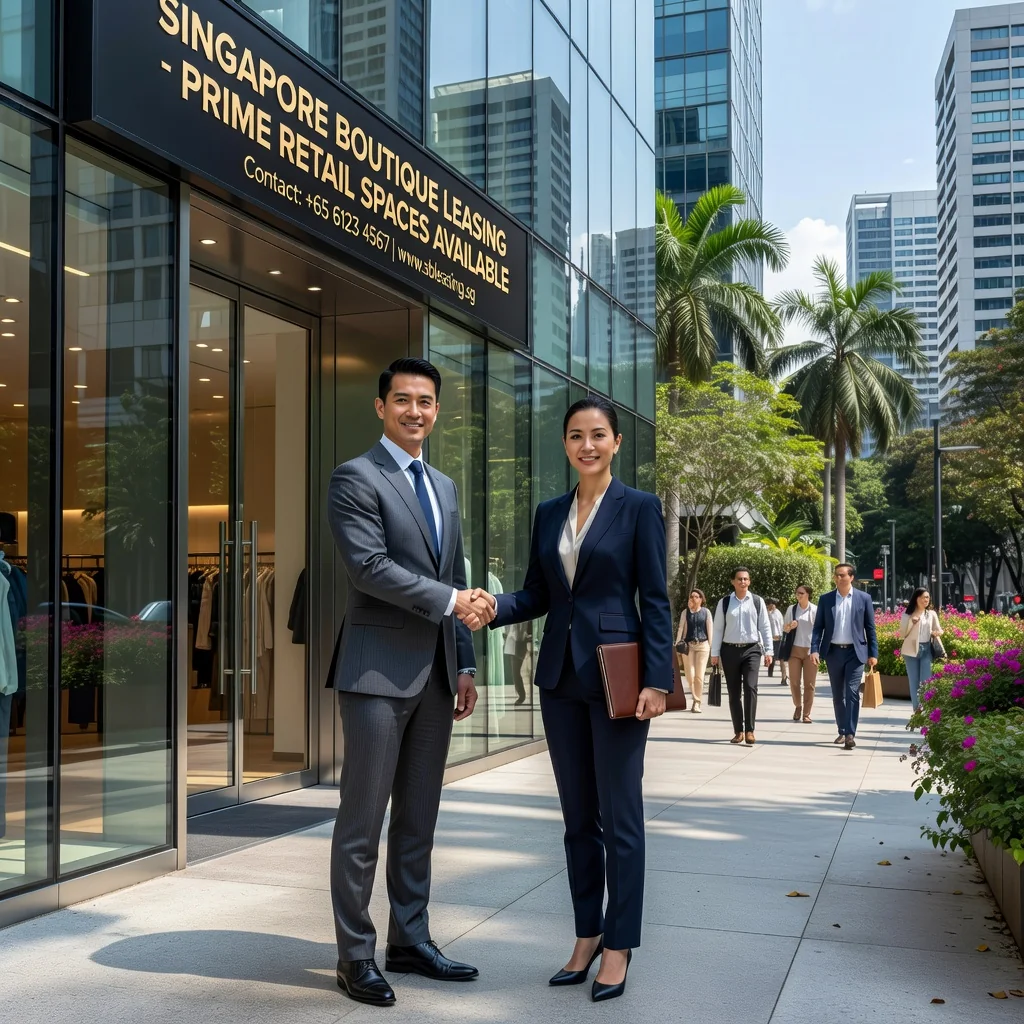
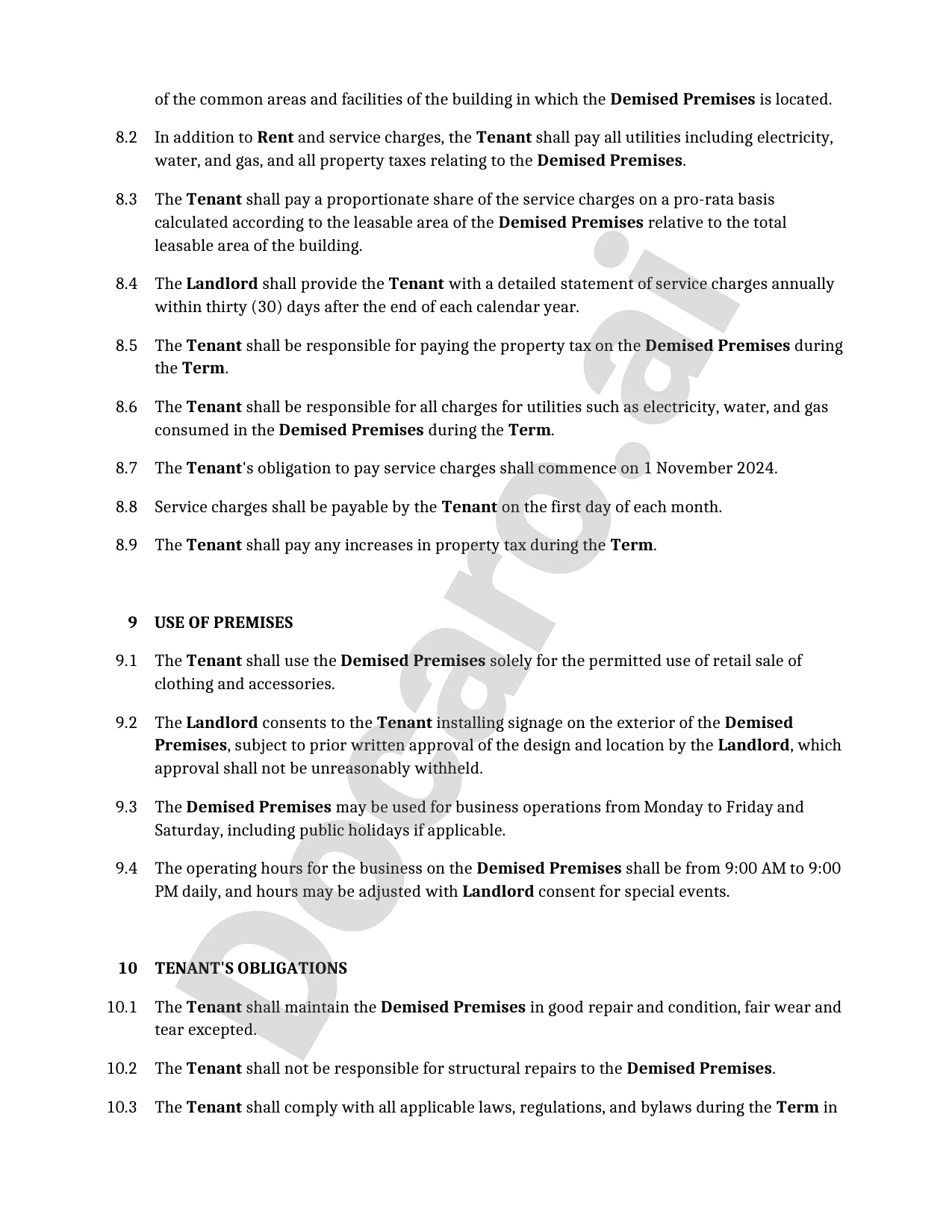
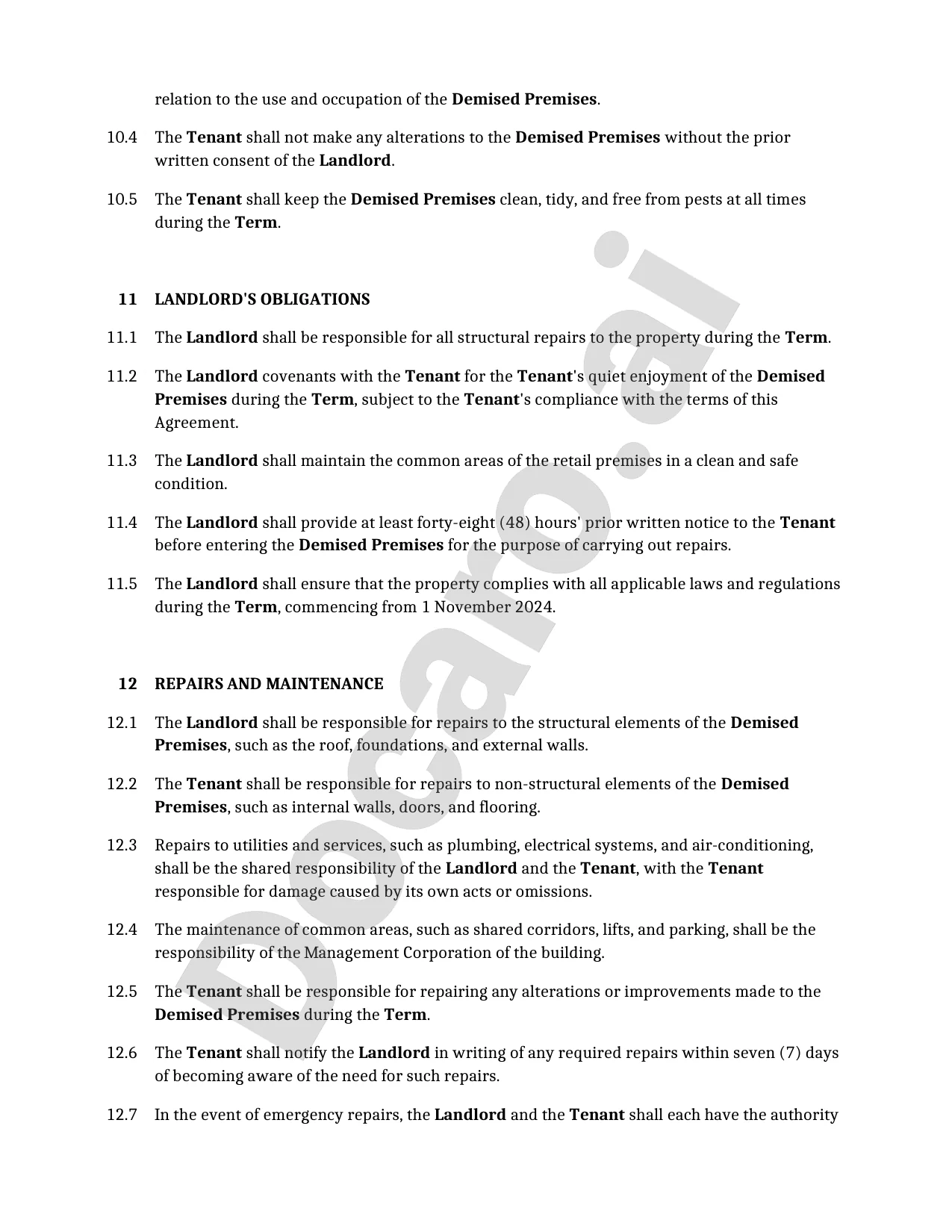
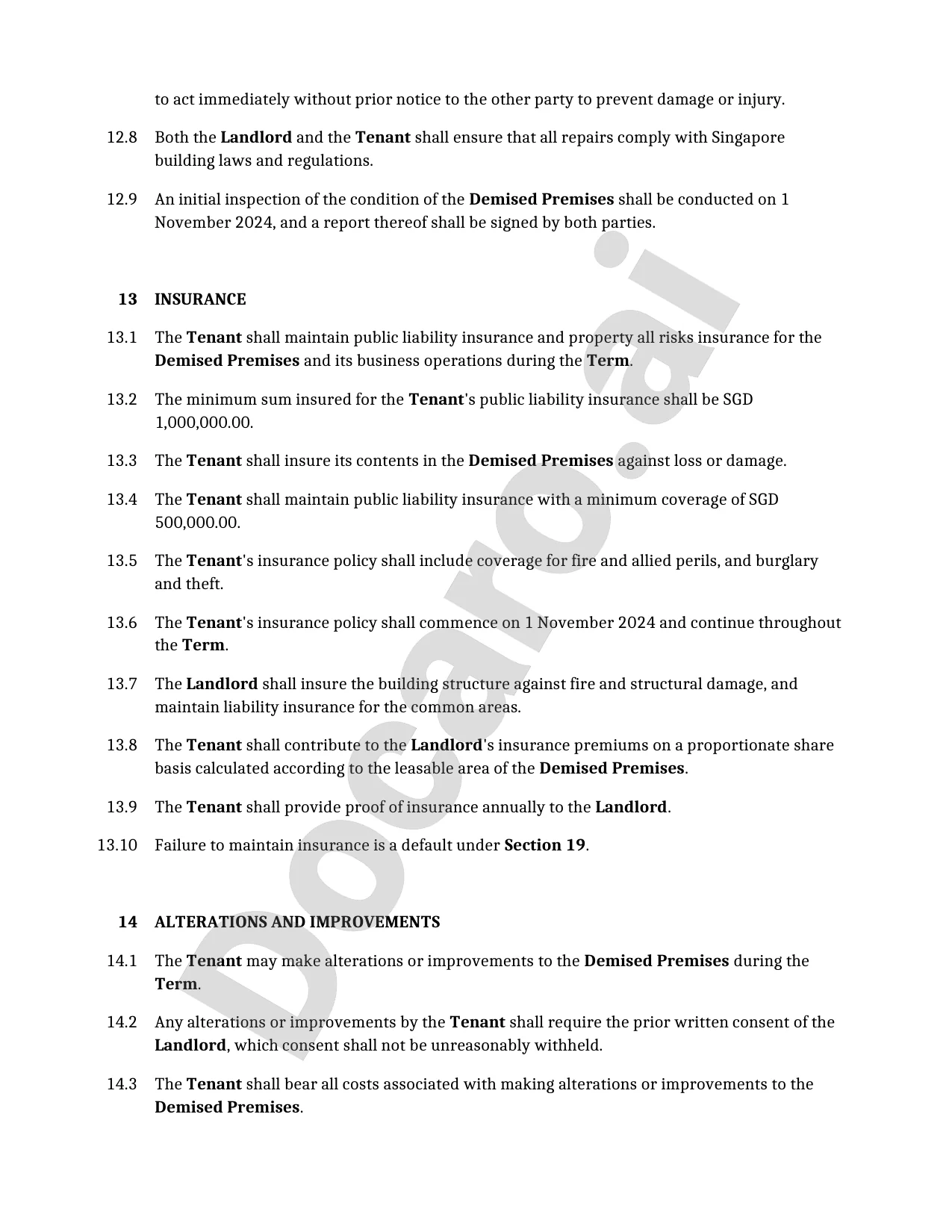
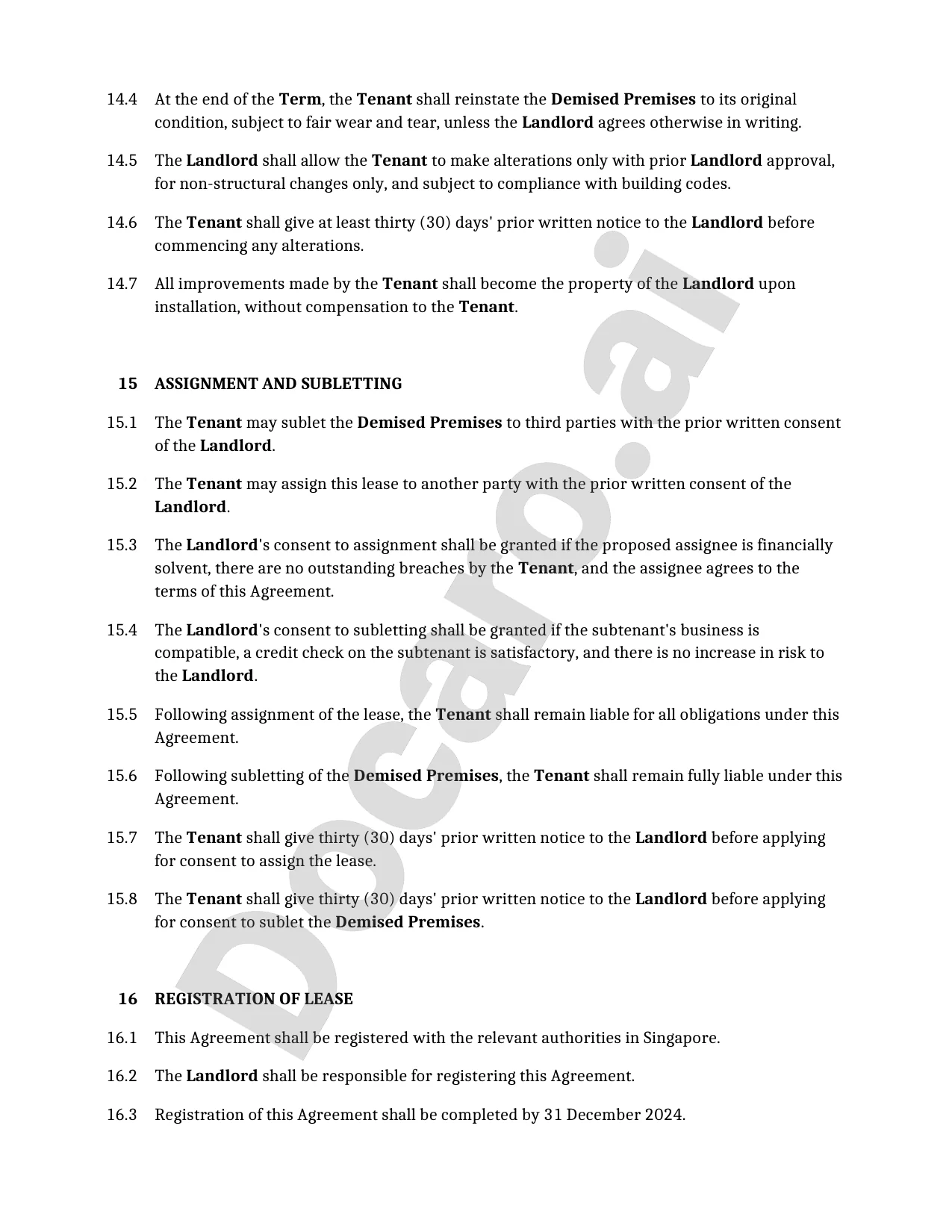
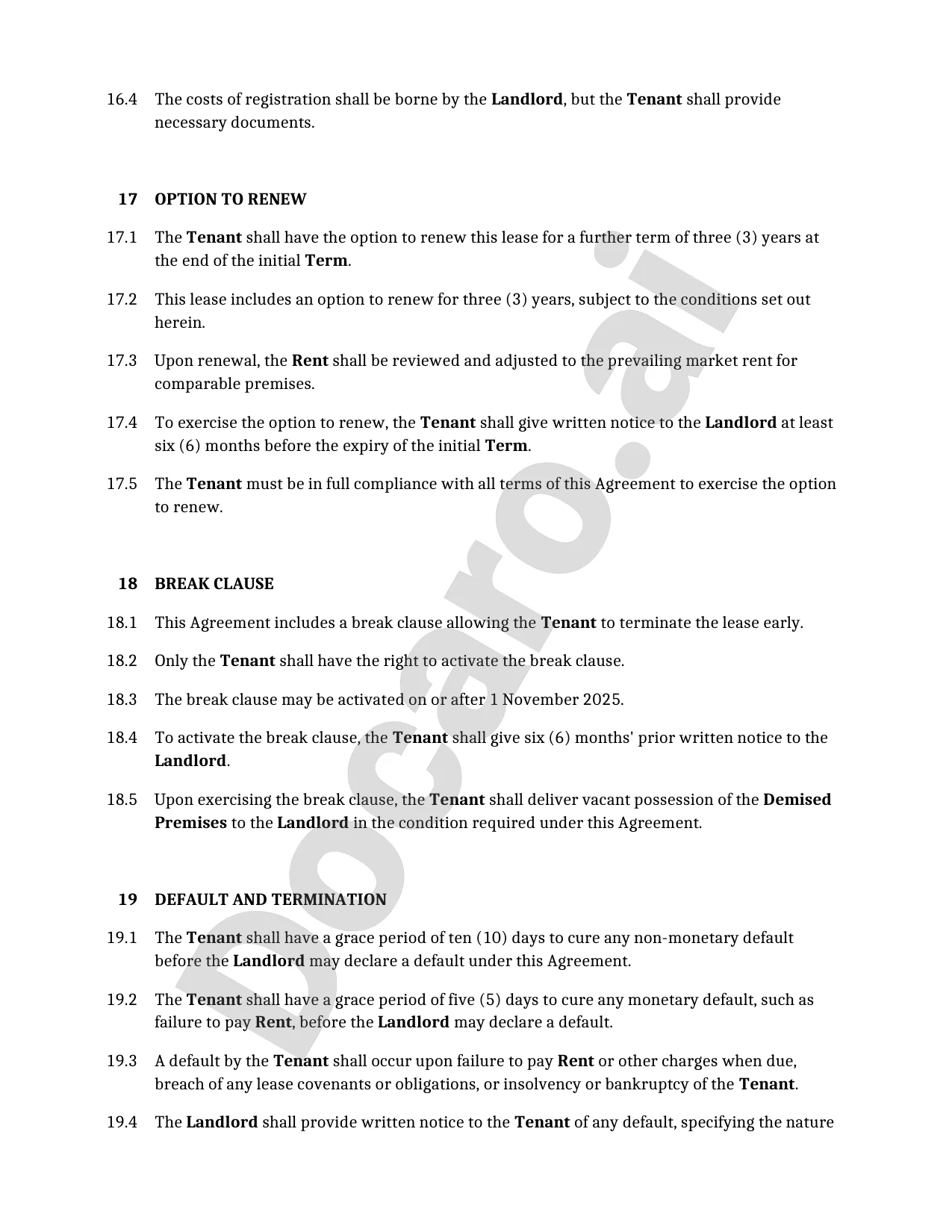
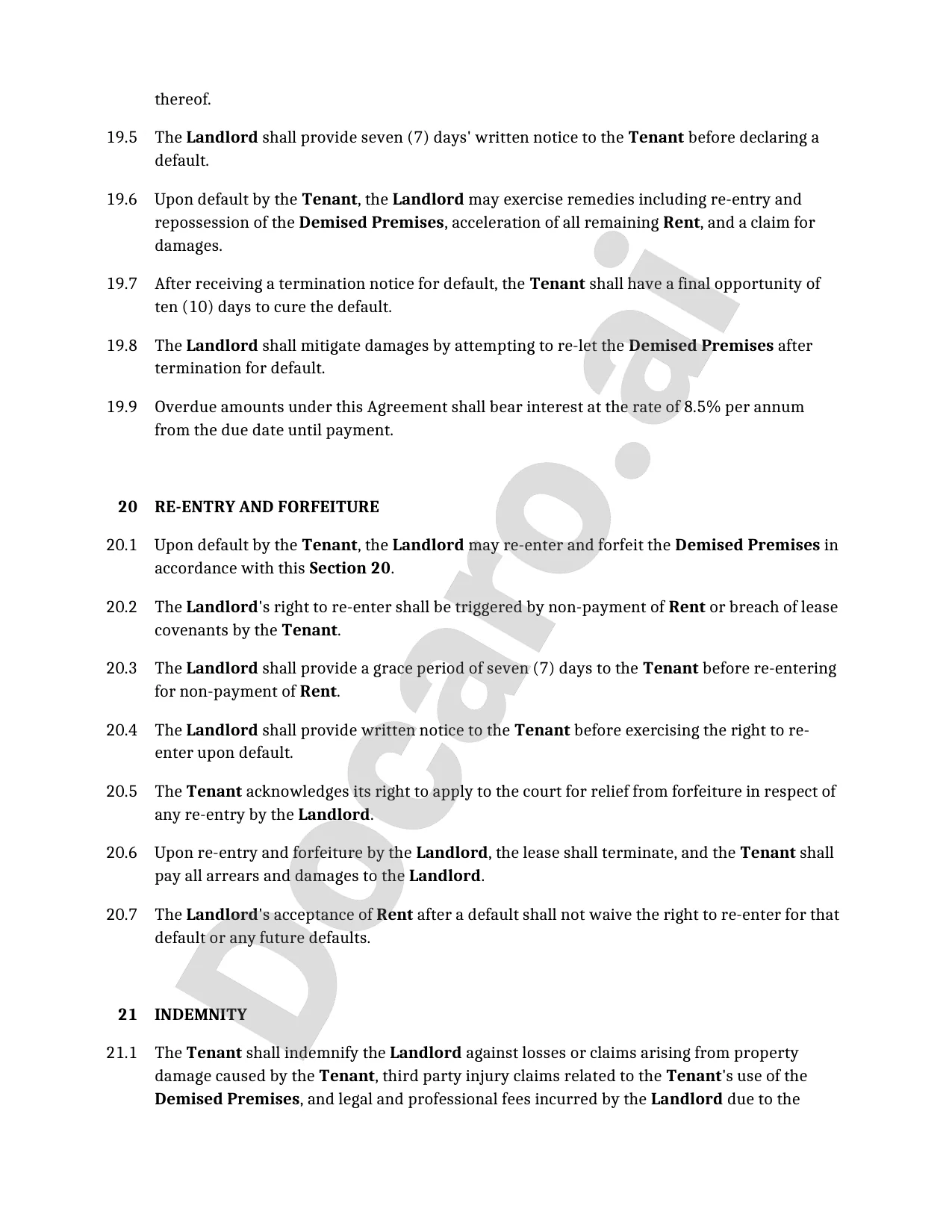
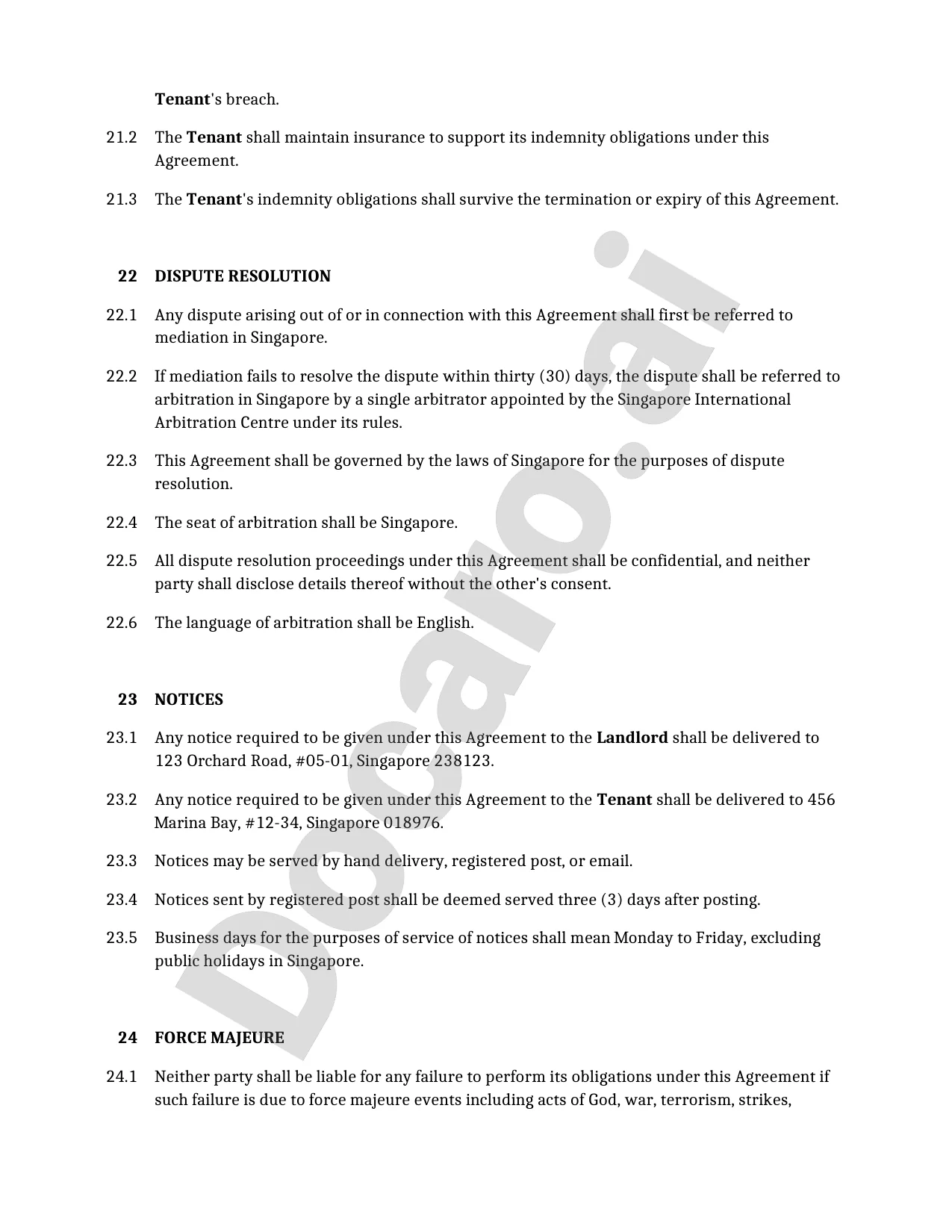
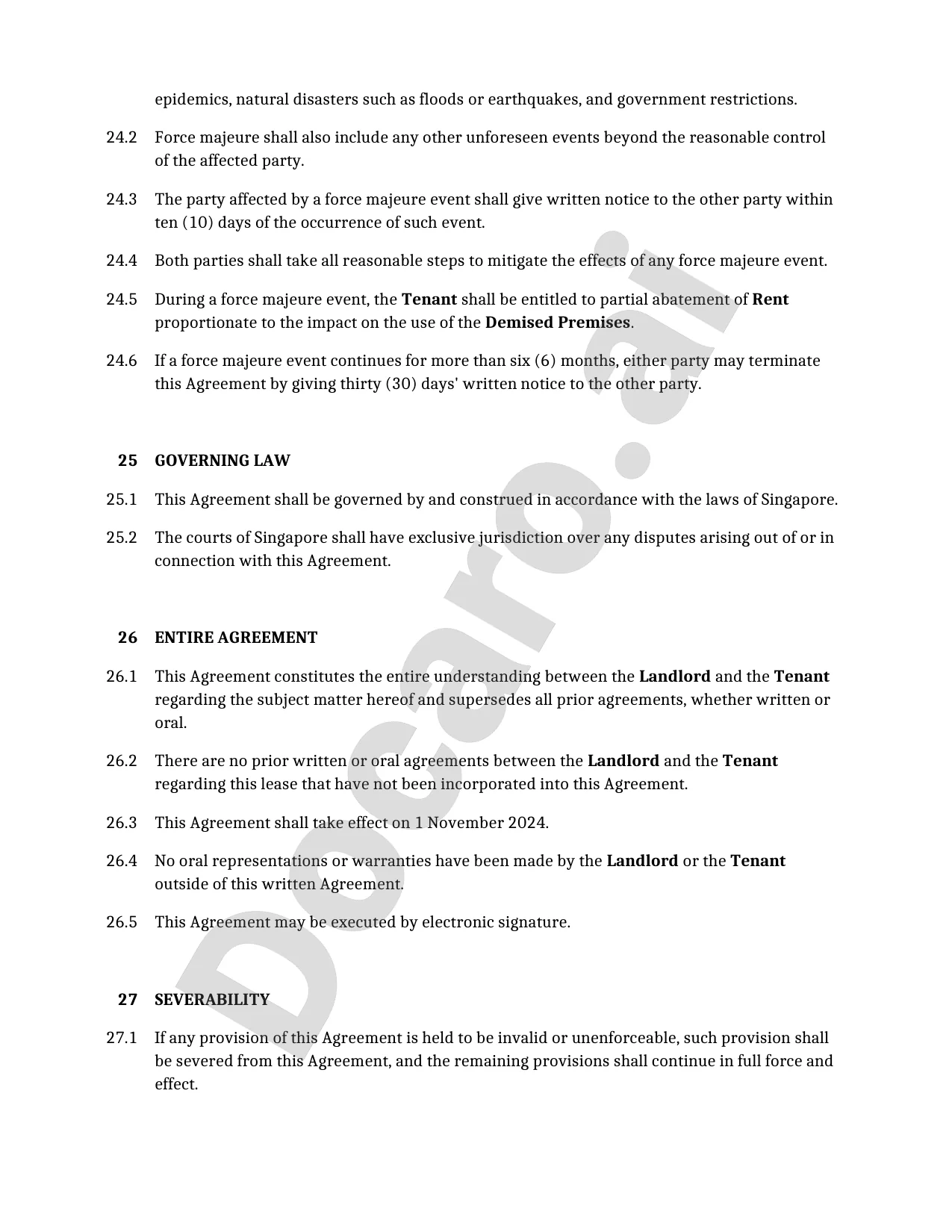
A Retail Lease Agreement in Singapore is a legally binding contract that governs the rental of commercial spaces designated for retail activities, such as shops, boutiques, and eateries. It operates under the framework of Singapore's property laws, including the Retail Shops Act and common tenancy principles, ensuring fair dealings between landlords and tenants.
The primary purpose of a retail lease agreement Singapore is to outline the rights and obligations for leasing retail spaces, protecting both parties from disputes over rent, maintenance, and usage. It promotes transparency in commercial real estate transactions, particularly for small businesses relying on prime locations in malls or high streets.
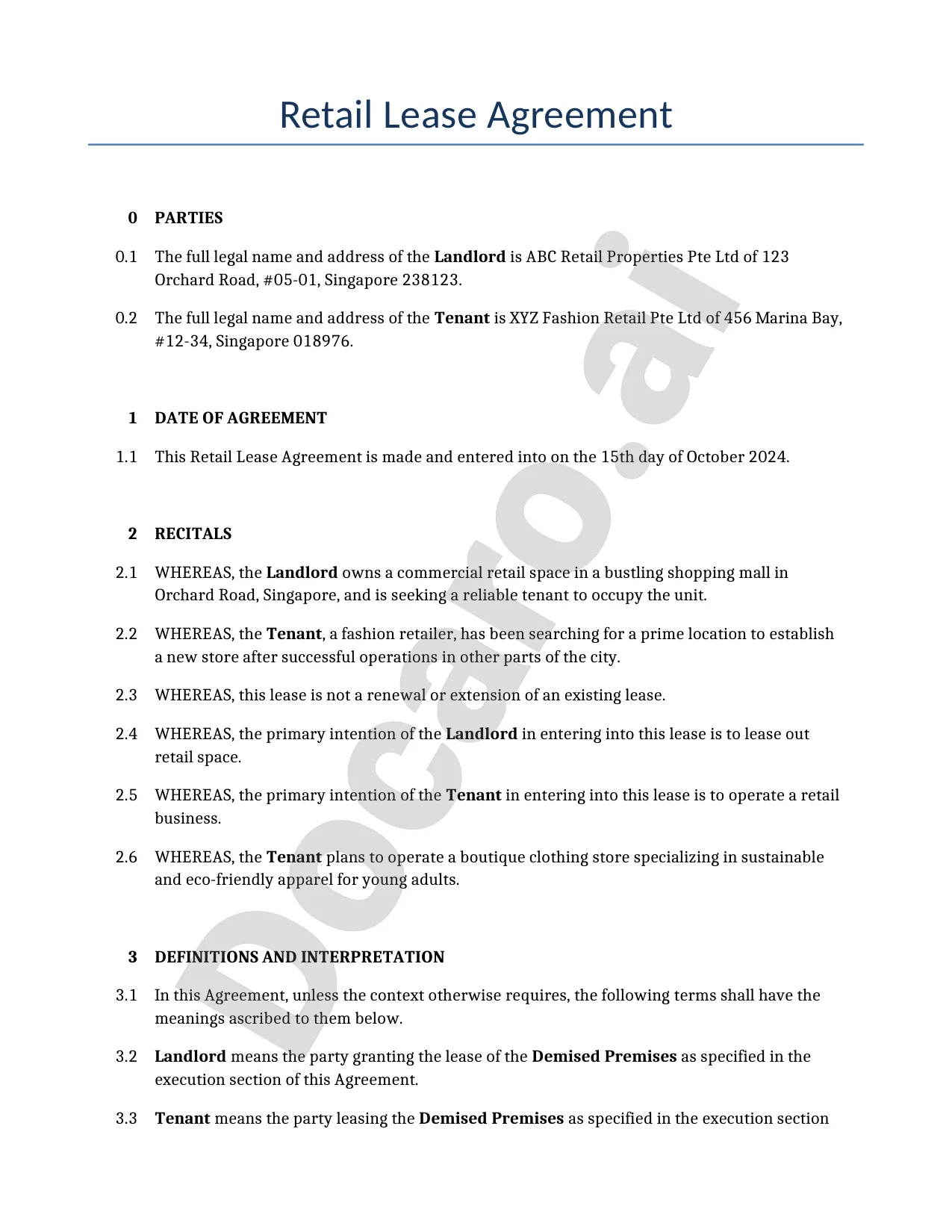
The basic structure of a retail tenancy agreement typically includes key sections on lease term, rental payments, security deposits, and permitted uses of the space. For clarity, essential elements often cover:
- Parties involved: Details of the landlord and tenant.
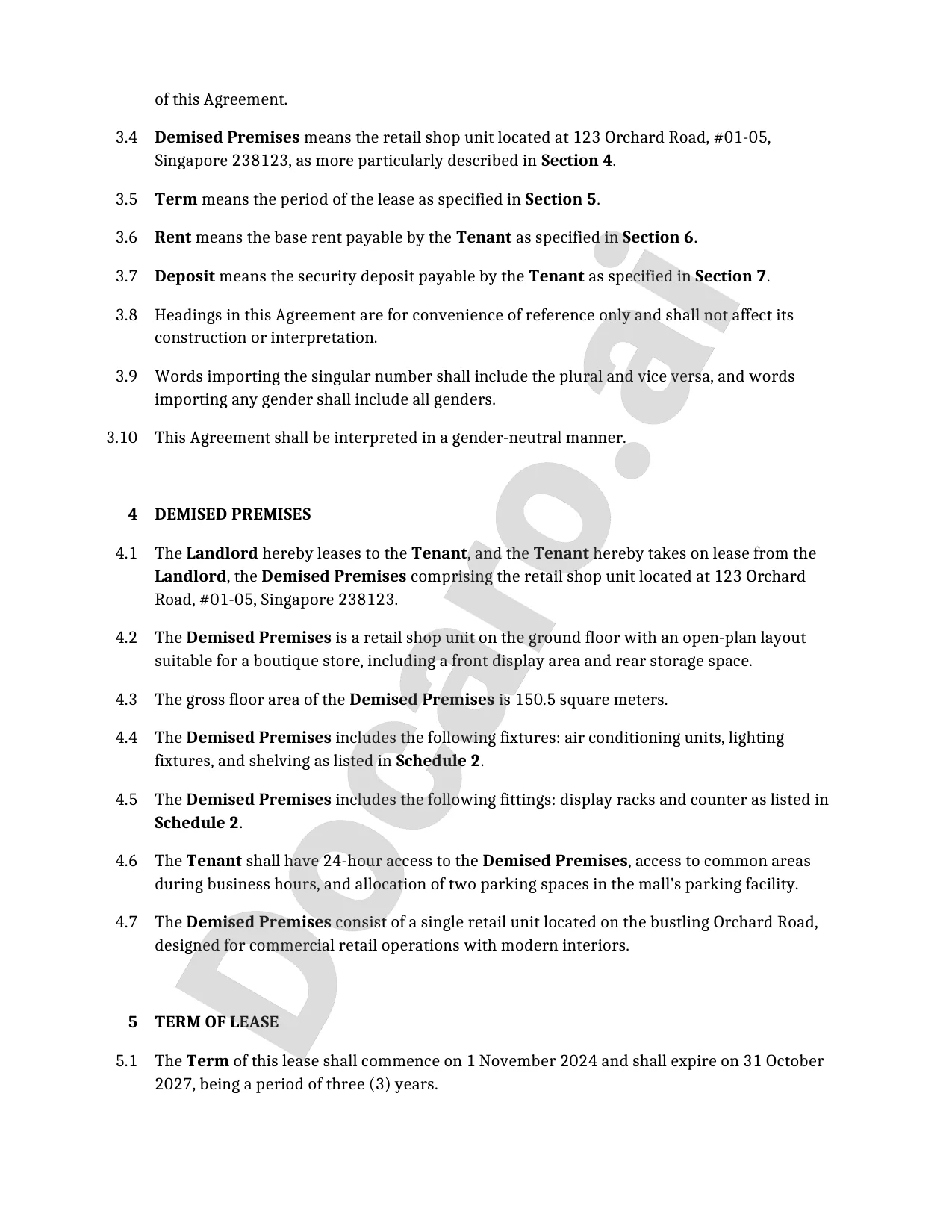
- Premises description: Specific location and size of the retail space.
- Lease duration and renewal options: Start and end dates, with provisions for extension.
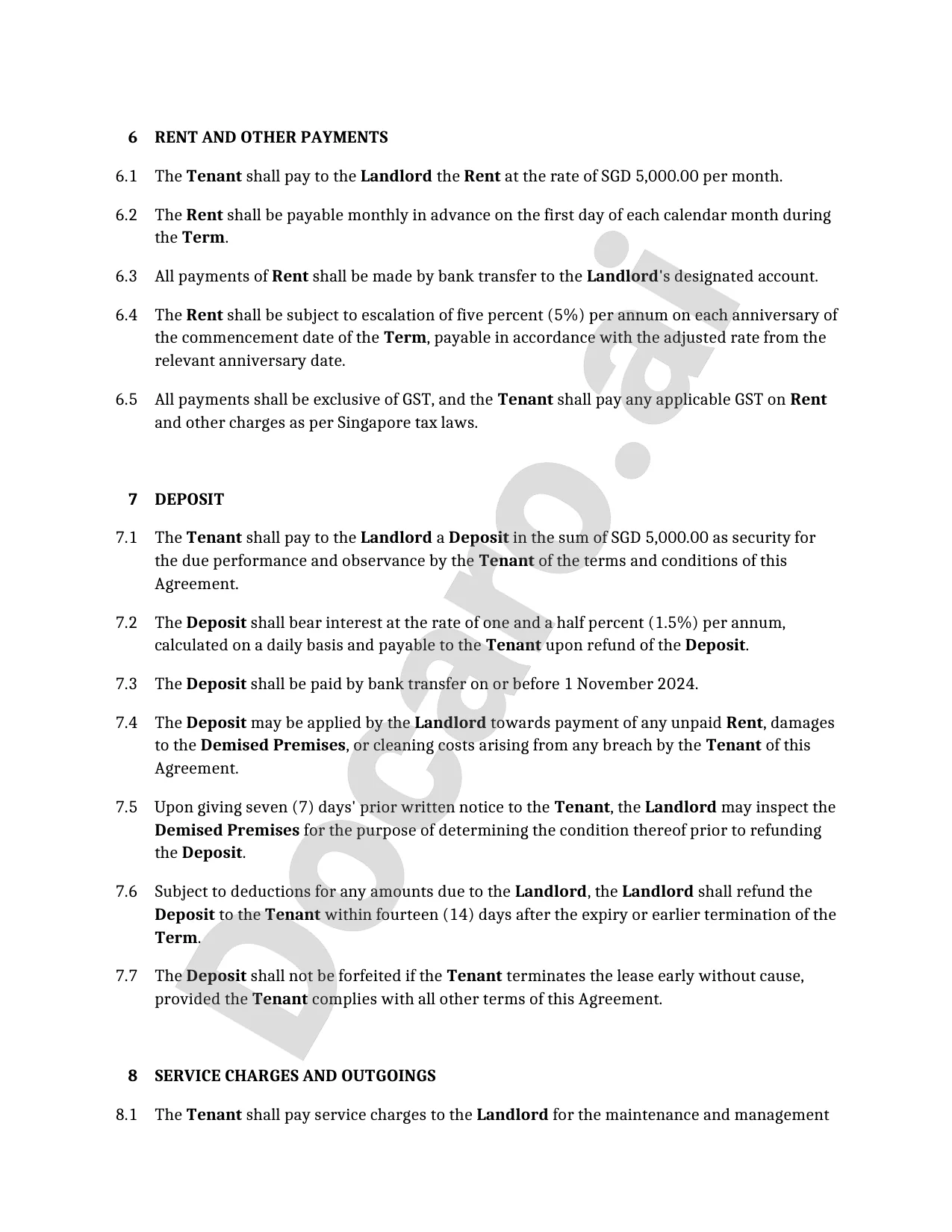
- Rent and outgoings: Base rent, service charges, and escalation clauses.
- Termination clauses: Conditions for ending the lease early.
- Dispute resolution: Mechanisms aligned with Singapore's legal system.
To ensure a tailored retail lease document that complies with Singapore's regulations, consider using bespoke AI-generated legal documents via Docaro platform for customized agreements.
When should you use a Retail Lease Agreement in Singapore?
A Retail Lease Agreement is essential for leasing spaces in commercial shopping malls in Singapore, where tenants operate retail outlets amid high foot traffic and shared amenities. This agreement outlines rent, maintenance responsibilities, and operational hours to ensure smooth business integration.
For high-street shops along bustling Singapore streets like Orchard Road, a Retail Lease Agreement protects both landlords and lessees by specifying lease duration, renewal options, and compliance with local zoning laws. It facilitates clear terms on utilities and alterations, minimizing disputes in prime retail locations.
In scenarios involving pop-up retail setups or seasonal kiosks within malls, this agreement provides flexibility for short-term leases while addressing security deposits and termination clauses. Businesses benefit from tailored provisions that align with Singapore's vibrant retail landscape.
- Use Docaro for bespoke AI-generated legal documents to customize your Retail Lease Agreement precisely for Singapore properties.
- Ensure the document covers key elements like rent escalation and tenant fit-out approvals.
When should you avoid using a Retail Lease Agreement?
A Retail Lease Agreement is specifically tailored for leasing spaces in retail environments like shopping malls or storefronts, where tenants engage in selling goods or services to the public. It may not be suitable for non-retail commercial spaces such as offices, warehouses, or industrial facilities, as these require provisions for different zoning laws, usage restrictions, and maintenance needs.
For short-term pop-up events, a standard Retail Lease Agreement often proves inadequate due to its long-term commitments, detailed build-out requirements, and fixed rental structures that don't accommodate temporary setups lasting days or weeks. In such cases, the agreement's complexity can lead to unnecessary costs and inflexibility for event-based operations.
Alternatives to a Retail Lease Agreement include commercial office leases for professional workspaces or industrial leases for manufacturing sites, which better address specific operational demands. For short-term needs like pop-ups, consider short-term commercial subleases or event space licenses, which offer flexibility without long-term obligations.
To ensure your lease fits unique circumstances, opt for bespoke AI-generated legal documents via Docaro, providing customized protection over generic options.
What are the key rights and obligations of landlords and tenants in a Retail Lease Agreement?
In a Singapore retail lease agreement, the tenant's primary obligations include timely rent payment, typically monthly in advance, and covering additional charges like service fees or GST. The landlord must provide a habitable retail space compliant with building regulations, ensuring essential utilities and structural integrity.
For maintenance responsibilities, tenants are generally required to keep the interior clean, repair minor damages, and not alter the premises without consent, while landlords handle major structural repairs and common area upkeep. Both parties should document any agreed variations in the lease to avoid disputes over property condition.
Regarding lease termination, tenants must give notice as specified, often three to six months, and restore the unit to its original state upon vacating, while landlords can terminate for breaches like non-payment after issuing warnings. Early termination clauses may allow flexibility but often incur penalties, emphasizing the need for clear terms.
To ensure a tailored Singapore retail lease agreement that protects both parties' rights, consider using Docaro for bespoke AI-generated legal documents, customized to specific retail needs rather than generic options.
What are the essential clauses in a Retail Lease Agreement in Singapore?
A retail lease agreement is a vital contract for tenants and landlords in commercial spaces, outlining the terms for renting retail properties. Key clauses ensure clarity on rights, obligations, and protections in the dynamic retail environment.
Essential elements include the lease term and renewal options, which specify duration and conditions for extension, alongside rent and payment schedules that detail amounts, escalations, and due dates. Other critical provisions cover maintenance responsibilities, where tenants often handle interior upkeep while landlords manage structural elements.
- Use restrictions: Defines permitted business activities to align with property zoning.
- Security deposit: Outlines the amount, purpose, and refund process.
- Termination clauses: Covers early exit scenarios, penalties, and dispute resolution.
For tailored advice on Singapore-specific retail lease agreements, explore Key Clauses to Understand in a Retail Lease Agreement in Singapore. Opt for bespoke AI-generated legal documents via Docaro to customize agreements precisely to your needs.
"Understanding lease clauses is essential for safeguarding retail business interests in Singapore. I recommend consulting a legal expert to create bespoke AI-generated legal documents using Docaro, ensuring they are precisely tailored to your specific needs and compliant with local regulations." - Dr. Lim Wei, Senior Partner, Singapore Legal Advisory Firm
What are the key exclusions to watch for in a Retail Lease Agreement?
In Retail Lease Agreements in Singapore, common exclusions often restrict subletting without the landlord's prior written consent, ensuring the tenant remains primarily responsible for rent and property maintenance. This limitation protects landlords from unauthorized occupants but can hinder tenants' flexibility in managing business downturns or expansions.
Another frequent exclusion involves liability caps, where tenants may be barred from limiting their responsibility for damages caused by negligence, such as structural harm or third-party injuries. These clauses imply that tenants face potentially unlimited financial risks, emphasizing the need for comprehensive insurance to mitigate exposure in high-traffic retail spaces.
Tenants should also note exclusions on alterations to the leased premises, typically requiring approval for any modifications to avoid disputes over restoration costs at lease end. To navigate these complexities effectively, consider using Docaro for bespoke AI-generated legal documents tailored to your specific retail leasing needs in Singapore.
Are there any recent or upcoming legal changes affecting Retail Lease Agreements in Singapore?
In 2023, Singapore introduced the Lease Agreements for Retail Premises Act, which significantly impacts retail lease agreements by mandating compliance with the Code of Conduct for Leasing of Retail Premises. This new retail leases law establishes fairer negotiation practices between landlords and tenants for qualifying leases signed on or after 1 February 2024.
The Act creates the Fair Tenancy Industry Committee to oversee the Code, including 13 key leasing principles that cover aspects like rent determination and dispute resolution. It applies to retail premises leases of one year or more, promoting transparency and balance in Singapore property laws for retail spaces.
Regarding COVID-related amendments, no new updates have been implemented since the temporary relief measures expired in 2022; however, the 2023 Act indirectly addresses post-pandemic recovery by enhancing protections against unfair terms. For complex retail lease agreements, consider bespoke AI-generated legal documents using Docaro to ensure tailored compliance.
How can you get started with drafting a Retail Lease Agreement in Singapore?
1
Consult a Lawyer
Schedule a consultation with a qualified real estate lawyer to discuss your specific retail lease needs and requirements.
2
Review Standard Templates
Examine standard retail lease templates from reliable sources to understand common clauses and structure.
3
Generate Bespoke Document with Docaro
Use Docaro to create a customized AI-generated retail lease agreement tailored to your unique situation.
4
Revise with Legal Input
Incorporate your lawyer's feedback to refine the Docaro-generated document for accuracy and compliance.
How to negotiate and avoid pitfalls in your Retail Lease Agreement?
Negotiating a retail lease agreement in Singapore requires careful preparation to secure favorable terms for your business. Start by understanding key clauses like rent reviews, lease duration, and maintenance responsibilities, and always consult professionals to tailor the agreement to your needs.
- Research market rates: Compare similar retail spaces to benchmark your rent and negotiate from a position of knowledge.
- Negotiate flexibility: Push for options like break clauses or rent-free periods to adapt to business changes.
- Review escalation clauses: Ensure rent increases are capped and predictable to avoid unexpected costs.
For detailed guidance, explore How to Negotiate a Favorable Retail Lease Agreement in Singapore to master the process.
Avoid common pitfalls in retail lease agreements by scrutinizing hidden fees, ambiguous terms, and inadequate insurance provisions that could lead to disputes. Opt for bespoke AI-generated legal documents using Docaro to create customized protections rather than relying on generic forms.
Learn more about steering clear of these issues in Common Pitfalls in Retail Lease Agreements in Singapore and How to Avoid Them.
You Might Also Be Interested In
A Legal Contract Outlining The Terms For Renting Commercial Property In Singapore.
A Legal Document Allowing A Commercial Tenant To Lease Out Part Or All Of Their Rented Space To Another Party, With The Original Tenant Remaining Responsible To The Landlord.
A Legal Document That Transfers A Commercial Tenant's Lease Rights And Obligations To A New Tenant, With Landlord Consent.
A Legal Document That Extends Or Renews The Term Of An Existing Commercial Property Lease Between Landlord And Tenant.
A Preliminary Document Outlining The Key Terms And Intentions Of Parties For A Lease Agreement, Often Non-binding Except For Certain Clauses.
A Legal Contract Outlining The Terms For Renting Office Space, Including Duration, Rent, And Responsibilities Of Landlord And Tenant.
A Legal Contract Outlining The Terms For Leasing A Warehouse Space, Including Rent, Duration, And Responsibilities Of Landlord And Tenant.
A Legal Writ Issued By The Court In Singapore To Enforce The Eviction Of Tenants From Commercial Premises Following A Successful Possession Order.