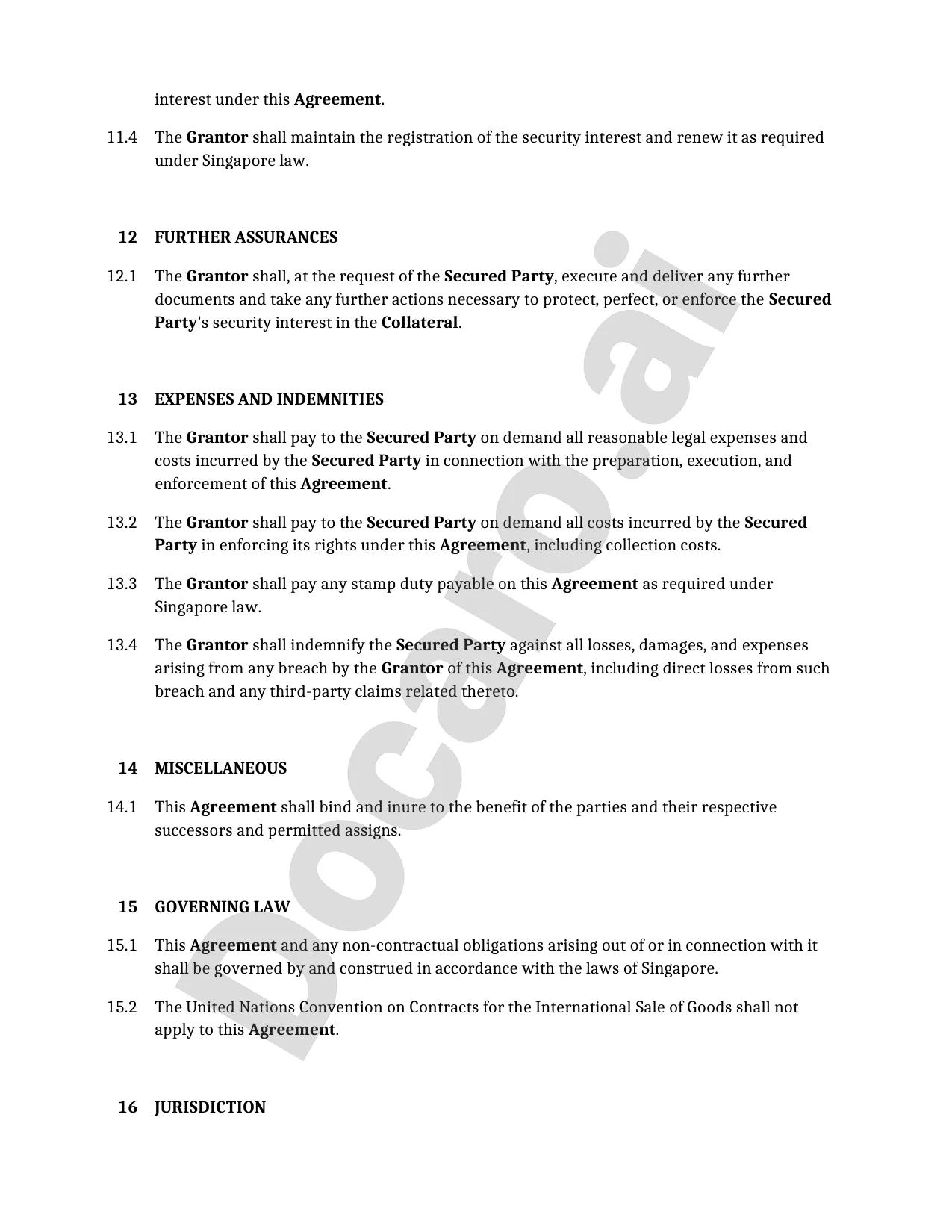
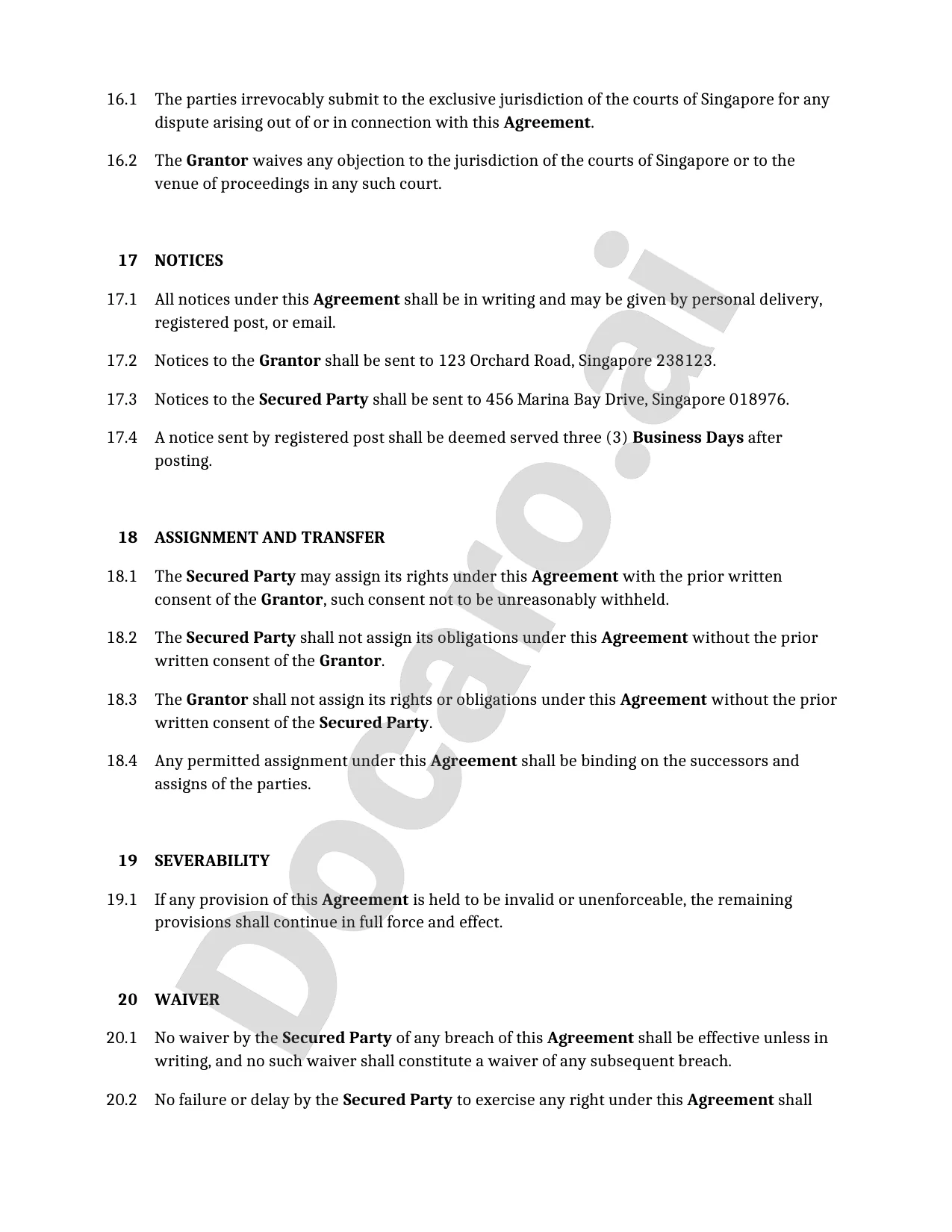
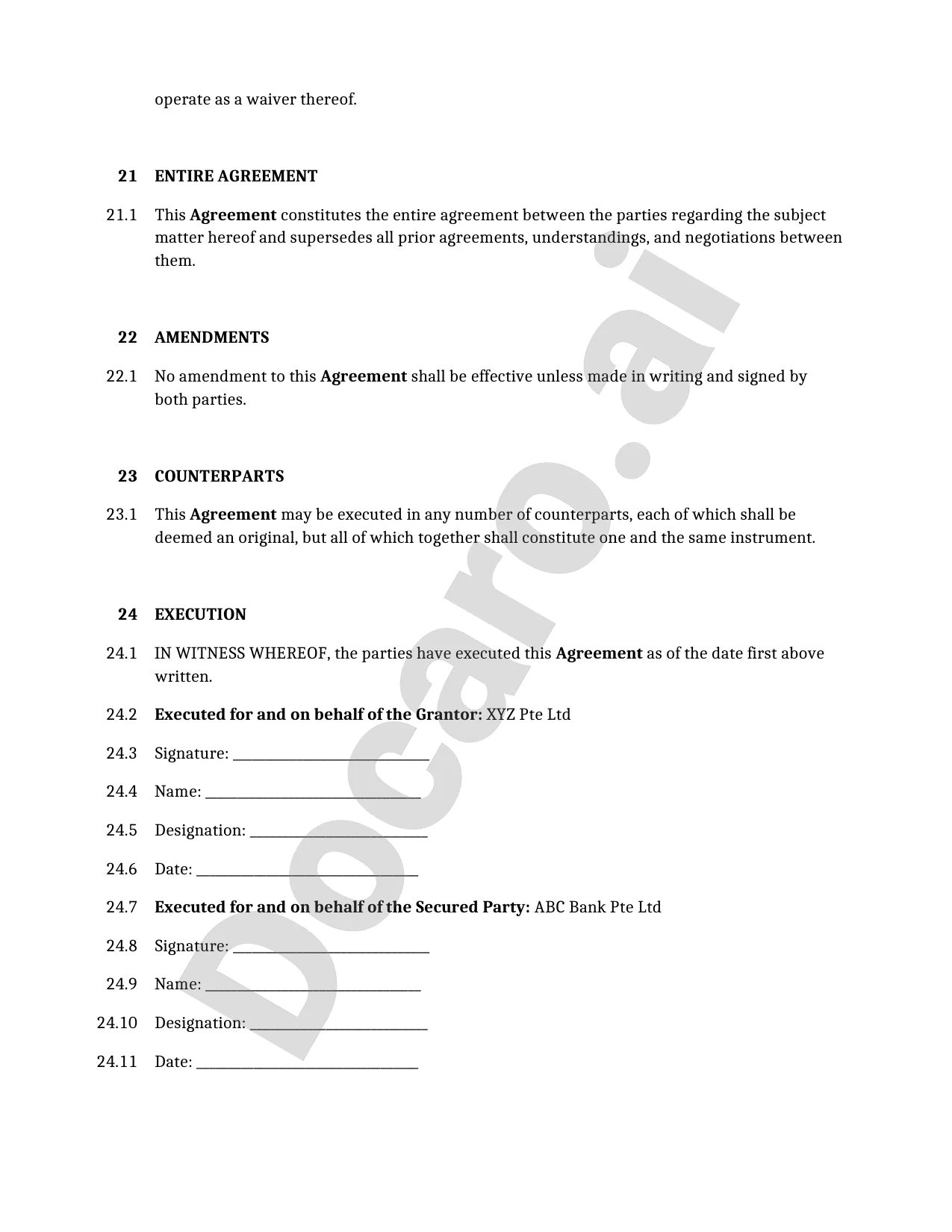
Why Free Templates Can Be Risky for Security Agreements
Free security agreement templates are often generic and not tailored to Singapore's legal requirements under the Personal Data Protection Act or specific financial regulations. Using mismatched wording can fail to adequately secure assets, expose you to disputes over collateral enforcement, or render the agreement unenforceable in local courts.
Our AI generates bespoke security agreements customized to your exact needs, incorporating Singapore-specific clauses for robust asset protection, clear enforcement mechanisms, and compliance with local laws, ensuring a stronger and more reliable document.
What is a Security Agreement in Singapore?
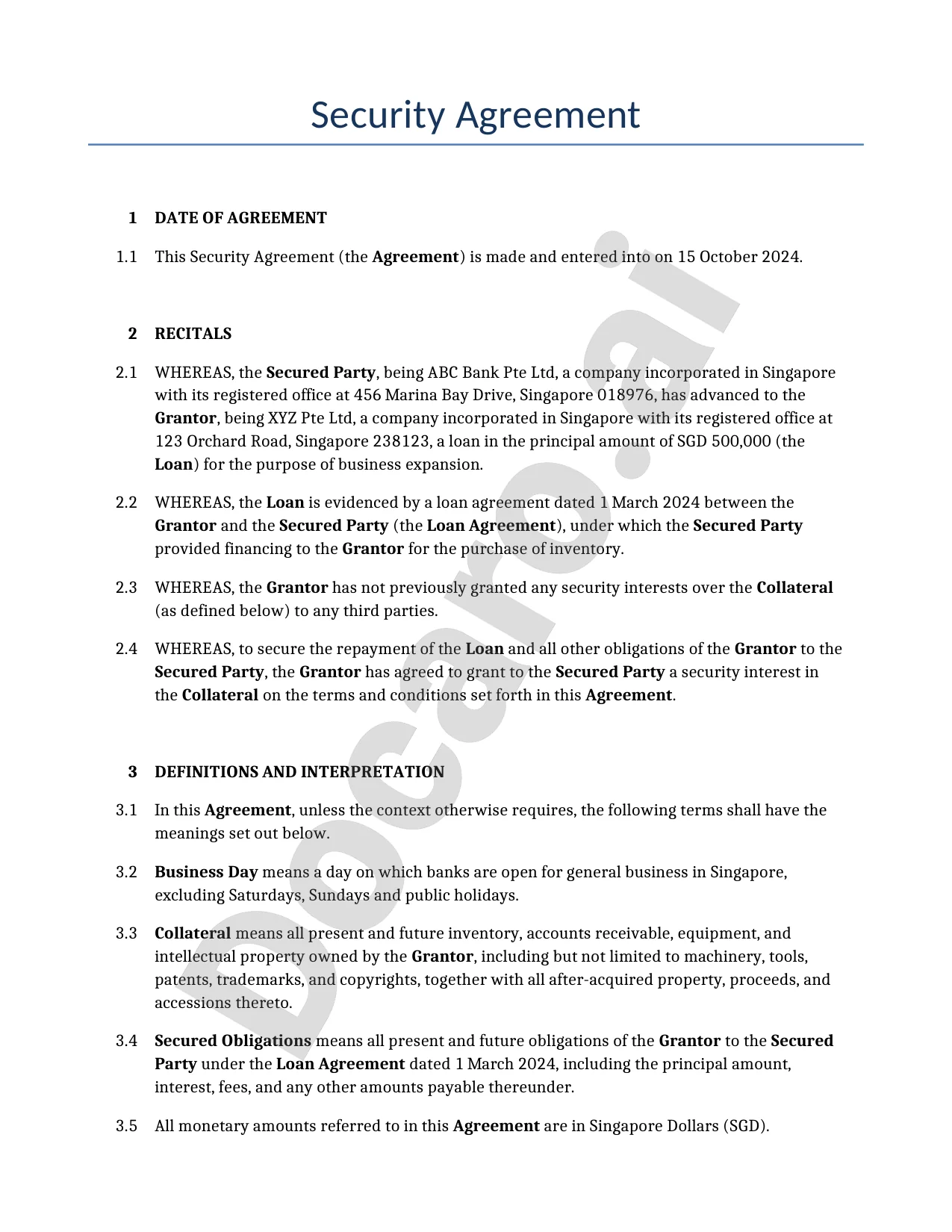
A security agreement under Singapore law is a legal contract where a debtor grants a creditor an interest in specific assets to secure the repayment of a loan or fulfillment of other obligations. This mechanism ensures that the creditor has recourse to the collateral if the debtor defaults, providing a vital layer of protection in financial transactions.
The primary purpose of a security agreement in Singapore is to mitigate lending risks by legally binding the debtor to pledge assets, such as property or inventory, as security. Governed by the Sale of Goods Act and common law principles, these agreements facilitate smoother access to credit for businesses and individuals.
For a deeper dive into the key elements and legal requirements of security agreements in Singapore, explore our detailed guide at Understanding Security Agreements in Singapore: Key Elements and Legal Requirements.
Authoritative resources like the Sale of Goods Act on Singapore Statutes Online offer essential insights into the statutory framework supporting these agreements. When drafting security documents, opt for bespoke AI-generated legal solutions via Docaro to ensure they are tailored precisely to your needs under Singapore law.
When should you use a Security Agreement in Singapore?
A security agreement is particularly appropriate in commercial lending scenarios, where businesses borrow funds and pledge assets like inventory or equipment as collateral to secure the loan. This protects lenders by providing a legal claim on the assets if the borrower defaults, ensuring recovery of the principal amount.
In asset financing, such as equipment leasing or vehicle purchases, a security agreement allows the financier to retain ownership or a lien on the asset until full payment, mitigating risks associated with high-value items. It is also ideal for protecting creditors in larger transactions, like real estate development, by formalizing the creditor's priority over other claims on the borrower's property.
However, a security agreement should not be used in unsecured personal loans, where no collateral is involved and the loan relies solely on the borrower's creditworthiness. It is also unsuitable when collateral is not feasible, such as in small consumer debts or situations where assets cannot be legally or practically pledged, to avoid unnecessary complexity and enforcement challenges.
For tailored legal needs in Singapore, consider using Docaro for bespoke AI-generated security agreements that comply with local regulations from the Accounting and Corporate Regulatory Authority.
What are the key clauses in a Singapore Security Agreement?
A security agreement under Singapore law is a vital contract that creates a security interest over assets to secure loan repayment. Essential clauses ensure enforceability and protection for lenders, as outlined in resources like the How to Draft a Legally Binding Security Agreement in Singapore.
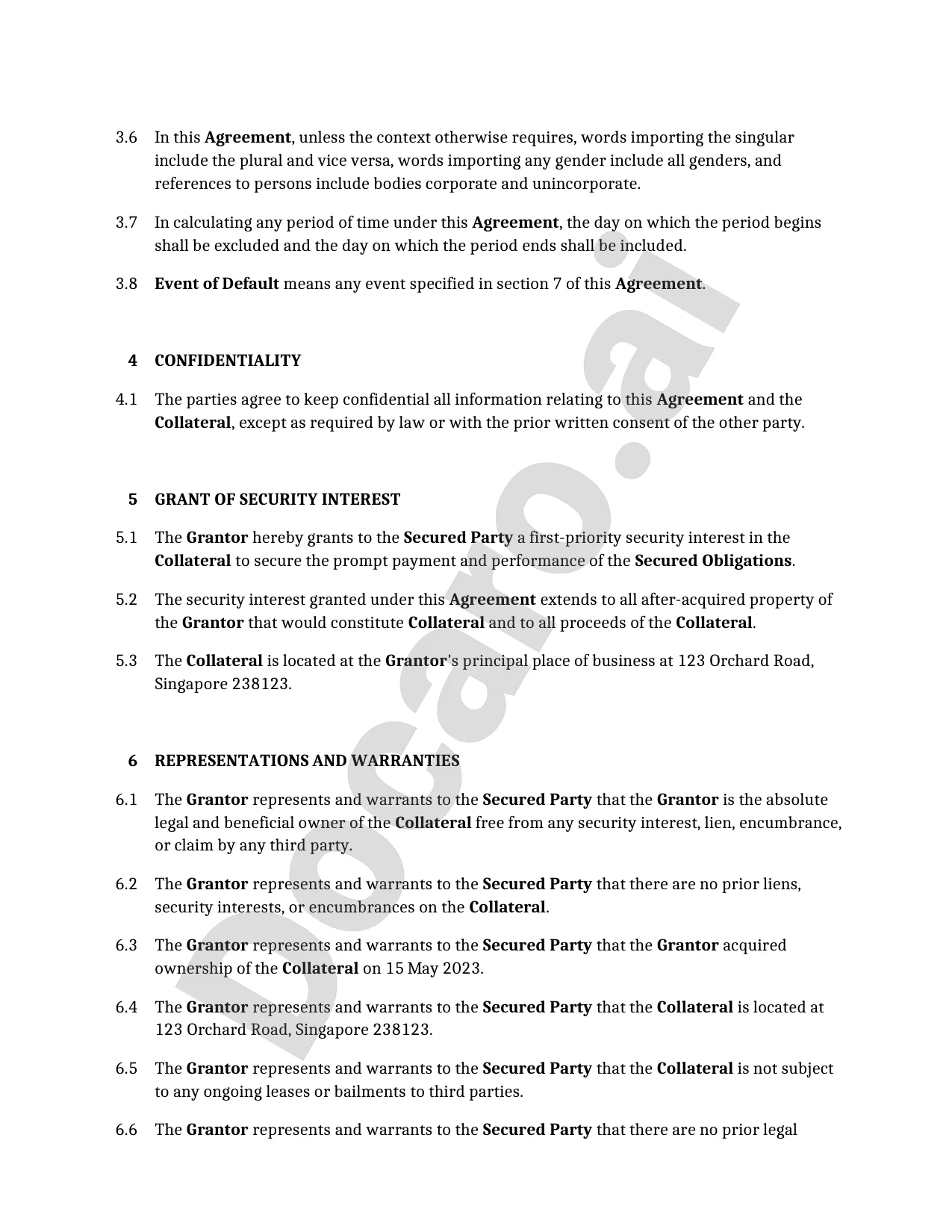
The grant of security clause is fundamental, detailing the assets pledged and the secured obligations. It must clearly describe collateral, such as property or receivables, to comply with Singapore's Companies Act requirements for perfection.
Representations and warranties affirm the borrower's ownership and authority over assets, while covenants impose ongoing duties like maintaining insurance and restricting asset disposal. These provisions safeguard the lender's interests throughout the agreement term.
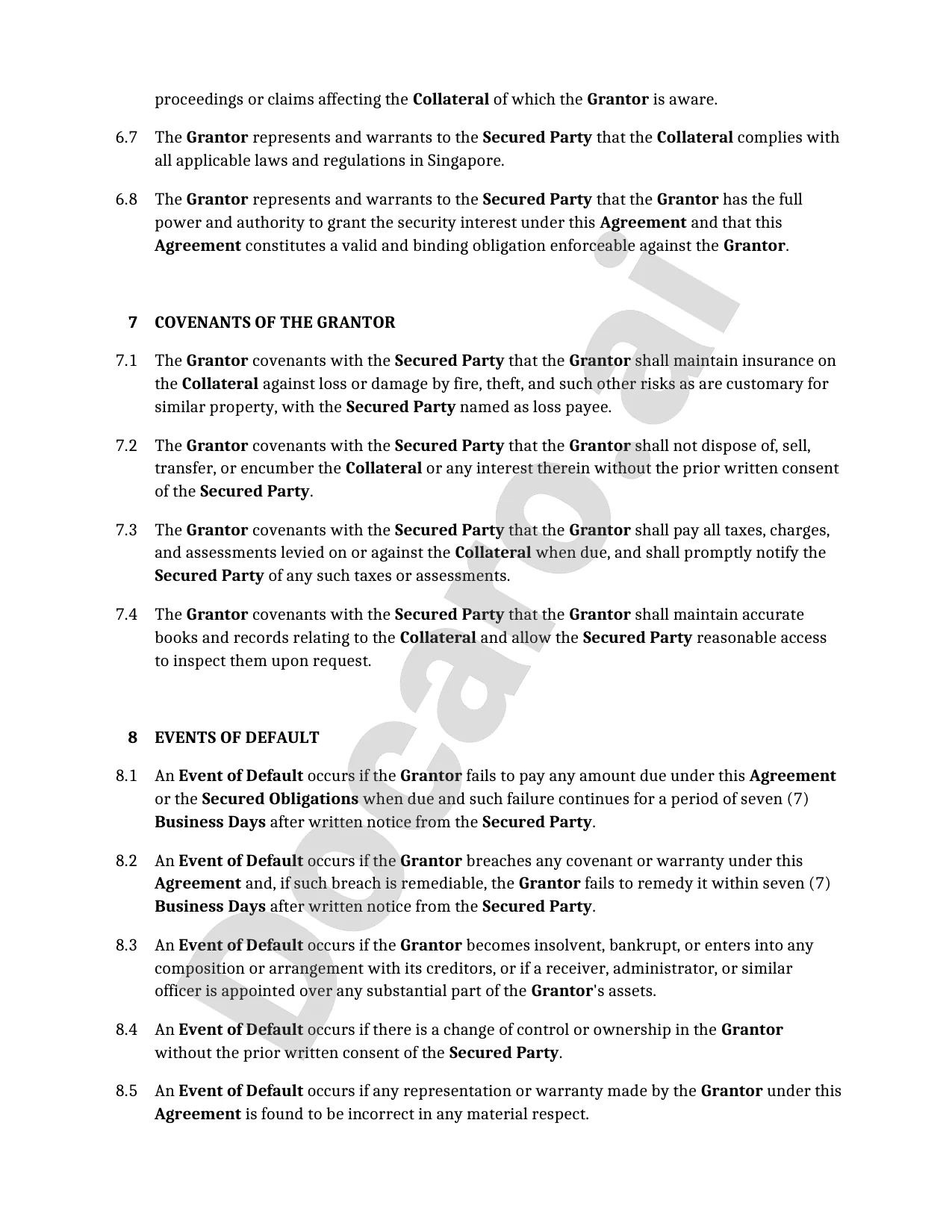
Events of default specify triggers like non-payment or insolvency, enabling enforcement actions such as asset seizure. For tailored security agreements in Singapore, consider bespoke AI-generated documents via Docaro to meet specific needs under local law.
"Clear and precise identification of secured assets in a security agreement is essential to prevent disputes over what collateral is actually pledged; always consult a legal professional to draft bespoke documents using Docaro for tailored accuracy." - Prof. Elena Ramirez, Expert in Commercial Law
What are the key rights and obligations of the parties involved?
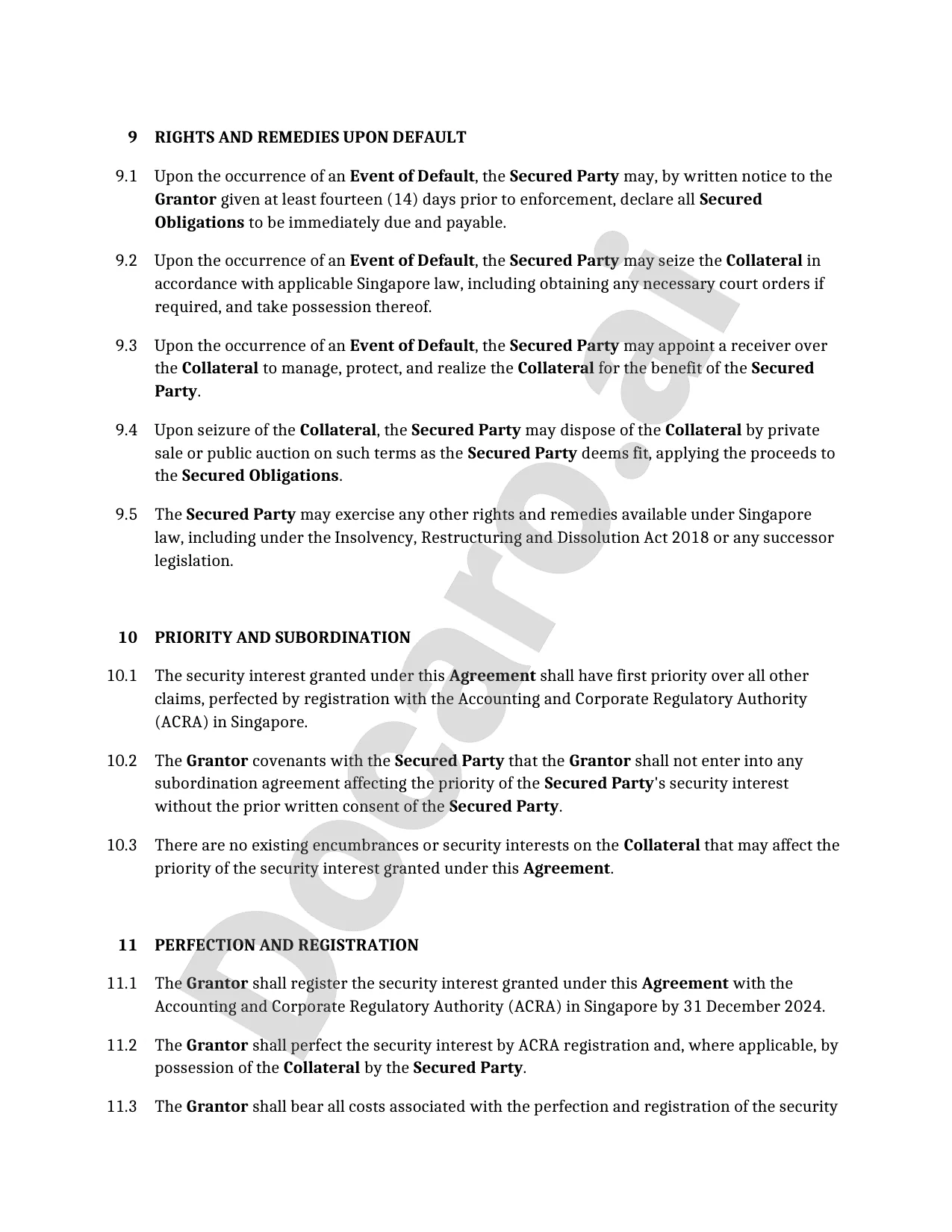
In Singapore's legal framework, governed by the Creation of Security Interest Act and common law principles, a secured party holds significant rights over collateral to protect their financial interests. Upon the grantor's default, the secured party can enforce remedies such as seizing and selling the collateral to recover debts, as outlined in detailed provisions for security interests.
The enforcement rights include appointing a receiver or applying for court orders to realize the collateral's value, ensuring compliance with fair market practices. For authoritative guidance, refer to the Creation of Security Interest Act 2020 on Singapore's official statutes portal.
Conversely, the grantor bears key obligations, including maintaining the collateral in good condition and insuring it against risks to preserve its value. Failure to uphold these duties may trigger default, allowing the secured party to intervene promptly.
Grantors must also avoid actions that impair the collateral, such as unauthorized disposal, and provide necessary information to the secured party. For tailored security agreements, consider bespoke AI-generated legal documents via Docaro to ensure precision under Singapore law.

Are there any key exclusions in Security Agreements?
In security agreements under Singapore law, common exclusions often involve assets that are difficult to pledge or legally protected, such as personal effects, future assets, or property under statutory restrictions. These exclusions ensure compliance with the Companies Act and prevent unenforceable pledges.
Personal guarantees in Singapore security agreements may face limitations, particularly for individuals, where guarantees cannot extend to unlimited liability or cover unrelated debts. Courts enforce these limits to protect guarantors, as outlined in guidelines from the Monetary Authority of Singapore.
To navigate these exclusions in security agreements, parties should opt for bespoke AI-generated legal documents using Docaro, tailored to Singapore's specific regulations for robust protection.
What recent or upcoming legal changes affect Security Agreements in Singapore?
Singapore's Insolvency, Restructuring and Dissolution Act 2018 (IRDA) has seen targeted amendments to strengthen insolvency laws and support business recovery. In 2023, updates focused on enhancing creditor protections and streamlining restructuring processes, particularly affecting security agreements by clarifying priorities in asset liquidation.
Key changes include provisions under the IRDA that limit the enforcement of ipso facto clauses in contracts, preventing automatic termination upon insolvency, which impacts how secured creditors manage collateral. These amendments aim to facilitate smoother restructuring proceedings while safeguarding legitimate security interests.
For the latest details on Singapore insolvency law amendments, refer to the official resources from the Singapore Statutes Online or the Ministry of Law Singapore. Businesses dealing with security agreements should consider bespoke AI-generated legal documents using Docaro to ensure compliance with these evolving regulations.
What common mistakes should you avoid in Security Agreements?
1
Review for Compliance
Examine the bespoke AI-generated security agreement from Docaro to ensure full compliance with applicable laws and regulations.
2
Obtain Consents
Secure all required consents and approvals from relevant parties involved in the security agreement.
3
Finalize Document
Make necessary revisions to the Docaro-generated agreement based on review and consents.
4
Register Interest
Register the security interest with the appropriate authority to perfect the agreement.
In Singapore security agreements, a frequent error is providing inadequate descriptions of collateral, which can lead to disputes over what assets are actually secured. To avoid this, ensure the collateral is described with precision, including serial numbers or specific categories as required under the Sale of Goods Act.
Another common mistake is failure to perfect the security interest, such as not registering the charge with the Accounting and Corporate Regulatory Authority (ACRA) within the stipulated timeframe. This oversight can render the security interest unenforceable against third parties, potentially resulting in significant losses for lenders.
For more insights on these issues, refer to our guide on Common Mistakes to Avoid in Singapore Security Agreements and How to Fix Them.
To safeguard your interests, opt for bespoke AI-generated legal documents via Docaro, tailored specifically to Singapore's regulatory framework rather than generic templates.
You Might Also Be Interested In
A Legal Contract Outlining The Terms Of A Loan Between A Lender And Borrower, Including Repayment And Interest Details.
A Written Promise By One Party To Pay A Specified Sum Of Money To Another Party At A Predetermined Future Date Or On Demand.
A Legal Document Where An Individual Agrees To Be Personally Liable For Another's Debt Or Obligation If The Primary Party Defaults.
A Legal Document That Creates A Security Interest Over Property To Secure A Loan Repayment.
A Legal Contract Where A Debtor And Creditor Agree To Settle An Outstanding Debt For A Reduced Amount Or Revised Terms.
A Contract Allowing A Borrower To Access A Revolving Credit Facility Up To A Specified Limit, Repayable And Reusable As Needed.