What is a tenancy agreement in Singapore?
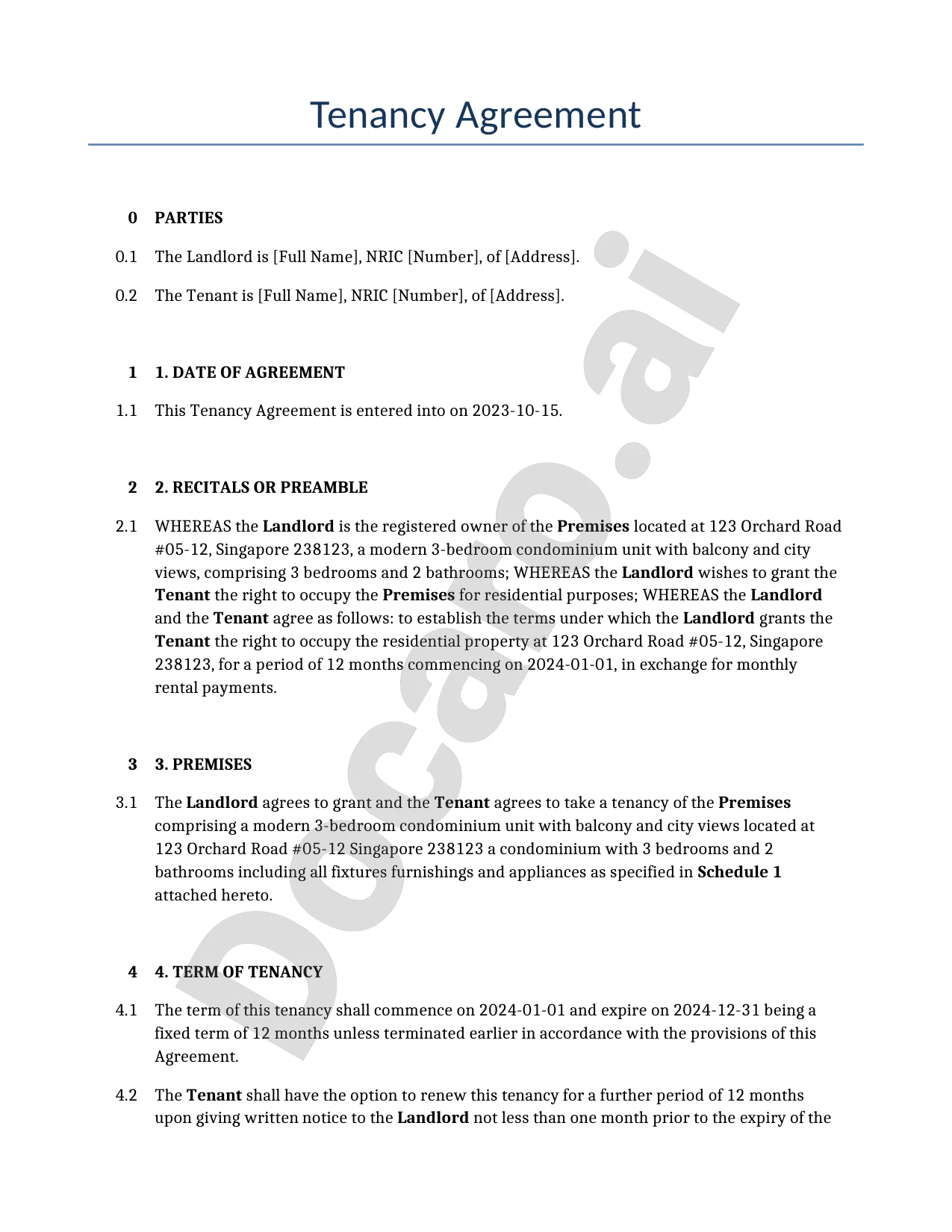
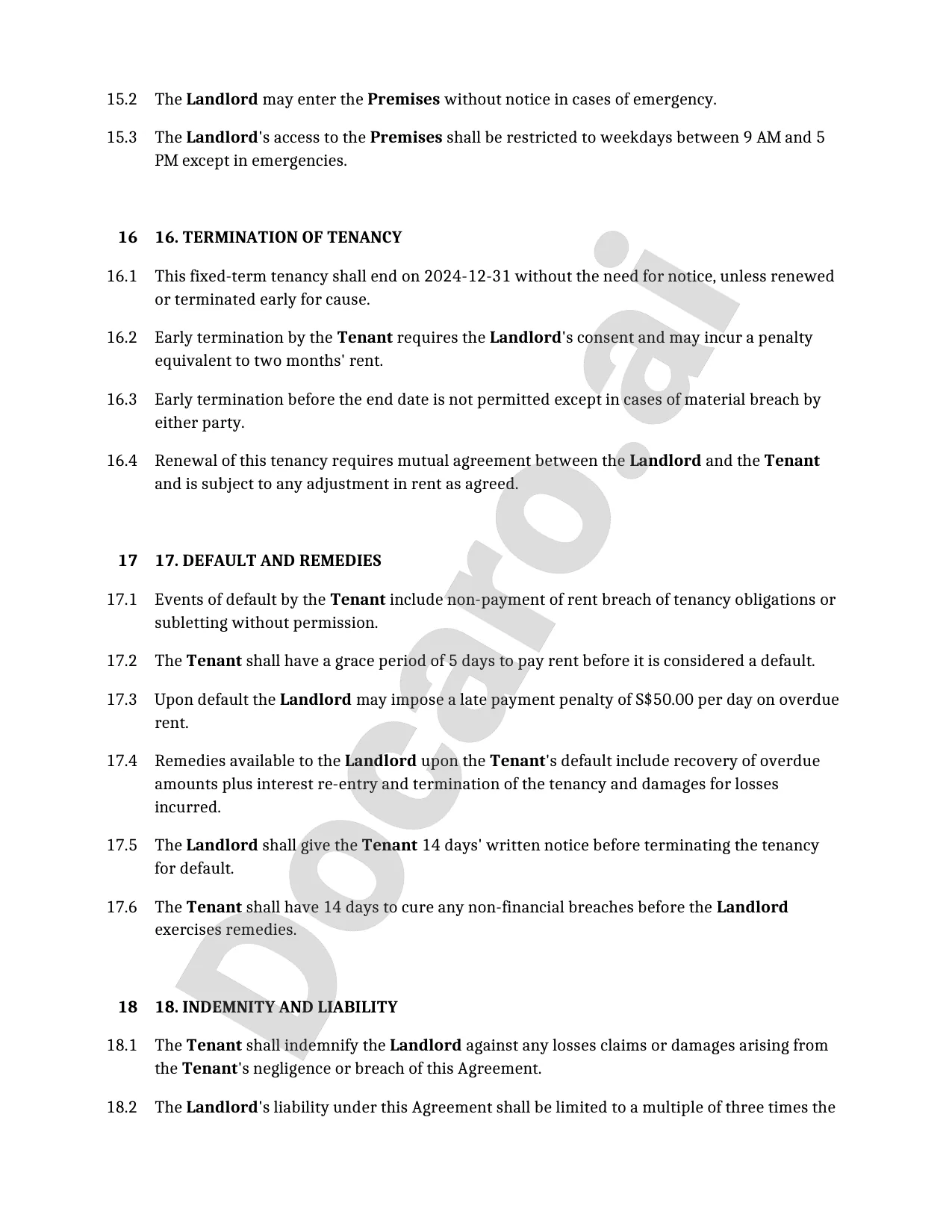
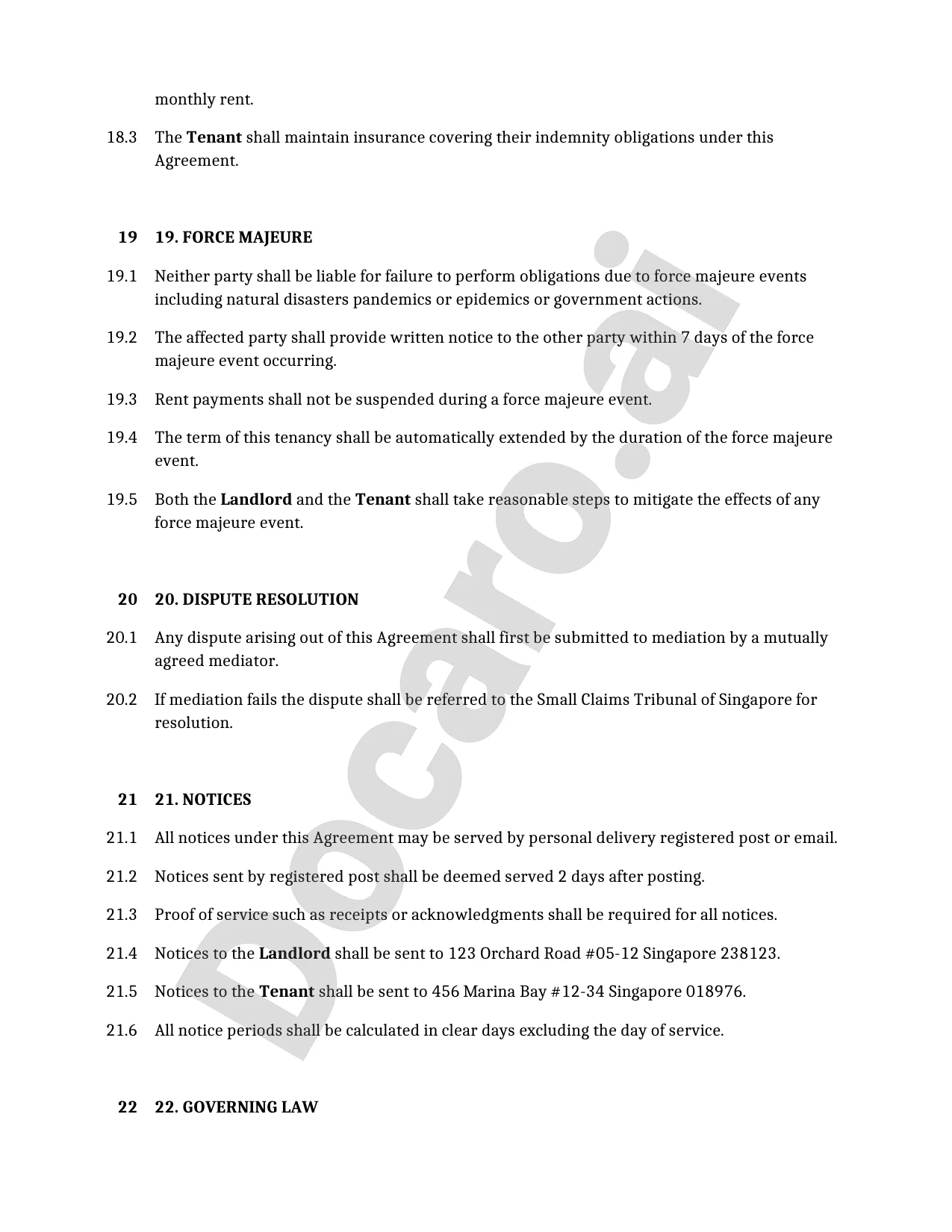
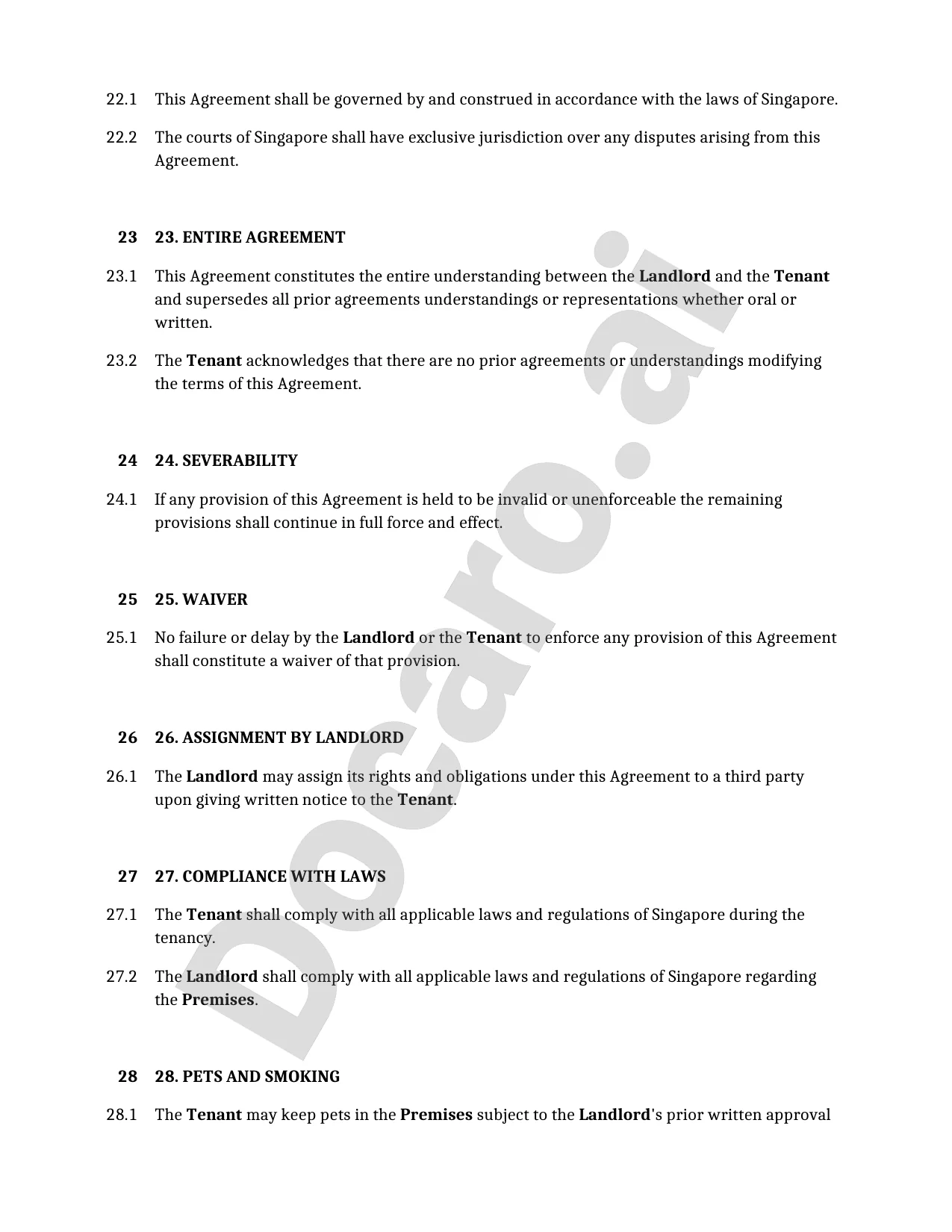
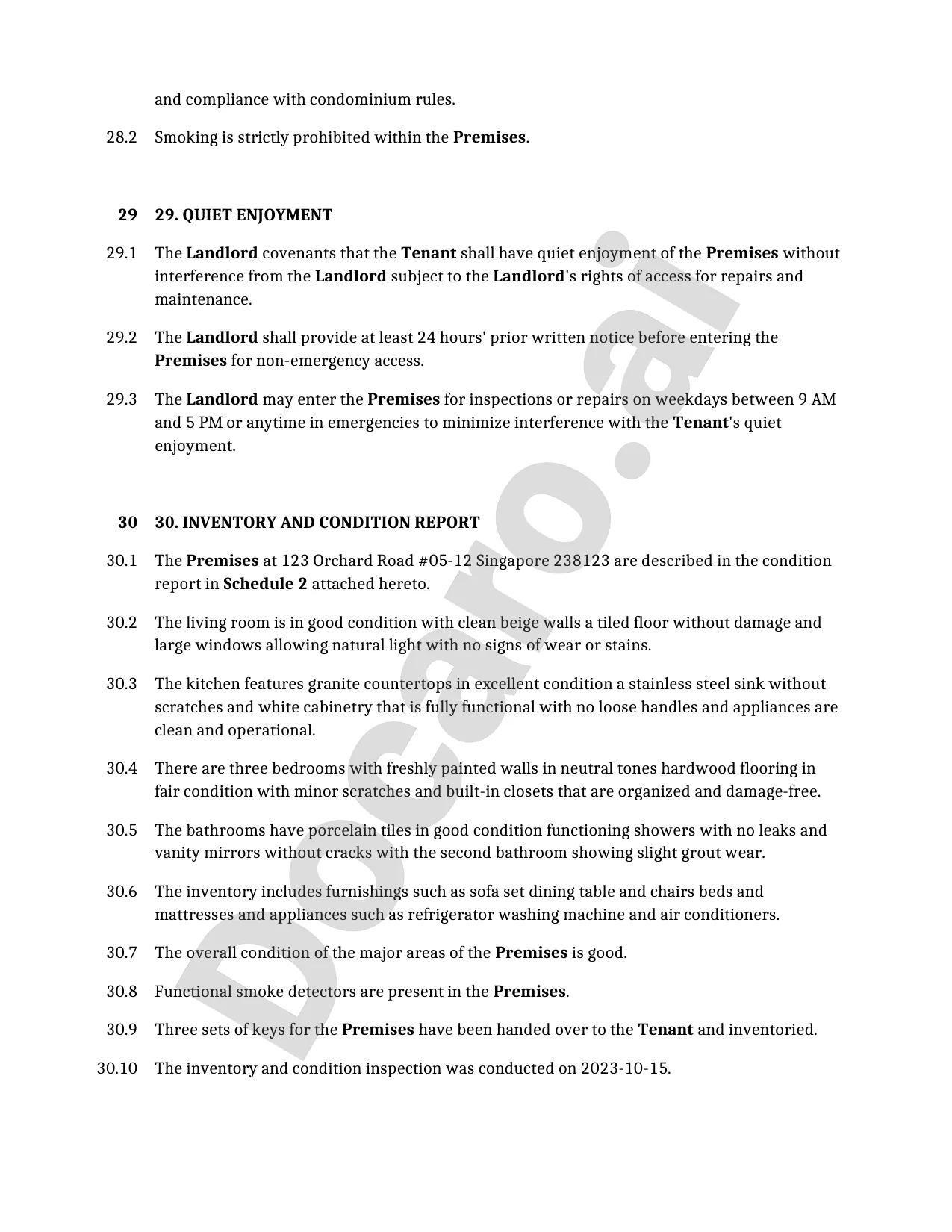
A tenancy agreement in Singapore is a legally binding contract between a landlord and a tenant that outlines the terms and conditions for renting a property, such as an apartment or HDB flat. In the context of Singapore's vibrant rental market, this document serves as the foundation for a smooth leasing relationship, ensuring clarity on rights and obligations.
Under the Control of Rent Act, a tenancy agreement is defined as a written or oral agreement granting the tenant exclusive possession of the property for a specified period, subject to rent control measures for certain older properties. This legal framework protects both parties by regulating rent increases and eviction procedures, promoting fairness in the Singapore rental market.
For landlords, the tenancy agreement provides security by detailing rent payments, maintenance responsibilities, and termination clauses, helping to minimize disputes. Tenants benefit from protections like deposit refunds and habitability guarantees, fostering trust in rental arrangements.
To grasp the basics of a tenancy agreement in Singapore, refer to Understanding the Basics of a Tenancy Agreement in Singapore. For customized needs, consider using Docaro to generate bespoke AI-powered legal documents tailored to your specific rental scenario.
When should you use a tenancy agreement in Singapore?
A tenancy agreement is essential for residential rentals exceeding one month, where it outlines the duration, rent, and responsibilities to prevent disputes in long-term living arrangements. For commercial leases, such agreements are crucial to specify terms like property use, maintenance, and lease duration, safeguarding business operations from unexpected interruptions.
In situations involving foreign tenants, a comprehensive tenancy agreement addresses unique needs such as visa-related clauses or currency fluctuations, ensuring clarity across cultural and legal boundaries. These documents protect both landlords and tenants by providing a legally binding framework that minimizes risks in international rentals.
The benefits of a well-crafted tenancy agreement include clear dispute resolution mechanisms and financial protections, fostering trust and stability for all parties. To create tailored agreements that fit specific needs, consider using Docaro for AI-generated legal documents, which offer precision without generic templates.
When should you avoid using a standard tenancy agreement?
A standard tenancy agreement may not suit short-term stays under a month, as these often require flexible terms for temporary rentals like vacation lets or business trips, which fixed long-term clauses cannot accommodate effectively.
Subletting without permission also renders a standard agreement unsuitable, since it typically prohibits such arrangements to protect the primary landlord's interests, necessitating explicit clauses or separate sublease contracts for any temporary tenant handovers.
Unique setups, such as student hostels or shared accommodations, demand special provisions for multiple occupants, utility sharing, or academic-year durations that go beyond generic templates.
For these scenarios, consulting a lawyer is essential to explore alternatives, and consider using Docaro for bespoke AI-generated legal documents tailored to your specific needs.
What are the key clauses to include in a Singapore tenancy agreement?
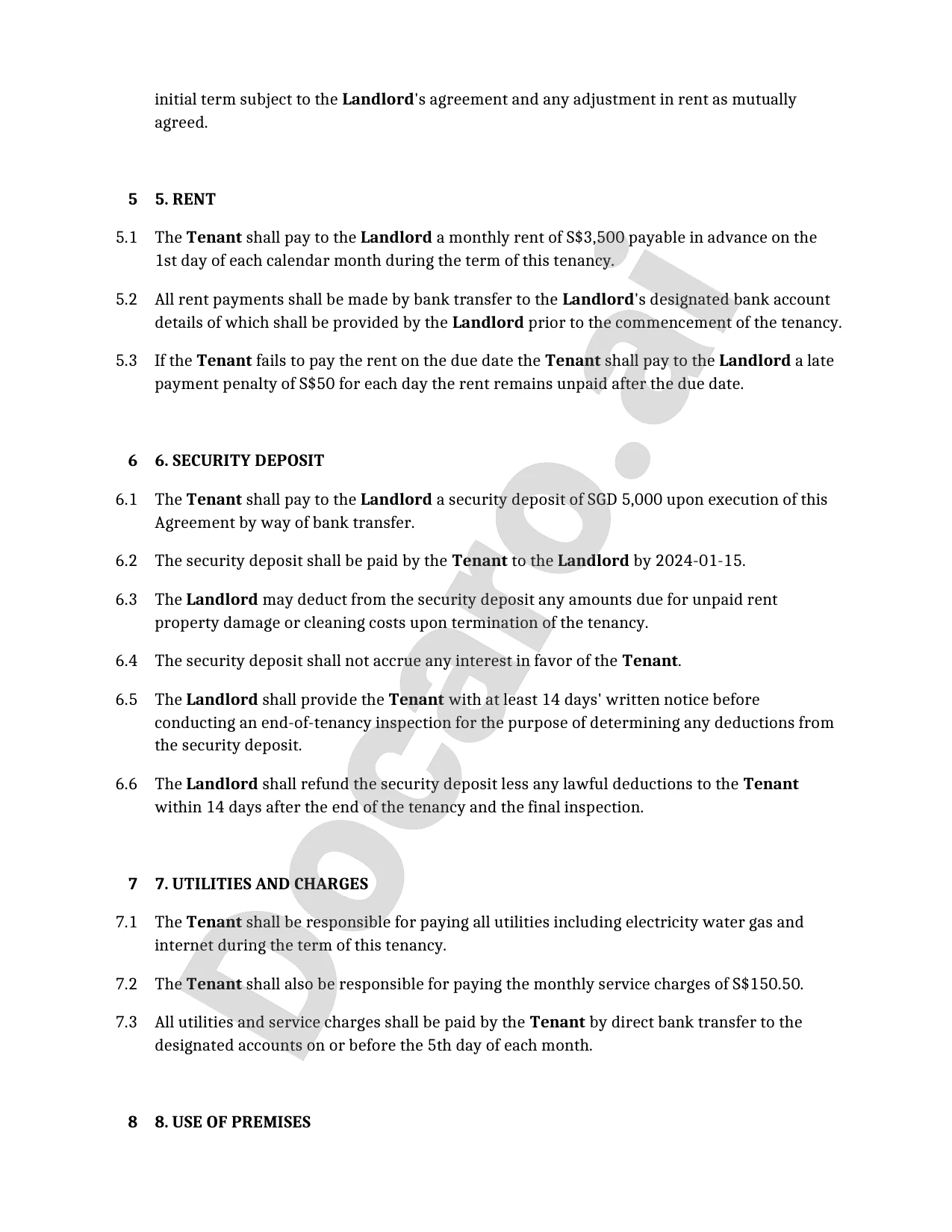
A Singapore tenancy agreement must clearly outline rent payment terms to prevent disputes, including the monthly amount, due date, payment method, and any late fees. These terms ensure smooth financial transactions between tenants and landlords in Singapore's rental market.
The security deposit clause specifies the amount, typically one to three months' rent, its purpose for damages or unpaid rent, and conditions for refund upon lease end. This protects both parties and is a standard requirement in Singapore rental agreements.
Lease duration defines the agreement period, such as 12 or 24 months, with options for renewal or early exit. It provides stability and sets expectations for long-term tenancy in Singapore.
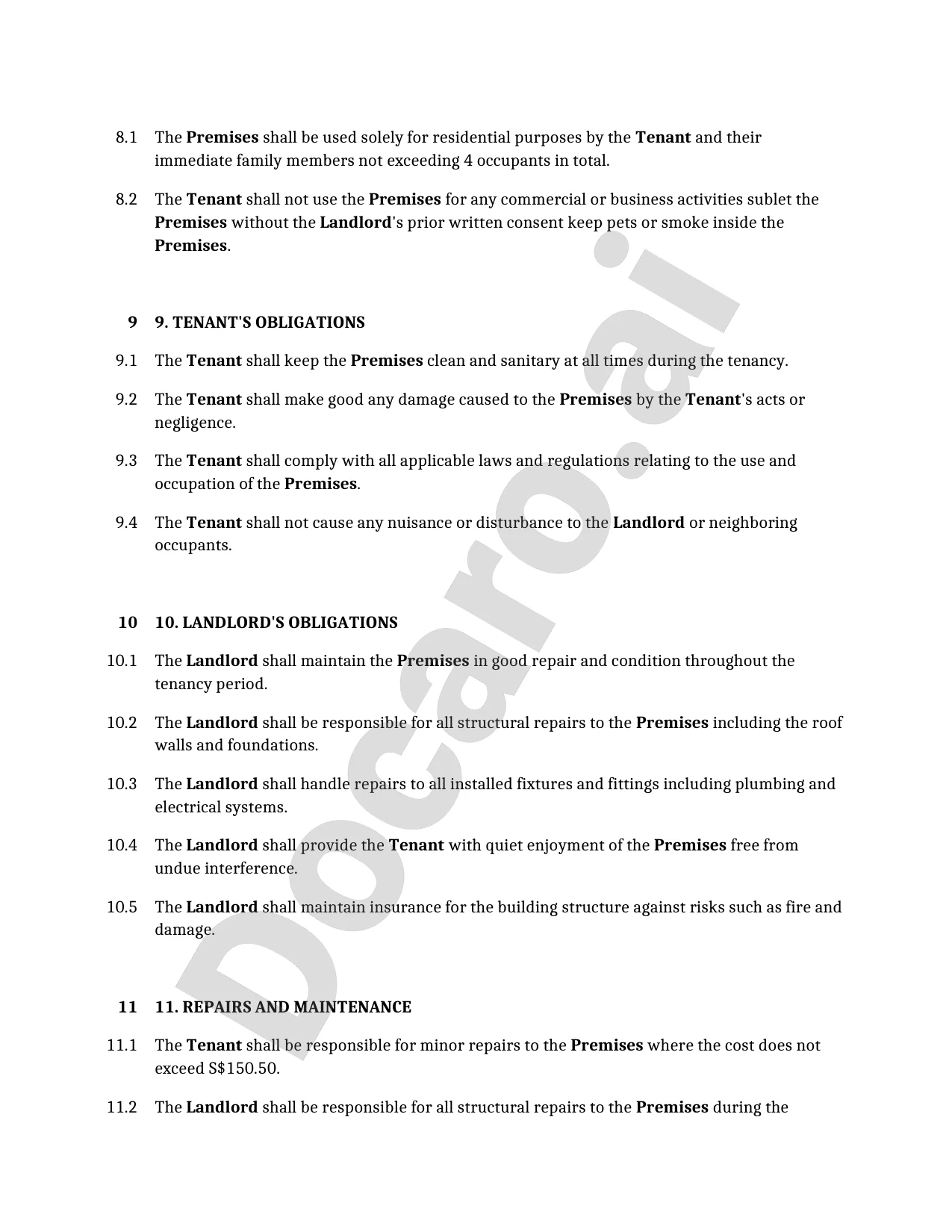
Maintenance responsibilities divide duties, where tenants handle minor repairs and landlords cover major ones like plumbing or structural issues. Clear allocation avoids conflicts and maintains property condition.
Termination conditions detail notice periods, usually one to two months, and penalties for breaking the lease early. This clause ensures orderly endings to tenancies in compliance with Singapore law.
For comprehensive details on these key clauses in Singapore tenancy agreements, refer to Key Clauses to Include in Your Singapore Tenancy Agreement. Advocate for bespoke AI-generated legal documents using Docaro to tailor agreements precisely to your needs.
"Clear rent escalation clauses are essential in lease agreements to avoid costly disputes over future rent increases; always consult a legal professional to draft precise terms tailored to your needs," says Jane Doe, a renowned property law expert with over 20 years of experience in commercial leasing. For bespoke AI-generated legal documents that ensure accuracy and customization, use Docaro to create your lease agreements efficiently.
What are the key rights and obligations of landlords and tenants?
In Singapore, tenancy laws are primarily governed by the Control of Rent Act for controlled tenancies and common law principles for private residential leases, emphasizing the rights and duties of both landlords and tenants. Landlords must ensure premises are habitable, providing essential services like water and electricity, while tenants are obligated to pay rent on time and maintain the property in good condition.
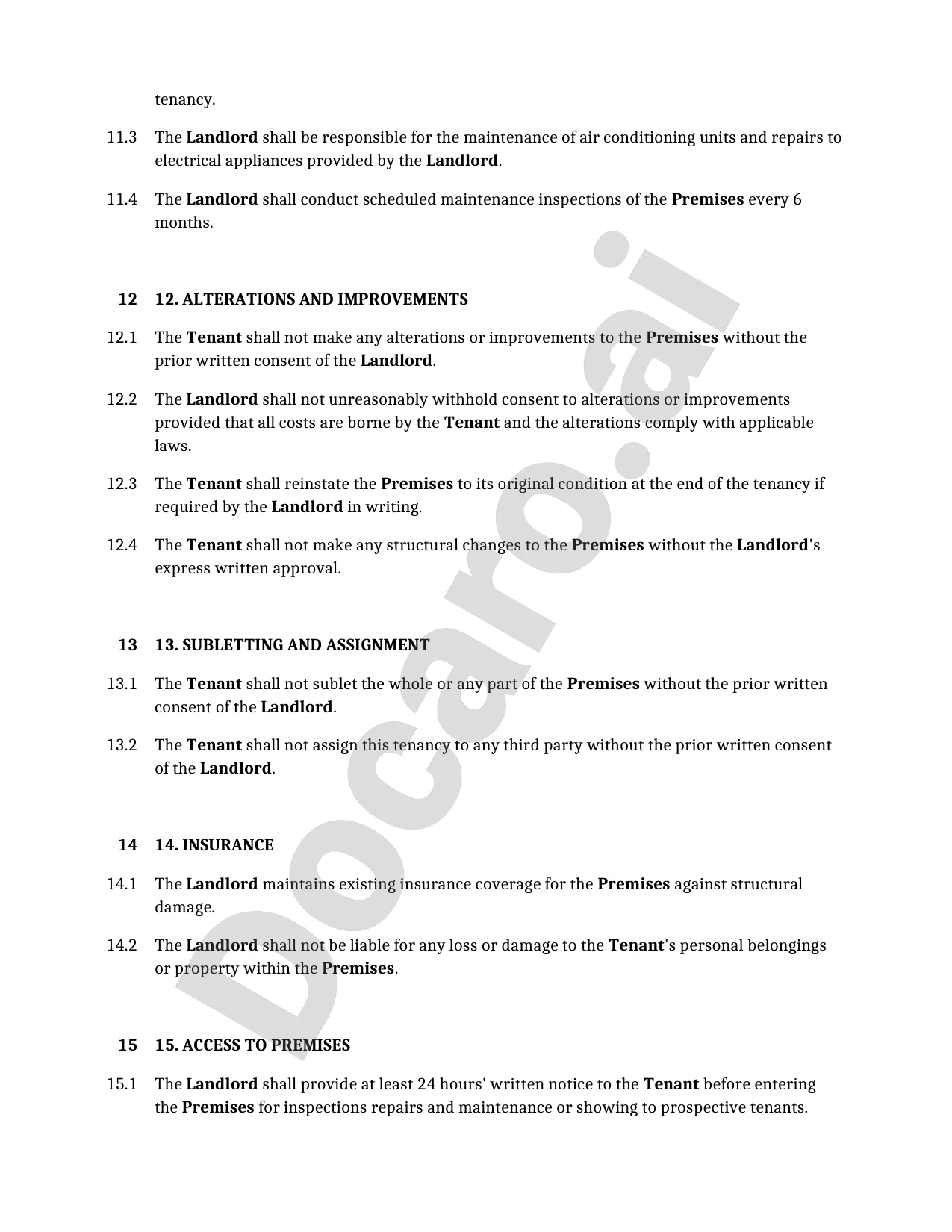
The landlord's key duty includes repairing structural defects and complying with health and safety standards under the Housing and Development Act for HDB properties. Tenants, in turn, must not sublet without permission and avoid causing nuisance, as outlined in standard tenancy agreements.
- Landlord rights: Collect rent, evict for breaches, and access for inspections with notice.
- Tenant rights: Quiet enjoyment, protection from unlawful eviction, and fair treatment under the Tenancy Agreement Act.
For personalized legal needs, consider bespoke AI-generated documents via Docaro to ensure compliance with Singapore's evolving tenancy regulations.
What are common key exclusions in tenancy agreements?
In lease agreements, exclusions for tenant-caused damages stipulate that tenants are responsible for repairs or losses due to their negligence or misuse of the property, protecting landlords from financial burdens while ensuring tenants maintain the space responsibly.
Prohibitions on subletting without consent allow landlords to vet potential subtenants, safeguarding property integrity and compliance with lease terms, yet tenant rights are respected by requiring reasonable approval processes that cannot be arbitrarily withheld.
Pet policies often restrict or ban pets to minimize wear and tear, allergies, or noise complaints, benefiting landlords through reduced liability; however, these must balance tenant freedoms by permitting service animals and outlining clear, non-discriminatory rules.
These exclusions collectively shield landlords from unforeseen risks in rental properties, fostering stable tenancies, while upholding tenant rights via fair enforcement and legal compliance; for customized protections, consider bespoke AI-generated legal documents using Docaro.
Are there recent or upcoming legal changes affecting tenancy agreements in Singapore?
The Residential Tenancies Act in Ontario remains a cornerstone for landlord-tenant relations, with no major amendments introduced as of 2023. Tenants and landlords should consult the official Ontario legislation website for the latest versions to ensure compliance with current rules on evictions, rent increases, and dispute resolutions.
Regarding COVID-19 eviction moratoriums, all extensions and emergency measures related to the pandemic have expired, reverting to standard procedures under the Act since 2023. For real-time updates on any potential new public health-related protections, check resources from the Ontario government renting rights page.
Staying informed about tenancy law updates is essential, especially with ongoing discussions around housing affordability. Professional advice or bespoke AI-generated legal documents via Docaro can help tailor solutions to specific situations without relying on generic templates.
How can you draft and execute a tenancy agreement effectively?
1
Generate Bespoke Tenancy Agreement with Docaro
Use Docaro to create a customized tenancy agreement tailored to your specific needs in Singapore, ensuring all essential clauses are included.
2
Customize Clauses for Your Agreement
Review and adjust the AI-generated clauses in Docaro to match your rental terms, such as duration, rent, and responsibilities.
3
Obtain Legal Review
Have a qualified lawyer review the customized Docaro agreement to confirm compliance with Singapore tenancy laws.
4
Sign and Stamp with IRAS
Sign the agreement with all parties, then submit to IRAS for stamping within 14 days to make it legally binding.
What common mistakes should you avoid in tenancy agreements?
When drafting a Singapore tenancy agreement, one major pitfall is omitting renewal options, which can lead to disputes if tenants assume automatic extension while landlords intend a fixed term. Similarly, unclear utility payment terms often result in confusion over who covers electricity, water, or internet bills, potentially causing financial disagreements.
To avoid these and other common errors in Singapore tenancy agreements, explore detailed strategies in our guide on common mistakes to avoid.
For a smooth tenancy, opt for bespoke AI-generated legal documents using Docaro to ensure customized clauses that fit your specific needs. Always review the agreement with a professional and communicate expectations clearly with your tenant or landlord upfront.
You Might Also Be Interested In
A Legal Contract Outlining The Terms For Leasing Retail Space To A Tenant For Commercial Use.
A Legal Document Allowing A Commercial Tenant To Lease Out Part Or All Of Their Rented Space To Another Party, With The Original Tenant Remaining Responsible To The Landlord.
A Legal Document That Transfers A Commercial Tenant's Lease Rights And Obligations To A New Tenant, With Landlord Consent.
A Legal Document That Extends Or Renews The Term Of An Existing Commercial Property Lease Between Landlord And Tenant.
A Preliminary Document Outlining The Key Terms And Intentions Of Parties For A Lease Agreement, Often Non-binding Except For Certain Clauses.
A Legal Contract Outlining The Terms For Renting Office Space, Including Duration, Rent, And Responsibilities Of Landlord And Tenant.
A Legal Contract Outlining The Terms For Leasing A Warehouse Space, Including Rent, Duration, And Responsibilities Of Landlord And Tenant.
A Legal Writ Issued By The Court In Singapore To Enforce The Eviction Of Tenants From Commercial Premises Following A Successful Possession Order.