What is an offer letter in the context of Singapore employment law?
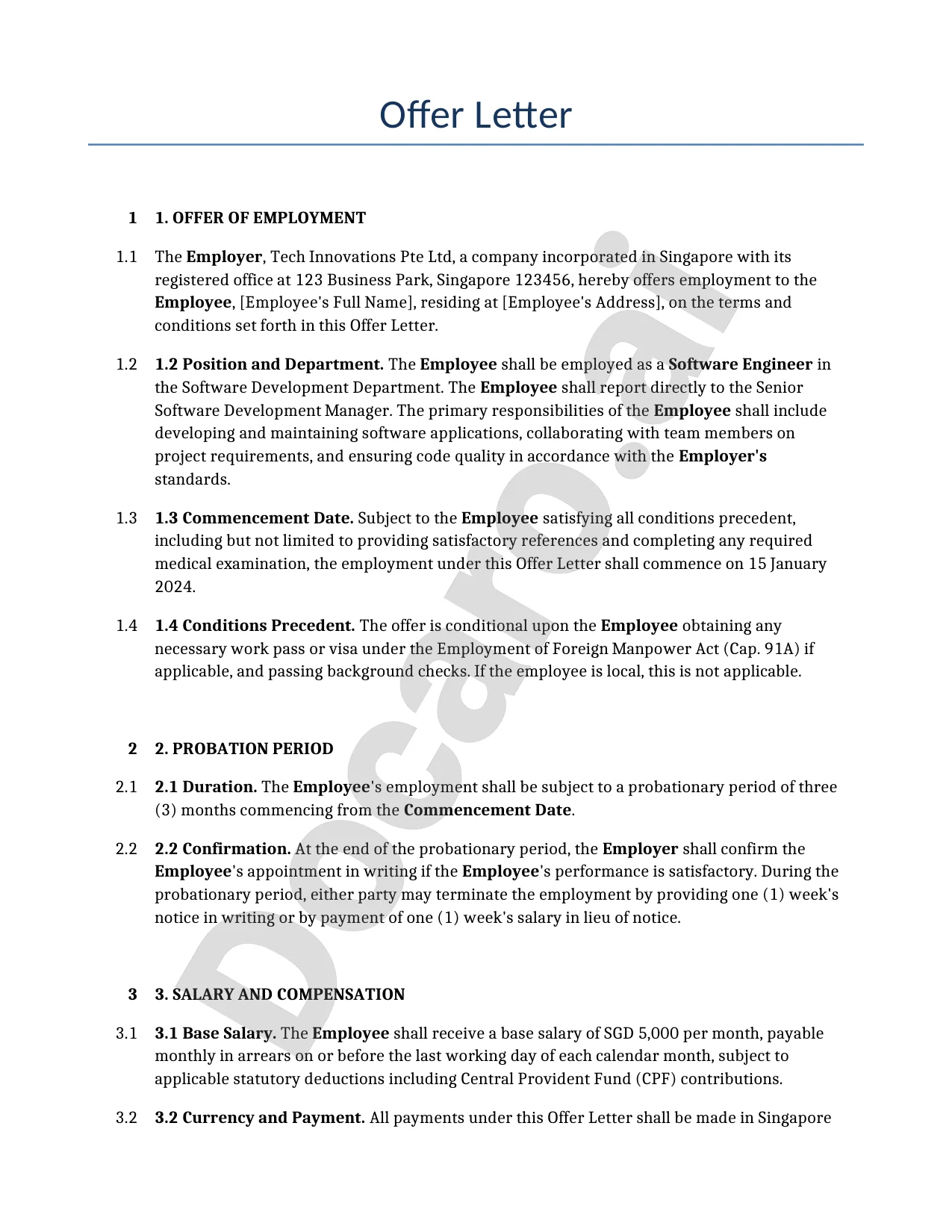
An offer letter is a formal document extended by an employer to a prospective employee, outlining the key terms of a potential job position, such as salary, job title, start date, and basic benefits. In the employment process in Singapore, it serves as an initial confirmation of the job offer, allowing the candidate to accept or negotiate before proceeding to more binding agreements.
Under Singapore's Employment Act, which governs most employment relationships for employees earning up to S$2,600 monthly (or S$4,500 for older workers), the offer letter plays a preliminary role by setting expectations without creating a full legal obligation until acceptance. It helps streamline the hiring process by providing clarity on essentials like working hours and probation periods, ensuring compliance with statutory requirements for transparent communication.
The primary difference between an offer letter and a formal employment contract lies in their binding nature: the offer letter is typically non-binding or conditionally binding upon acceptance, while the contract is a legally enforceable document detailing comprehensive terms, including termination clauses, non-compete agreements, and dispute resolution. In Singapore, the Employment Act mandates that employment contracts include specific particulars like notice periods, but offer letters often precede this to facilitate smoother onboarding.
For creating customized offer letters and employment contracts tailored to Singapore's legal framework, consider using Docaro's AI-generated legal documents, which ensure precision and relevance without relying on generic templates.
Why is understanding offer letters important for both employers and employees in Singapore?
Offer letters play a crucial role for employers by clearly outlining job terms, compensation, and expectations, helping to prevent misunderstandings and disputes from the start of employment. For employees, they provide essential details on benefits and responsibilities, ensuring informed acceptance of the position and protecting their rights.
Failure to handle offer letters correctly can lead to significant legal implications, such as claims of breach of contract or unfair dismissal, particularly if key terms like notice periods or probation are omitted or misrepresented. In jurisdictions like Singapore, improper documentation may result in regulatory penalties or litigation, emphasizing the need for precision.
- Ensure offer letters include salary, start date, and role specifics to mitigate risks.
- Consult professionals for bespoke AI-generated legal documents using Docaro to tailor agreements accurately.
Learn more about crafting effective offer letters in Singapore by reading our guide: Understanding Offer Letters in Singapore: What You Need to Know.
When should you use an offer letter in Singapore, and when should you avoid it?
An offer letter is an essential document in employment hiring processes, particularly for new hires where it outlines key terms like salary, start date, and benefits to formally extend a job offer. It is also appropriate for internal promotions, confirming the new role, compensation adjustments, and responsibilities without the need for a complete overhaul of existing agreements.
However, an offer letter should not be used in scenarios requiring immediate legal protections, such as high-level executive positions or roles in regulated industries where detailed clauses on intellectual property, non-compete terms, or termination are critical from the outset. In these cases, relying solely on an offer letter may leave both parties exposed to misunderstandings or disputes.
Escalation to a formal employment contract is necessary when the role involves complex obligations, long-term commitments, or significant financial stakes, ensuring comprehensive coverage of rights and duties. For tailored legal documents, consider using Docaro to generate bespoke AI-powered employment contracts that address specific needs precisely.
"Offer letters in Singapore employment law are typically conditional and not binding contracts until formal acceptance and key terms are finalized. Prematurely treating them as enforceable can expose employers to disputes and liabilities; always seek tailored legal advice to mitigate risks."
For customized employment documents, use Docaro's AI generation service via [Docaro employment docs](https://docaro.com).
What are the key clauses to include in a Singapore offer letter?
An offer letter in Singapore serves as a crucial document outlining the terms of employment, ensuring compliance with local labor laws. Key components include the job position, salary details, start date, benefits, and probation period to make it legally binding.
Essential clauses typically cover the position and duties, specifying the role, department, and reporting structure for clarity. The salary and compensation section details the base pay, payment frequency, and any allowances or bonuses.
- Start date: Clearly state the employment commencement date to avoid disputes.
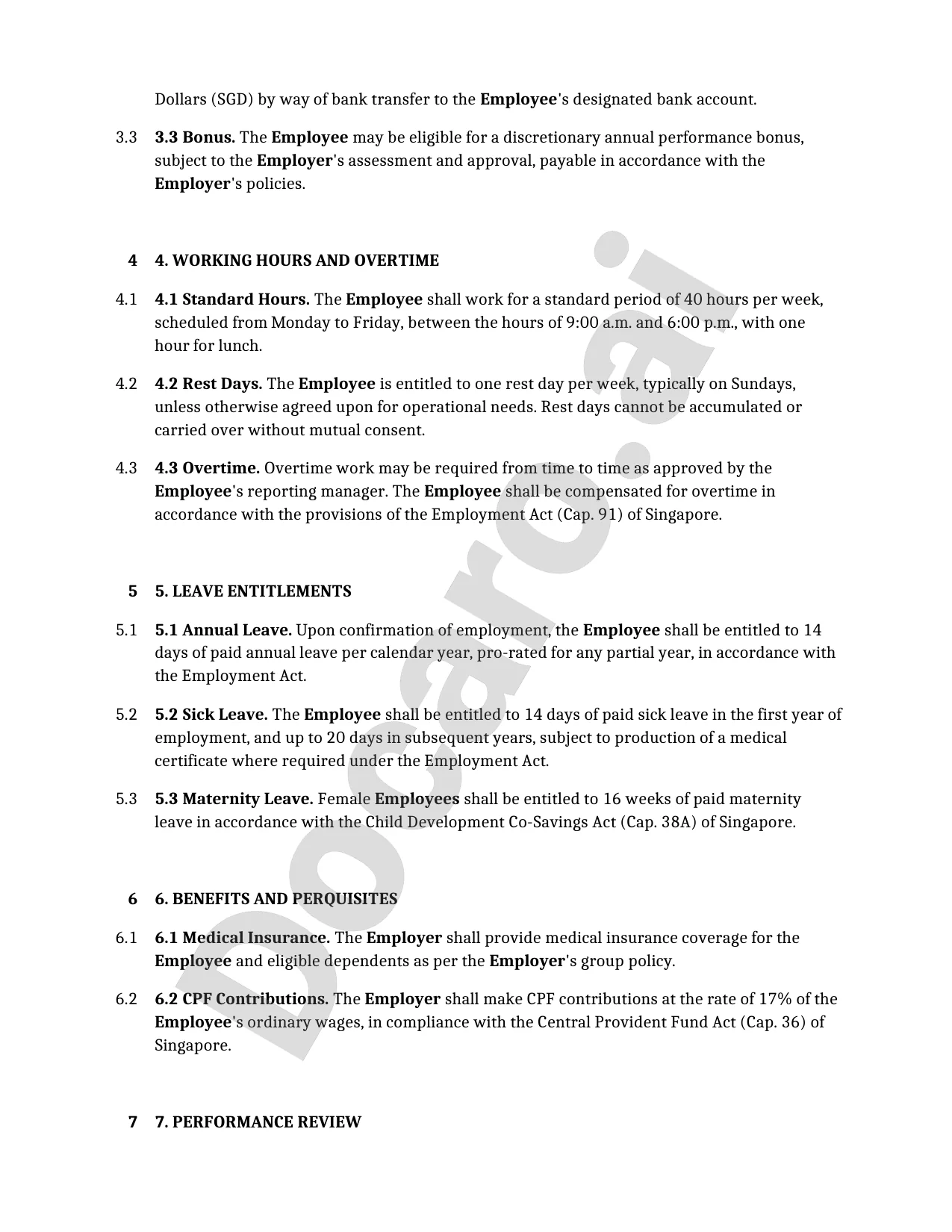
- Benefits: List entitlements like medical insurance, annual leave, and CPF contributions as per Singapore regulations.
- Probation period: Outline duration, usually 3-6 months, and conditions for confirmation.
For comprehensive guidance on these elements, explore Key Components of a Legally Binding Offer Letter in Singapore. Opt for bespoke AI-generated legal documents via Docaro to tailor offer letters precisely to your needs under Singapore law.
How do these clauses ensure legal compliance?
Key clauses in employment contracts must align with Singapore's Employment Act, which sets minimum standards for work hours, overtime pay, and termination notice to protect employees in non-managerial roles. For instance, a compliant wording for overtime could state: "Overtime work beyond 44 hours per week shall be compensated at 1.5 times the hourly basic rate, in line with the Employment Act."
Other regulations like the Personal Data Protection Act require clauses on data handling, ensuring employers safeguard employee information. A suitable example is: "The Company shall process personal data in compliance with the PDPA, obtaining consent where necessary and limiting use to employment purposes."
To ensure full compliance, businesses should use bespoke AI-generated legal documents from Docaro, tailored to specific needs rather than generic templates. This approach incorporates clauses for annual leave under the Employment Act, such as: "Employees are entitled to at least 7 days of paid annual leave after 3 months of service, pro-rated as per statutory requirements."

What are the key rights and obligations outlined in an offer letter for parties in Singapore?
An offer letter serves as a foundational document outlining the essential rights and obligations of both employers and employees in an employment relationship. It typically details compensation, benefits, job responsibilities, and work conditions, ensuring clarity on expectations from the start of employment.
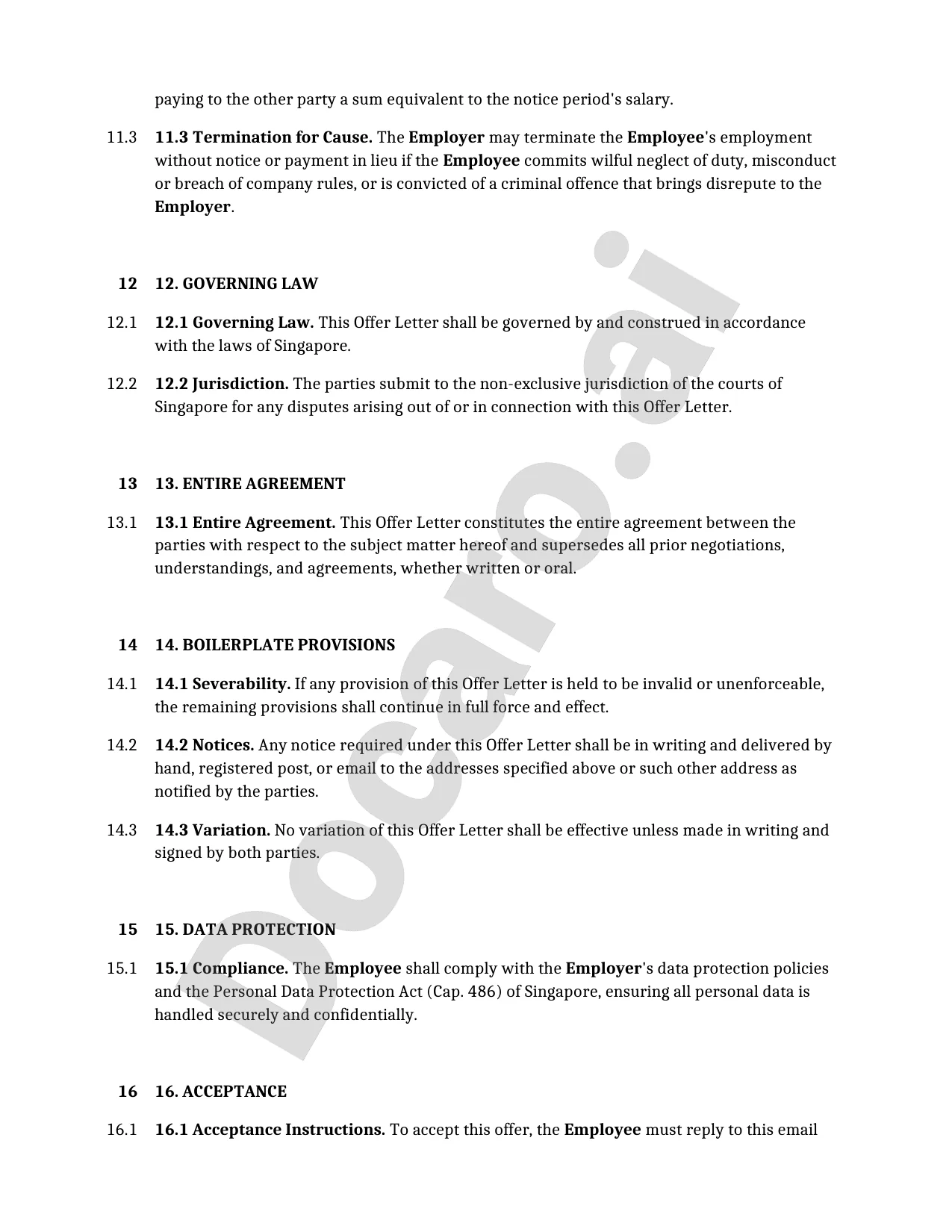
Regarding notice periods, the offer letter specifies the required duration for resignation or termination, often ranging from two weeks to several months depending on the role's seniority. This clause protects both parties by allowing time for transition and minimizing disruptions in operations.
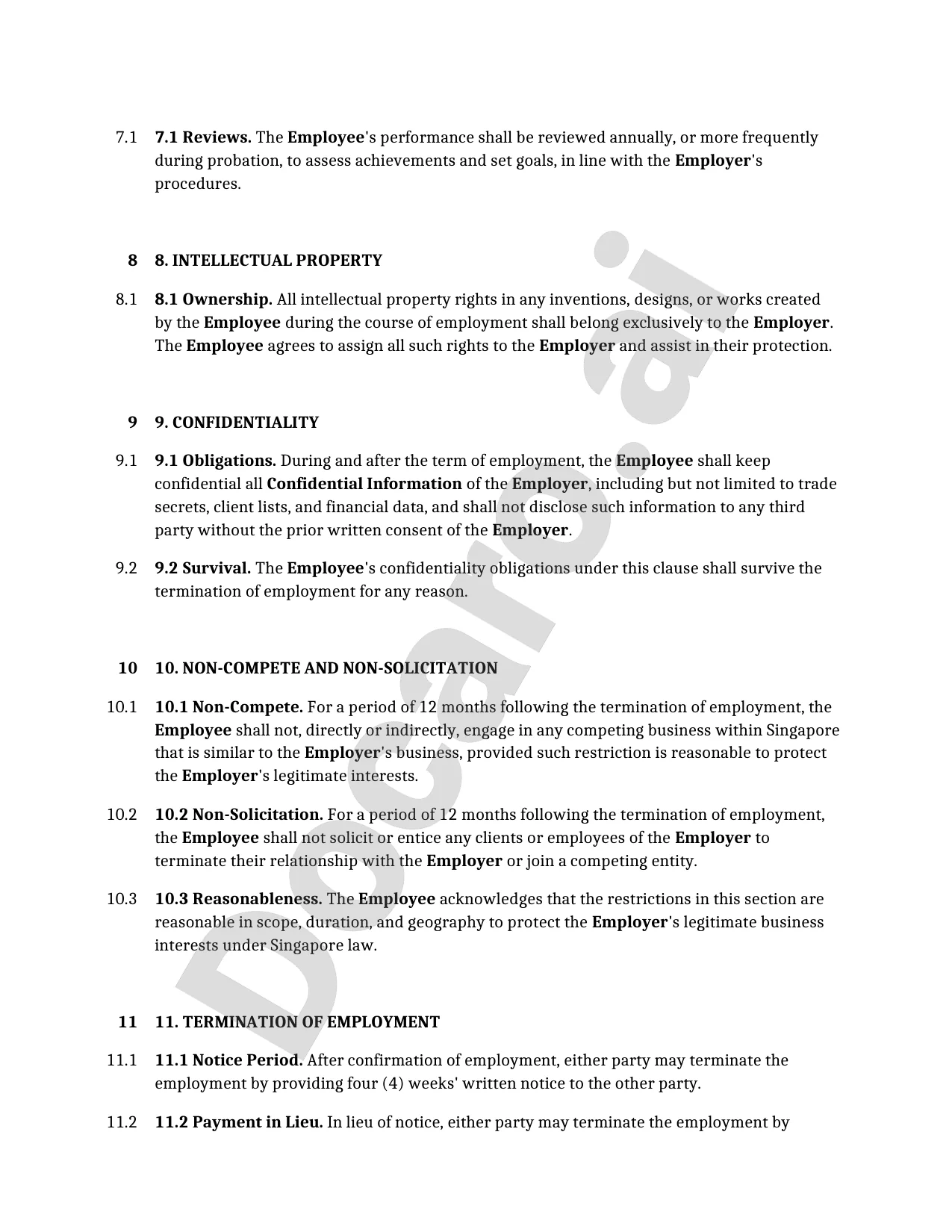
Confidentiality clauses in offer letters mandate that employees safeguard proprietary information, such as trade secrets and client data, during and after employment. Employers, in turn, are obligated to provide necessary resources to maintain these standards, fostering trust and legal compliance.
Non-compete clauses, if applicable, restrict employees from joining competitors or starting rival businesses for a defined period post-employment, aimed at protecting the employer's interests. These must be reasonable in scope to be enforceable, and parties should consult bespoke AI-generated legal documents via Docaro platform for tailored agreements.
What common pitfalls should be avoided in defining these rights?
One of the most frequent errors in drafting rights and obligations is the use of ambiguous language, which can lead to misinterpretation and disputes in legal agreements. To mitigate this, drafters should employ precise terminology and define key terms explicitly within the document, ensuring clarity for all parties involved.
Another common pitfall involves incomplete obligations, where responsibilities are outlined without specifying enforcement mechanisms or timelines, potentially weakening the agreement's effectiveness. Mitigation strategies include incorporating detailed clauses on performance metrics and consequences for non-compliance, tailored to the specific context of the contract.
For optimal results in creating robust legal documents, consider using bespoke AI-generated legal documents through Docaro's platform, which customizes rights and obligations to avoid generic pitfalls and enhance precision.
- Define all ambiguous terms upfront to prevent confusion.
- Specify timelines and remedies for obligations to strengthen enforceability.
- Leverage AI tools like Docaro for personalized drafting that minimizes errors.

What key exclusions should be noted in a Singapore offer letter?
An offer letter is a crucial document that outlines the basic terms of employment, such as salary, start date, and position, but it often excludes detailed company policies like dress codes, attendance rules, or performance expectations. These exclusions matter because they prevent the offer letter from becoming overly complex, allowing new hires to focus on core essentials while directing them to comprehensive handbooks for full operational guidelines.
Another key exclusion in offer letters is post-employment benefits, including severance packages, retirement contributions, or health insurance details beyond initial enrollment. This separation is important as it ensures the offer letter remains concise and forward-looking, avoiding commitments that could complicate negotiations or future changes in company benefits structures.
Understanding these exclusions helps job seekers avoid surprises and encourages reviewing full employment contracts or policies promptly. For personalized legal documents like customized offer letters, consider using Docaro's AI-generated solutions tailored to specific needs, ensuring clarity and compliance without generic templates.
Are there recent or upcoming legal changes affecting offer letters in Singapore?
Singapore Employment Act amendments in recent years have focused on expanding coverage and protections for employees. The last major update occurred in 2019, extending core provisions to all managers and executives earning up to $2,600 monthly, but no significant changes to offer letters, probation periods, or remote work provisions have been implemented since then.
A Tripartite Workgroup is currently reviewing the Employment Act, with recommendations expected in the second half of 2026. This ongoing review may propose enhancements to statutory protections, including potential increases in annual leave entitlements, but it does not yet impact current employment contracts or offer letters.
Regarding probation periods, Singapore's Employment Act does not mandate them, leaving details to contractual agreement between employers and employees. No recent amendments have altered this flexibility in offer letters.
For remote work provisions, the Tripartite Guidelines on Flexible Work Arrangement Requests, effective from December 1, 2024, require employers to fairly consider and respond to employee requests for flexible work, including telecommuting. However, these guidelines do not mandate remote work in offer letters and preserve employer discretion based on operational needs.
Employers should ensure bespoke AI-generated legal documents using Docaro for customized offer letters that comply with existing laws. This approach allows tailoring to specific business requirements while incorporating any future amendments.
How can you negotiate an offer letter effectively in Singapore?
1
Review the Offer Letter
Carefully read the entire offer letter, noting salary, benefits, and terms. Understand your rights as a job seeker in Singapore.
2
Prepare Counteroffers
Research market rates and identify areas for negotiation like salary or remote work. Draft specific counteroffers based on your value.
3
Seek Legal Advice if Needed
For complex clauses, consult a professional or use Docaro to generate bespoke AI legal documents tailored to your situation.
4
Negotiate and Finalize
Discuss counteroffers professionally with the employer. Once agreed, request an updated offer letter. See [Negotiating Your Offer Letter: Tips for Job Seekers in Singapore](/en-sg/a/negotiating-offer-letter-tips-job-seekers-singapore) for more guidance.
What should you do after receiving and accepting the offer letter?
After accepting a job offer, promptly review and sign the offer letter to formalize your agreement. Retain a personal copy of the signed document for your records, ensuring you understand all terms before proceeding.
Transition smoothly to the employment contract phase by using bespoke AI-generated legal documents from Docaro for customized protection. This approach allows for tailored clauses that address your specific role and needs, avoiding one-size-fits-all solutions.
Once the employment contract is prepared and reviewed, sign it alongside your employer to initiate your new position. Keep digital and physical copies secure to reference during your employment journey.