Docaro

AI Generated Singaporean Founders' Agreement Document
PDF & Word - 2026 Updated

A photorealistic image of two professional adults in a modern Singapore office, shaking hands over a business meeting table with a city skyline view in the background, symbolizing partnership and agreement in starting a business.
Effortlessly create a personalized Singaporean Founders' Agreement with our AI-driven platform.
Free instant document creation.
Compliant with Singapore law.
No sign up or monthly subscription.

Docaro Pricing

Basic
Free
Document Generation
No Sign Up
No Subscription
Download Watermarked PDF
Premium
$4.99 USD
Document Generation
No Sign Up
No Subscription
Download Clean PDF
Download Microsoft Word
Download HTML
Download Text
Email Document
Generate your document for free. Only pay if you like the result and need an un-watermarked version.

When do you need a Founders' Agreement in Singapore?

  • Starting a Business with Partners
    You need a founders' agreement when launching a company with co-founders to clearly outline everyone's roles and responsibilities from the beginning.
  • Deciding on Ownership Shares
    It helps specify how ownership of the company is divided among founders, preventing future arguments over equity.
  • Planning for Growth or Exits
    The agreement sets rules for what happens if a founder wants to leave or if the business expands, ensuring smooth transitions.
  • Avoiding Conflicts
    A well-drafted document reduces the risk of disagreements by addressing key issues like decision-making and dispute resolution upfront.
  • Protecting Your Interests
    Having a clear agreement safeguards each founder's contributions and rights, making it essential for the long-term success of your venture in Singapore.

Singaporean Legal Rules for a Founders' Agreement

  • Freedom to Agree
    In Singapore, founders can freely create a founders' agreement as long as it follows general contract rules and doesn't break any laws.
  • Clear Terms Needed
    The agreement must clearly state roles, responsibilities, ownership shares, and how decisions are made among founders.
  • Company Law Applies
    If the startup forms a company, the agreement works alongside Singapore's Companies Act, which sets rules for company operations.
  • Share Ownership
    The agreement should detail how shares are divided and what happens if a founder leaves or sells their stake.
  • Dispute Resolution
    Include ways to handle disagreements, such as mediation, to avoid court battles.
  • Intellectual Property
    Specify who owns ideas, inventions, or trademarks created by founders for the business.
  • Confidentiality Matters
    Founders must agree to keep business secrets private to protect the startup.
  • Not a Public Document
    The agreement is private between founders and doesn't need to be filed with government authorities unless it affects company registration.
  • Seek Legal Help
    While templates help, consulting a Singapore lawyer ensures the agreement fits your specific situation and complies with local rules.
Important

Selecting an inappropriate structure for a founders' agreement can lead to unenforceable clauses or unintended equity distributions among partners.

What a Proper Founders' Agreement Should Include

  • Roles and Responsibilities
    Clearly define what each founder will do in the company to avoid confusion and ensure smooth operations.
  • Ownership Shares
    Specify how much of the company each founder owns, including how shares are divided based on contributions.
  • Decision-Making Process
    Outline how major decisions will be made, such as voting rights or requiring unanimous agreement.
  • Capital Contributions
    Detail what each founder will invest in terms of money, time, or resources to start the business.
  • Intellectual Property Rights
    State that all ideas, inventions, or creations related to the business belong to the company.
  • Confidentiality Obligations
    Require founders to keep sensitive business information private to protect the company's interests.
  • Non-Compete and Non-Solicit Rules
    Prevent founders from starting rival businesses or poaching employees for a set period after leaving.
  • Exit Procedures
    Describe what happens if a founder wants to leave, including how their shares will be handled.
  • Dispute Resolution
    Provide steps for resolving disagreements, like mediation, to keep conflicts from harming the business.
  • Governing Law
    Confirm that the agreement follows Singapore's laws to ensure it's legally enforceable.

Why Free Templates Can Be Risky for Founders' Agreements

Free templates for founders' agreements often rely on generic structures that overlook Singapore-specific regulations on company formation, equity distribution, and dispute resolution. Inaccurate clauses can lead to unintended ownership disputes, non-compliance with the Companies Act, or challenges in enforcing intellectual property rights during business operations.

Our AI-generated bespoke founders' agreement is customized to your startup's unique details, ensuring compliance with Singapore law, precise equity allocations, and robust protections for IP and decision-making processes, providing a solid foundation tailored to your venture's needs.

Generate Your Bespoke Founders' Agreement in 4 Easy Steps

1
Answer a Few Questions
Our AI guides you through the info required.
2
Generate Your Document
Docaro builds a bespoke document tailored specifically on your requirements.
3
Review & Edit
Review your document and submit any further requested changes.
4
Download & Sign
Download your ready to sign document as a PDF, Microsoft Word, Txt or HTML.

Why Use Our AI Founders' Agreement Generator?

Fast Generation
Quickly generate a comprehensive Founders' Agreement, eliminating the hassle and time associated with traditional document drafting.
Guided Process
Our user-friendly platform guides you step by step through each section of the document, providing context and guidance to ensure you provide all the necessary information for a complete and accurate Founders' Agreement.
Safer Than Legal Templates
We never use legal templates. All documents are generated from first principles clause by clause, ensuring that your document is bespoke and tailored specifically to the information you provide. This results in a much safer and more accurate document than any legal template could provide.
Professionally Formatted
Your Founders' Agreement will be formatted to professional standards, including headings, clause numbers and structured layout. No further editing is required. Download your document in PDF, Microsoft Word, TXT or HTML.
Compliance with Singaporean Law
Rest assured that all generated documents meet the latest legal standards and regulations of Singapore, enhancing trust and reliability.
Cost-Effective
Save money by generating legally sound Founders' Agreement without the need for expensive legal services or consultations.
Get Started for Free - No Sign Up or Monthly Subscription Required
No payment or sign up is required to start generating your Founders' Agreement. Generate and download a watermarked version of your document for free. Pay only if you want to remove the watermark and gain full access to your document. No monthly subscriptions or hidden fees. Pay once and use your document forever.
Need to Generate a Founders' Agreement in a Different Country?
Choose country:

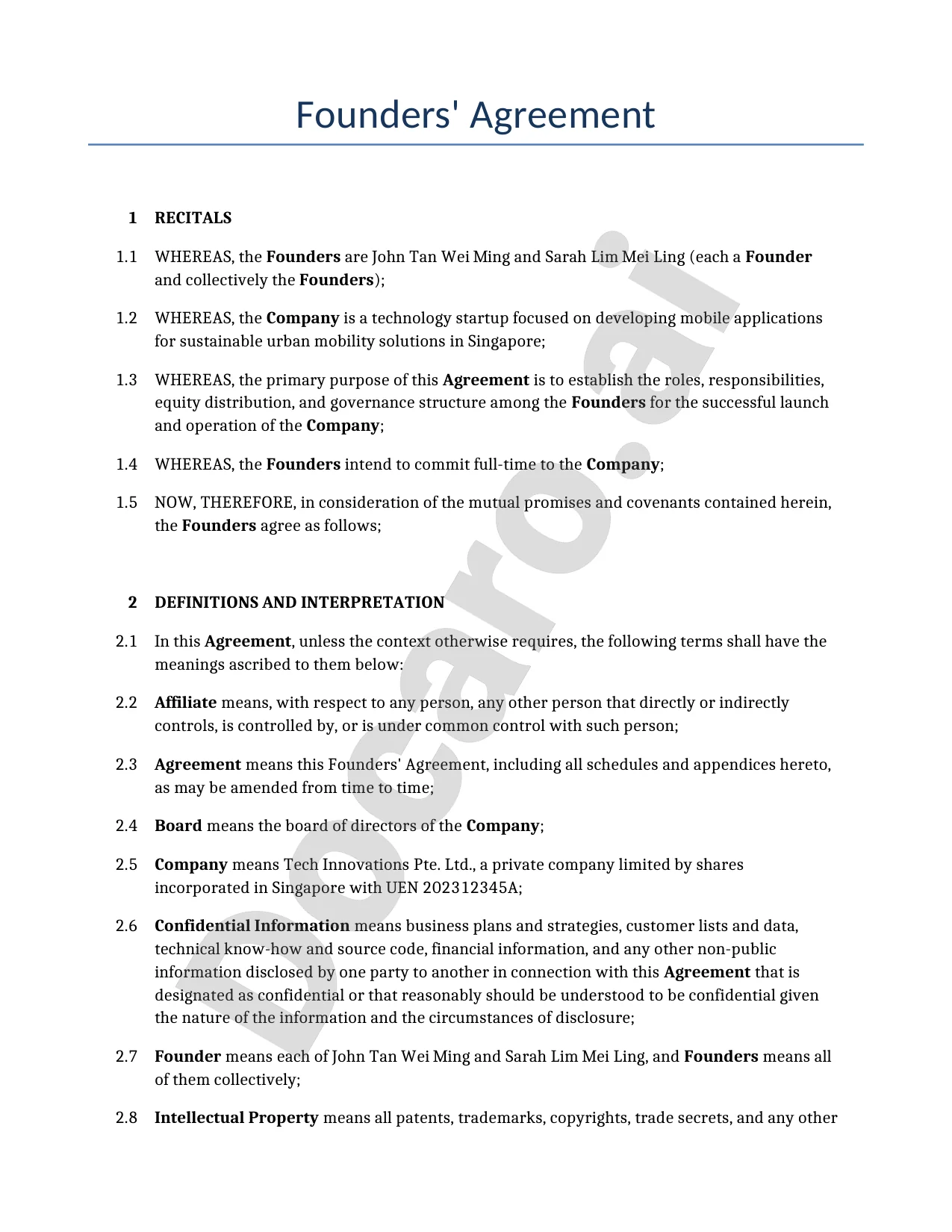
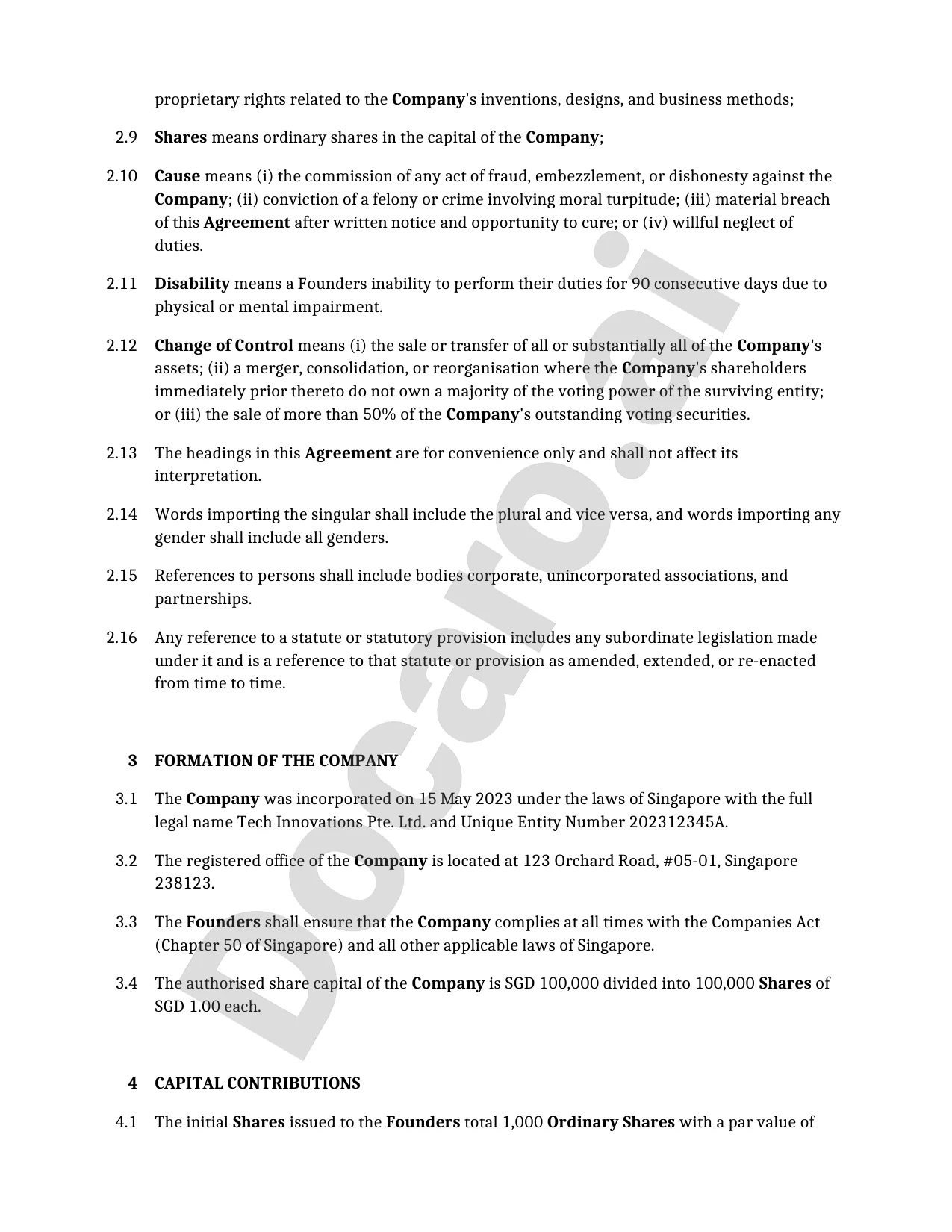
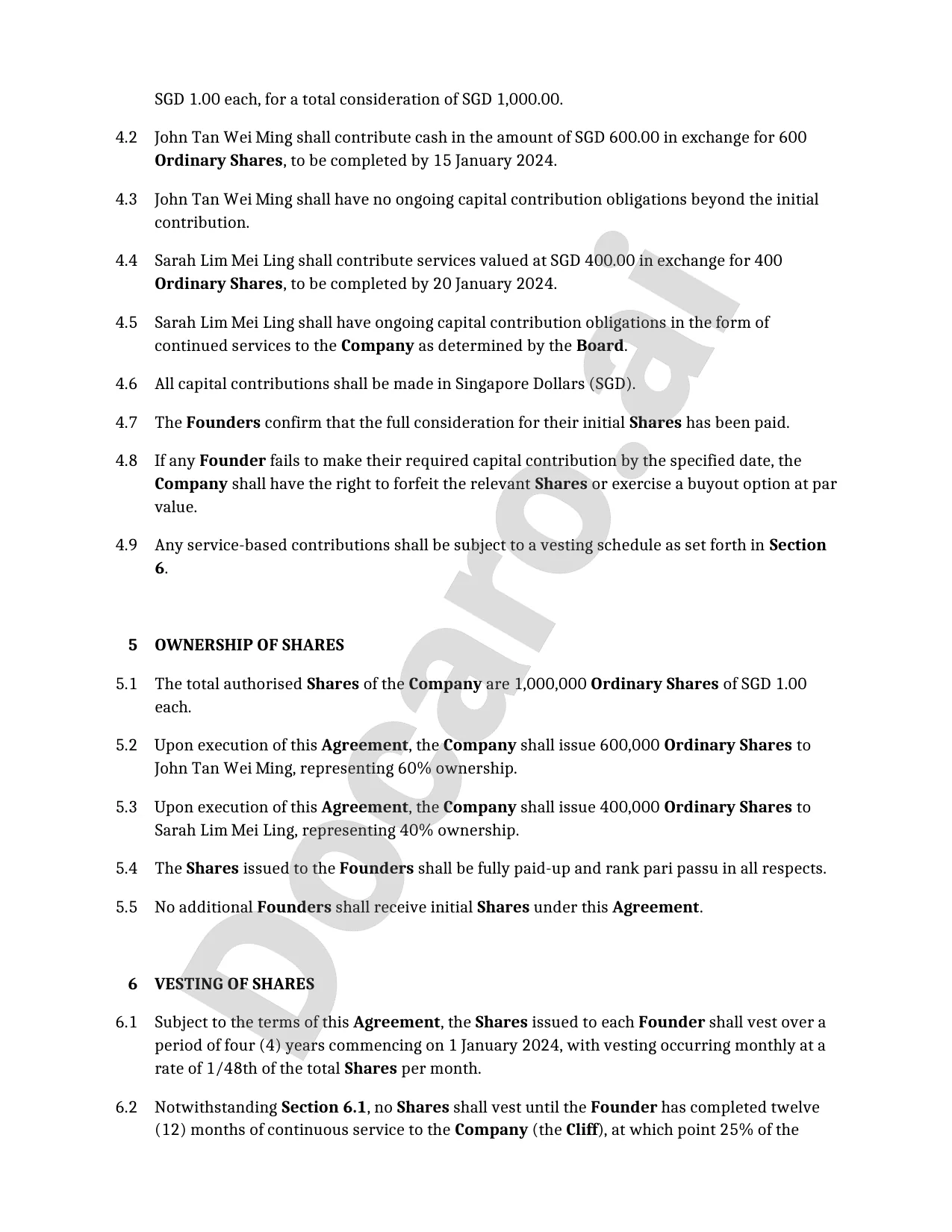
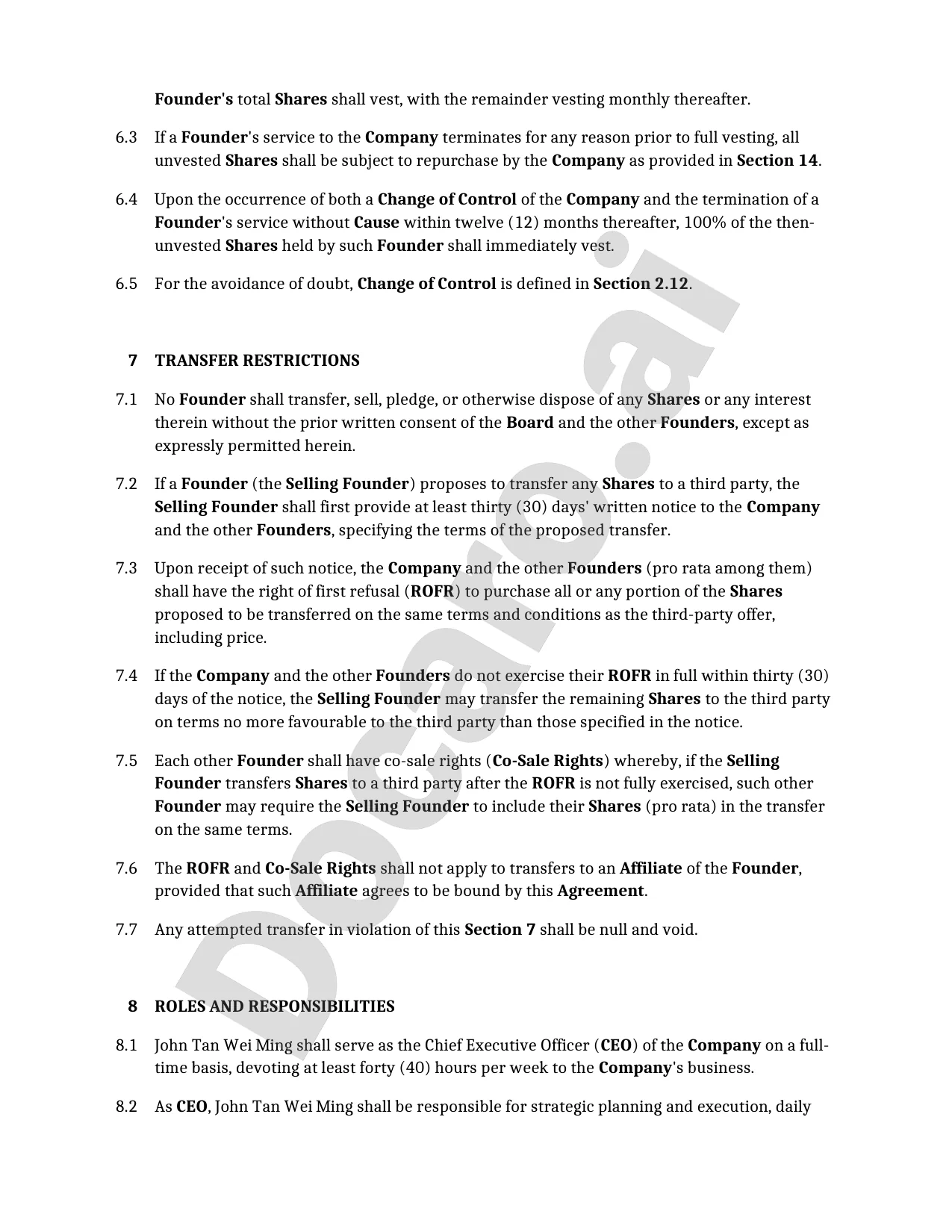
Free Example Founders' Agreement Template

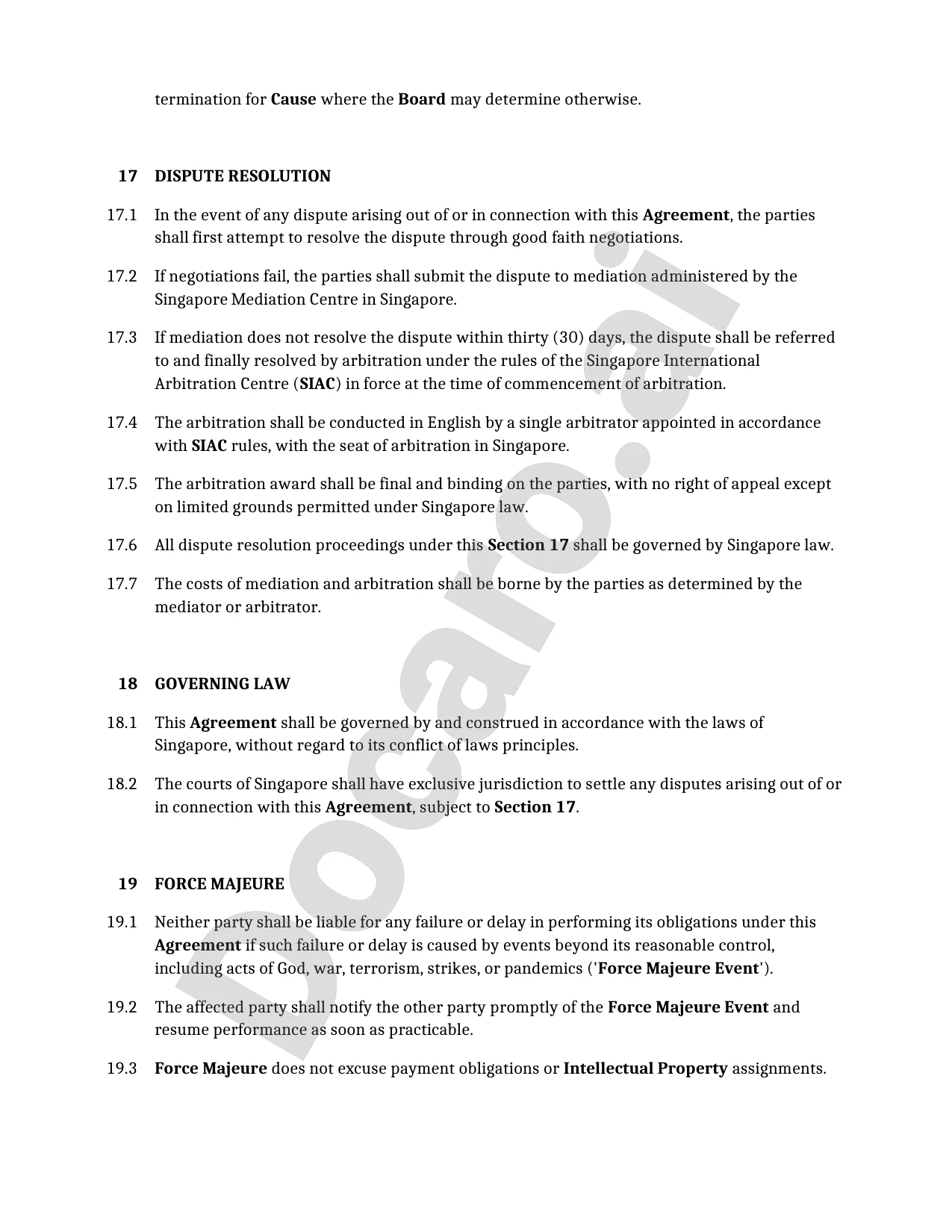
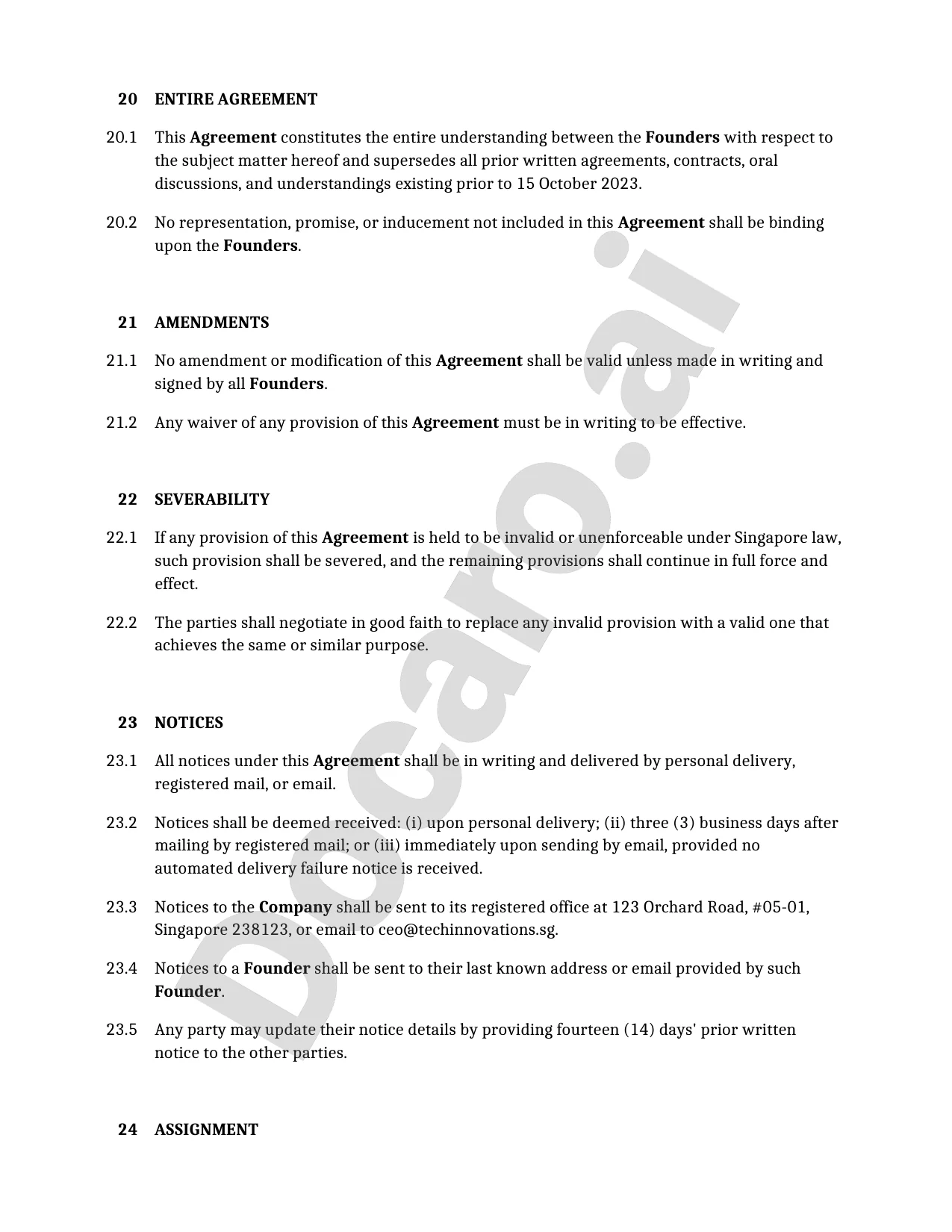
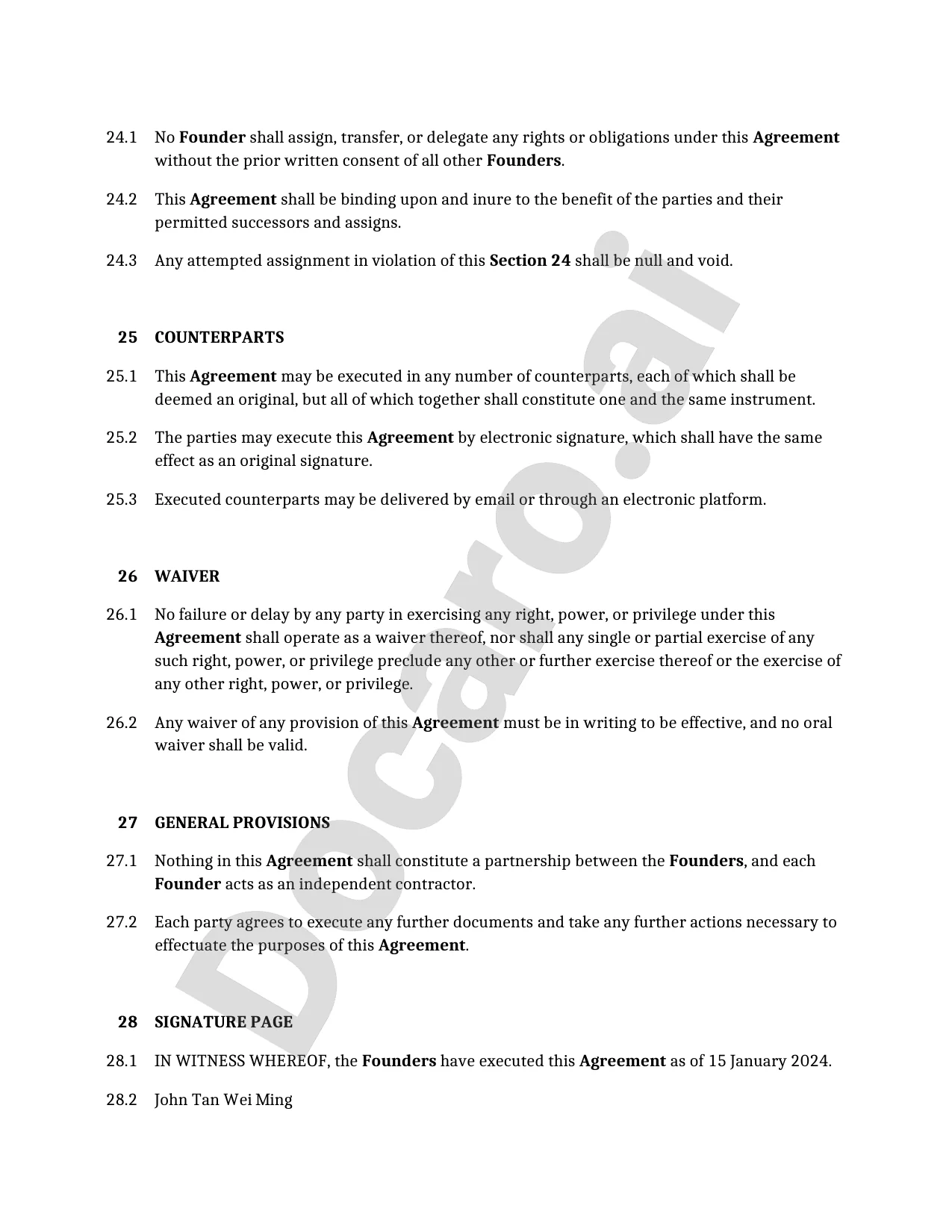
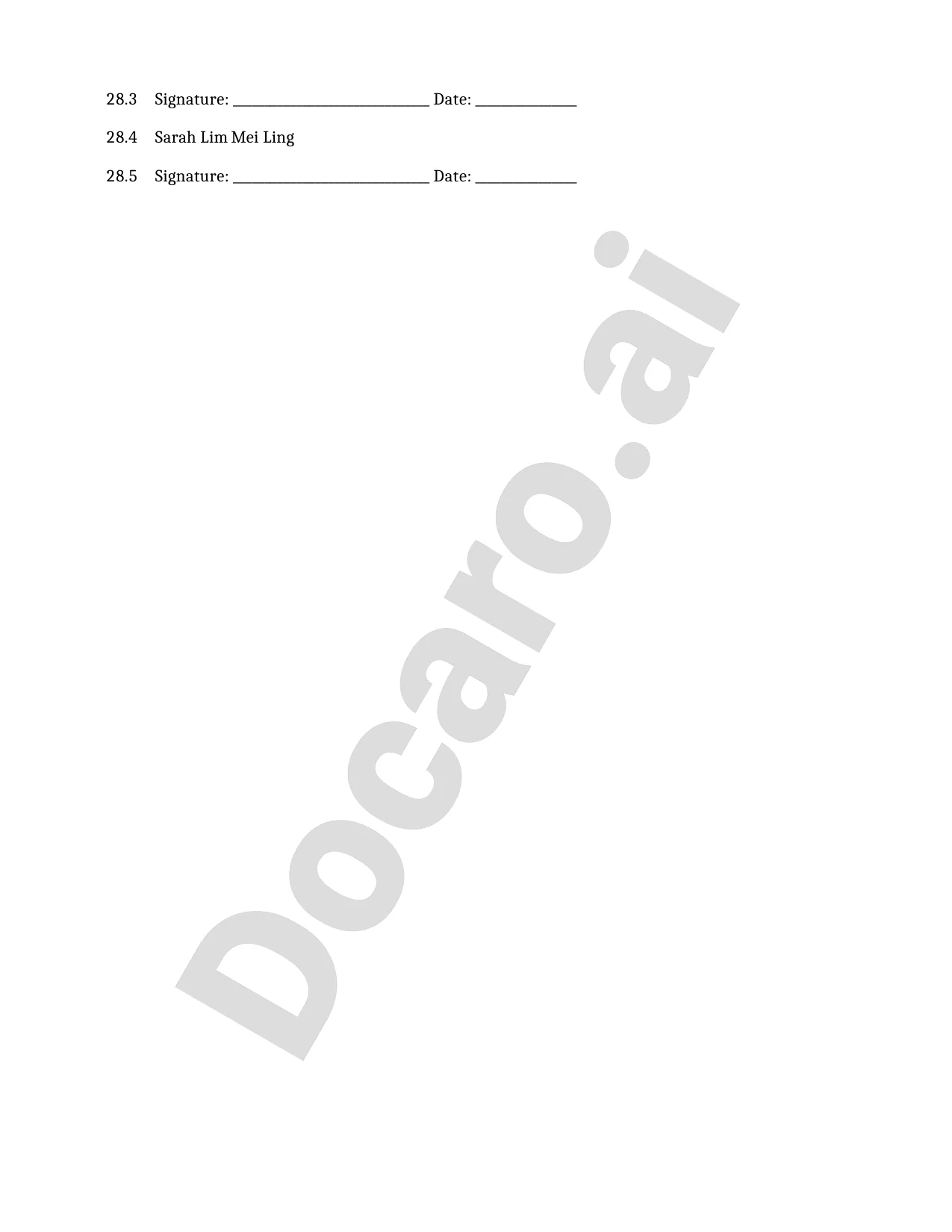
Below is a free template example of a Founders' Agreement for use in Singapore generated by our AI model.

The clauses in your actual Founders' Agreement will vary from this example as they will be entirely bespoke to your requirements as set out in the questionnaire you complete.

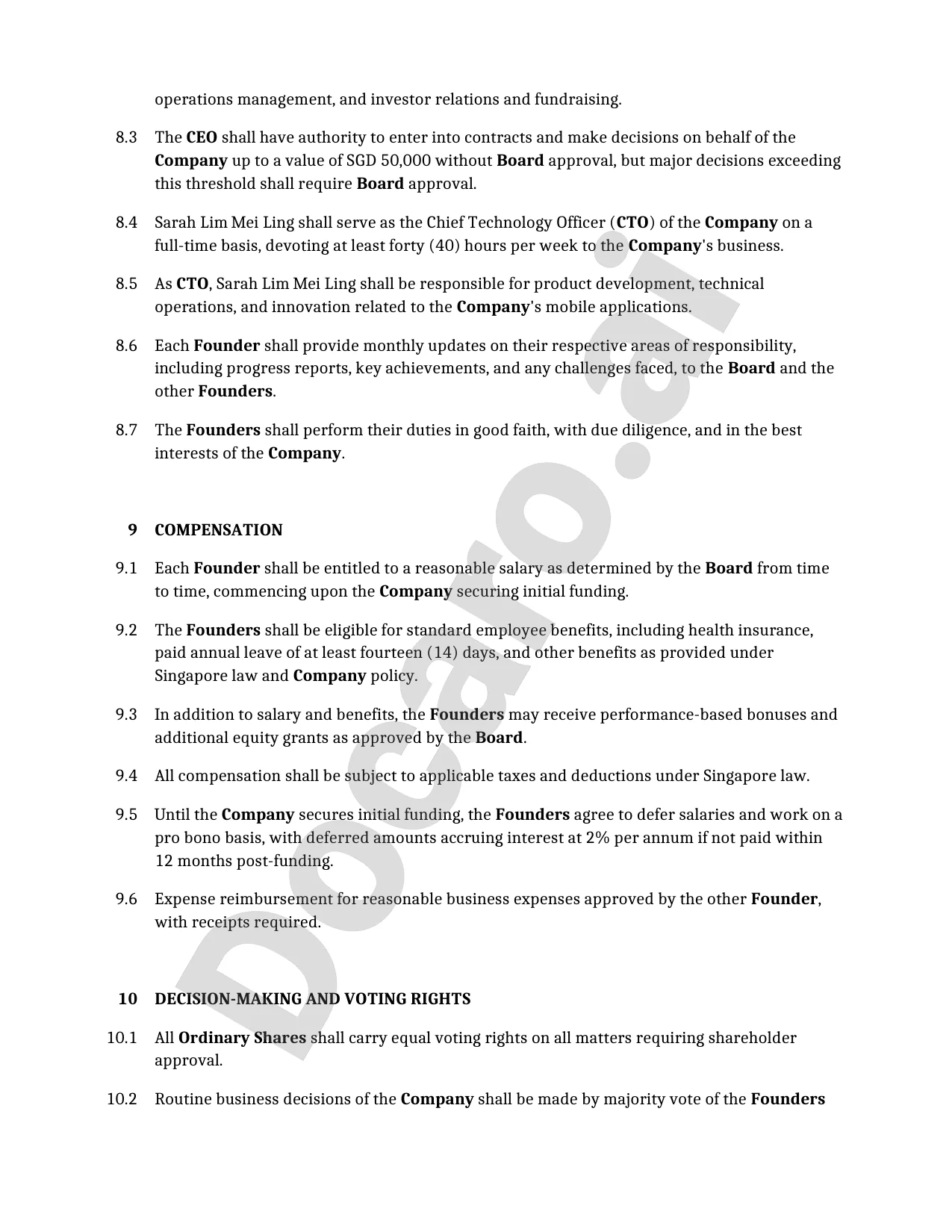
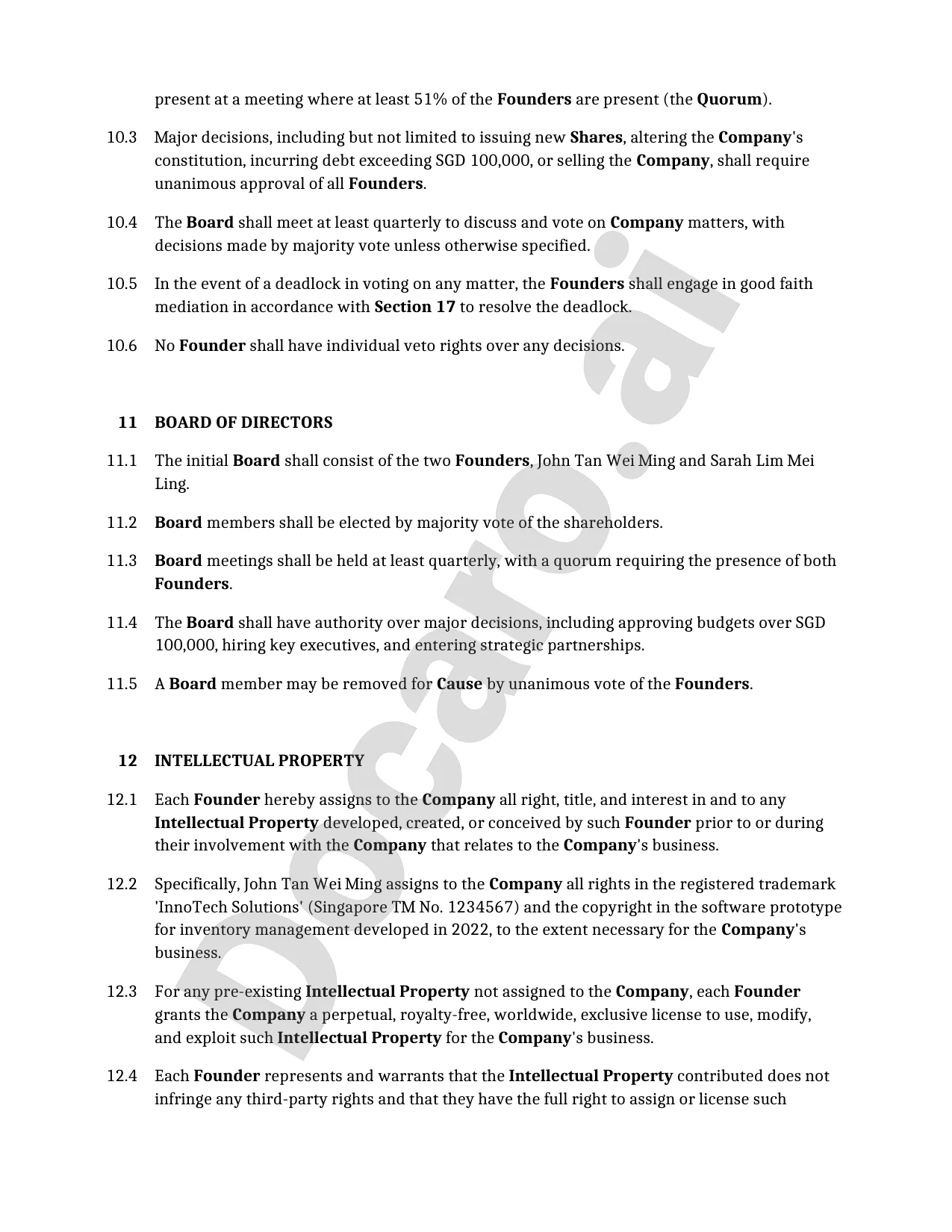
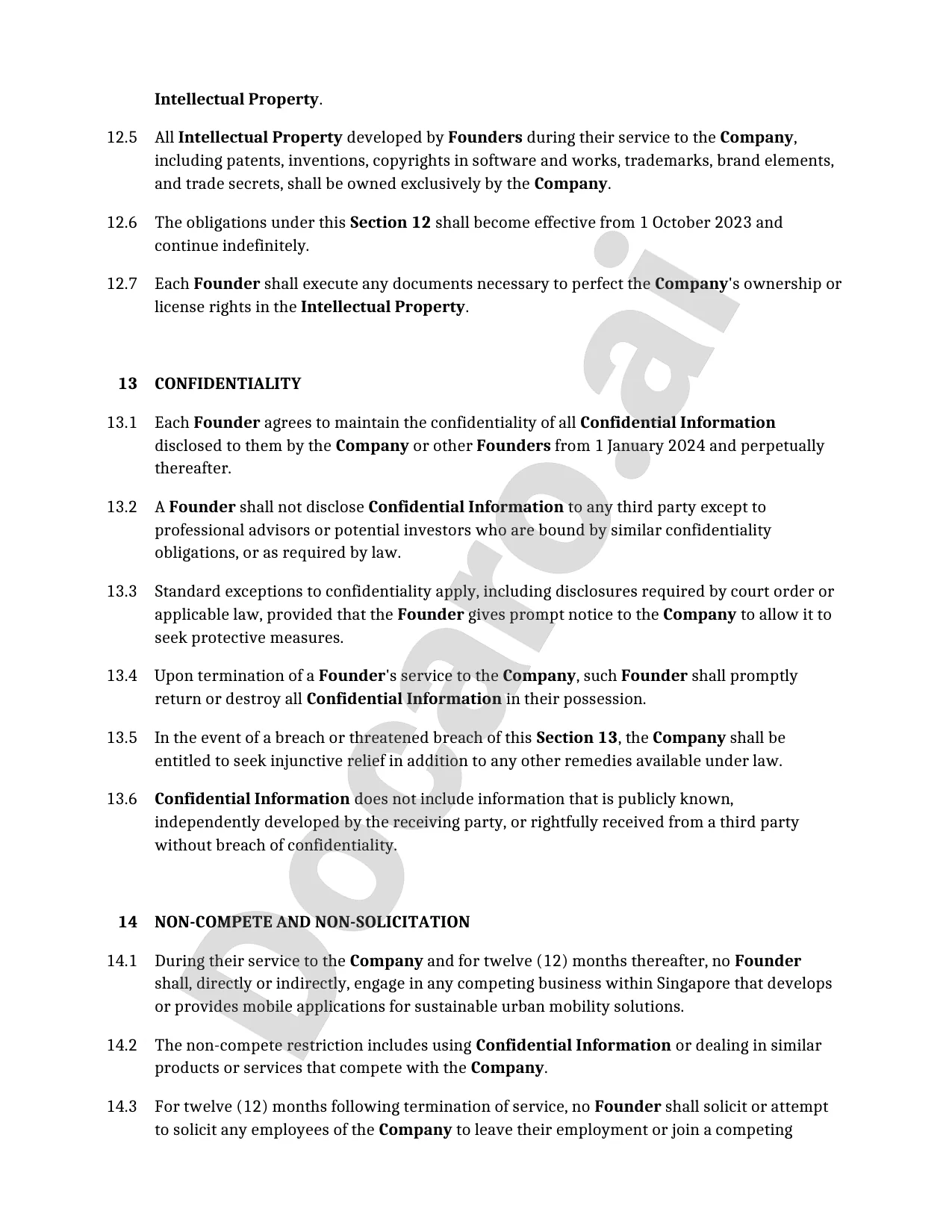
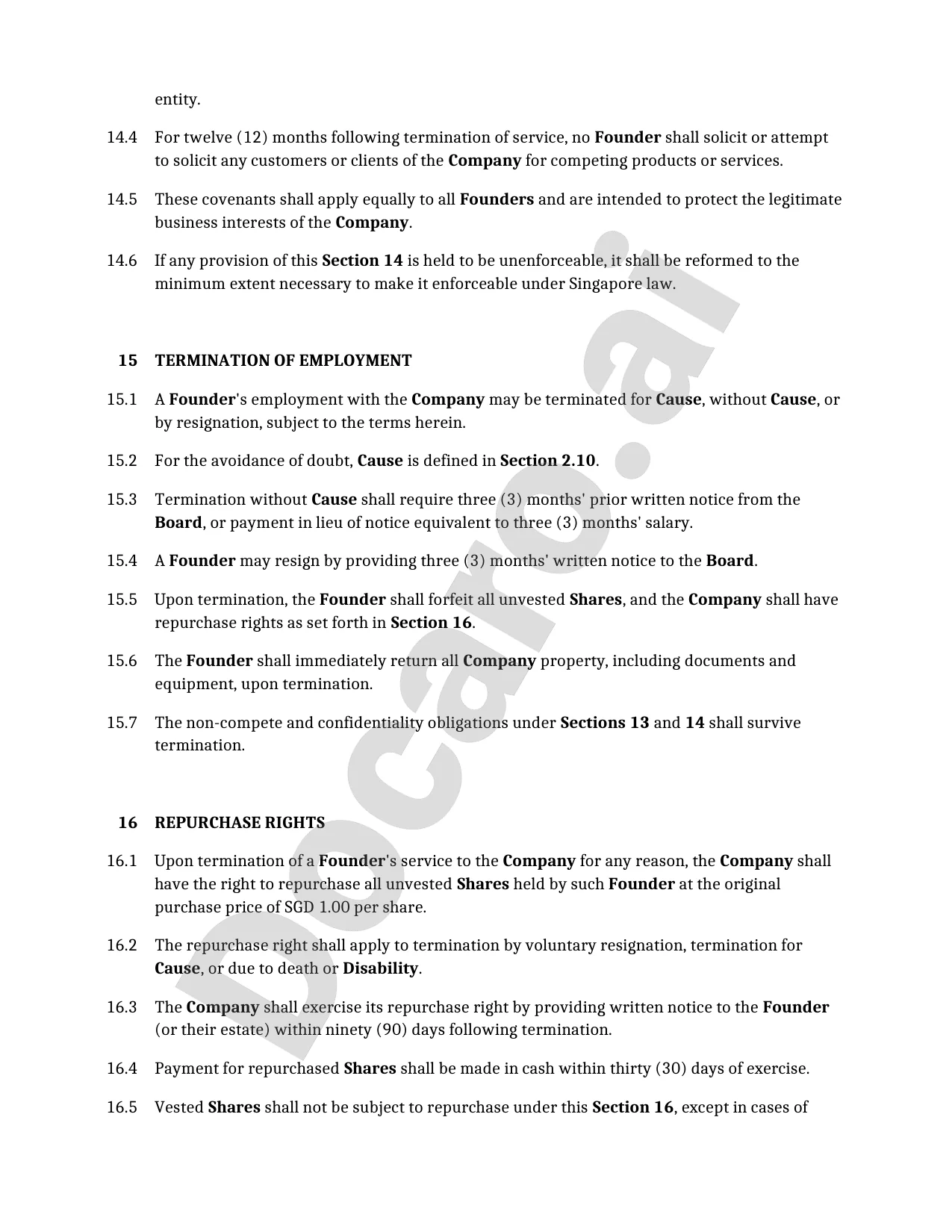
Page 1

Useful Resources When Considering a Founders' Agreement in Singapore

ENTERPRISESG.GOV.SG
ENTERPRISESG.GOV.SG
ENTERPRISESG.GOV.SG
ENTERPRISESG.GOV.SG
ENTERPRISESG.GOV.SG
ENTERPRISESG.GOV.SG
ENTERPRISESG.GOV.SG
ENTERPRISESG.GOV.SG

Singapore Compliance Legislation

Your AI Generated Founders' Agreement will be checked for compliance against the following legislation and regulations:

What is a Founders' Agreement in Singapore?

A Founders' Agreement is a crucial legal document that lays the foundation for startups in Singapore, defining the core relationships and commitments among co-founders. It serves as a roadmap to prevent disputes and ensure alignment as the business grows, particularly in Singapore's vibrant startup ecosystem supported by initiatives like the Startup SG Founder grant.

The agreement outlines each founder's roles and responsibilities, specifying who handles product development, marketing, or operations to foster clear accountability. It also details equity ownership, vesting schedules, and decision-making processes, helping founders commit to the company's long-term success while protecting against early departures.

For Singapore-based startups, this document addresses local nuances such as compliance with the Companies Act and intellectual property rights under the IPOS framework. Key elements often include:

  • Confidentiality clauses to safeguard sensitive ideas and trade secrets.
  • Non-compete provisions to prevent founders from starting rival ventures during their tenure.
  • Exit strategies like buy-sell options for handling founder exits smoothly.

To create a tailored Founders' Agreement suited to your startup's unique needs, consider using Docaro's AI-generated legal documents for a bespoke approach that ensures precision and relevance under Singapore law.

"A Founders' Agreement is essential for safeguarding the interests of startup founders in Singapore, as it clearly defines equity distribution, roles, responsibilities, and exit strategies, thereby minimizing disputes and ensuring smooth operations under the Companies Act," says Dr. Lim Wei Shen, Senior Partner at a leading Singapore law firm. For a tailored solution, I recommend using Docaro to generate bespoke AI-assisted legal documents that fit your startup's unique needs.
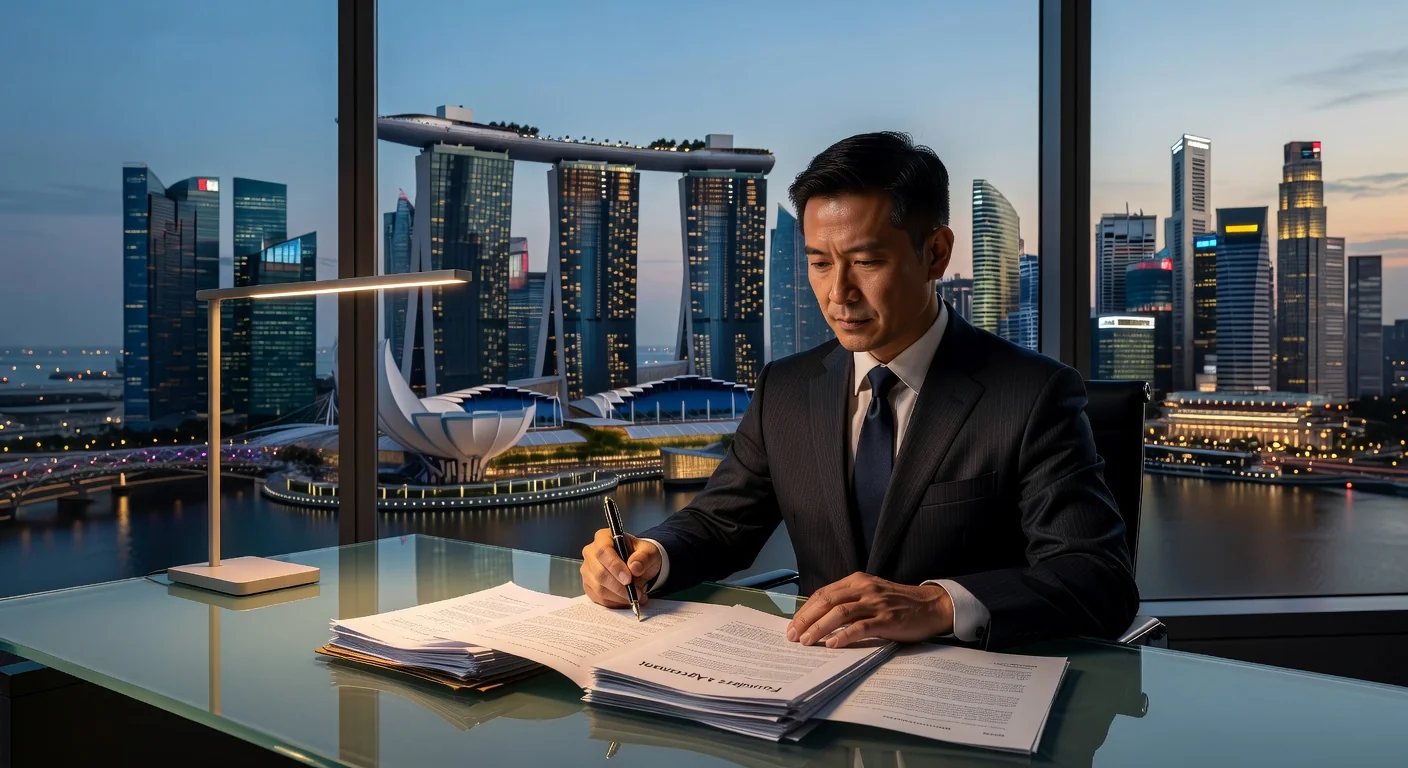
Singapore skyline with legal documents

When Should You Use a Founders' Agreement in Singapore?

A Founders' Agreement is essential for Singapore-based startups when forming a new company with multiple founders, as it outlines each founder's roles, responsibilities, and decision-making processes to prevent future disputes. This document ensures clear communication from the start, fostering a solid foundation for the business.

During securing initial funding, a Founders' Agreement becomes crucial for Singapore startups by demonstrating to investors that the founding team has aligned interests and a structured governance model. Investors often require this agreement to assess the startup's stability, making it a key factor in funding decisions.

For defining equity distribution in Singapore-based startups, the agreement specifies how shares are allocated based on contributions, vesting schedules, and exit scenarios, protecting all parties involved. Using bespoke AI-generated legal documents from Docaro allows for customized terms tailored to the startup's unique needs, ensuring comprehensive and enforceable protections.

When Should You Not Use One?

A Founders' Agreement may not be necessary in solo-founder ventures, where a single individual starts and runs the business without partners, eliminating the need to outline shared responsibilities, equity splits, or decision-making processes.

In very early ideation stages without formal incorporation, such as brainstorming concepts before forming a legal entity, skipping a detailed agreement avoids unnecessary paperwork that could stifle creativity or change as ideas evolve.

Standardized templates often fail to address unique needs of innovative startups, making them inadvisable; instead, opt for bespoke AI-generated legal documents via Docaro to customize terms precisely for your venture.

However, skipping a Founders' Agreement carries risks like disputes over ownership, unclear roles leading to conflicts, or vulnerability in exits; these can escalate into costly legal battles, undermining the startup's foundation.

Adults signing founders agreement contract

What Are the Key Clauses in a Singapore Founders' Agreement?

A Founders' Agreement under Singapore law is crucial for startups to outline the rights and obligations of founders, ensuring clarity and reducing disputes. Essential clauses typically include equity ownership, which specifies the percentage of shares each founder holds, often based on contributions like capital, time, or expertise, and may incorporate anti-dilution protections.

Vesting schedules are another key element, designed to incentivize long-term commitment by gradually releasing equity over a period, such as four years with a one-year cliff, to prevent early departures from retaining full ownership. This aligns with Singapore's emphasis on stable business structures under the Companies Act.

Intellectual property assignment ensures that all inventions, ideas, and work products created by founders are transferred to the company, protecting the startup's assets and complying with Singapore's IP laws like the Patents Act. Decision-making processes outline voting rights, major decisions requiring unanimous consent, and dispute resolution mechanisms, such as mediation or arbitration, to maintain efficient governance.

For a comprehensive guide on these key elements of a Founders' Agreement in Singapore, explore the detailed insights at Founders' Agreement Essentials. Always opt for bespoke AI-generated legal documents via Docaro to tailor agreements precisely to your startup's needs under Singapore law.

1
Assess Founder Contributions
Evaluate each founder's equity stake, roles, responsibilities, and intellectual property contributions to form the basis for the agreement's key clauses.
2
Identify Key Clauses
Pinpoint essential sections like equity distribution, vesting schedules, decision-making processes, and exit provisions tailored to your Singapore startup's needs.
3
Customize with Docaro
Use Docaro to generate bespoke AI-powered legal documents, customizing identified clauses for compliance with Singapore regulations and founder specifics.
4
Conduct Legal Review
Engage a qualified Singapore lawyer to review and finalize the customized Founders' Agreement for enforceability and risk mitigation.

What Rights and Obligations Do Founders Have Under This Agreement?

A Founders' Agreement in Singapore outlines essential rights and obligations for startup founders, ensuring clarity and protection under local laws like the Companies Act. Key rights include equity ownership, where founders agree on share allocation based on contributions, vesting schedules to prevent early exits, and mechanisms for dilution protection during funding rounds.

Founders also hold voting rights on major decisions such as board appointments and strategic pivots, often weighted by equity stakes to maintain balanced control. Exit provisions cover scenarios like buyouts or IPOs, including drag-along and tag-along rights to facilitate smooth transitions while protecting minority interests.

Obligations emphasize commitment, with non-compete clauses restricting founders from launching rival ventures for a defined period post-departure, typically 1-2 years, to safeguard the company's interests. Confidentiality obligations require founders to protect sensitive information indefinitely, preventing leaks that could harm the business.

For practical implementation, consult legal experts to draft a bespoke Founders' Agreement using Docaro AI-generated legal documents, tailored to your startup's unique needs in Singapore's dynamic ecosystem.

Are There Key Exclusions to Consider in a Founders' Agreement?

A Founders' Agreement for Singapore companies typically excludes key areas like detailed employment terms, which are better addressed in separate employment contracts to comply with Singapore's Employment Act. This separation prevents overlaps and ensures compliance with labor laws, reducing the risk of disputes over salaries, benefits, or termination clauses.

Investor rights and funding obligations are another major exclusion, as these are usually covered in subsequent shareholders' agreements or investment term sheets specific to funding rounds. By keeping the Founders' Agreement focused on equity splits, roles, and IP assignment, founders avoid premature commitments that could conflict with future investor demands, thereby minimizing legal challenges during capital raises.

Explicitly stating these exclusions in the agreement clarifies boundaries and sets expectations among founders. This transparency fosters trust and prevents misunderstandings that could escalate into costly disputes, emphasizing the need for bespoke AI-generated legal documents via Docaro to tailor exclusions precisely to the company's needs.

What Recent Legal Changes Affect Founders' Agreements in Singapore?

Recent amendments to Singapore's Companies Act in 2025, effective from April 2026, enhance corporate governance and minority shareholder protections, directly impacting Founders' Agreements. Key changes include stricter requirements for nominee directors, such as mandatory written agreements and declarations of nominee status, alongside higher penalties for breaches of directors' duties—up to SGD $20,000 in fines and 12 months' imprisonment—to prevent misuse of companies.

These updates necessitate reviewing IP clauses in Founders' Agreements to align with strengthened accountability, ensuring that intellectual property ownership and transfer provisions comply with enhanced transparency rules.

On the data protection front, the Personal Data Protection Act (PDPA) saw advisory guidelines in 2024 on children's data and AI systems, with no major legislative overhauls in 2025-2026 directly altering IP clauses; however, startups must integrate PDPA compliance into agreements involving data-driven IP.

For tailored compliance, founders should generate bespoke AI-powered legal documents using Docaro and consult legal professionals to navigate these developments in Singapore startup law.

How Can You Draft an Effective Founders' Agreement?

Drafting a Founders' Agreement is a critical step for Singapore startups to define roles, equity distribution, and decision-making processes. Always consult a qualified lawyer to ensure the document aligns with Singapore law and addresses your specific business needs, rather than relying on generic templates.

For clarity and enforceability, use precise language to avoid ambiguities that could lead to disputes under the Companies Act. Structure the agreement with sections on intellectual property rights, non-compete clauses, and exit strategies, making it tailored to your startup's unique circumstances.

Consider using bespoke AI-generated legal documents via Docaro for an initial customized draft, which can then be refined by legal professionals. Explore detailed guidance on drafting a Founders' Agreement for Singapore startups through this internal resource to enhance your understanding.

  • Define each founder's contributions and vesting schedules clearly to promote long-term commitment.
  • Include dispute resolution mechanisms, such as mediation, to ensure enforceability in Singapore courts.
  • Regularly review and update the agreement as your startup evolves to maintain its relevance.

What Common Mistakes Should You Avoid?

In the bustling startup ecosystem of Singapore, founders often rush into partnerships without a solid Founders' Agreement, leading to unexpected disputes that can derail their ventures. One common pitfall is vague vesting terms, where schedules for equity release are ambiguously defined, causing confusion over ownership rights during exits or failures.

Another frequent oversight involves ignoring tax implications, such as overlooking how vesting triggers capital gains or income taxes under Singapore's Inland Revenue Authority rules, potentially resulting in hefty penalties for co-founders. Founders also neglect to address intellectual property ownership, leaving innovations vulnerable to claims outside the agreement.

To safeguard your startup, consider bespoke AI-generated legal documents via Docaro, tailored precisely to Singapore's regulations. For a deeper dive into mistakes to avoid in Singapore Founders' Agreements, explore key pitfalls in founders' agreements.

Founders' Agreement FAQs

A Founders' Agreement in Singapore is a legal contract between the co-founders of a startup or business that outlines their roles, responsibilities, equity ownership, intellectual property rights, and exit strategies. It helps prevent disputes and ensures smooth operations, often used alongside incorporation under the Companies Act.

Document Generation FAQs

Docaro is an AI-powered legal and corporate document generator that helps you create fully formatted, legally sound contracts and agreements in minutes. Just answer a few guided questions and download your document instantly.
You Might Also Be Interested In
A Contract Outlining The Terms For Consultancy Services Provided By An Independent Contractor.
A Contract Outlining The Rights, Obligations, And Governance Rules Among Shareholders Of A Company.
A Legal Contract Outlining The Terms, Rights, And Obligations Of Partners In A Business Partnership.
A Shareholders' Agreement Is A Contract Among Shareholders Of A Private Limited Company Outlining Ownership, Management, And Operational Rules.
A Constitution Is The Foundational Document For A Company In Singapore, Outlining Its Structure, Objectives, And Internal Rules.
A Constitution Is The Foundational Document Governing A Company's Internal Management, Operations, And Member Rights In Singapore.
A Legal Contract Outlining The Terms For Buying And Selling Shares In A Company.
A Formal Decision Or Action Approved By The Board Of Directors Of A Company, Documented In Writing.
A Legal Contract Outlining The Terms For The Sale And Purchase Of Specific Assets Between Parties.
A Legal Contract Outlining The Terms For The Sale And Transfer Of A Business Entity, Including Assets, Liabilities, And Obligations.
A Legal Document That Alters The Terms Of An Existing Deed Or Agreement, Commonly Used In Property Or Inheritance Matters.
A Legal Contract Outlining The Terms For The Sale And Transfer Of Property Ownership From Seller To Buyer.
A Formal Receipt Is A Legal Document Issued By A Seller To A Buyer, Confirming Payment For Goods Or Services And Serving As Proof Of Transaction.
A Tax Invoice Is A Formal Document Issued By GST-registered Businesses In Singapore To Charge Customers For Goods Or Services, Including GST Details For Tax Compliance.
A Legal Contract Outlining The Terms Under Which One Party Provides Services To Another.
A Legal Document Used To Transfer Ownership Of Shares In A Company From One Party To Another, Typically Required For Registration With The Company.
A Document Outlining Measures To Protect Individuals, Especially Vulnerable Groups Like Children, From Harm And Abuse In Organizational Settings.
A Non-binding Document Outlining Preliminary Terms And Intentions For A Potential Business Deal Or Agreement.

Related Articles

A photorealistic image of two professional adults, a man and a woman in business attire, shaking hands across a modern conference table in a sleek Singapore office with city skyline view through large windows, symbolizing partnership and agreement in a startup founding, no legal documents visible, no children present.
Discover the key elements of a founders agreement in Singapore, including equity distribution, roles, IP rights, and more. Essential for startup founders to protect their business interests.
A photorealistic image of two professional adult founders in a modern Singapore office, shaking hands over a table with city skyline view, symbolizing partnership and startup agreement, no children present.
Learn how to draft a comprehensive founders agreement for your Singapore startup. Cover key clauses, legal requirements, and best practices to protect your business from the start.
A photorealistic image of two professional adults in a modern Singapore office, shaking hands firmly across a conference table, symbolizing partnership and agreement in a business founding context, with subtle Singapore skyline visible through the window in the background, conveying trust and collaboration without focusing on legal documents.
Discover the most common mistakes to avoid in Singapore founders agreements. Learn essential tips to protect your startup equity vesting rights and partnership terms for long-term success.