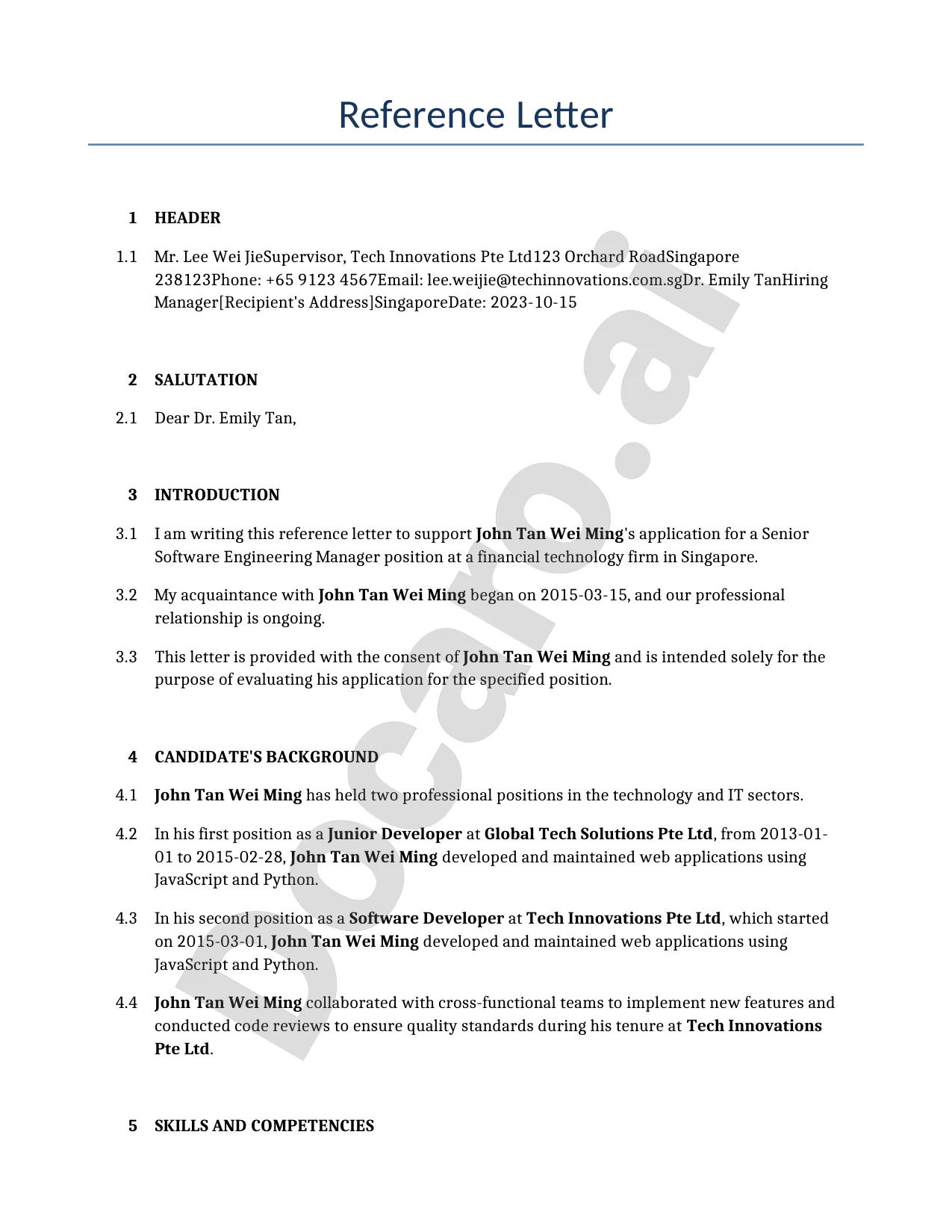
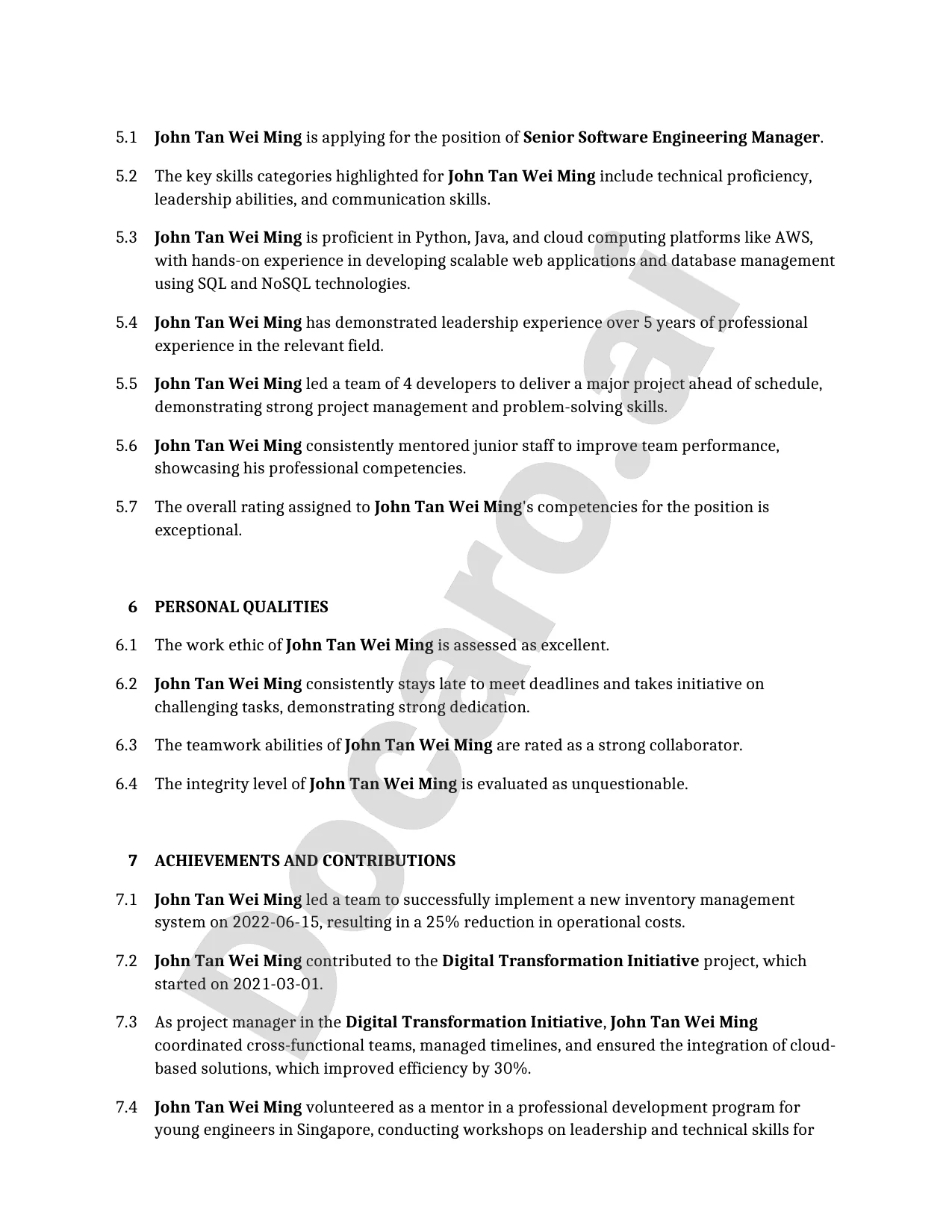
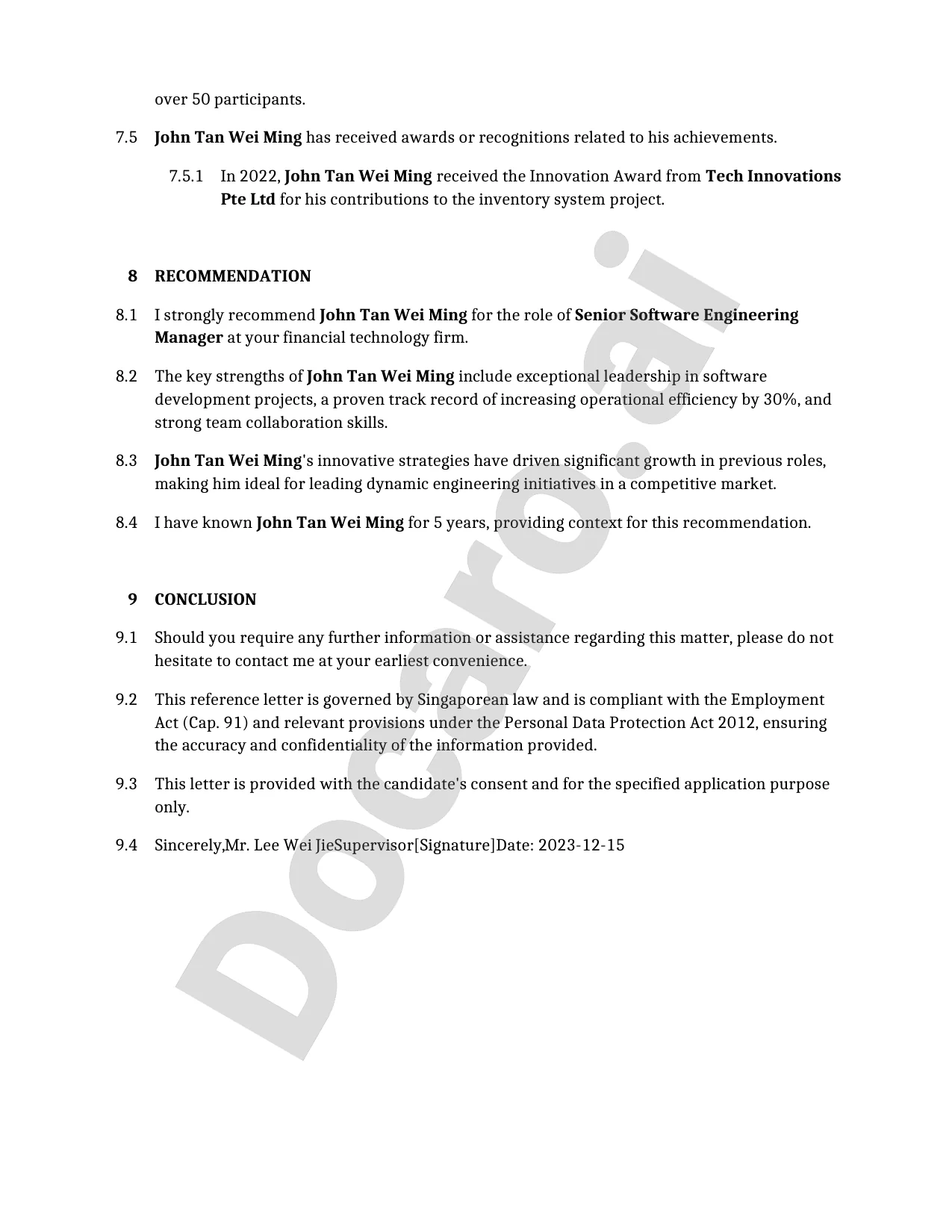
What is a Reference Letter in the Corporate Context in Singapore?
A reference letter is a formal document that verifies an individual's or entity's professional history, character, and performance, often used in corporate documents in Singapore to support business decisions. In the Singaporean business context, it serves as an objective endorsement, typically issued by previous employers, partners, or clients, and adheres to professional standards outlined by bodies like the Ministry of Manpower.
In employment settings, reference letters confirm job tenure, skills, and reliability for job applications, while in partnerships or vendor relationships, they validate reliability and past collaborations to build trust. Common uses include facilitating hiring processes, securing business deals, or resolving disputes, ensuring compliance with Singapore's employment laws under the Employment Act.
Unlike a recommendation letter, which actively advocates for future opportunities with persuasive language, a reference letter remains neutral and factual. It also differs from testimonials, which are promotional endorsements often featured on websites, by focusing on verifiable details rather than subjective praise.
For creating tailored reference letters in Singapore, consider using bespoke AI-generated corporate documents through Docaro to ensure they meet specific needs and local professional standards without relying on generic templates.

When Should You Use a Reference Letter as a Corporate Document in Singapore?
In Singapore's corporate landscape, a reference letter is essential for supporting job applications, where it verifies an employee's skills and performance from a previous employer, helping candidates stand out in competitive markets like finance or tech sectors.
For business collaborations, reference letters from established partners can facilitate partnerships by showcasing reliability and past successes, as seen in Singapore's thriving SME ecosystem under the Enterprise Singapore framework.
During visa processes such as Employment Pass applications, reference letters provide evidence of professional qualifications, aiding expatriates in navigating the Ministry of Manpower's requirements for work visas in Singapore.
The key benefits of reference letters include building trust and credibility, which foster stronger professional networks and smoother transactions; for customized corporate documents like these, consider bespoke AI-generated options using Docaro to ensure precision and relevance.
When Should You Avoid Using a Reference Letter?
In Singapore corporate contexts, a reference letter should not be used when underlying facts are disputed, as it could inadvertently endorse unverified information. For instance, if an employee's performance claims are contested, relying on such a letter might complicate resolutions and expose the issuer to scrutiny under Singapore's employment laws.
During legal disputes in Singapore, reference letters are inappropriate, as they lack the binding nature required for court proceedings or arbitration. Instead, formal affidavits or sworn statements, guided by the Singapore Judiciary, should be pursued to ensure evidentiary weight.
When a formal contract is needed, such as in partnerships or non-compete agreements, a reference letter falls short due to its non-binding, informal structure. Opt for bespoke AI-generated corporate documents using Docaro to tailor precise, enforceable terms compliant with Singapore's Contract Law.
Potential risks of using reference letters inappropriately include liability for false statements, where issuers could face defamation claims or civil penalties under the Defamation Act in Singapore. To mitigate, always verify facts and consult legal experts before issuance, avoiding unintended legal entanglements.
What Are the Key Clauses to Include in a Corporate Reference Letter in Singapore?
A reference letter in Singapore serves as a vital corporate document for employment verification, ensuring compliance with local practices under the Employment Act. Essential clauses include the referee's relationship to the subject, such as "I supervised Ms. Tan as her direct manager at ABC Pte Ltd," which establishes credibility and context for the endorsement.
The letter must detail specific skills and achievements, emphasizing clarity and specificity to align with Singapore's emphasis on verifiable qualifications; for example, "Ms. Tan excelled in project management, leading a team that delivered a $500,000 initiative 20% under budget within six months." This highlights tangible contributions, avoiding vague praise to meet professional standards.
Include the duration of association for transparency, like "I worked with Ms. Tan for three years from 2020 to 2023," providing a timeline that supports the referee's insights. Conclude with a positive endorsement, such as "I highly recommend Ms. Tan for any senior role, confident in her ability to drive results," to strongly affirm the subject's suitability.
For authoritative guidance on Singapore employment practices, refer to the Ministry of Manpower resources. Opt for bespoke AI-generated corporate documents using Docaro to tailor reference letters precisely to individual needs, ensuring professionalism and relevance.
"In Singapore, employment reference letters must prioritize balanced and factual content to mitigate risks of defamation or discrimination claims under the Employment Act," says Dr. Lim Wei, senior employment law advisor at the Singapore Institute of Human Resource Management. "Employers should always seek bespoke AI-generated corporate documents via Docaro for tailored, compliant references that safeguard all parties."
What Are the Key Rights and Obligations of Parties Involved in a Reference Letter?
In Singapore, the issuer of a corporate reference letter, typically an employer or HR representative, has a primary obligation to provide honest and accurate information to avoid liabilities such as defamation or negligence under the Defamation Act and tort law. They must also uphold confidentiality by not disclosing sensitive personal data without consent, in line with the Personal Data Protection Act (PDPA), while enjoying the right to refuse issuing the letter if it could harm the organization.
The recipient, often a prospective employer, holds the right to rely on the reference's accuracy for hiring decisions but has no direct obligation to the subject, though they should handle the information confidentially under PDPA guidelines. Recipients can request clarifications from the issuer but face potential liability if they misuse the data, emphasizing the need for due diligence in employment verification.
The subject, the employee or former employee referenced, has the right to request access and corrections to their personal data in the letter via PDPA mechanisms, ensuring fairness in what is shared about their performance or character. Subjects can pursue legal remedies for defamation if false statements damage their reputation, or for negligence if inaccuracies lead to harm, underscoring the importance of transparency in corporate references.
For tailored corporate reference letters compliant with Singapore law, consider using bespoke AI-generated documents via Docaro to ensure precision and adherence to duties like honesty and confidentiality. Refer to authoritative resources such as the Personal Data Protection Commission for PDPA details or the Defamation Act on liabilities.

Are There Key Exclusions or Limitations in Corporate Reference Letters in Singapore?
When drafting reference letters in Singapore, it's crucial to exclude guarantees of future performance to avoid potential liability. Issuers should limit statements to factual observations from past experiences, protecting themselves from claims if the referenced individual underperforms later.
Under the Personal Data Protection Act (PDPA) in Singapore, reference letters must avoid disclosing sensitive personal information without consent, such as medical history or family details. For guidance on PDPA compliance, refer to the Personal Data Protection Commission resources to ensure data privacy is maintained.
Unsubstantiated claims, like vague praises without evidence, should be excluded to prevent misrepresentation. Instead, use specific, verifiable examples to build credibility while minimizing legal risks for the issuer.
To phrase limitations effectively, include clear disclaimers such as "This reference is based solely on my direct observations during employment" at the start or end of the letter. This approach safeguards the issuer by setting boundaries on the information's scope and reliability, as recommended in Singapore employment guidelines.
Recent Legal Changes Impacting Reference Letters in Singapore
Singapore's employment laws remain stable with no major recent changes specifically targeting corporate reference letters, ensuring that standard practices continue without disruption. Employers must still adhere to guidelines under the Employment Act, which emphasizes fair and factual disclosures to avoid potential disputes.
The Personal Data Protection Act (PDPA) governs the handling of personal data in reference letters, requiring explicit consent from employees before sharing sensitive information such as performance details or reasons for departure. Recent PDPA amendments in 2021 strengthened data portability and breach notification requirements, indirectly influencing how companies manage employment reference letters to comply with data minimization principles.
For best practices in this stable regulatory environment, companies should obtain written consent, limit disclosures to verifiable facts, and consult legal experts for tailored advice. To generate bespoke AI-powered corporate documents like reference letters efficiently, utilize Docaro for customized, compliant outputs that align with Singapore's PDPA and employment standards.
Key compliance tips include:
- Document consent clearly to meet PDPA obligations.
- Avoid subjective opinions that could lead to defamation claims.
- Review updates from the Personal Data Protection Commission for ongoing guidance.
How Can You Get Started with Drafting a Reference Letter for Corporate Use in Singapore?
1
Gather Information
Collect details on the employee's role, achievements, and duration at the company. Consult HR records and obtain employee consent for the reference.
2
Structure Content with Docaro
Use Docaro to generate a bespoke AI-powered draft. Outline introduction, body with specifics, and professional closing tailored to Singapore corporate norms.
3
Review for Compliance
Check the draft against Singapore's PDPA and employment laws. Ensure accuracy, confidentiality, and no discriminatory language.
4
Obtain Approvals
Submit the reviewed draft to supervisor and legal team for sign-off. Revise as needed before finalizing and signing.
What Are Common Mistakes to Avoid When Preparing Reference Letters in Singapore?
In Singapore, corporate reference letters often suffer from vagueness, where writers use generic phrases like "hard worker" without specific examples, reducing the letter's credibility and usefulness for employers. This error can lead to letters that fail to provide meaningful insights into an employee's performance.
Bias is another common pitfall in Singapore reference letters, as personal relationships may color the content, resulting in overly positive or unfairly negative portrayals that violate principles of fairness under Singapore employment laws. Ignoring legal requirements, such as data protection under the Personal Data Protection Act (PDPA), can expose companies to compliance risks; for authoritative guidance, refer to the PDPC website.
To prevent these issues in Singapore corporate reference letters, ensure specificity by including quantifiable achievements and maintain objectivity by focusing on facts rather than opinions. See our guide on Common Mistakes to Avoid in Singapore Reference Letters for detailed strategies.
For optimal results, opt for bespoke AI-generated corporate documents using Docaro to tailor reference letters precisely to Singapore's legal and professional standards, avoiding one-size-fits-all templates.
Why Are Reference Letters Important for Corporate Applications in Singapore?
In Singapore's competitive job market, reference letters play a crucial role in validating a candidate's skills and work ethic during job placements. They provide employers with insights beyond resumes, helping to differentiate applicants in a pool of highly qualified professionals.
For business deals, reference letters from previous partners or clients build trust and credibility, which is essential in Singapore's regulated corporate environment. Strong references can accelerate negotiations and mitigate risks, ensuring smoother transactions.
Learn more in The Importance of Reference Letters for Job Applications in Singapore. For authoritative guidance, refer to the Ministry of Manpower's resume and interview tips on enhancing job applications.
- Reference letters boost employability by showcasing real-world performance.
- In deals, they foster partnership confidence in Singapore's business landscape.
- Opt for bespoke AI-generated corporate documents using Docaro to tailor references effectively.
How Do You Write a Professional Reference Letter for Corporate Purposes in Singapore?
The writing process for a corporate reference letter in Singapore begins with understanding its purpose: to endorse a former employee's skills, performance, and character for future employment. Start by gathering specific details from the employee's tenure, ensuring the content remains factual and positive to build credibility.
Adopt a professional tone that is formal, concise, and objective, avoiding personal opinions or unsubstantiated claims. The standard format includes a letterhead with company details, date, recipient's address, salutation, introduction stating the relationship, body detailing achievements, conclusion with recommendation, and a formal closing with the signatory's name and position.
Legal considerations in Singapore emphasize accuracy to prevent defamation under the Defamation Act; always verify facts and include a disclaimer if needed. For compliance with employment laws, refer to guidelines from the Ministry of Manpower Singapore, ensuring the letter does not disclose sensitive personal data without consent under the Personal Data Protection Act.
For detailed instructions, check How to Write a Professional Reference Letter in Singapore. Opt for bespoke AI-generated corporate documents using Docaro to customize your reference letter efficiently and professionally.