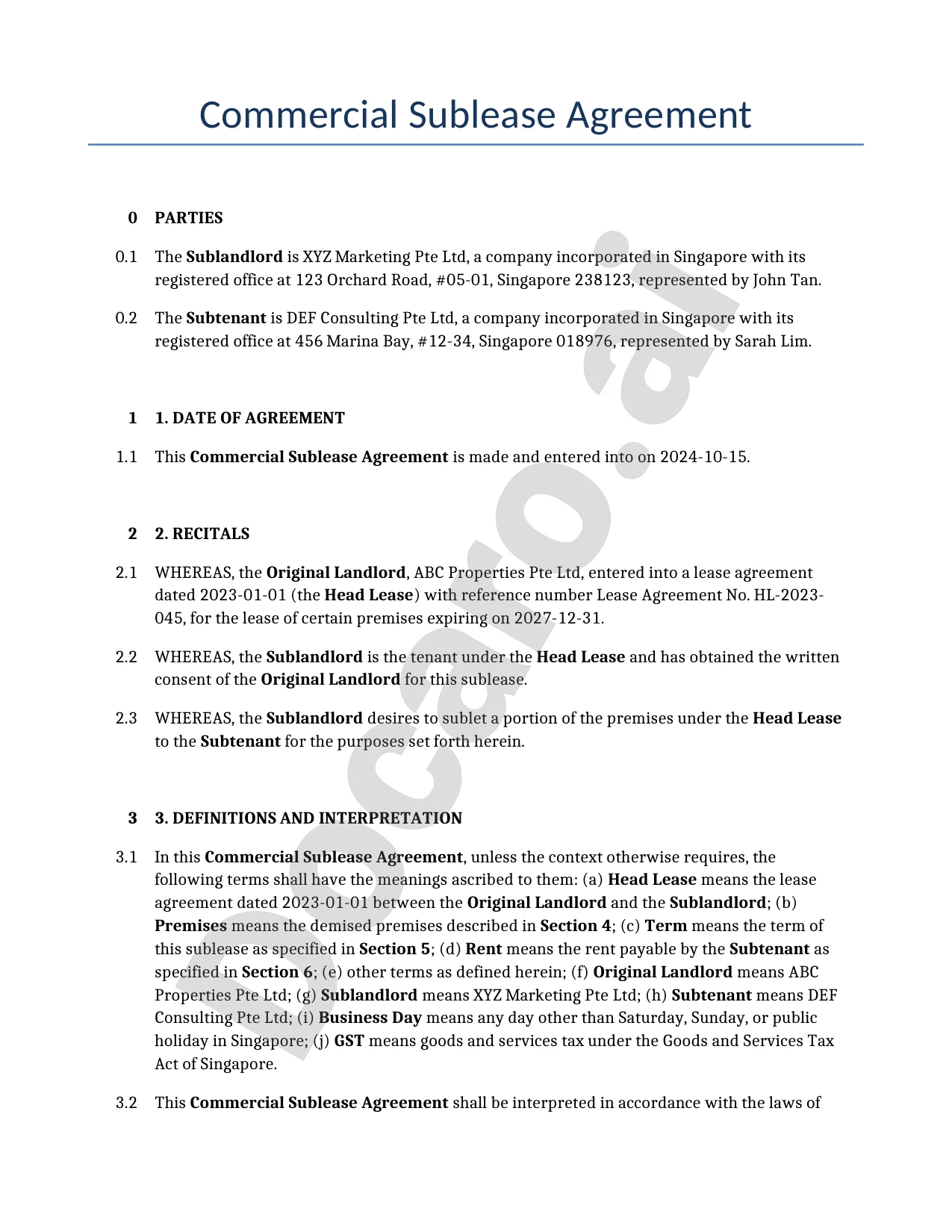
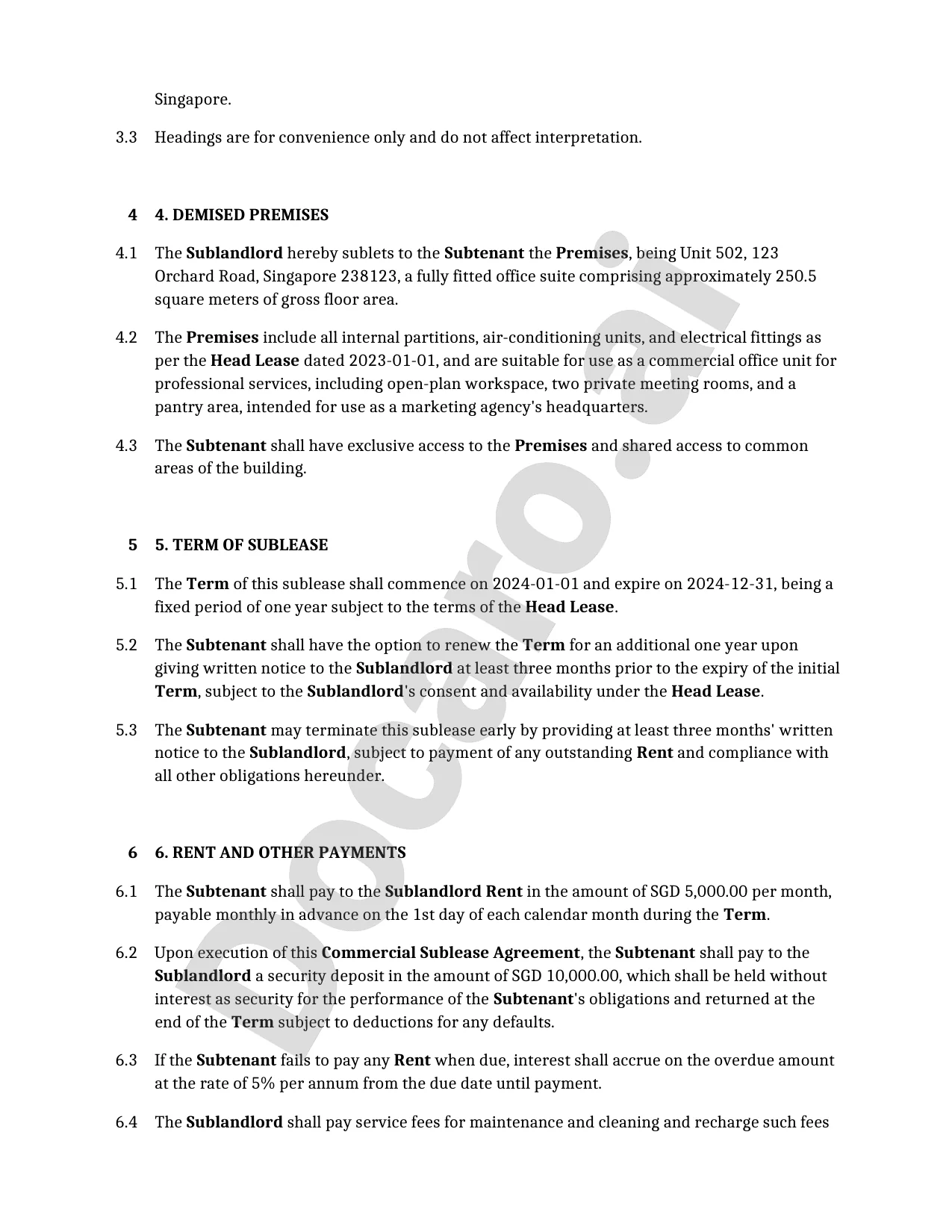
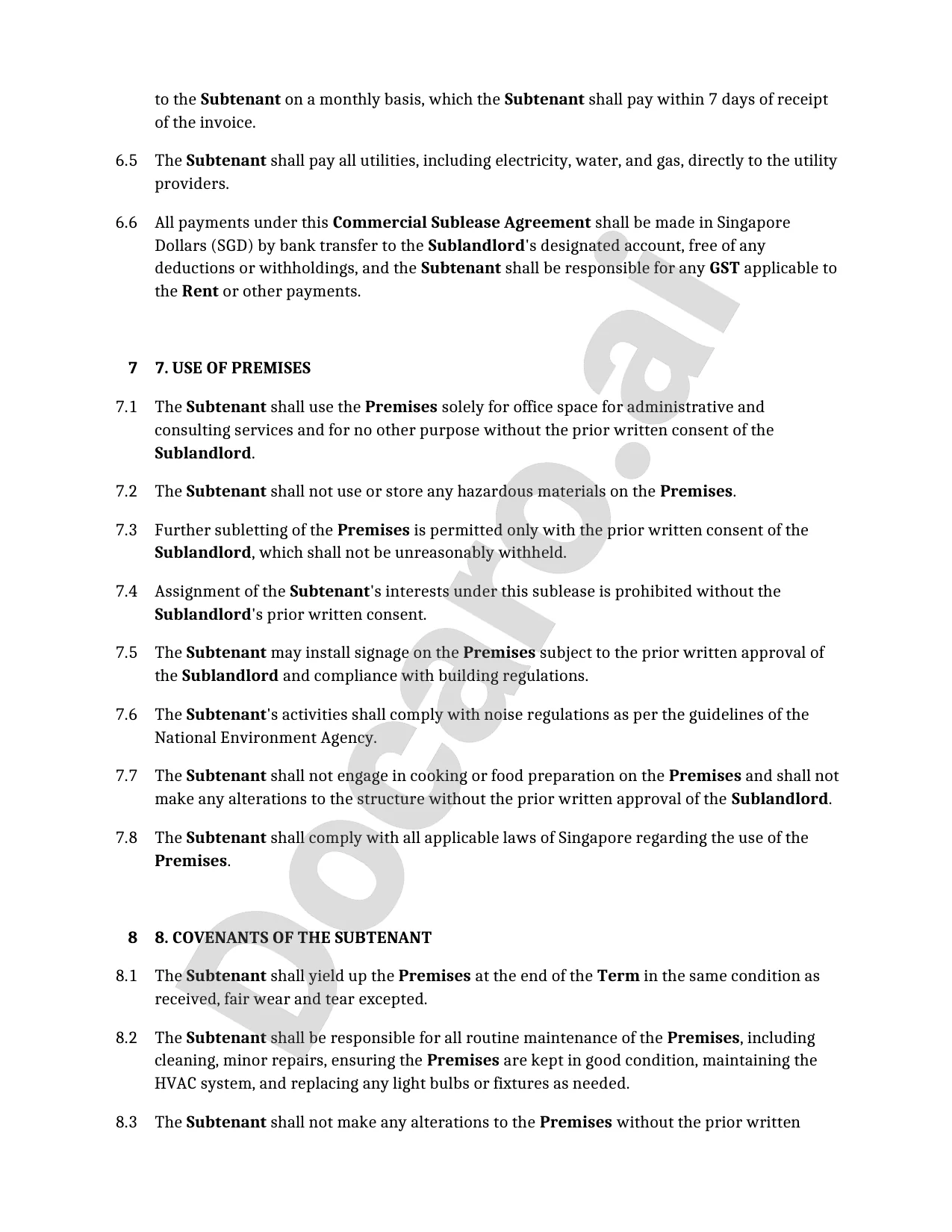
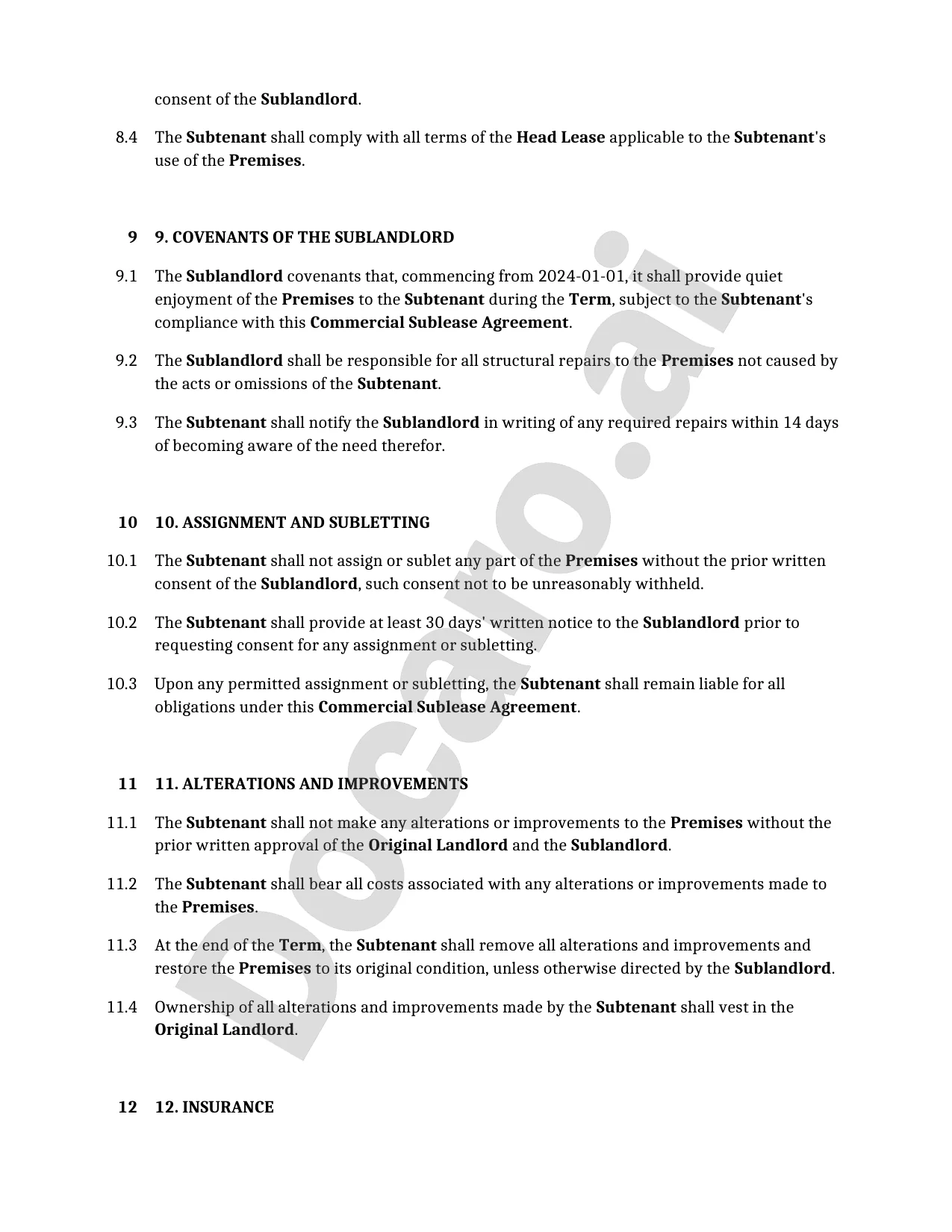
What is a Commercial Sublease Agreement in Singapore?
A commercial sublease agreement in Singapore is a legal contract where a tenant under an existing commercial lease transfers part or all of their rights to occupy the property to a subtenant for a specified period, allowing businesses to optimize space usage without terminating the original lease.
The primary purpose of a commercial sublease is to enable the original tenant, often called the sublandlord, to recover costs or downsize while providing the subtenant with flexible access to commercial space in Singapore's competitive property market.
Unlike a standard lease agreement, which creates a direct relationship between the landlord and tenant with full control over the term and conditions, a sublease is subordinate to the head lease, meaning the subtenant's rights end if the original lease is terminated, and the sublandlord remains liable to the landlord for obligations like rent and maintenance.
Under Singapore law, commercial subleases are governed by the State Lands Act for state land properties, requiring landlord consent and adherence to lease terms, alongside common law principles that emphasize privity of contract and good faith dealings; for tailored documents, consider using Docaro's AI-generated legal services to ensure compliance.
When should you use a Commercial Sublease Agreement in Singapore?
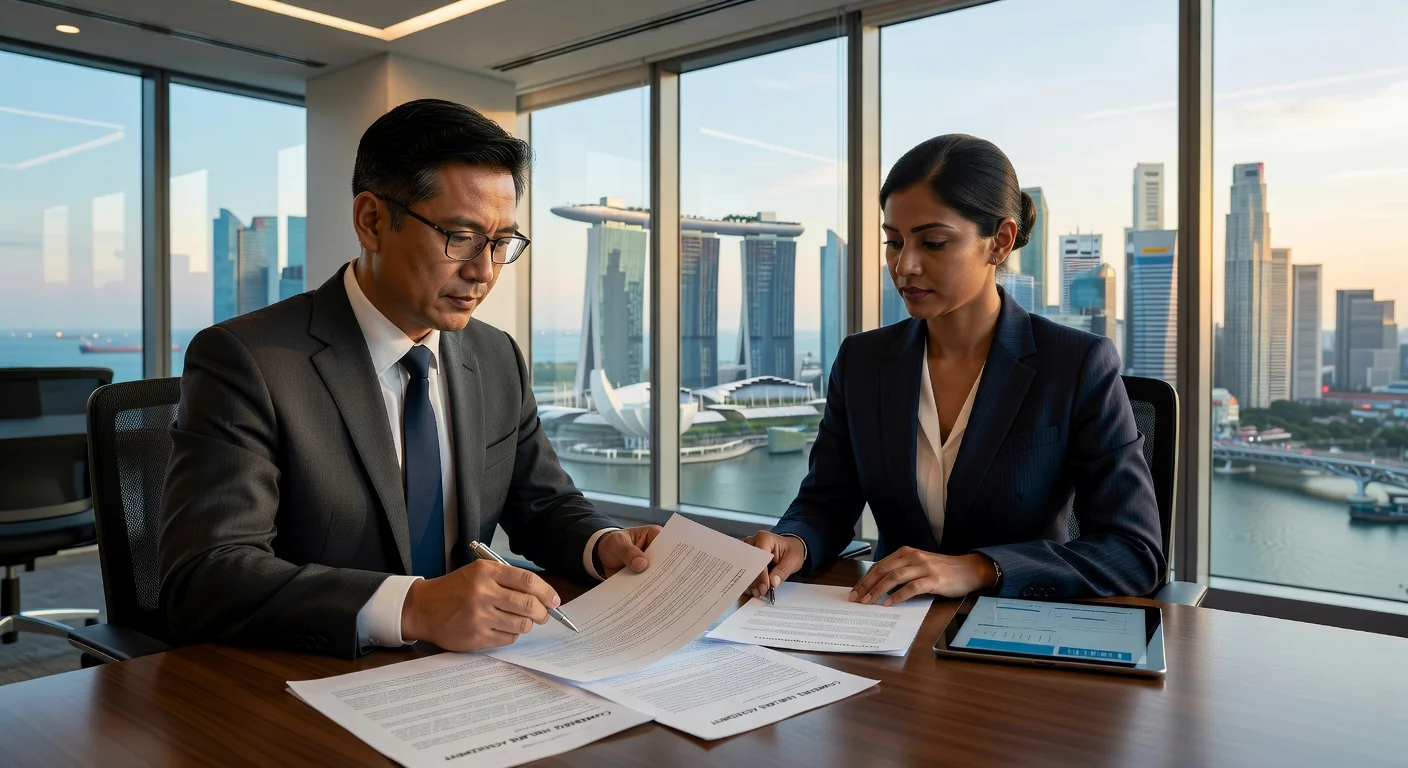
A commercial sublease agreement is particularly appropriate when a tenant in Singapore's commercial property market has excess space after leasing a larger unit than needed, allowing them to generate income from the unused portion without terminating the original lease.
For instance, a tech startup in Singapore's Central Business District might sublease part of their office to another firm during rapid growth phases, ensuring compliance with the Landlord and Tenant Act while retaining flexibility.
Another scenario involves downsizing: a retail business in Orchard Road facing reduced demand could sublease surplus space to a complementary brand, avoiding penalties from early lease termination and optimizing costs in a competitive market.
To create tailored commercial sublease agreements suited to Singapore's regulations, businesses should opt for bespoke AI-generated legal documents via Docaro, ensuring precision and enforceability.
When should you avoid using a Commercial Sublease Agreement in Singapore?
A sublease may not be suitable if the original lease agreement explicitly prohibits subletting, as attempting to do so could result in lease termination or legal penalties under Singapore law. In such cases, tenants must first obtain written consent from the landlord to avoid breaching the contract.
Financial instability of the subtenant poses another risk, where the original tenant remains liable for rent payments even if the subtenant defaults, potentially leading to eviction or debt accumulation. Singapore's tenancy regulations, governed by the Control of Rent Act for certain properties, emphasize that primary tenants cannot fully transfer their obligations through subleasing.
Adverse market conditions, such as a downturn in Singapore's property market, can make subleasing risky by reducing demand and complicating the recovery of costs. Tenants should assess economic factors carefully to prevent financial losses from vacant sublets.
Potential pitfalls under Singapore regulations include disputes over maintenance responsibilities and stamp duty requirements for sublease agreements, which must be stamped within 14 days to remain enforceable. For customized legal protection, consider bespoke AI generated legal documents using Docaro to navigate these complexities.
What are the key rights and obligations of parties in a Commercial Sublease Agreement in Singapore?
In a Singapore commercial sublease, the original tenant, acting as sublandlord, has primary duties to pay rent to the original landlord on time and obtain their consent for the sublease under the State Lands Act or lease terms. The sublandlord also maintains oversight of the property, ensuring the subtenant complies with lease conditions, while retaining rights to collect rent from the subtenant and enforce sublease terms.
The subtenant in a Singapore commercial sublease must pay rent directly to the sublandlord as specified in the agreement and adhere to maintenance obligations like keeping the premises clean and repairing minor damages. Under the Control of Building Act, the subtenant has rights to quiet enjoyment of the space but limited termination options, typically only upon sublease expiry or mutual agreement, without direct recourse against the original landlord.
The original landlord receives rent from the sublandlord and holds ultimate rights to enforce the head lease, including termination if breaches occur, as governed by Singapore's property laws like the Landlord and Tenant Act. Their duties include major structural maintenance, but they can inspect the property and may step in if the sublease affects their interests, emphasizing the need for clear sublease clauses.
For custom Singapore commercial sublease agreements, consider using Docaro to generate bespoke AI-driven legal documents tailored to specific needs, ensuring compliance with local regulations on rent, maintenance, and termination.
What are the key clauses to include in a Commercial Sublease Agreement in Singapore?
In a commercial sublease agreement in Singapore, the term length clause defines the duration of the sublease, typically aligning with the head lease while specifying start and end dates to avoid conflicts with the original lease term.
The rent structure outlines payment details, including base rent, escalation clauses, security deposits, and any additional charges like service fees, ensuring transparency and compliance with Singapore's tenancy laws.
Use of premises provisions restrict the subtenant to specific business activities, prohibiting unauthorized alterations and mandating adherence to building regulations for safety and zoning compliance in commercial spaces.
Assignment provisions govern whether the subtenant can further sublet or assign the lease, often requiring landlord consent to protect the original lessor's interests under Singapore property regulations. For detailed guidance, explore key clauses in a commercial sublease agreement in Singapore.
What key exclusions should be considered?
In Singapore contract law, liability waivers are crucial exclusions that limit a party's responsibility for certain risks or damages, often used in agreements like service contracts to protect against unforeseen claims.
These waivers must be clearly drafted and not contrary to public policy, as courts under the Unfair Contract Terms Act may scrutinize them to ensure fairness, thereby safeguarding the enforcing party from excessive litigation while promoting contractual certainty.
Indemnity limits cap the extent of compensation one party must provide to another for losses, relevant in commercial contracts in Singapore to allocate risks predictably and prevent unlimited financial exposure.
Under Singapore law, such limits are enforceable if reasonable and negotiated, helping parties maintain business viability by balancing protection with accountability.
Restrictions on alterations in contracts prohibit unauthorized changes to terms, ensuring the agreement's integrity and preventing disputes over modifications in Singapore legal frameworks.
These clauses are vital for protecting parties by upholding the original intent of the contract, with courts enforcing them to avoid ambiguity and foster trust in dealings.
For robust protection, opt for bespoke AI-generated legal documents via Docaro platform, tailored specifically to your needs under Singapore law.
What are the legal requirements for Commercial Subleases in Singapore?
In Singapore, subletting commercial property requires landlord consent as a primary statutory requirement under the tenancy agreement and relevant laws, ensuring the landlord approves the subtenant to avoid breaches. For leases exceeding seven years or those involving ownership transfers, registration with the Land Titles Registry is mandatory to protect the sublease's validity and enforceability.
Compliance with the Property Maintenance Act is essential, mandating that subtenants and landlords maintain the property's structural integrity, fire safety, and sanitary conditions to prevent legal penalties. Failure to adhere to these standards can result in fines or termination of the sublease.
For detailed insights on these obligations, explore Legal Requirements for Commercial Subleases in Singapore.
Opt for bespoke AI-generated legal documents via Docaro to tailor sublease agreements precisely to your commercial needs in Singapore.
Are there recent or upcoming legal changes affecting Commercial Sublease Agreements in Singapore?
Recent amendments to property laws in 2025-2026 focus on foreign ownership restrictions and housing development incentives. For instance, the federal LAND Act (H.R. 2124) introduced in March 2025 requires foreign purchasers of agricultural land to face the same restrictions as U.S. citizens would in their home countries, building on state-level bans in over 30 states. Additionally, Florida's Live Local Act Amendment (HB 1389), approved in March 2026, expands eligibility for workforce housing projects to include land owned by counties, municipalities, and religious institutions, promoting denser development near public access areas.
Regarding the State Lands Act, no significant national amendments were identified in recent years, though state-specific laws like Michigan's Public Act 58 of 2025, effective March 24, 2026, updates the Land Division Act to allow more parcels in divisions, enhancing flexibility for property owners. California's Surplus Land Act saw 2024 amendments adding exemptions for certain disposals and strengthening oversight by the Department of Housing and Community Development.
On COVID-19 related extensions for commercial leases, most pandemic-era moratoriums expired by 2023, but lasting impacts include California's SB 1103 (Commercial Tenant Protection Act), effective January 1, 2025, which mandates 30-90 day notices for rent increases in short-term leases and requires translations for small business tenants. These changes provide post-pandemic safeguards without direct extensions, emphasizing tenant rights in commercial real estate agreements.
Upcoming 2026 changes include the federal 21st Century ROAD to Housing Act, passed by the Senate in March 2026, banning large institutional investors from purchasing single-family homes to boost affordability, alongside FinCEN's new reporting rules for all-cash residential transactions starting March 1, 2026. Current regulations show stability in core frameworks, but advise checking official sources like Congress.gov or state legislatures for updates; for tailored legal documents, consider bespoke AI-generated options using Docaro.
What are the benefits and risks of entering a Commercial Sublease in Singapore?
Entering a commercial sublease in Singapore offers significant cost savings for businesses seeking affordable office space without long-term commitments. This arrangement allows subtenants to access prime locations at reduced rates, enhancing financial flexibility during economic uncertainties.
Key advantages include greater flexibility in lease terms, enabling companies to scale operations quickly without the burden of full tenancy obligations. For a comprehensive overview, explore the benefits and risks of entering a commercial sublease in Singapore.
- Subtenant default: The original tenant bears responsibility for rent payments if the subtenant fails to pay, potentially leading to financial losses.
- Disputes with the original landlord: Conflicts may arise over unauthorized alterations or maintenance issues, complicating the sublease agreement.
To mitigate these risks, businesses should opt for bespoke AI-generated legal documents using Docaro, ensuring tailored protection for all parties involved in a commercial sublease.
1
Obtain Landlord Consent
Contact your landlord in writing to request consent for subleasing the commercial space, providing subtenant details and proposed terms. Await written approval.
2
Draft Sublease Agreement
Use Docaro to generate a bespoke sublease agreement tailored to Singapore laws, including rent, duration, and obligations for both parties.
3
Review and Sign Agreement
Have both parties review the agreement with legal counsel, then sign the document electronically or in person to formalize the sublease.
4
Register if Required
Check if the sublease needs registration with the Accounting and Corporate Regulatory Authority; if yes, submit the signed agreement promptly.
How can you ensure compliance when drafting a Commercial Sublease Agreement in Singapore?
When drafting legal documents in Singapore, consulting a lawyer is essential to ensure compliance with local laws and to tailor the content to your specific needs.
While standard templates from the Law Society of Singapore can provide a starting point, they may not fully address unique circumstances; instead, consider using bespoke AI-generated legal documents from Docaro for customized solutions that align with your situation.
Always review for GST implications if your document involves taxable supplies, as overlooking this could lead to penalties or financial losses.
Professional legal advice remains crucial—engage qualified experts to validate any AI-generated documents and mitigate risks effectively.