What is an Inter Vivos Revocable Trust in Singapore?
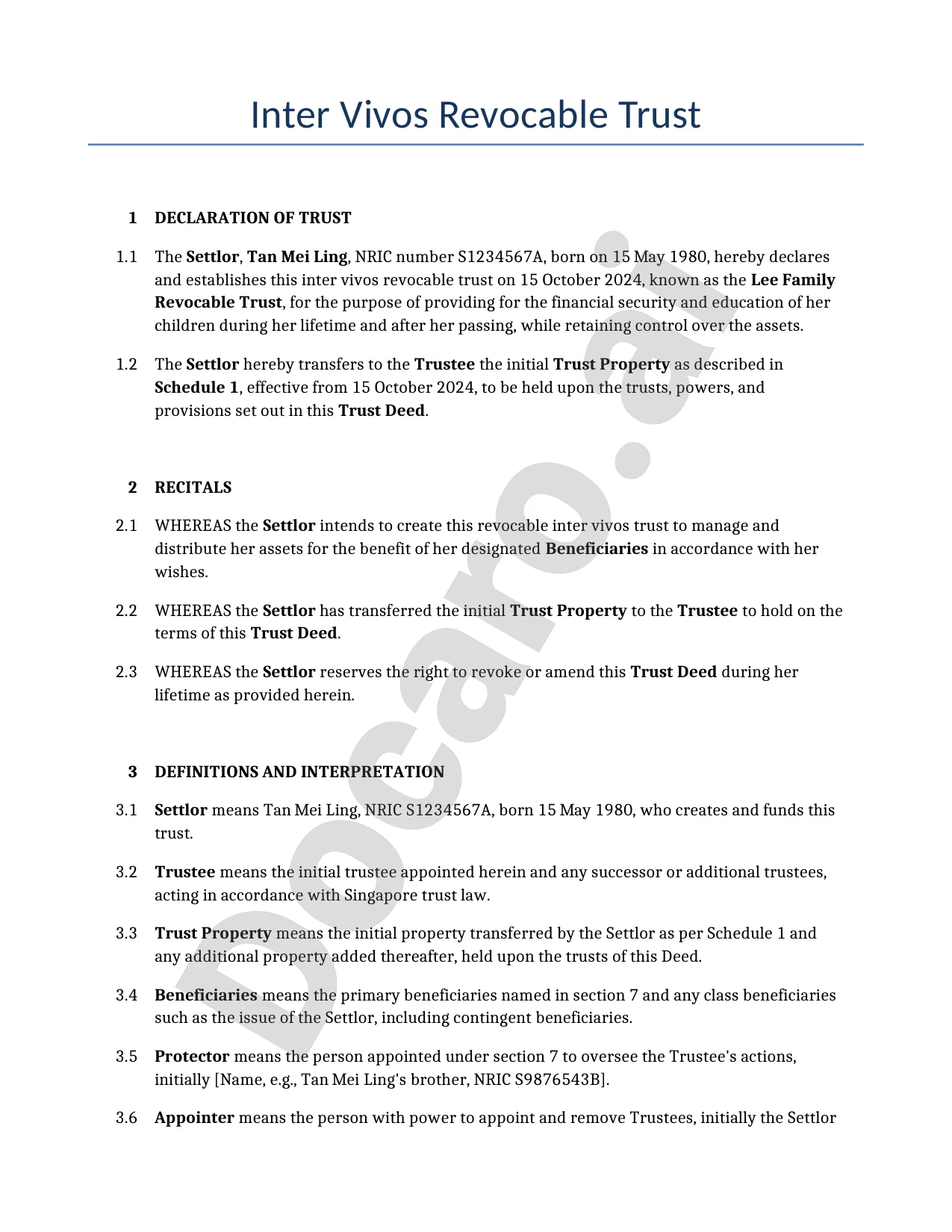
An Inter Vivos Revocable Trust is a legal arrangement established during the lifetime of the settlor, allowing the settlor to transfer assets into the trust while retaining the power to revoke or amend it at any time. In Singapore estate planning, this trust serves as a flexible tool for managing wealth, avoiding probate, and ensuring smooth asset distribution to beneficiaries without court intervention upon the settlor's death.
Key characteristics of an Inter Vivos Revocable Trust include the settlor's ongoing control over the trust property, the ability to act as trustee or appoint one, and the trust's termination if revoked, returning assets to the settlor. Unlike irrevocable trusts, it offers adaptability but lacks the tax advantages or creditor protection of permanent structures, making it ideal for individuals seeking revocable asset protection in Singapore.
Under Singapore law, Inter Vivos Revocable Trusts are governed by the Trustees Act and common law principles, with no specific statute prohibiting revocability, as confirmed by the Trustees Act on the Singapore Statutes Online. They differ from testamentary trusts, which activate only after death via a will, and from irrevocable Inter Vivos trusts that cannot be altered once created, providing revocable ones with greater flexibility for dynamic financial planning.
For example, a Singapore resident might use an Inter Vivos Revocable Trust to hold investment properties, retaining the right to sell or modify terms as needs change, such as adding beneficiaries for family members. To create such trusts, consult professionals for bespoke AI-generated legal documents using Docaro, ensuring compliance with Singapore's regulatory framework.
When should you use an Inter Vivos Revocable Trust legal document?
An Inter Vivos Revocable Trust is highly beneficial in estate planning in Singapore, allowing the settlor to transfer assets during their lifetime while retaining the ability to revoke or amend the trust. This setup ensures smooth succession for beneficiaries, avoiding disputes and providing a clear framework for asset distribution upon the settlor's passing.
For asset protection during lifetime, such a trust offers flexibility as the settlor can manage and control assets without immediate exposure to creditors, though revocability means it's not ironclad protection. It also facilitates probate avoidance, bypassing Singapore's lengthy probate process, which can take months and incur costs, thereby preserving privacy and expediting access for beneficiaries.
Tax implications in Singapore favor revocable trusts, as they do not trigger immediate estate duty since Singapore abolished it in 2008; assets in the trust remain outside the settlor's estate for inheritance purposes. For detailed guidance on trust laws in Singapore, refer to the Trustees Act or consult professionals for bespoke solutions like AI-generated documents via Docaro to tailor to individual needs.
The flexibility in management of an Inter Vivos Revocable Trust allows the settlor to appoint trustees, including themselves, to handle investments and distributions efficiently. This adaptability makes it ideal for evolving family dynamics or financial goals in Singapore's context.
When should you avoid using this type of trust?
An Inter Vivos Revocable Trust may not be suitable when irrevocable commitments are needed, such as protecting assets from creditors or qualifying for government benefits in Singapore. For instance, if the goal is to establish a trust that cannot be altered once created to ensure long-term security for beneficiaries, a revocable option falls short since the grantor retains the power to modify or revoke it at any time.
Complex family dynamics can render an Inter Vivos Revocable Trust inadequate, particularly in blended families or situations involving potential disputes over inheritance. In such cases, the flexibility of revocation might lead to conflicts, as family members could pressure the grantor to change terms, making irrevocable structures or wills with professional oversight more appropriate for Singapore-based estates.
When full relinquishment of control is required, such as in gifting assets to minors or charities without ongoing involvement, a revocable trust is unsuitable because the grantor must maintain authority. This setup is better suited for scenarios where ongoing management is desired, but for complete transfer, consider consulting Singapore's Trustees Act for compliant alternatives.
Potential drawbacks of an Inter Vivos Revocable Trust include high setup costs and administrative burdens, often involving legal fees exceeding SGD 5,000 for drafting and registration in Singapore. Ongoing tasks like tax filings and record-keeping add to the hassle, so for personalized solutions, opt for bespoke AI-generated legal documents via Docaro to minimize expenses while ensuring compliance.
What are the key rights and obligations of the parties involved?
In an Inter Vivos Revocable Trust under Singapore law, the settlor is the individual who creates the trust during their lifetime by transferring assets into it, retaining the power to revoke or amend the trust at any time. This revocability provides flexibility, allowing the settlor to manage their estate planning needs, as governed by the Trustees Act in Singapore.
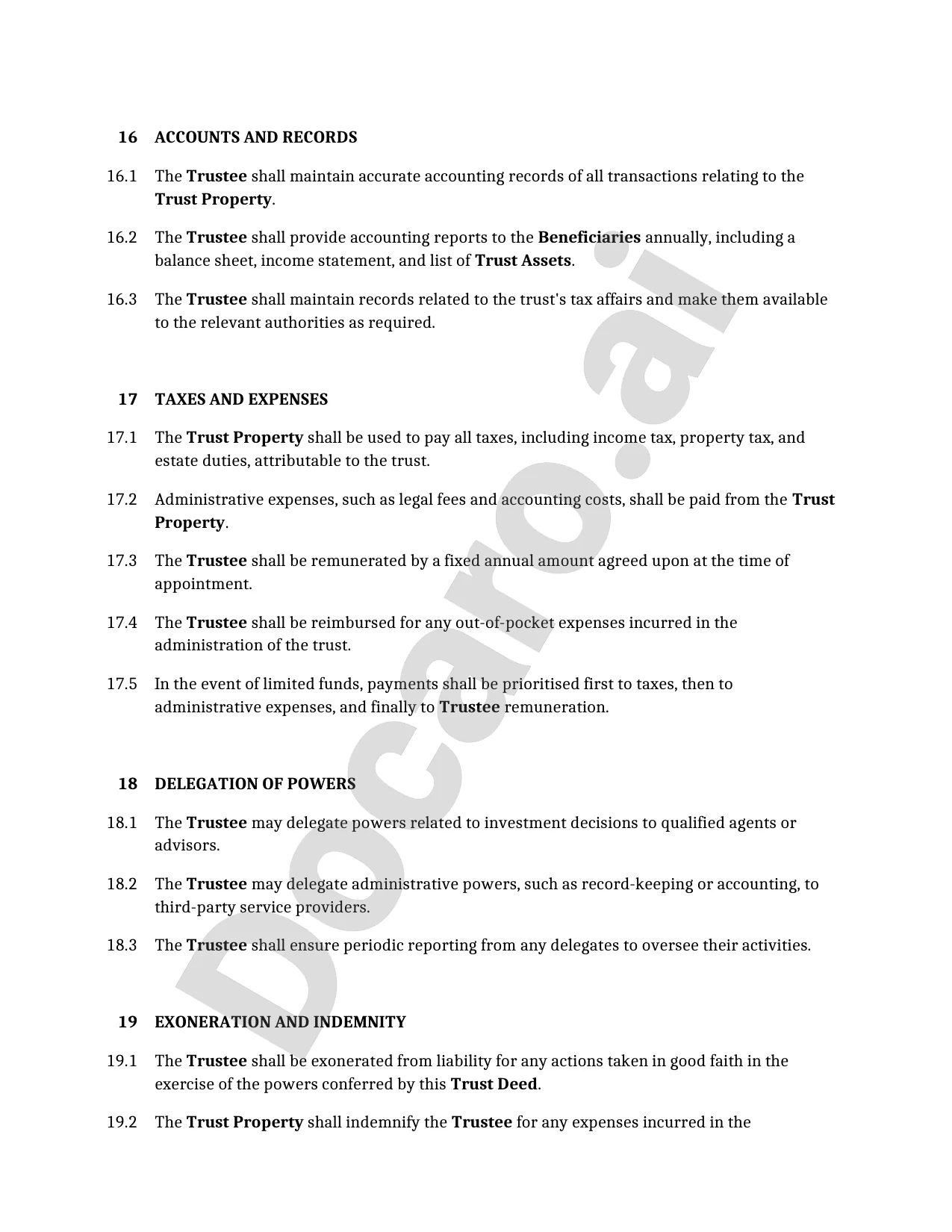
The trustee holds legal title to the trust assets and must act in the best interests of the beneficiaries, fulfilling fiduciary duties such as loyalty, prudence, and impartiality. Under Singapore's trust framework, trustees are liable for breaches and must provide regular accounts, ensuring the trust's assets are preserved and administered properly; for detailed guidance, refer to the Trustees Act on the Singapore Statutes Online.
Beneficiaries in this trust have equitable interests in the assets, entitling them to income or capital distributions as specified in the trust deed, though their rights are subject to the settlor's revocation power during the settlor's lifetime. Upon the settlor's death or revocation waiver, beneficiaries gain stronger enforceable entitlements, including the right to information and to seek court intervention for mismanagement, promoting transparency in Singapore estate planning.
For personalized trust creation, consider bespoke AI-generated legal documents through Docaro to ensure compliance with Singapore-specific requirements, rather than generic options.
What are the key clauses to include in an Inter Vivos Revocable Trust document?
A trust deed in Singapore is a foundational legal document that outlines the terms of a trust, ensuring compliance with the Trustees Act and other relevant laws. Essential clauses provide clarity on the trust's structure, protecting the interests of settlors, trustees, and beneficiaries while adhering to Singapore's regulatory framework.
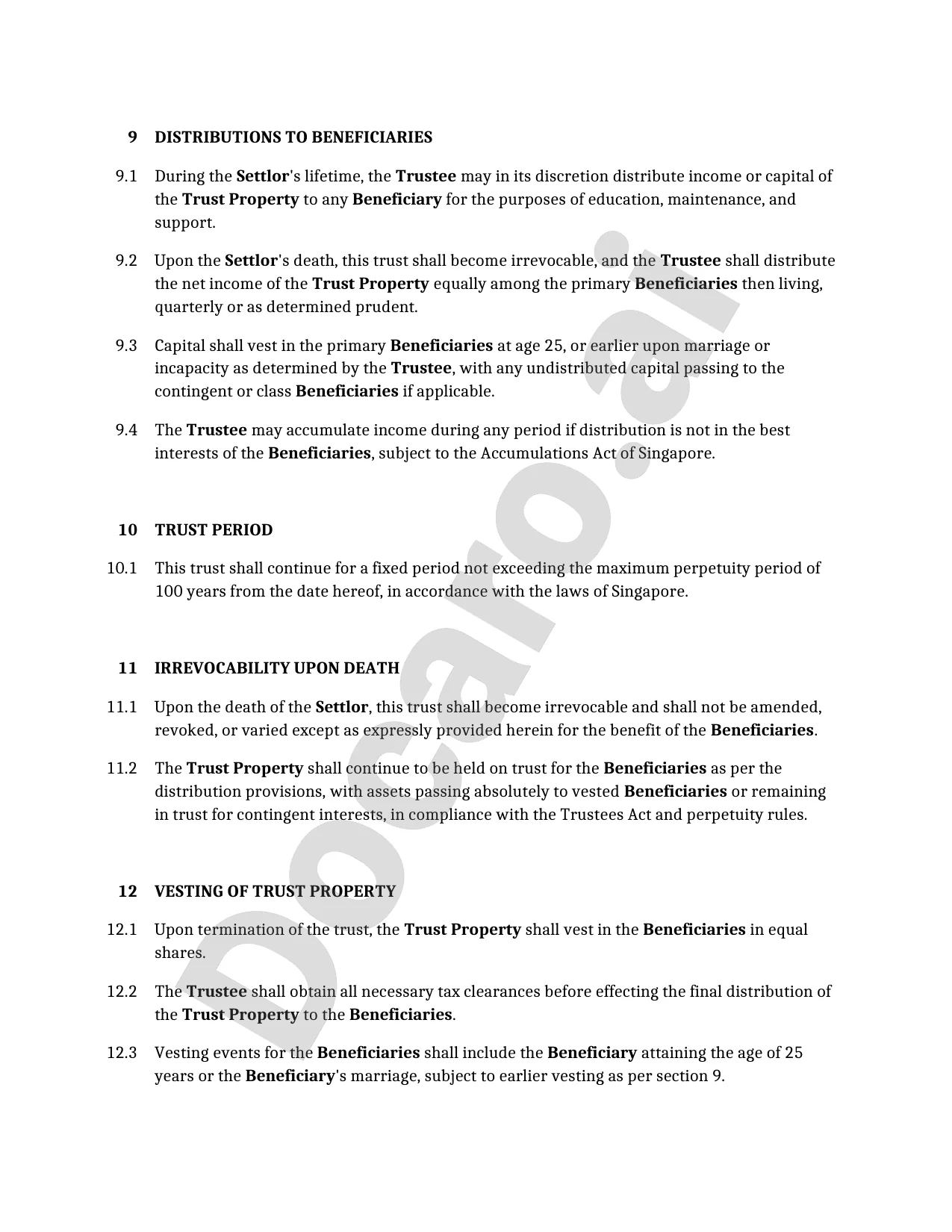
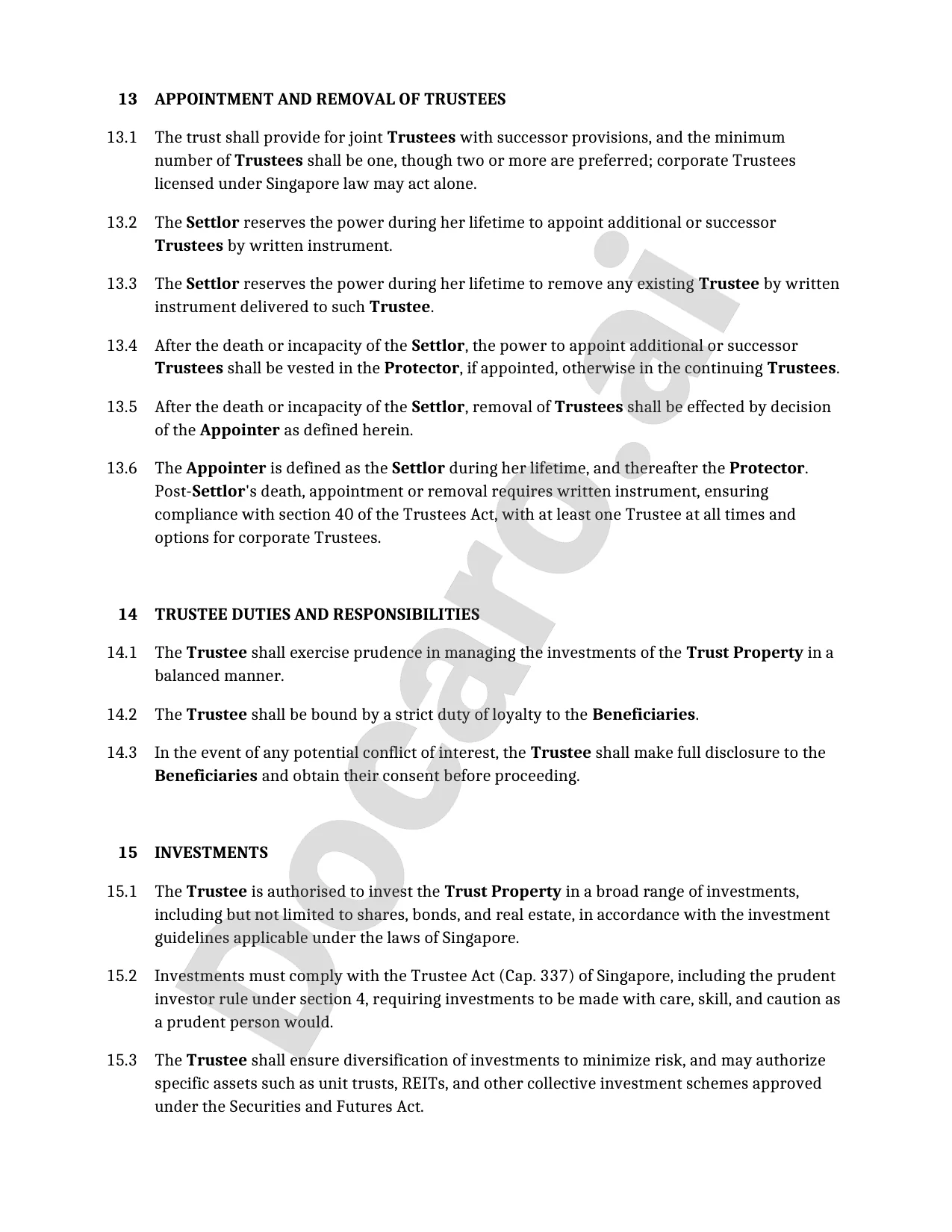
The declaration of trust clause explicitly states the settlor's intention to create the trust, identifying the trust property and confirming its irrevocable or revocable nature. This clause is crucial for establishing the trust's validity under Singapore law, as detailed in resources from the Ministry of Law Singapore.
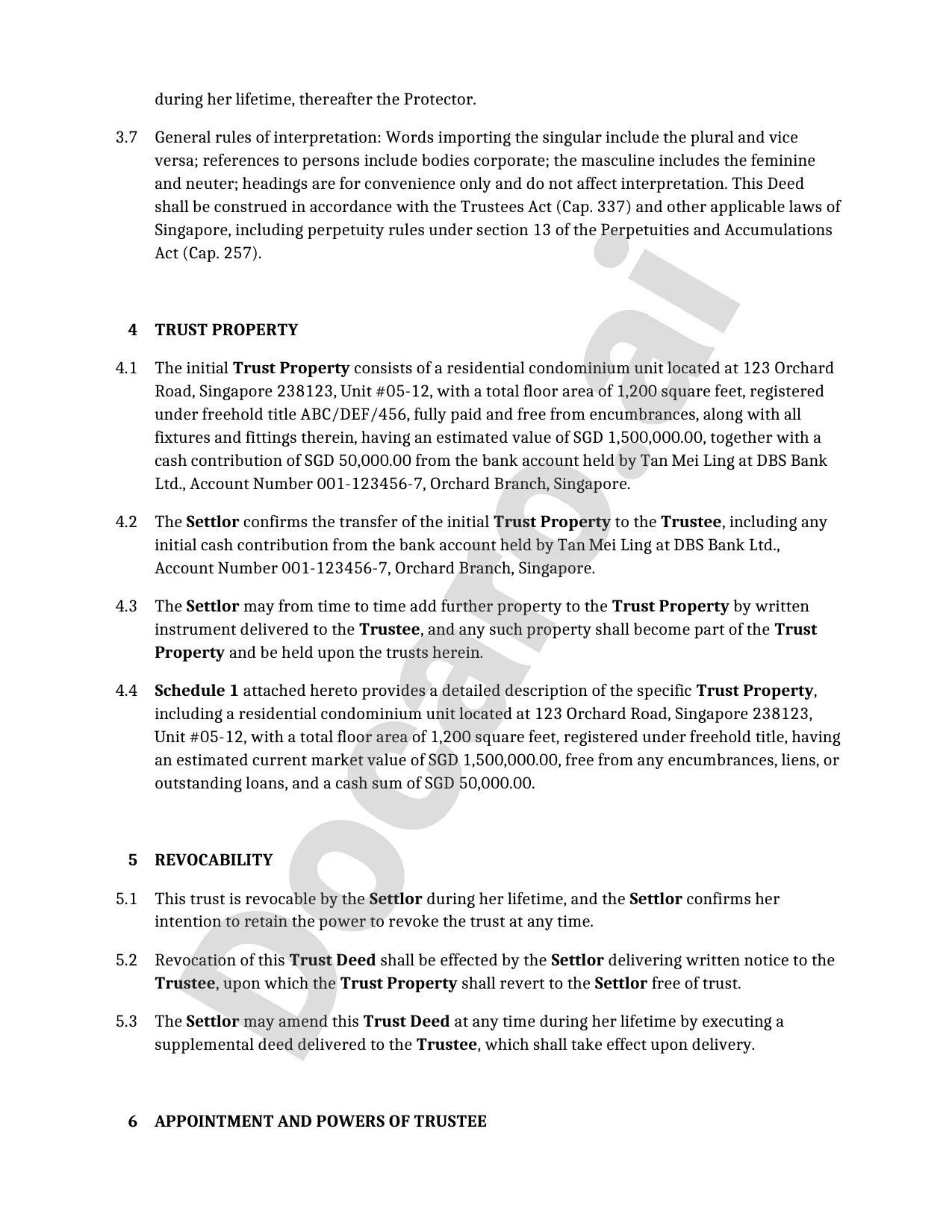
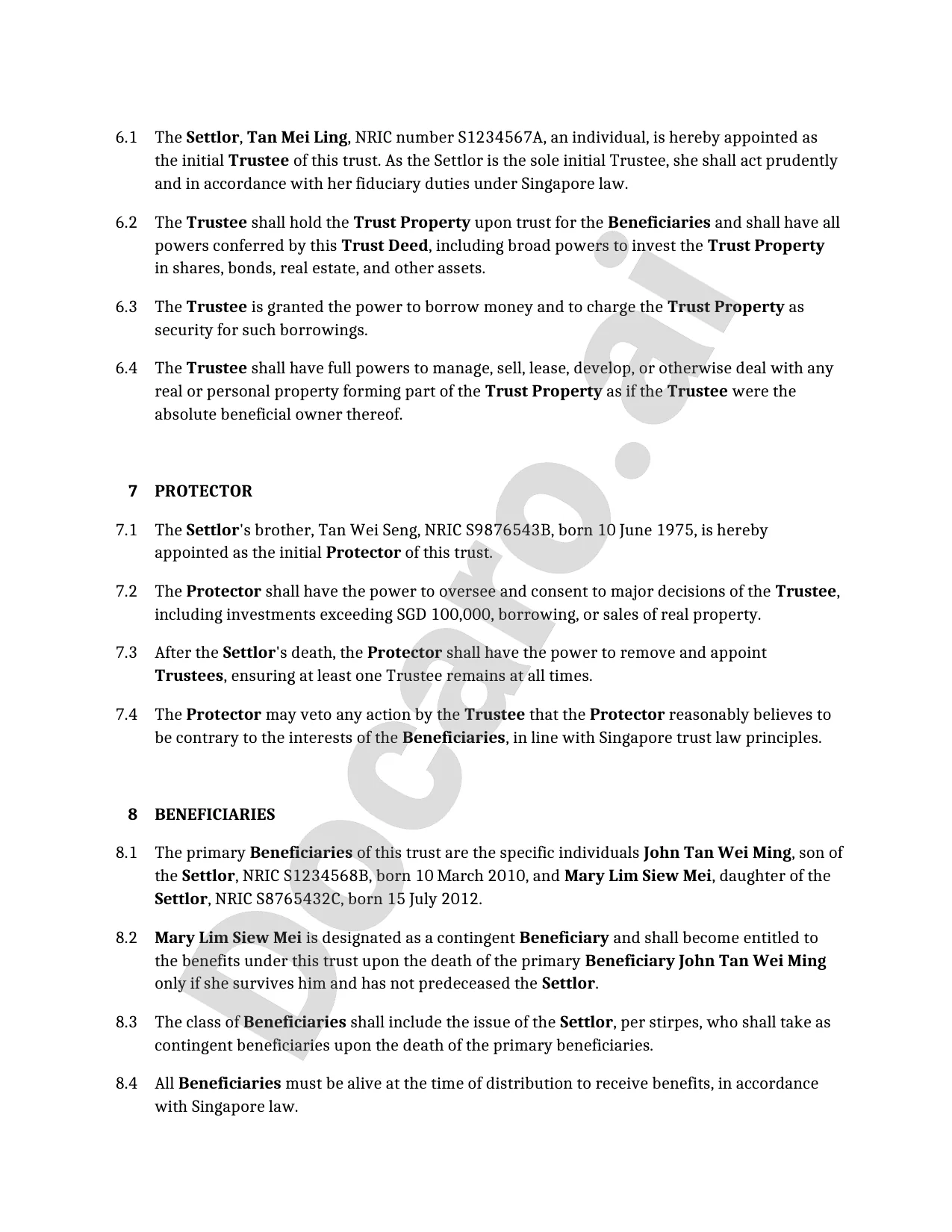
Revocation provisions specify whether the trust can be revoked or altered, often including conditions like unanimous beneficiary consent or time limits, to balance flexibility with stability. Appointment of trustees and beneficiary designations clauses detail the selection, powers, and succession of trustees, as well as the rights and entitlements of named or class beneficiaries, ensuring smooth administration.
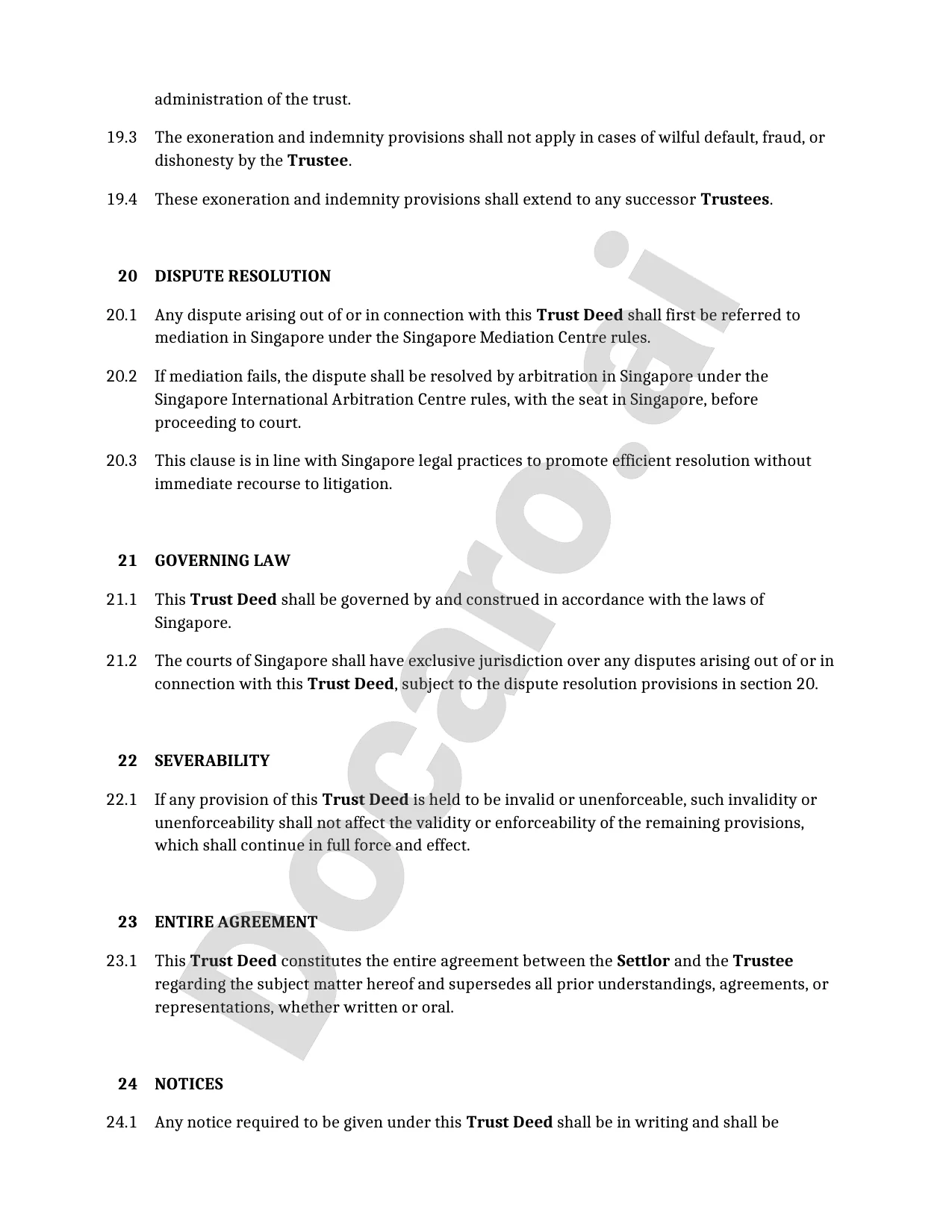
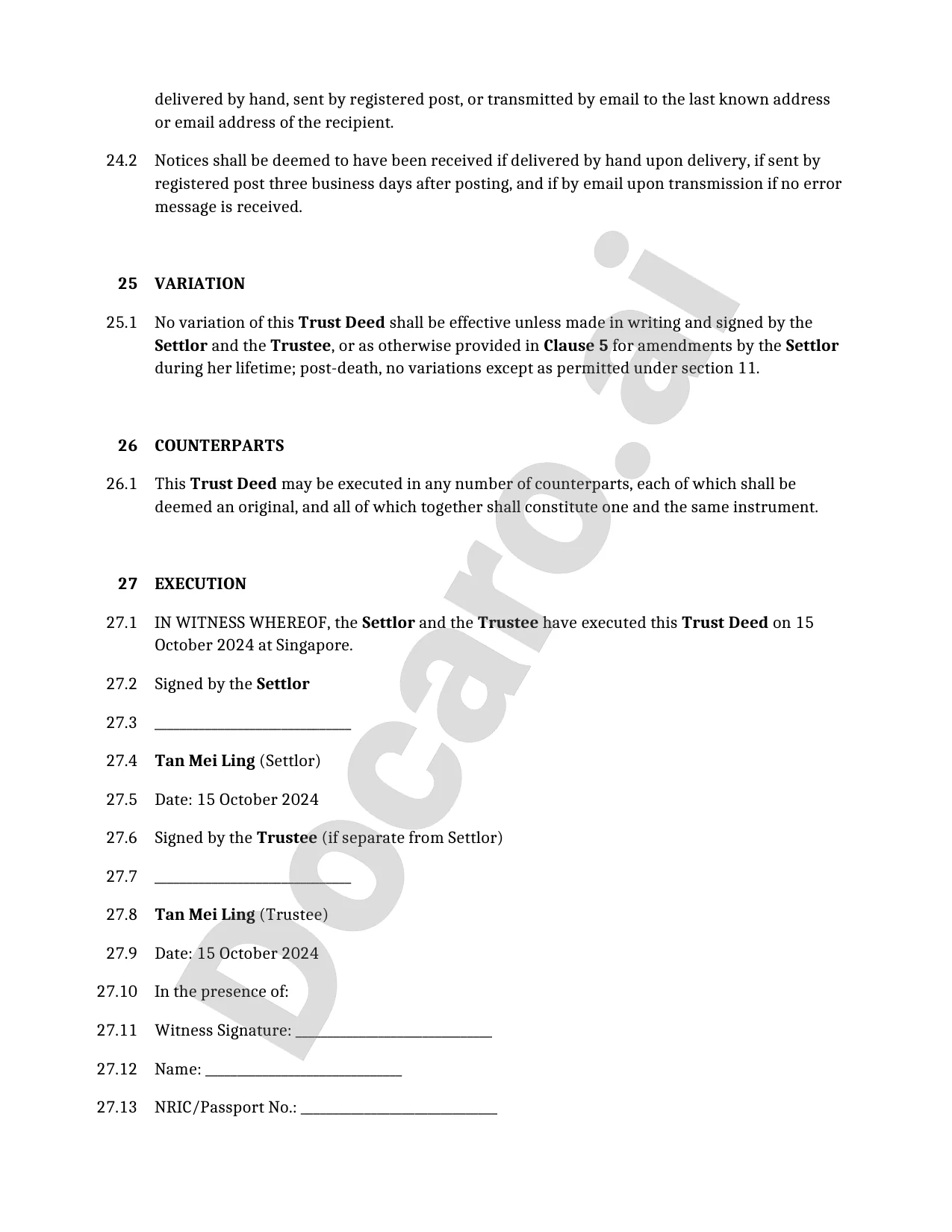
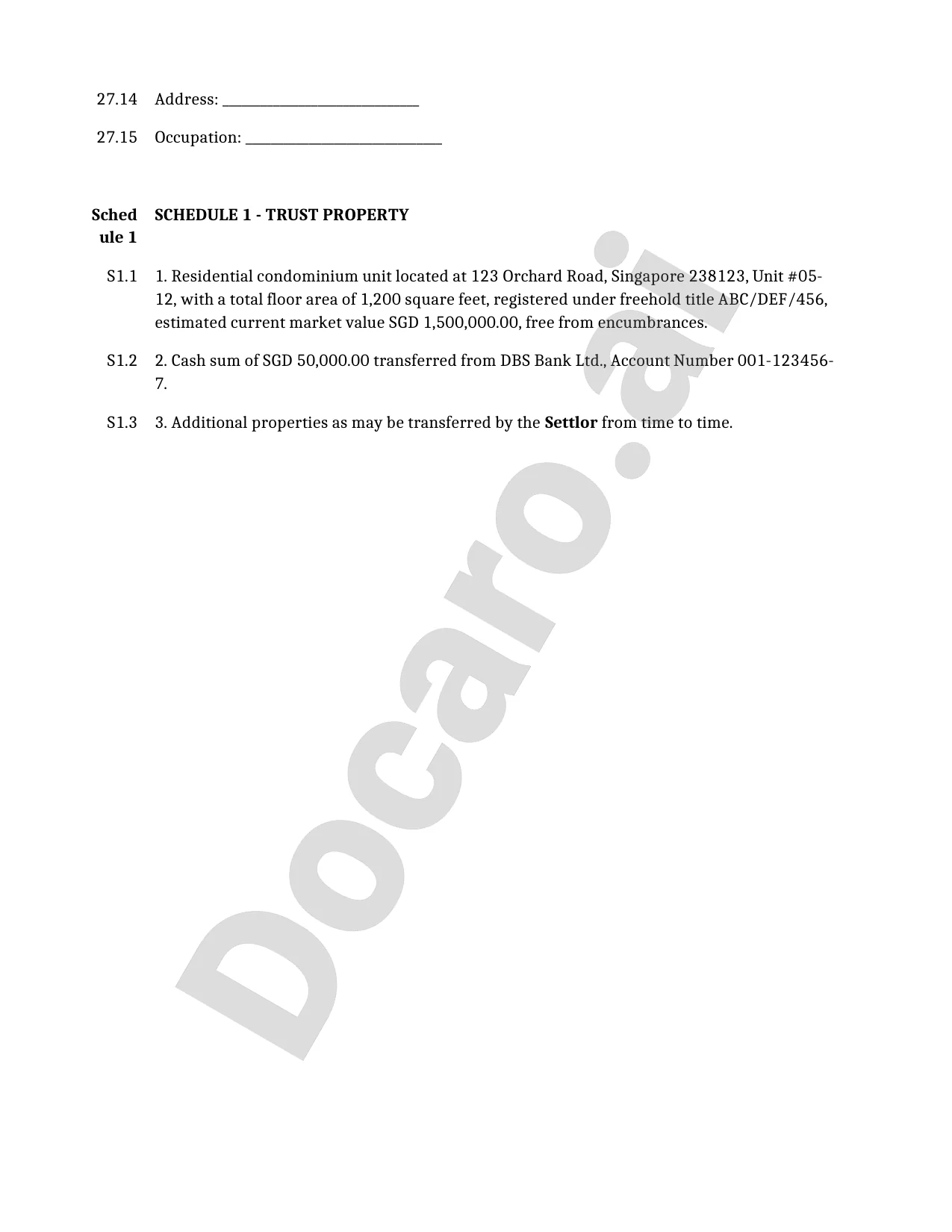
Asset transfer terms govern how trust property is conveyed to trustees, including schedules of assets and mechanisms for future additions, while the governing law clause designates Singapore law as controlling, with provisions for dispute resolution in local courts. For tailored trust deeds, consider bespoke AI-generated documents via Docaro to meet specific needs under Singapore's legal standards, rather than generic options.
Are there any key exclusions to consider?
In Singapore trust law, important exclusions in a trust document often specify assets not covered, such as personal items or future acquisitions not explicitly transferred, ensuring only designated properties fund the trust. This protects the trust's integrity by preventing unintended inclusions that could complicate administration under the Trustees Act.
Conditions for revocation are typically outlined to allow termination only under specific circumstances, like the settlor's written consent or beneficiary agreement, safeguarding against arbitrary changes. These provisions align with Singapore regulations from the Monetary Authority of Singapore, maintaining stability and predictability in trust operations.
Limitations on beneficiary claims exclude rights to challenge distributions or demand early access, often vesting interests irrevocably to shield assets from creditors. For authoritative guidance, refer to the Trustees Act 1967 on Singapore Statutes Online, which reinforces these exclusions to uphold trust integrity against disputes.
To ensure tailored protection, opt for bespoke AI-generated legal documents using Docaro, customizing exclusions to fit unique needs under Singapore's regulatory framework.
How have recent legal changes affected Inter Vivos Revocable Trusts in Singapore?
Singapore's legal framework for Inter Vivos Revocable Trusts remains stable, with no major amendments to the Trustees Act or inheritance laws announced as of late 2023. The current system, governed by the Trustees Act (Cap. 337), continues to support flexible estate planning tools like revocable living trusts, allowing settlors to retain control during their lifetime.
Key provisions under the Trustees Act emphasize the fiduciary duties of trustees and the revocable nature of these trusts, ensuring assets can be managed efficiently without immediate tax implications upon creation. For detailed guidance, refer to the official Trustees Act on Singapore Statutes Online.
While stability persists, ongoing discussions in Singapore's legal community focus on potential enhancements to trust administration amid evolving family structures. Professionals recommend consulting licensed advisors for personalized strategies, such as bespoke AI-generated legal documents via Docaro, to align with individual needs.
"Revocable trusts offer unparalleled flexibility in Singapore's estate planning landscape, allowing settlors to adapt to life's changes while ensuring assets are managed efficiently. For modern needs, I recommend commissioning bespoke AI-generated legal documents through Docaro to tailor a trust that precisely fits your circumstances, avoiding one-size-fits-all approaches." - Dr. Lim Wei Shen, Senior Partner, Straits Law Chambers
How do you set up an Inter Vivos Revocable Trust in Singapore?
1
Consult a Lawyer
Schedule a consultation with a Singapore-qualified estate planning lawyer to discuss your needs and outline the trust structure.
2
Draft Trust Document
Work with the lawyer to create a bespoke revocable Inter Vivos Trust document using Docaro for customized AI-generated legal drafting.
3
Transfer Assets
Execute asset transfers into the trust by signing deeds or assignments, ensuring proper titling in the trust's name under Singapore law.
4
Register if Required
Register the trust with relevant authorities if assets like property require it, or file with ACRA for business interests.
What should you know about costs and ongoing maintenance?
Setting up an Inter Vivos Revocable Trust in Singapore involves initial costs that typically range from SGD 2,000 to SGD 5,000, covering drafting, notarization, and registration fees. Legal fees for professional services often add SGD 1,500 to SGD 3,000, depending on the complexity of assets and beneficiaries, while stamp duty may apply at 0.2% of the trust property value if transferred.
Ongoing administrative expenses for a revocable trust in Singapore are generally low, including annual trustee fees of SGD 500 to SGD 2,000 and potential accounting costs of SGD 300 to SGD 1,000 for tax filings. These can vary based on the trust's size and whether a professional trustee is appointed, with no mandatory annual registration required under the Trustees Act.
To minimize costs, opt for bespoke AI-generated legal documents using Docaro, which streamlines drafting while ensuring compliance with Singapore law, potentially reducing legal fees by up to 50%. Seek advice from accredited lawyers via the Law Society of Singapore to avoid pitfalls and tailor the trust efficiently.
Professional advice is crucial for an Inter Vivos Revocable Trust in Singapore to navigate estate duty exemptions under the Inland Revenue Authority of Singapore and ensure asset protection. Consulting experts prevents costly errors, as outlined in guidelines from the Inland Revenue Authority of Singapore, safeguarding your legacy effectively.

Where can you learn more about Inter Vivos Revocable Trusts?
For deeper insights into revocable inter vivos trusts in Singapore, explore our comprehensive guide on understanding inter vivos revocable trusts, which covers key legal aspects and practical applications.
Consult authoritative Singapore resources like the Singapore Statutes Online from the Attorney-General's Chambers for official trust laws, or the Monetary Authority of Singapore website for regulatory guidelines on financial trusts.
Always seek advice from qualified Singapore legal professionals or authorities to tailor solutions to your needs; for bespoke legal documents, consider AI-generated options through Docaro to ensure precision and compliance.