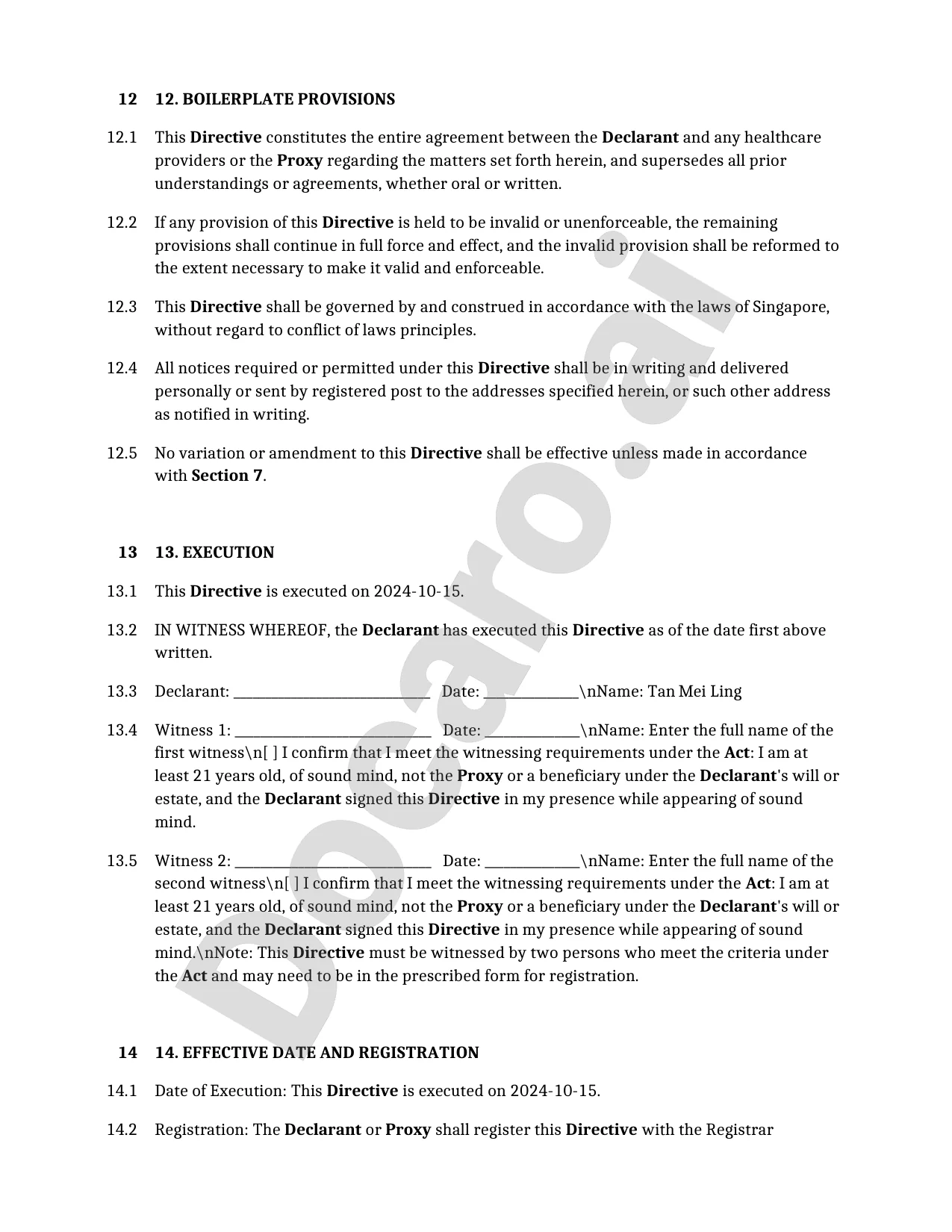
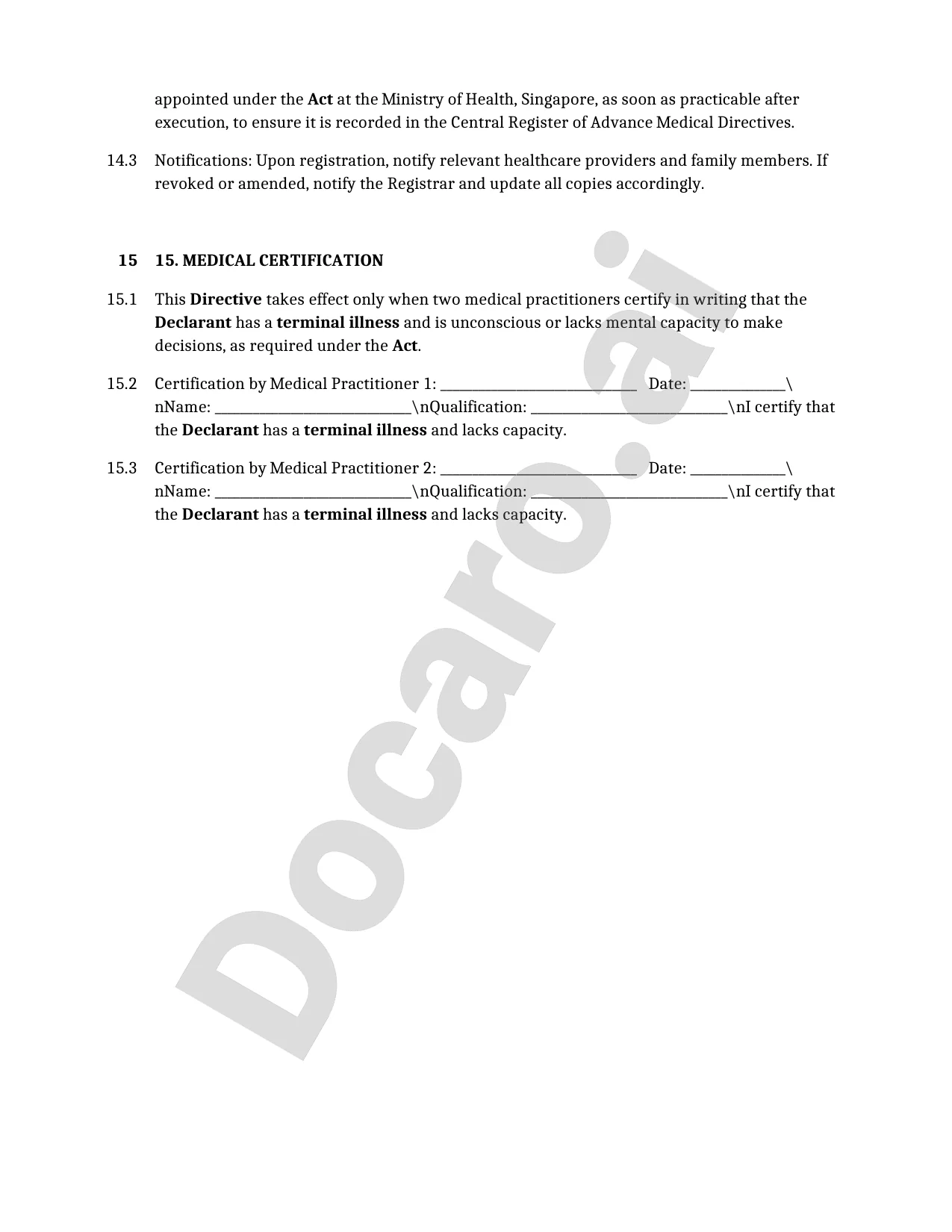
What is an Advance Medical Directive in Singapore?
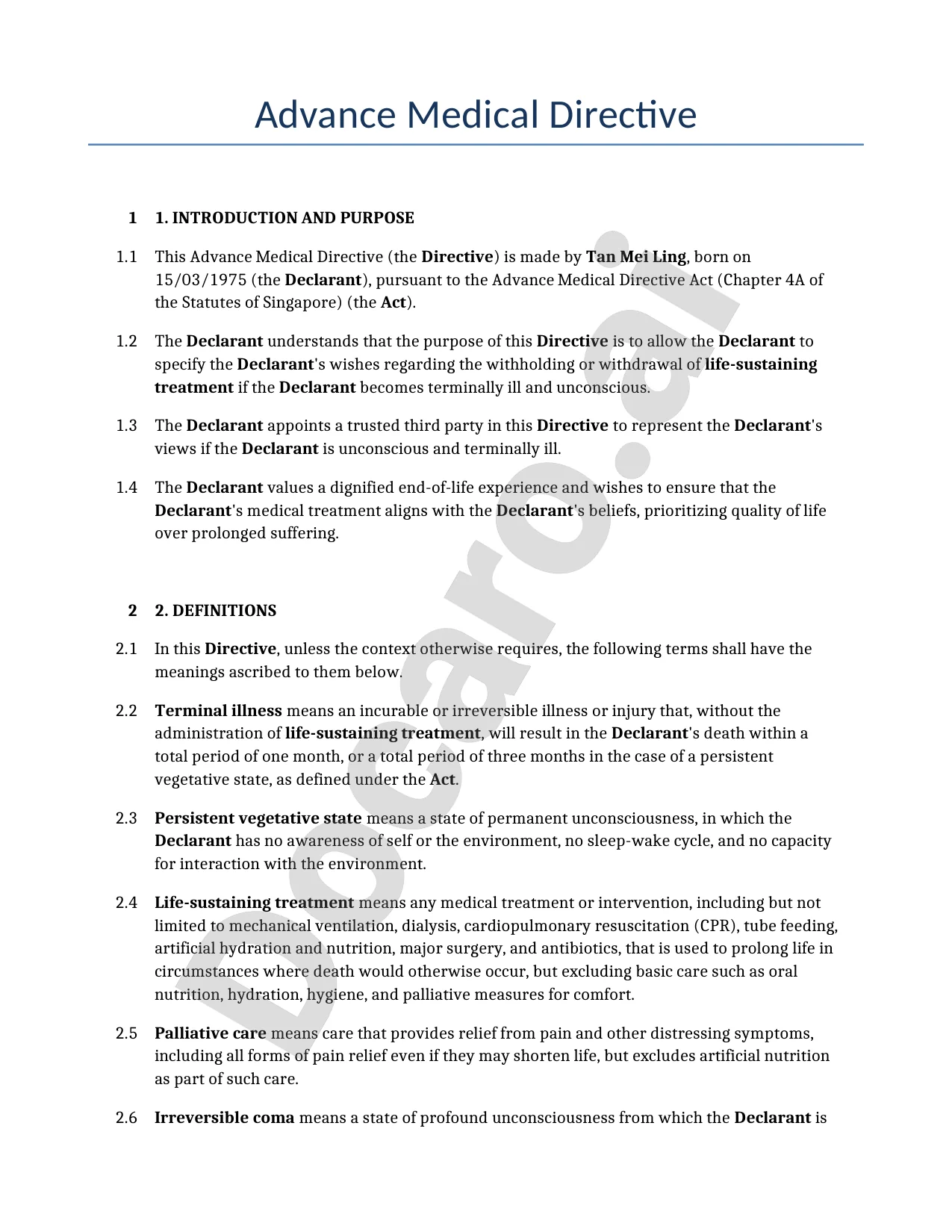
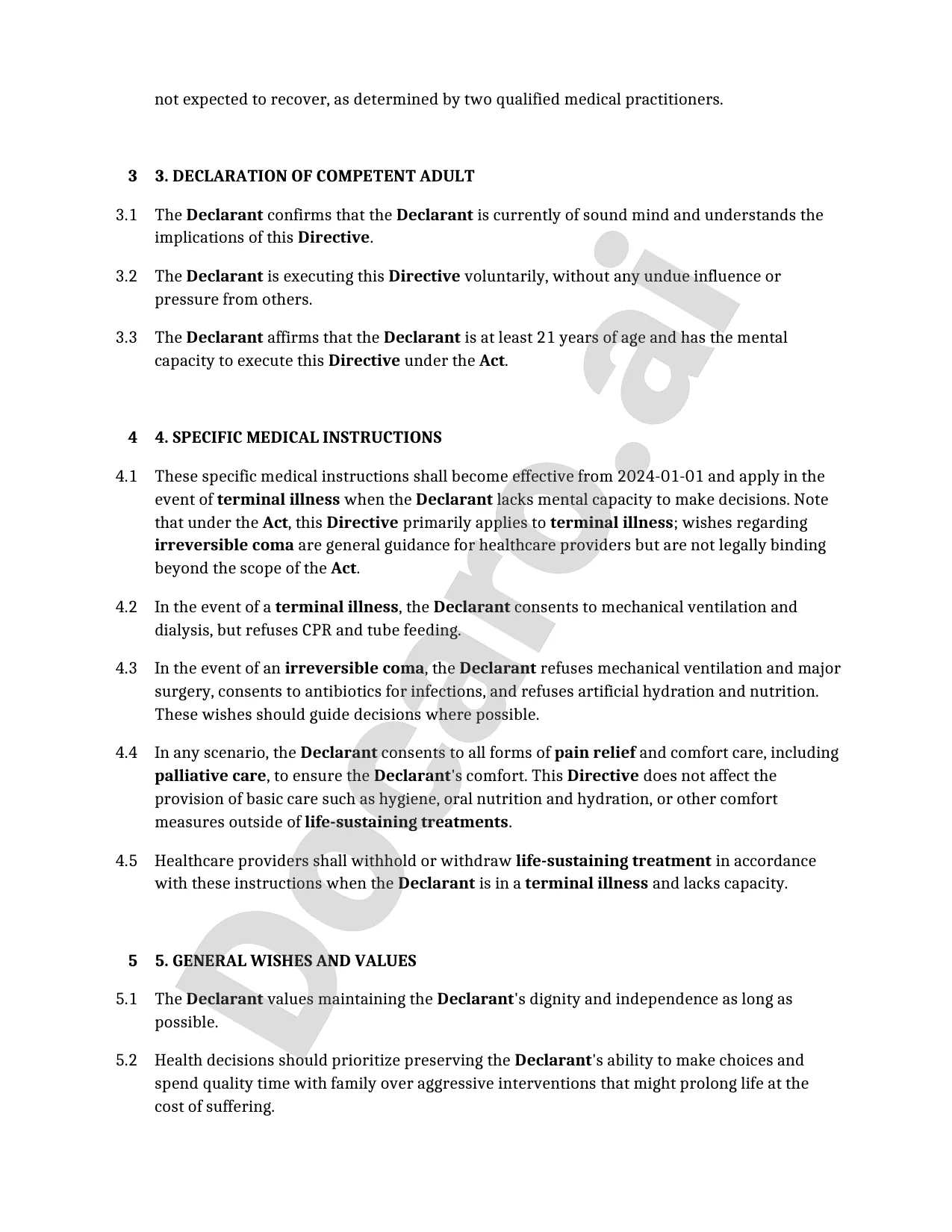
An Advance Medical Directive (AMD) in Singapore is a legal document that allows individuals to specify their preferences for medical treatment in the event they lose mental capacity and cannot make decisions. It primarily outlines whether the person wishes to have life-sustaining treatments withheld or withdrawn if they are terminally ill or in a persistent vegetative state.
The primary purpose of an AMD is to empower individuals to maintain control over their end-of-life care, ensuring their values and wishes are respected even when they are incapacitated. This helps alleviate the burden on family members who might otherwise face difficult decisions during critical times.
In the context of end-of-life care, an AMD fits as a crucial component of advance care planning, guiding healthcare providers to avoid unnecessary prolongation of suffering. It promotes dignity and aligns medical interventions with the patient's previously expressed desires, reducing ethical dilemmas in palliative scenarios.
The legal basis for AMDs in Singapore is provided by the Advance Medical Directive Act (AMDA), enacted in 1996, which ensures the directive's enforceability and protects against coercion. Under the AMDA, any competent adult aged 21 or older can create an AMD, and for personalized legal documents, consider using Docaro AI to generate bespoke options tailored to individual needs.
"Advance Medical Directives empower individuals to exercise their personal autonomy by clearly outlining their preferences for medical treatment, ensuring their voices are heard even when they cannot speak." - Associate Professor Kevin Tan, National University of Singapore Faculty of Law.
To safeguard your autonomy, create a bespoke Advance Medical Directive tailored to your needs using Docaro's AI-generated legal documents.
When should you consider creating an Advance Medical Directive?
Upon receiving a serious illness diagnosis in Singapore, such as advanced cancer or terminal heart disease, an individual should consider creating an Advance Medical Directive (AMD) to outline their healthcare preferences proactively. This ensures that medical decisions align with their values during incapacity, preventing unwanted aggressive treatments.
As part of estate planning, healthy individuals in their 50s or older can draft an AMD to integrate with wills and power of attorney, safeguarding personal autonomy in future healthcare scenarios. Proactive AMD creation promotes informed end-of-life choices, reducing family burdens amid Singapore's evolving medical landscape.
During life transitions like retirement or major surgery preparation, considering an AMD empowers individuals to specify directives on life-sustaining measures. For personalized AMD documents, explore Docaro AI legal tools to generate tailored options suited to Singapore's legal framework.
When should an Advance Medical Directive not be used?
An Advance Medical Directive (AMD) in Singapore is a legal document allowing individuals to specify their wishes regarding life-sustaining treatments in terminal illness scenarios. However, it is not appropriate when the patient's condition is reversible, as medical interventions can restore health without the need for such directives.
For mental health issues, an AMD may not be suitable if the individual lacks the mental capacity to make informed decisions at the time of creation. Singapore law requires that the person be of sound mind, ensuring the directive reflects genuine preferences rather than impaired judgment.
When a patient can still communicate preferences, an AMD becomes unnecessary, as healthcare providers can directly consult the individual on treatment options. This emphasizes the importance of ongoing dialogue in non-terminal or recoverable situations to respect real-time wishes.
What are the key clauses in an Advance Medical Directive?
An Advance Medical Directive (AMD) in Singapore is a legal document that allows individuals to specify their preferences for medical treatment if they become terminally ill and unable to make decisions. Essential clauses typically include a clear declaration of the patient's wishes, identification of the declarant and witnesses, and a statement revoking any prior directives to ensure the document's validity under the Advance Medical Directive Act.
The core provision in an AMD focuses on withholding or withdrawing life-sustaining treatment, instructing healthcare providers not to use extraordinary measures like mechanical ventilation or resuscitation to prolong life in cases of irreversible coma or persistent vegetative state. This clause emphasizes natural death while allowing basic palliative care to manage pain and discomfort, ensuring the patient's dignity is preserved.
AMDs may include provisions for specific medical scenarios, such as preferences for pain management, organ donation, or mental health treatments, though these are not mandatory and should align with Singapore's legal framework. For personalized and compliant documents, consider using Docaro AI legal generator to create bespoke AMDs tailored to individual needs rather than generic forms.

What are the key rights and obligations involved in an Advance Medical Directive?
In Singapore, under the Advance Medical Directive Act, individuals aged 21 and above who are of sound mind have the right to make an Advance Medical Directive (AMD). This directive allows them to specify their refusal of extraordinary life-sustaining treatment in the event of terminal illness or irreversible coma, ensuring their wishes are legally binding.
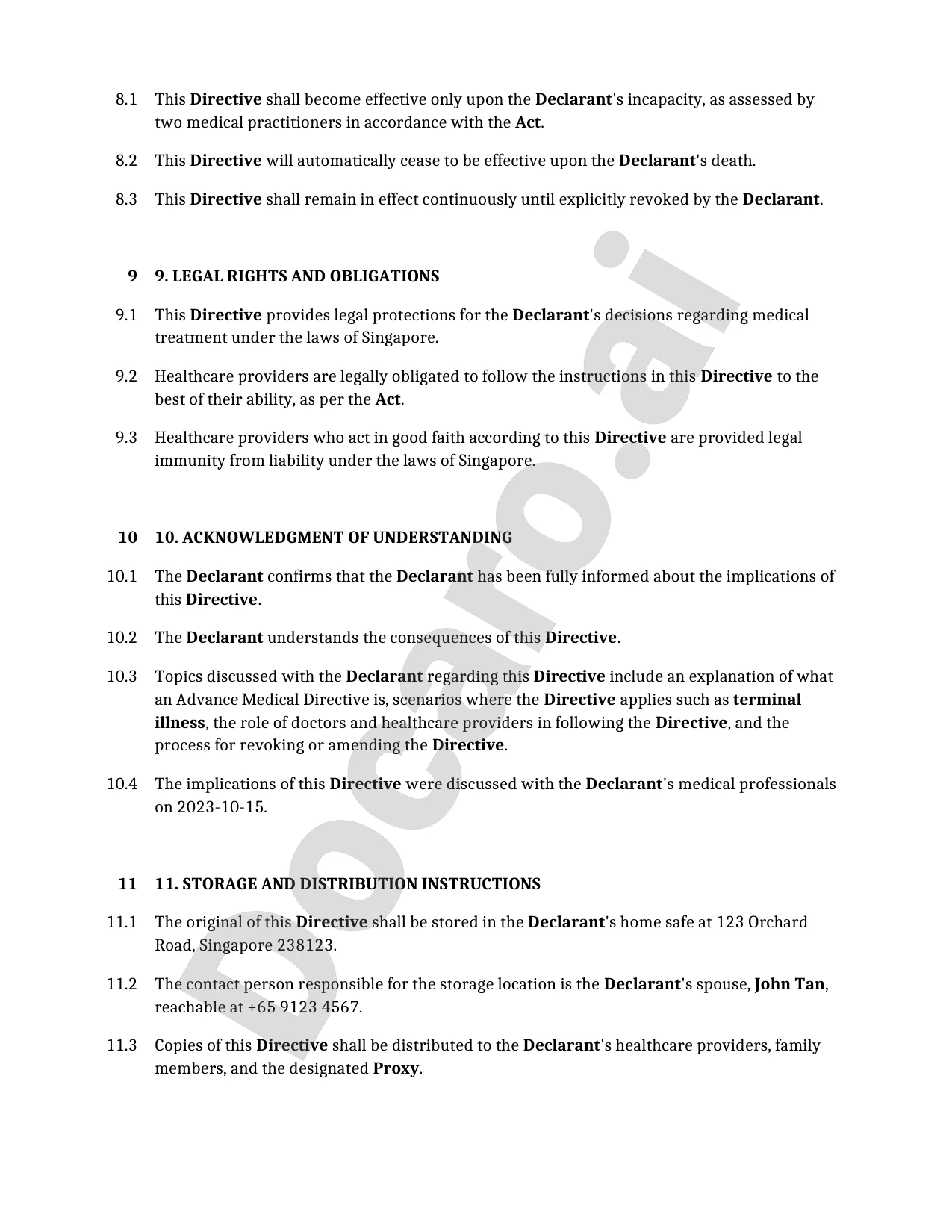
Doctors and healthcare providers in Singapore are obligated to honor a valid AMD by withholding or withdrawing specified treatments when the conditions are met, as per the law. They must also document the directive in the patient's records and consult with the family to explain the process, promoting transparency in end-of-life care.
Family members play a crucial role in respecting the individual's AMD by not requesting treatments that contradict the directive and supporting the healthcare team's adherence to it. This respect upholds the patient's autonomy and prevents legal conflicts in Singapore healthcare decisions.
Are there any key exclusions or limitations?
In Singapore, Advance Medical Directives (AMDs) allow individuals to specify their refusal of life-sustaining treatment in the event of terminal illness, but they come with specific exclusions. These directives apply only when the patient is certified by two doctors as having a terminal condition, defined as an incurable illness where death is imminent and inevitable, excluding situations like temporary unconsciousness or treatable conditions.
Doctors in Singapore can override an AMD if they determine that the patient's condition does not qualify as terminal or if extraordinary life-sustaining measures are necessary to preserve life temporarily. This override is guided by ethical principles, ensuring the patient's best interests, and requires consultation among medical professionals.
Additionally, AMDs exclude scenarios involving mental health crises or non-terminal chronic illnesses, emphasizing the directive's focus on end-of-life care. For personalized legal documents related to AMDs in Singapore, consider using Docaro's AI-generated services tailored to your needs.
Have there been recent or upcoming legal changes affecting Advance Medical Directives?
The Advance Medical Directive Act in Singapore, enacted in 1996, has seen no major amendments since Act 11 of 2023, which took effect on May 1, 2023, and primarily updated procedural aspects without altering core provisions on registration or enforcement.
As of March 2026, there are no announced upcoming changes to the Act, ensuring its continued stability in defining the scope of directives to withhold extraordinary life-sustaining treatment for terminal illnesses.
Registration remains straightforward via the official Ministry of Health portal, with enforcement upheld through legal recognition when a patient is unconscious and nearing death, promoting clear end-of-life planning.
For personalized legal documents related to advance care, consider using Docaro to generate bespoke AI-assisted options tailored to individual needs.
How do Advance Medical Directives impact legal matters in Singapore?
Advance Medical Directives (AMDs) in Singapore provide individuals with the legal right to specify their preferences for medical treatment in scenarios where they lose decision-making capacity, ensuring their wishes are respected without unnecessary prolongation of life. These directives are governed by the Advance Medical Directive Act and must be registered with the Ministry of Health to hold legal weight, emphasizing the importance of clear and witnessed documentation in healthcare planning.
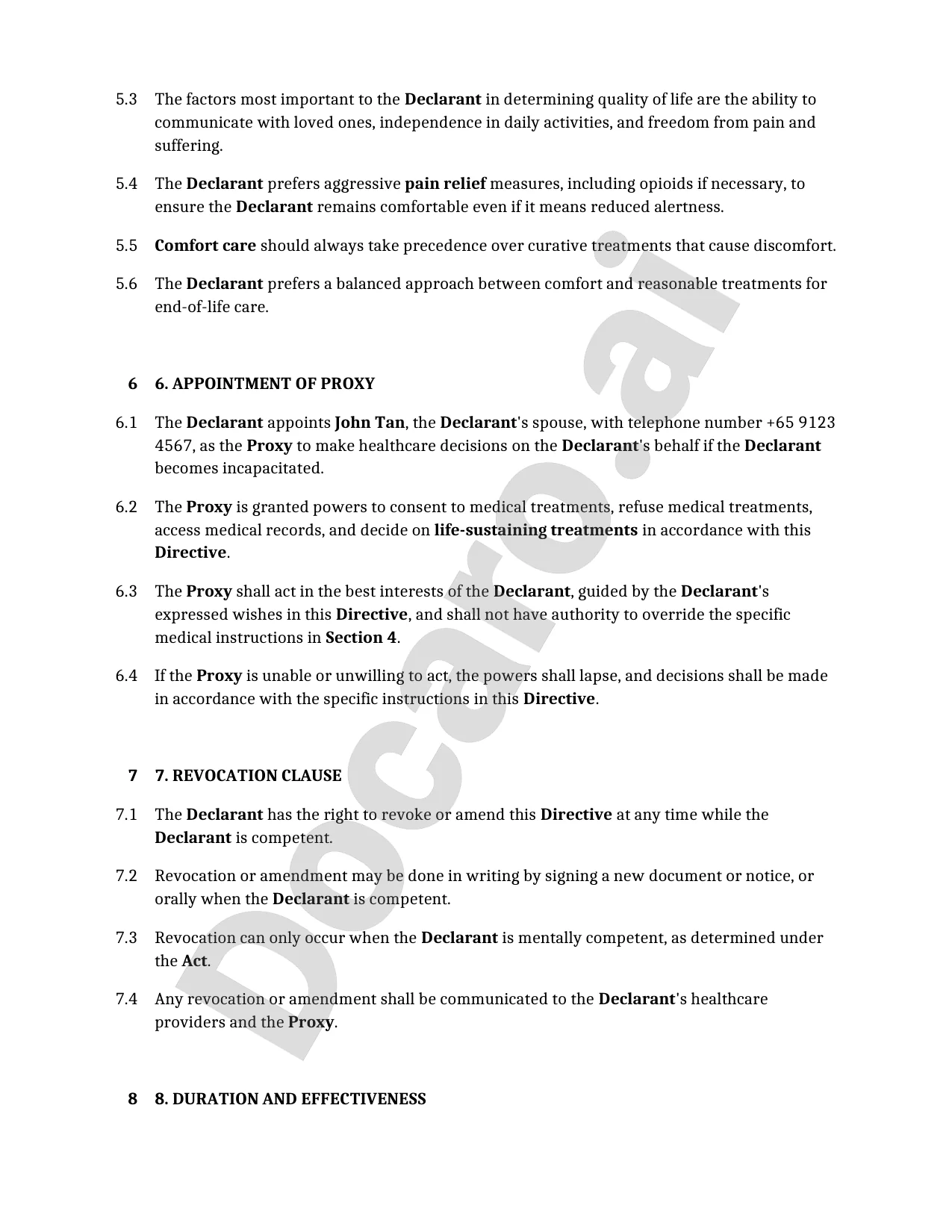
AMDs interact closely with other legal instruments like the Lasting Power of Attorney (LPA), where an LPA appoints a trusted proxy to make health and welfare decisions, but the AMD takes precedence if it explicitly outlines treatment refusals. This interplay allows for comprehensive estate planning, but conflicts can arise if the LPA holder attempts actions contradicting the AMD, requiring courts to intervene under the Mental Capacity Act for resolution.
For deeper insights into the legal implications of Advance Medical Directives in Singapore, explore Singapore AMD legal framework. When creating personalized legal documents like AMDs or LPAs, opt for bespoke AI-generated options through Docaro to ensure they align precisely with individual needs.
How can you get started with an Advance Medical Directive?
1
Consult a Doctor
Schedule an appointment with a registered medical practitioner in Singapore to discuss your health status and capacity for creating an AMD.
2
Understand AMD Requirements
Research the Advance Medical Directive form via Singapore s Ministry of Health website to grasp its purpose, requirements, and implications.
3
Generate Custom AMD Document
Use Docaro to create a bespoke AI-generated Advance Medical Directive tailored to your specific medical and personal preferences.
4
Prepare for Signing
Review the generated AMD document with your doctor, then arrange to sign it before two witnesses and a doctor for official registration.
Where can you learn more about Advance Medical Directives?
Learning about Advance Medical Directives (AMDs) in Singapore is essential for informed healthcare planning. Official resources provide reliable guidance on AMD Singapore processes and legal requirements.
The Ministry of Health (MOH) Singapore website offers comprehensive information on AMDs, including eligibility and implications. Visit MOH Singapore for official details on creating and revoking directives.
For personalized AMD documents, consider using Docaro to generate bespoke AI-assisted legal forms tailored to your needs in Singapore.
You Might Also Be Interested In
A Legal Document Specifying The Distribution Of A Person's Assets After Their Death.
A Legal Document Specifying Medical Treatments To Withhold Or Withdraw If The Individual Loses Decision-making Capacity.
A Legal Document Authorizing One Person To Act On Behalf Of Another In Specified Matters.
A Revocable Living Trust Is A Legal Arrangement Where A Person Transfers Assets Into A Trust During Their Lifetime, Retaining The Ability To Modify Or Revoke It, To Facilitate Asset Management And Avoid Probate.
A Codicil Is A Legal Document That Amends, Modifies, Or Supplements An Existing Will Without Revoking It Entirely.
A Legal Document Listing All Assets And Liabilities Of A Deceased Person's Estate For Probate And Administration Purposes.