Why Free Templates Can Be Risky for Restraint of Trade Clauses
Free non-compete templates often use generic wording that fails to comply with Singapore's strict laws on restraint of trade, potentially rendering the entire clause unenforceable in court. Inaccurate scope, duration, or geographic limits can expose your business to costly disputes or loss of trade secrets.
Our AI generates bespoke non-compete agreements tailored to your specific industry, employee role, and business needs in Singapore, ensuring enforceable clauses that protect your interests with precise, compliant language.
What is a Restraint of Trade Clause in Singapore Legal Documents?
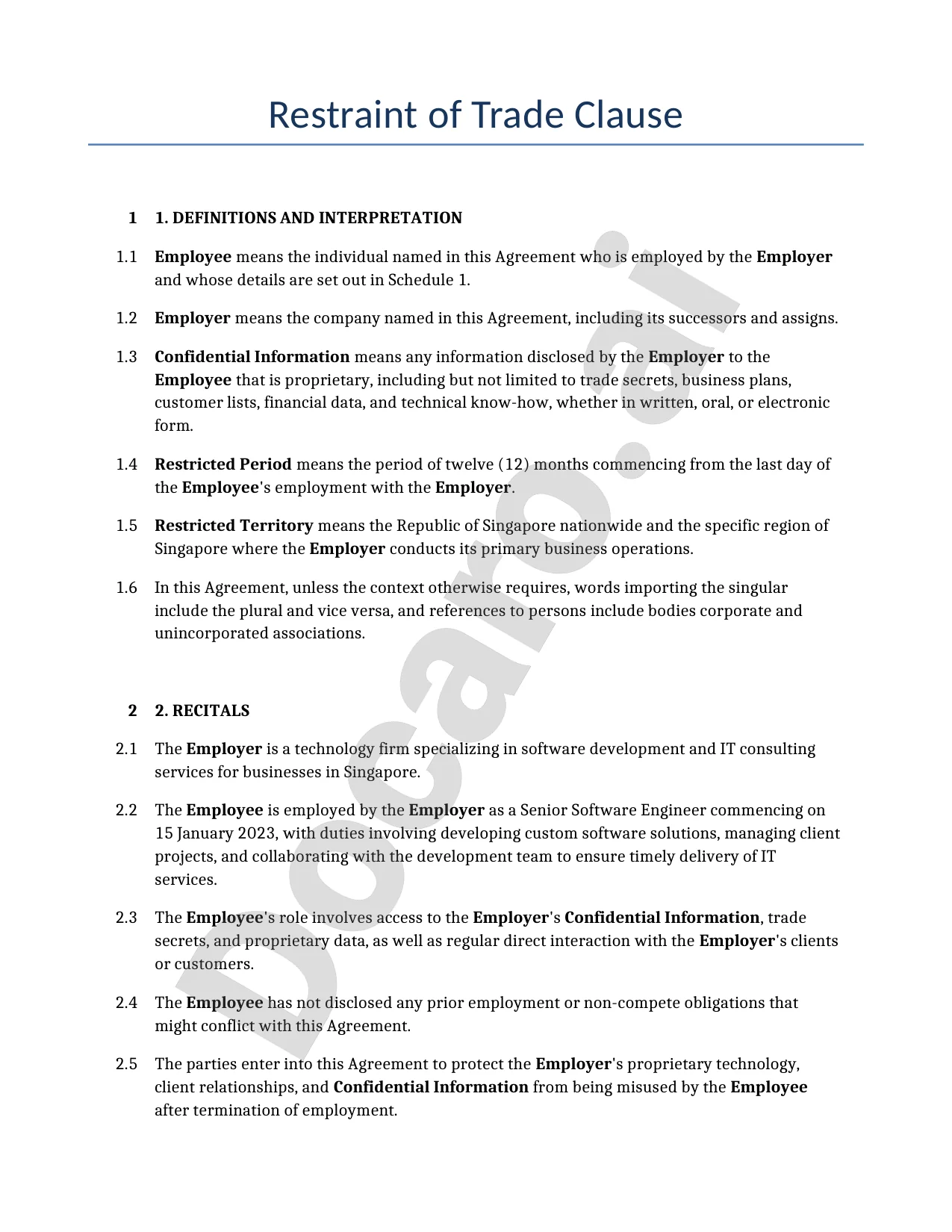
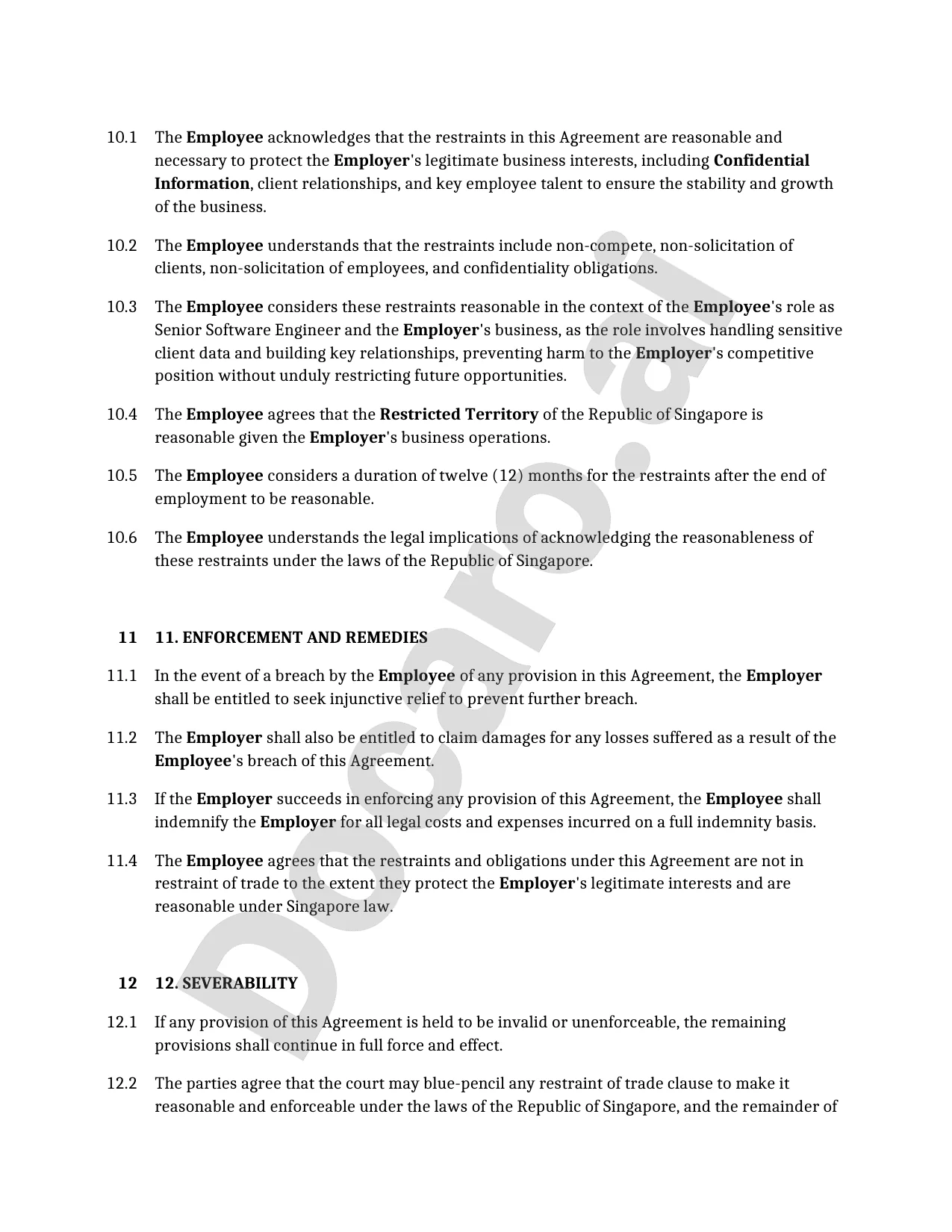
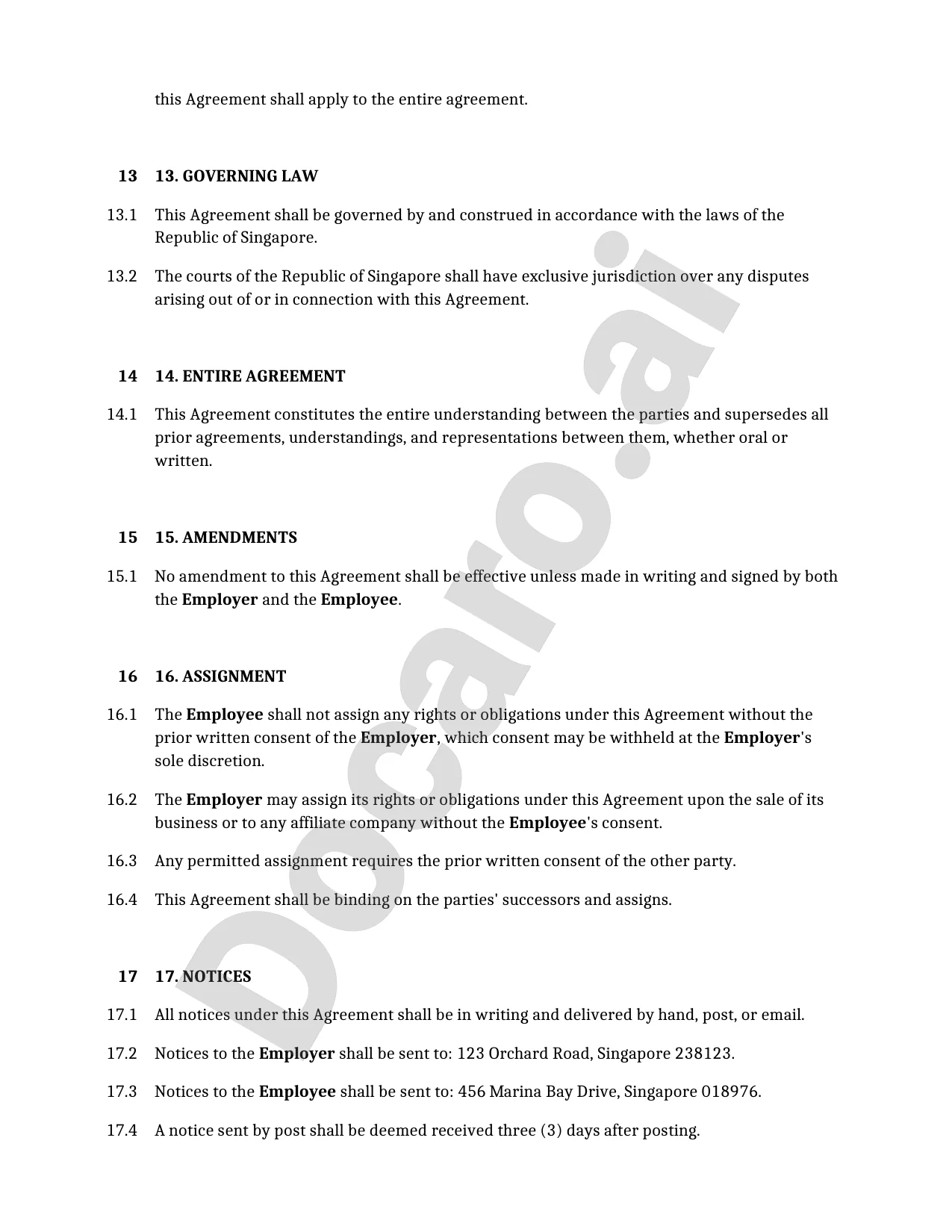
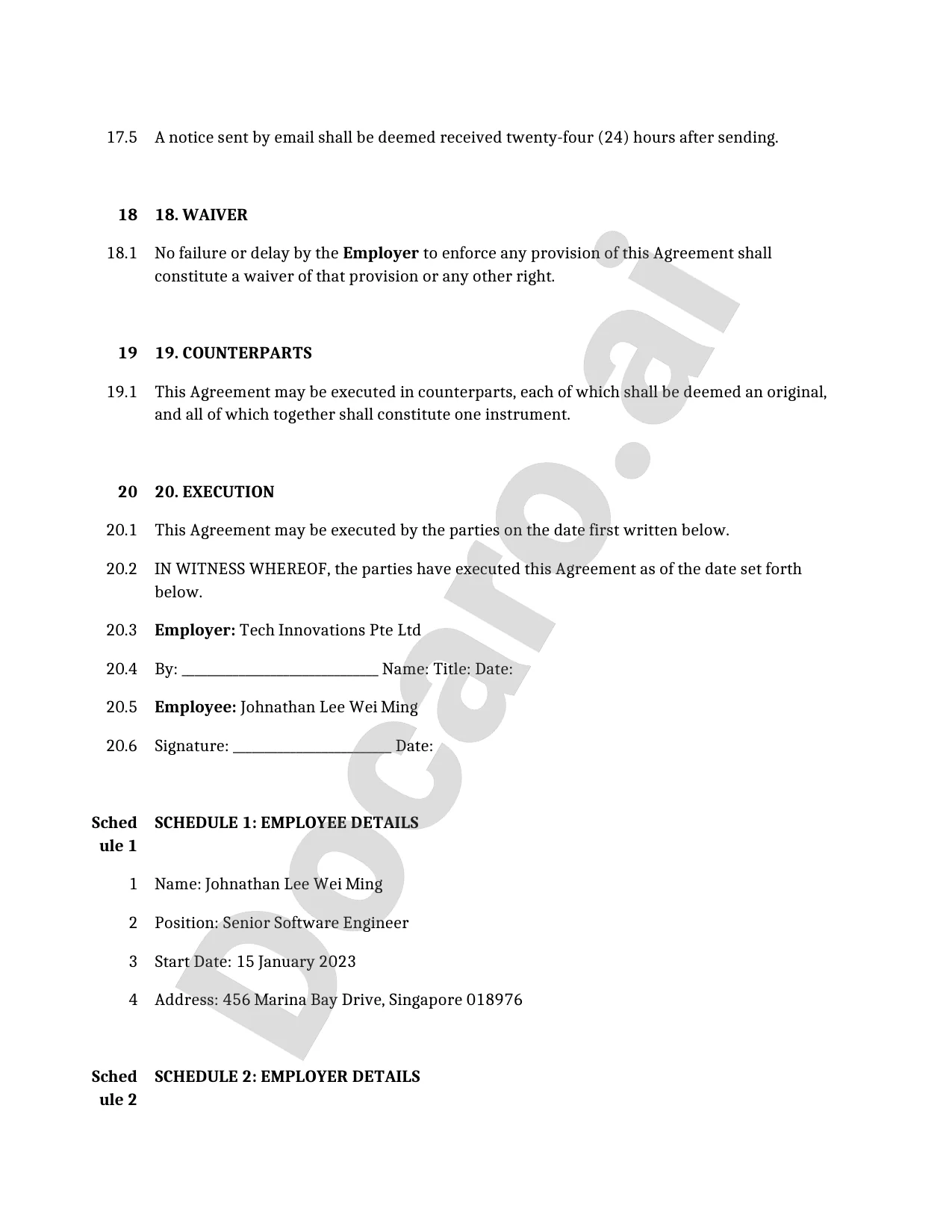
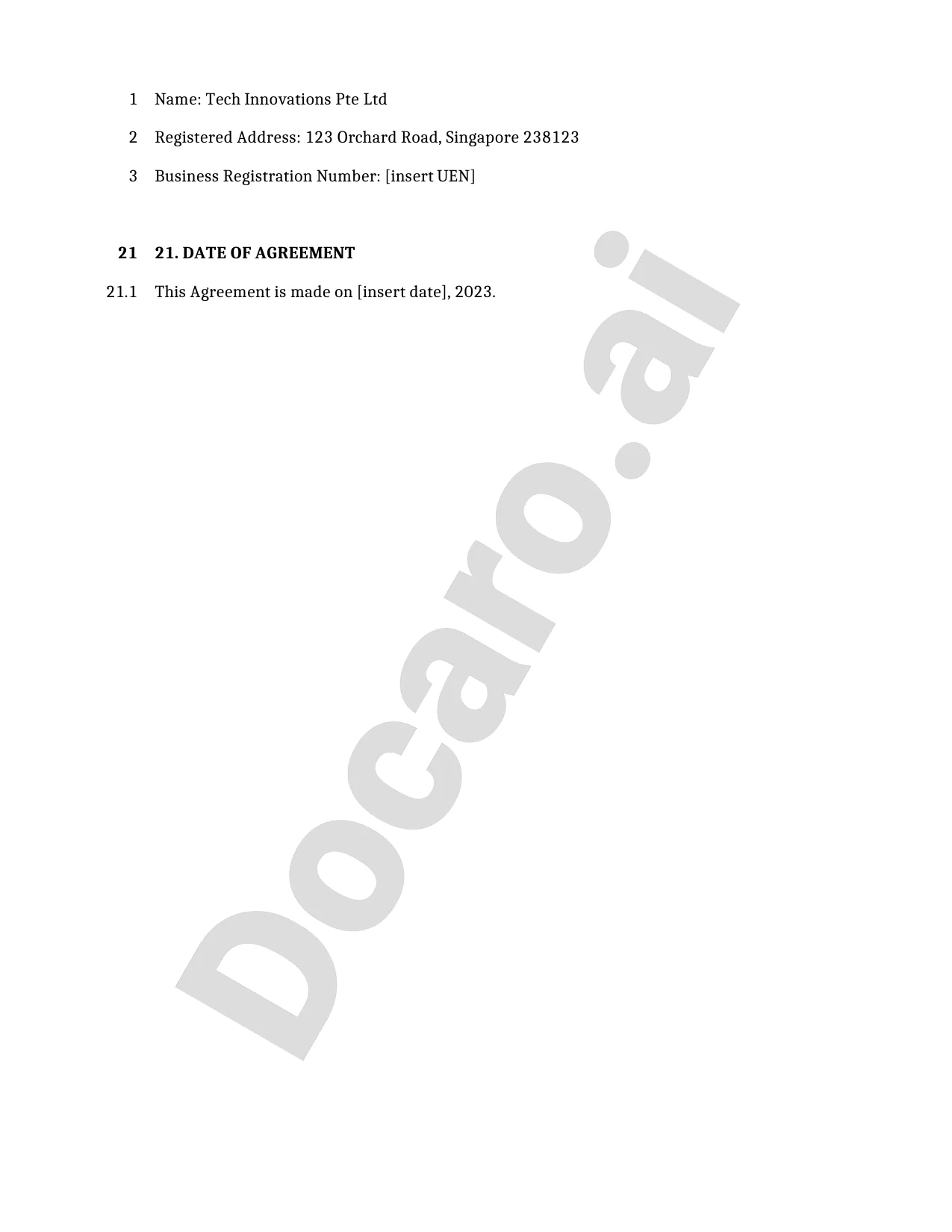
A restraint of trade clause in Singapore legal documents is a contractual provision that limits an individual's ability to engage in certain business activities, such as competing with their former employer or supplier, after the agreement ends. Under Singapore law, these clauses are enforceable only if they protect legitimate business interests like confidential information or client relationships, without unduly restricting the individual's right to earn a living.
The primary purpose of a restraint of trade clause is to safeguard a company's proprietary assets and maintain competitive advantage, while courts in Singapore balance this against employee rights by scrutinizing the clause's scope, duration, and geographic reach for reasonableness. For instance, overly broad restrictions may be struck down to prevent unfair suppression of workforce mobility.
In employment agreements, a restraint clause might prohibit a departing executive from joining a rival firm within a 12-month period in the same industry sector in Singapore, ensuring trade secrets remain protected. In commercial agreements, such as business sales, it could bar the seller from starting a competing venture in Southeast Asia for two years to preserve the buyer's market position.
Businesses drafting these clauses in Singapore should seek bespoke AI-generated legal documents using Docaro to ensure compliance and customization, rather than relying on generic forms that may not align with specific needs.
When Should a Restraint of Trade Clause Be Used in Singapore?
In Singapore employment contracts, a restraint of trade clause is appropriate for key roles such as senior executives or those handling sensitive client relationships, preventing them from joining competitors and poaching clients post-employment to safeguard business interests.
During business sales in Singapore, these clauses protect confidential information by restricting sellers from starting rival ventures or soliciting former customers, ensuring the buyer's investment remains secure.
For tailored restraint of trade clauses in Singapore, consider using Docaro's bespoke AI-generated legal documents to fit specific needs without relying on generic templates.
Explore more on restraint of trade clauses in Singapore employment contracts via this guide.
When Should It Not Be Used?
In Singapore, restraint of trade clauses should be avoided in employment contracts for low-level positions such as administrative or entry-level roles, where employees do not possess sensitive information or client relationships that justify post-employment restrictions. Courts often deem these clauses unenforceable in such cases, as they fail to protect legitimate business interests like trade secrets or goodwill.
Overly broad restraint of trade restrictions, including those covering excessive geographic areas, unlimited durations, or blanket prohibitions on working in the same industry, are typically unenforceable under Singapore law. For instance, a clause barring an employee from any job in the entire tech sector nationwide for five years would likely be struck down for being unreasonable and contrary to public policy.
Potential risks of including invalid restraint of trade clauses include costly litigation, where employers may face legal fees and reputational damage if the clause is challenged in court. Employees could also seek injunctions or damages, highlighting the importance of tailoring clauses to specific roles using bespoke AI-generated legal documents via Docaro for compliance.
What Are the Key Clauses in a Restraint of Trade Document in Singapore?
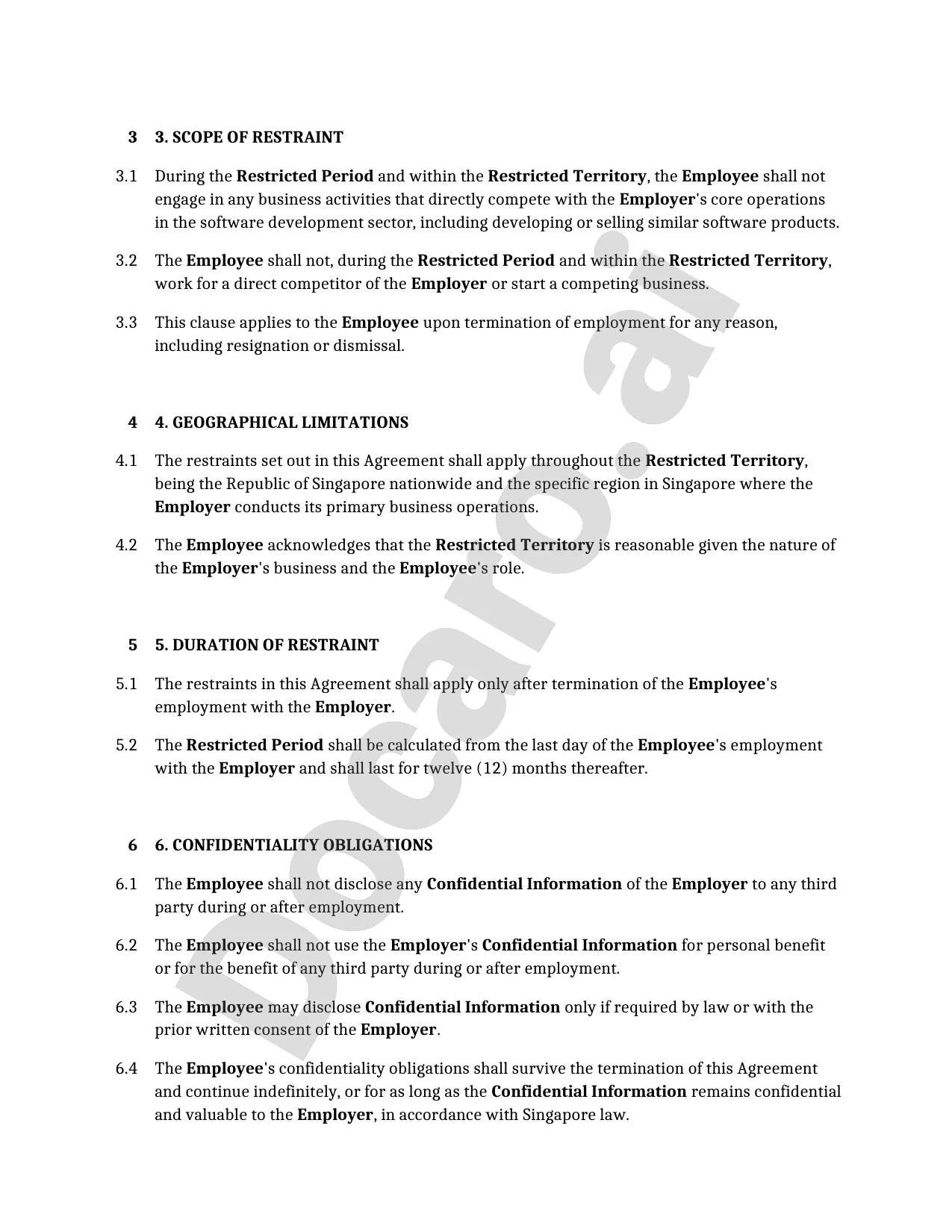
Under Singapore law, restraint of trade agreements must balance protecting legitimate business interests with not unduly restricting an individual's right to work. Essential clauses typically include duration, which should be reasonable—often limited to 6 to 12 months post-employment to avoid being void as contrary to public policy.
The geographic scope clause defines the area of restriction, such as specific regions in Singapore or Southeast Asia, tailored to the business's operations to ensure enforceability. Activity restrictions specify prohibited actions, like competing in the same industry or soliciting clients, narrowly drafted to cover only necessary protections.
For effective drafting of these clauses, consider key tips on reasonableness and specificity. Explore Key Tips for Drafting Effective Restraint of Trade Clauses in Singapore for practical guidance.
To create robust restraint of trade agreements, opt for bespoke AI-generated legal documents via Docaro, ensuring they fit your unique needs under Singapore law.
In the Singapore Court of Appeal case of *Man Financial (S) Pte Ltd v Wong Bark Chuan David* [2008] 1 SLR(R) 663, the court emphasized that restraint of trade clauses must be reasonable in scope, duration, and geographical extent to protect legitimate business interests without unduly restricting the employee, stating: "The covenant must afford no more than adequate protection to the interests of the covenantee."
For enforceable restraint clauses in employment contracts, consult a legal professional to draft bespoke documents tailored to your specific circumstances using Docaro's AI generation tools.
What Are the Key Rights and Obligations of Parties Involved?
In Singapore, restraint of trade agreements are governed by common law principles, where employers have the right to protect legitimate business interests such as confidential information, client relationships, and trade secrets through reasonable post-employment restrictions on employees.
Employees are obligated to comply with these reasonable restrictions, which must be limited in scope, duration, and geography to be enforceable; unreasonable clauses are void as they contravene public policy favoring free trade.
Employers can seek injunctions from the courts to enforce valid restraints if an employee breaches the agreement, demonstrating irreparable harm and the clause's necessity for business protection.
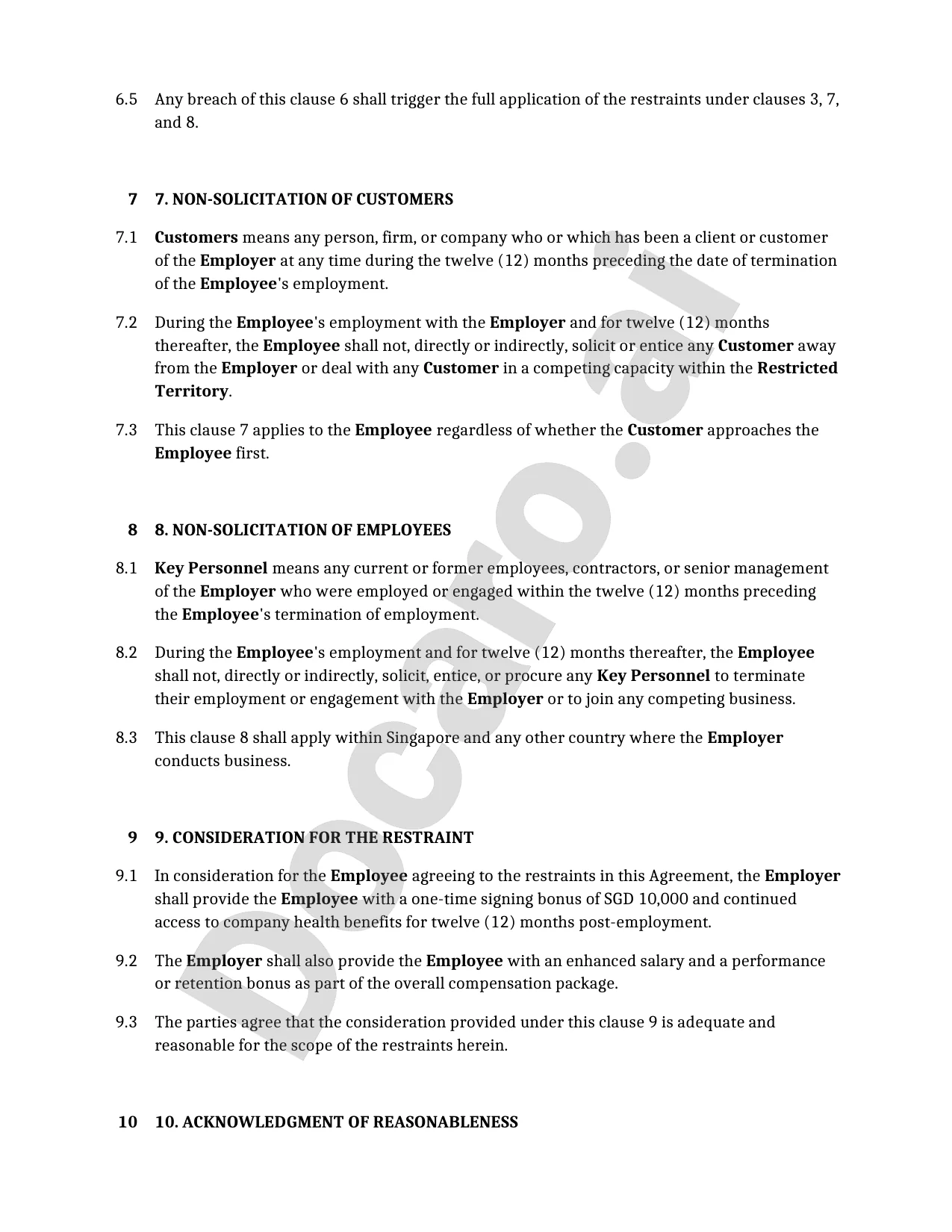
- Key obligations include non-solicitation of clients and non-compete within a specific radius for a limited time, typically 6-12 months.
- For tailored restraint of trade clauses, consider bespoke AI-generated legal documents via Docaro platform to ensure compliance with Singapore law.

What Are Common Key Exclusions in These Clauses?
Restraint of trade clauses in Singapore employment contracts aim to protect business interests by limiting employees from competing post-employment, but they must be reasonable to be enforceable under Singapore law.
Typical exclusions include permitting work in unrelated industries, ensuring employees can pursue careers outside the employer's field without undue restriction, which promotes fairness by balancing employer protection with employee mobility.
Another common exclusion is a cooling-off period, where restrictions lift after a set time like six months, allowing former employees to re-enter the market once immediate competitive threats subside.
These exclusions are vital for fairness in restraint of trade clauses, as they prevent overly broad bans that could stifle career opportunities; for tailored legal documents incorporating such clauses, consider bespoke AI-generated options from Docaro.
- Exclusions safeguard employee rights while upholding legitimate business needs.
- Courts in Singapore scrutinize clauses for reasonableness, often invalidating those without such limits.
Are There Recent or Upcoming Legal Changes Affecting Restraint of Trade in Singapore?
In 2024, the Singapore High Court delivered key rulings on restraint of trade clauses, striking down non-compete agreements in two notable cases. In Shopee Singapore Pte Ltd v Lim Teck Yong [2024] SGHC 29, the court dismissed an injunction against a former employee joining a competitor, finding the clause unreasonably broad in geographical scope and lacking a legitimate proprietary interest beyond existing confidentiality protections.
Similarly, in MoneySmart Singapore Pte Ltd v Artem Musienko [2024] SGHC 94, the High Court invalidated another non-compete clause for overlapping with confidentiality duties and failing to justify restrictions on post-employment activities. These decisions underscore Singapore's strict enforcement standards, requiring clauses to protect genuine interests while remaining reasonable in duration, scope, and necessity.
Looking ahead, the Ministry of Manpower announced in 2024 plans for tripartite guidelines on restraint of trade provisions, expected in 2025 or 2026, to provide clearer frameworks for non-compete enforceability in employment contracts. Employers should tailor such clauses carefully to align with evolving judicial and regulatory expectations.
For a comprehensive overview, explore the Enforceability of Non-Compete Agreements Under Singapore Law. When drafting these documents, opt for bespoke AI-generated legal agreements via Docaro to ensure they fit specific business needs.
1
Assess Business Needs
Evaluate your company's specific requirements for protecting trade secrets, client relationships, and employee roles to determine the scope of the restraint clause.
2
Draft Bespoke Clause Using Docaro
Use Docaro's AI tools to generate a customized restraint of trade clause tailored to your business needs and Singapore's legal standards.
3
Implement in Employment Contracts
Integrate the drafted clause into new or existing employment agreements, ensuring clear communication to employees about its terms and implications.
4
Conduct Legal Review
Have a qualified Singapore lawyer review the clause for compliance with local laws, such as the Competition Act, before final implementation.
You Might Also Be Interested In
A Legally Binding Agreement Outlining The Terms And Conditions Of Employment Between An Employer And Employee.
A Legal Contract Outlining The Terms Of Service Between A Client And An Independent Contractor In Singapore.
A Legal Contract Between An Employer And Employee That Prohibits The Disclosure Of Confidential Information To Protect Business Secrets.
A Formal Document From An Employer Extending A Job Offer With Key Employment Terms.
A Document Outlining Company Policies, Employee Rights, And Workplace Rules.
A Formal Notice From An Employer To An Employee Stating The End Of Their Employment Contract.
A Contract Outlining Terms Of An Internship, Including Duties, Duration, Compensation, And Confidentiality.
A Legal Contract Outlining Terms For Employees Working Remotely, Including Schedules, Responsibilities, And Support Provisions.
A Legal Contract That Requires Employees To Keep Confidential Information Private And Not Disclose It To Unauthorized Parties.
A Legal Document Outlining The Terms Of Engagement Between A Freelancer And Client For Specific Services.
A Flexible Employment Agreement Where Workers Are Not Guaranteed Minimum Hours And Are Called Upon As Needed By The Employer.
A Formal Document Notifying An Employer Of An Employee's Intent To Resign From Their Position, Typically Including The Last Working Day.
A Written Endorsement By A Person Of Authority Attesting To Another's Skills, Character, Or Qualifications For Employment, Education, Or Legal Purposes.