AI Generated Singaporean Parenting Plan
PDF & Word - 2026 Updated
Docaro Pricing
When do you need a Parenting Plan in Singapore?
- After Separation or DivorceA parenting plan is essential when parents separate or divorce to outline how they will care for their children moving forward.
- To Settle Disputes AmicablyIt helps parents agree on key matters like living arrangements and schedules without going to court, reducing stress for everyone involved.
- For Children's StabilityA clear plan ensures children have consistent routines and support from both parents, promoting their emotional well-being.
- During Legal ProceedingsCourts in Singapore often require or encourage a parenting plan to show parents are committed to cooperative child-rearing.
- To Avoid Future ConflictsA well-drafted plan prevents misunderstandings by covering important details like holidays, education, and medical decisions in advance.
- Importance of Professional DraftingHaving a properly prepared document protects your family's interests and ensures it holds up if disputes arise later.
Singaporean Legal Rules for a Parenting Plan
- What is a Parenting Plan?A parenting plan is an agreement between separated parents that outlines how they will care for and make decisions about their children.
- Legal BasisIn Singapore, parenting plans are governed by the Guardianship of Infants Act and the Women's Charter, which prioritize the child's best interests.
- Key ElementsIt should cover living arrangements, time with each parent, decision-making on education and health, and ways to resolve disputes.
- Best Interests of the ChildAll decisions in the plan must focus on what benefits the child most, considering their age, needs, and relationship with each parent.
- Making it OfficialFor enforceability, parents can file the plan with the Family Justice Courts or seek court approval if needed.
- Parental ResponsibilitiesBoth parents remain equally responsible for the child's upbringing, even after separation, unless a court orders otherwise.
- Changes to the PlanThe plan can be updated by mutual agreement or through court if circumstances change significantly, like a parent's relocation.
- Seeking HelpParents are encouraged to use mediation services from organizations like the Family Justice Courts before going to court.
Using the wrong type of parenting agreement can undermine enforceability and lead to unintended custody or support obligations.
What a Proper Parenting Plan Should Include
- Children's Living ArrangementsSpecify where the children will primarily live and how time will be shared between parents.
- Decision-Making ResponsibilitiesOutline how parents will jointly make important decisions about the children's education, health, and welfare.
- Communication with ChildrenDescribe how parents will communicate with the children, including phone calls, visits, and online interactions.
- Holiday and Special Occasion SchedulesDetail arrangements for holidays, birthdays, and school breaks to ensure fair sharing.
- Financial Support for ChildrenInclude agreements on child maintenance payments and sharing of expenses like school fees and medical costs.
- Resolving DisputesSet out steps for handling disagreements, such as mediation before court involvement.
- Flexibility and ReviewAllow for changes to the plan as the children's needs evolve, with periodic reviews.
Why Free Templates Can Be Risky for Parenting Plans
Generic parenting plan templates often fail to address Singapore-specific family law requirements, such as custody arrangements under the Women's Charter or guardianship rules. Using mismatched clauses can lead to disputes over child support, visitation rights, or decision-making authority, potentially resulting in court rejections or prolonged legal battles.
AI-generated bespoke parenting plans are customized to your unique family circumstances and compliant with Singapore's legal standards, ensuring precise wording for custody, support obligations, and parental responsibilities that minimize risks and provide a solid, tailored foundation for your agreement.
Generate Your Document in 4 Easy Steps
Why Use Our Docaro?
 Singapore
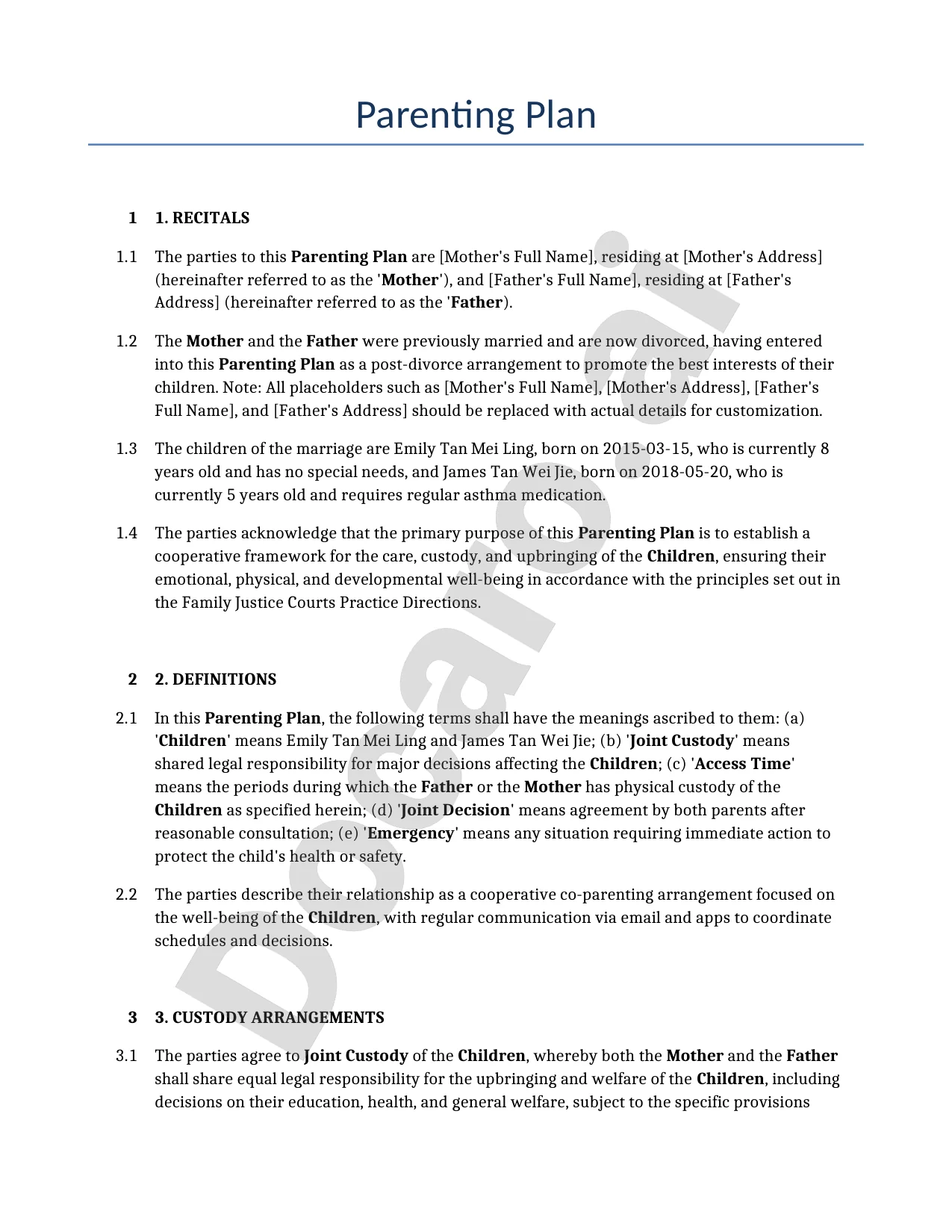
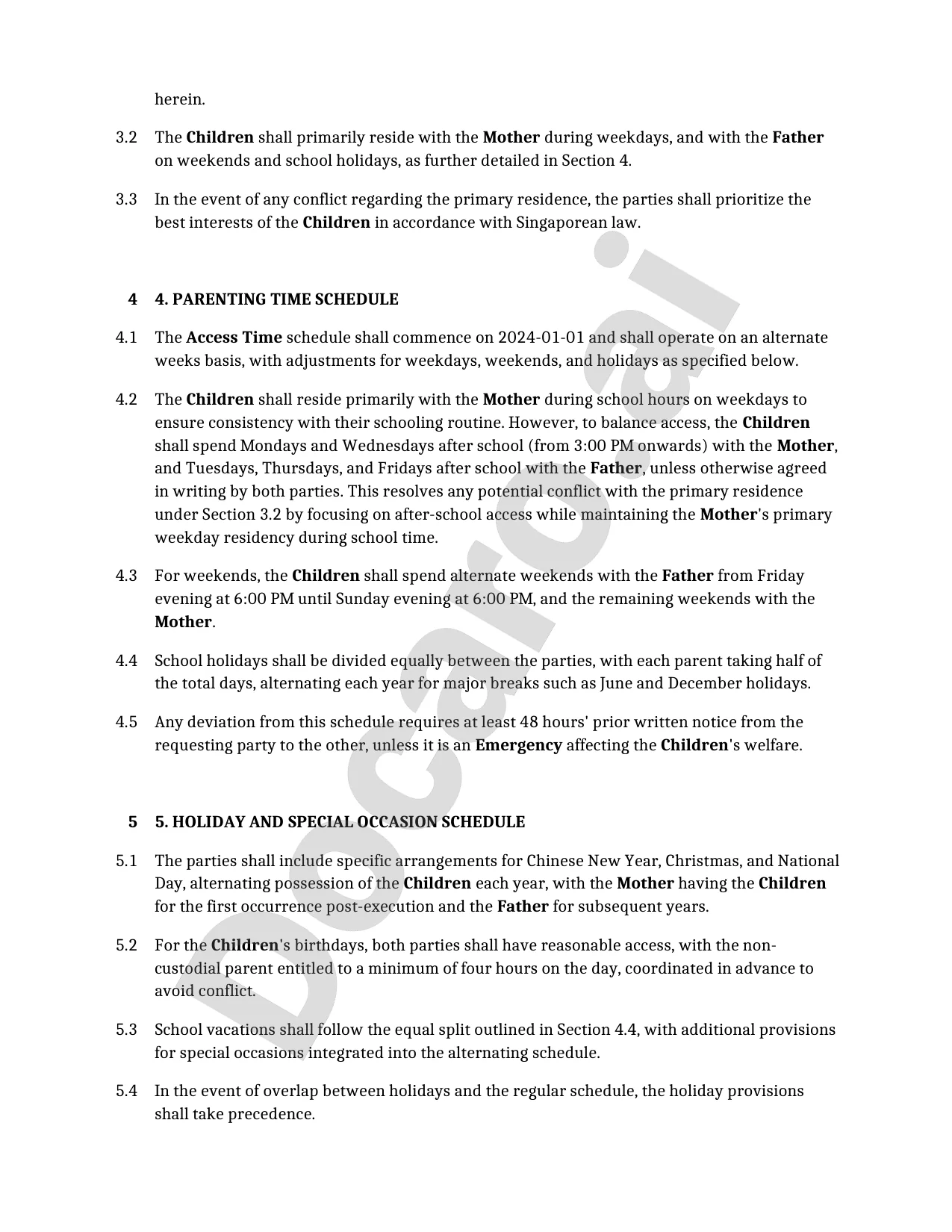
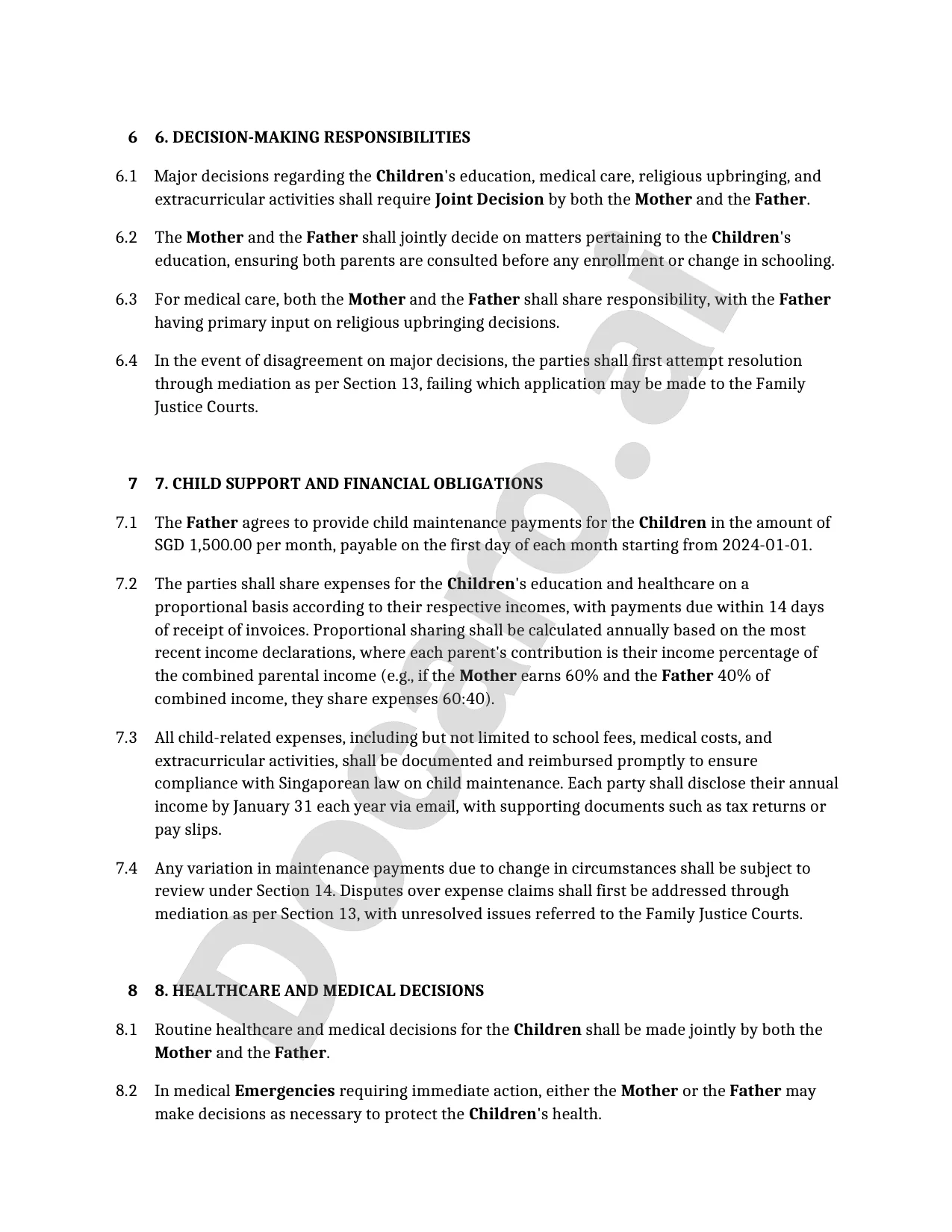
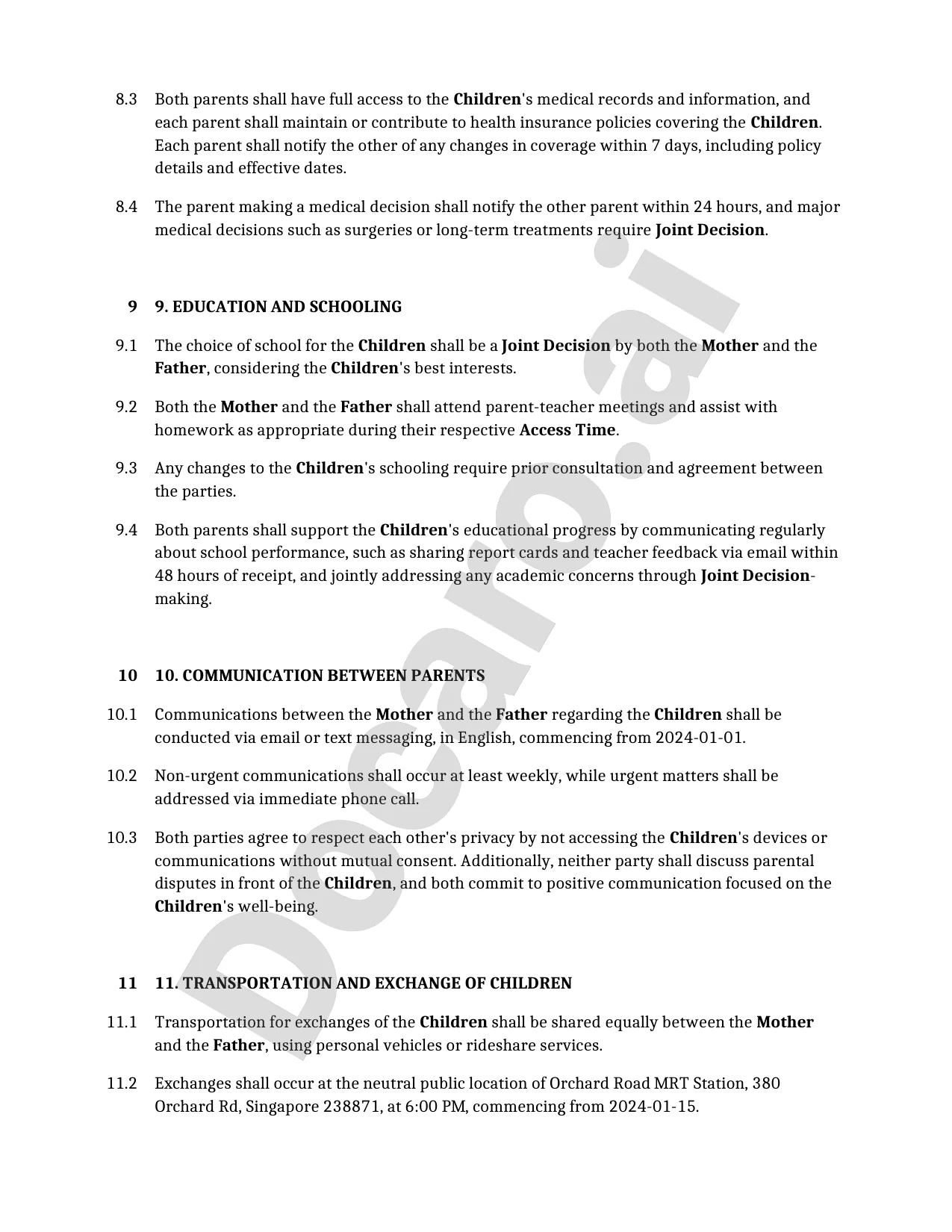
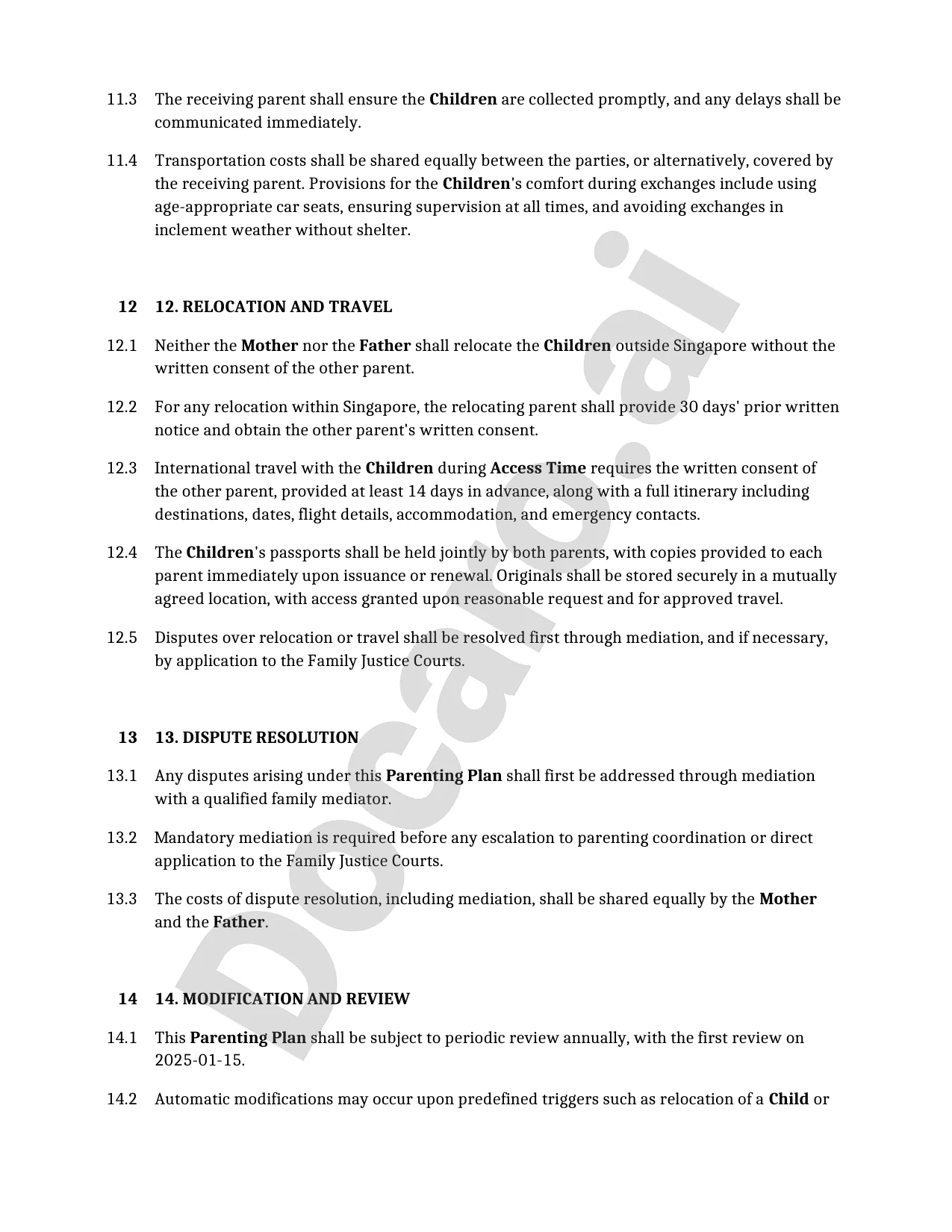
Free Example Parenting Plan Template
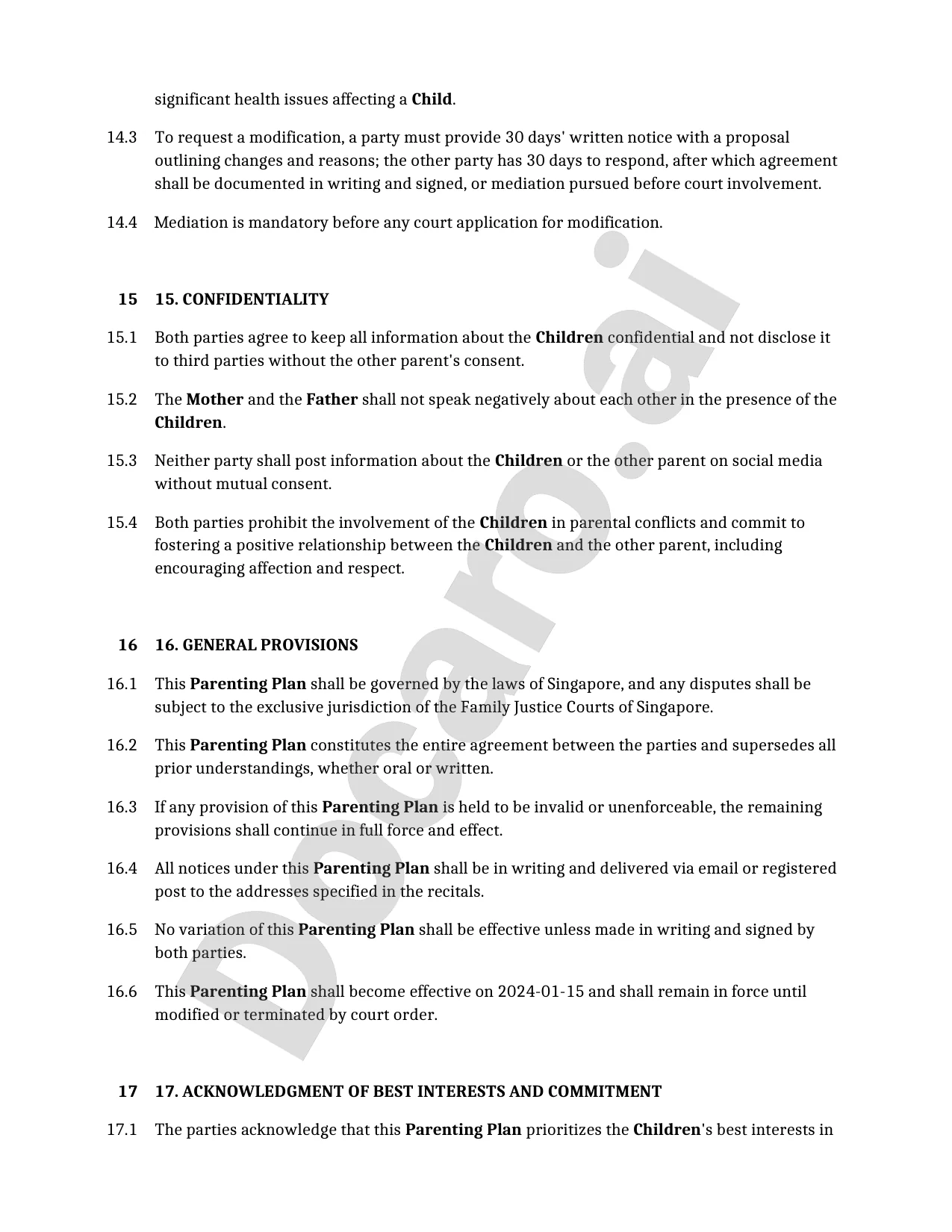
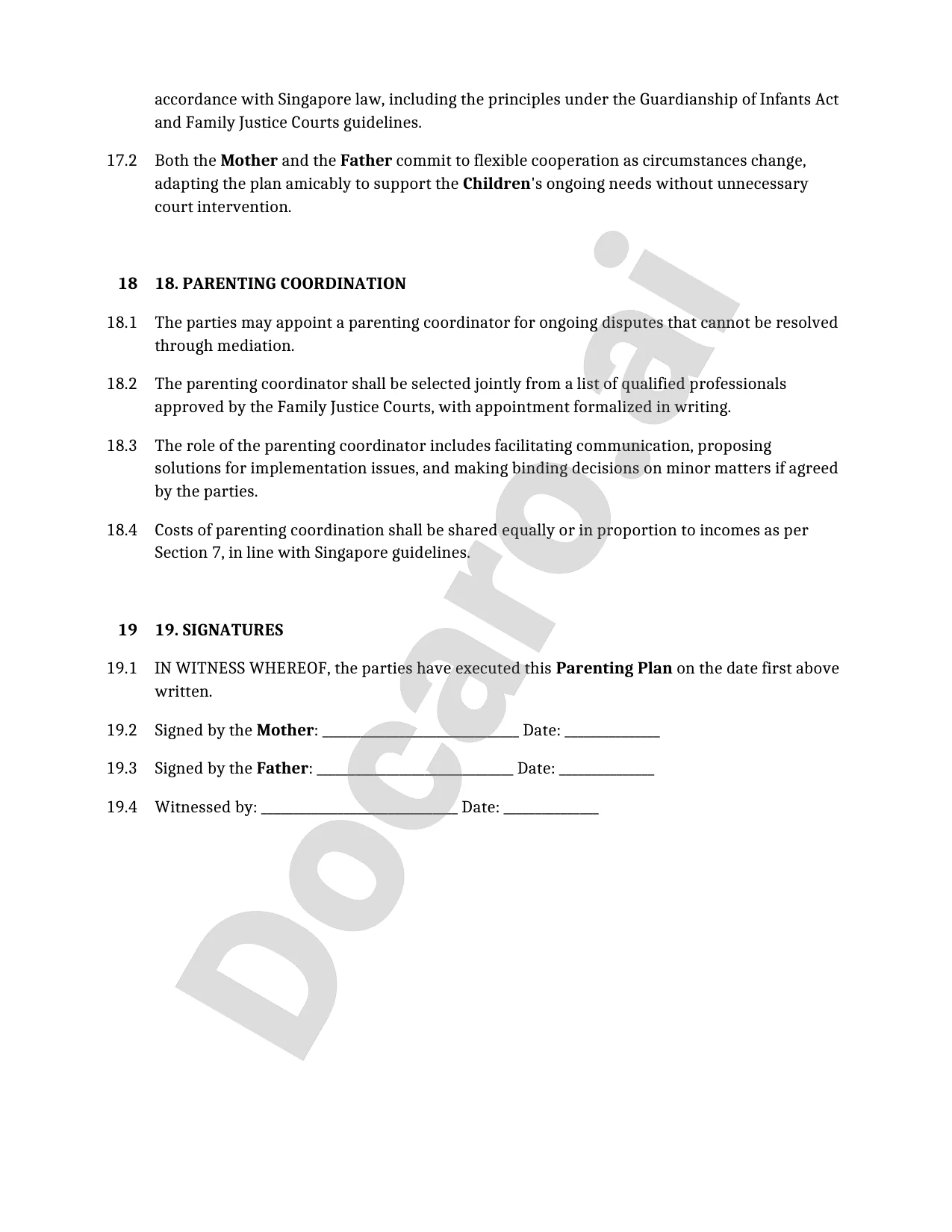
Below is a free template example of a Parenting Plan for use in Singapore generated by our AI model.
The clauses in your actual Parenting Plan will vary from this example as they will be entirely bespoke to your requirements as set out in the questionnaire you complete.
Useful Resources When Considering a Parenting Plan in Singapore
Singapore Reference Legislation
Parenting Plan FAQs
Document Generation FAQs
Related Articles