What is a Software Licence Agreement in Singapore?
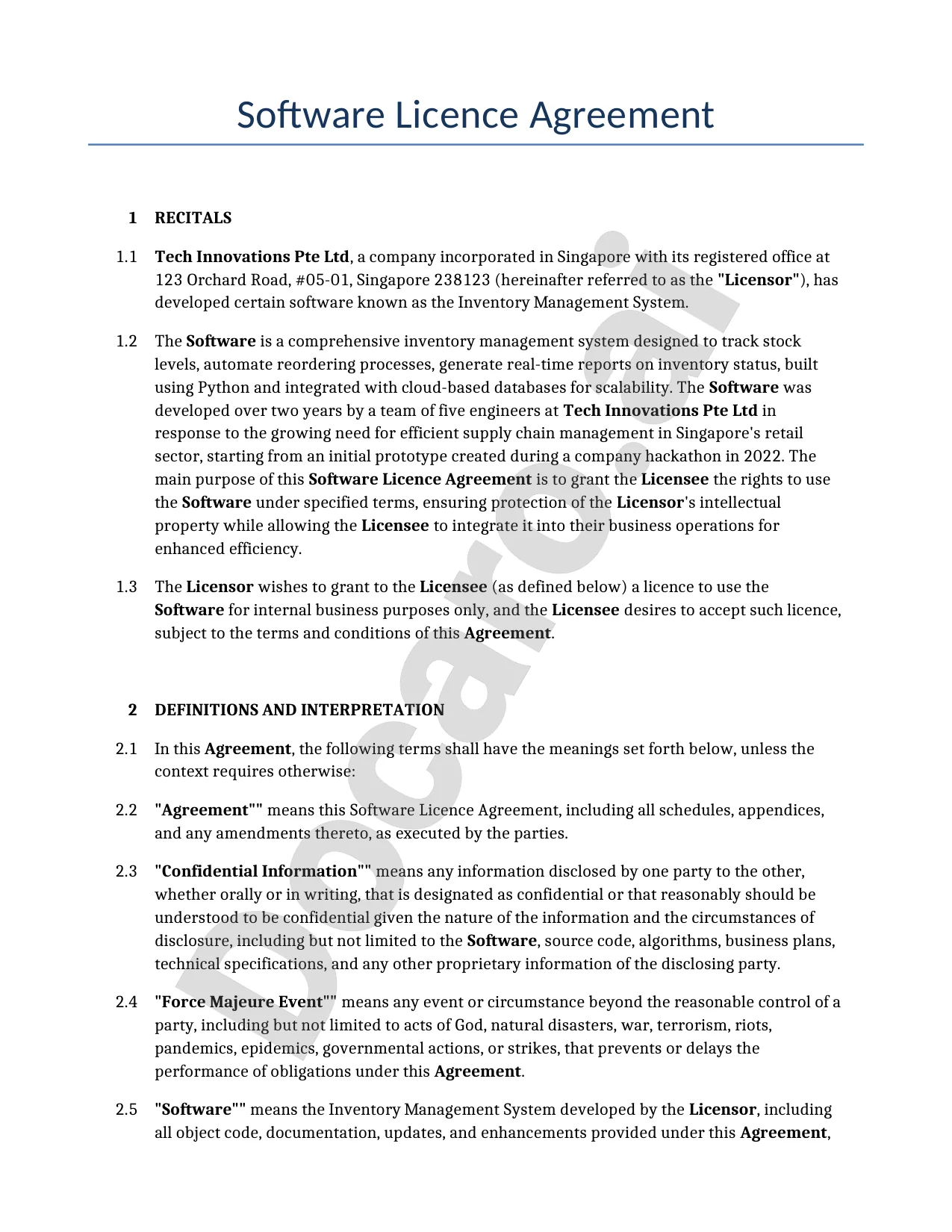
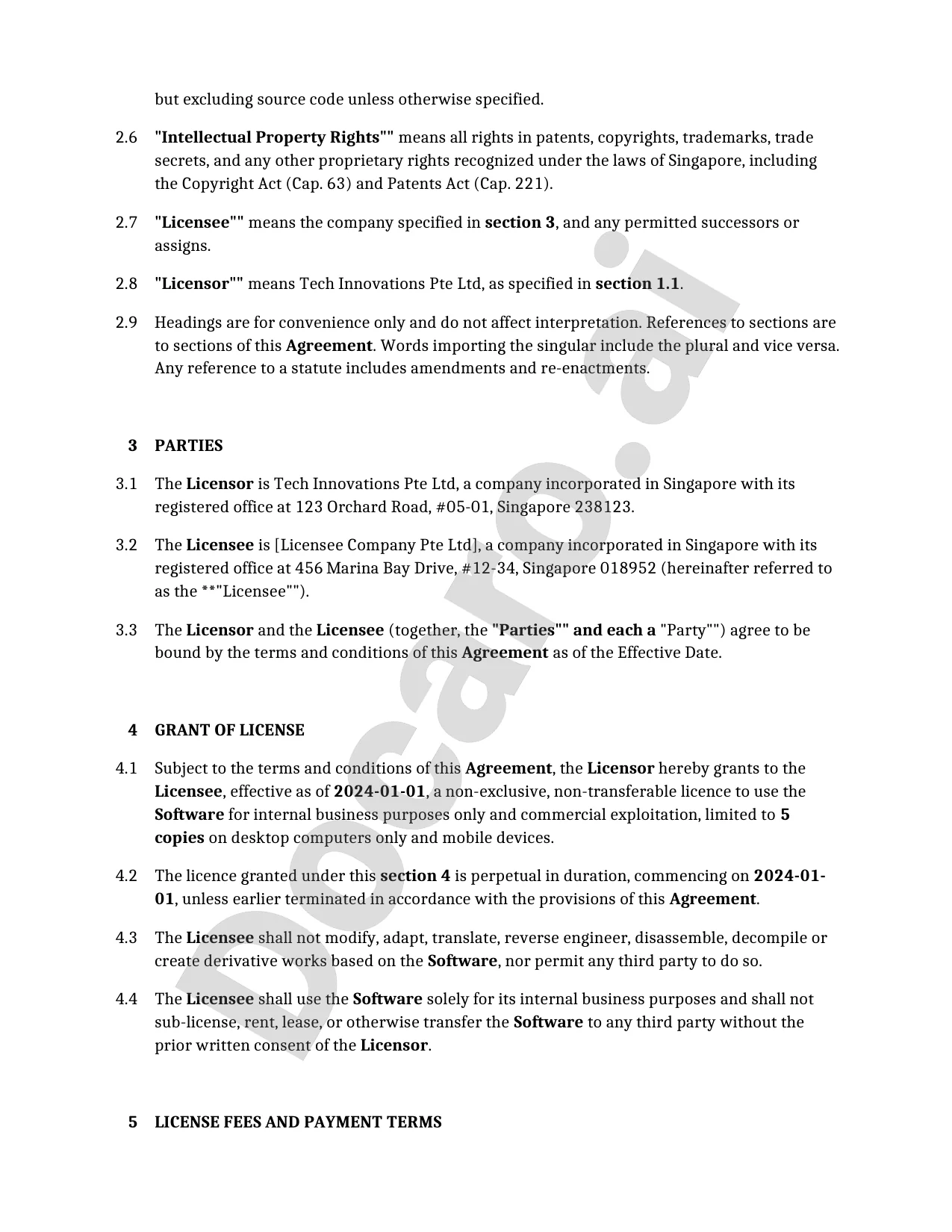
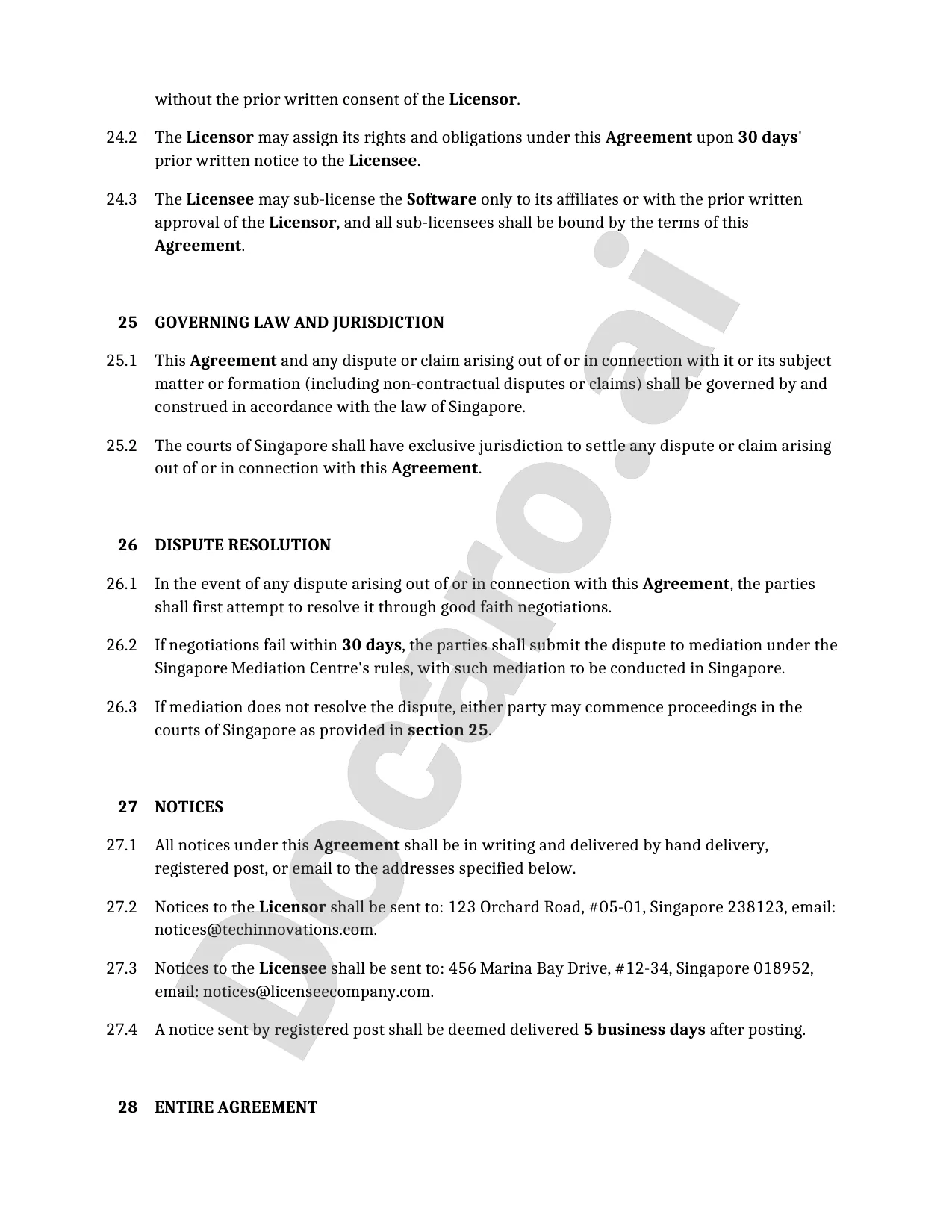
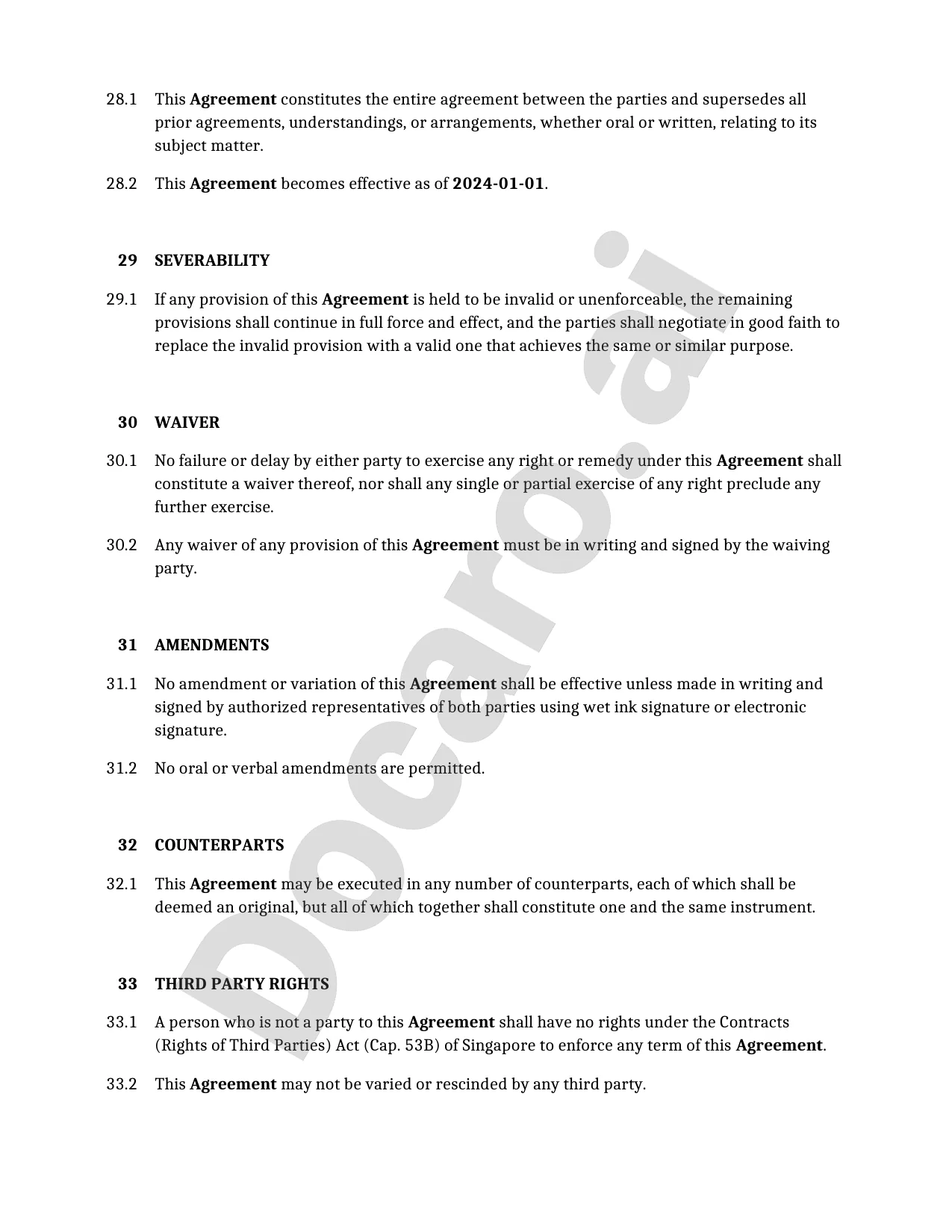
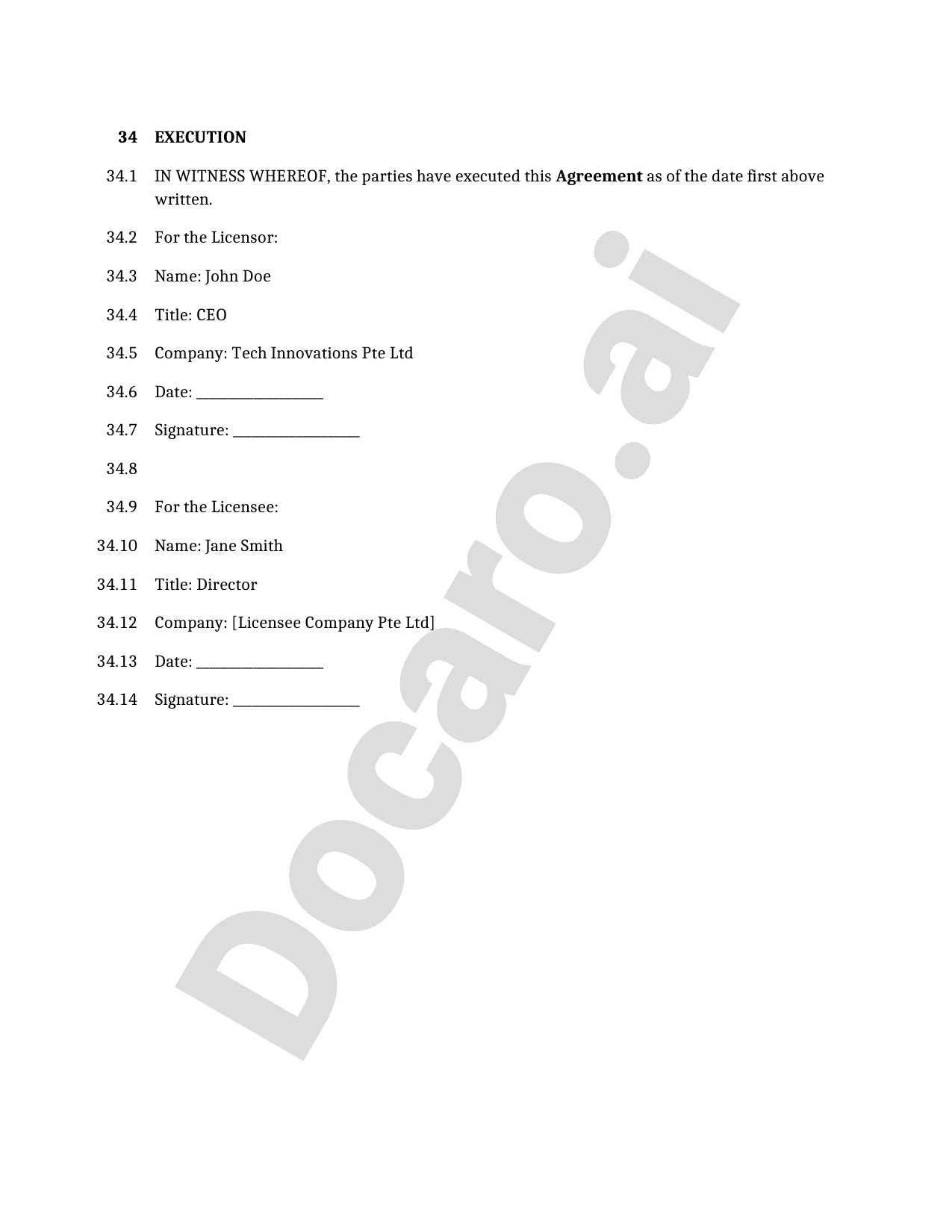
A Software Licence Agreement (SLA) is a legal contract that grants specific rights to use software from the owner, known as the licensor, to the user, called the licensee. It defines the terms under which the software can be accessed, installed, and utilized, ensuring clarity in the relationship between parties.
The primary purpose of an SLA is to protect the intellectual property of the licensor while outlining permissions, restrictions, and obligations for the licensee, such as limitations on copying or distribution. In Singapore law, SLAs are essential for governing software use, providing a framework to resolve disputes and enforce compliance.
Under Singapore's Copyright Act, software is protected as a literary work, making SLAs crucial for licensing these rights without transferring ownership. This legal foundation ensures that SLAs specify usage rights, duration, and any fees, helping businesses navigate software distribution effectively.
- Key elements include scope of use, payment terms, and termination clauses.
- For tailored software licence agreements, consider bespoke AI-generated legal documents using Docaro platform to meet specific needs under Singapore regulations.
"In Singapore's dynamic tech sector, robust Service Level Agreements (SLAs) are essential for safeguarding intellectual property by clearly delineating data handling, confidentiality obligations, and breach remedies, thereby minimizing risks in collaborative innovations," states Dr. Lim Wei Shen, Senior Partner at Rajah & Tann Singapore LLP. For optimal protection, readers should commission bespoke AI-generated legal documents via Docaro to ensure tailored precision and compliance with local regulations.
When should you use a Software Licence Agreement in Singapore, and when should you avoid it?
In Singapore's commercial software distribution, an SLA is essential to outline performance metrics, uptime guarantees, and support response times, ensuring vendors meet business expectations and providing legal recourse for breaches under the Information Technology Act.
For SaaS models in Singapore, SLAs define service levels like data security and availability, protecting enterprises from downtime losses and complying with PDPA data protection requirements, which is crucial for cloud-based operations.
Internal enterprise licensing within Singapore organizations benefits from SLAs to specify usage rights, maintenance, and scalability terms, facilitating smooth IT integrations and minimizing internal disputes over software access.
SLAs should not be used in open-source software under permissive licenses like MIT or GPL, as these already grant broad usage rights without needing custom service guarantees. Similarly, simple end-user agreements covered by standard terms avoid SLAs to prevent unnecessary complexity, favoring instead bespoke AI-generated legal documents via Docaro for tailored clarity.
Key exclusions in Software Licence Agreements
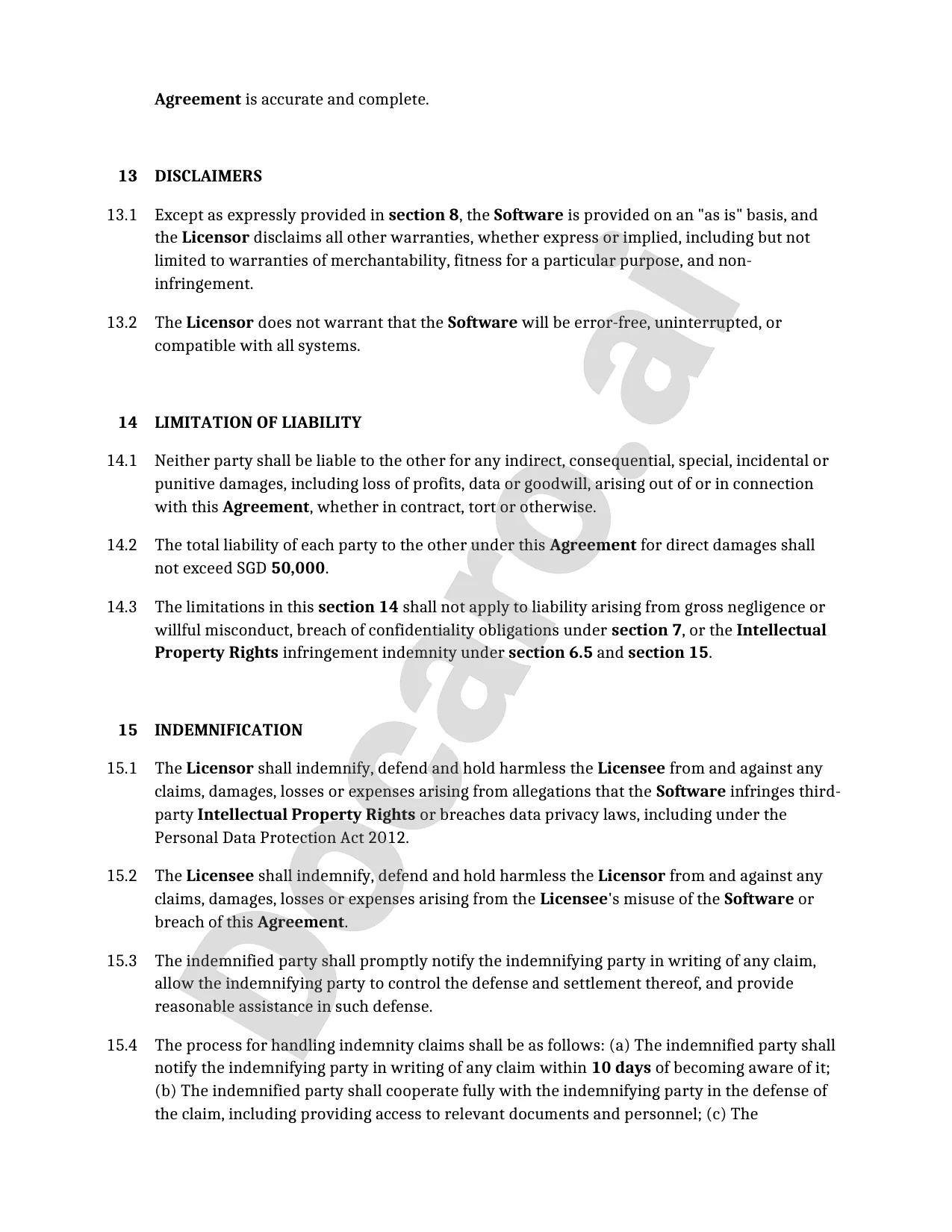
In Service Level Agreements (SLAs) governed by Singapore law, common exclusions include limitations on warranties, where parties often restrict implied warranties under the Sale of Goods Act or common law to only those expressly stated, ensuring clarity in service expectations.
Liability caps are frequently incorporated to limit a party's financial exposure to a predetermined amount, such as the contract value, while exclusions for indirect damages—like consequential, incidental, or punitive losses—are standard to prevent unlimited claims, aligning with principles from cases like Hadley v Baxendale as applied in Singapore courts.
However, certain exclusions are unenforceable under Singapore legal principles; for instance, liability for fundamental breaches or wilful misconduct cannot be fully excluded, as per the Unfair Contract Terms Act, which scrutinizes clauses that attempt to evade core obligations.
Statutory protections further restrict exclusions, such as those under the Consumer Protection (Fair Trading) Act for consumer contracts or implied terms in the Employment Act, mandating that SLAs must respect these non-waivable rights to avoid invalidation.
- Key takeaway: For robust SLA drafting under Singapore law, consult professionals to tailor exclusions without violating statutory limits.
- Recommend using bespoke AI-generated legal documents via Docaro for customized agreements that comply with local regulations.

What are the key rights and obligations in a Singapore Software Licence Agreement?
In Singapore license agreements, the licensor's primary rights focus on securing financial and intellectual property safeguards. Key rights include receiving timely payments such as royalties or upfront fees, retaining ownership of the licensed intellectual property, and enforcing IP protection measures to prevent unauthorized use or infringement by the licensee.
The licensee's primary rights emphasize practical access and support for effective utilization of the licensed assets. These encompass defined use rights outlining permitted scopes like commercial exploitation or modifications, along with expectations for ongoing support from the licensor, including updates or technical assistance to ensure smooth operations.
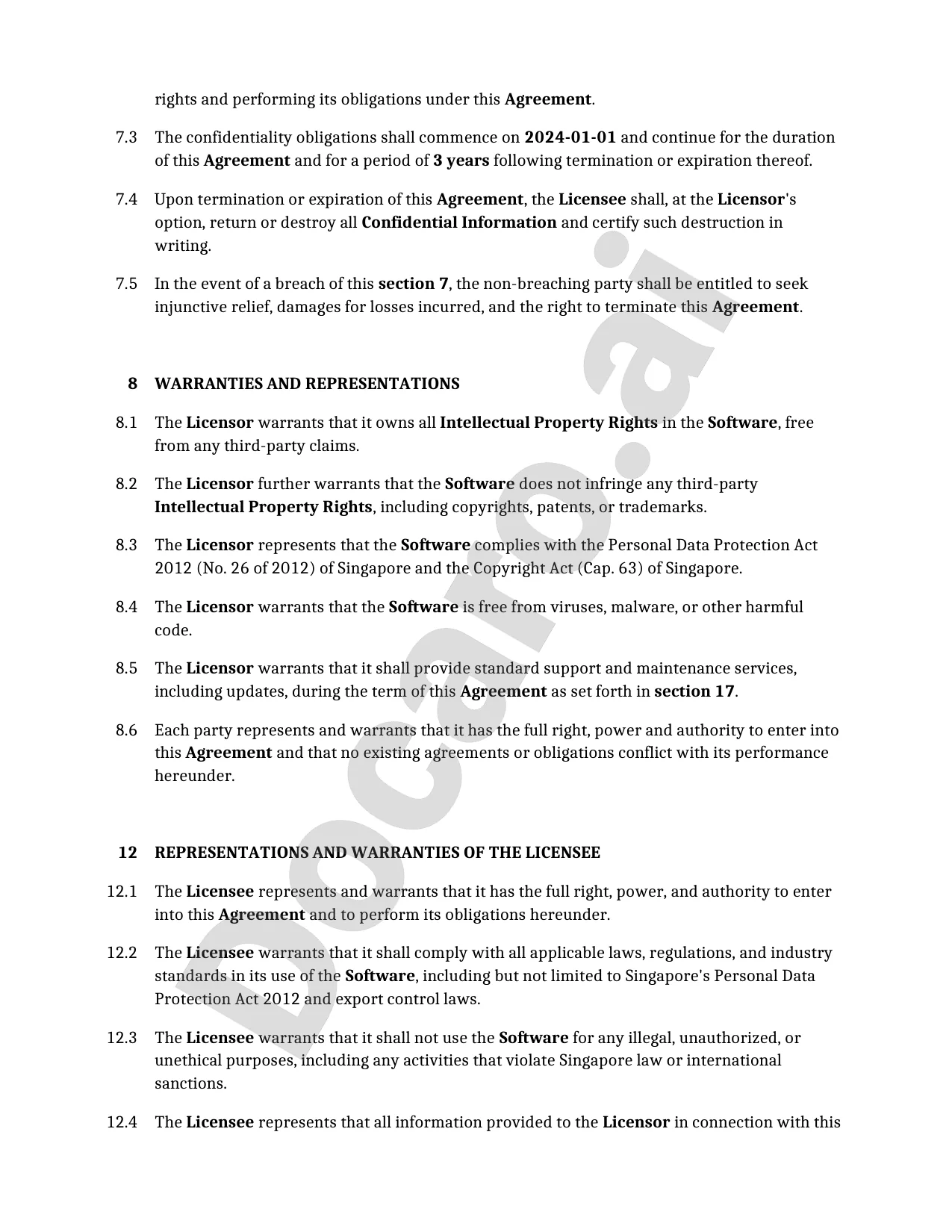
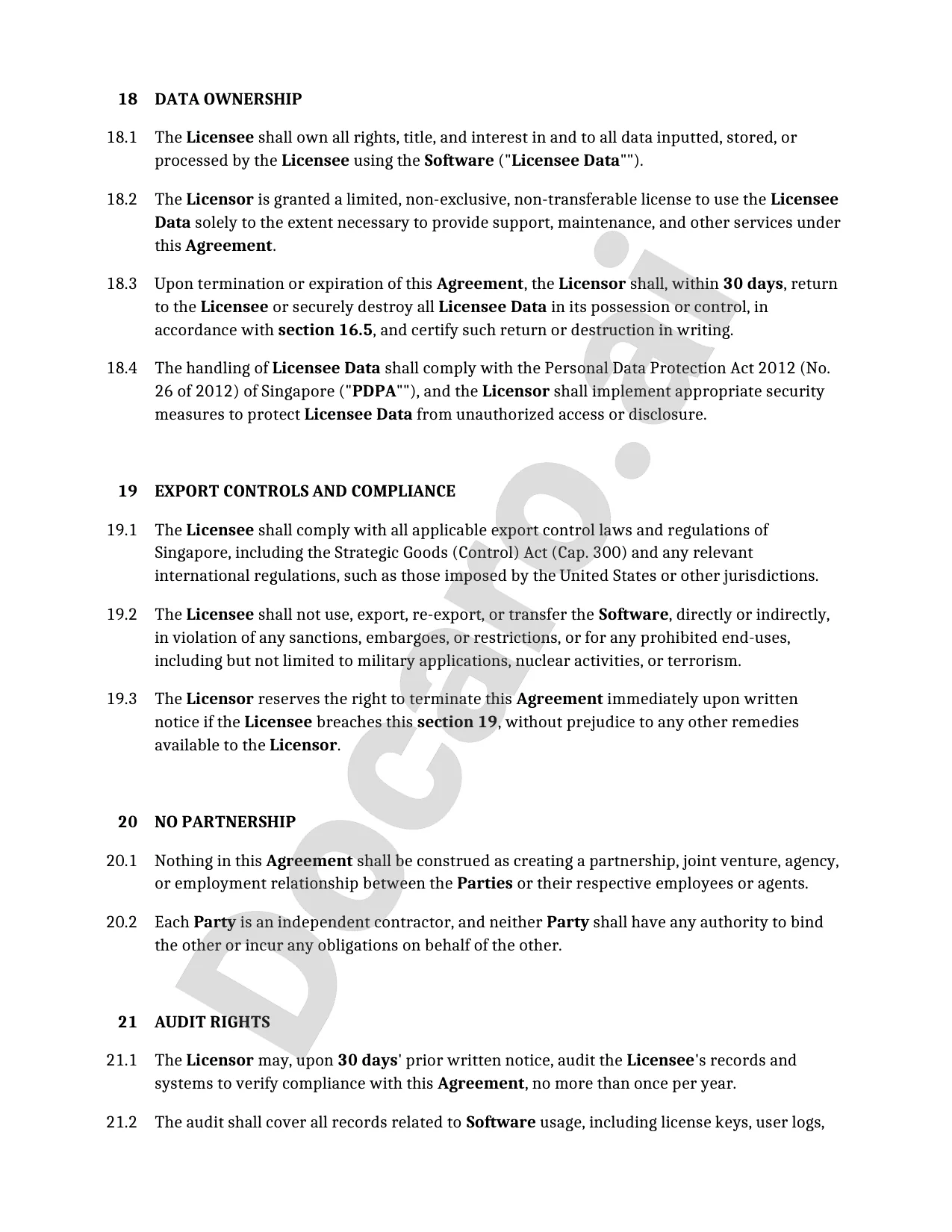
Mutual obligations in these agreements promote trust and legal adherence, particularly under Singapore's PDPA. Both parties must uphold confidentiality by protecting sensitive information from disclosure, while ensuring full compliance with PDPA through secure data handling, consent mechanisms, and breach reporting to avoid penalties.
For robust protection in Singapore licensing contracts, consider bespoke AI-generated legal documents via Docaro platform, tailored to specific needs rather than generic options. This approach ensures comprehensive coverage of rights and obligations, enhancing enforceability in local jurisdictions.

What are the essential clauses to include in a Software Licence Agreement?
In a Singapore software licence agreement, the grant of license clause defines the scope of rights granted to the licensee, specifying whether it's exclusive or non-exclusive, the permitted uses, and any territorial restrictions to ensure clarity and prevent misuse.
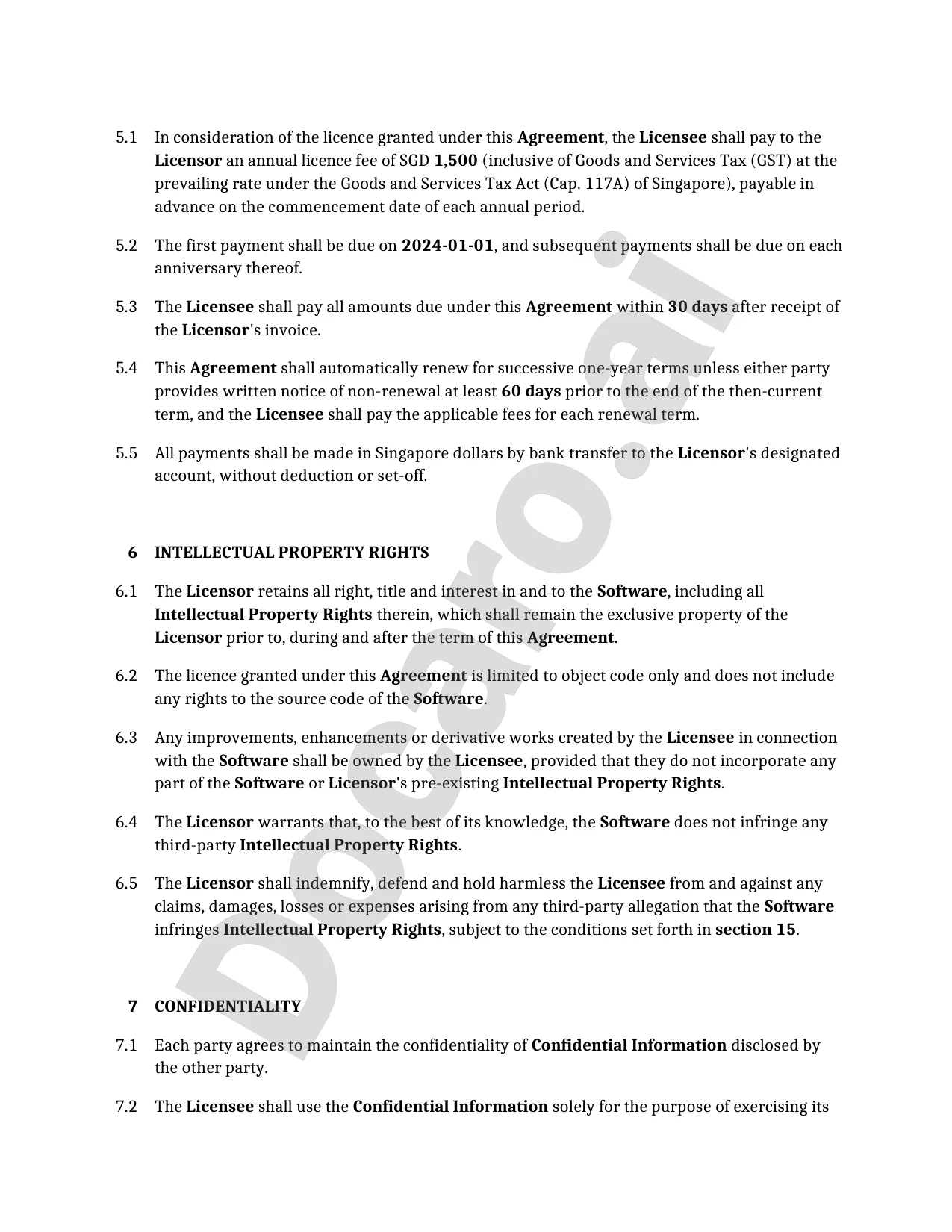
Payment terms outline the fees, payment schedules, and conditions for royalties or subscriptions, helping both parties manage financial expectations and avoid disputes in software licensing.
The IP rights section asserts ownership of the software's intellectual property by the licensor while granting limited usage rights, often including protections against infringement and requirements for confidentiality.
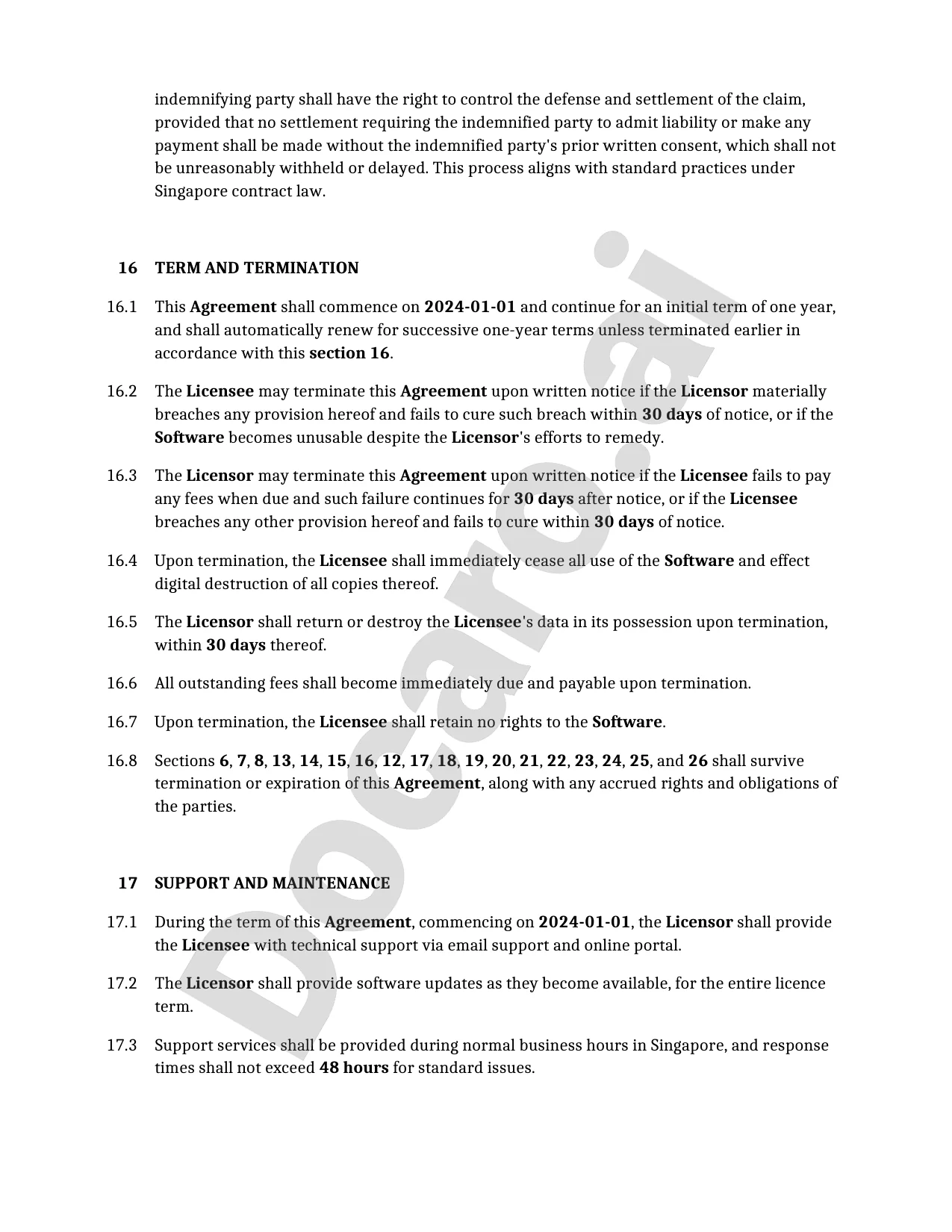
Termination provisions detail events triggering agreement end, such as breach or expiration, along with post-termination obligations like data return; governing law specifies Singapore jurisdiction for dispute resolution. For more on this, see Key Clauses to Include in a Singapore Software Licence Agreement.
To ensure tailored protection, consider using bespoke AI-generated legal documents via Docaro for your Singapore software licence needs.
Recent or upcoming legal changes affecting SLAs
In Singapore's evolving digital economy, recent amendments to the Personal Data Protection Act (PDPA) in 2021 have significantly impacted Service Level Agreements (SLAs) by enhancing data portability and breach notification requirements. These changes compel businesses to incorporate stricter data protection clauses in SLAs to ensure compliance and mitigate risks in cross-border data flows.
Regarding the Copyright Act, no major updates have occurred since the 2021 revisions that expanded digital rights management, but ongoing consultations on AI-generated content could influence future SLAs involving intellectual property licensing. Businesses should review SLAs for provisions on AI and copyright to align with potential upcoming reforms.
Singapore's digital economy initiatives, such as the Smart Nation 2.0 plan launched in 2024, promote cybersecurity enhancements that indirectly affect SLAs through expected new regulations on data security standards. While the regulatory environment remains stable, monitoring developments in cybersecurity laws is essential for maintaining robust SLA frameworks.
For tailored legal needs, consider using Docaro to generate bespoke AI-powered documents that adapt to these regulatory shifts, ensuring precision over generic templates.
How can you draft and implement a Software Licence Agreement in Singapore?
1
Assess Needs and Consult Lawyer
Evaluate your specific requirements for the SLA and consult a Singapore lawyer to ensure alignment with local laws and business goals.
2
Customize Key Clauses with Docaro
Use Docaro to generate bespoke AI legal documents, tailoring clauses on performance metrics, remedies, and termination to your needs.
3
Review for Compliance
Have the customized SLA reviewed by legal experts to confirm full compliance with Singapore's regulatory standards and industry requirements.
4
Execute and Monitor
Sign the SLA with all parties and establish monitoring processes to track performance and address any breaches promptly.
What are common pitfalls to avoid in Software Licence Agreements under Singapore law?
In drafting software licence agreements under Singapore law, a common mistake is inadequate IP definitions, which can lead to disputes over ownership and usage rights. Parties often overlook the need for precise language to protect intellectual property, potentially exposing licensors to unauthorized exploitation.
Another frequent error involves ignoring indemnity clauses, leaving businesses vulnerable to third-party claims related to IP infringement or software defects. Failing to include robust indemnification can result in significant financial liabilities and legal battles.
Overlooking data sovereignty requirements is also prevalent, especially in cross-border deals, where compliance with Singapore's data protection laws like the PDPA is essential. This pitfall can trigger regulatory penalties and loss of user trust if data handling isn't clearly addressed.
Learn more about these in Common Pitfalls in Software Licence Agreements Under Singapore Law. For a broader understanding, refer to Understanding Software Licence Agreements in Singapore.
To avoid these issues, opt for bespoke AI-generated legal documents using Docaro, tailored specifically to your software licensing needs in Singapore.
You Might Also Be Interested In
A Legal Document Transferring Ownership Of A Registered Trademark From One Party To Another In Singapore.
A Legal Document Granting Permission To Use Copyrighted Material Under Specified Terms.
A Legal Contract Granting Permission To Use A Patented Invention Under Specified Terms.
A Legal Document That Transfers Ownership Of Intellectual Property Rights From One Party To Another.
A Legal Document Granting Permission To Use An Individual's Likeness In Media.
A Legal Contract Granting Permission To Use Photographs Under Specified Terms And Conditions.