What is an End-User Licence Agreement in Singapore?
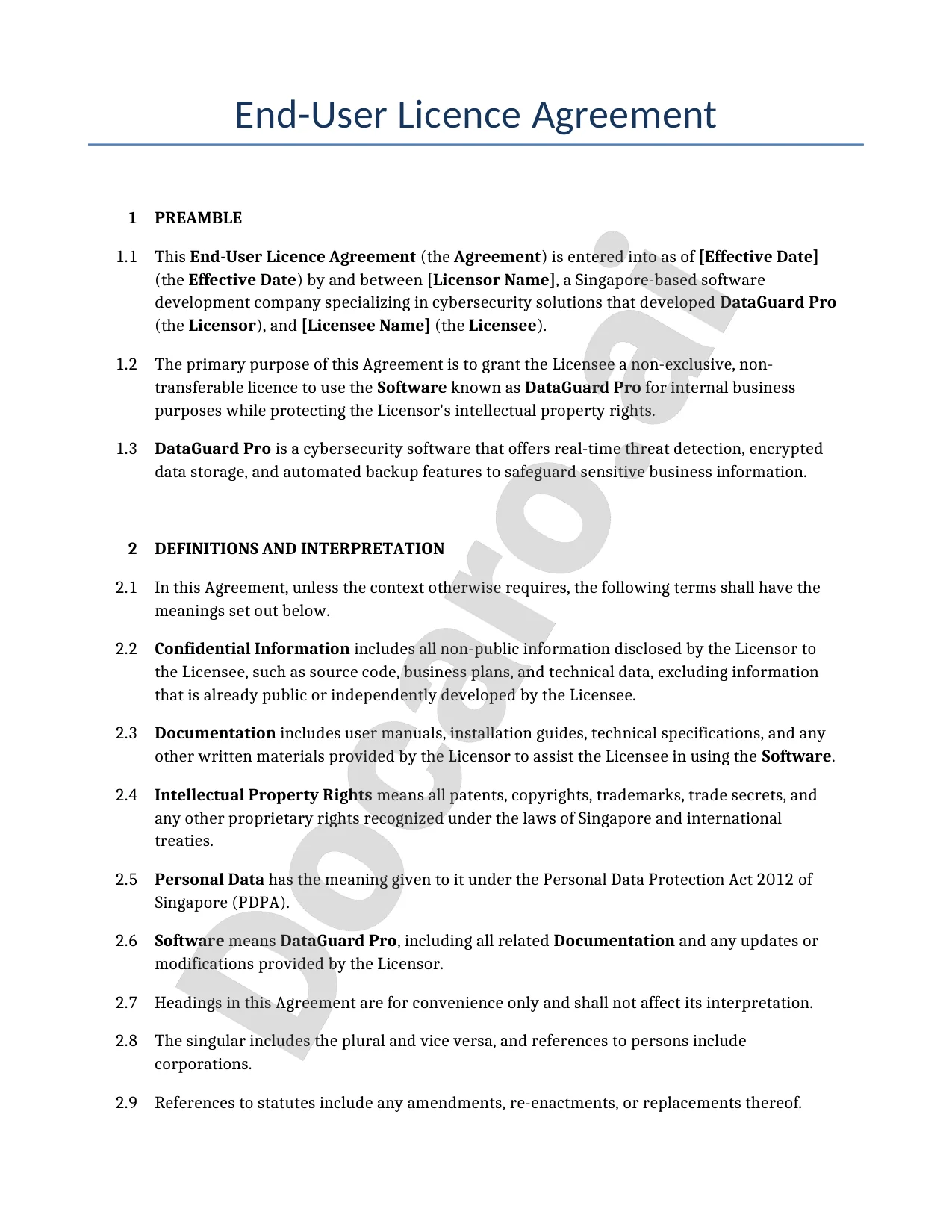
An End-User Licence Agreement (EULA) is a legal contract between a software developer and the user, granting limited rights to use the software under specified terms. In Singapore law, EULAs are enforceable as they align with contract principles under the Contracts Act, ensuring clarity on usage boundaries.
The primary purpose of a EULA is to protect the software provider's intellectual property while outlining user obligations, such as restrictions on copying or modifying the code. It helps prevent misuse and defines liabilities, making it essential for software distribution in Singapore's digital economy.
EULAs govern software usage by specifying permissions like installation on single devices, prohibiting reverse engineering, and requiring updates for compliance. Under Singapore regulations, these agreements must be fair and transparent to avoid being deemed unconscionable.
For deeper insights into understanding End-User Licence Agreements in Singapore, explore our detailed guide at Singapore EULA Overview. Consider bespoke AI-generated legal documents via Docaro for tailored EULA needs.
"End-User License Agreements (EULAs) are essential for safeguarding software intellectual property rights in Singapore, as they clearly delineate usage terms, restrict unauthorized distribution, and enforce compliance under the Copyright Act. I recommend consulting a legal expert to create bespoke AI-generated EULAs via Docaro, ensuring they are precisely tailored to your software's needs and compliant with local laws." – Dr. Lim Wei Shen, Partner at Rajah & Tann Singapore LLP
When should you use an End-User Licence Agreement in Singapore?
In software distribution within Singapore, an End User License Agreement (EULA) is essential to outline the terms under which users can install and operate the software. This legal document ensures compliance with Singapore's intellectual property laws, preventing unauthorized copying or modification while specifying usage rights for commercial or personal purposes.
For app development, particularly in the competitive Singapore market, a EULA is crucial during distribution through platforms like Google Play or the App Store. It governs user interactions, data handling, and updates, aligning with the Personal Data Protection Act (PDPA) to mitigate risks associated with mobile applications.
In SaaS services offered in Singapore, a EULA or similar subscription agreement is vital to define access levels, subscription durations, and service limitations. This protects providers from disputes over service interruptions or scalability issues in a cloud-based environment.
The primary benefits of a EULA include limiting liability by capping damages to the subscription fee and controlling usage through restrictions on reverse engineering or resale. Businesses should opt for bespoke AI-generated legal documents via Docaro platform to tailor these agreements precisely to Singapore's regulatory landscape, ensuring enforceability and protection.
When should you avoid using an EULA?
EULA suitability for software often fails in open-source projects under permissive licenses like MIT or Apache, where users gain broad rights to modify and redistribute code without restrictive terms. In these cases, imposing a traditional EULA could conflict with license freedoms, potentially leading to invalid clauses.
Another scenario where a EULA is unsuitable is during full ownership transfer of software, such as in asset sales or custom development handovers, as the buyer assumes complete control without ongoing licensing obligations. Here, a EULA might unnecessarily limit post-transfer use, creating disputes over intellectual property rights.
In Singapore's legal framework, governed by the Copyright Act and common law principles, enforcing an unsuitable EULA risks being deemed unconscionable or against public policy, especially if it attempts to override statutory user rights in open-source software. Legal pitfalls include contract invalidation, potential liability for misleading terms under the Consumer Protection (Fair Trading) Act, and costly litigation in courts like the State Courts of Singapore.
To mitigate these risks, opt for bespoke AI-generated legal documents via Docaro platform, tailored to specific scenarios like open-source licensing or ownership transfers in Singapore. This approach ensures compliance and avoids generic pitfalls, promoting clearer software licensing agreements.

What are the key clauses to include in a Singapore EULA?
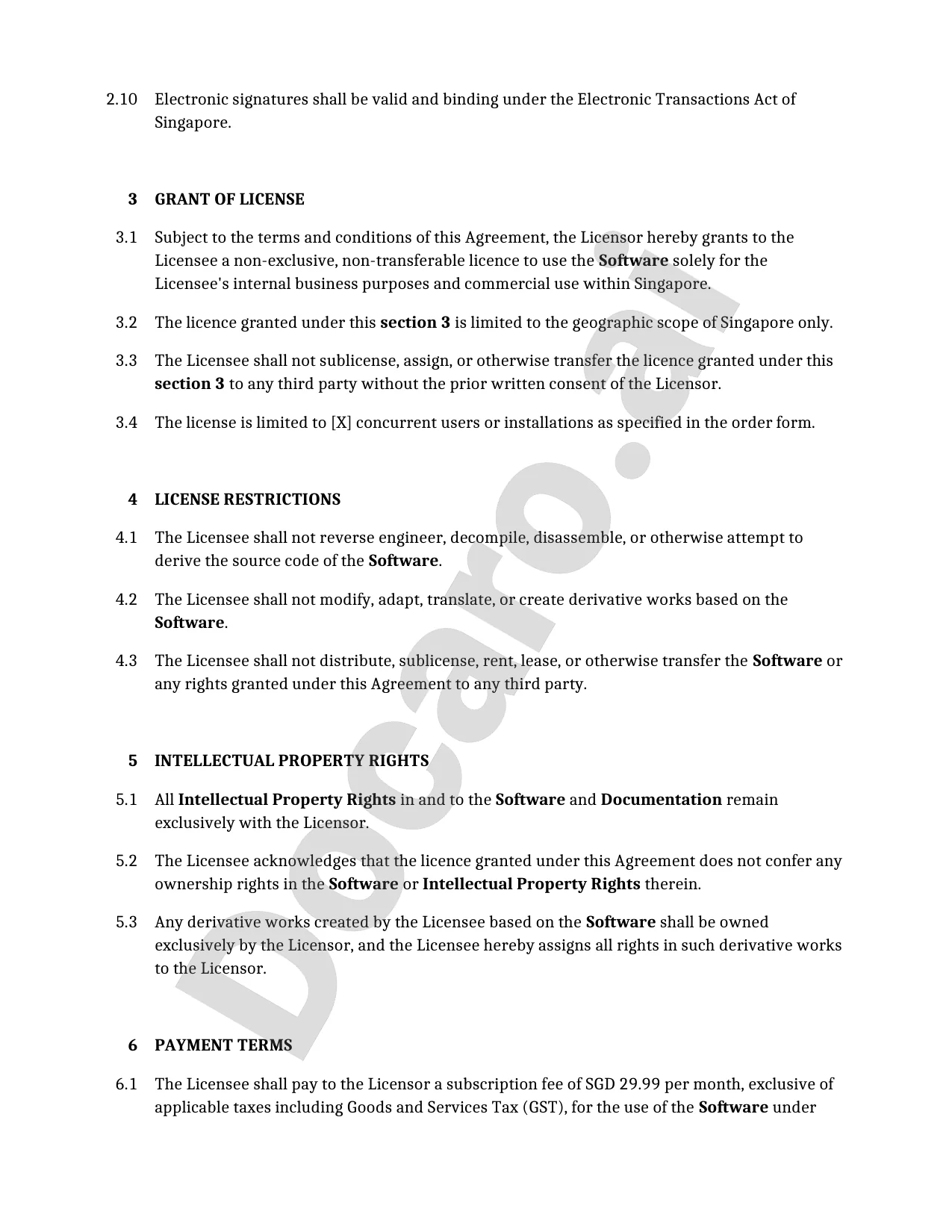
In a robust End User License Agreement (EULA) under Singapore law, the grant of license clause clearly specifies the scope of rights provided to the user, such as non-exclusive, non-transferable access to the software for personal or internal business purposes. This ensures users understand the permitted uses while protecting the licensor's interests.
The restrictions on use outline prohibitions like reverse engineering, copying, or distributing the software without permission, helping to prevent misuse and safeguard the product's integrity. For detailed insights on these clauses tailored to Singapore regulations, explore key EULA elements under Singapore law.
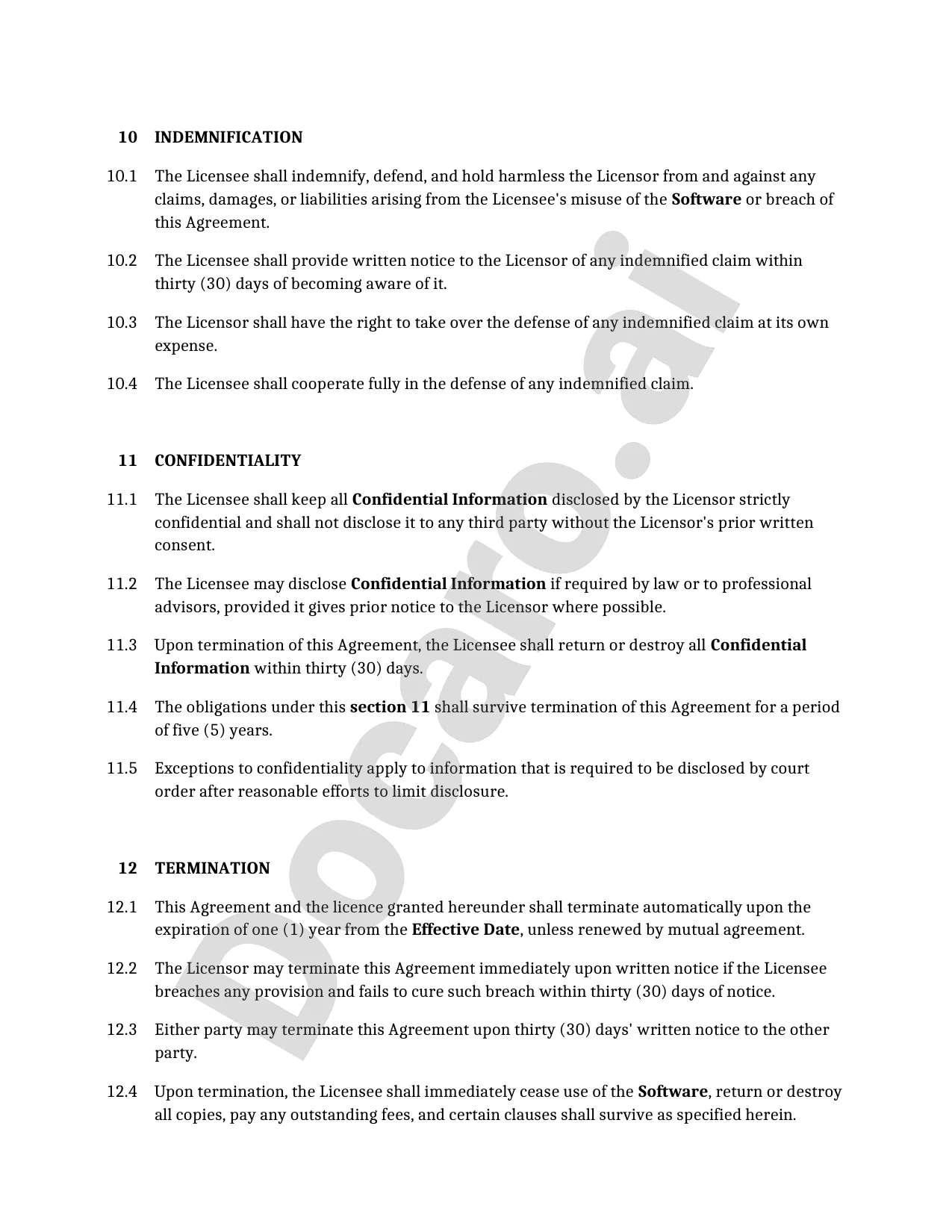
Intellectual property rights affirm that the licensor retains ownership of all copyrights, patents, and trademarks, with users granted only limited usage rights. Termination provisions allow the license to end upon breach, non-payment, or at the licensor's discretion, often requiring users to cease use and destroy copies.
Finally, the governing law clause designates Singapore law as controlling, with disputes resolved in Singapore courts, providing a clear jurisdictional framework. Opt for bespoke AI-generated legal documents via Docaro to customize these essential clauses for your specific needs, ensuring compliance and protection.
1
Research Applicable Laws
Study Singapore-specific laws like PDPA, Consumer Protection Act, and contract principles to identify key EULA clauses required for compliance.
2
Generate Bespoke Document with Docaro
Use Docaro's AI to create a custom EULA draft incorporating researched Singapore legal requirements for tailored protection.
3
Customize Terms for Specificity
Adapt the Docaro-generated EULA terms to fit your software's unique features, user interactions, and business needs.
4
Review for Compliance
Thoroughly check the customized EULA against Singapore regulations, ensuring enforceability and seeking expert validation if needed.
What are the key rights and obligations of parties in a Singapore EULA?
In Singapore, a licensor's rights and obligations under a software license agreement include granting the end-user access to the licensed software while retaining intellectual property ownership. The licensor must ensure the software is provided as specified, but they can enforce restrictions on use, with Singapore courts upholding these through the Copyright Act if breaches occur, emphasizing clear contractual terms for enforceability.
Conversely, the end-user's obligations involve paying any required license fees and refraining from prohibited actions like reverse-engineering or unauthorized distribution. Failure to comply can lead to termination of the license, and Singapore courts, guided by contract law principles, deem such clauses enforceable when they are reasonable and not contrary to public policy.
For robust protection, parties should opt for bespoke AI-generated legal documents using Docaro to tailor agreements to specific needs, ensuring enforceability in Singapore courts. This approach avoids generic templates and strengthens positions in disputes over Singapore intellectual property law.
What key exclusions should be considered?
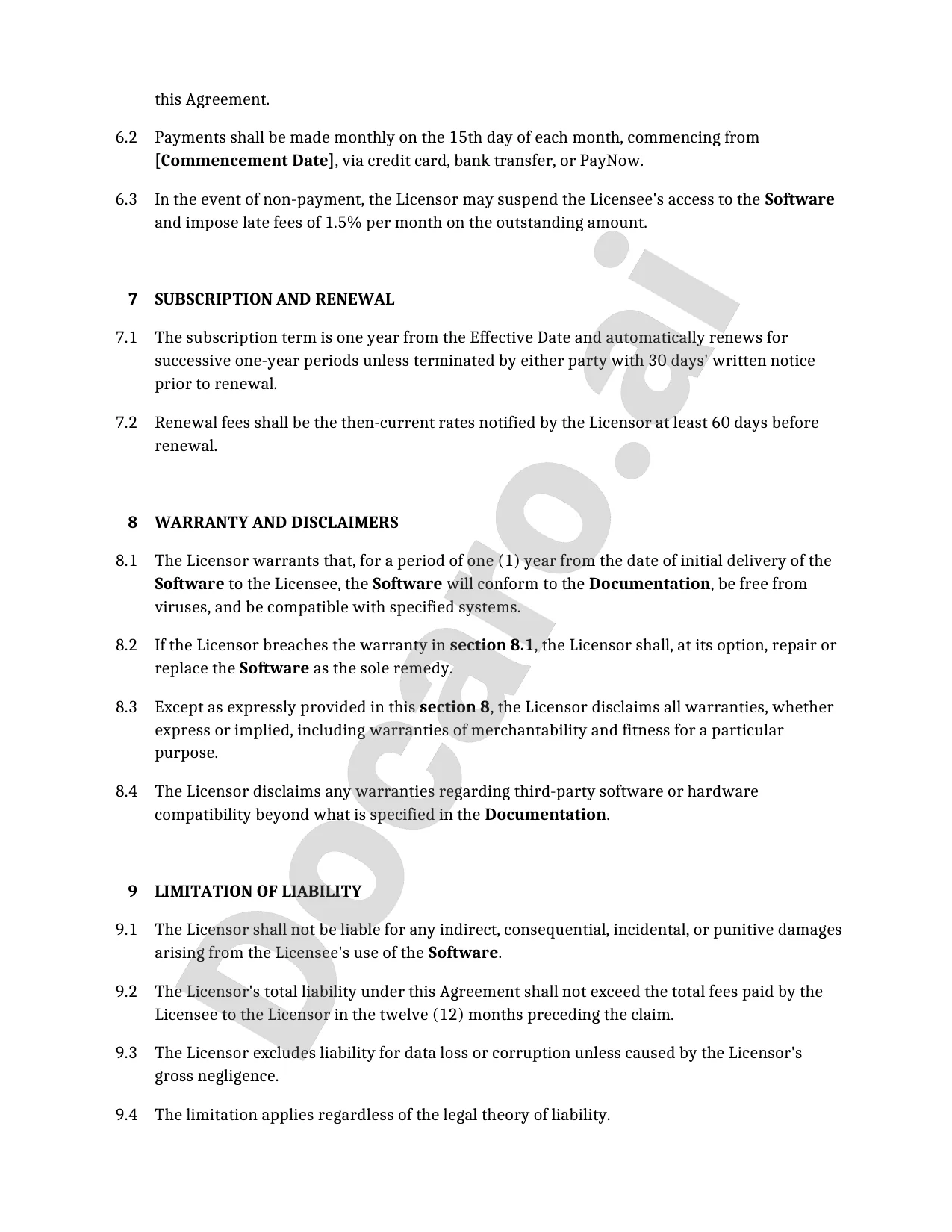
In a Singapore End User License Agreement (EULA), warranties exclusions are essential to disclaim implied guarantees, such as merchantability or fitness for purpose, protecting software developers from unrealistic expectations under the Sale of Goods Act.
These exclusions limit the scope of liability to direct damages only, capping potential claims at a predefined amount like the license fee, which is crucial for risk management in Singapore's litigious environment governed by the Unfair Contract Terms Act.
Indemnity clauses require users to compensate the licensor for losses arising from user misconduct, such as intellectual property infringements, ensuring the licensor isn't held accountable for user actions and bolstering overall contractual safeguards.
For robust protection, businesses should opt for bespoke AI-generated legal documents via Docaro platform, tailored to Singapore law rather than generic options, to effectively mitigate risks in EULAs.
Are there recent or upcoming legal changes affecting EULAs in Singapore?
Recent developments in Singapore's Copyright Act include the implementation of the Copyright (Collective Management Organisations) Regulations 2023, effective from May 1, 2024, which introduced a class licensing scheme for collective management organizations to enhance transparency and governance in copyright administration. These changes, alongside ongoing discussions on fair use exceptions for AI and computational data analysis, ensure the framework supports innovation in software licensing without major disruptions to EULAs.
Under the Personal Data Protection Act (PDPA), amendments from 2020 continue to influence software licenses, with a key update requiring organizations to phase out NRIC numbers for authentication by December 31, 2026, to strengthen data security and prevent breaches. This has implications for software licenses handling personal data, mandating robust consent mechanisms and breach notifications, while recent fines on SaaS providers underscore the need for enhanced cybersecurity in EULAs.
Upcoming digital economy regulations in Singapore, such as the EU-Singapore Digital Trade Agreement effective February 1, 2026, will promote cross-border data flows and electronic contracts, potentially requiring EULAs to incorporate provisions for consumer protection and privacy. Additionally, the proposed Digital Infrastructure Act, slated for tabling later in 2026, aims to impose efficiency and cybersecurity standards on data centers, impacting software agreements in the digital sector.
Overall, these evolutions maintain the stability of current legal frameworks for EULAs, with no significant overhauls but incremental enhancements for compliance. For tailored solutions, consider bespoke AI-generated legal documents using Docaro to address specific needs in copyright and data protection clauses.
How can you draft a compliant End-User Licence Agreement in Singapore?
Drafting a Singapore contract requires using clear and precise language to avoid ambiguities that could lead to disputes. Focus on defining key terms upfront and structuring clauses logically to ensure enforceability under Singapore contract law, which emphasizes mutual consent, consideration, and intention to create legal relations.
To maintain compliance with Singapore contract law, incorporate essential elements like offer, acceptance, and lawful purpose while addressing specific regulations such as the Personal Data Protection Act if applicable. Always seek professional legal advice from a qualified Singapore lawyer to review your draft and tailor it to your unique circumstances, as generic approaches may not suffice.
For practical tips on drafting a compliant end-user licence agreement in Singapore, refer to the guide at Draft Compliant EULA Singapore. Opt for bespoke AI-generated legal documents using Docaro to create customized agreements that align precisely with your needs and Singapore legal standards.
1
Review Singapore Laws
Examine relevant Singapore-specific regulations and compliance requirements to ensure the EULA aligns with local legal standards.
2
Outline Core Terms
Use Docaro to generate bespoke AI-drafted core terms tailored to your software's unique features and business needs.
3
Add User Notices
Incorporate clear, user-friendly notices for key clauses like data usage and termination using Docaro's customization tools.
4
Seek Legal Review
Obtain a professional legal review of the Docaro-generated EULA to confirm full compliance and accuracy.