Why Free Templates Can Be Risky for Remote Work Agreements
Free remote work agreement templates are often generic and designed for standard office-based employment, failing to address Singapore-specific regulations on remote work, data security, and cross-border tax implications. Using outdated or mismatched wording can lead to unenforceable terms, disputes over working hours across time zones, or non-compliance with local employment laws, potentially exposing your business to legal risks and financial penalties.
An AI-generated bespoke remote work agreement is tailored specifically to your company's needs and Singapore's legal framework, incorporating precise clauses for remote setups like equipment reimbursement, productivity monitoring, and jurisdiction-specific dispute resolution. This ensures a robust, enforceable document that protects both employer and employee while minimizing compliance issues.
What is a Remote Work Agreement in Singapore?
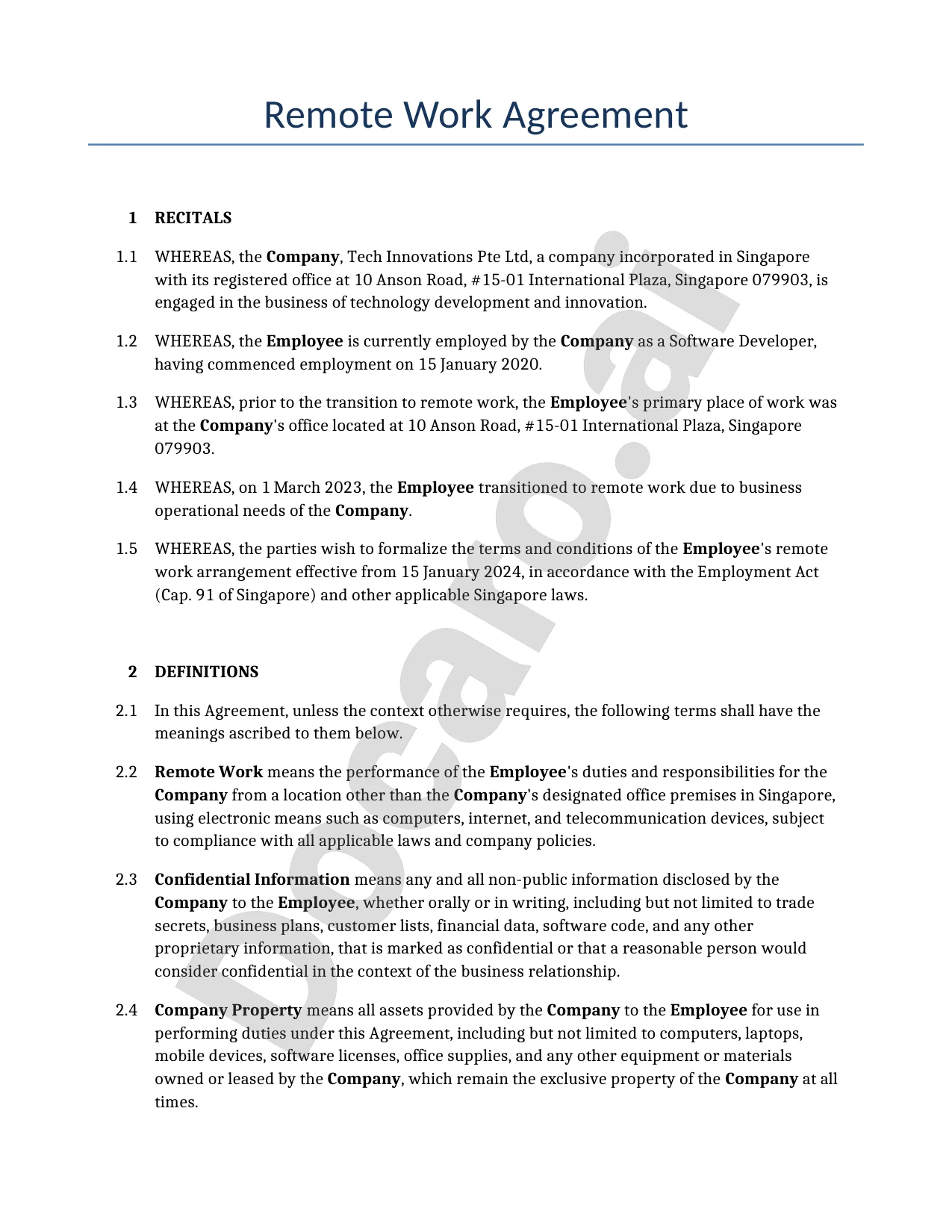
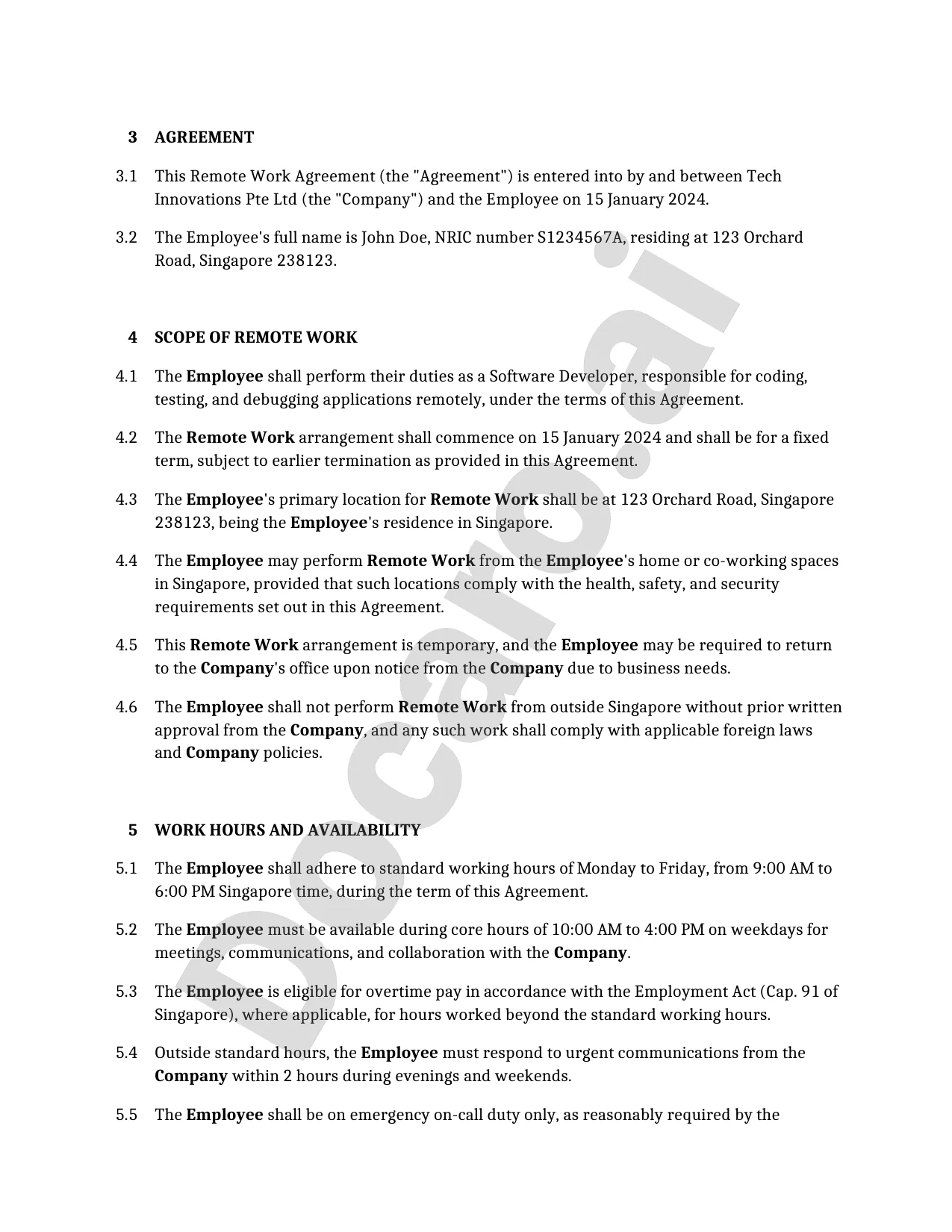
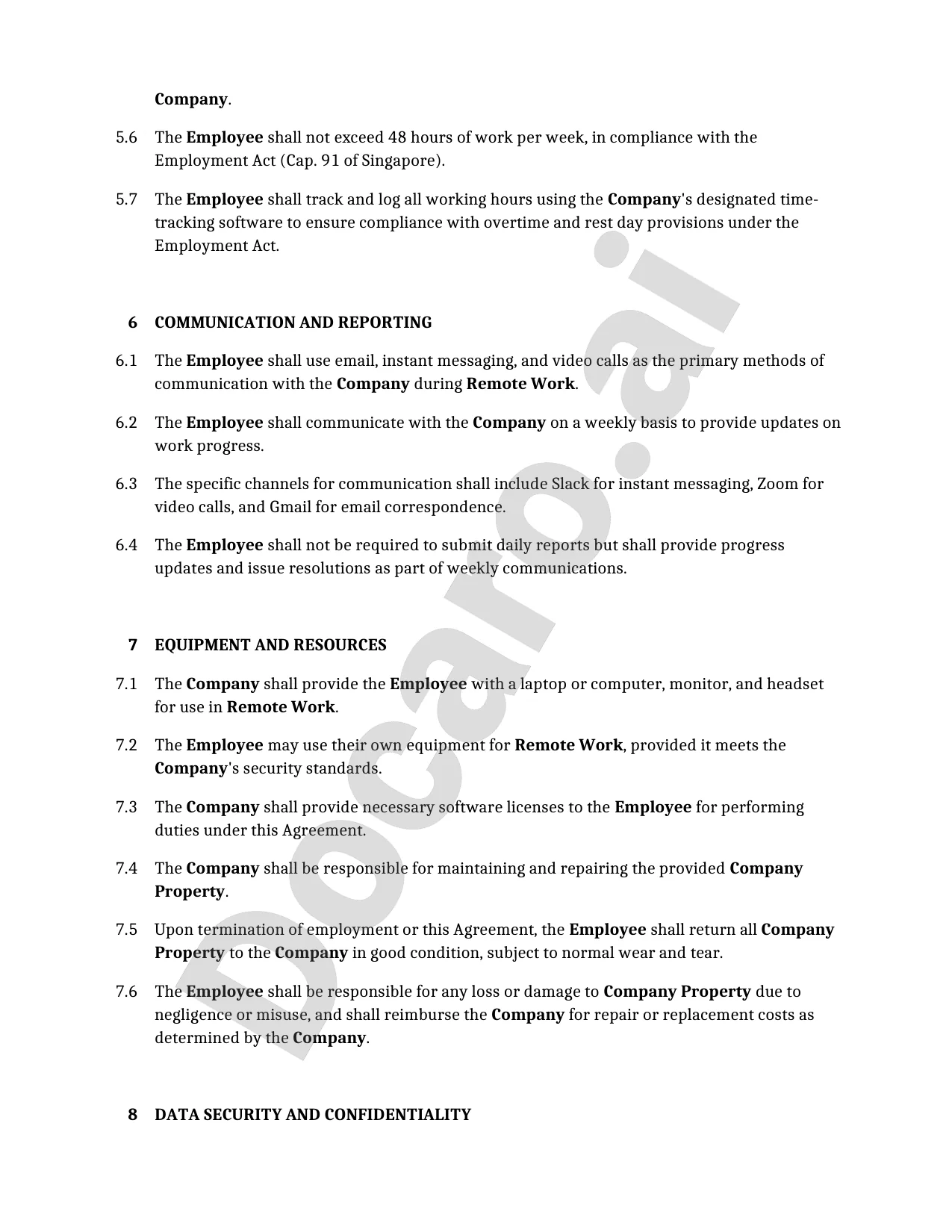
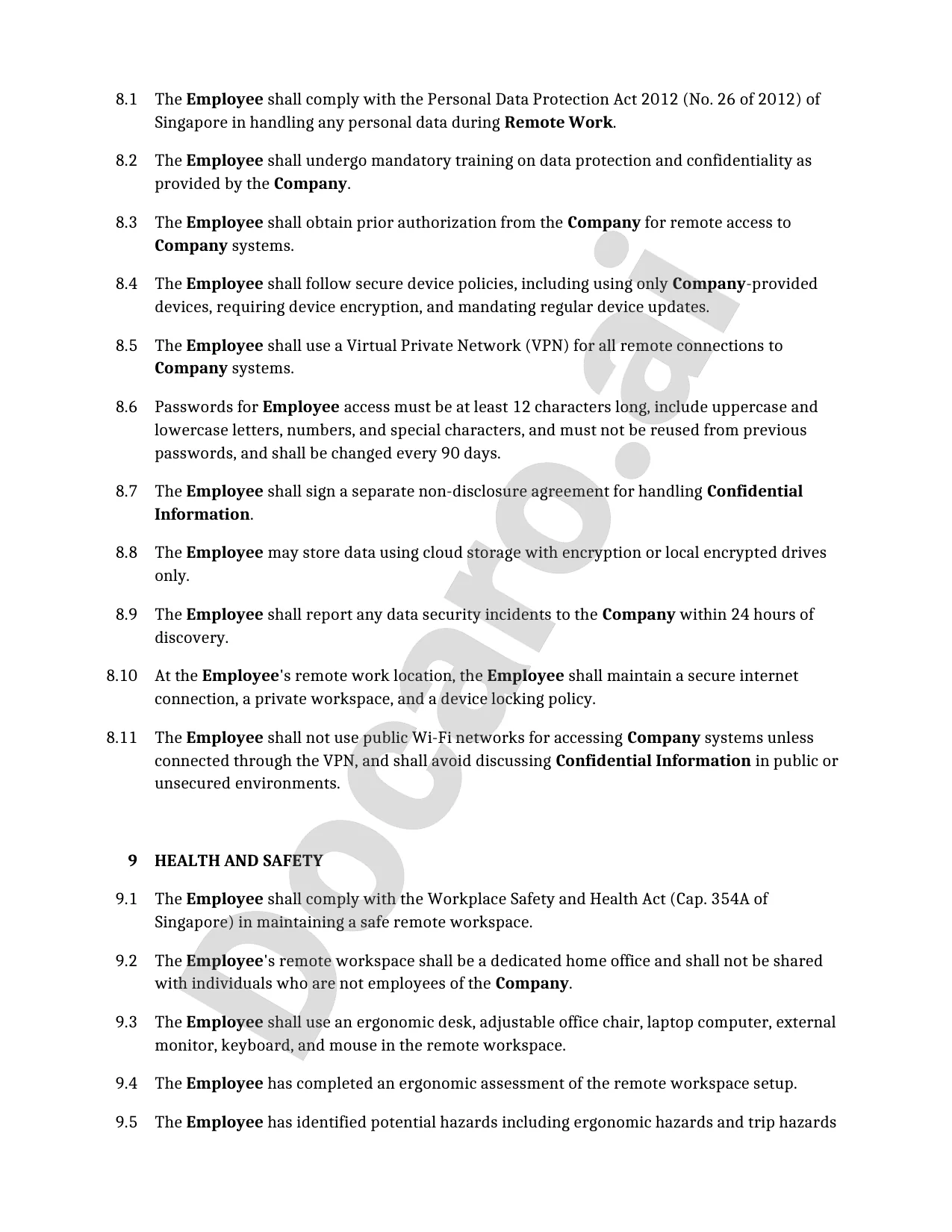
In the evolving landscape of Singaporean employment law, a Remote Work Agreement serves as a vital supplement to traditional employment arrangements, allowing employees to perform their duties from locations outside the conventional office setting. This agreement outlines specific terms for remote working, such as communication protocols, equipment provisions, and data security measures, ensuring compliance with the Employment Act and other relevant regulations. By formalizing these aspects, it helps prevent misunderstandings and fosters a productive work-from-home environment tailored to Singapore's dynamic workforce.
The primary purpose of a Remote Work Agreement is to balance flexibility for employees with the operational needs of employers, promoting work-life harmony while maintaining productivity and accountability. It addresses unique challenges like time zone differences or home office setups, which became prominent post-COVID-19, and ensures that remote workers receive fair treatment under Singapore law, including entitlements to annual leave and overtime pay. Ultimately, this agreement empowers businesses to attract top talent in a competitive job market by offering modern work options without compromising legal protections.
Unlike a standard employment contract, which typically focuses on core elements like salary, job scope, and termination clauses in an office-based context, a Remote Work Agreement delves into location-specific logistics and performance metrics for off-site work. While the standard contract forms the foundation of the employment relationship, the remote agreement acts as an addendum, customizing terms to suit hybrid or fully remote models without altering the primary obligations. For personalized legal needs, consider generating bespoke AI legal documents via Docaro to ensure they align precisely with your situation.
When Should You Use a Remote Work Agreement in Singapore?
A Remote Work Agreement is essential for long-term remote setups in Singapore, where employees work entirely from home or other locations outside the office. This is particularly appropriate for tech professionals in the city-state's vibrant IT sector, ensuring compliance with the Ministry of Manpower's guidelines on work hours and data security.
For hybrid work models, a Remote Work Agreement outlines the balance between office and remote days, benefiting employers by maintaining productivity while offering flexibility to employees. In Singapore's diverse workforce, this suits finance analysts who commute via the efficient MRT system but prefer occasional home-based work to manage family responsibilities.
Such agreements are also ideal for expatriate employees in multinational corporations based in Singapore, addressing unique needs like time zone differences for global teams. By using bespoke AI-generated legal documents from Docaro platform, employers can customize terms to fit specific roles, such as remote customer support in the e-commerce industry.
When Should You Avoid Using This Document?
A Remote Work Agreement in Singapore may not be necessary for short-term arrangements, such as temporary remote stints lasting less than a few months, where the existing employment contract already covers essential terms like work location flexibility.
Opt for standard contracts when remote work is occasional or incidental, as these suffice without the need for a dedicated agreement, avoiding unnecessary complexity in compliance with Singapore's Employment Act.
Potential legal pitfalls arise if a Remote Work Agreement is misused for short-term setups, including disputes over tax implications under IRAS guidelines or unresolved issues with data security under PDPA, which could lead to non-compliance fines.
- Ensure bespoke documents tailored to specific needs using Docaro AI legal generation to mitigate risks in Singapore's regulatory environment.
- Consult professionals for arrangements involving international elements to avoid pitfalls in cross-border labor laws.
"Remote work agreements must be customized to the unique requirements of each employer and employee to ensure compliance with Singapore's Employment Act and mitigate risks—avoid generic templates and instead use Docaro for bespoke AI-generated documents tailored precisely to your needs." – Dr. Lim Wei, Employment Law Expert, Singapore.
What Are the Key Clauses in a Remote Work Agreement?
A Remote Work Agreement under Singapore law must outline clear work hours to ensure compliance with the Employment Act, specifying core hours for availability and flexibility for asynchronous tasks. This helps maintain productivity while respecting employee well-being.
Communication protocols are essential, detailing tools like email or Slack for updates, response times, and virtual meeting schedules to foster seamless collaboration. These clauses prevent misunderstandings in a distributed workforce.
Provisions for equipment should specify who provides devices, software, or reimbursements for home setups, aligning with Singapore's data protection standards under the PDPA. For comprehensive guidance on these and other key elements, refer to our detailed resource on essential remote work agreement components in Singapore.
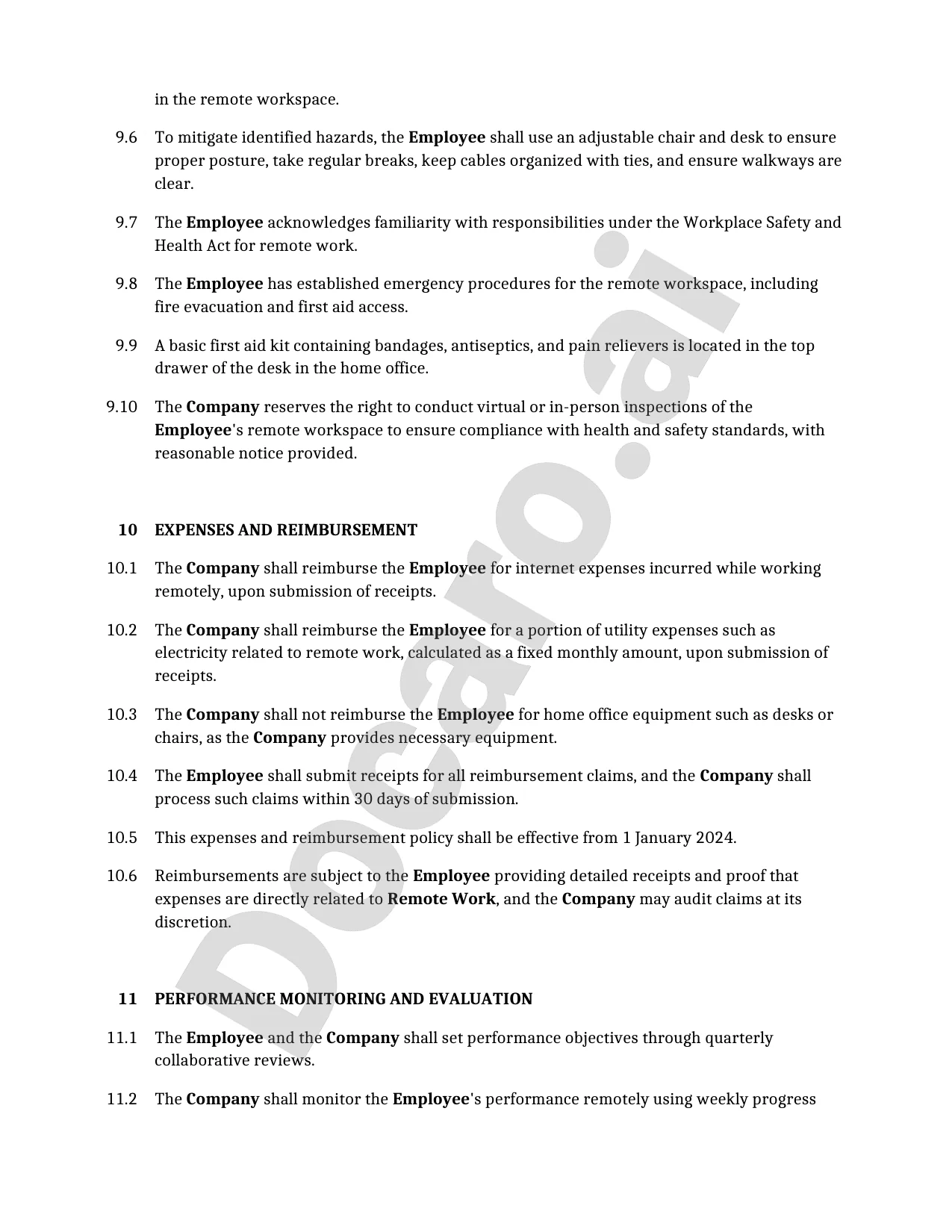
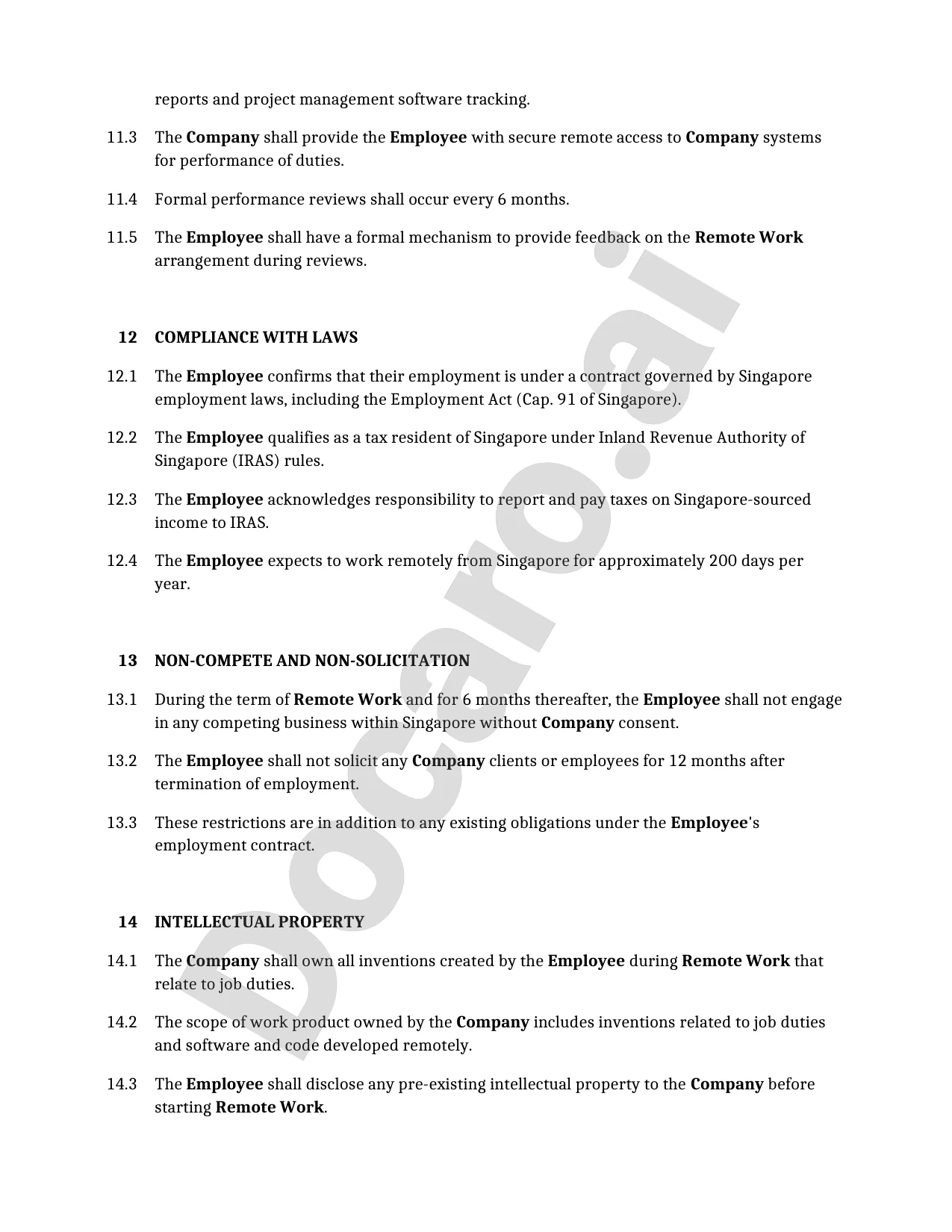
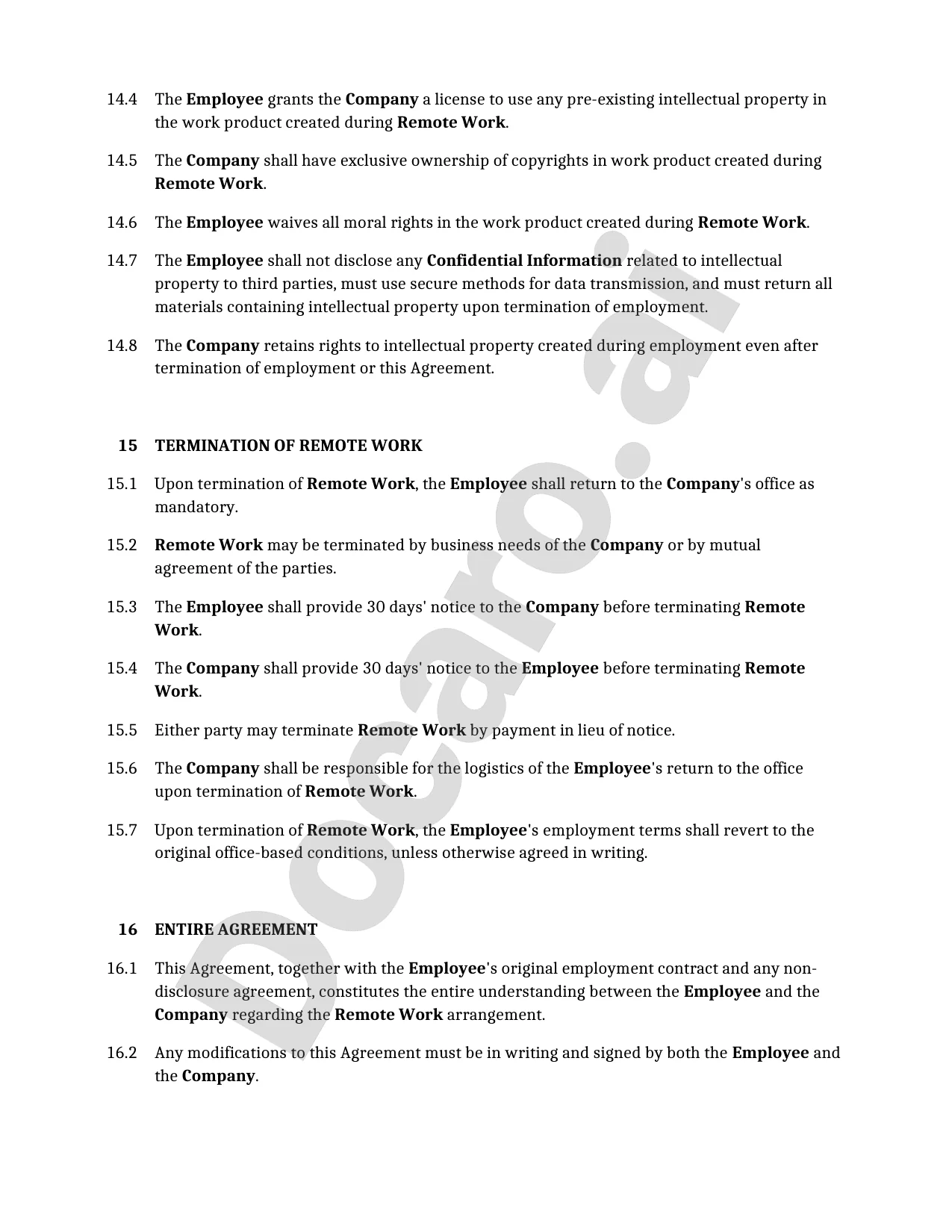
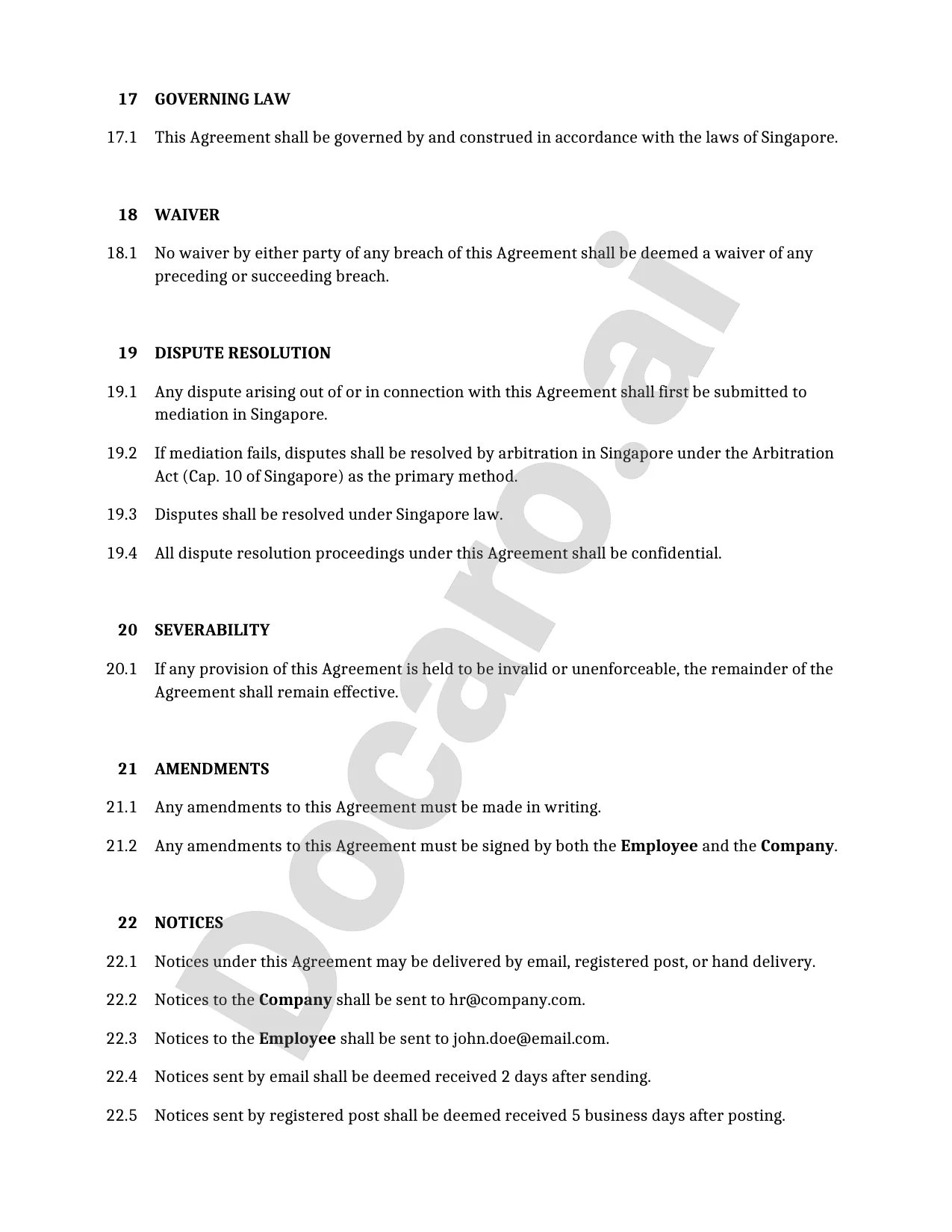
- Include confidentiality and data security measures to protect company information.
- Address expense reimbursements for internet and utilities.
- Outline performance evaluation methods adapted for remote settings.
Opt for bespoke AI-generated legal documents via Docaro to tailor your remote work agreement precisely to your business needs under Singapore regulations.
1
Draft Clauses with Docaro
Use Docaro to generate bespoke clauses for remote work agreement, incorporating Singapore's Employment Act requirements on working hours and data protection.
2
Incorporate Specific Regulations
Customize AI-generated clauses to address PDPA for data security, MOM guidelines for health and safety, and tax implications for remote setups.
3
Review for Compliance
Examine drafted clauses against Singapore legal standards, ensuring no conflicts with tripartite guidelines on flexible work arrangements.
4
Finalize and Validate
Revise clauses based on review, then consult Singapore legal resources or experts to confirm full regulatory compliance.
What Are the Key Rights and Obligations of Parties Involved?
In Singapore, a Remote Work Agreement outlines key rights and obligations for employers and employees, ensuring compliance with labor laws while addressing unique remote challenges. Employers must provide necessary tools and a safe remote setup, while employees are obligated to maintain productivity and adhere to company policies; for detailed legal requirements, refer to our guide on remote work contracts in Singapore.
Regarding data security, employers have the right to implement safeguards like VPNs and encryption, obligating employees to protect sensitive information and report breaches promptly. This mutual responsibility prevents data leaks in remote settings, fostering trust and legal compliance.
- Employees' right: Access secure systems without undue restrictions.
- Employers' obligation: Train staff on cybersecurity best practices.
For performance monitoring, employers may use tools to track output fairly, but must respect employees' privacy rights under Singapore's PDPA. Employees are entitled to transparency on monitoring methods, ensuring evaluations focus on results rather than constant surveillance.
Leave entitlements in remote agreements mirror standard Employment Act provisions, granting employees rights to annual, sick, and parental leave regardless of location. Employers must facilitate remote leave processes efficiently, such as approving applications via digital platforms, to support work-life balance.
What Recent or Upcoming Legal Changes Affect Remote Work Agreements?
In December 2024, Singapore implemented the Tripartite Guidelines on Flexible Work Arrangement Requests (TG-FWAR), mandating that all employers fairly consider and respond to formal requests for flexible work arrangements (FWAs) such as remote work, telecommuting, or adjusted hours. These guidelines replace the 2014 Tripartite Advisory and 2017 Tripartite Standard, promoting work-life harmony while allowing employers to decline requests based on business needs.
Key features include employees' right to submit FWA requests after six months of service, with employers required to acknowledge within one week and provide a reasoned response within two months. This update enhances remote work policies in Singapore by ensuring structured processes, though no changes to the Employment Act directly mandate FWAs.
- Telecommuting: Employees can request work-from-home on specific days.
- Flexi-time: Adjustments to start/end times without reducing total hours.
- Flexi-location: Working from alternative sites beyond the office.
Looking ahead to 2025 and 2026, anticipated enhancements may include stronger protections for platform workers and guidelines on restrictive covenants, further supporting Singapore's flexible work laws. For compliance with these employment law changes in Singapore, employers should use bespoke AI-generated legal documents via Docaro to tailor policies effectively.
What Key Exclusions Should Be Considered in These Agreements?
In Remote Work Agreements under Singapore's legal framework, a key exclusion is their non-applicability to industries requiring physical presence, such as manufacturing or healthcare, where the Employment Act mandates on-site operations for safety and compliance reasons.
Another limitation involves on-site emergencies, where agreements often stipulate that employees must return to the workplace immediately if critical situations arise, aligning with Singapore's Workplace Safety and Health Act to ensure rapid response and risk mitigation.
For a deeper look at challenges in remote work agreements in Singapore, explore benefits and challenges overview.
To address these exclusions effectively, opt for bespoke AI-generated legal documents via Docaro, ensuring they are tailored to Singapore's specific regulations and your business needs.
1
Draft Bespoke Agreement with Docaro
Use Docaro to generate a customized remote work agreement tailored to your company's needs, including specific roles and conditions for employees and employers.
2
Identify and Address Exclusions
Review the agreement to clearly outline exclusions like ineligible positions or locations, ensuring all parties understand what remote work does not cover.
3
Mitigate Key Risks
Incorporate clauses in the Docaro-generated document to manage risks such as data security, productivity monitoring, and liability for home office setups.
4
Implement and Review Agreement
Distribute the agreement for signatures, train staff on compliance, and schedule periodic reviews to adapt to evolving remote work challenges.
You Might Also Be Interested In
A Legally Binding Agreement Outlining The Terms And Conditions Of Employment Between An Employer And Employee.
A Legal Contract Outlining The Terms Of Service Between A Client And An Independent Contractor In Singapore.
A Legal Contract Between An Employer And Employee That Prohibits The Disclosure Of Confidential Information To Protect Business Secrets.
A Contractual Provision Restricting An Individual From Engaging In Competitive Activities Against Their Former Employer For A Specified Period And Area.
A Formal Document From An Employer Extending A Job Offer With Key Employment Terms.
A Document Outlining Company Policies, Employee Rights, And Workplace Rules.
A Formal Notice From An Employer To An Employee Stating The End Of Their Employment Contract.
A Contract Outlining Terms Of An Internship, Including Duties, Duration, Compensation, And Confidentiality.
A Legal Contract That Requires Employees To Keep Confidential Information Private And Not Disclose It To Unauthorized Parties.
A Legal Document Outlining The Terms Of Engagement Between A Freelancer And Client For Specific Services.
A Flexible Employment Agreement Where Workers Are Not Guaranteed Minimum Hours And Are Called Upon As Needed By The Employer.
A Formal Document Notifying An Employer Of An Employee's Intent To Resign From Their Position, Typically Including The Last Working Day.
A Written Endorsement By A Person Of Authority Attesting To Another's Skills, Character, Or Qualifications For Employment, Education, Or Legal Purposes.