What is a Personal Guarantee in the Context of Singapore Law?
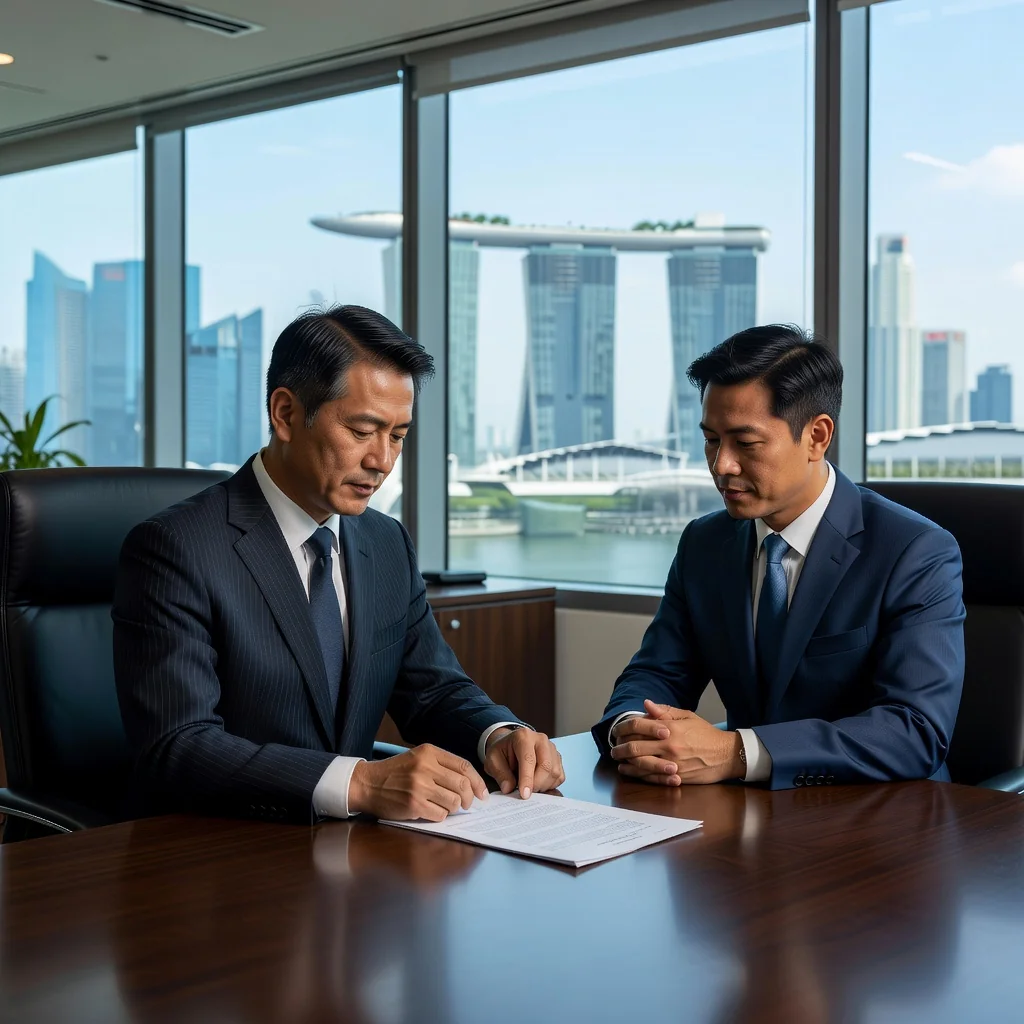
A personal guarantee under Singapore law is a binding commitment by an individual to personally assume responsibility for a debt or obligation if the primary debtor, often a company, fails to fulfill it. This form of security is governed by general contract principles in the Contracts Act and common law, requiring the guarantor's consent and consideration for enforceability.
The primary purpose of a personal guarantee in commercial transactions is to provide lenders with added protection against default, enhancing creditworthiness for small businesses or startups lacking strong collateral. It encourages financing by mitigating risk, commonly used in loans, leases, or supplier agreements to ensure repayment or performance.
- Key differences from corporate guarantees: A personal guarantee involves an individual's personal assets, exposing them to liability under the Insolvency Act for bankruptcy proceedings, unlike a corporate guarantee limited to the company's resources.
- Corporate guarantees, often issued under the Companies Act (Section 168), require board approval and may face restrictions if the company is a subsidiary, whereas personal guarantees bypass corporate formalities but carry unlimited personal risk.
For tailored personal guarantee agreements, consider using Docaro to generate bespoke AI-driven legal documents that comply with Singapore regulations.
When Should You Use a Personal Guarantee Document in Singapore?
In Singapore's business landscape, a personal guarantee is often appropriate for small business loans, where entrepreneurs personally back the debt to secure funding from banks like DBS or OCBC. This arrangement provides easier access to credit for startups, as lenders view the owner's commitment as reduced risk, enabling faster approvals and lower interest rates without extensive collateral.
For partnership agreements in Singapore, personal guarantees ensure each partner's accountability for shared obligations, such as lease payments or operational loans under the Partnership Act. This fosters trust among partners and reassures third parties, minimizing disputes and supporting smoother business collaborations.
Supplier agreements in Singapore's competitive market may require personal guarantees to confirm payment for goods, especially for new ventures lacking credit history. Benefits include building stronger supplier relationships and negotiating better terms, ultimately aiding startup growth by ensuring reliable supply chains.
Business owners in Singapore should consider Docaro for bespoke AI-generated legal documents tailored to personal guarantees, ensuring compliance with local regulations like the Companies Act. This approach offers customized protection, avoiding one-size-fits-all risks while streamlining the process for small business financing.
When Should You Avoid Using a Personal Guarantee?
In Singapore business financing, personal guarantees should be avoided in high-risk ventures such as startups in volatile industries like cryptocurrency or biotech, where the likelihood of default is elevated due to market uncertainties and operational challenges.
When alternative securities are available, such as pledging business assets like inventory or real estate, or securing co-signers with strong financial backing, relying on personal guarantees becomes unnecessary and exposes individuals to undue liability in Singapore's strict lending environment.
Under Singapore's bankruptcy laws, providing a personal guarantee risks personal assets including homes and savings, as creditors can pursue these in the event of business failure, potentially leading to bankruptcy proceedings that last up to five years and severely impact credit ratings.
To mitigate these risks, entrepreneurs in Singapore should consult professionals for bespoke AI-generated legal documents using Docaro, ensuring tailored protections without resorting to personal guarantees.
What Are the Key Clauses in a Personal Guarantee Agreement?
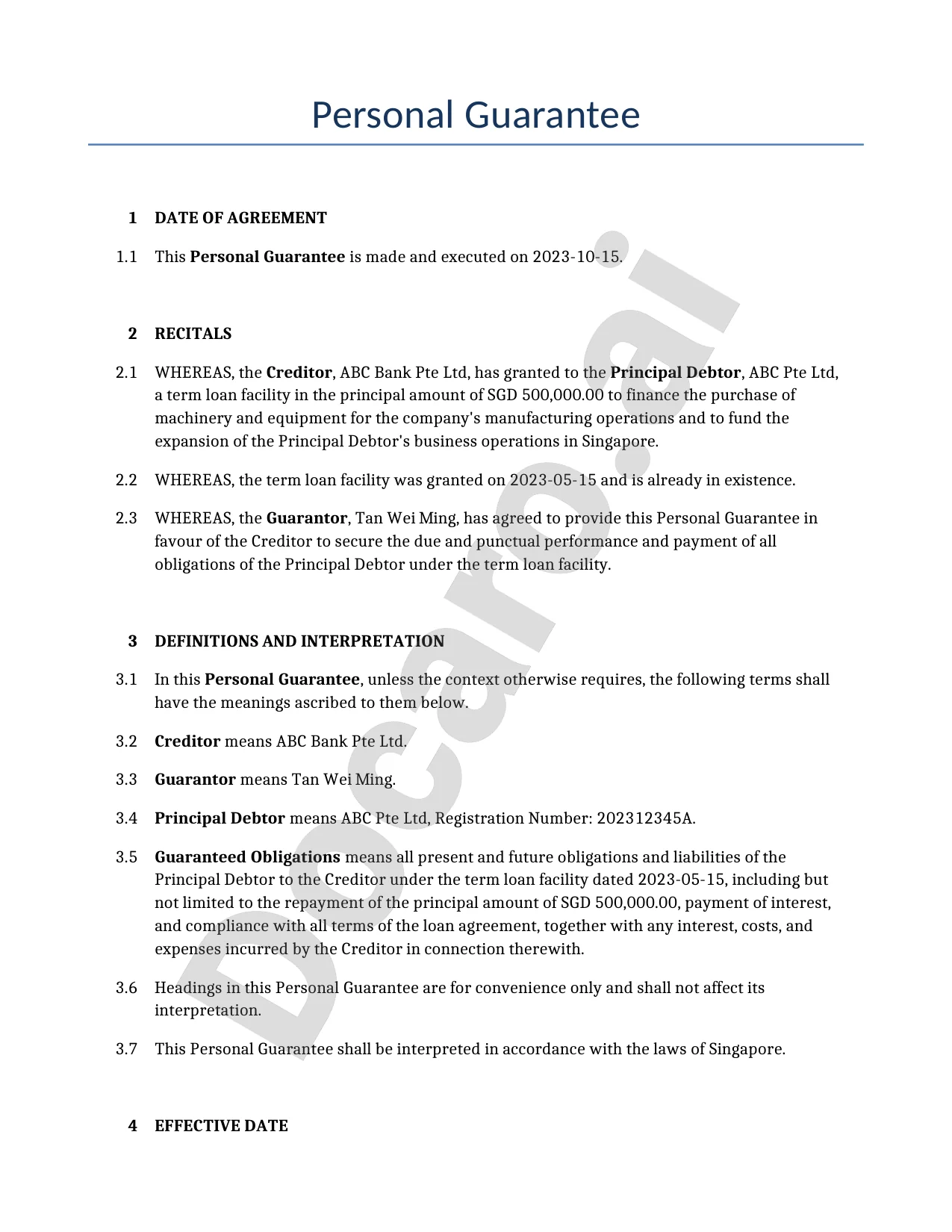
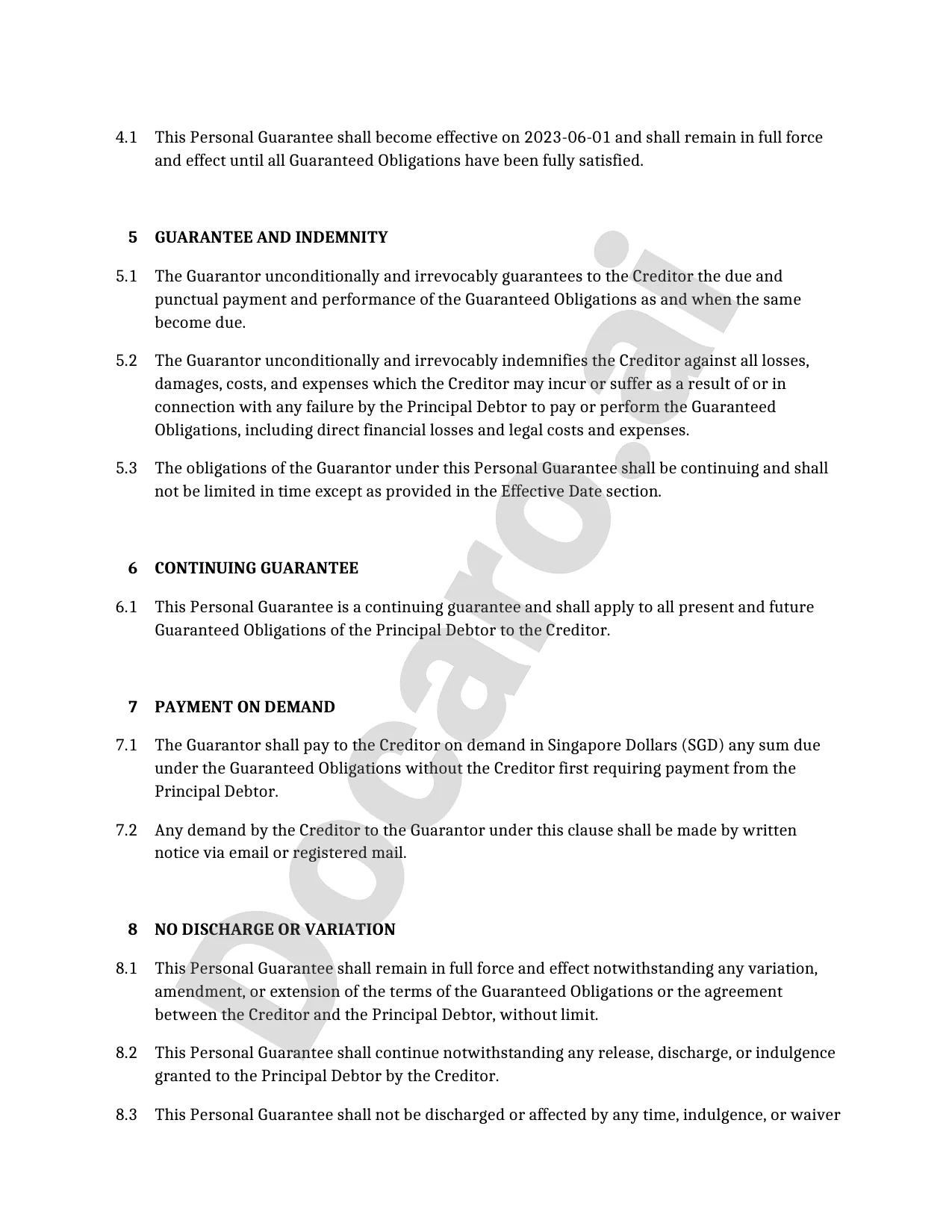
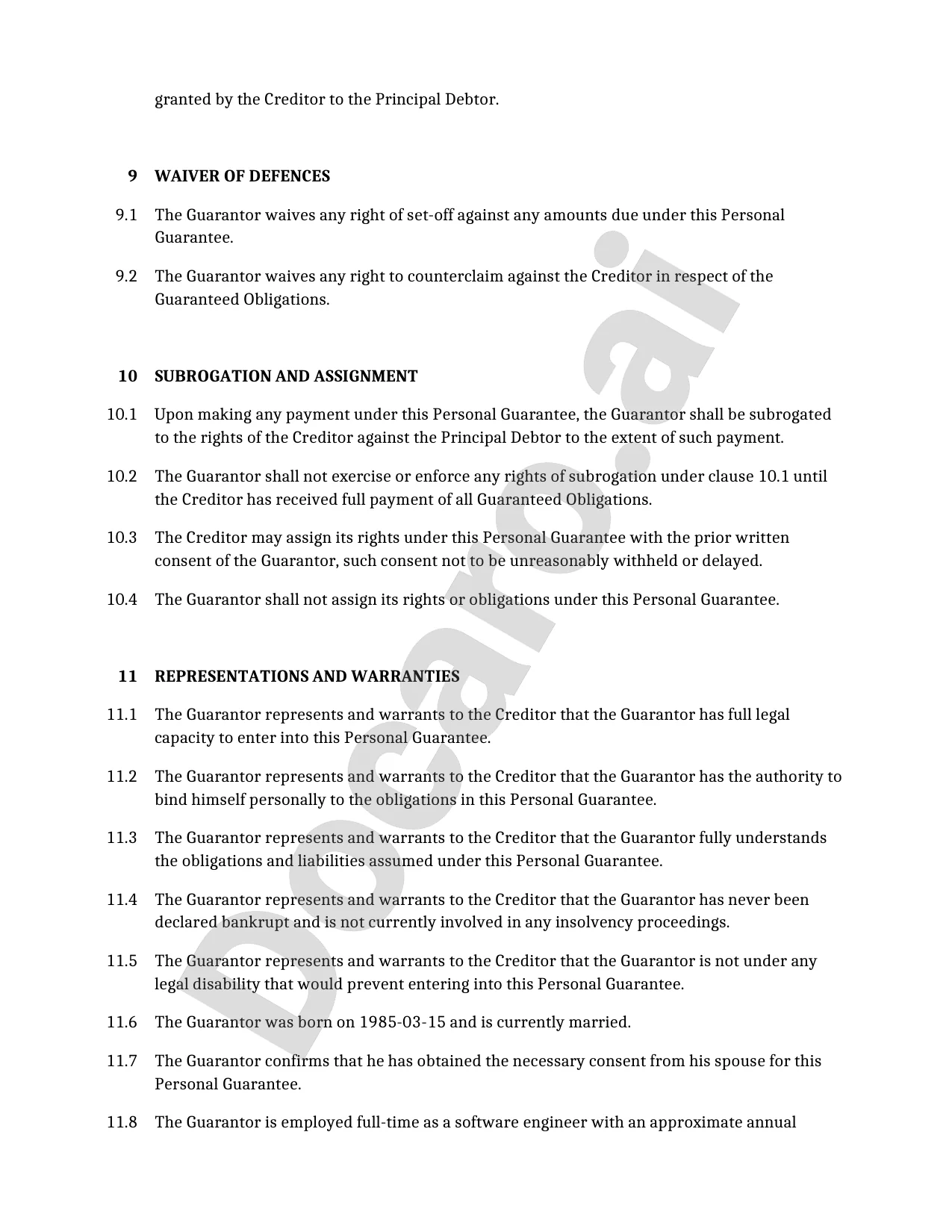
A personal guarantee document under Singapore law is a legal agreement where an individual promises to cover a debt if the main borrower defaults. Essential clauses ensure clarity on the guarantor's obligations, protecting all parties involved in business loans or personal guarantees in Singapore.
The guarantee scope clause defines what the guarantee covers, such as the principal amount, interest, and any related costs like legal fees. It limits the guarantee to specific debts, preventing unexpected liabilities for the guarantor.
Duration specifies how long the guarantee lasts, often tied to the underlying loan's term or until full repayment. This clause may include provisions for extension if the loan is renewed, ensuring the guarantor's commitment aligns with the borrower's repayment schedule.
Liability type outlines whether the guarantee is joint (shared with others) or several (individual full responsibility), impacting how creditors can pursue recovery. Under Singapore law, several liability means the guarantor could be liable for the entire amount without first exhausting other options.
Termination conditions detail how the guarantee ends, such as upon loan repayment, mutual agreement, or notice period. These conditions prevent indefinite obligations and allow for clear exit strategies in Singapore guarantee agreements.
For personalized protection, consider bespoke AI-generated legal documents using Docaro to tailor clauses to your specific needs under Singapore law.
"Clear liability clauses in personal guarantee agreements are essential to delineate responsibilities and minimize disputes; always seek bespoke AI-generated legal documents tailored to your needs via Docaro for precise protection." – Dr. Lim Wei Shen, Senior Partner, Singapore Law Firm.
What Rights and Obligations Do Parties Have Under a Personal Guarantee?
In a Singapore personal guarantee, the principal debtor bears the primary obligation to repay the debt or fulfill the underlying agreement with the creditor. The debtor must make timely payments and comply with loan terms, while enjoying rights such as receiving notices of demands from the creditor before any enforcement actions.
The guarantor acts as a secondary obligor, stepping in to cover the debt if the principal debtor defaults, with key rights including the right to notice of default to monitor the situation and potentially intervene. Guarantors also have the right of indemnity against the principal debtor after payment and can seek securities from the debtor to protect their interests.
The creditor holds the right to demand payment first from the principal debtor and then from the guarantor upon default, but must fulfill obligations like providing notice of default to the guarantor if stipulated in the agreement. Additionally, the creditor has a duty to mitigate losses by taking reasonable steps to recover from the principal debtor before pursuing the guarantor fully, ensuring fairness in enforcement under Singapore law.
For personalized protection in Singapore personal guarantees, consider using Docaro for bespoke AI-generated legal documents to tailor agreements to specific needs, avoiding generic templates that may not address unique risks.

Are There Key Exclusions to Watch for in Personal Guarantee Documents?
In personal guarantee agreements in Singapore, a key exclusion is the limit on guarantee amounts, which caps the guarantor's liability to a specific sum, protecting against unlimited exposure in business loans common in local SMEs. For instance, a director guaranteeing a company's trade credit might limit the amount to SGD 500,000, reflecting prudent practices in Singapore's competitive market.
Exclusions for certain debts are vital, allowing guarantors to avoid responsibility for obligations like future taxes or unrelated liabilities, ensuring the guarantee aligns with the principal debt in Singapore's regulated financial environment. An example includes excluding penalties from regulatory non-compliance, as seen in guarantees for construction firms under local building contracts.
Clauses protecting against fraud in personal guarantees, such as invalidation if the guarantee was obtained through misrepresentation, safeguard guarantors under Singapore's Contract Law. In local business practices, a guarantor might include a clause voiding the agreement if the lender conceals material facts about the borrower's solvency, promoting transparency in dealings.
For tailored personal guarantee agreements in Singapore, consider using Docaro's AI-generated legal documents to create bespoke protections that fit specific business needs, rather than relying on generic forms.

What Recent or Upcoming Legal Changes Affect Personal Guarantees in Singapore?
Singapore personal guarantees remain a key aspect of commercial lending, but recent updates to the Insolvency, Restructuring and Dissolution Act 2018 (IRDA) have introduced enhancements to the insolvency framework that indirectly affect guarantors.
The Insolvency, Restructuring and Dissolution (Amendment) Act 2025, passed on 7 January 2025, launched SIP 2.0 on 29 January 2026, expanding access to simplified debt restructuring and winding-up processes for companies with liabilities up to S$2 million, including a new 30-day statutory moratorium that restrains creditor actions, potentially delaying enforcement against personal guarantors.
Proposals from the Committee to Enhance Singapore's Corporate Restructuring and Insolvency Regime in March 2025 aim to lower thresholds for cross-class cramdowns in schemes of arrangement, which could enable broader debt compromises impacting guarantee liabilities without unanimous creditor consent.
No active COVID-19 moratoriums on personal liabilities persist as of 2026, with pandemic-related relief measures having expired by 2023; for tailored advice on Singapore insolvency law changes, consult professionals and consider bespoke AI-generated legal documents using Docaro.
How Can You Get Started with Drafting a Personal Guarantee in Singapore?
1
Consult a Lawyer
Schedule a consultation with a qualified lawyer in Singapore to understand the implications of providing a personal guarantee.
2
Review Loan Agreement
Obtain and thoroughly review the underlying loan agreement to grasp the obligations and risks involved.
3
Identify Key Terms
Highlight critical terms like guarantee scope, duration, and liability limits in the loan agreement.
4
Prepare Document with Docaro
Use Docaro to generate a bespoke personal guarantee document tailored to your specific situation and lawyer's advice.
Where Can You Learn More About Personal Guarantees in Singapore?
Discover essential personal guarantee resources tailored for businesses in Singapore to navigate legal complexities effectively.
Delve deeper into these articles for comprehensive insights on personal guarantees in business loans.
For secure and bespoke legal documents, turn to Docaro's AI-generated solutions to ensure your personal guarantee agreement is precisely tailored and reliable.
You Might Also Be Interested In
A Legal Contract Outlining The Terms Of A Loan Between A Lender And Borrower, Including Repayment And Interest Details.
A Written Promise By One Party To Pay A Specified Sum Of Money To Another Party At A Predetermined Future Date Or On Demand.
A Legal Contract Where A Debtor Grants A Creditor A Security Interest In Collateral To Secure A Debt Or Obligation.
A Legal Document That Creates A Security Interest Over Property To Secure A Loan Repayment.
A Legal Contract Where A Debtor And Creditor Agree To Settle An Outstanding Debt For A Reduced Amount Or Revised Terms.
A Contract Allowing A Borrower To Access A Revolving Credit Facility Up To A Specified Limit, Repayable And Reusable As Needed.