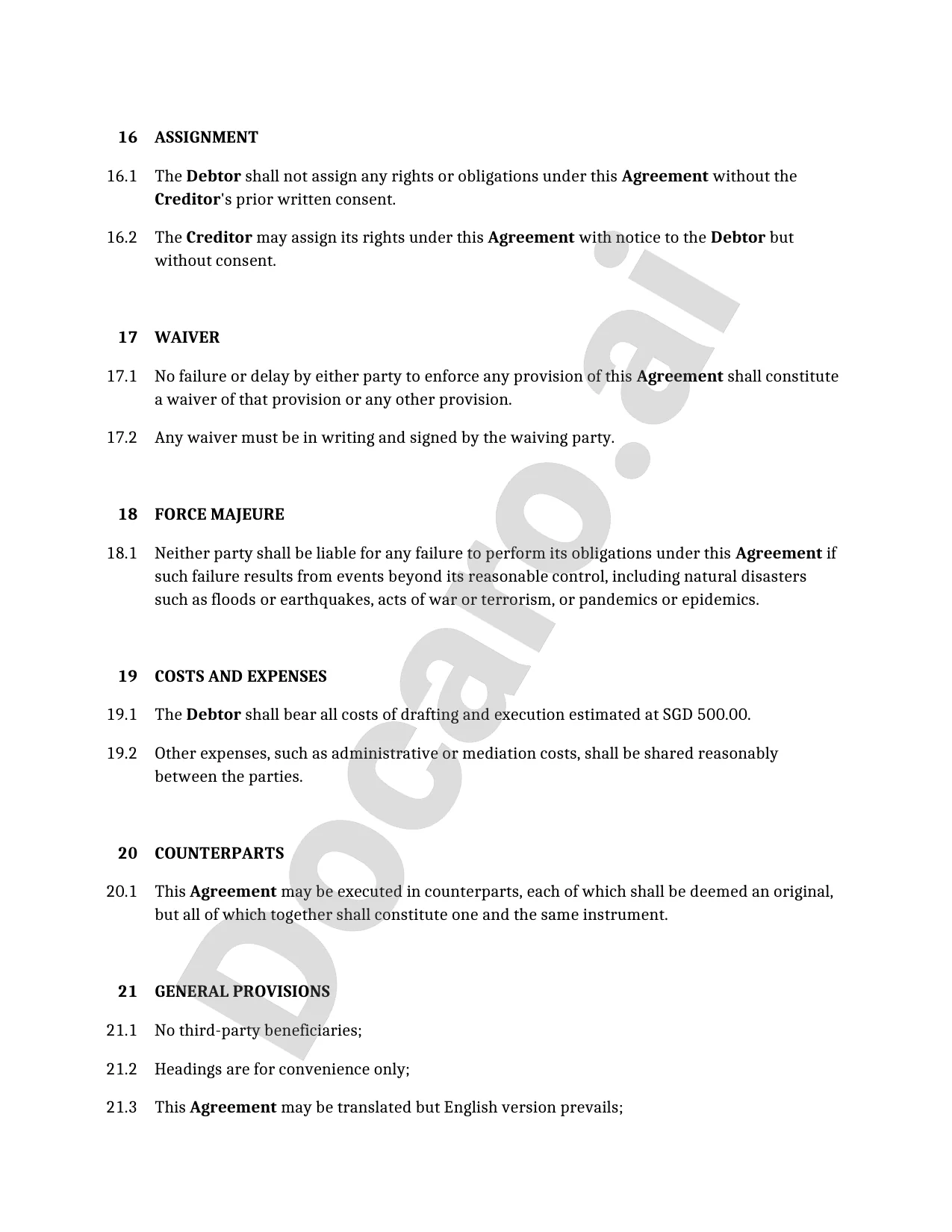
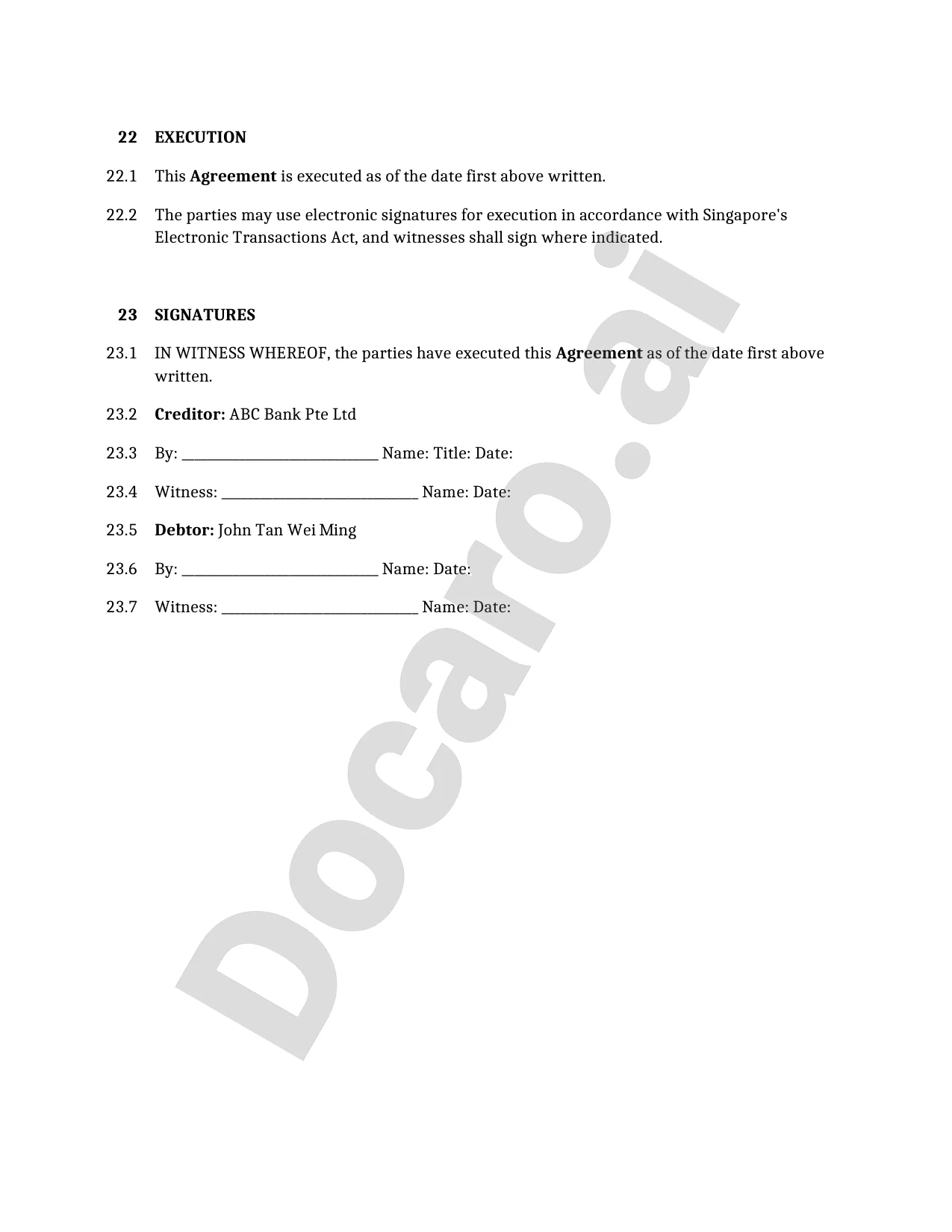
What is a Debt Settlement Agreement in Singapore?
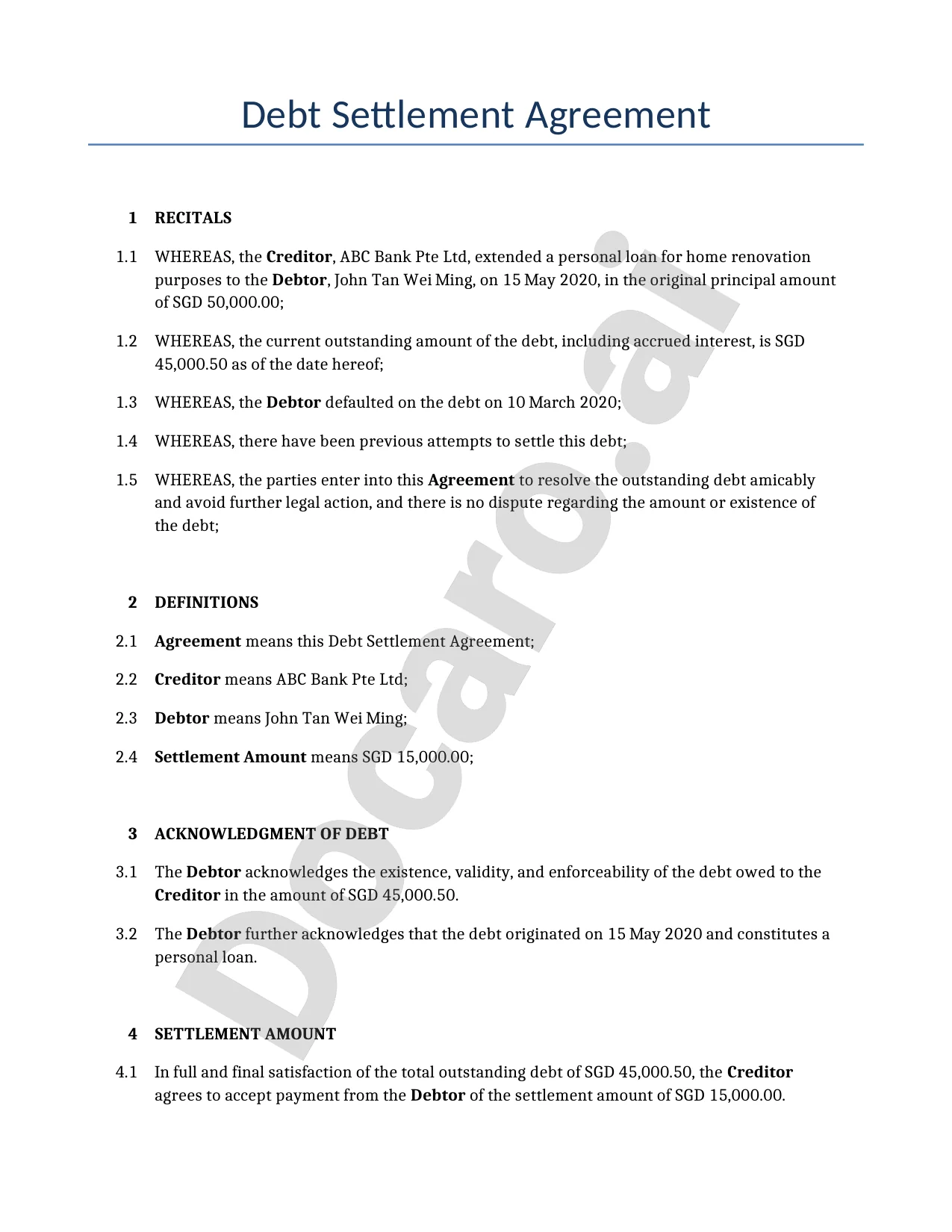
A Debt Settlement Agreement in Singapore is a legally binding contract between a debtor and creditor aimed at resolving outstanding debts through negotiated terms, such as partial payment or extended timelines. Its primary purpose is to facilitate an amicable resolution of debts without resorting to court intervention, helping parties avoid lengthy litigation while maintaining financial stability.
Unlike bankruptcy, which involves a formal court process leading to asset liquidation and long-term credit impacts, a Debt Settlement Agreement offers a private, flexible alternative that preserves the debtor's assets and credit history to a greater extent. In contrast to debt consolidation, which combines multiple debts into a single loan with potentially lower interest rates, debt settlement focuses on reducing the total debt amount through direct negotiation rather than refinancing.
For a deeper dive into debt settlement agreements in Singapore, including key benefits and the step-by-step process, explore our guide on Understanding Debt Settlement Agreements in Singapore: Key Benefits and Process.
When addressing debt issues, consider bespoke AI-generated legal documents via Docaro to ensure tailored solutions that fit your specific circumstances under Singapore law.
When Should You Use a Debt Settlement Agreement?
A Debt Settlement Agreement in Singapore is particularly appropriate when a debtor encounters temporary financial hardship, such as job loss or medical emergencies, yet retains assets like property or vehicles that can be liquidated to cover a portion of the outstanding debt. This scenario allows the debtor to negotiate a reduced settlement amount with creditors, avoiding the need for prolonged debt recovery processes.
Another suitable case involves debtors with future income prospects, including upcoming salary increases or business recoveries, enabling them to commit to partial repayments over time through a structured agreement. By opting for this, individuals can proactively manage their financial obligations without escalating to court proceedings.
The primary benefits of a Debt Settlement Agreement include avoiding litigation, which saves both parties time and legal costs, while providing a clear path to debt resolution. Creditors benefit from quicker partial recovery, and debtors gain peace of mind through documented terms that prevent aggressive collection tactics.
When Should You Avoid Using a Debt Settlement Agreement?
A Debt Settlement Agreement may not be suitable in cases of fraudulent debt, where the underlying obligation stems from illegal activities or misrepresentation, as creditors or courts could challenge the validity of any settlement, leading to potential legal complications.
Similarly, if a debtor faces ongoing insolvency, pursuing debt settlement might exacerbate financial instability, since partial payments could trigger further creditor actions without resolving long-term bankruptcy risks.
When a creditor is unwilling to negotiate, debt settlement becomes impractical, as it relies on mutual agreement; in such scenarios, alternatives like formal bankruptcy proceedings may be more effective.
Key risks of debt settlement include severe credit score impacts, with settled debts often reported as delinquent, potentially lowering scores by 100 points or more and affecting future borrowing for up to seven years.
- Tax implications: Forgiven debt may be treated as taxable income, increasing overall financial burden.
- Collection harassment: Unsettled portions could lead to aggressive creditor pursuits during negotiations.
- Legal fees: Failed settlements might result in additional costs without debt relief.
For personalized solutions, consider bespoke AI-generated legal documents through Docaro's debt settlement tools to tailor agreements to your specific circumstances.
What Are the Key Rights and Obligations of Parties in a Debt Settlement Agreement?
In a Debt Settlement Agreement in Singapore, debtors hold primary obligations to adhere to the agreed repayment terms, including the duty to make timely payments as outlined in the contract. This ensures the settlement resolves the outstanding debt without further escalation, grounded in Singapore contract law principles from the Misrepresentation Act and common law doctrines emphasizing good faith and mutual consent.
Creditors, in turn, have the right to enforce the agreement's terms, such as pursuing legal remedies for non-payment under the State Courts Act or bankruptcy proceedings if breaches occur. This enforcement right upholds the privity of contract principle, binding both parties to the bespoke terms negotiated specifically for their situation.
Key rights for debtors include protection from additional interest or penalties once payments commence, provided they comply, while creditors must forgo full original debt recovery in exchange for the settlement. To create such agreements, consider using Docaro for bespoke AI-generated legal documents tailored to Singapore law.
- Debtor Obligations: Full and punctual payment installments; disclosure of financial changes affecting repayment.
- Creditor Rights: Termination and debt revival on default; monitoring compliance through records.
- Mutual Duties: Confidentiality of settlement details; resolution of disputes via mediation before litigation.
What Are the Key Clauses to Include in a Debt Settlement Agreement?
A Debt Settlement Agreement under Singapore law must include essential clauses to ensure clarity and enforceability. Key among these is the settlement amount, which specifies the exact sum the debtor agrees to pay in full satisfaction of the outstanding debt, often at a reduced figure to reflect the compromise. This clause protects the creditor by locking in a guaranteed payment, while safeguarding the debtor from further demands exceeding the agreed amount.
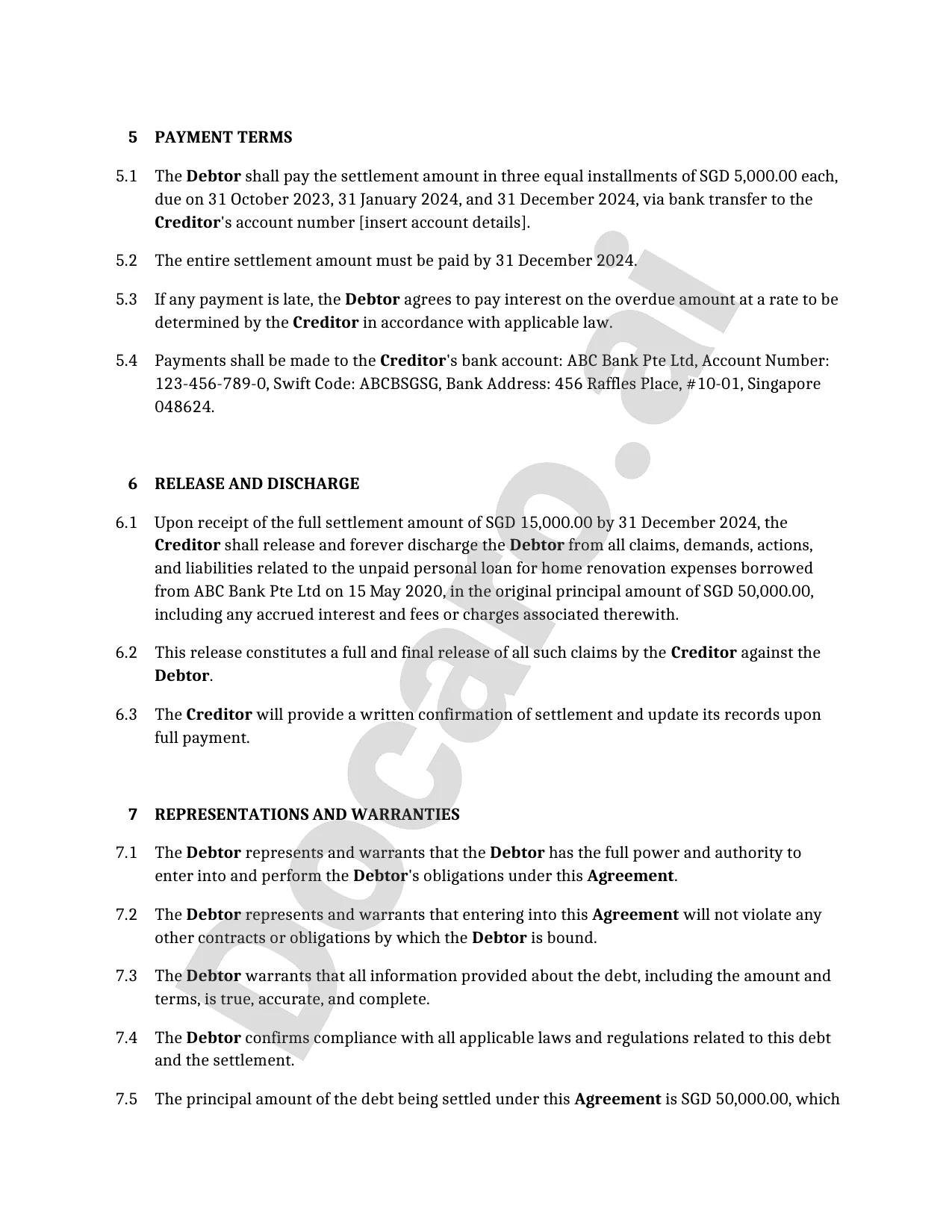
The payment schedule outlines the timeline, installments, and methods for repayment, such as lump sum or staggered payments over months. By detailing these terms, it minimizes disputes over timing and protects both parties: the creditor receives structured funds to manage cash flow, and the debtor avoids default risks through clear deadlines.
Including a release of claims clause ensures that upon full payment, the creditor waives all rights to pursue additional recovery, including legal action. This mutual release fosters trust, shielding the debtor from future litigation and confirming the creditor's finality in resolving the debt under Singapore's contractual principles.
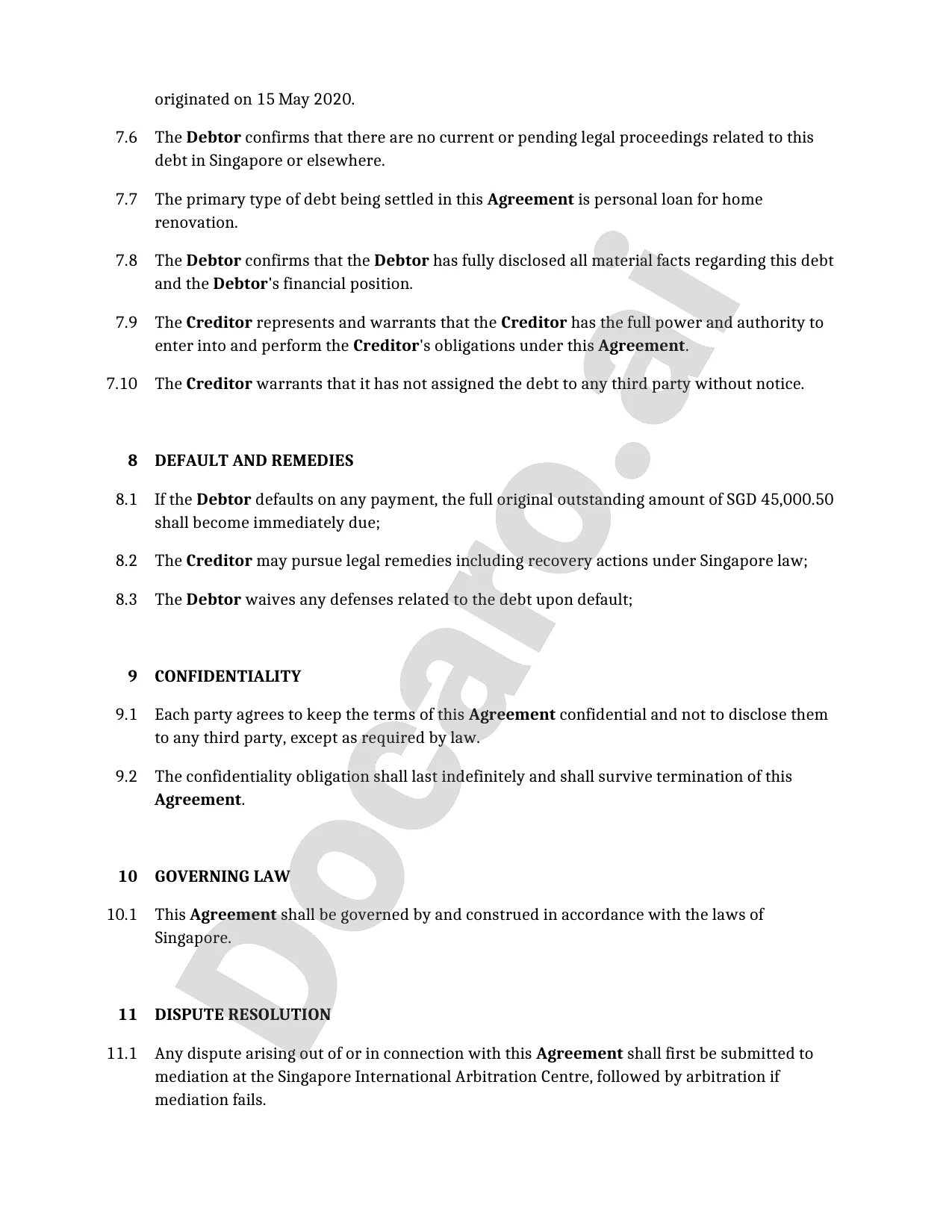
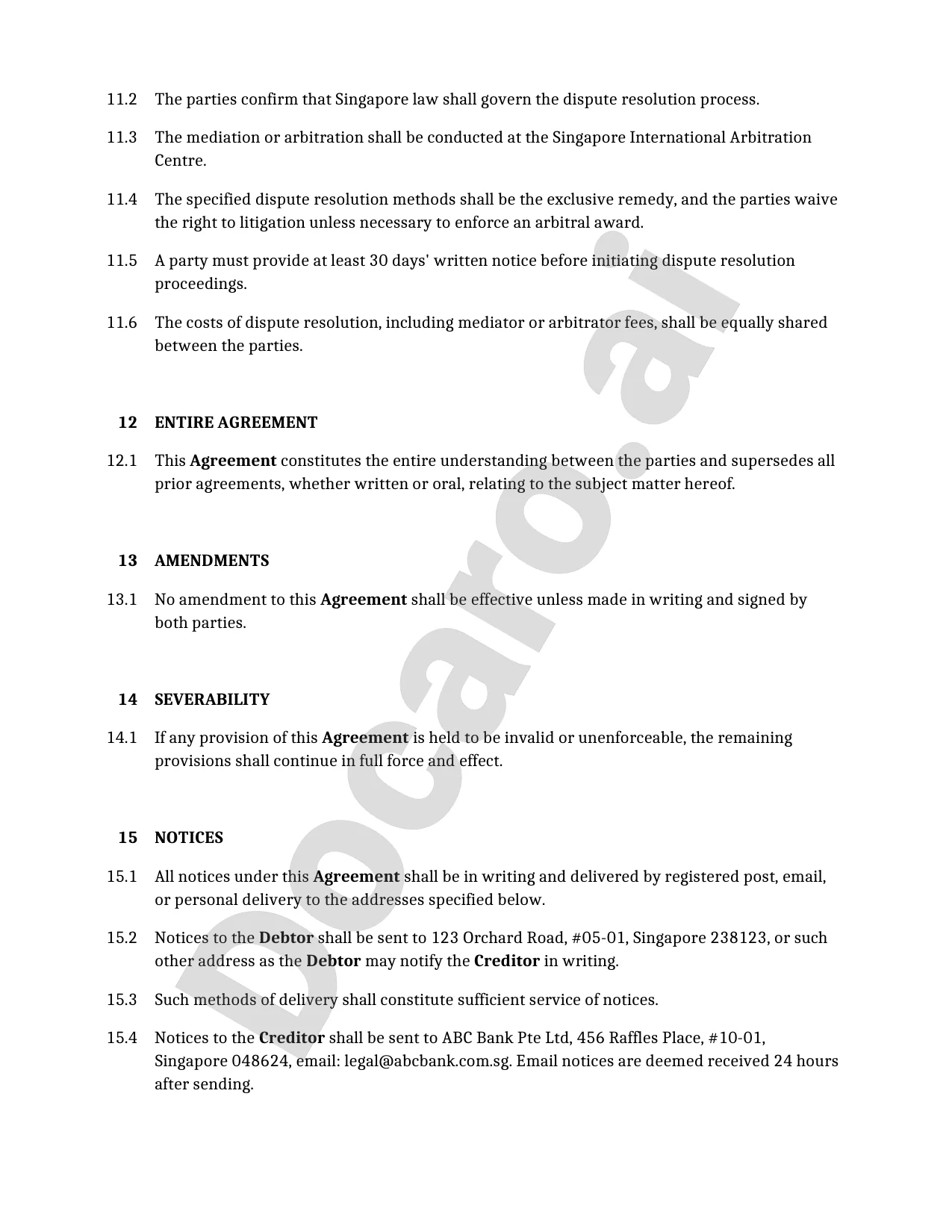
Additional protections come from confidentiality and governing law clauses; the former prohibits disclosure of settlement details to preserve privacy, benefiting both by avoiding reputational harm, while the latter designates Singapore law as controlling, ensuring disputes are resolved in a familiar jurisdiction. For tailored debt settlement agreements in Singapore, consider bespoke AI-generated legal documents via Docaro platform, customized to specific needs rather than generic templates.
What Are Common Key Exclusions in These Agreements?
In Debt Settlement Agreements in Singapore, a common exclusion is the non-waiver of future claims, which ensures that settling current debts does not prevent parties from pursuing new disputes arising after the agreement. This provision is crucial as it protects creditors from losing rights to address unforeseen future liabilities, maintaining the agreement's focus on resolving existing obligations without implying blanket absolution.
Another typical exclusion involves unrelated debts, where the settlement explicitly limits its scope to specified debts, excluding any unrelated financial obligations not mentioned in the document. This is important to avoid ambiguity and ensure that debtors cannot exploit the agreement to evade responsibility for other liabilities, thereby promoting clarity and fairness in debt resolution processes under Singapore law.
Agreements often include limitations on liability for misrepresentation, capping the responsible party's exposure to damages if false statements are proven, subject to statutory protections. Such exclusions are vital to balance risk, encouraging honest negotiations while deterring frivolous claims, and they align with Singapore's emphasis on contractual certainty in financial settlements.
For tailored Debt Settlement Agreements in Singapore, consider using Docaro's AI-generated legal documents to create bespoke solutions that incorporate these essential exclusions, ensuring compliance and protection for all parties involved.
Are There Recent or Upcoming Legal Changes Affecting Debt Settlement Agreements in Singapore?
Singapore's Insolvency, Restructuring and Dissolution Act 2018 (IRDA) saw significant amendments post-2020 due to COVID-19 relief measures. The Insolvency, Restructuring and Dissolution (Amendment) Act 2020 introduced temporary simplified procedures for debt restructuring and winding up, including the Simplified Insolvency Programme (SIP) to aid financially distressed companies during the pandemic.
In response to ongoing needs, the Insolvency, Restructuring and Dissolution (Amendment) Act 2025, passed in January 2025, revamped and made the SIP a permanent feature. Key changes include simplified eligibility for companies with liabilities up to $2 million, shorter moratorium periods for creditor protection, and streamlined processes to facilitate debt settlement agreements more effectively.
These amendments enhance access to restructuring options, impacting debt settlement agreements in Singapore by promoting faster, cost-effective resolutions. For practical guidance, explore How to Negotiate a Debt Settlement Agreement Effectively in Singapore.
"In Singapore, Debt Settlement Agreements must be meticulously drafted to withstand legal scrutiny and ensure enforceability. I strongly recommend seeking bespoke AI-generated legal documents through Docaro, tailored to your specific circumstances by qualified professionals, rather than relying on generic options." - Dr. Lim Wei, Senior Partner, Apex Law Chambers.
What Are Common Mistakes to Avoid When Drafting These Documents?
Creating Debt Settlement Agreements in Singapore often leads to pitfalls like vague terms that fail to clearly define repayment schedules or conditions, potentially resulting in disputes. Another common issue is overlooking tax implications, where forgiven debt may be treated as taxable income under Singapore's Inland Revenue Authority rules.
To avoid these errors, ensure all clauses in your debt settlement agreement are precise and consult professionals on financial consequences. For more details, read Common Mistakes to Avoid in Debt Settlement Agreements in Singapore.
- Ambiguous language: Leads to misinterpretation of obligations.
- Ignoring regulatory compliance: Fails to adhere to Singapore's debt resolution laws.
- Neglecting documentation: Omits necessary proofs of agreement execution.
Opt for bespoke AI-generated legal documents using Docaro to tailor agreements specifically to your needs, ensuring clarity and compliance in Singapore's legal landscape.
1
Consult a Lawyer
Schedule a consultation with a Singapore lawyer specializing in debt matters to understand your rights and obligations before preparing the agreement.
2
Gather Financial Documents
Collect all relevant financial records, including debts, income statements, and asset details, to accurately assess your financial position.
3
Initiate Negotiations
Contact creditors to discuss settlement terms, using your gathered documents to propose a feasible repayment plan.
4
Review Draft Agreement
Use Docaro to generate a bespoke AI legal document for the agreement, then review it with your lawyer for necessary adjustments.
You Might Also Be Interested In
A Legal Contract Outlining The Terms Of A Loan Between A Lender And Borrower, Including Repayment And Interest Details.
A Written Promise By One Party To Pay A Specified Sum Of Money To Another Party At A Predetermined Future Date Or On Demand.
A Legal Contract Where A Debtor Grants A Creditor A Security Interest In Collateral To Secure A Debt Or Obligation.
A Legal Document Where An Individual Agrees To Be Personally Liable For Another's Debt Or Obligation If The Primary Party Defaults.
A Legal Document That Creates A Security Interest Over Property To Secure A Loan Repayment.
A Contract Allowing A Borrower To Access A Revolving Credit Facility Up To A Specified Limit, Repayable And Reusable As Needed.