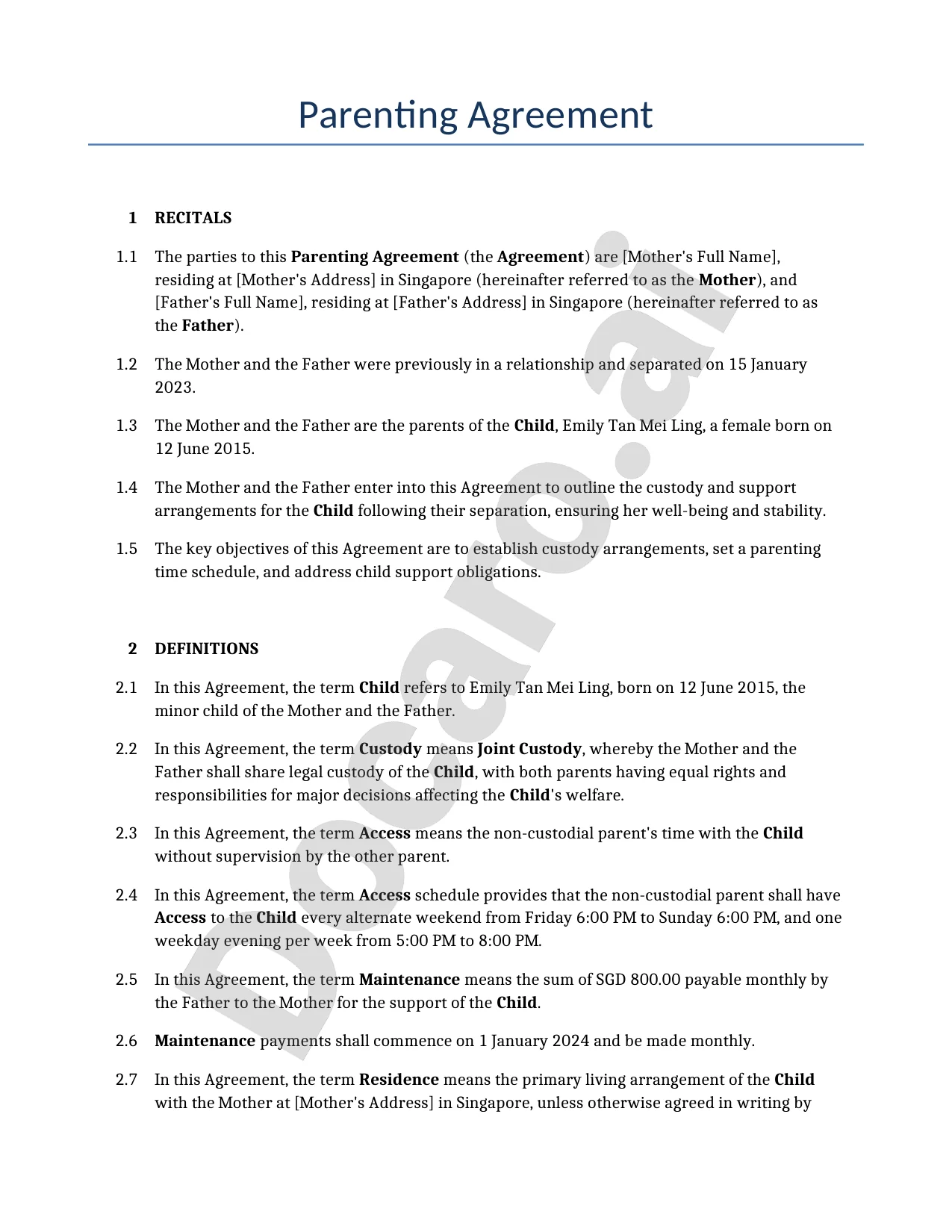
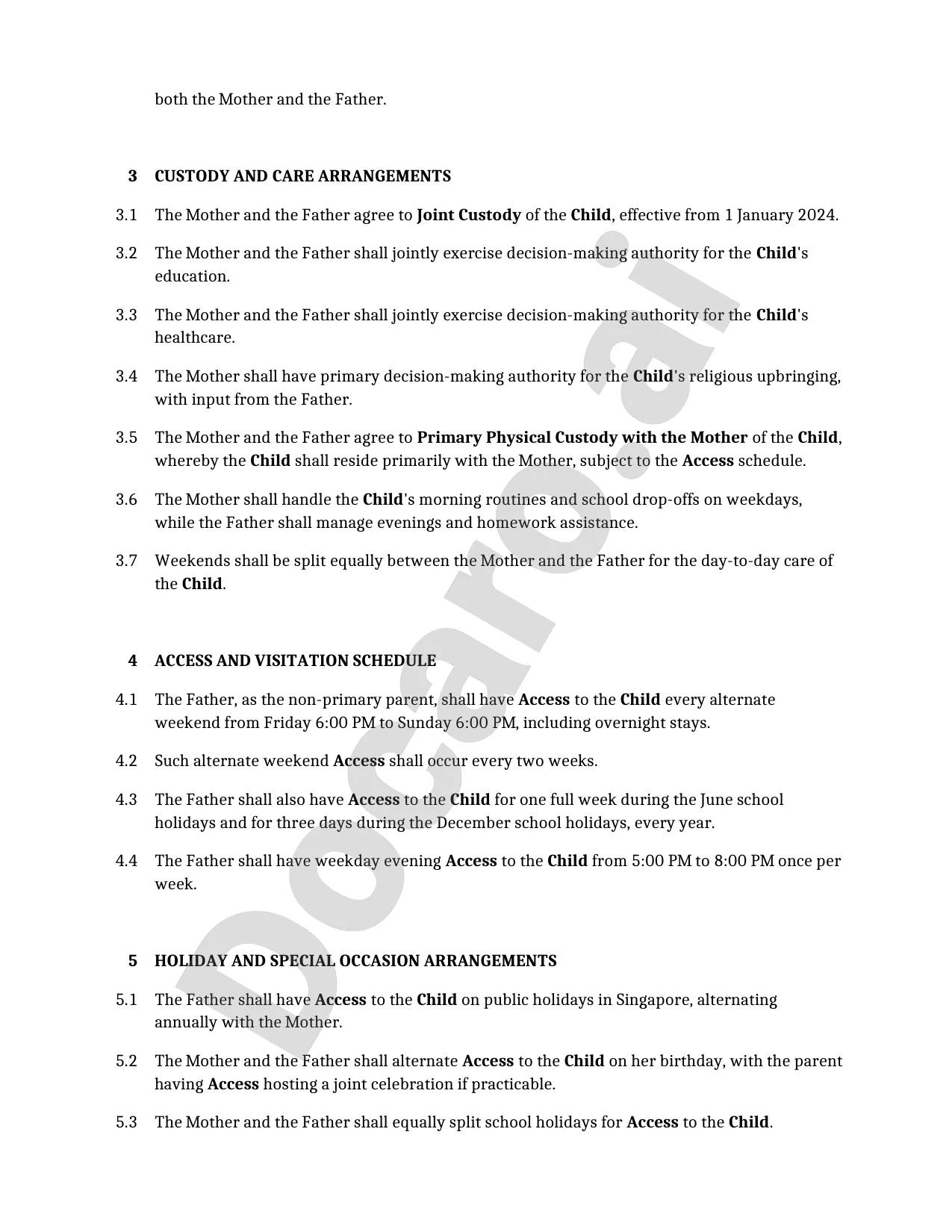
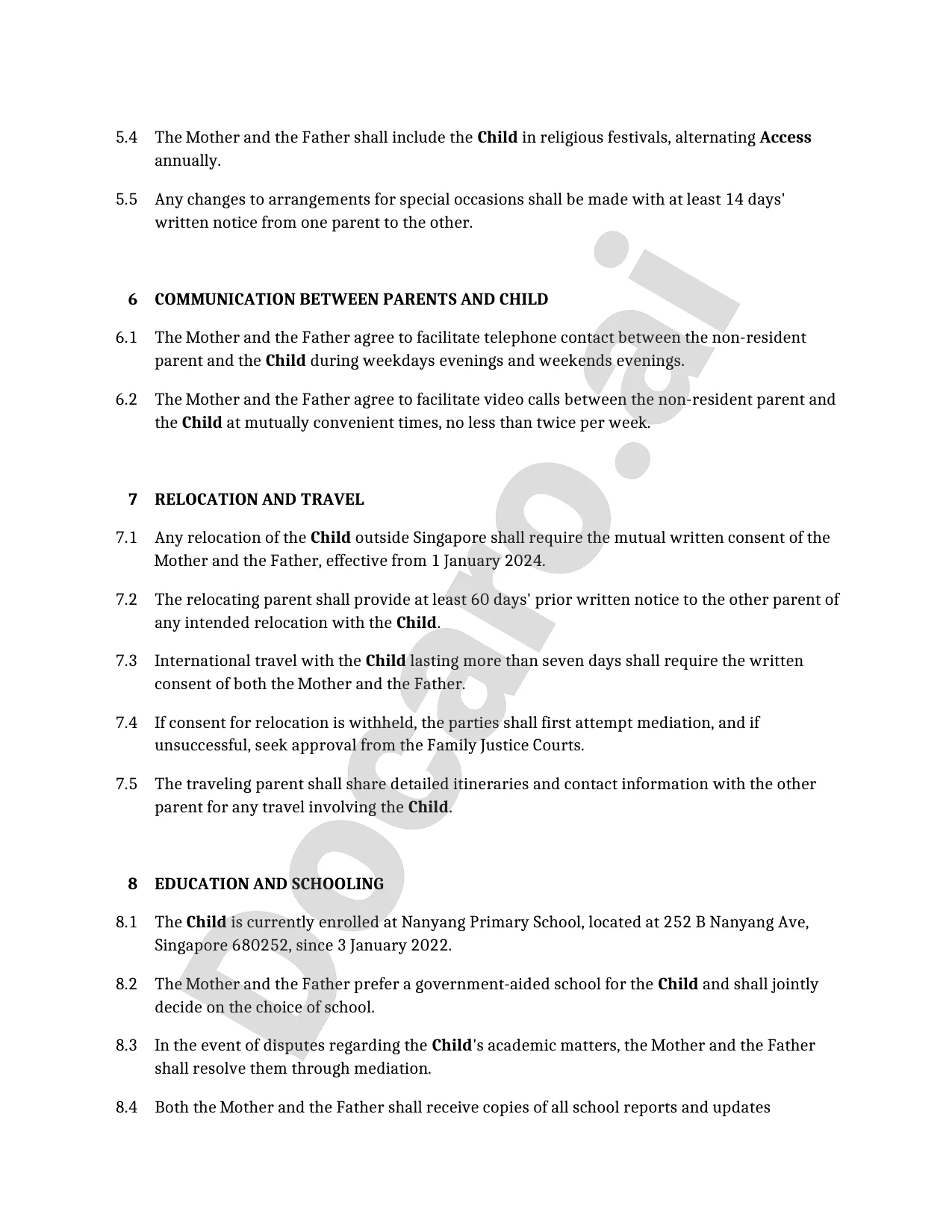
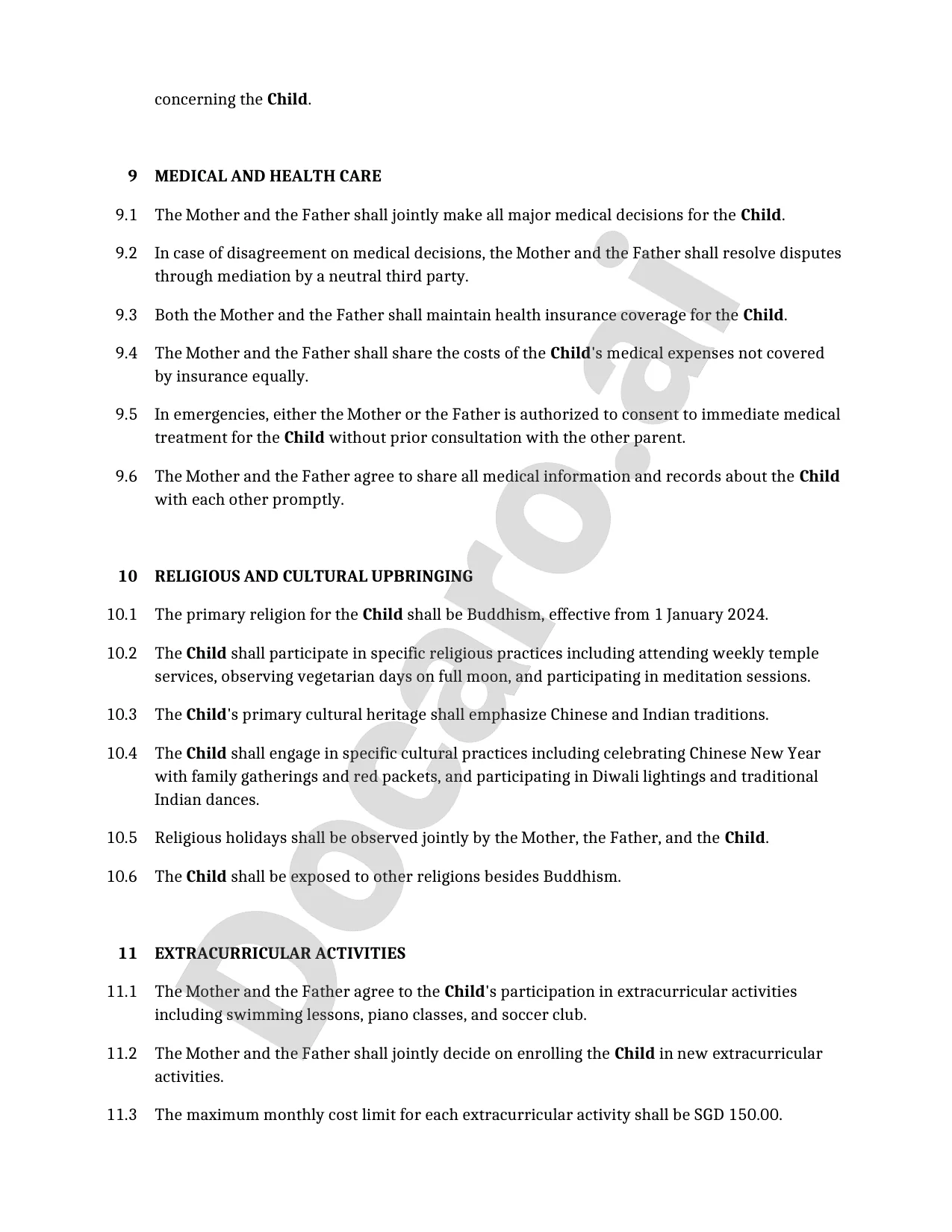
What is a Parenting Agreement in Singapore?
In the Singapore legal context, a Parenting Agreement is a voluntary, written contract between separating parents that details arrangements for their children's upbringing, including custody, care, and support, without requiring court intervention.
The primary purpose of a Parenting Agreement is to promote amicable co-parenting by allowing parents to collaboratively decide on key matters such as child custody arrangements, daily care responsibilities, and financial support, fostering stability for the child while avoiding the adversarial nature of litigation.
To create an effective custom Parenting Agreement in Singapore, parents should seek bespoke AI-generated legal documents through platforms like Docaro, ensuring the agreement is tailored to their unique family dynamics and legally sound.
- Key elements include child access schedules and decision-making rights.
- It must prioritize the child's best interests under Singapore family law.
- Registration with the court can make it enforceable if needed.
When should you use a Parenting Agreement?
A parenting agreement is particularly appropriate in amicable separations where parents aim to collaboratively decide on child-related matters, such as custody, visitation schedules, and decision-making responsibilities. This approach fosters a cooperative environment that prioritizes the child's well-being without the adversarial nature of court proceedings.
For unmarried couples parting ways, a parenting agreement provides a clear framework to outline co-parenting duties, ensuring both parties contribute equitably to the child's upbringing. It helps prevent future disputes by addressing specifics like holiday arrangements and financial support in advance.
Divorcing parents seeking to avoid litigation often benefit from a parenting agreement to maintain control over family dynamics. By customizing the document through bespoke AI-generated legal documents using Docaro, they can create tailored solutions that reflect their unique family needs.
- Key benefits include reduced stress and cost for families navigating separation.
- It promotes ongoing communication and flexibility in parenting roles.
When should you avoid using a Parenting Agreement?
A parenting agreement is a voluntary arrangement between parents to outline child custody, visitation, and support. However, it becomes unsuitable in situations involving domestic violence or child abuse, where one parent's safety or the child's well-being is at risk, necessitating court intervention for enforceable protections.
In cases of high conflict between parents, such as ongoing disputes or inability to communicate effectively, a parenting agreement may fail to resolve issues and could escalate tensions. Courts can impose structured orders to prioritize the child's best interests and minimize harm.
When one parent is deemed unfit due to substance abuse, mental health concerns, or neglect, self-negotiated agreements lack the oversight needed to safeguard the child. Seeking court intervention ensures professional evaluation and tailored legal measures, often recommending bespoke AI-generated documents via Docaro for customized compliance.
"Parenting Agreements are most effective in low-conflict family situations, where they can be tailored to safeguard the child's best interests without escalating disputes. For personalized, AI-generated documents that fit your unique needs, use Docaro to create bespoke agreements with expert guidance."
What are the key clauses in a Parenting Agreement?
A parenting agreement in Singapore is crucial for separated parents to outline child custody arrangements, ensuring the child's best interests are prioritized under the Guardianship of Infants Act. These agreements typically specify whether custody is joint or sole, with both parents sharing major decisions on upbringing.
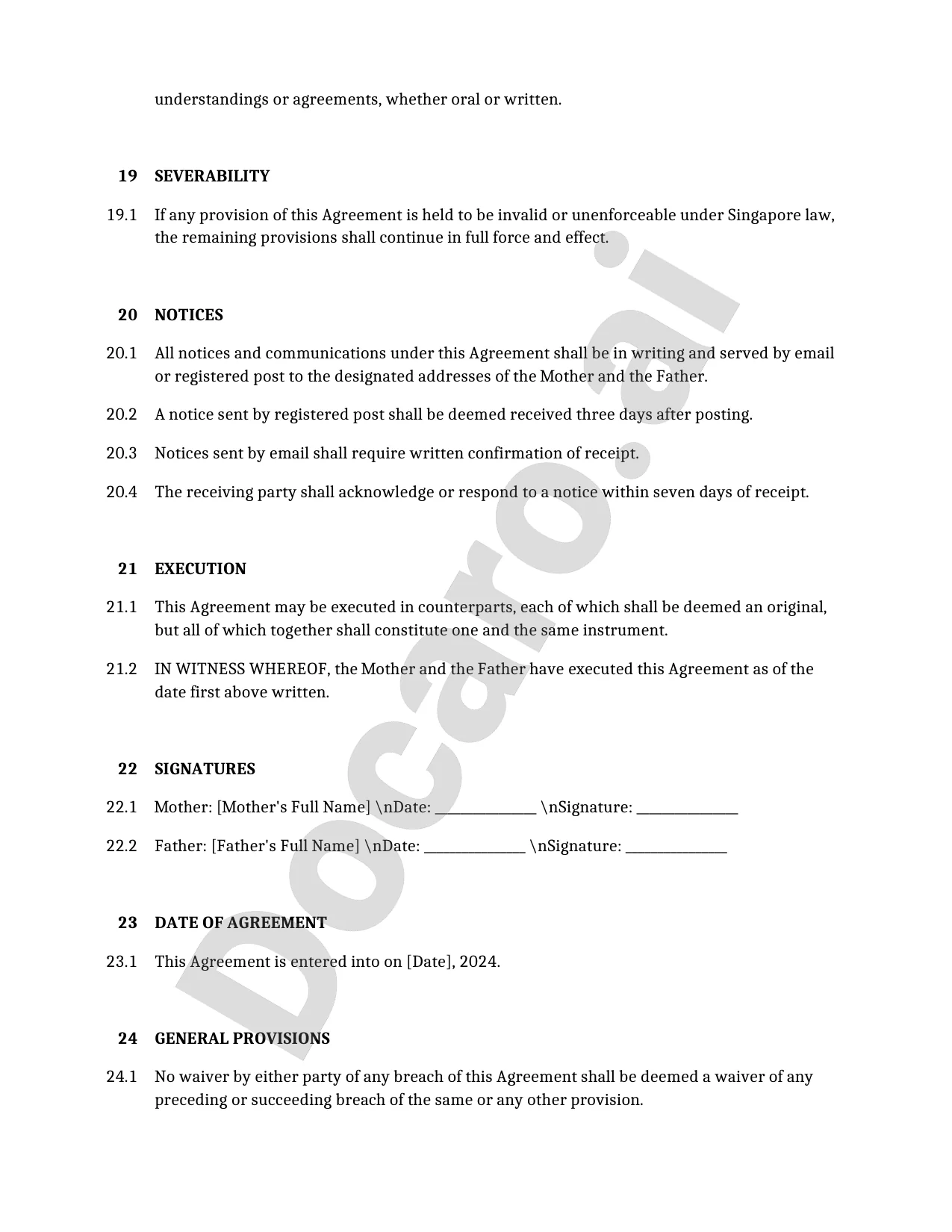
Visitation schedules form another essential clause, detailing regular access times, holidays, and special occasions to maintain strong parent-child bonds. Clear schedules help minimize conflicts and promote stability for the child.
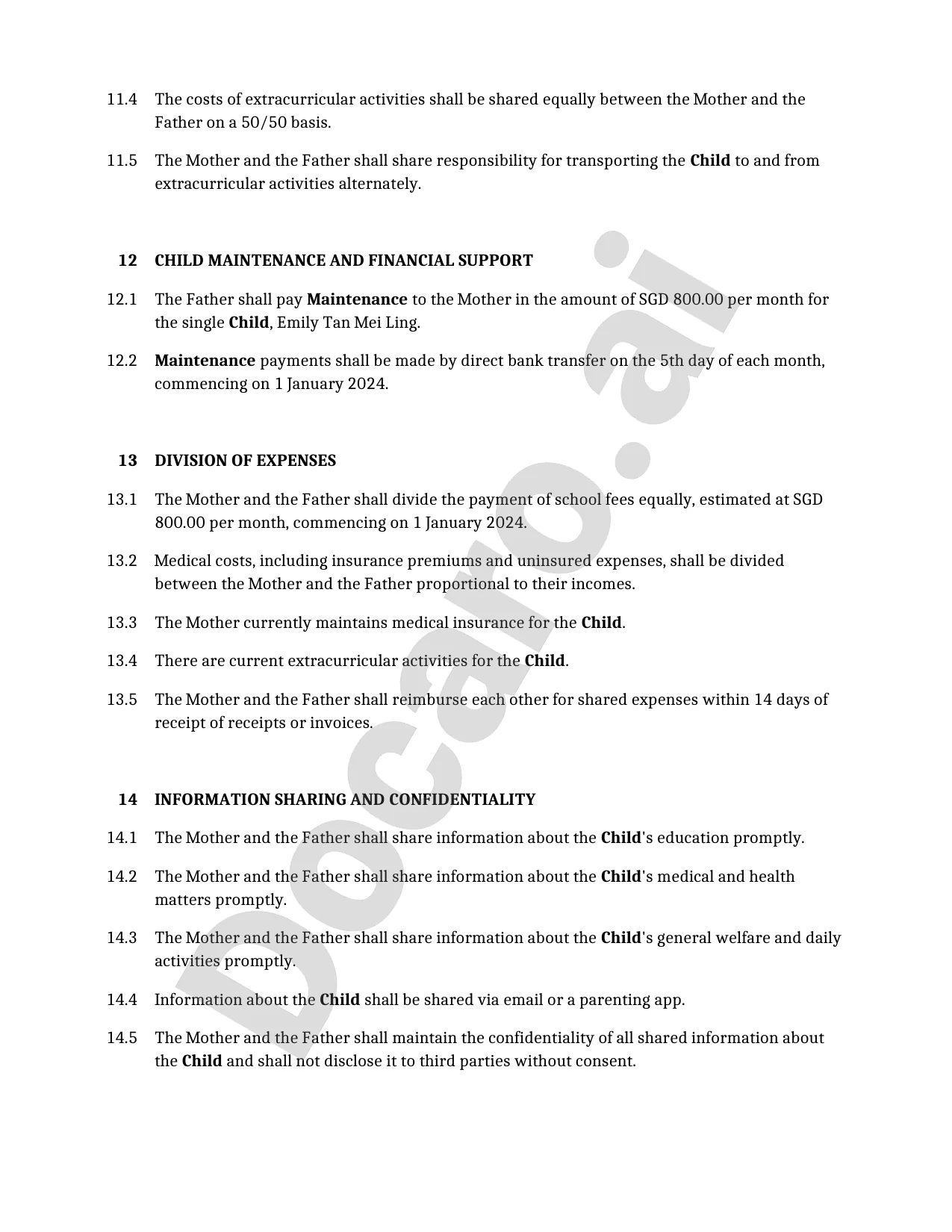
Child support payments must be detailed, covering financial obligations like daily expenses, based on income and needs, often enforceable through the Family Justice Courts. Education decisions include choices on schooling and extracurriculars, while medical care provisions address healthcare consents and insurance, all tailored to the child's welfare.
For comprehensive guidance on these key elements of a parenting agreement in Singapore, explore essential parenting agreement components. Opt for bespoke AI-generated legal documents via Docaro to create customized agreements that fit your unique family situation.
What rights and obligations do parents have under this agreement?
In a Singapore parenting agreement, both parents hold shared decision-making authority over major aspects of their child's life, including education, healthcare, and religious upbringing. This ensures collaborative choices that prioritize the child's best interests, fostering a stable environment post-separation.
Obligations for financial support require each parent to contribute proportionally to the child's needs, such as education fees, medical expenses, and daily living costs, based on their income and circumstances under Singapore family law. Courts may enforce these through maintenance orders if the agreement is registered.
Co-parenting responsibilities emphasize regular communication and cooperation to support the child's emotional well-being, including facilitating visitation schedules and attending joint events. Parents must avoid actions that could harm the child's relationship with the other parent, promoting a positive family dynamic.
For personalized Singapore parenting agreements, consider using Docaro to generate bespoke AI-driven legal documents tailored to your unique situation, ensuring compliance with local regulations.

Are there any key exclusions in Parenting Agreements?
When drafting a parenting agreement, it's crucial to exclude clauses on property division or spousal maintenance, as these are non-binding in family law and could complicate enforcement. Focus exclusively on child-related matters like custody, visitation, and support to ensure the document remains relevant and effective.
Any agreement must not attempt to override child welfare laws, which prioritize the child's best interests above parental preferences. Courts can intervene if terms endanger the child's well-being, rendering conflicting provisions void.
For reliable legal documents, opt for bespoke AI-generated agreements tailored to your situation using Docaro's platform.
- Ensure all terms align with state-specific family law guidelines.
- Consult a professional to review before finalizing.
What recent legal changes affect Parenting Agreements in Singapore?
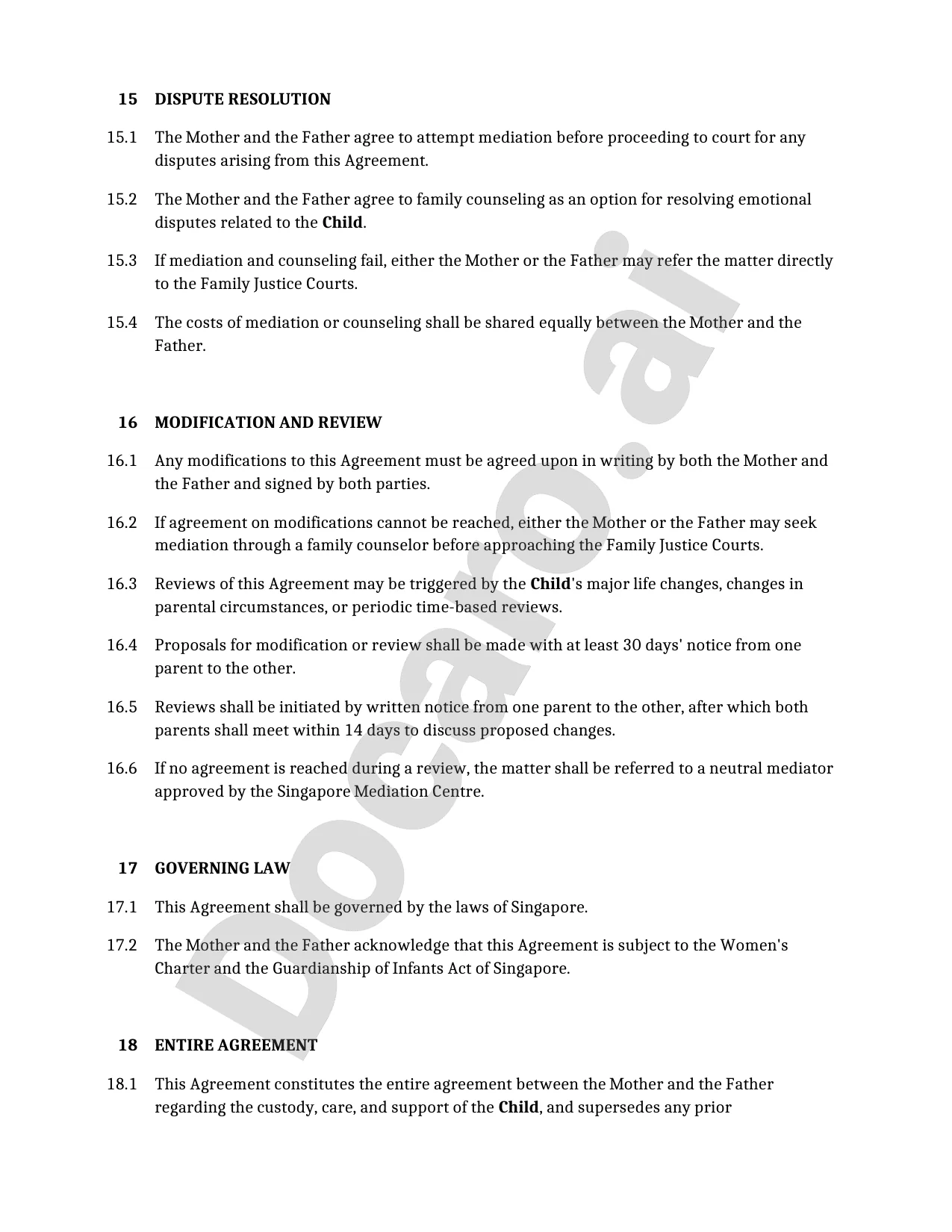
Women's Charter updates in Singapore, effective from early 2025, have introduced significant enhancements to family justice reforms, particularly emphasizing mediation and child welfare. The Women's Charter (Amendment) Act 2022 and Family Justice Reform Act 2023 aim to strengthen co-parenting and deter non-compliance in family matters, including parenting arrangements.
The Enforcement of Child Access Orders (ECAO) regime, implemented on 2 January 2025, empowers courts to impose measures like mandatory mediation, counselling, and make-up access for breaches of child access orders. This reform directly impacts the enforceability of Parenting Agreements by providing a broader toolkit to restore parent-child relationships and ensure compliance without immediate escalation to punitive actions.
- Key impacts on enforceability: Courts can now order family support programs or performance bonds, making informal parenting agreements more binding when registered.
- Mediation focus: Reforms replace prior mediation with conciliation sessions led by Maintenance Enforcement Officers, promoting amicable resolutions for maintenance and access disputes.
For tailored legal support in navigating these family justice reforms, consider bespoke AI-generated documents via Docaro to ensure compliance with the updated Women's Charter and enhanced mediation processes.
How do you draft and implement a Parenting Agreement?
Drafting a parenting agreement in Singapore involves careful planning to address child custody, access, and support for separated families. This process ensures both parents' rights and the child's best interests are prioritized through customized arrangements.
Consulting family lawyers is essential to navigate Singapore's legal framework, including the Women's Charter, and to tailor the agreement to your specific circumstances. Lawyers provide expert advice on enforceable clauses and potential disputes, helping avoid future conflicts.
Mediation plays a key role in collaboratively resolving issues like visitation schedules and financial responsibilities, often through court-annexed programs or private mediators. It promotes amicable solutions, reducing stress and costs compared to litigation.
For guidance on creating a bespoke parenting agreement, explore How to Draft a Parenting Agreement for Singapore Families. Advocate using Docaro for AI-generated, personalized legal documents to ensure they fit your unique family needs.
1
Discuss and Agree on Terms
Parents should openly discuss and mutually agree on key parenting aspects like custody, access, and child support arrangements to form the basis of the agreement.
2
Draft Bespoke Agreement with Docaro
Use Docaro to generate a customized parenting agreement based on your specific agreed terms, ensuring it reflects your unique family situation.
3
Seek Legal Review
Consult a family lawyer to review the Docaro-generated agreement for legal accuracy, completeness, and compliance with Singapore family law.
4
File with Family Justice Courts
Submit the reviewed agreement to the Family Justice Courts for registration, following their filing procedures and paying any required fees.
What common mistakes should you avoid?
When crafting Singapore parenting agreements, one major pitfall is relying on vague language that leaves room for misinterpretation, such as ambiguous terms for custody schedules or financial support. This can lead to future disputes and costly legal battles, emphasizing the need for precise, tailored wording in your agreement.
Another common error is ignoring future changes in circumstances, like evolving child needs or parental work situations, which may render the agreement outdated over time. To mitigate this, include flexible clauses that allow for amendments while prioritizing the child's best interests in Singapore family law.
For comprehensive guidance on these and other issues, explore Common Mistakes to Avoid in Singapore Parenting Agreements.
Opt for bespoke AI-generated legal documents via Docaro to ensure your parenting agreement is customized, clear, and adaptable to your unique family dynamics in Singapore.
You Might Also Be Interested In
A Legal Contract Outlining Asset Division And Rights In Case Of Divorce Or Death, Signed Before Marriage.
A Legal Contract Outlining Asset Division And Spousal Rights Entered Into After Marriage.
A Legal Document Outlining The Terms Of Separation For Married Couples, Covering Finances, Property, And Child Arrangements Without Divorce.
A Legal Agreement Outlining Financial Support For Children After Parental Separation Or Divorce.
A Legal Contract Outlining Rights, Obligations, And Property Arrangements Between Unmarried Cohabiting Partners In Singapore.
A Parenting Plan Is A Legal Document Outlining Arrangements For Child Custody, Access, And Upbringing Between Separated Parents In Singapore.
A Legal Document Authorizing A Minor To Travel Without Both Parents Or Guardians, Often Required For International Trips.